Zhuoshui Scenic Area
1. Introduction
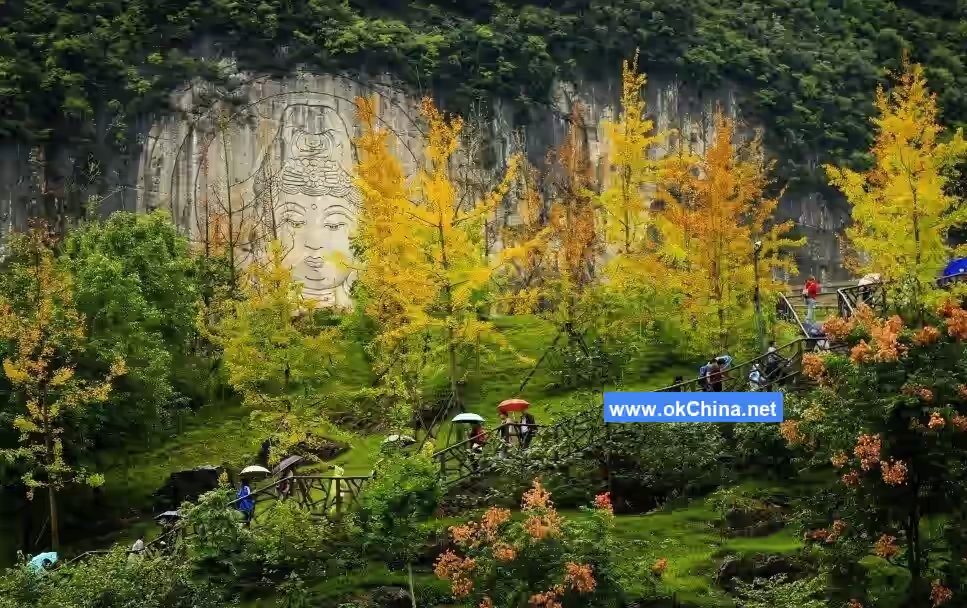
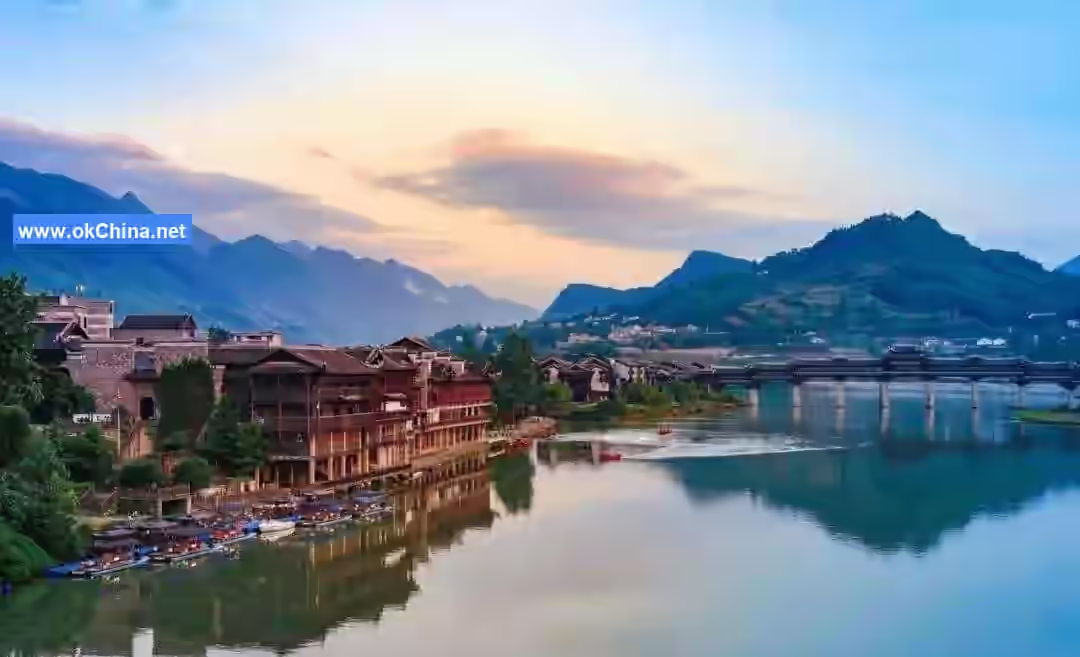
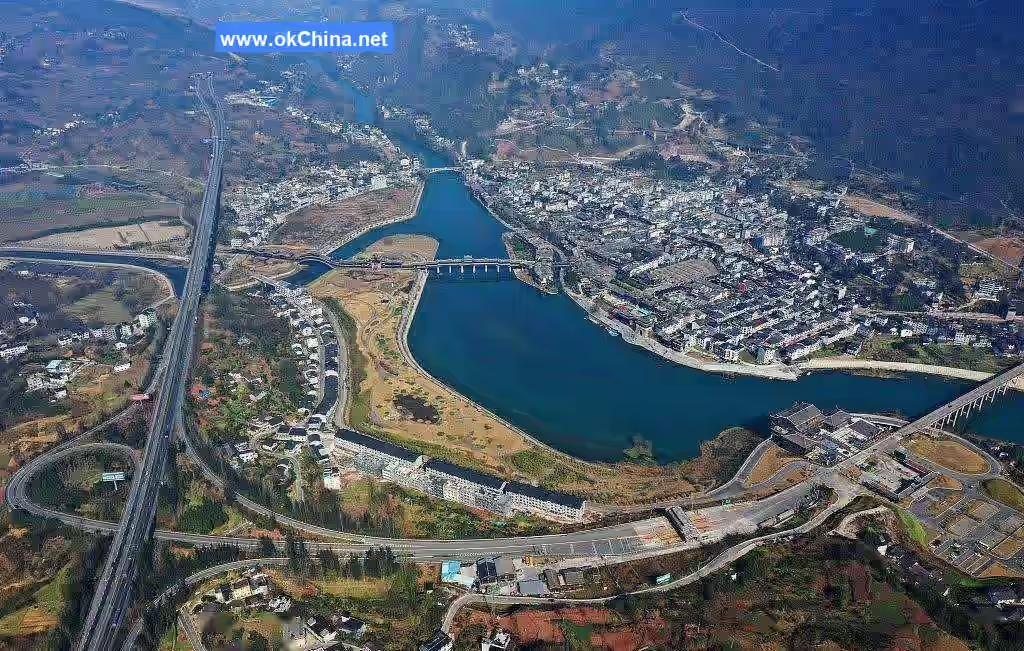
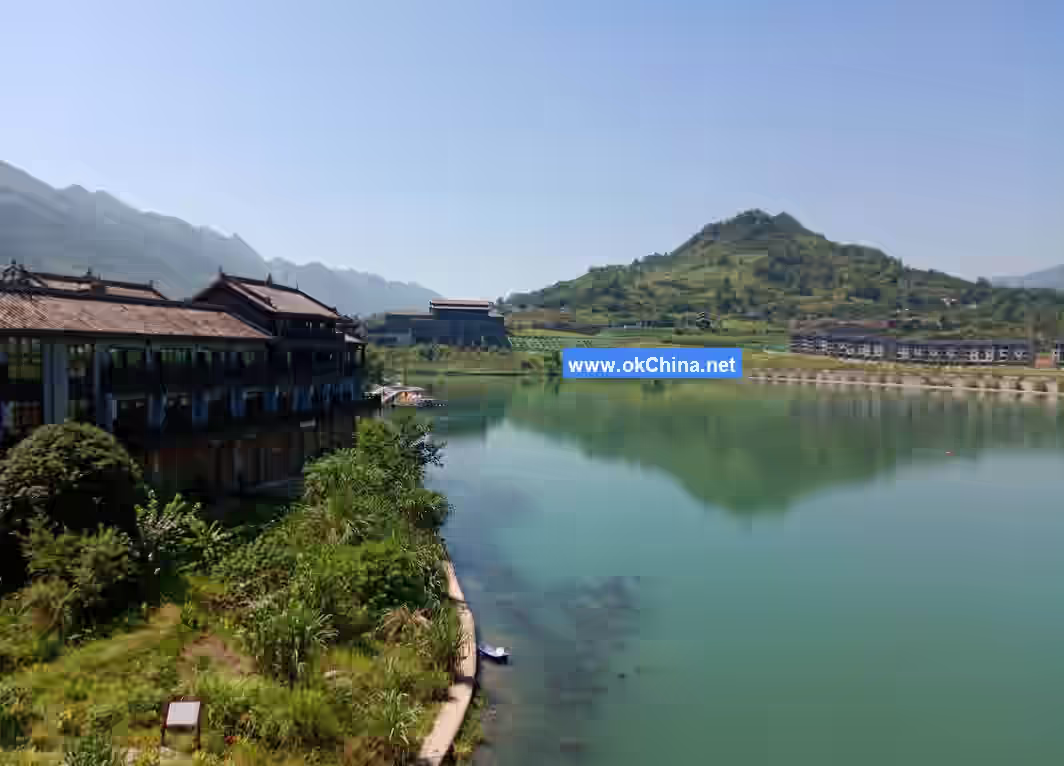
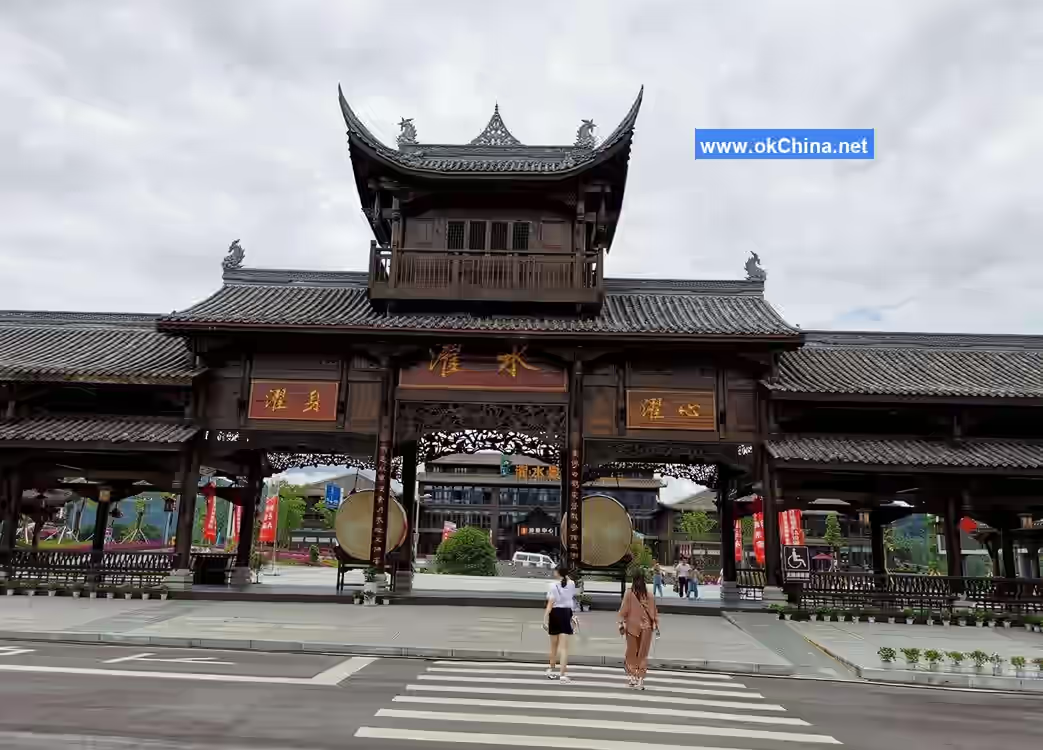
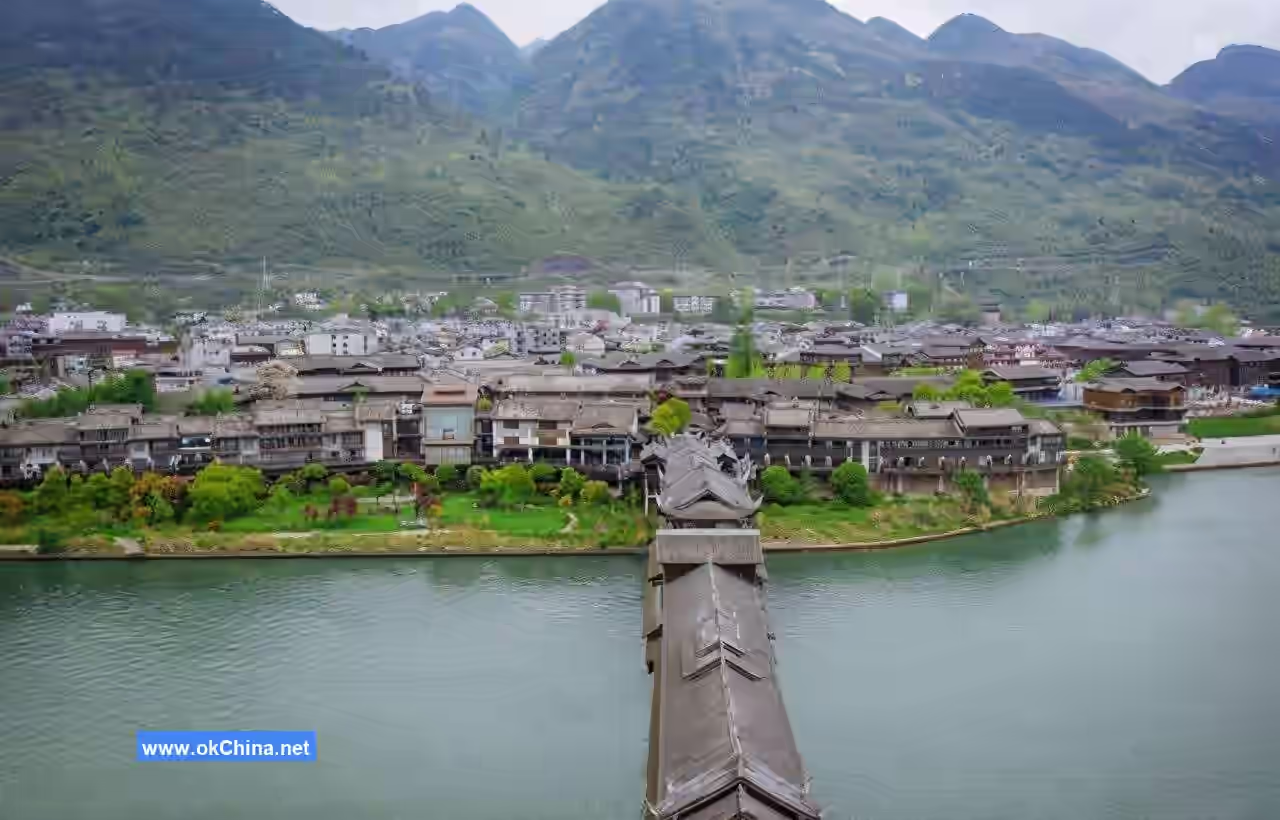
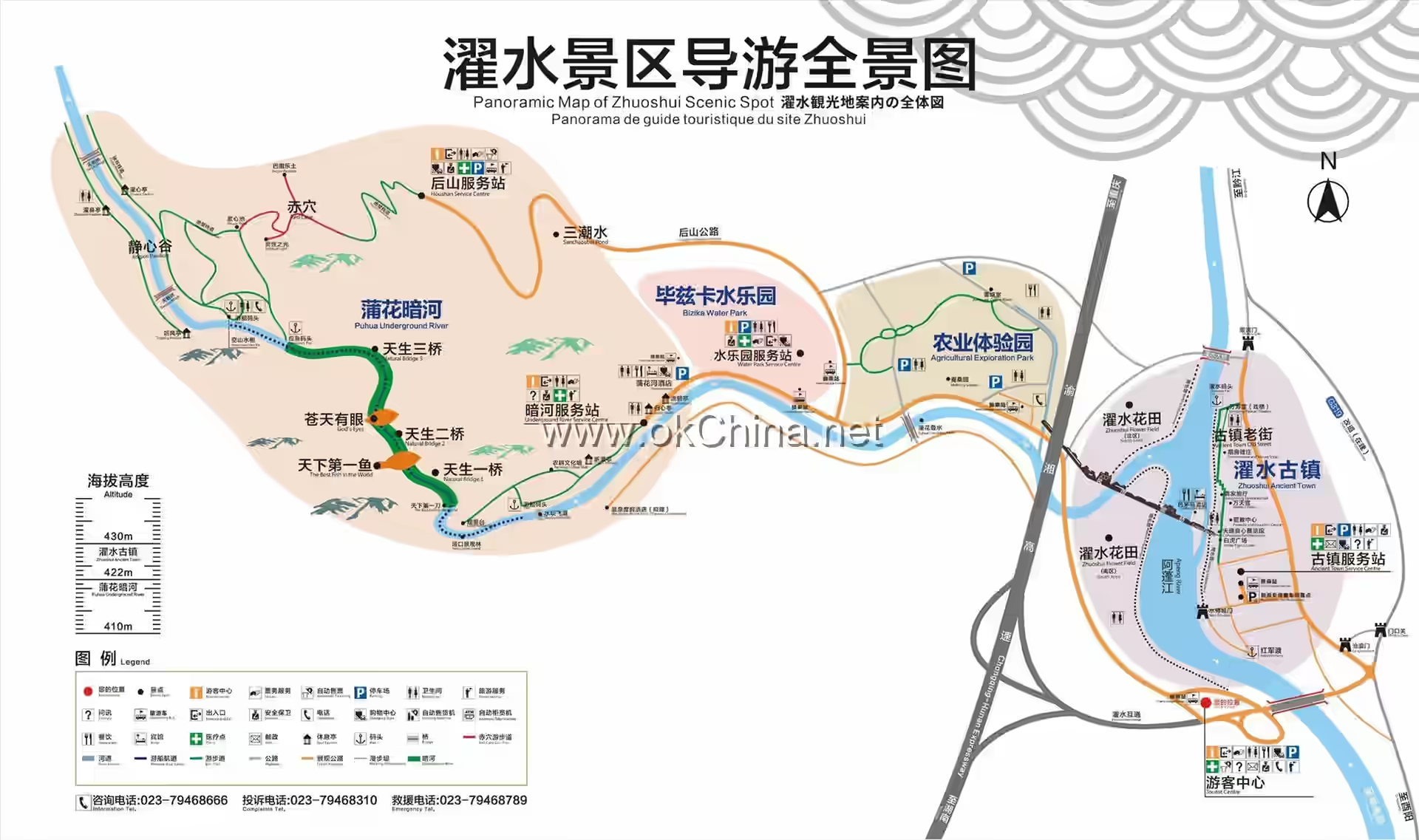
The Zhuoshui Scenic Area is located in Zhuoshui Town, Qianjiang District, Chongqing, and is a National AAAAA Tourist Attraction. It comprises three main parts: the Ancient Town of Zhuoshui, the Puhua Underground River, and the Puhua Leisure Agricultural Experience Park. Centered around the culture of "Heavenly Principle and Conscience," the area features iconic sights such as the world's longest covered bridge—the Canglang Bridge—and the karst landscape wonder of the Puhua Underground River. It integrates natural scenery, historical culture, and folk customs. The Ancient Town of Zhuoshui boasts a long history with a well-preserved street layout, showcasing the profound heritage of Tujia and Miao ethnic cultures alongside traditional merchant culture. The scenic area also attracts visitors with its distinctive cuisine and rich festival activities, making it the most representative comprehensive tourist destination in southeastern Chongqing.
2. Location
Hongjun Road, Qianjiang District, Chongqing (approximately 150 meters south of the Ancient Town of Zhuoshui Scenic Area)
3. Main Attractions
3.1 Ancient Town of Zhuoshui
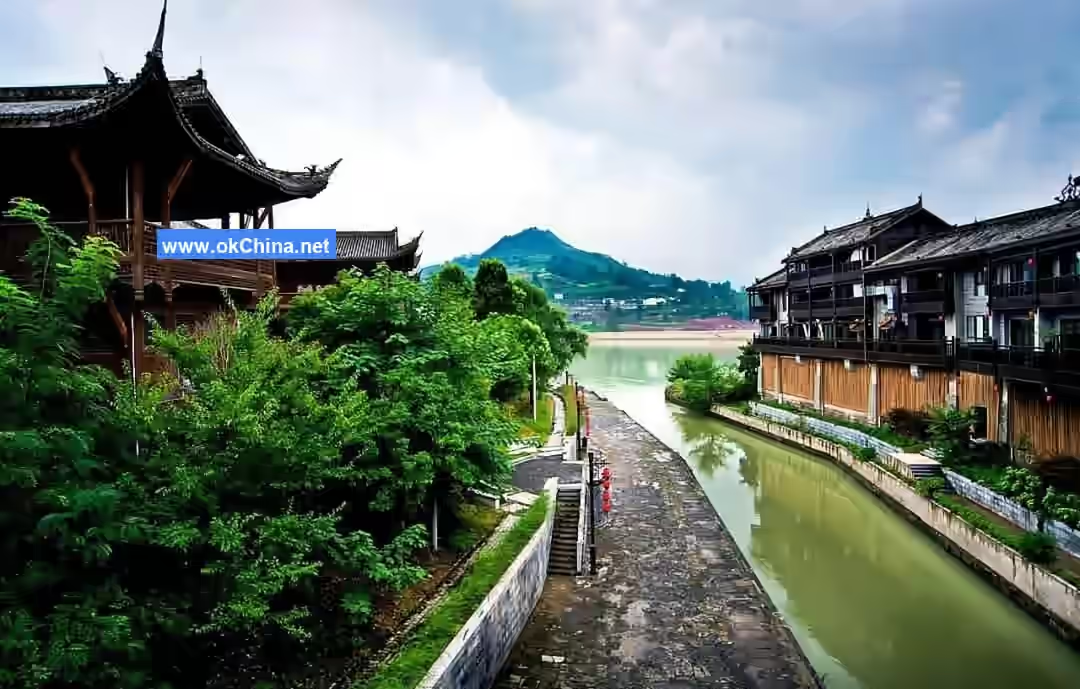
The Ancient Town of Zhuoshui has been recognized as a Chinese Historical and Cultural Town by the National Development and Reform Commission and the Ministry of Construction, a Characteristic Chinese Town, a creation and training base by the China Film Association and the Beijing Film Academy, and a poverty alleviation base for literature and art. It is also a sketching and art training base for the Sichuan Fine Arts Institute, was named a Chinese Couplet Culture Town by the China Couplet Society, and was designated a "Traditional Architectural Cultural Tourism Destination" by the China National Architecture Research Association. The "Ecological Homeland · Ancient Town of Zhuoshui" has been featured on national postage stamps. The town was historically known as "Baiheba" and "Zhuoheba." The overall layout of the ancient town follows a pattern of "Five Streets, Seven Lanes, Three Palaces, and Seven Courtyards." The "Five Streets" run north-south, from south to north: Banbian Street, Jiangxi Street, Zhong Street, Old Salt Market, and Li Family Old Street. The "Seven Lanes" run east-west: Zui Lane, Shui Lane, Wang Family Lane, Wantian Palace Lane, Dyeing and Starching Lane, Yu Family Lane, and Tan Family Lane. The "Three Palaces," from south to north, are Wantian Palace, Yuwang Palace, and Wanshou Palace. The "Seven Courtyards" are distributed along the streets, from south to north: Baxian Hall, Gong Family Baoting, Yanfang Qianzhuang (Opium Den and Bank), Wang Benshan's Former Residence, Wang Family Oil Shop, Guangshun Hao, and Zhuohaba Lecture Hall.
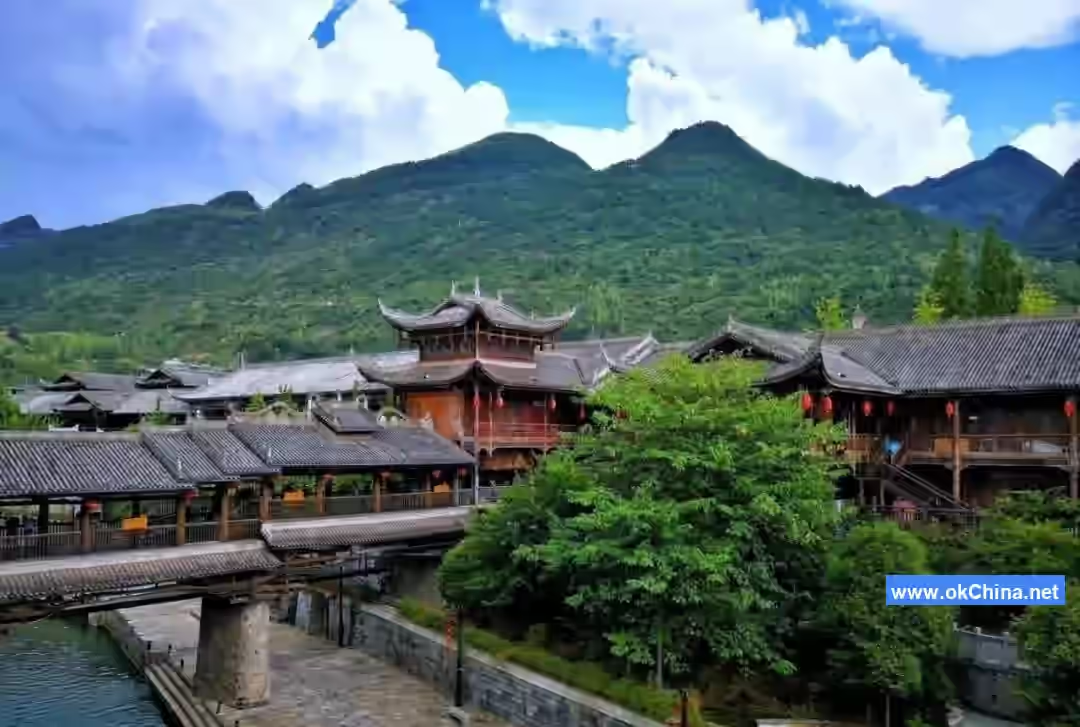
The ancient town is rich in cultural heritage, where intangible cultural heritages like the Houhe Ancient Opera and folk crafts such as Xilankapu (Tujia brocade) shine together. The wharf culture, merchant culture, ethnic and folk cultures have a long history. Major attractions within the town include the Red Army Crossing, Shuishi City Gate, Heavenly Principle and Conscience Exhibition Hall, Covered Bridge, Baxian Hall, Wantian Palace, Gong Family Baoting, Yanfang Qianzhuang, Wang Benshan's Former Residence, Wang Family Oil Shop, and Wanshou Palace. The ancient town exudes a quaint and timeless charm; walking through its old streets feels like traveling back in time to Zhuoshui's glorious past. The "Moral Stele" of "Heavenly Principle and Conscience" in the town represents the principles of integrity in business, conduct, and life for Zhuoshui merchants. It echoes the "Heaven Has Eyes" of the Puhua Underground River, together forming the local traditional core value of "acting with integrity."
3.1.1 Red Army Crossing
The Red Army Crossing was once one of the two major official ferries on the Apeng River, serving as a comprehensive dock for cross-river travel and cargo handling. Much of Zhuoshui's prosperity relied on this advantage. On May 6, 1934, He Long, Commander of the Third Army of the Chinese Workers' and Peasants' Red Army, and Political Commissar Guan Xiangying led their troops across the Apeng River from here to attack Pengshui City. At that time, over 30 boatmen from Zhuoshui gathered 17 wooden boats, working in shifts without rest, continuously ferrying until evening, safely transporting all Red Army soldiers and supplies across the river. That same day, more than 30 young men from Zhuoshui joined the Red Army.
3.1.2 Wantian Palace
Wantian Palace was originally a multifunctional building combining the Chuanzhu Temple and the Sichuan Guild Hall. "Chuanzhu" refers to Li Bing, who oversaw the construction of the Dujiangyan irrigation system and was bestowed the title "Great Emperor Wan Tian Chuan Zhu Chong Ying Hui Min." Additionally, Wantian Palace typically enshrines Liu Bei (Emperor Zhaolie of Shu Han), Guan Yu (Emperor Guan Sheng), and Zhang Fei (Emperor Huan Hou). It also served as a gathering, meeting, and exchange place for local Zhuoshui merchants and civil society organizations.
Zhuoshui's Wantian Palace was built during the Qianlong period of the Qing Dynasty. It is a mixed structure of brick, wood, and stone. Its architectural scale is the largest among Zhuoshui's three ancient guild halls, holding significant status and representativeness among the town's ancient buildings. The lintel is constructed with blue stone corbelling to the top, with the three characters "Wantian Palace" carved in intaglio in the center.
3.1.3 Heaven Has Eyes
Between the three natural bridges are two oval-shaped sinkholes, each approximately 100 meters high. The "Heavenly Eye" between the third and second bridges is 41 meters wide, and the one between the second and first bridges is 52 meters wide. The bridge deck of the second natural bridge is about 25 meters wide. This golden ratio creates a stunning view when looking up from a boat passing underneath: the bridge deck resembles the bridge of a fairy's nose, with the pair of sinkholes on either side like a pair of suddenly opened "Heavenly Eyes." This is the core landscape of the Puhua Underground River, "Heaven Has Eyes." The people of the Linjun tribe believed that "Heaven watches what people do," maintaining the highest reverence for nature and the way of Heaven. Today's people of Zhuoshui also constantly revere heavenly principles and emphasize conscience. The naturally formed "Heaven Has Eyes" here resonates distantly with the "Heavenly Principle and Conscience" Moral Stele in the ancient town, together constructing the living soul of the Zhuoshui Scenic Area: "Heaven above has eyes, humanity has conscience."
3.1.4 Yanfang Qianzhuang (Opium Den and Bank)
Yanfang Qianzhuang was an early, large-scale credit institution in the Ancient Town of Zhuoshui, with a floor area of over 570 square meters, entirely constructed with wooden post-and-lintel frames. It was jointly established by the Wang family and the Hui merchant Zhan family. The banknotes issued by Yanfang Qianzhuang often featured the "Ten Filial Piety Stories" as the main design, printed from engraved plates. These notes have been included in several university monetary textbooks and are typical representatives of early Chinese private banknotes.
3.1.5 Three Natural Bridges
The underground river's three natural bridges hold a Guinness World Record for the most observable natural bridges over a subterranean river. The formation of these three waterborne natural bridges is due to the area being in the middle stage of karst landform evolution, where surface collapse occurred above an underground cave, and incomplete collapse of the cave roof formed the natural bridges.
3.1.6 Gong Family Baoting
The Gong Family Baoting was built in the late Qing Dynasty and is a rare ancient building with a "Baoting" (embracing hall) structure in southwestern China. It is also the former residence of the famous Chinese meteorologist Gong Peiguang. The entire building was constructed according to the terrain: the street-facing side has only one story, while the river-facing side becomes two stories with stilted foundations. From the street, the building's front faces the street; from the riverbank, its front faces the river. A roof open on all sides was built above the Gong Family Baoting, forming a soaring attic that provides excellent lighting for the hall while sheltering it from wind and rain. This architectural form is extremely rare and is a treasure among Tujia stilted building architecture.
3.1.7 Guangshun Hao
Guangshun Hao is a three-courtyard, two-skywell compound building. The street-facing side features a wooden framework, while the firewalls on both sides and the rear of the compound are brick. The different sections are separated by blue brick walls connected by gates with stone door frames; there is no main gate between the second and third courtyards. The unique architectural layout creates a long passageway within the compound with good lighting. Both wings of the large compound have soaring attics. The inner courtyard's second and third floors feature seven sections of railed balconies, displaying typical guild hall-style commercial characteristics rather than purely residential architecture. Guangshun Hao extensively uses wood and stone carvings, demonstrating a high level of decorative artistry. The window lattices, panels below windows, floor railings, and pillar heads around the skywells are adorned with rich and lifelike patterns of figures, flowers, birds, insects, and fish.
3.1.8 Xu Tingze's Former Residence
Xu Tingze was a former captain pilot of the 43rd Squadron, 11th Group, 2nd Wing of the Kuomintang Air Force. On June 2, 1963, he flew a US-made F-86F jet fighter from Taiwan back to mainland China, defecting to the Communist side. Later, Xu Tingze built this residence in his hometown of Zhuoshui.
3.1.9 Wang Family Workshop
The Wang family was a leader in modern industry and commerce in the Ancient Town of Zhuoshui, long engaged in various processing industries and joint ventures in banking, money exchange, transportation, and other businesses. They owned three oil-pressing workshops alone, and this building is one of the preserved ones. Its architecture reflects Ming and Qing feudal styles with a sloping roof and an all-wood structure. Three main gates and three skywells are aligned on a central axis. The four-courtyard, three-skywell compound embodies the ancient commercial architectural model of "shop in front, workshop in back."
3.1.10 Wang Benshan's Former Residence
Wang Benshan was the first university student from the Ancient Town of Zhuoshui and an authoritative expert in organic geochemistry in China. The former residence was once five stories high with a unique skywell. It is the only building where one can see the river view through the main gate and an underground passage, featuring flexible and通透 lighting. It is also the only riverside stilted building in the ancient town with fire gable walls.
3.1.11 Shuishi City Gate
Zhuoshui has over a thousand years of history under indigenous and Tusi (chieftain) rule, with the "Gaitu Guiliu" policy implemented in the 13th year of the Yongzheng reign (1735 AD). For a long period, this was the first market town, the first postal station, the first courier station, and the first mountain pass for entering the Wuling Mountains from south of the Yangtze River. Post roads, trade routes, and salt routes all passed through here. The Shuishi City Gate was the only passage for merchants and travelers entering the ancient town, playing a crucial strategic defensive role.
3.1.12 Moral Stele
This "Heavenly Principle and Conscience" Moral Stele was erected in the 14th year of the Guangxu reign of the Qing Dynasty (1888 AD). It constantly reminds the people of Zhuoshui to adhere to "heavenly principle" and have "conscience" in their conduct, dealings, and business, ensuring equality between men and women and fairness to old and young. Heavenly principle emphasizes heteronomy (external rules), while conscience emphasizes autonomy (self-discipline). The two complement each other, forming the cultural spirit of the Zhuoshui people.#### 3.1.13 Red Cave The Red Cave was once a place where Linjun, the ancestor of the Tujia people, lived. The Book of the Later Han records: "In the time of Li, styled Xuanxiu, a descendant of Linjun, the Wuluo Zhongli Mountain collapsed, revealing stone caves—one red as cinnabar, the other black as lacquer. From the red cave emerged a man named Wuxiang, of the Ba clan; from the black cave emerged people of four clans: the Mian, Fan, Bai, and Zheng clans." Linjun, the leader of the ancient Ba people, is the hero described as "the one who emerged from the red cave, named Wuxiang, of the Ba clan."
3.1.14 White Tiger Sculpture
The white tiger is a totem worshipped by the Tujia people. Legend has it that the White Tiger Star Lord descended from heaven and fell in love with a Tujia maiden. By day, he transformed into a white tiger to help her herd sheep, and by night, he became a handsome young man. They lived a happy life of farming and weaving, raising seven sons and seven daughters. Later, the White Tiger Star Lord returned to heaven, and the descendants of their seven sons and seven daughters became today's Tujia people. Another legend says that after the death of their ancestor Linjun, his spirit transformed into a white tiger, guarding the Tujia people for generations. Regardless of the legend, both reflect the Tujia custom of worshipping the white tiger, whom they call "Liba," meaning Tiger Ancestor. Many places in Tujia settlements are named after the white tiger, and even their clothing, decorations, and utensils imitate the white tiger to seek the totem's protection.
3.2 The World's First Covered Wind-and-Rain Bridge
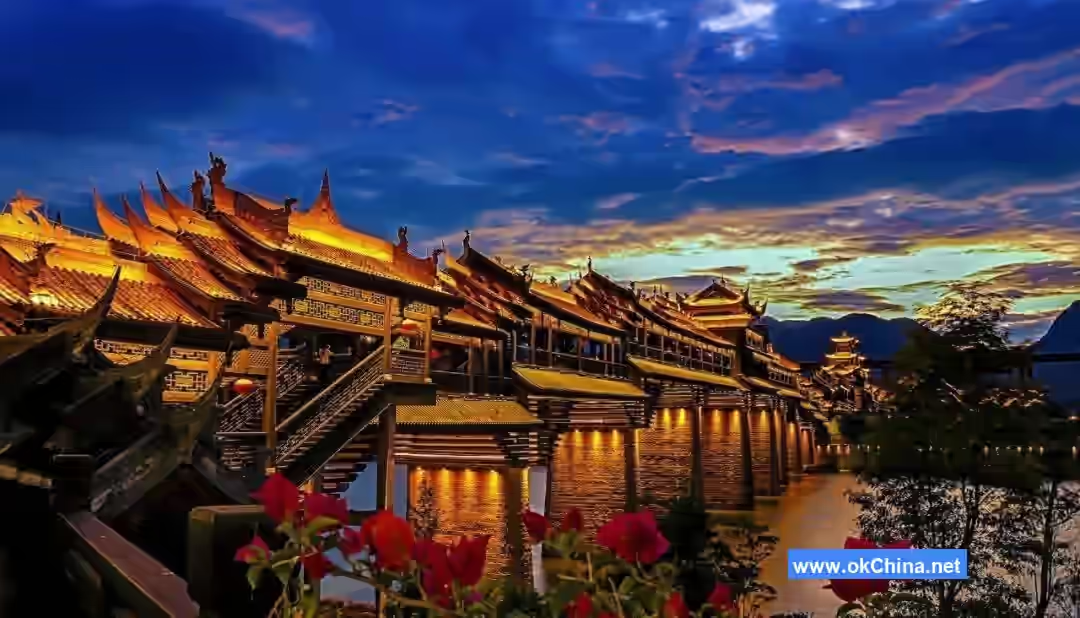
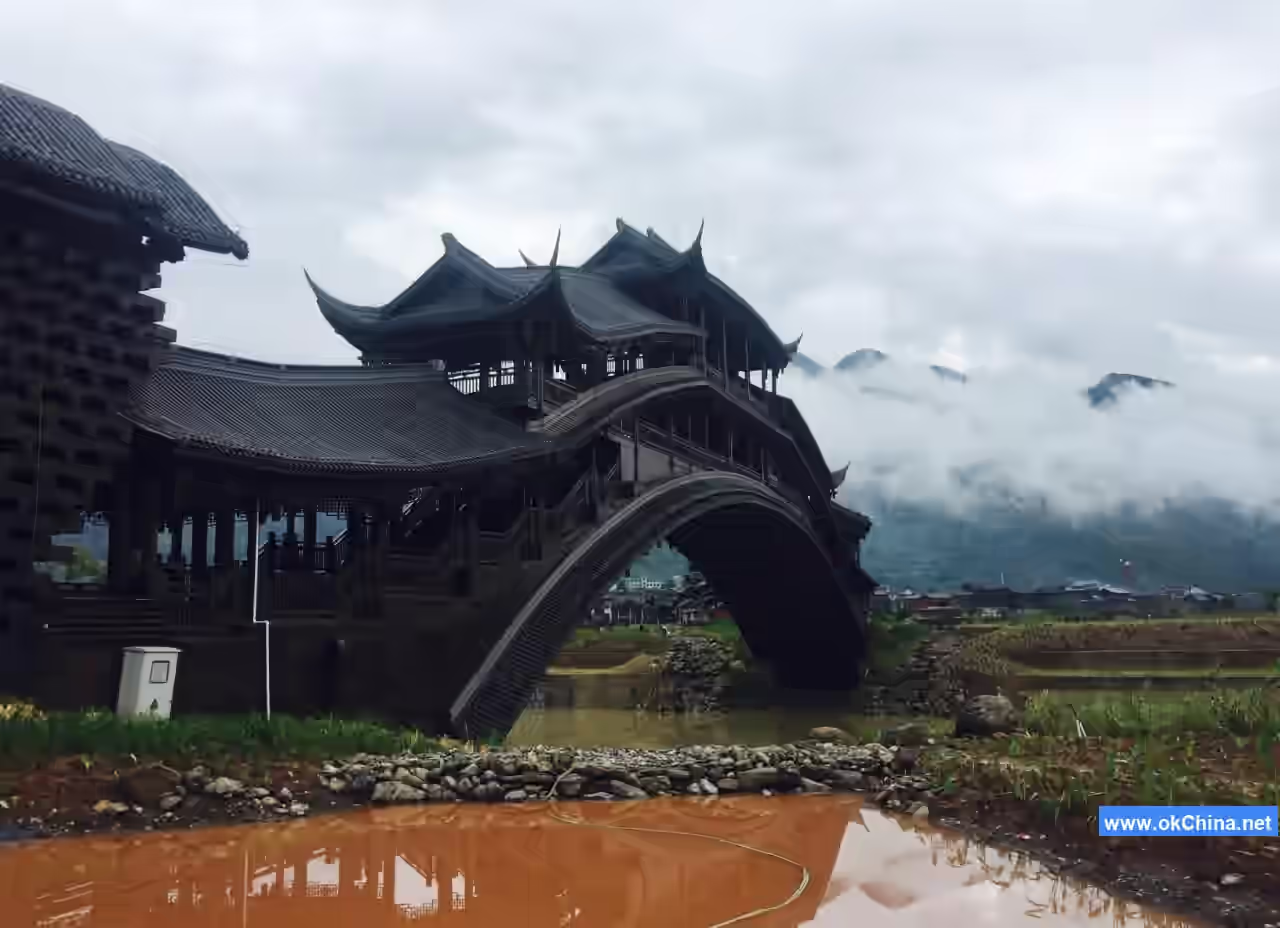
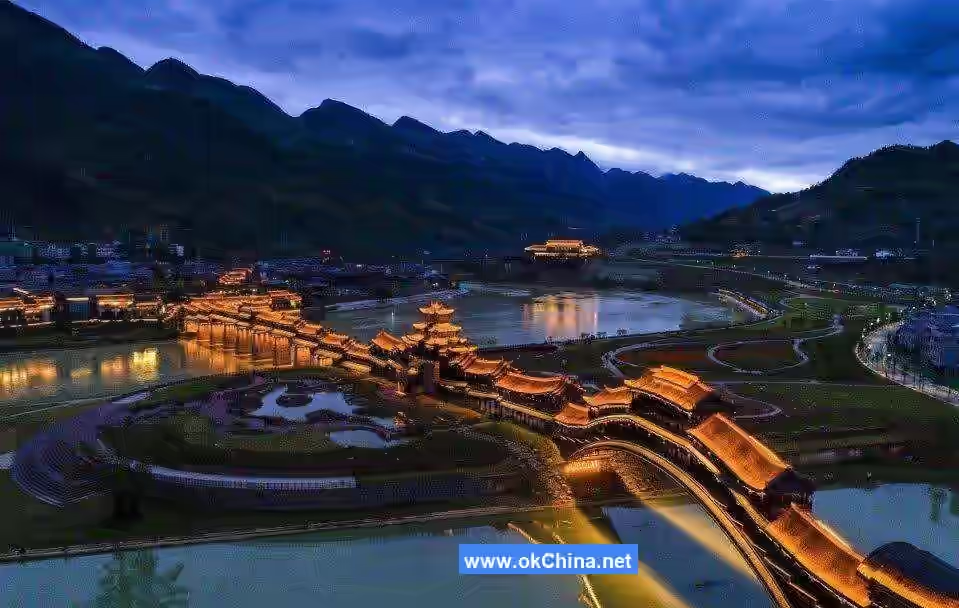
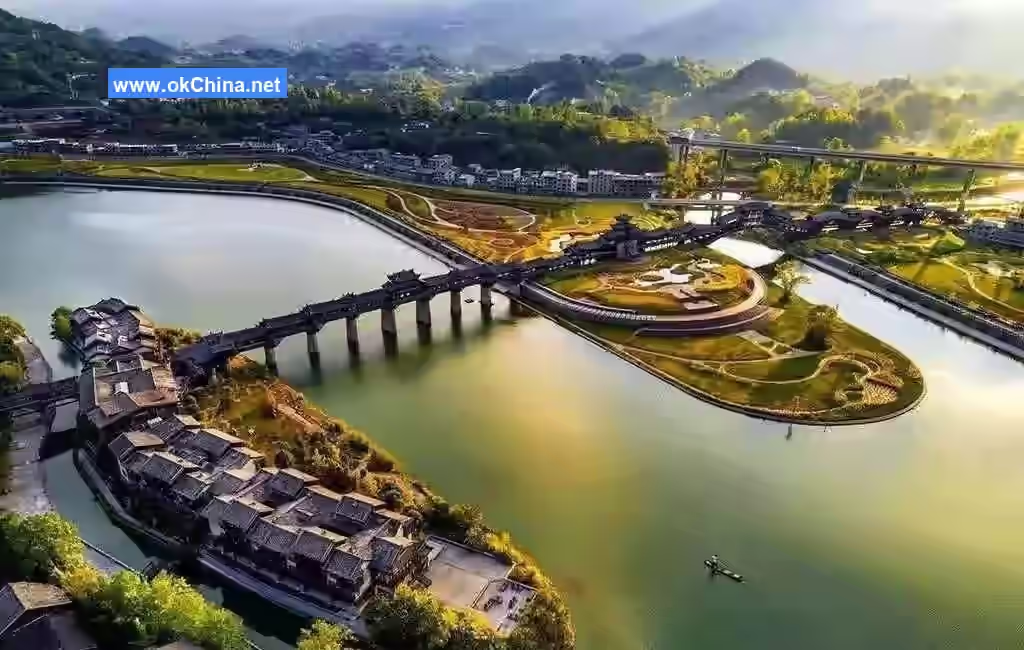
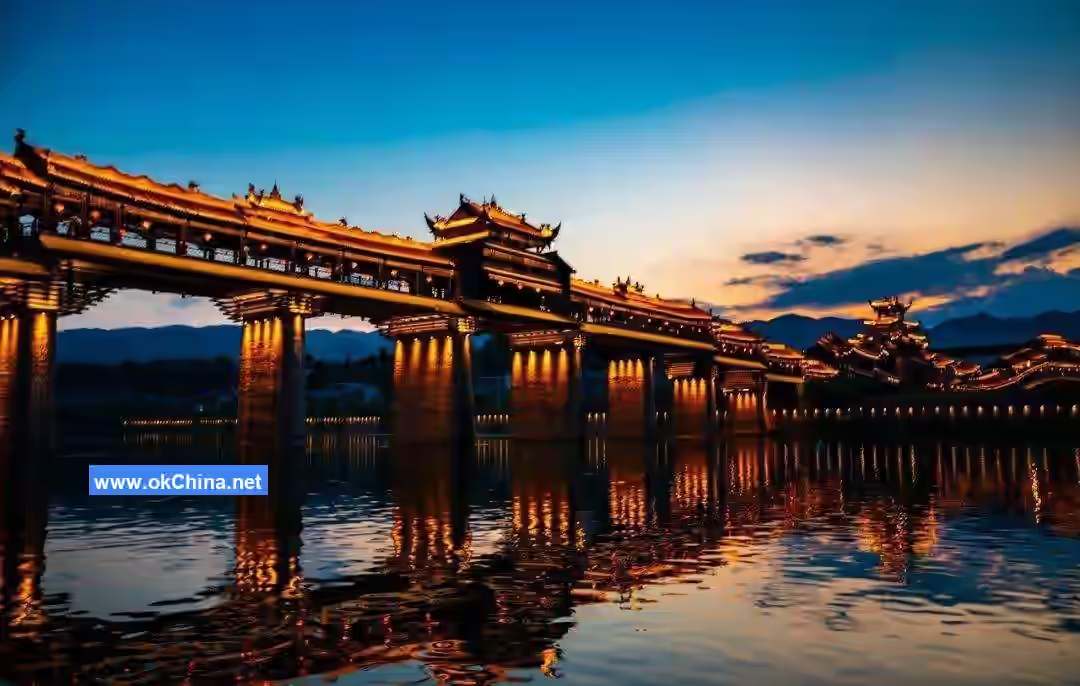
The Zhuoshui Covered Wind-and-Rain Bridge spans 658 meters in total and can be appreciated in four distinct sections due to variations in style and construction period. The first section, "Zhuohe Huaiyuan," is 310 meters long and features multi-story pavilions and towers, with the central pavilion being the highest point. The bridge employs techniques such as double eaves, hip-and-gable roofs, a Tujia commander's platform, raised eaves, and multi-level roof breaks, creating a unified yet varied form that is particularly elegant and古朴. The second section, "Tangzhong Changyun," is 105 meters long, with its central bell tower standing 26 meters tall across four stories. This section consists of a corridor and the bell tower, which features a towering double-eaved hip-and-gable roof and houses a replica Tang Dynasty bronze bell. The third section, "Caihong Fubo," is 97 meters long. This single-arch bridge spans the Puhua River, combining curved and straight lines in a柔美 form, resembling a brilliant rainbow. The fourth section, "Puhua Feilong," is 146 meters long, combining curved roofs with modern lattice piers. Its elevation takes the overall form of a dragon as its creative prototype, metaphorically representing a water-born dragon soaring across the river. The entire Zhuoshui Covered Wind-and-Rain Bridge is not only the world's longest covered bridge but also achieves a blend of tradition and modernity, Chinese and European styles, and Eastern and Western architectural aesthetics in terms of form, structure, and craftsmanship. Furthermore, it represents a new structural approach by combining traditional wooden covered bridge techniques with glued laminated timber and steel frames, marking a novel exploration and attempt in architecture.
3.3 Bizika Water Park
Bizika Water Park is a large-scale water theme park integrating recreation, shopping, and dining with Tujia culture, developed by the Qianjiang Tourism Investment Company. Covering 132 acres, the park is divided into four experience zones: Children's Water Play Area, Sunshine Beach Area, Thrill Challenge Area, and Parent-Child Experience Area. It features over ten attractions, including the Anime Fortress Water Citadel, Happy Sea, and Sunshine Beach, making it a holy land for water fun, stress relief, family interaction, and romantic encounters.
3.4 Puhua Underground River
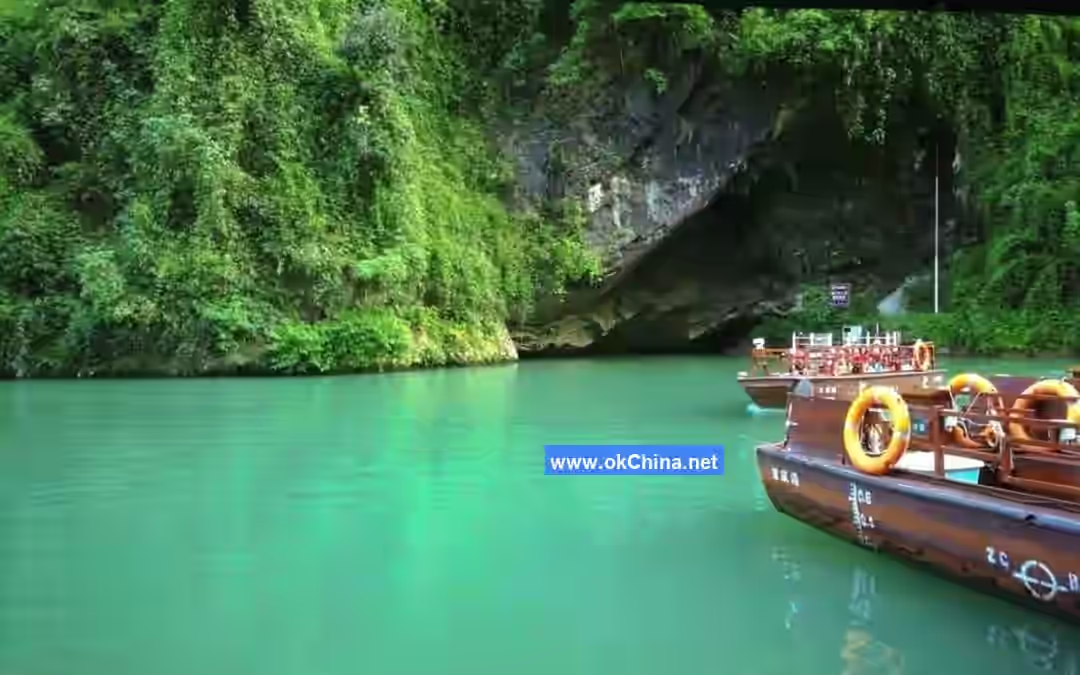
The Puhua Underground River stretches 1.6 kilometers and is a typical karst landform. Inside the underground river, the cliffs are perilously steep, and water flows into a cavernous world. Key attractions include the Waterborne Natural Triple Bridge, Eyes of Heaven, the underground river itself, the giant sinkhole, intermittent springs, the Red Cave, cliffside plank paths, and the Puhua River Gorge—all stunning wonders with beautiful and pleasant scenery. The valley on both sides stands gracefully like a maiden, gazing as the Puhua Underground River flows to the sea, unchanged since ancient times. The river water within the valley is crystal clear, with flocks of egrets and abundant fish and shrimp. The Puhua Underground River has an annual average temperature of 15°C, with summer highs of 31°C. The temperature inside the溶洞 remains a constant 22°C year-round, earning it the nickname "Central Air Conditioning." The most peculiar sight is the "Eyes of Heaven." Traveling upstream along the underground river, one encounters three natural stone bridges of roughly equal width. Looking up, all three bridges are visible. Between these bridges are two oval-shaped sinkholes, each about 100 meters high. The sinkhole between the first and second bridges is 41 meters wide, while the one between the second and third is 52 meters wide. With the second bridge resembling a nose bridge, they form an extremely rare "Heavenly Eye" landscape. Within the gorge lies the "Red Cave"溶洞, originating from the legend of the Ba clan's Linjun deity and the Salt Water Goddess. Inside the溶洞, there are naturally formed wonders such as the Thousand-Hill Terraces, Dripping Lotus, Twin Stalagmites of Puhua Cave, and Buddha's Hand Welcoming Spring, all breathtakingly beautiful. Additionally, there are countless rare "millennium cave pearls" scattered on the ground, seldom seen in similar caves across the country.
4. Cultural History
4.1 Development History
In the 13th year of the Yongzheng reign of the Qing Dynasty (1735), Geng Shouping arrived in Youyang to implement the "Gaitu Guiliu" policy (replacing native chieftains with state-appointed officials). The Youyang Pacification Commission was changed to Youyang County, under the jurisdiction of the Qianpeng Office. Zhuoshui belonged to the Beisan Township of Shangji Li in Youyang County, and a market began to flourish there from then on. In the first year of the Guangxu reign (1875), the Youyang Prefecture was divided into four routes and eighteen townships. Zhuoshui was part of the Beisan Township under the North Route's five townships. In the 24th year of the Republic of China (1935), Zhuoshui was renamed from Zhuohaba to Zhuoshui Township in the Third District of Youyang County. In the 26th year of the Republic of China (1937), Zhuoshui Township was upgraded to Zhuoshui Town. On July 3, 1952, Zhuoshui (formerly the Ninth District of Youyang County), along with Lianghekou, Fengjia, Malahu, Xuetangping, and other areas, was划归 to Qianjiang County. In 1953, it was renamed Zhuoshui Township. In 1958, it was renamed Zhuoshui Commune. On July 30, 1985, it was renamed Zhuoshui Town.
4.2 Scenic Area Anecdotes
In Zhuoshui Town, a saying has been passed down: "The Fists of the Fan family, the Silver of the Wang family, the Guns of the Gong family, the Official Hats of the Yu family." "Fists" refer to martial prowess, and "Guns" refer to firearms. This phrase summarizes the characteristics of the four prominent families in the ancient town during the late Qing and early Republic periods.
4.2.1 The Fan Family
The Fan family once had a highly skilled martial artist who loved to champion justice. Whenever he encountered officials or local gentry bullying commoners on the street, he would毫不犹豫 step forward to uphold righteousness, earning the admiration of the townspeople. At that time, the Fan family only ran small businesses, selling items like tobacco, alcohol, and cooking oil, living an ordinary life. For several generations, the female heads of the Fan family experienced widowhood. They meticulously cared for the elderly, raised children, and managed the business. The Fan family compound still preserves two Qing Dynasty chastity plaques awarded to them: "Clouds Rise and Mists Gather" and "Fragrant Osmanthus and Orchids." The men of the Fan family often learned independence and martial arts from a young age to protect themselves and their families, hence the saying "the Fists of the Fan family." The Fan family also had a unique building on the street—a cool hall (凉厅)—which provided great convenience for traveling merchants.
4.2.2 The Wang Family
The Wang family is said to have migrated from Jiangxi. After settling in Zhuoshui, they rapidly developed and expanded, playing an extremely important role in the近代 industrial and commercial development of Zhuoshui. Notably, they introduced the Zhan family of Huizhou merchants to develop in Zhuoshui, establishing money shops and issuing banknotes. By the mid-Republic period, the Wang family reached its peak. Most of Zhuoshui's近代 factories, workshops, shops, and transport businesses were related to the Wang family. Among the Wang clan, Wang Ziwen controlled the most enterprises. Wang Ziwen was a representative figure of Zhuoshui's industry and commerce at the time, doing business in Hunan, Hubei, Guizhou, Anhui, and other places. He owned two oil presses and businesses in brewing, wax casting, rice milling, noodle making, sugar boiling, and fireworks production. During the Republic era, the government-issued legal tender had excessively large denominations and depreciated rapidly, so silver shops in Zhuoshui issued small-change vouchers. After these vouchers fell out of use, people could still exchange them at the Wang family for salt, oil, rice, and other goods. In 1936, the Wang family owned the only two commercial transport vehicles (charcoal-powered trucks) in southeastern Chongqing at the time. When the People's Republic of China was founded in 1949, nearly half the households on Zhuoshui Street were surnamed Wang. The Wang family valued education and produced many talents. Wang Shitai once passed the imperial examination at the provincial level (举人). Wang Qixiang served as a supplementary official (补郎). Wang Ziwen's son, Wang Dezu, studied at the Southwest Military and Political University. Wang Shijing founded the first girls' school in Zhuoshui Town. Wang Benshan was the first university student from Zhuoshui, later becoming a researcher at the Chinese Academy of Sciences and an organic geochemist.
4.2.3 The Gong Family
Legend has it that the Gong ancestors came to Zhuoshui from Baiyangwan while herding ducks and settled there upon finding it suitable for living. They later became the largest family in the town with the most firearms, and their armed influence was significant in the surrounding areas. By the late Republic period, the Gong family developed rapidly, owning multiple riverside houses in the ancient town (almost all of which were destroyed in the 1982 flood). Only one "Baoting" (抱厅) built by the Gong family in the late Qing period remains in the ancient town. The characteristic of the Baoting is a central冲天楼 designed for lighting, with a scientifically合理的 design for rainwater drainage. Later, wealthy families in Zhuoshui attempted to仿造 it but failed. The "Zhuoheba Paoge Society" (a local brotherhood organization) was centered around the Gong family for assembly and expansion. Under this organization's name, they maintained local order, resolved matters even the government couldn't handle, provided保镖 for merchant caravans, and ensured the safety of transport on the ancient trade routes. They also participated in the "Railway Protection Movement." A descendant of the Gong family, Gong Peiguang, is one of China's experts and pioneers in aerospace remote sensor research and atmospheric pollution studies, authoring books such as Atmospheric Pollution.#### 4.2.4 The Yu Family The Yu family accumulated wealth through business ventures and operating herbal medicine shops, using their resources to purchase land and support their children's education. The ancestral hall of the Yu family, known as the "Hall of Eight Virtues," signifies that many of their ancestors held high-ranking official positions. The phrase "three Jinshi in one family, five Ministers over four generations" is a source of immense pride for the Yu descendants. Among the Yu clan in Zhuoshui, Yu Gong'an passed the imperial examination to become a Jinshi, and the emperor bestowed upon him an official hat with peacock feathers, while his wife was granted a phoenix crown and ceremonial robes, along with twelve longevity screens. A commemorative plaque from this honor still exists today. Yu Gong'an had two elder brothers and one younger brother: Yu Gongwen, Yu Gongxue, and Yu Gongbang. The names of the four brothers together form the phrase "Wen Xue An Bang" (Literature, Learning, Peace, and Governance), reflecting a deep cultural significance. After achieving the Jinshi degree, Yu Gong'an maintained a humble and non-confrontational attitude toward life and instructed his descendants to pursue literary studies and practice medicine for generations. They transported local specialty herbs such as mint, calamus, and peony from the town to other regions, while bringing in external medicinal ingredients like rhinoceros horn, donkey-hide gelatin, angelica, and codonopsis that were not locally available. In the late Qing Dynasty, among the Yu family doctors was a blind physician named Yu Guangshun, after whom the Guangshun Medical Hall was named.
Comments
Post a Comment