
Zhouzhuang Ancient Town
1. Introduction
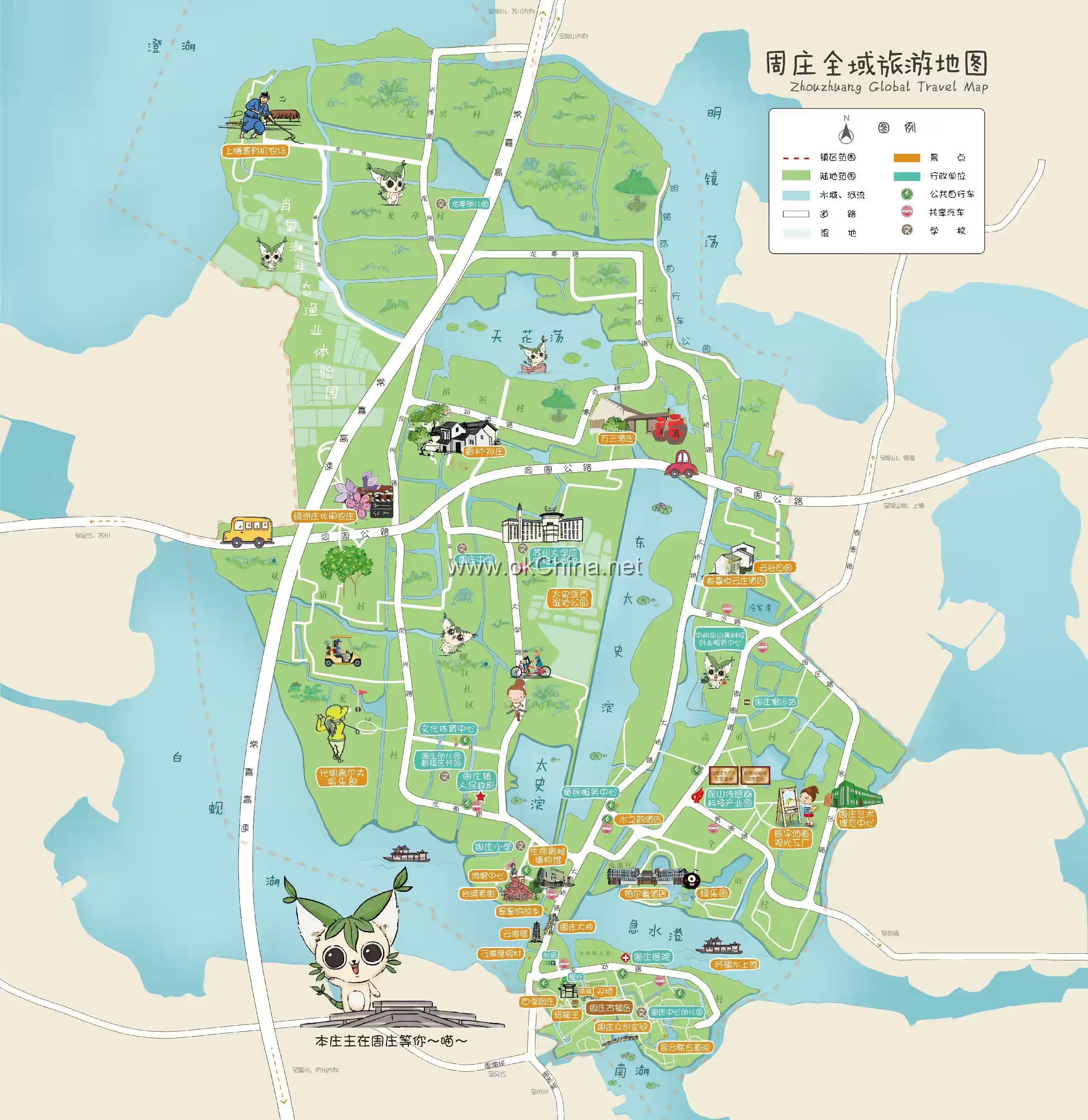
Zhouzhuang Town is located southeast of Suzhou City, at the junction of Kunshan, Wujiang, and Shanghai. The town covers an area of 38.96 square kilometers, with a water area of 18.16 square kilometers, accounting for 46.6% of the total area. The town has a population of over 30,000, including more than 22,000 local registered residents. It administers 10 administrative villages (comprising 62 natural villages, 54 of which are preserved villages) and 3 neighborhood committees.
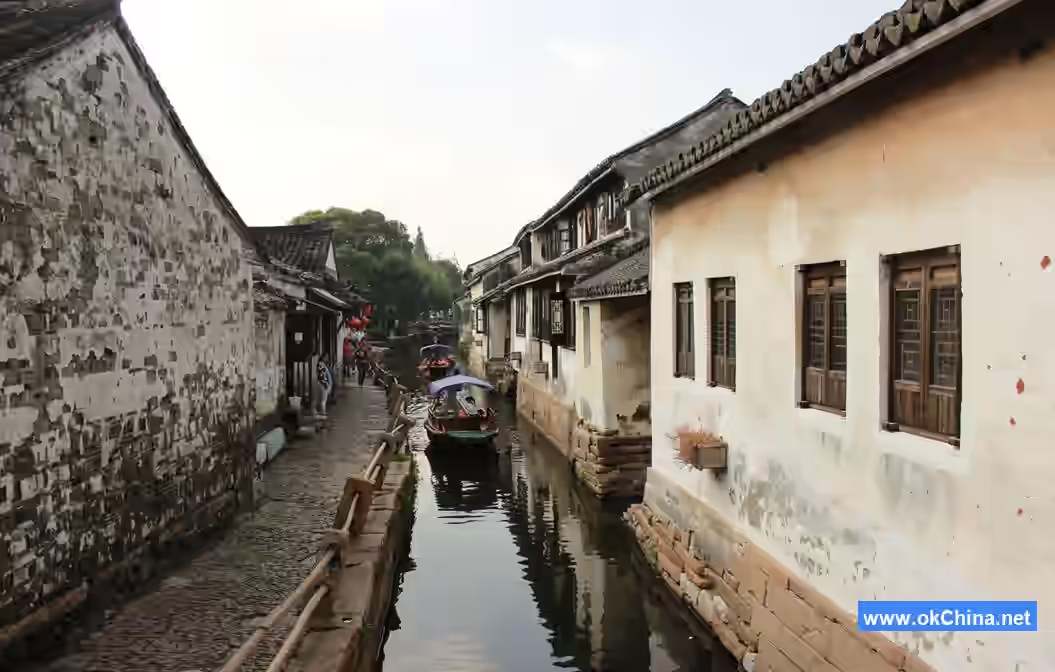
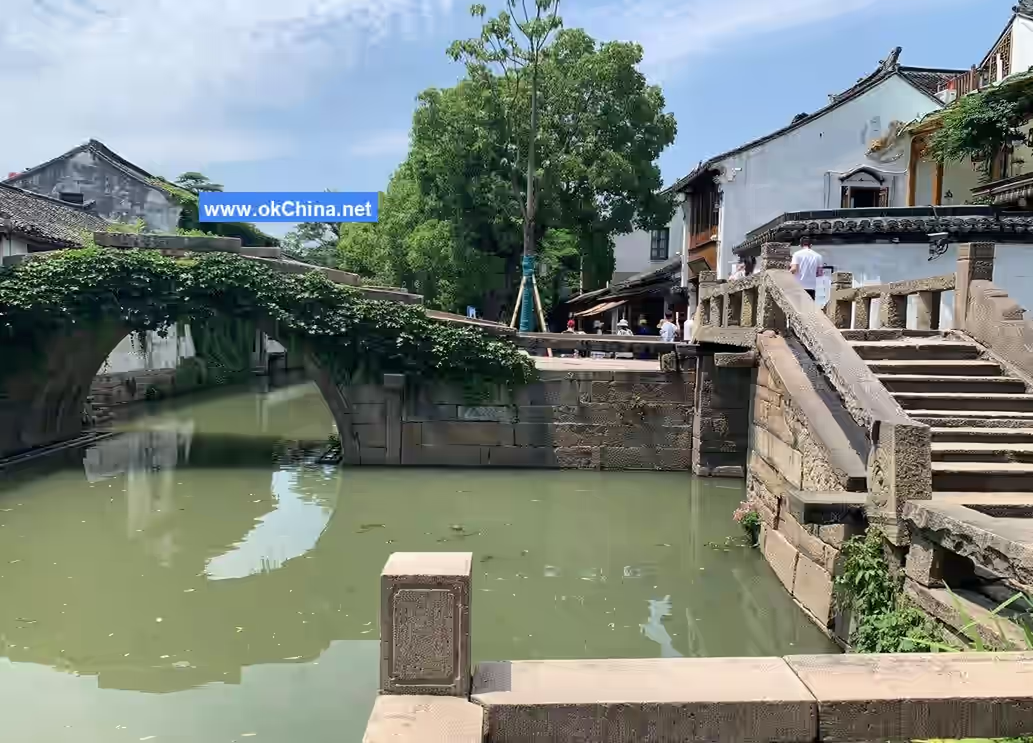
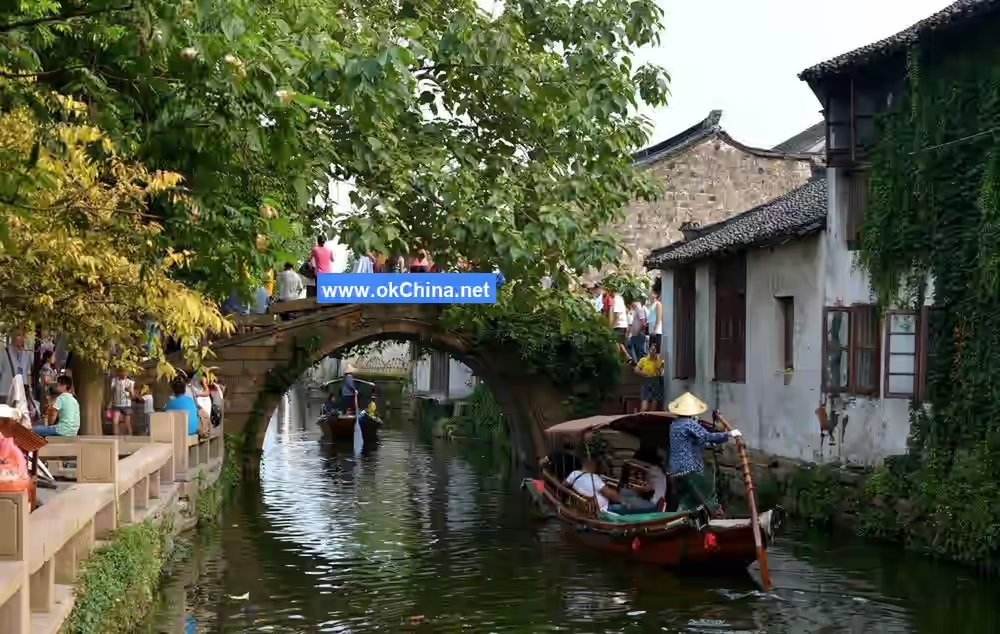
Zhouzhuang Ancient Town was founded during the Spring and Autumn and Warring States periods, serving as the fiefdom of Prince Yao of Wu and King Yao of Yue. On May 8, 1949, Zhouzhuang was liberated and officially named Zhouzhuang Town. In the first year of the Yuanyou era of the Northern Song Dynasty (1086 AD), an official named Zhou Digong established an agricultural estate here. He donated his residence and land to build a temple named "Quanfu." Grateful for his kindness, the local people renamed Zhenfengli as "Zhouzhuang." During the Jingkang Incident, Jin He, the twentieth minister, migrated south with the Song court and settled here, gradually increasing the population density. The Zhouzhuang Town People's Government is responsible for organizing, coordinating, and supervising the construction work in the key protected areas, buffer zones, and tourism-supporting control zones of the ancient town. Surrounded by water on all sides, the town was built along rivers, with streets following the waterways and markets lining the streets. Major attractions include Fu'an Bridge, Twin Bridges, and Shen Hall. The grid-like river network preserves 14 ancient stone bridges built during the Yuan, Ming, and Qing dynasties. Over 800 households of original residents live along the rivers, and more than 60% of the residential buildings retain the architectural style of the Ming and Qing dynasties.
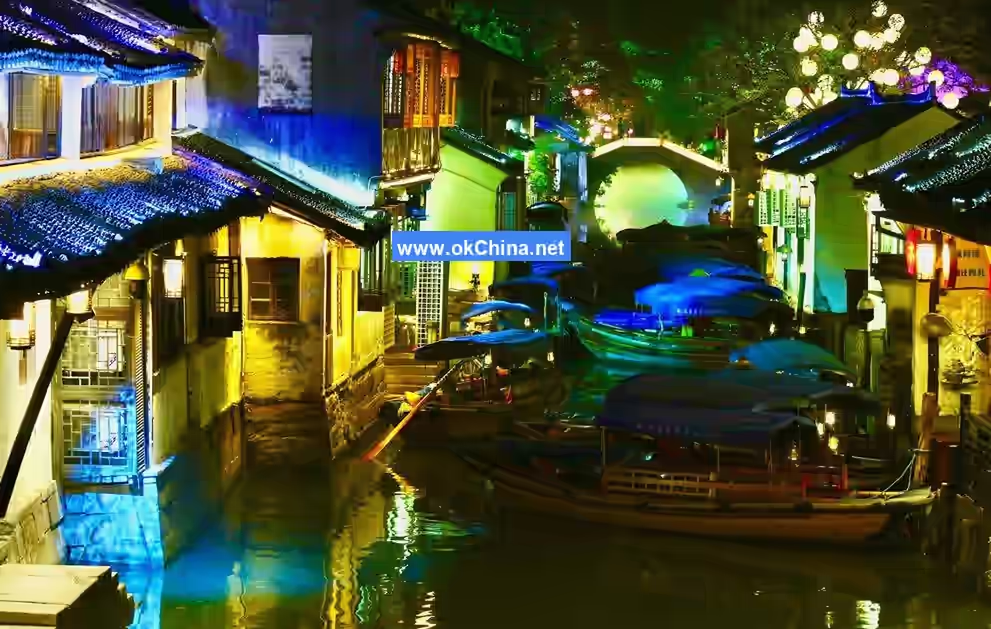
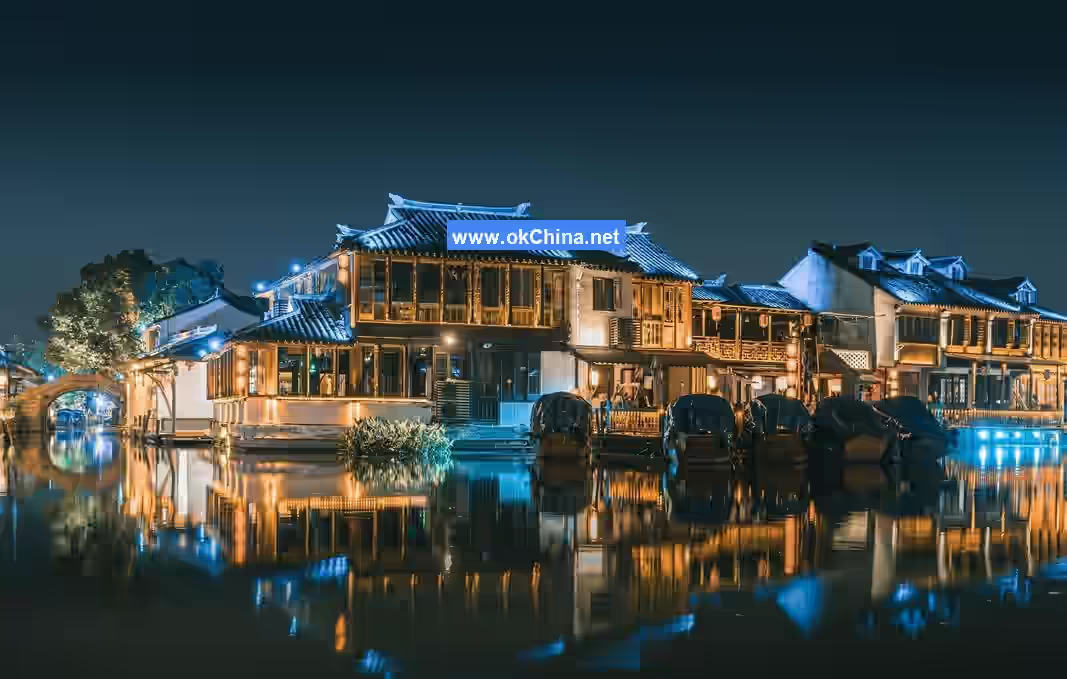
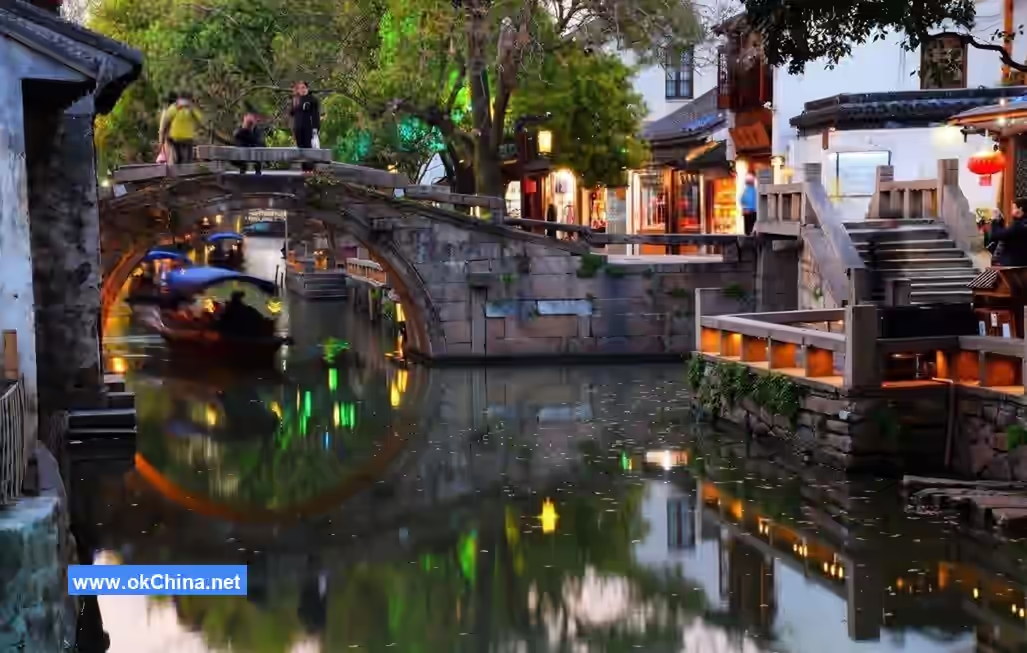
Zhouzhuang Ancient Town is a candidate site for UNESCO World Heritage, one of the first batch of National 5A-level Tourist Attractions, and one of the Top Ten Most Beautiful Towns in the World. In November 2021, it was designated as one of the first batch of National Nighttime Culture and Tourism Consumption Clusters. In May 2023, the Zhouzhuang Ancient Town Scenic Area in Suzhou was selected as one of the second batch of National Civilized Tourism Demonstration Units.
2. Historical Evolution
2.1 Ancient Times
- During the Spring and Autumn and Warring States periods, it served as the fiefdom of Prince Yao of Wu and King Yao of Yue.
- In the 14th year of the Zhenguan era of the Tang Dynasty (640 AD), the area belonged to Suzhou Prefecture in Jiangnan Circuit.
- In the first year of the Wansui Tongtian era (696 AD), due to population growth, thriving agriculture and commerce, and increased taxes and labor, Suzhou Prefecture was divided to establish Changzhou County.
- In the first year of the Yuanyou era of the Northern Song Dynasty (1086 AD), an official named Zhou Digong established an agricultural estate here. He donated his residence and land to build a temple named "Quanfu." Grateful for his kindness, the local people renamed Zhenfengli as "Zhouzhuang." During the Jingkang Incident, Jin He, the twentieth minister, migrated south with the Song court and settled here, gradually increasing the population density.
- In the first year of the Zhishun era of the Yuan Dynasty (1330 AD), Shen You and his son Shen Wansan, originally from Shenjiayang in Huzhou, Zhejiang, moved to the eastern part of Zhouzhuang. They started by farming and later engaged in trade, leading to the emergence of a market along the middle section of the north-south street west of Yinzi Bang.
- The town began to take shape during the early Ming Dynasty. During the Chenghua era, it was transferred to Huating County under Songjiang Prefecture.
- In the 21st year of the Jiajing era of the Ming Dynasty (1542 AD), parts of Huating and Shanghai counties were separated to establish Qingpu County, and the area came under its jurisdiction. During this period, Zhouzhuang established a "Xiangyue Suo" (community compact center) to educate the public by expounding imperial edicts, marking the earliest officially recorded institution in Zhouzhuang's history.
- During the Shunzhi era of the Qing Dynasty, the area was returned to Changzhou County.
- In the first year of the Kangxi era (1662 AD), a garrison commander was stationed in Zhouzhuang, overseeing both land and water checkpoints in Changzhou and Kunshan.
- In the 13th year of the Kangxi era, the garrison was changed to the Zhouzhuang checkpoint, managing 15 land and water checkpoints outside Fengmen in Suzhou.
- In the second year of the Yongzheng era (1724 AD), Changzhou County was divided to establish Yuanhe County. The town was split between the two counties along the Siqian Port and Youche Yang boundaries. The left bank, comprising four-fifths of the town, belonged to Zhenfengli in Sutai Township, Yuanhe County, while the right bank, comprising one-fifth, belonged to Tongxiuli in Jiuyong Township, Wujiang County.
2.2 Modern Era
- In the third year of the Xuantong era (1911 AD), township autonomy was implemented.
- In the first year of the Republic of China (1912 AD), Changzhou and Yuanhe counties were abolished, and the area was incorporated into Wu County. Zhouzhuang established a township office.
- In the sixth year of the Republic of China (1917 AD), the Zhouzhuang Town Office was established.
- In the sixteenth year of the Republic of China (1927 AD), the Wu County Zhouzhuang Township Administration Preparatory Committee was established.
- In the seventeenth year of the Republic of China (1928 AD), the Kuomintang Wu County Party Headquarters established its seventh district branch in Zhouzhuang, with Fei Gongzhi serving as secretary.
- In March of the eighteenth year of the Republic of China (1929 AD), Wu County established the 11th District in Zhouzhuang, governing the towns of Zhouzhuang and Chenmu (now Jinxi Town) and 45 neighboring villages.
- In the twenty-fourth year of the Republic of China (1935 AD), the 45 villages were combined into eight townships: Xianbei, Dianbei, Hudong, Huxi, Chennan, Chenbei, Xiudang, and Xiapu.
- In the twenty-sixth year of the Republic of China (1937 AD), Japanese invaders occupied the area, and a Maintenance Association was established in Zhouzhuang.
- In October of the twenty-seventh year of the Republic of China (1938 AD), the 735th Regiment of the Independent 45th Brigade of the Army, led by Chen Yaozong, disbanded the Maintenance Association and established the Zhouzhuang Town Office.
- In July of the thirtieth year of the Republic of China (1941 AD), Wu County reestablished the 11th District in Chenmu, governing the Zhouzhuang and Chenmu areas.
- In May of the thirty-first year of the Republic of China (1942 AD), the Japanese puppet regime established a district office in Zhouzhuang, called the 12th District. In June of the same year, the district office was renamed the Qingxiang Special District Office.
- In June of the thirty-fourth year of the Republic of China (1945 AD), the Qingxiang Special District Office moved to Chenmu. On December 9 of the same year, the Zhouzhuang Local Autonomy Promotion Association was established.
- In March of the thirty-fifth year of the Republic of China (1946 AD), Zhouzhuang Town was renamed Chucang Town, reverting to its original name two years later.
- In the thirty-sixth year of the Republic of China (1947 AD), Huxi Township was merged into Dianbei Township and renamed Dianbang Township.
2.3 Contemporary Era
- On May 8, 1949, Zhouzhuang was liberated and officially named Zhouzhuang Town.
- In November, Xianbei Township was renamed Taishi Township, Dianbang Township was renamed Shuanghu Township, and Hudong Township was renamed Banghu Township. The one town and three townships were placed under the jurisdiction of Songnan District in Wu County.
3. Geographical Environment
3.1 Location and Territory
Zhouzhuang Ancient Town is located 38 kilometers southeast of Suzhou and 33 kilometers southwest of Kunshan. It is approximately 70 kilometers from Shanghai, situated between Shanghai, Suzhou, and Hangzhou. The town covers a total area of 38.96 square kilometers, with a land area of 20.8 square kilometers.
3.2 Climate and Hydrology
Zhouzhuang Ancient Town experiences a subtropical monsoon climate with four distinct seasons, high humidity, ample sunshine, and a long frost-free period. The area is surrounded by mountains and water, abundant in water resources, and lush with vegetation. Surrounded by water on all sides, the town was built along rivers, with streets following the waterways and markets lining the streets. The water area covers 18.16 square kilometers, with interconnected lakes such as Xiaodian Lake, Tianhua Dang, and Taishi Dang, and a crisscrossing network of rivers and canals, making it a veritable "land of fish and rice."
3.3 Geology and Topography
Zhouzhuang Ancient Town, known as the "First Water Town in China," is located north of the flood discharge channel of the Taipu River in the Taihu Lake Basin. The terrain is higher in the center and lower around the edges. The ancient town lies in the Taihu Plain of the Yangtze River Delta, characterized by low-lying terrain and a dense network of rivers and canals.
4. Scenic Area Layout
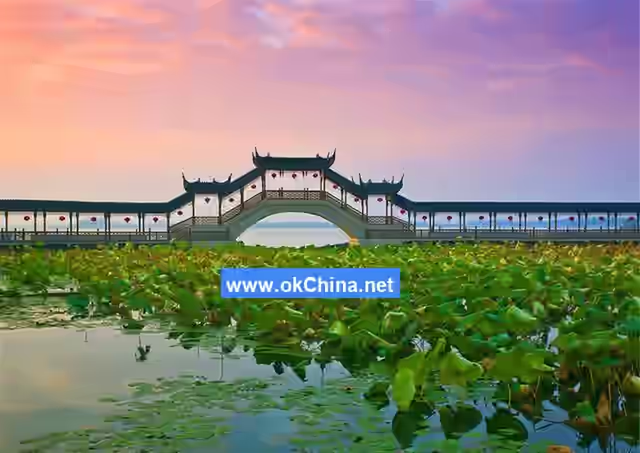
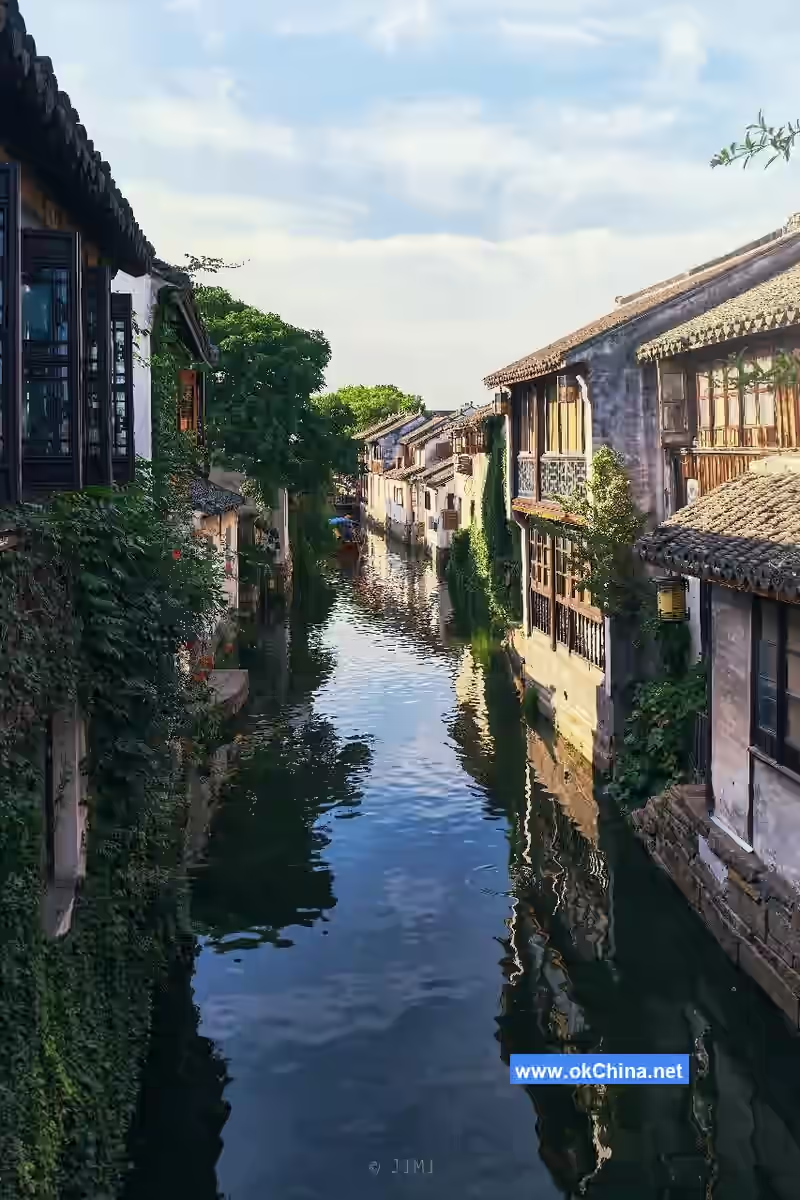
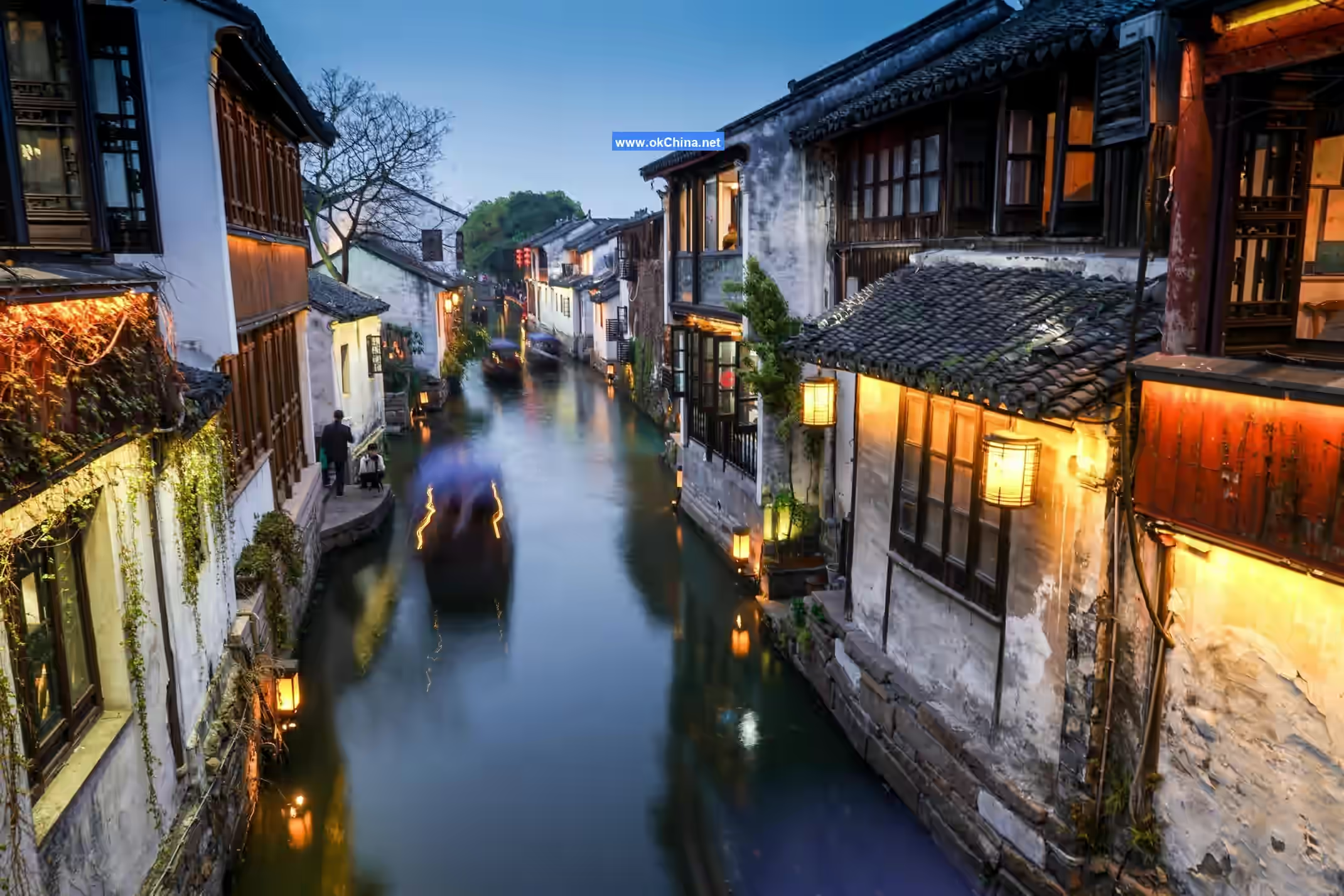
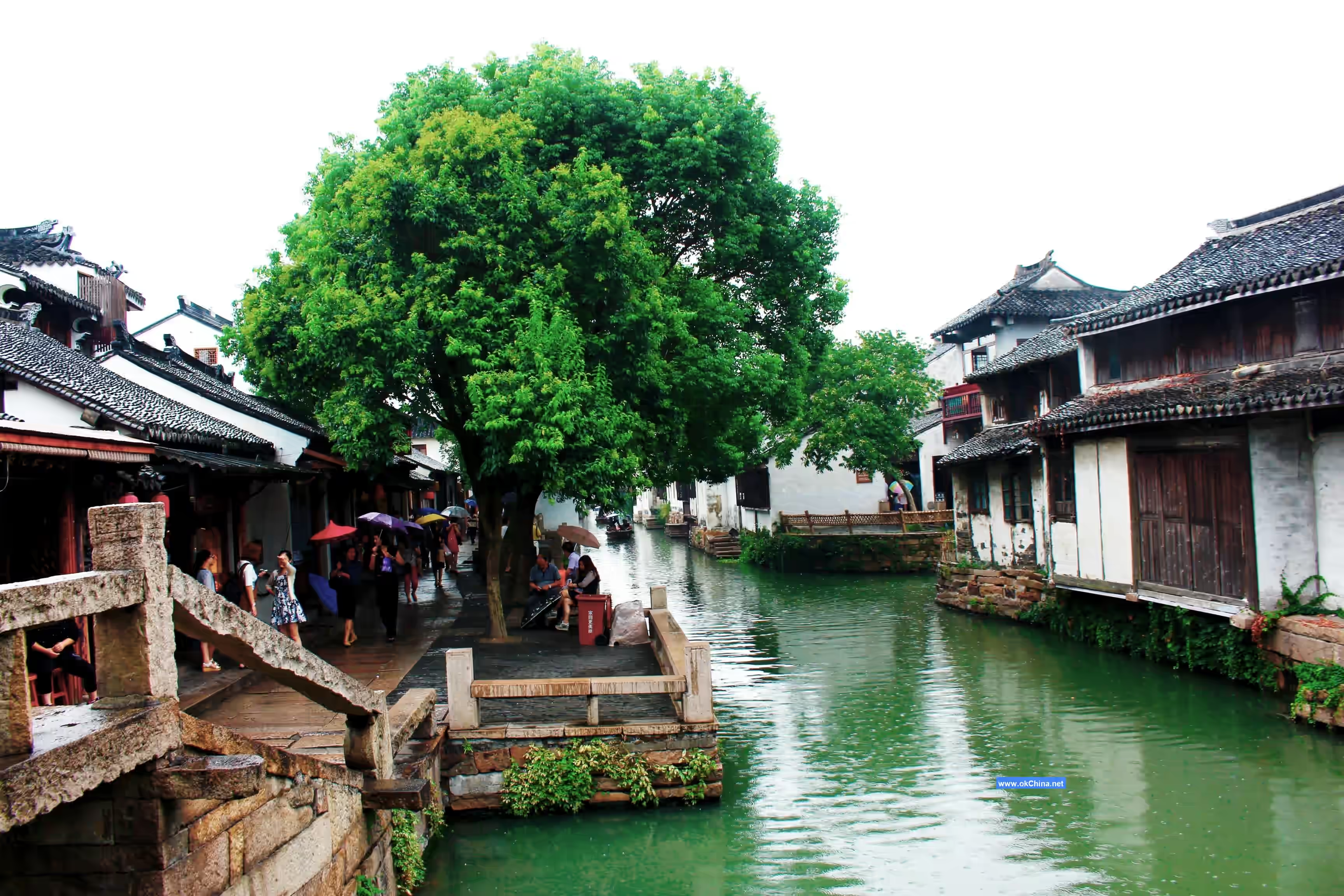
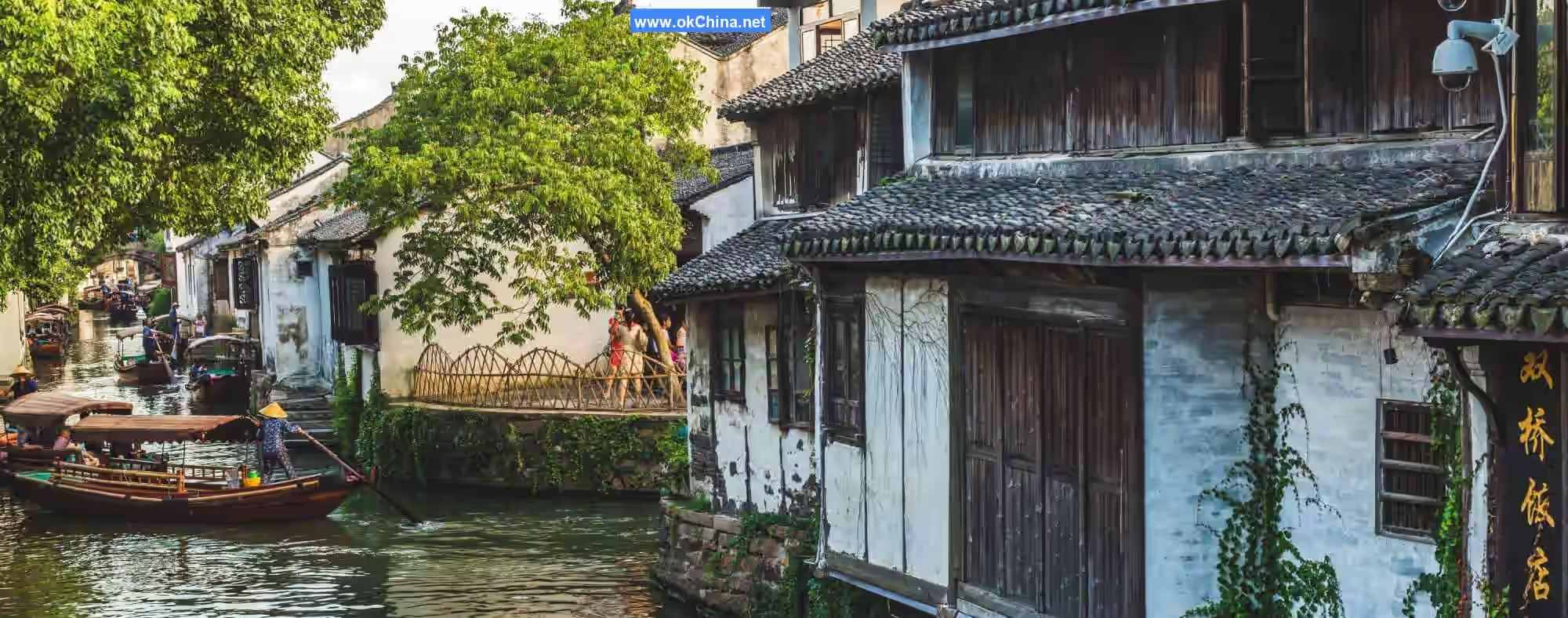
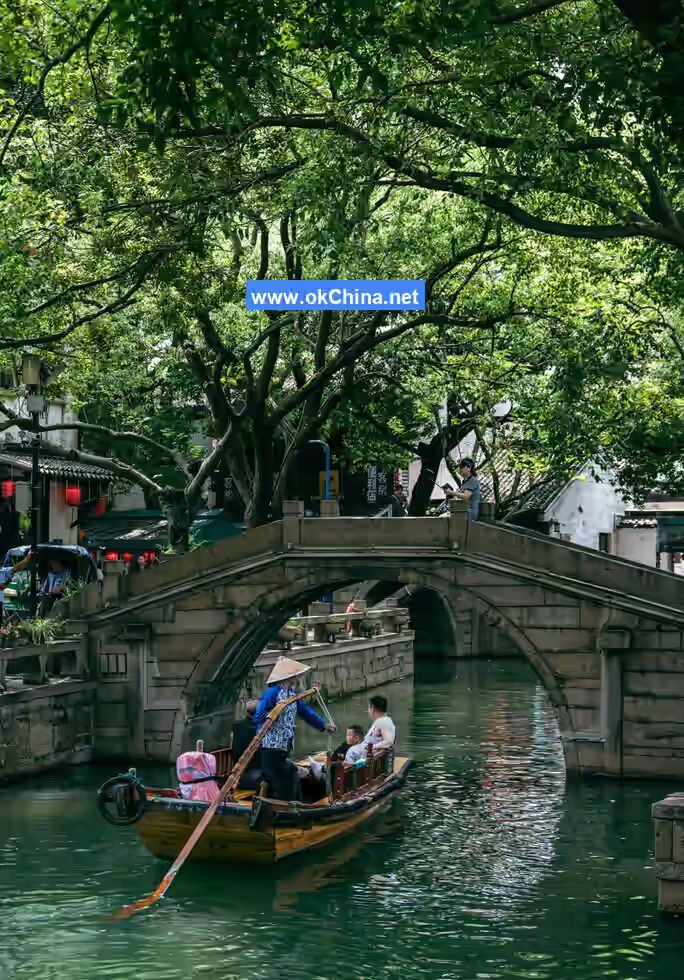
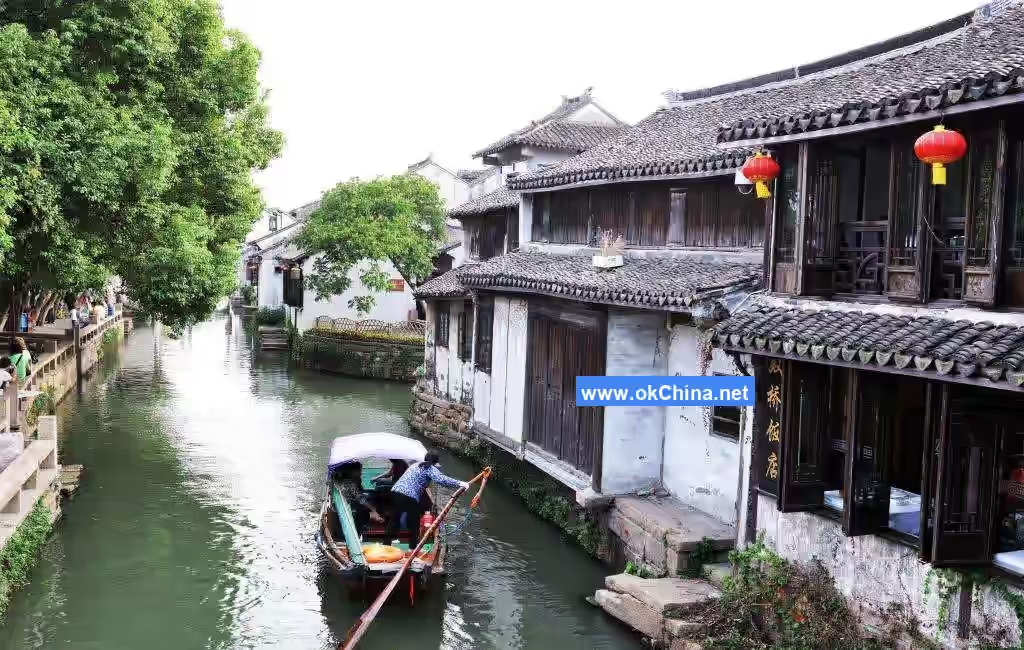
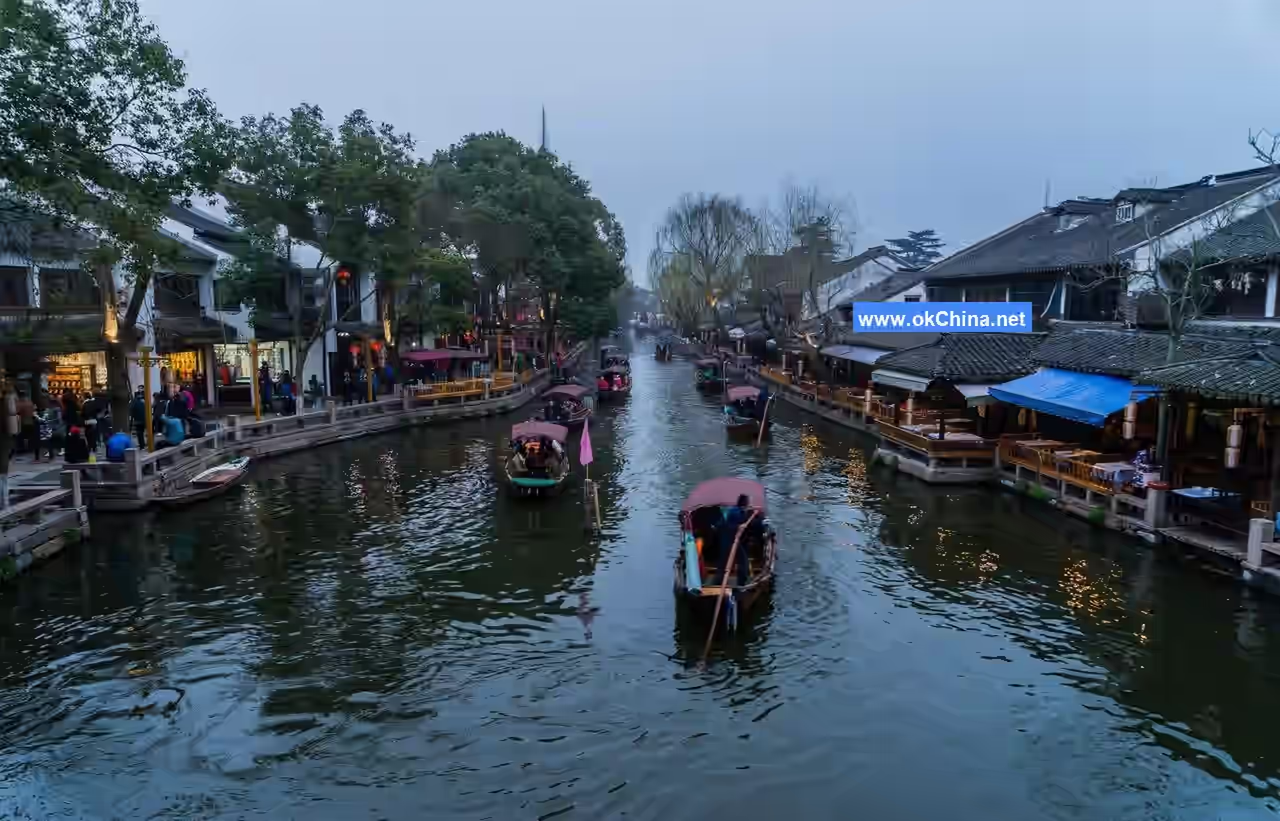
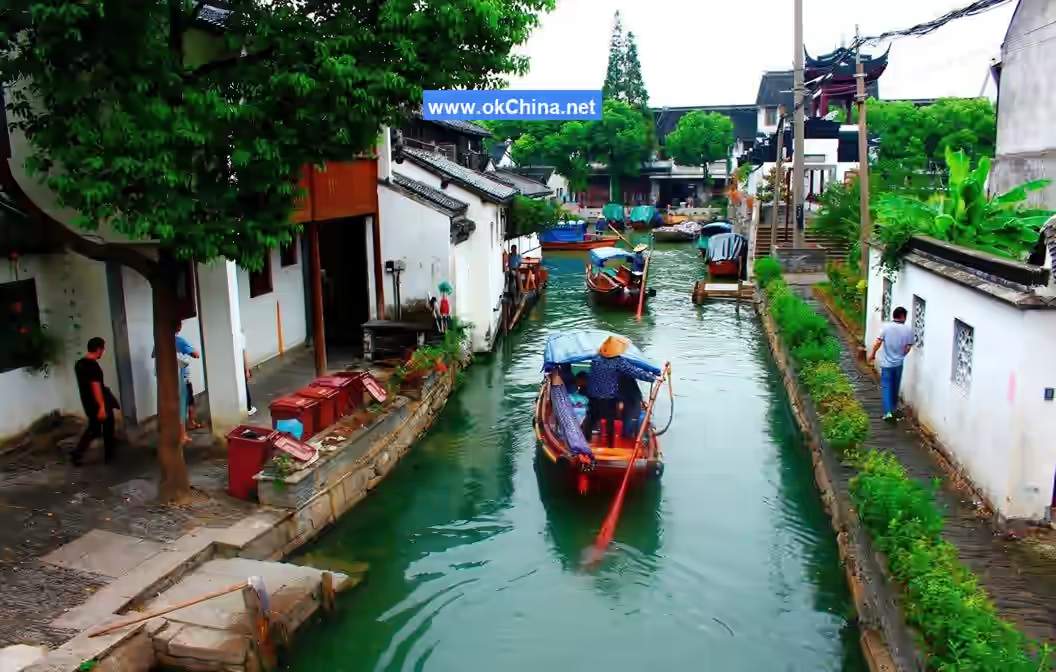
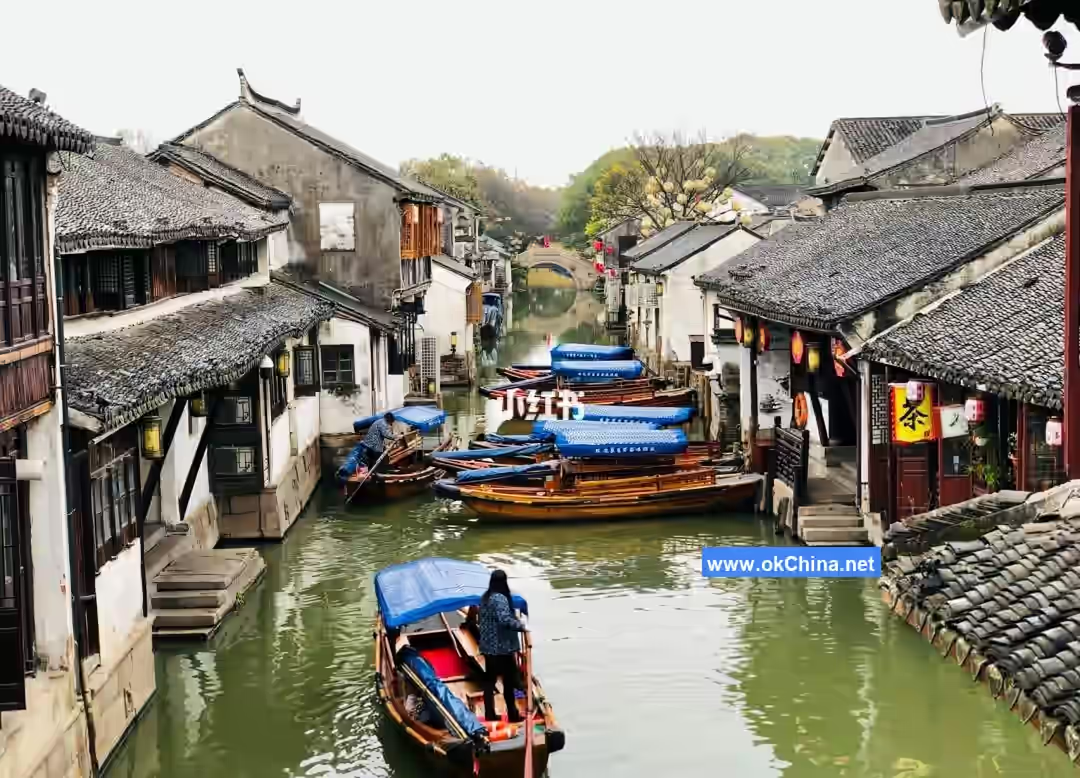
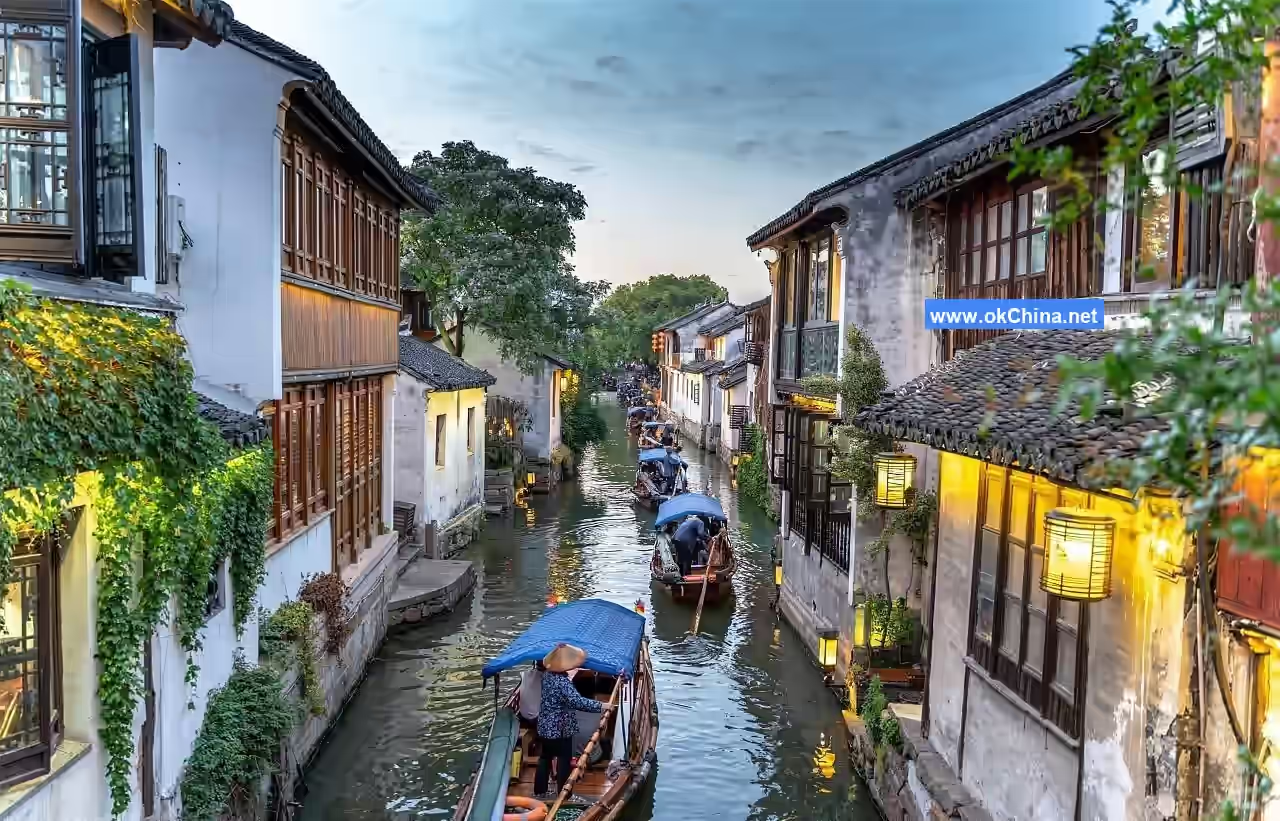
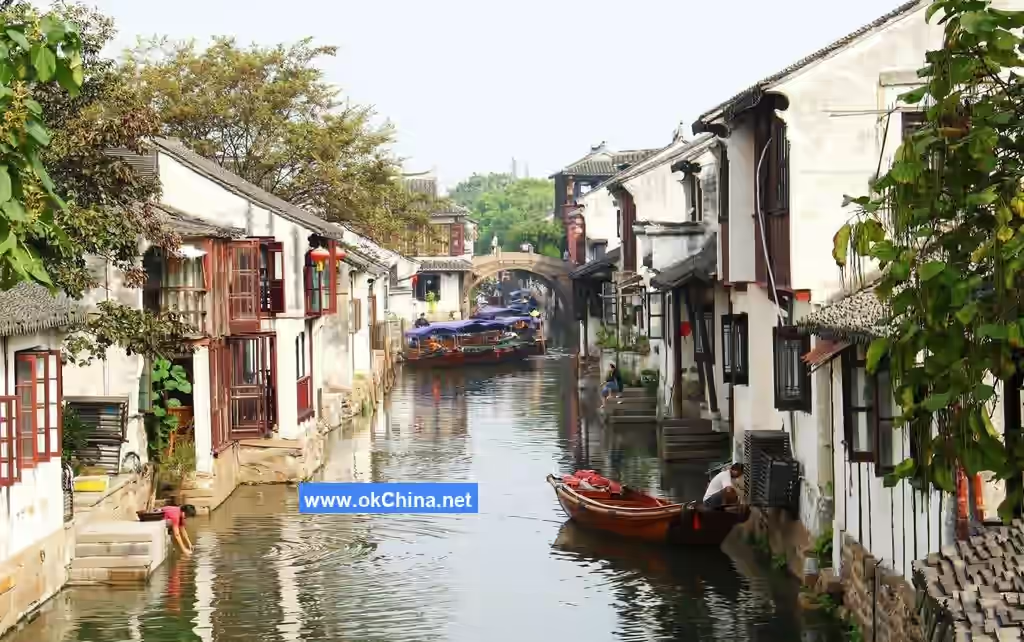
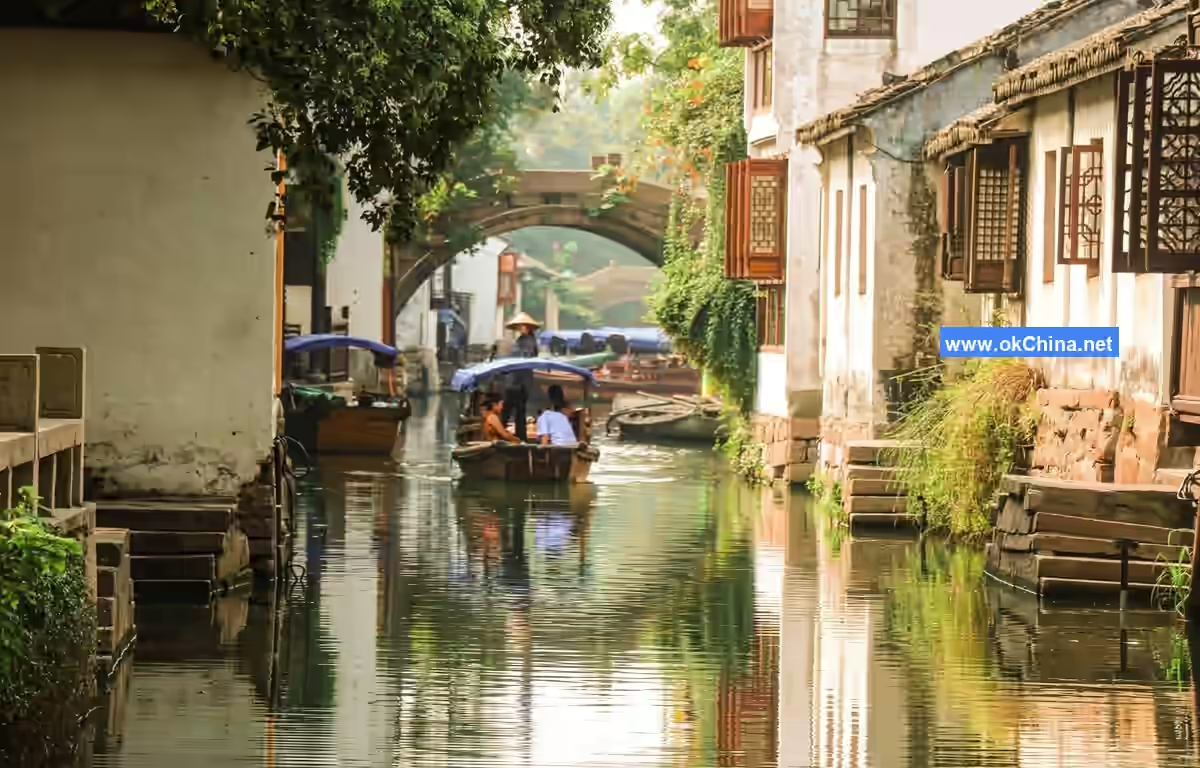
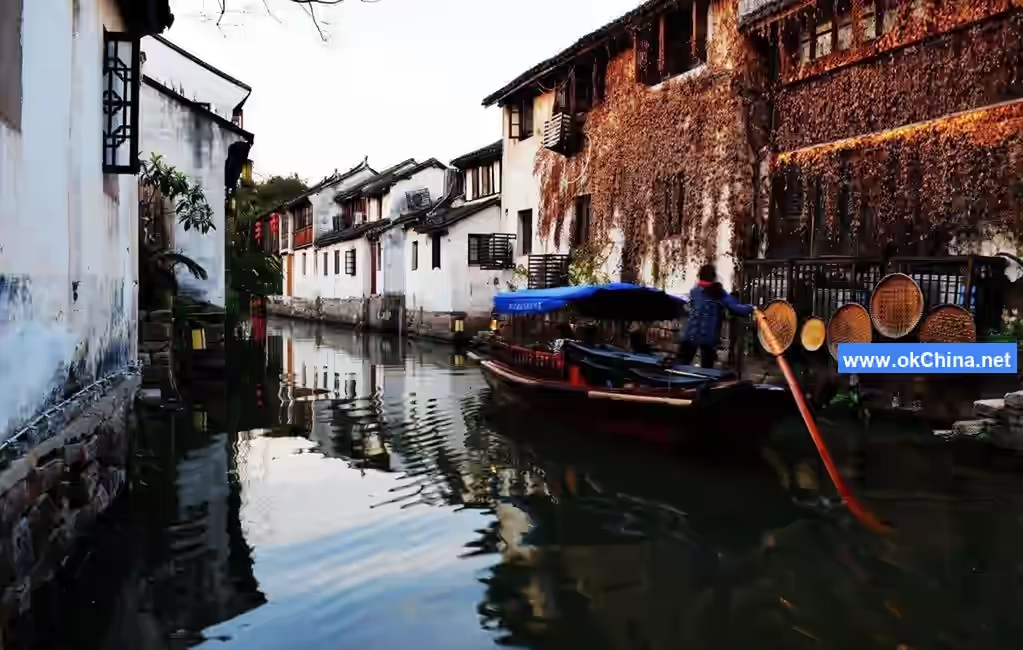
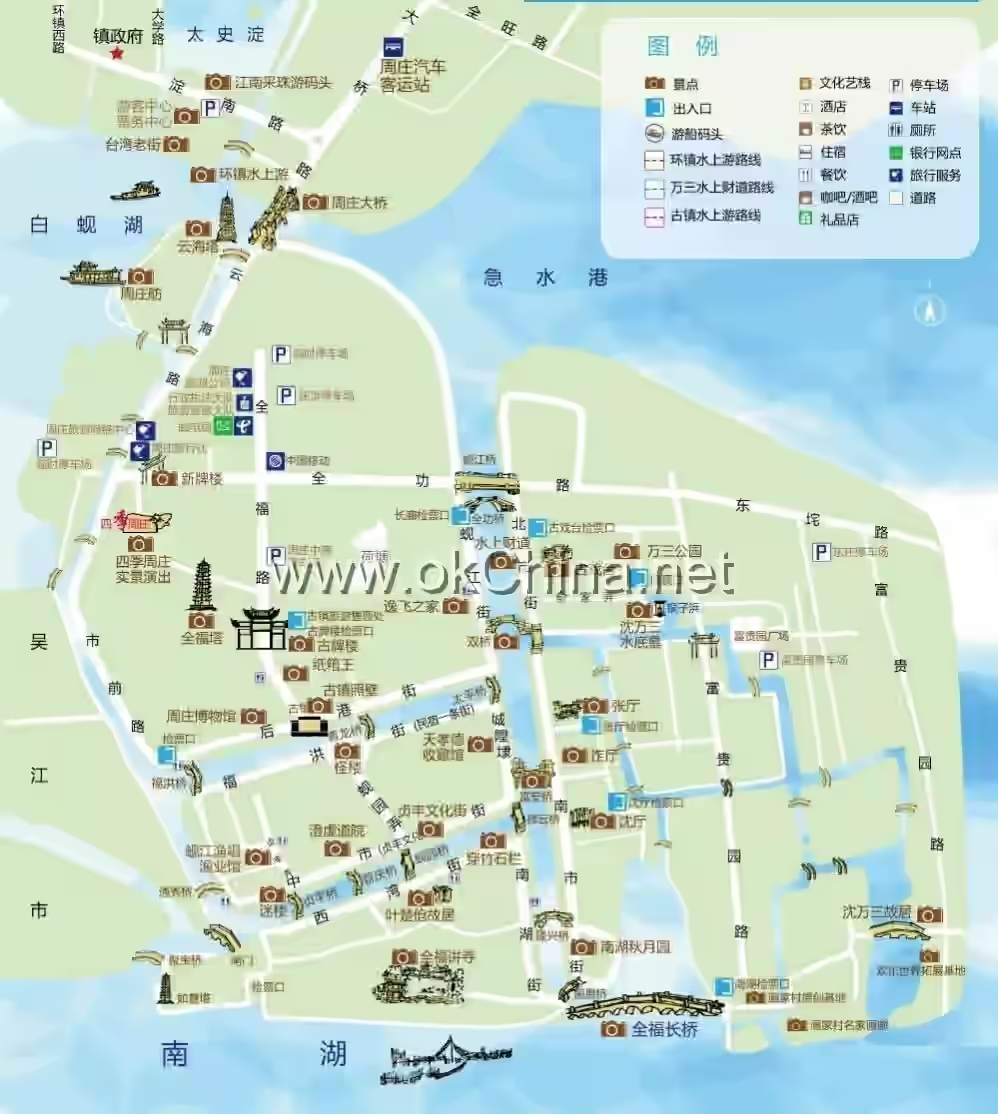
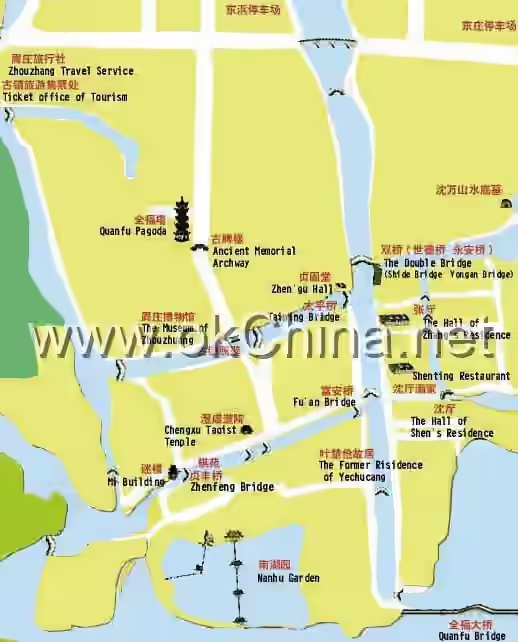
Zhouzhuang Ancient Town is located at the southernmost tip of Kunshan City, Jiangsu Province, renowned as the "First Water Town Under Heaven." Surrounded by water on all sides, the town's layout is shaped by a grid-like network of rivers, with streets in front and rivers behind, buildings nestled along the water, and bridges spanning the waterways. Fourteen beautifully designed stone arch bridges enhance the scenery along the rivers. Fu'an Bridge features pavilions at its four corners, with teahouses and restaurants lining the streets nearby, taking full advantage of the favorable location and bustling atmosphere. Leaning on the railings, one can enjoy a panoramic view of the water town. The entire town is built along rivers, with bridges connecting the streets, deep courtyards, high eaves, riverfront corridors, arcades, bamboo fences, stone railings, and waterside pavilions, creating an ancient, tranquil ambiance where "small bridges, flowing water, and households" are perfectly integrated.
5. Important Attractions
5.1 Twin Bridges
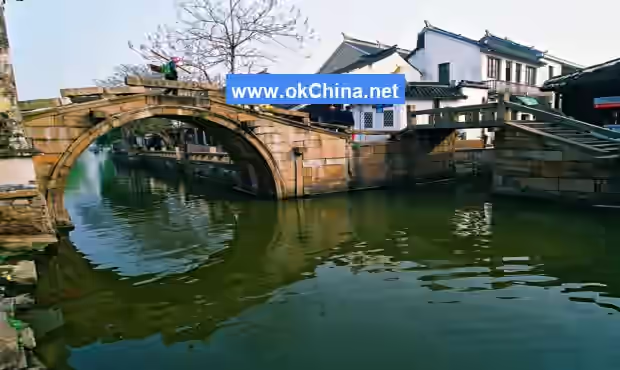
Twin Bridges, commonly known as the Key Bridge, consist of a stone arch bridge—Shide Bridge—and a stone beam bridge—Yong'an Bridge. Shide Bridge is 16 meters long, 3 meters wide, with a span of 5.9 meters. Yong'an Bridge is 13.3 meters long, 2.4 meters wide, with a span of 3.5 meters. Among the Twin Bridges, the stone arch bridge spans the North-South Market River, with stone steps at its eastern end leading into the streets and alleys. The stone beam bridge is flat and spans the mouth of Yinzi Bang, with an arch only wide enough for small boats to pass through. The bridge railings are made of hemp stone slabs.
5.2 Shen Hall
Shen Hall was built by Shen Benren, a descendant of Shen Wansan, in the seventh year of the Qianlong era of the Qing Dynasty (1742 AD). Covering an area of over 2,900 square meters, it faces west and consists of seven courtyards and five gate towers, with more than 100 rooms of various sizes.
5.3 Zhang Hall
Zhang Hall is a typical example of Jiangnan residential architecture with a front hall and rear courtyard layout. It is one of the relatively well-preserved Ming Dynasty buildings in Zhouzhuang and is a key cultural relic protection unit in Jiangsu Province. The entire Zhang Hall covers an area of over 1,800 square meters, with more than 60 rooms of various sizes. It is divided into six courtyards and includes a private rear garden.
5.4 Fu'an Bridge
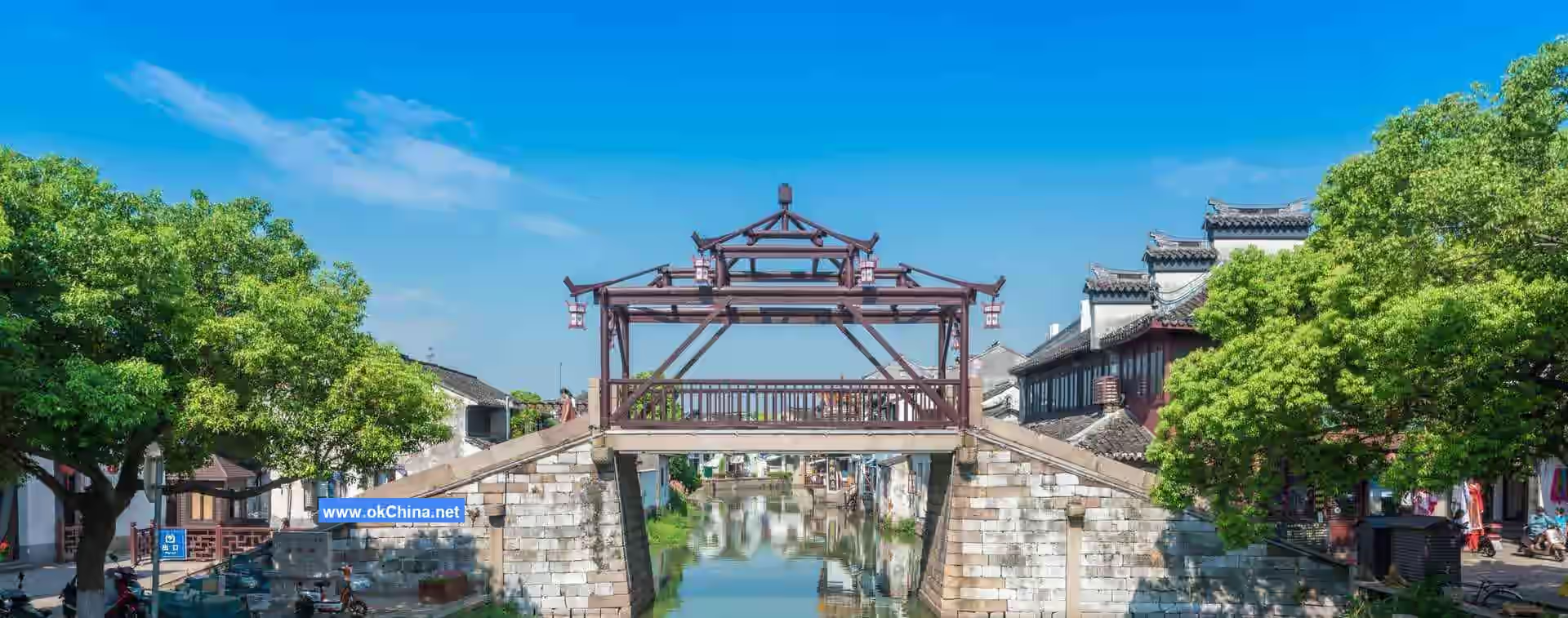
Fu'an Bridge is located at the eastern end of Zhongshi Street, spanning the North-South Market River and connecting the North-South Market Street. Legend has it that there was a Zongguan Temple beside the bridge, so it was originally named Zongguan Bridge. The bridge has a pavilion at each of its four corners, and there is no staircase between the first and second floors of these pavilions; one must walk outside and ascend via the bridge steps. The bridge features five pieces of Wukang stone, which are rare in the Jiangnan region.
5.5 Quanfu Temple
The Nanhu Garden Quanfu Temple is divided into three sections. The eastern and western sections are gardens built to commemorate the famous Tang Dynasty poets Liu Yuxi and Lu Guimeng, and the Western Jin Dynasty writer Zhang Jiying, respectively. The middle section is the Quanfu Lecture Temple.
5.6 Mi Lou (Maze Tower)
Mi Lou, built by the bridge and water during the late Qing Dynasty, is a structure from the Chongzhen era of the Ming Dynasty. This small building was reconstructed with government funding in 1993 and has since become a patriotic education base in Kunshan City.
5.7 Zhouzhuang Museum
Zhouzhuang Museum covers an area of over 1,000 square meters. The museum primarily displays folk living utensils, agricultural tools, and some locally excavated famous Chinese black pottery.### 5.8 Zhouzhuang Boat The Zhouzhuang Boat is a quaint and elegant fixed-style painted pleasure boat, moored by the Bai Xian Lake within the Zhouzhuang Yunhai Resort. It was constructed for the 2001 Asia-Pacific Economic Cooperation (APEC) Informal Meeting of Trade Ministers. Measuring 49.71 meters in length and 15.68 meters in width, it features a steel hull with a superstructure of pavilions and rooms.
5.9 Chengxu Taoist Temple
The Chengxu Taoist Temple is a Taoist sacred site in Zhouzhuang. Taoism, founded by Zhang Ling during the Eastern Han Dynasty, has a history of over 1,800 years. It venerates Laozi as its founder, with Laozi's "Tao Te Ching" as its primary scripture, pursuing self-cultivation and immortality.
5.10 God of Wealth Residence
Located at Dongcha in Zhouzhuang Town, the God of Wealth Residence is a Ming-style architectural replica. It was designed, constructed, and furnished on its original site by Zhouzhuang Fugui Garden based on historical records and the original appearance.
6. Cultural History
6.1 Sixian Xuanjuan (Stringed Xuanjuan)
Sixian Xuanjuan is a traditional Zhouzhuang folk performing art with a history of nearly 200 years, unique to the villages of Zhouzhuang. It resembles "Tangming" and shares characteristics of storytelling and "Pingtan" (Suzhou ballad singing). Based on the number of performers and complexity, Xuanjuan is divided into Sixian Xuanjuan (Stringed Xuanjuan) and Wooden Fish Xuanjuan. The former typically involves a troupe of six performers playing instruments such as the erhu, sanxian, flute, wooden fish, and bronze qing; another person strikes a Buddhist qing and chants Buddhist invocations to accompany the performance, making the form relatively simple.
6.2 Women's Attire
The traditional attire of Zhouzhuang women features narrow sleeves, patterned lapels, a floral base fabric, and exquisite embroidery.
7. Cultural Activities
7.1 Tea Culture
The ancient town of Zhouzhuang boasts a long history of tea culture, with various customs such as drinking "Grandma's Tea," "Discussion Tea," "Joy Tea," "Spring Tea," and "Full Moon Tea." These diverse practices are collectively known as the "Jiangnan Tea Ceremony."
7.2 International Tourism Festival
As of 2013, the China Zhouzhuang International Tourism Festival had been successfully held for 18 sessions. The festival is market-oriented and public-focused, with an opening ceremony that embodies simplicity while showcasing Zhouzhuang's distinctive features with notable market appeal. During the festival, a series of themed activities are launched to highlight new characteristics of Zhouzhuang, promote its leisure offerings and products, present different aspects of Zhouzhuang to diverse audiences, and spread positive word-of-mouth about the town.
7.3 Water Town Wedding
Amidst the increasingly urgent sounds of gongs and drums on the wedding boat, the bride, adorned with a xiapei (traditional ceremonial cape), dressed in a red robe, and wearing embroidered shoes, emerges. Assisted by her bridesmaids, she boards the wedding boat moored at Zhang Hall. Meanwhile, the groom, dressed in a long gown, mandarin jacket, and a formal hat, eagerly awaits at Shen Hall not far away.
7.4 Fast-Rowing Boats
Fast-rowing boats in the ancient town of Zhouzhuang originated in the early Qing Dynasty. After centuries of tradition, they have become a large-scale recreational activity for auspicious occasions, harvest celebrations, and wedding ceremonies. In 2011, "Zhouzhuang Fast-Rowing Boats" were successfully included as an extended item in the Suzhou Municipal Intangible Cultural Heritage list. During the Dragon Boat Festival, fast-rowing boat performances become an unmissable folk custom and a traditional feature of "The Zhouzhuang Lifestyle."
7.5 Lantern Rowing
Lantern Rowing in the ancient town of Zhouzhuang originated during the Qing Dynasty as an event to welcome Emperor Kangxi's southern inspection tour. It gradually evolved into a traditional local entertainment held every three to five years. The event features a grand spectacle with dozens of boats adorned with elaborately crafted colored lanterns. Accompanied by string music, the boats change formations, sometimes moving in a single-file serpentine line, sometimes resembling two dragons vying for a pearl, alternating between fast and slow, advancing and retreating in endless variations. At this moment, with shimmering waves, swaying colored lanterns, and the rhythmic creaking of oars, the scene appears elegant, refined, and magnificent, earning it the reputation as the "Number One Lantern in Jiangnan."
7.6 Hitting the Field Wealth (Da Tian Cai)
In the past, on the night of the Lantern Festival (the 15th day of the first lunar month), it was customary for farming families in the Wu region to burn straw in the fields, known as "Burning the Field Head." In Zhouzhuang, this was called "Hitting the Field Wealth." On this day, a mast would be erected in Zhouzhuang's Cowherd Temple square, with colored lanterns hung on both sides. The top of the mast was bound with straw containing firecrackers, coated with flammable material and mud, then covered with yellow paper to resemble an ingot, representing the "Field Wealth." At night, people would gather from all directions. Once the candles in the mast's lanterns burned out, they would enthusiastically set off firecrackers, fireworks, and ignite pyrotechnic tubes. Using moon cannons, "Nine Dragons Snatching the Pearl," "Five Hundred Crackers," or "One Thousand Crackers," they would take turns shooting at the "Field Wealth." Instantly, cheers from the spectators filled the air, accompanied by the whistling of fireworks and dazzling displays of colorful flames. When the "Field Wealth" was hit, the crowd erupted in joy. Farmers would rush to light straw from the "Field Wealth," wave it in the air, and then use it to burn the corners of their fields. At this moment, flames in the fields resembled shooting stars, and loud, drawn-out prayers echoed: "Burn, burn the field corners, may the harvest yield three dan and six dou…," expressing hopes for abundant harvests and national peace and prosperity.
7.7 March 28th Festival Flood
In the past, the 28th day of the third lunar month was a festival occasion. Zhouzhuang would fund performances by opera troupes for three days, providing entertainment for the villagers. The tradition of grand performances on March 28th has a long history. Legend has it that the Heavenly King (Tian Qi Wang) particularly enjoyed watching operas, though the exact origin is untraceable. The 1920s publication "New Zhouzhuang" recorded: "When the Ming dynasty was about to fall, this area was still bustling with festival activities. Unexpectedly, on the 29th, amidst the sounds of drums and music…, sudden tragic news arrived that Emperor Sizong had hanged himself two days earlier, martyring himself for the country. Consequently, the celebrations were halted due to national mourning." This shows the deep-rooted history of this festival.
Comments
Post a Comment