Zhou Enlai's Hometown Tourist Attraction
1. Introduction
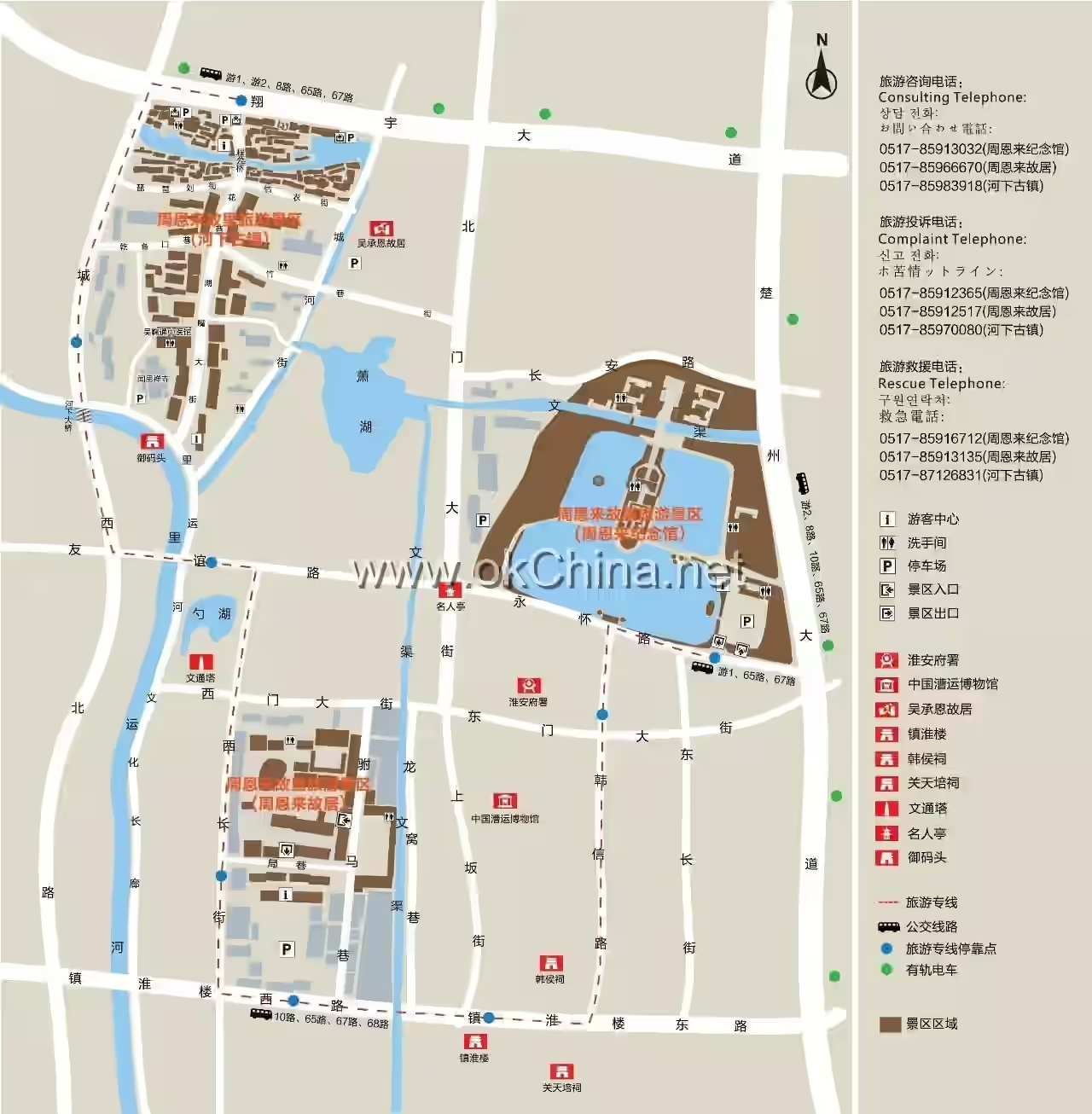
Zhou Enlai's Hometown Tourist Attraction includes the Zhou Enlai Memorial Hall, Zhou Enlai's Former Residence, Fuma Lane, and Hexia Ancient Town.
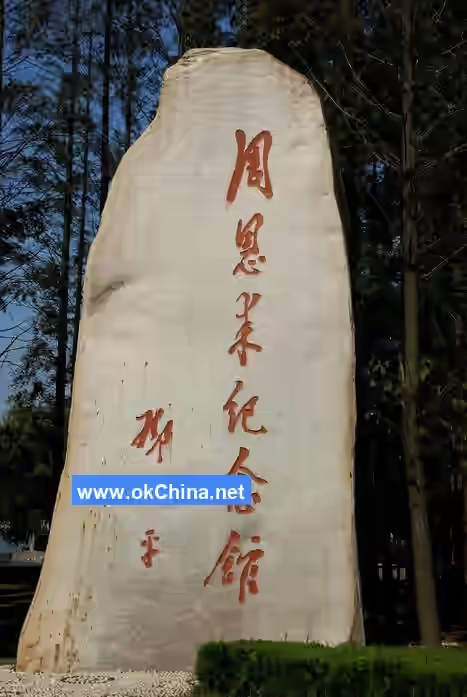
The Zhou Enlai Memorial Hall is located in Taohuayin within Jiacheng, north of the ancient city of Huai'an. The memorial area consists of a memorial island, a broad water surface, and the surrounding circular greenbelt, covering a total area of 400,000 square meters, 70% of which is water. The total building area is 21,166 square meters, with an exhibition area of 7,880 square meters. The island houses the main hall and an exhibition hall. The Zhou Enlai Life and Achievements Exhibition Hall has a rich collection of artifacts of significant cultural value.
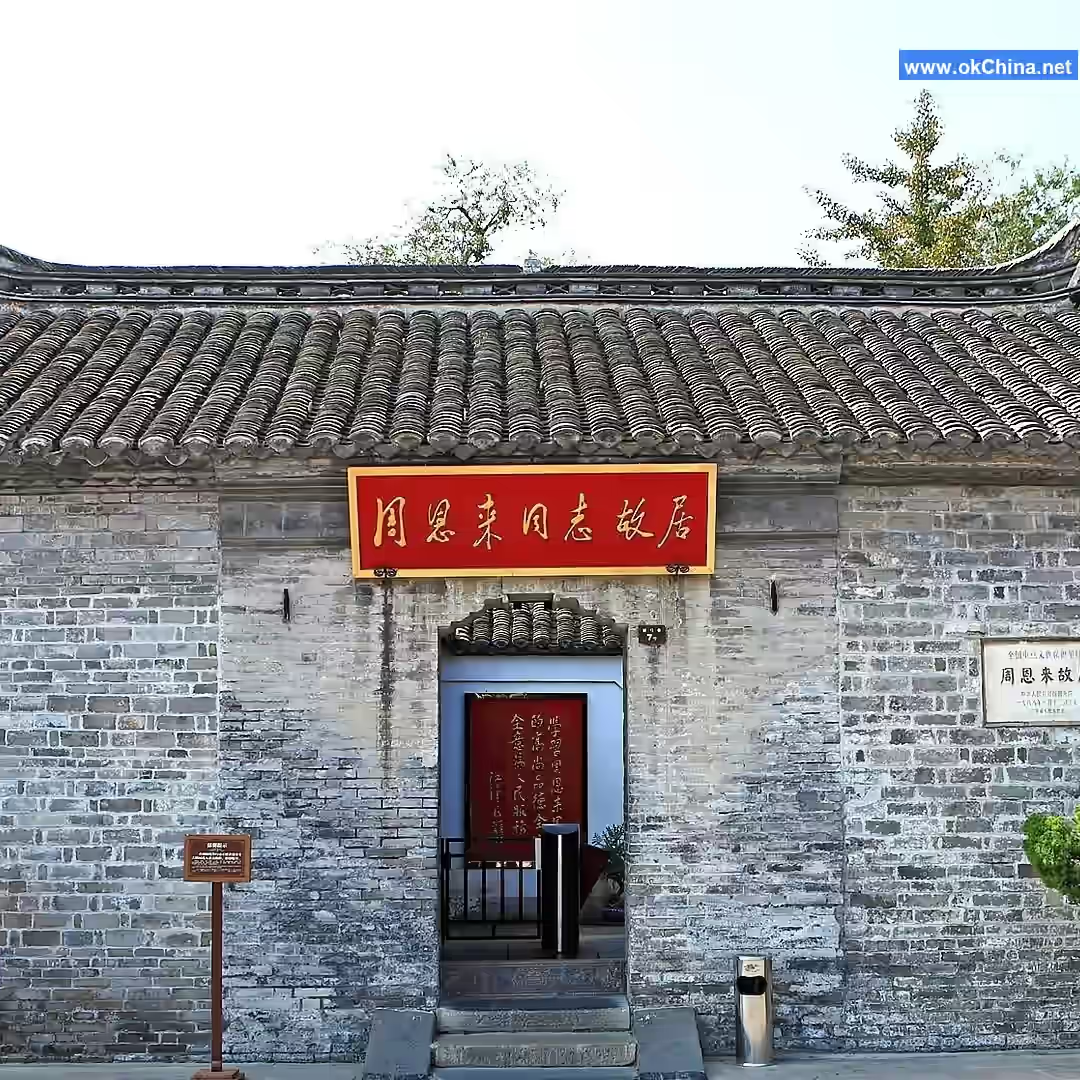
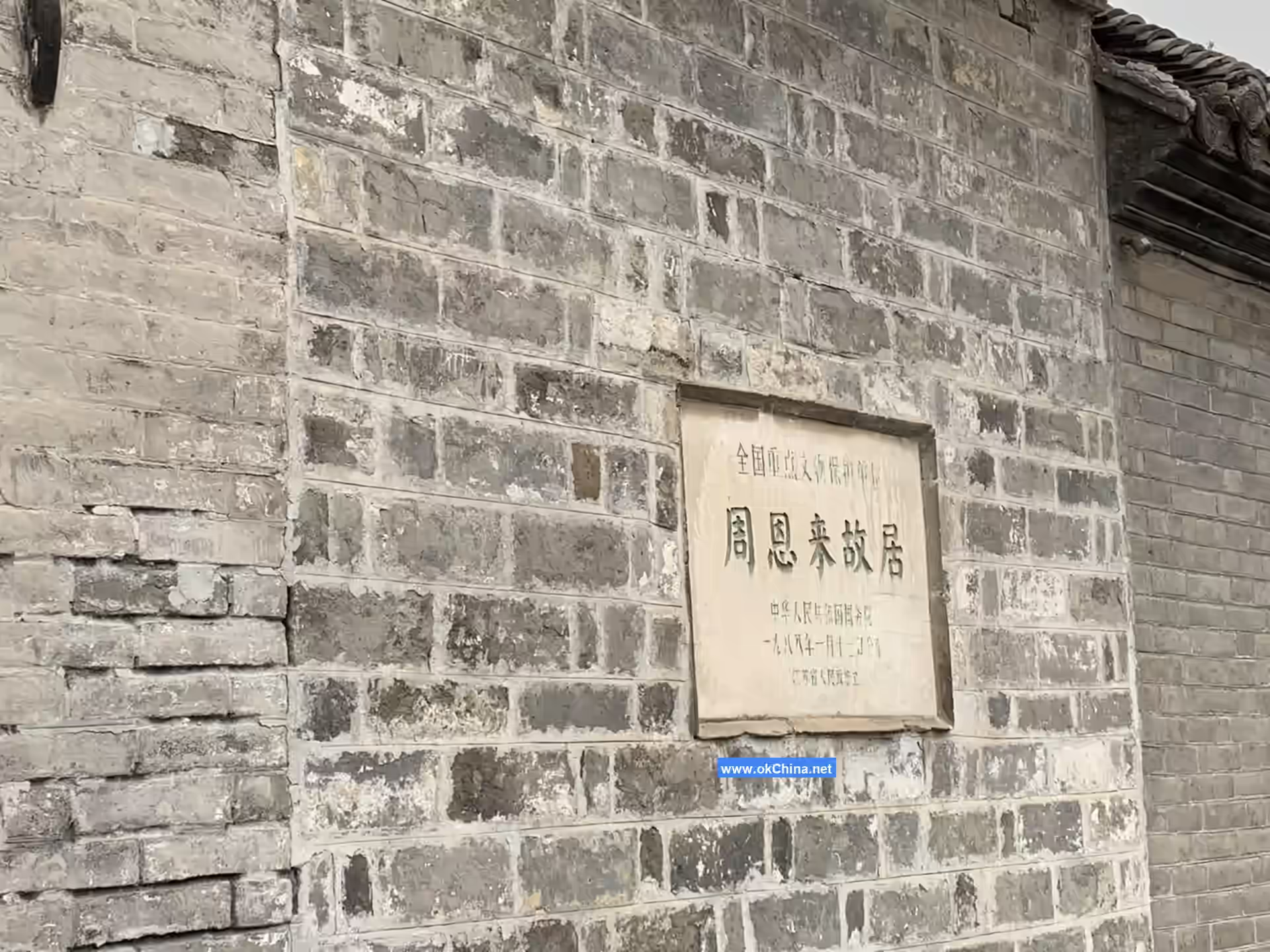
Zhou Enlai's Former Residence comprises two adjoining courtyards, east and west, covering an area of 1,987.4 square meters with a total of 32 rooms of various sizes. The structures are built with blue bricks, gray tiles, and wood.
Fuma Lane is an ancient lane located about 300 meters northwest of the Zhenhuai Tower in the ancient city of Huai'an. During the reign of Emperor Hui of Ming, Zhu Yunwen, a shrine for the Imperial Son-in-law Huang Chen was built in this lane. The former residence of Comrade Zhou Enlai, renowned both domestically and internationally, is situated within this lane.
Hexia Ancient Town has a history of over 2,500 years. It is the birthplace of historical figures such as the heroine Liang Hongyu and the great literary figure Wu Cheng'en. During the Ming and Qing dynasties, 67 Jinshi (imperial examination graduates) came from here, earning it the title "Hometown of Jinshi," reflecting its profound cultural heritage. Hexia was also an important commercial port in Huai'an's history.
2. Main Attractions
2.1 Zhou Enlai Memorial Hall
2.1.1 Architectural Layout
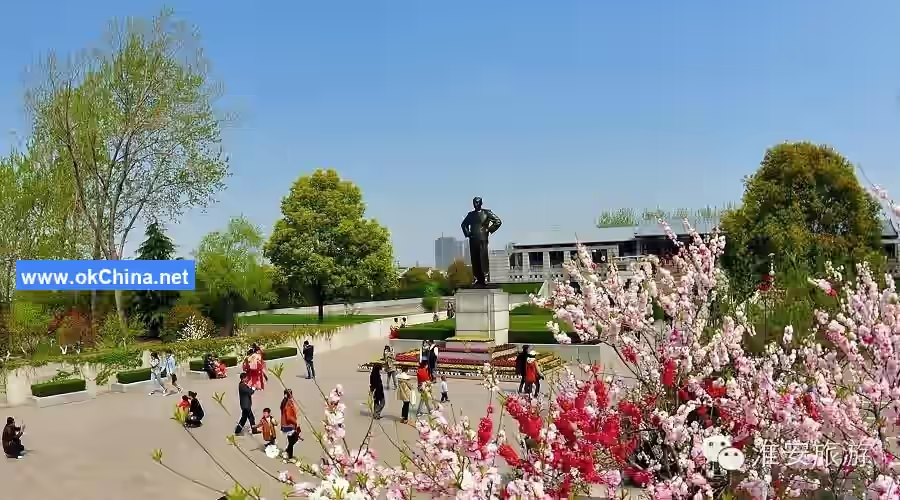
The Zhou Enlai Memorial Hall covers a total area of 400,000 square meters, 70% of which is water. The entire memorial area consists of a group of commemorative buildings, a memorial island, three artificial lakes, and the surrounding greenbelt. Along the 800-meter north-south central axis of the memorial hall, commemorative structures are arranged in sequence: the Viewing Platform, the Main Hall, the Exhibition Hall, the Zhou Enlai Bronze Statue Square, and the replica of the West Flower Hall from Zhongnanhai.
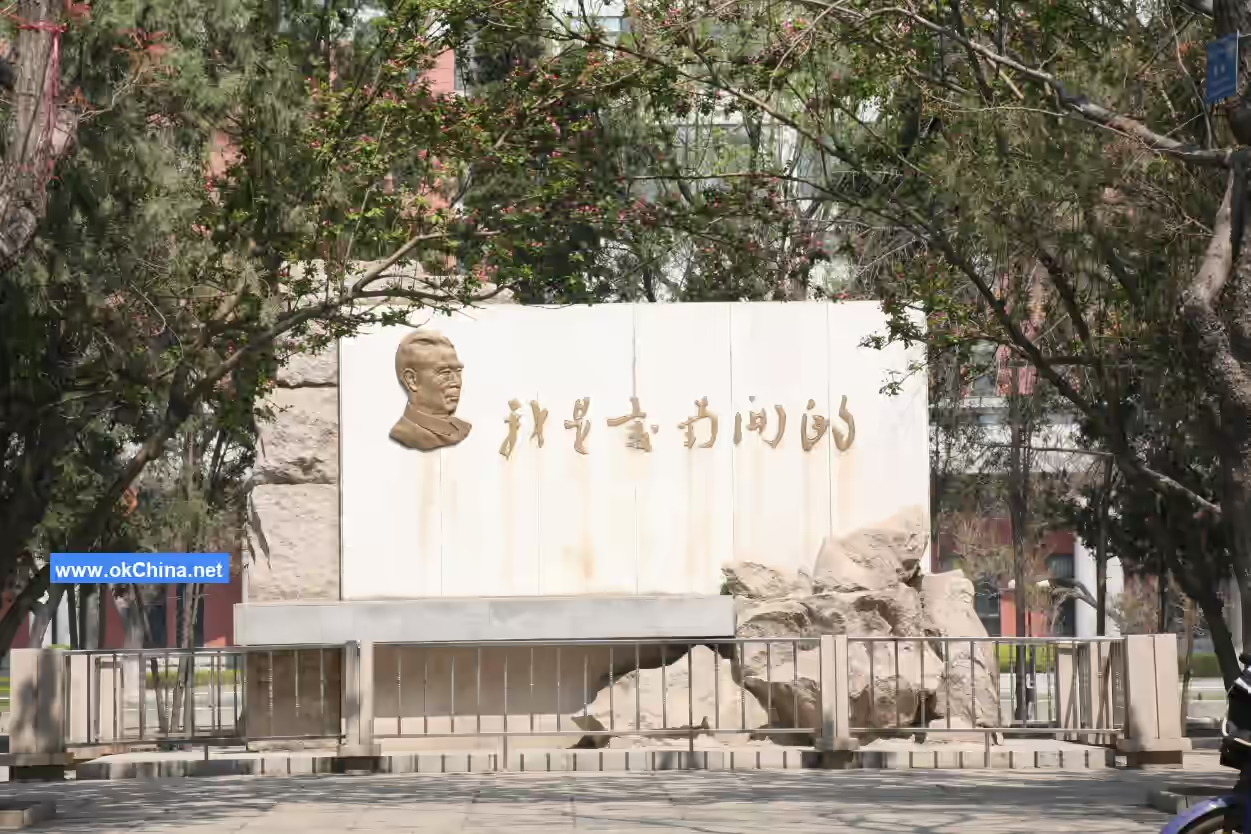
The Main Hall of the Zhou Enlai Memorial Hall sits on a base platform of green lawn. Its solemn and dignified appearance complements the surrounding clear water. Standing 26 meters tall, it matches the height level of the Sun Yat-sen Mausoleum in Nanjing and the Yuhuatai Martyrs' Memorial Hall. The Main Hall has three floors: the ground floor houses an audio-visual hall; the second floor is the Memorial Hall, featuring a full-body white marble seated statue of Premier Zhou on a 4.7-meter-high pedestal; the third floor is an observation deck. The auxiliary hall is the Zhou Enlai Life and Achievements Exhibition Hall, featuring the permanent exhibition "People's Premier Zhou Enlai." Additionally, there are the Arashiyama Poem Stele, Crabapple Forest, Crabapple Path, Cherry Blossom Path, Five Dragon Pavilion, Huaien Pavilion, West Hall Fish Viewing, and more.
2.1.2 Main Structures
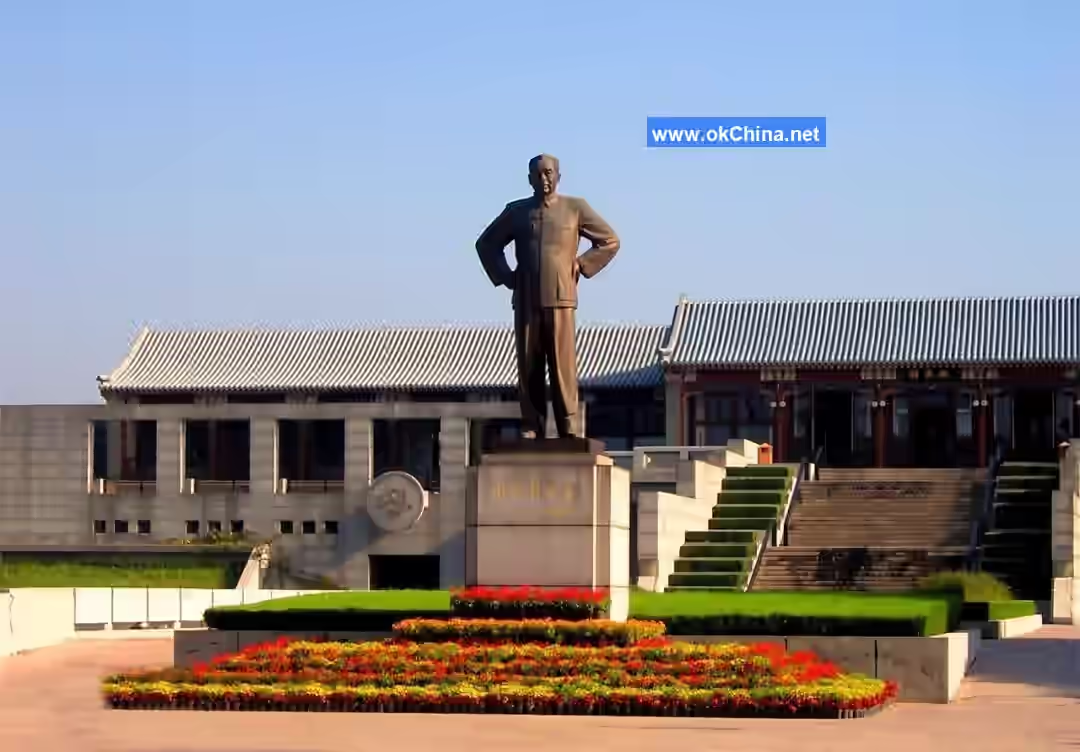
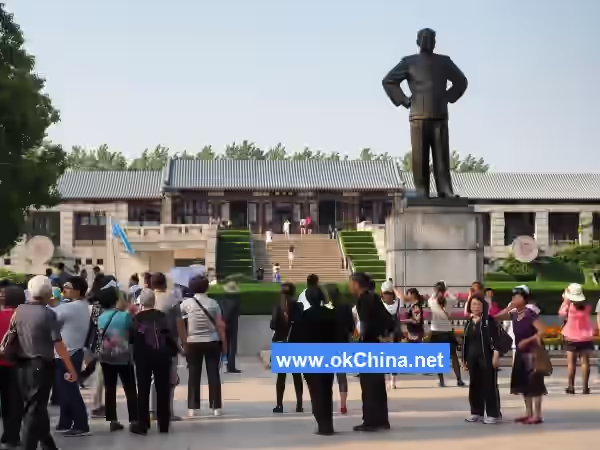
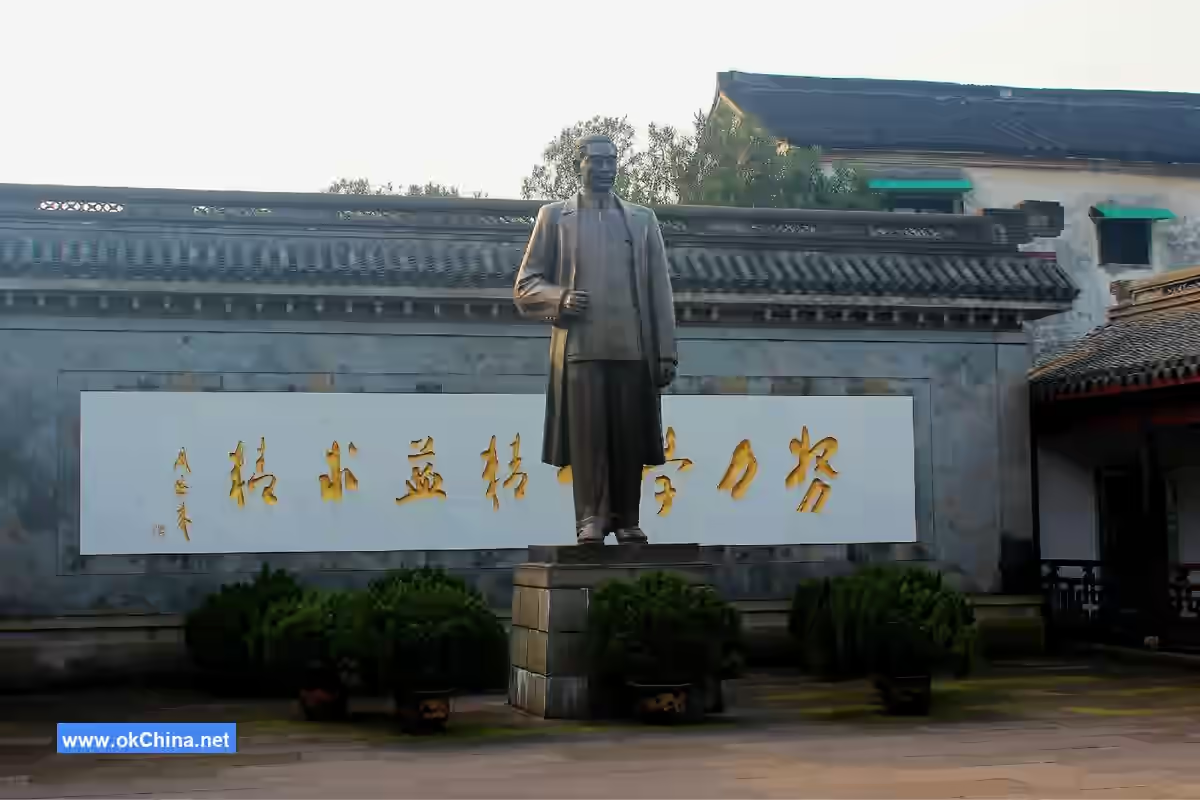
Zhou Enlai Bronze Statue Square The bronze statue of Zhou Enlai on the square is 7.8 meters tall, comprising a 3.6-meter pedestal and a 4.2-meter statue. The total height symbolizes the 78 glorious years of Zhou Enlai's life. The statue was created by sculptor and Central Academy of Fine Arts professor Li Shouren. The five gleaming golden characters "Comrade Zhou Enlai" on the pedestal were inscribed by Comrade Jiang Zemin on December 31, 1997. The statue weighs over two tons. Its posture is based on Zhou Enlai's habitual gesture from the late 1950s and early 1960s when he warmly conversed with workers and peasants—hands on hips with a smile—reflecting his approachable demeanor.
Replica of the West Flower Hall The replica of the West Flower Hall covers a land area of 10,000 square meters with a building area of 6,200 square meters. It lies on the same central axis as the Sword Stele to the south across the lake, the Zhou Enlai Memorial Hall on the peninsula, and Zhou Enlai's bronze statue, with a building area of over 6,000 square meters. The upper level of the replica is a northern-style quadrangle courtyard in late Qing Dynasty style, designed and built to a 1:1 scale based on the layout of the West Flower Hall in Zhongnanhai, Beijing. The courtyard, from west to east, contains Zhou Enlai's activity room, office, guards' duty room, rear reception room, Deng Yingchao's bedroom, Deng Yingchao's office, and Zhou Enlai's bedroom. The east and west wing rooms were for Zhou Enlai's staff, relatives, and children of martyrs. The lower level houses the memorial hall's artifact storage and office spaces.
2.1.3 Architectural Features
The designers ingeniously blended Western modern architectural techniques with traditional Chinese architectural style and local characteristics, using the silent language of architecture to depict the character and demeanor of the great man Zhou Enlai. The buildings in the memorial area are all faced with granite, and the ground is paved with gray cement square bricks, exclusively using blue and white colors, symbolizing Zhou Enlai's integrity and purity throughout his life.
The Main Hall of the Zhou Enlai Memorial Hall sits on a base platform of green lawn, symbolizing Premier Zhou's selfless dedication and lifelong concern for the Chinese people, indicating he will forever be rooted in the land of his motherland. The Main Hall is square in shape with an inner octagon. The square, eight-sided form symbolizes Zhou Enlai's spirit shining upon the Chinese nation. The four granite pillars represent Zhou Enlai's four proposals in 1954, 1962, 1964, and 1975 for realizing the grand vision of the "Four Modernizations" in China. The four granite pillars support a four-slope roof, reminiscent of the ox-cart sheds used for drawing water to irrigate fields on the ancient Jianghuai Plain, implying Zhou Enlai's life of serving the people. The structure of four pillars supporting a four-slope roof also resembles the ferry waiting pavilions in the Lixia River region of northern Jiangsu. In 1910, when Zhou Enlai left home for the northeast, he waited for a boat at a ferry waiting pavilion by the canal before boarding north. Using the shape of a waiting pavilion for his memorial hall symbolizes Zhou Enlai setting out from the waiting pavilion in Huai'an and ultimately returning to his hometown.
2.1.4 Exhibition Halls
Zhou Enlai Life and Achievements Exhibition Hall
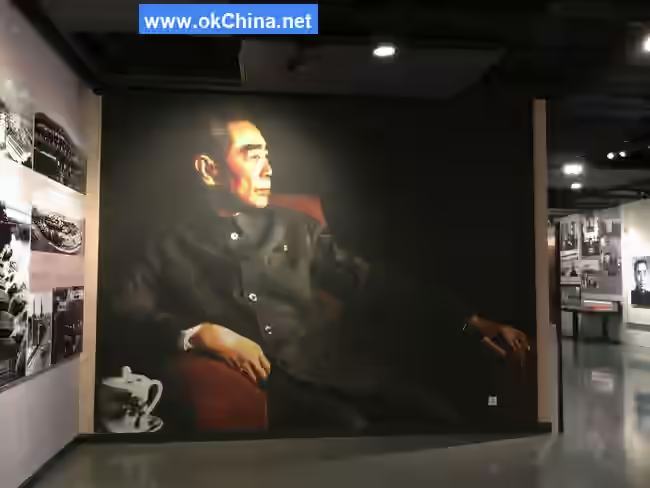
The Zhou Enlai Life and Achievements Exhibition Hall consists of five parts: Aspiring to Study, Revolutionary Journey, Great Achievements in Construction, Later Years, and Eternal Legacy. It recreates Zhou Enlai's glorious life using various display methods such as photographs, oil paintings, sculptures, and audiovisual effects.
2.2 Zhou Enlai's Former Residence
2.2.1 Architectural Features
Zhou Enlai's Former Residence comprises two adjoining courtyards, east and west, with a total of 32 rooms of various sizes, built with blue bricks, gray tiles, and wood. The residence consists of single-story blue brick, tile, and wood structures built from the Xianfeng (1851-1861) to Guangxu (1875-1908) periods of the Qing Dynasty, exhibiting the typical residential architectural style of northern Jiangsu towns during the Ming and Qing dynasties.
2.2.2 Main House
Passing west through a side door leads to three south-facing main rooms. These were the living quarters of Zhou Enlai's parents—Zhou Shaogang (a minor clerk in old society) and his mother, Wan Shi Shiergu (from Qingjiangpu). The lattice doors and windows are pasted with clean white silk paper. The east wing room is Zhou Enlai's birthplace. On March 5, 1898, Zhou Enlai was born in this eastern room. The room is simply furnished, with patched old bedding on the bed. The central hall houses a bronze statue of Zhou Enlai from his youth.
2.2.3 Pavilion Room
Going west from the main house courtyard, one enters a narrow, north-south corridor. On the west side of the southern end of the corridor are two unique pavilion rooms, which were the dwelling of the young Zhou Enlai, his adoptive mother, and his wet nurse.
2.2.4 Ancient Well
Behind the pavilion rooms, there is an ancient well. The stone well curb bears deep grooves worn by ropes, and the well water is clear to the bottom.
2.2.5 Vegetable Garden
Not far from the southeast corner of the well platform, in front of the kitchen, there is a small vegetable garden where Zhou Enlai, following his wet nurse Jiang Jiangshi, learned to grow melons, vegetables, sunflowers, etc.
2.2.6 Backyard
In the backyard, there are two wintersweet trees and a cedar tree cherished by the young Zhou Enlai, along with a cluster of bamboo. The backyard also contains cherry trees gifted by former Japanese Prime Minister Kakuei Tanaka, along with newly planted flowers and trees, keeping it green throughout the seasons. There are also two ancient trees in the backyard, an elm and a Guanyin tree, both over 100 years old, classified as nationally protected ancient trees of the second grade.
2.2.7 Front of the Residence
In front of Zhou Enlai's Former Residence flows the Wen Canal, dug during the Jiajing period (1522-1566) of the Ming Dynasty. As a child, Zhou Enlai often descended the stone steps with his cousin Gong Zhiru, boarded a small boat, and went to Hexia Town to experience and understand folk customs. After the founding of New China, Zhou Enlai once said, "Much of my knowledge came from reading folk literature."
2.3 Hexia Ancient Town
2.3.1 Zhuangyuan Mansion
The Zhuangyuan Mansion has a building area of 4,500 square meters. The entire scenic area is divided into six main parts: the Zhuangyuan Tower, Old Residential Area, Martial Arts Practice Area, Study Area, Garden Area, and Memorial Area. It reflects the life and deeds of Shen Kun and showcases Chinese imperial examination culture through文物展陈 (cultural relic displays),声光电特效 (sound, light, and electrical special effects), and other means.
2.3.2 Kuixing Tower
Kuixing, the common name for the star Kui, is a deity in ancient Chinese mythology and legend. Chinese folk belief holds that Kuixing is the god presiding over literary fortune.
2.3.3 Wu Cheng'en's Former Residence
Wu Cheng'en's Former Residence is a national AAAA-level tourist attraction, a key cultural relics protection unit in Jiangsu Province, and the filming base for the world's first 3D TV series "Wu Cheng'en and Journey to the West." It consists of five parts: the former residence itself, the Wu Cheng'en Life Exhibition Hall, the Xuanzang Memorial Hall, the Monkey King Family Art Gallery, and the Six Little龄童 Studio. It is currently the only venue in China that comprehensively showcases Journey to the West culture and commemorates Wu Cheng'en. The site covers 15,000 square meters with a building area of 4,000 square meters, featuring classical garden architectural complexes in Ming Dynasty style.#### 2.3.4 Huzui Street Huzui Street derives its name from the sand spit that uniquely protrudes into the heart of the lake. Originally flanked by lake marshes on both sides, it stretches south to the Grand Canal and north to Hua Lane, which runs from Xiangjia Bay to West Huzui Street. Huzui Street and Hua Lane are the most famous streets and alleys in Hexia, described as "gathering numerous merchants and reaching the pinnacle of prosperity." The street preserves a 680-meter-long stone slab road containing 2,447 stone blocks.
2.3.5 Wensi Temple
Wensi Temple is located beside Huzui Street. Originally named Tongyuan Temple and later Dabeian (Great Compassion Nunnery), Wensi Temple was first built in the late Tang Dynasty. It overlooks the river and faces the lake (Guanjia Lake to the west of the city, also known as West Lake), with misty waves stretching far and wide, birds singing and flowers blooming, poetic scenery, and a serene environment. Through the Song, Yuan, Ming, and Qing dynasties, it experienced several rises and declines due to floods and warfare. During the Song Dynasty, the monk Lanmeng rebuilt it and named it Dabeian, enforcing strict monastic rules. In the Yuan and Ming periods, the temple was repeatedly submerged by floods due to multiple breaches of the Yellow River. It was not until the early Qing Dynasty that the temple's appearance gradually recovered to its original state. In the 44th year of the Kangxi reign of the Qing Dynasty (1705), Emperor Xuanye (Kangxi) once again toured the southern regions. Passing through Hexia Town in Huai'an Prefecture, he bestowed the temple with the name "Wensi Temple."
3. Cultural Resources
3.1 Related Figures
3.1.1 Zhou Enlai
Zhou Enlai was an outstanding statesman, diplomat, and revolutionary in modern Chinese history. Born on March 5, 1898, in Huai'an, Jiangsu, he is a significant figure in modern Chinese history. He studied in Japan in his early years and later went to France for work-study programs. During this time, he participated in the founding of the Communist Party of China and became one of its early leaders until his death in Beijing on January 8, 1976.
Major Achievements
Whampoa Military Academy Period: After returning to China in 1924, Zhou Enlai was appointed Director of the Political Department of the Whampoa Military Academy, marking the beginning of his military career. At Whampoa, he not only taught political theory but also emphasized cultivating students' patriotic sentiments and revolutionary spirit. He nurtured a large number of students who later became generals in the Red Army and the Nationalist Party, such as Lin Biao, Chen Geng, and Du Yuming.
Nanchang Uprising: In 1927, Zhou Enlai participated in leading the Nanchang Uprising, the Communist Party of China's first attempt at armed resistance against the Kuomintang reactionaries. Although the uprising ultimately failed, it marked the beginning of the Communist Party's independent leadership of armed struggle and accumulated valuable experience for subsequent revolutionary struggles.
Long March and War of Resistance Against Japan: During the Long March, Zhou Enlai firmly supported Mao Zedong's correct line, playing a crucial role in establishing Mao's leadership position within the entire Party. He was not only a military commander during the Long March but also a core figure in political work, making significant contributions to the Red Army's victory. During the War of Resistance Against Japan, he worked long-term in Wuhan and Chongqing on Party affairs and united front work, serving as a bridge connecting the Communist Party of China with the outside world. He made unremitting efforts to secure international support and unite various domestic forces.
Five Principles of Peaceful Coexistence: After the founding of the People's Republic of China, as Premier and Foreign Minister, Zhou Enlai proposed the Five Principles of Peaceful Coexistence: mutual respect for sovereignty and territorial integrity, mutual non-aggression, non-interference in each other's internal affairs, equality and mutual benefit, and peaceful coexistence. These principles became the cornerstone of China's foreign policy, gained widespread international support, and earned China extensive friendships and respect from the international community.
Geneva Conference and Bandung Conference: Zhou Enlai attended the Geneva Conference in 1954 and the Bandung Conference in 1955, showcasing China's diplomatic prowess and promoting the development of China's relations with other countries. At the Geneva Conference, with his exceptional diplomatic skills, he successfully secured understanding and support from the international community for China. At the Bandung Conference, he proposed the principle of "seeking common ground while reserving differences," promoting unity and cooperation among Asian and African countries and winning China widespread respect and friendship.
Sino-American Relations: In 1972, Zhou Enlai invited U.S. President Richard Nixon to visit China, opening a new chapter in Sino-American relations. This historic event not only changed the relationship between the two countries but also had a profound impact on the global landscape. With his exceptional diplomatic wisdom, Zhou Enlai successfully promoted the normalization of Sino-American relations, making significant contributions to China's opening-up and the enhancement of its international status.
Cultural Revolution Period: During the Cultural Revolution, Zhou Enlai worked hard to mitigate the damage caused by the turmoil, protecting many leading cadres and democratic figures. He made unremitting efforts to restore and implement the Party and state's policies. With high political wisdom and firm conviction, he strived to maintain the normal functioning of the state, protected a large number of talents who made significant contributions to the country, and laid the foundation for the subsequent reform and opening-up.
Zhou Enlai, with his exceptional political wisdom, profound diplomatic skills, and deep affection for the people, earned widespread respect and admiration both domestically and internationally. His life was one of unremitting struggle for China's independence, development, and world peace. His contributions will forever be etched in the history of China and the world.
3.1.2 Wu Cheng'en
Wu Cheng'en (c. 1500–c. 1582), courtesy name Ruzhong and pseudonym Sheyang Shanren, was a renowned literary figure of the Ming Dynasty. He was born in Hexia, Shanyang County, Huai'an Prefecture, Jiangsu (present-day Huai'an District, Huai'an City, Jiangsu Province). Wu Cheng'en was intelligent from a young age, widely read, and particularly fond of myths, legends, and folk tales. His official career was fraught with difficulties; he took the imperial examinations multiple times but repeatedly failed. Ultimately, he had to make a living by teaching in his hometown.
Wu Cheng'en's masterpiece is Journey to the West, which is hailed as one of the Four Great Classical Novels of ancient Chinese literature and a treasure in the world's literary canon. The novel centers on the story of the monk Xuanzang and his three disciples traveling westward to obtain Buddhist scriptures. It incorporates a wealth of myths, legends, folk tales, and Buddhist and Taoist thought, creating classic characters such as Sun Wukong, Zhu Bajie, and Sha Seng. It stands as one of the most influential works in the history of Chinese literature.
Wu Cheng'en's former residence is located in the ancient town of Hexia in Huai'an, now a national AAAA-level tourist attraction. The museum displays Wu Cheng'en's life story and the creative process of Journey to the West, attracting a large number of visitors.
3.2 History
3.2.1 Fuma Lane
According to the Shanyang County Annals, as early as the Song and Yuan dynasties, Fuma Lane was a famous scenic spot in Huai'an. In the poetry collection of the Ming Dynasty literary master and author of the mythical novel Journey to the West, Wu Cheng'en, we can find a suite of songs titled Nanchang·A Branch of Flowers·Celebrating Ding Ren'an's Seventieth Birthday: "The Ten Thousand Willow Pond of the Tang, the Alchemy Furnace of the Jin, the Hermitage-Inviting Land of the Liu Song, the Immortal-Waiting Bridge of the Song. The city presses upon the Golden Turtle, best is the Huaiyin Path, leading the Yellow River's water from afar. I love you, a celestial being born on earth, dwelling in a human Penglai Isle no painting can capture." In this lyric, the "Ten Thousand Willow Pond" was located southwest of the city, the "Alchemy Furnace" on Bochi Mountain, the "Hermitage-Inviting Land" in Hexia, and the "Immortal-Waiting Bridge" was within today's Fuma Lane. These were all famous scenic spots and historical sites in Huai'an during the Ming Dynasty. "Immortal-Waiting Bridge, north of Fuma Lane, also called Wangxian Bridge." (Tongzhi reign of Qing, Revised Shanyang County Annals). Legend has it that during the Xuanhe period of Emperor Huizong of Song, there was a hermit named Sun Maiyu, also known as Chenyin, who lived beside a small bridge in this lane. Sun Maiyu was erudite, exceptionally talented, and charitable. Later, someone reported his virtues and talents to the Song emperor, and Emperor Huizong summoned him to serve as an official. Sun Maiyu steadfastly refused. However, when local people encountered difficulties, he would step forward to help them resolve their problems, earning him great respect and affection from the people. Hermit Sun lived to over a hundred years old and eventually passed away without illness. On the day of his funeral, out of respect and love for him, a large crowd followed the procession. It is said that when the coffin was carried to a small bridge in the lane, Sun Maiyu suddenly rose slowly into the air. People watched as he stood on auspicious clouds, cheerfully ascending to heaven. The mourners were astonished, believing that Chenyin had performed so many good deeds that he had attained immortality. From then on, that unnamed small bridge was called Wangxian Bridge (Gazing-at-Immortals Bridge), and the lane was named Wangxian Lane (Gazing-at-Immortals Lane). Later, out of longing for Sun Maiyu, local people often went to the small bridge to gaze at the sky and pray, waiting for him to manifest and offer protection. Thus, Wangxian Bridge was also called Dengxian Bridge (Waiting-for-Immortals Bridge).
Wangxian Lane was renamed Fuma Lane in the early Ming Dynasty. According to the History of Ming, when Zhu Yuanzhang (Chongba) was still the leader of the peasant rebel army, his cousin, Prince of Mengcheng, Chong Sigong, fell seriously ill in the military camp. On his deathbed, he said to Zhu Yuanzhang, "I have no other concerns after my death, only my only daughter, Wujiao, who has no one to care for her. Please treat her as your own and raise her to adulthood." After saying this, he closed his eyes and passed away. Zhu Yuanzhang lived up to his elder brother's trust, not only raising Wujiao but also marrying her to his close subordinate, Deputy Military Commander Huang Bao. Wujiao was also virtuous, getting along harmoniously with her uncle's many siblings as if they were her own, showing mutual affection. Zhu Yuanzhang thus格外 liked her.
In 1368, when Zhu Yuanzhang ascended the throne in Nanjing as the founding emperor of the Ming Dynasty, he exceptionally enfeoffed his niece Wujiao as Princess Qingyang (by convention, she could only be enfeoffed as a郡主 Junzhu), enfeoffed Huang Bao as Fuma Duyu (Commandant Escort), bestowed upon him the name Huang Chen, and issued an edict promoting Huang Chen to Huai'an Military Commander, with the title to be inherited by his descendants. Huang Chen lived in Huai'an for three years, residing at the northern end of Wangxian Lane (present-day site of Huai'an Shaohu Kindergarten). Because he worked diligently to maintain the rule of the Ming Dynasty, he deeply won the favor and appreciation of Zhu Yuanzhang. In 1371, Zhu Yuanzhang transferred Huang Chen to Fengyang, Anhui, to oversee his ancestral tombs. Huang Chen spent exactly thirty years in Fengyang until his old age and death, and was buried at Hushan in Fengyang.
After Huang Chen's death, the newly enthroned Emperor Hui of Ming, Zhu Yunwen, specially granted a plot of land within Wangxian Lane in Huai'an to build a Fuma Shrine for him. According to the Tongzhi reign of Qing's Revised Shanyang County Annals: "Fuma Lane, southwest of Dasheng Bridge, formerly had the Huang Fuma Shrine." Local officials, currying favor with the powerful, subsequently renamed Wangxian Lane to Fuma Lane, a name that has been used up to the present day.#### 3.2.2 Hexia Ancient Town Hexia Ancient Town has a history of approximately 2,500 years. During the Ming and Qing dynasties, it produced 67 Jinshi (imperial examination graduates), 123 Juren (provincial examination graduates), and 12 Hanlin (members of the Imperial Academy), earning it the reputation as the "Hometown of Jinshi."
In 486 BC, King Fuchai of Wu excavated the Hangou Canal to connect the Yangtze River and the Huai River. The canal joined the Huai River at Hexia (then known as Mokuo) north of Huai'an City, facilitating the transportation of troops and provisions to the north.
In the first year of the Daye era of the Sui Dynasty (605 AD), Emperor Yang of Sui further excavated the Grand Canal (then known as the Shanyang Du) to improve waterway transportation between the Yangtze and Huai rivers. After Emperor Shizong of the Later Zhou Dynasty campaigned against the Southern Tang, the Manpu Pass was established here to enhance waterway access. Later, dams and sluice gates were constructed, with some sluice gates eventually being converted into dams.
During the Longxing era of the Song Dynasty (1163–1164), Wei Sheng mobilized troops and transported provisions from this location to fight against the Jin forces. Han Shizhong and Liang Hongyu also stationed their troops here to resist the Jin army.
Comments
Post a Comment