


Zhijin Cave
1. Introduction
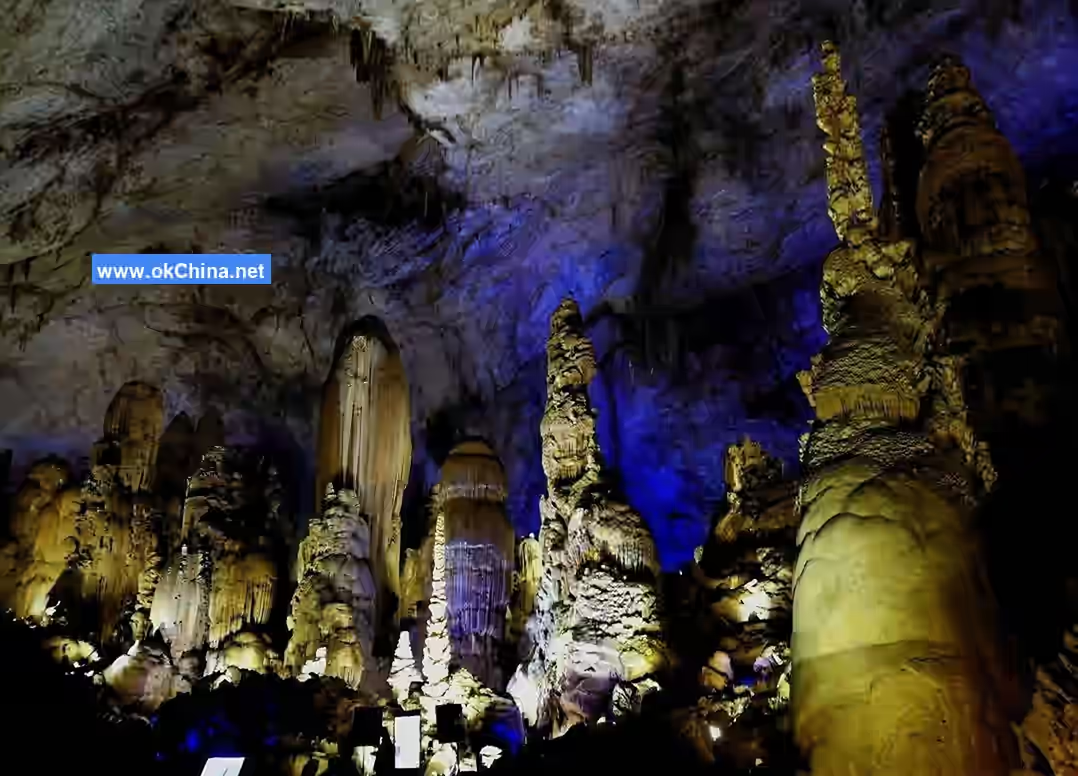
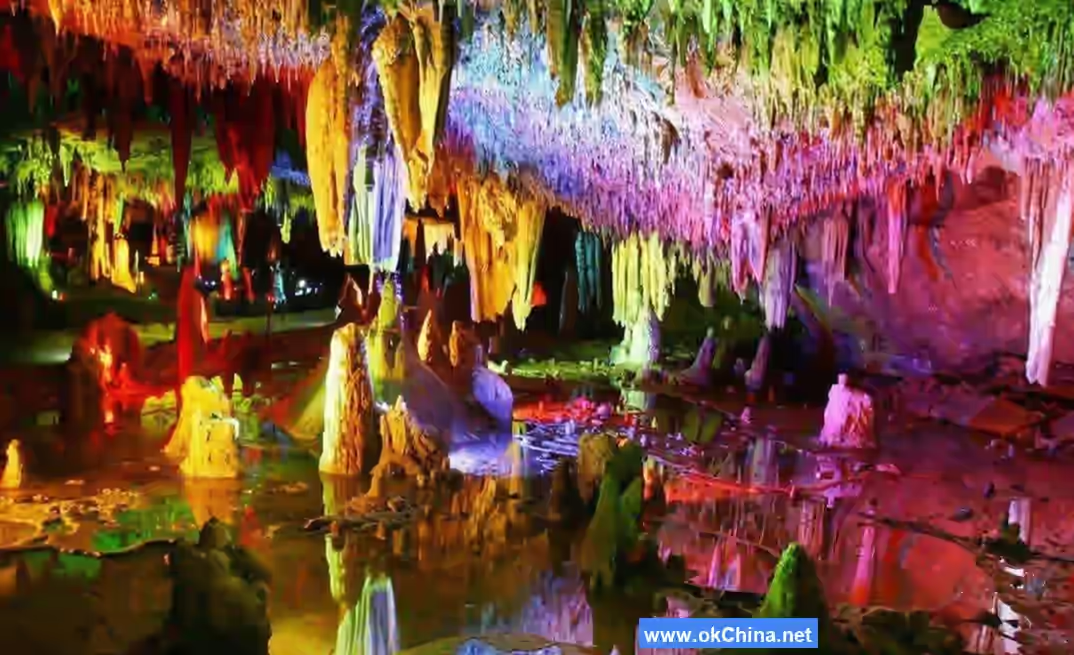
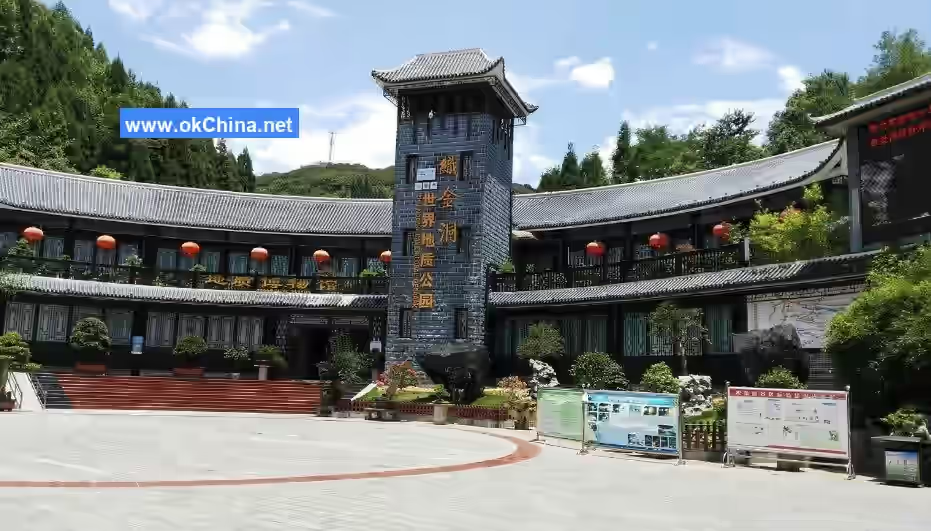
Zhijin Cave, honored as the "King of China's Karst Caves," is located in Guanzhai Miao Ethnic Township, Zhijin County, Guizhou Province. It is currently recognized as China's most magnificent and uniquely shaped treasure trove of cave resources. The cave boasts the largest and most fully developed karst landform discovered in the country, earning it the title "Encyclopedia of Karst Landforms." It has also been ranked first among "China's Most Beautiful Tourist Caves."
Discovered on April 8, 1980, Zhijin Cave opened to the public in 1985. Since then, it has welcomed visitors from over 50 countries and regions, including internationally renowned experts such as Dr. Derek Ford, President of the International Union of Speleology and Professor at the Royal Society of Canada; Dr. Jean-Noël Salomon, President of the French Karst Association; and geomorphologist Dr. William. Domestic visitors have included national and party leaders, dignitaries from various provinces, municipalities, and autonomous regions, as well as numerous scholars, experts, and celebrities. Joint investigations by Chinese and foreign scientists have consistently yielded high praise, lauding the cave for its abstract, figurative, classical, and modern beauty, fully showcasing four-dimensional spatial art. It has been acclaimed as the "Number One Cave Under Heaven," an "Underground Art Treasure House," a "Planetary Marvel," and a "Karst Museum."
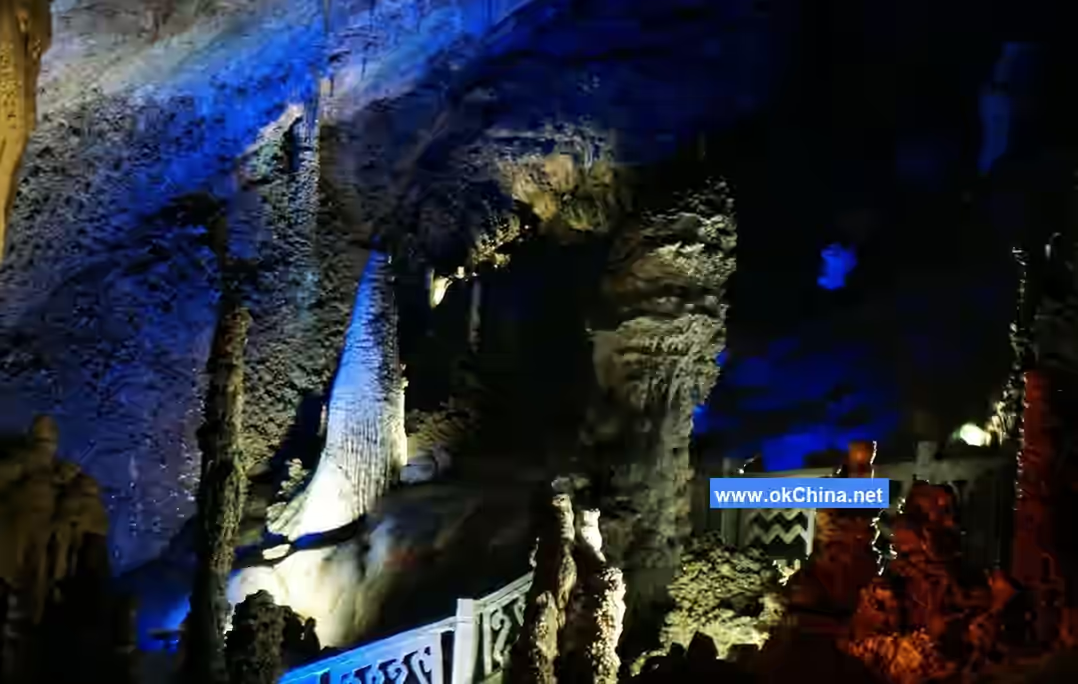
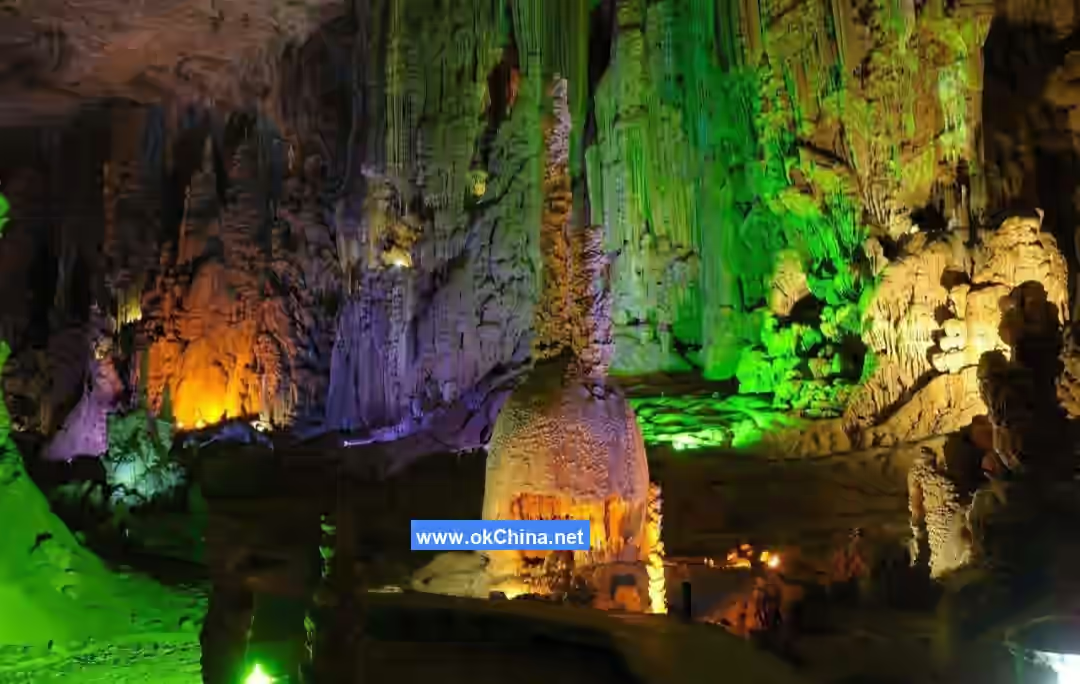
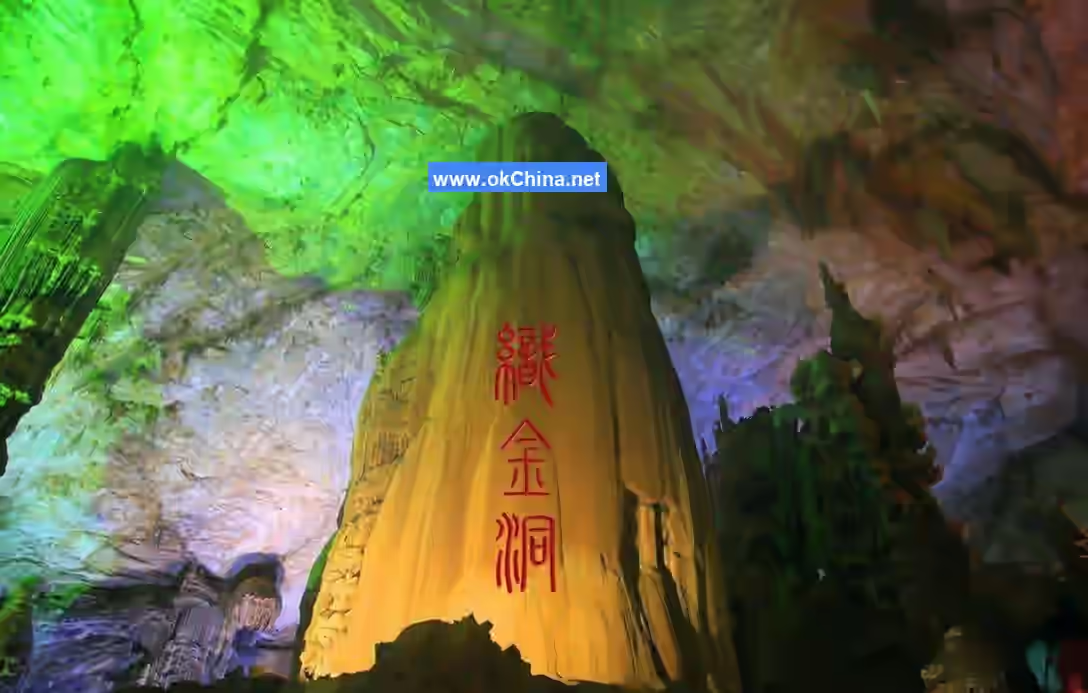
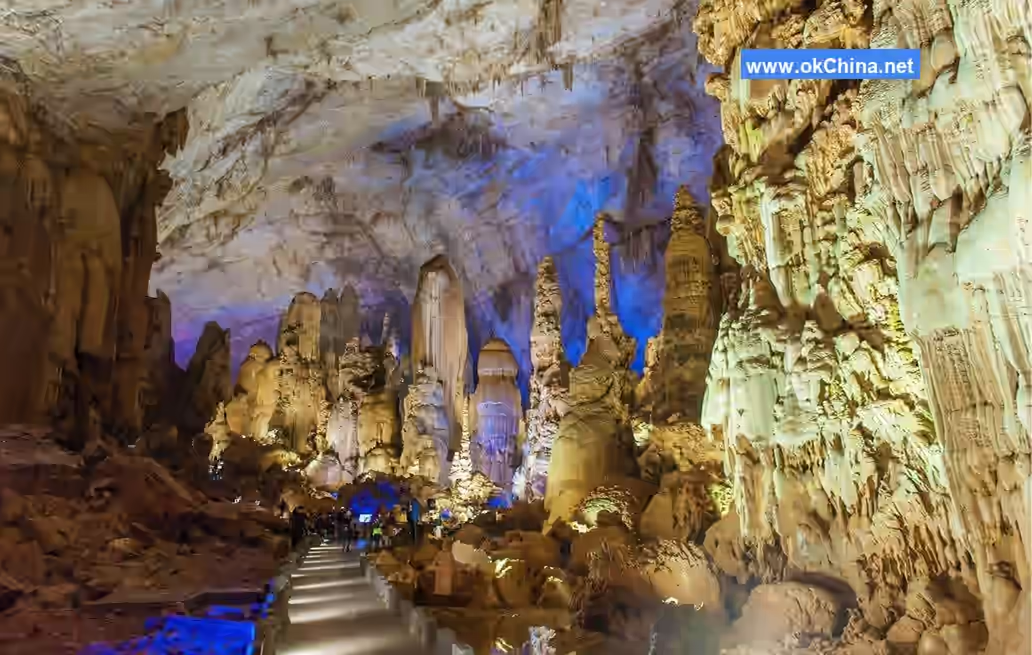
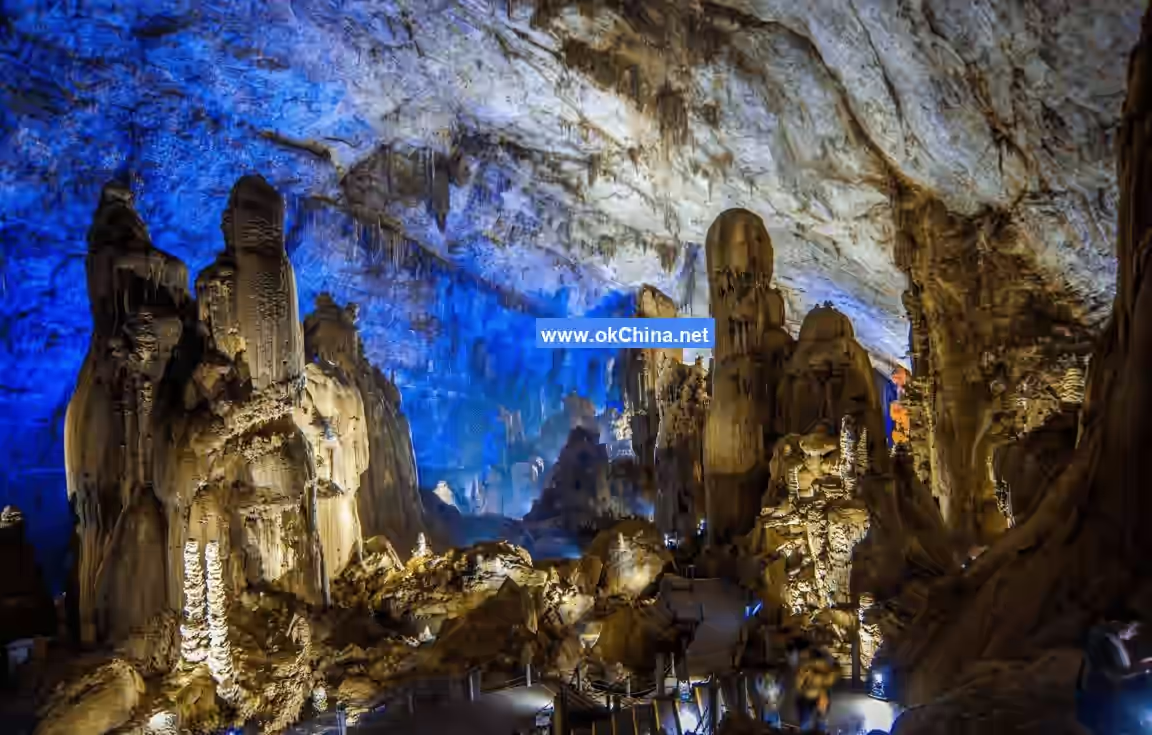
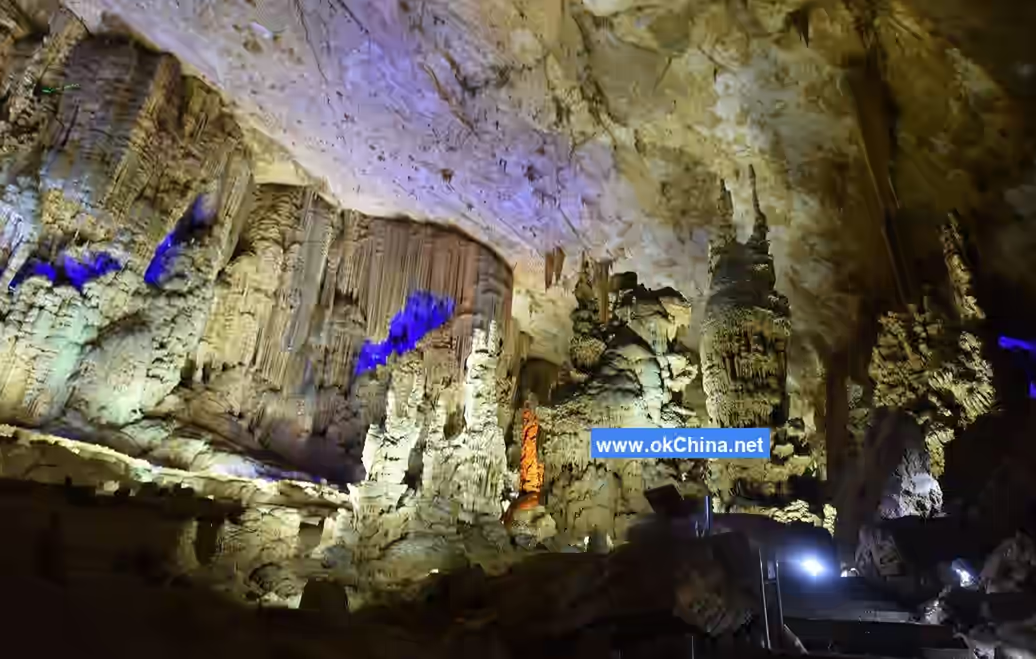
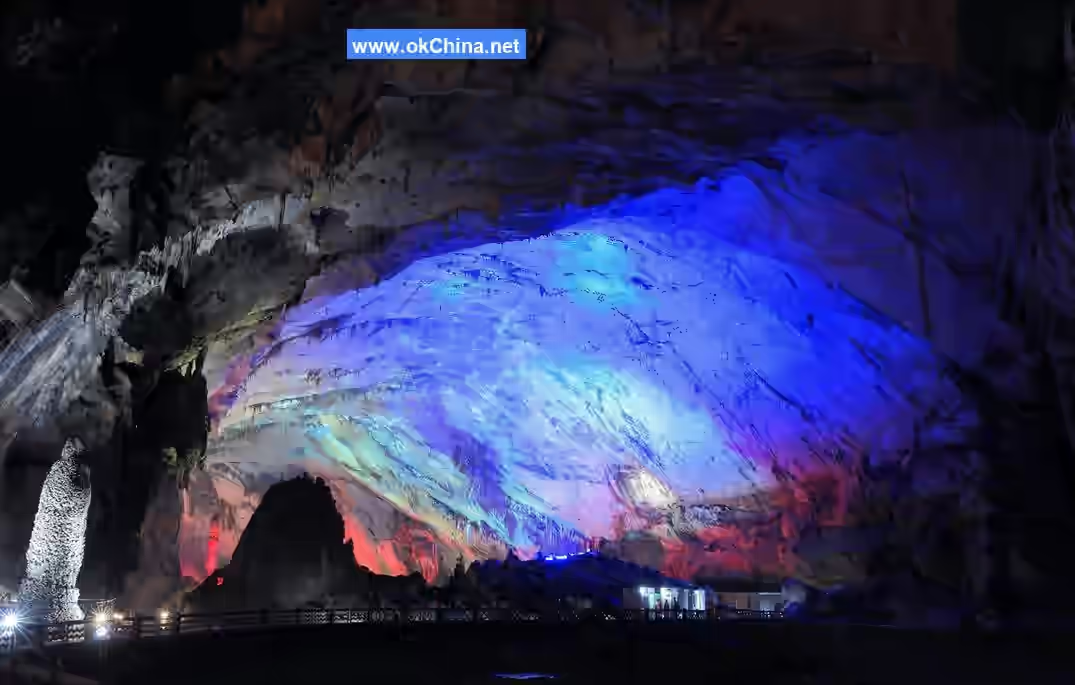
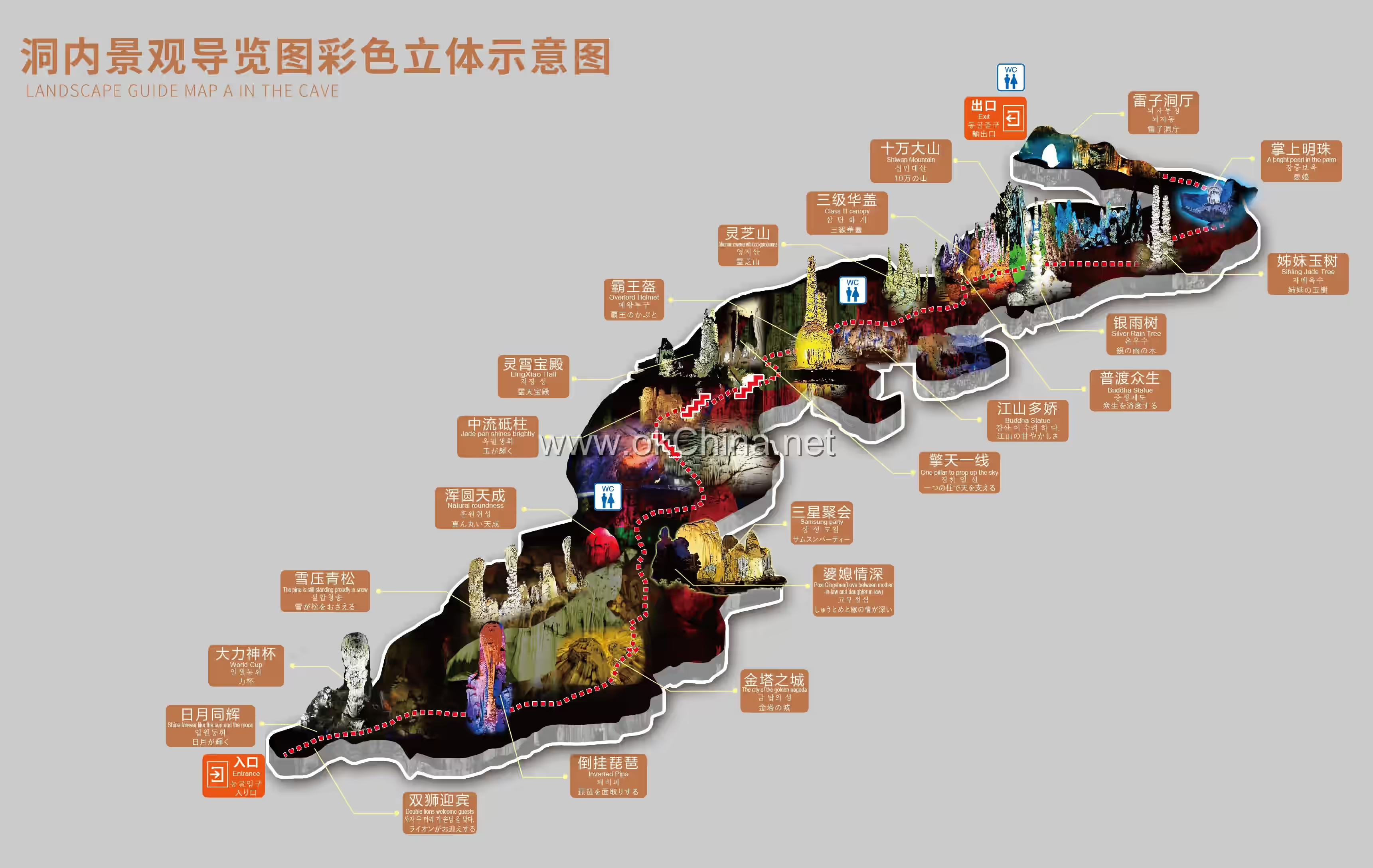
The interior of Zhijin Cave features complex terrain with numerous halls, divided into 12 major sections including the Welcoming Hall, Pagoda Forest Palace, Lingxiao Palace, and One Hundred Thousand Mountains. The cave is adorned with breathtaking karst formations such as stalagmites, stone pillars, stone sprouts, and stone flags in various shapes. Among them, the Pagoda Forest World within the Golden Pagoda Palace is the largest spectacle in the scenic area. Within a 16,000-square-meter hall, over 100 golden and silver pagodas stand tall, interspersed with stalagmites, stone vines, stone curtains, stone draperies, stone flags, stone drums, and stone pillars, creating a dazzling interplay. Particularly notable are the Silver Rain Tree, a slender and straight stalagmite, and the Helictites—translucent calcite crystals that grow in various curled forms, seemingly defying gravity. Some resemble branches, others plum blossoms or deer antlers. They feature hollow central tubes filled with water, with extremely thin, transparent walls, holding significant scientific research value.
The tour route in Zhijin Cave is one-way. After exiting the cave, visitors can take an electric cart back to the entrance. The entire tour takes approximately 2 hours. The average temperature inside the cave ranges from 10 to 16 degrees Celsius (50 to 61 degrees Fahrenheit), with cool and humid air. Visitors are advised to wear appropriate clothing for comfort. With its unique geological wonders and rich scientific value, Zhijin Cave has become an ideal destination for both domestic and international tourists and researchers seeking to explore the mysteries of nature.
2. Geographical Environment
2.1 Location and Area
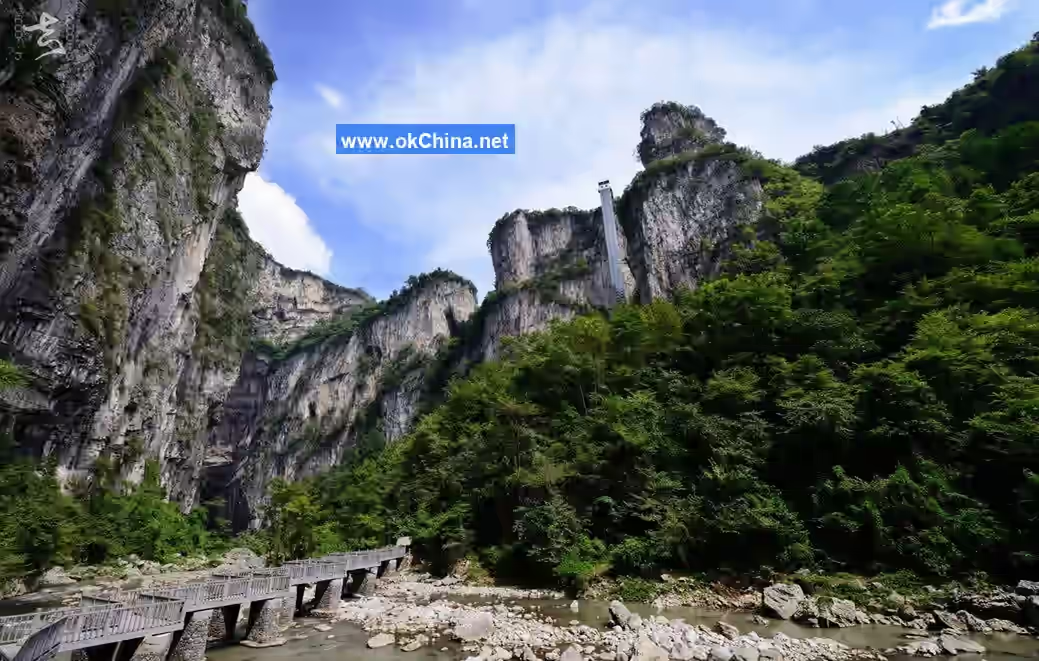
The Zhijin Cave Scenic Area in Bijie City is located in Guanzhai Miao Ethnic Township, Zhijin County, Bijie City, Guizhou Province. It sits on the south bank of the Liuchong River, one of the headwaters of the Wujiang River, approximately 120 kilometers from the provincial capital, Guiyang. The geographical coordinates of Zhijin Cave range from 26°38′31″N to 26°52′35″N and 105°44′42″E to 106°11′38″E.
2.2 Topography and Landforms
Zhijin Cave is situated in the southeastern part of Guanzhai Township, about 23 kilometers northeast of Zhijin County town. It lies within the karst hills at the top of the valley slope on the south bank of the upper reaches of the Liuchong River (Wujiang River) and the southeast bank of the lower reaches of the Qijie River. The cave developed within a strong karst aquifer composed of medium to thick limestone strata from the Huangcunba Member of the Lower Triassic Yelang Formation. It is located on the north-northwest wing of the Xiahongyan short-axis anticline and the southeast wing of the Dongbian syncline. Zhijin Cave is a typical karst landform, with carbonate content exceeding 90%. It encompasses most types of karst geological heritage forms.
2.3 Climate Characteristics
The Zhijin Cave Scenic Area in Bijie City features a subtropical plateau climate. The average annual temperature is 14.1°C (57.4°F), with mild winters and cool summers, offering pleasant weather year-round.
3. Main Attractions
3.1 Stalagmites
Stalagmites within Zhijin Cave are the primary chemical deposits, exhibiting diverse forms. They are mainly distributed on the third and fourth levels of the first main cave passage (Cave Entrance, Moon-Sun Pool, Wangshan Lake, Guanghan Palace, One Hundred Thousand Mountains). The following are the main morphological types and characteristics of the stalagmites:
| Morphological Type | Main Developmental Characteristics | Main Development Areas | Typical Scenic Spots | |----------------|----------------------------------------------------------------------------------|--------------------------------|----------------------------| | Normal Stalagmites | Vary in size, primarily featuring a "thick base and thin top" shape. Surfaces are often adorned with nodular or palmate protrusions, appearing vivid and diverse. | Widely distributed throughout the cave | Ancient Banyans Compete in Splendor, Stone Flowers Vie in Beauty | | Helmet-shaped Stalagmites | Lower part resembles a helmet, upper part is a slender rod, similar to an ancient general's helmet. | Guanghan Palace, Crystal Palace | Overlord's Helmet, Fishing in Zhijin, Discussing the Past and Present | | Rounded Stalagmites | Resemble rounded hills, stout and tall, with diameter and height being similar. Mostly large or giant stalagmites. | Widely distributed throughout the cave | Three Stars of Fortune, Prosperity, and Longevity, Perfectly Rounded | | Pagoda-shaped Stalagmites | Resemble tall pagodas, grand in scale, with heights reaching over 40 meters. Diameter is less than the height. | Widely distributed throughout the cave | Buddha Saving All Beings, Zhijin Twin Pagodas | | Mushroom-shaped Stalagmites | Resemble mushrooms or umbrellas, with diameters of 15–30 cm. Calcite crystals are coarse, and the "mushroom cap" is 2–6 cm thick. | Lingxiao Palace, tail section of One Hundred Thousand Mountains | / | | Pagoda Pine-shaped Stalagmites | Surface adorned with palmate protrusions, resembling a pagoda pine tree, with a thick base and thin top. | Widely distributed throughout the cave | Silver Rain Tree, Jade Sister Trees | | Lampstand-shaped Stalagmites | Shape features "thin ends and a thick middle," resembling an ancient lampstand. | Lingxiao Palace | Thousand-Year Lampstand, Overlord's Whip | | Cane-shaped Stalagmites | Lower part is relatively thin, upper part extends in one direction, resembling a walking cane. | Lingxiao Palace, tail section of One Hundred Thousand Mountains | / | | Torch-shaped Stalagmites | Shape features a "thin lower part and thick upper part," resembling a torch or the FIFA World Cup Trophy. | Welcoming Hall | FIFA World Cup Trophy | | Breast-shaped Stalagmites | Resemble breasts, large in scale, with a thick, long lower part and a small top. | Scattered distribution throughout the cave | / | | Cup-shaped Stalagmites | Resemble round cups, relatively small in scale, height not exceeding 30 cm, mostly milky white or cream-colored. | Widely distributed throughout the cave | / |
3. 2 Stone Pillars
Stone pillars often coexist with stalagmites and exhibit diverse forms. They are mainly distributed on the third and fourth levels of the first main cave passage. The following are the main morphological types and characteristics of the stone pillars:| Morphological Type | Main Developmental Features | Main Development Areas | Typical Scenic Spots | |------------------------|--------------------------------------------------------------------------------------------------|----------------------------------|----------------------------------| | Normal Stone Column | Primarily characterized by a "thick at both ends, thin in the middle" shape, with surface encircled by nodular bodies or palmate segments. | Widely distributed throughout the cave | / | | Shield-shaped Stone Column | Formed by the symbiosis of stone shield, stalactite, and stalagmite, featuring a unique morphology. | Scattered throughout the cave | / | | Pipa-shaped Stone Column | Formed by the symbiosis of vertical stone shield, stalactite, and stalagmite, creating a "pipa-shaped" column. | Pipa Palace | Hanging Pipa | | Round Pagoda-shaped Stone Column | Resembling a tall pagoda, large in scale, thicker at the bottom and thinner at the top, with heights reaching over 40 meters. | Widely distributed throughout the cave | Twin Columns of the Temple | | Palm-shaped Stone Column | Surface encircled by palmate segments, resembling a palm tree. | Widely distributed throughout the cave | A Line to the Sky, Zhijin Cycad | | Spindle-shaped Stone Column | Surface develops parallel spindles, connected end to end. | Widely distributed throughout the cave | / | | Nodular Stone Column | Surface coiled with nodular bodies, featuring a unique morphology. | Widely distributed throughout the cave | / |
3.3 Stone Shields
Stone shields are mainly distributed in the Crystal Palace branch cave, with diverse forms, often symbiotic with stalactites and stalagmites. The following are the main morphological types and characteristics of stone shields:
| Morphological Type | Main Developmental Features | Main Development Areas | |------------------------|--------------------------------------------------------------------------------------------------|----------------------------------| | Flat Stone Shield | Shield surface is elliptical, approximately horizontal, with a dip angle less than 10º, diameter 15–650 cm, thickness 2–30 cm. | Crystal Palace branch cave, Tower Forest Palace, Golden Rat Palace, etc. | | Inclined Stone Shield | Shield surface is elliptical, with a larger dip angle (15º–80º), diameter 15–650 cm, thickness 2–30 cm. | Crystal Palace branch cave, Tower Forest Palace, Golden Rat Palace, etc. | | Ground Stone Shield | Grows vertically upward from the cave floor, shield surface is elliptical, width about 95 cm, height about 160 m, thickness 15–30 cm. | Crystal Palace | | Vertical Stone Shield | Shield surface is elliptical, hanging vertically from the cave ceiling, diameter 220–550 cm, thickness 35–55 cm. | Pipa Palace (Hanging Pipa) |
3.4 Stalactites
Stalactites hang from the cave ceiling, with diverse forms and large scales. The following are the main morphological types and characteristics of stalactites:
| Morphological Type | Main Developmental Features | Main Development Areas | |--------------------------|--------------------------------------------------------------------------------------------------|----------------------------------| | Normal Stalactite | Primarily characterized by an inverted cone or rod shape, "thick at the top and thin at the bottom," diameter 10–90 cm, length 20–190 cm. | Widely distributed throughout the cave | | Flag-shaped Stalactite | Thicker at the top, gradually thinning toward the middle and bottom, forming a flat flag shape. | Scattered throughout the cave | | Curtain-shaped Stalactite | Forms a stone curtain shape, thicker at the top, gradually thinning toward the middle and bottom. | Scattered throughout the cave | | Shield-shaped Stalactite | Formed by the symbiosis of stone shield and stalactite, creating a "shield-shaped" stalactite. | Scattered throughout the cave | | Tongue-shaped Stalactite | Resembling a tongue, wider at the top and narrower at the bottom, with roughly consistent thickness. | Widely distributed throughout the cave | | Breast-shaped Stalactite | Hangs from the top of the cave wall in a breast-like shape. | Widely distributed throughout the cave | | Lung-lobe-shaped Stalactite | Hangs from the top of the cave wall in a lung-lobe shape. | Widely distributed throughout the cave || Phototropic Stalactite | Slightly inclined and curved towards the cave entrance at the lower part, not growing vertically solely under the influence of gravity. | Areas near the cave entrance with light | | :--- | :--- | :--- | | | Widely distributed throughout the cave |
3.5 Flowstone Deposits
The flowstone deposits in Zhijin Cave are categorized into wall flowstones (such as stone flags, stone shields, stone curtains, stone draperies, stone waterfalls, etc.) and floor flowstones (such as stone terraces, flowstone dams, etc.). They are widely distributed throughout the cave in diverse forms.
4. Origin of the Name
"Zhijin Cave" was originally named "Daji Cave" (literally "Chicken Beating Cave"). The Yi people traditionally liked to name places after personal names. Legend has it that a family named "Daji" lived near the cave, and the area was commonly referred to as "Daji's home." Consequently, the cave came to be known as "Daji Cave." Through oral transmission, a phonetic error occurred over time, and it gradually evolved into "Daji Cave" (homophonous with "Chicken Beating Cave") as it was passed down. [9] When the local government developed the site, they considered the name "Chicken Beating Cave" to be somewhat inelegant. Therefore, they decided to name the cave after Zhijin County, thus renaming it "Zhijin Cave."
Comments
Post a Comment