Zhenyuan Ancient City
1. Introduction
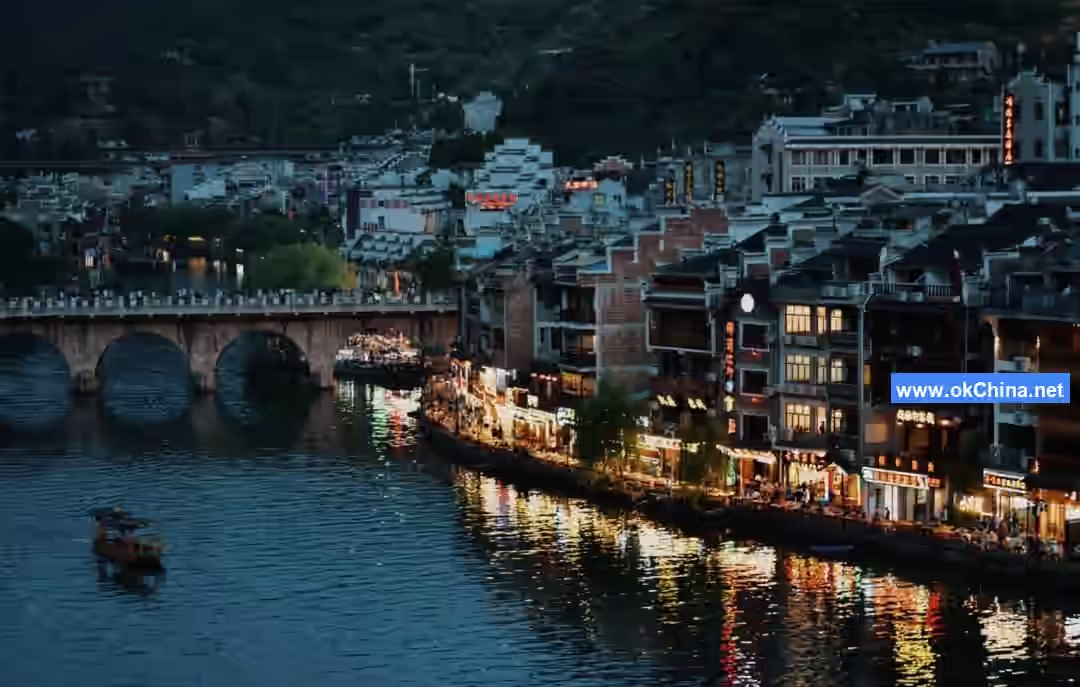
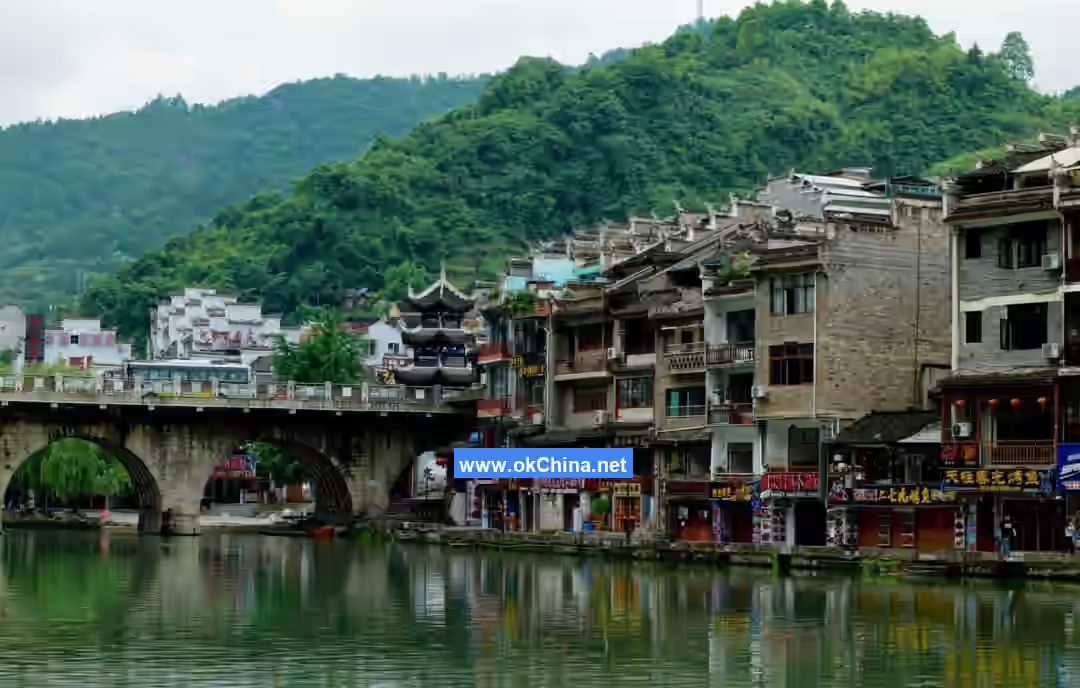
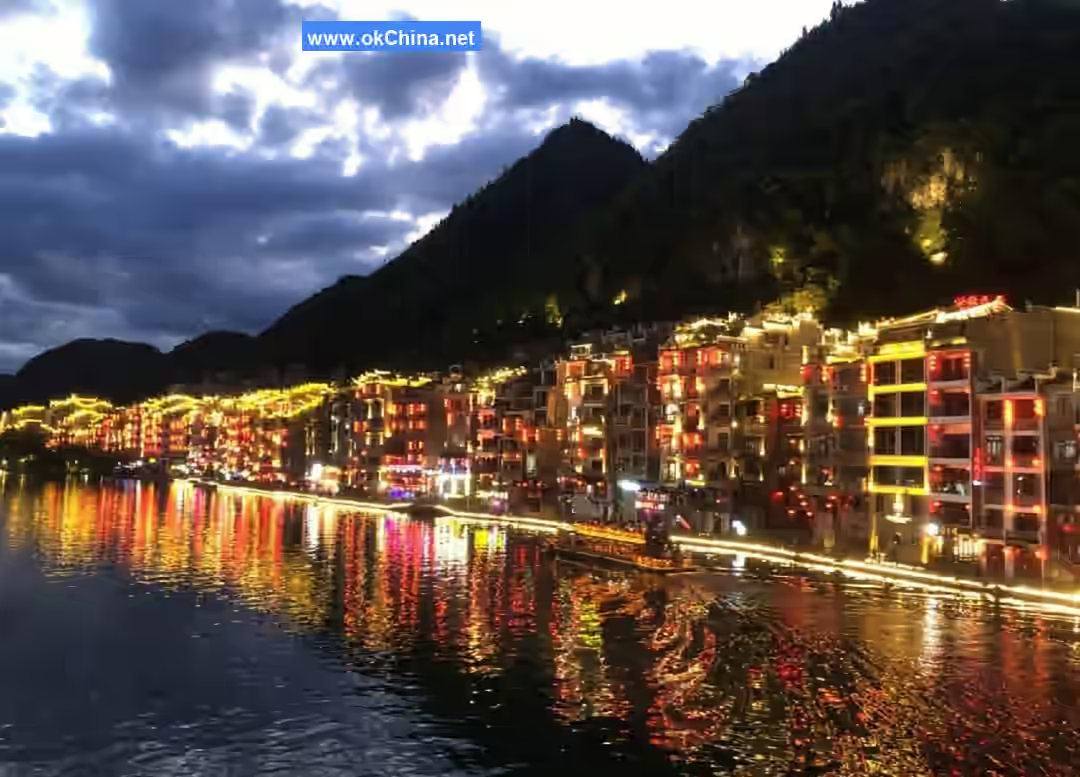
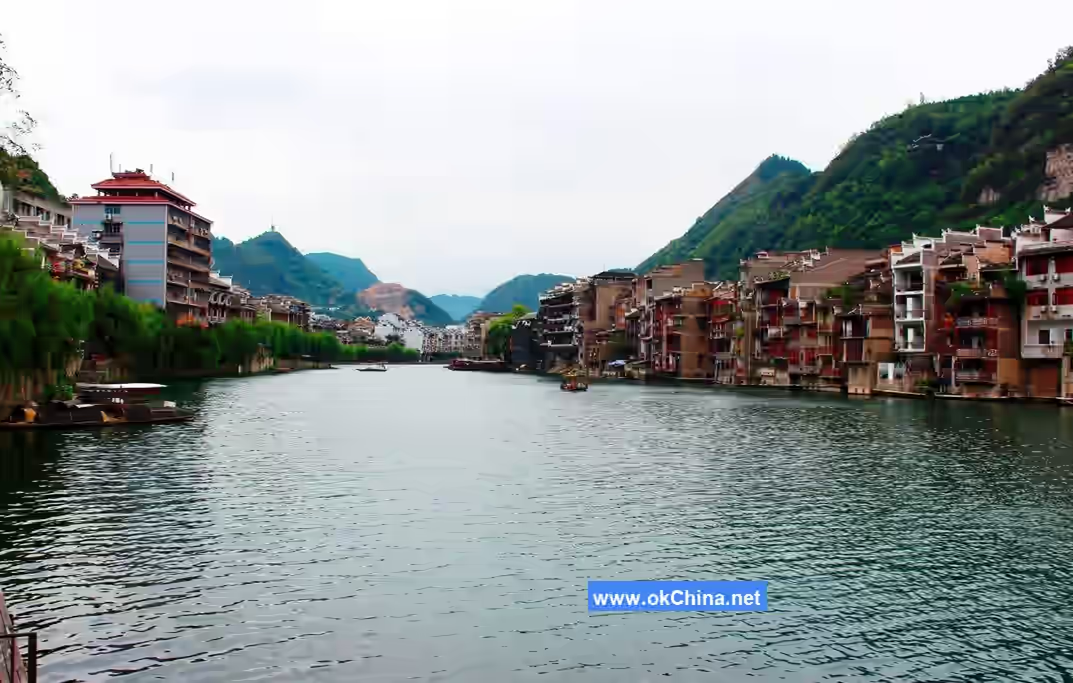
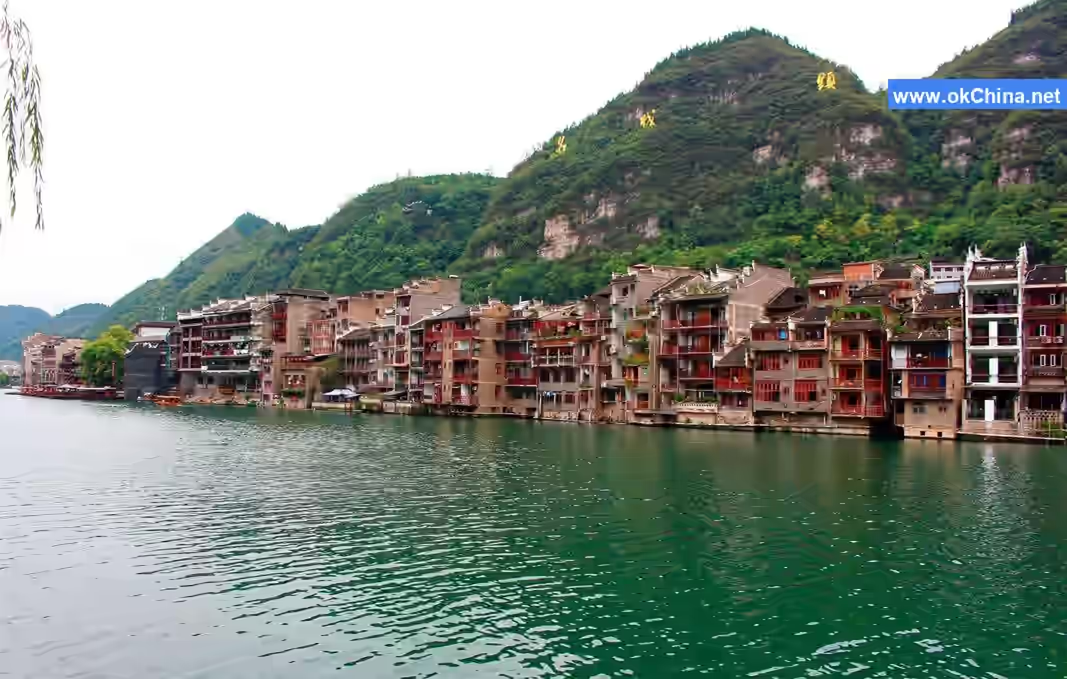
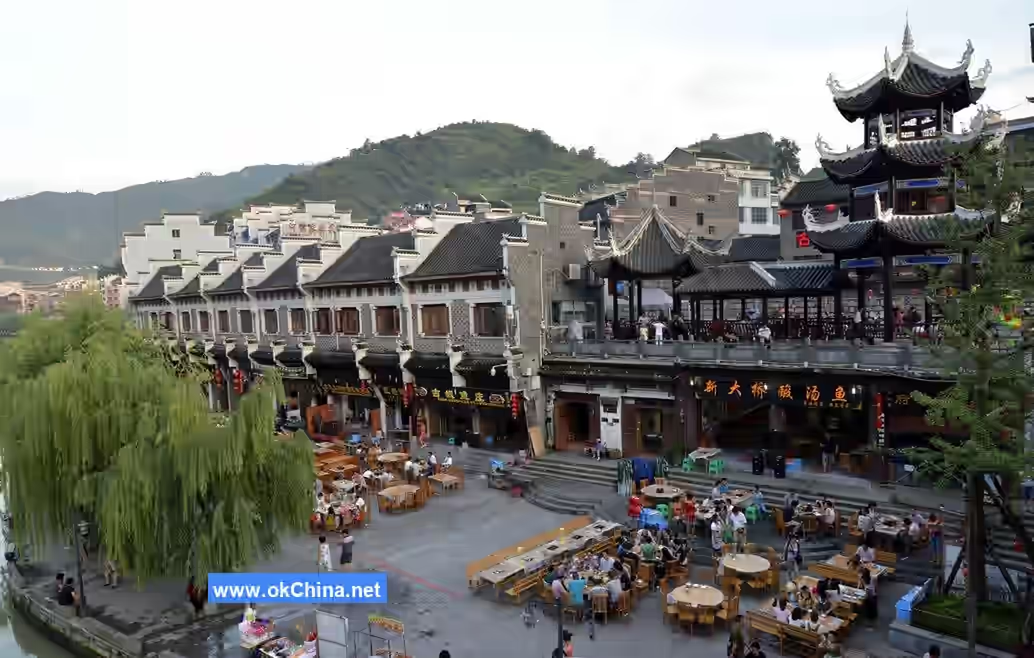
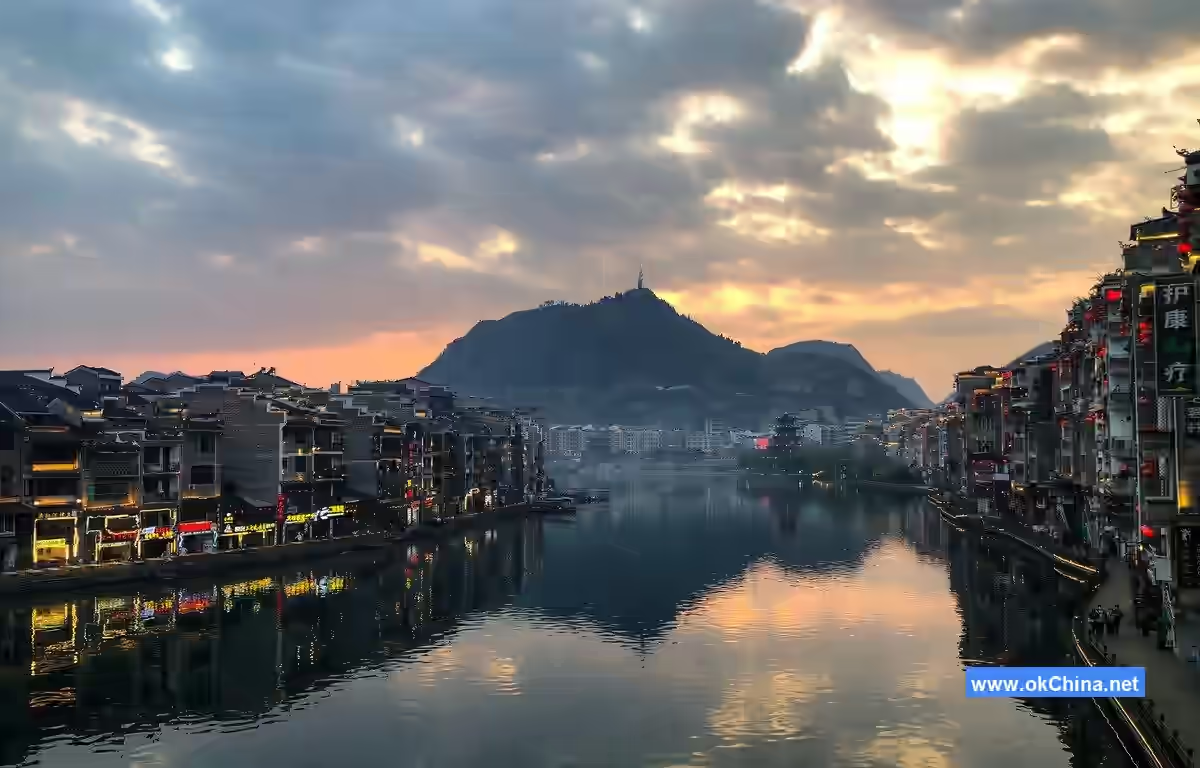
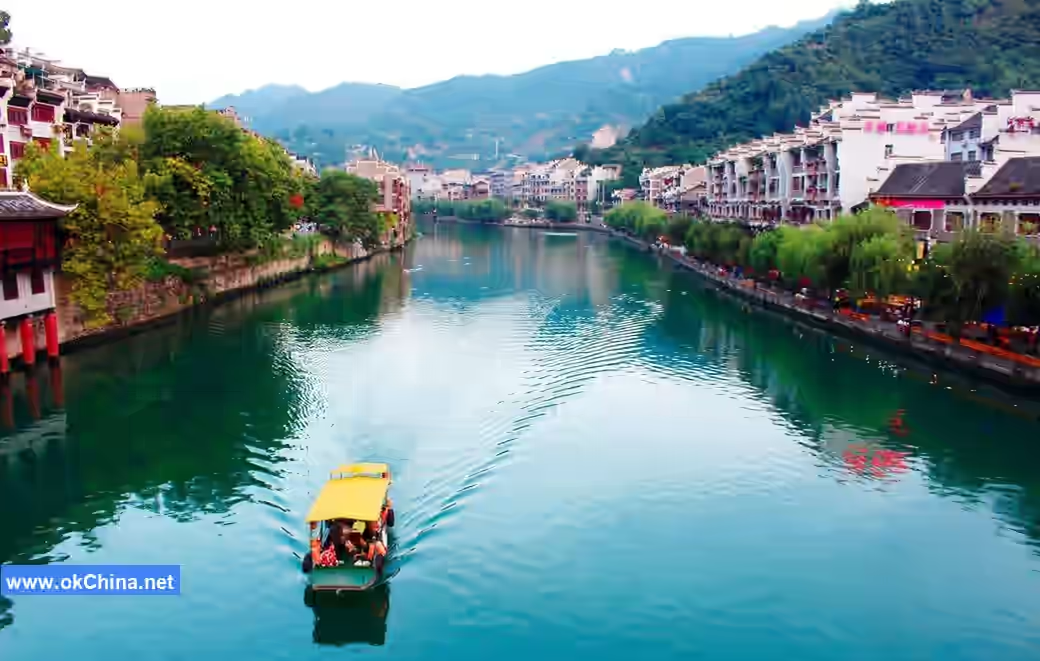
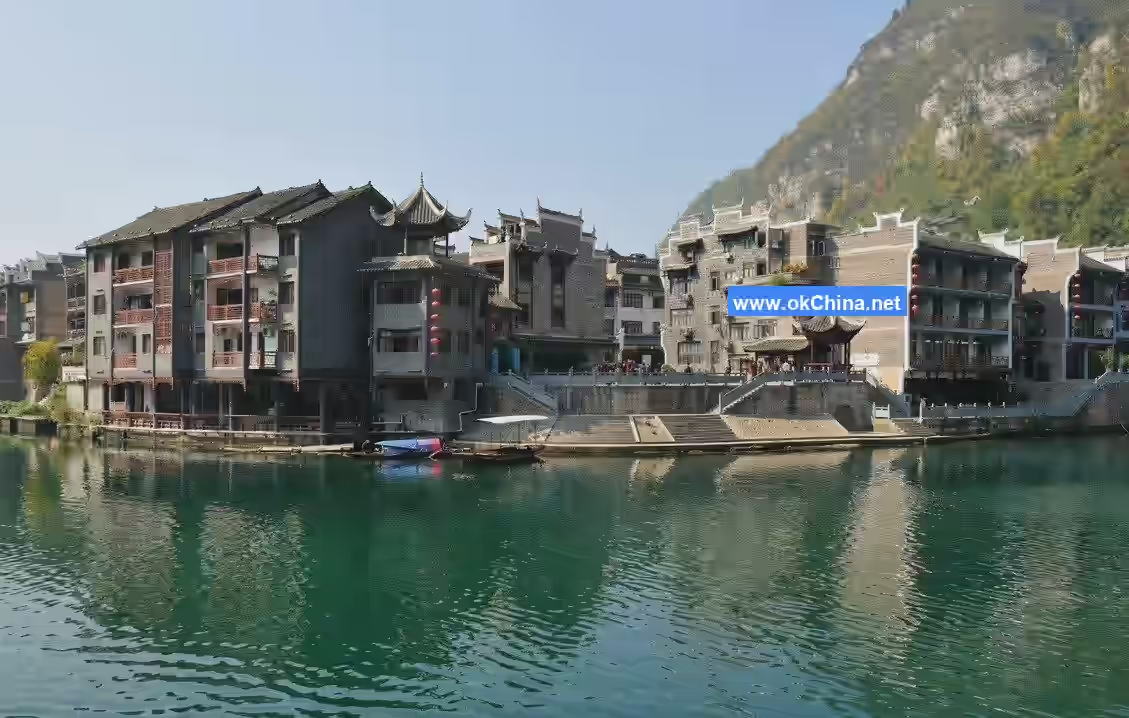
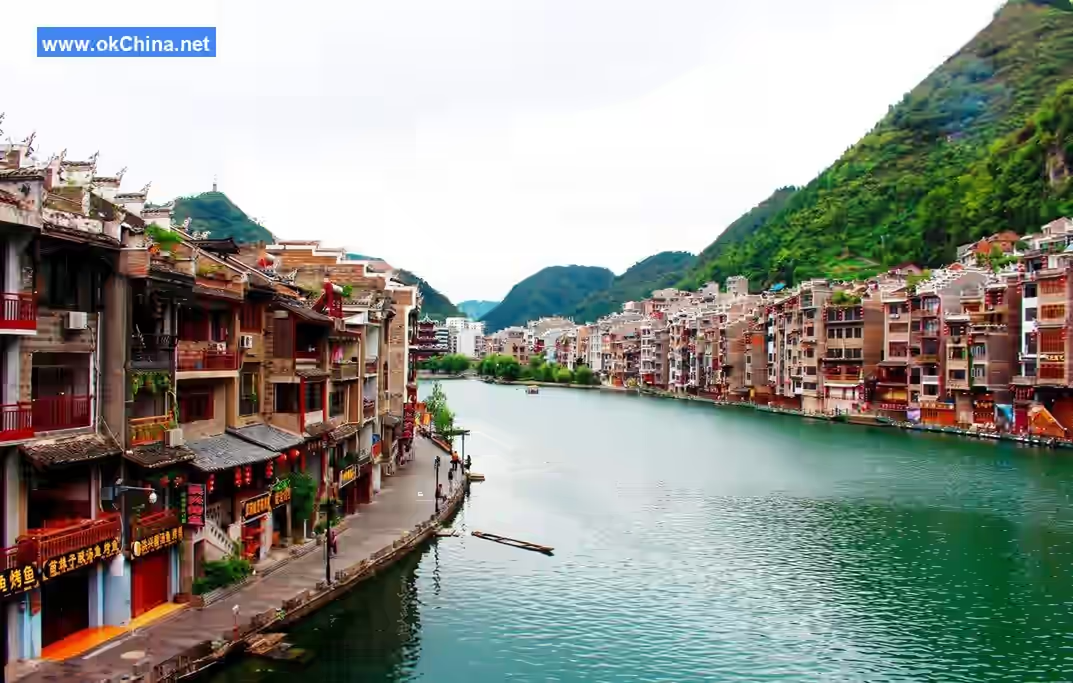
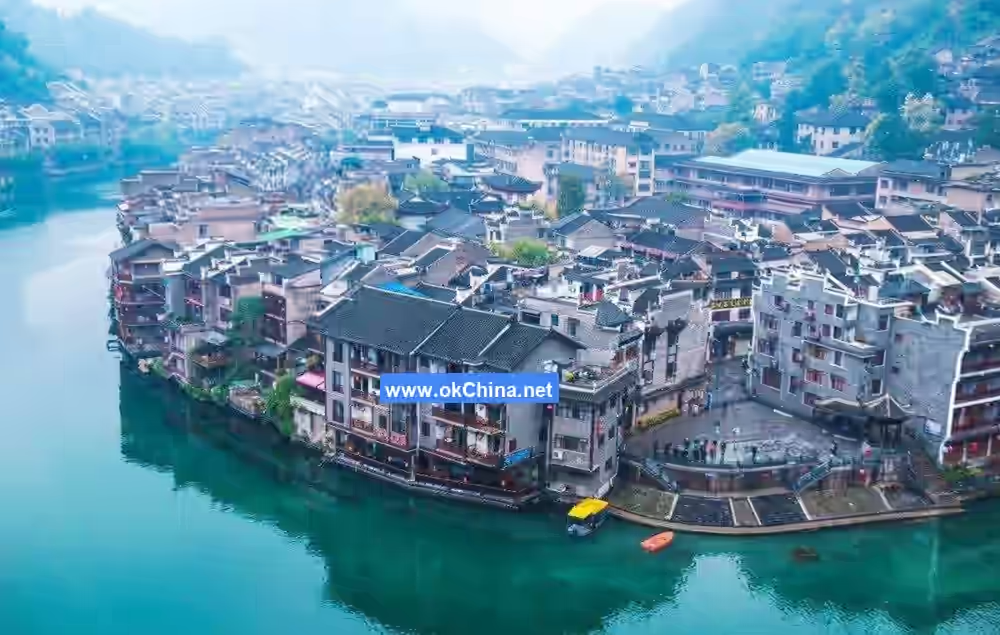
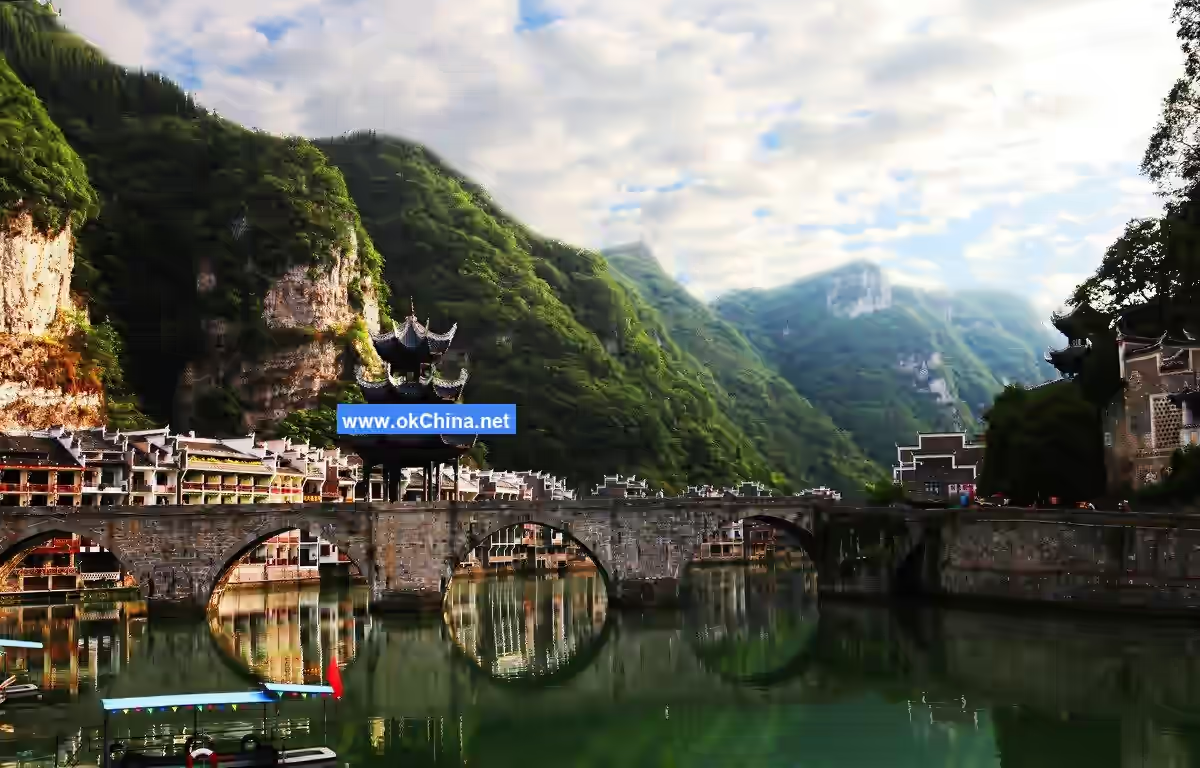
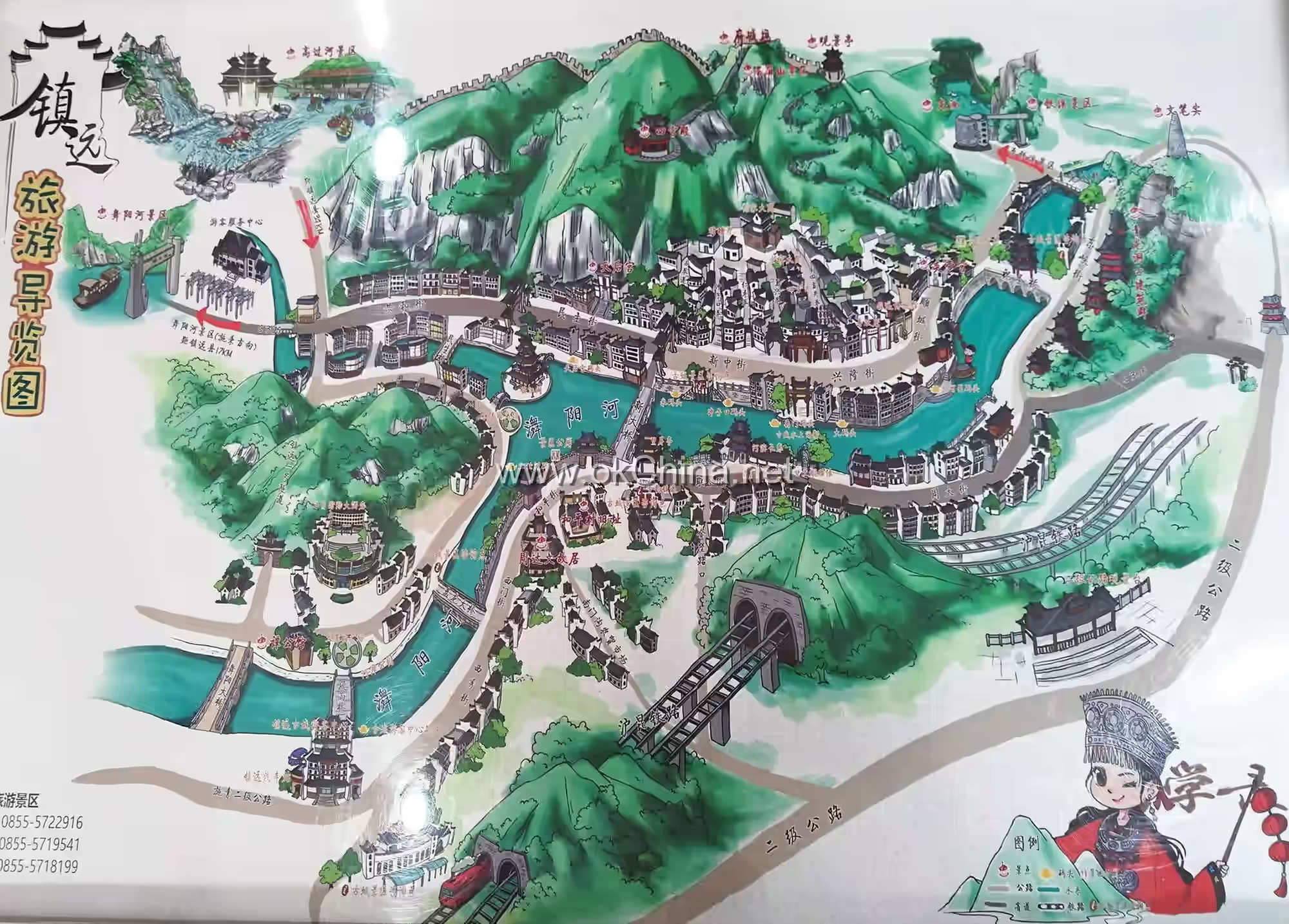
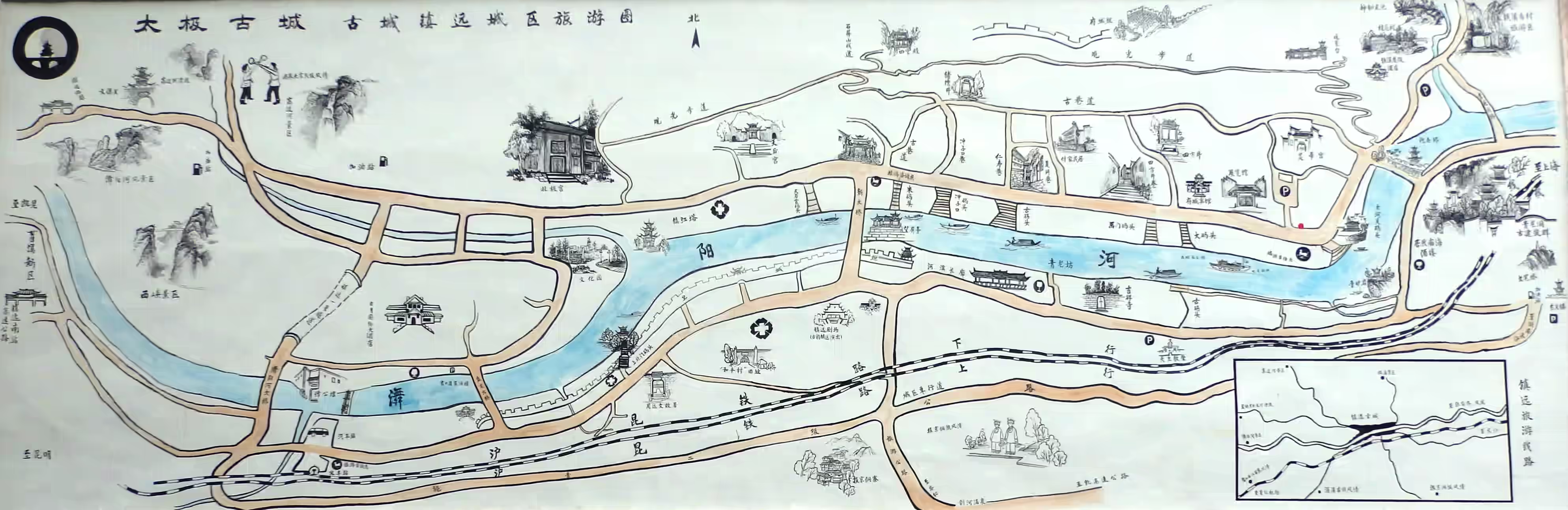
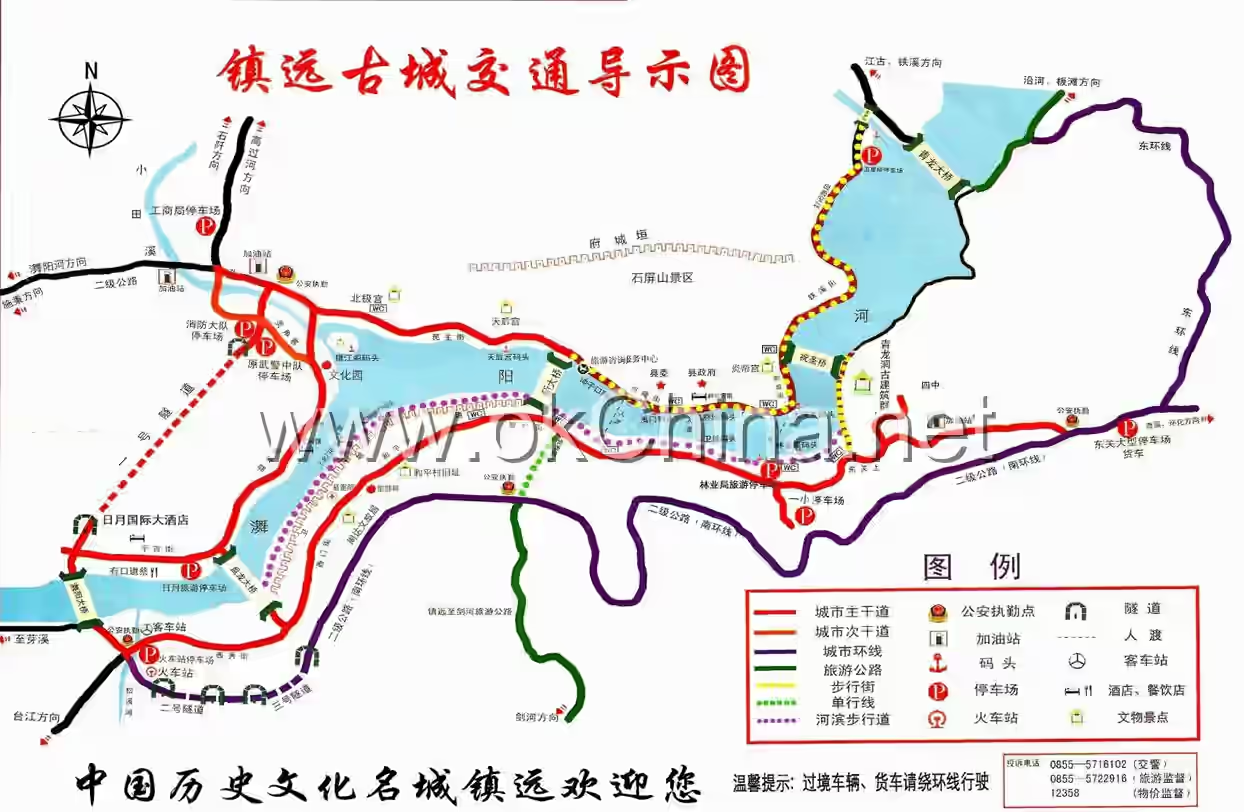
Zhenyuan County is located in the eastern part of Guizhou Province. The ancient city of Zhenyuan covers an area of 3.1 square kilometers. The Wuyang River flows through the city (Zhenyuan Ancient City) from west to east in an "S" shape, creating a unique landscape described as "nine mountains embracing one river, one river dividing two cities." The north bank of the Wuyang River is the old prefectural city, and the south bank is the old garrison city, which from a distance resembles a Taiji diagram. The ancient city boasts nearly 200 historical sites, including government offices, temples, monasteries, nunneries, halls, palaces, ancestral shrines, towers, halls, lodges, pavilions, terraces, waterside pavilions, city walls, ancient lanes, ancient residences, ancient docks, and ancient wells. Since its incorporation into the Wuyang County of Qianzhong Commandery of the Chu State in 279 BC, it has a history of over 2,000 years. It can be said that the Chu and Han cultural influences run deep, with a rich historical and cultural heritage. For over 1,000 years, it served as the seat of military commissioners, pacification commissions, administrative offices, prefectures, circuits, and special administrative regions. Zhenyuan is known for its "six plaques and ten lanes" and was renowned as a "major metropolis in the southwest" during the Ming and Qing dynasties. It reflects the true portrayal of people living and working in peace and contentment, as well as the commercial concept of merchants achieving wealth and prosperity.
2. Geographical Environment
2.1 Location and Territory
The Zhenyuan Ancient City Tourist Attraction is located in Zhenyuan County, Qiandongnan Miao and Dong Autonomous Prefecture, Guizhou Province, situated by the Wuyang River and surrounded by mountains.
2.2 Topography and Landforms
Zhenyuan Ancient City is located in the transitional slope area from the Yunnan-Guizhou Plateau to the hills of western Hunan.
2.3 Climate Characteristics
Zhenyuan Ancient City has a mild climate with abundant rainfall, belonging to the subtropical monsoon humid climate zone. The annual average temperature is 16.4°C, with no severe cold in winter, no intense heat in summer, and mild springs and autumns.
2.4 Hydrological Features
The Wuyang River is a tributary of the Yuan River, which is a tributary of the Yangtze River. It flows through ten counties and cities in two provinces: Weng'an, Huangping, Shibing, Zhenyuan, Cengong, and Yuping in Guizhou, and Xinhuang, Zhijiang, Huaihua, and Qianyang in Hunan. It converges with the Qingshui River at Qianyang Town in Qianyang County before entering the Yuan River. The main stream is 258 kilometers long, with a drainage area of 6,480 square kilometers.
3. Main Attractions
3.1 Characteristics
The Wuyang River flows through the city (Zhenyuan Ancient City) from west to east in an "S" shape. The most distinctive feature of Zhenyuan's residential architecture is the "crooked doors and slanted paths." The gates of houses opening onto small lanes are never parallel or perpendicular to the lanes, nor do the lanes directly face the main halls. Instead, the gates are intentionally angled toward the southeast or southwest, obliquely facing the streets, hence the term "slanted" paths. According to long-time residents, the "crooked" gates and "slanted" paths follow the advice of feng shui masters: "facing south is a sign of nobility and wealth" and also helps to "keep wealth hidden."
3.2 Tianhou Palace
Tianhou Palace, also known as the Fujian Guild Hall, is located on Minzhu Street in Wuyang Town. It was built during the Qing Dynasty to commemorate the sea goddess Mazu and serve as a guild hall for fellow Fujian natives. On November 3, 1985, Tianhou Palace was announced as a provincial-level cultural relic protection unit by the Guizhou Provincial People's Government. On October 7, 2019, it was announced as part of the eighth batch of national key cultural relic protection units by the State Council. The entire complex faces south, backed by Shiping Mountain, and consists of stone steps, a mountain gate, main hall, side rooms, front corridor, dining hall, two wing rooms in the front courtyard, guest halls in the side courtyard, side rooms, and a stage. The mountain gate is a brick archway with four pillars, three bays, and three stories, featuring a hip-and-gable roof. It is 9 meters high and 5.7 meters wide, with stone door frames. A vertical stone plaque inscribed with the three large characters "Tianhou Palace" in running script is embedded in the lintel. Behind the mountain gate to the west is a rectangular courtyard, with the southern wall built on a cliff. The main hall is located on the western part of a high platform with wide stone steps and features a post-and-lintel structure, divided into a front hall and a rear hall. The front hall has five bays, with "八"-shaped fireproof walls on both sides and a double-eaved hip-and-gable roof. The rear hall has a gable-and-hip roof with fireproof gables, and the main ridge is decorated with clay sculptures of "two dragons competing for a pearl." The total area covers 2,371.77 square meters, with a building area of 1,200 square meters.
3.3 Site of the "Peace Village"
"Peace Village" was the alias of the Second Prisoner-of-War Camp under the Military and Political Department of the National Government during the War of Resistance Against Japan. It was established in February 1938 in Yanguan, Changde, Hunan, primarily detaining Japanese prisoners captured on the southern battlefields of China. As the war situation changed, it was later moved to Chenxi, Hunan, and in December 1938, relocated to Zhenyuan, Guizhou. In November 1944, it was moved to Baxian, Chongqing, and disbanded in April 1946, having been in Zhenyuan for as long as six years. During its time in Zhenyuan (December 1938 – November 1944), the Second Prisoner-of-War Camp detained over 600 Japanese prisoners. To establish a broad anti-Japanese united front, influenced by the Chinese Communist Party's policy of "lenient treatment of prisoners," the camp administrators patiently treated the Japanese prisoners well. They not only sought to improve their living conditions but also arranged recreational activities, gradually awakening the prisoners from the ideology of Japanese militarism. In 1941, promoted by Zhou Enlai, then Deputy Director of the Military and Political Department of the National Government, and Guo Moruo, Director of the Third Department of the Military and Political Department, Japanese anti-war writers Kaji Wataru and his wife Ikeda Sachiko organized the awakened Japanese prisoners to form the "Chinese Japanese People's Anti-War Revolutionary Alliance Peace Village Training Class" (later renamed the "Chinese Japanese People's Anti-War Revolutionary Alliance Peace Village Work Team"). They went to the front lines to conduct anti-war propaganda, demoralizing Japanese troops and playing a positive role in the victory of China's War of Resistance Against Japan. The site of the Zhenyuan "Peace Village" (Second Japanese Prisoner Camp) is the only well-preserved prisoner-of-war camp of the National Government's Military and Political Department in China. It serves as historical evidence of Japanese imperialist aggression against China and holds significant importance in the history of China's War of Resistance Against Japan and the world anti-fascist war.
3.4 Zou Sizhong Memorial Shrine
The Zou Sizhong Memorial Shrine was built in the 17th year of the Guangxu reign of the Qing Dynasty (1891). Located on the north side of Shuncheng Street, it faces south and consists of eastern and western courtyards, covering an area of approximately 800 square meters with a building area of over 480 square meters. This shrine was built by the late Qing court to commemorate Zou Sizhong, who died in battle. In 1998, the Zou Sizhong Shrine was repurposed as the Zhenyuan Historical and Cultural Exhibition Hall. In 2006, it was announced as a provincial-level cultural relic protection unit by the Guizhou Provincial People's Government. In 2011, the Zhenyuan Historical and Cultural Exhibition Hall was renamed the Zhenyuan County Museum and was listed as a nationally free-open unit by the Ministry of Culture and the National Cultural Heritage Administration. The Zhenyuan County Museum has two exhibition halls: the main exhibition hall and the east exhibition hall. The exhibition content is divided into four main parts: Ancient Realm and Long History, Cultural Harmony, Red Zhenyuan, and Land of Landscapes and Blessings.
3.5 Zhou Dawen's Former Residence
Zhou Dawen's former residence is located on Ximen Street in Wuyang Town. Built in the early years of the Guangxu reign, the structure is a two-courtyard siheyuan (quadrangle) covering an area of 1,250 square meters with a building area of 808 square meters. It was the private residence of diplomat Zhou Ying in the early Republic of China era, locally known as "Zhou Mansion," and was where Zhou Dawen spent his youth. In November 1985, Zhou Dawen's former residence was announced as a provincial-level cultural relic protection unit by the Guizhou Provincial People's Government. In November 2004, it was announced as a provincial-level patriotic education base by the Guizhou Provincial People's Government. Zhou Dawen, originally named Zhou Dading, pen name Qu Gong, Russian name Chugunov, was born on January 3, 1903, in Wuyang Town, Zhenyuan County, Guizhou Province. In 1908, he entered the primary school founded by Tongmenghui member Qiao Yunheng, influenced by the idea of "studying without forgetting revolution, revolution without forgetting study." In 1914, he studied at the Zhenyuan Circuit Middle School founded by Tongmenghui member Pan Deming, influenced by anti-imperialist and anti-Qing patriotic thoughts. In 1919, with the outbreak of the "May Fourth" patriotic health movement, Zhou Dawen was elected chairman of the Eastern Guizhou Student Union, organizing Zhenyuan middle and primary school students to participate in anti-imperialist and anti-feudal patriotic movements, after which he was expelled by the authorities. In early April 1920, he went to Peking University for a preparatory course. In August of the same year, using his elder brother Zhou Dawen's graduation certificate, he was admitted to the Beijing Russian Language and Politics College, and he used this name for the rest of his life. During his studies, he learned and researched Marxist-Leninist theory and, under the guidance of comrades Li Dazhao and Deng Zhongxia, became a member of the Marxist Theory Research Society, actively participating in the establishment of the Beijing Socialist Youth League. In early autumn 1923, he joined the Chinese Communist Party through the introduction of Li Dazhao and Fan Hongji. In the summer of 1924, dispatched by the Central Committee of the Communist Youth League, he attended the Fifth National Congress of the All-China Student Federation and was elected chairman of the National Student Union. In October 1924, the Party Central Committee sent Zhou Dawen to study at the Moscow University of the Toilers of the East, after which he remained to work for the Comintern. In late summer 1925, he was ordered to return to Shanghai and led 118 students, including Zhang Wentian, Wang Jiaxiang, and Ulanhu, to study at Sun Yat-sen University in Moscow. During his time at Sun Yat-sen University in Moscow, Comrade Zhou Dawen made outstanding contributions to the Chinese revolution and the training of senior leaders for the Chinese Communist Party. He was primarily responsible for academic affairs and translation work at the university and was highly praised by Stalin. In November 1927, Zhou Dawen was transferred to serve as the head of the Chinese Department and Party Branch Secretary of the Lenin Institute, overseeing the work of Chinese students. In July 1937, during the Soviet purges, he was wrongfully executed at the age of 35. On December 8, 1987, the Organization Department of the Central Committee of the Communist Party of China issued a document rehabilitating Zhou Dawen and clearing his name.### 3.6 Zhenyuan Revolutionary History Museum The Zhenyuan Revolutionary History Museum is located within the Shangguan Folk Residence (East Courtyard) on Renshou Lane, covering an area of 500 square meters. This site also served as General Luo Binghui's residence in Zhenyuan during the Long March and was the founding location of the Zhenyuan Underground Party Branch of the Communist Party of China. The museum's name was inscribed by Mr. Feng Jicai and Mr. Zhou Binghe. The exhibition content is divided into five sections: "Zhenyuan's Pioneer Response in the 1911 Revolution," "Joy After the Red Army's Passage," "The Spark That Started a Prairie Fire in Southeast Guizhou," "The Major Hub of Anti-Japanese War Support," and "The First Stop in Southwest China's Liberation." The museum houses over 280 historical artifacts and cultural materials rich in significance, comprehensively and vividly documenting the glorious revolutionary struggles of the Chinese Workers' and Peasants' Red Army, the Zhenyuan Underground Party, Zhenyuan's elite anti-Japanese troops, and the People's Liberation Army in Zhenyuan. For the first time, it systematically and comprehensively records and displays a series of major events that occurred in Zhenyuan from the late 19th century to the mid-20th century.
3.7 Ancient Alleys
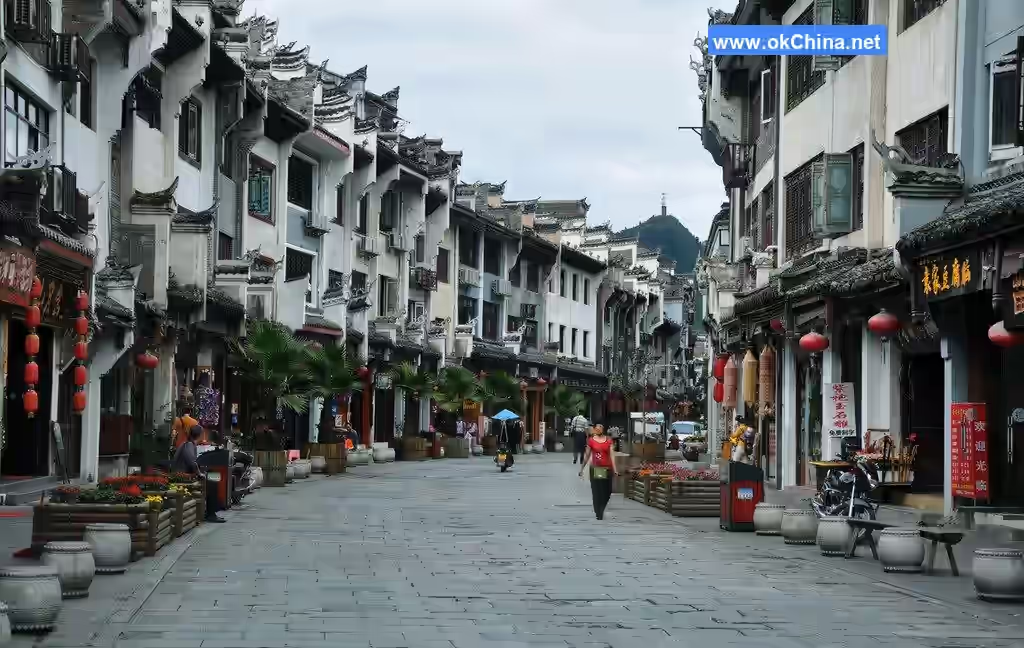
The ancient alleys are the heart of Zhenyuan's ancient town. These alleys are narrow, long, deep, and quiet, with a complex and intricate structure, often described as "Six Plaques and Ten Alleys." Seven alleys remain today: Shipaifang Alley, Sifangjing Alley, Fuxing Alley, Renshou Alley, Chongzikou Alley, Mimatou Alley, and Chenjiajing Alley. All seven alleys were built on the Shiping Mountain adjacent to the river, winding and rising layer by layer along the mountain's contours.
3.8 Qinglong Cave
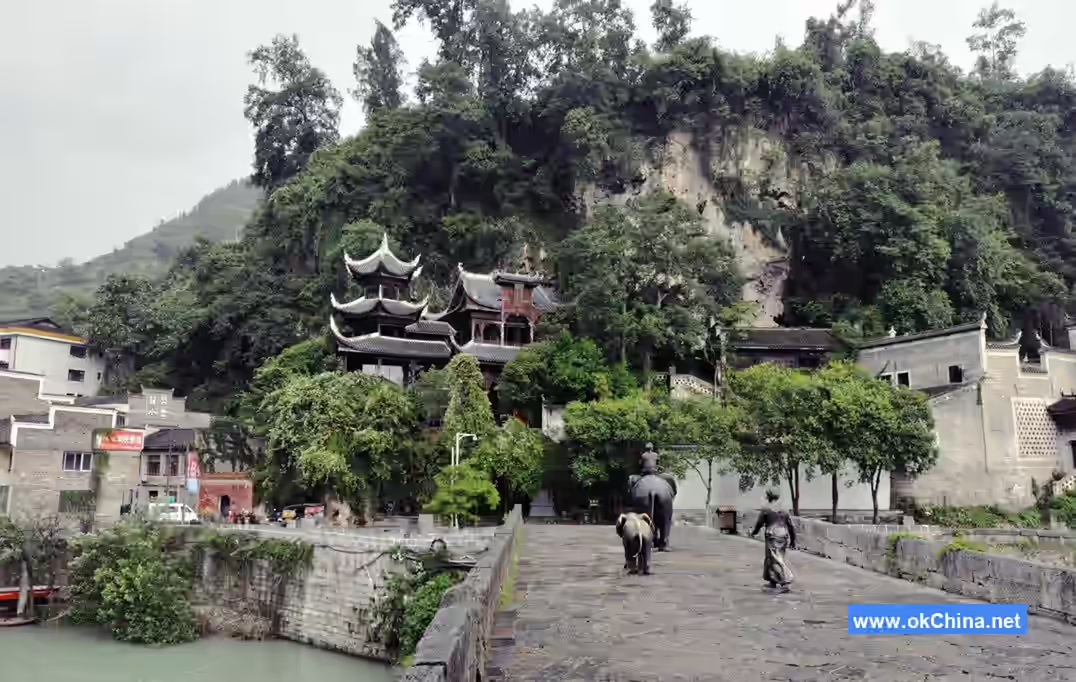
The Qinglong Cave Ancient Architectural Complex is located at the eastern end of Zhenyuan County. It was initially built in the 21st year of the Hongwu era of the Ming Dynasty (1388 AD), rebuilt in the 9th year of the Jiajing era of the Ming Dynasty (1530 AD) and during the Guangxu period of the Qing Dynasty, underwent multiple renovations, and was expanded to its current scale by the end of the Qing Dynasty. On January 13, 1988, Qinglong Cave was announced by the State Council as part of the third batch of Major Historical and Cultural Sites Protected at the National Level. In July 2004, UNESCO designated the Qinglong Cave Ancient Architectural Complex as a "World Cliffside Ancient Architectural Garden." The complex borders the Wuyang River, with most structures distributed along a 300-meter-long, 80-meter-high cliff face. Facing the river in front and backed by the mountain, it exhibits characteristics of mountain architecture. The entire complex consists of eight parts: Zhusheng Bridge, Zhongyuan Chan Temple, Wanshou Palace, Qinglong Cave, Ziyang Academy, Xianglu Rock, Linggong Temple, and Dongshan Temple, comprising 36 individual buildings in total. Among them, Qinglong Cave includes structures such as the Main Gate, Zhengyi Palace, Lüzu Hall, Yaowang Hall, Guanyin Hall, Yuhuang Pavilion, Wangjiang Tower, Kitchen, and Doumu Palace. Ziyang Academy consists of the Main Gate, Sage Hall, Laojun Hall, Examination Shrine, and Triangle Pavilion. Zhongyuan Chan Temple includes the Great Buddha Hall, Scripture Repository, Wangxing Tower, Hexagonal Pavilion, Single-Column Pavilion, ruins of monks' quarters and kitchen, and Zhongyuan Cave. Zhusheng Bridge, located in front of Zhongyuan Chan Temple, is part of the ancient Hunan-Guizhou Post Road—a seven-arch stone bridge spanning the Wuyang River, upon which the Kuixing Pavilion was built in the late Qing Dynasty. Xianglu Rock is a massive stone by the Wuyang River outside the mountain gate of Qinglong Cave, featuring the Lotus Pavilion on top.
3.9 Siguan Hall
Siguan Hall is located on Shiping Mountain north of the county town and was initially built during the Ming Dynasty. It consists of the Main Hall, Bell Tower, and a stone-arched fortress, covering an area of 600 square meters with a building area of 270 square meters. The first floor serves as a passage for the mountain-climbing stone path, while the second floor is the Main Hall, enshrining statues of four Warring States period generals: Bai Qi, Wang Jian, Lian Po, and Li Mu. The eastern side of the second floor enshrines the statue of Marshal Zhao, the Dragon-Tiger Mystical Altar deity, and the western side enshrines statues of the Sun and Moon deities. On November 3, 1985, Siguan Hall was announced by the Guizhou Provincial People's Government as a Guizhou Provincial Key Cultural Relics Protection Unit. In May 2013, the Zhenyuan City Wall (including Siguan Hall) was announced by the State Council as part of the seventh batch of Major Historical and Cultural Sites Protected at the National Level.
3.10 Prefectural City Wall
The Prefectural City Wall was initially built during the Zhengde period of the Ming Dynasty (1506–1521 AD) and is located on Shiping Mountain north of the county town, extending north to the eastern end of Tianhou Palace hill. It is described as: "With Shiping Mountain as the wall and the Wu River as the moat, it is as solid as a fortress." The Prefectural City Wall is hailed as the "Great Wall beyond the Great Wall south of the Yangtze" and is also called the Miaojiang Frontier Wall. The wall stretches for 2 kilometers and is entirely constructed from rectangular bluestones. During the Ming Dynasty, the Prefectural City Wall served as a crucial defensive fortification, playing a vital role in protecting Zhenyuan. On November 3, 1985, it was announced by the Guizhou Provincial People's Government as a Guizhou Provincial Key Cultural Relics Protection Unit. In May 2013, the Zhenyuan City Wall (including Siguan Hall) was announced by the State Council as part of the seventh batch of Major Historical and Cultural Sites Protected at the National Level.
4. Historical Evolution
4.1 Origin of the Name
Since the Spring and Autumn and Warring States periods, through the Qin, Han, Three Kingdoms, Sui, Tang, Song, Yuan, Ming, Qing, Republic of China eras, and up to the founding of the People's Republic of China, Zhenyuan has consistently been the political, military, and cultural center of eastern Guizhou. In the late Southern Song Dynasty, frequent wars occurred between the Song and Yuan dynasties. To defend against Yuan army attacks, the Song Dynasty constructed cities and established passes in the southwestern region. In the 6th year of the Baoyou era of Emperor Lizong of Song (1258 AD), Song officials Lü Wende and Lü Fengnian were ordered to build passes in Huangping, Sizhou (present-day Sinan), Bozhou (present-day Zunyi), and other areas, and to construct a city in the area of present-day Zhenyuan. According to the General Annals of Guizhou, in November of the 6th year of Baoyou, Emperor Lizong of Song issued an edict bestowing the name "Zhenyuan Zhou" upon the newly built Huangping city. This marks the beginning of "Zhenyuan" as a place name. Subsequently, "Zhenyuan" gradually became the official name for this region and has been used ever since.
4.2 Significance of the Place Name
The name "Zhenyuan" originates from its geographical location and military strategic significance. Located in eastern Guizhou, Zhenyuan is a vital transportation hub connecting Yunnan, Hunan, and Guizhou, historically known as the "Key to Yunnan and Chu, the Gateway to Eastern Guizhou." Historical records state: "To control Yunnan and Chu, one must occupy Zhenyuan; to access Yunnan and Guizhou, one must first hold Zhenyuan." Due to its strategically important and perilous terrain, it has always been a contested area for military strategists, hence the name "Zhenyuan," meaning "to garrison the distant frontier and stabilize the borderlands."
Comments
Post a Comment