Yuntai Mountain
1. Introduction
The Jiaozuo Yuntai Mountain–Shennong Mountain–Qingtian River Scenic Area is not only a National 5A Tourist Attraction but has also been designated a UNESCO Global Geopark, renowned for both its natural beauty and geological scientific value. Located in Jiaozuo City, Henan Province, the scenic area comprises three core zones: Yuntai Mountain, Shennong Mountain, and Qingtian River. It integrates stunning landscapes, historical culture, and geological wonders, making it one of the most representative comprehensive tourist destinations in the Central Plains region.
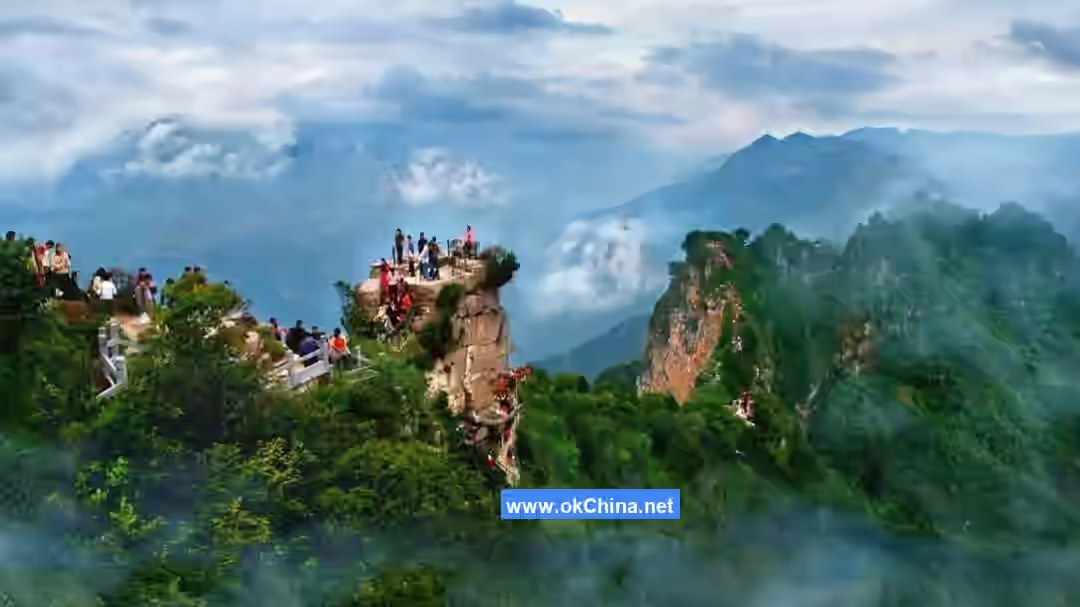
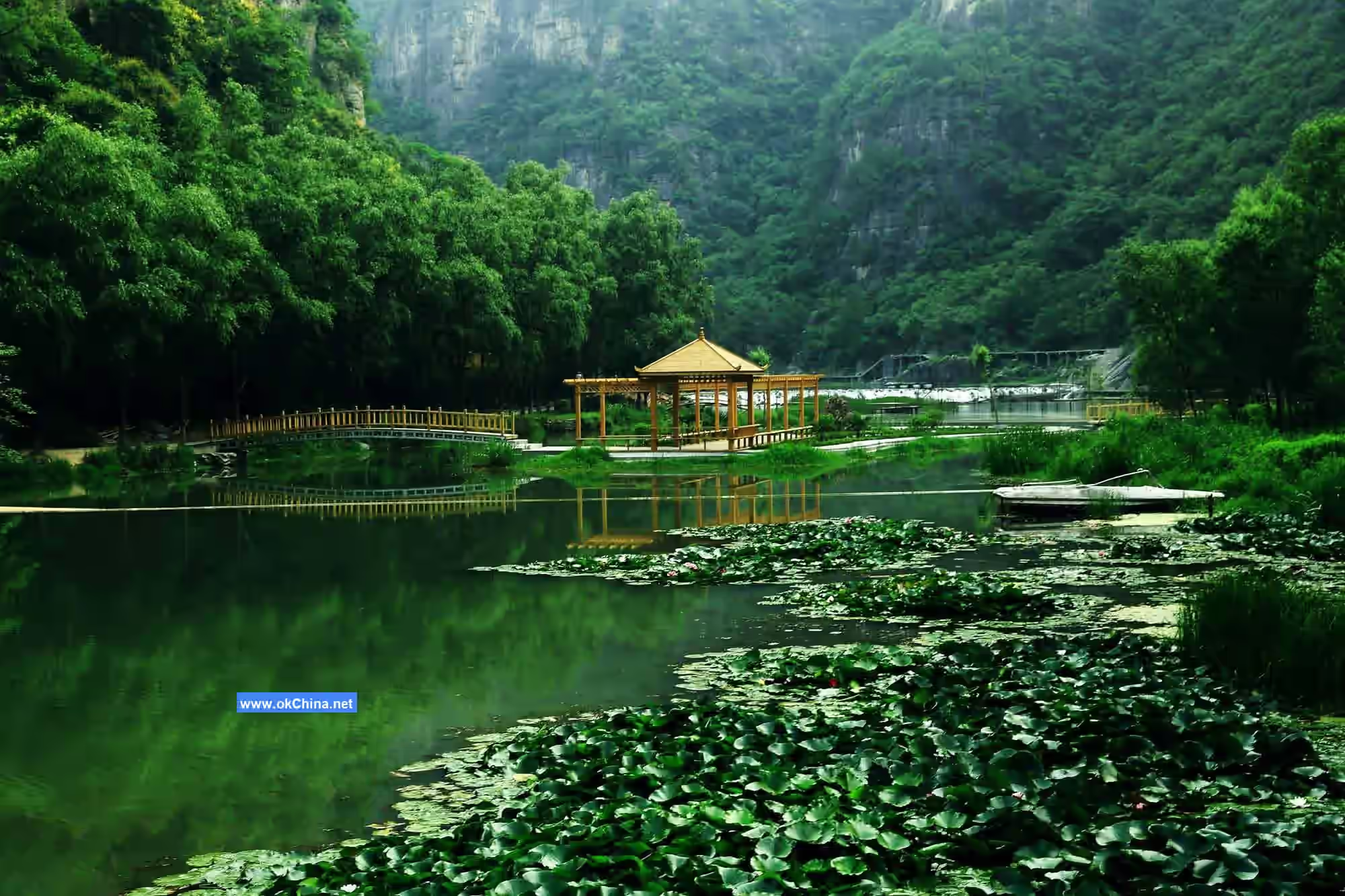
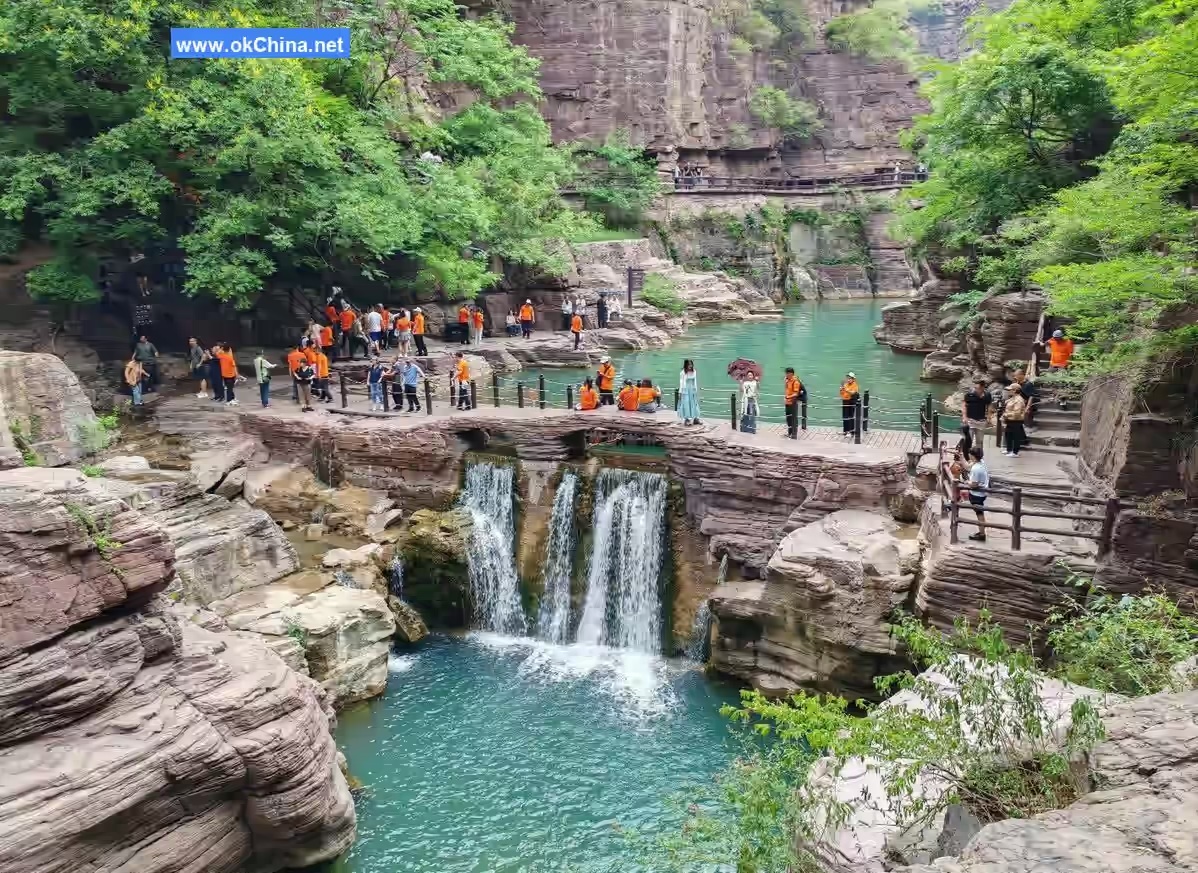
Yuntai Mountain is famous for its unique geological landforms and magnificent landscapes, earning it the nickname "Little Jiuzhaigou of the North." It features natural wonders such as Red Stone Gorge, Tanpu Gorge, and Quanpu Gorge, with cascading waterfalls, deep canyons, and distinct scenery across all four seasons. The autumn foliage is particularly captivating. The complex geological structure of Yuntai Mountain preserves rich geological relics, serving as a natural laboratory for studying Earth's evolution. Additionally, Yuntai Mountain is a sacred site of Taoist culture, with attractions like Zhuyu Peak and Xuandi Palace embodying profound religious and cultural heritage.
Shennong Mountain derives its name from Emperor Yan Shennong, who is said to have tasted hundreds of herbs and distinguished the five grains here, making it one of the important birthplaces of Chinese agricultural civilization. The area features steep mountains, dense vegetation, and unique geological landscapes like the "Dragon's Back Great Wall," earning it the title "Natural Geological Museum." Shennong Mountain is also renowned for its Macaque Nature Reserve, where visitors can observe wild macaques up close and experience the harmony between humans and nature.
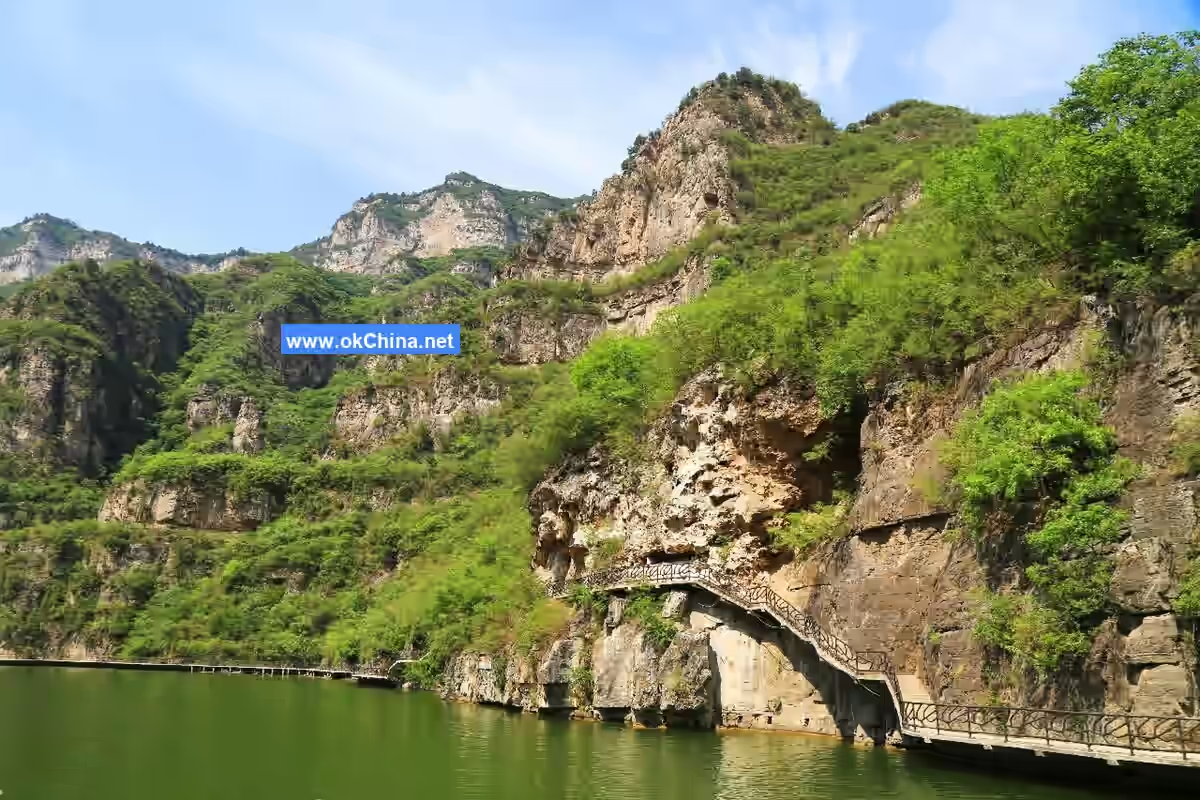
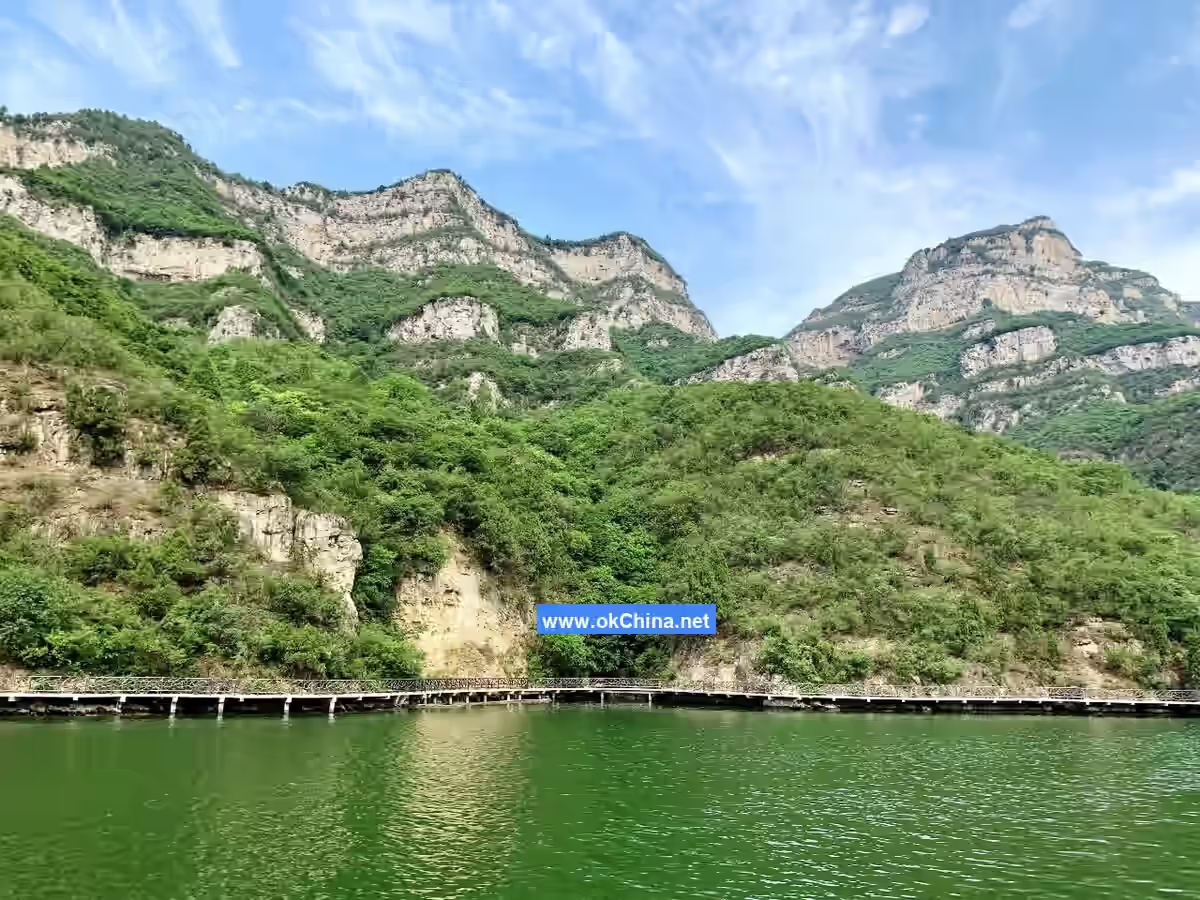
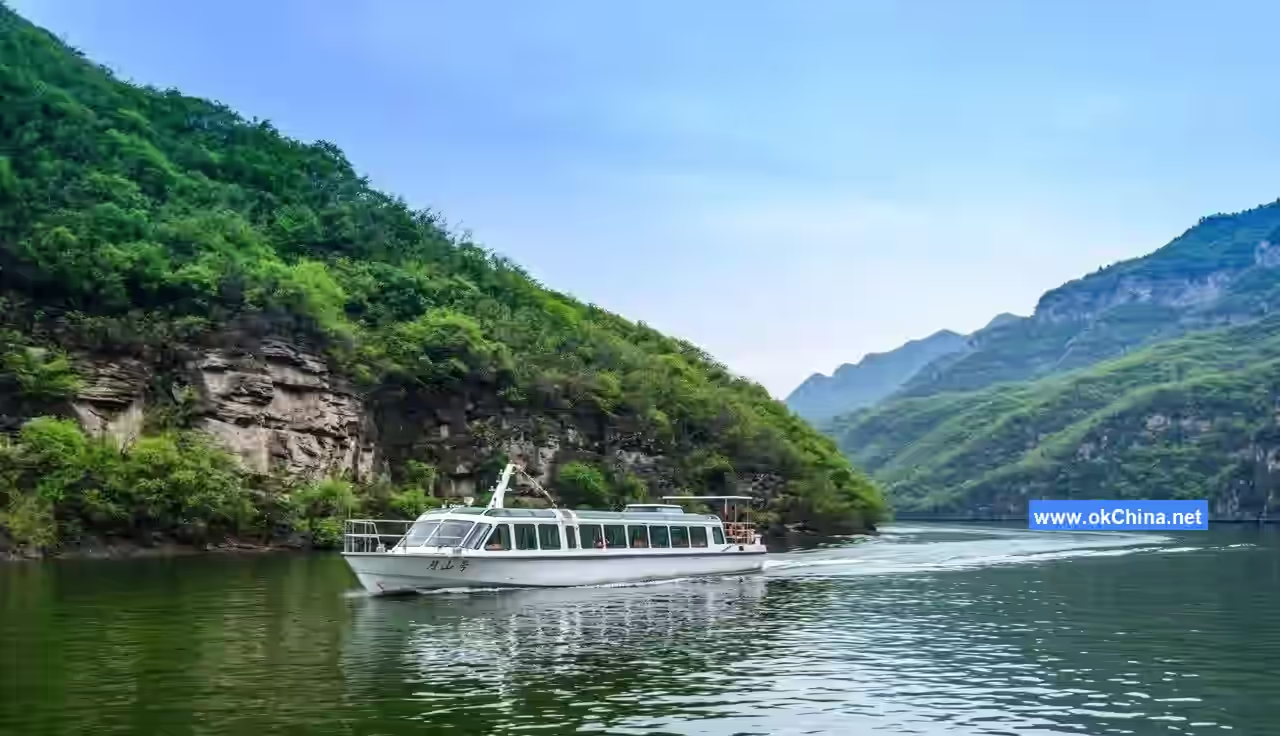
Qingtian River is celebrated for its beautiful water scenery and deep Buddhist cultural heritage. It is home to the world's largest natural Buddha statue—the Qingtian River Giant Buddha—standing 180 meters tall, majestic and formed entirely by nature. The area also contains cultural relics such as Northern Wei Dynasty cliff carvings and ancient Dan paths, showcasing its long historical and cultural底蕴. The waters of Qingtian River are clear and emerald green, surrounded by verdant mountains on both banks; a boat ride feels like gliding through a painting. Furthermore, the geological structures and rock types here hold significant scientific research value.
As a UNESCO Global Geopark, the Yuntai Mountain–Shennong Mountain–Qingtian River Scenic Area attracts countless tourists with its unique natural landscapes and serves as an important base for research and science education due to its rich geological relics and scientific value. Whether it's mountain climbing for views, exploring historical sites, experiencing religious culture, or appreciating ecological beauty, this destination meets diverse visitor needs and is an unmissable tourist spot in the Central Plains region.
2. Geographical Environment
2.1 Location
The Jiaozuo Yuntai Mountain Scenic Area is situated at 35°25' north latitude and 113°25' east longitude, located in Xiuwu County, Jiaozuo City, Henan Province, approximately 70 kilometers northwest of the provincial capital, Zhengzhou. It covers a total area of 240 square kilometers, featuring continuous mountain ranges. The main peak, Zhuyu Peak, stands at an elevation of 1,304 meters. From its summit, one can look north into the depths of the Taihang Mountains with their layered peaks and south over the Huaichuan Plain.
Detailed address of Jiaozuo Yuntai Mountain Scenic Area: Fangzhuang, 30 km due north of Xiuwu County, Jiaozuo City, Henan Province (near Provincial Highway 233).
2.2 Topography and Landforms
In ancient times, Yuntai Mountain was an ocean. Over eons, crustal movements gradually caused it to rise and elevate, forming a plain. During the orogeny period over a billion years ago (Ordovician and Sinian periods), significant changes occurred in the landscape. During the Yanshanian period, the northern part uplifted to form high mountains, while the southern part subsided to form plains. Influenced by the Himalayan orogeny, the mountainous area rose sharply again, and rivers cut down rapidly, forming deep and steep canyons. Subsequently, surface and groundwater dissolved the rocks along fractures, combined with other weathering forces, shaping the current mountains and rock formations.
The scenic area features a "Zhangshiyan landform" characterized by rows of gorges,交错 peaks and valleys, long cliff walls, and stepped崖台. This特殊 landscape was formed primarily by tectonic forces combined with natural erosion, representing a new type of landform with both aesthetic观赏 value and典型性.
Strata from the Mesoproterozoic Jixianian System Yunmengshan Formation to the Upper Carboniferous Taiyuan Formation, dating from approximately 1.4 billion to 300 million years ago, are exposed systematically and completely. The area contains Archean–Early Proterozoic basement rocks and typical structural遗迹, such as the Archean basement gneiss complex structure, Early Proterozoic supracrustal rock底僻穹窿 structures, cover sequence overlap structures, ductile shear zones, ductile-brittle deformation structures, brittle fault structures, cuesta structures, as well as collapse structures and landslide structures within the cover sequence. The特殊 tectonic location and lithological conditions have led to highly developed water bodies and hydrodynamic processes within the park, forming waterfalls, streams, springs, and river travertine terraces, travertine waterfalls, and travertine shoals that represent the characteristics of karst in northern China. Notably, neotectonic运动遗迹 are widespread and highly典型 throughout the area.
2.3 Evolutionary History
The China Yuntai Mountain UNESCO Global Geopark has undergone a long and complex geological evolution. By the end of the Archean Eon, 2.5 billion years ago, a "budding platform" had formed. Around 1.8 billion years ago, it entered the platform development stage. During the Mesoproterozoic Jixianian Period, approximately 1.2 billion years ago, subsidence occurred, accepting neritic clastic sediments to form the platform cover structural layer, creating an angular unconformity between the Mesoproterozoic Jixianian System Yunmengshan Formation and the Archean. During the Cambrian Period (approx. 543-490 Ma), a broad epicontinental sea environment prevailed, depositing thick sequences dominated by carbonate rocks and creating a parallel unconformity between the Cambrian System and the Yunmengshan Formation. The Middle Ordovician inherited the Cambrian epicontinental sea environment, continuing with mainly carbonate deposition and forming a parallel unconformity between the Middle Ordovician Series and the Cambrian System. The Carboniferous Period was a paralic environment, forming a parallel unconformity between the Carboniferous and Middle Ordovician, marking an important period for coal, iron, and aluminum mineralization. Since the Mesozoic Era, influenced by the subduction of the Pacific Plate beneath the Eurasian Plate, intense tectonic activity occurred. The Indosinian–Yanshanian movements in the early to middle stages involved uplift and orogeny. In the late Early Cretaceous, a new period began characterized by the development of the East Asian rift system, featuring extensional tectonics and differential block uplift/subsidence. The late Early Cretaceous to early Paleogene was the embryonic development stage of the rift, the Paleogene was its peak development stage, and the Neogene saw overall subsidence of the rift basin, marking its decline. Quaternary tectonic activity inherited the characteristics of the Neogene. Therefore, the well-preserved geological遗迹 in the Yuntai Mountain UNESCO Global Geopark serve as a record reflecting Earth's history and tectonic evolution.
2.4 Climatic Characteristics
Yuntai Mountain enjoys a cool and pleasant climate. The scenic area falls within a warm temperate continental monsoon climate zone. Spring is dry and windy, summer is hot and rainy, autumn is cool, and winter is dry and cold. Due to the barrier effect of the northern Taihang Mountain range, the area is leeward and sunny, making the plain part a high-temperature, low-rainfall region in northern Henan.
Yuntai Mountain experiences four distinct seasons, with varying山水 scenery. During the May Day and National Day holidays, temperatures are moderate, and attractions like the Yuntai Waterfall and Red Stone Gorge have abundant water flow and beautiful scenery, whereas water volume is very low in winter.
3. Attraction Introduction
3.1 Yuntai Mountain
3.1.1 Red Stone Gorge
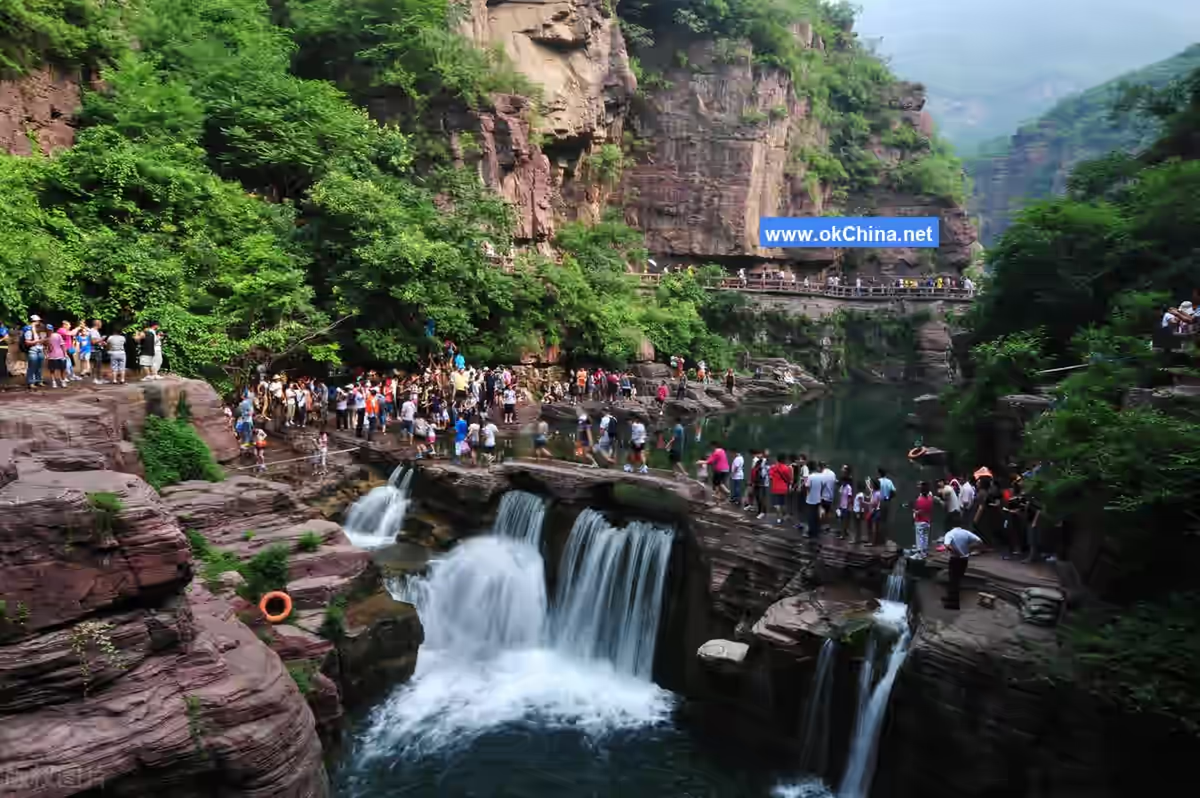
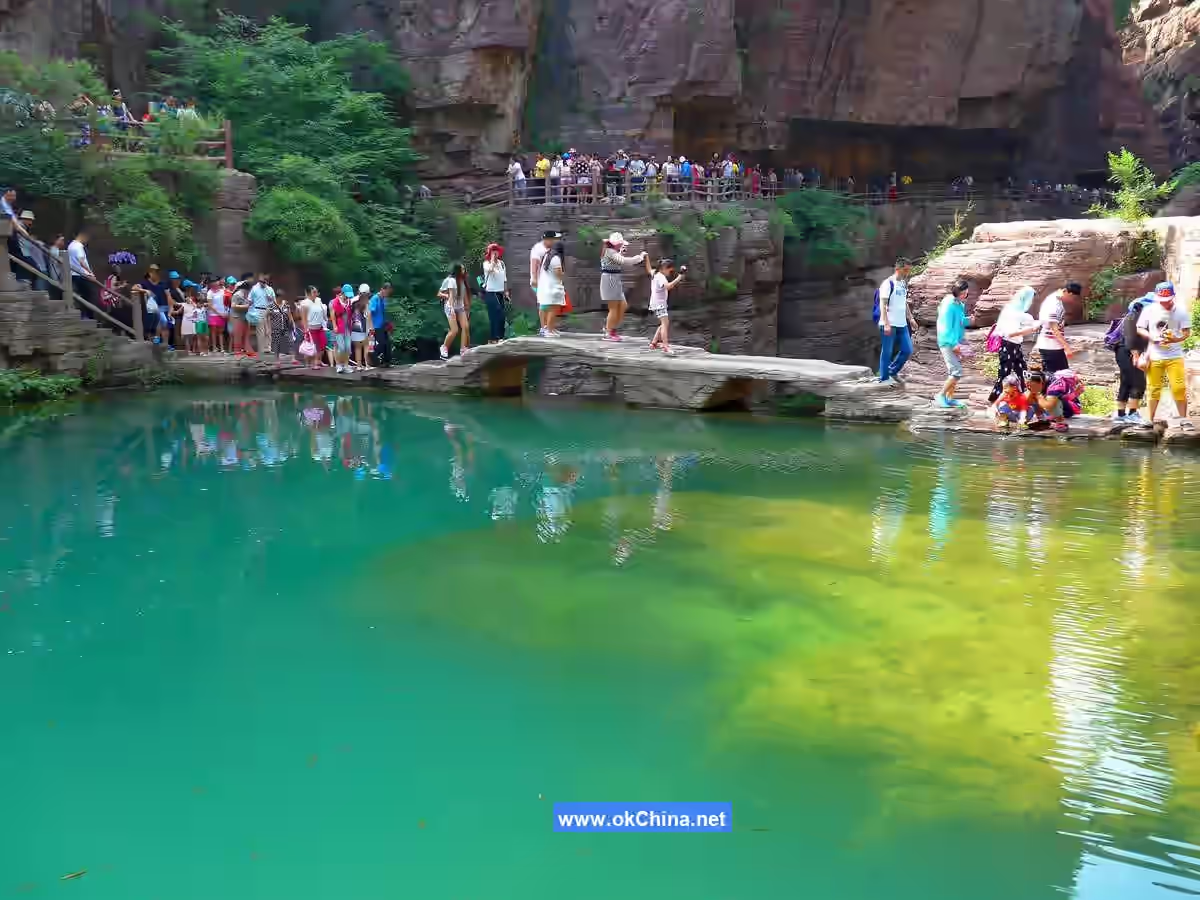
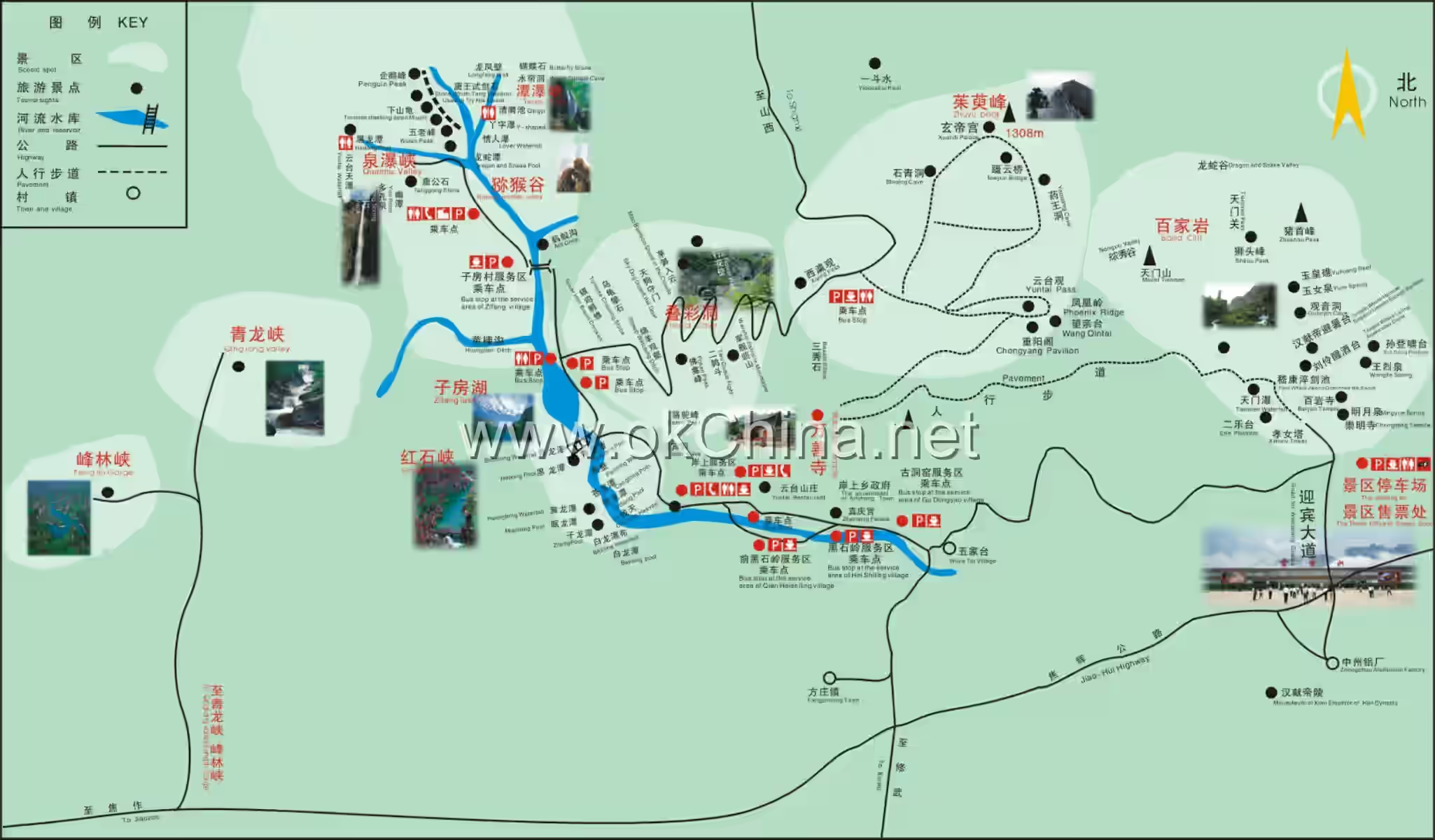
Red Stone Gorge, also known as Wenpan Gorge, is hidden 68 meters underground. It集秀 (elegance),幽 (seclusion),雄 (grandeur),险 (peril)于一身,融泉 (springs),瀑 (waterfalls),溪 (streams),潭 (pools)于一谷. It has long enjoyed the reputation of "Bonsai Gorge." The area is open on the outside yet secluded within, with奇景 hidden deep inside. The cliffs on both sides feature秀丽的山石, resembling a colossal盆景 carved by supernatural craftsmanship or a浓缩 version of famous mountains and rivers. Landscape experts call it a "natural山水精品廊." The gorge is遍布 with geological遗迹 over hundreds of millions of years old,堪称一部浑然天成的"地质奇书" (geological奇书). Red Stone Gorge is 2,000 meters long, and the游览时间 is approximately 2 hours.
3.1.2 Wanshan Temple
Wanshan Temple was first built during the Wanli reign of the Ming Dynasty. Choosing Yuntai Mountain for its construction carried the meaning of being centrally located among the four directions, where earth generates all things, and all methods return to their origin. The temple's name was bestowed by Emperor Shenzong. Over more than 400 years, through successive dynasties and especially several expansions and renovations in recent decades, Wanshan Temple has reached its present scale. The mountain gains spirituality from the temple, and the temple gains fame from the mountain. The ancient Wanshan Temple is nestled within Yuntai Mountain, complementing the beautiful scenery.
3.1.3 Zifang Lake
Zifang Lake stretches 4,000 meters in length, with a maximum depth of about 65 meters. The lake surface shimmers with ripples, the water is清澈幽静, and the surrounding peaks起伏. In June 2002, the lake首次发现了被誉为"水中大熊猫"的桃花水母 (peach blossom jellyfish,被誉为 "giant panda of the water"). Peach blossom jellyfish first appeared 650 million years ago and are named for their peach blossom petal-like shape. They are listed alongside Przewalski's horse and the giant panda in China's Red List of Endangered Wildlife. The discovery of peach blossom jellyfish in Yuntai Mountain provides biological experts with实物标本 for research and serves as a powerful affirmation of the scenic area's ecological environmental protection efforts.
3.1.4 Diecai Cave (Colorful Caves)
Diecai Cave is a series of highway tunnels leading to Zhuyu Peak, the main peak of Yuntai Mountain. It is a masterpiece created by local people发扬 the "Foolish Old Man" spirit, battling nature from 1977 to 1987 over ten years. It is also a major奇迹 in Chinese highway construction history. It consists of 19 tunnels of varying sizes, with a total length of 4,831 meters and an elevation difference of 912 meters. The tunnels mostly feature 180-degree turns. For every 100 meters traveled inside, the vehicle climbs an average of 5 meters in altitude. The首尾相连,曲洞连环 tunnels form a独特风景线,被游客称为悬崖上的"过山车" (roller coaster on the cliff).
3.1.5 Quanpu Gorge (Spring Waterfall Gorge)#### 3.1.6 Quanpu Gorge (Spring and Waterfall Gorge)
Quanpu Gorge, also known as Laotan Gou, was formed during the Cambrian period approximately 540 to 490 million years ago. Through prolonged water erosion, transportation, and gravitational collapse, the ancient peneplain at an altitude of 800-1200 meters was deeply incised locally, creating a geological wonder characterized by majestic mountains, beautiful waters, towering peaks, and rushing waterfalls. The "Yuntai Tianpu" (Yuntai Sky Waterfall), with a single-drop height of 314 meters, is located at the end of Quanpu Gorge. It kisses the blue sky above and treads upon the rocky flat below, resembling a flying Milky Way or a towering jade pillar, presenting a spectacular sight. Quanpu Gorge features lofty and steep mountains with deep, turbulent waters. Traveling upstream along the gorge, scenic spots like the Quiet Pool, Yinlong Waterfall, and Duokong Spring transport visitors into a dreamlike fairyland on earth. Quanpu Gorge stretches for 3000 meters, and the tour takes approximately 3 hours.
3.1.7 Tanpu Gorge (Pool and Waterfall Gorge)
Tanpu Gorge, also known as Xiaozhai Gou, benefits from abundant surface and groundwater recharge from the north, along with well-developed joints and fissures in the limestone and dolomite within the area. This results in high cliffs, deep valleys, frequent springs, waterfalls, and pools—almost a spring every three steps, a waterfall every five, and a pool every ten—earning it the reputation "Land of Pools and Waterfalls," reminiscent of the scenery south of the Yangtze River. Traveling upstream, water features like Lovers' Waterfall, Golden Dragon Resting on Waves, Y-shaped Waterfall, Fountain of Youth, and Water Curtain Waterfall create a symphony of cascading sounds, with pools and waterfalls paired and strung together in delightful succession. At the gorge's end, sheer cliffs encircle to form a unique "U"-shaped valley, giving one the feeling of looking at the sky from the bottom of a well when gazing upward. Furthermore, the gorge is rich in oddly shaped rocks with distinct charm, such as Longevity Peach Rock, Slimming Rock, Sword-Testing Rock, and Butterfly Rock. Tanpu Gorge is 2000 meters long, and the tour takes about 2 hours.
3.1.8 Zhuyu Peak (Cornelian Cherry Peak)
Zhuyu Peak is the highest peak of Yuntai Mountain. It features dense vegetation, ancient towering trees, and a forest coverage rate of over 93%, hosting rare plants like millennium-old precious trees such as the yew, five-pointed maple, and Taihang flower. Throughout history, literati, monks, and Taoists practiced here, leaving behind numerous historical sites, cliff inscriptions, stone tablets, and poems. The Tang Dynasty Medicine King, Sun Simiao, once gathered herbs and practiced alchemy here, leaving relics like the Medicine King Cave. Atop Zhuyu Peak stands the Taoist Xuandi Palace, dedicated to the Zhenwu Emperor. Legend says the Zhenwu Emperor attained enlightenment and became an immortal at Yuntai Mountain. Ascending to the peak via the thousand-step Cloud Ladder Plank Walkway, one sees continuous mountain ranges and clouds swirling around peaks, evoking the heroic sentiment of "When reaching the mountain's supreme peak, all other mountains appear small." The great Tang poet Wang Wei once climbed this peak and penned the timeless lines: "Alone, a stranger in a foreign land, I miss my family doubly on every festive day. Knowing from afar my brothers would climb the heights, they'd find the cornelian wearer missing one." Zhuyu Peak stands at 1297.6 meters above sea level. The tour takes about 2 hours; reaching the summit is challenging but offers boundless beauty.
3.1.9 Yuntai Temple
Located atop Zhuyu Peak on Yuntai Mountain. In the first year of Qianfeng (666 AD), Emperor Gaozong of Tang posthumously honored Laozi as the "Supreme Mysterious Origin Emperor." During Emperor Xuanzong's reign, an order was issued to build 36 Xuanyuan Temples dedicated to the Xuanyuan Emperor across the country, and this temple was one of them. During the Tang Dynasty, the Xuanyuan Temple on Yuntai Mountain thrived with incense and many Taoist priests. However, after the Five Dynasties period, the temple gradually fell into disrepair. In the early Ming Dynasty, as Emperor Taizu Zhu Yuanzhang particularly revered the Zhenwu Emperor, constructing palaces and temples for him at Wudang Mountain for over 30 years, Taoist followers nationwide also turned to worshiping the Zhenwu Emperor. Followers from Xiuwu then built Yuntai Temple dedicated to Zhenwu on the ruins of the former Xuandi Temple. Also known as Xuandi's Traveling Palace, Yuntai Temple is situated at the very summit of Yuntai Mountain. Coupled with numerous folk tales circulating since ancient times about the Zhenwu Emperor practicing and attaining immortality here, it echoes the Southern Summit (Wudang) and is called the "Northern Summit." Yuntai Temple was most prosperous during the Ming and Qing dynasties. Every year on the 3rd day of the 3rd lunar month, believers from the entire county would organize pilgrimages to Zhuyu Peak to offer incense, forming the important annual "Pilgrimage to the Northern Summit" activity. After the founding of New China, Taoist priests returned to secular life, and the temple gradually fell into disuse. In the late 1990s, reconstruction of Yuntai Temple began, and Taoist priests from Wudang were invited to serve as abbots. In 2007, Yuntai Temple was re-planned and expanded.
3.1.10 Qingjing Palace (Palace of Tranquility)
Qingjing Palace was first built in 1750 AD (the 15th year of the Qianlong reign, Qing Dynasty) and is the only surviving complex of Qing Dynasty beamless architecture in China. It faces south, built against the mountain. The central structure is the Three Sovereigns Pavilion, with the Queen Mother Hall on the left and the Jade Emperor Pavilion on the right, all being two-story pavilion-style buildings. Its most unique feature is breaking the axial symmetry typical of Buddhist and Taoist temple architecture, combining eastern cave dwellings with western pavilions, and using stone as the primary building material, making it a unique masterpiece of ancient architecture in the Central Plains.
3.1.11 Erxian Temple (Temple of Two Immortals)
Originally named Jingying Temple, Erxian Temple is located on the east bank of the Xianshen River estuary. It is flanked by Xuangu Valley on the left and Zijin on the right, with Xiaoku in front and Mujian behind, surrounded by water and embraced by greenery, offering exceptionally beautiful natural scenery. First built in the Tang Dynasty and renovated through the Song, Yuan, Ming, and Qing dynasties, legend says that when Tang founders Li Yuan and Li Shimin fled to this area, two immortals emerged from a cave, provided them with provisions, and enlightened them about their future. The father and son pledged to build a temple for the two immortals if they became emperors. Erxian Temple extends over 1500 meters in depth and nearly 100 meters in width. It has five front gates, followed by statues of Heavenly Kings and Vajra warriors, Bell and Drum Towers, and a five-bay double-eaved pavilion housing multiple imperial stele inscriptions.
3.2 Qingtian River
3.2.1 Daquan Lake Scenic Area
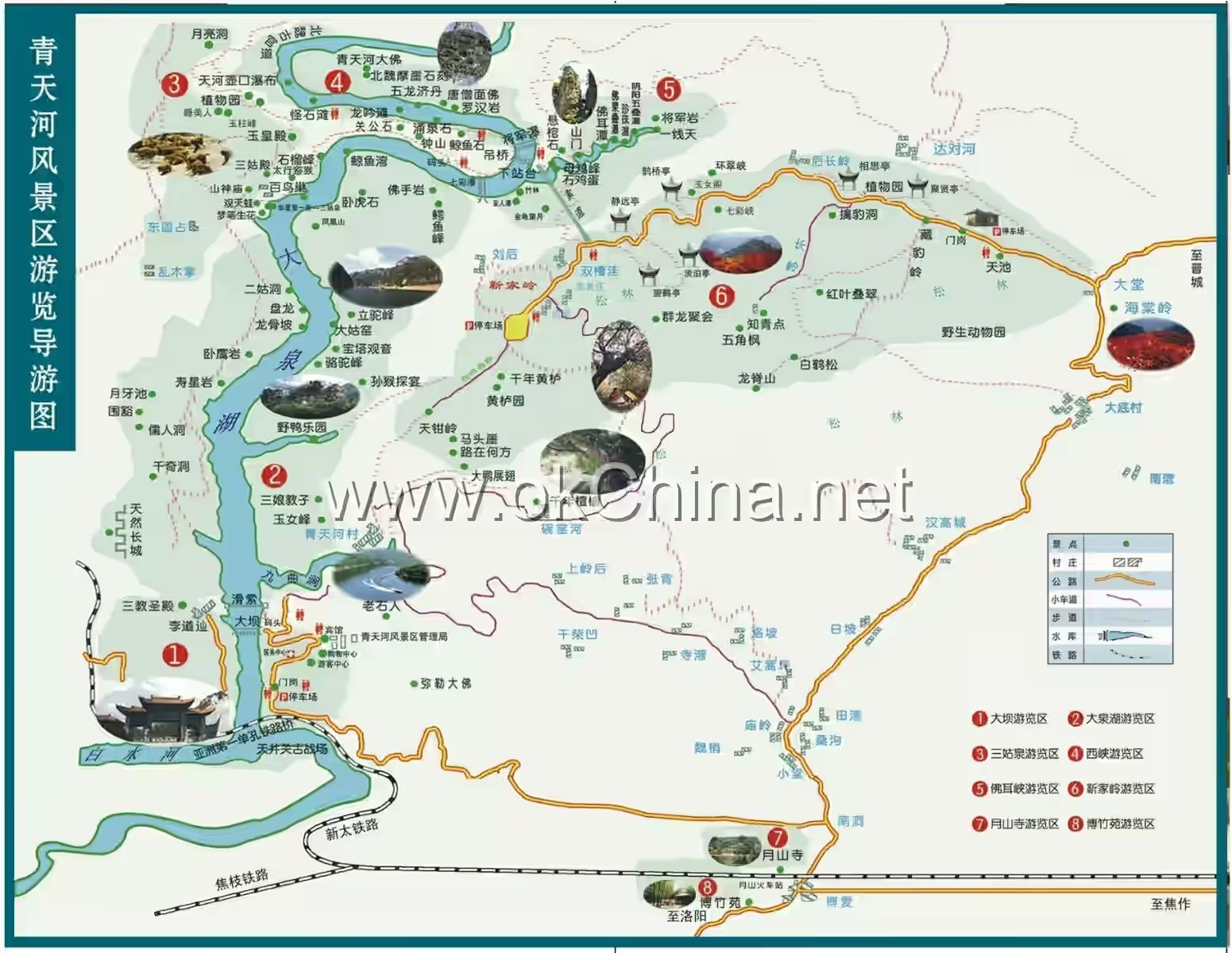
The Daquan Lake Scenic Area is the essence of the Qingtian River scenic spot. It possesses both the elegance of a clear river and the wonder of deep gorges and secluded valleys. The beauty of the forests and springs, the charm of the peaks and ridges, the depth of the caves and gullies, and the magnificence of the mist and clouds along its banks are truly rare, earning it the reputation of "Three Gorges of the North" and "Guilin Landscape." Daquan Lake is 7.5 kilometers long, nearly 100 meters wide, and over 60 meters deep. The gorge reveals a strip of blue sky, with vast misty waves creating a majestic spectacle. The lake water mainly originates from the Sangu Spring, crowned as "China's Premier Spring." Main attractions include: Nine-Bend Ravine, Natural Great Wall, Perching Eagle Rock, Camel Peak, Standing Camel Peak, Reclining Buddha, Hundred Birds' Nest, Pomegranate Peak, Buddha's Hand Rock, Whale Bay, etc. Particularly notable is the full completion of the Qingtian River Waterside Plank Walkway.
3.2.2 Fo'er Gorge (Buddha's Ear Gorge) Scenic Area
The Fo'er Gorge Scenic Area is a canyon landscape primarily featuring strange peaks and beautiful rocks, famous for its peculiar peaks, bizarre stones, and layered mountains and waters, offering distinct scenery like the "Waterfall Fairyland" in summer and "Icefall Silver Mountains" in winter. The Fo'er Gorge trail is 2 kilometers long, renowned for its grandeur, peculiarity, steepness, and seclusion. The cableway is 1000 meters long; riding it up and down along the mountain contours offers panoramic views of Fo'er Gorge and West Gorge. Main attractions include: Seven-Colored Waterfall, Water Park, Sage Waterfall, Suspension Bridge, Mountain Climbing Cableway, Golden Turtle Gazing at the Moon, Futu Peak, Buddhist Bead Stone, Welcoming Peak, Great Stone Wall, Fo'er Gorge Trail, Three Precepts Gate, Fo'er Pool, Fo'er Waterfall, Buddha's Rest Pavilion, etc.
3.2.3 Guanyin Gorge (Avalokitesvara Gorge) Scenic Area
The Guanyin Gorge Scenic Area, 2.5 kilometers long, is a magnificent natural scenic area. Main attractions include: General Rock, General Waterfall, Sea-Calming Whale Rock, Owl, Arhat Rock, Tang Monk's Face Buddha, Withered Rock Greeting Spring, Ancient Northern Wei Dan Path, Gushing Spring Rock, Spirit Spring, Dragon's Chant Shoal, Northern Wei Cliff Inscriptions, Qingtian River Giant Buddha, Guanyin Spirit Platform, Water Play Shoal, Strange Rock Shoal, Tianhe Waterfall, etc. The water contains fish, shrimp, crabs, and turtles; the mountains have wild rabbits, pheasants, and badgers; the forests house hwamei, turtledoves, and parrots. One can appreciate cultural landscapes like the Ancient Dan Path, Northern Wei Cliff Inscriptions, the world's first natural giant Buddha, and the Dan Path Guanyin.
3.2.4 Jinjialing Scenic Area
The Jinjialing Scenic Area is part of the Taihang Mountain National Macaque Nature Reserve. With lush vegetation, it is a rare green corridor in the southern Taihang Mountains of northern Henan, featuring tens of thousands of acres of artificial pine forests and is the best place in Jiaozuo to view the Taihang red leaves in autumn. The Jinjialing red leaf area is vast, with nearly 100,000 acres of continuous red leaves covering 3868 peaks, ridges, gullies, and cliffs within the area. The variety is rich, including southern smoke tree leaves and northern maple leaves, and even features a 2500-year-old king of smoke trees, offering a comprehensive collection that blends northern and southern species. The Jinjialing red leaves offer a highly scenic view.
3.2.5 Yueshan Temple Scenic Area
Yueshan Temple was first built in 1158 AD and is a historically famous Buddhist sanctuary, known along with Shaolin Temple, White Horse Temple, and Xiangguo Temple as one of the four great temples of the Central Plains. Located five kilometers north of Bo'ai County town, the scenic area features fairy mountains and jade pavilions, a collection of famous sites,奇异景致, and beautiful scenery, including the famous Seven Minor Scenes, Eight Major Scenes, Five Wonders, and two age-old unsolved mysteries. At its peak, Yueshan Temple housed five hundred monks and over a thousand rooms, with extensive collections of printing blocks and scriptures, particularly the most complete collection of Buddhist sutras in its Scripture Repository. Yueshan Temple is also the birthplace of Bajiquan, one of China's three major boxing styles. The temple complex currently contains 31 brick pagodas, situated within an area 800 meters north-south and 500 meters east-west, built over 800 years,堪称砖塔建筑之宝. Among them, a group of seven pagodas is arranged in the order of the Big Dipper, holding significant reference value for the study of ancient astronomy.
3.2.6 Sangu Spring Scenic Area
The Sangu Spring Scenic Area is located on the left bank of the middle section of Daquan Lake. It features primitive elm and sandalwood trees. The clear Sangu Spring has a mouth diameter of 2.18 meters,呈喇叭形带状, with a perennial flow of 4-8 cubic meters per second, crowned as "China's Premier." Main attractions include: Jade Emperor Hall, Sangu Hall, Mountain God Temple, Taihang Macaque Garden, Hundred Birds Forest, Botanical Garden, Moon Cave, etc.
3.2.7 Tianjing Pass Scenic AreaTianjing Pass Scenic Area is located between the ancient battlefield of Tianjing Pass and the dam of Qingtianhe Reservoir. It is both an ancient battleground where military strategists once confronted each other and a natural recreational site where modern visitors can indulge in the blue skies and clear waters. The construction of the Qingtianhe Reservoir Dam began in 1966 and was completed in 1983. The entire dam stands 76 meters high and spans 160 meters in length, with an average annual water storage capacity of over 2,700 cubic meters. It is used for irrigating fertile farmland, ensuring stable yields regardless of drought or flood, and supports three-stage power generation, with an annual electricity output exceeding 3 million kilowatt-hours. Key attractions and facilities include: the Ancient Locust Tree from the Eastern Han Dynasty, Rainbow at the Valley Bottom, Tianjing Pass Ancient Battlefield, Dan Valley Rainbow, Dan River Drifting, Qingtianhe Dam, Three Religions Sacred Hall, Thousand Wonders Cave, and the Qingtianhe Spirit Memorial Hall.
3.3 Yueshan Temple
3.3.1 Yueshan Temple
Yueshan Temple was founded in 1158 AD and is a historically renowned Buddhist sanctuary, known as one of the three ancient temples of the Central Plains alongside Shaolin Temple and White Horse Temple. It was once named "Qingfeng Temple," "Daming Chan Monastery," and "Baoguang Temple." In the third year of the Ming Dynasty's Yongle era, it was renamed "Yueshan Temple," a name that has been used ever since. At its peak, Yueshan Temple housed 500 monks and over a thousand rooms, with extensive collections of printing blocks and scriptures. Its Tripitaka Hall, in particular, housed the most complete collection of Buddhist scriptures. Ming Dynasty scholar Li Lian mentioned in his work Records of Mingyue Mountain, "Read the Taoist canon at the Temple of Heaven, and the Buddhist canon at Mingyue," where "Mingyue" refers to Yueshan Temple. Yueshan Temple is also the birthplace of Bajiquan, one of China's three major martial arts. A saying in martial arts circles goes, "Civil affairs are settled by Tai Chi, and military affairs are stabilized by Bajiquan," fully illustrating Bajiquan's equal historical status and widespread influence alongside Tai Chi. The Yueshan Temple scenic area features fairy mountains and jade pavilions, morning bells and evening drums, emerald trees and misty clouds, and a gathering of remarkable sites. It includes the famous Eight Great Views, Seven Small Views, Five Wonders, and two enduring mysteries. Emperor Qianlong of the Qing Dynasty visited Yueshan Temple three times, inscribing three plaques, a couplet, and seven poems. One of his poems praises the temple's beauty: "The golden mountain's shadow spans millennia, locked by peaks as waters freely flow. The beauty cannot be taken in at once; if fate allows, I shall return to roam." Yueshan Temple currently has 31 brick pagodas, located within an area of 800 meters north-south and 500 meters east-west, built over 800 years, making them treasures of brick pagoda architecture. Among them, a group of seven pagodas is arranged in the order of the Big Dipper, providing important reference value for the study of ancient astronomy. The long history, rich culture, and significant historical status of Yueshan Temple have attracted high-level attention from central leaders.
3.3.2 Tripitaka Hall
The Tripitaka Hall is one of the important structures of Yueshan Temple. Legend has it that when the Tang Dynasty monk Xuanzang journeyed to the West to obtain Buddhist scriptures, the White Dragon Horse was rewarded by Buddha Tathagata for its merits. To commemorate the white horse carrying the scriptures, a temple named White Horse Temple was built at White Horse Lake in Botou Town, Bo'ai County, about ten kilometers away. The temple originally housed many books. One night, a divine steed carried a large number of scriptures, briefly stopped at a village near White Horse Temple, and then headed straight to Yueshan Temple. Since then, Yueshan Temple's collection of scriptures has far surpassed that of other monasteries. Ming Dynasty scholar Li Lian described the abundance of scriptures at Yueshan Temple in his Records of Mingyue Mountain with the phrase, "Read the Taoist canon at the Temple of Heaven, and the Buddhist canon at Mingyue." The "Mingyue" in the poem refers to Mingyue Mountain's Baoguang Temple, which is now Yueshan Temple.
3.3.3 Great Buddha Hall
The Great Buddha Hall enshrines Sakyamuni Buddha and two Bodhisattvas—Manjusri Bodhisattva and Samantabhadra Bodhisattva. In modern terms, the Great Buddha Hall is the resting place of Buddha Tathagata, while the Grand Hall in front is his workplace. In Buddhism, Sakyamuni is the only true historical figure. According to historical records, Sakyamuni was the son of King Suddhodana of the Sakya tribe in the Kapilavastu kingdom of India in the late 6th century BC, named Siddhartha Gautama. His mother, Queen Maya, passed away seven days after giving birth to him in the Lumbini Garden, and Siddhartha was raised by his aunt. He received a strict traditional cultural education from a young age and often practiced horseback riding and archery, becoming a youth skilled in both literary and martial arts. His father hoped he would inherit the throne and become a wise ruler, but the turmoil of society and the suffering of birth, aging, sickness, and death deeply troubled Siddhartha. He decided to leave home to cultivate himself, undergoing six years of ascetic practice before finally sitting in meditation under a Bodhi tree in Gaya for seven days and nights, attaining enlightenment and becoming a Buddha.
Manjusri Bodhisattva, whose full name is Manjusri, means "wonderful virtue" and "auspiciousness." It is said that many auspicious signs appeared at his birth, hence the name. In Mahayana Buddhism, Manjusri Bodhisattva holds a lofty position, regarded as the foremost among Bodhisattvas, often called the "Dharma Prince." He is the embodiment of wisdom, riding a lion symbolizing the ferocity of wisdom. Samantabhadra Bodhisattva means "universal virtue" and, alongside Manjusri, serves as an attendant Bodhisattva to the Buddha, representing truth, with a six-tusked elephant as his mount.
3.4 Ancient Northern Wei Official Road
The Ancient Dan Road, also known as "Dan Valley" or "Dan Path," was the route taken by imperial officials in ancient times. Approximately 30 kilometers long, it is one of the "Eight Passes of Taihang" and historically served as a crucial military passage connecting Shanxi and Henan. The ancient official road extended north to Shangdang in Shanxi, east to the North China Plain, and south through the Mengjin Ferry into the Yiluo Plain, linking to the ancient capital of Luoyang. The Ancient Dan Road possesses profound cultural heritage and splendid historical relics. During the Three Kingdoms period, Cao Cao passed through this area on his northern expedition to Huguan via the Dan River's Yangchang Slope and Tianjing Pass to suppress the rebel general Gao Gan. He composed the poem Song of Bitter Cold, vividly depicting the scenery of this region. During the Northern Wei Dynasty, the court dispatched 8,000 soldiers to repair 32 dangerous sections of the Dan Road over three months, leaving a significant mark in the history of the Dan Road.
3.4.1 Qingtianhe Giant Buddha
The Qingtianhe Giant Buddha, formed 70 million years ago, stands 180 meters tall and 100 meters wide, making it the world's largest natural Buddha. It towers magnificently between the blue skies and clear waters, appearing entirely natural. Legend has it that after the Battle of Changping between Qin and Zhao, the Qin army buried 400,000 Zhao soldiers here, turning the Qingtian River red, with countless aggrieved souls lingering in the valley. The Buddha transformed into a monk, performed 49 days of meritorious deeds here to guide the souls, restoring peace to the mountains and waters. At the waist of the natural Buddha, there is a cliff carving from the second year of the Yongping era of the Northern Wei Dynasty, dating back 1,500 years, covering an area of 2 square meters. It features a line-carved image of Guanyin Bodhisattva in the center, accompanied by 428 characters detailing the Twenty-fourth Chapter of the Lotus Sutra: Universal Gate and the process of constructing the Dan Road, along with a list of officials. Mr. Luo Zhewen, President of the National Cultural Heritage Society, called it "rare nationwide," and in 2006, it was designated as a "National Key Cultural Relics Protection Unit" in the sixth batch by the State Council.
The image of Guanyin Bodhisattva was initially male, as Buddhism was introduced to China with Guanyin depicted as male, known as the "Child-Giving Guanyin." Due to traditional moral influences, it was inconvenient for women to worship a male Buddha, and the gentle, compassionate image of a woman was more readily accepted. By the Yuan Dynasty, Guanyin Bodhisattva gradually evolved into a female form. On either side of the Buddha statue are inscriptions of the Twenty-fourth Chapter of the Lotus Sutra: Universal Gate and the process of carving the Buddha image.
The Qingtianhe Giant Buddha belongs to the category of hidden Buddhas, and the method of viewing it itself is an interpretation of Buddhist culture. It emphasizes seeing the big picture while downplaying the details, treating superficial things as external. One must have Buddhist thoughts and a Buddhist state of mind; only with Buddha in the heart can one see the Buddha. The Guanyin image is located in the upper abdomen of the natural Buddha, affirming "Buddha in the heart," while also reminding people to maintain an optimistic and broad-minded perspective.
3.5 Shennong Mountain
3.5.1 Zijin Peak
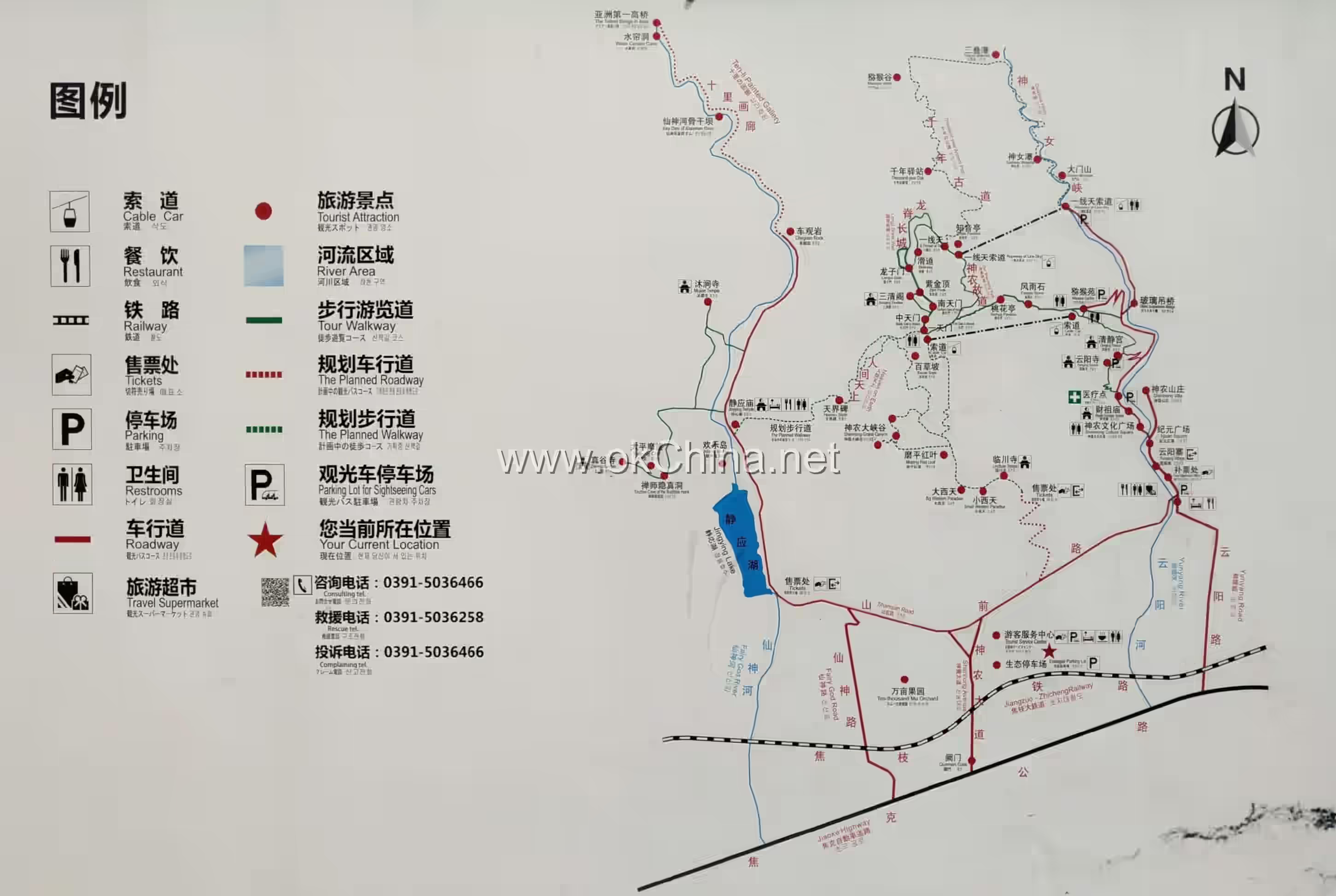
Zijin Peak is the main peak of Shennong Mountain, with an elevation of 1,028 meters, known as the "Central Sky Jade Pillar." Zijin Peak faces northwest, stretching over 200 meters from the South Heavenly Gate in the south to the Dragon Head Platform in the north. Its narrowest point in the middle is only about 8 meters, while the widest point in the north-central section exceeds 28 meters, with elevations ranging from 1,025 to 1,028 meters. Whether viewed from above or the side, it resembles a Ruyi scepter, earning it the nickname "Ruyi 1028."
3.5.2 Jingying Temple
In the fourth year of the Chuigong era of the Tang Dynasty (688 AD), Emperor Taizong Li Shimin ordered Yuchi Jingde to supervise the expansion and renovation, renaming it "Zixu Yuanjun Palace," collectively referred to as "Zixu Yuanjun Temple." During the reign of Emperor Huizong of the Northern Song Dynasty, who "respected Confucianism, revered Taoism, and embellished peace," the emperor bestowed the plaque "Jingying," and it was renamed "Jingying Temple." During the Song and Jin periods, "Jingying Temple" was expanded, with the Taiyi Zhenren Palace added behind the Zixu Yuanjun Palace. According to the hierarchy of immortals, Taiyi Zhenren is the great immortal, and Zixu Yuanjun is the second immortal, hence it is also called the "Two Immortals Temple."
Jingying Temple (i.e., Two Immortals Temple) extends 400 meters north-south. The foremost structure on the central axis is a stone archway, followed by the first, second, third, and fourth mountain gates, each with its own deity. On the eastern and western sides, there are halls enshrining various deities. The temple complex includes 46 buildings of different types, such as palaces, halls, towers, pavilions, platforms, kiosks, archways, and corridors, with over 390 rooms in total. The temple grounds feature towering ancient cypresses, thick pine trees, and various rare flowers and plants. Since the reform and opening-up, the Qinyang Municipal Government has prioritized the restoration of the Two Immortals Temple as a key task in cultural relics protection. By May 2007, the restoration of the Two Immortals Temple was completed.
3.5.3 Dragon Ridge Great Wall
The Dragon Ridge Great Wall, with its limestone mountain body resembling a man-made wall, is vividly referred to as the "Dragon Ridge Great Wall" by geological experts. The entire ridge is composed of limestone, stretching about 11.5 kilometers in length, with 2.5 kilometers currently developed for tourism. The Dragon Ridge Great Wall is known for five wonders: the ridge, the pines, the rocks, the path, and the scenery.
3.5.4 Peach Blossom Stream
Between the Ancestor Peak and the First Heavenly Gate lies a canyon about 1.5 kilometers long, named Peach Blossom Stream, also known as Xibei Gully. When the Tang Dynasty literary figure Han Yu passed through here, he composed the poem Inscription for Xibei Gully, writing: "Countless peaks and valleys, rare exotic grasses and secluded flowers. Hidden springs intermittently play by the rocks, spraying pearls and rinsing jade in mutual clamor," describing the scenery of Peach Blossom Stream.#### 3.5.5 South Heavenly Gate
The South Heavenly Gate is situated at the southernmost tip of Zijin Peak. In front lies the Qin-Huang River alluvial plain, commonly known as the "Ox Horn Plain." Here, the Taihang Mountains come to an abrupt end, and the Yellow River is faintly visible. This spot offers a magnificent panoramic view of grand mountains, a great river, and a vast plain.
3.5.6 First Heavenly Gate
The First Heavenly Gate is the strategic passage for ascending Zijin Peak. Originally built in the second year of the Ming Dynasty's Longqing era (1568 AD), it holds significant cultural relic value and tourism appeal.
3.5.7 Yunyang Temple
Within the Yunyang River Valley of the Shennong Mountain scenic area lies an ancient Zen monastery. Facing south with its back to the mountain, its main structures are distributed across four terraced platforms. According to the Yuan Dynasty stele "Record of Rebuilding the Yunyang Mountain Shousheng Temple," this temple is "an ancient site passed down from the legacy of Master Chou." This indicates the temple was founded during the Northern Qi Dynasty, originally named Shousheng Temple and later renamed Yunyang Temple, boasting a history of over 1,500 years.
3.5.8 Yunyang Fortress
Yunyang Fortress was initially constructed during the Sui and Tang dynasties and underwent numerous renovations throughout history. The fortress gate is built with blue stone, featuring battlements and lookout holes at the top. In ancient times, Yunyang Fortress was a formidable pass connecting Henan and Shanxi provinces, making it a strategically contested location for military strategists across dynasties. Emperor Li Longji of the Tang Dynasty, while touring Shennong Mountain, composed the famous poem "Early Ascent of Taihang Mountain Expressing My Aspirations," in which he wrote: "White fog buries the shaded ravines, rosy clouds aid the dawn's light." This evoked infinite reverie of a romance between "white clouds" and "the morning sun," leading later generations to name this place "Yunyang Fortress." The great calligrapher Wang Duo praised it in "Mourning the Past in Huaizhou": "Northward, the peaks and ridges embrace Mengmen; Yewang's majestic landscape merges with the Qin River."
3.5.9 Mujian Temple
Mujian Temple is located on the west bank of the Xianshen River, backed by a thousand-foot cliff and fronted by the encircling protection of the Mingyu Spring and Xianshen River. A stele inscription describes its location: "Massive rocks tower majestically, resembling lotus peaks in their unique beauty; rushing springs cascade down, pouring through pine ravines with flying rapids." It is traditionally regarded as the sacred site where the Purple Void Primordial Lord, the founder of the Shangqing sect of Taoism, cultivated truth and ascended to immortality. Originally, there was a shrine to Lady Wei, later converted into the Shengguo Chan Monastery, which is the present-day Mujian Temple.
3.5.10 Cliffside Thousand Buddhas
The Thousand Buddha Cave is located in the central section of the cliffside carvings. According to a clerical script inscription on the rock to the left of the cave entrance, the grotto should have been constructed during the Sui Dynasty's Kaihuang era. Based on existing niches and remaining traces, it is calculated that a total of 1,251 small Buddha niches are carved on the four walls. Along the base of the walls inside the cave, 25 standing statues of disciples transmitting the Dharma are carved. Both the Buddha niches and the statues of the transmitting disciples are inscribed with Buddha names, which is extremely rare in Chinese Buddhist cave statuary, hence the name "Thousand Buddha Cave."
3.5.11 Shennong Culture Square
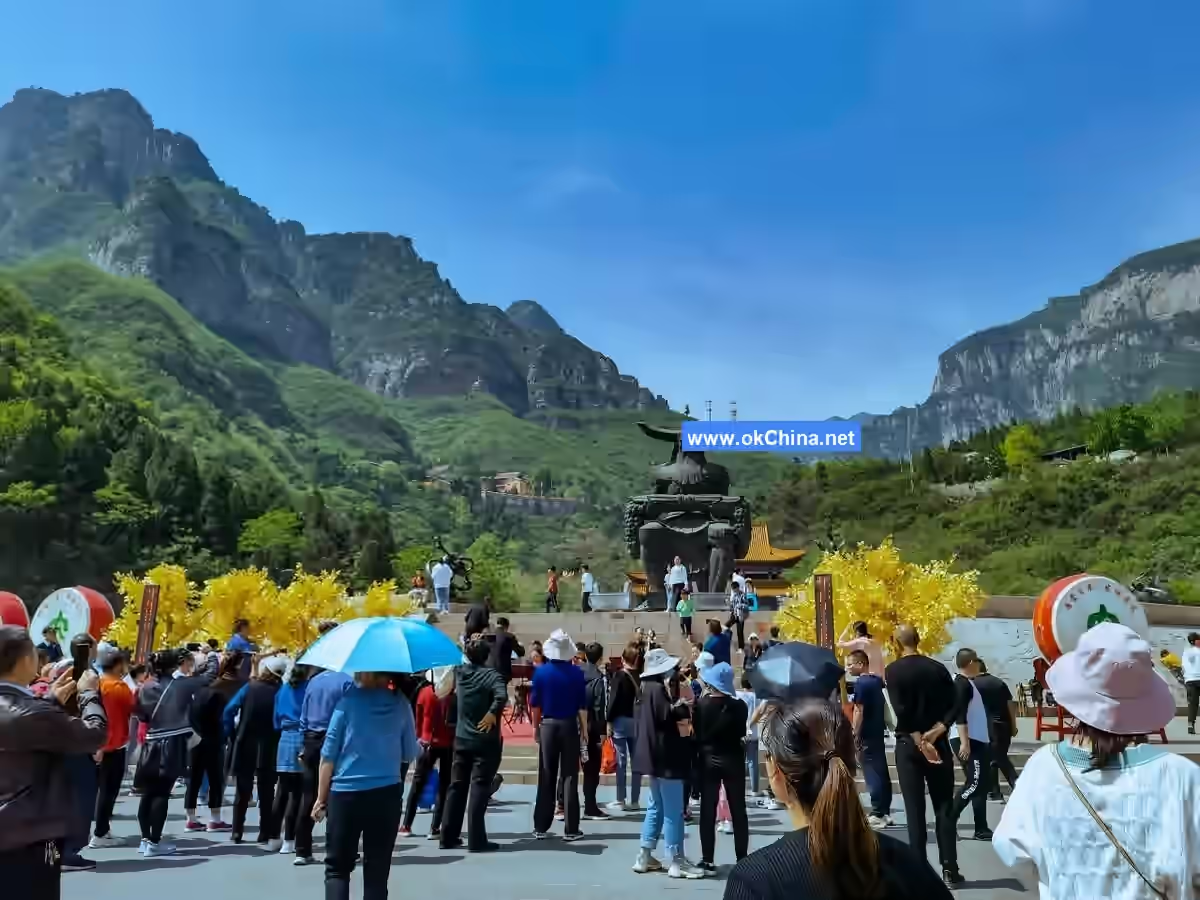
Shennong Culture Square, also known as the Ancestor Worship Altar. The statue seated solemnly in the center is Yan Emperor Shennong, the progenitor of humanity. The entire altar is divided into three layers, symbolizing the three realms of heaven, earth, and man. The main altar has four ascending stairways. Between each stairway are placed three relief sculptures, symbolizing the three months of each season, with the twelve reliefs representing the twelve months of a year. The circular path around the base of the altar consists of 24 rings, symbolizing the 24 solar terms. Each ring is paved with 365 blue stones, symbolizing the 365 days of a year.
3.6 Other Attractions
3.6.1 World Geopark Museum
In 2017, Yuntai Mountain established a new World Geopark Museum. Located southeast of the main monument and integrated with the main monument and the geological square, it serves as a public-facing complementary science education facility for the World Geopark. Inside the museum, important display panels highlight the significant geological heritage of Yuntai Mountain Geopark. The museum is a three-story building with an area of 3,328 m². The two above-ground floors, covering approximately 2,249 m², are the exhibition areas for the geopark. The underground floor, about 1,079 m², is a display venue for meteorite art. Centered around the park's functions and rich resources, the entire museum is organized into 5 major themes across 11 exhibition halls: Meet Yuntai Mountain, Know Yuntai Mountain, Enter Yuntai Mountain, Explore Yuntai Mountain, Yuntai Mountain's Bountiful Treasures (including Mineral Yuntai Mountain, Ecological Yuntai Mountain, Cultural Yuntai Mountain), Glorious Yuntai Mountain, Share Yuntai Mountain, Unforgettable Yuntai Mountain. Since its completion, the museum has hosted a series of science popularization activities and undertakes the task of scientific outreach to local community residents, enhancing the visibility of Yuntai Mountain World Geopark.
The Yuntai Mountain World Geopark Museum serves multiple functions including science education, academic exchange, and conference reception, with an annual reception capacity of 1.2 million visitors. It is not only a landmark building of Yuntai Mountain World Geopark but also a base and window for geological scientific research and science knowledge education.
4. Scenic Area Culture
4.1 Yuntai Mountain
4.1.1 Origin of the Name
Yuntai Mountain was anciently called Fu Fu Mountain and Nüwa Mountain. Because the mountain is lofty and steep, and white clouds are often seen winding among its peaks, it was named Yuntai Mountain (Cloud Terrace Mountain) (as seen in the "Stele Record of Sun the Perfected One" from the Jin Dynasty's Taihe 7th year, i.e., 1207 AD).
Remote Antiquity: Mythology recounts that Ning Fengzi, the official in charge of pottery for the Yellow Emperor, taught the Yellow Emperor the art of riding dragons and flying through clouds. Upon self-immolation, five-colored smoke rose and descended along the path, and his bones were buried in "Ningbei Mountain." This Ningbei Mountain is today's Yuntai Mountain north of Xiuwu County. Xiuwu County was anciently called "Ning."
Later, mythological legends referred to it as Pangu Mountain, Nüwa Mountain, and Wuxing Mountain.
Eastern Han Dynasty: Generally referred to as part of the Taihang Mountains. The last emperor, Liu Xie, abdicated the throne to King Cao Pi of Wei, was enfeoffed as the Duke of Shanyang, and was buried at the southern foothills of Yuntai Mountain after his death. Later generations called this place Ancient Han Mountain.
Wei and Jin Dynasties: Yuntai Mountain became famous in history because the "Seven Sages of the Bamboo Grove" befriended each other here, whistling and roaming freely among the woods and springs, but ancient texts only refer to it as the "Bamboo Grove."
Eastern Jin Dynasty: Began to be called Yuntai Mountain. The famous great painter Gu Kaizhi, inspired by painting Ji Kang of the "Seven Sages of the Bamboo Grove" and his four-character poem "Eyes follow the returning wild geese, hands strum the five strings," wrote the manuscript "Record of Painting Yuntai Mountain."
Tang Dynasty: Also called Fu Fu Mountain. Seen in the poem by the famous Tang poet "Evening Visit to the Fu Fu Mountain Taoist Temple and Ascent to the Xuanyuan Temple." The eastern part was called Tianmen Mountain, also seen in Qian Qi's poem "Inscription on Sun the Recluse's Stone Cliff at Tianmen Mountain."
Jin Dynasty: Called Yuntai Mountain. Seen on a Jin Dynasty remnant stele inscription on Zhuyu Peak.
Qing Dynasty: Called Xiao Beiding (Little Northern Summit). Seen in the stele record of the "Golden Summit Sacred Assembly" at the Beiguan Ancestral Temple in Xiuwu.
Contemporary Era: Called Yuntai Mountain. The poet Wang Huanqing wrote the travelogue "Inviting You to Tour Yuntai Mountain." The original name Yuntai Mountain was restored.
4.1.2 Religious Culture
Yuntai Mountain is a famous mountain of tourism culture, attracting the favor of numerous emperors, generals, ministers, and literati. Buddhism and Taoism also arrived in succession, influencing each other here, making Yuntai Mountain a religious mountain of profound depth. Since the Later Zhao period when the Indian monk Fotucheng founded Yuanji Temple here, many Buddhist disciples have come to meditate and practice, making significant contributions to the development of Buddhism. For example, Master Huiyuan of Jingying Temple in the early Sui Dynasty spent his life writing and establishing doctrines, being the first to propose the classification of Pure Land teachings, becoming the initial patriarch of the Pure Land school. Another example is Master Baiyan of the mid-Tang Dynasty, who studied under Mazu, traveled north to propagate the Dharma, came to Baijia Rock to lecture on Chan and expound the Dharma, causing great震动 in the court and among the populace at the time. He went to the capital to engage in fierce debates with challengers, ultimately promoting and spreading Chan Buddhism throughout the land, making it the mainstream of Chinese Buddhism.
4.2 Shennong Mountain
4.2.1 Historical Culture
During the War of Resistance, Commander-in-Chief Zhu De, passing through Shennong Mountain on his way from Shanxi to Luoyang for negotiations, was moved by the spectacular scenery and, inspired, composed a poem expressing his aspirations. This added a resilient humanistic foundation to the place.
Simultaneously, its profound historical积淀 attracted Taoist priests and eminent monks to practice here. The female Taoist priest Wei Huacun of the Western Jin Dynasty cultivated the Dao here for 42 years, authored the "Yellow Court Classic," known as one of the "Four Great Heavenly Books," and founded the Shangqing sect of Taoism. The eminent monk Chou Chan of the Northern Wei Dynasty carved the Taiping Temple cliffside inscriptions here and built Yunyang Temple, Linchuan Temple, Taiping Temple, and Mujian Temple. Despite dynastic changes and warfare, the incense offerings here never ceased.
Han Yu, Li Shangyin, and other renowned figures throughout history left many timeless masterpieces here. Shennong Mountain is also a sacred site for praying for wealth, blessings, and good fortune. Visitors here "first bow to Shennong for prosperous business and abundant harvests; second bow to Shennong for recovery from all illnesses and a peaceful life; third bow to Shennong for a successful official career and the fulfillment of wishes."
Today's Shennong Mountain sees its temple fair on the third day of the third lunar month become a relatively famous local spectacle. Before dawn, devout men and women from surrounding counties and cities arrive here. Amidst the curling incense smoke, they pray for blessings, wealth, or official positions. Although this may contradict Taoist and Buddhist doctrines, it allows Confucianism, Taoism, and Buddhism to coexist here, adding a strong religious atmosphere. The charm of Shennong Mountain lies not only in reaching the summit but also in viewing the changing scenery of the four seasons.
4.2.2 Related Activities
In May 2023, the Shennong Mountain scenic area carried out the "Guard the Mountains and Rivers · Swan Goose Conveys Affection" activity.
On May 3, 2024, the "Second Folk Culture Festival and Folk Performance Competition of Shennong Valley 2024" was held in the Shennong Valley scenic area. The activity, themed "Meet in Shennong Valley · Savor Folk Culture," used "Art Transmitting Through Millennia" folk art performances, "Fragrance Drifting a Hundred Li" Hakka Ten-Bowl Folk Banquet, "Scene Integration" folk custom experience, and "Brilliant and Superb" Beer Music Evening as its vehicles.
On October 26, 2024, the Shennong Mountain sub-venue activity of the 13th Henan Province "Three Mountains Simultaneous Ascent" Mass Mountaineering Fitness Gathering was held in the Shennong Mountain scenic area of Qinyang City.
Comments
Post a Comment