Xuzhou Yunlong Lake Scenic Area
1. Introduction
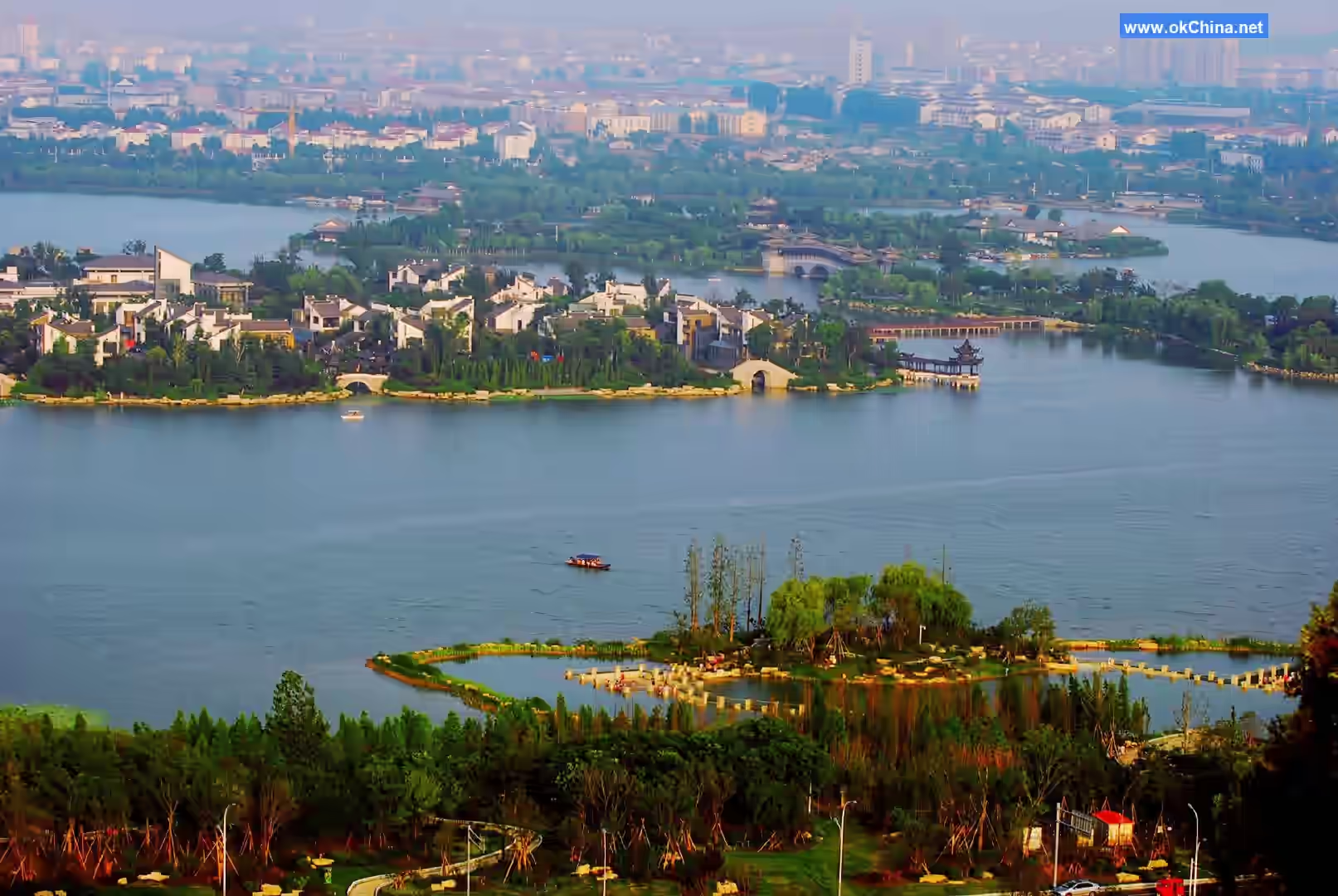
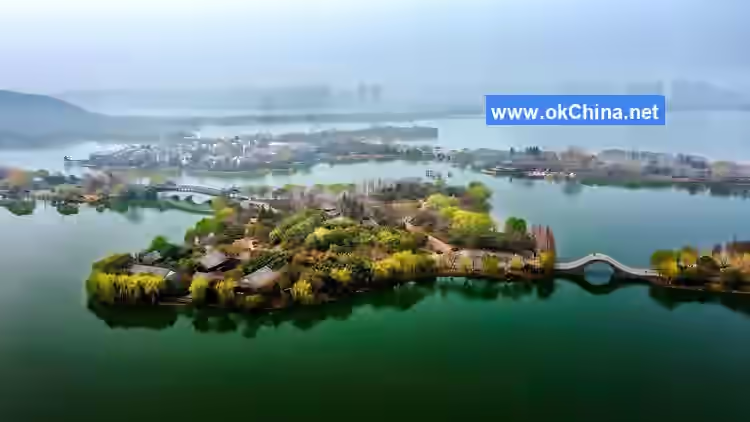
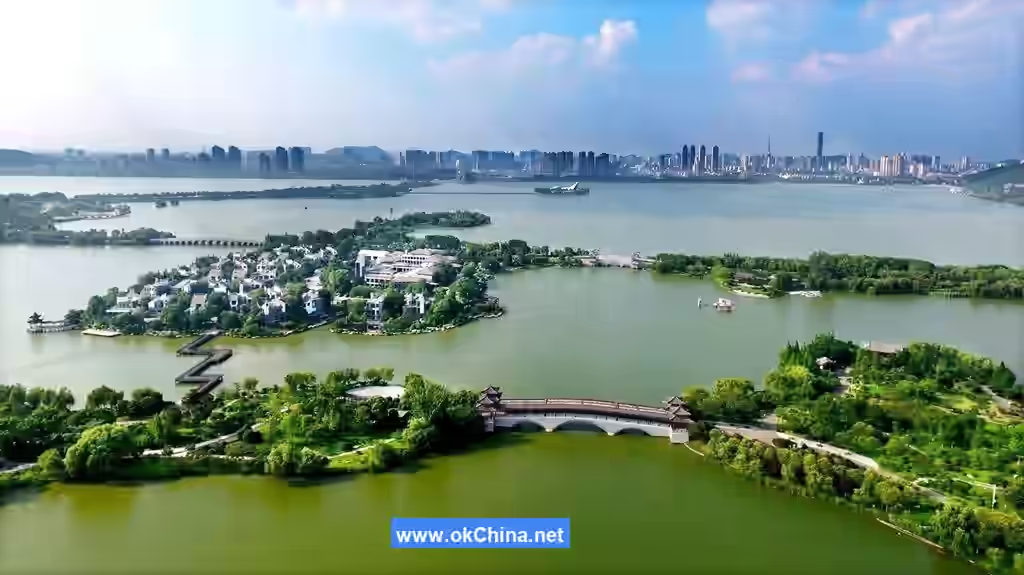
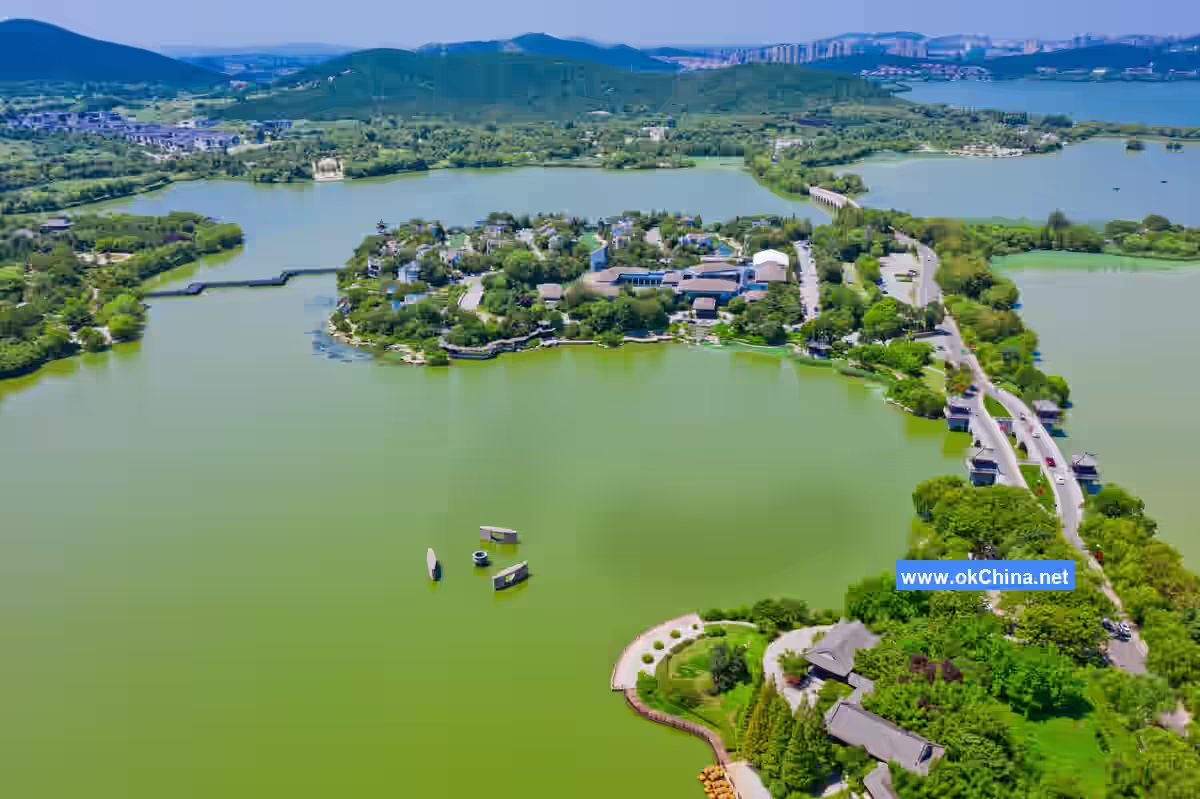
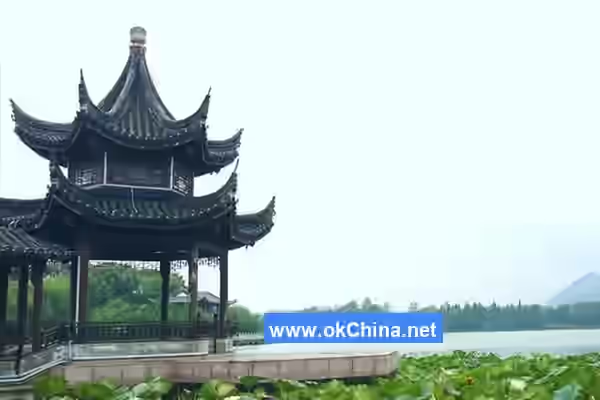
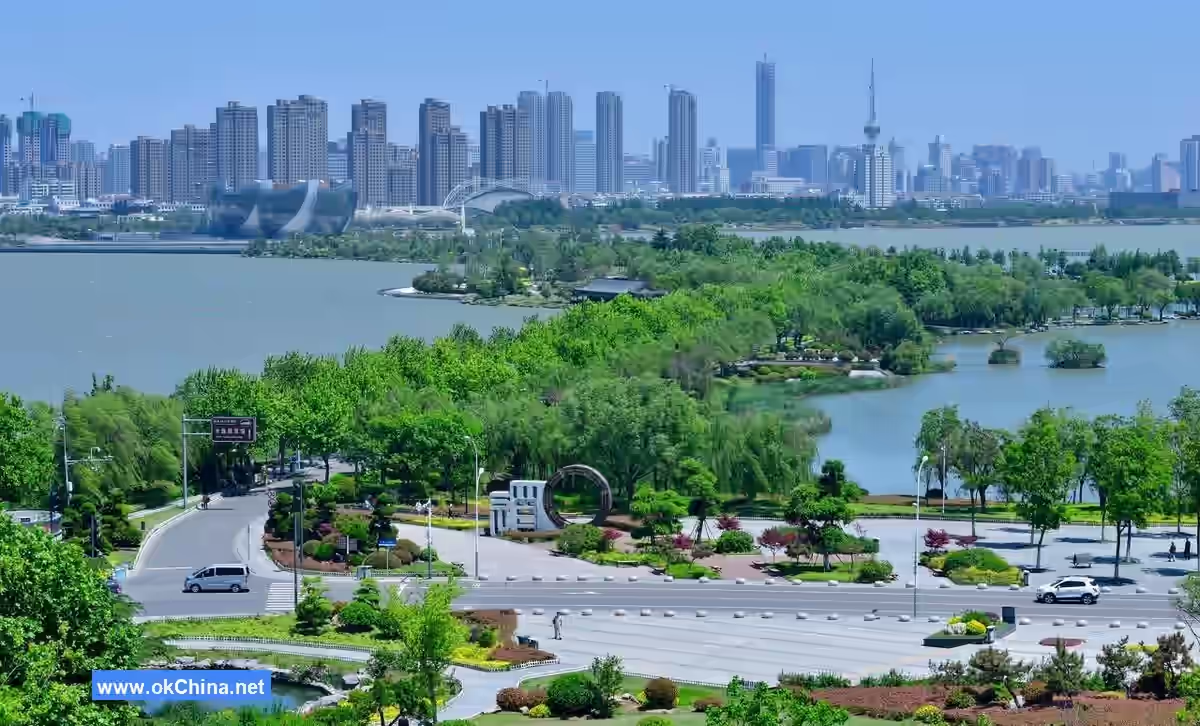
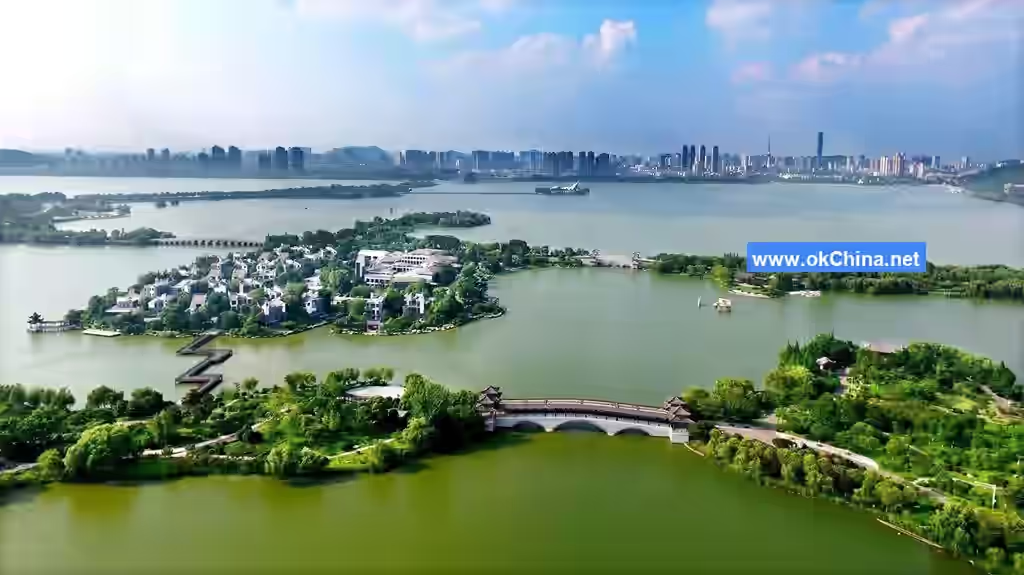
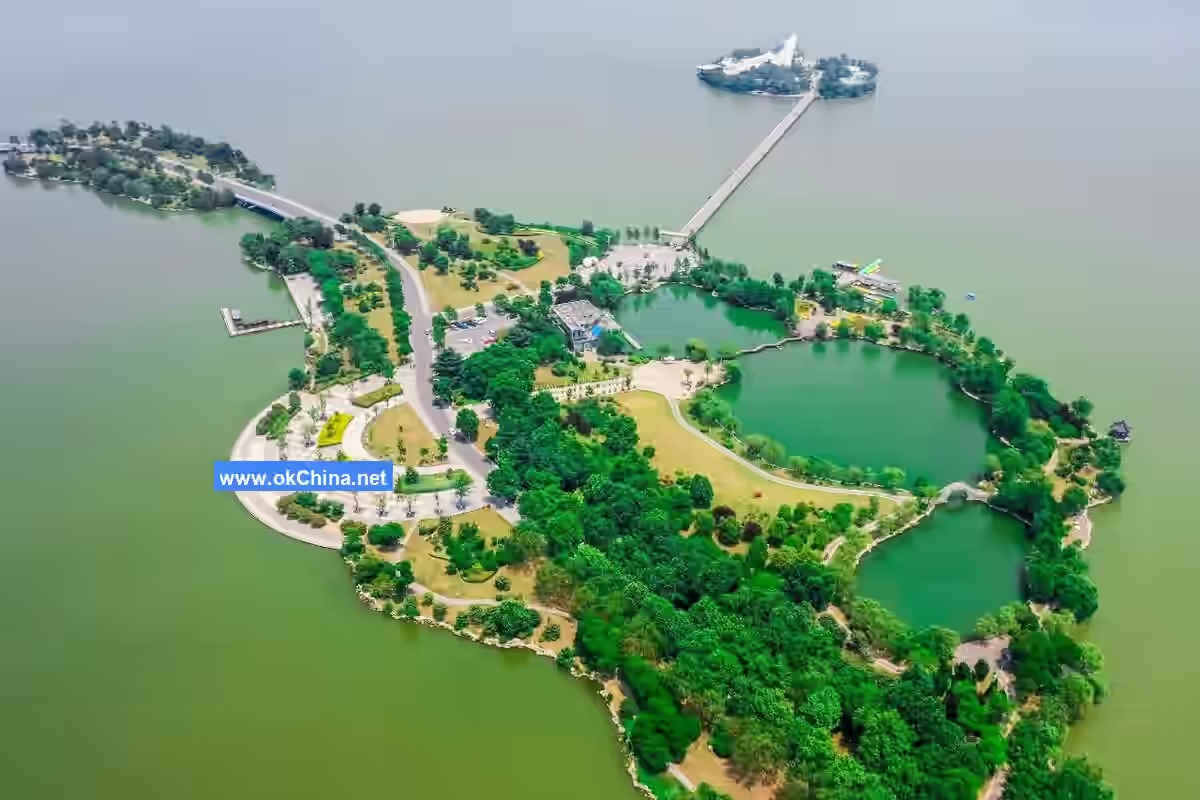
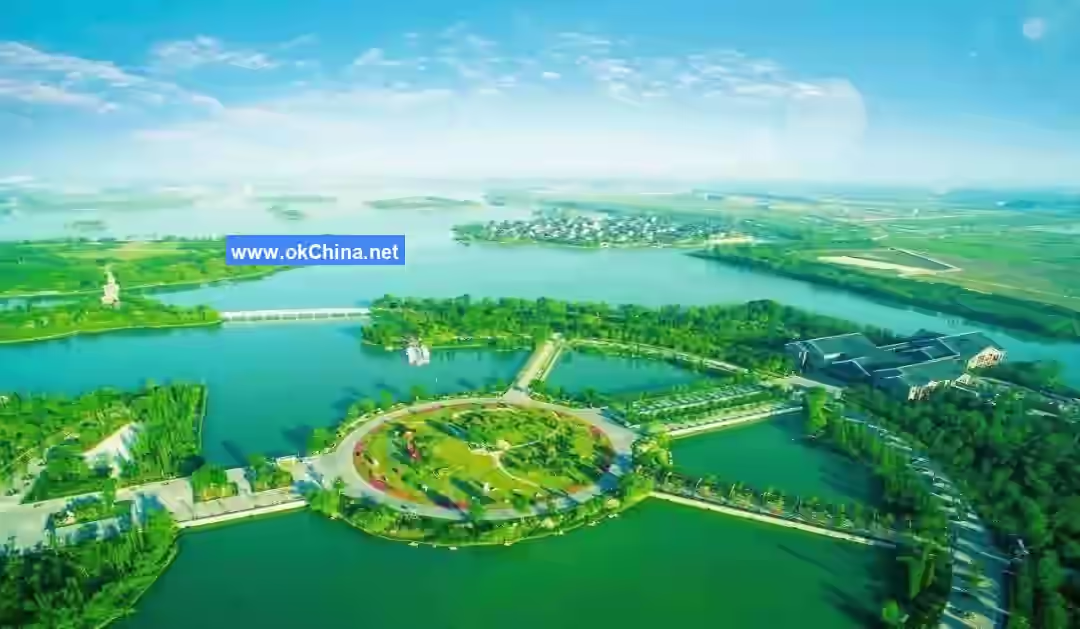
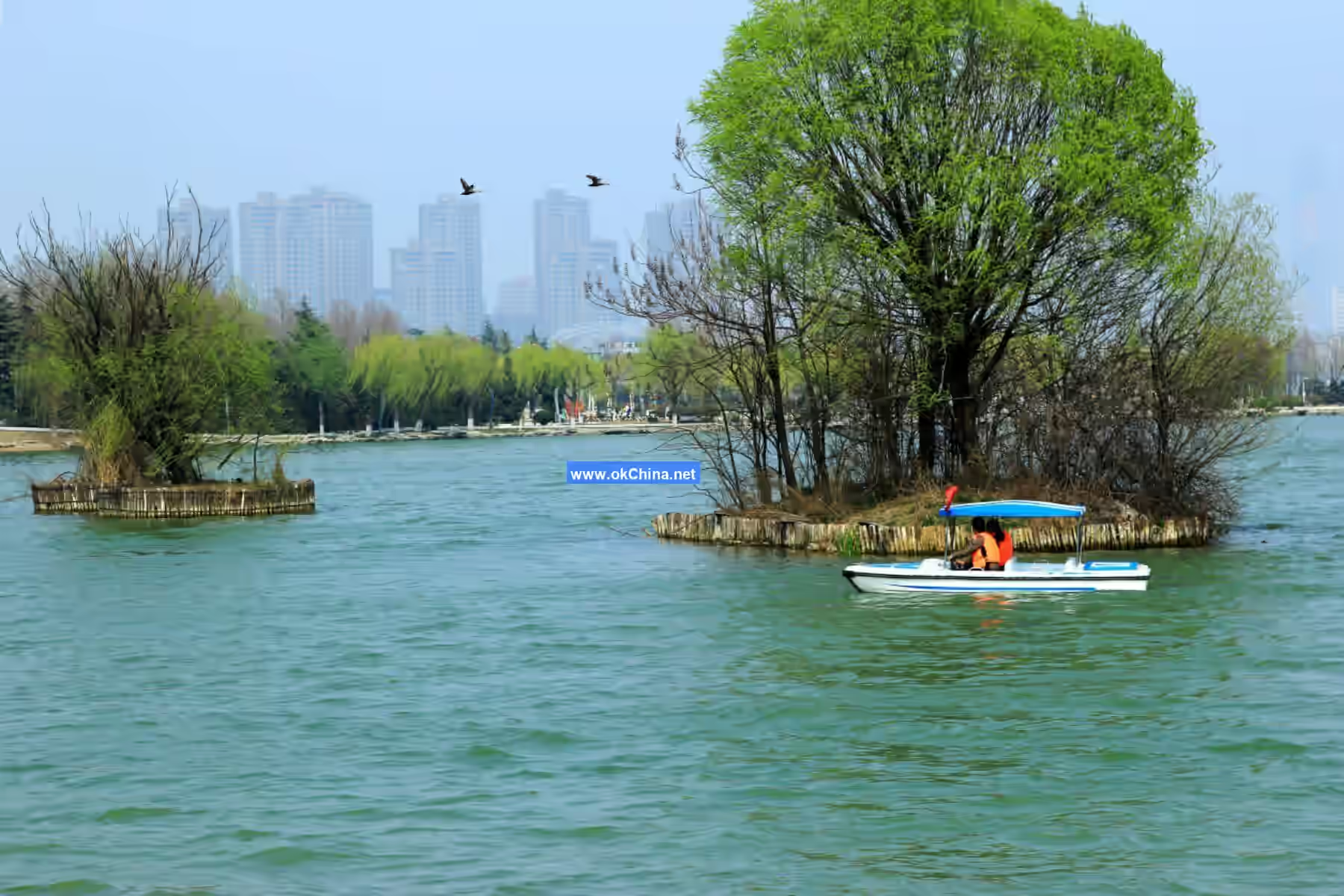
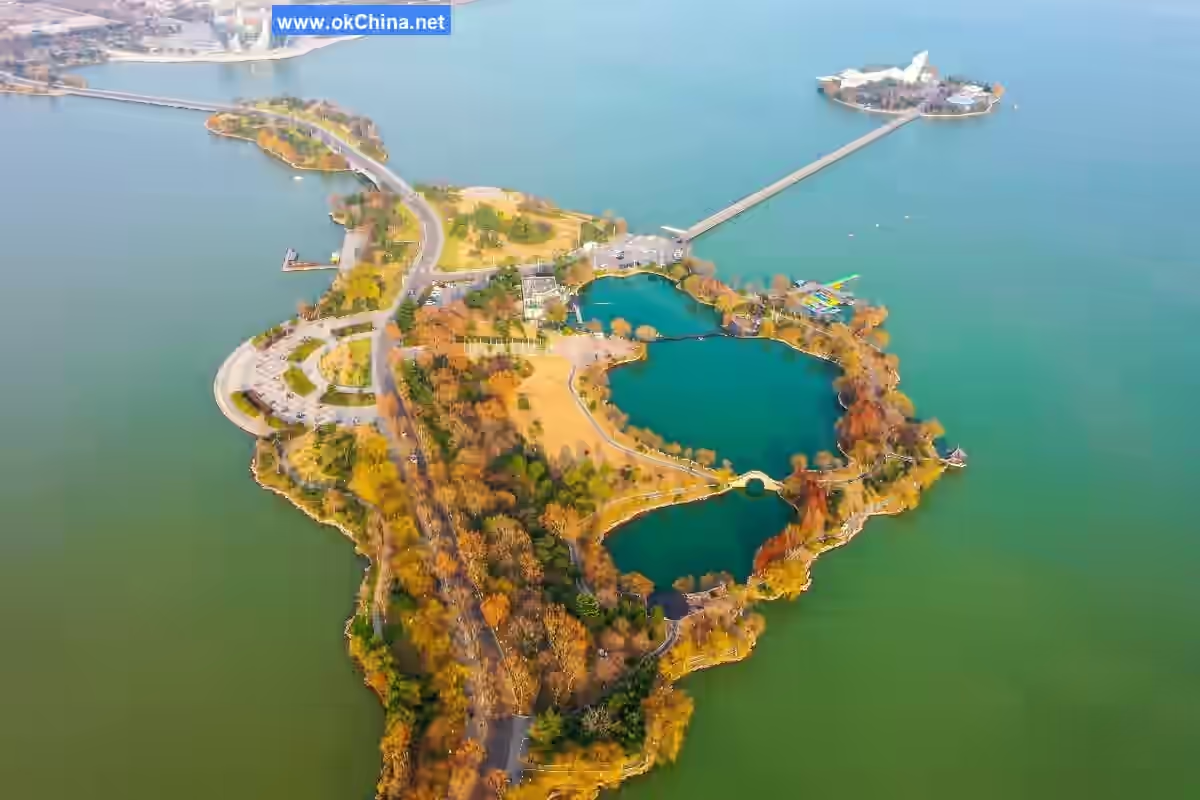
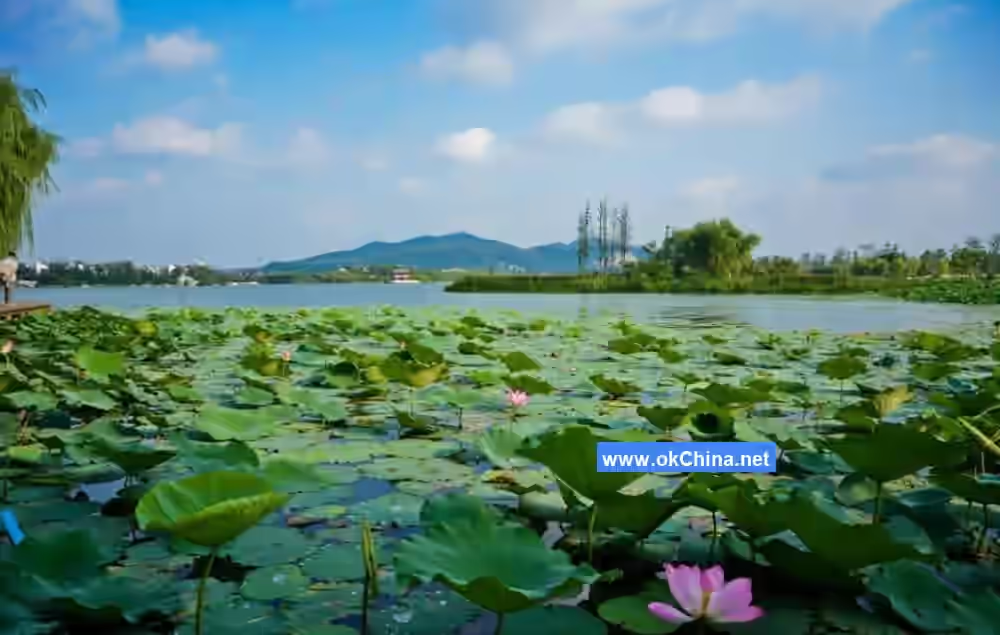
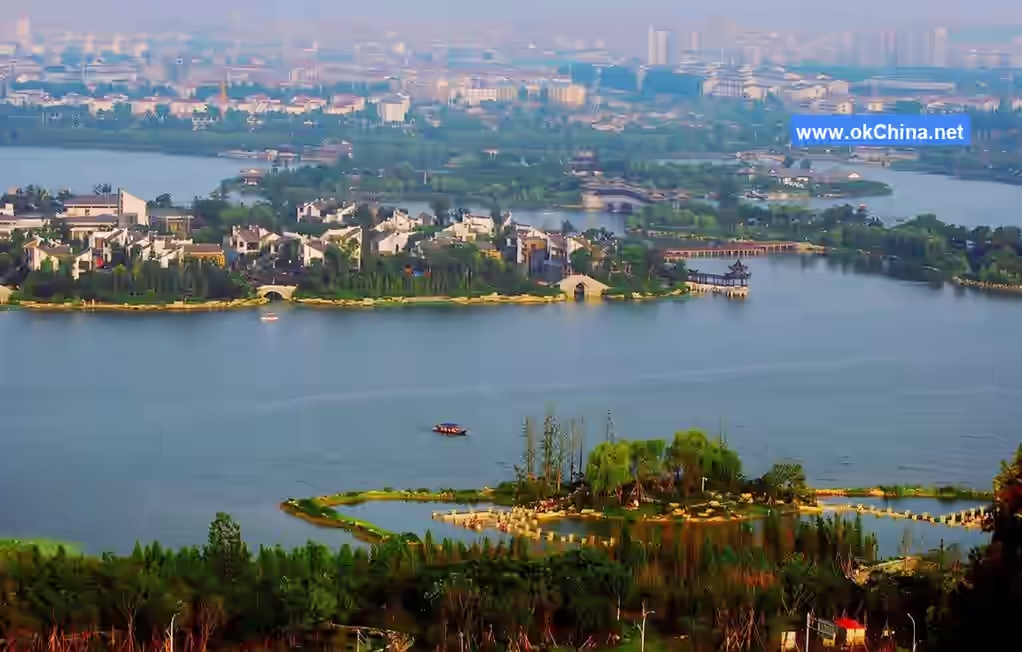
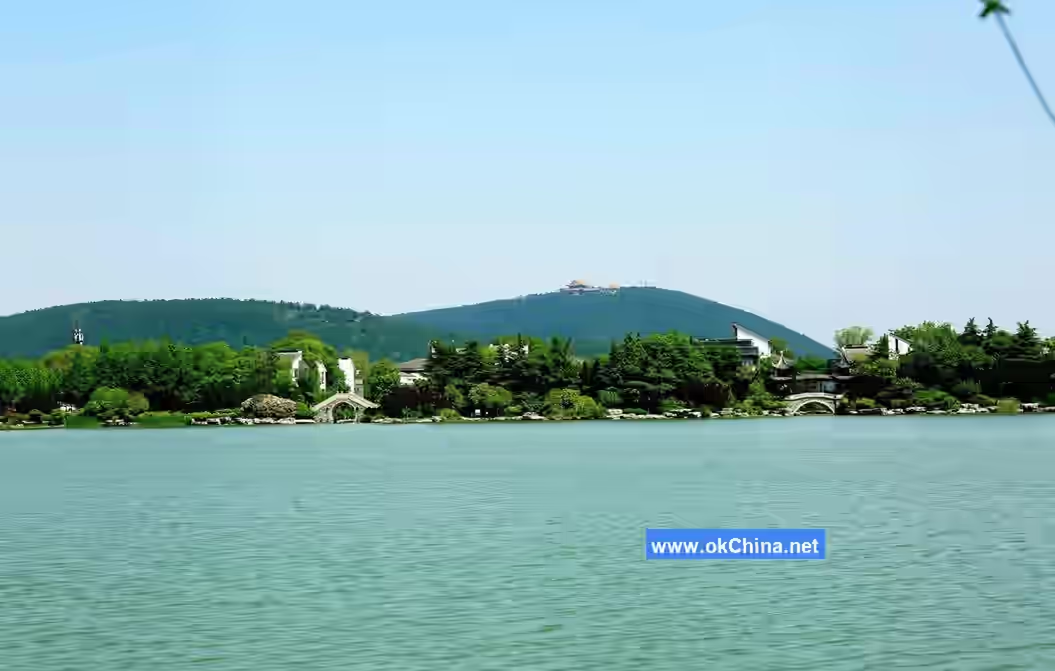
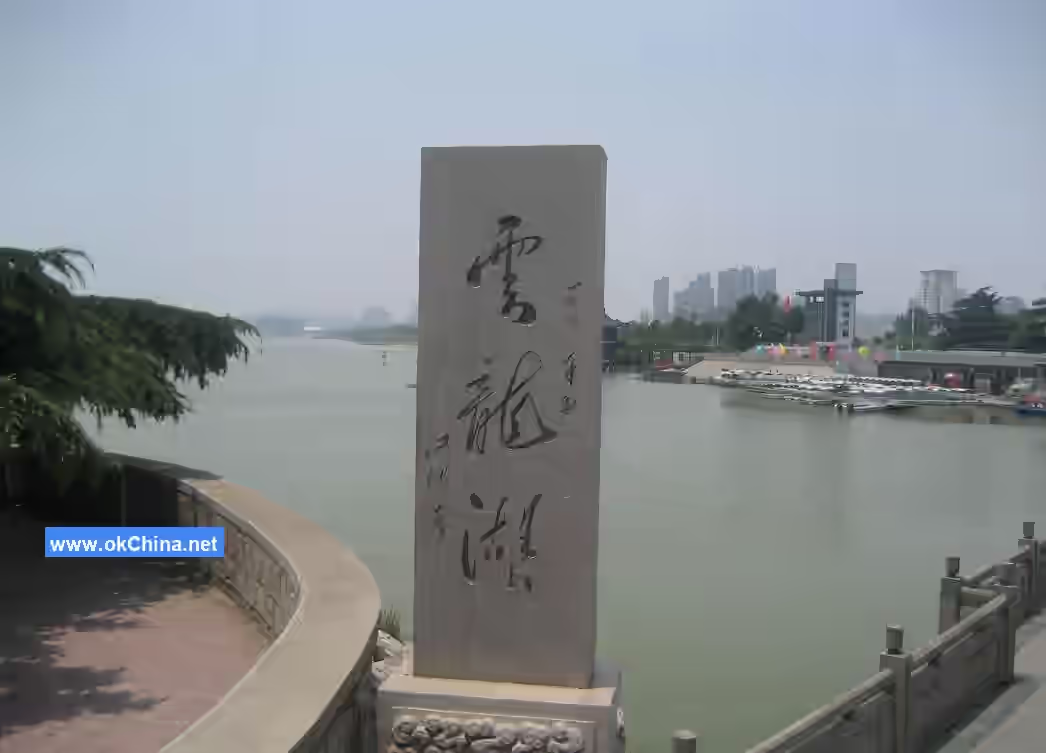
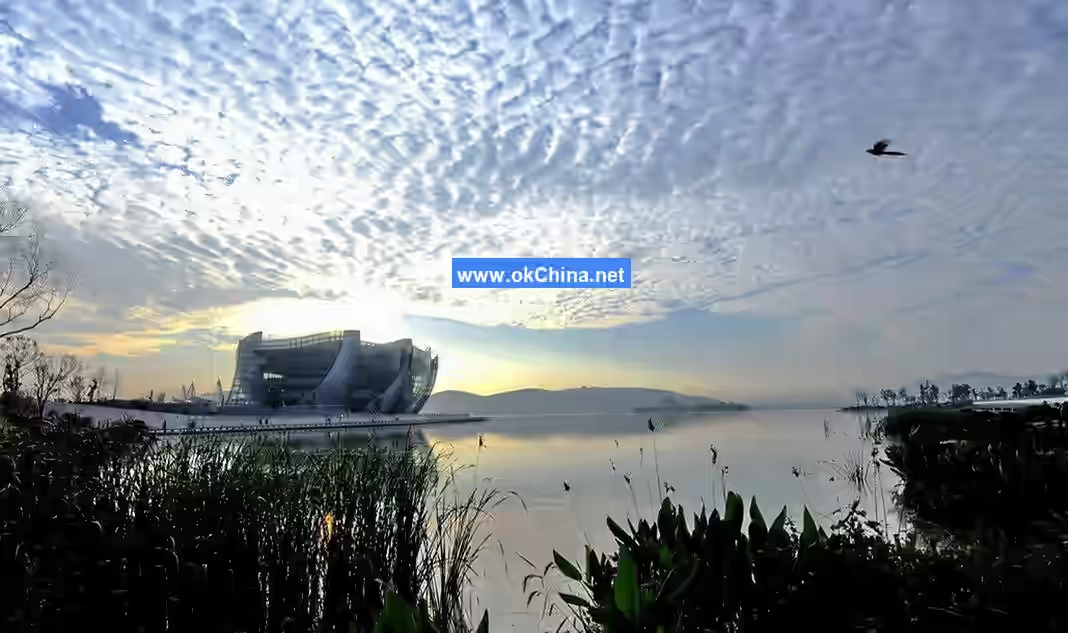
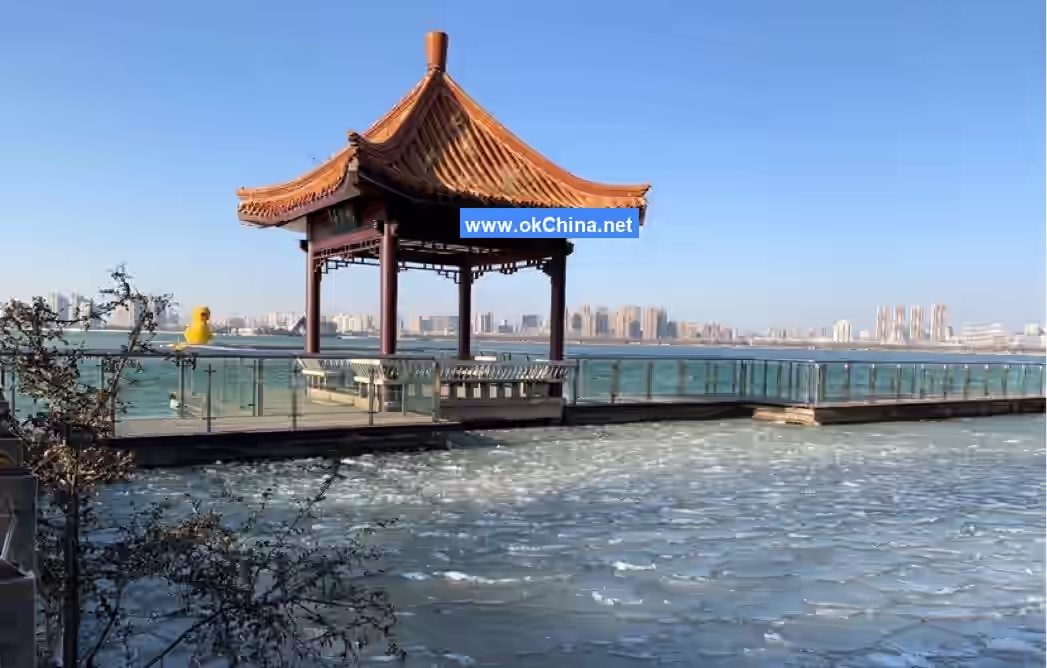
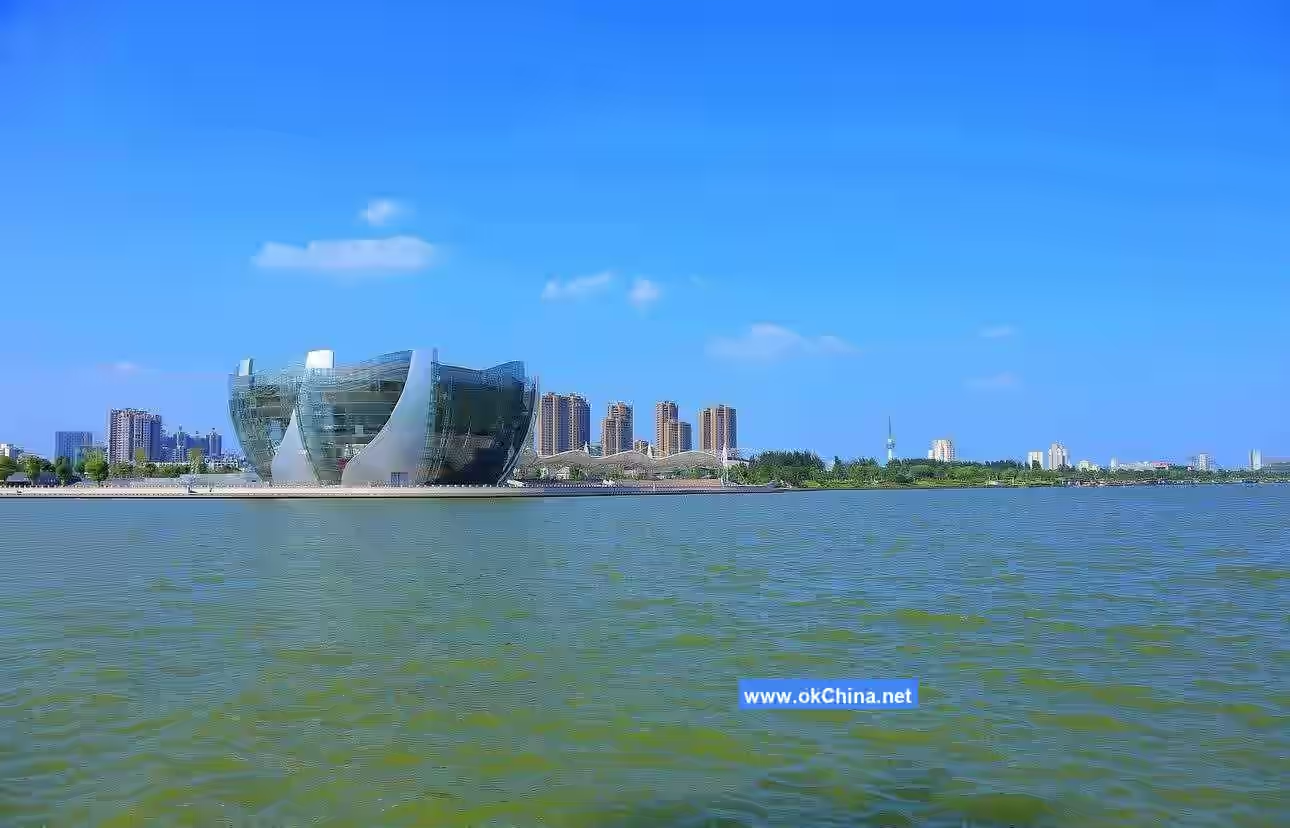
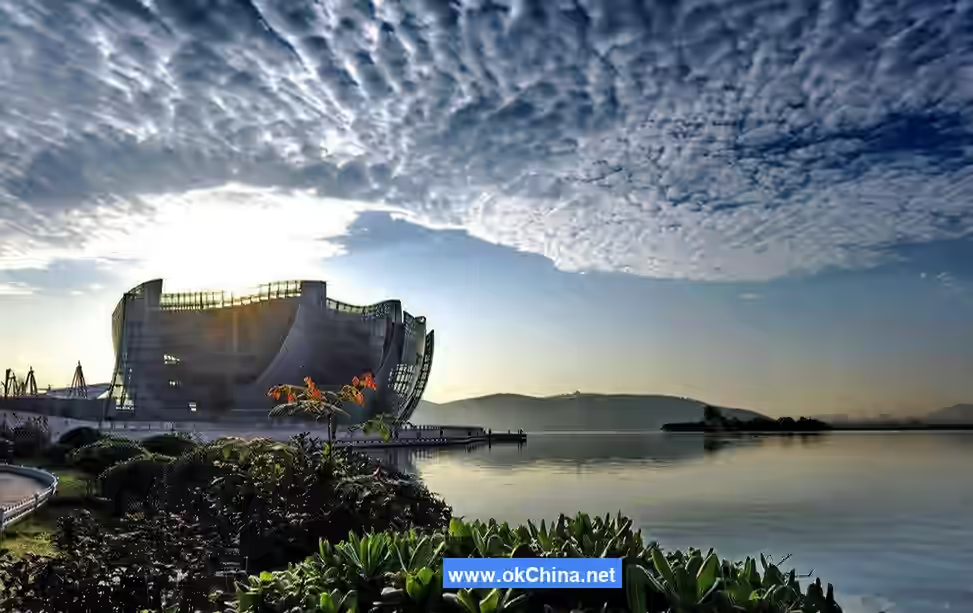
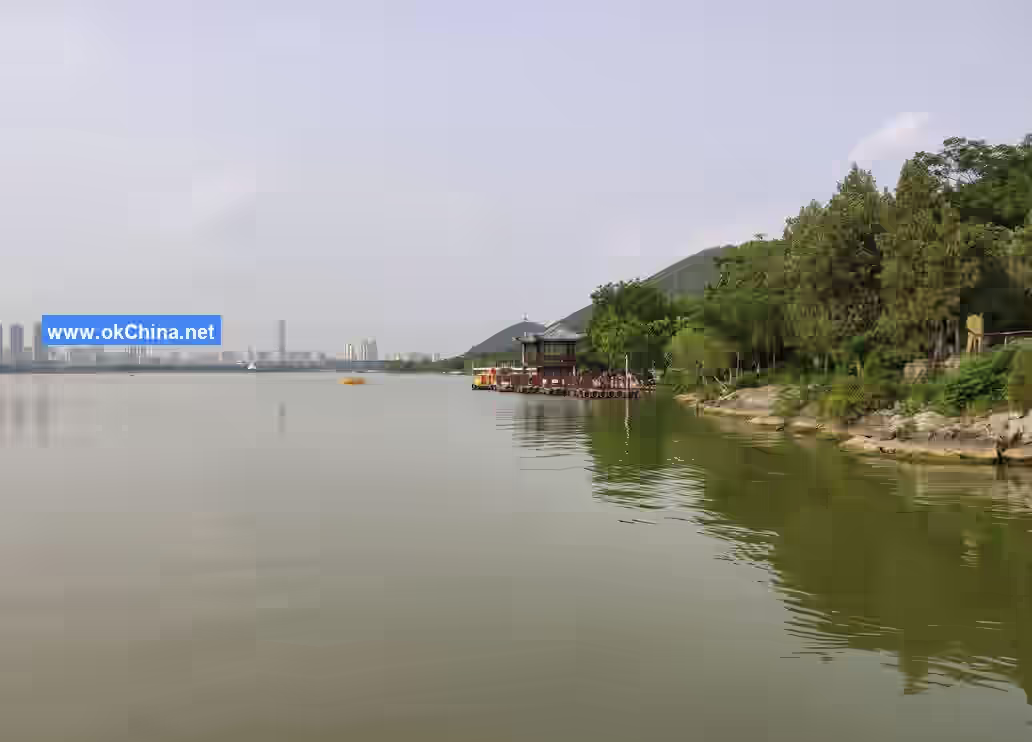
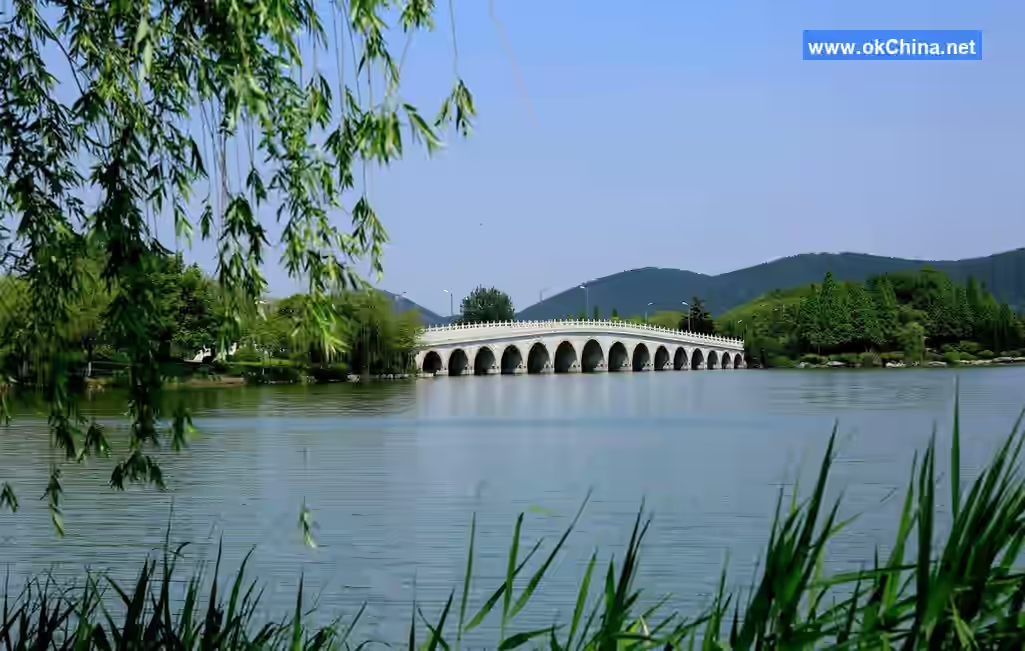
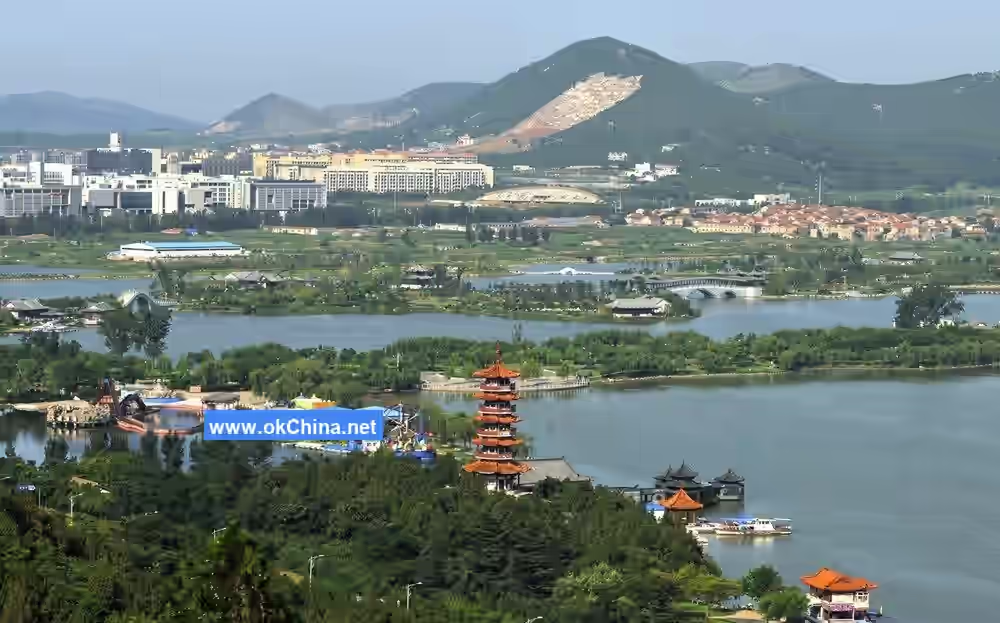
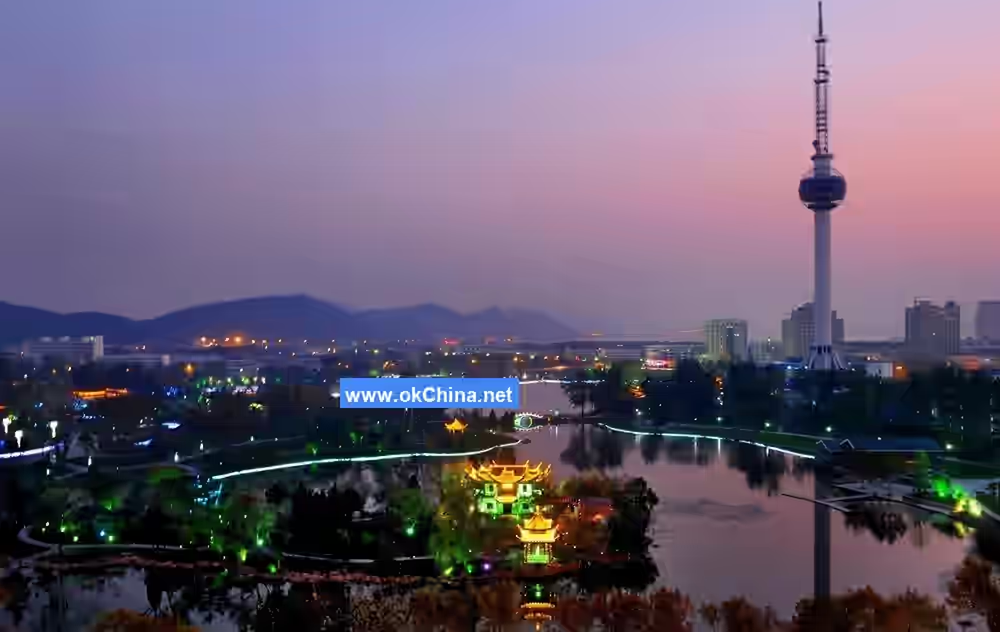
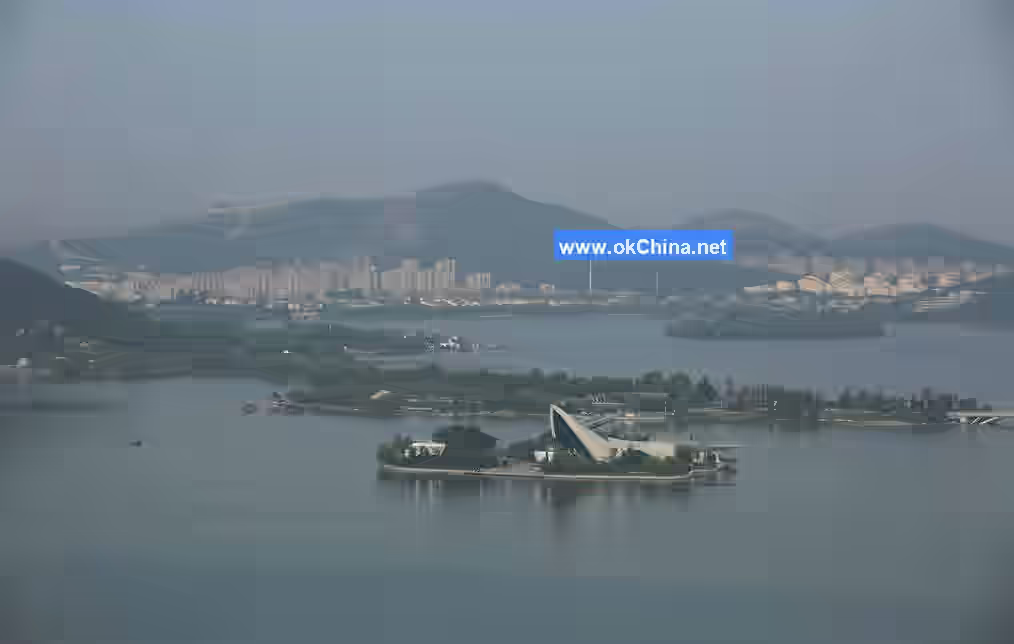
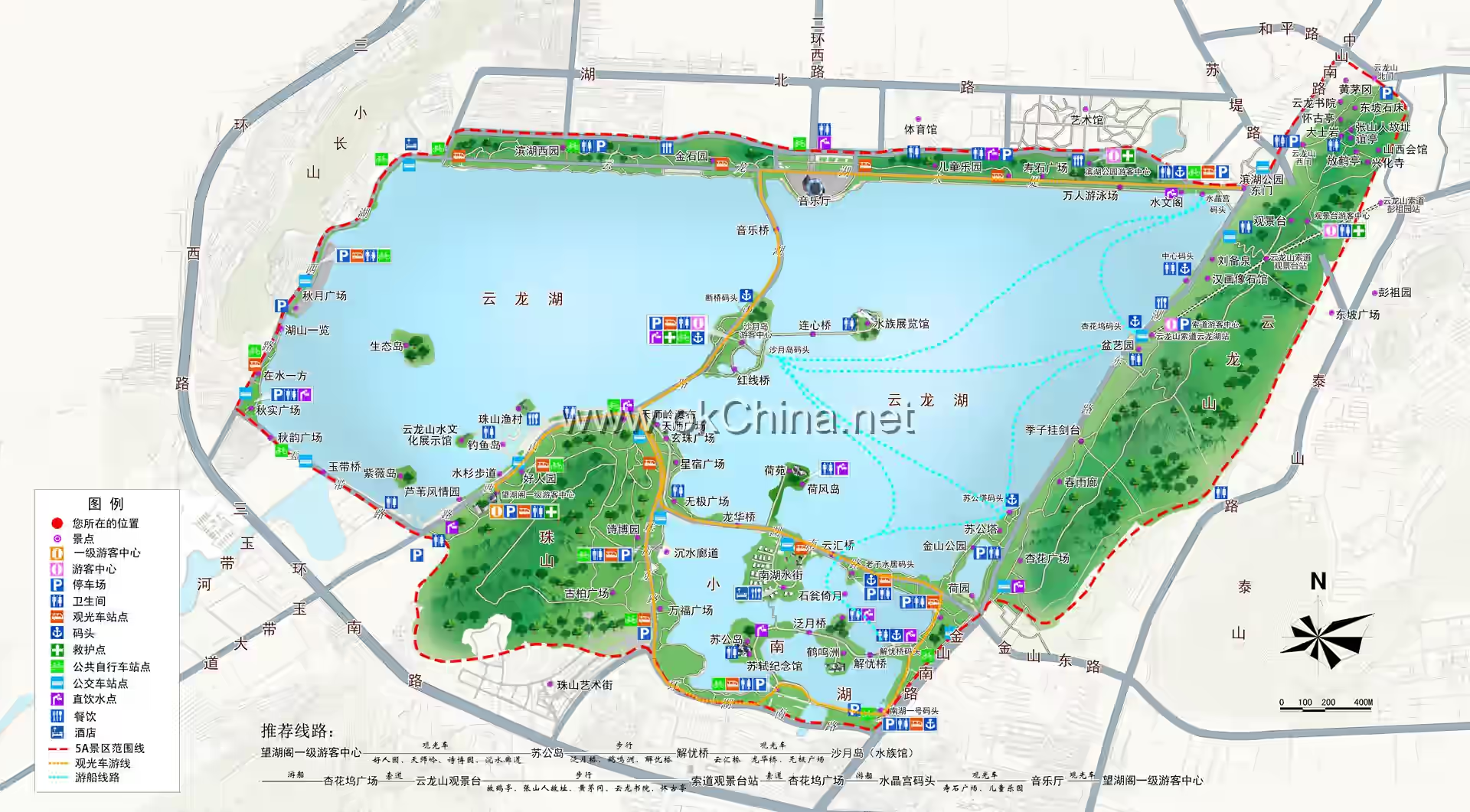
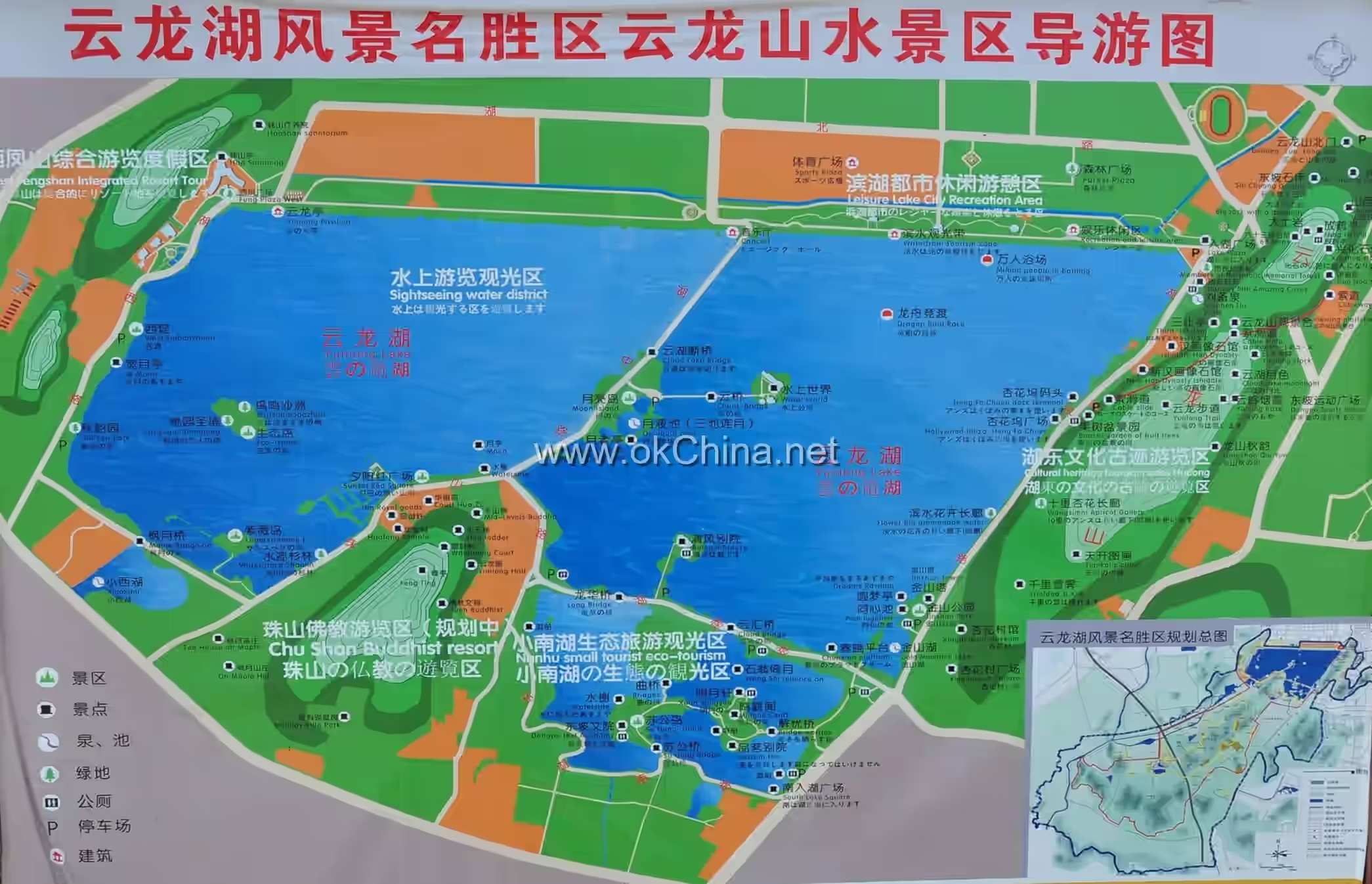
The Xuzhou Yunlong Lake Scenic Area, located in the southern part of Xuzhou City, Jiangsu Province, is an urban scenic area characterized by the natural landscape of Yunlong Mountain and Lake. It integrates the cultures of the Han Dynasties, literati, religion, and military history, offering comprehensive functions such as science education, sightseeing, tourism, leisure, and ecology. In August 2016, it was approved as a National 5A-level Tourist Attraction. The scenic area covers 44.7 square kilometers, with a peripheral protection zone of 44.2 square kilometers, totaling 88.9 square kilometers under control. The core scenic area spans 15.1 square kilometers, including a water area of 7.5 square kilometers and a surface water area of 6.5 square kilometers.
2. Geographical Environment
2.1 Location
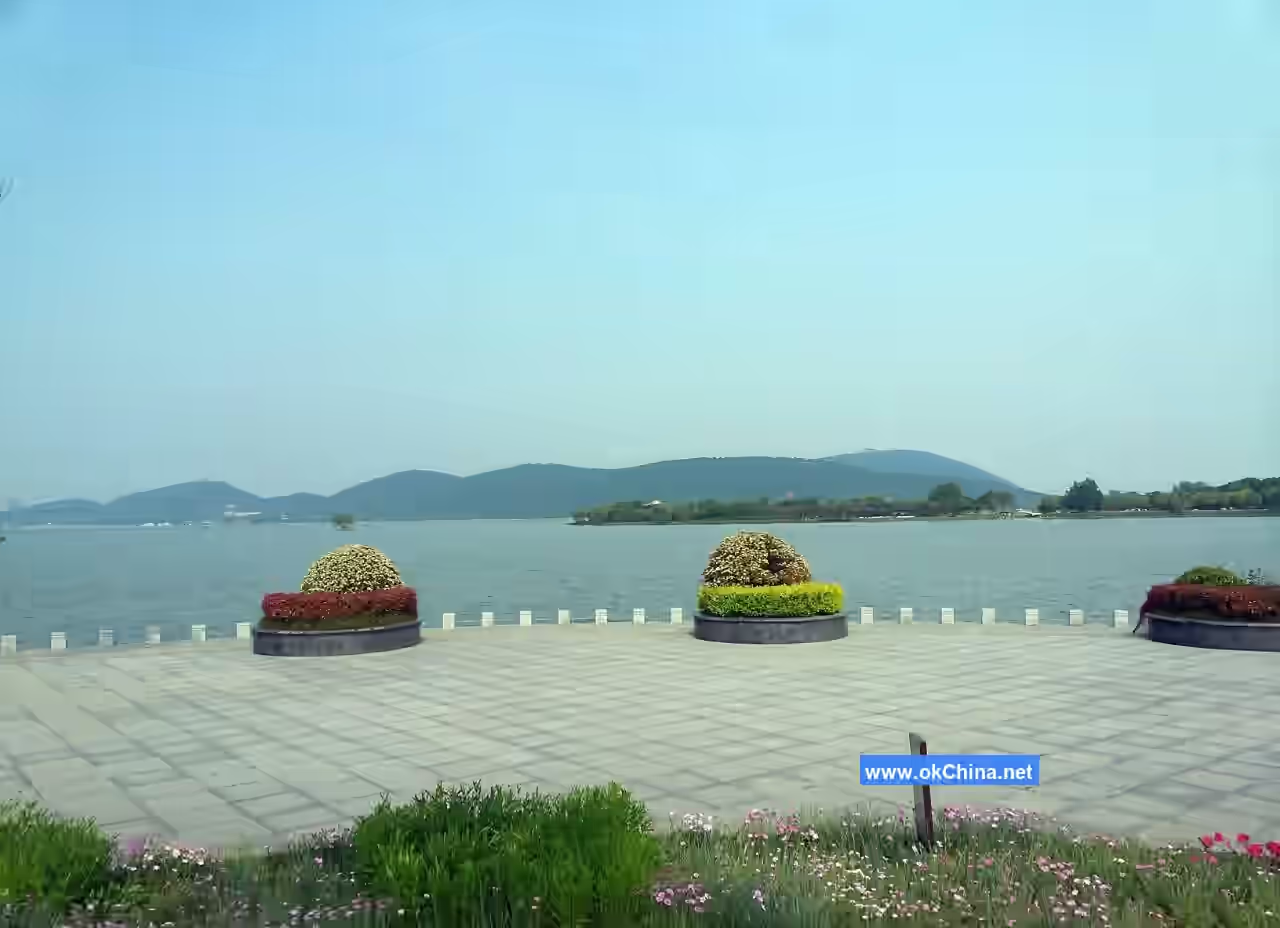
The Yunlong Lake Scenic Area is situated upstream of the Kui River in the southwest of Xuzhou City, belonging to the Huai River Basin and the Kui-Sui River system. It borders Yunlong Mountain to the east and Han Mountain to the west, only 3 kilometers from downtown Xuzhou.
2.2 Climate
Located in the north temperate zone, the Yunlong Lake Scenic Area experiences a warm temperate humid and semi-humid monsoon climate with four distinct seasons: warm springs, cool autumns, cold winters, and hot summers. The average annual temperature is 14.5°C, with 59 days per year reaching or exceeding 30°C. Annual sunshine duration ranges from 2,280 to 2,440 hours, the frost-free period is about 210 days, and annual precipitation averages around 802.4 mm.
3. Attractions Introduction
3.1 Su Shi Memorial Hall
The Su Shi Memorial Hall is located on Sugong Island within the Yunlong Lake Scenic Area. Its main structure is a Song Dynasty-style building. The hall focuses on Su Shi's administrative and cultural achievements during his tenure as the prefect of Xuzhou (April 1077–March 1079), highlighting the spiritual qualities of "Honest Official Su Shi" and "Literary Giant Su Shi." It fully showcases his historical contributions of loyalty to the emperor and care for the people, embodying the ideal of "serving one term, benefiting one region," thereby evoking feelings of remembrance, admiration, and emulation. Entering here feels like traveling through time for a millennia-spanning encounter with Su Shi. The hall's rich exhibits recount his stories in Xuzhou. "A breath of noble spirit, a thousand-mile refreshing breeze." One can sense his boldness and literary talent. The exhibition hall consists of two courtyards and four exhibition rooms: Xiaoyao Hall, Qingsi Hall, Meishan Hall, and Kuaizai Hall, along with a Stele Corridor. In Xiaoyao Hall, one can envision the magnificent life of Su Shi, with his accomplishments fully documented, presenting a vivid, three-dimensional, and humane Su Dongpo. Qingsi Hall details his administrative achievements in Xuzhou, where he led soldiers and civilians to combat floods, reinforce city walls, build the Su Causeway, and construct the Yellow Tower... demonstrating how "one man's" "determination" saved "thousands" from "floodwaters." Meishan Hall displays the family relationships of the Su clan, with their admirable family traditions. Kuaizai Hall introduces the history of sites like the Dongpo Stone Bed and the Yellow Tower, where "one poem, one scene" highlights Su Shi's love for Xuzhou and showcases the beauty of its landscape. Strolling through the memorial hall, feelings of remembrance and admiration for Su Shi well up. Here, one can feel his talent and sense of responsibility; here, one can touch the warmth of history and appreciate the wisdom of the ancients.
3.2 Zhushan Scenic Area
Located at the foot of Zhushan Mountain in the western part of Yunlong Lake, encircling the entire Zhushan range, the Zhushan Scenic Area covers a total area of 80 hectares. Centered on Taoist culture and the Taoist philosophy of "returning to simplicity and harmony between man and nature," it follows the journey of Zhang Daoling, the Taoist founder from Feng County, Xuzhou (attaining enlightenment, cultivation, magical contests, founding the religion, ascension). Attractions include Heming Terrace, Hundred Herb Altar, Heavenly Master Square, Founding Road, Sacred Path, Heavenly Master Ridge, and Wanfu Square, showcasing Taoist culture. The area closely integrates Taoist cultural concepts such as "Primordial Unity, Tai Chi and Two Forms, Harmony of Three Powers, Encirclement of Four Symbols, Mutual Generation of Five Elements, Universe of Six Directions, Return in Seven Days, Evolution of Eight Trigrams, Union of Nine Palaces, and Return to Primordial Unity," while emphasizing visitor participation and immersion. It is an open-themed scenic area combining leisure, ecology, and nature.
3.3 Yunlong Mountain Scenic Area
Yunlong Mountain, also known as Stone Buddha Mountain, is located south of Xuzhou City. It stands 142 meters high and stretches 3 kilometers long. The mountain is divided into nine sections, winding and undulating like a divine dragon, with its head raised toward the northeast and tail trailing to the southwest. The spillway serves as the boundary, with the area north belonging to Yunlong District and south to Quanshan District. Commonly referred to as Yunlong Mountain usually denotes the northern peaks. Yunlong Mountain features both natural scenery and cultural landscapes. It boasts numerous historical and cultural relics, including the large Stone Buddha from the Northern Wei Dynasty, Tang and Song cliff inscriptions, the Song Dynasty Releasing Crane Pavilion, Summoning Crane Pavilion, Crane Drinking Spring, and Zhang the Hermit's former residence, the Ming Dynasty Xinghua Temple, and Qing Dynasty relics like Dashiyan (Guanyin Rock), Shanxi Guild Hall, Boat Hall, Imperial Stele Pavilion, and Stele Corridor. After liberation, historical sites such as Youhui Pavilion, Dongtian Small Cottage, Kuayun Pavilion, Yunlong Academy, Apricot Blossom Village, Viewing Platform, and Tongxin Platform were restored or newly built. Yunlong Mountain has Buddhist cultural heritage, with famous historical sites like Xinghua Temple, Dashiyan, and Tang-Song cliff inscriptions gradually established from the Northern Wei to Qing Dynasty. The Yunlong Mountain Temple Fair is held annually on the 19th day of the second lunar month. When Su Dongpo served as the prefect of Xuzhou during the Song Dynasty, he often visited Yunlong Mountain with friends, leaving behind many timeless literary masterpieces. Historical figures who have visited Yunlong Mountain include Liu Bang, Liu Yu, Su Shi, Emperor Qianlong, Shao Daye, Mao Zedong, Chiang Kai-shek, Hu Jintao, Li Peng, Zhu Rongji, Li Keran, among others.
3.3.1 Releasing Crane Pavilion
The Releasing Crane Pavilion was first built in the first year of the Yuanfeng era under Emperor Shenzong of Song (1078 AD) by the literati hermit Zhang Tianji. The pavilion measures 11.95 meters north-south and 4.95 meters east-west, featuring a hip-and-gable roof with upturned eaves, simple and elegant in style. Zhang Tianji styled himself "Yunlong Mountain Hermit" and became good friends with Su Shi during his tenure as Xuzhou prefect. The hermit kept two cranes, releasing them from this pavilion every morning, hence the name. In the autumn of 1078, Su Shi wrote "Record of the Releasing Crane Pavilion," which not only depicts the enchanting and ever-changing scenery of Yunlong Mountain but also praises the hermit's reclusive life, creating an image of an extraordinary recluse. This essay became widely celebrated and was selected into the "Guwen Guanzhi" anthology, making Yunlong Mountain and the Releasing Crane Pavilion famous. Mao Zedong once visited here and recited a line from the essay: "The mountain hermit has two cranes, very tame and skilled at flying; at dawn, he releases them toward the gap in the western mountains." The current pavilion was rebuilt in the late Qing Dynasty, with the plaque inscribed "Releasing Crane Pavilion" in Su Shi's calligraphy.
3.3.2 Stele Corridor
The Stele Corridor is located east of the Releasing Crane Pavilion, adjacent to Xinghua Temple. It was initially built in the late Qing Dynasty. Stretching about 30 meters north-south, with the back included, the total length is nearly 40 meters. The corridor walls are embedded with 54 steles from various dynasties, featuring regular, running, cursive, and clerical scripts, with characters as large as dipper-sized or as small as fly-head-sized. Additionally, there are two stone-carved line-drawn figure paintings and two landscape paintings.
3.3.3 Crane Drinking Spring
The Crane Drinking Spring is south of the Releasing Crane Pavilion. Its exact excavation date is unknown, but it predates the pavilion. Before the Northern Song Dynasty, Yunlong Mountain was called Stone Buddha Mountain, and the spring was known as Stone Buddha Well. Later, due to its proximity to the Releasing Crane Pavilion, it was renamed Crane Drinking Spring.
3.3.4 Summoning Crane Pavilion
The Summoning Crane Pavilion is a brick-and-wood structure, small and exquisite. It is named after the "Summoning Crane" song mentioned in "Record of the Releasing Crane Pavilion." The pavilion is located at the highest point of the first mountain section.
3.3.5 Kelang (The "May-Be" Corridor)
In the 14th year of the Shunzhi era of the Qing Dynasty (1657 AD), Ding Yu of the Ministry of Revenue built the Wanghu Pavilion (Lake Viewing Pavilion). In the 17th year of Shunzhi, Xu Weidi, also from the Ministry of Revenue, raised funds to build a corridor connecting to the pavilion. Originally, the corridor had windows on both sides that could be closed during wind and rain. This corridor is considered something that "may be" but is indispensable, hence named Kelang (May-Be Corridor).
3.3.6 Viewing Platform
The Viewing Platform is situated on the third section of Yunlong Mountain. It stands 6 meters high and covers an area of 1,500 square meters. The entire structure follows the mountain's contours, with a simple, dignified, and majestic design. Climbing the platform and looking out from the railings offers a panoramic view of the entire city; at night, neon lights shine brilliantly.
3.3.7 Lying Ox Spring
The restoration project of Lying Ox Spring was completed on July 1, 1999, and opened to visitors. Originally built in the late Qing Dynasty, it was naturally formed by rainwater and mountain springs. It is named after a large rock on the eastern wall resembling a lying ox. The pool is about 30 meters long, 6 meters wide, and 5 meters deep.
3.3.8 Sanyi Bridge (Three Righteousness Bridge)
Sanyi Bridge is located in the middle of the Lying Ox Spring pool, arch-shaped with bluestone carved railings featuring traditional patterns like two dragons playing with a pearl and qilin. A Sanyi Stele stands east of the bridge.
3.3.9 Tang and Song Cliff Inscriptions and Statues
The Tang and Song cliff inscriptions and statues at Yunlong Mountain are located within Xinghua Temple, carved into the mountain. They were discovered during the construction of the Mahavira Hall in 1993. Currently, there are 7 groups, 71 niches, 38 inscriptions, travel notes, and 195 statues. Stone steps from the Tang and Song periods connect the upper and lower sections. The statues range from 5 cm to 11.52 meters in height, all in high relief.
3.3.10 Liji Pavilion (Benefiting Pavilion)
Liji Pavilion was first built during the Guangxu era of the Qing Dynasty. According to the "Liji Stele," during the Guangxu period, five righteous individuals from Pengcheng, including Yang Wenyi, donated funds to build the pavilion for the convenience of travelers to rest.
3.3.11 Yi Pavilion (Friendship Pavilion)
Yi Pavilion has a history of over a hundred years, commemorating the friendship between Su Dongpo and Yunlong Mountain Hermit Zhang Tianji. The characters "Yi Pavilion" are in Su Shi's calligraphic style.
3.3.12 Lord Jiang Pavilion
Lord Jiang Pavilion is located north of Dashiyan on the first section of Yunlong Mountain. Jiang Zhuo once served as the prefect of Xuzhou. During his administration, he oversaw the construction of Dashiyan, established the Zunjing Pavilion (Classics Reverence Pavilion), and renovated the Confucian temple, contributing significantly to Confucianism and Buddhism in Xuzhou. Later generations built this pavilion in his memory.#### 3.3.13 Imperial Stele Pavilion The Imperial Stele Pavilion is located on the first-level platform of Yunlong Mountain. Emperor Qianlong of the Qing Dynasty visited Xuzhou multiple times throughout history, leaving behind carved stones with poems, couplets, and inscriptions on Yunlong Mountain. Later generations built the Imperial Stele Pavilion to commemorate these imperial traces.
3.3.14 War of Resistance Pavilion
The Memorial Pavilion for Employees of the Tianjin-Pukou Railway Martyred in the War of Resistance is situated at the northern foot of Yunlong Mountain. It was built in May 1947 and was renovated with funds raised by the Xuzhou Railway Sub-bureau in 1995, the 50th anniversary of the victory in the War of Resistance Against Japan. It was listed as a key cultural relics protection unit of Xuzhou City in 1987. The pavilion primarily commemorates the 186 railway workers from the Xuzhou Locomotive Depot who sacrificed their lives for the country in late 1937 when the Japanese invaders approached Xuzhou. The pavilion was specially built to honor their memory.
3.3.15 Heart-Linked Terrace
The Heart-Linked Terrace is located 20 meters south of the Yunlong Mountain viewing platform and consists of three parts: the "Heart-Linked Lock," "Heart-Linked Pillars," and "Heart-Linked Chains." The Heart-Linked Lock weighs 680 jin (approx. 340 kg) and is inscribed with "Wish Lock, locking wishes forever." The four Heart-Linked Pillars are carved with auspicious blessings such as "Peace Lock, Heart-Connecting Lock, Engagement Lock, Wealth Lock, Success Lock, Longevity Lock, Heart-Linked Lock, Friendship Lock."
3.3.16 Apricot Blossom Village Hall
Located on the western foothills of the ninth section of Yunlong Mountain and surrounded by dense apricot forests, it is an excellent spot for spring outings and flower viewing. The Apricot Blossom Village Hall features a basically symmetrical layout with a quadrangle courtyard architectural style. The main building has two floors, with waist eaves and flat seating on the upper level, surrounded by floor-to-ceiling lattice doors. Ancillary rooms are situated on both sides of the main building, connected or separated by corridors and walls. The total area of the Apricot Blossom Village Hall is approximately 27,000 square meters, with a building area of over 970 square meters.
3.3.17 Yunlong Academy
Yunlong Academy was first built in the 60th year of the Kangxi reign of the Qing Dynasty (1721 AD). In the 13th year of the Yongzheng reign (1735), Li Genyun, the prefect of Xuzhou, rebuilt it into Yunlong Academy. The famous poet and Tanhua (third-place finisher in the imperial examination) Feng Xu once served as its headmaster. Jinshi (imperial examination graduates) Wang Qinlin and Liu Xiang served as teachers, and their student Han Zhizheng was once elected as a member of the National Assembly of the Republic of China during Sun Yat-sen's presidency. The academy originally featured early Qing palace-style architecture, including a lecture hall, the Four Sages Shrine, Wenchang Pavilion, Yifu Hall, Zicui Pavilion, White Deer Cave, Wanghu Pavilion, and other structures. After the Xinhai Revolution, the academy was destroyed by war and reduced to ruins, having existed for 182 years. In 1996, based on historical records, the garden department restored ancient buildings such as the White Deer Cave, Wanghu Pavilion, and Kelang Corridor, partially recreating the former elegance of Yunlong Academy.
3.3.18 Xinghua Temple
Xinghua Temple, originally named Stone Buddha Temple, was first built during the Kaiyuan period of the Tang Dynasty. Having spanned several dynasties, it boasts numerous historical sites: the Mahavira Hall, Jigong Hall, Bell Tower, Scripture Repository, among which the more famous are the large stone Buddha from the Northern Wei period and the cliff carvings from the Tang Dynasty. The stone Buddha is a half-body statue of Sakyamuni, approximately three zhang and two chi high (about 10.6 meters). This makes it as renowned as the Yungang and Longmen Grottoes from the same era.
3.3.19 Great Compassion Rock
Great Compassion Rock was created in the 58th year of the Kangxi reign of the Qing Dynasty (1719 AD) by Jiang Zhuo, the magistrate of Xuzhou Prefecture. It was originally the monk's quarters of the Crane-Releasing Pavilion. During the excavation of the foundation for the monk's quarters, a large stone about eight zhang long was discovered. Jiang Zhuo instructed the workers to carve it into a statue of Guanyin (the Great Compassion Bodhisattva). The original stone had a white vein running across its waist, hence it was named the Jade Belt Guanyin, collectively referred to as the Great Compassion Hall. Within the Great Compassion Rock courtyard, there are two ancient cypress trees planted during the Qing Dynasty, already several hundred years old.
3.3.20 Yunlong Mountain Cableway
The Yunlong Mountain Cableway is located by the scenic and picturesque Yunlong Lake, traversing the winding nine sections of the Yunlong Mountain range. The entire cableway is 1200 meters long with a vertical height of 88 meters. It has eighteen supports and three station houses. The west station house is adjacent to the Fruit Tree and Penjing Garden, the middle station house is connected to the viewing platform, and the east station house faces the Peng Garden in the southern suburbs. It operates at a speed of 1 m/s with a maximum one-way transport capacity of 450 people per hour. There are 129 gondola-style cabins, and it is a single-line automatic circulating system. The characteristic of the Yunlong Mountain Cableway is that it connects the entire southern suburban scenic area into one.
3.3.21 Yunlong Mountain Alpine Slide
Designed by the world-renowned German company Wiegand and equipped with the world's most advanced stainless steel facilities, the alpine slide starts near the middle station of the cableway. It is 1000 meters long, with a height difference of 84.5 meters and a width of 3 meters. The completion of the Yunlong Mountain Cableway (and Alpine Slide) connects three points into a line: the lake to the west, caves to the east, and terraces in the middle, linking with numerous scenic spots that complement each other. Walking on it offers a panoramic view of the beautiful scenery around Yunlong Mountain.
3.3.22 Liu Bei Spring
Liu Bei Spring is located at the foot of Yunlong Mountain, east of the north entrance of Hudong Road. Above the spring stands the Sanrang (Three Offers) Pavilion, alluding to Tao Qian offering Xuzhou three times to Liu Bei, who then assumed the position of Governor of Xuzhou Prefecture, hence the spring's name. The spring emerges from a stone crevice, its flow appearing emerald and misty, with a coldness that penetrates the skin and bones.
3.3.23 Liu Bei Spring Teahouse
The Liu Bei Spring Teahouse is located south of Liu Bei Spring, adjacent to the Han Dynasty Stone Relief Museum. It is a group of single-story Qing Dynasty-style buildings backing against the mountain and facing the lake. The courtyard layout follows the mountain's contours, with a building area of approximately 360 square meters.
3.3.24 Zhang the Hermit's Former Residence
Zhang the Hermit, named Tianji, styled Shengtu, and self-titled "Yunlong Mountain Hermit." When Su Shi served as the prefect of Xuzhou, they became close friends due to shared interests. Su Shi often led guests and subordinates to Zhang the Hermit's former residence for drinking, poetry composition, and recitation. The former residence consisted of three main rooms, three west rooms, and two kitchens, with a quiet and elegant courtyard. In 1077 AD, due to a Yellow River breach flooding Xuzhou City, Zhang the Hermit's former residence was destroyed by the floodwaters. Zhang the Hermit then built a new residence on the eastern hilltop near the old site. The currently existing Zhang the Hermit's former residence was restored by later generations based on historical records, featuring a typical Song Dynasty-style rural courtyard.
3.3.25 Huaigu (Cherishing Antiquity) Pavilion
Huaigu Pavilion was originally named "Drunken Pavilion," built for the convenience of ancient literati and recluses to drink and rest. On October 29, 1952, Chairman Mao Zedong ascended Yunlong Mountain and took a group photo with his entourage at this pavilion. He also issued the important instruction: "Green the barren mountains, turn poor mountains into rich mountains." From then on, the people of Xuzhou launched a campaign of afforestation and greening their hometown. To commemorate Chairman Mao's visit, the pavilion was renamed "Huaigu (Cherishing Antiquity) Pavilion."
4. Cultural Resources
4.1 History of the Lake's Names
4.1.1 Stone Gully Lake
When Su Shi served as the prefect of Xuzhou, he often toured Yunlong Mountain and Yunlong Lake with his guests and officials. Standing on the mountain or by the lake, looking out, one saw a depression resembling a large gully, surrounded by mountains on three sides and facing the city on one side. In his poem "Reply to Wang Dingmin," Su Shi wrote: "My writing brush fondly stays at Taitou Temple, / From afar I know the banner troops have reached Stone Gully." "Taitou Temple" refers to Taitou Temple, and "Stone Gully" refers to Yunlong Lake. Hence, it was named "Stone Gully Lake" based on its shape. Later, it was mispronounced as "Stone Dog Lake." The name "Stone Gully Lake" has a history of nearly a thousand years.
4.1.2 Stone Dog Lake
The History of Ming records: "(The Yellow River) breached the Kuishan dike in Xuzhou, flooding the city from the northeast. The water in the city was one zhang and three chi deep (approx. 4.3 meters), part of it entering Stone Dog Lake from the south gate to the northwest Da'an Bridge of Yunlong Mountain." According to Xuzhou Local Records: "Stone Dog Lake: during heavy rains, all the water from the southern mountains converges here, accumulating for a long time without receding. In the past, people placed a stone dog to suppress it, hence the name Stone Dog Lake." Another legend states that during the Wanli period of the Ming Dynasty, an old stonemason lived by Yunlong Lake, who kept a large black dog as his sole companion. One day, the black dog was killed and skinned by a wealthy landlord to cure his own illness. In his grief, the old stonemason found a large stone on Yunlong Mountain and carved it into a stone dog resembling his black dog, placing it by the lake. The stone dog could not only guard the home but also absorb water during floods and release water during droughts, ensuring good harvests for the people regardless of conditions. The stone dog became a divine dog. To commemorate it, people named the lake Stone Dog Lake. The name "Stone Dog Lake" also has a history of over four hundred years. Over the years, although the lake has been dredged and excavated several times, the stone dog has not been found. Hopefully, one day the stone dog will see the light of day again.
4.1.3 Erjia Chuan (Your Family's Plain)
In March of the second year of Yuanfeng during the Northern Song Dynasty (1079), when Su Shi was transferred from Xuzhou to Huzhou, he was filled with emotion. In his "Five Poems Written on Horseback to Ziyou upon Leaving Xuzhou for Nanjing (Shangqiu)," he expressed his deep affection for the elders of Xuzhou and his attachment to Xuzhou's scenery. The fifth poem contains the lines: "Where shall I seek fields to till? / On the road south of Stone Buddha Mountain. / Below lies Your Family's Plain, / With a thousand plots for planting rice." The "Stone Buddha Mountain" in the poem refers to Yunlong Mountain, and "Your Family's Plain" refers to Yunlong Lake. Hence, Yunlong Lake also has the alias "Erjia Chuan." It is also said: "Stone Buddha Mountain is located twenty-five li southwest of (Meizhou) Prefecture. Below it lies Your Family's Plain, with fertile land suitable for cultivation."
4.1.4 Subo Lake
The History of Song records that when Su Shi served as the prefect of Xuzhou, he "led his followers out with baskets and spades to build a long southeast embankment, starting from Xima Terrace and connecting to the city. Rain fell day and night without cease, and the city wall was only three planks from being submerged. Su Shi built a hut on the embankment and passed by his home without entering." To commemorate Su Shi's flood control achievements, Yunlong Lake also has the elegant name "Subo Lake." The Record of Rebuilding Yunlong Lake Stele states: "Yunlong Lake was formerly known as Stone Dog Lake. It receives water from the Yudai River, originates from the Bajian Spring, and connects with the Kui River downstream. It is elegantly called Subo Lake to commemorate Dongpo's (Su Shi's) flood control achievements." The New Millennium Revised Edition of Xuzhou Prefecture Records records: "Three li southwest of the city lies Stone Dog Lake (anciently called Dustpan Depression. During the Ming Dynasty, Pan Jixun dredged the Kui River, starting from Subo Lake, essentially creating this new lake.)" It also records: "River Minister Pan Jixun dredged the Kuishan tributary river, starting from Subo Lake and entering the small river, which is this."
4.1.5 Dustpan Depression
The Record of Dream Fulfillment Garden stele at Yunlong Lake states: "Yunlong Lake was originally a depression backed by mountains and facing the city walls. Its shape resembles a dustpan, hence named Dustpan Depression." A dustpan is a household tool with sides on three edges and an opening on one side, used for winnowing wheat or rice to remove chaff and empty grains. Yunlong Lake has Yunlong Mountain to the east, Dashantou and Lali Mountain to the south, and Han Mountain to the west, with only the north side open, resembling a dustpan. Hence, it was named "Dustpan Depression" based on its shape. It is said the name "Dustpan Depression" has a history of over a thousand years.#### 4.1.6 Hongwei Lake In December 1959, the Xuzhou Municipal People's Government officially launched the Shigou Lake Reservoir Project to address the perennial flooding of Shigou Lake, which posed a threat to the safety of Xuzhou City. Tang Hainan, then Deputy Commissioner of the Xuzhou Regional Administrative Office, proposed renaming the reservoir under construction to Yunlong Lake. The municipal government adopted his suggestion, and Shigou Lake was renamed Yunlong Lake. By the end of 1960, the northern embankment of Yunlong Lake was completed, enabling flood control and water storage. The surface runoff within the catchment area was intercepted and regulated by the reservoir, reducing the threat of upstream flash floods to the urban area. In 1967, influenced by the Cultural Revolution, Yunlong Lake was temporarily renamed Hongwei Lake, but it reverted to the name "Yunlong Lake" shortly afterward.
4.1.7 Yunlong Lake
According to the "Stele Inscription on the Renovation of Yunlong Lake": "In 1958, the Xuzhou Municipal People's Government undertook the dredging of the lake, removing silt and reinforcing embankments, digging channels, and constructing sluice gates. Soldiers and civilians labored through two winters and summers, resulting in an eight-mile-long embankment lying to the north and vast expanses of green waves rippling across the lake. On the day of its completion in February 1960, it was given the new name Yunlong Lake." The mountain is named after the dragon for its striking resemblance in form, while the water is named after the dragon to capture its transcendent spirit.
4.2 Cultural Activities
4.2.1 Temple Fair
Every year on the 19th day of the second lunar month (the birthday of Guanyin Bodhisattva), the Yunlong Mountain Temple Fair is held in full swing. The Yunlong Mountain Temple Fair originated from the Guanyin Gathering at Yunlong Mountain's Dashiyan during the Kangxi reign of the Qing Dynasty. At that time, Jiang Zhuo, the prefect of Xuzhou, commissioned the carving of a Guanyin statue, attracting many Buddhist devotees to worship. Over time, this evolved into the Guanyin Gathering. On the 19th day, crowds of people gather to make offerings, burn incense, pray for children, fulfill vows, join in the festivities, and fly kites. Yunlong Mountain features song and dance performances, folk art shows, local snacks, and traditional handicrafts.
4.2.2 Double Ninth Festival
China has a long-standing custom of climbing heights during the Double Ninth Festival, and the people of Xuzhou place great importance on this tradition. Starting from the afternoon of the eighth day of the ninth lunar month, families and friends gather to climb Yunlong Mountain on foot, bringing wine and food. Historical records describe the old custom of mountain climbing in Xuzhou: "Those drinking and feasting on the mountain are everywhere, their cheers and toasts echoing through the valleys. When acquaintances meet, they combine their gatherings into one, creating a lively and festive atmosphere. As the day passes quickly in merriment, the shadows lengthen with the setting sun. When cooking smoke rises from the foot of the mountain, the clamor on the mountain gradually subsides. Visitors, with drowsy eyes and flushed faces, descend the mountain—children supporting women, the young assisting the elderly—winding their way down under the glow of countless lights." Modern Double Ninth Festival climbing activities have become even more diverse. In addition to feasting and merrymaking, people also climb to pray for longevity. The annual Double Ninth Festival climbing event organized by the Yunlong Mountain Management Office is a significant folk activity in Xuzhou.
4.2.3 Mountain Shouting Competition
Mountain shouting is a unique traditional folk activity in the Xuzhou region that promotes physical and mental well-being. Climbing Yunlong Mountain for mountain shouting has become a popular trend among the people of Xuzhou. Historically, Peng Zu, known for his longevity, attributed his long life to a set of health-preserving methods, including breathing techniques to expel the old and take in the new. To promote local traditional folk culture and advocate for the trend of mountain climbing for fitness, a Mountain Shouting Competition is held annually on Yunlong Mountain.
Comments
Post a Comment