

Yunhe Terraced Fields
1. Introduction
The Yunhe Terraced Fields Scenic Area in Lishui City, abbreviated as Yunhe Terraced Fields, is a tourist attraction located in Chongtou Town, Yunhe County, Lishui City, Zhejiang Province, covering a total area of 51 square kilometers.
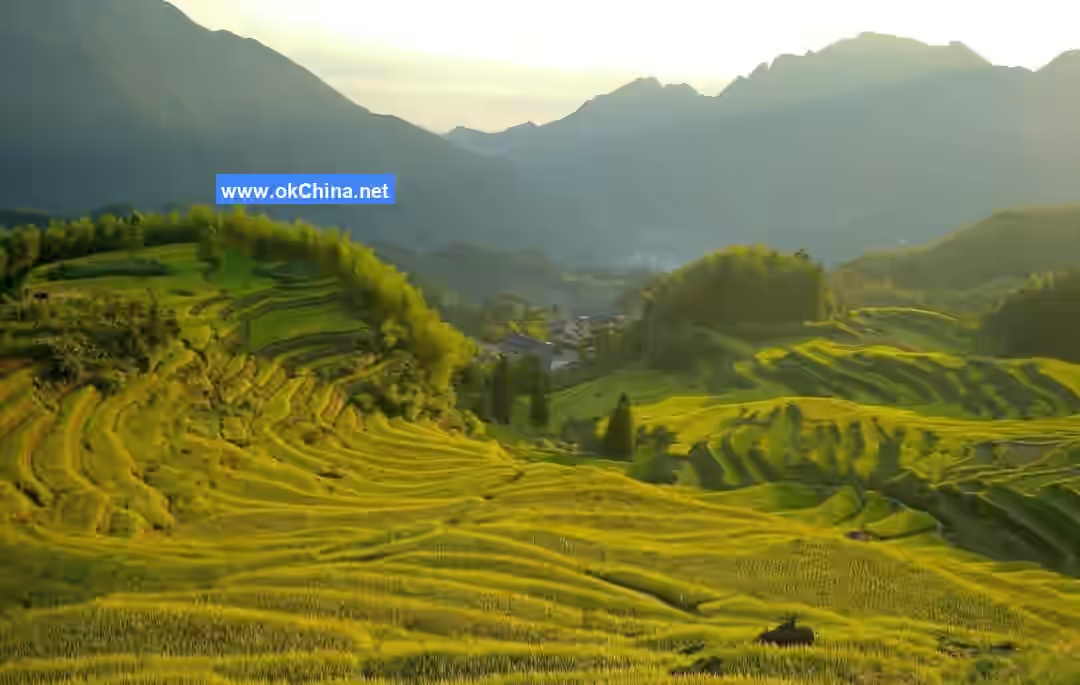
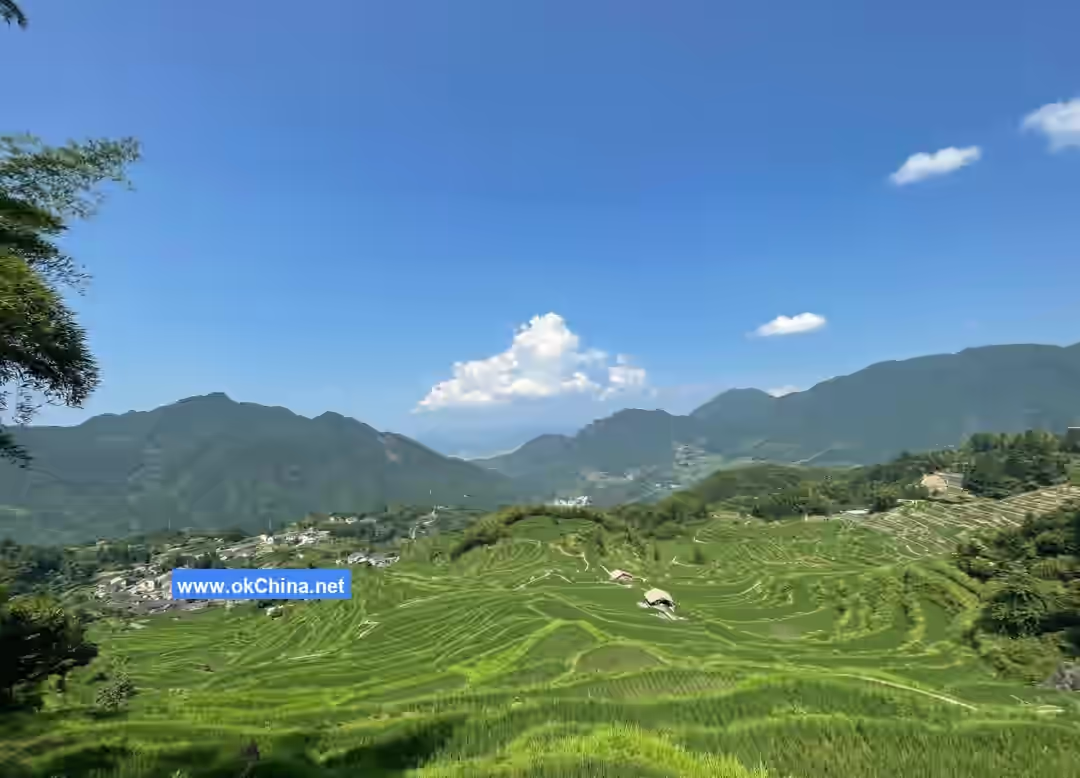
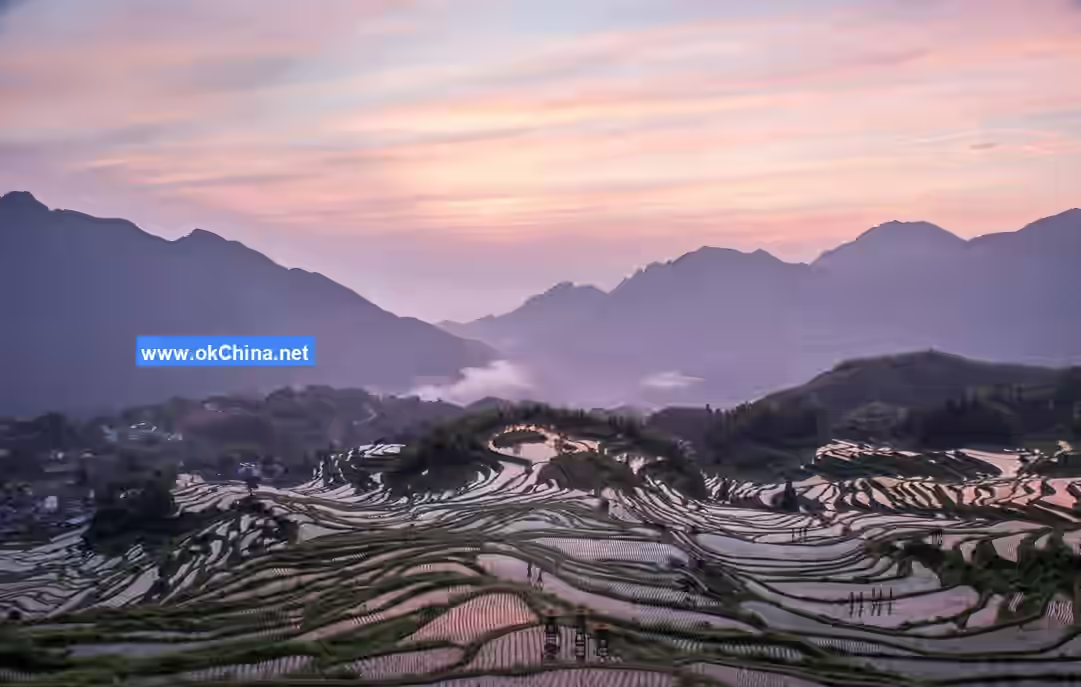
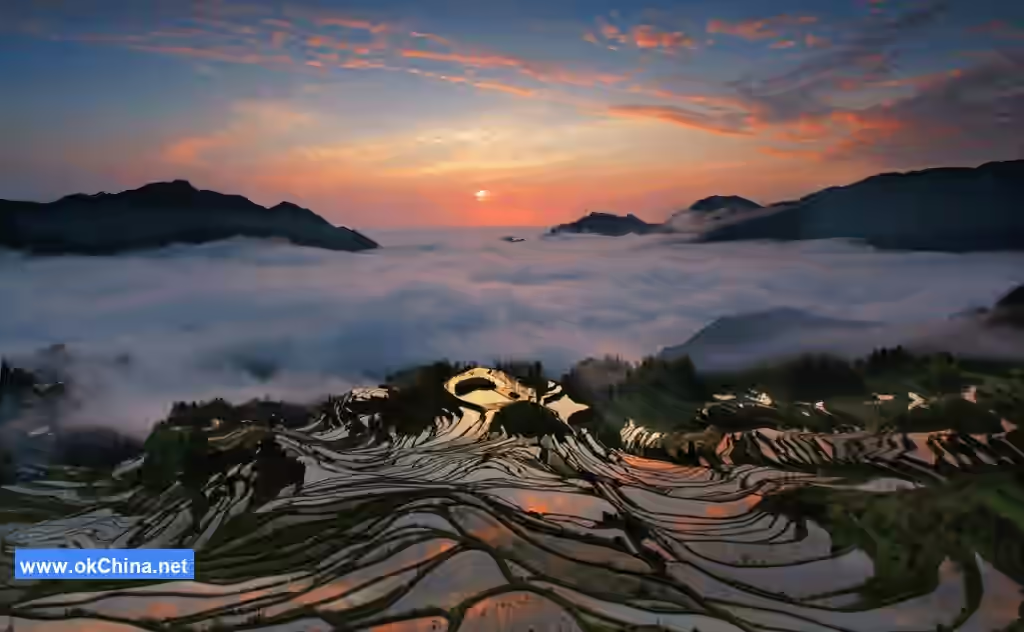
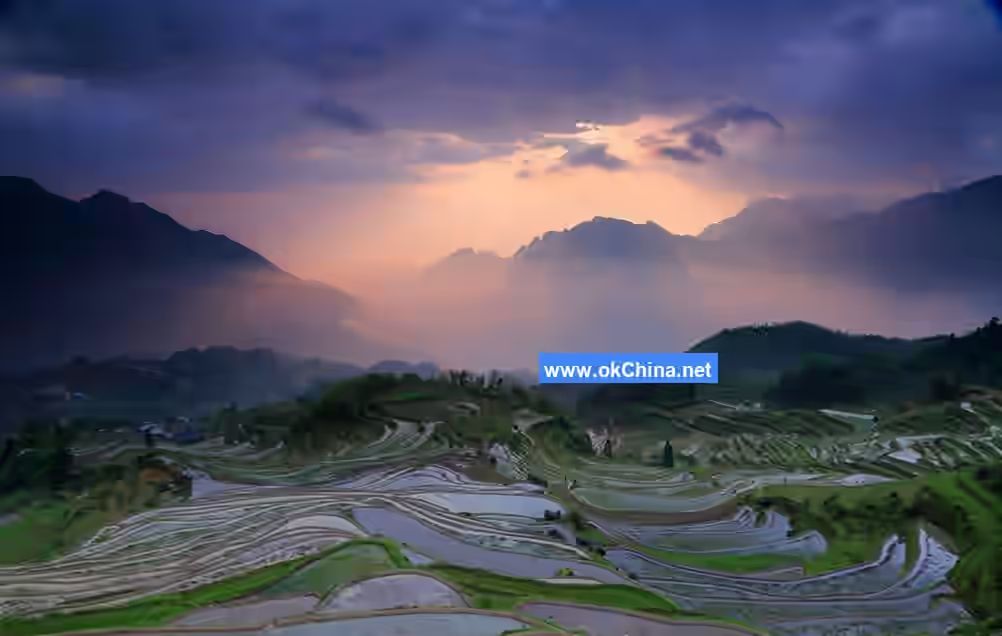
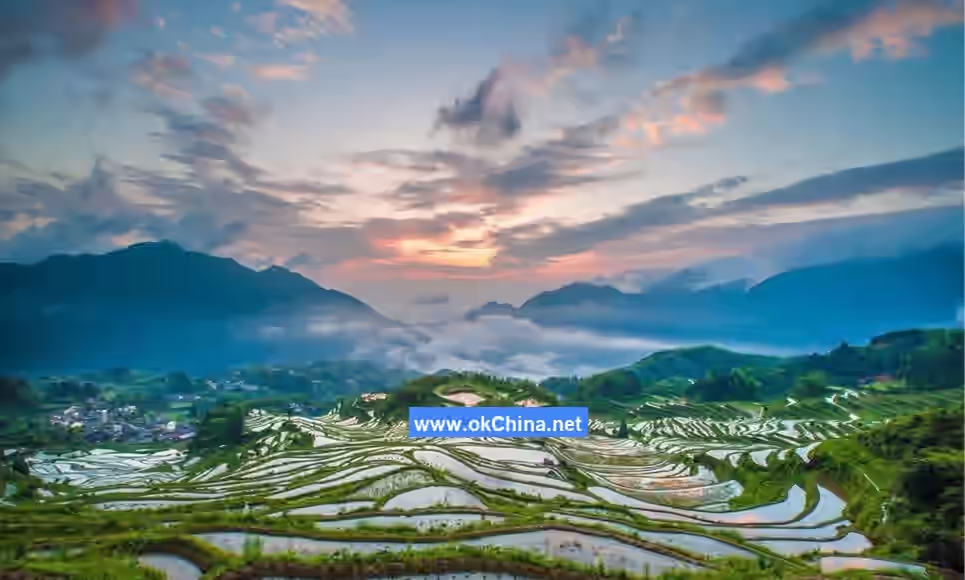
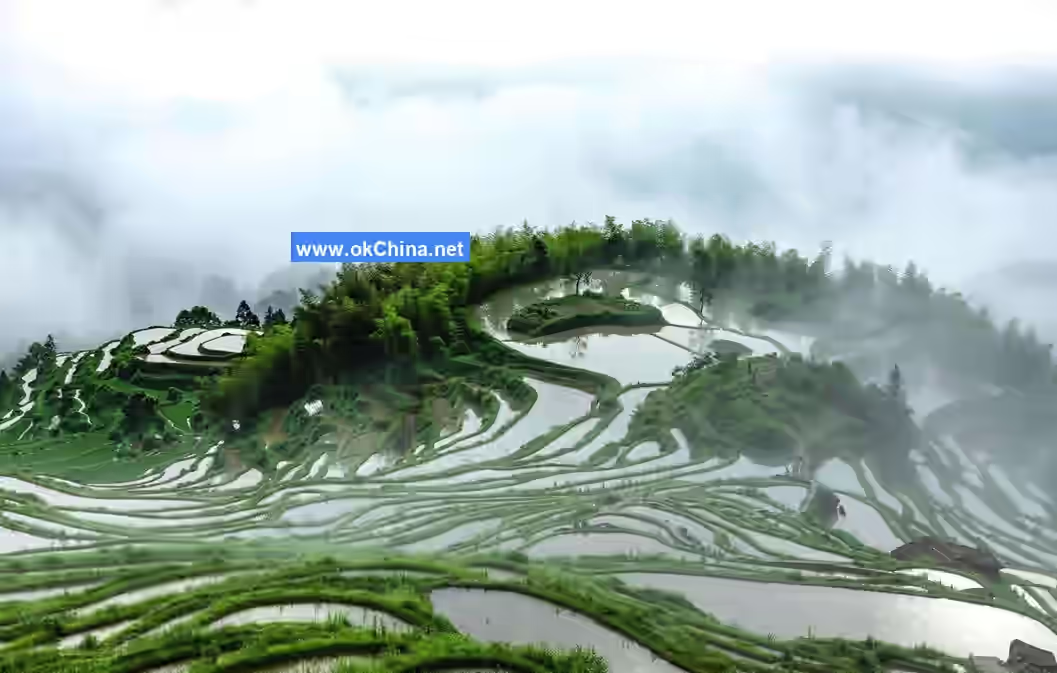
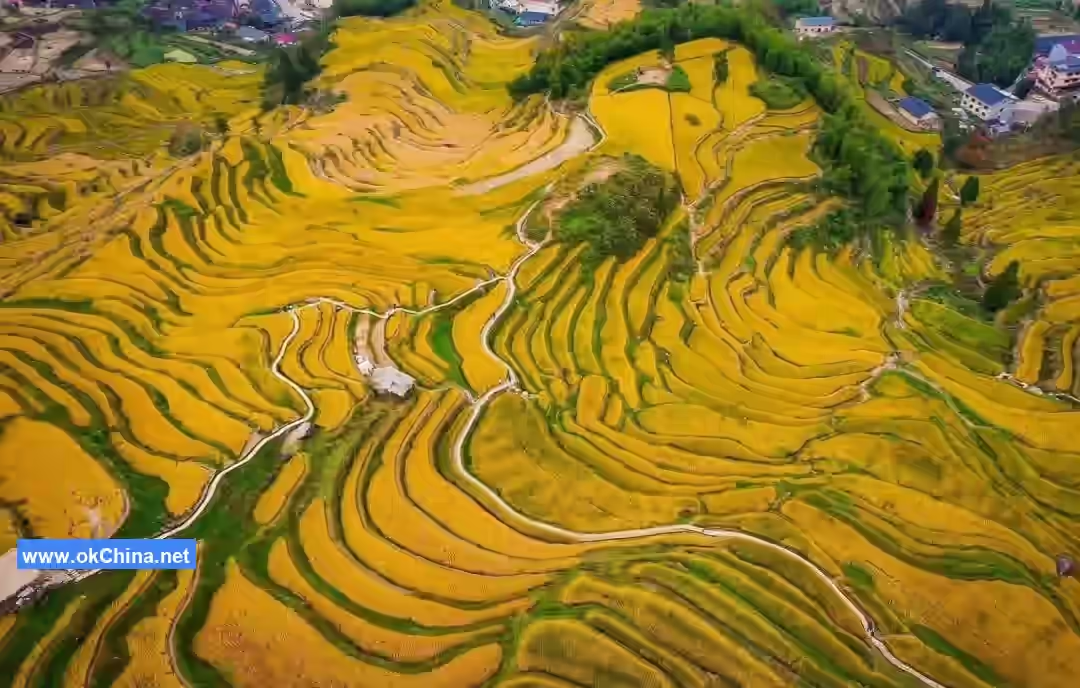
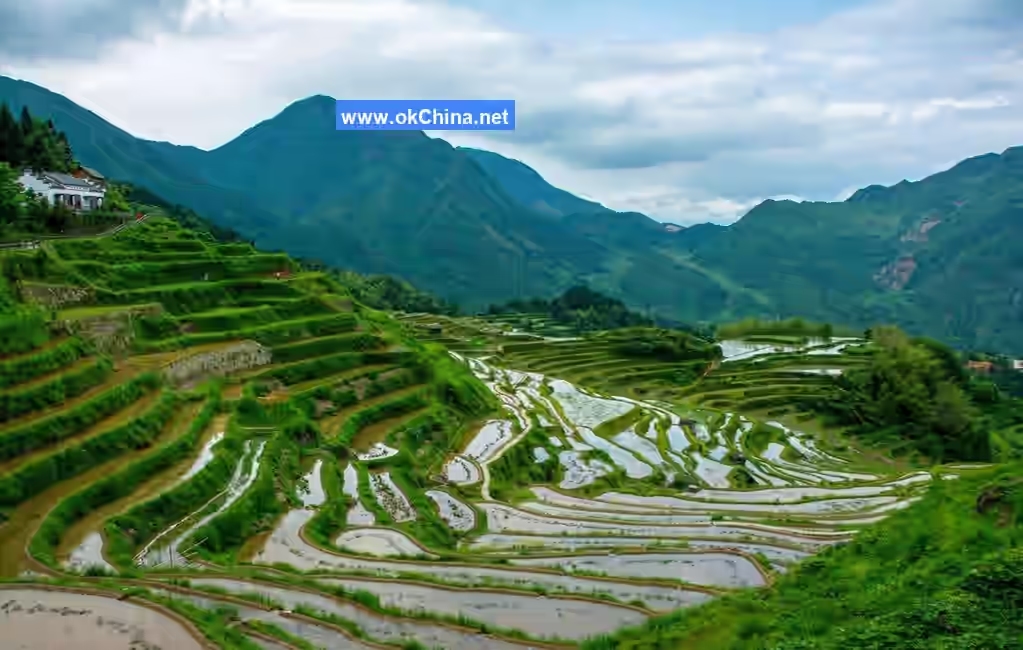
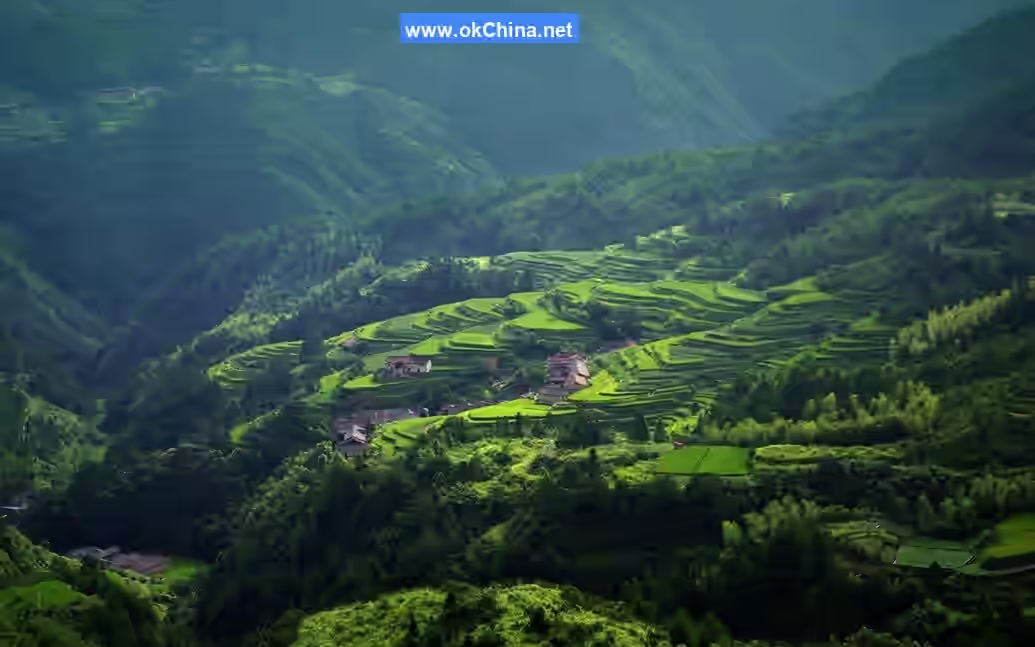
The Yunhe Terraced Fields were first developed in the early Tang Dynasty, flourished during the Yuan and Ming dynasties, and have a history of over 1,000 years. With an elevation range of 200 to over 1,400 meters and a vertical height of over 1,200 meters, they span three geological landscape zones: high mountains, hills, and valleys. Known for their large scale, stunning impact, and unique seasonal landscapes, they are the largest terraced field group in East China and are acclaimed as "China's Most Beautiful Terraced Fields." The scenic area features natural landscapes such as terraced fields, sea of clouds, mountain villages, bamboo forests, streams, waterfalls, and rime. The characteristics of the Yunhe Terraced Fields can be summarized as "Three Thousands and Three Tens of Thousands." The "Three Thousands" refer to a thousand years of history, a thousand meters of elevation difference, and a thousand layers of terraces. The "Three Tens of Thousands" refer to ten thousand mu of azaleas, ten thousand mu of sea of clouds, and ten thousand mu of bamboo forests, making it the largest terraced field group in East China.
2. Geographical Environment
2.1 Location and Territory
The Yunhe Terraced Fields Scenic Area is located in Chongtou Town, Yunhe County, Lishui City, Zhejiang Province, 5 kilometers from Yunhe County town, covering a total area of 51 square kilometers.
2.2 Topography and Landforms
The terraced fields are situated in a hilly area, forming an "Ω"-shaped enclosed terrain.
2.3 Climate Characteristics
Yunhe County, where the Yunhe Terraced Fields Scenic Area is located, has a central subtropical monsoon climate with abundant rainfall, humid air, distinct seasons, and noticeable vertical mountain climate variations. Winters and summers are long, while springs and autumns are short. The multi-year average temperature is 18°C, with an annual precipitation of 1,638.2 mm. There are 172 rainy days per year, 1,627.2 hours of annual sunshine, and 277 frost-free days per year.
3. Main Attractions
3.1 Nine Bends Cloud Ring Visitor Center
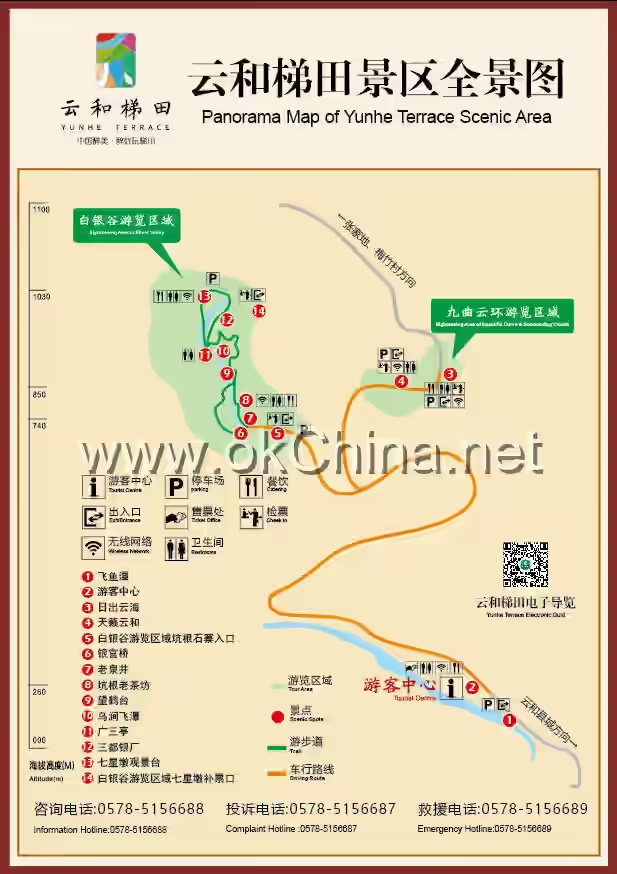
Located at the entrance of the Nine Bends Cloud Ring attraction, the Nine Bends Cloud Ring Visitor Center serves as a comprehensive facility primarily functioning as a tourist distribution center and reception hub. It includes services such as tourist information, ticket sales for scenic areas, cultural exhibitions, tourist transfers, group receptions, tourism product display and sales, dining and accommodation, business leisure, luggage storage, services for special needs groups, and conference facilities.
3.2 Kenggen Stone Village
Kenggen Village is situated in the Silver Valley and is said to have been built by miners who extracted silver ore. The village lies beside a mountain stream and valley, constructed mainly of wood and stone, with roads and alleys also paved with stones. The ancient residential buildings in the village use stone foundations, with walls mostly built from rammed yellow earth. The terrain here is undulating, and the original inhabitants skillfully utilized the environmental features to construct independent courtyards, forming the unique "Kenggen Stone Village."
3.3 Sunrise and Sea of Clouds
"Sunrise and Sea of Clouds" is the central viewing point of the Yunhe Terraced Fields and an excellent location to admire the terraces, sunrise, and sea of clouds. The "Yunhe Cloud Platform," designed with wave-like curves, complements the clouds, terraced fields, and grain waves, serving as the main viewing platform for "Sunrise and Sea of Clouds." Above the platform, there is a romantic Cloud Village, consisting of a Cloud Gate lookout, a Cloud Wall with staggered windows, and a white building.
3.4 Seven Star Mounds
With an elevation of nearly 1,100 meters, the Seven Star Mounds were originally a site where ancient people observed celestial phenomena, prayed to the heavens, and guided agricultural and daily activities. It is the highest and most expansive viewpoint in the Yunhe Terraced Fields Scenic Area, offering a panoramic view of the entire Silver Valley and its terraced fields. The crescent-shaped带状观光平台 here恰好 aligns with the seven small hills in the valley, together forming the "Seven Stars Embracing the Moon" among the "Ten Scenes of the Terraced Fields." Through the basic framework of "One Belt, Two Wings, Three Zones, Seven Stars," it creates a unique celestial-themed attraction in the Yangtze River Delta region.
3.5 Cloud-Viewing Cable Car
The Yunhe Terraced Fields Cloud-Viewing Cable Car was completed in January 2021, designed and manufactured by the Beijing Crane and Transport Machinery Design & Research Institute. Its main equipment uses imported products from Europe and America, operates with full automatic control, and is a barrier-free观光设施, providing convenient, fast, safe, and comfortable tours for visitors.
The Yunhe Terraced Fields Cloud-Viewing Cable Car line has a total length of 3,880 meters, with an elevation gain from about 200 meters to 1,000 meters above sea level. It has 28 supports, a maximum operating speed of 6 meters per second, and the shortest travel time between the upper and lower stations is only 11 minutes. The Cloud-Viewing Cable Car consists of 80 barrier-free panoramic观光车厢, each accommodating 8 people, with a one-way hourly capacity of 1,500 people. The safety doors automatically close after boarding. The cable car line is divided into two connected sections with a turn, located in the core area of the Yunhe Terraced Fields Scenic Area. It has three station buildings: upper, middle, and lower. The lower station is near the scenic area's visitor center, the middle station is near the Nine Bends Cloud Ring and Silver Valley scenic areas, and the upper station is near the Meizhu Seven Star Mounds scenic area. The starting station (Cloud-Viewing Cable Car Visitor Center Station) is located near the Yunhe Terraced Fields Visitor Center. After boarding at the starting station, visitors can enjoy an aerial panoramic view of the terraced fields in Chongtou Town.
3.6 World Terraced Fields Museum
The World Terraced Fields Museum is located within the Yunhe Terraced Fields Scenic Area Visitor Center, covering an area of approximately 1,200 square meters. The museum is divided into three thematic sections: "Myriad Terraced Fields," "Harmonious Yunhe," and "Beyond Terraces." It systematically displays the千年丰富的自然资源, profound historical heritage, and unique cultural features of the terraced fields from multiple levels and perspectives, highlighting the system where ancestors struggled with nature and coexisted harmoniously with it.
The completion of the World Terraced Fields Museum not only adds an educational and enjoyable spot to the Yunhe Terraced Fields Scenic Area but also enhances the overall cultural内涵 of the area. It integrates historical stories with elements of technology, cultural creativity, and tourism, becoming an important window for visitors to understand China's most beautiful terraced fields and even terraced fields around the world.
3.7 Yu the Great Temple
Among the folk in Yunhe, Yu the Great holds the status of a water deity protector. Many villages have built Yu the Great Temples to pray for favorable weather and abundant harvests. The Yu the Great Temple in Meizhu Village was initially built in the 26th year of the Daoguang reign of the Qing Dynasty (1846) and serves as a place for people to pray for blessings and good fortune. The main hall enshrines Yu the Great, the White Crane Immortal, and the Eight Great Immortals in the center; to the left are enshrined Lady Chen, Ma Tianxian, and the Dragon Mother Immortal; to the right are enshrined Lord Wu San, the Twelve Ancestors Liu Xuan'er, and the Earth God. During the Grain in Ear period each year, when "plowing begins," the grand "Eighteen Villages Welcoming the Deities"祈福活动 primarily takes place here.
3.8 Kenggen Ancient Well
The Kenggen Ancient Well, also known as the "Old Spring Well," is an important historical relic of the village. It is a drainage well, and its water is not potable. The planning and design of the Kenggen Stone Village are ingenious. Drainage from houses and residences mainly flows through surface明渠 and underground暗河. This well is the outlet of the underground暗河. Water from the village's underground暗河 first converges here and then discharges into the nearby river channel.
3.9 Old Tea House
The Old Tea House is an ancient building constructed during the Qing Dynasty. It was originally the ancestral hall of a wealthy family in the village, later converted into the Kenggen School, and also served as the village committee office building. The building contains two yew pillars, which are rare within the province. It is now a county-level cultural relics protection unit in Yunhe. The Yunhe Terraced Fields area extensively cultivates tea, and local residents are fond of drinking old tea, with tea picking often occurring after the Dragon Boat Festival. After the development of the scenic area, this place was designated as the Old Tea House, serving as a good spot for visitors to drink tea and rest.
3.10 Farming Paths
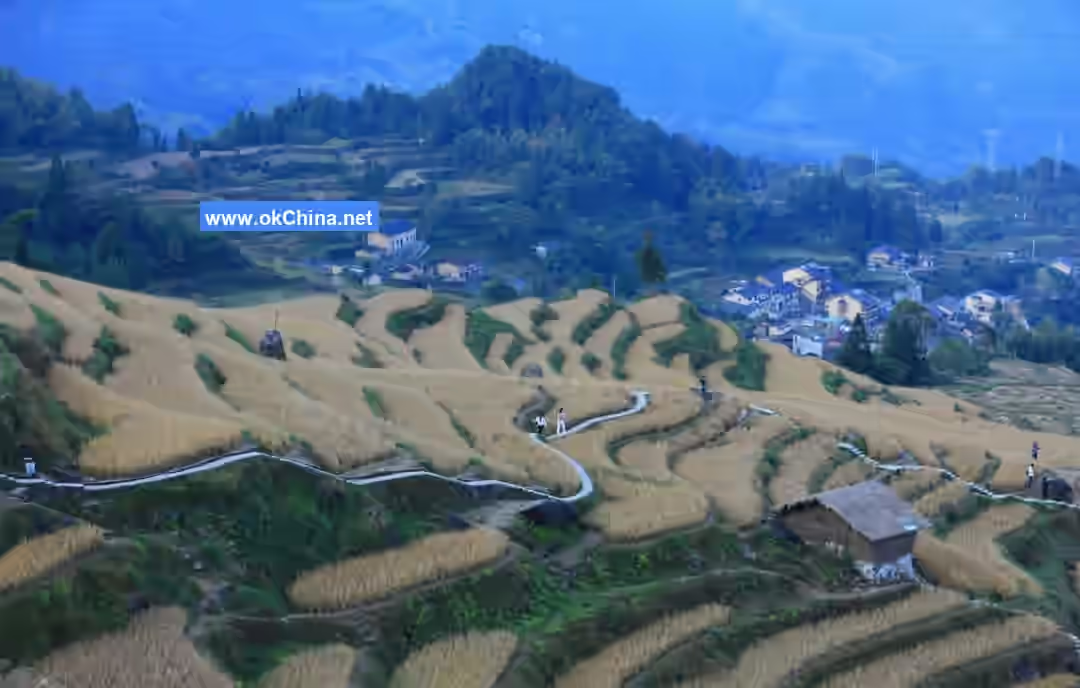
The Yunhe Terraced Fields have a long history, and the farming paths are narrow trails供人行走 within the terraces, some so narrow that only one person can pass at a time. Nowadays, these paths are not only channels for "agricultural workers" to carry out field operations but also serve as a "farming experience line" for visitors to closely感受 the terraced fields.
3.11 Sky-Opening Cloud Peak
The "Sky-Opening Cloud Peak" viewing platform and the 40-meter-high glass观光塔 are located on a high mountain over 800 meters above sea level, offering the best vantage point to俯瞰 the panoramic view of the "Xiayang Terraced Fields." Both the upper and lower platforms here allow visitors to欣赏 the "烟火之气" (lively atmosphere) of the terraced field households nestled among the mountains. Below lies a traditional She ethnic village—Xiayang Village.
3.12 Flowing Water Sows Spring
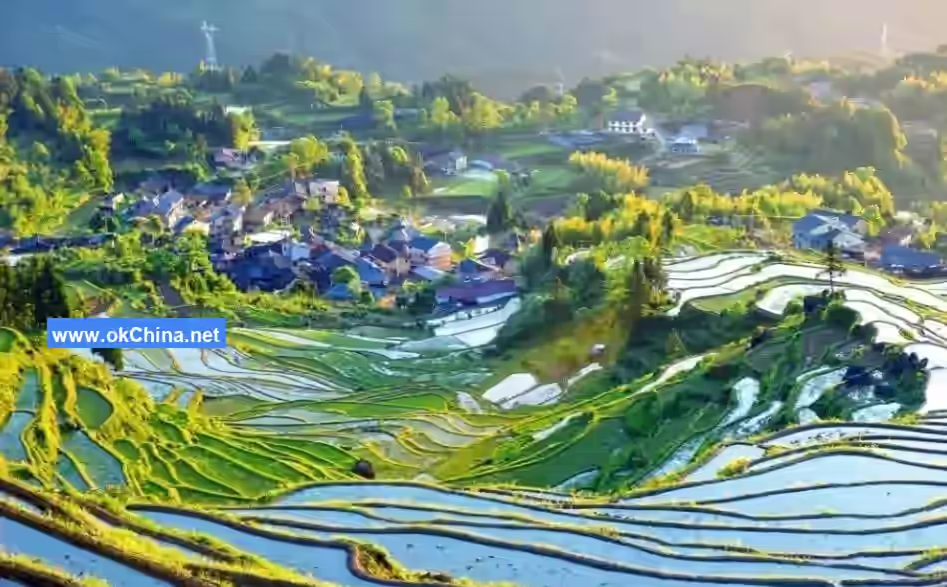
In 2017, the Yunhe Terraced Fields were rated as a National Water Conservancy Scenic Area. This is an outlet for water from the terraced fields. Every year after the rice harvest, farmers begin repairing the field ridges and gradually release water to irrigate the fields in preparation for spring plowing. After the fields are filled with water, they resemble pieces of mirrors, changing with the colors of the sky. When spring arrives and the mountains and plains turn green, it becomes the most beautiful景观 of the terraced fields.
3.13 Grain Grows Among Clouds
The agricultural landscape of the Yunhe Terraced Fields is picturesque. At the "Grain Grows Among Clouds" viewing platform, visitors can欣赏 the typical wave-like terraced field景观. The main crop planted in the Yunhe Terraced Fields is rice. Due to the steep mountain slopes, the largest field can plant over ten rows of rice seedlings, while the smallest can only plant one or two rows, giving rise to the saying "a frog can jump across three fields."
3.14 Clouds Rise Over the Paths
The Yunhe Terraced Fields are a great agricultural feat of the ancestors of Yunhe. At the "Clouds Rise Over the Paths" viewing platform, visitors can欣赏 the侧颜 (side view) of the terraced fields with distant mountains and nearby fields layered upon each other.
3.15 Rice Dream Workshop
The Rice Dream Workshop is the rice processing center of the Yunhe Terraced Fields and also an experience center for the area's rice farming culture and creativity. The modern rice processing工艺流程主要包括 includes over a dozen steps, such as rice cleaning, hulling and shell removal, separation of hulled materials, rice milling, and成品整理. Room 1 displays equipment for rice processing and storage. Exhibition Hall 2陈列了 traditional agricultural tools used in the terraced fields. Based on the characteristics of rice farming culture in the exhibition halls, a series of agricultural tourism service products have been developed.### 3.16 Terrace Commune The Terrace Commune Agricultural Experience Area includes sections such as the Rice-Fish Symbiosis Demonstration Zone, Wild Vegetable Education Zone, Traditional Livestock Farming Experience Zone, High Mountain Rice-Snail Symbiosis Field, and Terrace Seedling Greenhouse. It provides services for tourists including agricultural activity experiences, agricultural culture education, traditional intangible cultural heritage transmission, and sales of new and special agricultural products. Simultaneously, the "Terrace Commune" serves as the public brand for agricultural tourism products within the 8.02 square kilometer area of the Yunhe Terraces.
3.17 Silver Official Bridge
Silver Official Bridge is a beautiful covered bridge located near the "Shuikou" (water outlet) of Kenggen Village. Legend has it that in the past, miners carrying silver ore down the mountain had to cross this bridge to be inspected by silver officials, hence its name. The bridge originally had no covered corridor; the silver officials built the corridor shelter to protect themselves from wind and rain, transforming it into a beautiful covered bridge.
3.18 Black Ravine Flying Waterfall
The Yunhe area features continuous mountain ranges with numerous streams and ravines, where pools and waterfalls connect. The Meizhu Stream flows through the Silver Valley. Due to the high mountains and deep valleys here, the ravine water appears dark greenish-black, earning it the local name "Black Ravine" from villagers. The Black Ravine stretches approximately 2.7 kilometers. Here, with a drop of about ten zhang (a traditional Chinese unit of length), the waterfall cascades in layers, forming the famous Silver Valley landscape known as the "Black Ravine Flying Waterfall." The impact of the stream water has also created numerous emerald pools of varying sizes.
3.19 Silver King Pavilion
Yang Guangsan was a native of Yunhe, Lishui during the Ming Dynasty. Historical records indicate that during the Jiaqing reign period, he was commissioned to mine and smelt silver in his hometown, becoming widely known as the "Silver King." To ensure safety, he would personally escort the silver ingots to the capital every year, and this Meihé Terrace Ancient Path was the essential route. During one such escort mission, some silver ingots were unexpectedly lost. Upon returning home, Yang Guangsan tragically died on the road. The imperial court, recognizing his past contributions, built a shrine and tomb for him. Later generations erected this Silver King Pavilion here in memory of the famous "Silver King."
4. Cultural Activities
4.1 Major Events
On the morning of June 15, 2022, the 17th Zhejiang Landscape Tourism Festival and the 16th Yunhe Terrace Plowing Festival, hosted by the Zhejiang Provincial Department of Culture and Tourism and the Lishui Municipal People's Government, and co-organized by the Lishui Municipal Bureau of Culture, Radio, Television, Tourism, and Sports, the Yunhe County People's Government, and the Hangzhou Commerce & Tourism Group Co., Ltd., were held at the Yunhe Terrace Scenic Area.
From June 9 to 11, 2023, the "17th Yunhe Terrace Plowing Festival and the Provincial 'Zheyun Qiansu · Poetic Yunhe' Theme Event" grandly opened at the Yunhe Terrace Scenic Area.
On October 2, 2024, multiple social organizations from Yunhe County, including the Social Organization Federation, the New Social Stratum Association, and the Online Influencers Association, gathered at the Yunhe Terraces to hold the "Zheli Tongxin · Seeking Beauty in Yunhe — Celebrating National Day and Enjoying the Beauty of Yunhe Terraces" theme event.
4.2 Specialty Cuisine
4.2.1 Farmer's Prosperity Stew
Farmer's Prosperity Stew is made by braising local farm-raised pork trotters with the medicinal herb Milk Vine (a local name, likely a type of climbing plant). It is characterized by its bright red color and being fatty yet not greasy. Pork trotters are rich in collagen and have lower fat content than fatty meat. The dish is believed to have effects such as dispelling wind and dampness, strengthening muscles, beautifying the skin, and promoting children's development. During the busy plowing season each year, due to the heavy cold and dampness in the high mountain terraces, farmers would boil the Milk Vine to extract its medicinal juice and then stew it with pork trotters for consumption. This practice strengthens the body, dispels cold and dampness, and also serves as a reward for hardworking family members.
4.2.2 Terrace White Pepper
Terrace White Pepper is prepared by braising white bell peppers from the high mountain terraces with minced pork belly. It features a rich, savory sauce and a crisp, tender texture. White pepper is one of the "Three Whites" of the terraces. The significant temperature difference between day and night on the terraces, combined with ample sunlight, suitable temperature, and humidity, is very conducive to the growth of white peppers, giving them their unique taste. Farmers on the terraces also pickle them to make a preserved vegetable sauce.
4.2.3 Farmer's Water Ginseng
Farmer's Water Ginseng is stewed using loaches from the paddy fields on the terraces and one of the "Three Whites" of the terraces, white cucumber. It is characterized by tender, soft, and delicious meat. Loach has long been known as "ginseng in the water."
4.2.4 Meiyuan Field Snails
Meiyuan Field Snails are prepared by stewing field snails from the high mountain terrace paddy fields with farmhouse-pickled perilla lees. They feature thin shells, tender meat, and a fresh, flavorful broth. The paddy fields on the terraces primarily use organic fertilizer, ensuring the snails' growth. The water flowing year-round in the fields comes from mountain streams, which is pollution-free and relatively cold, causing the snails to grow slowly. They feed on rice flowers and straw, giving them unique quality. Field snails are rich in nutrients such as protein, iron, and calcium. They are believed to have effects like clearing heat and detoxifying, promoting diuresis, and refreshing the mind, and are also known as "High Mountain Abalone."
4.2.5 Shandu Snacks
This platter consists of two signature snacks from Yunhe's Caizhenli: Oil Bucket Cake and Hemp Leaf Cake. Oil Bucket Cake is made by wrapping shredded pumpkin and radish in rice flour batter using a homemade mold and then deep-frying it. It has a golden color, crispy exterior, and tender interior. Hemp Leaf Cake is made by steaming glutinous rice from the terraces, then pounding it with fresh hemp leaves before steaming again. It has an emerald green color and a soft, sticky, slightly sweet taste.
Comments
Post a Comment