Yueyang Tower
1. Introduction
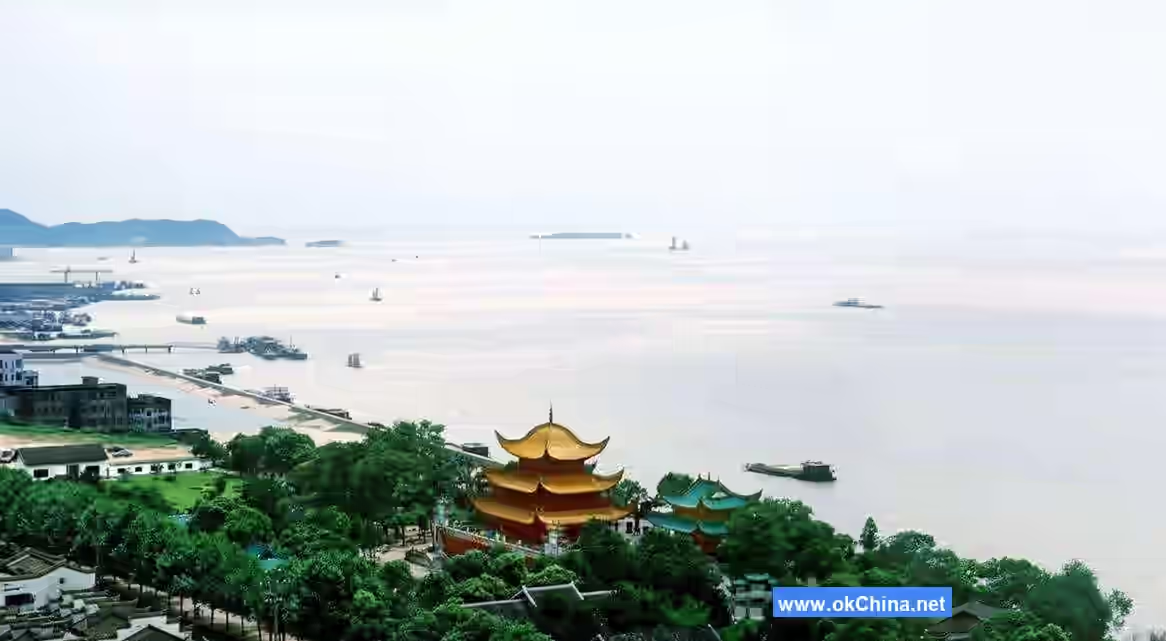
Yueyang Tower is located on Yueyang Tower Road, Dongting North Road, Yueyang Tower District, Yueyang City, Hunan Province. Situated on the west gate wall of the ancient Yueyang city, it stands close to the shore of Dongting Lake, overlooking the lake below and facing Junshan Island in the distance. Originally built in the 20th year of the Jian'an era during the Eastern Han Dynasty (215 AD), it has been repeatedly renovated throughout history. The current structure follows the form and layout from its reconstruction in the 6th year of the Guangxu era of the Qing Dynasty (1880 AD). Its fame spread worldwide after Teng Zongliang of the Northern Song Dynasty renovated the tower and invited his friend Fan Zhongyan to write the "Memorial to Yueyang Tower." It has long been praised as "Dongting Lake, the finest water under heaven; Yueyang Tower, the finest tower under heaven." Alongside the Yellow Crane Tower in Wuhan, Hubei, and the Tengwang Pavilion in Nanchang, Jiangxi, it is known as one of the "Three Great Towers of Jiangnan." It is also listed among the "Ten Great Historical and Cultural Towers of China" and is one of the four great ancient towers, often called the "First Tower under Heaven."
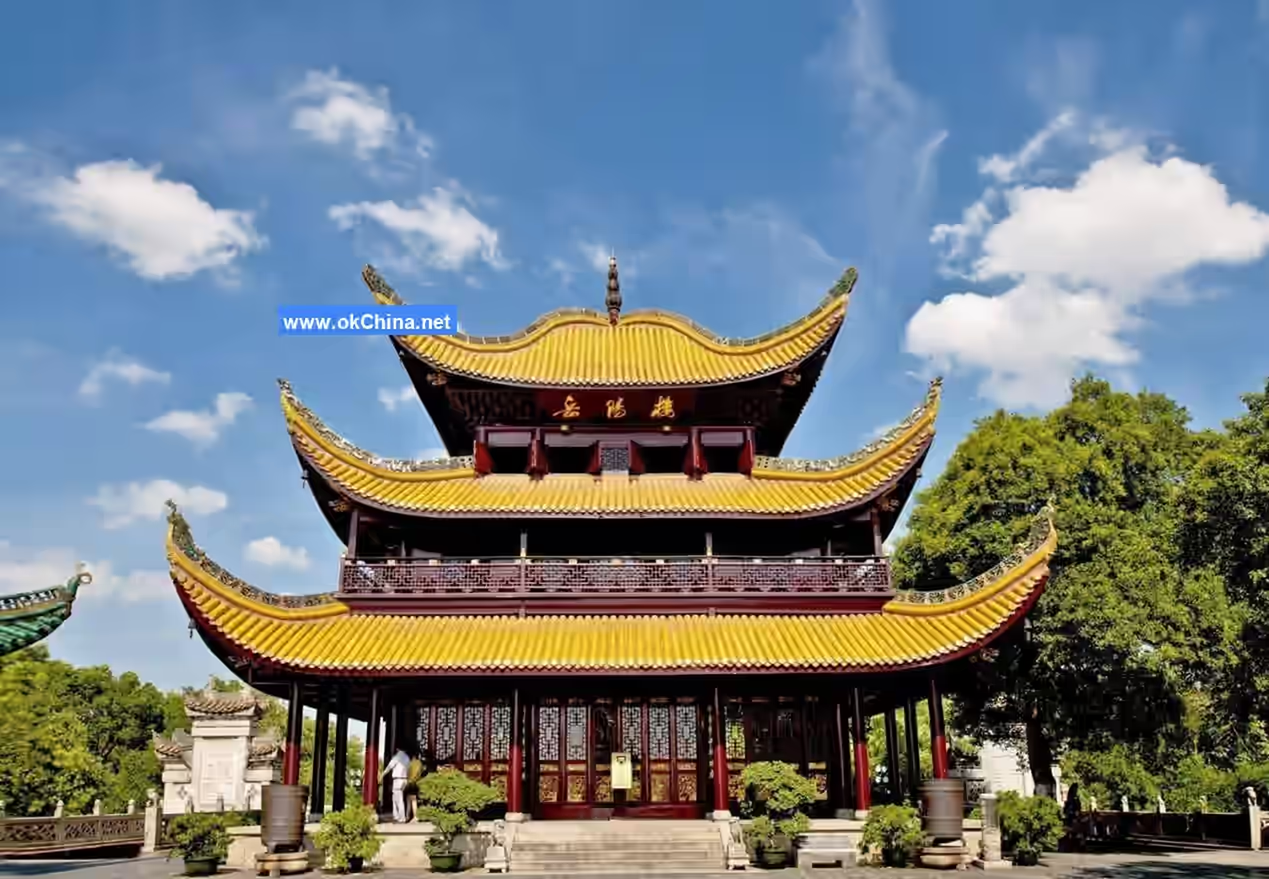
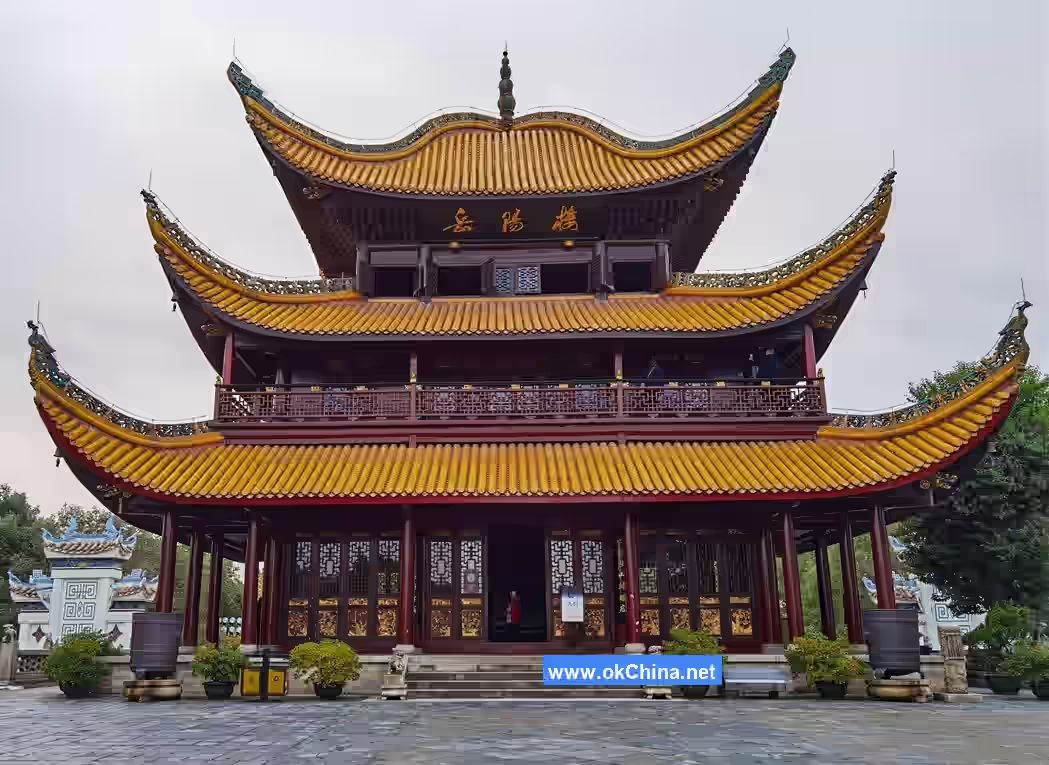
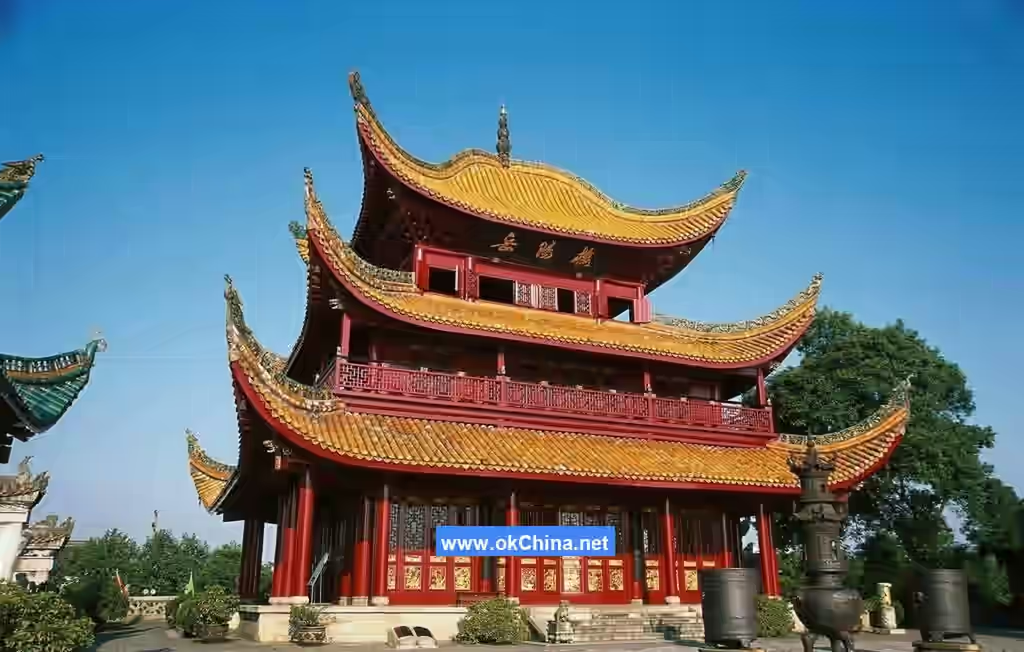
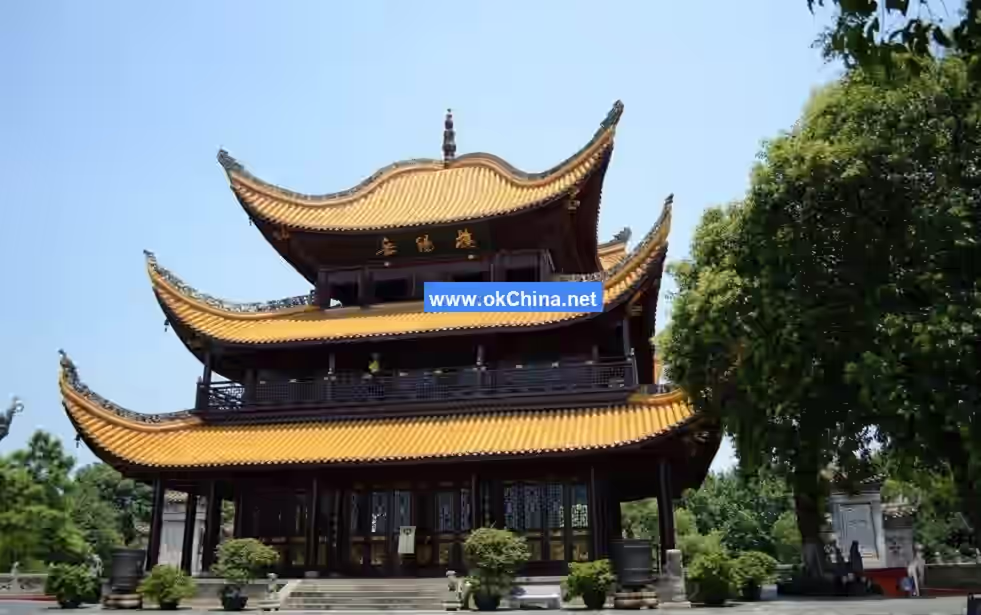
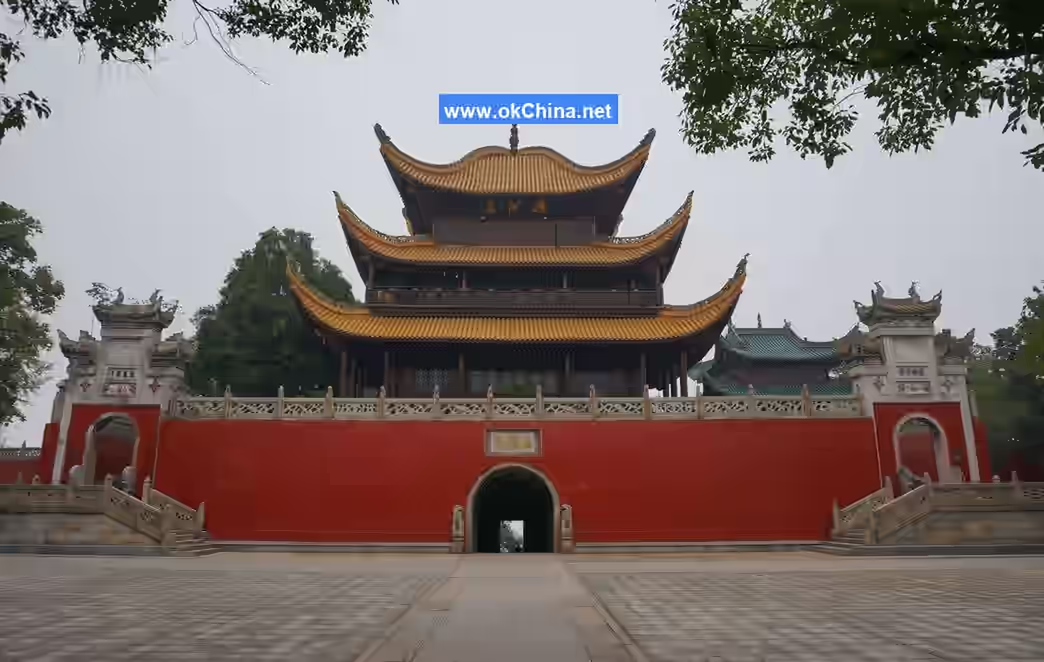
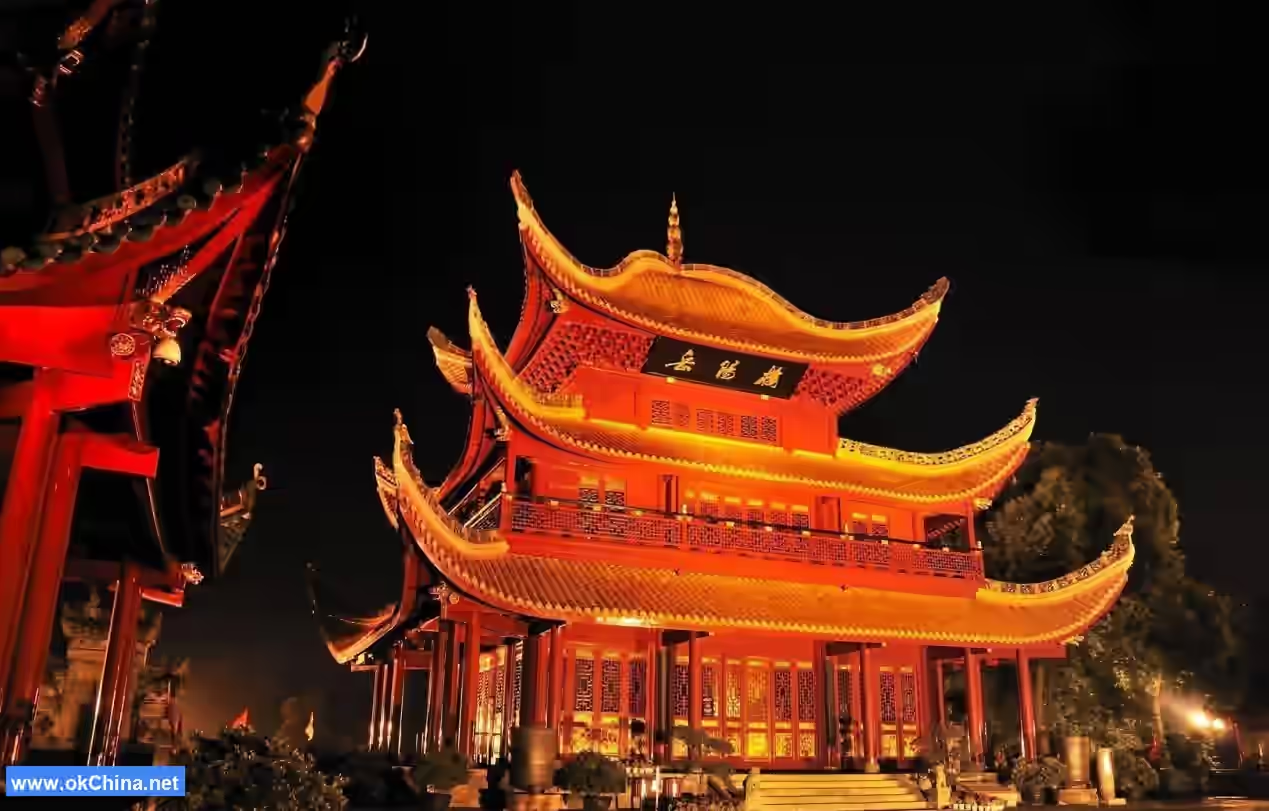
The main structure of Yueyang Tower is rectangular, with a height of 19.42 meters, a depth of 14.54 meters, and a width of 17.42 meters. It is a three-story, four-pillar structure with upturned eaves, a helmet-shaped roof, and a pure wooden framework. Four golden nanmu pillars run straight through from the ground to the top, surrounded by corridors, beams, rafters, and purlins that are mortised and tenoned together to form an integrated whole. The roof is covered with glazed yellow tiles, presenting a dignified and elegant appearance. Inside the tower, the first floor displays carved screens of the "Memorial to Yueyang Tower," along with poems, couplets, and carvings. On the second floor, a central carved screen of red sandalwood bears the "Memorial to Yueyang Tower" inscribed by the Qing Dynasty calligrapher Zhang Zhao. The third floor features a carved screen with Du Fu's poem "Climbing Yueyang Tower" handwritten by Mao Zedong. The eaves pillars are hung with a couplet attributed to Li Bai: "The water and sky merge in one hue; the breeze and moon are boundless in their beauty," all of which hold significant ornamental value. As the only ancient structure among the three great towers that retains its original framework, Yueyang Tower's unique helmet-shaped roof reflects the wisdom of ancient laborers and the exquisite design skills of master craftsmen.
2. Architectural Features
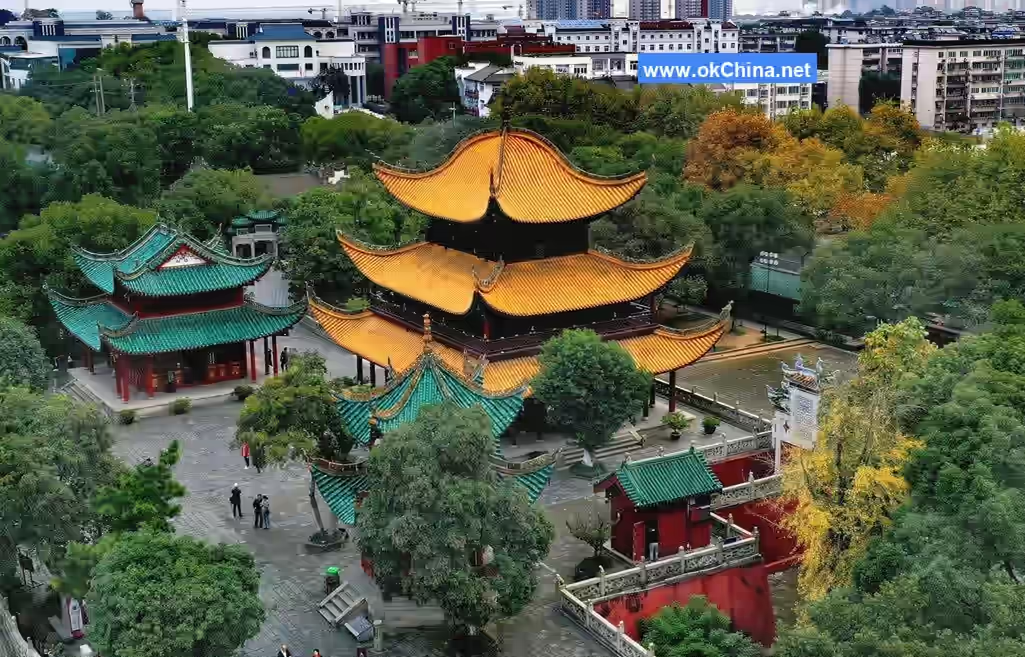
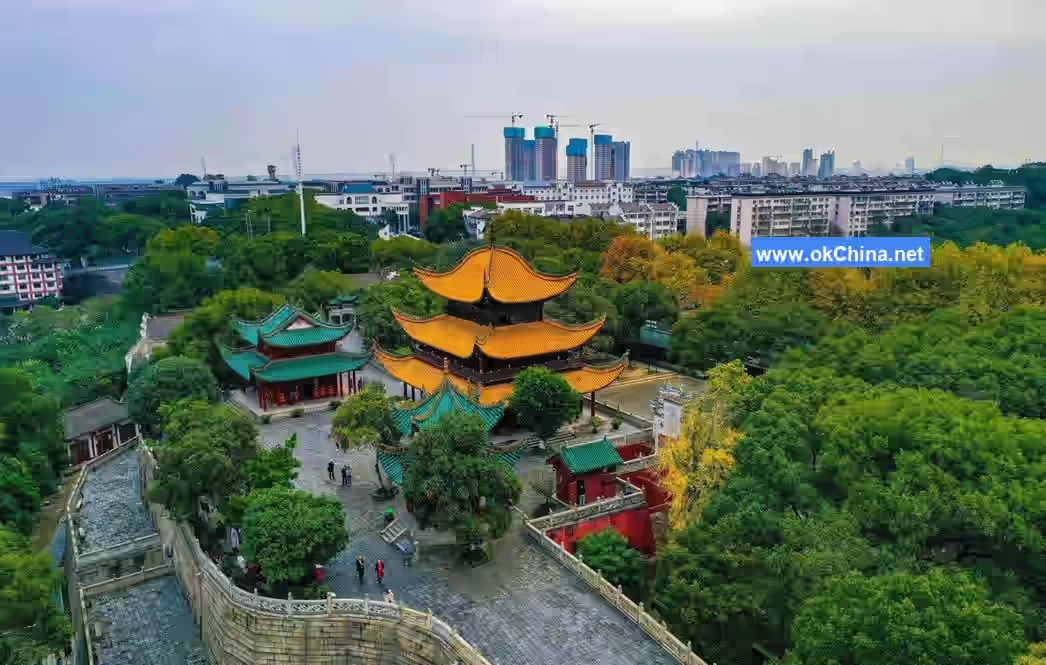
The roof of Yueyang Tower is a four-sloped helmet shape. Flanking the front of the tower in a triangular formation are the Sanzui Pavilion and the Xianmei Pavilion as complementary structures. "Glaze is a lustrous, waterproof vitreous coating applied to pottery to create glazed tiles. It has strong expansive properties, but if fired properly, it is resistant to erosion or cracking. Its composition is formed by mixing silicon dioxide with other metal oxides and firing." Due to their sturdy material, vibrant colors, and glossy finish, glazed tiles have always been a timeless treasure among architectural ceramics. Viewed from the center top of Yueyang Tower, the roof is composed of large glazed beads stacked from bottom to top. From the base of the roof, steeply curved ridges extend to the four corners, culminating in upturned tips. The roof eaves are covered with yellow glazed tiles, while the ridges and upturned corners feature a mix of yellow and green glazed tiles. The Xianmei Pavilion has a double-eaved, hexagonal pyramidal roof, with its finial also made of stacked glazed beads. The Sanzui Pavilion has a double-eaved, gable-and-hip roof, with a vertical glazed finial at its center. Both the Xianmei and Sanzui Pavilions have their eaves covered with green glazed tiles, while their corner ridges and upturned tips echo Yueyang Tower with a mix of yellow and green glazed tiles.
The roof of Yueyang Tower features soaring dragons, and the crescent beams are decorated with dragon components depicting battles with phoenixes, along with numerous dragon heads as ornaments. The first and second eaves each have four corner ridges. The first-floor corner ridges are adorned with camellia patterns, with phoenixes spreading their wings at the tips. The second-floor corner ridges feature seaweed patterns, with dragon heads at the tips. The helmet-shaped roof ridges are decorated with lotus patterns, with cloud scrolls at the tips. Whether on the roof or the crescent beams, the dragons appear majestic, noble, and magnificent, as if ready to challenge the sky and soar through the cosmos, exuding a grand and imposing aura. Particularly noteworthy are the phoenixes. The abundance of phoenixes has historical roots: during the Warring States period, Yueyang was part of the Chu state, and the Chu people regarded the phoenix as a divine bird embodying truth, goodness, and beauty. Thus, Yueyang Tower features far more phoenixes than dragons. Folk artisans crafted phoenixes in various forms, expressing their affection and reverence for the mythical bird. The most beautiful phoenix is the one on the roof eaves, raising its head and spreading its wings as if about to take flight, embodying a world brimming with vitality and exuberance.
3. Main Structures
3.1 Main Tower
The main tower of Yueyang Tower faces east and is rectangular in shape, with a height of 19.42 meters, a depth of 14.54 meters, and a width of 17.42 meters. It is a three-story, four-pillar structure with upturned eaves, a helmet-shaped roof, and a pure wooden framework. Four golden nanmu pillars run straight through from the ground to the top, surrounded by corridors, beams, rafters, and purlins that are mortised and tenoned together to form an integrated whole. The roof is covered with glazed yellow tiles, presenting a dignified and elegant appearance. Inside the tower, the first floor displays carved screens of the "Memorial to Yueyang Tower," along with poems, couplets, and carvings. On the second floor, a central carved screen of red sandalwood bears the "Memorial to Yueyang Tower" inscribed by the Qing Dynasty calligrapher Zhang Zhao. The third floor features a carved screen with Du Fu's poem "Climbing Yueyang Tower" handwritten by Mao Zedong. The eaves pillars are hung with a couplet attributed to Li Bai: "The water and sky merge in one hue; the breeze and moon are boundless in their beauty," all of which hold significant ornamental value.
The "four pillars" of Yueyang Tower refer to its basic framework. The primary load-bearing pillars are four nanmu columns, known as "pillars reaching heaven," which extend from the first to the third floor. Apart from these four pillars, all other columns are multiples of four: there are 12 corridor pillars and 32 eaves pillars, all interlocked to form a cohesive and sturdy structure.
The roof of Yueyang Tower is a helmet-shaped structure supported by layered "Ruyi dougong" brackets. This arched and upturned design, resembling an ancient general's helmet, is unique in the history of ancient Chinese architecture and represents the most distinctive feature of Yueyang Tower's helmet-shaped roof.
3.2 Sanzui Pavilion
Located north of Yueyang Tower, the Sanzui Pavilion is one of the auxiliary pavilions of the main tower, corresponding to the Xianmei Pavilion. It is named after the legend of Lü Dongbin getting drunk three times at Yueyang Tower. Covering an area of 135.7 square meters and standing 9 meters high, it is a two-story, double-eaved structure with a gable-and-hip roof. It features red pillars and green tiles, with finely carved doors and windows, all made of pure wood. The doors are carved with fretwork window lattices and adorned with various engravings depicting legendary stories. A reclining statue of Lü Dongbin hangs on the screen wall of the first floor.
3.3 Huaifu Pavilion
The Huaifu Pavilion is located on the lakeside platform below Yueyang Tower, covering an area of 40 square meters and standing 7 meters high. It is surrounded by railings, with the upper part made of pure wood. Inside the pavilion stands a stone stele: the front side is carved with a portrait of Du Fu and his poem "Climbing Yueyang Tower," while the back side records his life story. Under the northern eave hangs a camphor wood plaque inscribed with the three characters "Huaifu Pavilion." This pavilion serves as a place for the people of Yueyang to commemorate the poet-sage Du Fu.
3.4 Xianmei Pavilion
Located south of Yueyang Tower, the Xianmei Pavilion is one of the auxiliary pavilions of the main tower, corresponding to the Sanzui Pavilion. It is a small hexagonal pavilion with two stories, three eaves, high-upturned corners, and a pure wooden structure. Covering an area of 44 square meters and standing 7 meters high, it is roofed with green glazed tiles. In the 12th year of the Chongzhen era of the Ming Dynasty (1639 AD), Tao Zongkong, the local magistrate of Yuezhou, oversaw the reconstruction of Yueyang Tower. During the process, a stone was discovered in the sandy foundation. After cleaning off the mud and water, a withered plum branch with twenty-four calyxes was revealed. People at the time considered it a divine object and named it the "Immortal Plum." A pavilion was then built to house the stone, and it was named the "Xianmei Pavilion."
3.5 Other Structures
3.5.1 Iron Shackle
The Iron Shackle is located 10 meters from the General's Platform of Yueyang Tower. It measures 2.8 meters in length, 0.42 meters in thickness, and weighs approximately 7,000 jin. Its ends are swallow-tailed in shape, but its casting date and purpose remain unknown.
3.5.2 Stele Corridor
To the east of Yueyang Tower, there is an old stele corridor shaped like an "L," with a width of 30 meters, a length of 70.7 meters, and a height ranging from 2.65 to 5 meters. Both sides are inscribed with steles, totaling 139 stele inscriptions and 158 carved stones. Among them, 115 selected poems and calligraphic works praising Yueyang Tower from various dynasties are engraved on 134 stones, while 24 stones record the repairs and constructions of Yueyang Tower since the Ming and Qing dynasties. The corridor was built in two phases. The first phase, completed in 1984, involved constructing a stele corridor approximately 100 meters southeast of Yueyang Tower, measuring 32 meters long, 5 meters wide, and 5 meters high. Its plaque, inscribed by contemporary calligrapher Liu Bingsen, hangs on the circular gate in the middle of the corridor. The walls of the corridor are embedded with 65 stele inscriptions from the Ming and Qing dynasties, including 44 originally embedded in the walls of Yueyang Tower's first floor and 21 added during major renovations. The second phase took place in 1992, when Yueyang Tower Park renovated and expanded the 1984 structure, extending the wall northward by nearly 40 meters and raising its height to 2.65 meters, adding 74 more stele inscriptions. The steles are carved from bluestone from Gong County, Henan, with stele heads and bases made of black granite from Jinan, Shandong, giving them a simple and solemn appearance. The total cost was 1.8 million yuan, and the project was completed and opened to the public on January 8, 1995.#### 3.5.3 Shuang Gong Ci (Twin Lords' Memorial Hall) Shuang Gong Ci, located north of the Wuchao Louguan and 155 meters south of Yueyang Tower, is a memorial hall built to commemorate the two ancient sages, Teng Zijing and Fan Zhongyan. Construction began in 2006 and was completed in 2007. The hall faces west and has a floor area of 800 square meters. It adopts the architectural style of Ming and Qing dynasty ancestral halls from northern Hunan, featuring white walls, blue tiles, and a single-eave brick-concrete structure. It consists of a prelude hall, a passage hall, a main hall, and exhibition halls. Upon entering the main gate, one sees the inscribed plaque "Shuang Gong Ci" (Twin Lords' Memorial Hall), calligraphed by Fan Jingyi, former editor-in-chief of the People's Daily. The couplet flanking the gate was composed by Professor Long Xietao of Peking University and calligraphed by Shen Peng, former chairman of the Chinese Calligraphers Association. It reads: "One lake, one tower, one prose, floating between heaven and earth, commanding north and south, narrating joy and sorrow, the splendid landscape shines through the ages; Two lords, two achievements, two virtues, like conjoined jade, meeting wind and clouds, illuminating sun and moon, a literary tale spreads across the land." The main hall directly ahead is the principal structure, housing bronze statues and sacred seats for Teng Zijing and Fan Zhongyan. The prelude hall features statues of Fan and Teng, with a carved display of Fan Zhongyan's "Memorial to Yueyang Tower" as the background. The two side walls bear bas-reliefs of "Dongting Lake" and "Yueyang Tower," highlighting the tower's imposing lakeside presence "reaching south to the Xiang River and north to Wu Gorge," and promoting the traditional Chinese humanistic spirit of "worrying before the world worries, and enjoying after the world enjoys." This contextualized and lifelike display of the bronze statues in a shrine setting evokes both intimacy and reverence when paying homage to the two sages. The two sides of the hall house exhibition rooms: the right room is the "Hall of the Twin Lords' Worry and Joy," displaying the life stories of Teng Zijing and Fan Zhongyan and their historical contributions to Yueyang and Yueyang Tower; the left room is the "Hall of Yueyang Tower Under Heaven," showcasing the tower's historical evolution, structural changes, and poems and writings by famous figures throughout history praising Yueyang Tower. These exhibitions, through various forms such as text, charts, scenes, models, documents, photographs, rubbings, calligraphy, and paintings, recreate the historical evolution of Yueyang Tower, display its architectural culture, and reveal its profound historical and cultural significance.
3.5.4 Xiao Qiao's Tomb
Xiao Qiao's Tomb was originally located outside the north wall of Yueyang No. 1 Middle School, said to be the garden of the military headquarters of Zhou Yu from the Three Kingdoms period. Xiao Qiao came to Yueyang with Zhou Yu when he garrisoned Baqiu. In the 15th year of the Jian'an era of the Eastern Han Dynasty (210 AD), Zhou Yu died in Baqiu at the age of 36. Legend says Xiao Qiao was heartbroken and committed suicide before Zhou Yu's spirit tablet, and was buried here. Xiao Qiao was the second daughter of Qiao Xuan, the Grand Commandant of the Han Dynasty. In the 3rd year of the Jian'an era of the Eastern Han Dynasty (198 AD), the famous Eastern Wu general Zhou Yu (styled Gongjin) led troops to capture Wan County in Anhui. At that time, Qiao Xuan fled there with his two daughters, Da Qiao and Xiao Qiao, to escape the turmoil and were "captured" by Zhou Yu. The two Qiao sisters were as beautiful as celestial beings, considered peerless beauties. That year, Zhou Yu was 24 and unmarried, so he took Xiao Qiao as his wife. Historical records about Xiao Qiao are sparse. Interestingly, there is a Xiao Qiao's Tomb each in Yueyang City, Hunan; Lujiang County, Anhui; and Nanling County, Anhui, making it difficult to determine the authentic one to this day. The Yueyang Xiao Qiao's Tomb faces south. A stone stele about 1 meter high stands in front of the grave mound, inscribed with "Tomb of Xiao Qiao."
4. Cultural Resources
4.1 Historical Evolution
20th Year of Jian'an Era, Eastern Han Dynasty (215 AD): Yueyang Tower was initially built as Lu Su's "Military Review Tower." Western Jin Dynasty Period: Renamed "Baling City Tower." 3rd Year of Yuanjia Era, Song of the Southern Dynasties (426 AD): Baling City Tower was rebuilt, and the name "Yueyang" first appeared in poetry. Zhenguan Period of Tang Dynasty (627–649 AD): The ancient Yueyang city tower was rebuilt, taking initial shape. 4th Year of Kaiyuan Era, Tang Dynasty (716 AD): Expanded and renamed "South Tower" or "Yueyang City Tower." Mid-Tang Period (766–835 AD): Named "Yueyang Tower" after Li Bai composed a poem about it. 5th Year of Qingli Era, Northern Song Dynasty (1045 AD): Teng Zongliang (Teng Zijing) rebuilt Yueyang Tower and planned to construct the Yanghong Dyke. 1st Year of Yuanfeng Era, Northern Song Dynasty (1078 AD): Yueyang Tower was destroyed by fire and rebuilt the following year. 1st Year of Jiading Era, Southern Song Dynasty (1237 AD): Yueyang Tower was again destroyed by a great fire. Hongwu Period of Ming Dynasty (1368–1398 AD): Yueyang Tower was rebuilt. 2nd Year of Jiajing Era, Ming Dynasty (1523 AD): Yueyang Tower was rebuilt, and the Yueyang Tower Poetry Collection was compiled and carved. 11th Year of Chongzhen Era, Ming Dynasty (1638 AD): Yueyang Tower was destroyed by warfare and rebuilt the same year. 5th Year of Shunzhi Era, Qing Dynasty (1648 AD): Yueyang Tower was destroyed by warfare and rebuilt in the 7th year of Shunzhi. 5th Year of Qianlong Era, Qing Dynasty (1740 AD): Yueyang Tower underwent large-scale reconstruction, becoming a three-story tower, and a guesthouse was built. 1st Year of Daoguang Era, Qing Dynasty (1821 AD): Yueyang Tower was comprehensively repaired, addressing foundation cracking issues. 6th Year of Tongzhi Era, Qing Dynasty (1867 AD): Yueyang Tower was rebuilt, and the "Doumu Pavilion" was converted into the "Sanzui Pavilion." 6th Year of Guangxu Era, Qing Dynasty (1880 AD): Yueyang Tower was rebuilt, its location shifted 6 zhang (approx. 20 meters) eastward, and its foundation was reinforced. 23rd Year of the Republic of China (1934 AD): Yueyang Tower was rebuilt and an inauguration ceremony was held. 1983: The State Council allocated special funds for a major dismantling and rebuilding renovation of Yueyang Tower, preserving over 55% of the original components. July 3, 2007: The plaque inscribed with "Yueyang Tower" by Guo Moruo was re-hung atop the tower, becoming the "Foremost Plaque of the Three Xiang Regions."
4.2 Literature and Art
4.2.1 Fan Zhongyan's "Memorial to Yueyang Tower"
In the spring of the fourth year of the Qingli period, Teng Zijing was demoted to be the prefect of Baling Commandery. By the next year, his governance was smooth and the people harmonious, and all neglected matters were revived. Thereupon, he rebuilt Yueyang Tower, expanding its former scale, and inscribed upon it poems and rhapsodies by Tang worthies and contemporary figures. He entrusted me to compose a record of this.
I observe that the splendid scenery of Baling lies in Dongting Lake. It holds distant mountains in its mouth, swallows the Yangtze River, vast and mighty, stretching boundlessly. Morning sun and evening clouds, the atmosphere is myriad and ever-changing. This is the grand view from Yueyang Tower, which previous descriptions have covered thoroughly. Yet, it connects north to Wu Gorge and reaches south to the Xiao and Xiang Rivers. Banished officials and wandering poets often gather here. Could their feelings upon viewing the scenery be without difference?
When the rain falls thick and fast, for months without clearing, gloomy winds howl angrily, turbid waves dash against the sky; sun and stars hide their light, mountains and ridges vanish from sight. Merchants and travelers cannot proceed, masts collapse and oars break. At dusk, all is dark, tigers roar and apes cry. Ascending this tower, one feels longing for the capital and nostalgia for home, worry over slander and fear of ridicule, with a desolate view filling the eyes, leading to extreme emotion and sadness.
But when spring is mild and the scenery bright, the waves are calm, the sky above and its reflection below merge into an expanse of blue; sand gulls soar and gather, colorful fish swim; shore orchids and islet irises, lush and green. Or when the long mist vanishes, the bright moon shines for miles, floating light glimmers like gold, silent shadows sink like jade; fishermen's songs answer each other—what joy is this! Ascending this tower, one feels open-hearted and joyful, forgetting both honor and disgrace, holding wine to face the breeze, filled with delight.
Alas! I have sought the hearts of ancient benevolent men, perhaps different from these two reactions. Why? They did not rejoice because of things, nor grieve because of themselves. When dwelling in the high halls of court, they worried for their people; when living distant by rivers and lakes, they worried for their sovereign. Thus, they worried when advancing and worried when retreating. Then when did they find joy? They would surely say, "Worry before the world worries, and enjoy after the world enjoys." Alas! Without such men, with whom shall I associate?
Written on the fifteenth day of the ninth month in the sixth year.Translation
In the spring of the fourth year of the Qingli era, Teng Zijing was demoted to serve as the prefect of Yuezhou. By the following year, governance had become smooth, the people were content, and all neglected endeavors were revitalized. Thus, the Yueyang Tower was rebuilt, expanding its original scale, and inscriptions of poems and verses by renowned Tang dynasty masters and contemporary writers were engraved upon it. I was entrusted with writing an essay to commemorate this event.
I observe that the beauty of Baling Prefecture lies entirely in Lake Dongting. The lake embraces distant mountain ranges and swallows the waters of the Yangtze River, vast and boundless. In the morning, sunlight sprinkles across the lake; by evening, it turns gloomy, with ever-changing scenery. This is the magnificent and splendid sight of Yueyang Tower. Previous accounts of these scenes have been exhaustive, yet to the north, it connects to Wu Gorge, and to the south, it reaches the Xiao and Xiang Rivers. Demoted officials and wandering poets often gather here, and the emotions stirred by the natural scenery likely vary.
When the drizzle falls incessantly for months without clearing, the cold wind howls, and turbid waves surge toward the sky; the sun, moon, and stars hide their brilliance, and mountains vanish from sight. Merchants and travelers cannot pass, masts topple, and oars break. At dusk, the sky darkens, and only the roars of tigers and the cries of monkeys are heard. Ascending the tower at such a time, one feels the sorrow of exile, longing for home, fearing slander, and dreading ridicule. Gazing upon the desolate scene, one cannot help but sigh with profound grief.
But when the spring breeze is gentle and the sun shines brightly, the lake is calm, merging with the sky in an expanse of green. Gulls on the sandbars soar and rest, and beautiful fish swim near the surface. The fragrant grass on the banks and orchids on the islets are lush and verdant. Sometimes, when the mist over the lake dissipates, the bright moonlight stretches for miles, and ripples shimmer like gold. At other times, the lake is still, and the moon’s reflection resembles a sunken jade disc. The songs of fishermen echo in harmony, an endless delight! Ascending the tower at such a time, one feels open-hearted and joyful, forgetting both glory and disgrace. Raising a cup of wine in the gentle breeze, what boundless happiness!
Alas! I have sought the sentiments of the virtuous ancients. Perhaps they differed from the two moods described above. Why is this? It is because the virtuous ancients did not rejoice or grieve based on external gains or personal losses. Serving in court, they worried for the people; living in remote regions, they worried for their sovereign. Thus, they were concerned whether in or out of office. If so, when were they happy? They would say, “Worry before the world worries; rejoice after the world rejoices.” Alas! Without such people, whom shall I follow?
Written on the fifteenth day of the ninth month in the sixth year of Qingli.
4.2.2 Du Fu’s “Ascending Yueyang Tower”
Long have I heard of Lake Dongting’s waters,
Now at last I ascend Yueyang Tower.
It splits the lands of Wu and Chu to southeast,
As heaven and earth float day and night on its power.
From family and friends not a single word,
Aging and ill, with only a lonely boat.
War rages on the northern mountain passes,
Leaning on the rail, my tears freely float.
Translation
Long have I heard of Lake Dongting’s majestic waters,
Today I finally ascend Yueyang Tower as desired.
The vast lake divides the lands of Wu and Chu to the southeast,
As if heaven and earth float upon it day and night.
No word from family or friends,
Aged and ill, I drift alone in a solitary boat.
War still rages on the northern frontiers,
Leaning on the balcony, tears stream for my homeland.
Du Fu (712–770), courtesy name Zimei, once called himself the Old Man of Shaoling. He failed the imperial examinations but later served as a junior official in the Ministry of Works, hence known as Du Gongbu. He is the greatest realist poet of the Tang dynasty, revered as the “Sage of Poetry” after the Song dynasty, and paired with Li Bai as “Li Du.” His poems boldly expose the social contradictions of his time, express deep sympathy for the poor, and are profound in content. Many of his outstanding works reflect the historical transition of the Tang dynasty from prosperity to decline, earning him the title “Poet-Historian.” Artistically, he excelled in various poetic forms, particularly regulated verse; his style is diverse but predominantly solemn and profound. His language is refined and highly expressive. He left over 1,400 poems, compiled in the Collected Works of Du Gongbu.
“Ascending Yueyang Tower” is a poem by Du Fu. It is a lyrical work inspired by the scenery. The first two couplets describe the view from Yueyang Tower, using concise language to vividly depict the vast, majestic grandeur of Lake Dongting, sketching a scene of infinite variety. The third couplet expresses the poet’s political misfortunes, wandering, and unfulfilled talents. The final couplet conveys his helpless sorrow as he witnesses the nation’s turmoil, filled with fervent patriotism but unable to serve his country. The poem is rich in meaning; though its tone is somber, it flows naturally, displaying grandeur and transcendent spirit.
5. Cultural Value
As the only ancient structure among the Three Great Towers to retain its original form, Yueyang Tower is China’s sole surviving ancient building with a helmet-roof structure. This unique design reflects the wisdom of ancient laborers and the exquisite skills of master craftsmen.
“The waters of Dongting are peerless under heaven; Yueyang Tower is peerless among towers” is an outstanding representative of Xiang-Chu culture. Yueyang Tower is not only a hall of Confucian culture but also imbued with the mystical aura of Daoist philosophy. Its beauty lies in the harmony between cultural and natural landscapes. To the south, Dongting Lake reaches Xiao and Xiang; to the north, the Yangtze connects to Wu Gorge. The Baleng Mountains bring refreshing air from the west, and Yuezhou City borders rocky terrain to the east. Mountains, water, and towers reflect one another, making Yueyang Tower the only one among the Three Great Towers of Jiangnan to preserve its original site and form. Its architecture follows the golden mean of symmetry, using pure wood, upturned eaves, and a helmet roof. From top to bottom, it is adorned with auspicious clouds, dragons, and phoenixes, with four beams supporting the roof, embodying the unity of heaven, earth, and humanity. Flanked by the “Immortal Plum” and “Three Drunks” pavilions, the tower and pavilions complement each other, making it a masterpiece of architectural art and a monument to Confucian and Daoist culture.
Yueyang Tower
1. Introduction
Yueyang Tower is located on the city wall of the ancient Yueyang city in Yueyang Tower District, Yueyang City, Hunan Province, adjacent to Dongting Lake. It overlooks Dongting Lake to the south and faces Junshan Island to the north. Originally built in the 20th year of the Jian’an era during the Eastern Han Dynasty (215 CE), it has been repeatedly renovated throughout history. The current structure follows the design and layout of its reconstruction in the sixth year of the Guangxu era of the Qing Dynasty (1880 CE). It gained fame during the Northern Song Dynasty when Teng Zongliang renovated the tower and invited his friend Fan Zhongyan to write “Yueyang Tower Essay.” Since ancient times, it has been praised as “the peerless waters of Dongting and the peerless tower of Yueyang.” Alongside the Yellow Crane Tower in Wuhan, Hubei, and the Tengwang Pavilion in Nanchang, Jiangxi, it is known as one of the “Three Great Towers of Jiangnan.” It is also listed among the “Ten Great Historical and Cultural Towers of China” and one of the “Four Great Ancient Towers,” often called the “First Tower Under Heaven.”
The main tower of Yueyang Tower is rectangular, standing 19.42 meters tall, with a depth of 14.54 meters and a width of 17.42 meters. It is a three-story, four-pillar structure with upturned eaves, a helmet roof, and pure wood construction. Four golden nanmu pillars run straight through the tower, surrounded by corridors, beams, rafters, and purlins interlocked to form a cohesive whole. The roof is covered with yellow glazed tiles, presenting a dignified and elegant appearance. Inside the tower, the first floor displays carved screens of “Yueyang Tower Essay,” along with poems, couplets, and carvings. The second floor features a central sandalwood carved screen inscribed with “Yueyang Tower Essay” by the Qing Dynasty calligrapher Zhang Zhao. The third floor displays a carved screen of Du Fu’s “Ascending Yueyang Tower” handwritten by Mao Zedong. The eaves pillars bear a couplet attributed to Li Bai: “Water and sky merge in one hue; wind and moon know no bounds,” adding to its aesthetic value. As the only ancient structure among the Three Great Towers to retain its original form, Yueyang Tower’s unique helmet-roof design reflects the wisdom of ancient laborers and the exquisite skills of master craftsmen.
2. Architectural Features
The roof of Yueyang Tower is a four-sloped helmet design. Flanking the tower in a triangular formation are the “Three Drunks Pavilion” and the “Immortal Plum Pavilion.” Glazed tiles, made by applying a lustrous, waterproof glaze to pottery, are durable and resistant to erosion or cracking when properly fired. Their composition includes silicon dioxide and other metal oxides. Known for their sturdiness, vibrant colors, and glossy finish, glazed tiles have long been celebrated in architectural ceramics. Viewed from the top center of Yueyang Tower, the roof is composed of large glazed beads stacked together. Steep, upward-curving ridges extend from the base to the four corners, with yellow glazed tiles covering the eaves and yellow-green glazed tiles adorning the ridges and upturned corners. The Immortal Plum Pavilion features a two-story, double-eaved hexagonal pyramidal roof, with its finial also made of stacked glazed beads. The Three Drunks Pavilion has a two-story, double-eaved hip-and-gable roof, with a central glazed finial. Both pavilions are covered with green glazed tiles on the eaves, while their ridges and upturned corners echo the yellow-green color scheme of Yueyang Tower.
The roof of Yueyang Tower is adorned with soaring dragons, and the moon beams feature dragon motifs, often depicted in combat with phoenixes. Numerous dragon heads serve as decorations on wooden components. The first and second eaves each have four corner ridges: the first-floor ridges are decorated with camellias, and the upturned corners feature phoenixes with spread wings; the second-floor ridges are adorned with seaweed patterns, and the upturned corners are shaped like dragon heads. The helmet-roof ridges are decorated with lotus flowers, and the upturned corners feature cloud patterns. Both the dragons on the roof and those on the moon beams appear majestic and noble, as if ready to soar into the sky, embodying a grand and imposing aura. Notably, phoenixes appear in large numbers, reflecting historical roots. During the Warring States period, Yueyang was part of the Chu state, where the phoenix was regarded as a divine bird of utmost truth, goodness, and beauty. Thus, Yueyang Tower features more phoenixes than dragons. Folk artisans crafted phoenixes in various forms to express their admiration and reverence. The most beautiful phoenix is the one on the upturned eaves, with its head raised and wings spread, as if about to take flight, symbolizing a vibrant and lively world.## 3. Main Structures
3.1 Main Tower
The main tower of Yueyang Tower faces east and is rectangular in shape. It stands 19.42 meters high, with a depth of 14.54 meters and a width of 17.42 meters. It is a three-story, four-pillar structure with upturned eaves, a helmet-shaped roof, and a pure wooden framework. Four golden nanmu pillars run straight through the tower from the first floor to the roof. The structure is integrated through the mortise-and-tenon joints of the surrounding corridors, tie beams, rafters, and purlins. The roof is covered with glazed yellow tiles, giving the building a solemn and dignified appearance. Inside the Yueyang Tower, the first floor displays a carved screen of the "Memorial to Yueyang Tower" along with poems, couplets, and carvings. On the second floor, a central sandalwood carved screen bears the "Memorial to Yueyang Tower" written by the Qing Dynasty calligrapher Zhang Zhao. The third floor features a carved screen with Mao Zedong's handwritten version of Du Fu's poem "Climbing Yueyang Tower." The eaves pillars are adorned with a couplet attributed to Li Bai, reading "The water and sky share one color; the wind and moon are boundless," which holds significant ornamental value.
The "four pillars" refer to the basic framework of Yueyang Tower. The primary load-bearing pillars are four nanmu columns, known as "pillars reaching heaven," which extend from the first floor to the third. Besides these four pillars, all other columns are multiples of four: there are 12 corridor pillars and 32 eave pillars. These interlock and form an integrated whole, making the entire structure more robust.
The roof of Yueyang Tower is a helmet-shaped structure supported by layered, interlocking "Ruyi dougong" brackets. This unique architectural feature, resembling the helmet of an ancient general with its curved and upturned design, is unparalleled in ancient Chinese architectural history and represents the most distinctive characteristic of Yueyang Tower.
3.2 Sanzui Pavilion
Located north of Yueyang Tower, Sanzui Pavilion is one of the auxiliary pavilions of the main tower, corresponding to Xianmei Pavilion. It is named after the legend of Lü Dongbin getting drunk three times at Yueyang Tower. Covering an area of 135.7 square meters and standing 9 meters high, it is a two-story, double-eave building with a hip-and-gable roof. It features red pillars and green tiles, with finely carved doors and windows, all in pure wood construction. The doors are carved with fretwork window lattices and decorated with various engravings depicting legendary stories. A reclining statue of Lü Dongbin hangs on the screen wall of the first floor.
3.3 Huaifu Pavilion
Situated on the lakeside platform below Yueyang Tower, Huaifu Pavilion covers an area of 40 square meters and stands 7 meters high. It is surrounded by railings, with the upper part constructed entirely of wood. Inside the pavilion stands a stone stele: the front side is carved with a portrait of Du Fu and his poem "Climbing Yueyang Tower," while the back side records his life story. A camphor wood plaque inscribed with "Huaifu Pavilion" hangs under the northern eave. This pavilion serves as a place for the people of Yueyang to commemorate the poetic sage Du Fu.
3.4 Xianmei Pavilion
Located south of Yueyang Tower, Xianmei Pavilion is another auxiliary pavilion of the main tower, corresponding to Sanzui Pavilion. It is a small, hexagonal, two-story, triple-eave pavilion with highly upturned eave corners, constructed entirely of wood. Covering an area of 44 square meters and standing 7 meters high, it is roofed with green glazed tiles. In the 12th year of the Ming Chongzhen era (1639), Tao Zongkong, the local magistrate of Yuezhou, oversaw the reconstruction of Yueyang Tower. During the work, a stone was discovered in the sandy foundation. After cleaning, it revealed a pattern of a withered plum branch with twenty-four calyxes. People at the time considered it a divine object, calling it the "Immortal Plum," and thus built this pavilion to house the stone, naming it "Xianmei Pavilion."
3.5 Other Structures
3.5.1 Iron Yoke
The Iron Yoke is located about 10 meters from the Yueyang Tower's military review platform. It is 2.8 meters long, 0.42 meters thick, and weighs over 7,000 jin (approximately 3.5 metric tons). Its ends are swallow-tailed in shape. The casting date and purpose of this artifact remain unknown.
3.5.2 Stele Corridor
East of Yueyang Tower lies an old stele corridor in an L-shape, 30 meters wide, 70.7 meters long, and 2.65 to 5 meters high. Both sides are inscribed with steles, totaling 139 inscriptions and 158 carved stones. Among them, 115 selected inscriptions (134 stones) feature poems and calligraphy praising Yueyang Tower from various dynasties, and 24 stones record repairs and constructions of Yueyang Tower since the Ming and Qing dynasties. The corridor was built in two phases. The first phase, completed in 1984, was constructed about 100 meters southeast of Yueyang Tower. It is 32 meters long, 5 meters wide, and 5 meters high. The plaque above the round gate in the middle of the corridor was handwritten by contemporary calligrapher Liu Bingsen. The walls are embedded with 65 stone inscriptions from the Ming and Qing periods onward, including 44 original stones from the first-floor walls of Yueyang Tower and 21 added during major repairs. The second phase, in 1992, involved renovation and expansion of the 1984 structure. The wall was extended northward by nearly 40 meters, reaching a height of 2.65 meters, and 74 additional stone inscriptions were added. The steles are carved from bluestone from Gong County, Henan, with headers and bases made of black granite from Jinan, Shandong, giving them a simple and solemn appearance. The total cost was 1.8 million yuan, and it was completed and opened to the public on January 8, 1995.
3.5.3 Shuang Gong Shrine (Shrine of the Two Lords)
Located north of the Wuchao Louguan complex and 155 meters south of Yueyang Tower, Shuang Gong Shrine is a memorial building dedicated to the two sages, Teng Zijing and Fan Zhongyan. Construction began in 2006 and was completed in 2007. The shrine faces west and covers a floor area of 800 square meters. It adopts the architectural style of Ming and Qing ancestral halls from northern Hunan, featuring white walls, black tiles, and a single-eave brick-concrete structure. It consists of an entrance hall, a passage hall, a main hall, and exhibition halls. Above the main gate is the inscribed name "Shuang Gong Shrine," written by Fan Jingyi, former editor-in-chief of the People's Daily. The couplet on either side of the gate was composed by Professor Long Xietao of Peking University and calligraphed by Shen Peng, former chairman of the Chinese Calligraphers Association. It reads: "One lake, one tower, one essay, floating between heaven and earth, controlling north and south, narrating joy and sorrow, the splendid scenery of rivers and mountains shines through the ages; Two lords, two achievements, two virtues, like paired jewels, meeting wind and clouds, illuminating sun and moon, a fine tale from the literary world spreads across the land." The main hall directly opposite the entrance is the principal structure, housing bronze statues and altars for Teng Zijing and Fan Zhongyan. The entrance hall features statues of Fan and Teng, with a carved display of Fan Zhongyan's "Memorial to Yueyang Tower" as the backdrop. The two side walls have bas-reliefs of "Dongting Lake" and "Yueyang Tower," highlighting the tower's imposing lakeside presence described as "reaching south to Xiang River, connecting north to Wu Gorge," and promoting the traditional Chinese humanistic spirit of "worrying before the world and enjoying after it." This scenographic and lifelike presentation of the statues makes visitors feel both intimate and reverent towards the two sages. The two sides of the shrine house exhibition halls: the right hall, "The Lords' Sentiments of Worry and Joy," displays the life stories of Teng Zijing and Fan Zhongyan and their historical contributions to Yueyang and Yueyang Tower. The left hall, "Yueyang Tower Under Heaven," showcases the historical evolution, structural changes, and poems and essays by famous figures throughout history praising Yueyang Tower. These exhibitions use various forms such as text, charts, scenes, models, documents, photographs, rubbings, calligraphy, and paintings to recreate the historical evolution of Yueyang Tower, display its architectural culture, and reveal its profound historical and cultural significance.
3.5.4 Xiao Qiao's Tomb
Xiao Qiao's Tomb was originally located outside the north wall of Yueyang No.1 Middle School. Legend has it that this was the garden of the military headquarters of Zhou Yu during the Three Kingdoms period. Xiao Qiao came to Yueyang with Zhou Yu when he garrisoned Baqiu. In the 15th year of the Jian'an era of the Eastern Han Dynasty (210 AD), Zhou Yu died in Baqiu at the age of 36. It is said that Xiao Qiao, heartbroken, committed suicide before Zhou Yu's spirit and was buried here. Xiao Qiao was the second daughter of Qiao Xuan, a Grand Commandant of the Han Dynasty. In the 3rd year of Jian'an (198 AD), the famous Eastern Wu general Zhou Yu (styled Gongjin) led troops to capture Wan County in Anhui. At that time, Qiao Xuan fled there with his two daughters, Da Qiao and Xiao Qiao, to escape the turmoil and were "captured" by Zhou Yu. The two Qiao sisters were as beautiful as celestial beings, considered peerless beauties. That year, Zhou Yu was 24 and unmarried, so he took Xiao Qiao as his wife. Historical records about Xiao Qiao are sparse. Intriguingly, there are tombs claimed to be Xiao Qiao's in Yueyang City, Hunan; Lujiang County, Anhui; and Nanling County, Anhui, making it difficult to determine the authentic one. The Yueyang tomb faces south. In front of the grave stands a stone stele about 1 meter high, inscribed with "Tomb of Xiao Qiao."
4. Cultural Resources
4.1 Historical Evolution
20th year of Jian'an, Eastern Han Dynasty (215 AD): Yueyang Tower was first built, initially as Lu Su's "Military Review Tower." Western Jin Dynasty Period: Renamed "Baling City Tower." 3rd year of Yuanjia, Song of the Southern Dynasties (426 AD): Baling City Tower was rebuilt, and the name "Yueyang" first appeared in poetry. Zhenguan period of the Tang Dynasty (627–649 AD): The ancient Yueyang city tower was rebuilt, taking initial shape. 4th year of Kaiyuan, Tang Dynasty (716 AD): Expanded and renamed "South Tower" or "Yueyang City Tower." Mid-Tang Period (766–835 AD): Named "Yueyang Tower" after Li Bai composed a poem about it. 5th year of Qingli, Northern Song Dynasty (1045 AD): Teng Zongliang (Teng Zijing) rebuilt Yueyang Tower and planned the construction of Yanghong Dyke. 1st year of Yuanfeng, Northern Song Dynasty (1078 AD): Yueyang Tower was destroyed by fire and rebuilt the following year. 1st year of Jiaxi, Southern Song Dynasty (1237 AD): Yueyang Tower was again destroyed by a major fire. Hongwu period of the Ming Dynasty (1368–1398 AD): Yueyang Tower was rebuilt. 2nd year of Jiajing, Ming Dynasty (1523 AD): Yueyang Tower was rebuilt, and the "Collection of Yueyang Tower Poems" was compiled and carved. 11th year of Chongzhen, Ming Dynasty (1638 AD): Yueyang Tower was destroyed by warfare and rebuilt the same year. 5th year of Shunzhi, Qing Dynasty (1648 AD): Yueyang Tower was destroyed by warfare and rebuilt in the 7th year of Shunzhi. 5th year of Qianlong, Qing Dynasty (1740 AD): Yueyang Tower underwent a large-scale reconstruction, becoming a three-story tower, and a guesthouse was built. 1st year of Daoguang, Qing Dynasty (1821 AD): Comprehensive renovation of Yueyang Tower, repairing foundation cracks. 6th year of Tongzhi, Qing Dynasty (1867 AD): Yueyang Tower was rebuilt, and the "Doumu Pavilion" was converted into "Sanzui Pavilion." 6th year of Guangxu, Qing Dynasty (1880 AD): Yueyang Tower was rebuilt, its location shifted 6 zhang (approx. 20 meters) eastward, and its foundation was reinforced. 23rd year of the Republic of China (1934 AD): Yueyang Tower was rebuilt and a completion ceremony was held. 1983: The State Council allocated special funds for a complete dismantling and major repair of Yueyang Tower, preserving over 55% of the original materials. July 3, 2007: The plaque inscribed "Yueyang Tower" by Guo Moruo was re-hung atop the tower, becoming known as the "Foremost Plaque of the Three Xiangs Region."### 4.2 Literature and Art
4.2.1 Fan Zhongyan's "Memorial to Yueyang Tower"
In the spring of the fourth year of the Qingli era, Teng Zijing was demoted to serve as the prefect of Baling. By the following year, governance was smooth, the people were harmonious, and all neglected endeavors were revived. Consequently, the Yueyang Tower was rebuilt, expanding its original scale, and inscriptions of poems and prose by renowned Tang Dynasty scholars and contemporary figures were carved upon it. I was entrusted to compose an essay to commemorate this event.
I observe that the splendid scenery of Baling lies entirely within Dongting Lake. Embracing distant mountains and swallowing the waters of the Yangtze River, it is vast and boundless, stretching endlessly. At dawn, it is bathed in sunlight; by dusk, it is shrouded in shade—its atmosphere ever-changing. This constitutes the grand view from Yueyang Tower, which previous descriptions have thoroughly covered. However, it connects north to Wu Gorge and extends south to the Xiao and Xiang rivers. Exiled officials and wandering poets often gather here. Could their feelings upon viewing the scenery be without difference?
When the incessant rain falls and does not clear for months, the gloomy wind howls angrily, and turbid waves surge skyward; the sun and stars hide their brilliance, and mountains and peaks conceal their forms. Merchants and travelers cannot proceed, masts topple and oars break. At dusk, all is dark and obscure, with the roars of tigers and the cries of monkeys. Ascending this tower at such a time, one may feel the sorrow of leaving the capital, longing for home, fearing slander and ridicule. Everything appears desolate, evoking extreme emotions and profound sadness.
But when spring is warm and the scenery bright, the waves are calm, and the sky and water merge into an expanse of blue, stretching ten thousand qing. Sandpipers soar and gather, while splendid fish swim about. Iris and orchids on the banks grow lush and verdant. At times, the mist dissipates entirely, and the bright moonlight stretches for miles, shimmering like gold upon the rippling surface or settling like a submerged jade disc in the stillness. The songs of fishermen echo back and forth—what boundless joy! Ascending this tower at such a time, one feels open-hearted and joyful, forgetting both glory and disgrace. Holding a cup of wine against the breeze, one is filled with elation.
Alas! I have sought to understand the hearts of ancient benevolent individuals, who perhaps differed from these two emotional responses. Why? They did not rejoice over external things nor grieve over personal losses. When serving in high positions at court, they worried about the people; when dwelling in distant rivers and lakes, they worried about their sovereign. Thus, they were anxious whether advancing or retreating. Then when did they find joy? They would surely say, "Be the first to bear hardship and the last to enjoy comfort." Ah! Without such people, whom would I follow?
Written on the fifteenth day of the ninth month in the sixth year.
Translation In the spring of the fourth year of the Qingli era, Teng Zijing was demoted to serve as the prefect of Yuezhou. By the following year, governance was smooth, the people were harmonious, and all neglected endeavors were revived. Consequently, the Yueyang Tower was rebuilt, expanding its original scale, and inscriptions of poems and prose by renowned Tang Dynasty scholars and contemporary figures were carved upon it. I was entrusted to write an essay to commemorate this event.
I observe that the splendid scenery of Baling lies entirely within Dongting Lake. Embracing distant mountains and swallowing the waters of the Yangtze River, it is vast and boundless, stretching endlessly. At dawn, it is bathed in sunlight; by dusk, it is shrouded in shade—its atmosphere ever-changing. This constitutes the grand view from Yueyang Tower. Previous descriptions of these scenes have been thorough, yet this place connects north to Wu Gorge and extends south to the Xiao and Xiang rivers. Exiled officials and wandering poets often gather here. Could their feelings upon viewing the natural scenery be without difference?
When the incessant rain falls and does not clear for months, the gloomy wind howls angrily, and turbid waves surge skyward; the sun and stars hide their brilliance, and mountains and peaks conceal their forms. Merchants and travelers cannot proceed, masts topple and oars break. At dusk, all is dark and obscure, with the roars of tigers and the cries of monkeys. Ascending this tower at such a time, one may feel the sorrow of being demoted and leaving the capital, longing for home, fearing slander and ridicule. Everything appears desolate, evoking extreme emotions and profound sadness.
But when spring is warm and the scenery bright, the lake is calm, and the sky and water merge into an expanse of blue, stretching boundlessly. Sandpipers on the islets soar and alight, while beautiful fish swim about. Iris and orchids on the banks grow lush and verdant, fragrant and green. At times, the mist over the lake dissipates entirely, and the bright moonlight stretches for miles, shimmering like gold upon the rippling surface or settling like a submerged jade disc in the stillness. The songs of fishermen echo back and forth—what boundless joy! Ascending this tower at such a time, one feels open-hearted and joyful, forgetting both glory and disgrace. Holding a cup of wine against the breeze, one is filled with elation.
Alas! I have sought to understand the thoughts and feelings of ancient virtuous individuals, who perhaps differed from these two emotional responses. Why? It is because ancient virtuous individuals did not rejoice over external things nor grieve over personal gains and losses. When serving in high positions at court, they worried about the people; when dwelling in distant rivers and lakes, they worried about their sovereign. Thus, they were anxious whether advancing or retreating. Then when did they find joy? They would surely say, "Be the first to worry about the world's troubles and the last to share its joys." Ah! Without such people, whom would I follow?
Written on the fifteenth day of the ninth month in the sixth year.
4.2.2 Du Fu's "Climbing Yueyang Tower"
Long have I heard of Dongting's waters; Now I ascend Yueyang Tower. Wu and Chu split southeast here, Heaven and earth float day and night. Not a word from family or friends; Aged and ill, I have but a lone boat. War horses charge northern passes; Leaning on the rail, tears stream down.
Translation Long have I heard of Dongting Lake's vast waves; Today I finally ascend Yueyang Tower. The immense waters split Wu and Chu apart, As heaven and earth seem to float day and night. No word from family or friends; Aged and ill, adrift in a lone boat. War still rages at the northern frontier; Leaning on the rail, tears for my country flow.
Du Fu (712–770), courtesy name Zimei, often called himself the Old Man of Shaoling. He failed the imperial examinations but later served as a minor official, earning the title "Du Gongbu." He is the greatest realist poet of the Tang Dynasty, revered as the "Sage of Poetry" after the Song Dynasty, and often paired with Li Bai as "Li Du." His poetry boldly exposes social contradictions of his time, expresses deep sympathy for the poor, and reflects profound content. Many of his outstanding works depict the historical transition of the Tang Dynasty from prosperity to decline, earning his poetry the title "Poetic History." Artistically, he excelled in various poetic forms, particularly regulated verse; his style is diverse but predominantly somber and profound. His language is refined and highly expressive. He left behind over 1,400 poems, compiled in the Collected Works of Du Gongbu. "Climbing Yueyang Tower" is a poem by the Tang Dynasty poet Du Fu. It is a lyrical work inspired by the scenery. The first two couplets describe the view from Yueyang Tower, using concise language to vividly portray the vast, majestic momentum and grandeur of Dongting Lake, sketching a scene of infinite variety. The third couplet expresses the poet's political misfortunes, wandering life, and unfulfilled talents. The final couplet conveys the poet's helplessness as he witnesses his country's turmoil, filled with fervent patriotism yet unable to serve—a poignant sorrow. The poem is rich in meaning; though its tone is somber and melancholic, it flows naturally, exhibiting grandeur and transcendent dignity.
5. Cultural Value
As the only ancient structure among the three great towers that retains its original appearance, Yueyang Tower is China's sole surviving ancient building with a helmet-roof structure. This unique helmet-roof design reflects the wisdom of ancient laborers and the exquisite craftsmanship of skilled artisans. "Dongting Lake, the finest water under heaven; Yueyang Tower, the finest tower under heaven" stands as an outstanding representative of Xiang-Chu culture. Yueyang Tower is not only a hall of Confucian culture but also imbued with the mystical aura of Daoist philosophy. The beauty of Yueyang Tower lies in the harmony between its cultural and natural landscapes. Dongting Lake stretches south to the Xiao and Xiang rivers, the Yangtze River flows north to Wu Gorge, the Baling Mountains bring refreshing air from the west, and Yuezhou City borders rocky terrain to the east. Mountains, water, and towers complement each other, forming a scenic whole. It is the only one among the three great towers of southern China to retain its original site and appearance. Its architecture emphasizes symmetry, constructed entirely of wood with upturned eaves and a helmet-shaped roof. From top to bottom, it is adorned with auspicious clouds, dragons, and phoenixes, with four beams supporting the roof, symbolizing the unity of heaven, earth, and humanity. With the "Immortal Plum" on the left and the "Three Drunks" on the right, the towers and pavilions mutually enhance each other, making it a masterpiece of architectural art and a monument to Confucian and Daoist culture.
Comments
Post a Comment