Yuelu Mountain Scenic Area
1. Introduction
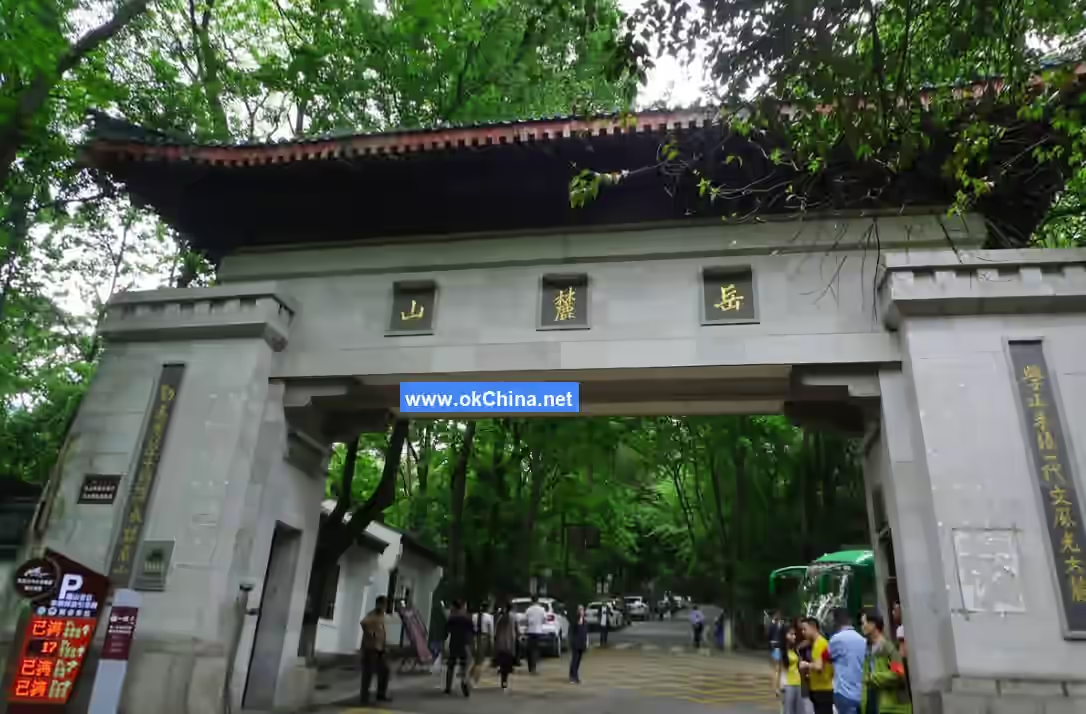
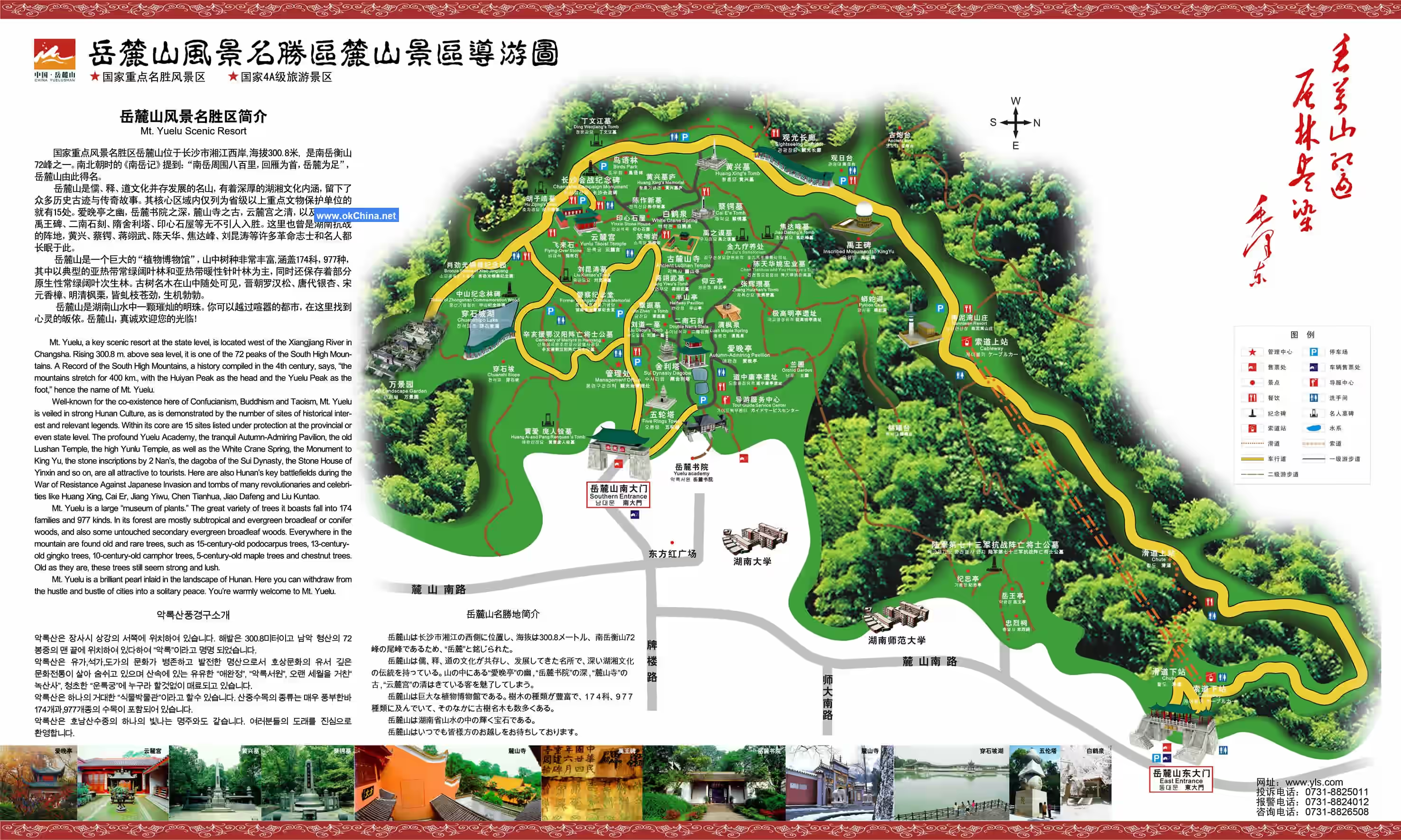
The Yuelu Mountain Scenic Area is located on the west bank of the Xiang River in Changsha City, Hunan Province, spanning from 112°44' to 112°48' east longitude and 28°20' to 28°27' north latitude, with a total area of 35.20 square kilometers. It extends north to the Longwanggang and Xianjia Lake line, south to the southern edge of Houhu and Zhaiziling, east to the center of the Xiang River east of Orange Isle, and west to the northern foothills of Taohualing. It is a tourist area integrating "mountains, water, isles, and city." Yuelu Mountain features diverse topography, primarily consisting of low mountains, hills, valley plains, and river islands. Among these, the Tianma Mountain scenic area is mostly hilly, while the Orange Isle scenic area is a river island, representing typical shoal landforms.
Since the Western Han Dynasty, traces of successive dynasties can be found on Yuelu Mountain. In the fourth year of the Taishi era of Emperor Wu of the Western Jin Dynasty (268 AD), the ancient Lushan Temple in Changsha was first established. In the ninth year of the Kaibao era of the Northern Song Dynasty (976 AD), Zhu Dong, the prefect of Tanzhou, officially founded the Yuelu Academy with government funding, building upon the foundation of monastic education. In the fourteenth year of the Chenghua era of the Ming Dynasty (1478 AD), Yunlu Palace began construction. In 1975, Yuelu Mountain was designated as a park. After the completion of the Xiang River Bridge in 1972, Yuelu Mountain, Orange Isle, and downtown Changsha were integrated, forming a national natural scenic area. Yuelu Mountain is situated in a subtropical monsoon humid climate zone, influenced alternately by maritime warm, moist air masses and Siberian cold air masses, characterized by high temperatures and abundant rainfall in summer, and cold, humid conditions in winter. Major attractions within the Yuelu Mountain Scenic Area include Aiwan Pavilion, Yuelu Academy, and Lushan Temple.
2. Geographical Environment
2.1 Location and Territory
The Yuelu Mountain Scenic Area is located on the west bank of the Xiang River in Changsha City, Hunan Province, spanning from 112°44' to 112°48' east longitude and 28°20' to 28°27' north latitude. It extends north to the Longwanggang and Xianjia Lake line, south to the southern edge of Houhu and Zhaiziling, east to the center of the Xiang River east of Orange Isle, and west to the northern foothills of Taohualing, with a total area of 35.20 square kilometers.
2.2 Climate
Yuelu Mountain is situated in a subtropical monsoon humid climate zone, influenced alternately by maritime warm, moist air masses and Siberian cold air masses, characterized by high temperatures and abundant rainfall in summer, and cold, humid conditions in winter. The average annual temperature is 17.2 degrees Celsius, with an annual accumulated temperature of 5,457 degrees Celsius and a long-term average annual rainfall of 1,361.6 millimeters.
2.3 Topography and Landforms
The terrain of Yuelu Mountain is higher in the center, gradually decreasing in elevation toward the north and south. The western slope is relatively steep, while the eastern slope is gentler. The ridgeline turns at Yunlu Peak in the central part; south of Yunlu Peak, it extends southeast-northwest, ending at the Jinjiang Estuary in Zuojiagang; the northern section of Yunlu Peak extends northeast, ending at Rongwan Tan, resembling a crescent arc with its concave side facing the ancient city of Changsha. Yuelu Mountain features diverse topography, primarily consisting of low mountains, hills, valley plains, and river islands. Among these, the Tianma Mountain scenic area is mostly hilly, while the Orange Isle scenic area is a river island, representing typical shoal landforms.
3. Main Attractions
3.1 Site of the Xinmin Society
The Site of the Founding of the Xinmin Society and Cai Hesen's Former Residence is located in Zhoujiataizi, Xinmin Road, Yuelu District, Changsha City, within the Yuelu Mountain Scenic Area, bordering the Xiang River to the east and Yuelu Mountain to the west. Covering an area of over 5,000 square meters, it is a National Key Cultural Relics Protection Unit and a National AAAAA Tourist Attraction. The plaques for "Cai Hesen's Former Residence" and "Site of the Founding of the Xinmin Society" bear inscriptions by Comrades Deng Xiaoping and Chen Yun, respectively. On April 14, 1918, Mao Zedong and Cai Hesen founded the Xinmin Society here to "gather comrades and create a new environment." The society organized Hunan youth to participate in work-study programs in France, united people from all walks of life, and launched the Hunan People's Autonomy Movement. In 1920, it established the early Communist Party organization in Changsha. In 2021, Mao Zedong and He Shuheng represented the early Party organization in Changsha at the First National Congress of the Communist Party of China. In the winter of the same year, after fulfilling its historical mission, the society naturally ceased its activities.
3.2 Aiwan Pavilion
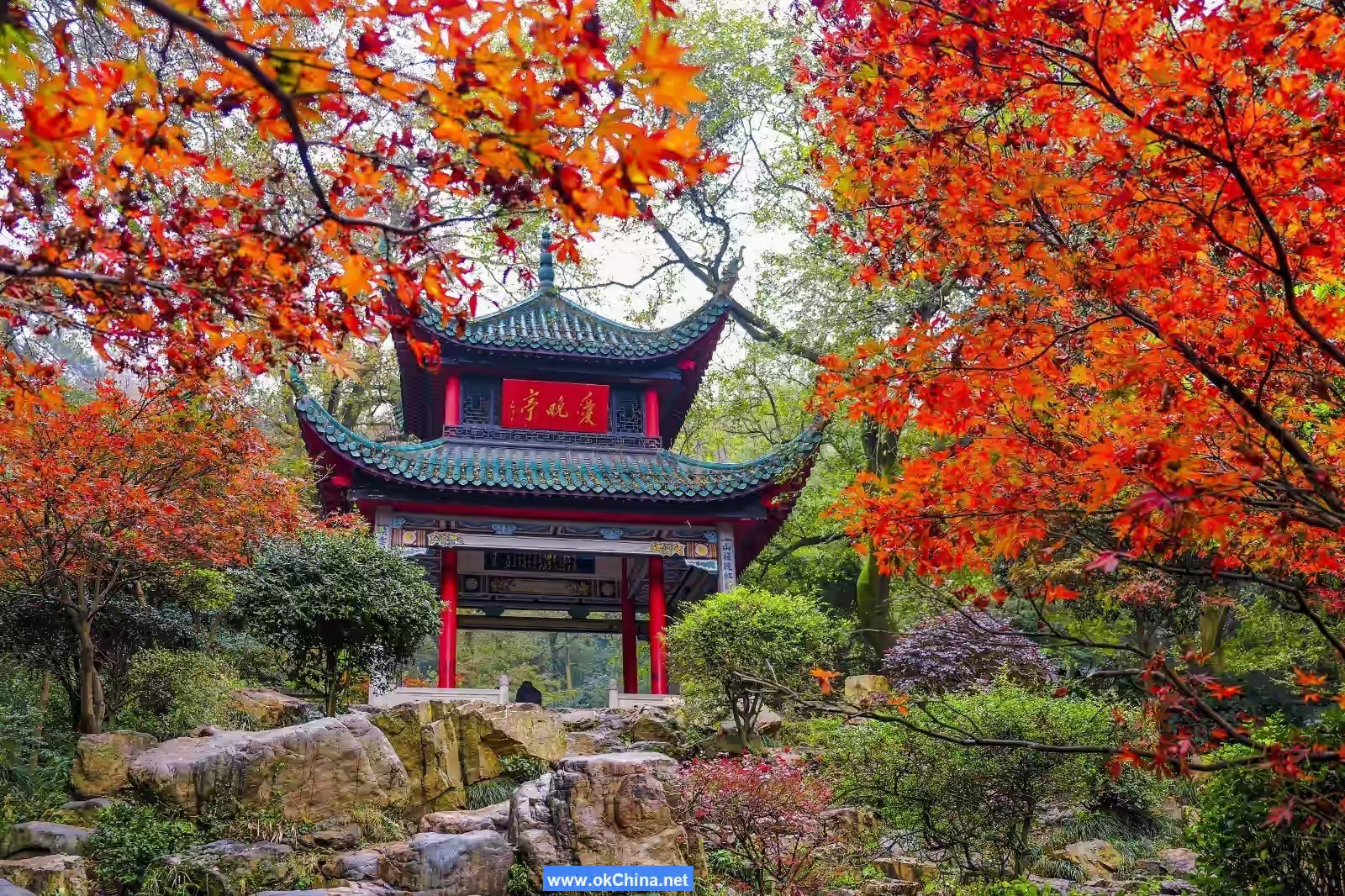
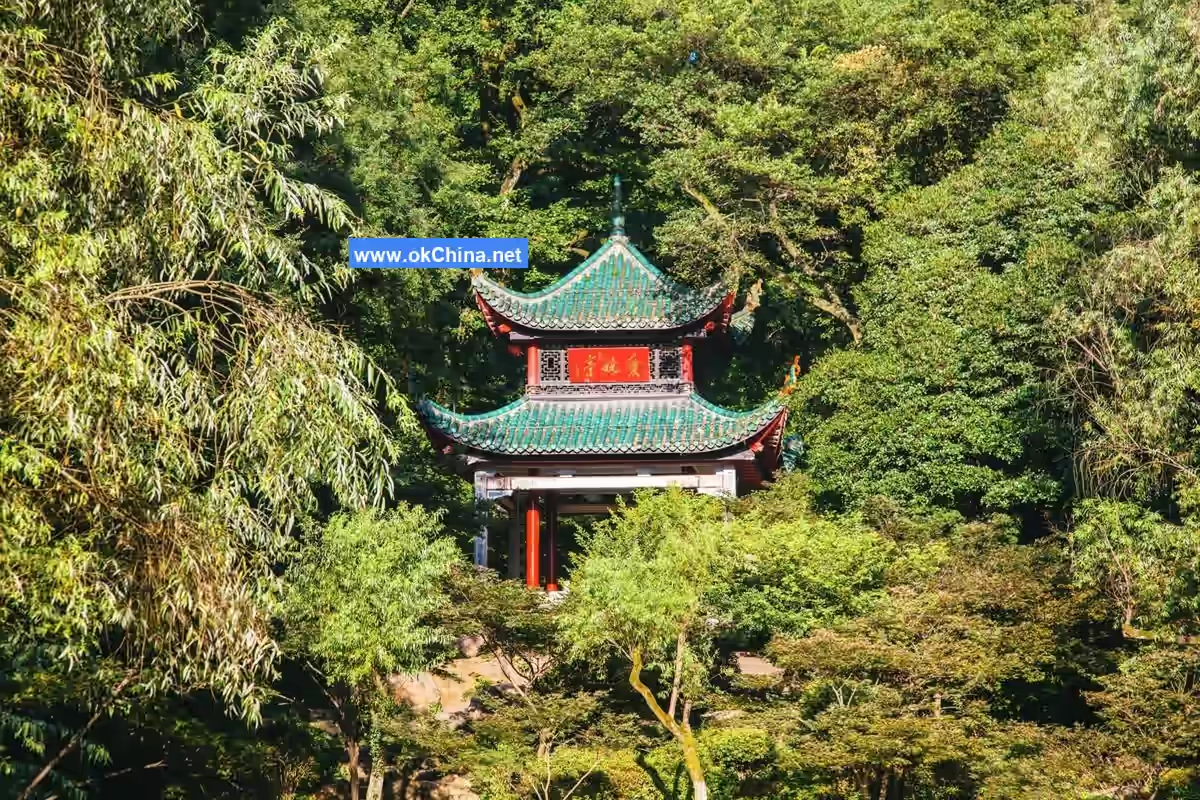
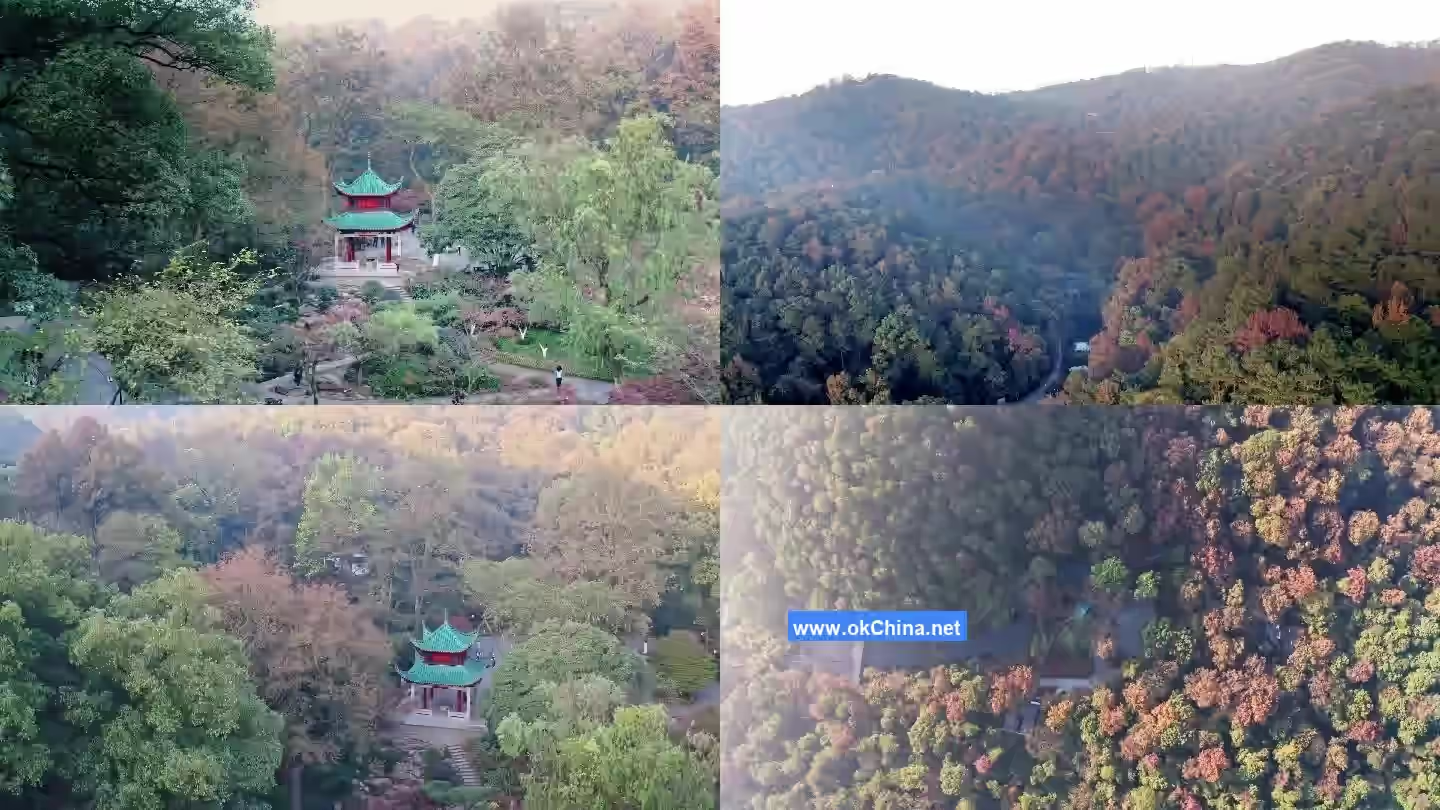
Aiwan Pavilion is located in the Qingfeng Gorge on the eastern side of the Yuelu Mountain Scenic Area on the west bank of the Xiang River in Yuelu District, Changsha City, Hunan Province. It faces east and is constructed of granite and glazed tiles. Initially built in the 57th year of the Qianlong era (1792) of the Qing Dynasty, it was originally named Hongye Pavilion, also known as Aifeng Pavilion. The renowned scholar and Governor-General of Huguang, Bi Yuan, changed its name to the current one, inspired by the Tang Dynasty poet Du Mu's lines: "I stop my carriage to admire the maple grove at dusk; Frosted leaves are redder than spring flowers." During the Guangxu and Xuantong eras of the Qing Dynasty, Cheng Songwan, the supervisor of Hunan Higher School, had the seven-character regulated verses by Zhang Nanxuan and Qian Nanyuan about their visit to Yuelu Mountain engraved on stone tablets erected in the pavilion, titled "Ernan Poem Inscriptions." The pavilion pillars are engraved with a couplet composed by Luo Dian: "The mountain path glows red at dusk, five hundred enchanting peach trees newly planted; The gorge's deep emerald drips, a pair of tame cranes await their cage." The pavilion was destroyed during the War of Resistance Against Japan and rebuilt in 1952. The plaque "Aiwan Pavilion" was inscribed by Mao Zedong at the invitation of Li Da, then president of Hunan University. To the lower right of the pavilion lies a small stream named Lanjian (Orchid Stream) due to orchids planted along its banks, with a small stone arch bridge named Qingfeng Bridge spanning it. From 1913 to 1918, while studying at the First Normal School, Mao Zedong often gathered here with Cai Hesen, Luo Xuezan, and others. Later, Aiwan Pavilion became a sacred site for early revolutionary activities in China.
Aiwan Pavilion has undergone several renovations over the years. A major renovation in 1982 restored its red railings and caisson ceiling. In 1983, the Hunan Provincial Government designated Aiwan Pavilion as a Provincial Cultural Relics Protection Unit. Another major renovation in 1987 led to the establishment of a cultural relics protection team by the Lushan Scenic Area Management Office. Mao Zedong's handwritten inscription "Aiwan Pavilion" was recreated. In 2013, Aiwan Pavilion was announced by the State Council as a National Cultural Relics Protection Unit.
Aiwan Pavilion has a square plan, covering an area of 50 square meters. Each side of the pavilion measures 6.23 meters, with a platform base 0.4 meters high and a total height of 12 meters. The pavilion features a double-eaved, four-sloped roof with a pointed finial. The four wing corners extend and curve upward high, covered with green glazed barrel tiles, giving the impression of soaring into the sky from a distance. It has four outer eaves pillars made from whole square granite blocks and inner round pillars of red-lacquered granite, constructed from four whole granite pieces. The pavilion's interior features a lotus-pattern painted caisson ceiling and lattice windows with "卍"-shaped patterns on all four sides. The east and west sides of the pavilion's lintel bear horizontal plaques with gold characters on a red background reading "Aiwan Pavilion." The double eaves, four slopes, and pointed finial, with upturned eaves corners forming concave curves, are distinctive. Along with the Zuiweng Pavilion in Chuxian County, Anhui; the Mid-Lake Pavilion on West Lake in Hangzhou; and the Taoran Pavilion in Taoranting Park, Beijing, it is known as one of the Four Great Pavilions of China.
3.3 Yuelu Academy
Yuelu Academy is situated at the entrance of Qingfeng Gorge within the Yuelu Mountain Scenic Area and is one of the Four Great Academies of ancient China. Founded during the Northern Song Dynasty, it has maintained its cultural and educational functions through dynastic changes. In 1988, the architectural complex of Yuelu Academy was approved as part of the third batch of National Key Cultural Relics Protection Units, becoming a renowned cultural landmark in China.
Yuelu Academy is the largest and best-preserved ancient academy architectural complex in China, with a construction area of over 10,000 square meters. Its layout follows a central axis with symmetrical, multi-courtyard arrangements extending in depth. Most of the existing buildings date from the Ming and Qing dynasties and are primarily divided into five architectural categories: teaching, library, worship, garden, and memorial. Teaching structures include the Main Gate, Second Gate, Lecture Hall, Teaching Studio, and Study Studio. The Main Gate adopts a Southern General's Gate style structure, built upon twelve steps. A couplet reading "Only Chu has talent, and here it flourishes" hangs on either side of the gate, with a pair of square pillars standing in front, showcasing a simple and elegant style. Behind the Main Gate is the Second Gate, featuring a granite doorframe with passageways on either side for convenient access. The Lecture Hall is situated at the center of the academy's central axis, serving as the primary teaching venue and site for significant events, forming the core of the academy. Flanking it are the North and South Studios—Teaching Studio and Half-Study Studio—which were formerly living quarters for teachers and students.
3.4 Lushan Temple
Lushan Temple, also known as Huiguangming Temple, Wanshou Chan Temple, and Ancient Luyuan, is located on the mountainside of the Yuelu Mountain Scenic Area. Its construction began in the fourth year of the Taishi era of the Western Jin Dynasty and the third year of the Baoding era of Wu (268 AD). Lushan Temple features three arched gateways. On the outer sides of the left and right corners of the gate stands a pair of stone elephants. The roof is divided into three sections, topped with a glazed roof-ridge-like crown, with a superimposed pearl-shaped finial at the center of the topmost layer. Each ridge corner is adorned with an inverted, soaring ao fish. Above the main gate's lintel, the four characters "古麓山寺" (Ancient Lushan Temple) are carved in clerical script, with a square structure and solid lines, conveying solemnity. The couplets on either side of the gate, inscribed in seal script, were composed by the late Qing Dynasty classical scholar Wang Kaiyun and read: "The earliest scenic spot since the Han and Wei dynasties, the foremost Buddhist site in Hunan." The archway is richly decorated with colored paintings and sculptures. Yellow is the dominant color. The uppermost row features statues of Buddhas and Bodhisattvas, with Sakyamuni seated on a lotus in the center, flanked by eight disciples in various poses on each side. The area around the "Ancient Lushan Temple" plaque is adorned with dragon and phoenix patterns. The upper corners of the gate couplets feature a pair of looking-back lions. On the gate tower, larger vertical surfaces are decorated with plum blossoms, pine trees, mountains, or iconic Buddhist ritual implements and auspicious patterns.### 3.5 Yunlu Palace Yunlu Palace is situated atop Yunlu Peak within the Yuelu Mountain Scenic Area. Its initial construction began in the 14th year of the Chenghua era of the Ming Dynasty (1478 AD). The existing building complex covers an area of approximately 600 square meters. In 2000, it was designated as a municipal-level cultural relics protection unit in Changsha. During the Jiajing era (1522–1566), thousands of pine, cypress, tung, and catalpa trees, along with bamboo, were planted around the palace, significantly improving its surroundings. In the Longqing era (1567–1572), Yunlu Palace underwent a major expansion and was formally laid out with three main halls: the "Guansheng Hall," the "Xuanwu Patriarch Hall," and the "Sanqing Hall." At the end of the Ming Dynasty, Yunlu Palace was destroyed twice by warfare. It was gradually restored during the Kangxi and Qianlong eras of the Qing Dynasty. In the 2nd year of the Xianfeng era (1852), the palace was again destroyed by war. During the Daoguang era, the Wangxiang Pavilion was added. In the Tongzhi era, a small pavilion was built, and outside it, the Wuyue and Tianfei Halls, along with the Fahua Pagoda, were added. The second courtyard within the palace grounds became the site of the Wangxiang Pavilion. After 1976, the internal layout of Yunlu Palace was altered from its original palatial arrangement. A rectangular two-story pavilion was added on the original site of the Guandi Hall.
Below and in front of Yunlu Palace lies a rock known as the "Flying Rock," formally called the "Baiyue Stone." It is a square rock about 3 meters on each side, protruding abruptly from the hillside as if it had flown in from afar. It faces directly towards the direction of Mount Heng (Nanyue). To the lower left of the palace gate, an iron bell is wedged in the fork of a large camphor tree. The original bell was exquisitely cast, and its sound resembled the words "gui lai" (return), hence it was called the "Return Bell," which later became popularly known as the "Flying Bell."
3.6 Hunan University
Hunan University is located within the Yuelu Mountain Scenic Area on the west bank of the Xiang River in Changsha, Hunan. It enjoys the reputation of being a "millennium-old academy and a century-old prestigious university." It is not only a leading institution of higher education in China but has also become a famous tourist destination in Changsha. The university traces its origins to the Yuelu Academy, one of the Four Great Academies of ancient China, founded in the 9th year of the Kaibao era of the Northern Song Dynasty (976 AD). Through the changes of the Song, Yuan, Ming, and Qing dynasties, the academy was reformed into the Hunan Higher School in the 29th year of the Guangxu era (1903). In the 15th year of the Republic of China (1926), it was officially named Hunan University. After the founding of the People's Republic of China, Chairman Mao Zedong personally inscribed the university's name.
3.7 Cai E's Tomb
Cai E's Tomb is located on the mountain behind and to the left of Baihe Spring on Yuelu Mountain. It was built in the 6th year of the Republic of China (1917) and covers an area of 1,620 square meters. The tomb mound, stele, and the entire cemetery are paved with granite. In 1956, Cai E's Tomb was designated as a provincial-level cultural relics protection unit in Hunan Province. In 2006, it was designated as a national key cultural relics protection unit. Like Huang Xing's Tomb, Cai E's Tomb is one of the large-scale tombs on Yuelu Mountain. It is built on the hillside directly below Huang Xing's Tomb and above the Lushan Temple. In front of the tomb are placed a stone sacrificial table, a stone incense burner, and stone drums. The tomb features a broad platform base, and its stele shape is identical to that of Huang Xing's Tomb: a polished granite, gui-shaped, pagoda-style tomb stele with a base circumference of 12 meters and a total height of 9.1 meters. The front is inlaid with a purple bronze plaque inscribed in regular script with "Tomb of Lord Cai Songpo." The tomb pagoda is surrounded by railings, with stone steps leading up on both sides. On either side of the path to the right of the tomb platform stand two tall, ancient maple trees. The entire tomb area is shaded by ancient maples, pines, and cypresses.
3.8 Bird Forest
The Changsha Bird Forest is situated within the famous national-level scenic area of Yuelu Mountain. Covering an area of 30,000 square meters, it houses over 400 rare bird species from around the world, totaling approximately 10,000 birds. It is the largest comprehensive bird-themed park in central and southern China with the most complete collection of bird species.
3.9 Orange Isle Scenic Area
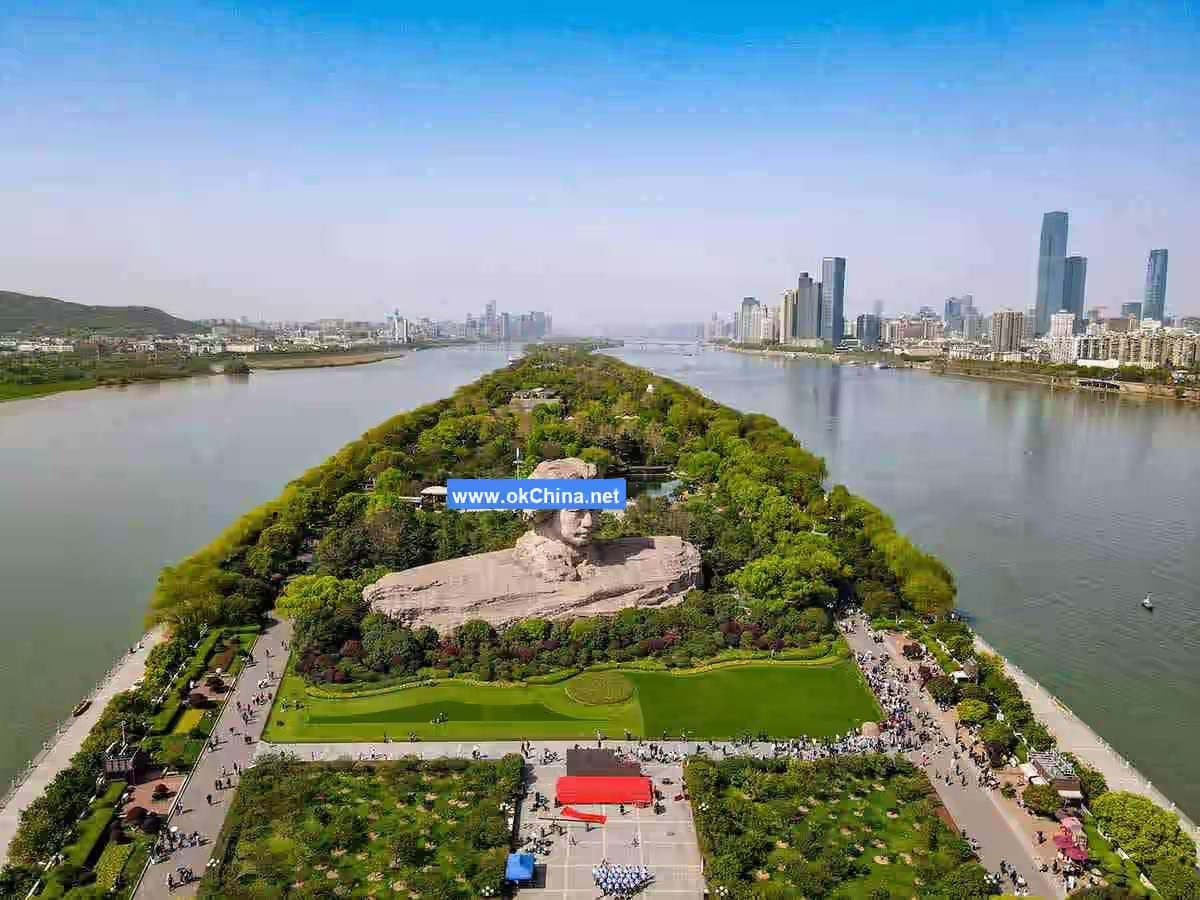
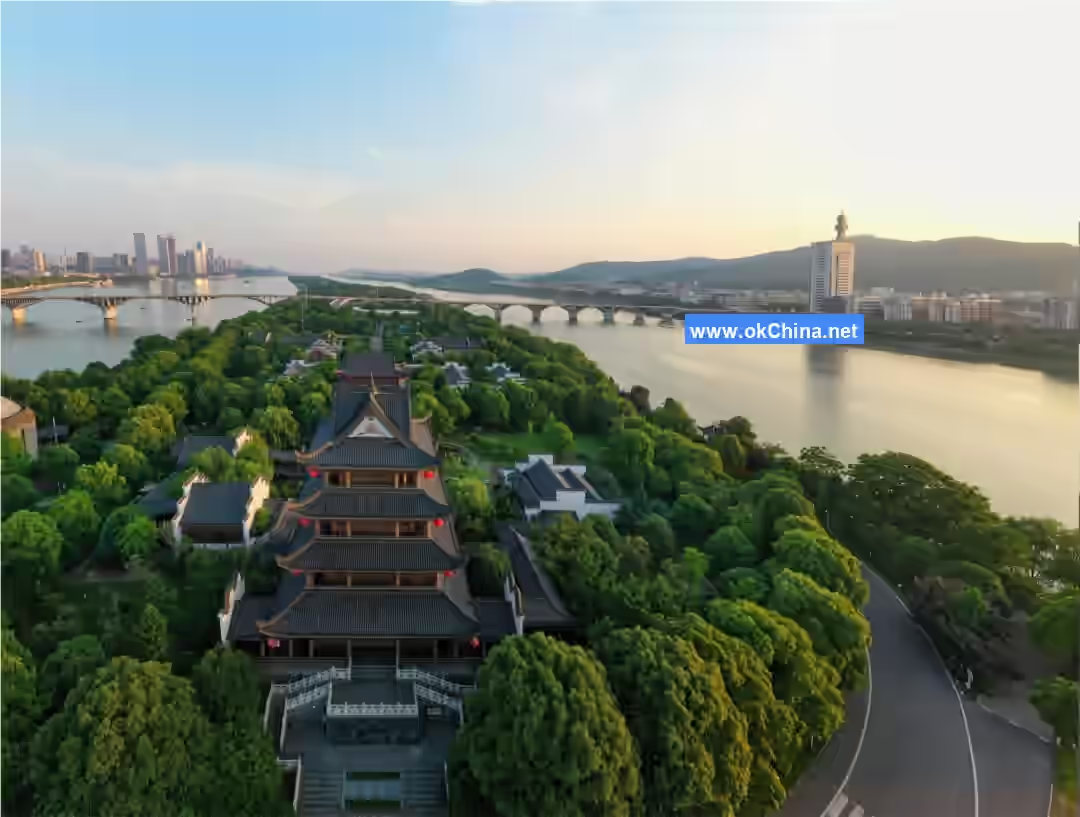
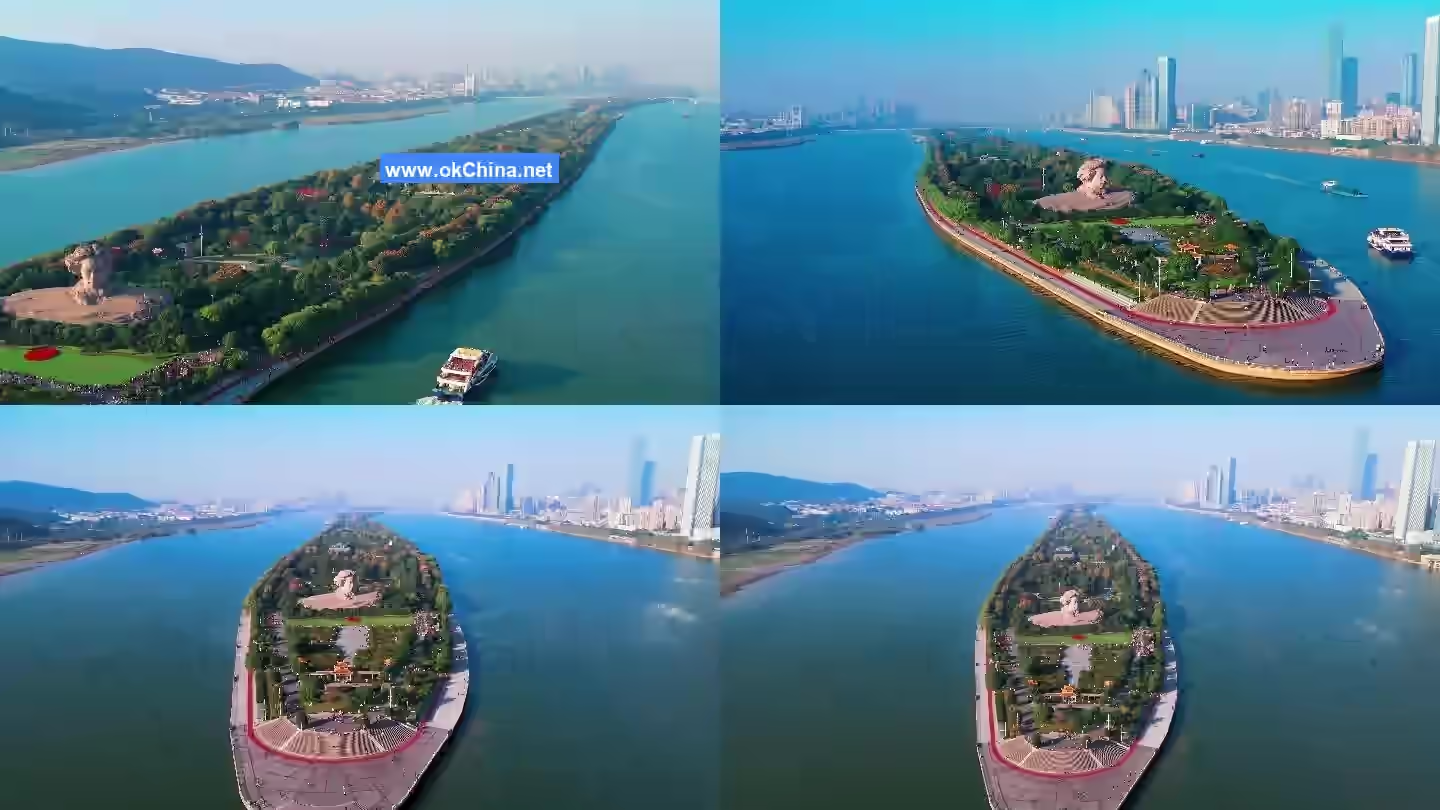
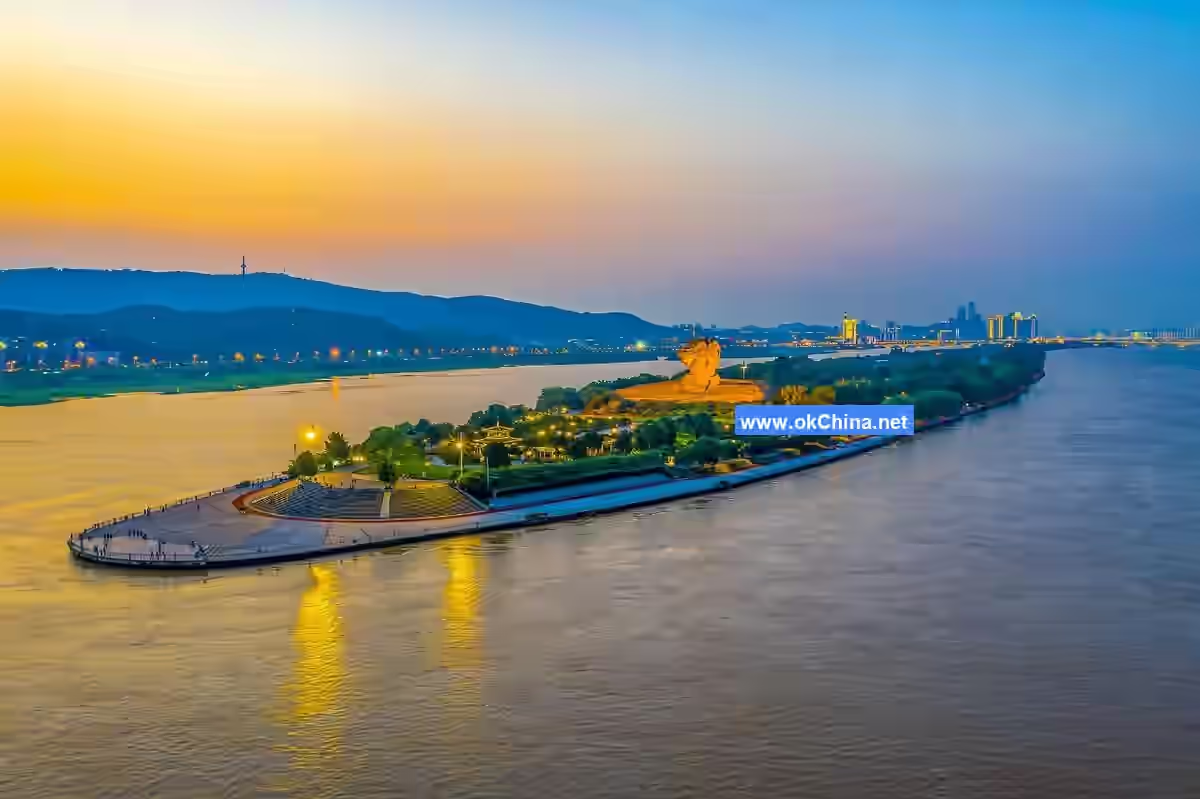
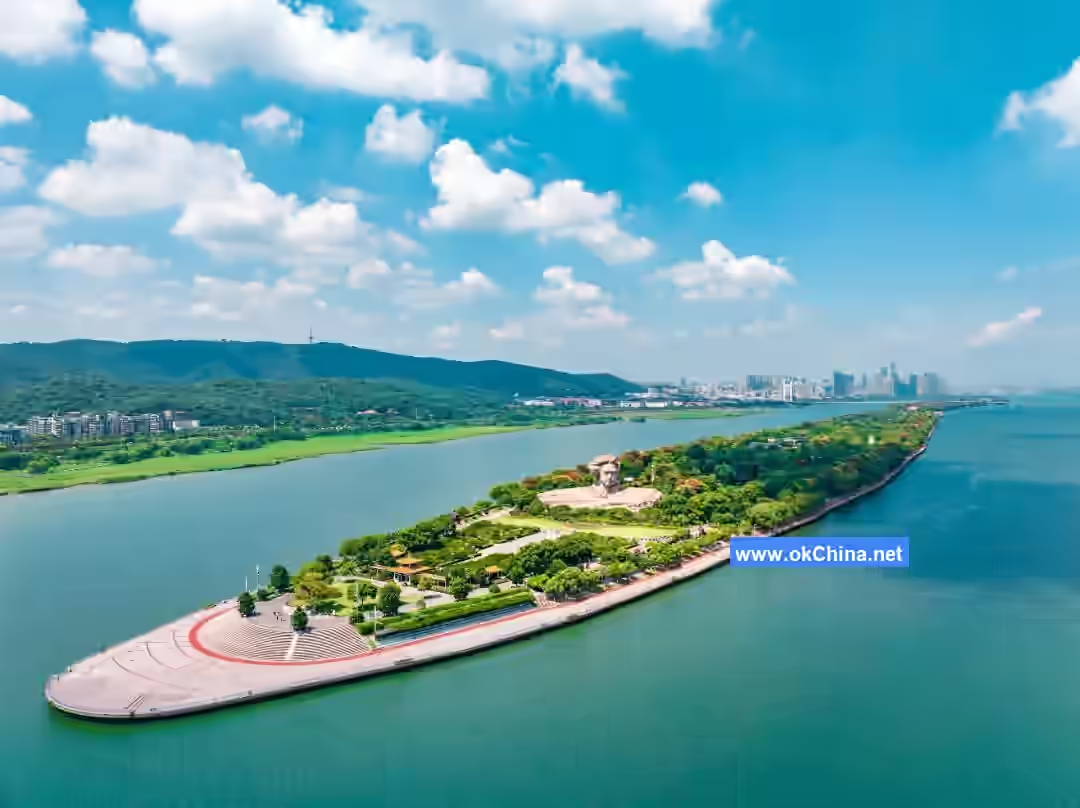
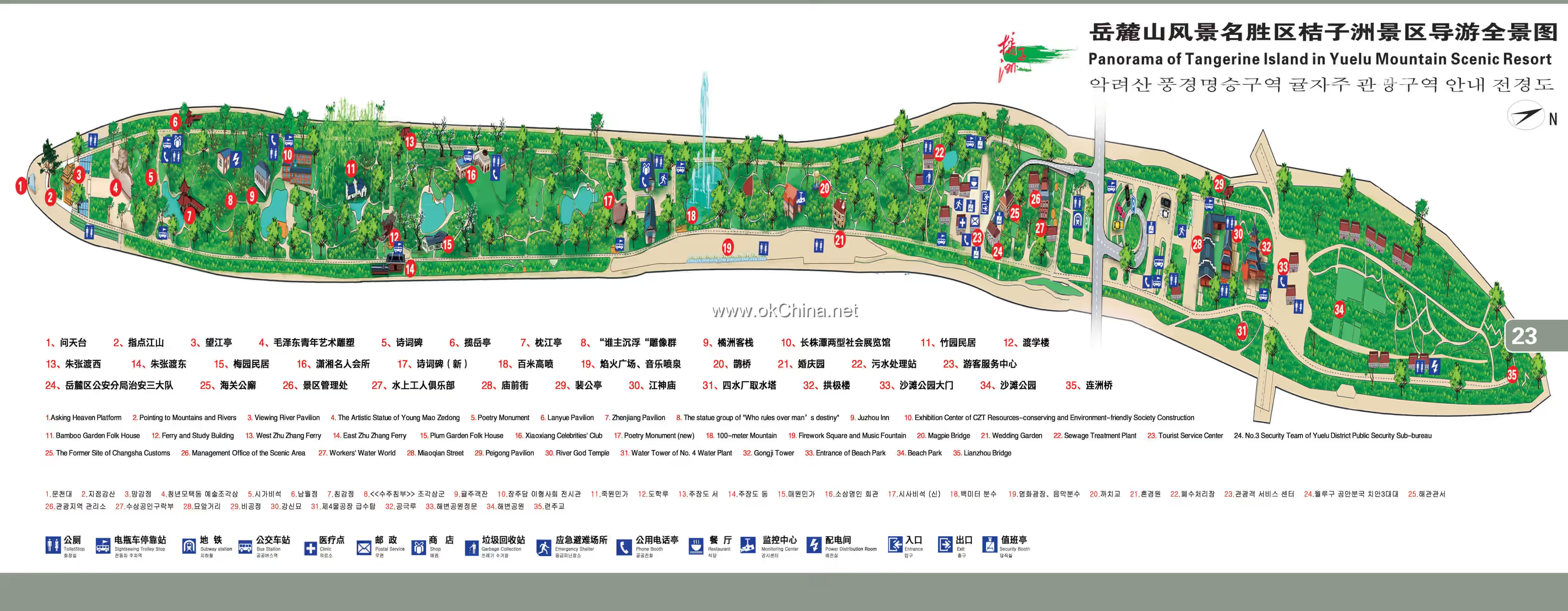
Orange Isle is the largest famous isle in the Xiang River, running north-south through the center of the river. It looks west towards Yuelu Mountain and faces the ancient city to the east. The Orange Isle Scenic Area was initially established in March 1960 and officially opened to the public on October 20, 1962. On June 10, 1972, it was renamed the Changsha Juzhou Park Management Office. In 2001, after being officially rated as a National AAAA Scenic Area, it was renamed the "Changsha Yuelu Mountain Scenic Area Orange Isle Scenic Area Management Office." The Orange Isle Scenic Area is a national demonstration site for civilized scenic tourism, one of the first national "Red Tourism" classic sites, a provincial-level civilized unit, one of the "Hundred Scenes of Hunan," one of the "Eight Scenes of Xiaoxiang," and a core element of Changsha's "mountain, water, isle, city" tourism landscape. The original area of the scenic spot is about 17 hectares, with the open area covering about 6 hectares. Main attractions include the Songju Pavilion at the head of the isle, the white marble poetry stele, the bronze statue square, the pergola square, the memorial site for Chairman Mao's swim in the Xiang River, the Lanyue Pavilion, the Zhenjiang Pavilion, the Bonsai Garden, and the main gate square.
3.9.1 Head-of-Isle Square, Questioning Heaven Platform, and Wangjiang Pavilion
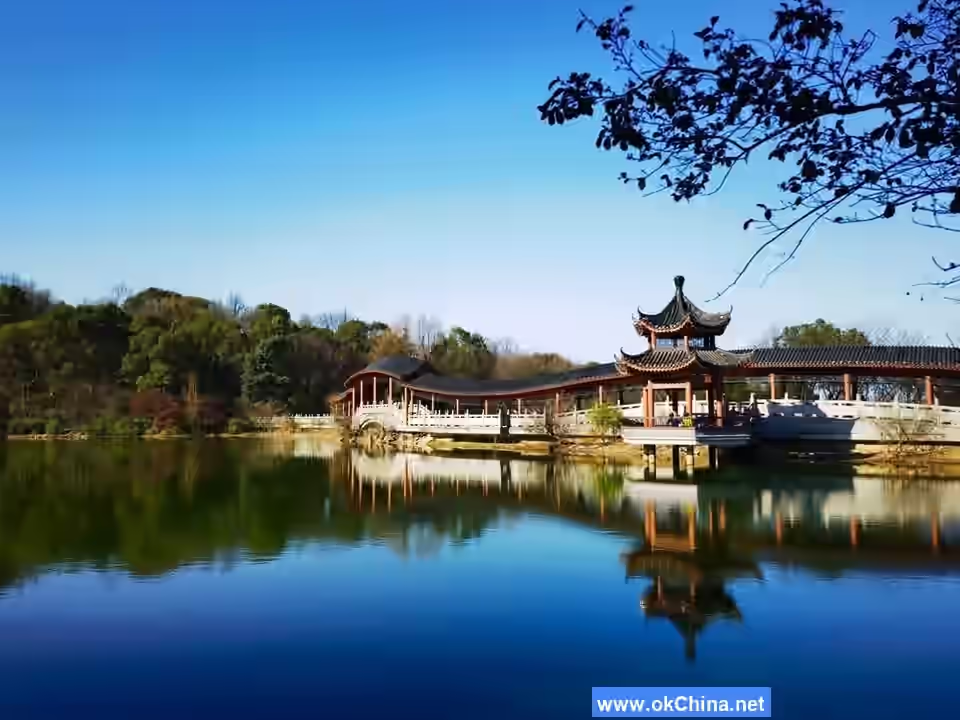
At the southernmost tip of Orange Isle lies the 3,000-square-meter Head-of-Isle Square. In front of the square is the 350-square-meter fan-shaped Questioning Heaven Platform, inspired by Mao Zedong's famous query made here: "I ask, on this boundless land, who rules over man's destiny?" The Wangjiang Pavilion is located at the head of Orange Isle, covering an area of 263 square meters. Built in 1968, it is an antique-style structure combining a pavilion and a corridor and has long been a landmark attraction of Orange Isle.
3.9.2 Mao Zedong Youth Art Sculpture
The Mao Zedong Youth Art Sculpture is located north of the Wangjiang Pavilion, facing southeast. The sculpture was artistically created by the Guangzhou Academy of Fine Arts, with President Li Ming as the lead creator. The sculpture is 32 meters high, 83 meters long, and 41 meters wide, making it currently the largest art sculpture of a great man in China. The base of the sculpture houses the Mao Zedong Memorial Exhibition Hall and Display Rooms, covering an area of 2,000 square meters. It is used to collect and display the original marble poetry steles from the scenic area, as well as various historical relics, classic paintings, sculptures, and photographic works related to Mao Zedong and other early Hunan revolutionaries.
3.9.3 Zhu-Zhang Ferry
The Zhu-Zhang Ferry is located within the Plum Garden north of the Bamboo Garden. It is the historical site of the "Zhu-Zhang Lectures." During the Southern Song Dynasty, the Neo-Confucian master Zhu Xi traveled specially from Fujian to Tanzhou (Changsha) to visit Zhang Shi, initiating the famous "Zhu-Zhang Lectures." Yuelu Mountain and the Chengnan Academy were separated by the river, and Zhu and Zhang frequently crossed the Xiang River between them, hence the name "Zhu-Zhang Ferry." The restored Zhu-Zhang Ferry will serve as a sightseeing and commemorative site.
3.9.4 "Spring in a Pleasure Garden: Changsha" Poetry Stele
The "Spring in a Pleasure Garden: Changsha" poetry stele is located in the south square at the entrance to the core scenic area. The stele is made of natural stone, based on a reproduction of Mao Zedong's handwritten woodblock print of "Spring in a Pleasure Garden: Changsha" dated October 16, 1961. The calligraphy on the entire stele is free, unrestrained, with simple lines and a natural form.
4. Cultural Resources
4.1 Naming
Yuelu Mountain is one of the 72 peaks of the Southern Sacred Mountain (Nanyue). As it connects to Mount Heng to the south, serving as its terminal peak and the "foot" of Nanyue, it is named Yuelu (the foot of the sacred mountain).
4.2 Historical Evolution
Since the Western Han Dynasty: Traces from various dynasties can be found on Yuelu Mountain. 4th year of the Taishi era of Emperor Wu of the Western Jin Dynasty (268 AD): The ancient Lushan Temple in Changsha began construction. 9th year of the Kaibao era of the Northern Song Dynasty (976 AD): Zhu Dong, the prefect of Tanzhou, officially founded the Yuelu Academy with government funding, building upon the foundation of a school run by monks. 8th year of the Xiangfu era of the Northern Song Dynasty (1015 AD): Emperor Zhenzong of Song summoned Zhou Shi, the head of Yuelu Academy, and personally inscribed the four characters "Yuelu Academy" for the gate plaque. 14th year of the Chenghua era of the Ming Dynasty (1478 AD): Yunlu Palace began construction. 57th year of the Qianlong era of the Qing Dynasty (1792 AD): Aiwan Pavilion began construction. 1975: Yuelu Mountain was designated as a park. 1972: After the completion of the Xiang River Bridge, Yuelu Mountain, Orange Isle, and downtown Changsha were integrated, forming a national natural scenic area.
4.3 Literature and Art
4.3.1 "Spring in a Pleasure Garden: Changsha" — Mao Zedong
Alone I stand in the autumn cold On the tip of Orange Isle, The Xiang flowing northward; I see a thousand hills crimsoned through By their serried woods deep-dyed, And a hundred barges vying Over crystal blue waters. Eagles cleave the air, Fish glide in the limpid deep; Under freezing skies a million creatures contend in freedom. Brooding over this immensity, I ask, on this boundless land Who rules over man's destiny? I was here with a throng of companions, Vivid yet those crowded months and years. Young we were, schoolmates, At life's full flowering; Filled with student enthusiasm Boldly we cast all restraints aside. Pointing to our mountains and rivers, Setting people afire with our words, We counted the mighty no more than muck. Remember still How, venturing midstream, we struck the waters And the waves stayed the speeding boats?
Translation I stand alone in the autumn chill on Orange Isle, watching the Xiang River flow quietly north. In the distance, thousands upon thousands of mountains are dyed crimson, layer upon layer of forests rendered so brilliant and resplendent; looking down at the river, clear to the bottom, countless boats vie to forge ahead. Eagles soar in the vast sky, fish swim leisurely in the shallow depths, all living things in this frosty weather find their freedom! Yet I feel a sense of melancholy in this boundless universe, I ask this vast and hazy earth, who shall master its fate? Once, I came here with friends to enjoy the view, recalling that time, so rich and varied, so profoundly substantial! It was the age of youthful vigor, each of us brimming with knowledge, harboring that bold and powerful lofty ideal, to use our learning to guide the nation, to use our honed skills to write history! We regarded the princes and marquises of old as mere clods of dirt! Do you remember: together we battled courageously in the swiftest currents, could the towering waves then block our advancing boat?#### 4.3.2 Creative Background "Spring in a Garden of Delights · Changsha" was composed by Mao Zedong in the late autumn of 1925. He wrote it while revisiting Orange Isle in Changsha during his journey from his hometown Shaoshan to Guangzhou. Changsha was a place where Mao Zedong studied and engaged in revolutionary activities in his early years. In 1911, Mao Zedong arrived in Changsha, beginning his 12-year life of study and revolutionary struggle there. From 1914 to 1918, he studied at the Hunan First Provincial Normal School. In April 1918, Mao Zedong, along with like-minded schoolmates such as Xiao Zisheng, established the New People's Study Society at Cai Hesen's home in Liujiataizi, Rongwan Town, Changsha. Xiao Zisheng was elected as the General Secretary, while Mao Zedong and Chen Shunong were elected as Secretaries. Starting in 1919, Mao Zedong taught at schools such as Changsha Xiuye Primary School and the Affiliated Primary School of Hunan First Normal School. During the May Fourth Movement period, he organized and led the student movement and the New Culture Movement in Hunan. Subsequently, he led the "Drive Out Zhang (Jingyao) Movement." In September 1920, Mao Zedong and He Shuheng established the Hunan Communist Group in Changsha. In July of the following year, he and He Shuheng attended the First National Congress of the Communist Party of China as representatives from Hunan. On October 10, they established the Hunan Branch of the Communist Party of China in Changsha, with Mao Zedong serving as Secretary. Soon after, the Hunan District Committee of the Communist Party of China was also formed, with Mao Zedong again serving as Secretary. In April 1923, he left Changsha for Shanghai, Guangzhou, and other places to participate in the leadership work of the Central Committee of the Communist Party of China and the Central Committee of the Kuomintang. In September, he returned to Changsha to lead the struggle against Zhao Hengti, the Provincial Governor of Hunan, and to develop the worker and peasant movements. In February 1925, he returned to Shaoshan with his wife and children to recuperate and lead the peasant movement. On August 28, Zhao Hengti ordered the Xiangtan County Defense Bureau to arrest Mao Zedong. Upon receiving the news, Mao Zedong secretly made his way to Changsha. Despite being pursued by Zhao Hengti, he stayed in Changsha for about ten to twenty days, meeting with leaders of the Hunan District Committee of the Communist Party of China, the Provincial Federation of Trade Unions, and the Cultural Book Society. In early September, he was ordered to go to Guangzhou to participate in the work of the National Government and attend the Second National Congress of the Kuomintang. On the eve of his departure from Changsha, Mao Zedong revisited Yuelu Mountain and Orange Isle. Facing the beautiful and captivating autumn scenery along the Xiang River and reflecting on the revolutionary situation at the time, he composed this poem.
4.3.3 Overall Appreciation
"Spring in a Garden of Delights · Changsha" is a powerful work by the young Mao Zedong. It is a magnificent poem that revisits an old place to observe autumn scenery, recalls classmates and past events, and inspires fighting spirit to express heroic sentiments. Throughout the poem, the description of scenery, narration of events, and expression of emotions are seamlessly integrated and executed in one breath. Whether in the choice of numerals or verbs, it presents a majestic momentum. It depicts autumn scenery without desolation, recalls past events without melancholy, and tightly intertwines scenery, events, and emotions, creating a vast, profound, and grand atmosphere. It truly opens up a grand view of poems that reflect on events amidst autumn.
The first stanza of the poem uses autumn scenery to express revolutionary passion. "Alone in the autumn cold, / The Xiang River flows northward; / At Orange Isle," clarifies the time, place, and specific setting. The term "autumn cold" gives a sense of chilling air and bleak autumn wind, indicating not only the time of the author's arrival in Changsha but also hinting at the dark reality of warlord conflicts at the time, as well as the author's keen sense of personal danger. "The Xiang River flows northward; / At Orange Isle" evokes a feeling of vastness amidst a great river and on a small isle. The following word "see" leads seven lines, depicting a brilliantly colorful autumn scene viewed from Orange Isle. This autumn scene is exceptionally magnificent and full of vitality, reflecting both the fiery maple forests and the author's fervent revolutionary sentiments. Red symbolizes revolution, fire, and light; "all mountains are aflame" vividly represents the author's idea of "a single spark can start a prairie fire" and his optimistic vision for the revolution and the future of the motherland. "Eagles cleave the air, / Fish glide in the limpid deep" expresses the author's yearning and pursuit of freedom and liberation. The author selects several typical scenes from the mountains, river surface, sky, and water depths for description, combining distance and proximity, movement and stillness, with sharp contrasts. The author's depiction of this vibrant autumn scene is not random or merely what meets the eye; it is artistically processed and imbued with subjective emotions, projecting the author's positive and optimistic mindset onto the scenery. Faced with such magnificent autumn scenery, the author cannot help but feel stirred and exclaims, "All creatures strive for freedom under frosty skies," highly summarizing the static and dynamic aspects of natural scenery and profoundly revealing the mysteries of autumn and the philosophy of life. The three words "lost in immensity" reveal the author's deep contemplation. Confronted with such a beautiful motherland and the harsh reality that the people could not be their own masters, he is compelled to ask from the depths of his heart in melancholy, "I ask the vast land, / Who decides all beings' fall and rise?" This question expresses the author's lofty aspirations and broad-mindedness, transitioning directly from scenery description to emotional expression and naturally leading to the lyrical movement of the second stanza.
The second stanza of the poem focuses on recalling the extraordinary years of the past. Led by the word "recall" and threaded with emotion, it narrates events with feeling, expressing high spirits and heroic passion. "With my companions I had oft roamed here" indicates that the author often visited Orange Isle with like-minded students in the past, setting the stage for what follows. "Those crowded months and years" precisely characterize the era of those "roamings." The word "just" opens the window of memory; "schoolmates in their youth" describes the age characteristic of the "companions"; "in life's full flowering, / With lofty ideals" describes their quality; "pointing to stream and hill, / Writing in blame or praise" expresses their revolutionary momentum and passion. "Counting mighty men no more than muck" alludes to a line from "Li Sao": "They filled their sachets with foul-smelling weeds, / Yet said the pepper had no fragrance." Here, the "foul-smelling weeds" refer to King Huai of Chu's close confidants, such as Jin Shang. The "companions" wrote articles to criticize the corrupt and promote the virtuous, opposing maladministration and advocating reform. In the eyes of these passionate youths, those high officials who cared nothing for the future of the country and the nation were as despicable and worthless as the feudal lords of old. "Midstream we struck the waves, / The waves stayed the speeding boats" depicts an exciting and captivating scene. Superficially recalling swimming experiences, it also seems to allude to the author and his "companions" bravely advancing against the current and engaging in revolution during the May Fourth Movement. It also metaphorically expresses the author's hope, at a new stage of historical development, that his former "companions" would join him to "strike the waves midstream" and掀起 a new upsurge in the Chinese revolution. This demonstrates the author's and his comrades' fearless revolutionary spirit and lofty aspirations to transform old China, providing an implicit and vivid answer to the question "Who decides all beings' fall and rise?" from the first stanza: those who主宰 the destiny of the nation are the revolutionary youth who take the world as their own responsibility, despise reactionary rulers, and dare to transform the old world.
This poem completely breaks away from the traditional literary convention of lamenting autumn, sweeping away desolate and bleak sentiments. With its grand and magnificent poetic realm and uplifting, inspiring passion, it evokes people's heroic spirit and noble sentiments to strive for ideals. Throughout the poem, whether describing scenery, recalling the past, discussing, or narrating events, everything is closely tied to the main theme of transforming reality, making the主题 distinct and well-supported. The grandeur of the scenery, the excellence of the characters, the extraordinariness of the events, and the heroism of the emotions in the poem share a consistent tone, complementing each other and forming an integrated whole, thoroughly expressing the autumn sentiments of a great man of the century. The entire poem possesses a雄伟 and瑰丽意境, with崇高的革命理想. Chanting it moves one with its emotions; pondering it touches one with its reasoning.
Comments
Post a Comment