

Wuxi Yuantouzhu Scenic Area
1. Introduction
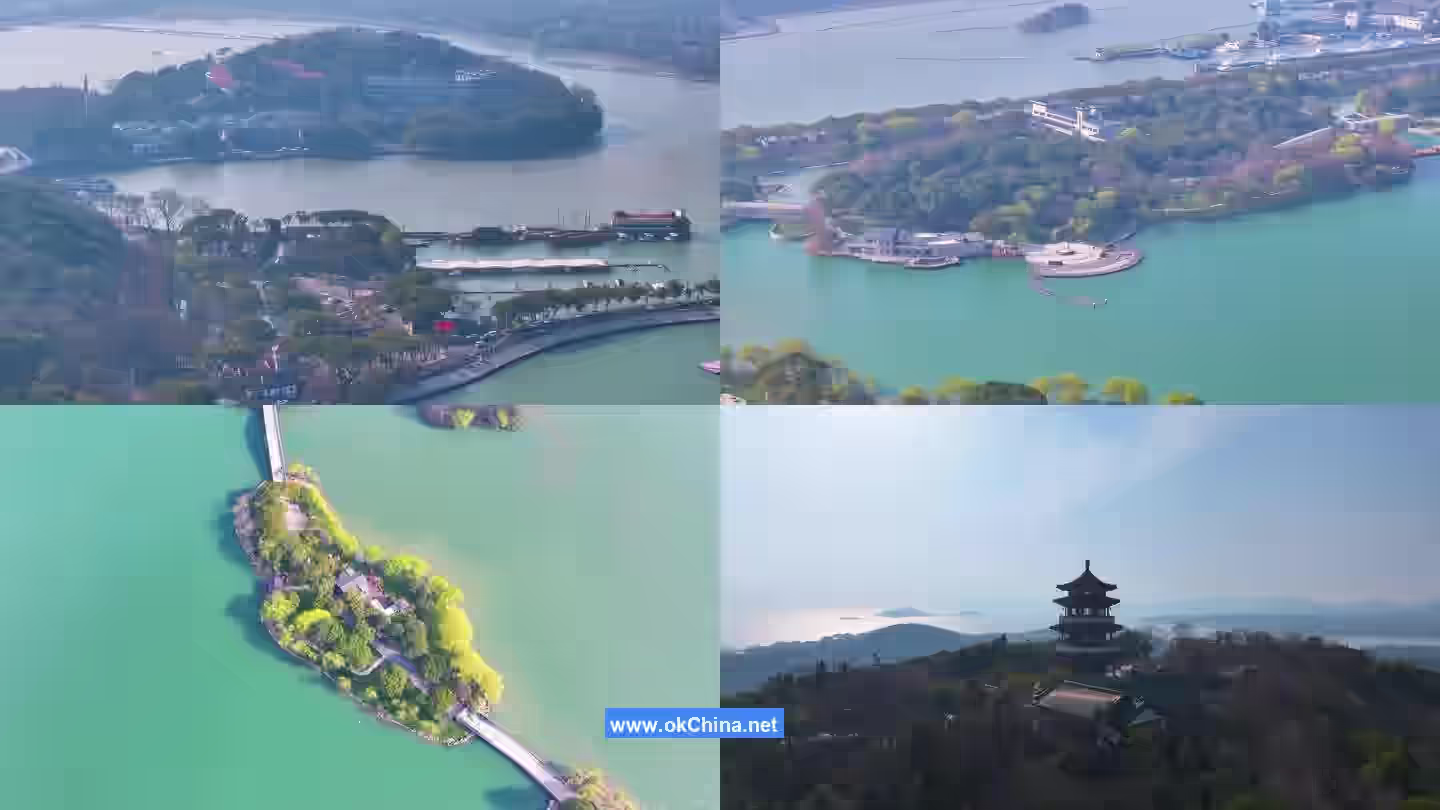
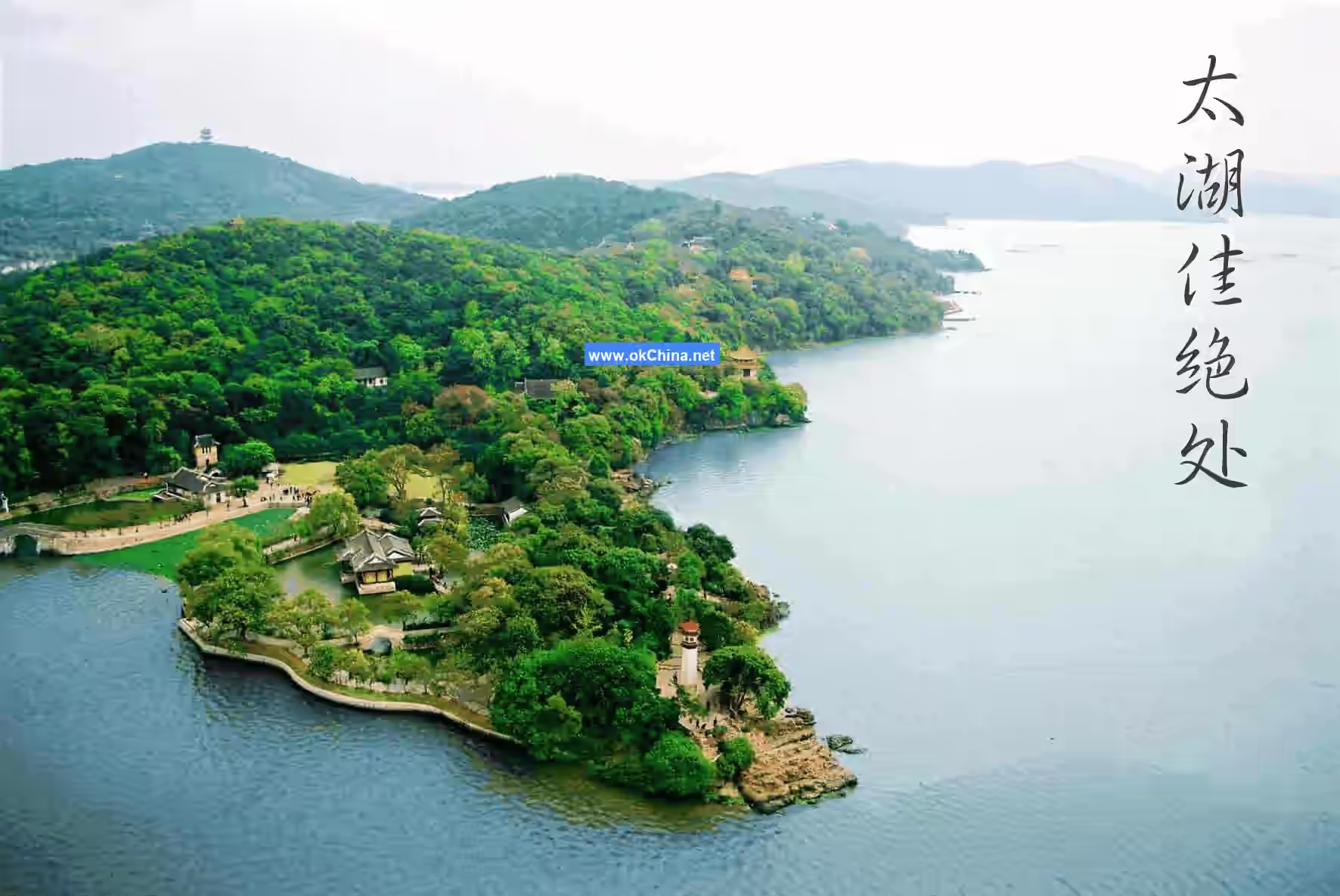
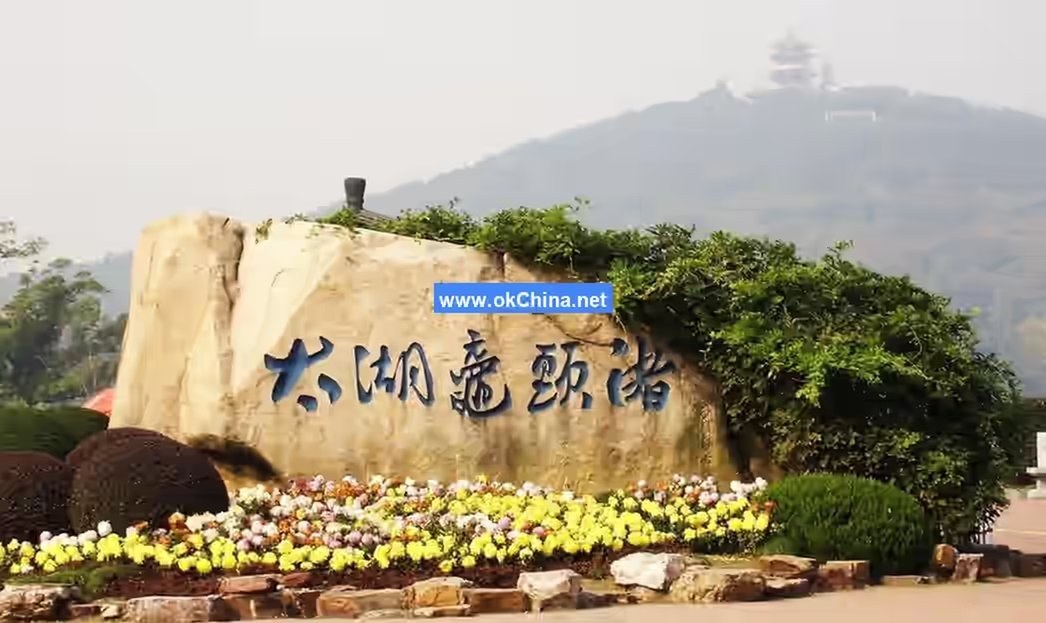
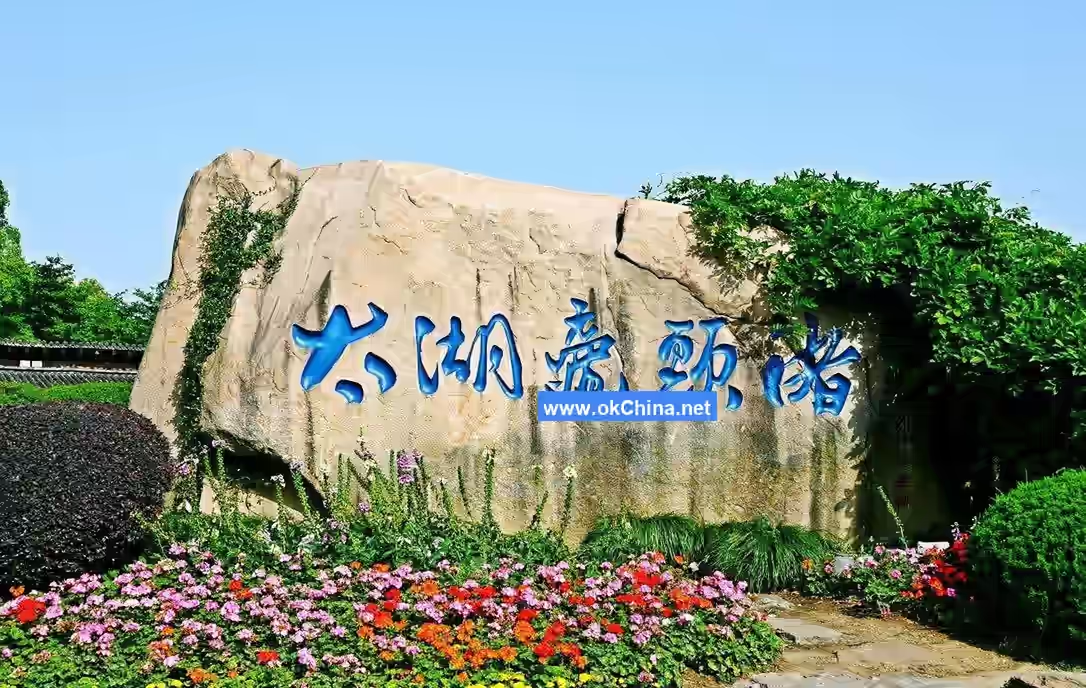
Wuxi Yuantouzhu Scenic Area is located at No. 1 Yuanzhu Road, Binhu District, Wuxi City, Jiangsu Province. It sprawls across a peninsula on the northwestern shore of Taihu Lake, covering an area of 5.39 square kilometers. Its name originates from a giant rock protruding into the lake, whose shape resembles a divine turtle raising its head. It is one of the main attractions of the Taihu Lake Scenic Area (a National Key Scenic Area). The Yuantouzhu scenic area was initially established in 1916 (the 5th year of the Republic of China). After the founding of the People's Republic of China in 1949, the Wuxi Municipal People's Government took over the area and established "Yuantouzhu Park." The poet Guo Moruo praised it with the verse, "The finest spot of Taihu Lake is, after all, at Yuantouzhu."
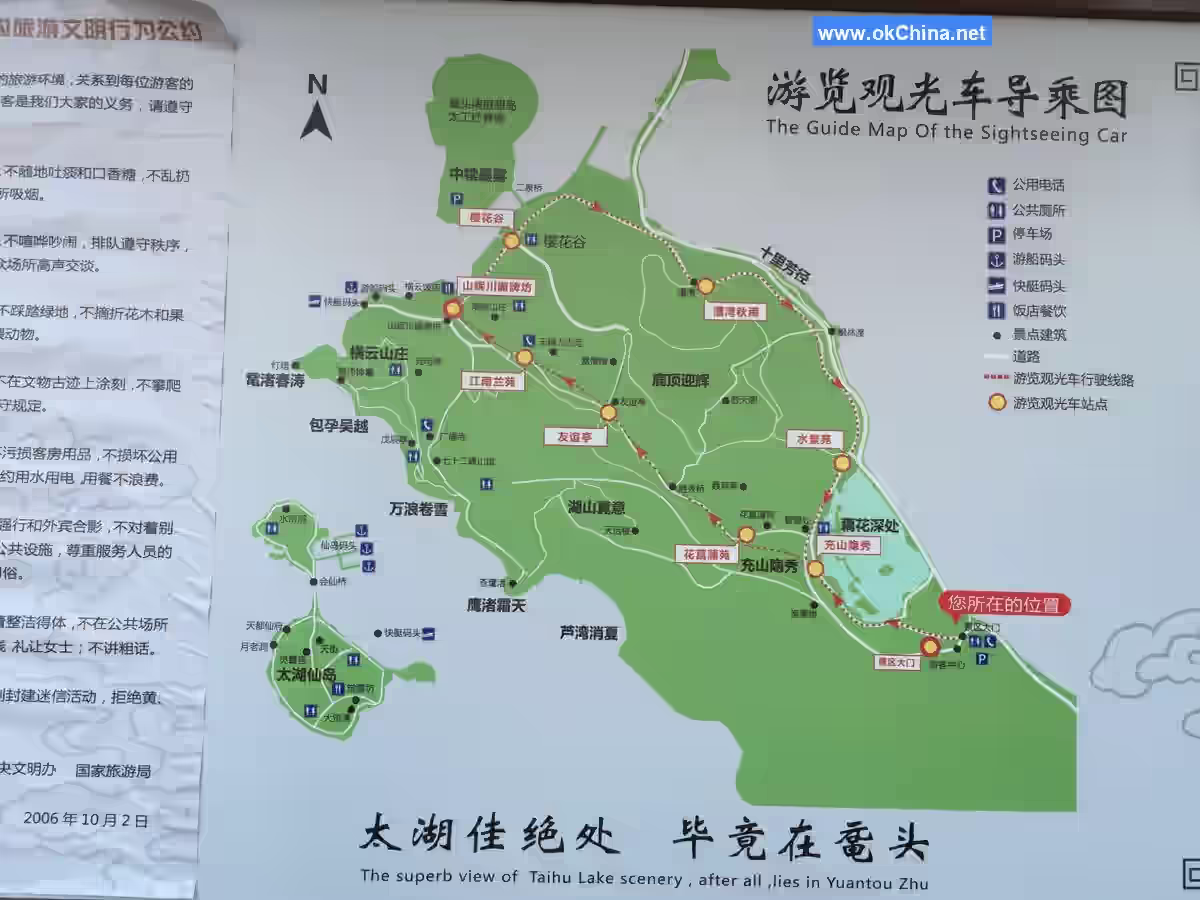
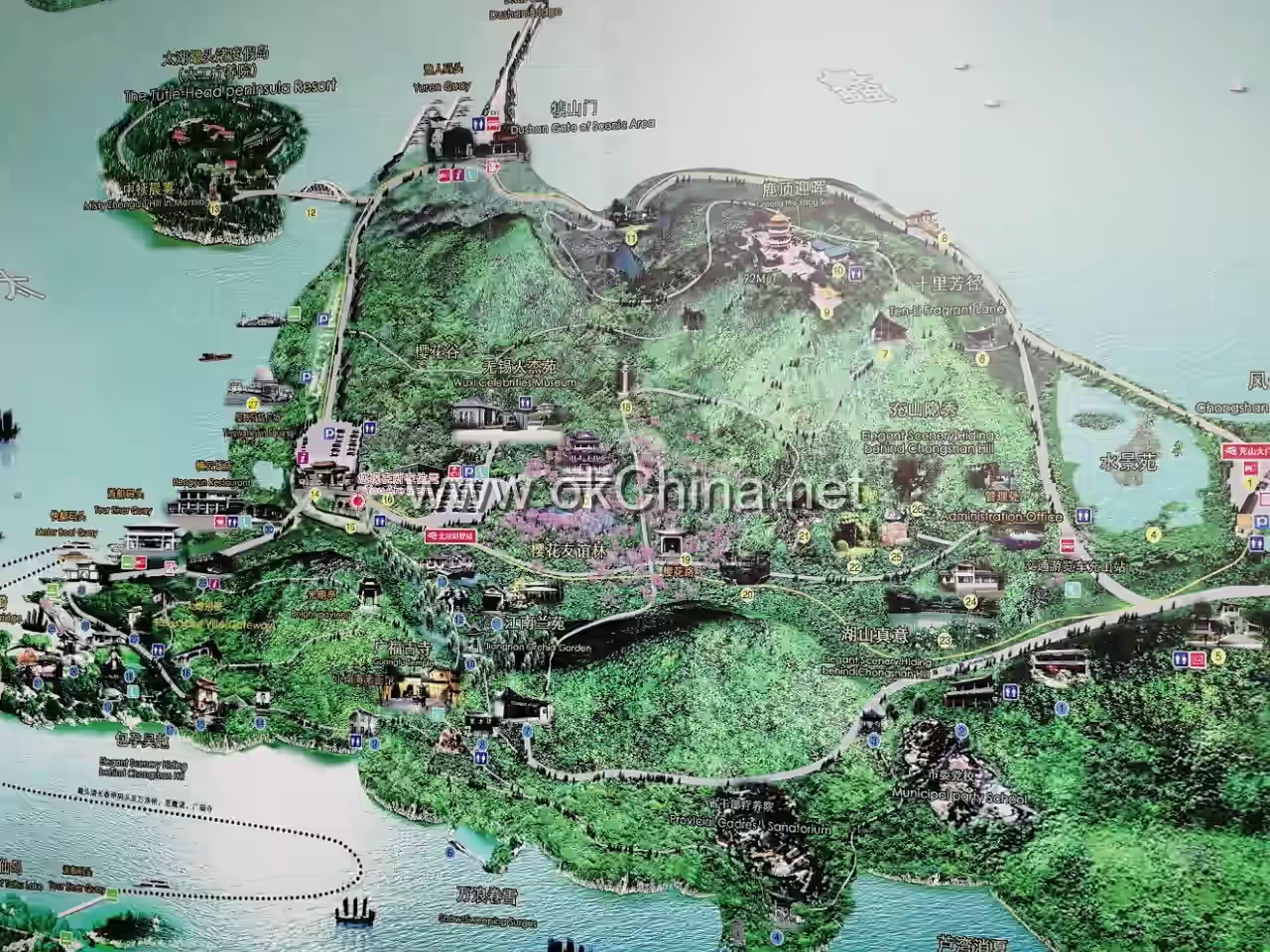
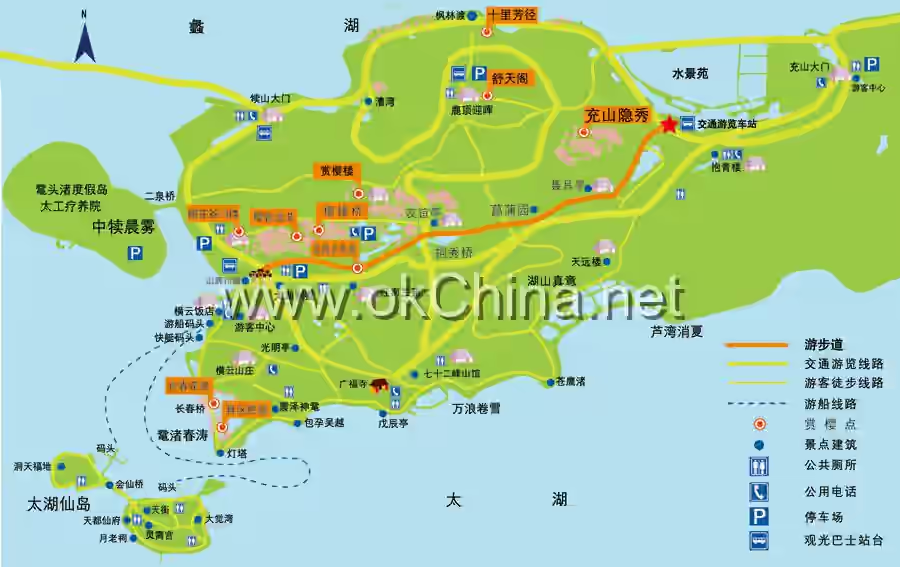
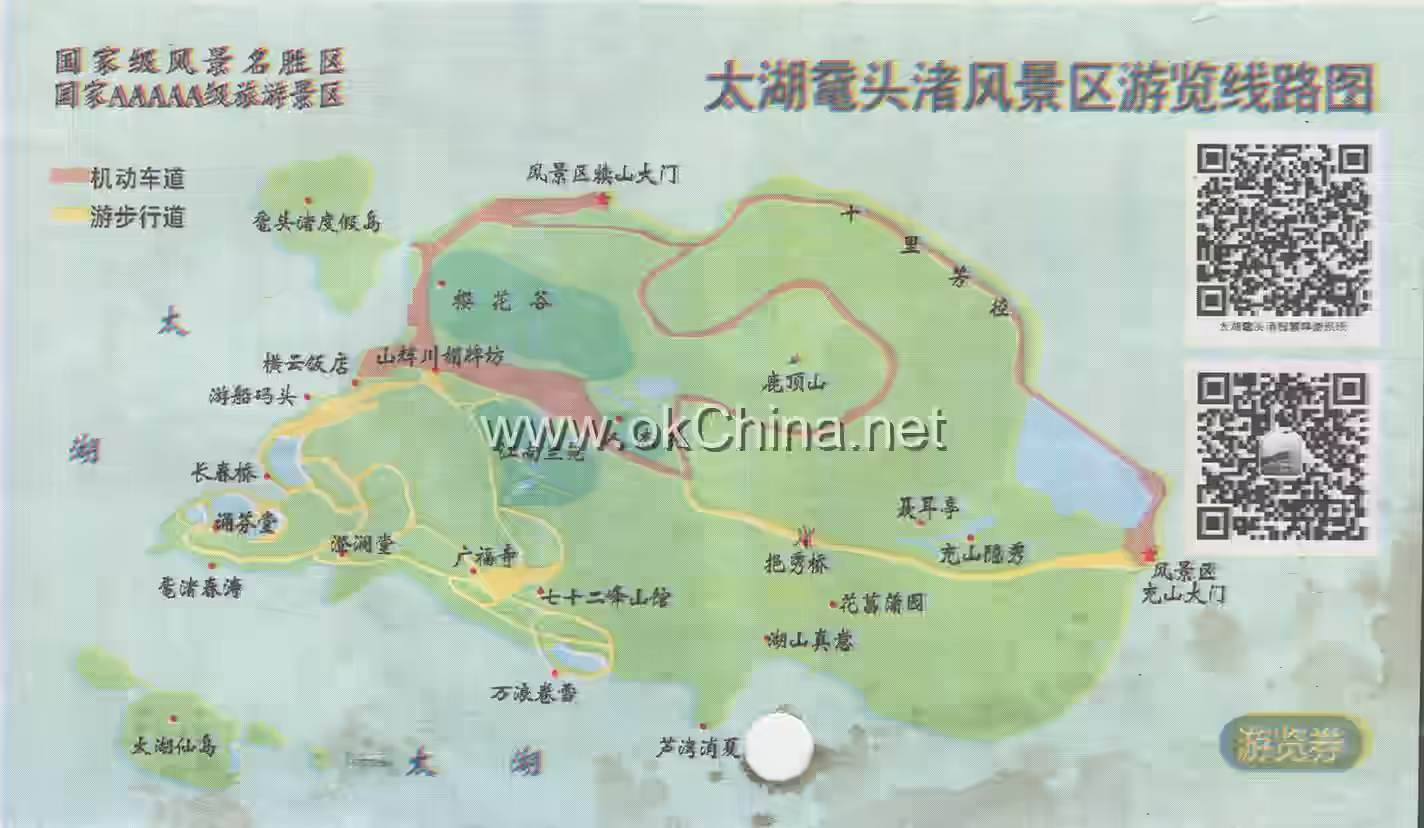
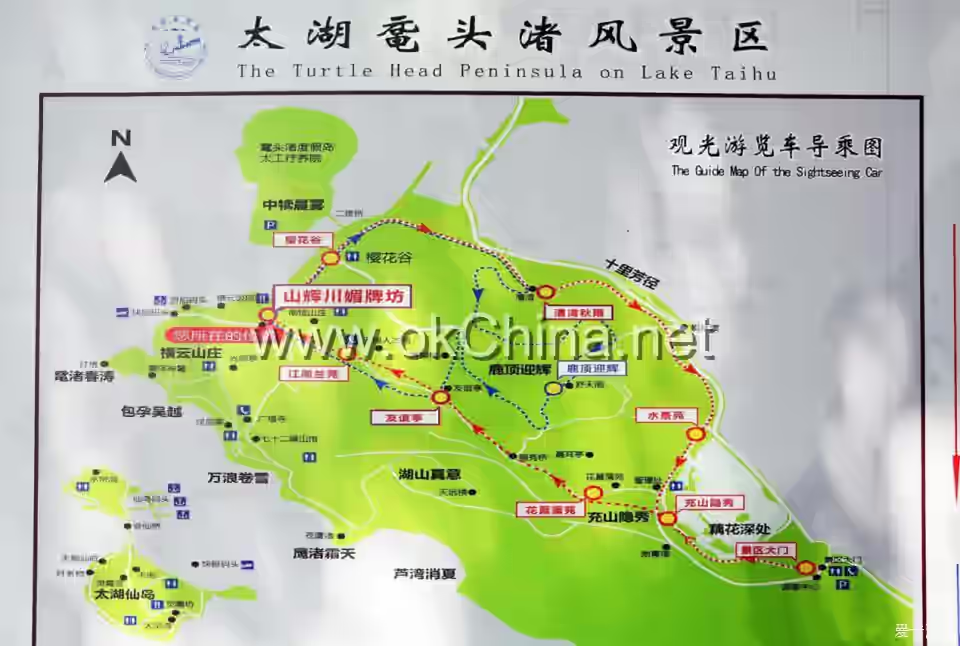
As the largest landscape garden resort in the Jiangnan region, Wuxi Yuantouzhu Scenic Area boasts numerous famous attractions, including Chongshan Yinxiu (Hidden Beauty of Chongshan), Luding Yinghui (Deer Peak Greeting the Dawn), Yuanzhu Chuntao (Spring Waves at Turtle Head), Hengyun Mountain Villa, Wanlang Juanxue (Ten Thousand Waves Rolling Snow), Hushan Zhenyi (True Essence of Lake and Mountain), Shili Fangjing (Ten-Mile Fragrant Path), Taihu Fairy Island, Jiangnan Orchid Garden, Cherry Blossom Valley, Wuxi Renjie Yuan (Garden of Wuxi's Outstanding Figures), Zhongdu Chenwu (Morning Mist at Zhongdu), and Guangfu Ancient Temple, among others. In 2012, Wuxi Yuantouzhu Scenic Area was rated as a National AAAAA Tourist Attraction. Many sites within the area are designated as Cultural Relics Protection Units of Jiangsu Province.
2. Historical Development
2.1 The Republican Period
- In 1918 (the 7th year of the Republic of China), Yang Hanxi, a native of Wuxi, purchased 4,000 square meters of land on Yuantouzhu and began constructing a garden. Attractions included Hengyun Xiaozhu, Hanxu Pavilion, Qixiu Pavilion, Zaishan Pavilion, Songxia Qingzhai, Jian'a Xiaozhu, Flower God Temple, Renshou Pagoda, Chenglan Hall, Feiyun Pavilion, Xiaqi Pavilion, Langfeng Pavilion, Songfen Hall, Lotus Flower Depths, Changchun Bridge, Yundou Tower, and Hanwan Pavilion.
- In 1924 (the 13th year of the Republic of China), Monk Liangru built Guangfu Temple, and Monk Pushan built Little South Sea beside the temple.
- In 1925 (the 14th year of the Republic of China), Yang Hanxi, as the president of the Wuxi Chamber of Commerce, raised funds to build Tao Zhu Pavilion.
- In 1927 (the 16th year of the Republic of China), Wang Xinru, head of the Wuxi Lik Bureau, built Fangcun Peach Garden, Songlu, Seventy-Two Peaks Mountain Lodge, Tianni Pavilion, and others.
- In 1928 (the 17th year of the Republic of China), Chen Zhongyan built the Chen Family Garden.
- In 1931 (the 20th year of the Republic of China), Zheng Mingshan built the Zheng Family Garden.
- In 1944 (the 33rd year of the Republic of China), Yuantouzhu was renamed Hengyun Park.
2.2 After the Founding of New China
- After the founding of New China in 1949, most of these private gardens and villas were taken over by the government and merged into "Yuantouzhu Park."
- In 1983, the Wuxi Municipal People's Government handed over Rujing Hall to the Garden Bureau for management and restoration, renaming it the "Mr. Tang Wenji Memorial Hall."
- In 1986, the Seventy-Two Peaks Mountain Lodge was converted into the Wang Kunlun Memorial Hall, displaying photos, artifacts, historical documents, calligraphy, and paintings from various revolutionary periods of Wang Kunlun.
- In September 2008, relevant departments in Wuxi City carried out renovations on the Zhumei Pavilion.
3. Natural Geography
3.1 Location and Territory
Wuxi Yuantouzhu Scenic Area is located at No. 1 Yuanzhu Road, Binhu District, Wuxi City, Jiangsu Province, situated on the northwestern shore of Taihu Lake. Its geographical center is approximately between 31°31′30″ N latitude and 120°12′52″ E longitude. It is about 22 kilometers from Wuxi Airport, 16 kilometers from the railway station, and approximately 18 kilometers from the city center, covering an area of 5.39 square kilometers.
3.2 Topography and Landforms
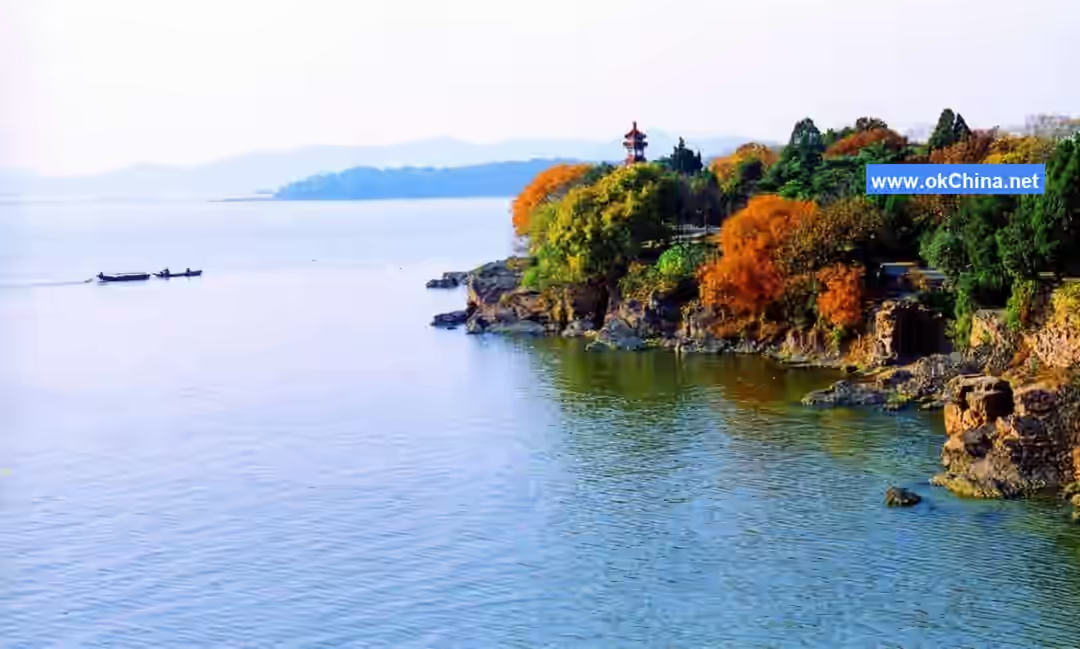
Wuxi Yuantouzhu Scenic Area is a peninsula within Wuxi on the northwestern shore of Taihu Lake (one of the five largest freshwater lakes in China). It is surrounded by water on three sides and consists of Baojie Mountain, Luding Mountain, Nandu Mountain, along with nearby Zhongdu Mountain and Sanshan Island, resembling a floating turtle raising its head. It forms scenic counterparts with Zhongdu Mountain, Xiaoji Mountain, Daji Mountain, the three islands in the lake, Ma Mountain, and Tuo Mountain. To the east are the Twelve Islets, and to the west are the Eighteen Bays.
3.3 Climate
Yuantouzhu has a humid subtropical monsoon climate characterized by ample sunshine, abundant precipitation, four distinct seasons, and a long frost-free period. The average temperature in January is around 2.8°C, while in July, it is around 29°C. The rainy season is relatively long, with an average annual precipitation of 1,048 millimeters, concentrated mainly in summer.
3.4 Natural Resources
Yuantouzhu ranks first among gardens in East China in terms of the scale and variety of Japanese iris (Iris ensata) cultivation. In May, large areas bloom with flowers of the same family as the Japanese iris, such as Iris sanguinea and yellow flag iris. In the mid-1990s, a Japanese iris garden was established within Chongshan Yinxiu at Yuantouzhu. Most of the original Japanese irises were introduced from Japan, totaling over 100 varieties and more than 6,000 plants, covering about 3,000 square meters. After years of cultivation and expansion, the Japanese iris planting area has extended to Chongshan Waterscape Garden, Cherry Blossom Forest, Cherry Blossom Valley, and other locations, doubling in size. Through natural hybridization, the varieties have reached over 400.
4. Scenic Area Layout
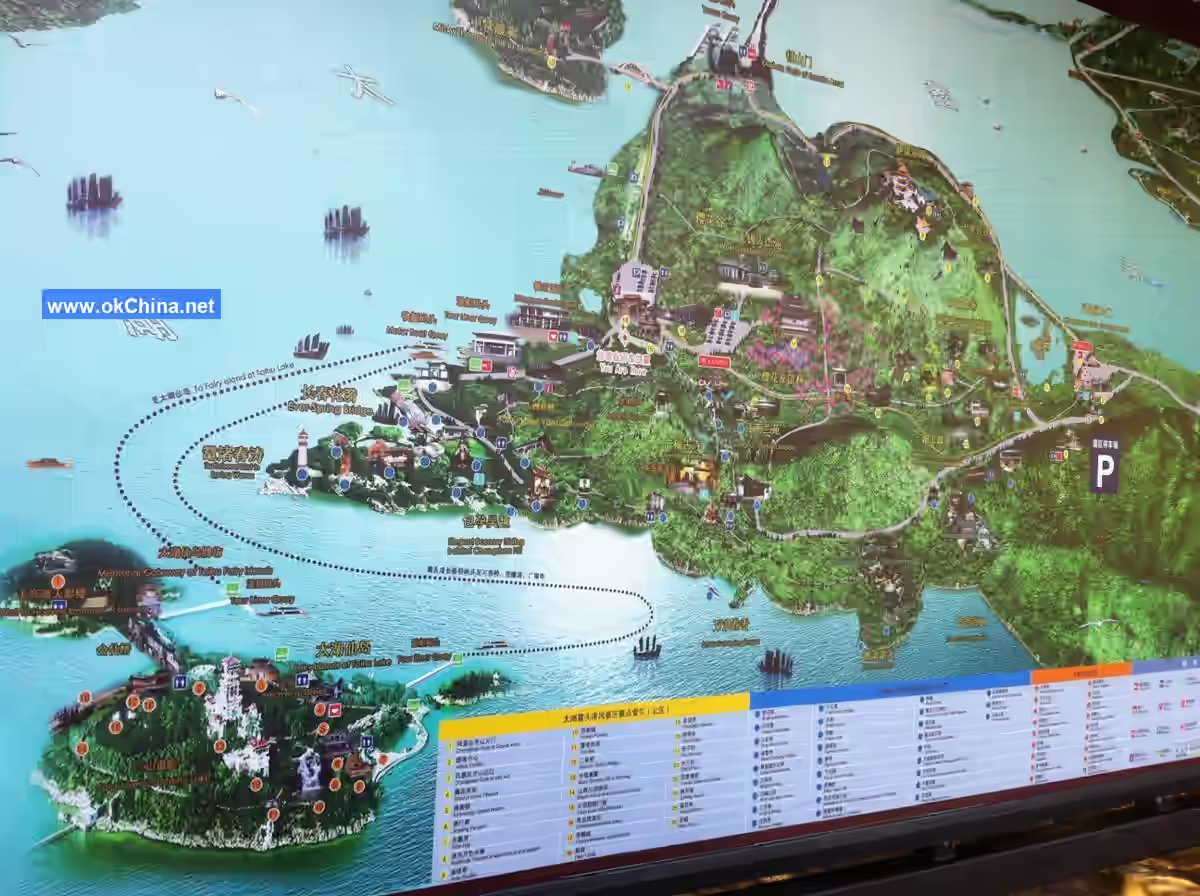
Wuxi Yuantouzhu Scenic Area features more than ten attractions, including Chongshan Yinxiu, Luding Yinghui, Yuanzhu Chuntao, Hengyun Mountain Villa, Wanlang Juanxue, Hushan Zhenyi, Shili Fangjing, Taihu Fairy Island, Jiangnan Orchid Garden, Cherry Blossom Valley, Wuxi Renjie Yuan, Zhongdu Chenwu, and Guangfu Ancient Temple. These include natural landscape paintings, rural pastoral scenery, and Jiangnan-style garden landscapes. Complemented by comprehensive services and entertainment facilities for dining, accommodation, shopping, and transportation, along with the cultural heritage left by historical celebrities, stone carvings, calligraphy, paintings, and legends, the area forms a comprehensive, multi-functional scenic tourist destination centered on natural landscapes with artificial embellishments.
5. Main Attractions
5.1 Yuanzhu Chuntao (Spring Waves at Turtle Head)
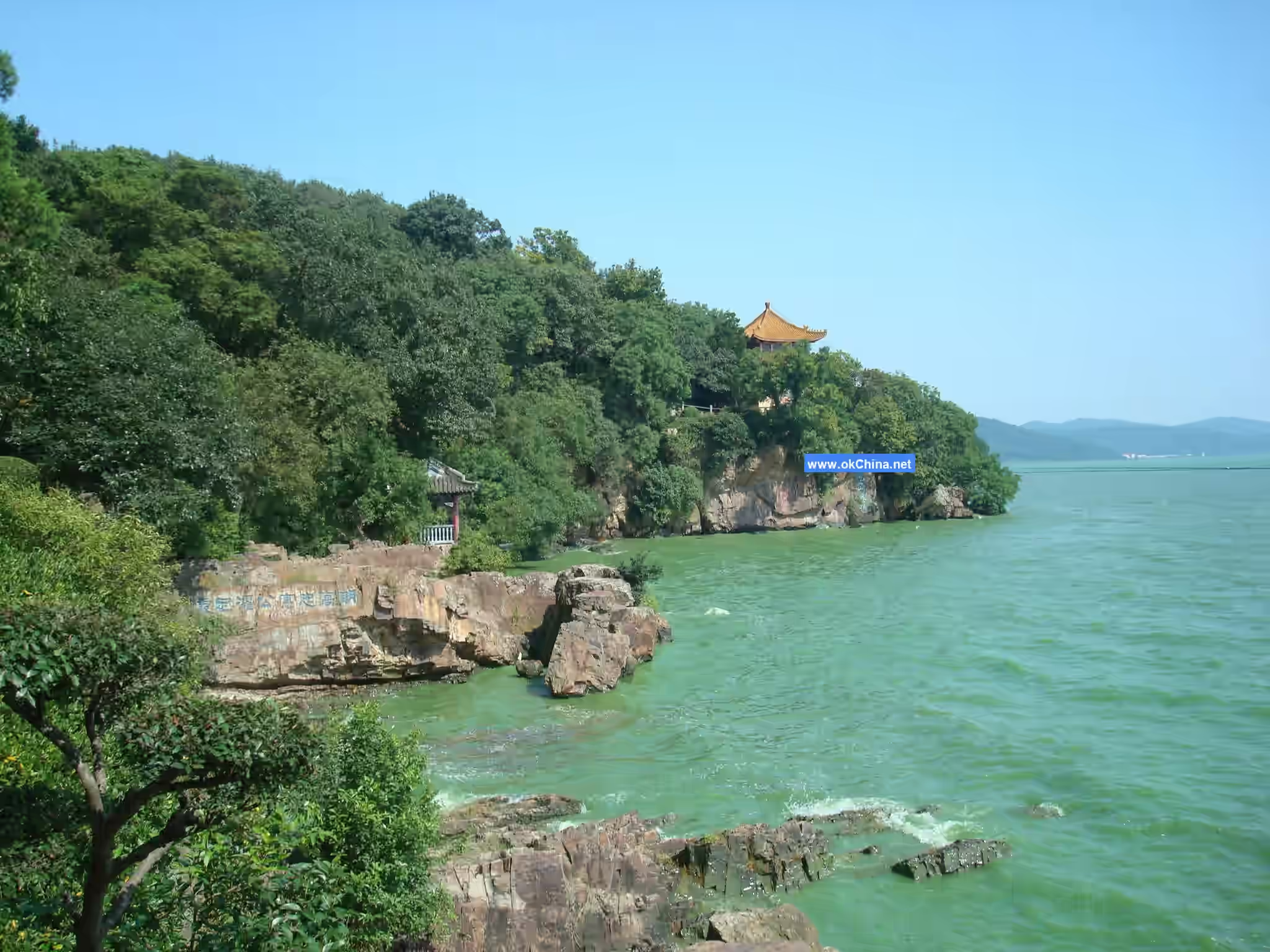
Forests, pavilions, and terraces are partially hidden, while a lighthouse towers by the lakeshore. From afar, islands appear to float, and up close, the sound of waves crashing against the shore can be heard. Numerous attractions line the lakeshore, each reflecting the accumulation of historical events. This is the essence of Yuantouzhu. Main attractions include the lighthouse, the "Yuantouzhu" stone tablet, the "Hengyun" cliff carving, the "Zhenze Shenyuan" bronze statue (Divine Turtle of Zhenze), Chenglan Hall, and Feiyun Pavilion.
5.2 Cherry Blossom Valley
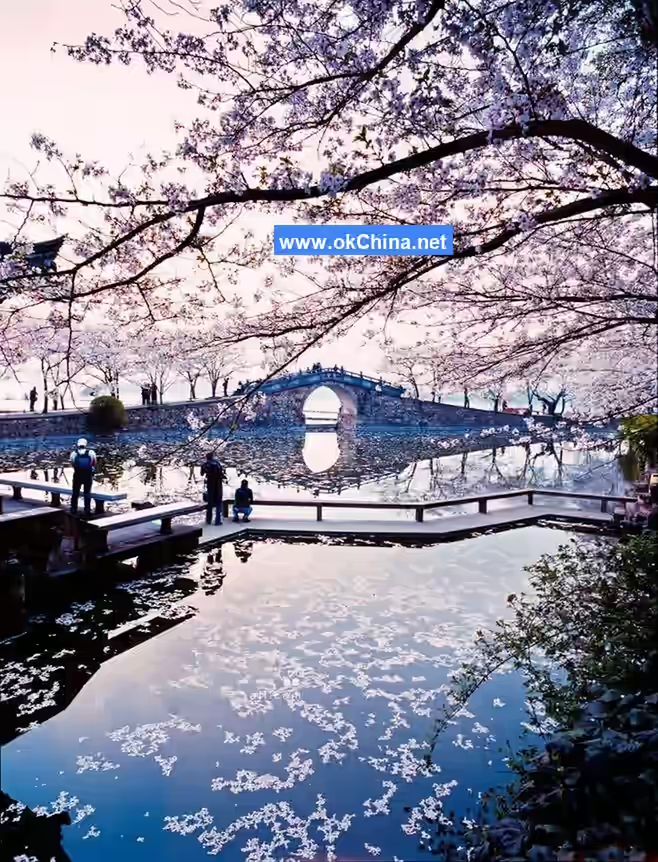
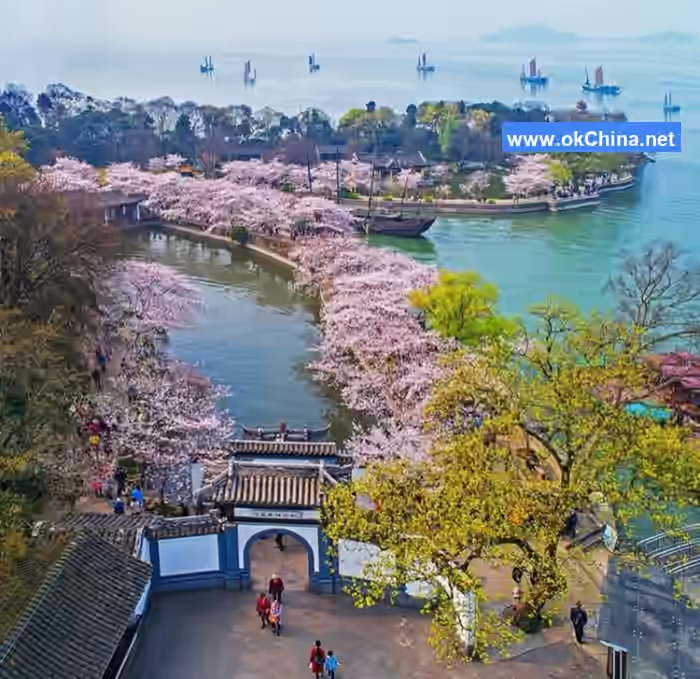
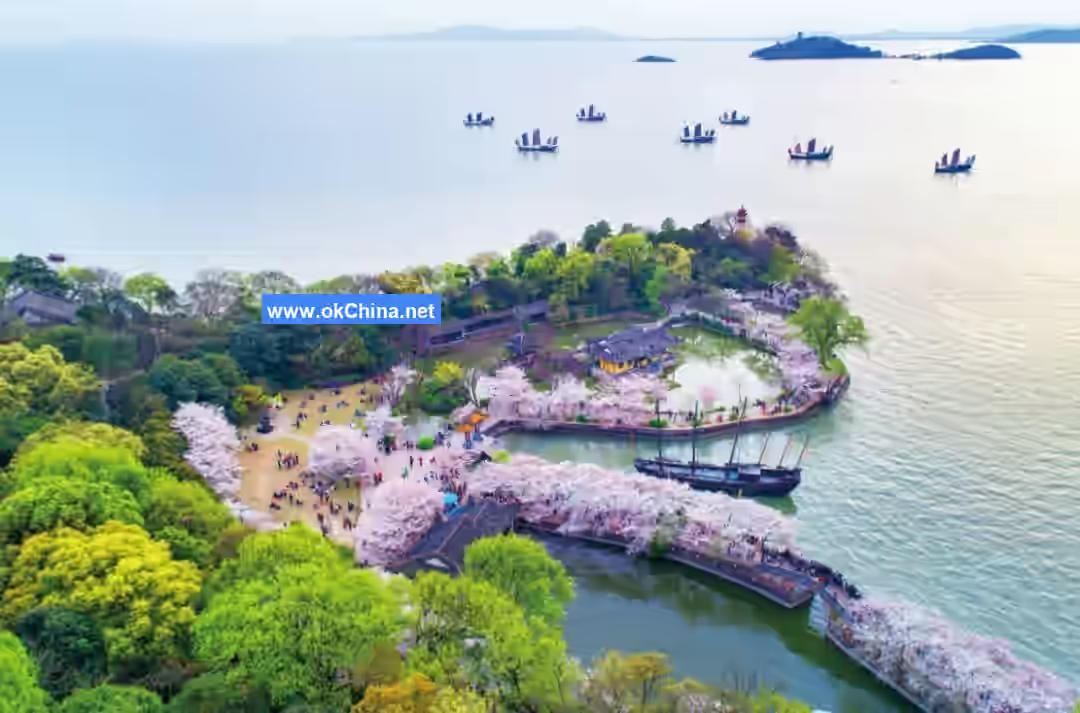
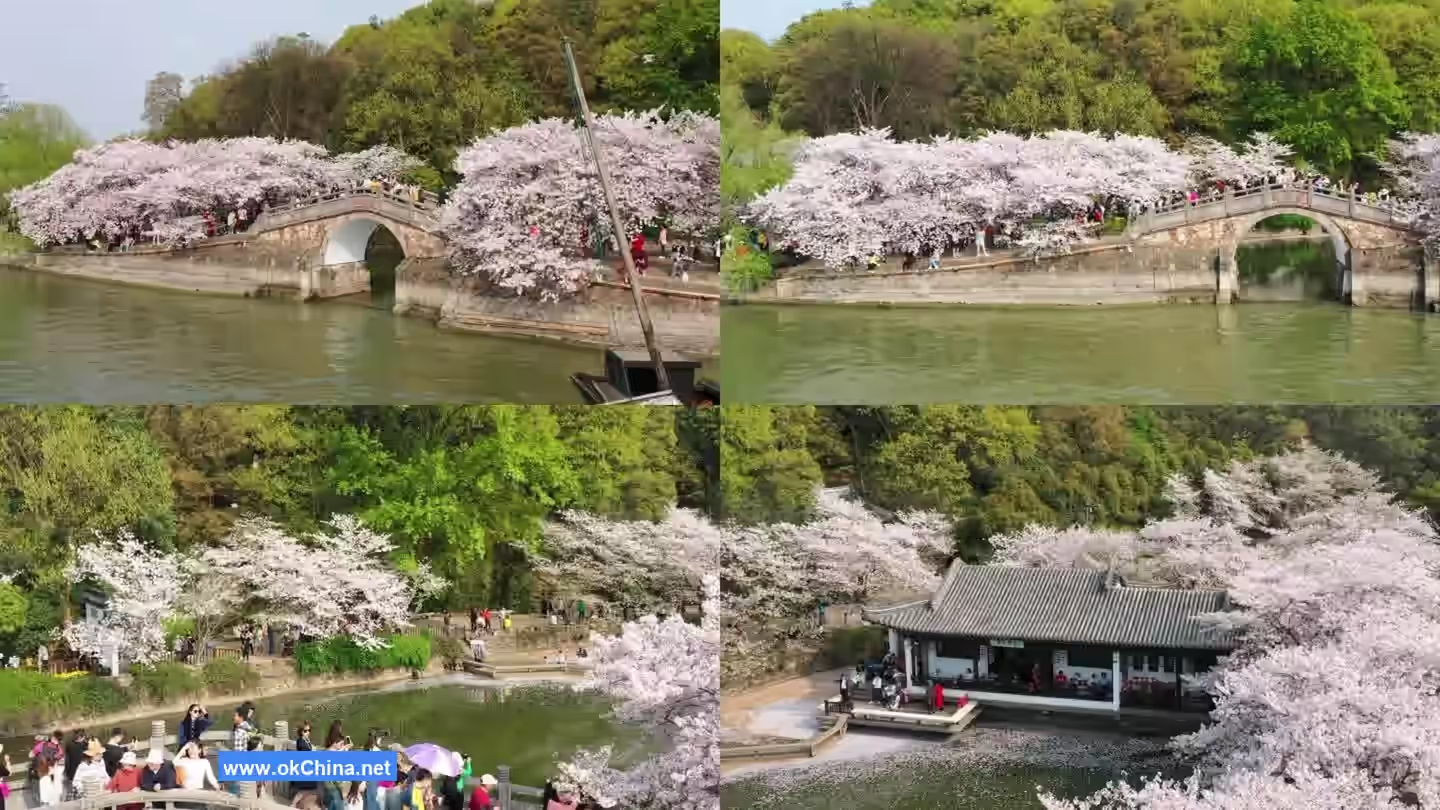
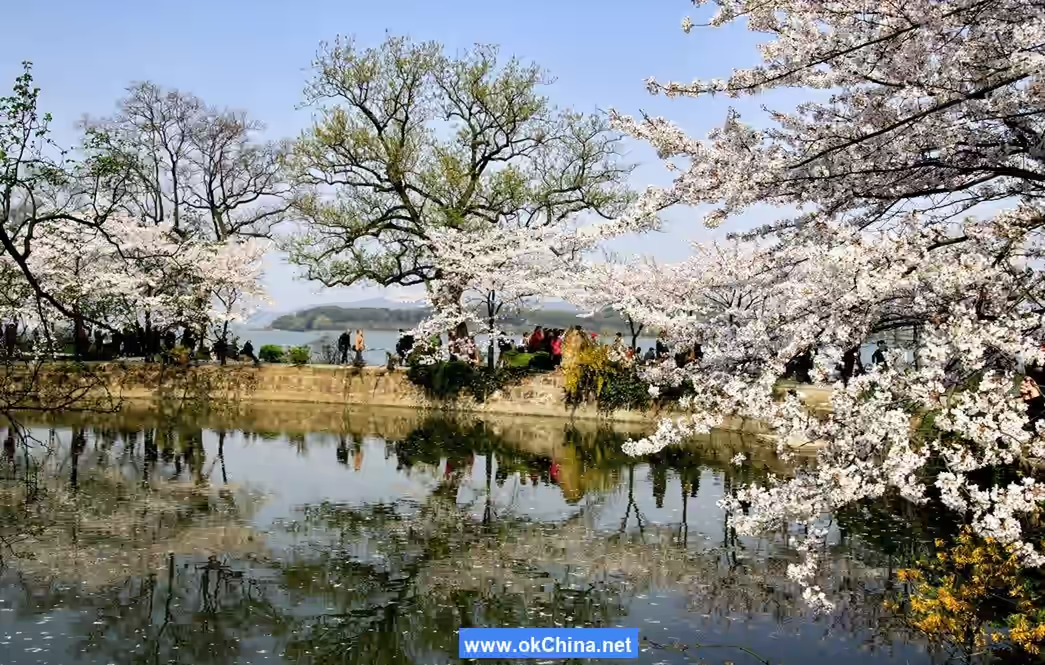
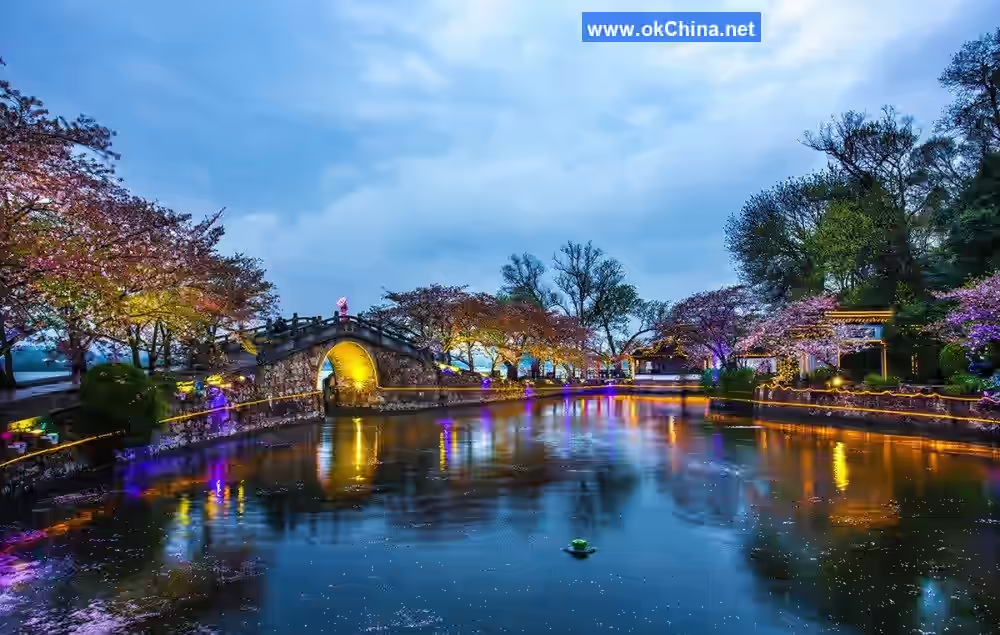
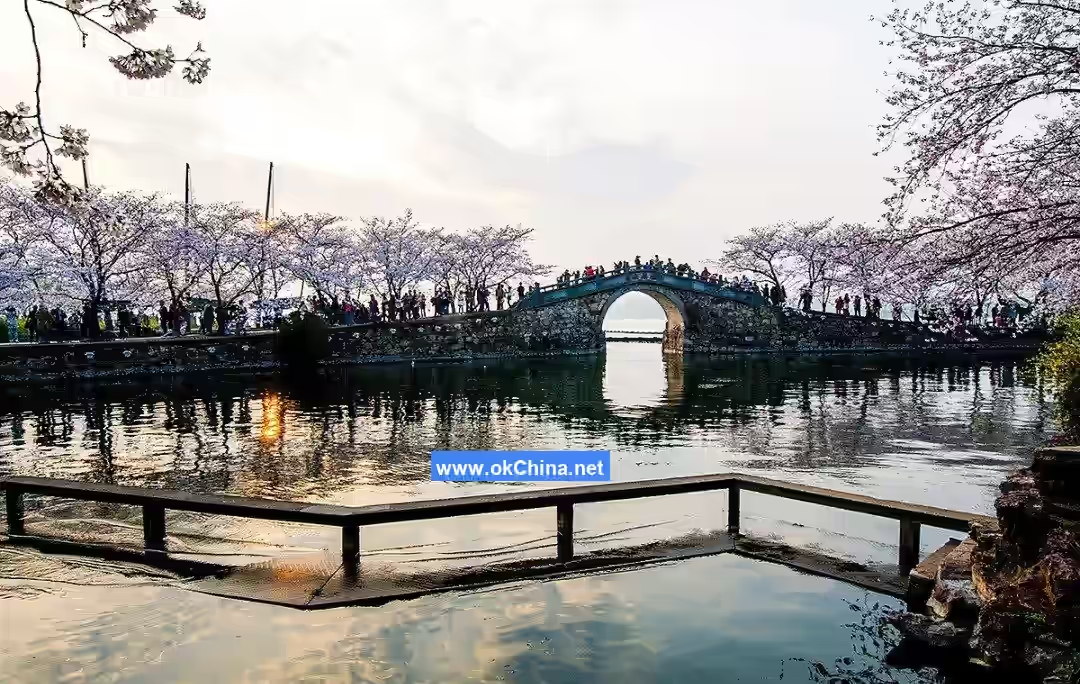
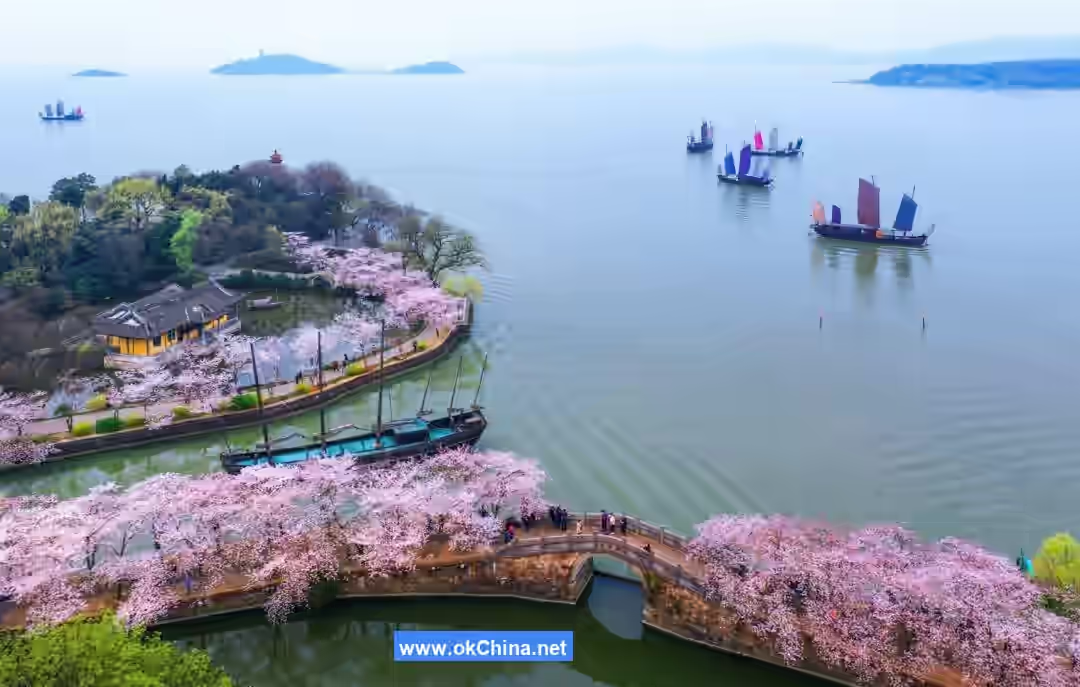
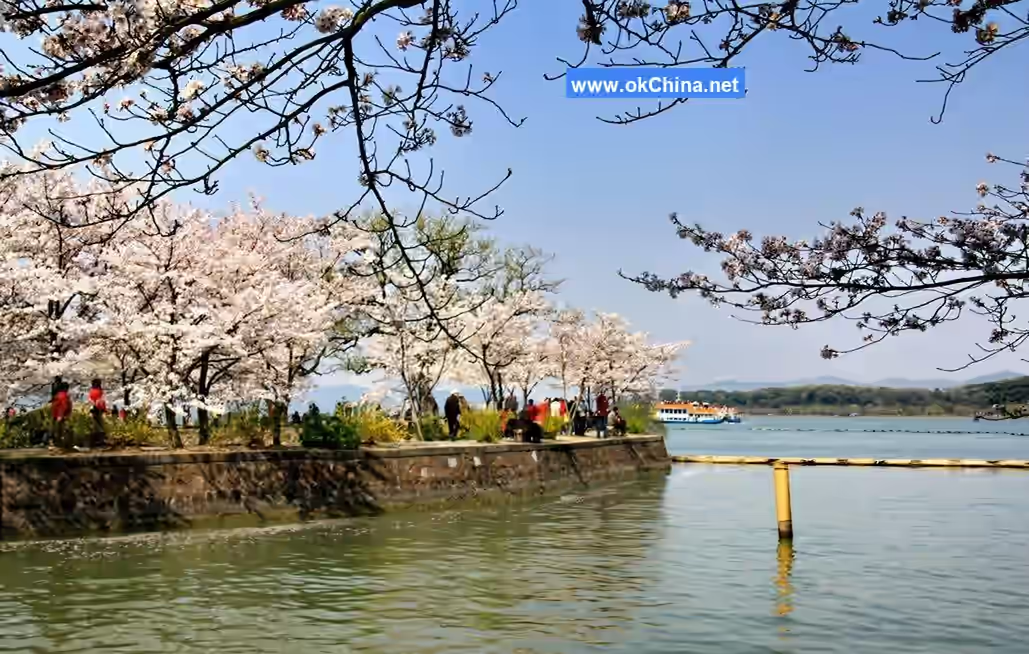
Located at the northern foot of Luding Mountain within the Yuantouzhu scenic area, adjacent to and integrated with the China-Japan Cherry Blossom Friendship Forest, Cherry Blossom Valley covers 200,000 square meters. It is planted with over 30,000 cherry trees of 68 varieties, making it the largest specialized cherry blossom garden in China. The valley features structures such as the Shangying Tower (Cherry Viewing Tower), Nieyun Pavilion, Fanying Pavilion, and Cuchun Bridge.
5.3 Wuxi Renjie Yuan (Garden of Wuxi's Outstanding Figures)
Situated among the cherry blossom forests at the foot of Luding Mountain, Wuxi Renjie Yuan consists of the Renjie Hall, sculpture statues, and demonstration halls. It showcases the life achievements of over 60 eminent figures from Wuxi's history, serving as an educational and entertaining "Liangxi Landscape Living Room" and a "Cultural Name Card of Wuxi."
5.4 Wanlang Juanxue (Ten Thousand Waves Rolling Snow)
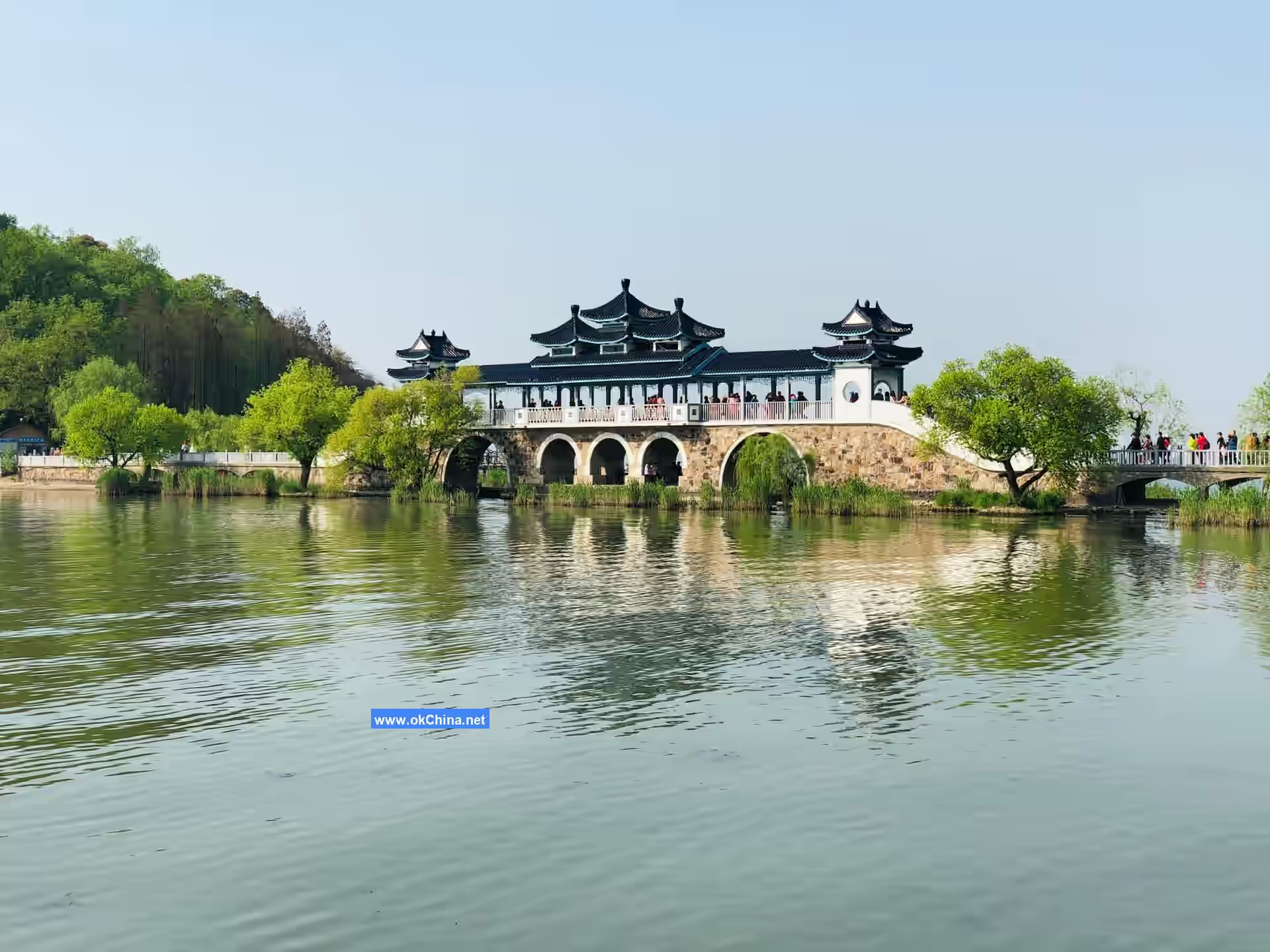
In the western part of Wuxi Yuantouzhu Scenic Area, there is a natural water bay featuring Wanlang Bridge and a curved embankment. Strolling over the waves, with long waves crashing against the shore, whenever the lake wind picks up, water splashes like flying pearls, resembling swirling snowflakes. In the evening, one can enjoy the sight of returning fishing boats at sunset and the charm of boats moored for the night. Nearby are the Wang Kunlun Memorial Hall, Wanfang Tower, Guangfu Temple, Tao Zhu Pavilion, and other historical sites.
5.5 Wanlang Bridge
Wanlang Bridge is located on the eastern hillside below Guangfu Temple, along a natural water bay where reeds grow thickly and fishing boats moor. The hillside features rocky cliffs and forests of pine and cypress. In the 1930s, a curved embankment was built around it, with an arch bridge in the middle, creating a serene and tranquil atmosphere. Whenever strong southeasterly winds blow, they whip up countless huge waves. The roaring sound of the waves rolls in from the distance, crashing against the lake embankment and splashing water like pearls, as if snowflakes are swirling in the sky, hence the name "Wanlang Bridge" (Ten Thousand Waves Bridge).
5.6 Taihu Fairy Island
Originally called Sanshan Island (Three Mountain Island), Taihu Fairy Island is located 2.6 kilometers southwest of Yuantouzhu in the lake, renowned as the "Three Mountains Reflecting in Emerald." The island houses the Sanshan Taoist Temple, along with structures like Huixian Bridge, Heavenly Street, Lingxiao Palace, Tiandu Immortal Mansion, Yue Lao Temple (Matchmaker Temple), and Dajue Bay. With magnificent palaces and towers, ancient music playing, and interiors adorned splendidly and majestically, the statues of deities are vivid, including a statue of the Jade Emperor reaching 18 meters in height.
5.7 Shili Fangjing (Ten-Mile Fragrant Path)
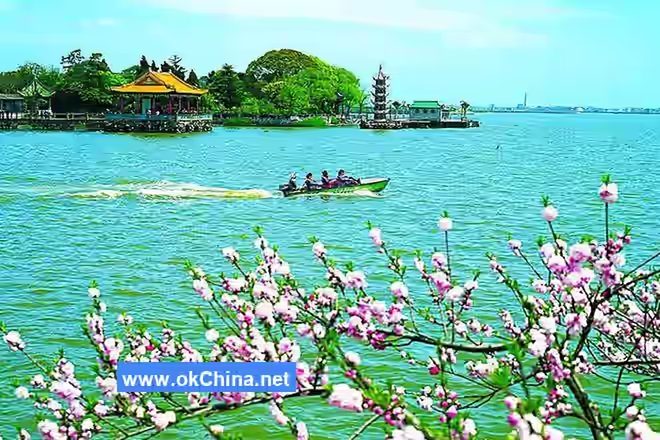
Shili Fangjing is the main road leading to the entrance of Wuxi Yuantouzhu Scenic Area. Following the mountains and skirting the water, it offers ten miles of scenery that changes with every step. In spring, peach blossoms are red and willows green; in early summer, lotus ponds are fragrant; in mid-autumn, red leaves are brilliantly colored; and in severe winter, snow lies white and gleaming.
5.8 Lotus Flower Depths
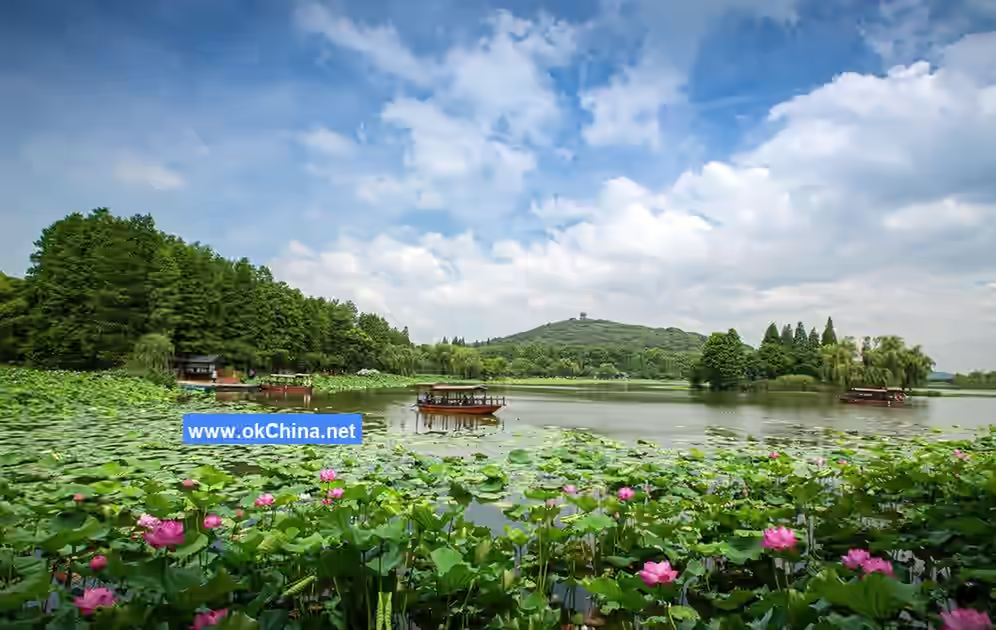
Located by Lihu Lake along the Shili Fangjing, Lotus Flower Depths features acres of aquatic plants like lotus flowers, water lilies, and duckweed stretching for miles. In summer, green leaves sway and lotus fragrance fills the air. Strolling through the lotus ponds offers a cool respite from the heat, with refreshing breezes.
5.9 Luding Yinghui (Deer Peak Greeting the Dawn)
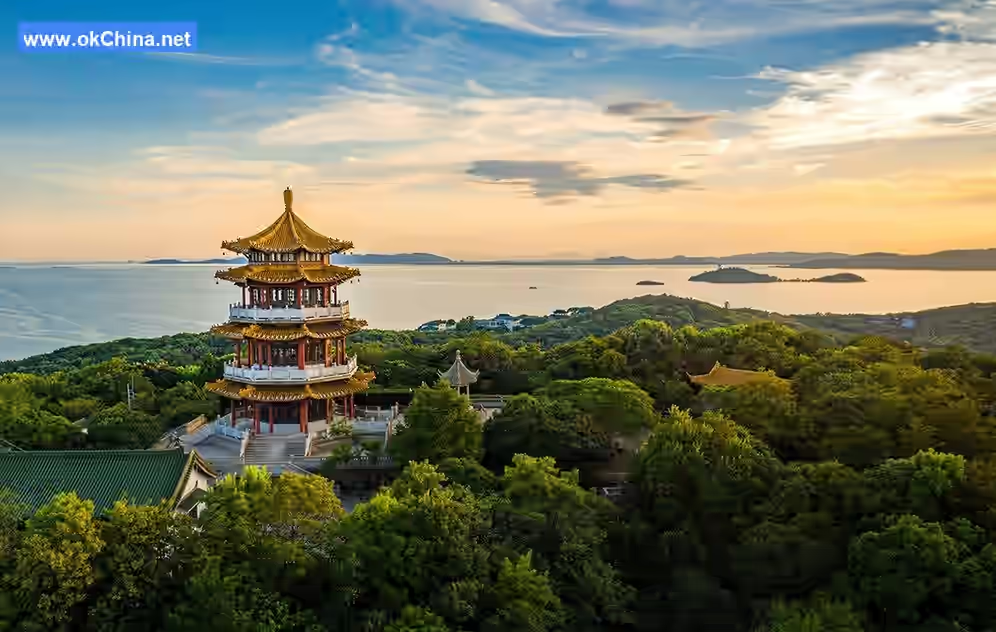
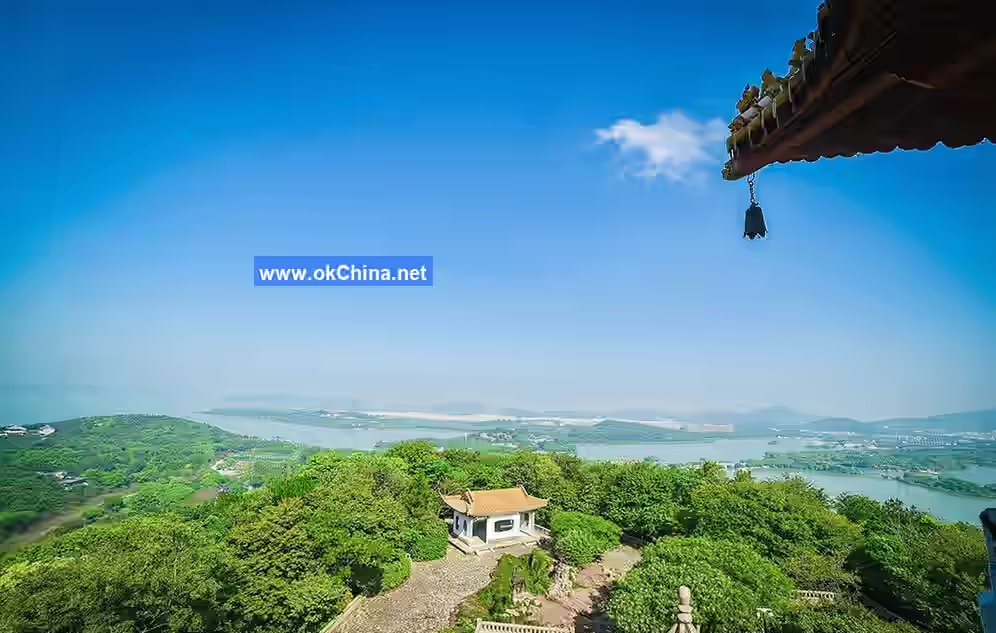
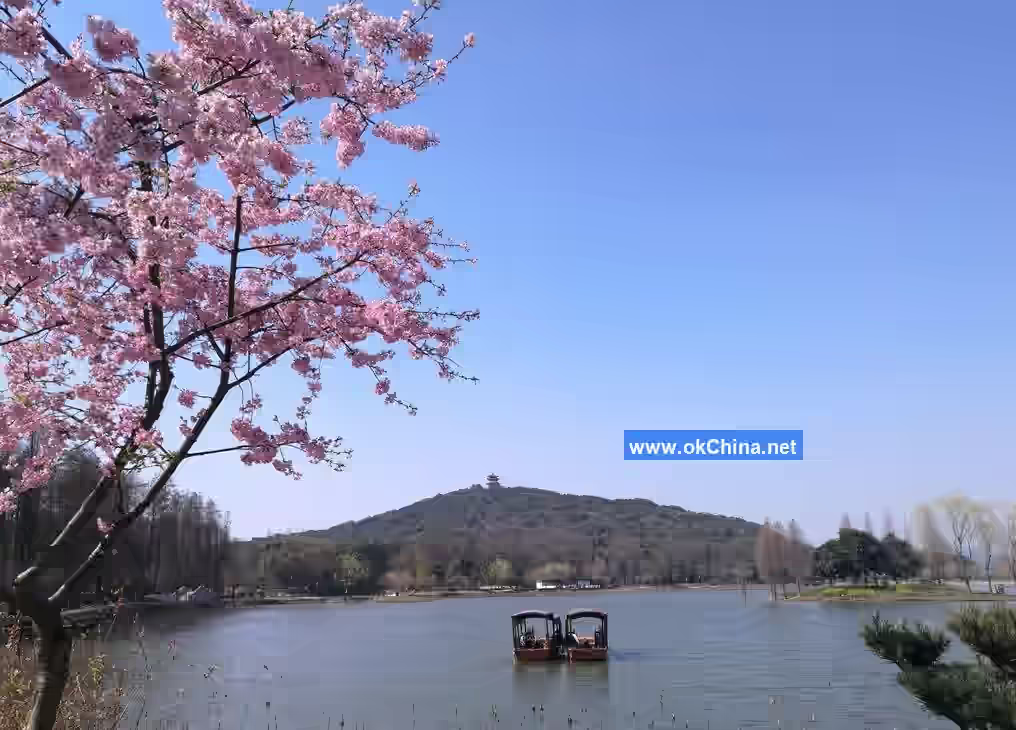
Luding Mountain, standing 96 meters high, is the highest point in Wuxi Yuantouzhu Scenic Area. At its summit and on its slopes are structures such as Shutian Pavilion, Huanbi Tower, Deer Herd Sculptures, Stele and Screen Wall, Fan Li Hall, and Tahua Pavilion. Climbing high and looking far, one can truly experience: scenery for all seasons, picturesque views from all directions, offering a panoramic view of the lake, mountains, and cityscape.
5.10 Jiangnan Orchid Garden
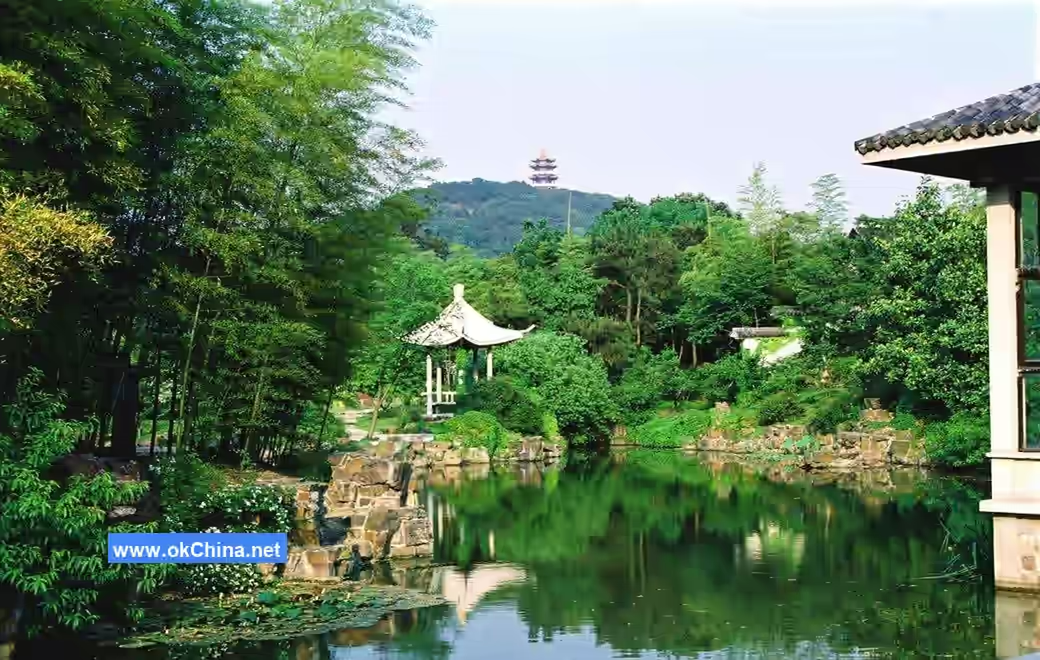
Jiangnan Orchid Garden is a specialized garden primarily for cultivating and admiring orchids. It is listed by the Chinese Botanical Society as the China Orchid Germplasm Resource Conservation and Research Center. The garden features lush vegetation, scattered pavilions and terraces arranged in an elegant, classical style. With orchid fragrance throughout the seasons, it is serene and pleasant, making it an excellent place to appreciate orchids and enjoy tea.
5.11 Hushan Zhenyi (True Essence of Lake and Mountain)
Located in the central area of Wuxi Yuantouzhu Scenic Area, leaning against the mountain and facing the lake, Hushan Zhenyi is accessed via winding stone steps through deep pine forests. Passing through a half-pavilion tunnel and ascending to Tianyuan Tower, this spot offers a superb view of the true charm of Taihu Lake's landscape. Nearby are also the Cangying Islet and Juanxue Pavilion.
5.12 Hengyun Mountain Villa
Behind the gate tower inscribed with "The Finest Spot of Taihu Lake" lies the classical garden area of Yuantouzhu. Nestled against the lake and mountain, with pavilions, corridors, terraces, small bridges, and flowing water, it presents the classical garden style of Jiangnan water towns. Attractions distributed here include Changchun Bridge, Jiangxue Pavilion, the "Jugu Shengjing" memorial archway, the bronze statue of Xu Xiake, Songfen Hall, and Jingxiang Waterside Pavilion.### 5.13 Chongshan Yinxiu Chongshan Yinxiu is renowned for its trees, flowers, and natural wild scenery, boasting numerous ancient and famous trees. It is the main location of the Taihu Lake Botanical Garden. Scenic spots within the area include Zuifang Tower, Xinghua Tower, Yixiu Bridge, the Iris Garden, and the Nie Er Memorial Hall.
5.14 Former Residence of Wang Kunlun
On a hill embraced by the blue waves of Taihu Lake within the Yuantouzhu Scenic Area, nestled among lush green trees and red leaves, stands a modern building—the "Seventy-Two Peaks Mountain Lodge." In 1987, it was established as the "Former Residence of Wang Kunlun," with the horizontal plaque inscribed by Deng Yingchao herself.
5.14.1 Life of Wang Kunlun
Wang Kunlun, a native of Wuxi, Jiangsu, joined the Kuomintang in 1922. In 1926, he served as a political instructor at the Whampoa Military Academy's Chaozhou branch and participated in the Northern Expedition. He once served as a legislative member of the Nationalist Government and an alternate member of the Kuomintang Central Executive Committee, dedicating significant efforts to winning over senior Kuomintang figures. In 1949, Wang Kunlun joined the Revolutionary Committee of the Chinese Kuomintang (RCCK) and served as the Chairman of the Fifth and Sixth Central Committees of the RCCK.
5.14.2 Literary Achievements of Wang Kunlun
Wang Kunlun was an outstanding revolutionary activist who demonstrated considerable literary accomplishment in both classical and modern poetry. His commentary on the characters in the Chinese classical literary masterpiece Dream of the Red Chamber profoundly expressed his beliefs, loves, and hatreds. Zhou Enlai specifically brought this book to Yan'an, and Mao Zedong also praised it after reading it.
5.15 Yuanmen Tower
Located at the foot of Chongshan, the Yuanmen Tower is in the form of an archway, topped with orange-yellow glazed tiles, and was built in 1986. From here, a 3.5-kilometer path leads directly to the Old Gate Tower. Visitors can take an elevated electric train for the 3,800-meter journey, crossing the Wuli Lake, passing through the Luding Mountain Tunnel, and arriving directly at the Old Gate Tower. The Old Gate Tower is situated in Ducun Village, built in 1972, featuring soaring eaves and double-layered roofs with glazed tiles. The front bears the three gilded characters "Yuantouzhu," while the back is inscribed with "Shan Hui Chuan Mei" (Mountains Gleam, Rivers Charm). To the left of the entrance is the archway of "Taihu Villa." Passing through a moon gate and following the Qimei Road leads to the Seventy-Two Peaks Mountain Lodge. Continuing along the main road and walking through the 300-meter Azalea Slope leads to the ferry terminal for Taihu Fairy Island. Here, a stretch of Taihu Lake water is visible, surrounded by Zhongdu Mountain, Xiaoji Mountain (Jinyuan), and Daji Mountain. In the vast expanse of the lake, the three mountains resembling a large turtle can be seen floating as if submerged. The lake embankment offers splendid scenery. The relatively famous overseas Chinese painter Yang Ling, upon returning to China in 1935, inscribed the three characters "Cui Wei Zhang" on the rocks of the lake embankment for Yuantouzhu.
5.16 Yuantouzhu Archway
The Yuantouzhu Archway, built in 1973, was the former main gate of the Yuantouzhu Scenic Area and serves as the prelude to Wuxi's top scenic spot, "Yuanzhu Spring Waves." "Yuan" refers to a turtle-like animal, and "zhu" means a small land area surrounded by water on three sides. It is named Yuantouzhu because its shape resembles a turtle's head. The back of the archway is carved with the four large characters "Shan Hui Chuan Mei" (Mountains Gleam, Rivers Charm), highlighting the scenic feature of "hills not high but elegant, waters not deep but vast." In front of the main road lies the 300-meter Azalea Slope. Azaleas are the city flower of Wuxi. During the Qingming Festival, azaleas bloom all over the mountains, fields, under trees, and along streams, dyeing the entire mountain red. On both sides are camphor trees, which are the city tree of Wuxi.
6. Cultural Activities
6.1 Cultural History
6.1.1 Ancient History
The beautiful scenery of Yuantouzhu has existed since ancient times. In the late Western Han Dynasty, Yu Jun, a native of Wuxi who served as the Prime Minister's Sizhi, was martyred for refusing to submit to rebellion and was buried at the foot of Baojie Mountain, leaving the scenic spot "Zhuyi Baojie." During the Southern Dynasties' Liang period, the "Guangfu Nunnery" was built here, one of the "480 temples of the Southern Dynasties, many towers and pavilions in the misty rain." In the early Ming Dynasty, "Taihu Spring Surge" was listed as one of the "Eight Scenes of Wuxi." In the late Ming Dynasty, Gao Panlong, leader of the Donglin Party, often came here to tread the waves and chant poetry, leaving behind the relic "Washing Feet by Yuantouzhu." In the late Qing Dynasty, Liao Lun, the county magistrate of Wuxi, inscribed the cliff carvings "Bao Yun Wu Yue" (Embracing Wu and Yue) and "Heng Yun" (Horizontal Clouds) on the lakeside cliffs, depicting the grandeur of Taihu Lake and its nurturing embrace of the Wu and Yue regions. Many literary works by scholars and poets have been composed here. Ascending to the turtle's head and gazing into the distance, the vast lake washes away the worldly dust, and the distant mountains, like dark eyebrows, soothe the heart. Ming poet Hua Yun once wrote, "Inverted terraces reflect uneven trees, a jade mirror screen opens to distant and near mountains."
6.1.2 Modern Evaluation
Yuantouzhu Park is surrounded by water on three sides, facing Zhongdu Mountain, Xiaoji Mountain, Daji Mountain, the three mountains in the lake, Ma Mountain, and Tuo Mountain. To the east are the Twelve Islets, and to the west are the Eighteen Bays. Mountains beyond mountains, lakes within lakes, layered green peaks, and ever-changing scenery—the beauty of the lake and mountains converges at Yuantouzhu. The poet Guo Moruo's line, "The finest spot of Taihu Lake is, after all, at Yuantouzhu," is an accurate assessment of Yuantouzhu Park. Modern figure Zhao Puchu praised, "The scenery of Yuantouzhu surpasses paradise."
6.2 Activities
6.2.1 Cherry Blossom Viewing
Wuxi's Yuantouzhu Scenic Area is hailed as one of the world's top three cherry blossom viewing destinations and the premier cherry blossom viewing spot in China. It has organically integrated cherry blossom tourism with the scenic area's unique culture, embedding cherry blossom culture into its authentic landscapes and waters, and has launched the distinctive "Landscape Cherry Blossoms" tourism product for Yuantouzhu.
6.2.2 Fishermen's Customs Festival
In September 2013, the "2013 Wuxi Taihu Yuantouzhu Fishermen's Customs Festival" commenced at the Taihu Yuantouzhu Scenic Area.
6.2.3 International Cherry Blossom Festival
On March 10, 2021, the "2021 China·Wuxi Taihu Yuantouzhu International Cherry Blossom Festival" officially opened, with activities lasting until May 5.
Comments
Post a Comment