Mount Yimeng
1. Introduction
The Mount Yimeng Tourist Area is a scenic area located in Shandong Province, consisting of three scenic zones: the Mount Yi Scenic Area in Linqu County, Weifang City; the Mount Yunmeng Scenic Area in Mengyin County, Linyi City; and the Mount Guimeng Scenic Area in Pingyi County, Linyi City.
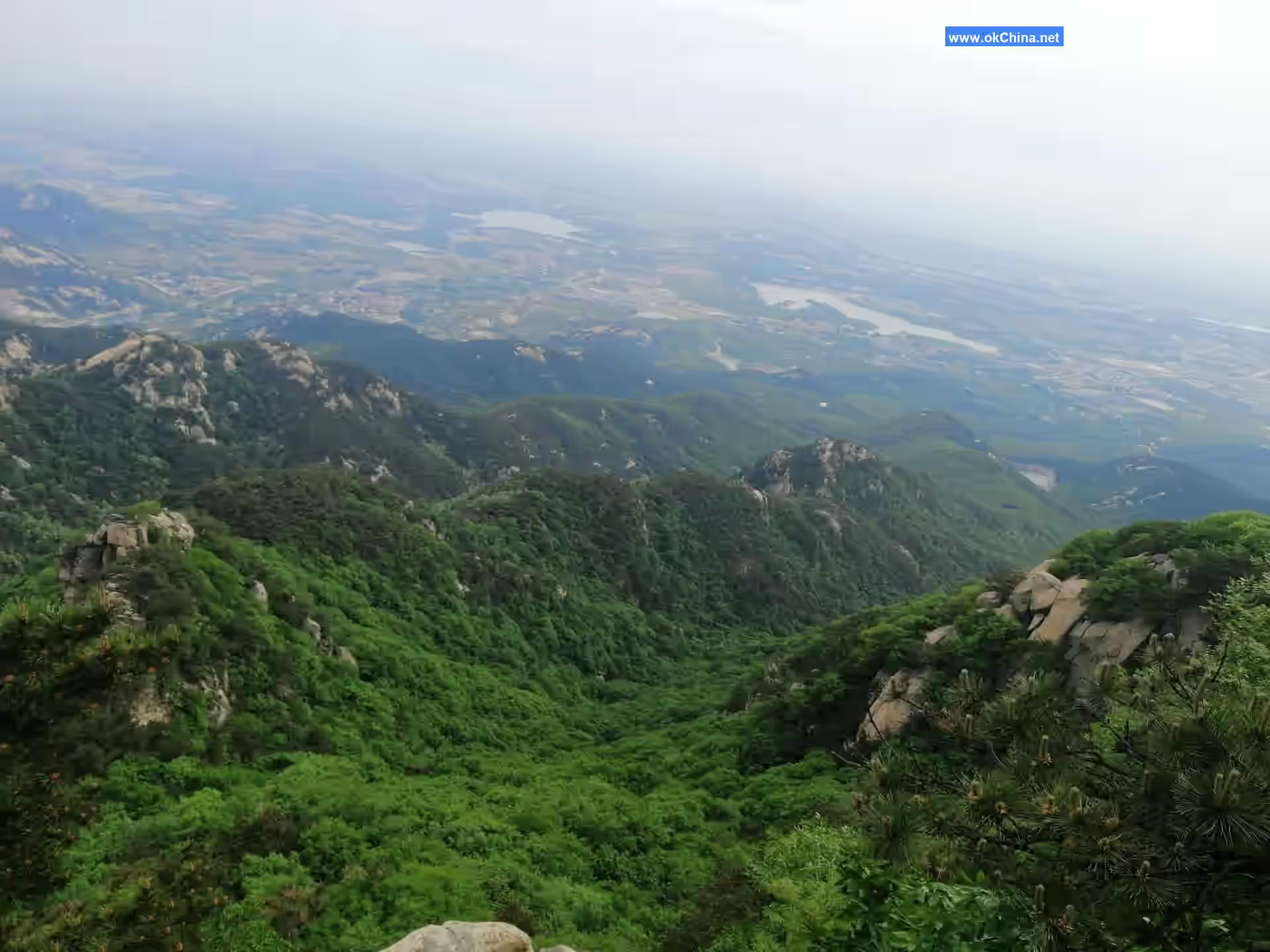
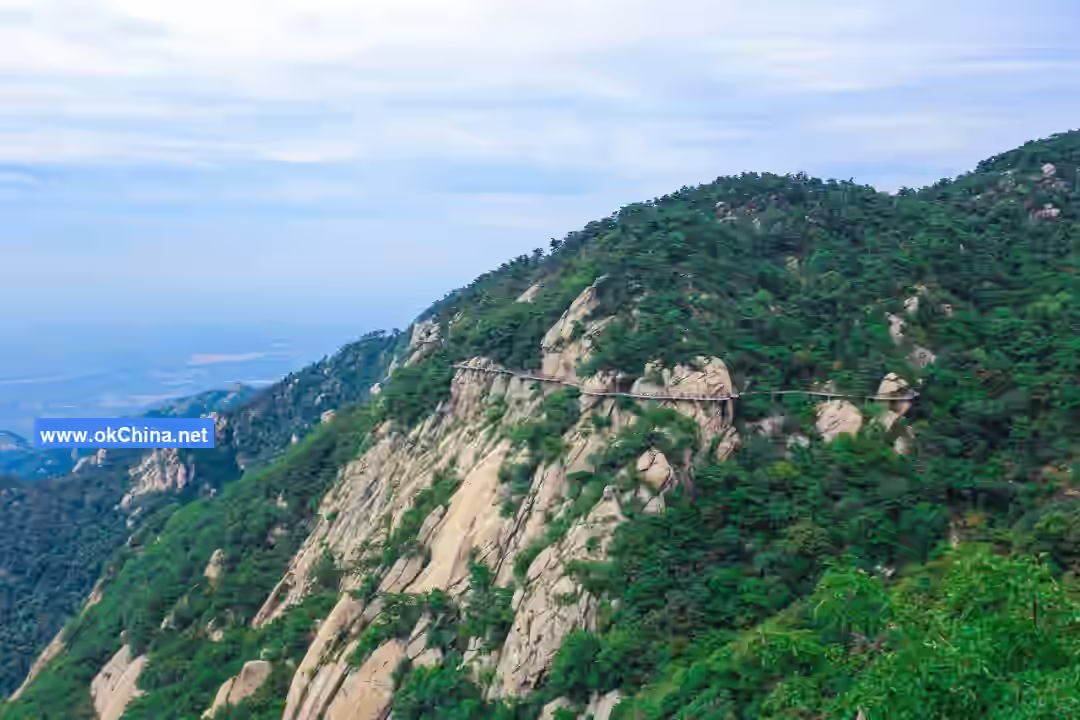
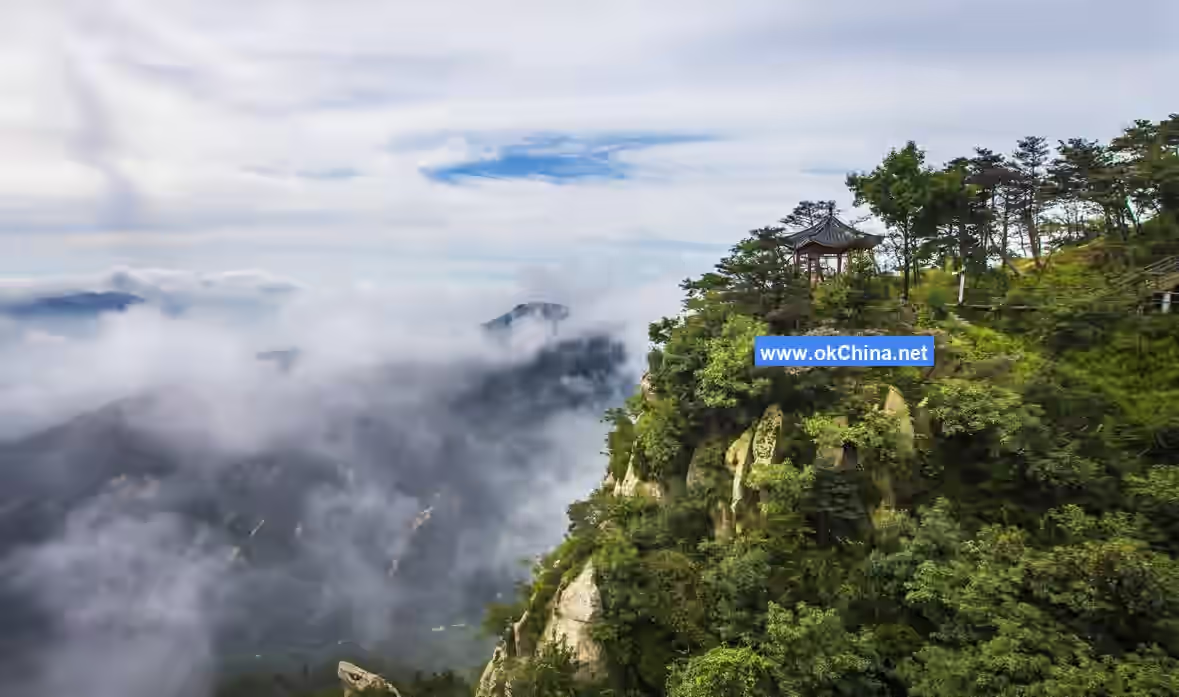
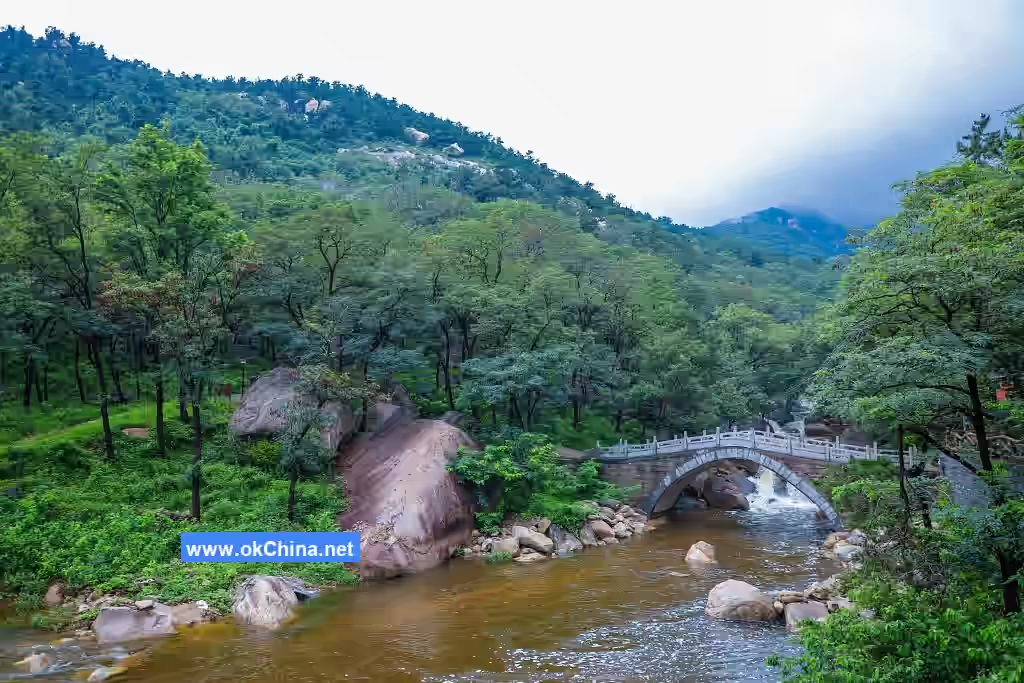
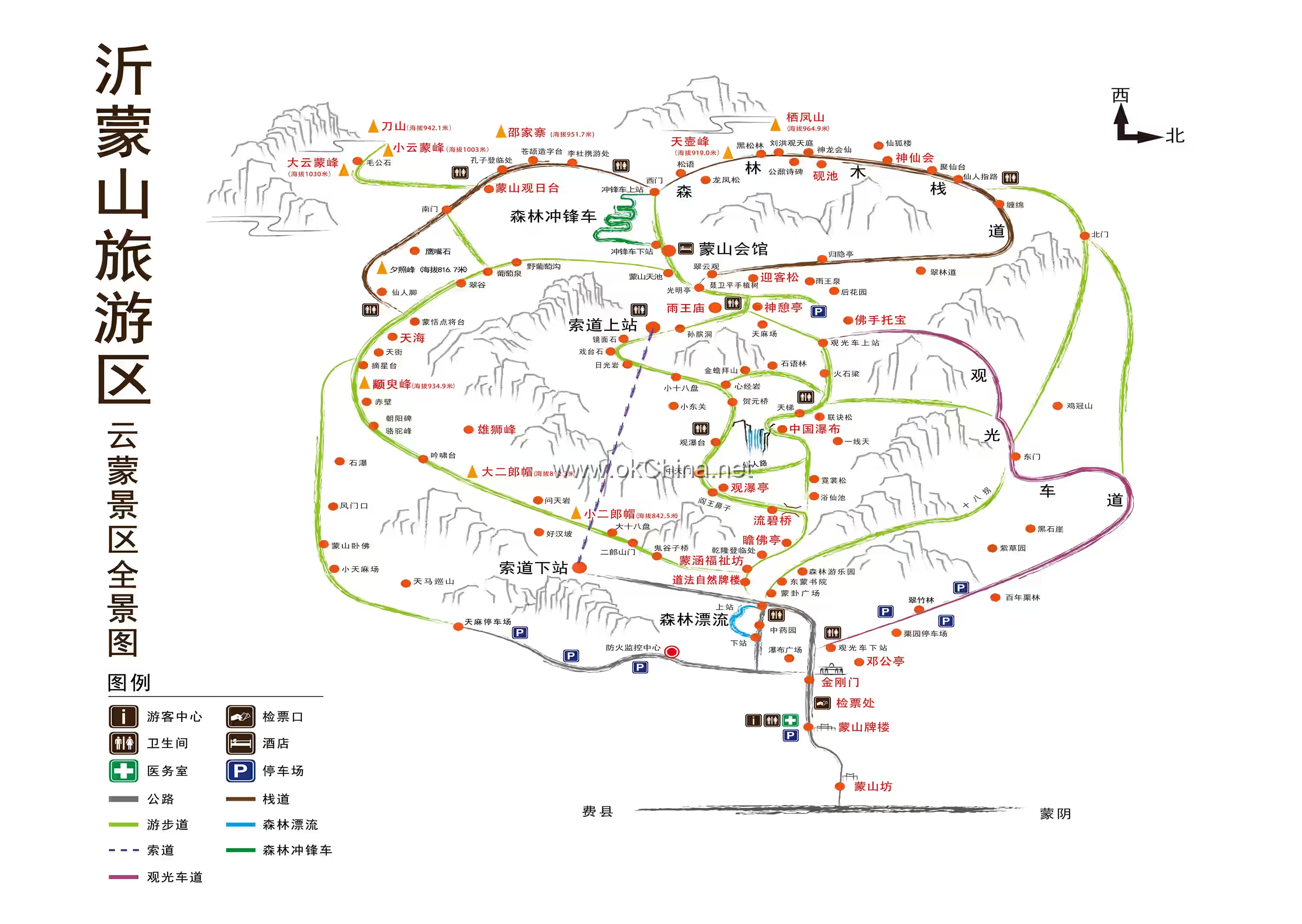
The Mount Yimeng Tourist Area is a famous revolutionary sacred site in China, the birthplace of Chinese "Zhenshan" (Guardian Mountain) culture, a renowned health and longevity sanctuary, and the location of the World Cultural Heritage site, the Great Wall of Qi. The tourist area boasts beautiful natural scenery and excellent ecological resources, with a forest coverage rate exceeding 95% and high concentrations of negative oxygen ions, making it a "natural oxygen bar." Mount Yimeng is traditionally described as having "thirty-six peaks and seventy-two tablelands (gu)," with 15 peaks exceeding 1,000 meters in elevation. Its layered ridges and competing spectacular peaks culminate in the highest summit, Guimengding, at 1,156 meters. The Mount Yi Scenic Area comprises attractions such as the Dongzhen Temple, Baizhangya Waterfall, Shenlong Grand Canyon, Fayun Temple, Yuhuangding (Jade Emperor Peak), and Waitougu. The Mount Yunmeng Scenic Area includes attractions like the Shady Side of Mount Meng, Mengshan Layers of Green, Water Curtain Cave, Rain God Temple, Baihua Valley, Xingshan Karst Cave, and Yunxia Cave. The Mount Guimeng Scenic Area features Guimengding, the Giant Mount Meng Longevity Star Statue, Wanshou Palace, Central Hiking Trail, Western Hiking Trail, Dawa, Yuhuang Pavilion, Old Longevity Mountain, Guiguzi Lecture Hall, Wisdom Mansion, Longbrow Cave, and Mingguang Temple.
On December 19, 2013, the Mount Yimeng Tourist Area was officially approved as a National AAAAA Tourist Attraction by the National Tourism Attraction Quality Rating Committee. It became the first such attraction in Weifang and Linyi cities, and the ninth in Shandong Province.
2. Geographical Environment
2.1 Location and Area
The Mount Yimeng Tourist Area is located within Weifang City and Linyi City, Shandong Province. The Mount Yi Scenic Area is situated in Yishan Town, Linqu County, Weifang City, approximately [distance missing] from Linqu county town and about 50 kilometers from downtown Weifang. The Mount Yunmeng Scenic Area is located in Taoxu Town, Mengyin County, Linyi City, approximately 25 kilometers from Mengyin county town and about 82 kilometers from downtown Linyi. The Mount Guimeng Scenic Area is situated in Bolin Town, Pingyi County, Linyi City, approximately 26 kilometers from Pingyi county town and about 100 kilometers from downtown Linyi.
2.2 Topography and Landforms
The "Daigu Landform" is a unique landscape feature in the Mount Yimeng area of Shandong Province. Previously termed "mesa" in geomorphology, these formations are commonly called "gu." A "gu" features a flat, expansive top with sheer cliffs on all sides. Below the cliffs, the slope transitions from steep to gentle. Viewed from afar, it resembles a mountain wearing a flat-topped hat. The formation of "gu" is primarily due to the intense crustal cutting and uplifting of Cambrian limestone from the Paleozoic era, combined with multiple dynamic processes such as erosion, dissolution, gravitational collapse, and weathering. This resulted in the current "gu" formations: round in appearance with flat summits, sheer surrounding cliffs, and slopes below the cliffs gradually transitioning from steep to gentle. They often resemble shapes like camels, hats, tables, or cockscombs.
2.3 Climatic Features
The Mount Yimeng region experiences a warm temperate East Asian continental monsoon climate. Influenced by the mountainous terrain and forest communities, the area's climate features four distinct seasons: dry and windy springs, hot and rainy summers, cool and clear autumns, and cold and dry winters.
3. Main Attractions
3.1 Mount Yi Scenic Area
3.1.1 Dongzhen Temple
Located on the eastern foothills of Mount Yi, Dongzhen Temple is 5 kilometers from the East Gate Comprehensive Service Area, about 10 kilometers west of the highest peak, Yuhuangding, and approximately 13 kilometers from the Waitougu scenic spot. The temple complex measures 220 meters east-west and 300 meters north-south. In front of the temple are a square, Shengshui Bridge, and a parking lot, while a rear garden lies behind it, covering a total area of 130 mu. The main deity enshrined within Dongzhen Temple is the "God of Mount Yi, Guardian of the East," making it a Taoist divine residence. Similar in function to the Dai Temple on Mount Tai, Dongzhen Temple embodies the long-standing "Guardian Mountain" culture of Mount Yi.
3.1.2 Baizhang Waterfall
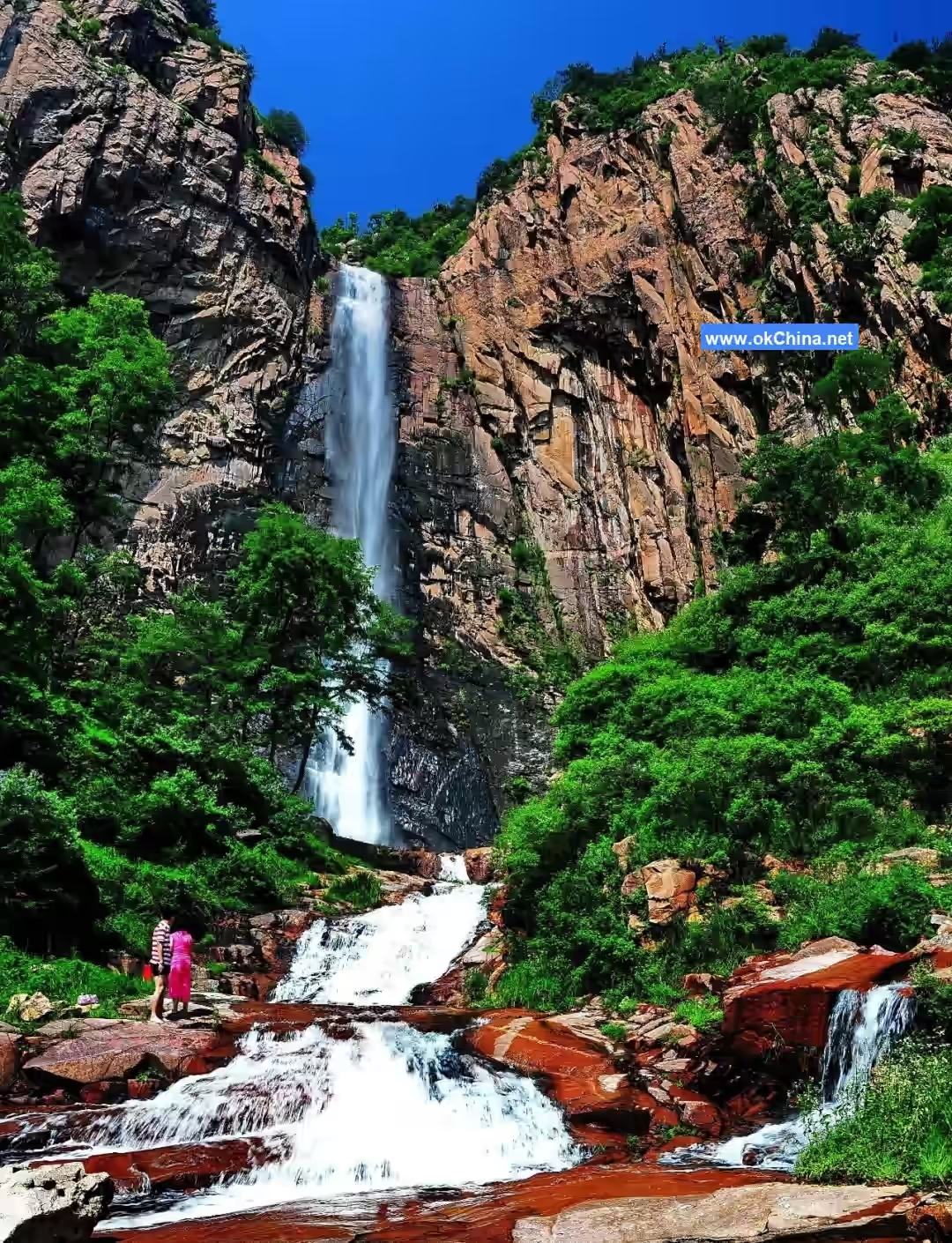
Baizhang Waterfall cascades down from a cliff over a hundred meters high. Known as the premier waterfall north of the Yangtze River, it features the wonder of a single waterfall with three cascades. The total drop of Baizhangya Waterfall is 86 meters. The first cascade, about 4 meters high, flows over uneven boulders. The second cascade, over 6 meters high, splits due to the uneven rock opening. The third cascade plunges over 68 meters straight down into the valley floor.
3.1.3 Fayun Temple
Fayun Temple is situated in a valley depression west of Baizhangya and east of Tianqu Garden in Linqu County, at the heart of Mount Yi. It leans against the steep Yuhuangding peak to the west, faces the Yudai Stream to the east, and is flanked by towering mountains on both sides.
3.1.4 Yuhuangding (Jade Emperor Peak)
Yuhuangding is the main peak of Mount Yi, with an elevation of 1,032 meters. Here, one can experience the feeling of "ascending the highest peak to dwarf all surrounding mountains." The summit features the Yuhuang Pavilion architectural complex, Summit Rock, Sea-Probing Rock, Wanghai Pavilion, the "Abode of Spiritual Energy" Rock, Taiqing Cave, and offers distant views of over ten peaks like Huazhitai, Waitougu, and Shizigu.
3.1.5 Waitougu (Crooked Head Mesa)
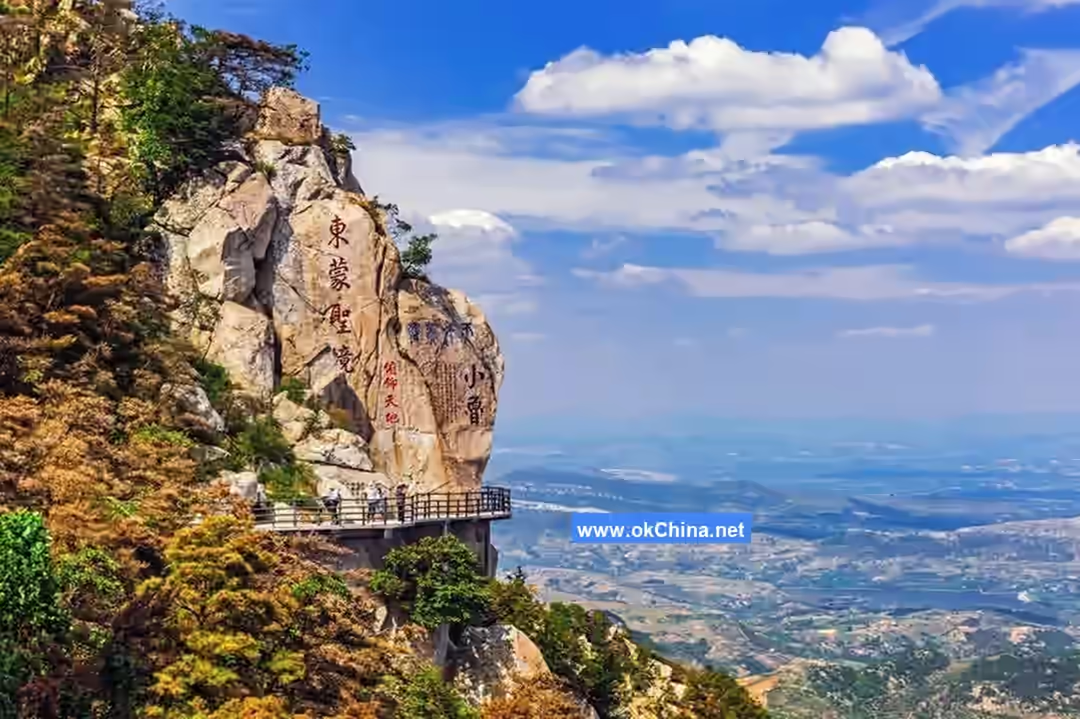
Waitougu is located northwest of Yuhuangding, with an elevation of 971 meters. Among all the peaks of Mount Yi, Waitougu is the most precipitous and distinctive. It features sheer cliffs on three sides overlooking deep valleys. Particularly, the eastern cliff contracts at the bottom and juts out at the top, resembling a person tilting their head, hence the name "Crooked Head Mesa."
3.2 Mount Yunmeng Scenic Area
3.2.1 Water Curtain Cave
Located on the shady side of Mount Meng, Water Curtain Cave is said to be an immortal's cave hidden within a cliff, named for the waterfall curtain covering its entrance. The cliff stands northeast-southwest, facing southwest. Flanking the waterfall are two towering precipices known as the Ascension Platforms. Legend says jumping from here allows one to shed their mortal body and ascend to immortality. The arched cave entrance is clearly visible on the cliff. Legend holds that this cave was where the strategist Guiguzi taught military arts to Sun Bin and Pang Juan during the Warring States period, opening only once every five hundred years. On the mountaintop directly facing the waterfall stands the "Waterfall Viewing Pavilion."
3.2.2 Rain God Temple
The Rain God Temple is located on the famous Taoist mountain, Mount Meng, within the tourist area. Its initial construction dates back to the Jin Dynasty's Mingchang period (1190-1196 AD). Legend says masters Zhongli and Xianmen performed rain-praying rituals here, hence the name. In the 2nd year of the Qing Guangxu reign (1876 AD), Taoist priest Yin Rensui came to Mount Meng and lived in a thatched hut. In the 14th year of Guangxu (1888 AD), he raised funds from villagers to build the "Cuiyun Temple" on the old site and establish an altar for the Responsive King. In the 25th year of Guangxu (1899 AD), the Jia Hui Responsive King Temple (i.e., the Rain God Temple) was completed. Prayers for rain were often answered, making the temple very popular. This tradition evolved into an annual memorial day for the Rain God on the 3rd day of the 3rd lunar month. Legend says seventy-two "flower-watering" rains fall on Mount Meng each year. The temple later fell into disrepair. It has now been rebuilt with a donation of 1.8 million RMB from Hong Kong's Henderson Land Development Co. Ltd. The temple houses statues of the Rain God, Guiguzi, and Guanyin. The surrounding area is filled with steles recording the temple's construction history through the ages.
3.2.3 Baihua Valley (Hundred Flowers Valley)
Originally named Budai Valley, Baihua Valley is located within the Mount Meng Tourist Area. Designated as a tourist resort by Mengyin County in 1996, it is one of the four most naturally beautiful scenic spots within the Mount Meng Forest Park. Baihua Valley contains five peaks over 1,000 meters, such as Tianmeng Peak, Dayun Peak, Xiaoyun Peak, East Dalou Peak, and West Dalou Peak. It features high mountains, dense forests, and pleasant scenery. The valley is rich in flora and fauna, with 131 species of trees, over 400 species of herbs, 15 species of animals, and over 20 species of birds, making it a natural botanical and zoological garden. Within the valley are over ten small natural villages, where the simple folk customs showcase the residential and cultural characteristics of the Yimeng Mountain people.
3.2.4 Xingshan Karst Cave
Xingshan Karst Cave is located in Xingshan Village, Taoxu Town, about 10 kilometers south of Mengyin county town. Villagers discovered the cave on January 6, 1994, while quarrying stone to build houses. The entrance was blasted open in the middle of the cave, with both ends extending into unseen depths awaiting further development. Over 360 meters have been developed and opened to tourists on December 17, 1994. Naturally adorned, the cave features stalactites in myriad forms. Caves connect within caves, and lakes with islands exist inside. Grotesque rocks stand in forests, presenting layer upon layer of wondrous scenes. Formations like the "Recumbent Ox" are remarkably lifelike, while scenes like the "Dragon Palace" transport visitors to a fairyland or童话世界 (fairy-tale world). Xingshan Karst Cave is equipped to receive tourists. Together with the Mount Meng National Forest Park 5 km away, Yunmeng Lake 20 km away, and Menglianggu, it forms a tourist circuit. During peak periods, the cave alone receives several thousand visitors daily.
3.2.5 Yunxia Cave (Cloud and Mist Cave)
Yunxia Cave is a natural karst cave located in front of Sleeping Tiger Mountain within the Mount Meng Tourist Area. It is named for the enshrinement of the Cloud and Mist Goddess (Yunxia Niangniang) inside. Legend says Yunxia Niangniang is the younger sister of Bixia Yuanjun, the Venerable Mother of Mount Tai. While touring the world, Bixia Yuanjun favored this cave and left her sister Yunxia to reside here, establishing a Mount Tai Traveling Palace. Due to its spacious interior and superior location, ideal for spiritual cultivation, it was established as a Taoist temple during the Sui and Tang dynasties. Statues of the Three Pure Ones of Taoism—the Primordial Heavenly尊, Lingbao Heavenly尊, and Daode Heavenly尊—were enshrined directly facing the cave entrance. It is rare for one cave to house four major deities, including both male and female immortals. Yunxia Cave has been rebuilt and expanded multiple times, maintaining its popularity for over a millennium. In the past, annual temple fairs attracted tens of thousands, a major local event that spawned many beautiful legends. Above the southern side of the cave is a naturally formed "Southern Heavenly Gate," allowing sunlight to enter and illuminate the interior. On the north side is another dark cave, once used as living quarters for Taoist priests, yet to be fully explored. Outside the cave are many attractions, including the famous Fire God Temple, Jade Emperor Temple, Green Dragon Cave, White Tiger Cave, Jade Liquid Spring, and Eighteen Bends. There is also a cliff carving of the Eighteen Arhats, now a Buddhist cultural relic, indicating that both Taoism and Buddhism held Sleeping Tiger Mountain in high esteem.
3.3 Mount Guimeng Scenic Area#### 3.3.1 Guimeng Peak
Guimeng Peak is located within Pingyi County, with an altitude of 1,156 meters, making it the second highest peak in Shandong Province. It faces Mount Tai from afar and is known as the "Second to Mount Tai." Its name derives from its resemblance to a divine turtle lying prostrate among the clouds and sky. Major attractions include Donglu in Sight, Zhanlu Platform, Jade Emperor Hall, Xiaolu Pavilion, Confucius' Xiaolu Stele, Cloud Viewing Pavilion, Mengshan Resort, Mengshan Broadcasting Station, Sunrise Viewing Peak, Jade Pillar Peak, Turtles Exploring the Sea, and the Stone of Eternal Love. The resort integrates dining, accommodation, entertainment, and shopping, serving multiple functions such as vacationing, reception, conferences, and convalescence. It also houses a Mengshan Post Office branch. Medium and small-sized buses can reach directly, and it offers high, medium, and low-end guest rooms, dance halls, etc., catering to the needs of tourists from different backgrounds.
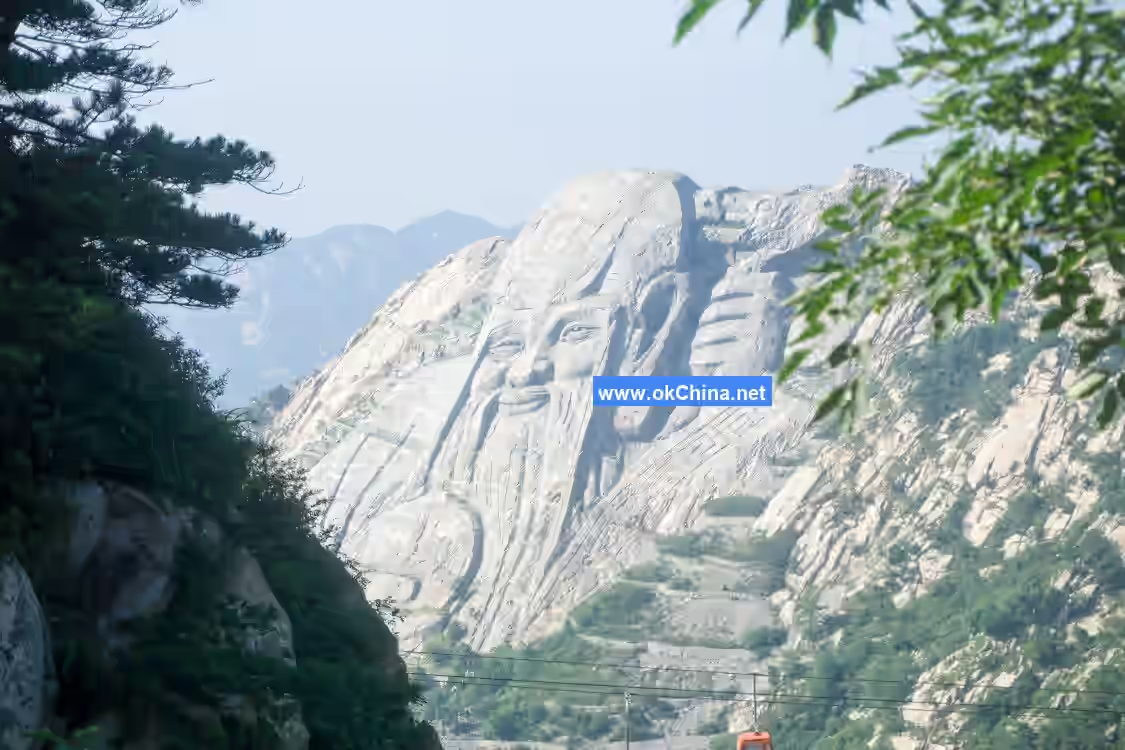
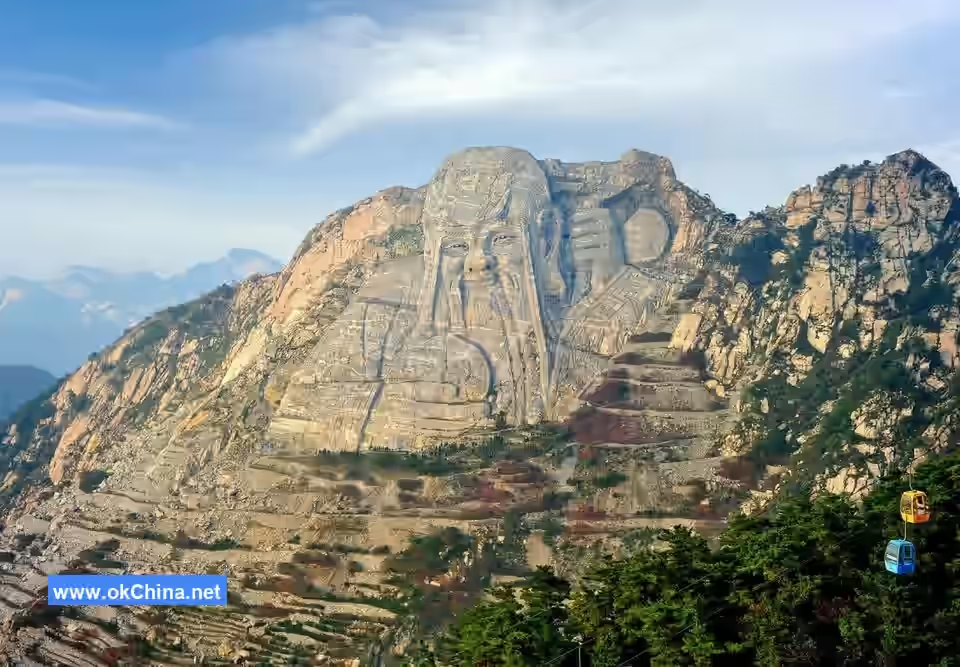
3.3.2 Mengshan Giant Longevity Star Sculpture
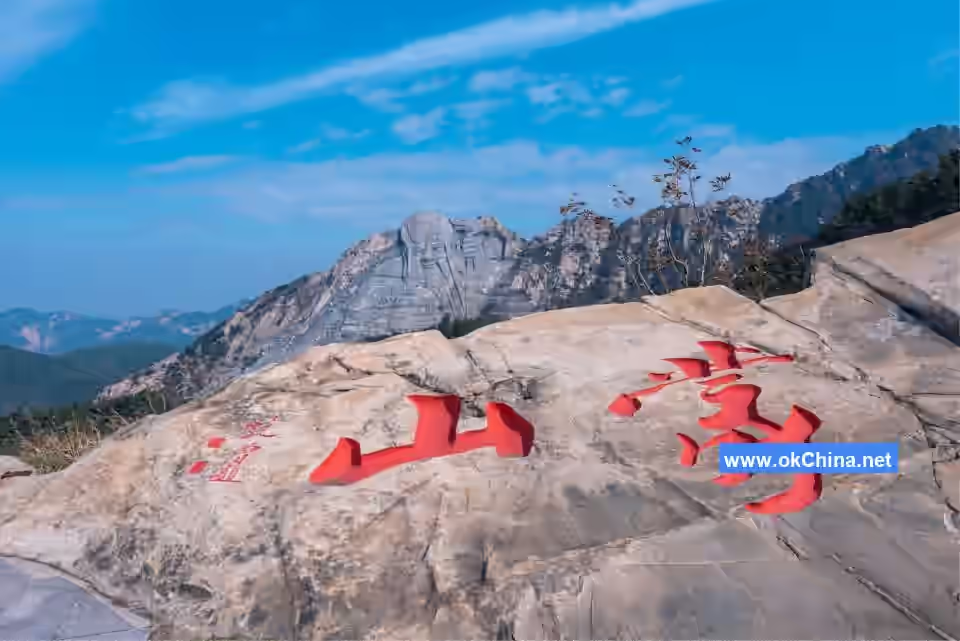
The Mengshan Giant Longevity Star Sculpture is located on the bare rock cliff on the northwest side of Guimeng Peak, the main peak of Mengshan in Pingyi County. This carving utilizes the mountain's natural shape, following its contours to depict the Old Longevity Star, a symbol representing longevity in traditional Chinese culture. The Old Longevity Star adopts the image finalized in the late Ming Dynasty, emphasizing the head with a large forehead and long white beard flowing past the waist, holding a staff in one hand and a celestial peach in the other.
3.3.3 Wanshou Palace
Wanshou Palace is located at the southern foot of Mengshan. Originally named Ancient Meng Shrine, it was converted into a Taoist temple during the Song Dynasty, called Yuxu Temple or Zhuanyu King Temple, and later renamed Wanshou Palace. In the fifth year of the Xuanhe era of the Northern Song Dynasty, Emperor Huizong Zhao Ji conferred the title "Yinglie Zhaoji Huimin Wang" (Heroic, Illustrious, Beneficent, and Benevolent King) upon the ancient Zhuanyu King, leading the Ancient Meng Shrine to be renamed accordingly. Taoism flourished during the Song Dynasty, with Wanshou Palace housing up to 310 Taoist practitioners, and its architectural scale was most impressive. A grand temple fair is held here annually on the third day of the third lunar month, attracting crowds of tourists and thriving incense offerings. Due to long-term disrepair, parts of the ancient Wanshou Palace complex were damaged but were later restored by the Pingyi County government. The new complex faces south, featuring a front gate with three arches symbolizing the "Heaven, Earth, and Human" realms, constructed from earth and wood. In front of the gate stands a building called the "Jade Emperor Hall." Before the hall grows a Xanthoceras sorbifolium tree planted during the Jiajing era of the Qing Dynasty. There is also the peculiar "Yuhua Peak" stone recorded in the Jinshi Lu, along with several stone steles. Passing through the front gate leads to the main entrance, with the first courtyard facing the front hall and side rooms on both wings. The front hall covers an area of 180 square meters with a single-eave hip-and-gable roof. Through the hall lies the second courtyard, housing the main structure of Wanshou Palace: the "Sanqing Hall" to the north, covering 560 square meters with a double-eave hip roof and glazed tile roofing. The ancient temple now boasts a new, resplendent, and majestic appearance. Wanshou Palace is nestled against mountains and near water, with over 700 ancient pines and junipers.
3.3.4 Central Hiking Trail
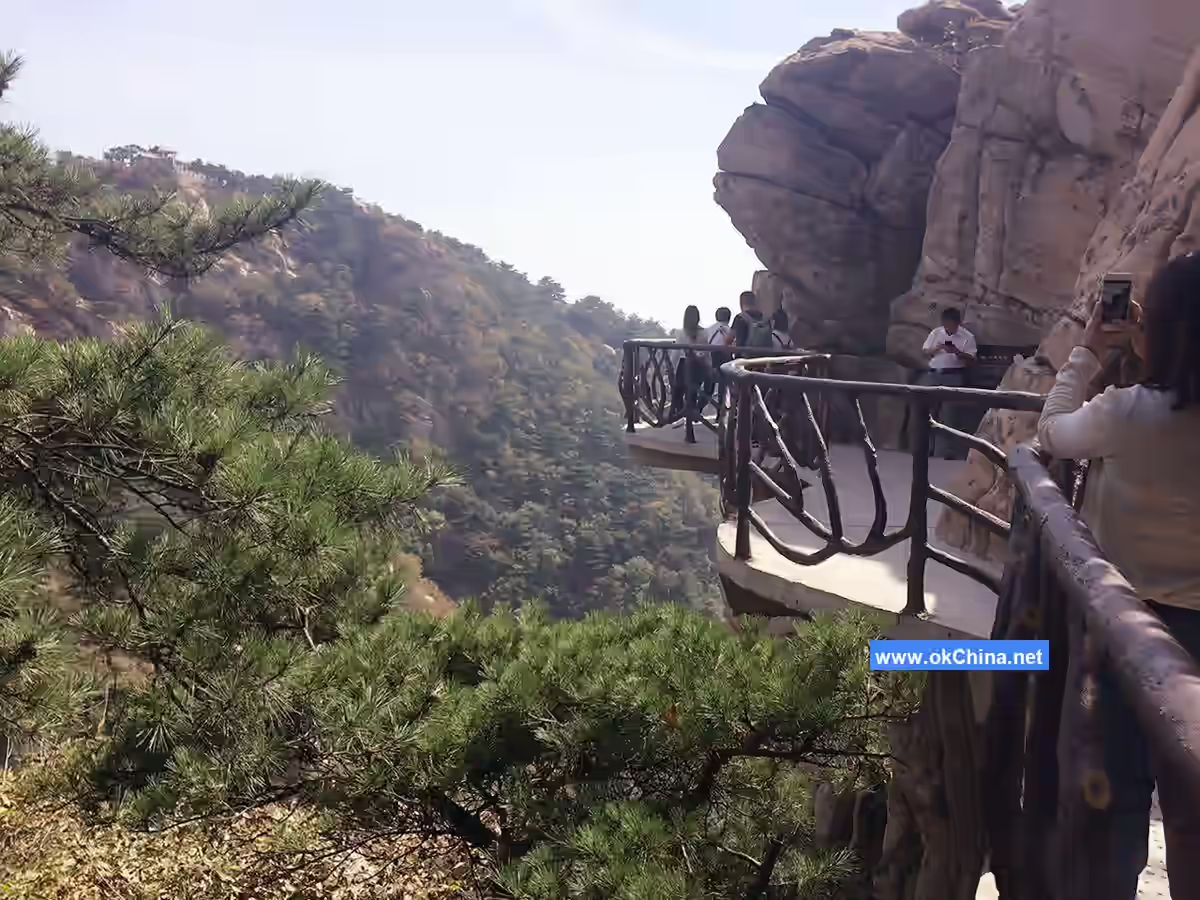
The Central Hiking Trail is located within Pingyi County, with forest coverage reaching 80%. Famous scenic spots along the route include: Shengjing Gate, Test Sword Stone, Longevity Peach Stone, Pillow Spring, Forget Worry Valley, Dragon Tiger Gate, White Cloud Rock, Eagle Nest Peak, East Heaven Gate, Tiger Stone, and Happy Forest. Pingyi County has invested heavily in developing the central trail, constructing over 4,000 meters of登山 steps and two mountain gate archways.
3.3.5 Western Hiking Trail
The Western Hiking Trail, also known as the "Eastern Ancient Meng Path," was the essential ancient登山 route. Major scenic spots and historical sites along the way include: Welcoming Immortal Bridge, Chaotian Palace, Peach Blossom Valley, Mount Tai Temporary Palace, Huima Ridge, Black Wind Pass, Small Wind Gate, Big Wind Gate, Happy Ridge, South Heaven Gate, Nine Dragon Palace Guanyin Hall, and Sacred Rest Stone.
3.3.6 Mingguang Temple
Mingguang Temple is located within the Mingguang Temple Forest Farm in Pingyi County. Originally built as the Shangyuan Nunnery during the Ming Dynasty, also known as Deer Park, Mingguang Temple is an important part of the Mengshan tourist area. A road leads directly to the scenic spot, and tourist service facilities such as accommodation and dining are relatively well-developed.
3.3.7 Wulong Lake Water Recreation Area
The Wulong Lake Water Recreation Area is located 10 kilometers south of Pingyi County, Linyi City, accessible via asphalt road. Wulong Lake was originally Tangcun Reservoir, the only large reservoir in the county, controlling a catchment area of 263 square kilometers with a total storage capacity of 149 million cubic meters. It integrates functions of water storage, irrigation, power generation, fish farming, and tourism. The area is equipped with water speedboats, motorboats, and pleasure boats, and features services like a beach bathing area and floating restaurants. Numerous shops, hotels, and restaurants have been established. Program-controlled telephones and cable TV are available, with various service facilities becoming increasingly complete.
3.3.8 Ten-Thousand-Mu Pear Garden
The Ten-Thousand-Mu Pear Garden is located in Tianbao Township, 30 kilometers southeast of Pingyi County, Linyi City. The township is also known as the "Hometown of Yellow Pears" due to its abundant production. Tianbao Yellow Pears have a cultivation history of over 300 years. Asphalt roads have been laid within the scenic area, and tourist infrastructure such as hotels, restaurants, shopping, entertainment, and communications is initially established.
4. Cultural History
4.1 Origin of the Name
In May 1938, Guo Hongtao, assigned by the Party Central Committee, arrived in Shandong from Yan'an to serve as Provincial Party Secretary. In a telegram to Mao Zedong, he first proposed the term "Yimeng." Since then, the name Yimeng Mountain has resonated across the country, accompanying the War of Resistance Against Japan, the Liberation War, socialist revolution, construction, reform, and opening up, becoming a political and cultural symbol for Linyi and even Shandong.
4.2 Folk Customs
4.2.1 Music and Dance
The Yimeng Mountain area boasts a splendid music and dance culture. From the "Music of the Yi and Di" in the Spring and Autumn period, "Hundred Performances" in the Han Dynasty, "Music and Dance" in the Tang Dynasty, "Dance Troupes" in the Song Dynasty, to "Yangko" in the Ming and Qing dynasties, various forms and styles of folk dances have been refined over dozens of dynasties, with the preserved ones becoming the essence of traditional folk dance. Among them, the Dragon Lantern Carrying Pavilion is unique nationwide.
4.2.2 Opera
Opera in the Yimeng Mountain area has strong regional characteristics, with Liuqin Opera being the most famous. In the early years of the nation's founding, a group of excellent Liuqin Opera performers emerged, such as Li Chunsheng and Zhang Jinlan, who sang female roles. Liuqin Opera was formerly called "Soul-Pulling Tune," featuring通俗 and vivid lyrics, adept at elaboration, and particularly skilled in narration and portraying characters' psychological activities. Its vocal music originates from the popular "Girl's Tune" and "Flower Drum Tune" in Linyi, influenced by Liuzi Opera, characterized by colorful ornamentation and unique拖腔. The repertoire often draws from historical stories and folk legends, with表演 that is朴实 and lifelike. Especially the performance of the clown角色 is humorous without being vulgar.
4.2.3 Folk Songs
The folk songs of Yimeng Mountain are as ancient and悠久 as its history and culture, renowned worldwide as the "Yimeng Mountain Minor Tune." The Yimeng Mountain Minor Tune is also known as the "Twelve-Month Tune." During the War of Resistance Against Japan, cultural workers from the First Branch of the Shandong Anti-Japanese Military and Political University of the Eighth Route Army adapted this tune into a new song called "Fighting the Huangsha Society" to support the struggle against the Huangsha Society. Its melody is优美抒情, rich in tonality, and舒展, a triple-meter folk song in the徵 mode. In Yimeng Mountain, almost every local can sing a few folk songs. Girls gathering together find the greatest joy in singing several songs, with lyrics passed down from ancestors or improvised on the spot. The songs of Yimeng Mountain truthfully record the labor and life of the people.
4.2.4 The Second Day of the Second Lunar Month
This day is said to be the birthday of the Earth God, also known as the "Green Dragon Festival," hence the saying "On the second day of the second month, the dragon raises its head," signifying the awakening of insects from hibernation. As all things revive, wind and rain begin, suitable for farming. On this day, people rise early to "make granaries" and eat beans. Households use dustpans to carry plant ash into courtyards or threshing grounds, tapping the dustpans with sticks to form large circles, "making granaries." Then, they draw a cross in the center of the circle, place grains inside, and draw a ladder outside the circle, called the "beam ladder," praying for full granaries and abundant harvests. This custom faded after collectivization, but eating fried scorpion beans remains. Locally, beans are stir-fried with brown or white sugar, commonly called "sugar beans," symbolizing "stir-frying to death scorpions and poisonous insects, leading a sweet life." In the morning of this day, young and middle-aged men carry joss paper and sugar beans to the Earth God Temple to worship the "master of the village," the Earth God, hence the saying "Even the Earth God endures until the second of February."
4.3 Red Yimeng
Jinggangshan, Yan'an, and Yimeng were the three most important old revolutionary base areas during China's revolutionary war period. Later, Yimeng was honored by countless革命后人 as the "Holy Land of Two Wars, Red Yimeng."
As the capital of the Shandong liberated area, Linyi was known as the "Little Yan'an of East China." During the War of Resistance Against Japan and the Liberation War, it was one of the famous revolutionary base areas, acclaimed as the Holy Land of Two Wars, Red Yimeng.
Comments
Post a Comment