Yesanpo Scenic Area
I. Introduction
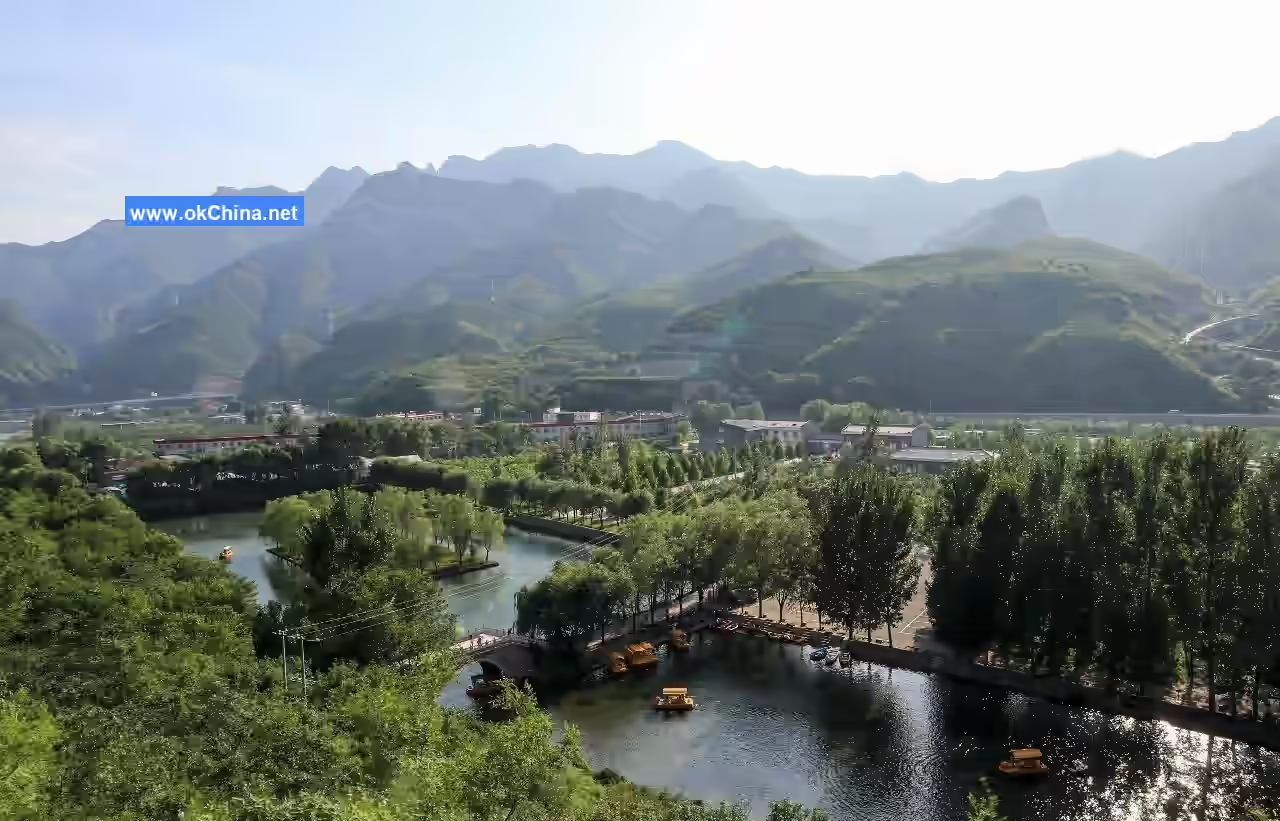
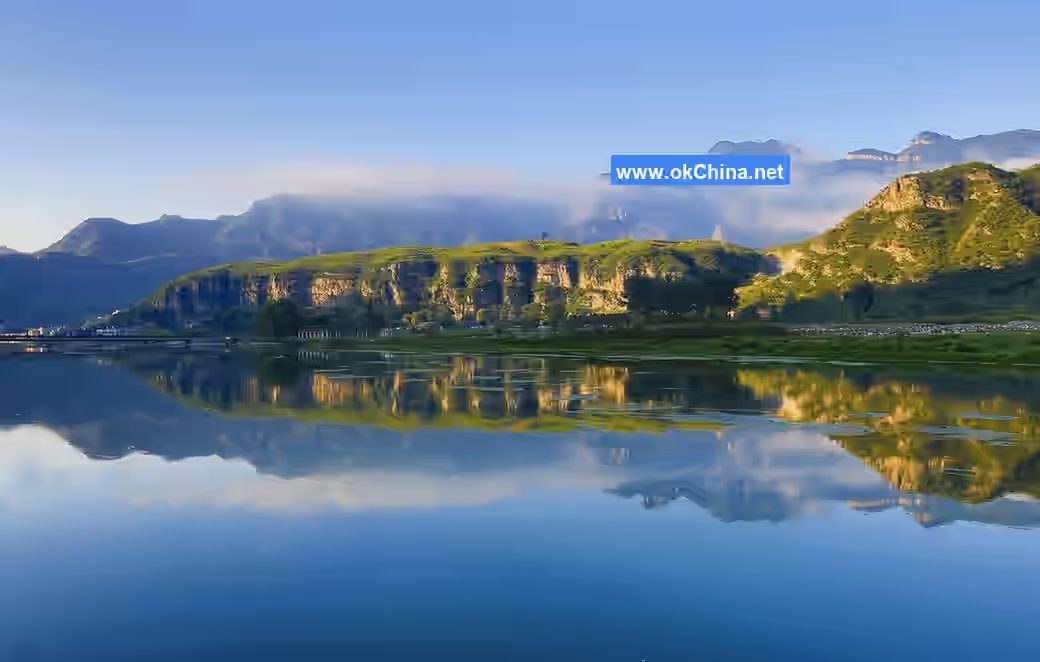
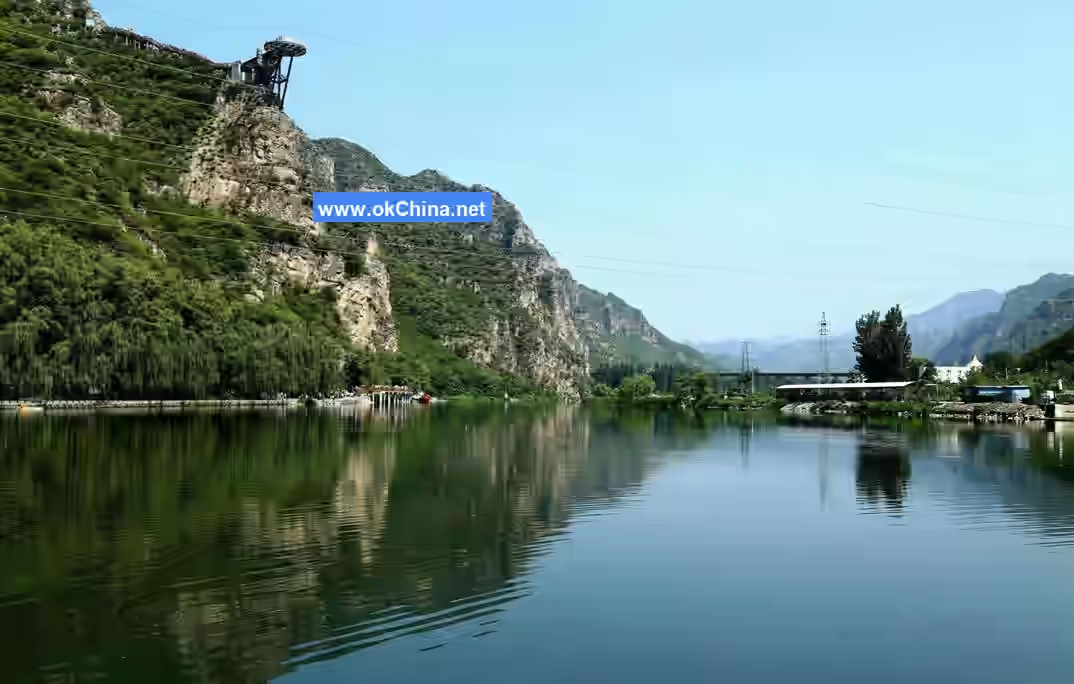
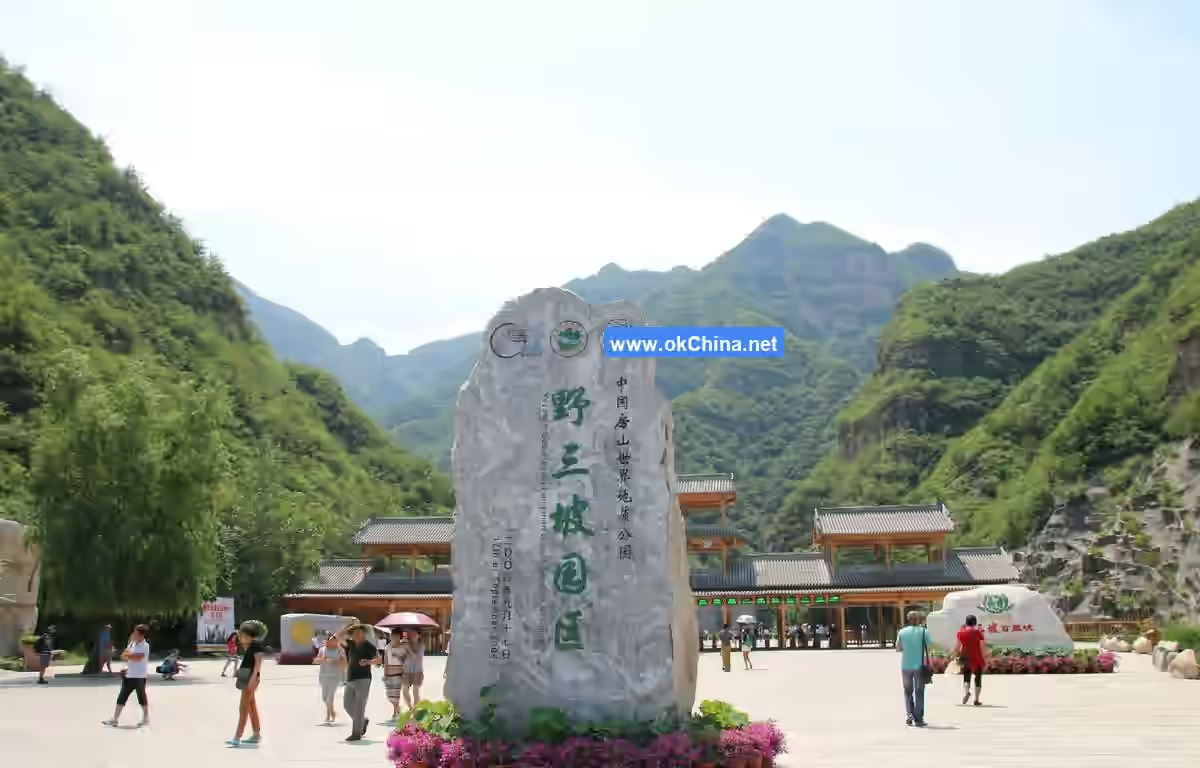
Yesanpo Scenic Area is located in Laishui County, Baoding City, in the northwestern part of Hebei Province and the western part of Beijing. It lies at the intersection of two major mountain ranges in northern China: the Taihang Mountains and the Yanshan Mountains. From here, the Taihang Mountains stretch southward for thousands of miles along the borders of Hebei, Shanxi, and Henan, while the towering Yanshan Mountains extend eastward through Beijing, Tianjin, and Hebei. Yesanpo covers a total area of 498.5 square kilometers. Situated in a unique tectonic position, it sits atop the northern end of the Zijinguan Deep Fault Zone. Multiple intense tectonic movements and magmatic activities have created a rich, diverse, and distinctive collection of geological relics in Yesanpo. It serves as both a vivid geological textbook and a natural geological museum, and has been designated as a scientific research and teaching base by China University of Geosciences.
II. Formation and Evolution
Background
The Yesanpo area is located at the junction of the Taihang Mountains and the Yanshan Mountains, serving as the convergence point of two major tectonic units: the Shanxi Fault Uplift and the Yanshan Platform Fold Belt. It is also a key part of the "Neocathaysian Tectonic System" proposed by Mr. Li Siguang. This region exhibits the most intense tectonic movements within the North China Plate, with significant activity from the Yanshan, Himalayan, and neotectonic movements, making it a representative area of intracontinental orogeny in China.
Crystalline Basement Formation and Platform Cover Development Stage
The earliest geological record in this area dates back to the Fuping Rock Group, approximately 3 billion years ago. Between 2.8 billion and 1.6 billion years ago, the crust underwent multiple tectonic movements, gradually strengthening the metamorphism and consolidation of the platform basement, with no sedimentary records during this period. After the formation of the crystalline basement, the area entered a relatively stable stage of cover development. Over the following billion years, the region experienced dramatic changes, with sea levels rising and falling multiple times, and sedimentary environments shifting repeatedly from coastal to shallow marine conditions.
Intense Tectonic Movement Stage
During the Jurassic to Cretaceous periods, the crust in this area underwent profound changes, experiencing intense tectonic movements and magmatic activities. These included the Indosinian tectonic movement, which formed two sets of structural joints, and the Yanshan tectonic movement, which laid the foundation for the formation of the Baili Gorge.
Himalayan Movement Stage
During the Himalayan movement stage, the northward compression of the Indian Plate intensified the Zijinguan Fault, forming the Longmen Tianguan Cliff. The embryonic form of the canyon took shape, a series of small karst caves formed in the Yugudong Spring area, and a planation surface developed atop the Fodongta Mountain.
Neotectonic Movement Stage
During the neotectonic movement stage, the Taihang Mountains experienced intense uplift. Physical weathering and erosion, along with intermittent flooding, surpassed dissolution processes, leading to the formation of tectonic-erosion canyons in the Baili Gorge area.
III. Geographical Environment
Location and Boundaries
Yesanpo Scenic Area in Baoding City is situated in Laishui County, Baoding City, in the northwestern part of Hebei Province and the western part of Beijing. It lies at the intersection of two major mountain ranges in northern China: the Taihang Mountains and the Yanshan Mountains. From here, the Taihang Mountains stretch southward for thousands of miles along the borders of Hebei, Shanxi, and Henan, while the towering Yanshan Mountains extend eastward through Beijing, Tianjin, and Hebei. Yesanpo covers a total area of 498.5 square kilometers.
Geology
The Yesanpo area features highly developed structural joints, which are large in scale and deeply incised. Bounded by the Baijian–Pengtou–Zhuangli Fault, it is divided into the western fault uplift zone and the eastern dome-fold segment, with distinct tectonic characteristics and geomorphological landscapes in the two zones.
The western "fault uplift zone" is characterized by tectonic-magmatic activities, rapid fault uplift, and canyon landscapes, forming the Shangtiangou Granite Canyon and the Wanren Tianguan Granite Cliff. The eastern "dome-fold segment" preserves various geological relics from a "relatively stable" platform environment. Interacting with the dynamic western zone and under the influence of external geological forces, it has formed unique "tectonic-erosion canyons," granite tectonic waterfalls, gorges, and "tectonic-karst cave spring" landscapes.
Yesanpo also boasts complete geological relics, with clear unconformities of various types. It features a comprehensive collection of rock relics, including intrusive, volcanic, sedimentary, and metamorphic rocks. Prominent structural relics such as exceptionally developed joints, faults, and folds are present, along with diverse geomorphological relics like planation surfaces and river terraces.
Natural Resources
Yesanpo is renowned for its "wild" character, with its pristine natural environment fostering exceptionally rich flora and fauna. According to expert surveys, Yesanpo is home to 713 species of seed plants from 92 families, 65 species of ferns from 15 families, and over 200 species of medicinal plants. The area also hosts 184 species of wild vertebrates, including 15 species under national key protection.
IV. Main Attractions
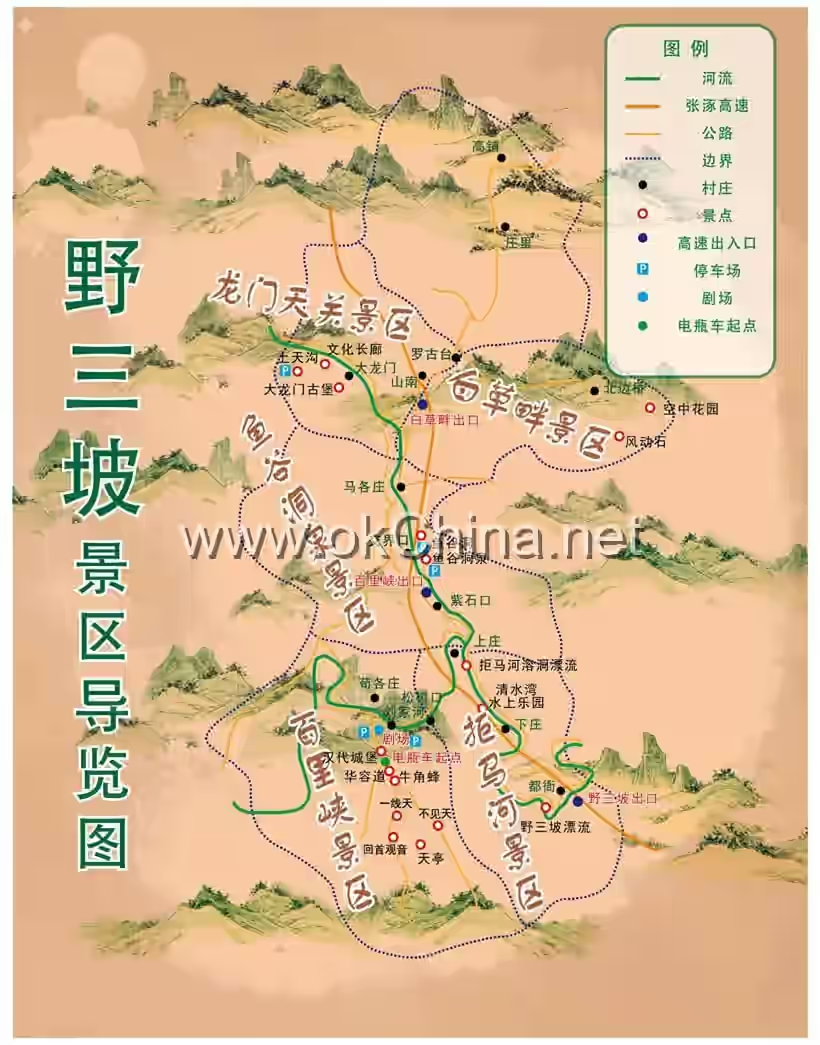
Qingquan Mountain
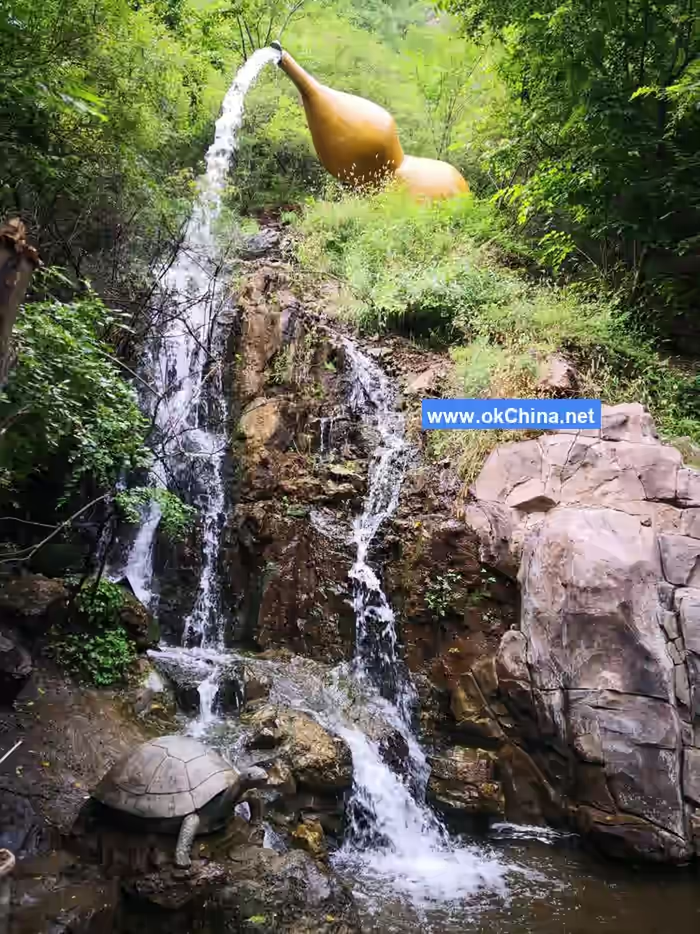
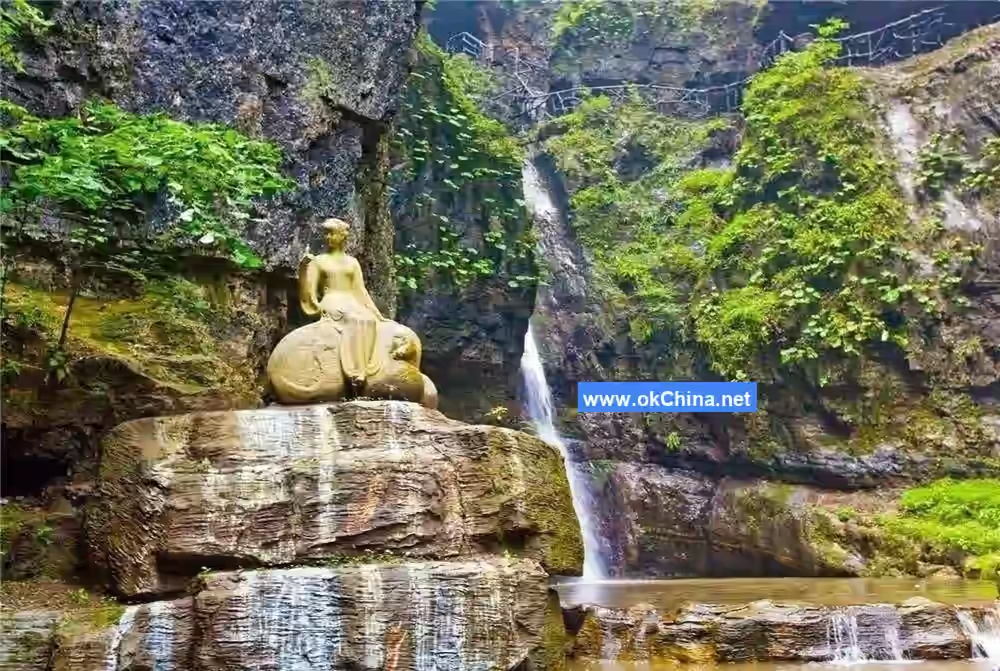
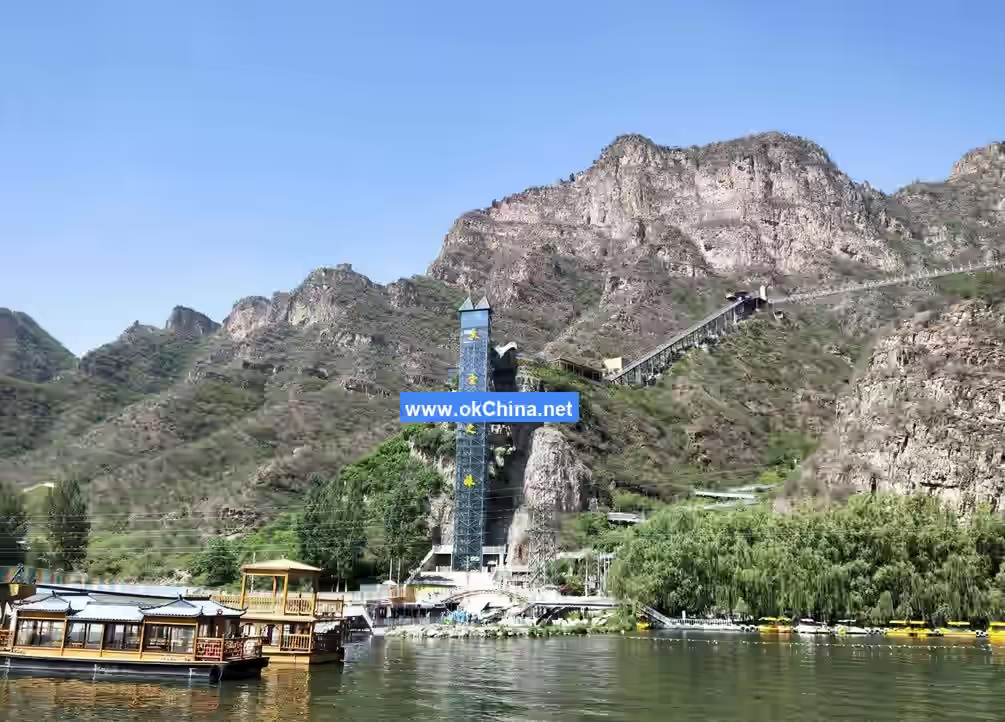
The Qingquan Mountain Scenic Area in Yesanpo lies alongside the murmuring Juma River. The mountain is shaded by lush greenery and dotted with numerous waterfalls, along with cool karst caves and mountain springs, earning it the name "Qingquan Mountain" (Clear Spring Mountain). It is also known as the coolest scenic area in North China. With the Juma River flowing through, the air is moist, the climate is pleasant, and the concentration of negative oxygen ions is high, making it a veritable natural oxygen bar and air conditioner. Due to its diverse landscapes, beautiful scenery, rich vegetation, and the preservation of precious plants in its original secondary forests, it is often called the "back garden of Beijing."
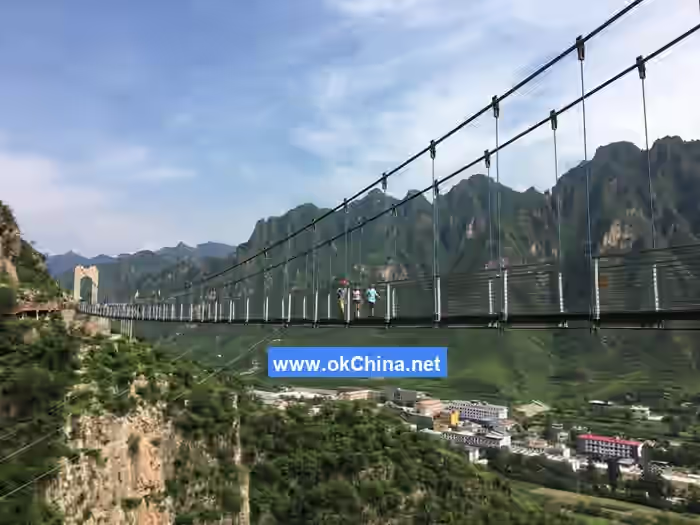
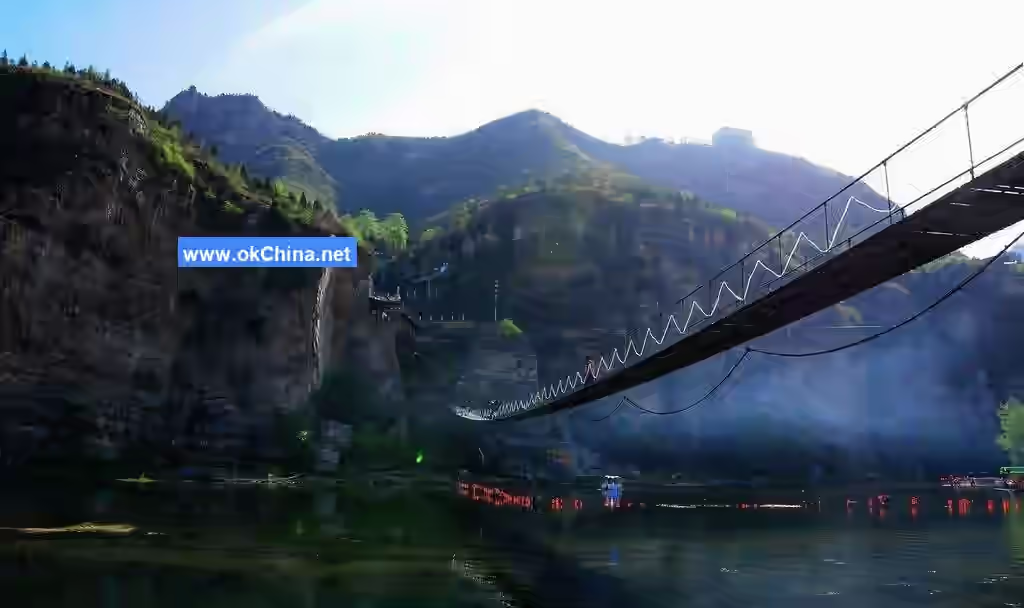
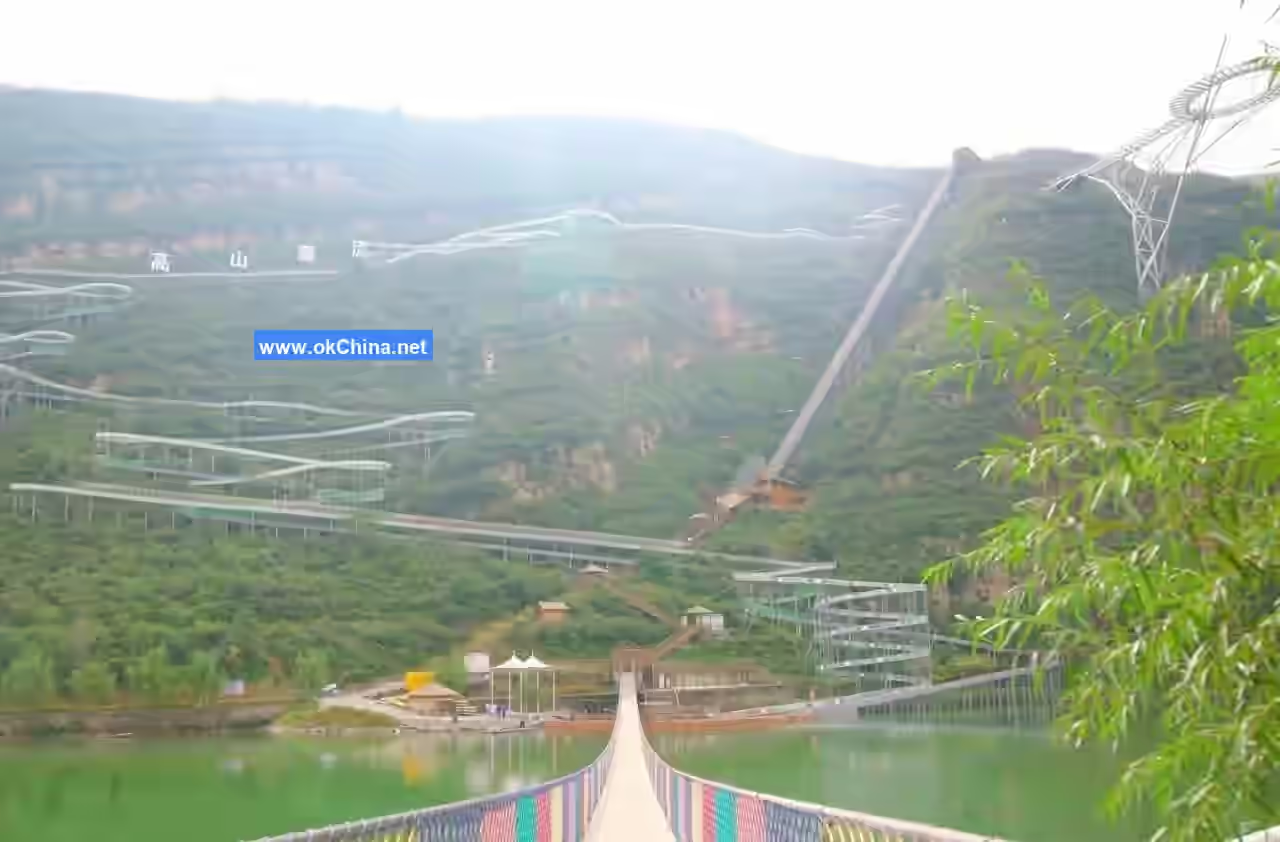
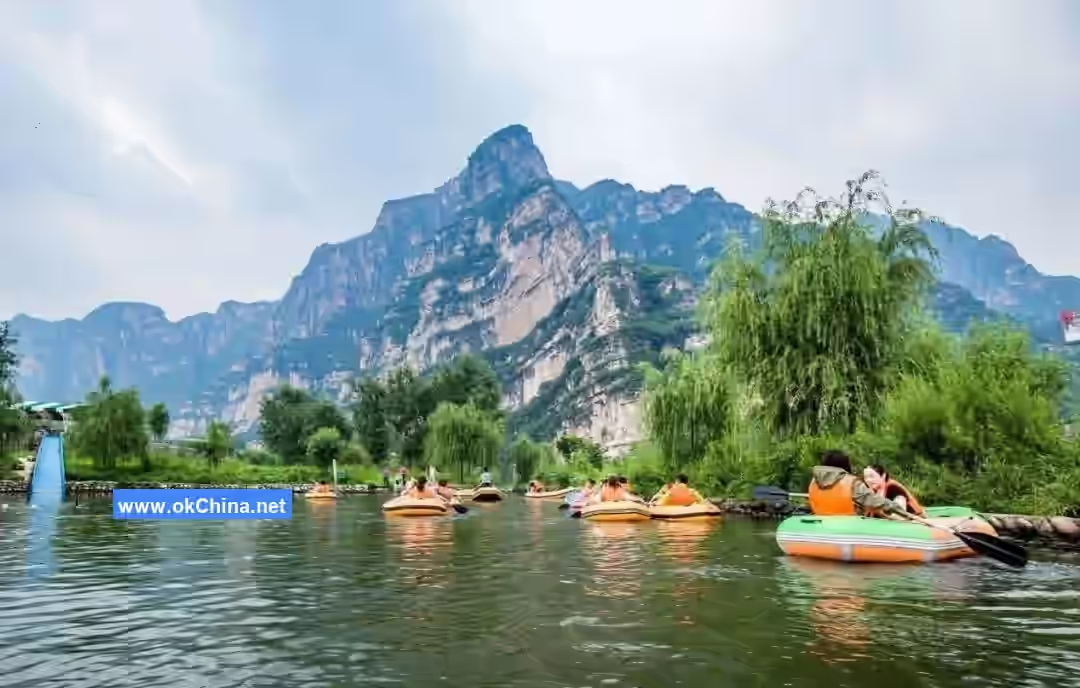
The scenic area features wonders such as stone forests, the Shuilong Cave, Baiyun Temple, Goddess Peak, Qinglong Pool, and canyon waterfalls. It boasts one spring, six waterfalls, and seventy-two scenic spots. Additionally, it offers attractions like sightseeing elevators, a UFO flying saucer, a mountain-top infinity pool, a cloud glass suspension bridge, a 9D Buddha's Hand glass platform, alpine漂流, forest canyon cave漂流, dry slides, speedboats, bamboo rafts, water swings, shouting springs, horseback riding, colorful suspension bridges, and pedal boats. It is an ideal destination for escaping the summer heat and vacationing in Yesanpo.
Yugudong Spring
Yugudong Spring is located in the central part of the scenic area. The cave stretches 2,000 meters in length, with an average width of 10 meters and a height ranging from 0.5 to 20 meters. Its winding paths are serene and ever-changing. The formation of Yugudong Spring is controlled by northeast-trending and nearly east-west-trending fissures, faults, and joints. The rock layers inside and outside the cave consist of bamboo-leaf limestone and argillaceous banded limestone formed approximately 490–500 million years ago (Late Cambrian). Inside the cave, stalagmites, stalactites, and cemented conglomerates can be observed. The water is home to the "multi-scaled shovel-jawed fish."
Yugudong Spring is famous for the phenomenon of fish swarming out of the spring. During the Grain Rain period each year, fish surge out of the spring mouth, and local fishermen would catch them with bamboo baskets at the "fish-spouting" site. The spring water is clear and flows continuously, with an average discharge of 0.42 cubic meters per second. It earned its name "Yugudong Spring" (Fish Valley Cave Spring) because fish swarm out of the spring after dark, and local fishermen would catch them with bamboo baskets.
Baili Gorge
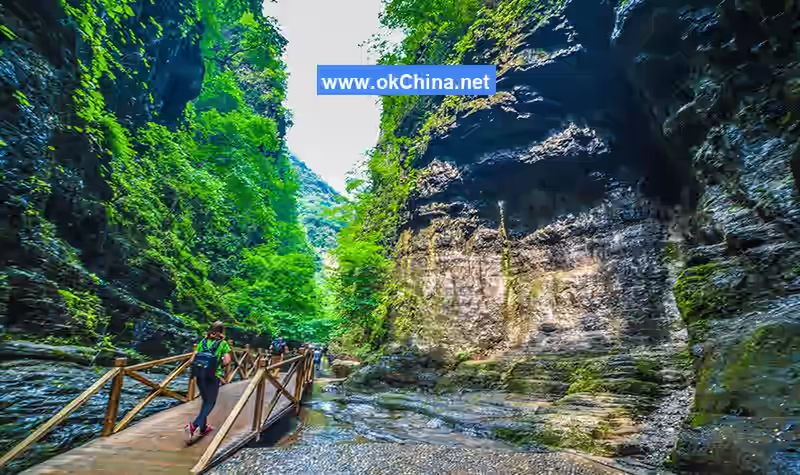
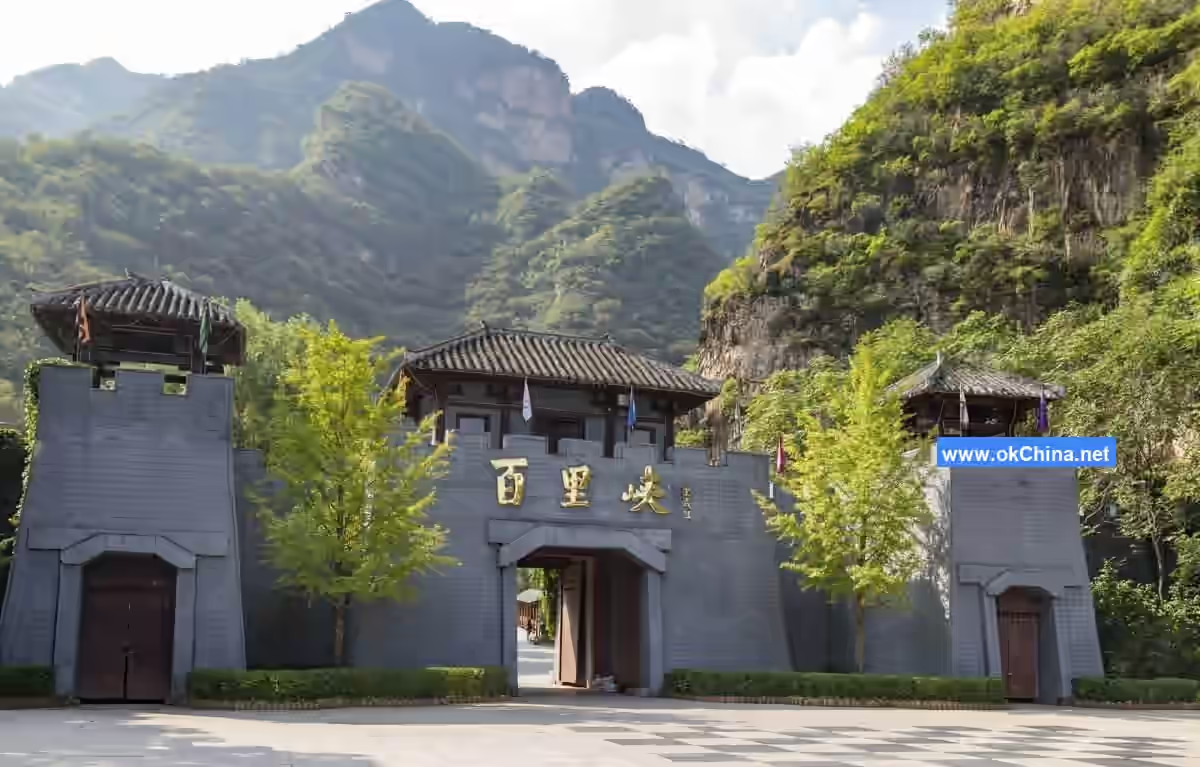
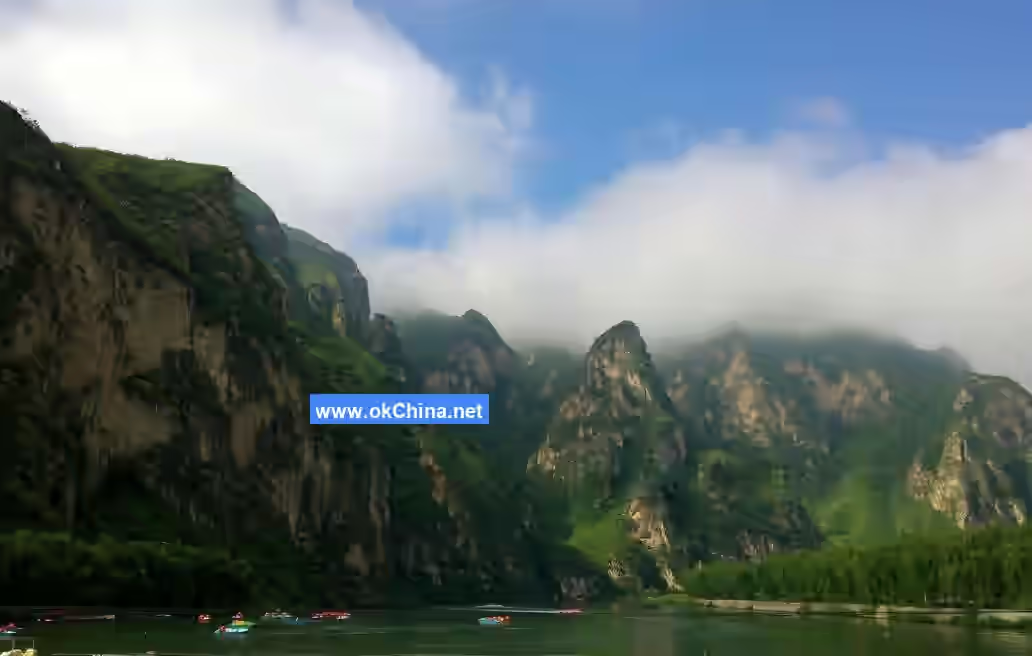
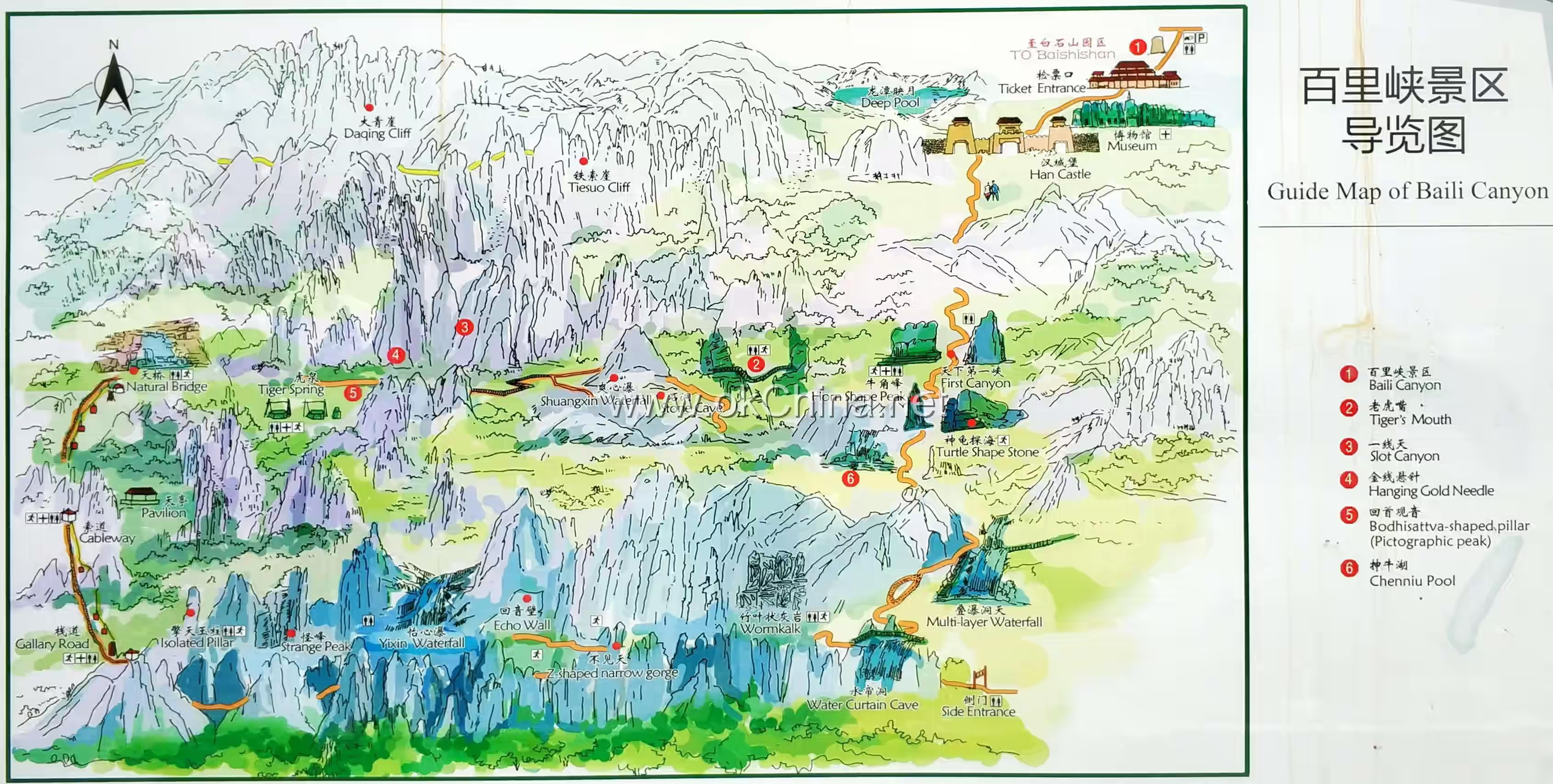
Known as the "Number One Gorge under Heaven," Baili Gorge is one of Yesanpo's unique attractions. Within the hundred-li-long "tectonic canyon," described as "twin cliffs standing against the sky, ten thousand ren split from the earth," visitors can find sights such as "Tiger's Mouth," "One-Line Sky," "Looking-Back Guanyin," and "Natural Bridge." The gorge also features gushing springs, cascading waterfalls, babbling streams, lively squirrels, and birds singing from treetops. The ecological environment remains pristine and natural. Tourist facilities within the gorge harmonize with nature, ensuring safety and environmental protection. Walking through the gorge, the path winds with the mountains, and streams flow alongside the trail. The landscape is a blend of mountains and water, with dense vegetation and fresh air, creating an unparalleled experience. Visitors can gaze up at towering cliffs and a sliver of blue sky overhead, walk on pebble-paved paths that also offer foot therapy, listen to the叮咚 of springs and admire clear pools, witness mountain waterfalls and潺潺 streams, and observe shrubs and green sandalwood hanging from cliffs. Unique plants like sole-root grass, wild begonias, and hart's-tongue ferns adorn the walls like ink paintings, forming a dense green tapestry.
Juma River
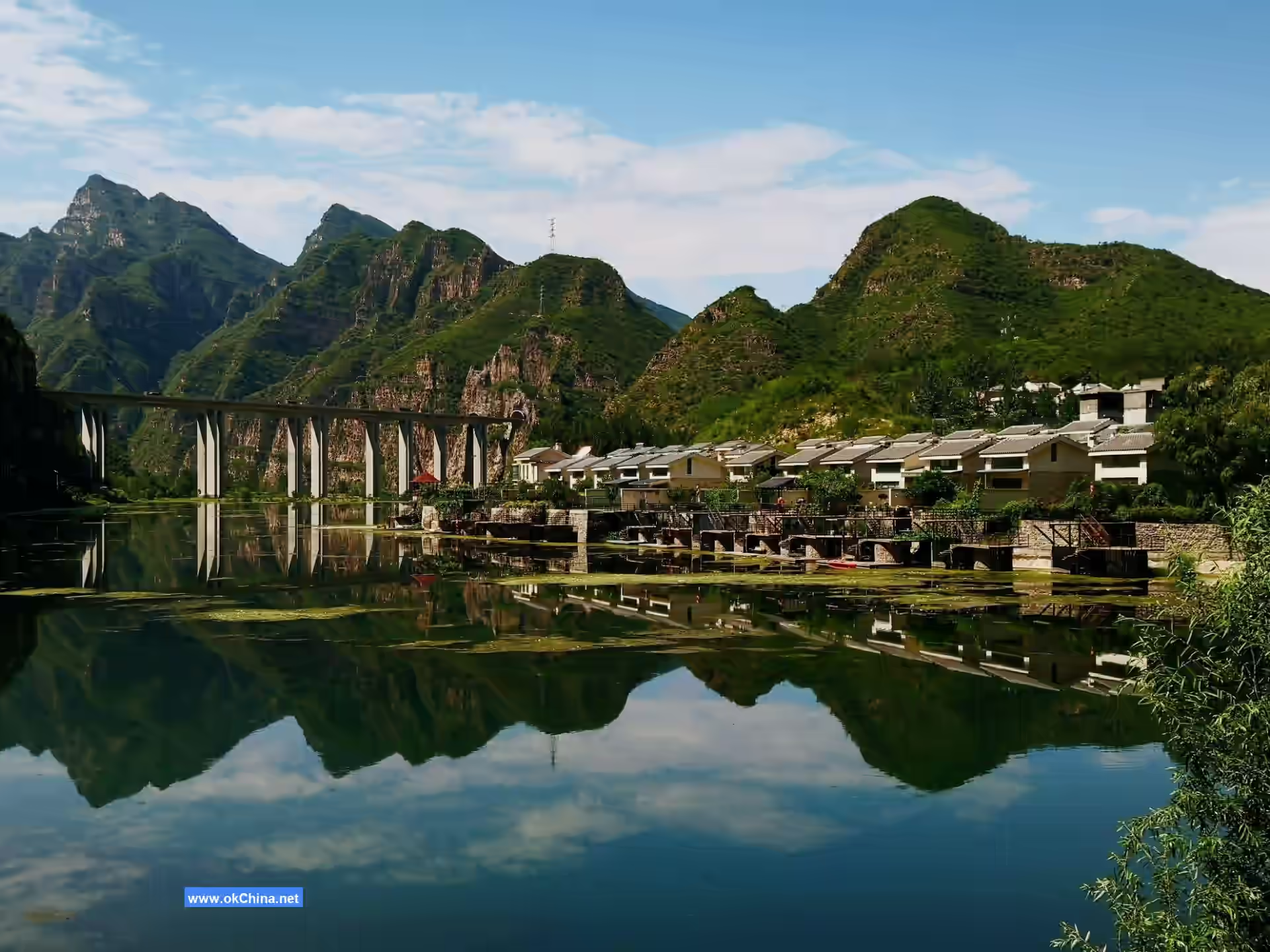
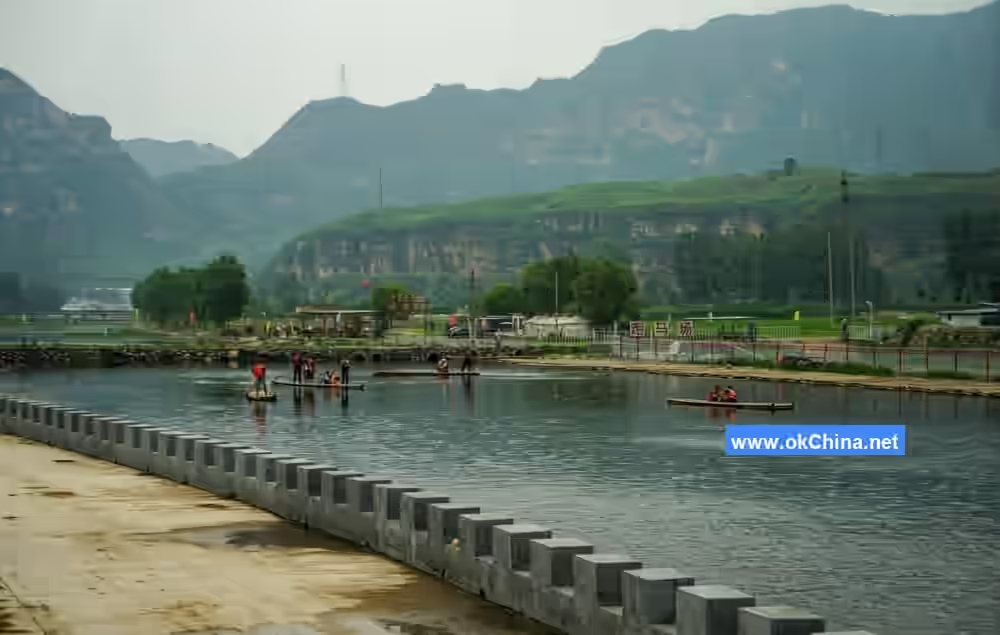
The Juma River is the only perennial river in Hebei Province. The Juma River Scenic Area not only boasts beautiful landscapes and a pleasant climate but also features numerous cultural relics and natural sights. The area includes the "Eight Scenes of Xiazhuang," such as Sand Python Blocking the Road, Stone Monkey Playing in Water, Stone Gate Suddenly Opening, Heavenly Bridge Arching, Cliffside Plank Path, and Children Making a Ruckus in School. Thanks to its exceptional advantages, the scenic area has built many hotels and restaurants. A playful poem captures its charm: "Wandering in emerald green, nights accompanied by song and dance, drifting in leaf boats among the stars, shedding worldly cares to kindle affection," painting a beautiful picture. The picturesque Juma River Scenic Area has become a popular destination for sightseeing, entertainment, dining, and accommodation.
Baicaopan
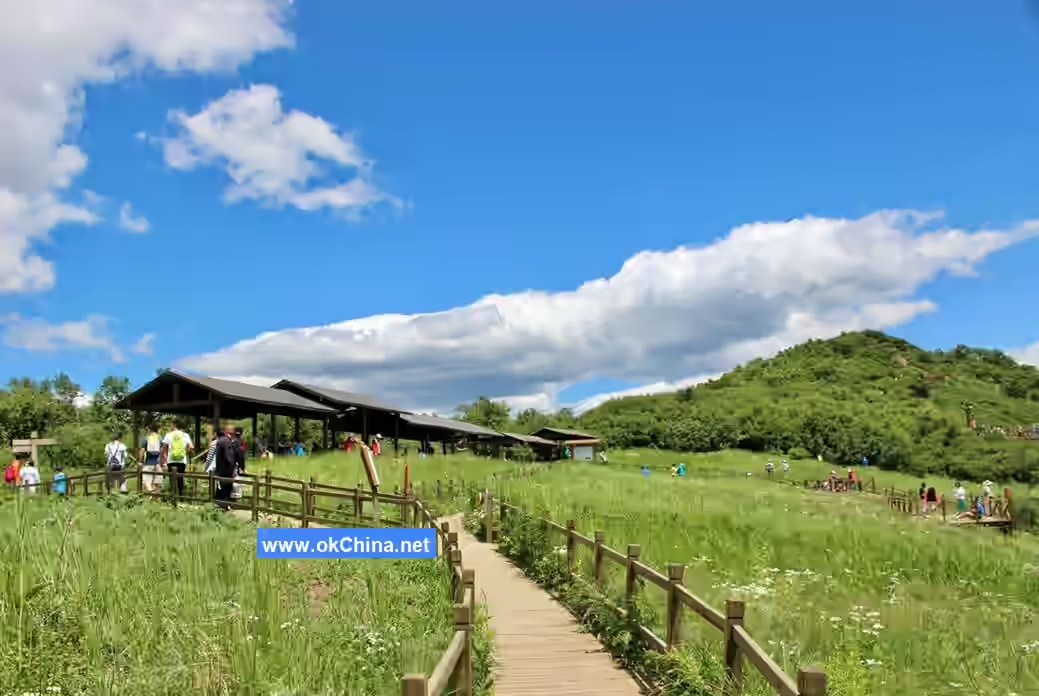
Yesanpo's Baicaopan is often called the "Green Pearl of the Taihang Mountains." Its main peak stands at an elevation of 1,983 meters and is considered a "sister peak" to Beijing's Baihua Mountain. The scenic area features complex and diverse topography and geomorphology, with well-preserved natural ecosystems. The dense, sky-blocking forests blend with stone forests of various forms, creating a unique mountain landscape. The climate here is cool, with significant temperature differences between day and night. The highest summer temperature is 22°C, resulting in vertical zonation of vegetation and a temperature effect described as "different seasons on the same day and same mountain, different blooming times for the same flowers and grasses." Vast pine forests below 1,000 meters are vibrant and evergreen, while birch forests above 1,000 meters are dense, tall, and elegant. According to expert surveys, Baicaopan is home to approximately 1,000 species of seed plants from about 92 families, nearly 100 species of ferns from 15 families, and 159 species of vertebrates, including 15 species under national key protection. The area is teeming with rare and adorable small animals, earning it the titles "Natural Plant Kingdom" and "Wild Animal Paradise." It holds not only high观赏 value but also significant scientific research value.### Fire Show Theater
Set against the majestic Taihang Mountains, the Fire Show Theater takes Taihang culture and the customs of Yan and Zhao as its central themes. Through film, music, 3D effects, dance, martial arts, and other performance forms, it offers a profound interpretation of the primordial origins, human evolution, rise of civilization, and the revolutionary era of the Yan-Zhao region, all set against a backdrop of real scenery. The show is divided into six chapters: Primordial Universe, Eastern Fire, Flames of Huaxia, Mortal World, Blazing China, and Fire, Yesanpo.
Longmen Tianguan
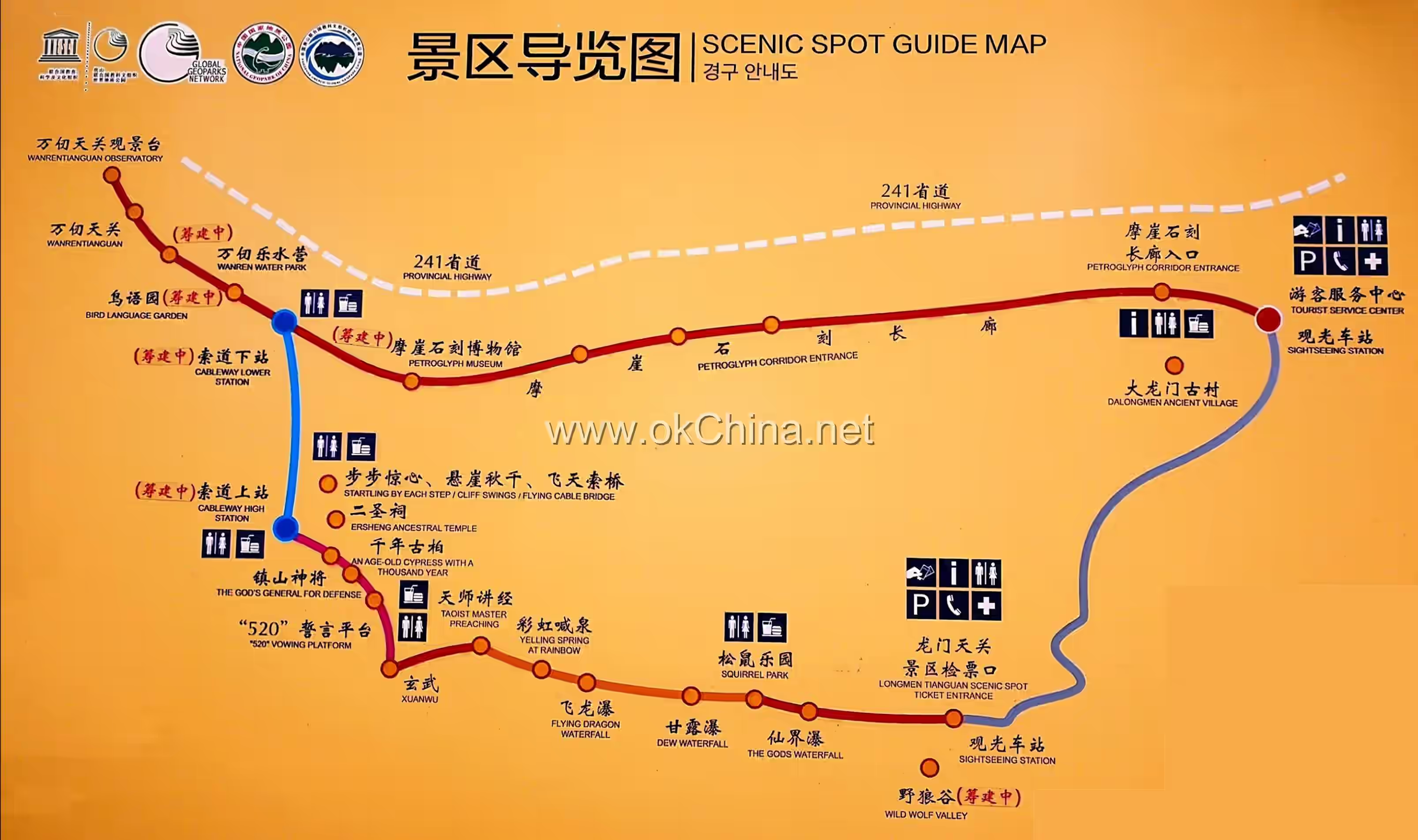
Longmen Tianguan features steep and treacherous mountains that are easy to defend but difficult to attack. Its main peak, Tianzhu Peak, stands at an elevation of 1,099 meters, exuding grandeur with lush vegetation, blooming flowers, and birds singing in harmony. The area is home to extraordinary mountains, trees, flowers, and waters, including a natural cold air vent with a constant temperature year-round. Mountain springs gush forth, cascading down the peaks like dancing jade dragons and splashing silver blossoms, creating the natural spectacle of nine waterfalls and eighteen pools. Longmen Tianguan boasts unique geological relics, such as a massive fault canyon composed of granite formed between 118 million and 91.8 million years ago, with sheer cliffs and majestic, awe-inspiring scenery. The area also features cliff carvings, the largest group of stone carvings in North China. The main peak of Shangtiangou, at 1,099 meters, is adorned with nine waterfalls and eighteen clear pools, its beautiful scenery resembling a "heavenly paradise." The canyon is dotted with towering, magnificent peaks, showcasing stunning and peculiar granite landforms, including the "Black Tortoise" with a turtle body and snake head, as well as "Fish Scale Stone" and "Thousand-Layer Rock." Waterfalls resemble dancing jade dragons and splashing silver blossoms, forming multi-tiered cascading water landscapes.
V. History and Culture
Customs
With social progress and the passage of time, the clothing, attire, and customs related to weddings and funerals among the people of Yesanpo have changed significantly. However, this traditional culture will never fade or disappear from Yesanpo’s history. It still preserves pristine, uniquely beautiful natural landscapes and simple, rustic ethnic customs. For example, in terms of attire: in the old days, women in Sanpo styled their hair with a puffed front and a long, coiled bun tied with a red string at the back, resembling a curved bow. The flat hairpin, about eight inches long, was typically made of silver and shaped like an iris, adorned with patterns of green snakes, centipedes, scorpions, geckos, and toads, commonly known as the "Five Poisons Flower." Each pair of earrings weighed eight qian. In winter, women wore collarless tops, trousers with decorative leg bands, and boat-shaped pointed shoes with satin surfaces fully embroidered with intricate patterns. Men often wore large-fronted overcoats, with red belly bands underneath and red waistbands. Tracing its origins, these customs are remnants of Ming Dynasty traditions that have been passed down through generations.
Tools
Stone Mill: Many stone mills still exist in Yesanpo and have long been used by the locals for tasks such as hulling, crushing, and grinding. With the advancement of technology, electric milling machines have now replaced traditional methods. However, grains processed by electric mills often lose their outer bran layers, and the heating during mechanical processing negatively affects their quality. In contrast, grains processed by traditional stone mills undergo minimal temperature changes, resulting in superior quality and exceptionally fragrant cooked rice. As a result, stone mills remain popular and continue to provide great convenience in daily life, never abandoned by the people of Sanpo.
Well Windlass: In some remote areas of Yesanpo, not every household has access to tap water. Therefore, relying on well water remains the norm for some villages. Well water comes from underground sources and requires extensive digging to reach. Since the water source is often deep underground, tools are needed to draw water. The windlass is one such tool used for this purpose.
Nine-Bend Yellow River Lantern Festival
The "Nine-Bend Yellow River Lantern" is an ancient Han folk activity in Hebei Province, with a history spanning over six hundred years. Also known as the "Nine-Bend Yellow River Array," it is arranged according to the directions of the Nine Palaces and Eight Trigrams from the I Ching, forming a continuous, intricate pattern symbolizing endless wealth and prosperity. The array includes nine palaces: Qian, Kan, Gen, Zhen, Xun, Li, Kun, Dui, and the central palace, representing the nine regions of China. Its formation is also a military strategy known for being easy to defend but difficult to attack, named for its resemblance to the winding Yellow River with its nine bends and eighteen turns. Every year during the Lantern Festival, Dalongmen Village in Yesanpo holds the three-day "Nine-Bend Yellow River Lantern Festival," featuring performances during the day and lantern processions through the nine bends at night. Friends and relatives from neighboring villages within dozens of miles gather to attend and enjoy the festivities.
Handicrafts
Willow Twig Basketry: Although willow twigs are slender and unsuitable for construction materials, they are highly regarded in the weaving industry. Baskets, flower baskets, willow gates, willow mats, and cushions woven from willow twigs are particularly popular among the local people. Various farming tools made from willow twigs have long been used by Yesanpo locals for fieldwork.
Embroidered Shoe Insoles: This traditional folk handicraft is made by stitching with multicolored threads. The insoles are crafted from high-quality materials such as pure cotton cloth and require multiple steps, including making the base, selecting patterns, cutting the template, preparing the foundation, attaching the surface, pressing and drying, edging, and embroidery. A skilled woman typically takes about six to seven days to complete a pair.
Baskets and Plows: Yesanpo is a mountainous region with abundant land resources. While some land is used for construction, much of it is still cultivated. Therefore, spring planting is an essential task for the people of Yesanpo, and "plowing" and "sowing" are indispensable activities. In Yesanpo, traditional farming methods and primitive agricultural tools are still in use.
Comments
Post a Comment