Yellow Crane Tower
1. Overview
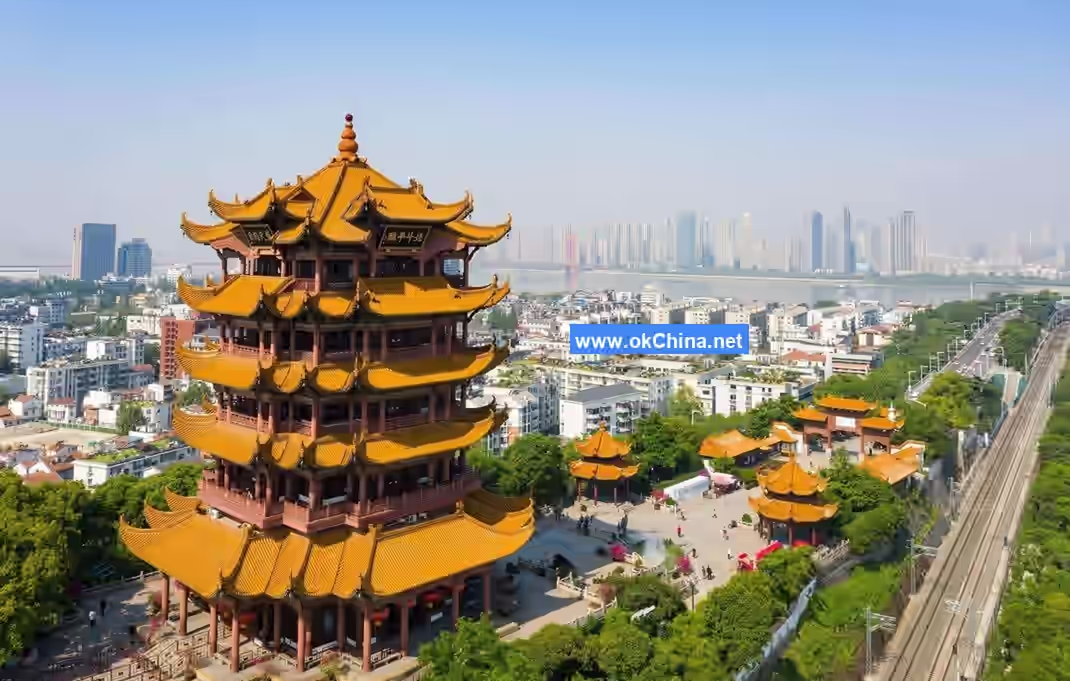
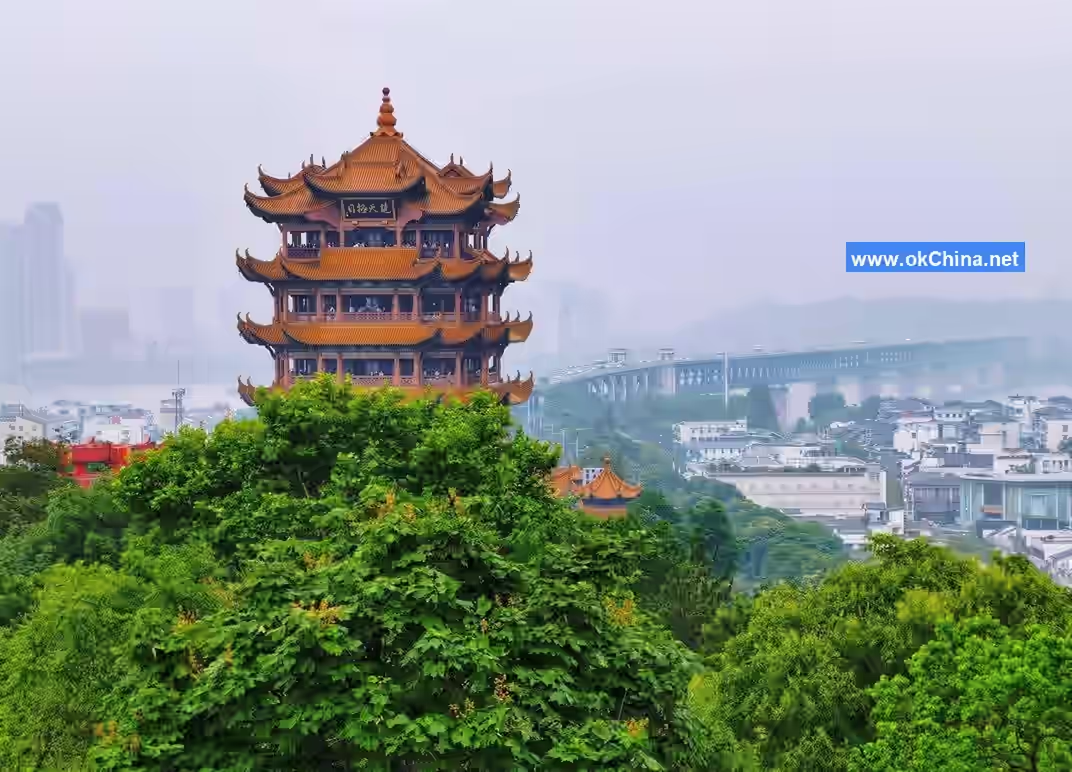
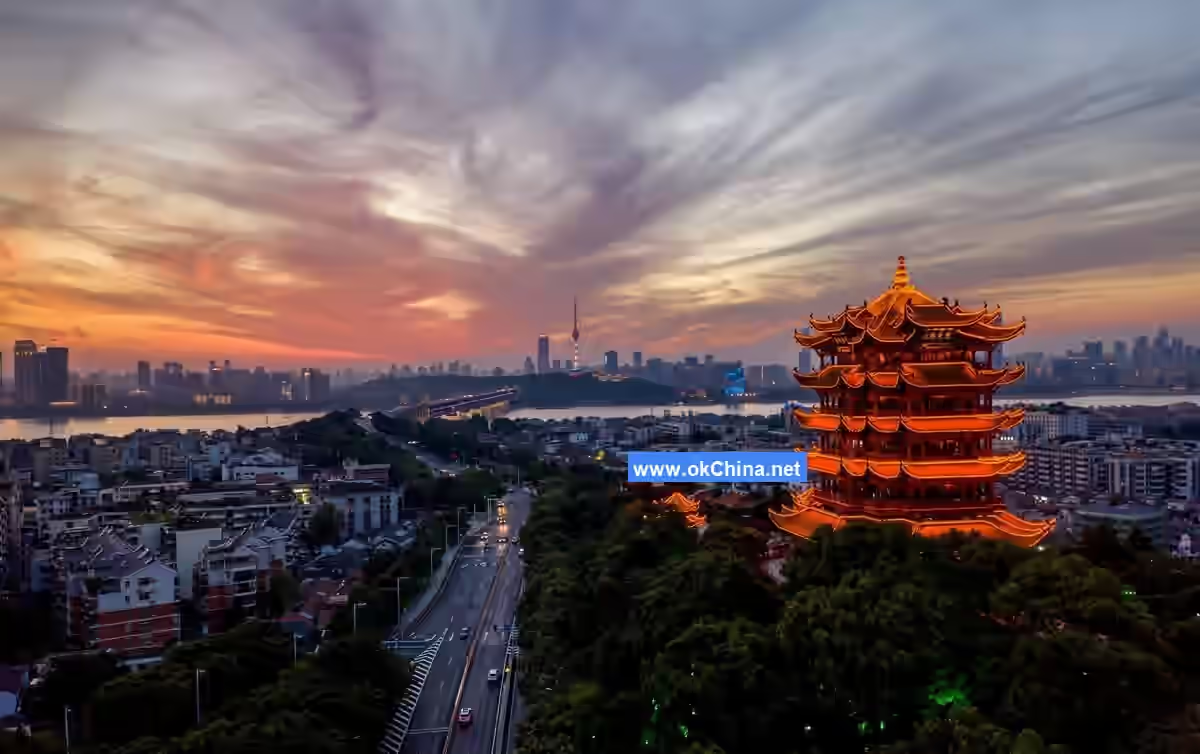
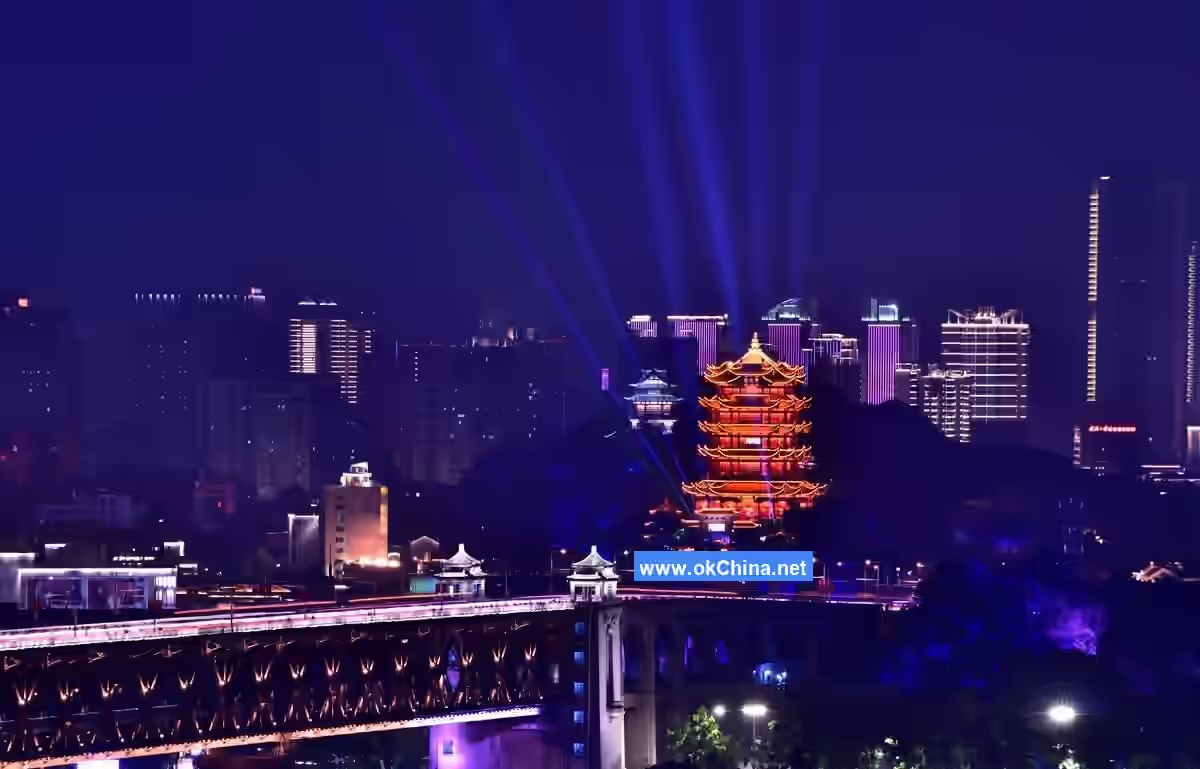
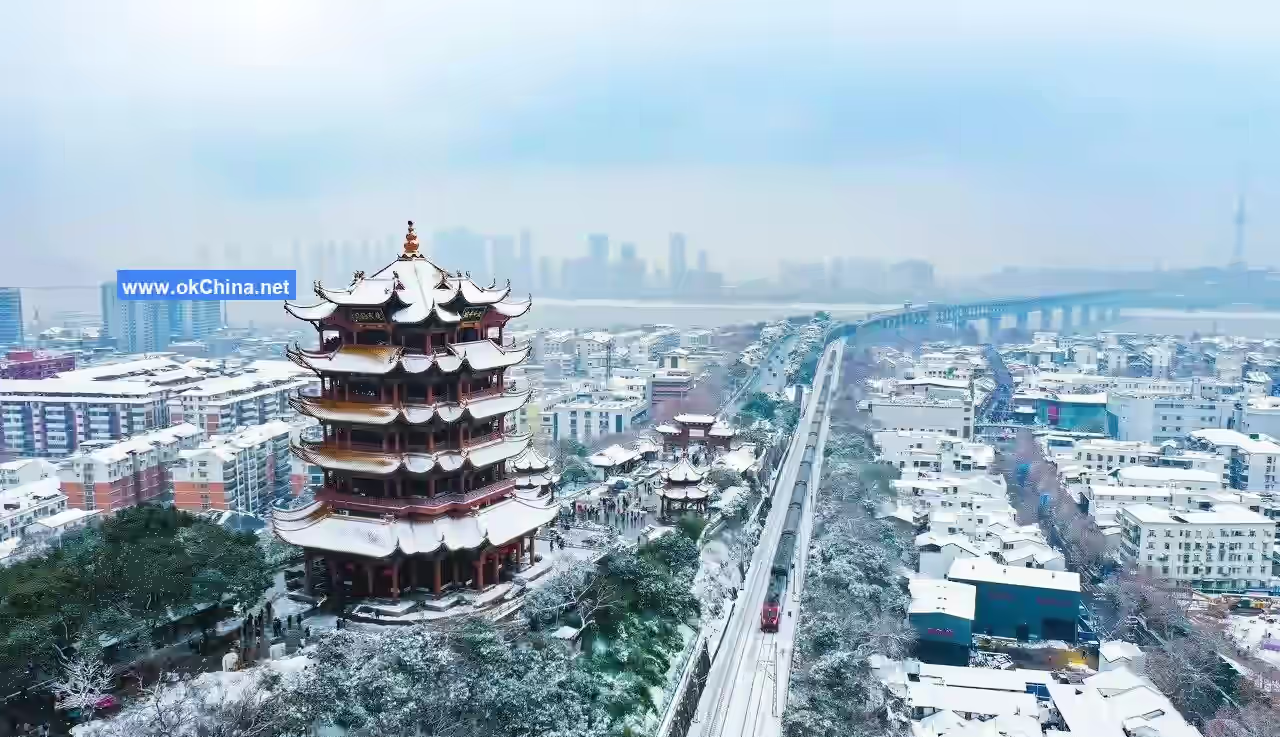
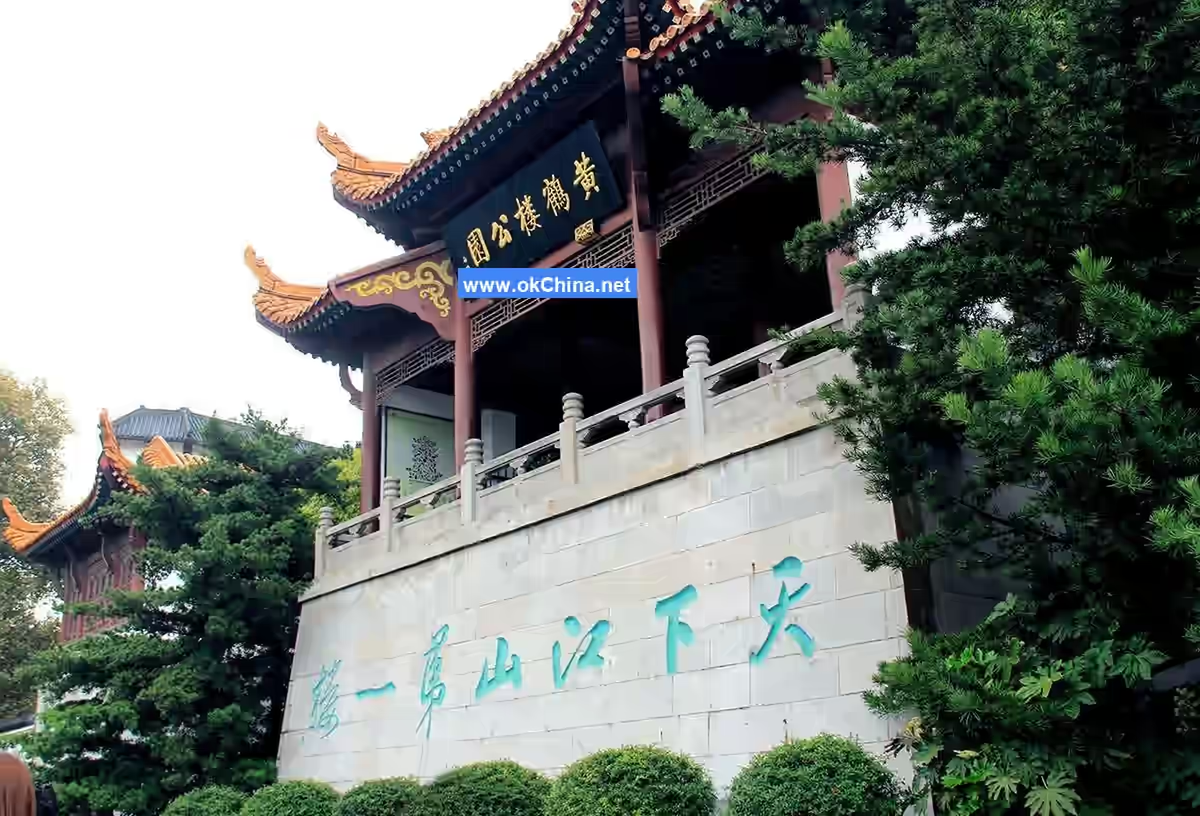
The Yellow Crane Tower is located at the top of Snake Hill in Wuchang District, Wuhan City, Hubei Province, overlooking the vast Yangtze River. It is a landmark building of Wuhan. Originally built in the second year of the Huangwu era of the Wu Kingdom during the Three Kingdoms period (223 AD), it has been repeatedly renovated throughout history. The current structure is designed based on the "Tongzhi Tower" from the Qing Dynasty and was reconstructed in 1985. It gained fame across the land due to the poem "Yellow Crane Tower" composed by the Tang Dynasty poet Cui Hao when he ascended the tower. Since ancient times, it has been praised as a "peerless scenic wonder under heaven." Along with the Qingchuan Pavilion and the Ancient Lute Platform, it is known as one of the "Three Major Scenic Spots of Wuhan." Together with the Yueyang Tower in Yueyang, Hunan, and the Tengwang Pavilion in Nanchang, Jiangxi, it is hailed as one of the "Three Great Towers of Jiangnan." It ranks first among the "Top Ten Scenic Spots of Wuhan," is one of the "Four Great Famous Towers of Ancient China," one of the "Ten Great Historical and Cultural Towers of China," and is acclaimed as the "First Tower under Heaven's Rivers and Mountains."
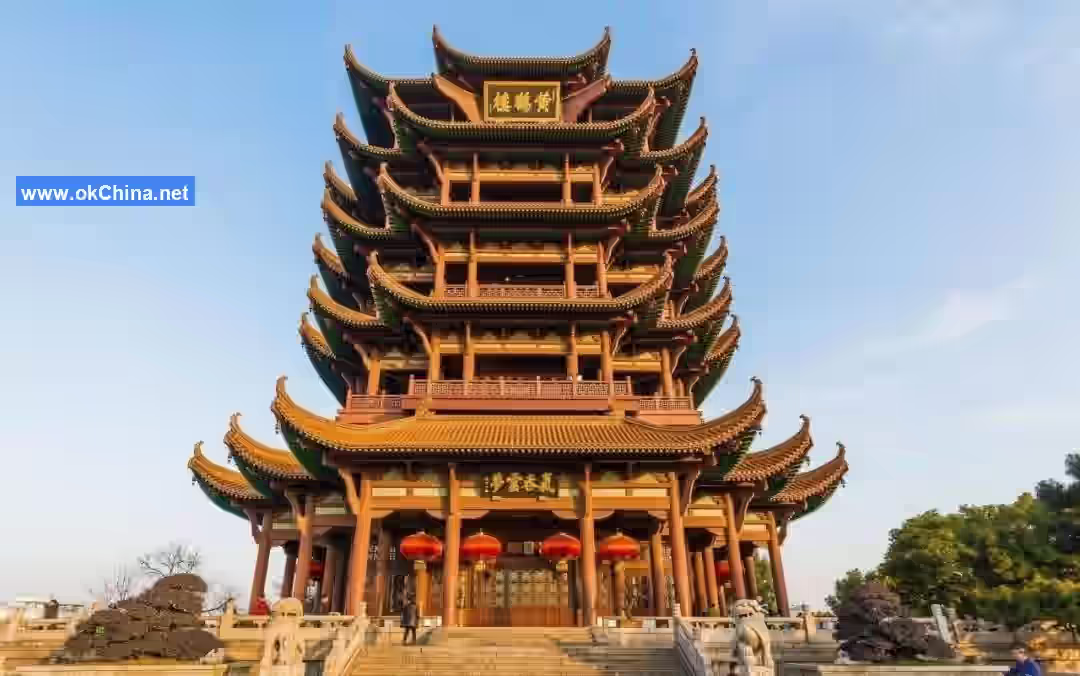
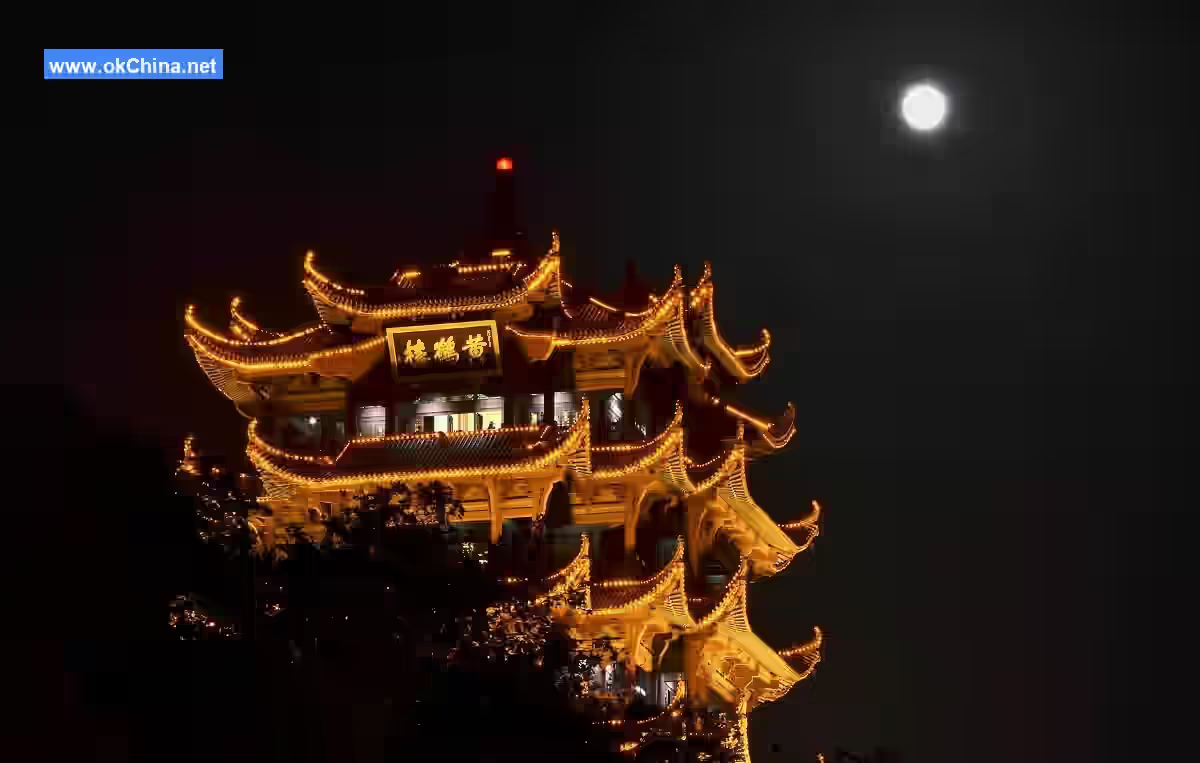
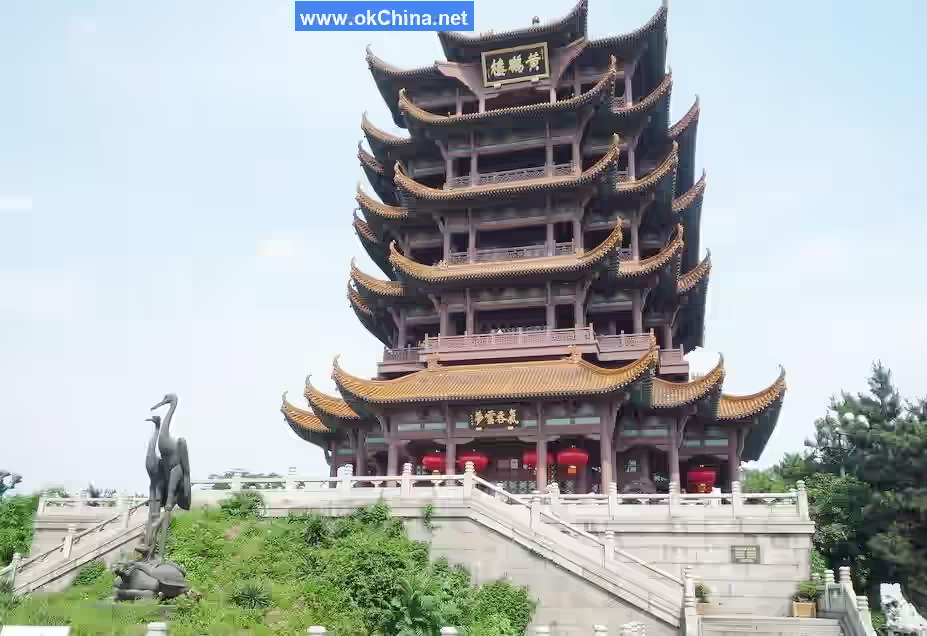
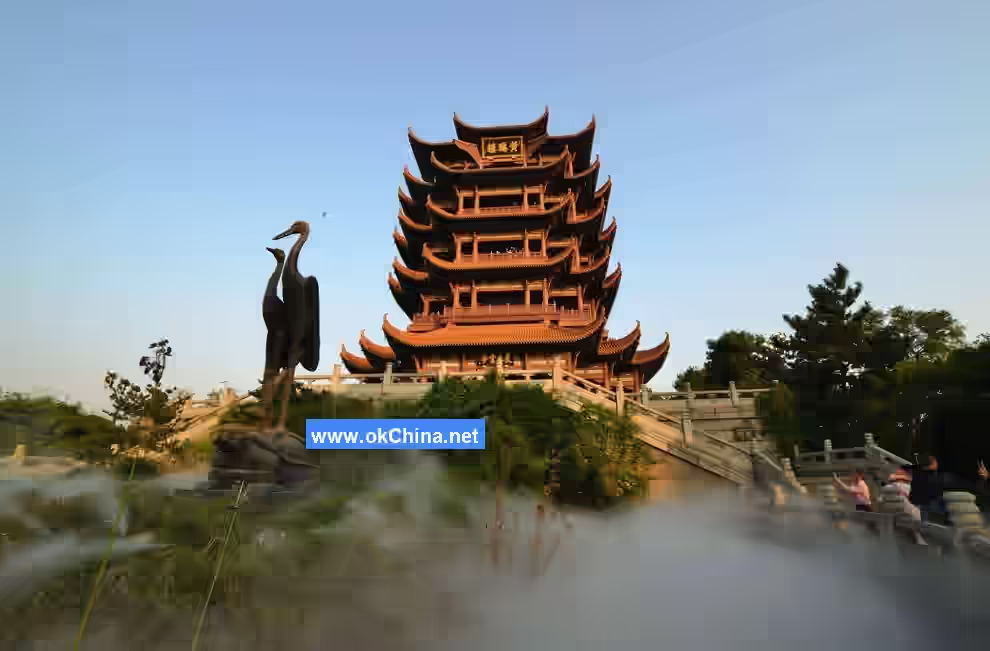
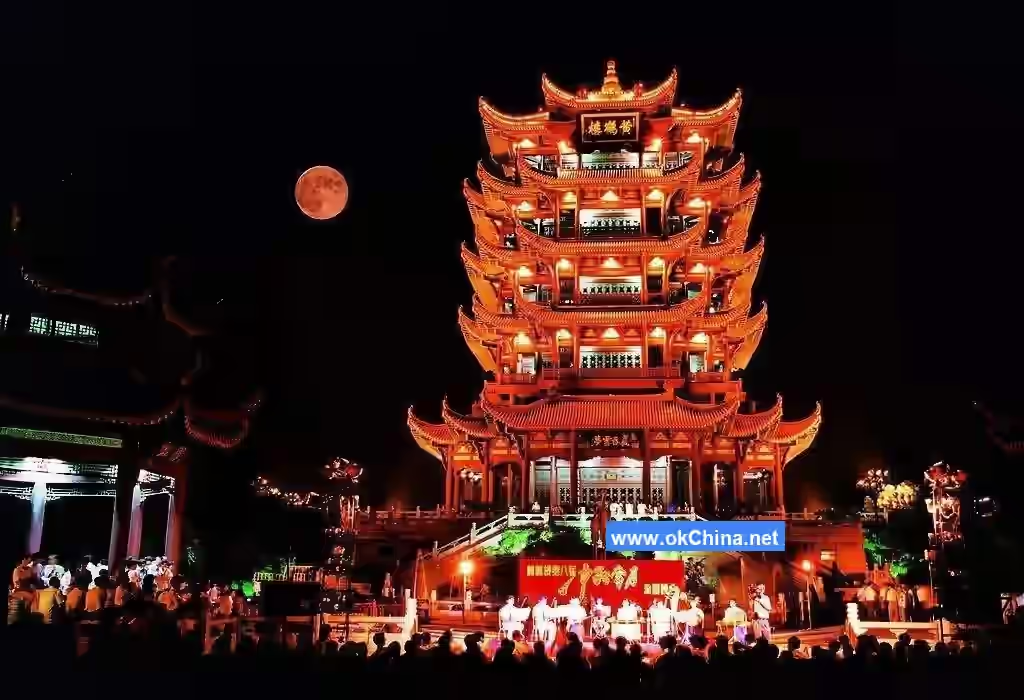
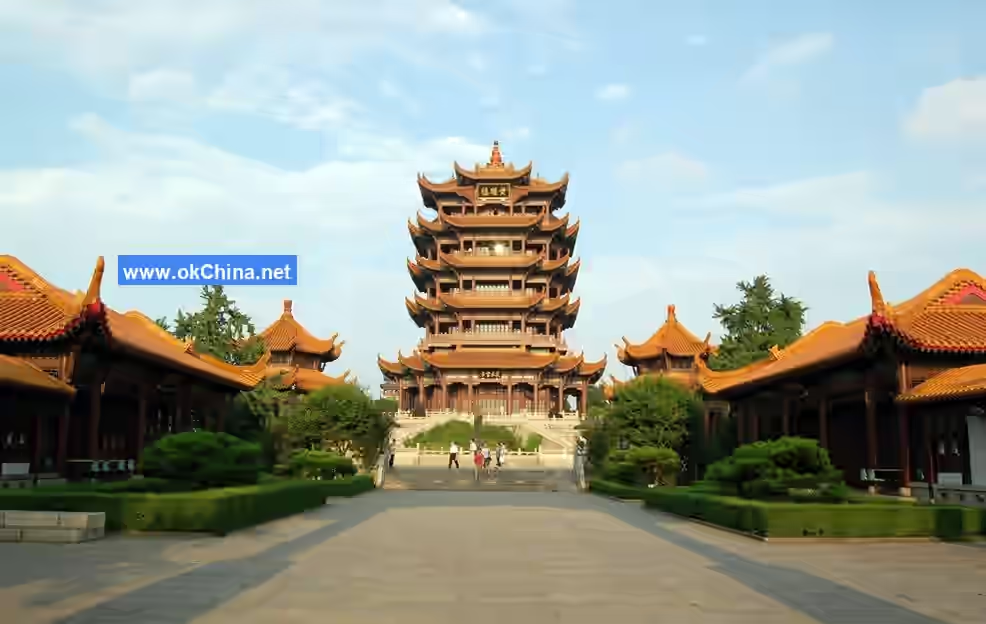
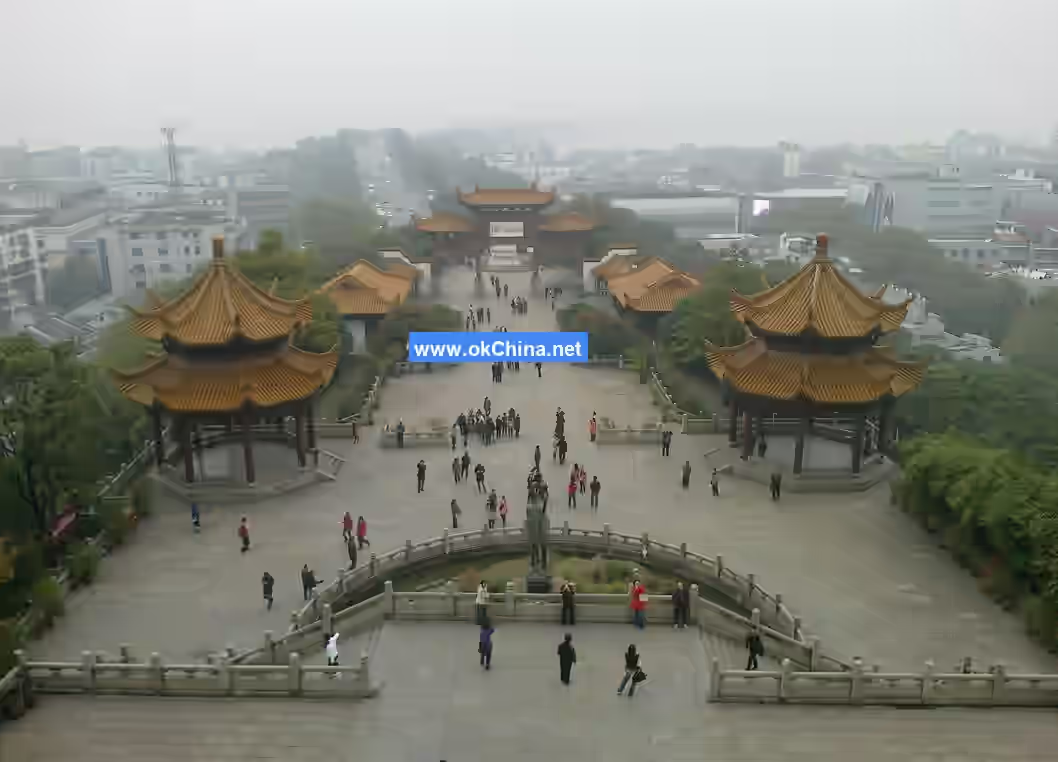
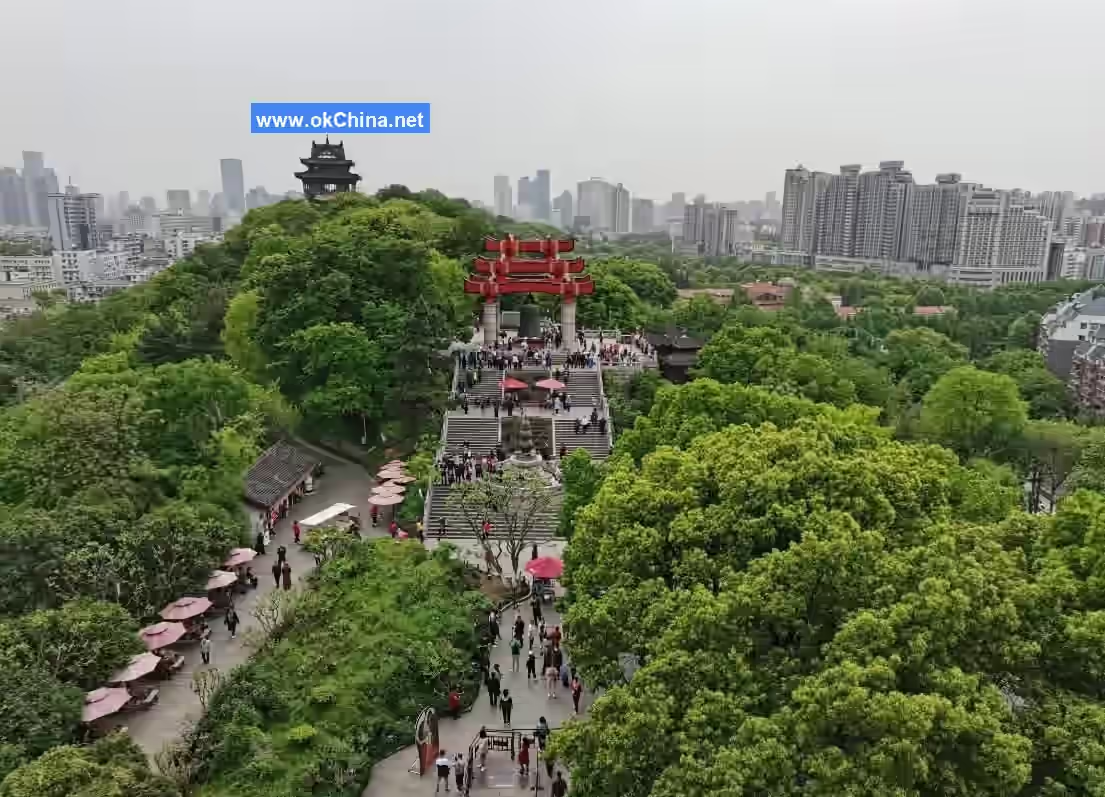
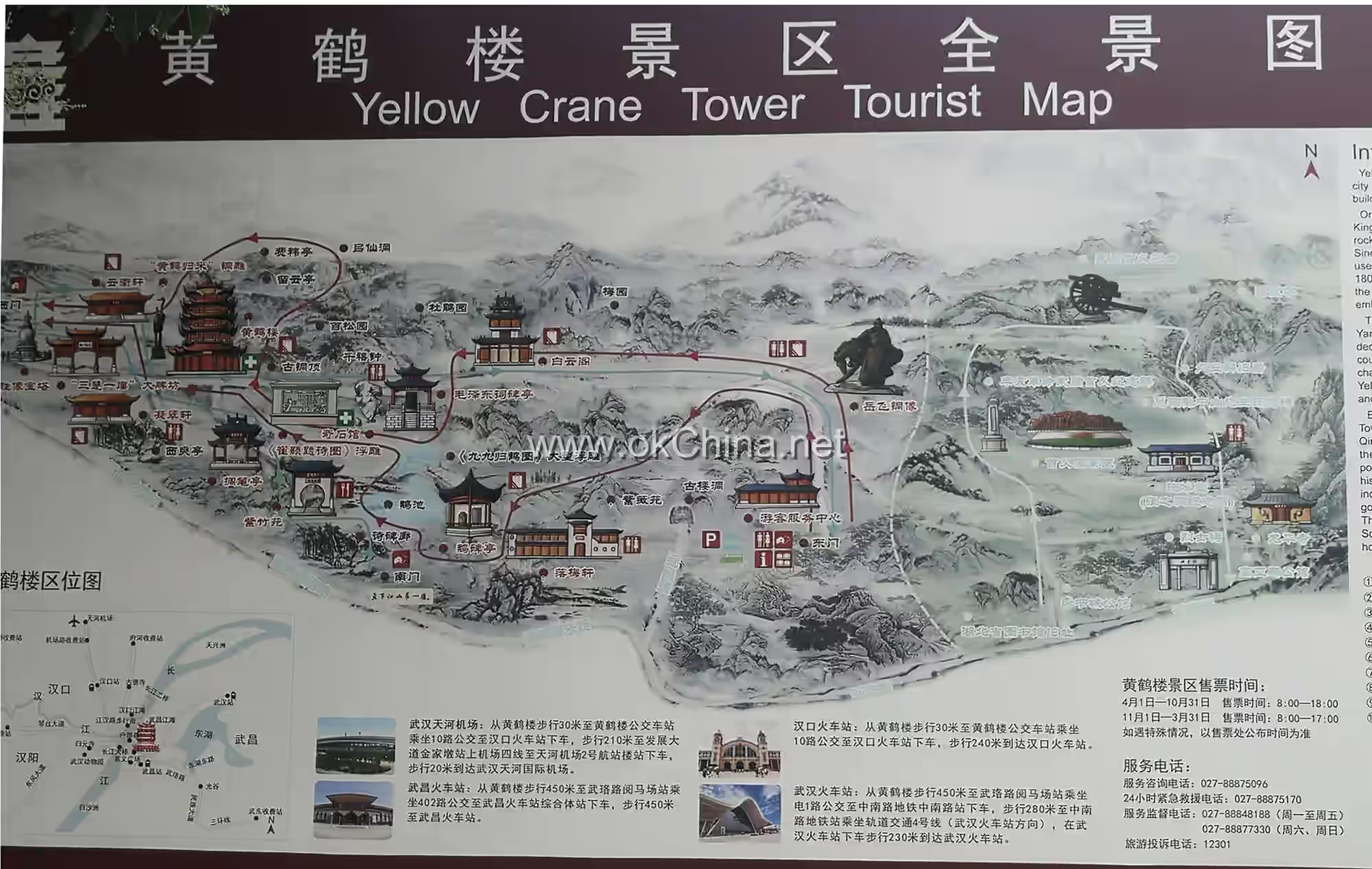
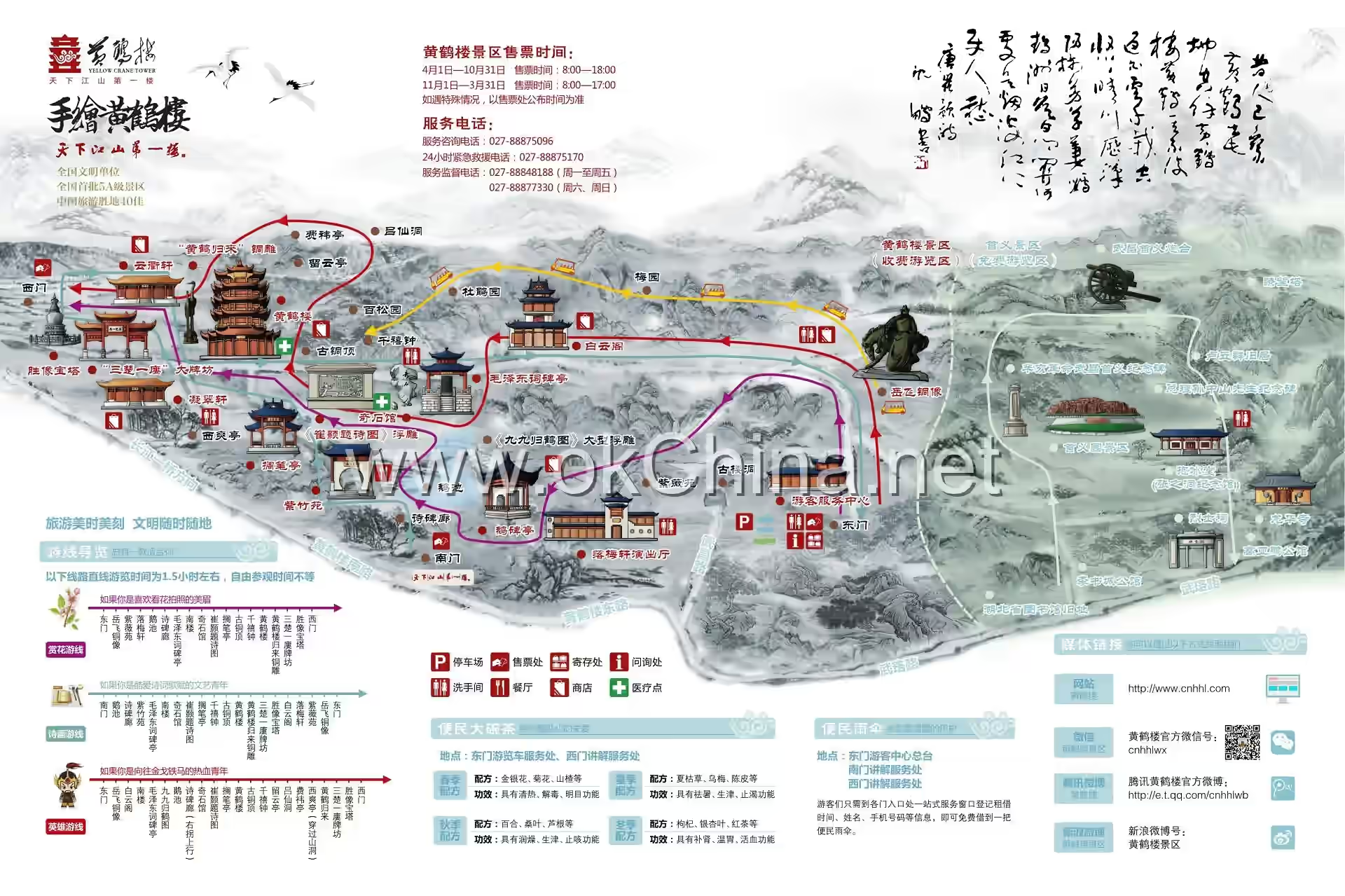
The main tower of the Yellow Crane Tower features a square outer shape enclosing an octagonal inner structure, with a reinforced concrete frame imitating wooden construction. It stands 51.4 meters tall, with a bottom width of 30 meters per side and a top width of 18 meters per side. It has five tiers of flying eaves and a pyramidal roof covered with golden glazed tiles, supported by 72 cylindrical pillars. The tower boasts 60 upturned eaves extending outward. Surrounding the tower are structures such as a bronze-cast yellow crane sculpture, the Shengxiang Pagoda, memorial archways, covered corridors, and pavilions. The entire building resembles a yellow crane spreading its wings, ready to take flight. Under the eaves on all four sides hang inscribed plaques, with the front featuring a golden plaque inscribed with the characters "Yellow Crane Tower" by calligrapher Shu Tong.
2. Historical Evolution
2.1 Three Kingdoms Period
In the second year of Huangwu of Wu during the Three Kingdoms (223 AD), Emperor Sun Quan of Wu built the Xiakou City and constructed a military watchtower on Yellow Crane Rock at the southwestern corner of the city for lookout and defense purposes. This was the original Yellow Crane Tower.
2.2 Southern Dynasties Period
In the sixth year of Daming of the Liu Song Dynasty during the Southern Dynasties (462 AD), the writer Bao Zhao first composed the poem "Ascending Yellow Crane Rock" at the Yellow Crane Tower. In the fifth year of Taishi (469 AD), Zu Chongzhi compiled the supernatural tale "Records of the Strange," which tells the story of a man named Xun Huan from Jiangling meeting an immortal riding a crane and conversing with him at the Yellow Crane Tower. This is the earliest known written record mentioning the name "Yellow Crane Tower."
In the seventh year of Putong of the Liang Dynasty during the Southern Dynasties (526 AD), historian Xiao Zixian, in his Book of Southern Qi, identified the immortal riding the crane in the Yellow Crane Tower myth as Wang Zi'an, adding a more realistic color to the tower's legend.
2.3 Tang Dynasty
In the eleventh year of Kaiyuan of the Tang Dynasty (723 AD), the poet Cui Hao composed the regulated verse poem "Yellow Crane Tower," leading the tower to also be called "Cui's Tower."
In the first year of Yongtai of the Tang Dynasty (765 AD), the writer Yan Boli wrote "Record of the Yellow Crane Tower," covering the tower's legends, geographical features, contemporary activities, and reflections. The record states that the immortal in the Yellow Crane Tower myth was Fei Yi, forming a different account from the Book of Southern Qi, which named the immortal as Wang Zi'an, thus further developing and refining the tower's legend.
In the second year of Baoli of the Tang Dynasty (826 AD), Niu Sengru, the Governor of Ezhou, Military Commissioner of Wuchang, and Surveillance Commissioner of E, Yue, Mian, Qi, and Huang, undertook a large-scale renovation of the city walls of Ezhou (present-day Wuchang District, Wuhan). The Yellow Crane Tower was separated from the city walls, becoming an independent scenic structure. It was later destroyed and rebuilt as the White Cloud Pavilion.
2.4 Song Dynasty
During the Yuanyou era of the Northern Song Dynasty (1086–1094 AD), Fang Ze, the Prefect of Ezhou, rebuilt the Yellow Crane Tower.
In the early Southern Song Dynasty, the Yellow Crane Tower collapsed, and its physical site was lost.
2.5 Yuan Dynasty
In the third year of Zhizheng of the Yuan Dynasty (1343 AD), Prince Kuangche Puhua, the Weishun Prince, built the Shengxiang Pagoda, a Tibetan-style stupa for enshrining relics and Buddhist artifacts. The physical Yellow Crane Tower still did not exist.
2.6 Ming Dynasty
In the fourth year of Hongwu of the Ming Dynasty (1371 AD), Zhou Dexing, the Marquis of Jiangxia, undertook a large-scale expansion of the Wuchang Prefecture city walls and rebuilt the Yellow Crane Tower.
During the Chenghua era of the Ming Dynasty (1465–1487 AD), the Yellow Crane Tower, having fallen into disrepair over the years, was rebuilt by the Censor-in-Chief Wu Chen.
In the forty-fifth year of Jiajing of the Ming Dynasty (1566 AD), the Yellow Crane Tower was destroyed by a great fire.
In the fifth year of Longqing of the Ming Dynasty (1571 AD), the Censor-in-Chief Liu Que rebuilt the Yellow Crane Tower.
In the sixteenth year of Chongzhen of the Ming Dynasty (1643 AD), during the retreat of the rebel army led by Zhang Xianzhong of the Daxi regime from Wuchang, the Ming general Zuo Liangyu led troops into the city and engaged in fierce battle. The Yellow Crane Tower was destroyed in the warfare.
2.7 Qing Dynasty
In the thirteenth year of Shunzhi of the Qing Dynasty (1656 AD), the Censor Shangguan Xuan rebuilt the Yellow Crane Tower.
In the third year of Kangxi of the Qing Dynasty (1664 AD), the Yellow Crane Tower was destroyed by a great fire. Zhang Changgeng, the Viceroy of Huguang, and Governor Liu Zhaoqi rebuilt it.
In the thirteenth year of Kangxi of the Qing Dynasty (1674 AD), Cai Yurong, the Viceroy of Huguang, repaired the Yellow Crane Tower.
In the twentieth year of Kangxi of the Qing Dynasty (1681 AD), the Yellow Crane Tower was struck by lightning and caught fire, suffering partial damage before eventually collapsing entirely.
In the forty-first year of Kangxi of the Qing Dynasty (1702 AD), Yu Chenglong, the Viceroy of Huguang, and Governor Liu Dianheng rebuilt the Yellow Crane Tower.
In the sixty-first year of Kangxi of the Qing Dynasty (1722 AD), Manpi, the Viceroy of Huguang, and Governor Zhang Liandeng carried out minor repairs on the Yellow Crane Tower.
In the first year of Qianlong of the Qing Dynasty (1736 AD), Shi Yizhi, the Viceroy of Huguang, rebuilt the Yellow Crane Tower.
In the forty-fourth year of Qianlong of the Qing Dynasty (1779 AD), Emperor Qianlong inscribed a horizontal plaque with the four characters "Jiang Han Xian Zong" (Immortal Traces of Jiang and Han) for the Yellow Crane Tower. Later, he also placed a stele inscribed with his poem "Centenarian Wu Guorui, Four Generations Under One Roof" in the tower.
In the first year of Jiaqing of the Qing Dynasty (1796 AD), Ma Huiyu, the Viceroy of Huguang, conducted a comprehensive renovation of the Yellow Crane Tower, adding over forty stone bases connected by iron chains, altering the tower's original all-wooden structure.
In the twelfth month of the sixth year of Xianfeng of the Qing Dynasty (1856 AD), during fierce battles between the Taiping Rebellion army defending Wuchang city and Qing forces, the Yellow Crane Tower was destroyed in the war.
In the seventh year of Tongzhi of the Qing Dynasty (1868 AD), Guan Wen and Li Hanzhang, Viceroys of Huguang, and Governor Guo Boyin rebuilt the Yellow Crane Tower.
In the tenth year of Guangxu of the Qing Dynasty (1884 AD), the Yellow Crane Tower was destroyed by a great fire, leaving only its pyramidal copper roof.
In the sixteenth year of Guangxu of the Qing Dynasty (1890 AD), Zhang Zhidong, the Viceroy of Huguang, first proposed rebuilding the Yellow Crane Tower using iron materials.
In the thirtieth year of Guangxu of the Qing Dynasty (1904 AD), Duan Fang, the Governor of Hubei, built a two-story Western-style red building near the original site of the Yellow Crane Tower, called the "Alarm Bell Tower."
In the thirty-third year of Guangxu of the Qing Dynasty (1907 AD), the military and academic circles of Hubei raised funds to build the Fengdu Tower and Baobing Hall on Snake Hill. Zhang Zhidong inscribed the three characters "Ao Lue Lou" as the plaque for the tower.
3. Architectural Layout
3.1 General Description
The main tower of the Yellow Crane Tower features a square outer shape enclosing an octagonal inner structure, with a reinforced concrete frame imitating wooden construction. Starting from the first floor, the overall structure tapers upwards, enhancing its stability and solidity. The tower stands 51.4 meters tall, with a bottom width of 30 meters per side and a top width of 18 meters per side. It has five tiers of flying eaves and a pyramidal roof covered with golden glazed tiles, supported by 72 cylindrical pillars. The tower boasts 60 upturned eaves extending outward. Surrounding the tower are structures such as a bronze-cast yellow crane sculpture, the Shengxiang Pagoda, memorial archways, covered corridors, and pavilions, embodying a unique national style.
3.2 First Floor
The first floor is a tall and spacious hall. Its central caisson ceiling is over 10 meters high. On the front wall is a huge ceramic mural titled "White Clouds and Yellow Crane." On the pillars on either side hang couplets, each 7 meters long: "Fresh air comes from the west, clouds and mists sweep away the regrets of heaven and earth; The great river flows eastward, waves wash clean the sorrows of past and present."
3.3 Second Floor
On the front wall of the second-floor hall is a marble engraving of "Record of the Yellow Crane Tower" written by Yan Boli of the Tang Dynasty, documenting the tower's history of rise, fall, and evolution, as well as anecdotes of famous figures. On either side of the record are two murals: one depicts "Sun Quan Building the City," vividly illustrating the historical sequence of the Yellow Crane Tower and Wuchang City's establishment; the other shows "Zhou Yu Hosting a Banquet," reflecting activities of Three Kingdoms celebrities at the Yellow Crane Tower.
3.4 Third Floor
The murals in the third-floor hall are "embroidered portrait paintings" of famous Tang and Song Dynasty figures, such as Cui Hao, Li Bai, and Bai Juyi, along with excerpts of their famous verses chanting the Yellow Crane Tower.
3.5 Fourth Floor
The fourth-floor hall is divided into several smaller rooms by screens, displaying contemporary calligraphy and paintings by famous figures for visitors to appreciate and purchase.
3.6 Fifth Floor
The top-floor hall on the fifth floor exhibits long scrolls and murals such as "The Ten-Thousand-Mile Yangtze River."
3.7 Architectural Features
The Yellow Crane Tower appears to have five stories externally but actually contains nine floors internally, implying the imperial concept of "九五至尊" (the supreme nine and five). The crane-wing shape of the eight-direction flying eaves embodies the tower's unique culture, perfectly combining traditional Chinese architectural characteristics with cultural significance.
4. History and Culture
4.1 Origin of the Name
Regarding the naming of the Yellow Crane Tower, there are two theories: "Because of the Mountain" and "Because of the Immortal."
4.1.1 Immortal Theory
The Immortal Theory has two versions. One says that an immortal once rode a crane past this place, hence the name. The other says a Taoist priest once painted a yellow crane that could dance on the wall of the Xin family's tavern here, greatly boosting the business. Ten years later, the priest returned, summoned the crane with his flute, and flew away on it. The Xin family then funded the building of a tower, naming it Yellow Crane Tower.
4.1.2 Mountain Theory
Historical research suggests that the name Yellow Crane Tower comes from its location on Yellow Crane Mountain. In ancient times, the characters "鹄" (hu, meaning swan/goose) and "鹤" (he, meaning crane) were phonetically similar and used interchangeably, hence the name "Yellow Crane Tower."
4.2 Related Poetry
The Yellow Crane Tower has attracted numerous writers, poets, and scholars throughout history to ascend and compose poems or essays. Old records alone contain nearly 400 pieces of poetry and prose. Examples of commonly known poems are listed in the table below:#### 4.2.1 Major Poems and Literary Works | Period | Author | Work | |------|------|------| | Tang Dynasty | Cui Hao | Yellow Crane Tower | | Tang Dynasty | Yan Boli | Record of the Yellow Crane Tower | | Tang Dynasty | Wang Wei | Seeing Off Prefect Kang | | Tang Dynasty | Li Bai | Gazing at the Yellow Crane Tower | | Tang Dynasty | Li Bai | Listening to the Flute Played on the Yellow Crane Tower with Shi Langzhong Qin | | Tang Dynasty | Li Bai | Seeing Meng Haoran off at Yellow Crane Tower | | Southern Song Dynasty | You Yi | Ascending the Yellow Crane Tower | | Southern Song Dynasty | Yue Fei | Man Jiang Hong - Reflections upon Ascending the Yellow Crane Tower | | Qing Dynasty | Hu Fengdan | Records of Huanghu Mountain | | Modern | Mao Zedong | Buddhist Dancers - Yellow Crane Tower |
4.3 Anecdotes and Legends
4.3.1 The Xin Family Tower
Once upon a time, there was a man surnamed Xin who made a living by selling wine. One day, a tall and sturdy yet shabbily dressed Taoist priest (namely, Patriarch Lü Dongbin, the Pure Yang Sovereign Emperor) came and calmly asked Xin, "May I have a cup of wine?" Xin did not slight him because of his ragged clothes and promptly served him a large cup of wine. This went on for half a year. Xin never showed any weariness despite the Taoist's inability to pay, continuing to offer him wine daily. One day, the Taoist told Xin, "I owe you a great deal for wine and have no way to repay you." He then took an orange peel from his basket and painted a crane on the wall. As the peel was yellow, the crane appeared yellow as well. Whenever someone in the room clapped and sang, the yellow crane on the wall would dance gracefully to the rhythm of the song. Patrons in the wine shop, seeing this marvel, paid to watch. More than ten years passed like this, and Xin amassed considerable wealth. One day, the shabbily dressed Taoist drifted back to the wine shop. Xin approached to express his gratitude, saying, "I am willing to provide for you and fulfill all your needs." The Taoist replied with a smile, "Did I come for this?" He then took out a flute and played a few tunes. Soon, wisps of white clouds descended from the sky, and the painted yellow crane flew down with the clouds before the guests. The guests then mounted the crane and rode the clouds up into the sky. To thank and commemorate this Taoist, Xin used the silver earned over the decade to build a pavilion on Huanghu Ji. Initially, people called it the "Xin Family Tower," which later became known as the "Yellow Crane Tower."
4.3.2 The Poet Immortal Lays Down His Brush
When Cui Hao ascended the Yellow Crane Tower, he composed the poem Yellow Crane Tower, filled with his own sense of unrecognized talent and deep nostalgia: "The sage on yellow crane was gone amid clouds white, / To what avail is Yellow Crane Tower left here? / Once gone, the yellow crane will ne'er on earth alight; / Only white clouds still float in vain from year to year. / By sunlit river trees can be count'd one by one; / On Parrot Islet sweet green grass grows fast and thick. / Where is my native land beyond the setting sun? / The mist-veiled waves of River Han make me homesick." This poem later made Li Bai, upon climbing the Yellow Crane Tower, sigh: "Before such scenery, I find no words to say, / For Cui Hao has written a poem on it today."
4.3.3 The Immortal Peach Pavilion
Legend has it that Lü Dongbin, riding a crane, arrived at the foot of the Yellow Crane Tower in Jiangxia. His horsetail whisk transformed into a peach tree laden with fruit. Lü Dongbin then sold these peaches, said to cure all illnesses, at the foot of the Yellow Crane Tower. People scrambled to buy the immortal peaches, but no one intended to bring them to the elderly. Disappointed, he punched and broke the peach tree with one fist. Later, only a young sedan chair carrier bought an immortal peach from Lü Dongbin for his seriously ill mother. Touched by his filial piety, Lü Dongbin conjured two immortal peaches. The carrier's mother was indeed cured of all ailments, and eventually, both mother and son ascended to heaven on a crane transformed from the peach tree. Consequently, an Immortal Peach Pavilion was built at the foot of the Yellow Crane Tower, and the story of the sedan chair carrier's filial devotion has been passed down through generations among the people of Wuhan.
4.4 Intangible Cultural Heritage
In May 2011, the legends of the Yellow Crane Tower were approved by the State Council and included in the third batch of national-level intangible cultural heritage list.
The legends of the Yellow Crane Tower are composed of tales that take place in or are related to the Yellow Crane Tower on Snake Hill in Wuchang, Wuhan City, Hubei Province. They have a long history, profound底蕴, and are rich and diverse. Originating during the Three Kingdoms and Northern and Southern Dynasties periods, a time of frequent warfare, political darkness, and human suffering, these conditions provided fertile ground for the prevalence of Buddhism and Taoism. People hoped to transcend the hardships of reality, shifting their hopes from this life to the next, from earth to heaven, fantasizing about transcending the mundane world and ascending to immortality. Thus, the story of the "Immortal Riding a Crane" came into being. The earliest written record appears in Shu Yi Ji (Records of Strange Things) by Zu Chongzhi of the Southern Dynasties, but this book has been lost. The earliest extant text is preserved in Xiao Zixian's Book of Southern Qi, followed by records in four official histories and some important classics and传奇.
The legends of the Yellow Crane Tower are broadly divided into three categories: immortal传奇, celebrity anecdotes, and historical stories. Their basic titles include Zi'an Riding the Crane, Fei Yi Ascending to Heaven, The Immortal Playing the Flute, Painting a Crane with Orange Peel, and dozens of others. The unique geographical environment, vivid folk legends, and exquisite poetry, lyrics, prose, and couplets have made the Yellow Crane Tower a famous tower through the ages. The legends are the soul of this historical landmark and the foundation upon which the Yellow Crane Tower relies for its survival and development. The legends of the Yellow Crane Tower are ancient yet vibrant. Their themes of "harmony between man and nature," advocating minimal greed and desire, punishing evil and promoting good, their平民化的 narrative techniques, the scenes of harmony among immortals, humans, and living beings, the曲折的情节 development, and often unexpected endings not only align with the aesthetic psychology of the Chinese people but also gain recognition worldwide.
The legends of the Yellow Crane Tower have inspired the creative灵感 of poets and great figures throughout history, from Cui Hao, Li Bai, Su Dongpo, Yue Fei to Mao Zedong, giving birth to numerous precious poems, lyrics, and literary works, greatly advancing the development of Chinese romantic literature and Taoist literature. They have also influenced sister arts such as painting (including New Year pictures), architecture, opera, folk performing arts, and music, even permeating the field of language.
Comments
Post a Comment