Yaoshan-Zhongyuan Great Buddha Scenic Area
1. Introduction
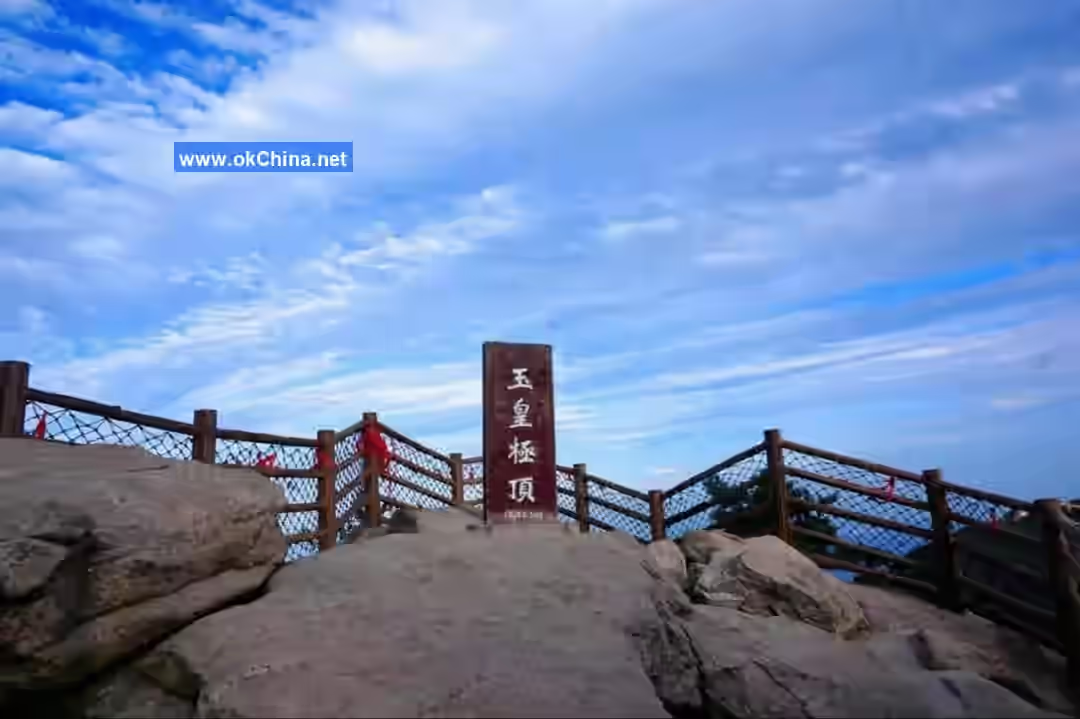
Yaoshan, located in Xizhuyuan Village, Yaoshan Town, Lushan County, Pingdingshan City, Henan Province, lies between 112°13′55″E to 112°42′31″E and 33°47′01″N to 33°38′18″N. It is an eastern extension of the Qinling Mountain range, stretching from west to east. The lowest point, with an altitude of 200 meters, is within the Santang area, while the highest point, Yuhuangding in the Shirenshan area, reaches 2,153.1 meters.
The region where Yaoshan is located enjoys a warm climate with four distinct seasons. Numerous tributaries of the Shahe River are distributed throughout the area, including Yuquanmiaogou, Taoling River, Dazhuang River, Zhaiqugou, Qingshui River, and others. The main peak is Yuhuang Jiding, standing at 2,153.3 meters. From the summit of Yuhuang Jiding, one can gaze into the distance and see continuous mountain ranges.
The Yaoshan Scenic Area is established around Yaoshan Mountain. Yaoshan is the birthplace of the Liu surname and the hometown of the Warring States period philosopher Mozi. In 1997, it was approved by the State Council to become a national nature reserve. In May 2011, it was promoted to a National 5A-level Tourist Attraction.
The Zhongyuan Great Buddha Scenic Area in Pingdingshan City is located in Lushan County, Pingdingshan City, Henan Province, situated in the prime location for Funiu Mountain ecological tourism. The planned area of the scenic spot is 13.40 square kilometers.
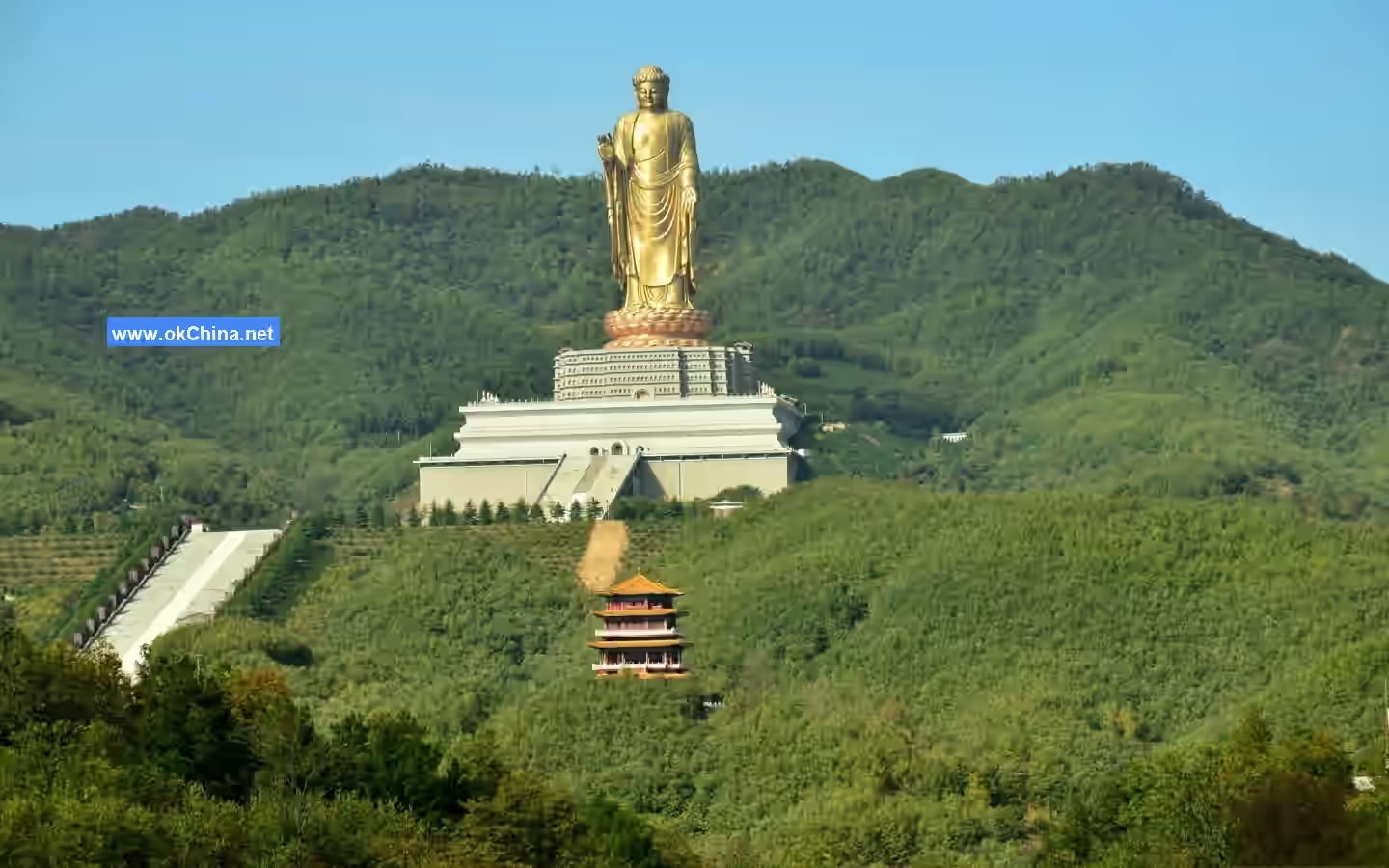
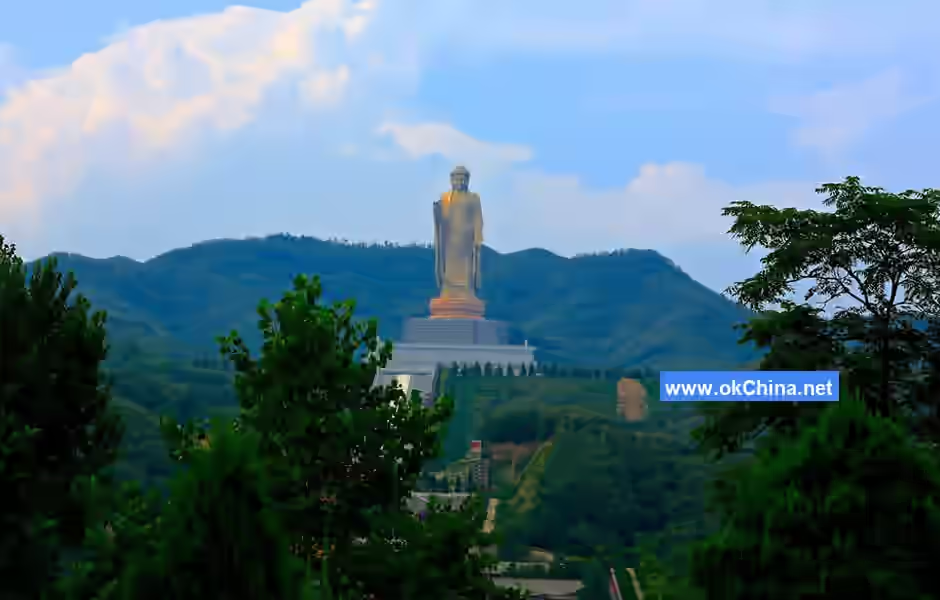
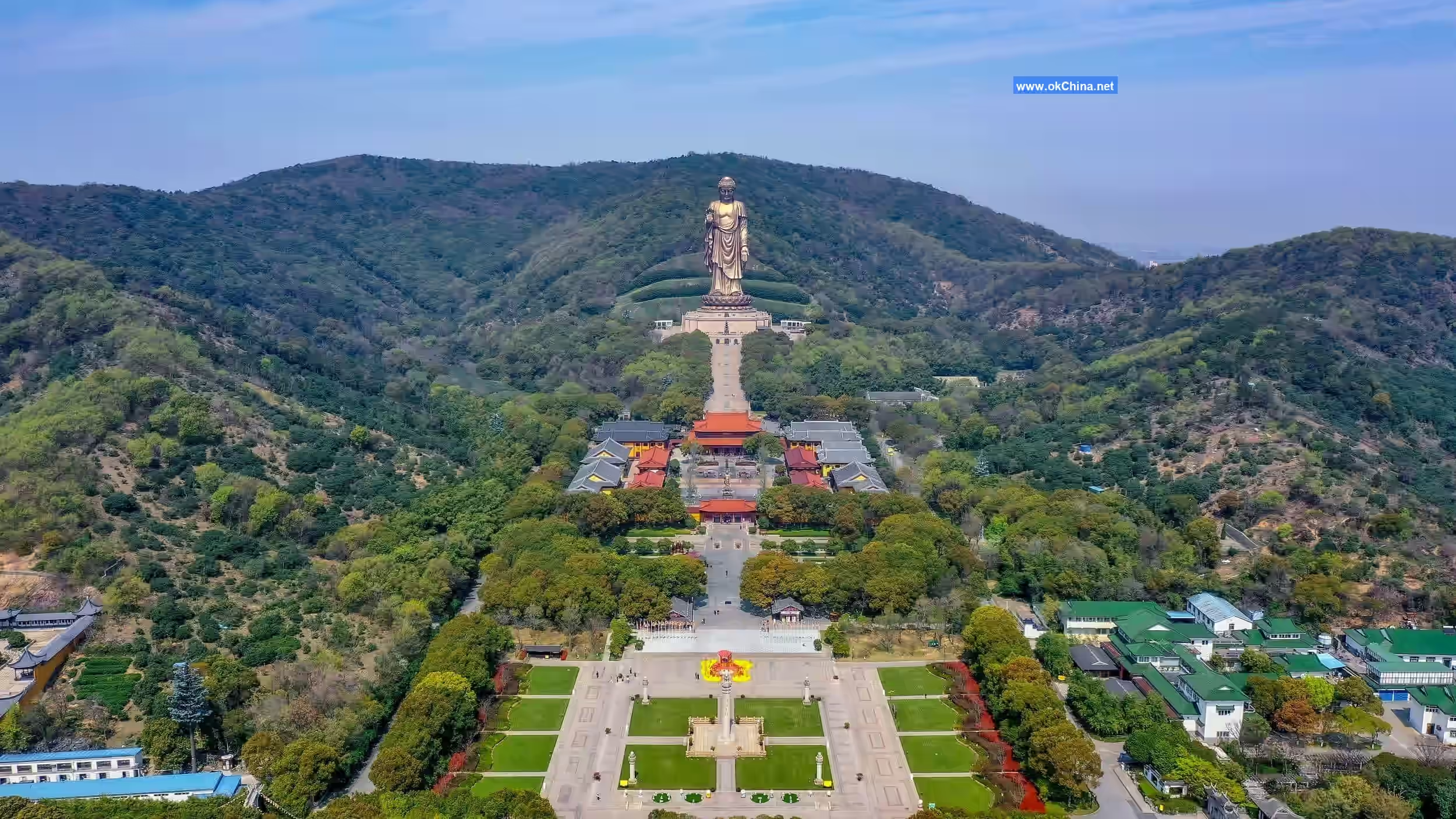
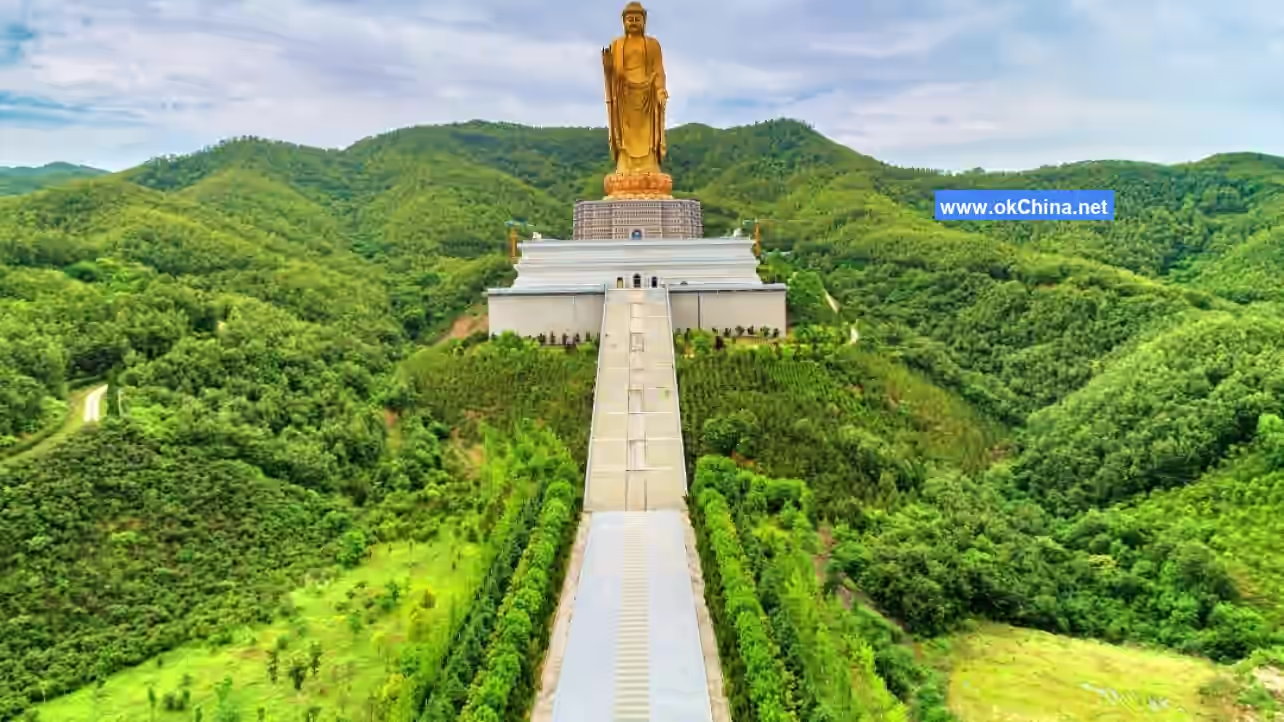
The Zhongyuan Great Buddha Scenic Area in Pingdingshan City consists of attractions such as the Memorial Archway, Foquan Temple, Wish Platform, Fuhui Avenue, Worship Platform, Zhongyuan Great Buddha, Auspicious Bell, Buddhist Culture Palace, and Cultural Stele Corridor. On September 29, 2008 (the first day of the ninth lunar month), the Great Buddha within the scenic area was consecrated and unveiled by 108 eminent monks from both sides of the Taiwan Strait and four regions (Mainland China, Taiwan, Hong Kong, and Macau). The project took 12 years and an investment of 1.2 billion yuan. The total height of the Great Buddha is 208 meters: the statue itself is 108 meters tall, the lotus pedestal is 20 meters, the diamond pedestal is 25 meters, and the Sumeru pedestal is 55 meters. The entire statue of the Zhongyuan Great Buddha was cast using 3,300 tons of copper, 108 kilograms of gold, and over 15,000 tons of special steel. Its surface area is 11,300 square meters, formed by welding 13,300 copper plates. The Tianrui Auspicious Golden Bell within the scenic area has a net weight of 116 tons and is recorded in the Guinness World Records as the "World's Largest Externally Struck Bronze Bell." Venerable Master Hsing Yun, President of the World Buddhist Light Association and founder of Fo Guang Shan in Taiwan, inscribed the characters "World's First Zhongyuan Great Buddha" for the statue. In front of the Buddha, there are also landscapes such as the ever-flowing Shahe Holy Water, Foquan Hot Spring, Foquan Temple, Zhongyuan Sakyamuni Great Buddha, and Tianrui Auspicious Bell.
2. Main Attractions
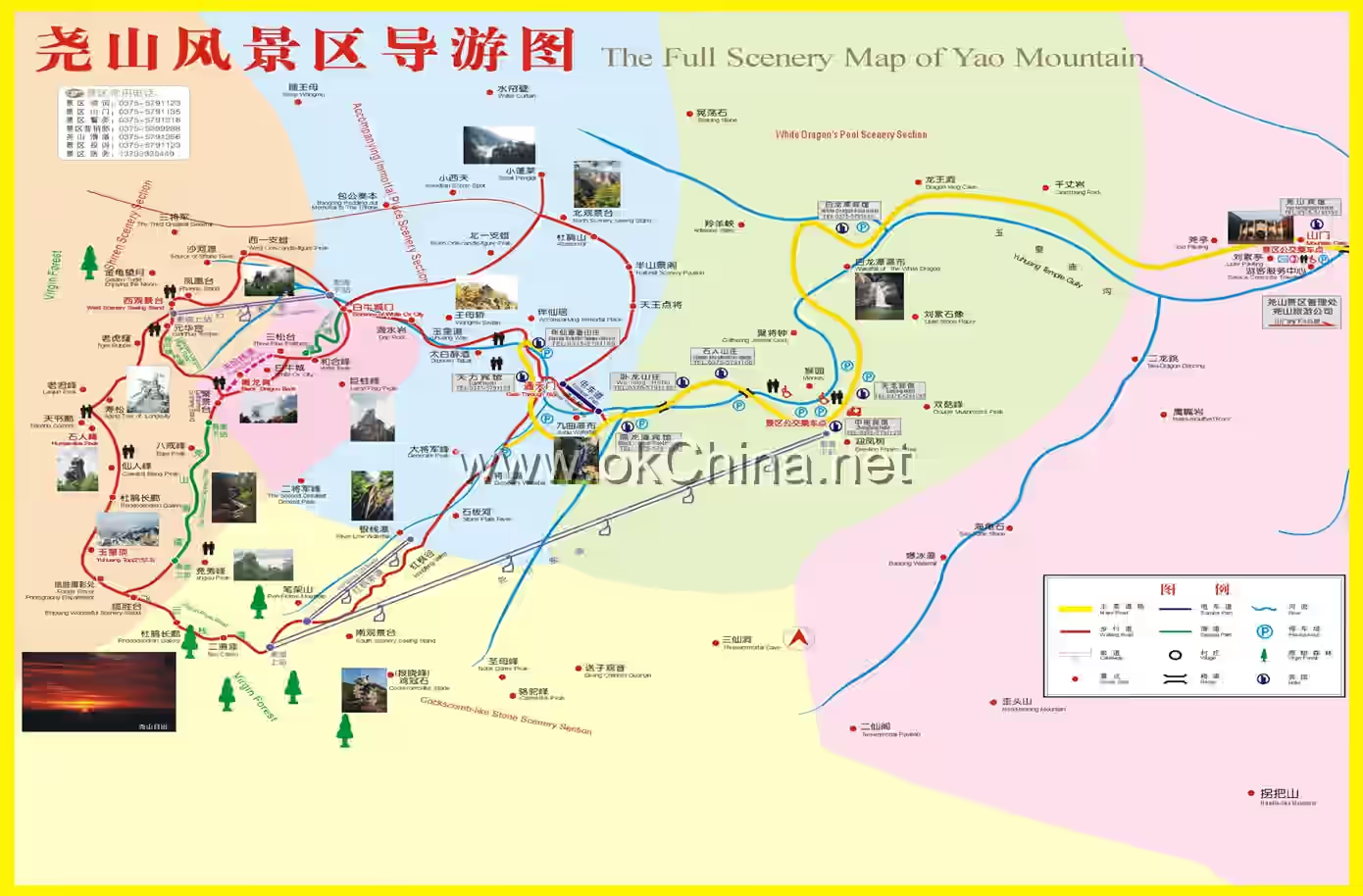
2.1 Yuhuang Jiding
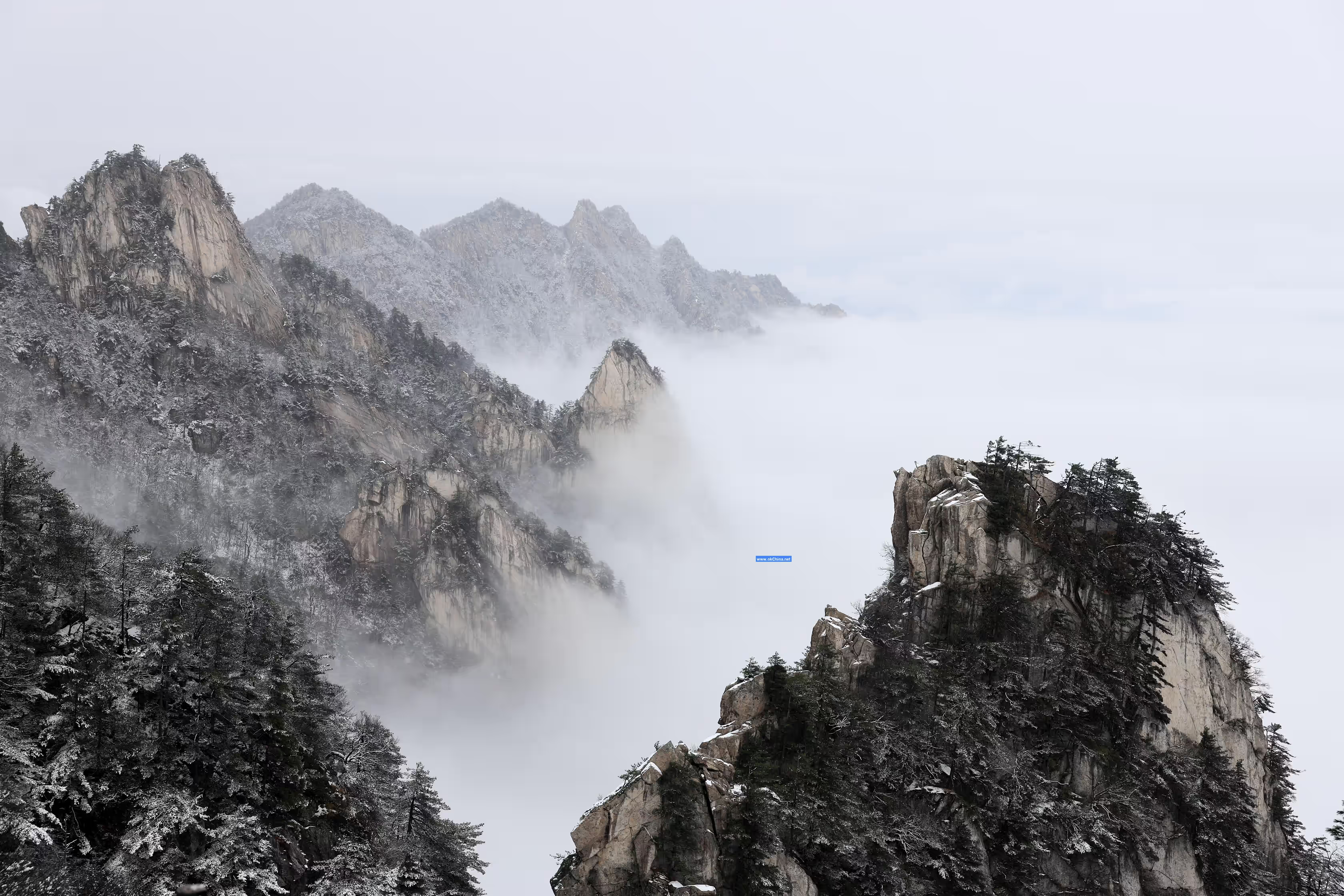
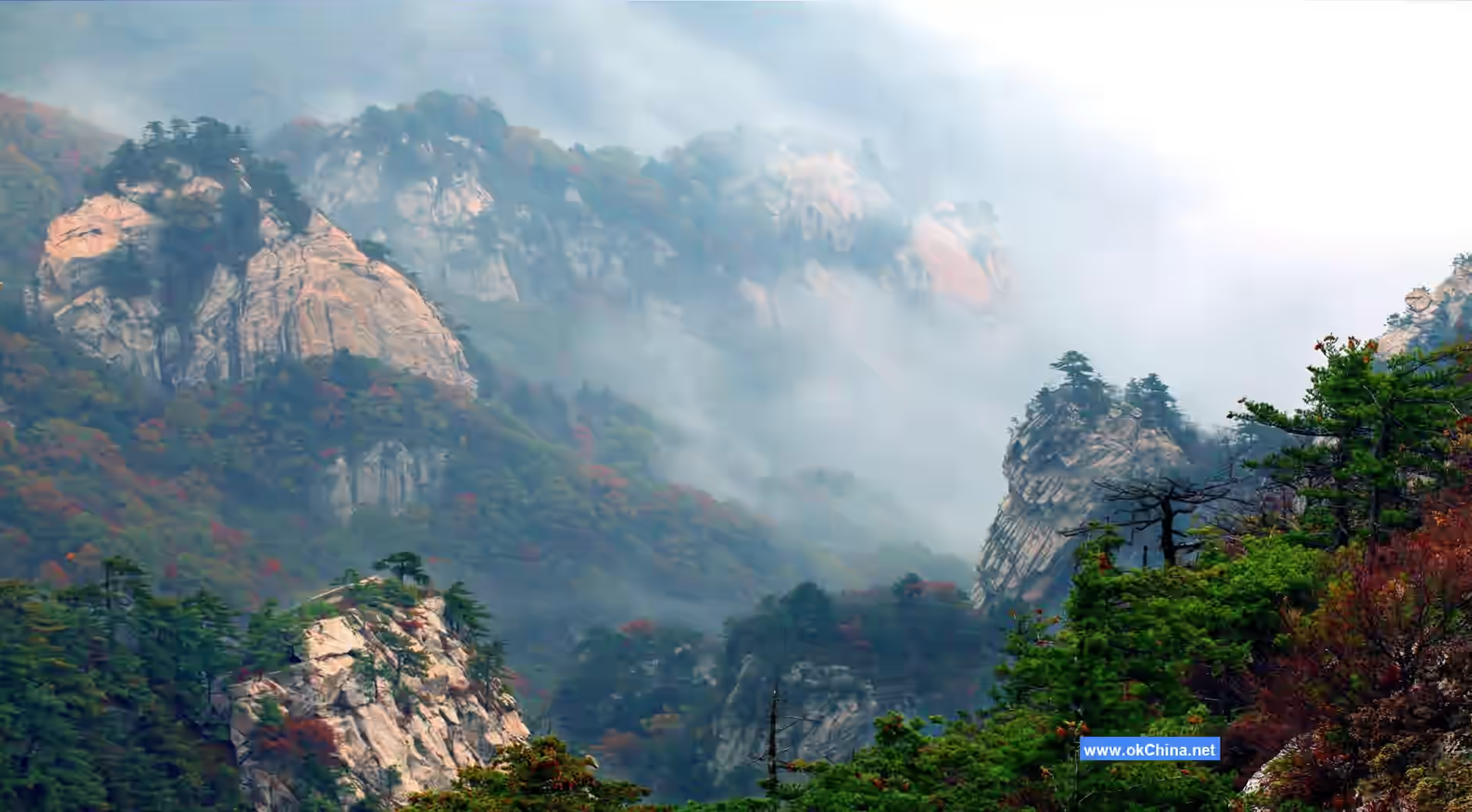
The main peak, Yuhuang Jiding, has an altitude of 2,153.3 meters. Ascending Yuhuang Jiding and looking into the distance, one can see interconnected peaks and ridges, shrouded in mist and clouds, presenting a magnificent and ever-changing spectacle.
2.2 Qinglong Back
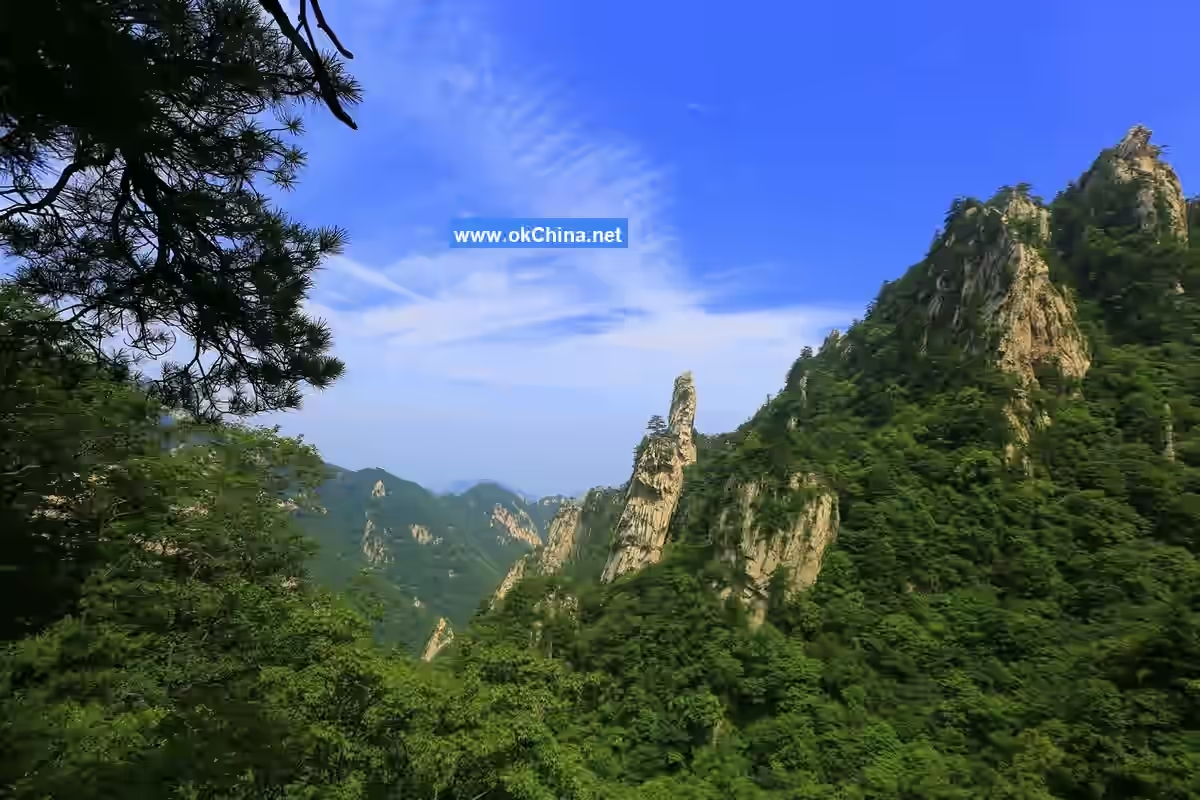
Qinglong Back is an important landscape of steep cliffs and majestic peaks in the Yaoshan Scenic Area. Its elevation ranges between 1,664 and 1,775 meters, roughly running northwest to southeast. The ridge is a 400-meter-long "sky corridor," with the narrowest point less than 0.5 meters and the widest only 3 meters. The rocks are jagged and arranged in a serrated pattern. On the ridge, verdant pines stand tall with lush branches and leaves. The entire back undulates like a winding, serpentine azure dragon. The Ximen General at the westernmost end stands atop the clouds, resembling a raised dragon's head.
2.3 Sky Ladder in the Clouds
The Sky Ladder in the Clouds is a man-made landscape in the Yaoshan Scenic Area. It is a passageway ladder welded from a steel frame structure on the cliff face of the West City Wall. It stretches 416 meters from Sansong Terrace in the north to the West City Gate in the south, consisting of 175 steps. Leaning on the railing and looking down, one sees a sheer cliff thousands of meters deep, as if cut by a knife or split by an axe, bottomless, giving a sensation of soaring and spinning in the air.
2.4 Yaoshan Slide
The "World's First Slide" — the Yaoshan Slide — is a granite slide over 2,800 meters long. It winds through dense forests, descending along the mountain from Lansheng Terrace northward to the entrance of Bainiucheng, following the natural mountain contours in a蜿蜒盘旋 (winding and circling) path. Relying on the natural force of gravity for descent, it is safe, comfortable, thrilling, and stimulating, hence called the "World's First Slide."
2.5 Nine-Bend Waterfall
Due to factors such as differential water erosion and varying rock resistance, several depressions of different depths have formed on the cliff face. They are distributed in a zigzag pattern from top to bottom, making the wall surface uneven and causing the water flow to form three bends and nine curves.
2.6 Yaoshan Cableway
The Yaoshan Cableway is currently an advanced Austrian-made monocable detachable gondola cableway in the world. The cableway is 3,000 meters long with a height difference of 1,000 meters. From the upper station at an altitude of 2,020 meters to the main peak Yuhuang Jiding, there is a 1,000-meter-long viewing corridor nestled among perilous peaks and sheer cliffs. Along the route, strange peaks rise emerald green, clouds and mist drift ethereally, the scenery changes with every step, offering boundless beauty.
2.7 Huanxi Cloud Realm
An 800-meter waterside trail from Banxianju to the entrance of Bainiucheng. Along the way, the Zhulian Waterfall and Qinglian Waterfall splash like pearls, resembling a stream falling from the heavens; Lianli Pond, Yaochi Pond, and Zuixian Pond are connected in sequence, clear,碧绿 (emerald green), bright, and transparent. With murmuring streams throughout the four seasons and fish swimming in shallow waters, it is an excellent place for families to play in the water and enjoy family happiness.
2.8 Zhongyuan Great Buddha
The Zhongyuan Great Buddha, located in Fotang Village, Shangtang Village, Zhaocun Township, Lushan County, Pingdingshan City, Henan Province, is currently the tallest Buddhist statue in the world. The Zhongyuan Sakyamuni Great Buddha was meticulously designed by contemporary masters. The Dharma image is solemn, the physique majestic, and the form graceful and端庄 (dignified). It was塑造 (sculpted) according to the Buddhist仪规 (ritual regulations) of "32 major marks and 80 minor characteristics." The Buddha's left hand forms the Varada Mudra (wish-granting gesture), signifying the blessing of all sentient beings and the wish for their perfect fortune and wisdom. The right hand forms the Vitarka Mudra (teaching gesture), meaning拈花说法 (holding a flower and expounding the Dharma) to show sentient beings,开启 (opening) their wisdom. The Dharma wheel in the palm represents the continuous transmission of the Dharma lineage,生生不息 (endless life). The swastika flower on the Buddha's chest represents the Buddha's everlasting protection. The total height of the Great Buddha is 208 meters (其中: statue height 108 meters, lotus pedestal 20 meters, diamond pedestal 25 meters, Sumeru pedestal 55 meters). The Buddha's eyes are 1.9 meters high and 3.9 meters wide; the Buddha's hands are 19 meters high, 9 meters wide, and 5 meters thick. The statue used 3,300 tons of copper, 108 kilograms of gold, over 15,000 tons of special steel, has a surface area of 11,300 square meters, and was welded from 13,300 copper plates, making it the world's largest standing copper-cast Buddha statue.
2.9 Foquan Temple
Foquan Temple was first built during the Zhenguan period of the Tang Dynasty (alternatively said to be during the reign of Emperor Xuanzong), with a history of over 1,300 years. Legend has it that in the early years of Zhenguan, Emperor Taizong of Tang dreamed at night of the Buddha standing by the Yuzhen Mountain in Zhongzhou, sprinkling甘露 (sweet dew) upon all beings in the bustling hot spring池 (pool). Startled, he understood it was the Buddha's guidance. He immediately drew a picture based on the dream and ordered people to search for the location in the Central Plains. Traveling west from Lushan County town, passing Xiatang, entering Zhongtang, they finally found it at Luantang (Shangtang). Seeing the地形 (terrain) matched the drawing, they were overjoyed. South of the Shahe River in front of the temple, hot springs gush out year-round. The water quality is excellent, the temperature适宜 (suitable), rich in minerals, and good for curing各种 (various) illnesses. People call it "Foquan" (Buddha Spring). North of the river, the mountain stands imposing with purple气 (aura) soaring to the sky. They then searched for a site in front of the mountain to build the temple, and the temple was named after the spring.
2.10 Mountain Gate
The Mountain Gate is the main entrance of the temple, with a floor area of 128.8 square meters. The plaque above the central door, inscribed with "Foquan Temple," was personally written by Master Zhao Puchu, the former president of the Buddhist Association of China. On both sides of the Mountain Gate are the two guardian generals, Heng and Ha.
2.11 Tianrui Auspicious Bell
The casting of the Tianrui Auspicious Bell began in June 2000 and was completed on December 28 of the same year. It first chimed 21 times here at zero hours and zero minutes on New Year's Day 2001, marking the entry into the 21st century, hence it is also called the "Century Bell." The Tianrui Great Bell, also known as the Auspicious Bell, weighs 116 tons, is 8.108 meters high, with a maximum bell diameter of 5.118 meters. It is the world's largest externally struck bronze bell and has received the Guinness World Records certification. The great bell and its bell tower are integral parts of Foquan Temple.
2.12 Fuhui Avenue
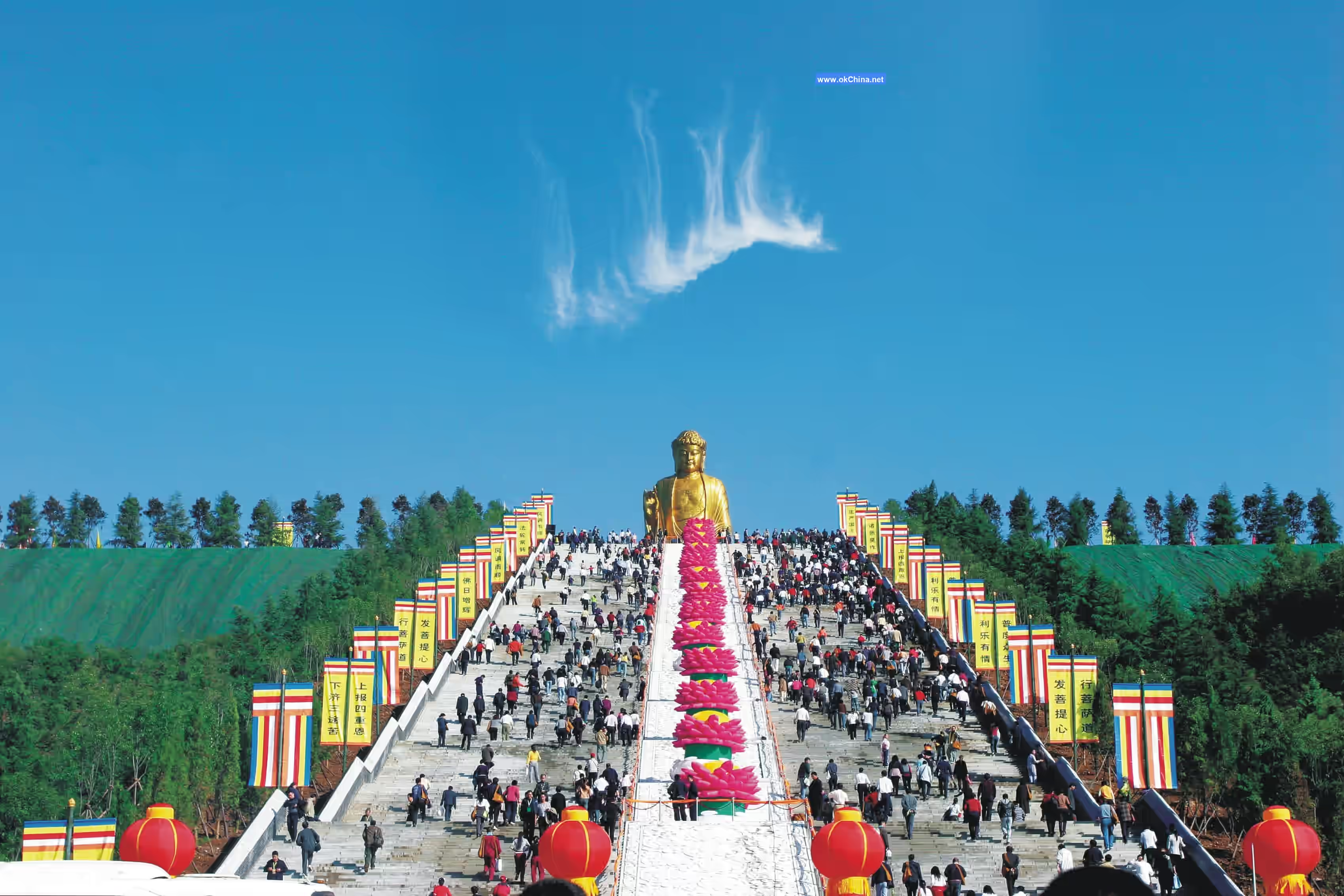
Fuhui Avenue (commonly known as the Pilgrimage Avenue) is 30 meters wide and 999 meters long. It begins with 66 steps, followed by a 9-meter platform, symbolizing the wish for a smooth and long-lasting平安 (peace) on the pilgrimage path. Further up are 365 steps, representing the 365 days of a year. They are divided into 12 groups of steps and 12 platforms according to the number of days in each month. As pilgrims ascend each step, they can see more of the Great Buddha and get closer to it. This signifies that on the pilgrimage path, there is hope and收获 (gain) with every step. The寓意 (implied meaning) is: doing good daily, cultivating monthly, accumulating over time, and最终 (finally) attaining正果 (enlightenment).
2.13 Worship Altar
The Worship Altar is 2.6 meters high with a diameter of 81 meters. It is the main venue for worship activities, where monks and devotees can worship the Great Buddha up close.
3. History and Culture
3.1 Origin of the Name
Yaoshan was named very early. The "Classic of Mountains and Seas" mentions it as "Dayao Mountain." Regarding the reason for the name Yaoshan, the famous Northern Wei geographer Li Daoyuan, who once served as the governor of Luyang, believed: "In Luyang County, a Yao Temple was established on the western mountain, hence it is called Yaoshan." That is, Yaoshan got its name because Liu Lei, a descendant of Emperor Yao, established a Yao Temple here to worship his ancestors.
3.2 Legends of Figures
3.2.1 Liu Lei
Liu Lei was a descendant of Yao, the leader of the ancient tribal alliance Taotang Clan. He is recognized by historians as the first famous historical figure of the Liu surname and is revered by Liu clansmen at home and abroad as the始祖 (founding ancestor) of the Yulongtang Liu lineage.
Liu Lei was an expert in raising dragons. The Warring States period "Zuo Zhuan" says Liu Lei "learned to tame dragons from Huanlongshi, served Kong Jia. When one female dragon died, he secretly made it into肉酱 (minced meat) to feed the Xia sovereign. After the Xia sovereign enjoyed it, he was ordered to find more. Fearing punishment, he迁 (migrated) to Luyang County." He was called "Yulongshi" (Dragon Tamer). He established a temple on Yaoshan to commemorate his ancestor Emperor Yao. The Eastern Han scholar Zhang Heng's "Rhapsody on the Southern Capital" records this: "Honoring the先帝 (former emperor) and pursuing filial piety, establishing the Tang sacrifice at Yaoshan." Liu Lei is the earliest Liu surname figure recorded in文献 (documents), revered as the始祖 (founding ancestor) of the Liu surname and the birthplace of the Liu surname. Every year,大批 (large numbers) of Liu descendants come to寻根祭祖 (search for roots and worship ancestors). Legends about Liu Lei and his dragon-raising are widespread in the Yaoshan and Pingdingshan areas,因此 (therefore) Pingdingshan is also praised by the world as the "Hometown of the Dragon."### 3.2.2 Mozi Mozi was a great ancient Chinese thinker, philosopher, scientist, educator, and social activist, recognized as a world-class cultural figure. His hometown lies at the foot of Yao Mountain, with his legendary birthplace in Zhuyuan Village of Yaoshan Town and his retreat in Tudiao Gully of Xiongbei Township. After retiring into seclusion, he changed his surname to "Hei" (meaning "black"), leading people to call his hermitage "Heiyin Temple." The Yao Mountain area boasts a unique cultural and historical background related to Mozi, abundant relics and remains, detailed historical records, and a rich, vibrant folk culture. It is characterized by deep historical roots and widespread popular inheritance. On the morning of July 24, 2013, the China Folk Artists Association awarded Lushan County, Pingdingshan City, Henan Province, the title of "Hometown of Chinese Mozi Culture." The unveiling ceremony for the "China Mozi Culture Research Center" was also grandly held on the same occasion.
3.3 Folk Customs and Traditions
3.3.1 Red Leaf Festival
The Yao Mountain Red Leaf Festival is a tourism celebration held in Yao Mountain, Pingdingshan City, Henan Province, centered around the appreciation of red leaves. The timing of the festival varies each year based on the climate and the condition of the red leaves.
3.3.2 Redbud Festival
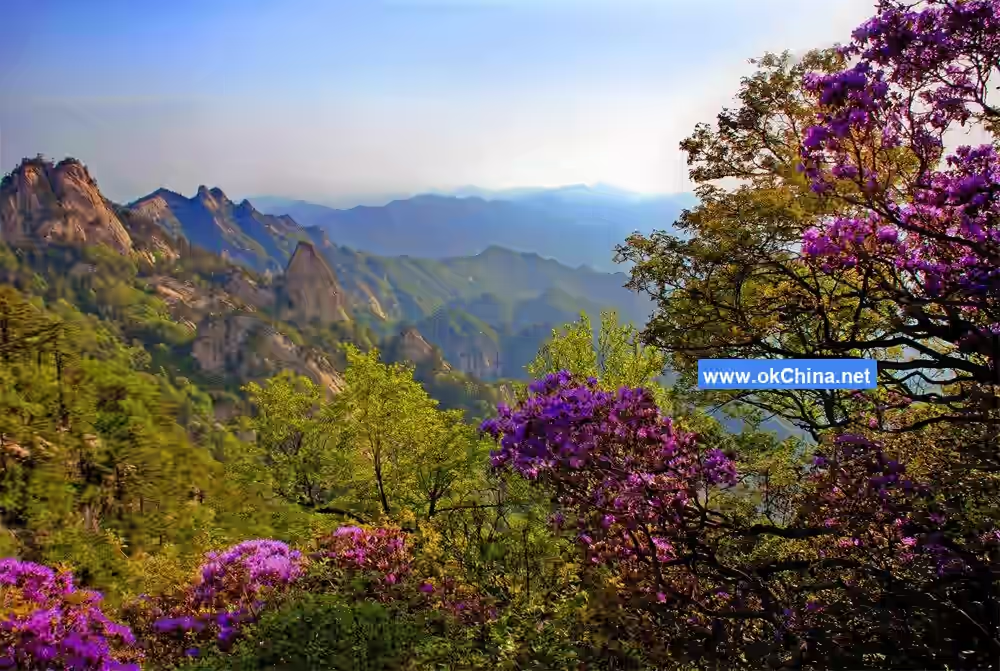
The Yao Mountain Redbud Festival is a tourism celebration held in the Yao Mountain Scenic Area of Pingdingshan City, Henan Province, focused on the appreciation of redbud flowers. It typically takes place from mid-March to late April each year.
The Yao Mountain redbud is an early-blooming "harbinger of spring." The flowers bloom on the branches even before the leaves emerge, earning it the nickname "Full Branch Red." The Yao Mountain redbud is a northern giant redbud, also known as black mulberry, brother tree, or friendship tree. Its flowers are purplish-red, butterfly-shaped, bright, and lovely, and it is a unique plant distributed on the shady slopes of Yao Mountain at altitudes of 800–1,000 meters. The Yao Mountain redbud is characterized by six notable features: early blooming period, long flowering duration, vibrant colors, dense blossoms, large tree size, and high flower quality.
Comments
Post a Comment