Meizhou Yan Nan Fei Tea Plantation Scenic Area
1. Introduction
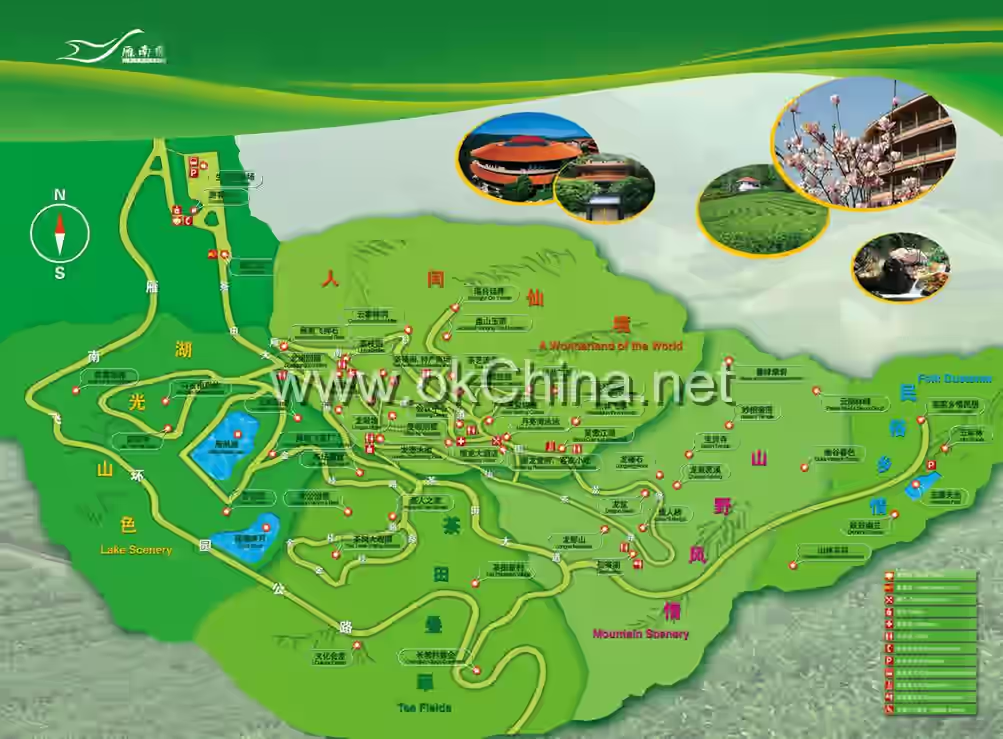
The Meizhou Yan Nan Fei Tea Plantation Scenic Area was initially constructed in 1995 by Guangdong Baolihua Group Co., Ltd. Nestled at the foot of Yinna Mountain in Meizhou, it gathers the spiritual essence of heaven and earth and embraces the advantages of nature, forming a National AAAAA Tourist Attraction where tea plantation landscapes, Hakka culture, architectural art, classic cuisine, and the ecological environment coexist in harmony. With tea culture as its theme, the scenic area features natural landscapes surrounded by mountains, blooming flowers, terraced tea plantations, and a perennial spring-like atmosphere. It integrates comprehensive tourism facilities including a vibrant Tourist Center, an ecological parking lot, Weilong Grand Hotel, luxury villas, Weilong Restaurant, Tea Affection Pavilion, and Immortal Tea Pavilion. Coupled with warm and pleasant service and an elegant environment, visitors can experience the authenticity and tradition embedded in the unique Hakka hospitality, savor exquisitely crafted delicacies and the sweet, smooth, and aromatic Yan Nan Fei tea. Amidst the green mountains and clear waters, one can appreciate the profound and extensive Chinese culinary culture, tea culture, and Hakka culture.
2. Geographical Environment
2.1 Location and Region
Yan Nan Fei Tea Plantation Scenic Area is located in Changjiao Village, Yanyang Town, Meixian District, Meizhou City, Guangdong Province, approximately 40 kilometers from downtown Meizhou. The Yan Nan Tea Charm scenic area covers an area of 4.50 square kilometers. The Qiaoxi Ancient Charm scenic area covers about 1 square kilometer.
2.2 Topography
Yan Nan Fei Tea Plantation Scenic Area belongs to a hilly landform.
2.3 Climate Characteristics
Meixian District, where Yan Nan Fei Tea Plantation Scenic Area is located, is geographically close to the Tropic of Cancer and near the Pacific Ocean to the east. It has a subtropical climate, significantly influenced by the southeast monsoon. Being in a low-latitude region, it receives strong solar radiation, with short winters, long summers, and ample sunshine.
3. Main Scenic Areas
3.1 Yan Nan Tea Charm Scenic Area
3.1.1 Yan Nan Fei Sacred Stone
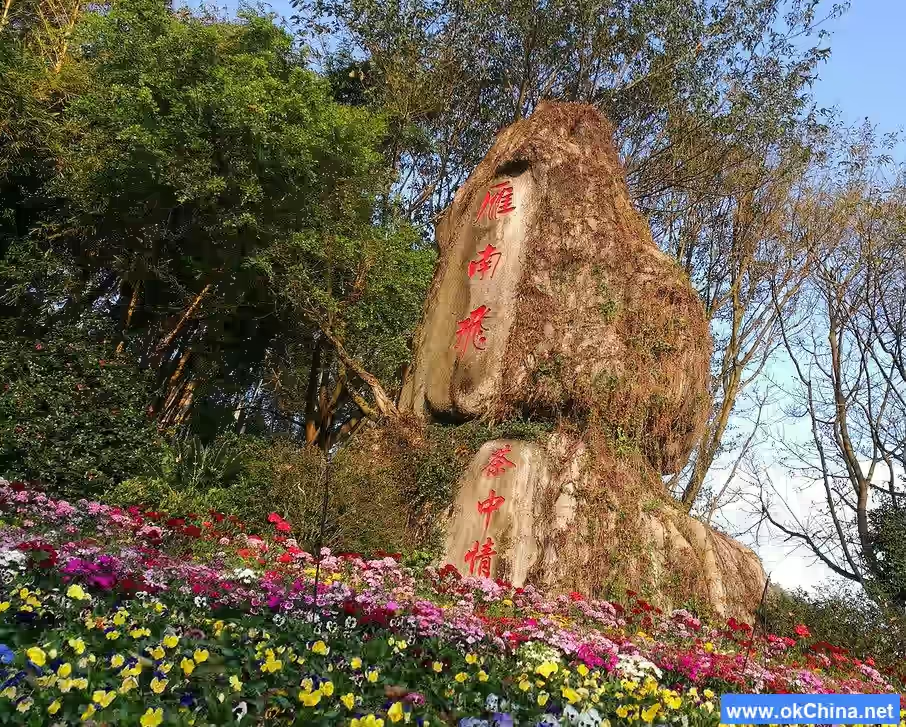
The "Yan Nan Fei Sacred Stone" is the iconic landmark of the scenic area, inscribed with six large characters: "Yan Nan Fei, Tea Affection." The poetic name "Yan Nan Fei" (Wild Geese Flying South) signifies the Hakka people's identification with their roots, akin to "northern wild geese flying south." "Tea Affection" expresses Yan Nan Fei's essence centered on tea culture—forming bonds, making friends, and conveying emotions through tea.
3.1.2 Wang Cha Ting (Tea Viewing Pavilion)
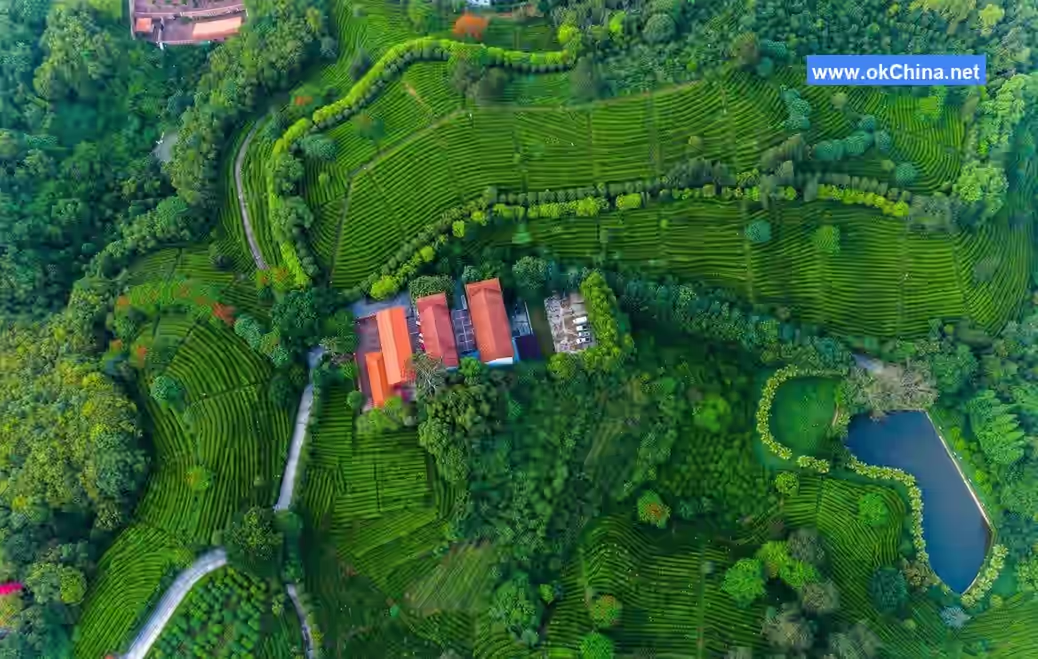
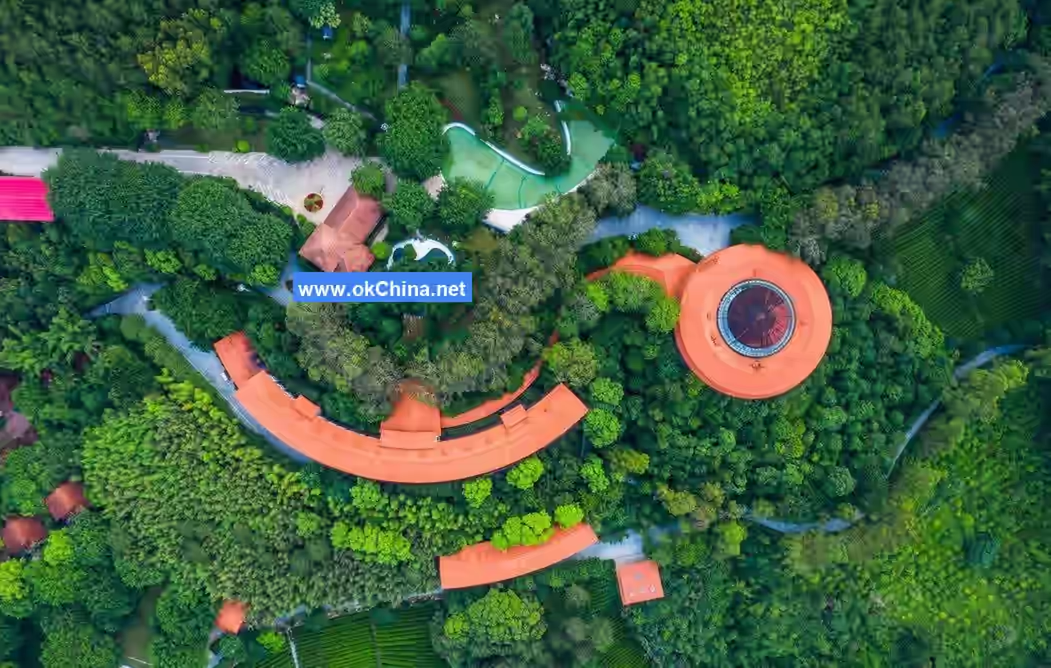
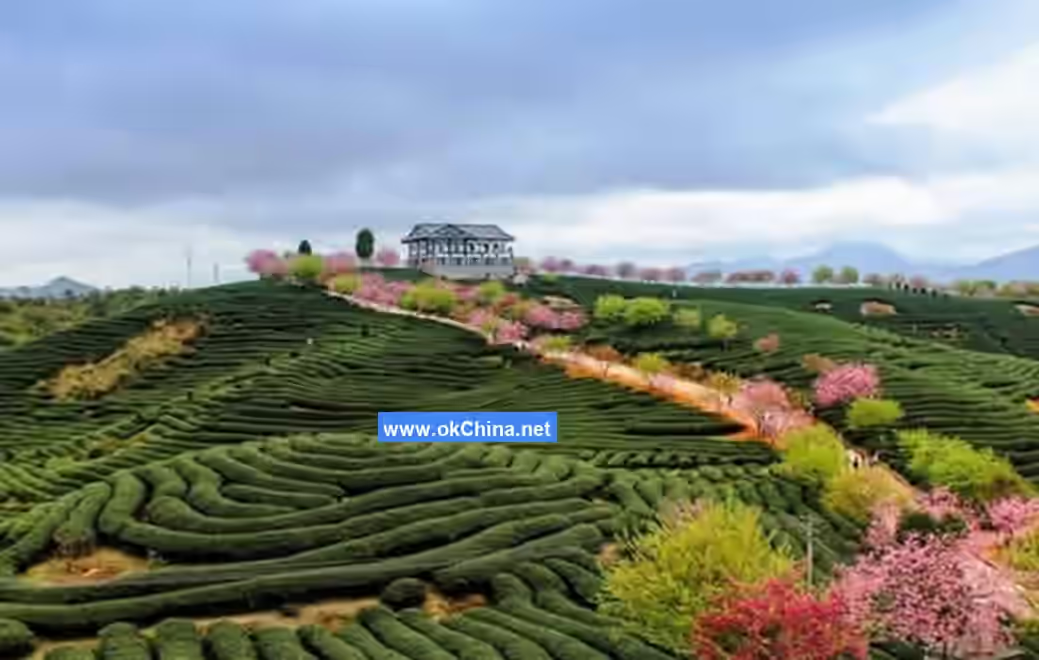
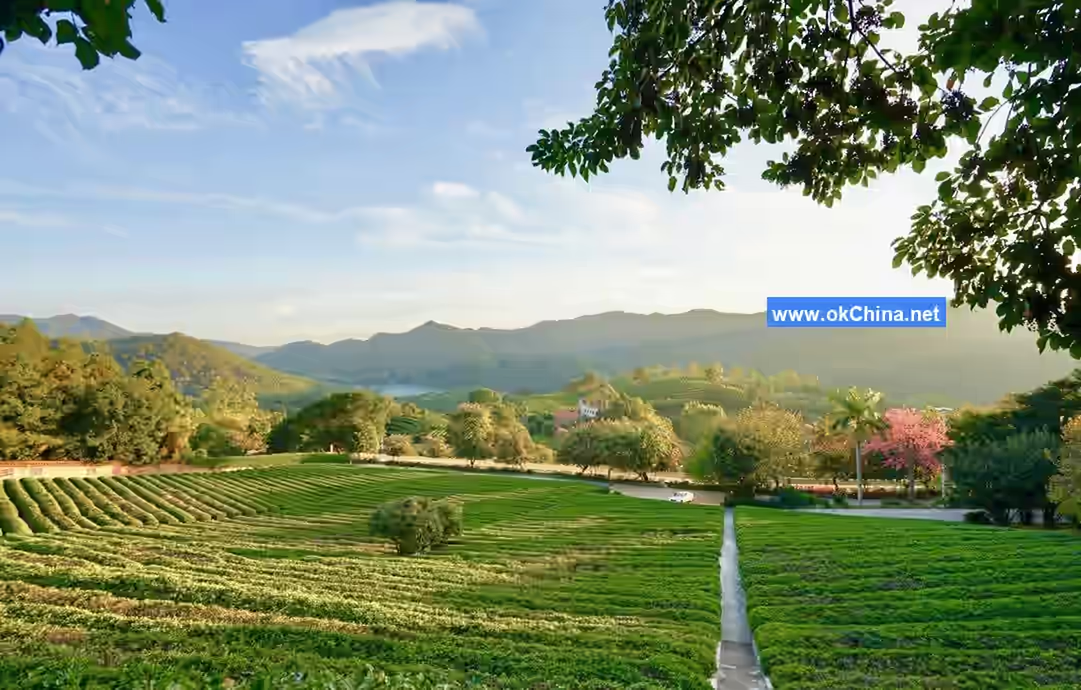
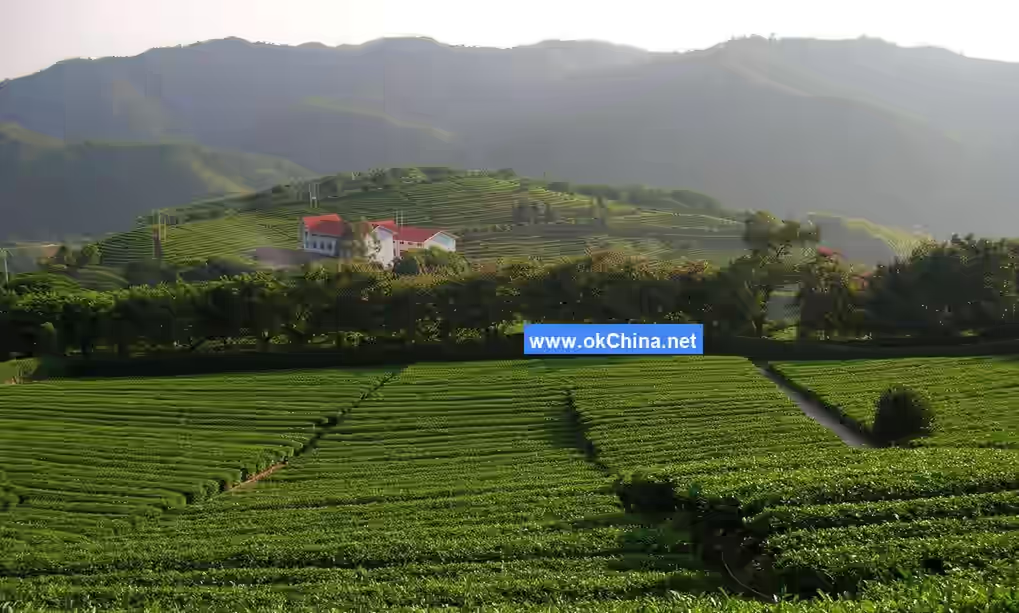
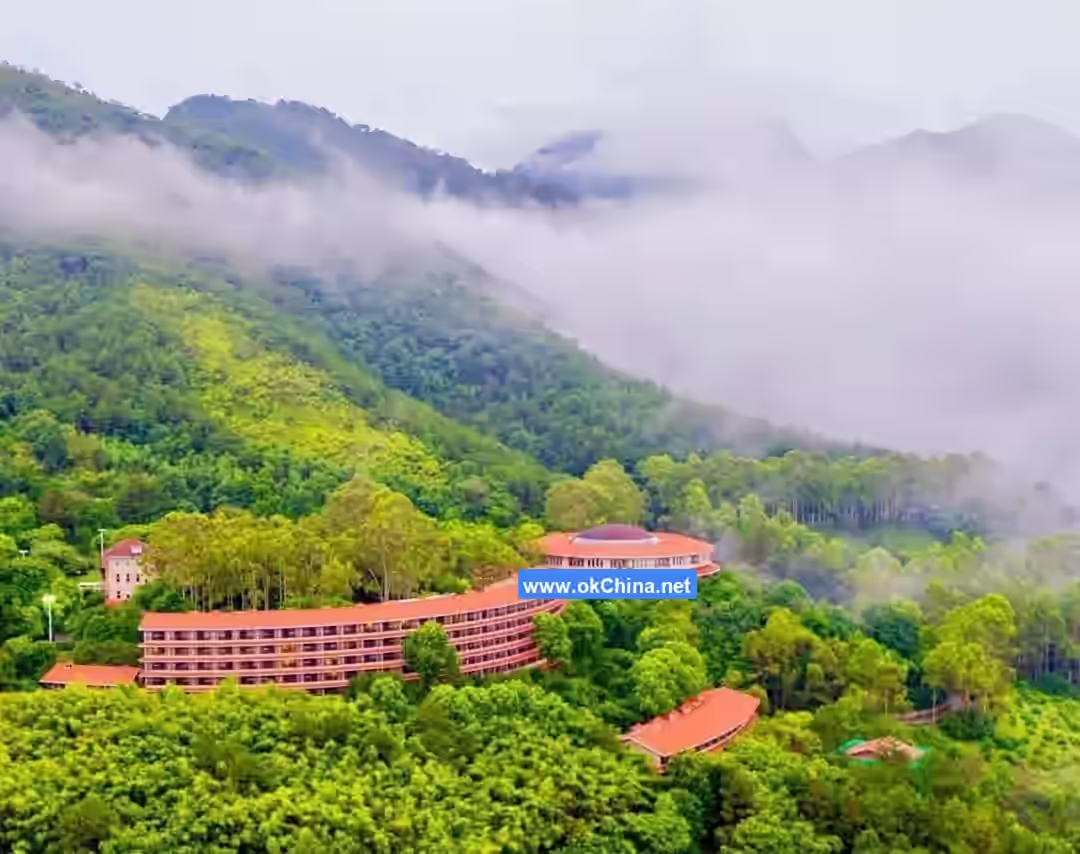
Built in the spring of 1999, Wang Cha Ting is the main vantage point for overlooking the scenic area. From here, one can see tourism service facilities such as Weilong Grand Hotel, Weilong Restaurant, Yan'e Lake, and the layered, verdant thousand-acre tea plantations. Former national leaders Wu Bangguo and Li Changchun have visited Wang Cha Ting. As the entire scenic area is embraced by greenery, the buildings primarily use red as the main color, creating the effect of "a touch of red amidst a sea of green," making the area's colors more vibrant and striking.
3.1.3 Observation Deck
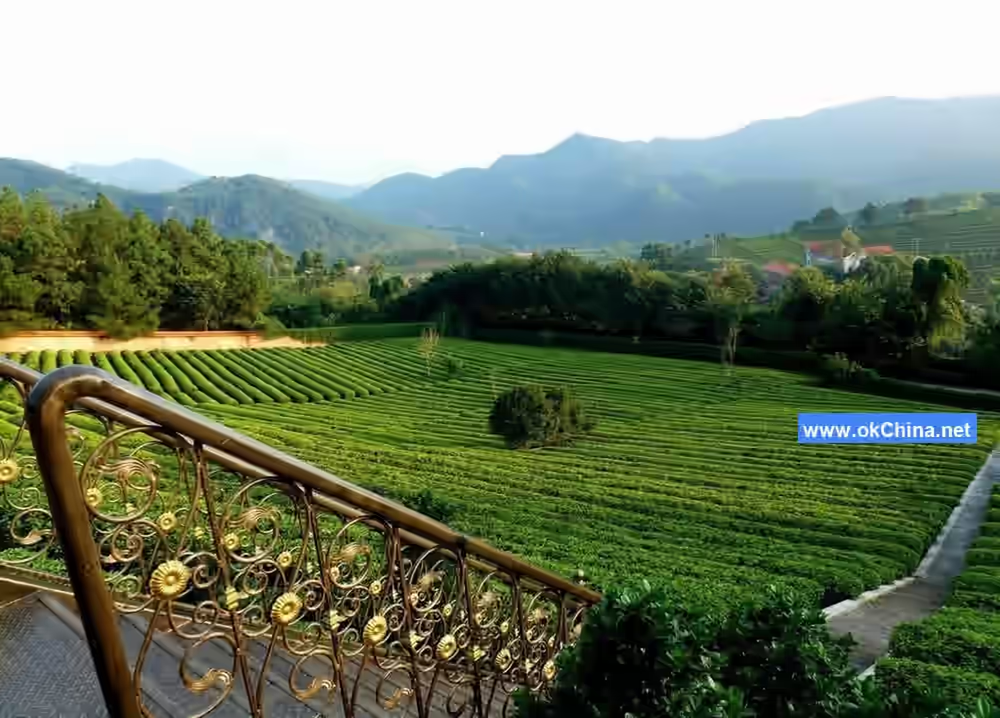
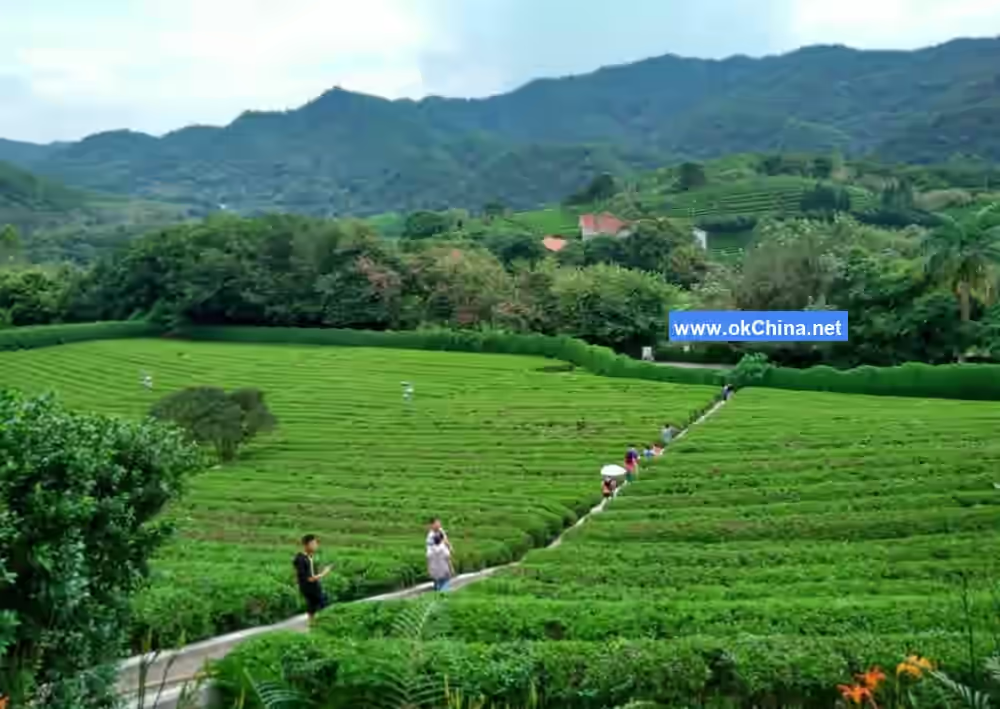
The Observation Deck is one of the best locations to view the panoramic scenery of Yan Nan Fei. From here, one can overlook the main attractions and service facilities of the area. The layered thousand-acre tea plantations adorn the mountains like jade ribbons, offering a delightful sight. Walking into the tea fields, refreshing tea fragrance wafts with the breeze, invigorating the mind and spirit.
3.1.4 Tai Chi Wellness Garden
Amidst the green mountains and clear waters of the Tai Chi Wellness Garden, one breathes in the essence of heaven and earth. The holistic wellness state encompassing "essence, energy, and spirit" is serendipitous. The vital energy of heaven and earth converges here; with each breath, one feels refreshed and clear-headed. At this moment, immersed in the pristine ecology, the small pebbles underfoot stimulate every nerve ending, activating the body's spiritual points and returning to the origin of life.
3.1.5 Hundred Flowers Garden
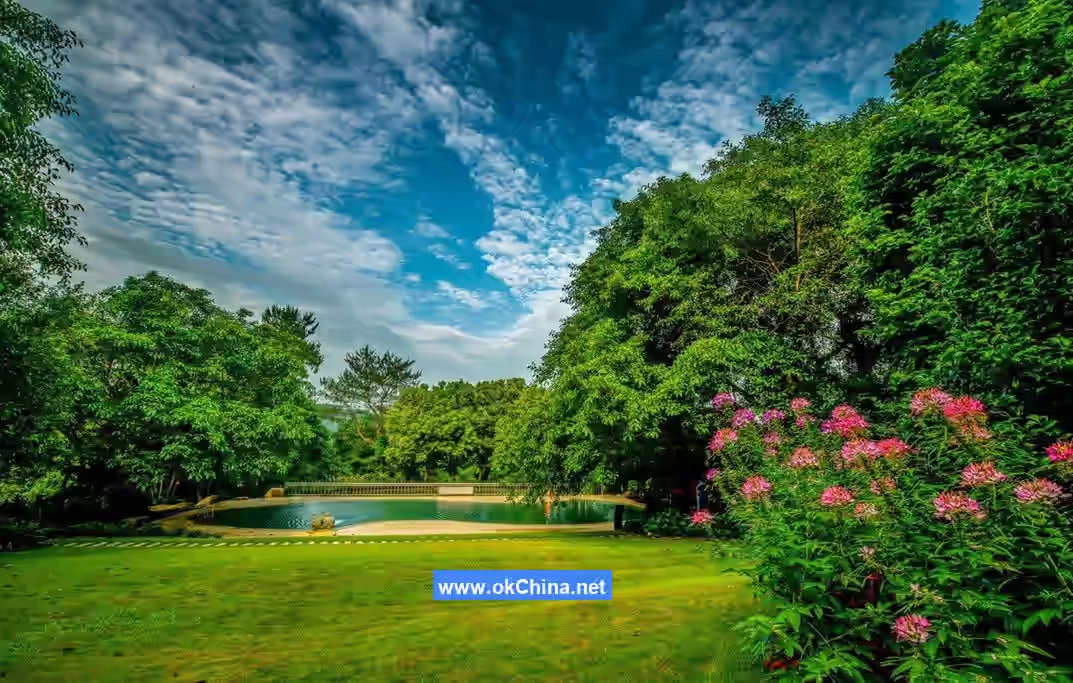
Covering 20 acres, the Hundred Flowers Garden is where the scenic area cultivates various flowers and landscaping seedlings. Here, one can discuss flowers and philosophy, witnessing tiny seeds take root, sprout, and bloom into beautiful flowers. Annually, it cultivates over 600,000 pots of colorful flowers, transforming every inch of Yan Nan Fei with different hues.
3.1.6 Tea Plantations
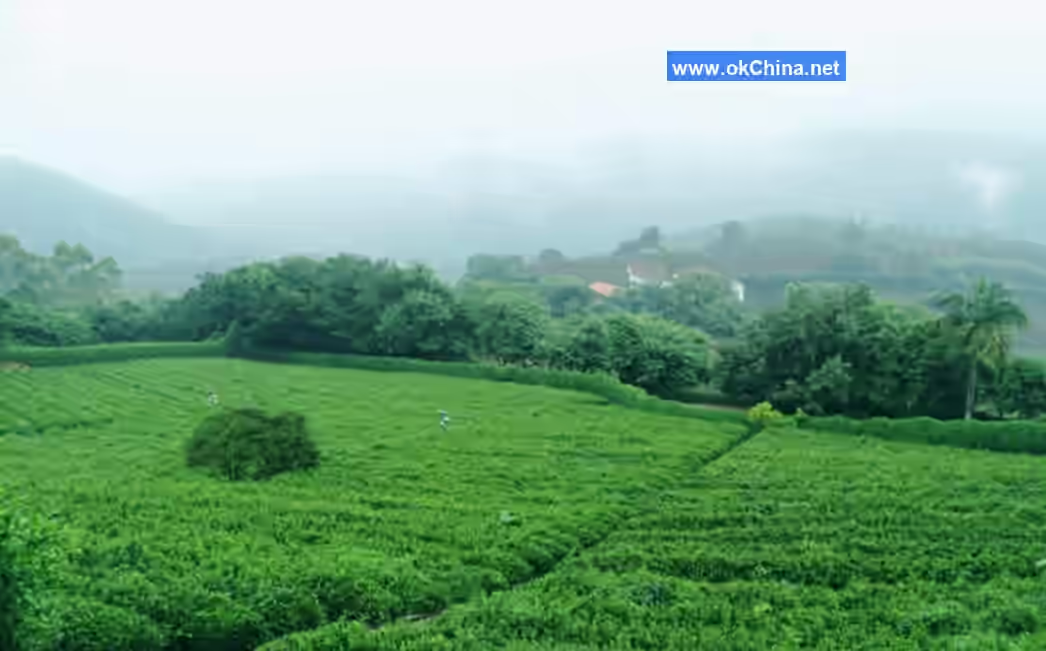
The tea plantations are situated on the mountainside, forming a terraced layout with the mountain, echoing the quietly standing Weilong Grand Hotel on the mountaintop. This seamlessly integrates the unique theme of "tea culture" into the landscape.
3.1.7 Yan'e Lake
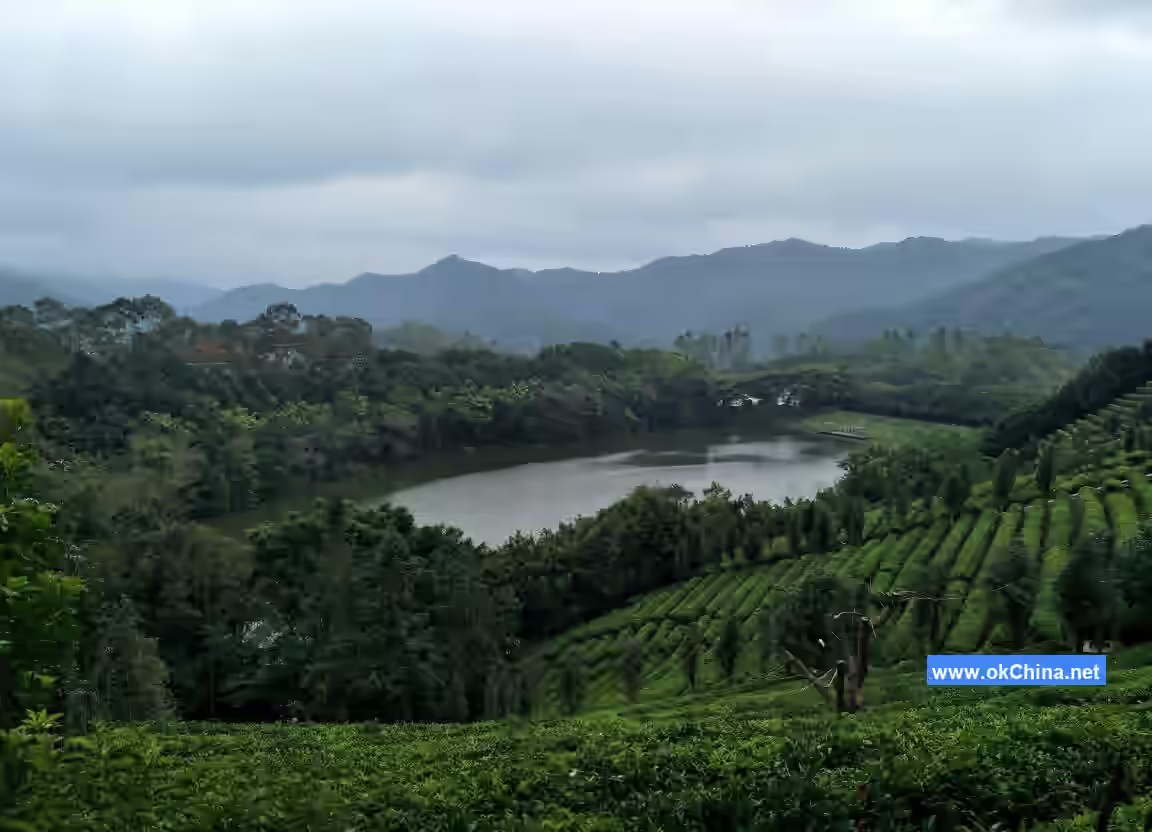
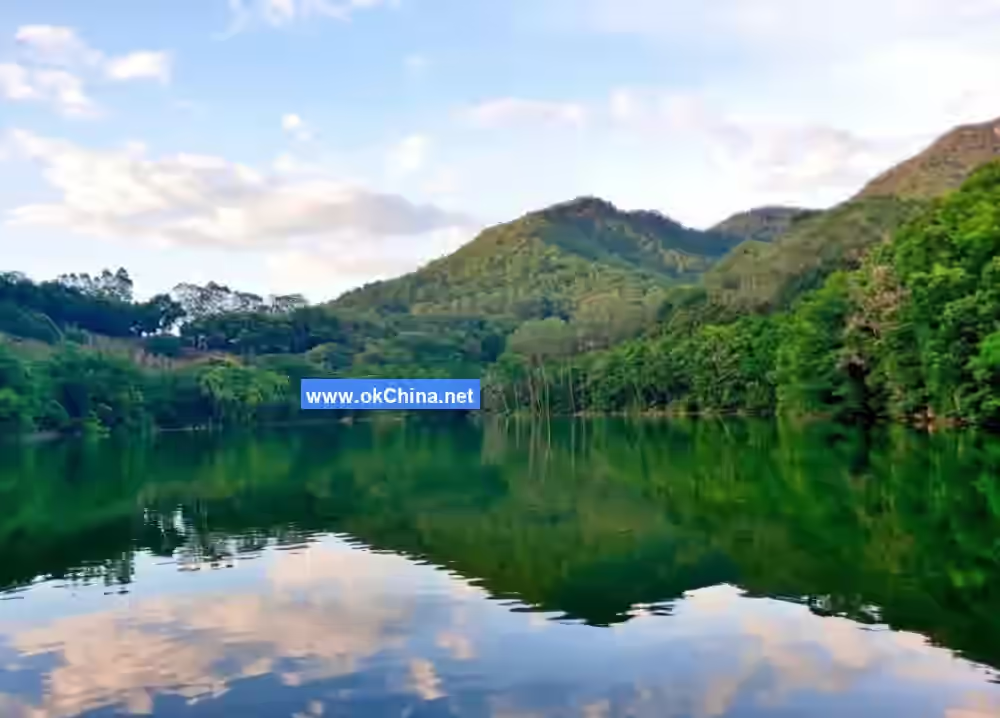
Yan'e Lake covers over 30 acres with a depth of over 20 meters. Its clear, azure water meets national Grade I drinking water standards. Surrounded by towering mountains and lush grasslands, the lake surface is calm, mirroring the sky. Stealing a moment of leisure, sitting to watch the floating clouds, tossing a small stone to startle wild ducks and fish in the lake—it's the epitome of relaxation. Here, you can find tranquility or laugh heartily, as the enjoyment of slow living spreads in such an atmosphere.
3.1.8 Tea Tree and Camellia Variety Grand Garden
The Tea Tree and Camellia Variety Grand Garden collects over 840 tea tree varieties from 13 domestic provinces and countries like India and Japan. It includes domestic fine varieties such as Tieguanyin, Dahongpao, and Longjing, as well as precious foreign varieties like Kashima Kita, Mao'e Assam, and Georgia No. 4. In recent years, the scenic area has also collected over 1,000 camellia varieties from home and abroad. It is one of the few germplasm resource banks in China featuring both tea trees and camellias, holding significant scientific research value. Visitors can learn about rich tea tree and camellia variety resources here without leaving the country.
3.1.9 Xiao Ao Jiang Hu (Laughing Proudly in the Martial World)
The "Xiao Ao Jiang Hu" waterfall is 168 meters long and 4.8 meters high, its charm truly "laughing proudly in the martial world." The waterfall cascades down a stone wall, faintly revealing famous quotes and philosophical sayings from ancient and modern times, both Chinese and foreign, which are thought-provoking and offer endless inspiration and enlightenment.
3.1.10 Long Na Mountain Ecological Valley
Long Na Mountain was originally called Long Ya Mountain, adjacent to Yin Ya Mountain and Ying Ya Mountain. Possibly due to homophonic reasons, over time, people started calling Yin Ya Mountain "Yin Na Mountain" and Long Ya Mountain "Long Na Mountain." This area features overlapping peaks and is a secondary virgin forest region—a natural oxygen bar. Diverse climbing vines, clear streams, and oddly shaped giant rocks together form the landscape of the ecological valley. The valley harbors abundant precious flora and fauna resources, including 183 families and 841 species of vascular plants, with seven nationally protected Class I and II plants such as Cyathea spinulosa and Taxus chinensis; over 100 species of wild animals, including more than ten nationally protected Class I and II animals like pangolins, large Indian civets, serows, and tiger-striped frogs. Various natural ecological scenes come together like musical notes, composing a joyful concerto, allowing you to experience the beauty of the mountains and forests without burden. Main attractions here include Baoling Temple, Longteng Stone, Dragon Basin, Lovers' Bridge, etc. Baoling Temple is known for its efficacy; whether you pray for health, official fortune, or wealth, it is said to be quite effective. The灵动 of water, the豪情 of mountains, the gentle caress of wind—a picturesque paradise unfolds before you.
3.1.11 Baoling Temple
Baoling Temple was initially built in 1936, originally named "Guanyin Temple." Due to long-term disrepair, it was renovated with funds from the scenic area in 2001 and renamed "Baoling Temple." The temple enshrines Guanyin Bodhisattva and enjoys thriving incense offerings. It is a place where visitors pray for blessings and local communities hold folk religious activities. Whether you seek health, official fortune, or wealth divination, it is reputed to be quite effective.
3.1.12 Cha Tan Chen Xia (Tea Altar Morning Glow)
The scenic area experiences about 250 foggy days per year. Fog, wind, clouds, and seasonal changes are exquisite natural landscapes bestowed upon Yan Nan Fei. At the Cha Tan Chen Xia attraction near Jin Gui Road, the most exquisite teapot sculpture of the scenic area is displayed. It is also a must-visit spot for tourists to admire the tea plantation's glow, morning mist, and sunset.
3.1.13 Yun Wu Shen Dong (Cloud and Mist Divine Cave)
The Yun Wu Shen Dong presents a beautiful, colorful scene at its entrance due to various minerals. Inside, the valley is deep and serene. In the morning, morning mist lingers at the cave entrance, resembling a fairyland, hence the name "Cloud and Mist Divine Cave."
3.1.14 Lv Yin Shao Ge (Green Shade Whistling Pigeons)
Lv Yin Ge Shao is a specially crafted small wooden hut. Snow-white, light gray, variegated, and brick-red pigeons sometimes perch on the roof, stretching their necks, turning their heads, looking around on their own, sometimes strolling, foraging, or chasing and fluttering about.
3.1.15 Moon Bay Swimming Pool
Moon Bay Swimming Pool is one of the two pure natural mountain spring swimming pools in the scenic area, named for its crescent moon shape. With enchanting scenery and dense forests, it is a natural oxygen bar with pleasant climate year-round—warm in winter and cool in summer. The poolside is perpetually shrouded in thin mist with dancing tree shadows, creating a dreamlike realm that captivates the imagination.
3.1.16 Dragon Teapot Swimming Pool
Dragon Teapot Swimming Pool is located within the high-end villa area of the scenic area, named after a teapot sculpture beside the pool. The sculpture is modeled after an ancient Chinese teapot. Water sprays from the stone-carved dragon-mouthed teapot with a rainbow-like force, flowing incessantly like a mountain spring.
3.1.17 Four Seasons Flower Sea
Spring seems to linger forever here, with stunning beauty and gardens full of flowers. Appreciating flowers at Yan Nan Fei is not just a spring affair; various flowers bloom in succession, offering a feast for the eyes. They quietly blossom under the bright sun; when the breeze passes, waves of flowers undulate. At this moment, being amidst the flower sea of Yan Nan Fei, where it feels like spring all year round, is indeed a great joy in life.
3.1.18 Yu Quan Jin Li (Jade Spring Koi)
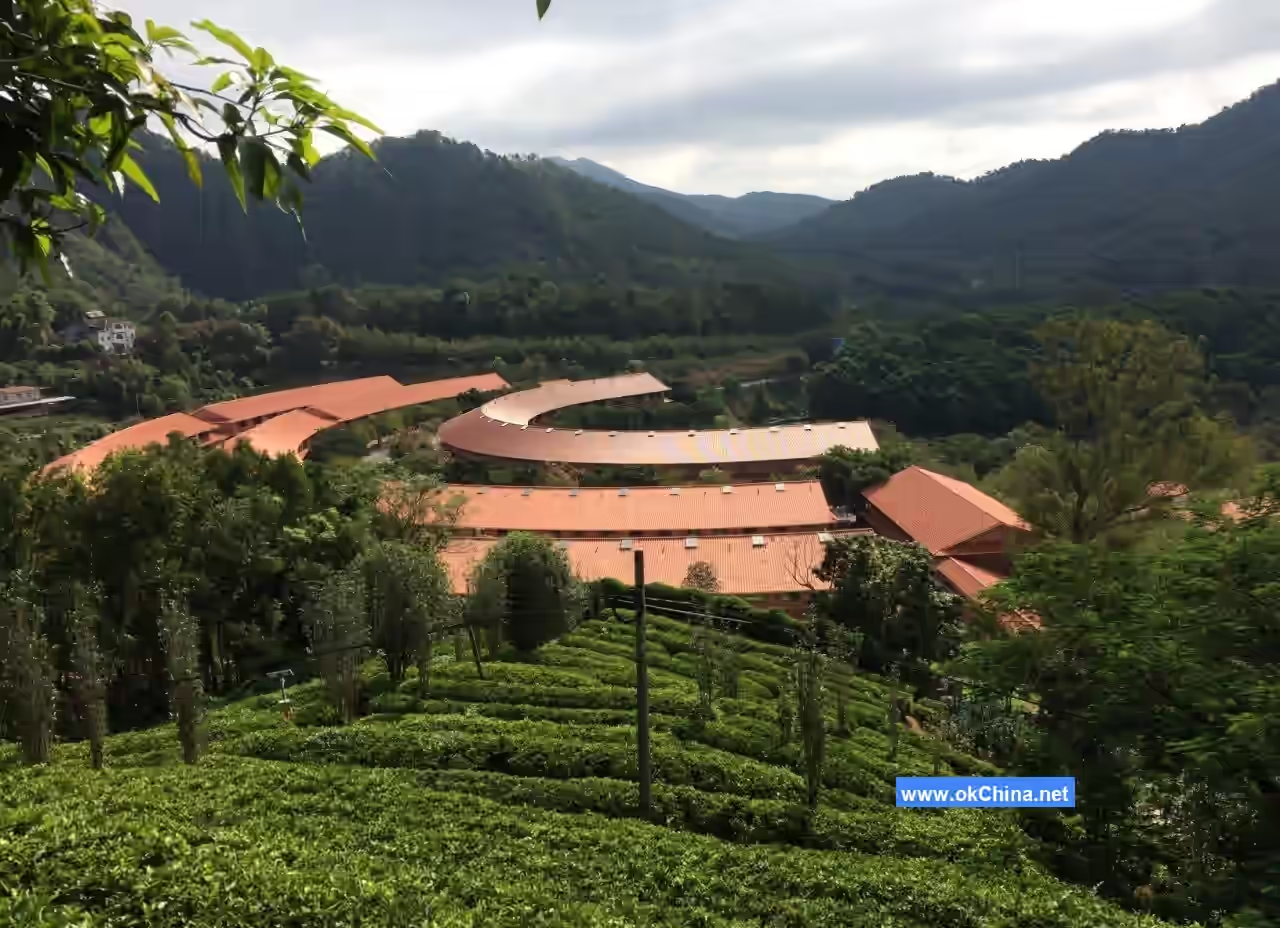
Murmuring streams converge into an emerald pool where hundreds of koi gather. They are plump and robust with brilliant colors. The pleasing sight of koi, cultivating one's temperament, frequently makes visitors pause and admire.#### 3.1.19 Changjiao Socialist New Countryside The small mountain village below is called Changjiao Village. It was once quite poor and backward, but the folk customs are simple and honest, with harmonious relations among neighbors. Changjiao Village covers a total area of 11.6 square kilometers, currently comprising 280 households and 1,133 villagers. The main surnames are Ye, Qiu, Zhang, Yang, Zhu, Chen, Zhong, and Lai, totaling eight. The arc-shaped building complex in the distance is the Changjiao Socialist New Countryside. To date, 102 housing units in the new Changjiao Village have been completed, along with Changjiao Primary School, the Changjiao Village Committee office, an activity center for the elderly, a ring road around the village, a clinic, and a tap water project. The Changjiao Socialist New Countryside has transformed from a once backward and remote small mountain village into a well-known advanced village for poverty alleviation and prosperity. It is a provincial-level ecological demonstration village in Guangdong.
3.1.20 Grand Collection Garden
The Grand Collection Garden of tea plant and camellia varieties has gathered over 840 varieties from 13 domestic provinces and foreign countries such as India and Japan. It includes domestic fine varieties like Tieguanyin, Dahongpao, and Longjing, as well as foreign precious varieties like Kashima Kita, Assamica var. lasiocalyx, and Georgia No. 4. In recent years, the scenic area has also collected over 1,000 camellia varieties from both domestic and international sources.
3.2 Qiaoxi Ancient Charm Scenic Area
The Qiaoxi Ancient Charm Scenic Area was originally called Koutouxi and covers an area of approximately 1 square kilometer. Since the Wanli period of the Ming Dynasty (about 400 years ago), families with the surnames Chen and Zhu successively settled here, building homes and intermarrying through generations, forming close bonds and flourishing. Within the scenic area, ancient trees sway gracefully, and stone paths crisscross the land; terraced fields rise layer upon layer, with the fragrance of tea and fruits filling the air; the mountain streams are lined with rugged rocks, and clear springs murmur softly. The area boasts 49 individual tourism resource units, among which sixteen traditional Hakka residential buildings constructed during the Ming and Qing Dynasties are well-preserved—simple yet grand. Small bridges, streams, ancient trees, and dwellings together compose a beautiful picture of Hakka pastoral scenery. In January 2012, it was rated as a Guangdong Provincial Ancient Village. The Qiaoxi Ancient Charm Scenic Area is a microcosm of Meizhou's "Land of Culture," "Hometown of Overseas Chinese," and its revolutionary base areas. It serves as a valuable resource for studying the migration history of the Hakka people, the history of Hakka overseas Chinese, local education history, local revolutionary history, as well as the cultural customs, religious beliefs, and residential architecture of the Hakka region, possessing significant tourism development potential and value.
3.2.1 Jishan Building
Jishan Building is the most distinctive Hakka residential architecture within the scenic area. Its construction began in the 28th year of the Guangxu reign of the Qing Dynasty (1902) and was completed in the 3rd year of the Republic of China (1914). Built against the mountain and beside the water, facing south, Jishan Building covers an area of 2,680 square meters and contains a total of 70 rooms. It adopts a horizontally square layout with central axis symmetry, being a two-story rammed-earth "Gangzi" house, commonly known as the "Seven-Gang Building." Its architectural scale, artistic craftsmanship, and the cultural atmosphere it fosters are rare in the eastern Guangdong region.
3.2.2 Five-Colored Forest
On the right side of the stream at the entrance to Qiaoxi Village, there is a cluster of trees with a history of over a thousand years. Because it consists of five tree species—nanmu (Phoebe zhennan), sandalwood (Santalum album), Elaeocarpus sylvestris, Symplocos paniculata, and Schima superba—the locals affectionately call it the "Five-Colored Forest." A school was once planned to be built here, drawing on the meaning of "Five Sons Achieving Success in Imperial Examinations," embodying the villagers' hope that their descendants would all achieve success in the imperial examinations and become famous at once, just like the five sons of Dou Yujun from Yanshan Prefecture during the Later Zhou period of the Five Dynasties.
3.2.3 Wooden Boardwalk
The wooden boardwalk is approximately 2 kilometers long, following the stream upward. Along the way, it passes through four pavilions, each with distinct seasonal characteristics and an antique charm, named after the four seasons. These seasonally named pavilions are located on the mountainside and can be reached by climbing a few low stone steps, complementing the surrounding trees.
4. Scenic Area Culture
4.1 Tea Culture
The Yan Nan Fei Tea Plantation Scenic Area centers on tea culture, cultivating over 3,100 mu of high-quality tea, including 12 series of famous teas such as Baiye Dancong Oolong. These teas are renowned for their clear, high aroma and fresh, refreshing taste. Visitors can tour the tea processing factory to learn about the tea-making process and experience the joy of picking and making tea. Additionally, the scenic area offers tea art performances that showcase the brewing techniques of traditional Gongfu tea, allowing visitors to personally experience the essence of tea culture.
4.2 Hakka Culture
Hakka culture is another major feature of the Yan Nan Fei Tea Plantation Scenic Area. The area contains well-preserved traditional Hakka residential buildings from the Ming and Qing Dynasties, such as Shide Building and Jishan Building, showcasing the traditional lifestyle and architectural art of the Hakka people. Visitors can taste authentic Hakka cuisine, like Meicai Kou Rou (braised pork with preserved mustard greens) and Kaiguo Rou Wan (steamed meatballs), and enjoy original Hakka song and dance performances. Furthermore, the Weilong Restaurant and Weilong Hotel within the scenic area fully embody Hakka architectural style and the "Hakka Way."
Comments
Post a Comment