

Yanmen Pass
I. Introduction
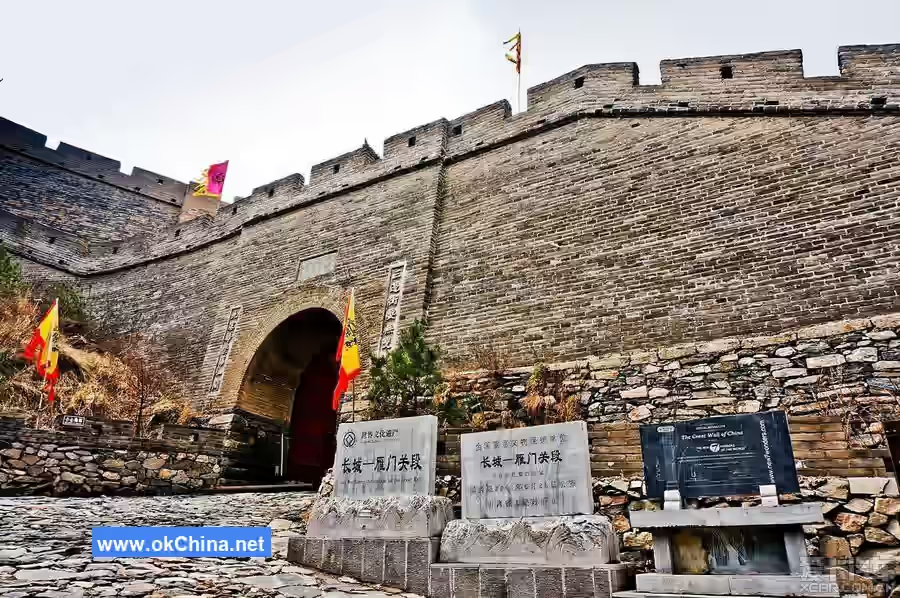
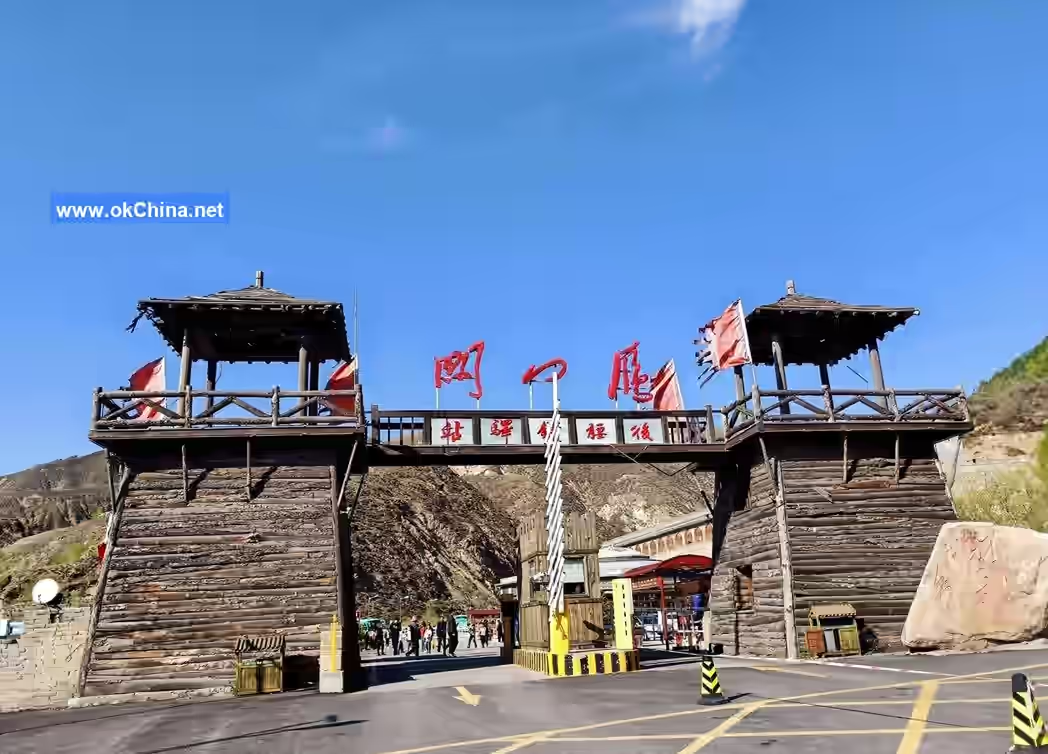
Yanmen Pass is located in the Yanmen Mountains, approximately 20 kilometers north of Daixian County in Xinzhou City, Shanxi Province, China. It is a crucial strategic pass along the Great Wall, renowned for its perilous terrain and celebrated as the "First Pass Under Heaven." There is a saying: "Among the nine frontier fortresses of the world, Yanmen Pass ranks first." Together with Ningwu Pass and Pianguan, it is known as the "Three Outer Passes."
II. Historical Evolution
Pre-Qin Era
King Wuling of Zhao once carried out military reforms, adopting the clothing and cavalry archery techniques of the northern tribes, and decisively defeated invasions by the Linhu and Loufan peoples, establishing the commanderies of Yunzhong, Yanmen, and Dai. Later, Li Mu was stationed at Yanmen to defend against the Xiongnu. To prevent Xiongnu raids on Zhao's border inhabitants, he ensured that the Xiongnu gained nothing for several years, while the Zhao army grew strong and well-equipped, eager for battle. "He crushed over a hundred thousand Xiongnu cavalry." For more than a decade afterward, the Xiongnu did not dare to invade Zhao. Later generations hailed Li Mu as a "genius" and built the "Jingbian Temple" at Yanmen Pass to commemorate his military achievements in defending the border and protecting the people.
Qin Dynasty
After Qin Shi Huang unified the six states, he dispatched General Meng Tian with 300,000 troops to march north from Yanmen Pass, "attacking the northern tribes and reclaiming all lands south of the Yellow River" (i.e., the Hetao region), driving the Xiongnu north of the Yin Mountains, and constructing the Great Wall.
Han Dynasty
During the reign of Emperor Gaozu of Han, Liu Bang, the Xiongnu besieged Han Xin, the Prince of Han, who surrendered. The Xiongnu then led their troops south across Gouzhu, advancing directly to Jinyang (present-day Taiyuan).
After Emperor Wu of Han ascended the throne, he faced the Xiongnu's increasingly rampant southern incursions and began to counterattack. In the fifth year of Yuanguang (130 BCE), Emperor Wu issued an edict to dispatch soldiers to renovate Yanmen Pass. Famous Han generals such as Wei Qing, Huo Qubing, and Li Guang all galloped inside and outside the ancient Yanmen fortress, repeatedly defeating the Xiongnu and achieving great merit. Li Guang, known as the "General with Ape-like Arms," fought dozens of battles against the Xiongnu while serving as the governor of Dai, Yanmen, and Yunzhong commanderies, earning the title "Flying General" from the Xiongnu.
During the reign of Emperor Yuan of Han, Wang Zhaojun departed from Yanmen Pass to marry the Xiongnu chieftain for peace. Thereafter, the region enjoyed a period of stability: "distant cities closed peacefully, cattle and horses roamed the fields, three generations passed without the alarm of barking dogs, and the common people were free from the turmoil of war."
Tang Dynasty
The name "Yanmen Pass" originated in the early Tang Dynasty. Due to the rise of the Turkic tribes in the north and their frequent incursions, the Tang stationed troops in the Yanmen Mountains, establishing a pass at the strategic high point of Tiegoumen, with soldiers stationed for defense. The Book of Tang: Geography describes the area: "The eastern and western cliffs are steep, with a winding and rugged path in between. At the summit, a pass is established, called the Xijing Pass, also known as Yanmen Pass."
Song Dynasty
In the early Northern Song Dynasty, the Yanmen Pass area was a fiercely contested battlefield between the Song and the Liao (Khitan people). Patriotic general Yang Ye (also known as Yang Jiye) and other generals of the Yang family distinguished themselves here, serving the nation with merit. In the fourth year of Taiping Xingguo (979 CE), after Yang Ye was appointed as the prefect of Dai Prefecture and commander of the Sanjiao garrison, he repeatedly defeated Liao troops with fewer soldiers, earning the nickname "Invincible Yang." In the third year of Yongxi (986 CE), during a battle near Yanmen, Yang Ye was surrounded and trapped. His soldiers were all lost, and he was severely wounded and captured by Liao troops at Chenjiagu in Shuozhou. He chose death over surrender and ultimately starved himself for his country.
Yuan Dynasty
During the Yuan Dynasty, a thousand-household military unit was established, and the pass fortress was destroyed.
Ming Dynasty
In the seventh year of Hongwu (1374 CE), Lu Heng, the Marquis of Ji'an in the Ming Dynasty, supervised laborers in constructing a new pass on the main road about ten li northeast of the old pass. It was located over forty li south of Daicheng County and twenty-one li north of Guangwu Ancient City, in an even more strategically important location. Although the pass fortress was rebuilt several times during the Ming and Qing dynasties, as China gradually formed a unified national territory, the Inner Great Wall lost its role as an "inner frontier," and the once-mighty Yanmen Pass fell into disrepair. Only three gate passages—the East Gate, West Gate, and Small North Gate—remained, along with a pair of stone lions in front of Jingbian Temple, a pair of stone flagpoles, a Ming Dynasty stele inscribed for Li Mu, and several green pines behind the temple.
Modern Era
In September 1937, to unite against Japanese aggression, the Chinese Communist Party sent comrades Zhou Enlai, Peng Dehuai, and Peng Xuefeng to Taihelingkou in the Yanmen Mountains to meet with Yan Xishan, the commander of the Second War Zone of the Kuomintang. On October 18, 1937, after Yan Xishan abandoned the pass and retreated south, the 716th Regiment of the 120th Division of the Eighth Route Army advanced near the Datong Highway at Yanmen Pass, ambushing a Japanese motor transport convoy and destroying over 400 enemy vehicles in one stroke, achieving a victory that shocked both China and the world.
III. Architectural Layout
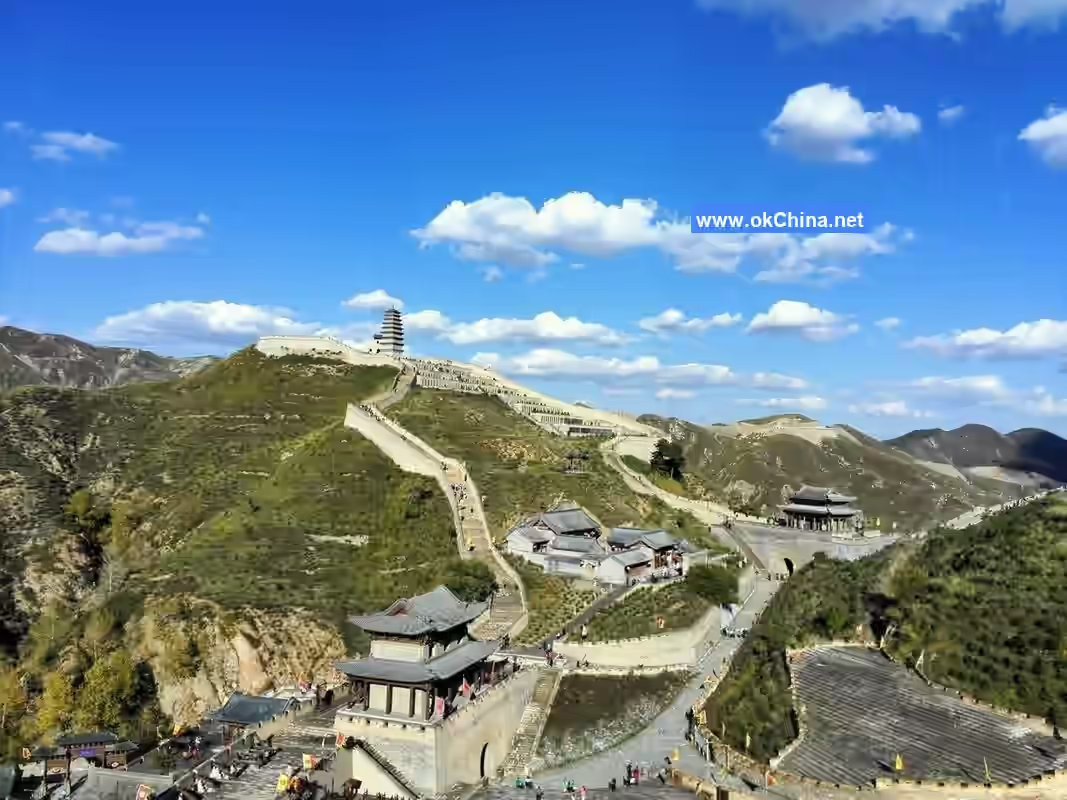
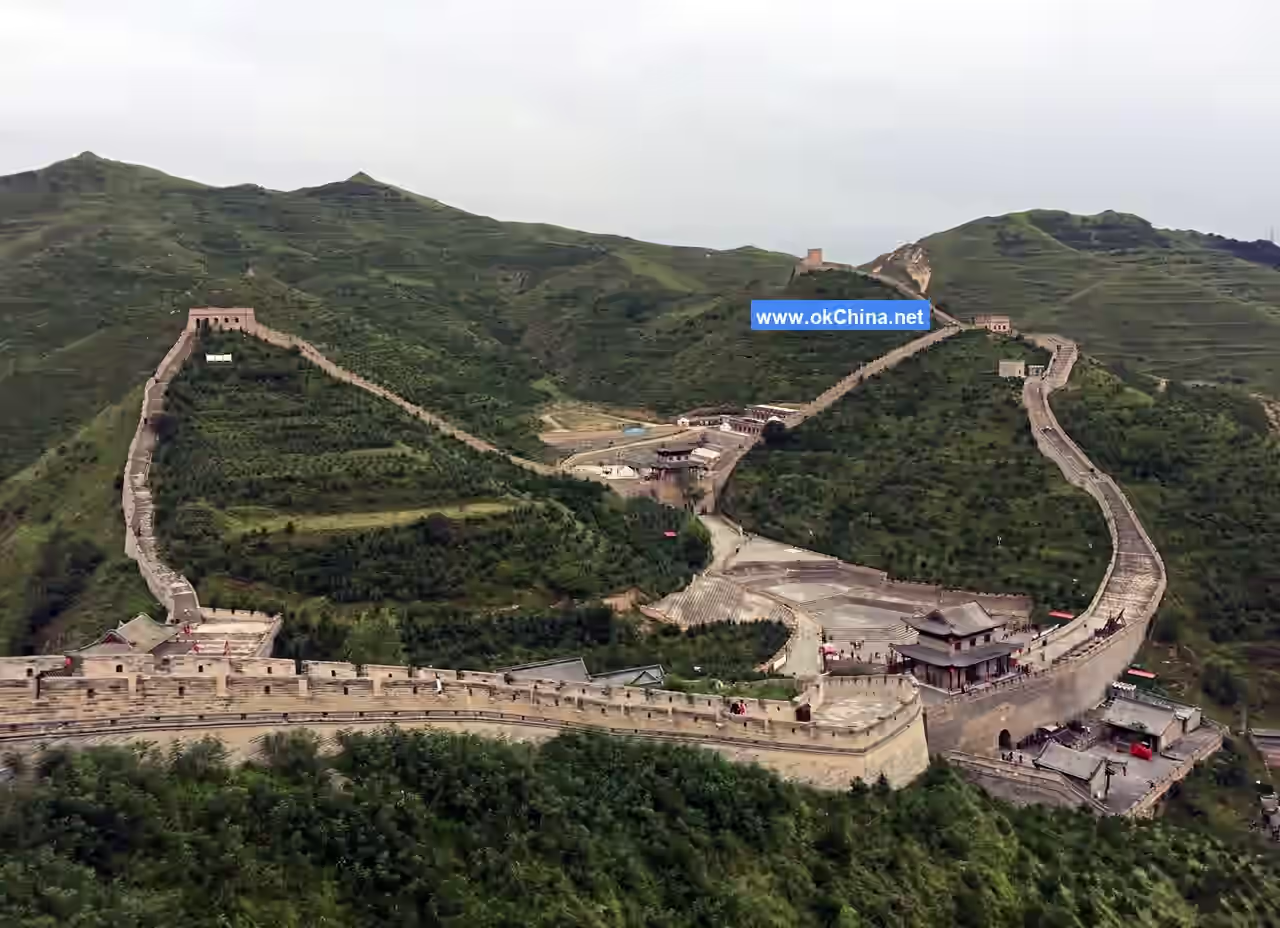
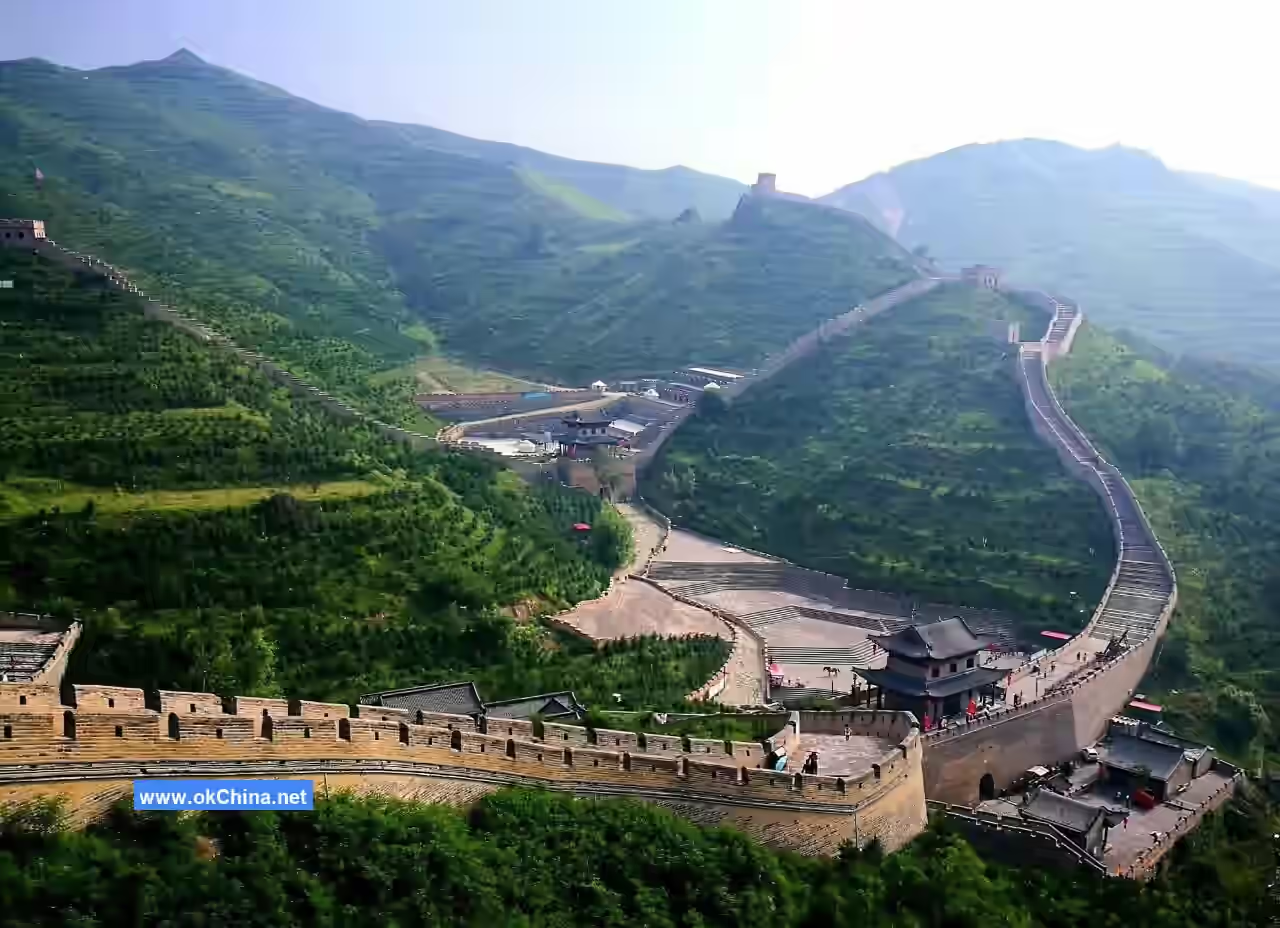
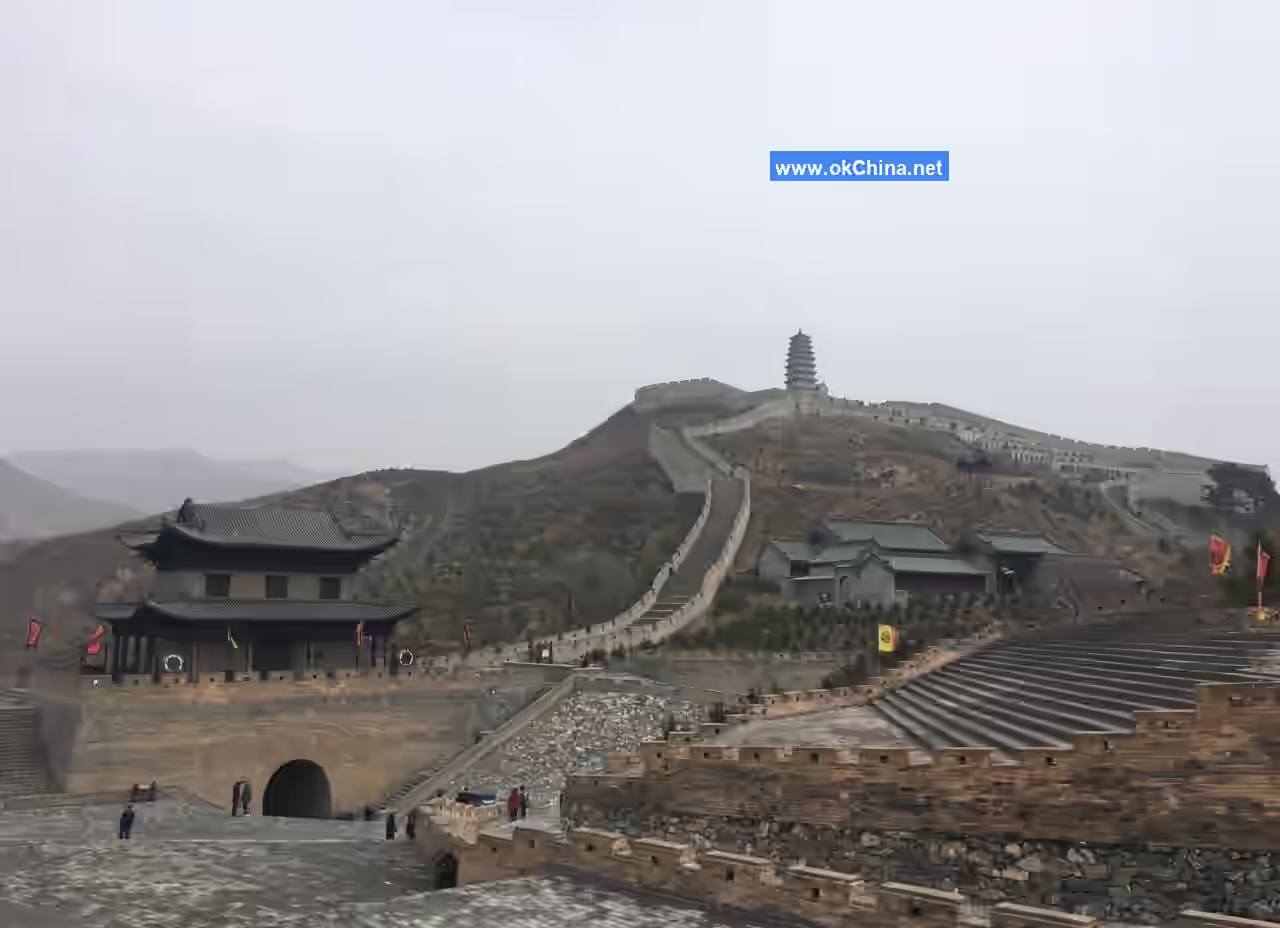
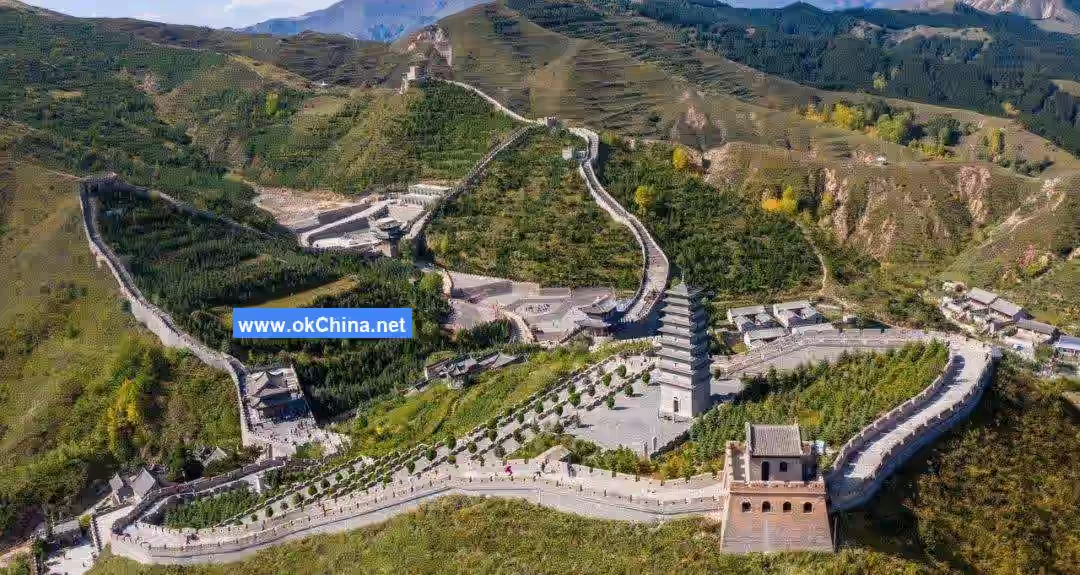
The encircling walls of Yanmen Pass were built following the mountain terrain, with a circumference of over 5 kilometers. The southern ends of the walls connect to the eastern and western wings of the pass fortress, while the northern sections extend along the mountain ridges to the valley floor, where they meet and form a gate. Outside the encircling walls, three large stone barriers and twenty-five small stone barriers were constructed to serve as defensive screens.
On the hill north of the pass fortress are the ruins of Ming and Qing military barracks, and to the southeast is a training ground. Outside the West Gate stands the Guandi Temple. Outside the East Gate is the Jingbian Shrine, dedicated to the famous Warring States general Li Mu. Only stone platforms, stone lions, stone flagpoles, and several Ming and Qing steles remain today.
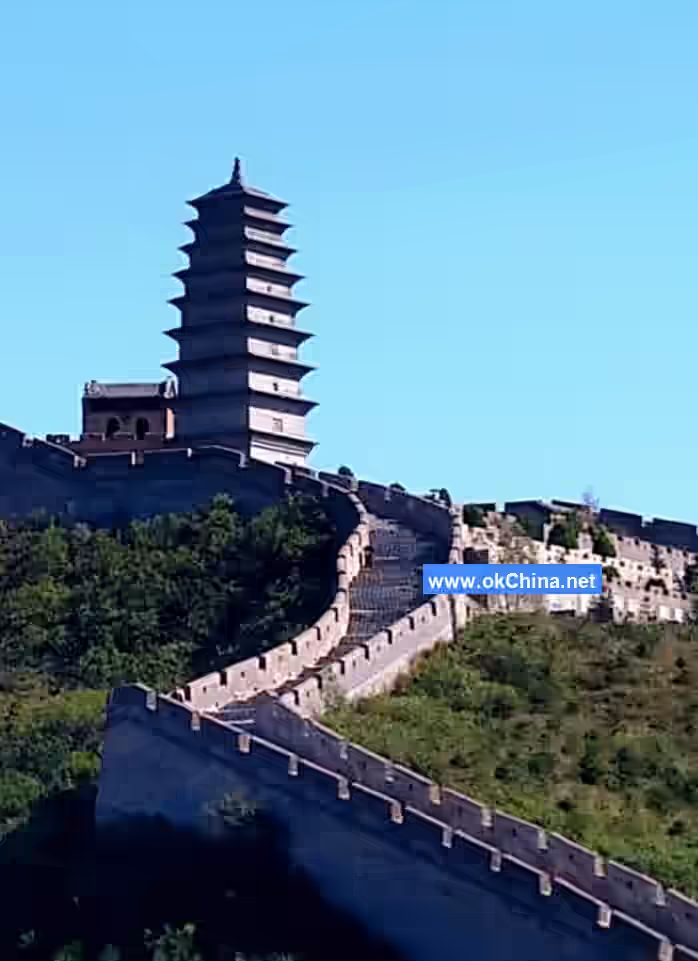
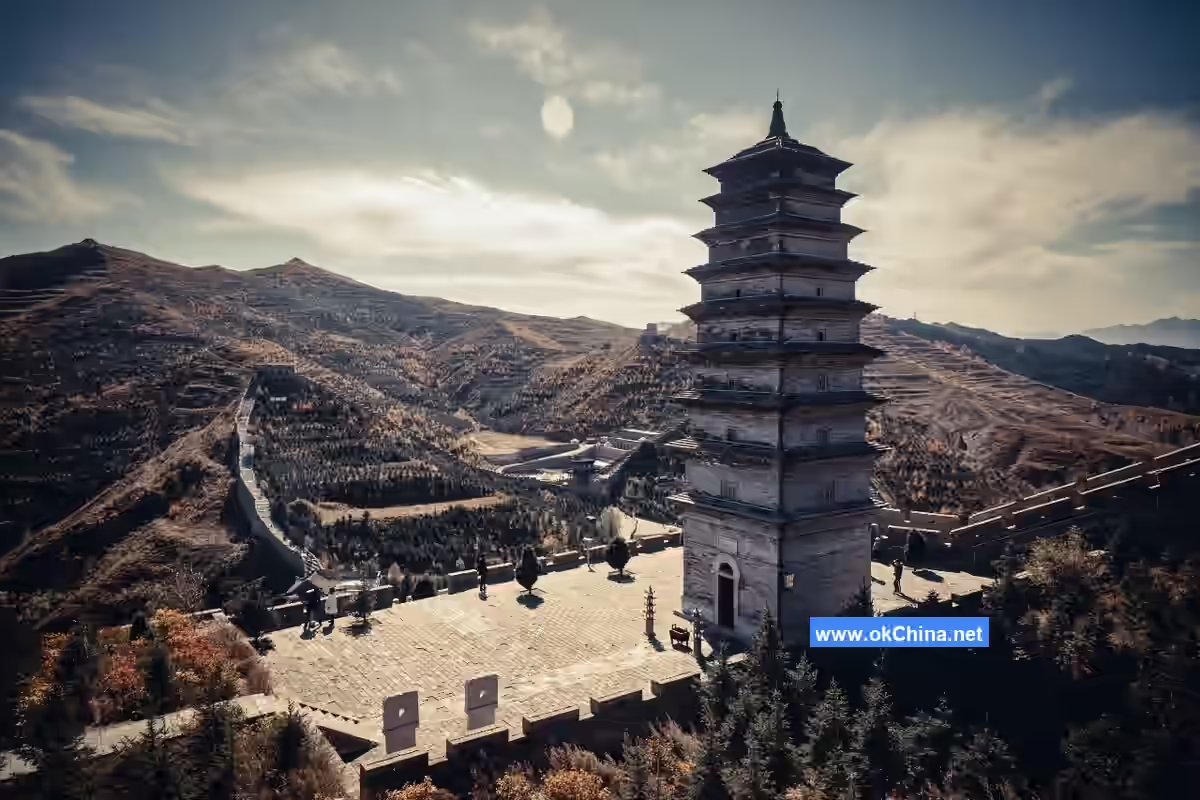
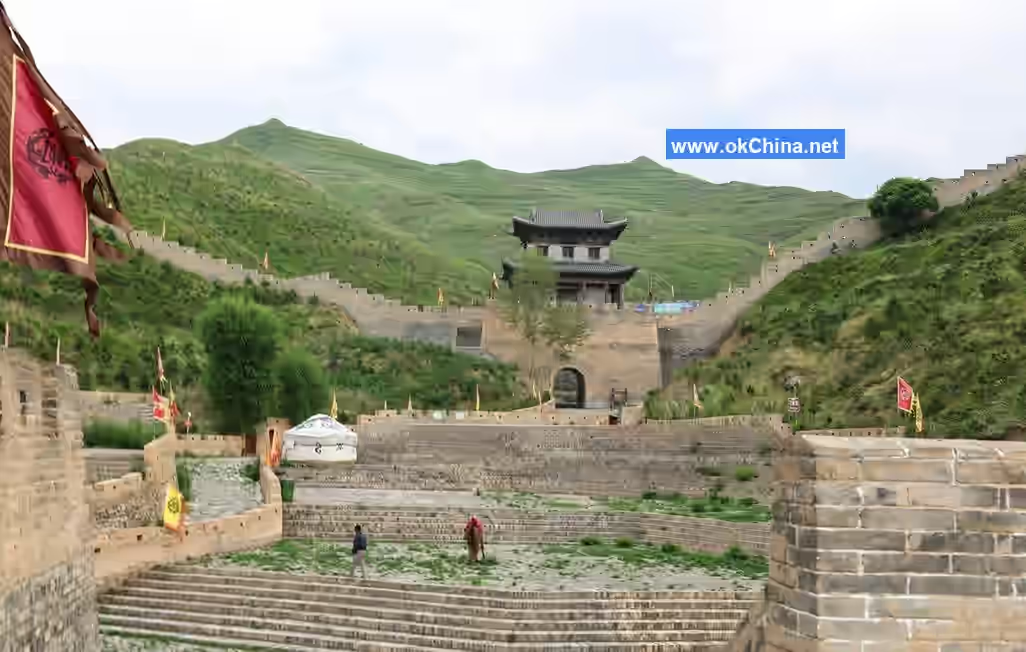
The old pass fortress west of the main pass is commonly known as Tielimen. The two passes are connected by a stone-built section of the Great Wall, complemented by watchtowers and beacon towers, forming a complete defensive system. Near the old pass fortress lies a section of the Baicaokou Great Wall, built during the Ming Dynasty, which is one of the best-preserved sections of the Great Wall in China. This section stretches 5,033 meters, with walls 6–8 meters high, a base width of 5 meters, and a top width of 3 meters. Approximately every 120 meters, a beacon tower and a watchtower were built. In strategically critical areas, fortresses, trenches, and hidden gates were also installed. Its eastern and western ends extend northward, eventually connecting with the Outer Great Wall.
IV. Cultural Relics
Test Blade Stone
About 7 kilometers north along the tourist road of Yanmen Pass, near the southern end of Shidaoshi Village, there is a stone bearing a massive blade mark.
Where Lord Ma Killed the Tiger
Lord Ma was a Ming Dynasty official surnamed Ma who guarded Yanmen Pass. In ancient times, tigers often roamed both sides of the Yanmen Pass road, frequently harming the people. At that time, Lord Ma's younger brother, concerned for the people's livelihood, volunteered to eliminate the tiger menace but was killed by the tiger. Lord Ma, inheriting his brother's resolve, eventually killed the tiger by the roadside, restoring peace to the Yanmen Pass road. To commemorate Lord Ma's achievement in eliminating the threat, local residents donated funds to erect a stele inscribed "Where Lord Ma Killed the Tiger" and buried his brother beside the stele.
Qianyaopu Post Station
Qianyaopu Post Station was located at the midpoint of the ancient southern road of Yanmen Pass. Historically, it was lined with inns, guesthouses, and shops, hence its name. It corresponds to "Houyaopu," which lies between Yanmen Pass and Xinguangwu.
Houyaopu Post Station
Houyaopu was the first village after crossing the pass and a resting place for merchant caravans and horse teams. In the past, it was bustling with merchants and shops.
Yanjing Memorial Archway
The Yanjing Memorial Archway was originally built during the Ming Dynasty with a wooden structure. It was destroyed by the invading Japanese army during the War of Resistance Against Japan. It has now been reconstructed on the original site as a white marble archway with stone pillars, stone brackets, eight pillars, and double eaves, featuring a grand and majestic design with exquisite carvings.
Yanmen Pass Traffic Division Stele
The Yanmen Pass Traffic Division Stele, erected in the 36th year of the Qianlong era of the Qing Dynasty (1772 CE), is one of the few surviving "ancient traffic regulation steles" in China.
During the prosperous Qianlong era, the single existing road on the southern section of the Yanmen Pass route could no longer meet the traffic needs of vehicles traveling in both directions. Therefore, the prefect of Dai Prefecture had to open a new carriage road and erected this stele to inform the public. The inscription reads: "The northern road of Yanmen Pass is dangerously close to the mountain cliffs, and vehicles traveling in opposite directions cannot pass simultaneously, frequently causing disputes and burdening merchants and travelers. After assessing the terrain, this prefecture has opened a new carriage road on the eastern route. All southbound vehicles shall travel via the eastern road, and northbound vehicles shall take the western route. Violations are strictly prohibited." This effectively separated upward and downward traffic, alleviating congestion. The stele inscription vividly reflects the busy traffic conditions of the "pass road" at that time.
Yanmen Pass Great Wall
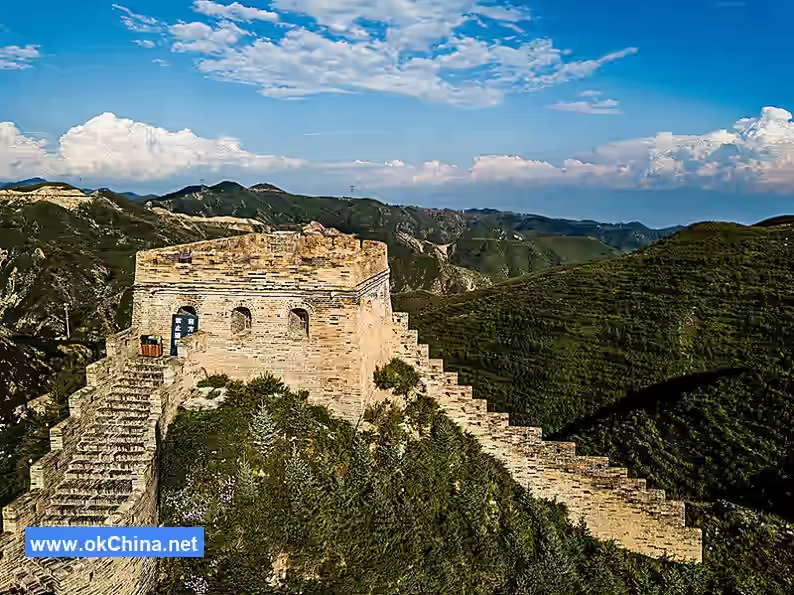
The Yanmen Pass Great Wall was reconstructed on the foundation of the ancient Great Wall in the 33rd year of the Wanli era of the Ming Dynasty (1605 CE) by Governor and Censor-in-Chief Li Jingyuan. It stretches from Baicaokou in the west to Xinguangwu in the east, standing 8 to 10 meters high, with a top width of 4.6 meters and a total length of 5,033 meters. A watchtower was built every 120 meters. Well-preserved watchtowers include "Zhenjiong," "Konglong," "Zhuanglu," and "Tianshan." Additionally, beacon towers and trenches were installed, making it a representative example of Ming Dynasty Great Wall architecture.
V. Ancient Yanmen Pass
Ancient Yanmen Pass
Ancient Yanmen Pass, also known as Tiegoumen, was formerly known as Beiling, Xiyu, and Gouzhusai, located at the site of the old Xijing Pass. Xijing Pass was named for its location west of Gouzhu Mountain, i.e., west of the Jing Ridge. The Tang Records state: "Xijing is the name of a pass, located on Yanmen Mountain. The eastern and western cliffs are steep, with a winding and rugged path in between. At the summit, a pass is established, called the Xijing Pass, also known as Yanmen Pass." Throughout history, it has been a vital strategic stronghold and military-political center on China's northern frontier. Major historical events such as "Emperor Gaozu of Han's Northern Expedition," "Wang Zhaojun's Departure Beyond the Frontier," "The Capture of Emperors Qinzong and Huizong of Song," and "The Yang Generals Guarding the Three Passes" are all associated with this site.
The Pass Fortress
The pass fortress is located outside Tiegoumen at the summit of Gouzhu Mountain. Tiegoumen, named for the dark brown color of the stone gorge, is an artificially excavated pass. The pass opening is V-shaped, with a top width of 30 meters, a bottom width of 3 meters, a depth of 200 meters, and a length of 50 meters. The constructed pass fortress is strategically formidable and heavily fortified, approximately 20 meters wide from east to west and 200 meters long from north to south. Remnants of the surrounding wall foundations remain, with four building foundations to the south and one beacon tower to the north. After the establishment of Tiegoumen as a pass, the name Gouzhusai was gradually replaced by Yanmen Pass.
The walls of the pass fortress are 10 meters high, with a circumference of about 1 kilometer. The walls are built on stone foundations, filled with rammed earth, and faced with bricks, with battlements constructed along the top.
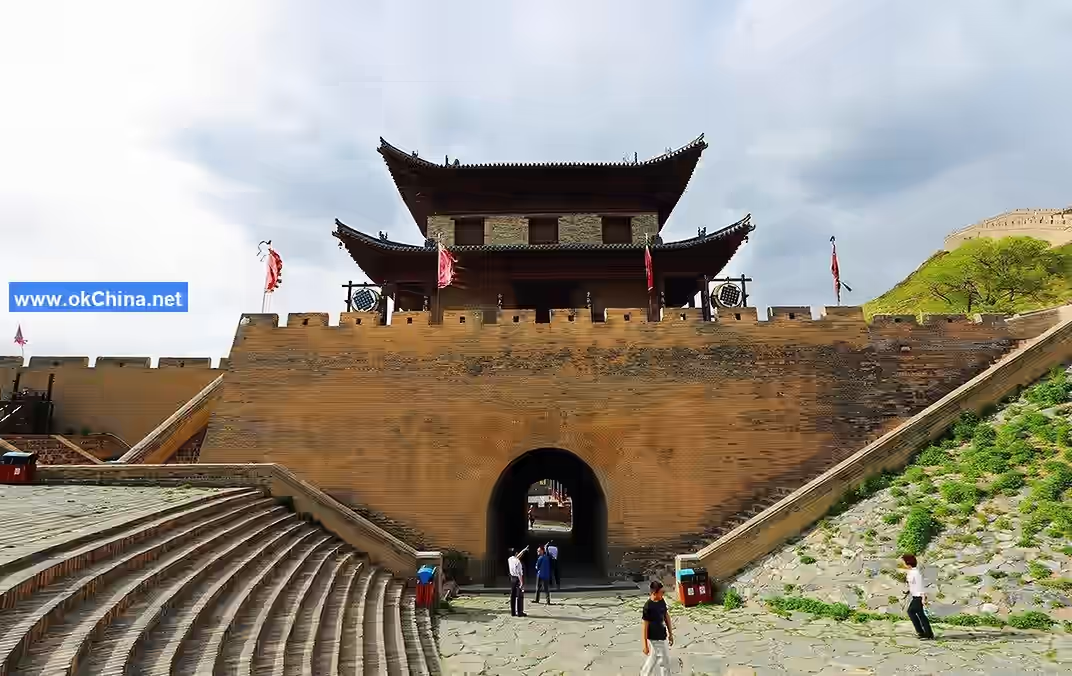
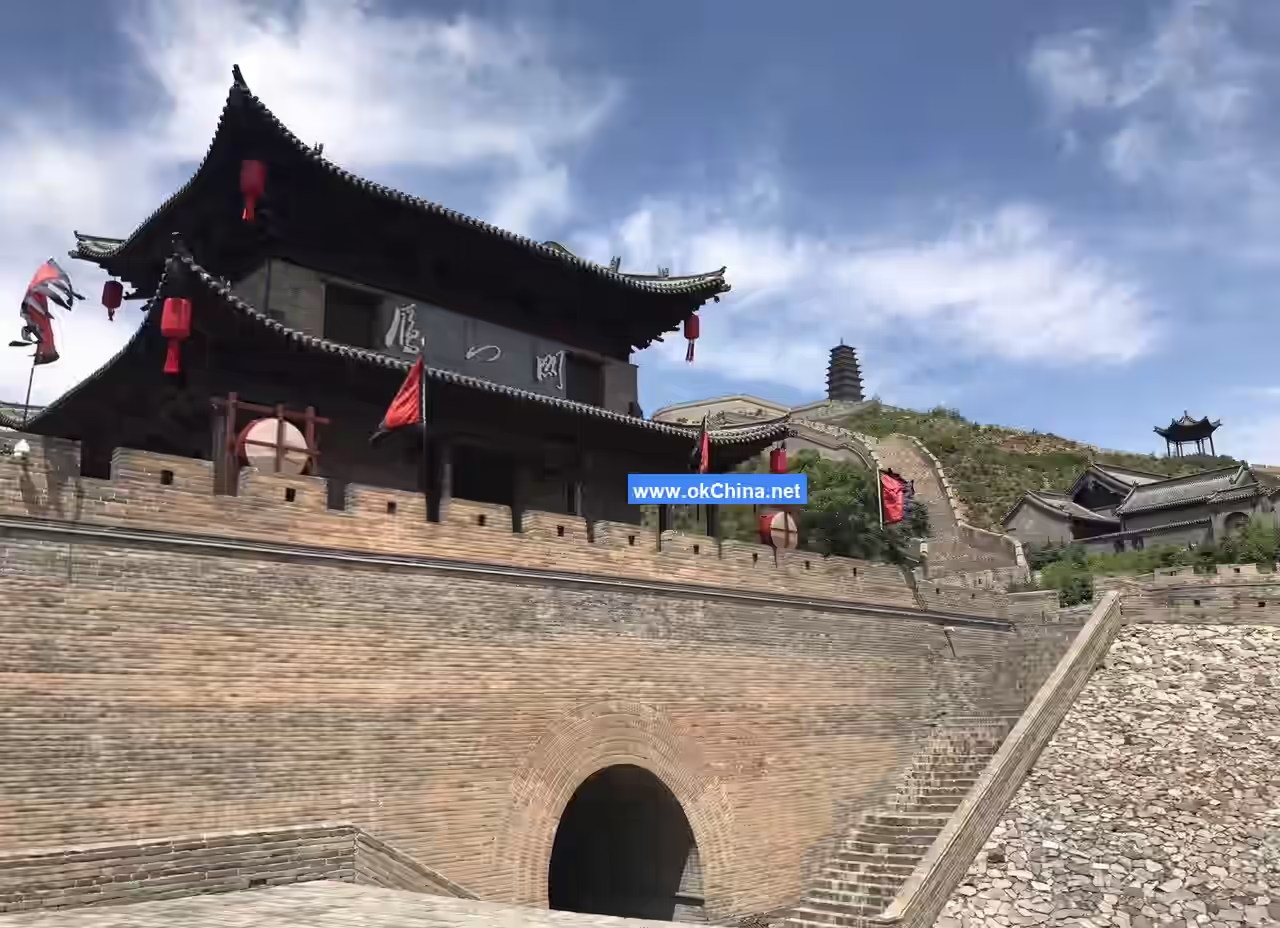
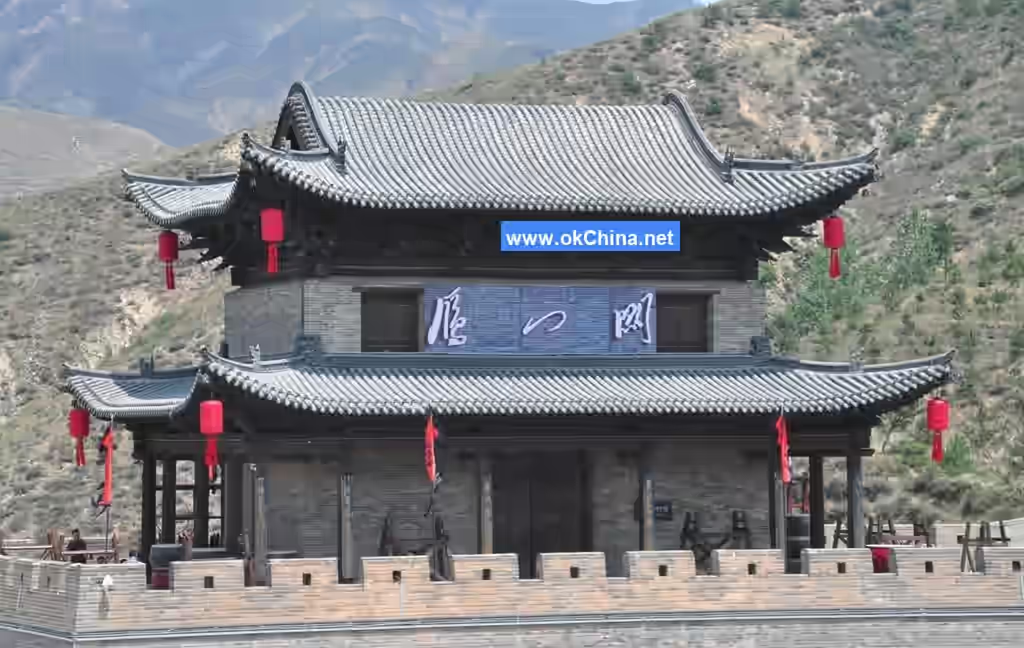
Gates were opened on the eastern, western, and northern sides of the pass fortress.The gateways are constructed with stacked bricks and stones, paved with bluestone slabs, and stone plaques are embedded in the lintel positions. The eastern gate plaque is inscribed with the characters "天险" (Natural Barrier), and above the gate stands the "Yanmen Tower," a double-eaved hip-and-gable roof structure with five bays in width and four bays in depth, surrounded by corridors. The western gate plaque bears the characters "地利" (Geographical Advantage), and its gate tower is the Yang Liulang Shrine. The northern gate is actually the entrance to the barbican, with the lintel inscribed with the three characters "雁门关" (Yanmen Pass) and flanked by a couplet: "三边冲要无双地,九塞尊崇第一关" (A pivotal stronghold unmatched in the three frontiers, the foremost pass revered among the nine fortresses). Both the eastern and western gate towers have been destroyed, and the northern gate has collapsed into a breach.
Ancient Pass Road
Yanmen Pass is also part of the ancient Gouzhu Fortress Road, stretching over 30 kilometers in total. It starts from Taihe Ridge Pass in the south, passes through Fulagou, Chengshang, Shiqianggou, Wujiayao, and Heishiguan Gou, crosses the highest point at Tiegoumen, descends to Zhaozhuang and Baicaokou, and finally exits at Liulin and Youfang. The ancient pass road remains well-preserved today. The road connects the plateau beyond the northern frontier to the heartland of the Central Plains in the south. For thousands of years, it has served as a vital throat for the Han people of the Central Plains moving northward and the nomadic tribes from the grasslands moving southward. During wartime, it was a military checkpoint for defense and garrison; in peacetime, it was an essential route for merchants transporting goods and travelers passing through.
Mountain Pass
The mountain pass, known as the ancient northern entrance of Yanmen Pass and commonly called Baicaokou, is one of the eighteen passes of Yanmen. It features two fortresses: Taihe Fortress to the south and Changsheng Fortress to the north, separated by a continuous mountain range. During the Spring and Autumn and Warring States periods, Baicaokou was a crucial north-south thoroughfare, with merchants and travelers constantly traversing the ancient Yanmen Pass road. The pass was built across a river, featuring three defensive walls, six pass gates, and six fort towers, seamlessly connected to the Great Wall on the east and west. Today, one pass gate remains, with its lintel inscribed "容民畜众" (Accommodate the People and Nurture the Multitude), and one fort tower, with its lintel inscribed "猴岭" (Monkey Ridge).
Changsheng Fortress
Changsheng Fortress is located on the high ground west of the Baicaokou Pass, on the site of the ancient Xijing Town. It connects to the ancient Yanmen Pass road in the south, echoes Taihe Fortress from afar, overlooks the desert plains beyond the pass to the north, and faces the ancient Guangwu City. With a perimeter of over 500 meters, the fortress features stone foundations and brick walls. A martial temple was built in the northeastern corner, and the fortress gate lintel is inscribed with the three characters "常胜堡" (Changsheng Fortress). The upper inscription reads vertically "万历甲寅都御史吴仁庆" (Wu Renqing, Censor-in-Chief in the Jia Yin year of the Wanli era), and the lower inscription reads "布政使阎士选立" (Established by Provincial Administration Commissioner Yan Shixuan).
Monkey Ridge Great Wall
Monkey Ridge is named for a rock on its steep cliffs that resembles a monkey. It was reconstructed on the foundation of the ancient Great Wall in the 33rd year of the Ming Wanli era (1605) by Governor and Censor-in-Chief Li Jingyuan. The top is paved with three layers of bricks, allowing horses to traverse. Stretching from Baicaokou in the west to Xin Guangwu in the east, it stands 8 to 10 meters high, with a width of 4.6 meters at the top and a total length of over 5,033 meters. A garrison tower was built every 120 meters. Watchtowers were mostly constructed on the outer side of the Great Wall, measuring 10 meters in width, 8 meters in depth, and about 15 meters in total height. Hidden gates were built in sections suitable for stationing troops internally and launching attacks externally, with gateways 2.3 meters high and 1.7 meters wide. Well-preserved watchtowers include "Zhen Dong," "Wa E," "Zhuang Lu," and "Tian Shan." Additionally, beacon towers were erected, and trenches were dug, making it a representative example of China's Ming Dynasty Great Wall.
Gouzhu Shrine
The original site of the Gouzhu Shrine was at the foot of Gouzhu Mountain, connecting to the Gouzhu Fortress in the north. Surrounded by seven beacon mounds resembling the Big Dipper, it was also known as the Big Dipper Mountain Gouzhu Shrine or Big Dipper Temple. The temple complex included an entrance hall, front and rear courtyard halls, a main hall, a stele hall, a sutra tower, and a bell tower. The Gouzhu Stele was erected in the first year of the Xianning era of the Jin Dynasty. During the Song Dynasty, due to its frequent efficacy in rain prayers, it was granted the title "Shunying Hou" (Marquis of Compliance), recorded on the Wuchongji Stele. In the Jin and Yuan dynasties, it was further granted titles such as "Youshun Gong" (Duke of Protection and Compliance) and "Guangyou Lingying Wang" (King of Broad Protection and Divine Response). In the early years of the Ming Hongwu era, it was renamed the Mountain God Temple and renovated during the Zhengde era. Beneath the deity's seat were seven spiritual springs.
Sun Chuanting's Tomb
Sun Chuanting's Tomb is located east of Xianhuazhuang Village in Yangmingbao Town. Covering an area of 7,000 square meters, the tomb mound is 4 meters high with a circumference of about 22 meters. It is surrounded by red walls and planted with lush pine and cypress trees. The site includes a memorial hall, tombstones, brick-paved paths, and stone figures, horses, pigs, and sheep arranged alongside, with an archway at the front. The tomb was destroyed during the Cultural Revolution. A surviving epitaph, "Epitaph for Sun Baigu, Grand Tutor of the Ming Dynasty and Minister of War Overseeing Seven Provinces, and His Wives Madam Feng and Madam Zhang, Buried Together," written by Feng Yunxiang, a Ministry of Justice official in the Qing Dynasty, is engraved on six stone slabs, totaling over 6,000 characters, detailing his life and deeds.
Yunji Spring
Yunji Spring has been famous since the Yuan Dynasty. A pavilion was once built beside the spring, and nine stone dragons were carved in the pool to drain water. The pavilion bore a plaque inscribed "九龙亭" (Nine Dragons Pavilion), hence it is commonly known as Nine Dragons Spring by the locals.
In June 2009, this thousand-year-old spring was re-excavated at its original site. Although its water output is not as abundant as before, it remains a rare scenic spot at Yanmen Pass. Feng Yunxiang, a native of Daizhou who served as the Provincial Administration Commissioner of Fujian during the Qing Dynasty, left four poems titled "Passing by the Yunji Spring Pavilion at Yanmen," inscribed beside the spring for visitors to enjoy.
VI. Ming Dynasty Yanmen Pass
Ming Dynasty Yanmen Pass
The Ming Dynasty Yanmen Pass is located at the Dongxing Pass, named for its position east of Gouzhu Mountain, i.e., east of Xingling Ridge. The Book of Tang: Geography records: "Yanmen Pass has Dongxing Pass and Xixing Pass." Tang Dynasty Prime Minister Du You once said: "Dongxing Pass is extremely perilous and solid, forming the dangers of Gouzhu together with Xixing Pass." Dongxing Pass was built and valued equally with Xixing Pass. During the Ming Dynasty, Yanmen Pass was expanded and newly constructed at the site of Dongxing Pass, and the eighteen passes of the Northern Song Dynasty were rebuilt on its eastern and western flanks. Each pass was fortified with sturdy castles, connected in the middle by the Great Wall, forming a new military defense system centered on Yanmen Pass. This defensive line stretched from Pingxing Pass to Xuangang Pass, covering a distance of 300 li.
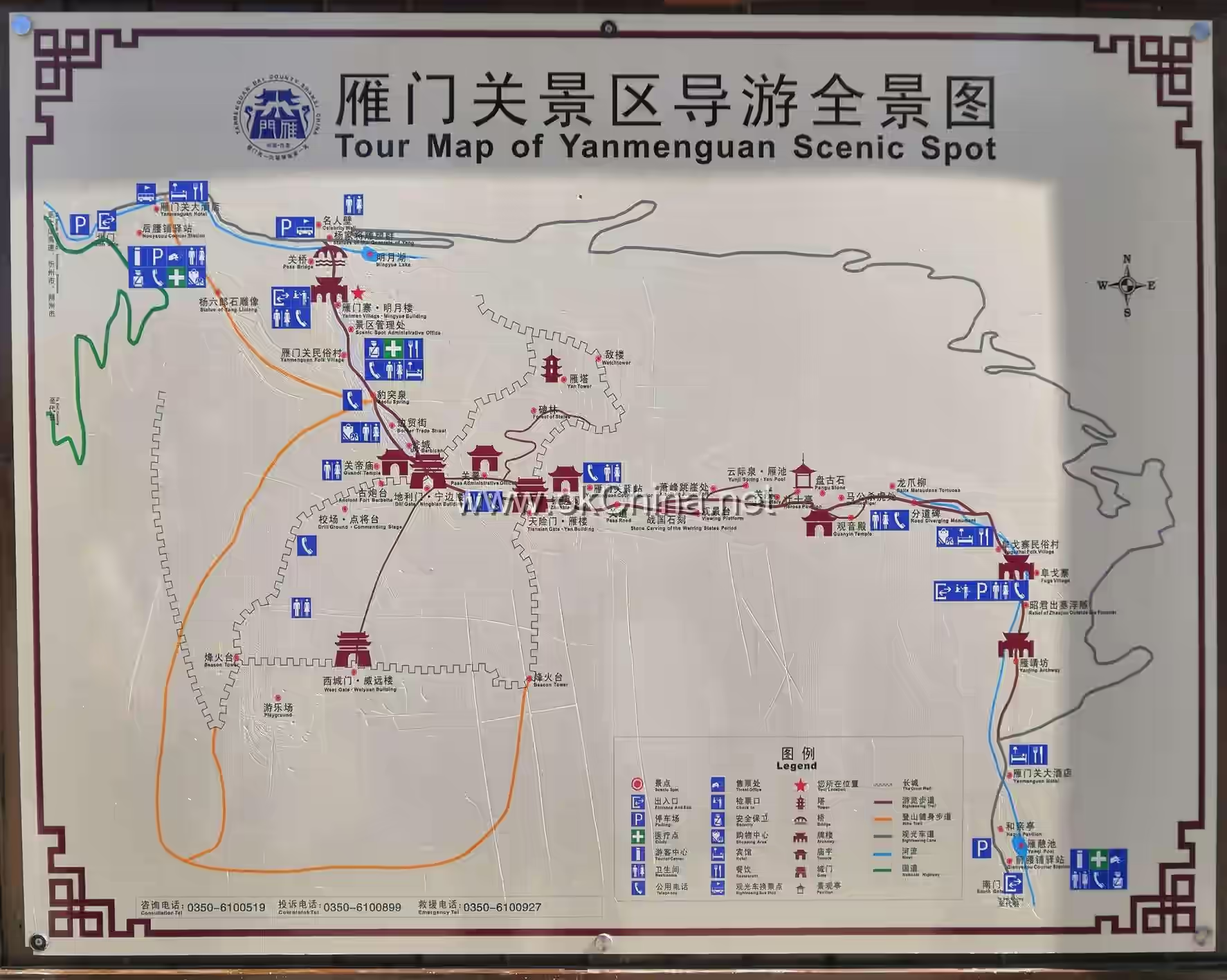
Barbican
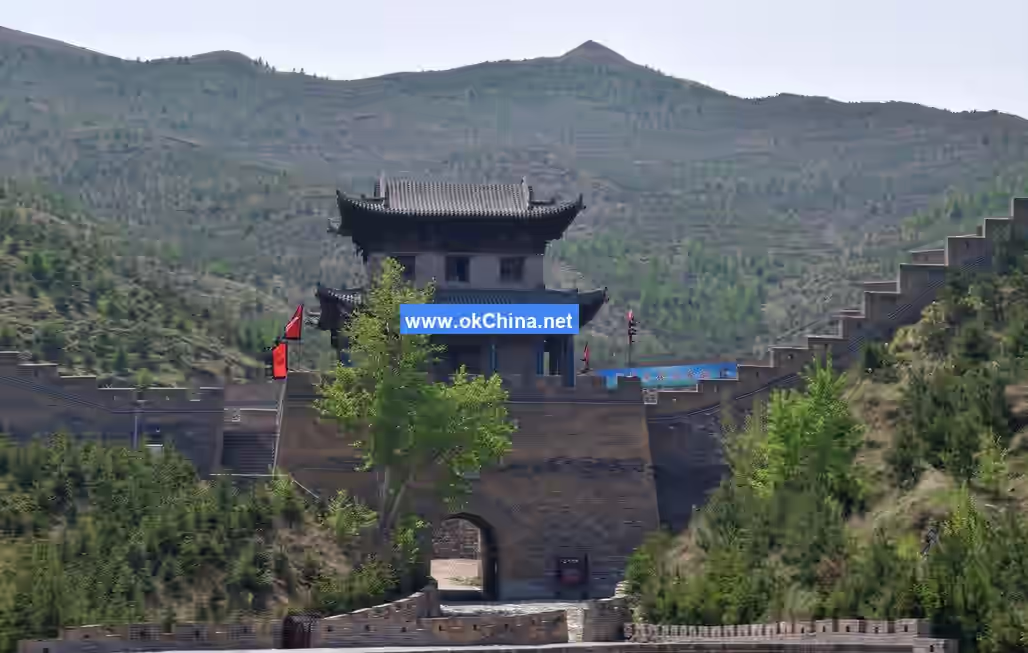
The barbican is located north of the pass city, outside the Dilimen Gate. Its walls are half the height of the pass city and include a hidden gate. The barbican gate, commonly known as the Small North Gate, features a stone-arched top with a lintel inscribed with the three large characters "雁门关" (Yanmen Pass). On either side is embedded a brick-carved couplet: "三边冲要无双地,九塞尊崇第一关" (A pivotal stronghold unmatched in the three frontiers, the foremost pass revered among the nine fortresses). Each character is carved on a single brick, traditionally said to be the calligraphy of Mr. Fu Shan. Above the gate is a tower, constructed of brick and wood, known as the barbican gate tower.
Enclosure Wall
The enclosure wall is built of stone, with a perimeter of about 10,000 meters. Its southern end connects to the eastern and western wings of the pass city, while the northern end extends to the valley floor, forming an enclosure. The enclosure wall gate faces south and north, topped with the Ningbian Tower, commonly known as the Bright Moon Tower, built during the Ming Jiajing era. Outside the enclosure wall gate, a stone arch bridge connects to the pass road. According to The General Survey of Yanmen Pass Geography, three large stone walls and twenty-five small stone walls were constructed outside the pass, forming the first line of defense for guarding the pass and repelling enemies.
Eastern Fortress
The Eastern Fortress is located on the commanding height east of the ancient pass road within the pass city enclosure. It was built during the Ming Hongwu era and renovated during the Zhengde era. The Eastern Fortress is a large brick fortress. The General Survey of Yanmen Pass Geography records: "It has a perimeter of two li and three hundred fifty paces, situated on a mountain without moats, with six hundred battlements. It has two gates: Yanmen and Yansai." It connects seamlessly with the extended wall from the Tianxianmen Gate of the pass city to the south, with the extended wall from the Dilimen Gate of the pass city to the west, and with the Ningbian Tower gate of the enclosure wall along the ridge to the valley floor in the north. It contains barracks and stables, serving as a garrison for troops defending the pass.
Western Fortress
The Western Fortress is situated on a high platform west of the ancient pass road within the pass city enclosure. Built simultaneously with and equally important as the Eastern Fortress, it is a stone fortress. The General Survey of Yanmen Pass Geography records: "The stone fortress is fifteen zhang high, with a perimeter of two li and three hundred forty-nine paces, five hundred battlements, and one gate. Inside the fortress is a thousand-household garrison, one granary, and one hayfield." It extends south along the ridge to the commanding height of the Western Fortress, connecting with the military fort. It turns north to the corner tower of the Western Fortress and the Tianxianmen wall, and east through the corner tower to the Dilimen Gate, connecting with the wall. Inside the fortress are barracks, serving as a training and defensive ground for the garrison soldiers. The Western Fortress is separated from the Eastern Fortress by a wall, with a corner tower at each of the southern and northern corners and a gate with its tower in the center. On top of the fortress stands the Weiyuan Tower, commonly known as the "Yanyue Tower," built during the Ming Jiajing era. East of the Western Fortress gate is a drill ground with a commander's platform.
Tianxianmen Gate and Yan Tower
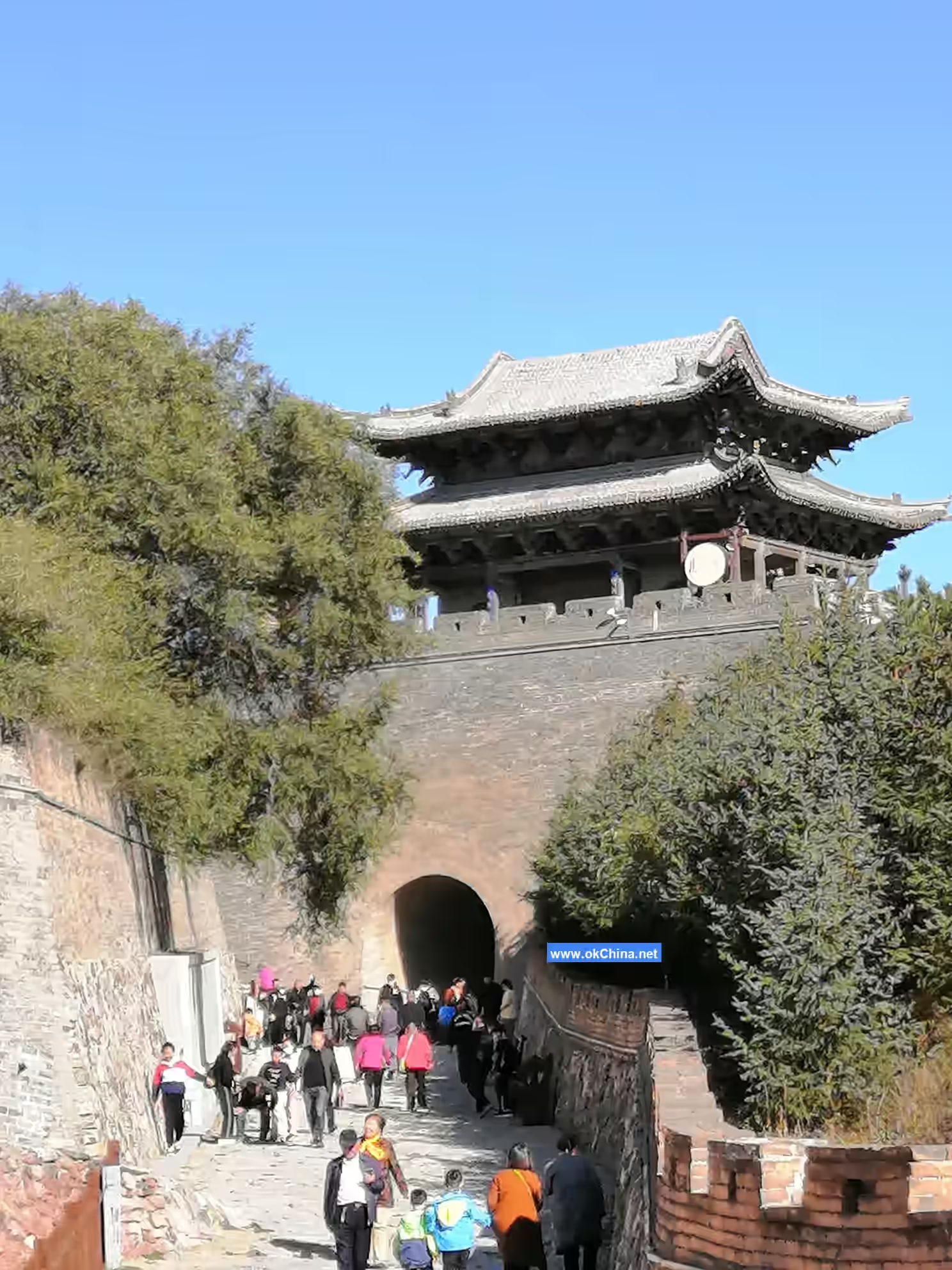
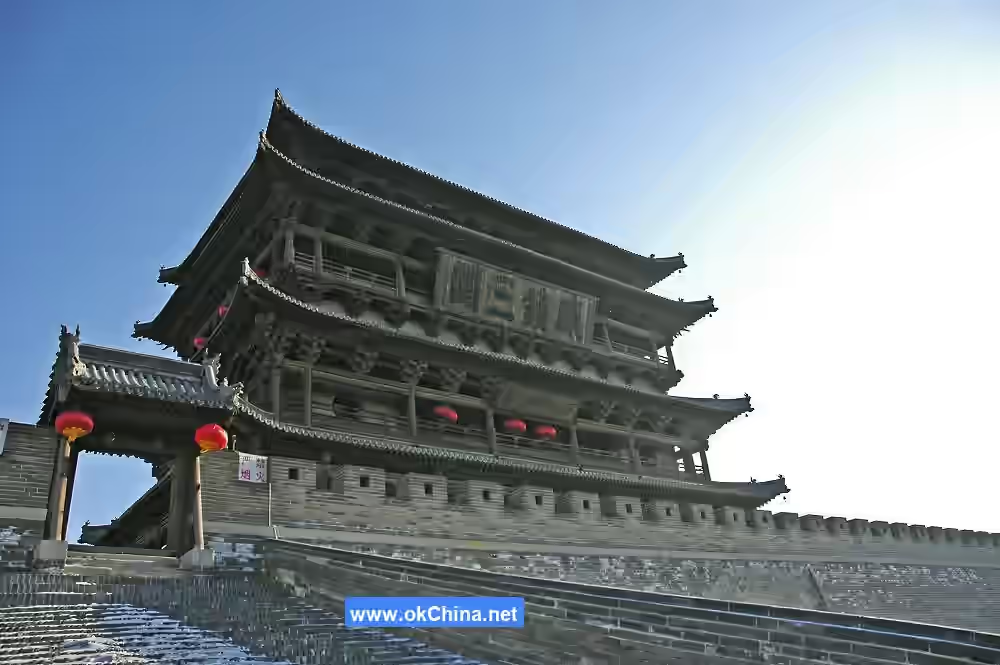
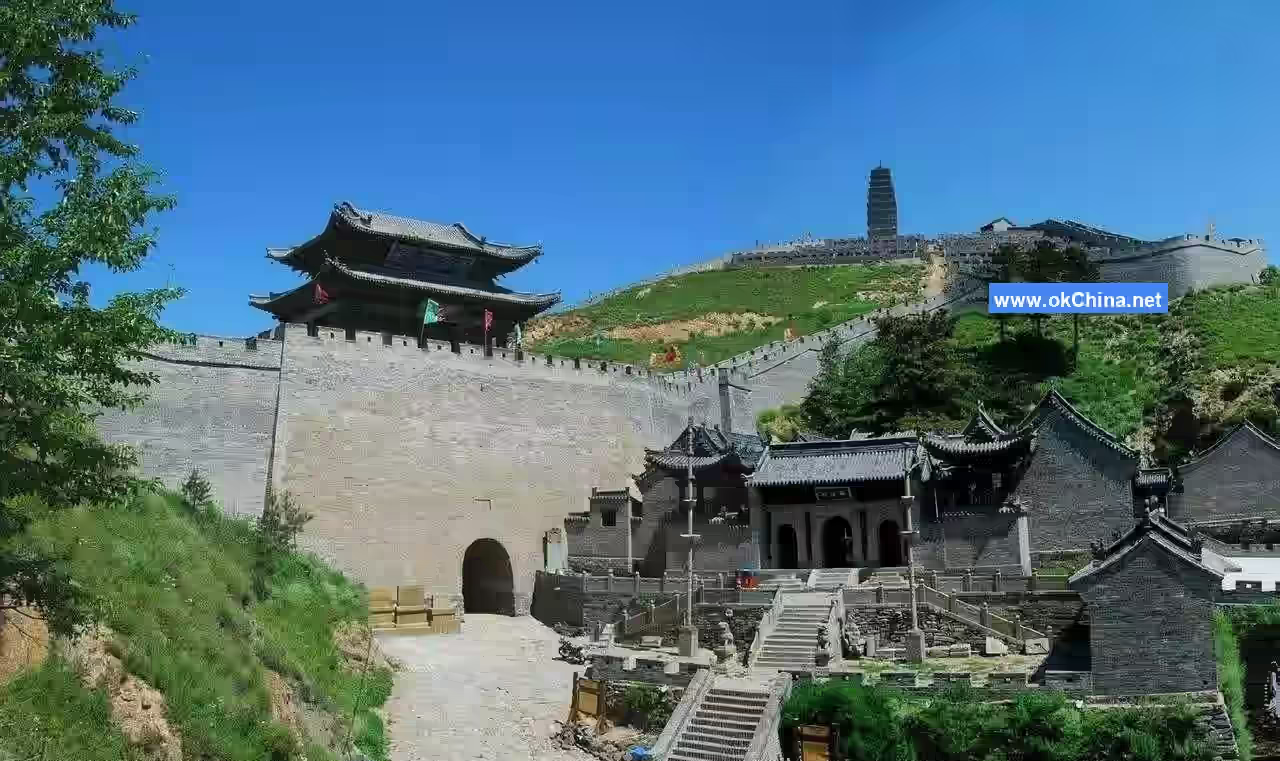
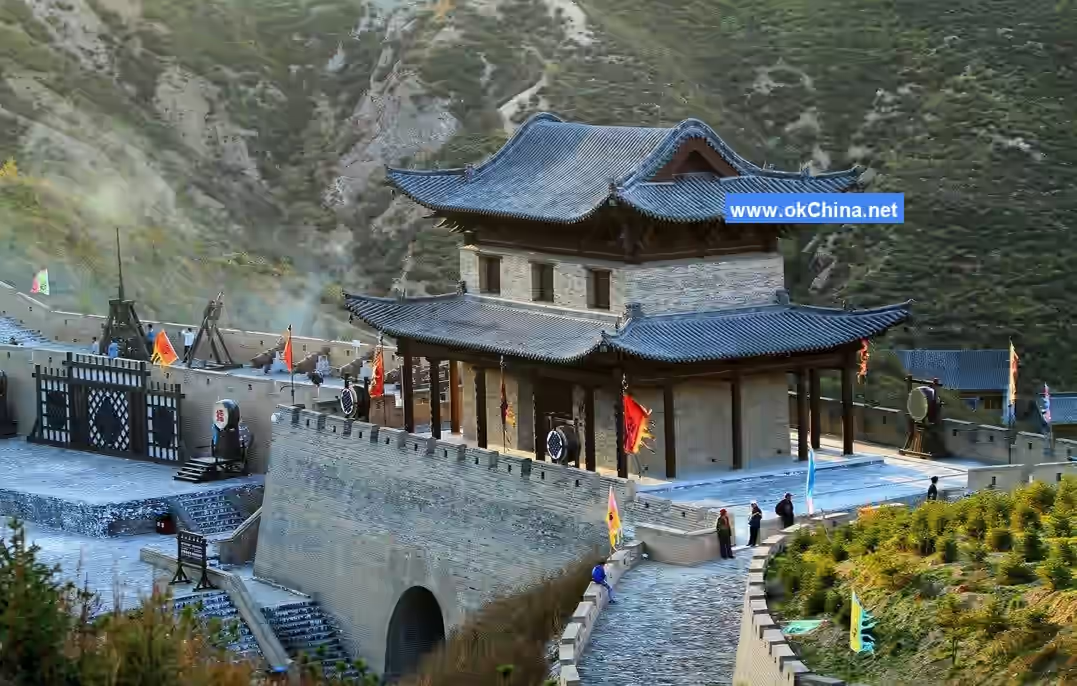
The Tianxianmen Gate is the southern gate of the pass city, the first gate on the south side of the pass. It has a stone foundation and brick arch, standing 12.5 meters high. The walls are equipped with battlements, and the gateway has one set of wooden doors, paved with bluestone slabs. Above the Tianxianmen Gate stands the Yan Tower, facing east with five bays in width and four bays in depth, surrounded by corridors. The structure features a double-eaved hip-and-gable roof. The central bay on the front is a partitioned door, while the two end bays are brick walls. The rear, except for two circular windows, is entirely brick. The flat architrave is decorated with bracket sets, with upward and outward projecting arms. The roof is covered with gray tiles, with large ridge ornaments at both ends of the main ridge and wind chimes hanging at the four corners. The main structure dates from the Ming Dynasty, and the damaged parts were fully restored in 2010, recovering its Ming-era appearance. The lintel above the gateway is inscribed with the seal script characters "天险" (Natural Barrier). The bluestone slabs inside the gateway are original from the Ming Dynasty, bearing clear wheel ruts from over 600 years of use.
Above the Tianxianmen Gate is a gate tower, also known as the Yan Tower. The original structure was destroyed in 1937; the current main structure was rebuilt in 1989 and repaired in 2010. The Yan Tower has five bays in width and four bays in depth, featuring a double-eaved hip-and-gable roof and surrounded by corridors.
Dilimen Gate
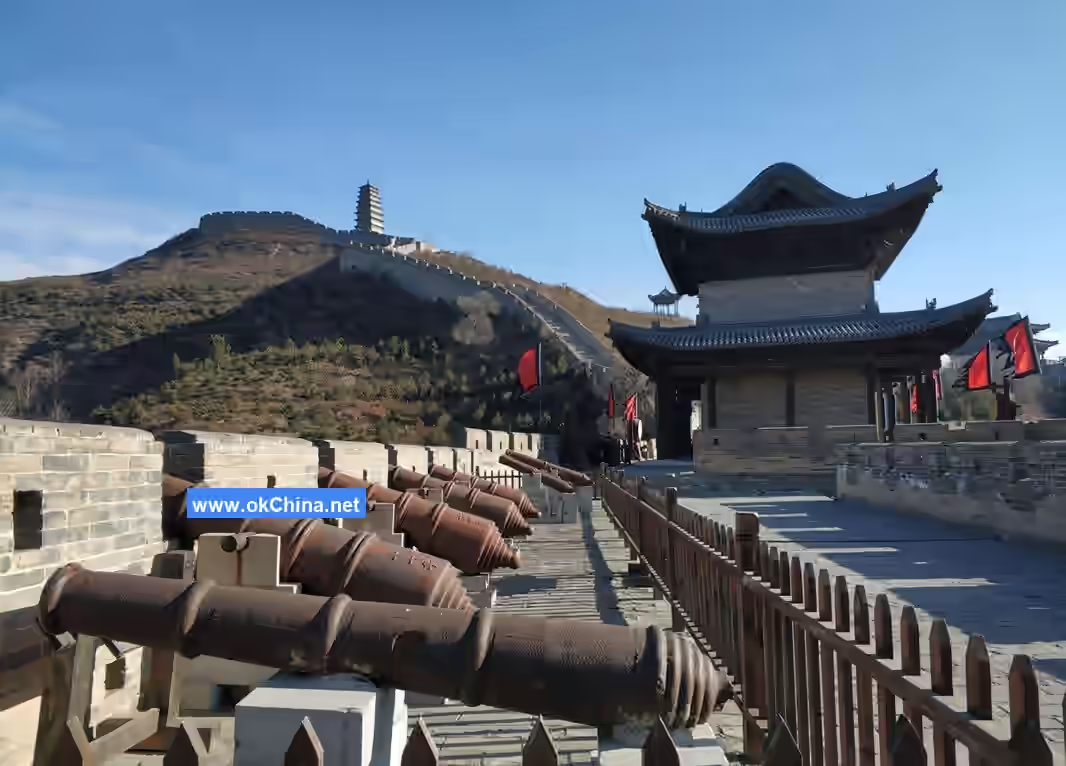
The Dilimen Gate is the western gate of the pass city, corresponding to the Tianxianmen Gate. It has a stone base and brick body, with its lintel inscribed in seal script with the characters "地利" (Geographical Advantage). This gate faces north and south, and above it stands the Ningbian Tower, a two-story structure with a hip-and-gable roof. The gate tower houses the Yang Liulang Shrine, with statues of Meng Liang and Jiao Zan on either side. An iron sword belonging to the Yang family is enshrined here, and two cannons are placed on the tower.
Zhenbian Shrine (Li Mu Shrine)
The Zhenbian Shrine is located east of the Tianxianmen Gate outside the pass city, covering an area of 3,190 square meters with a building area of 1,510 square meters. It is one of the largest architectural complexes at Yanmen Pass. Also known as the Wu'an Jun Shrine, Jingbian Shrine, and Zhenbian Shrine, it was built in 1506 AD to commemorate the Zhao Kingdom general Li Mu from the Warring States period, originally called the Wu'an Jun Temple, commonly known as the Li Mu Shrine. In 1856, the monk Shan Quan built a Buddhist temple on the site of the Li Mu Shrine, renaming it the Huguo Zhenbian Temple. Although a Buddhist temple, it still housed a statue of General Li Mu in the passage hall, making the Zhenbian Temple a composite structure primarily Buddhist but also venerating Li Mu. After the Japanese army occupied Yanmen Pass in 1937, the Zhenbian Temple was severely damaged, leaving only its foundation.Since its restoration in 2009, it has been renamed Zhenbian Temple and transformed into an exhibition hall showcasing famous frontier generals from the Western Zhou Dynasty to the Ming Dynasty, spanning over 2,600 years, including figures like Ji Xing, Li Mu, Xue Rengui, and the Yang Family Generals.
The temple complex is grand in scale. In front of the main gate, there is a stone platform with a pair of stone flagpoles and two stone lions. Centrally located on both sides are staircases with carved stone railings and balustrades. Bell and drum towers flank the main gate. The temple courtyard is divided into front and rear sections. The front courtyard has side rooms on both sides, with the central passage hall housing a statue of Li Mu at the front and a statue of Weituo at the back. Passageways on either side of the hall lead to east and west storerooms. The rear courtyard features the main hall, the Mahavira Hall, which enshrines one Buddha and two Bodhisattvas. To the left of the main hall is the abbot's quarters, and to the right is the Ancestral Hall, with side rooms for monks on the east and west sides. East of the main hall, descending a staircase, are multiple cave dwellings known as the "Nine Kilns and Eighteen Caves," with stone foundations and brick arches that once served as a military fortress. Inside the temple hangs a couplet handwritten by the Taoist Zhu Yi, Fu Shan: "On the high platform, the Dharma is chanted, auspicious clouds blanket the Bodhi tree; from the lotus seat, scriptures are transmitted, auspicious light graces the blissful heaven."
Changping Bridge
Changping Bridge is located at the confluence of the valley south of the pass and the barracks gully. It follows the natural terrain, leveraging the strategic advantage of the landscape. During peacetime, it served as a commercial crossing, while in times of war, it acted as a defensive checkpoint. "Initially, seven small bridges, such as Puji and Taiping, were built, all of which were convenient for the people. Finally, this bridge was constructed." The stone arch bridge spans a deep ravine like a rainbow, with a total height of 10 meters, a width of over 6 meters, and a span of 50 meters. A stele for Changping Bridge stands beside it.
Ma Gong Tomb
Ma Gong Tomb is located north of Changping Bridge. Ma Gong was one of twin brothers who served as the commander of Yanmen Pass. Legend has it that tiger attacks plagued the Yanmen Pass road, with tigers lurking by day and emerging at night, repeatedly harming locals and passing merchants. This turned the once-bustling Yanmen Pass road into a desolate route. The Ma brothers volunteered to eliminate the threat. Unfortunately, the younger brother lost his life while fighting a tiger. The elder brother, driven by his brother's determination, killed the tiger by the roadside, restoring peace and prosperity to the Yanmen Pass road. To commemorate the Ma brothers' heroic deed, local residents donated funds to erect a stele inscribed with "Where Ma Gong Killed the Tiger."
Yanmen Pass Great Wall
The Yanmen Pass Great Wall was reconstructed in 1605, the 33rd year of the Wanli era of the Ming Dynasty, by the imperial inspector Li Jingyuan on the foundation of the ancient Great Wall. Stretching from Baicaokou in the west to Xinguangwu in the east, it stands 8 to 10 meters high, with a width of 4.6 meters at the top and a total length of 5,033 meters. Watchtowers were built every 120 meters. Well-preserved watchtowers include "Zhenjiong," "Konglong," "Zhuanglu," and "Tianshan." Additionally, beacon towers and trenches were constructed, making it a representative example of Ming Dynasty Great Wall architecture in China.
Guanyin Hall
Guanyin Hall is located west of the ancient winding road south of the pass and south of the Guanling Mausoleum. Yanmen Pass was a vital thoroughfare for north-south travel, with vehicles, horses, and pedestrians bustling day and night. As a result, Guanyin Hall, situated along the ancient road, enjoyed continuous incense offerings. Originally built during the Ming Dynasty and renovated in the Qing Dynasty, Guanyin Hall was burned down by invading Japanese forces in 1937. In August 2009, it was rebuilt as a pure stone structure. The hall houses a white marble statue of Guanyin, known as the "Four-Faced Guanyin," depicting Sacred Guanyin, Wish-Fulfilling Guanyin, Horse-Headed Guanyin, and Eleven-Faced Guanyin, symbolizing protection for travelers and devotees from all directions.
Border Trade Street
Border Trade Street is located between Yanmen Village and the urn city gate. During the Ming and Qing Dynasties, this was the most bustling area for border trade. The street is paved with bluestone slabs, and the buildings on both sides are brick-and-timber structures with six-purlin saddle-frame tiled roofs and blue brick walls, recreating the charm of Ming and Qing border trade streets. It has now become a commercial street showcasing frontier trade and selling souvenirs.
VII. Historical Value
Yanmen Pass, the foremost of the "Nine Fortresses Under Heaven" (as cited in Lüshi Chunqiu), is described as "the foremost among the northern strategic passes, including Lulong and Feihu (Feihu Ancient Road)." Strategies of the Warring States records: "Zhang Yi advised the King of Yan: The King of Zhao intended to annex Dai and met the King of Dai at Gouzhu Pass." Records of the Grand Historian notes: "Zhao Xiangzi crossed Gouzhu Pass and conquered Bing and Dai." Records of the Grand Historian: Hereditary House of Zhao states: "Zhao possessed the territory north of Dai and Gouzhu." From King Wuling of Zhao during the Warring States period onward, successive dynasties regarded this area as a strategic stronghold. The Zhao state established Yanmen Commandery, and later dynasties often used Yanmen as a commandery, circuit, or county for defense.
Since the Qin and Han Dynasties, northern Shanxi has been the center of rule for various northern dynasties and a frontier zone for ethnic integration. Yanmen Pass and its location in Dai County served as a passage for ancient northern ethnic minorities to invade the Central Plains. Thus, Yanmen Pass has always been a strategically vital frontier defense point. From the 4th century BC to the 20th century, incomplete records indicate over 140 military conflicts occurred here, underscoring its status as a contested strategic location. Yanmen Pass connects to Datong in the north and Taiyuan in the south, allowing advancement into the vast grasslands and retreat to defend the thousand-mile Guanzhong region, highlighting its critical strategic importance.
Yanmen Pass controlled the Central Plains to the south and guarded the northern deserts, making it a magnificent military defense project among ancient Chinese passes. In ancient times, it was known as Beiling and Xiyu. During the Warring States period, it was listed as the foremost of the Nine Fortresses. In the Northern and Southern Dynasties, it was among the Three Northern Passes. During the Ming Dynasty, it was counted among the Three Inner Passes of Shanxi. Historically called Gouzhu Pass and Xijing Pass, it has long been renowned for its formidable mountains and its role as the northern gateway, making it a treasure of Chinese Great Wall culture and pass culture. Annals of Yanmen Pass records: "Gouzhu Mountain, anciently known as Xing Ridge, had Xijing Pass to the west of the ridge and Dongjing Pass to the east. The two passes and their stone walls were interconnected, complementing and defending each other throughout history. Before the Ming Dynasty, Yanmen Pass was located at Xijing Pass, with Dongjing Pass as its support. After the Ming Dynasty, it was relocated to Dongjing Pass, with Xijing Pass as its support." The ancient northern entrance of Yanmen Pass was Baicaokou, and the southern entrance was Taihelingkou. The Ming Dynasty northern entrance was Guangwukou, and the southern entrance was Nankou. Yanmen Pass extends east and west to Fanshi and Yuanping, with eighteen strategic passes. The overall defense layout of Yanmen Pass is summarized as "Two Passes, Four Entrances, and Eighteen Passes."
The importance of Yanmen Pass lies in its role as a channel for northern ethnic groups outside the frontier to invade the interior. Thus, it has been a critical frontier defense point since ancient times. Yanmen Mountain is part of the northern branch of the Lüliang Mountains in Shanxi, extending from Yunzhong Mountain to northeastern Shanxi. It connects with Mount Heng to the east and runs roughly east-west, separating the Datong Basin in northern Shanxi from the Xin-Dai Basin in central Shanxi, with an elevation of over 1,500 meters, forming a formidable north-south barrier. As a fault-block mountain, it is steep and difficult to traverse, further enhancing the isolation between its northern and southern sides. Historically, areas north of the mountain were long beyond the reach of Han Chinese rule and were occupied by northern ethnic groups. Yanmen Pass connects to the important northern town of Datong and extends to the Mongolian Plateau in the north, while linking to the central Shanxi hub of Taiyuan in the south, providing access to the ancient political centers of the Central Plains and Guanzhong. Its strategic importance is profound.
Comments
Post a Comment