Yandang Mountain
1. Introduction
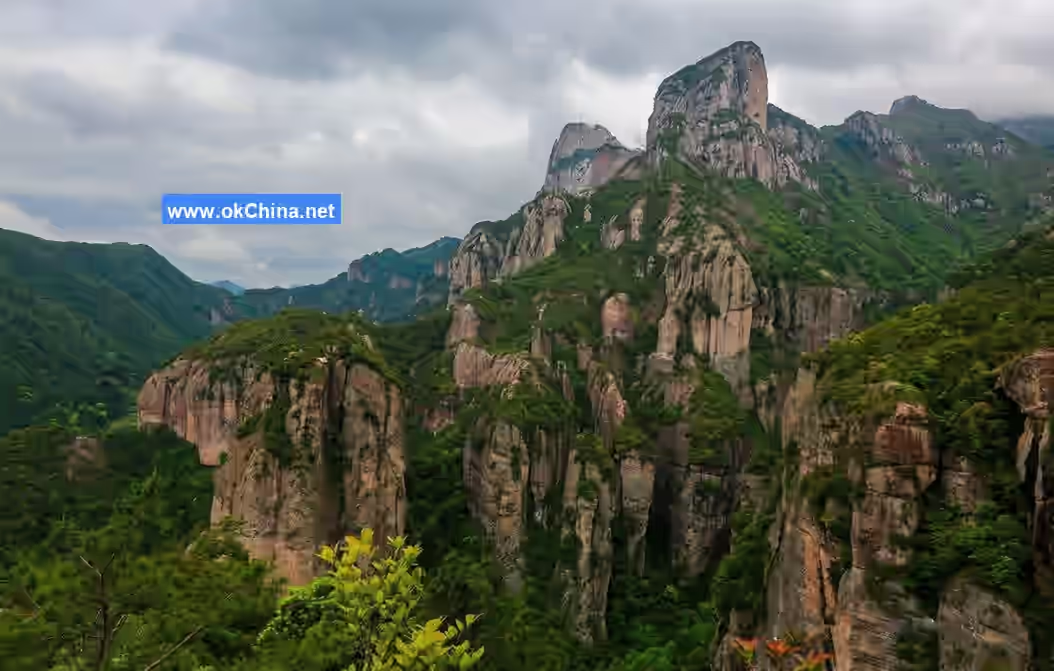
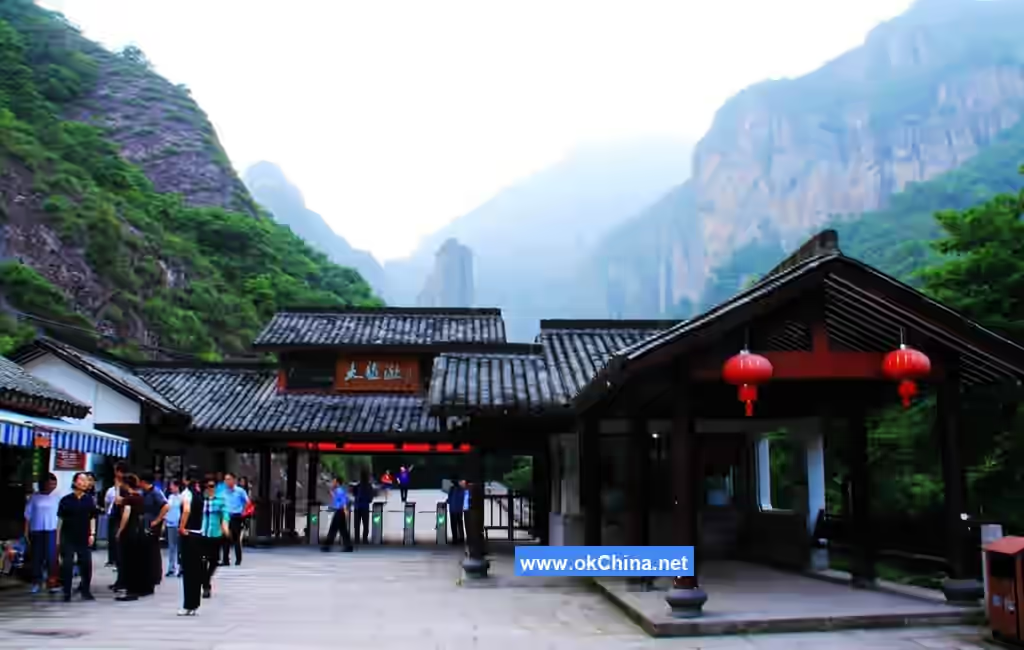
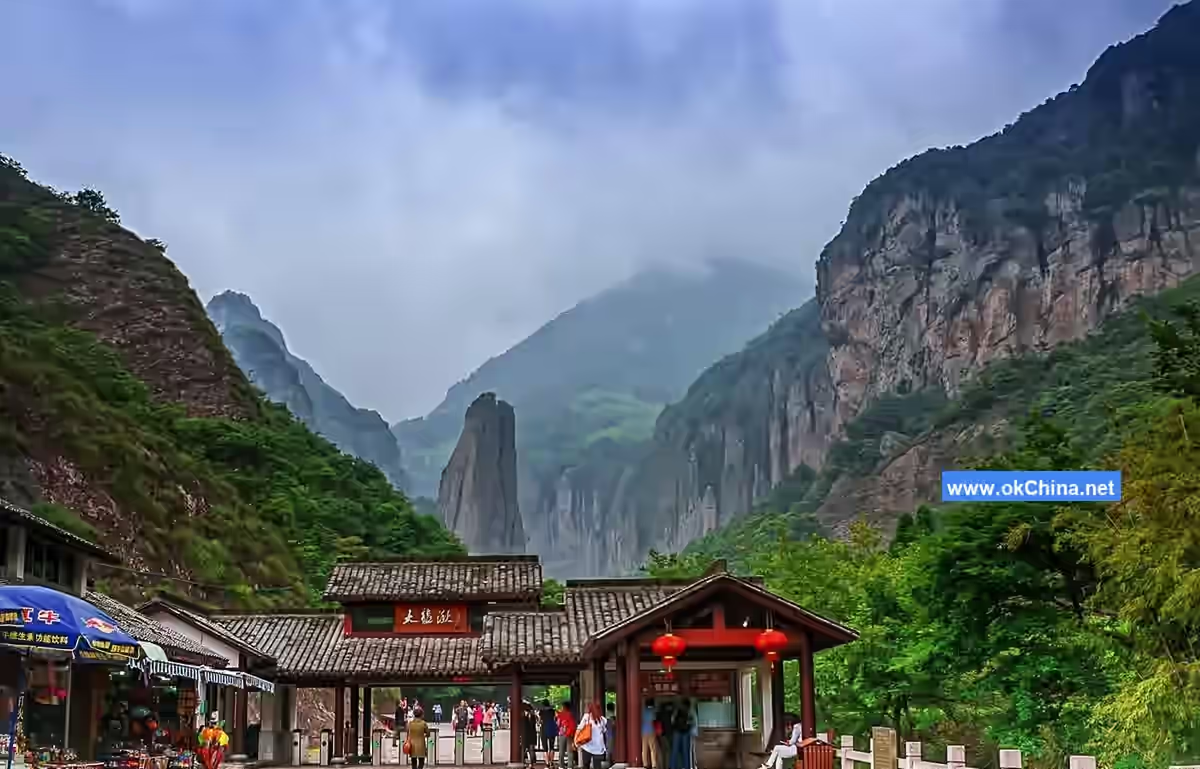
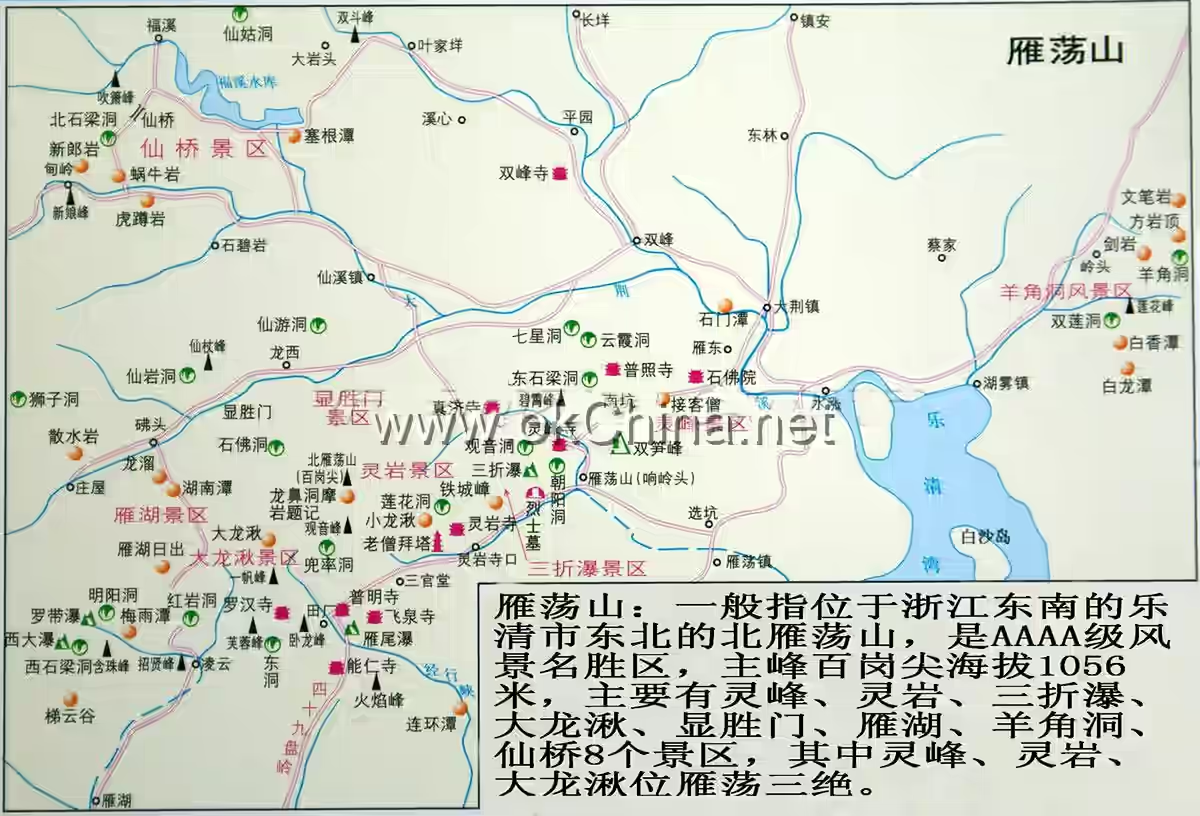
Yandang Mountain, also known as Yanshan or Yanyan, is renowned as the "Famous Mountain by the Sea," "Peerless Wonder Under Heaven," and the "Number One Mountain in Southeast China." It is located at No. 88 Yanshan Road, Yandang Town, Yueqing City, Wenzhou, Zhejiang Province. Yandang Mountain is divided into South Yandang Mountain and North Yandang Mountain, separated by the Oujiang River fault. The main peak is Baigangjian, with an elevation of 1,057 meters, and the total area covers 450 square kilometers.
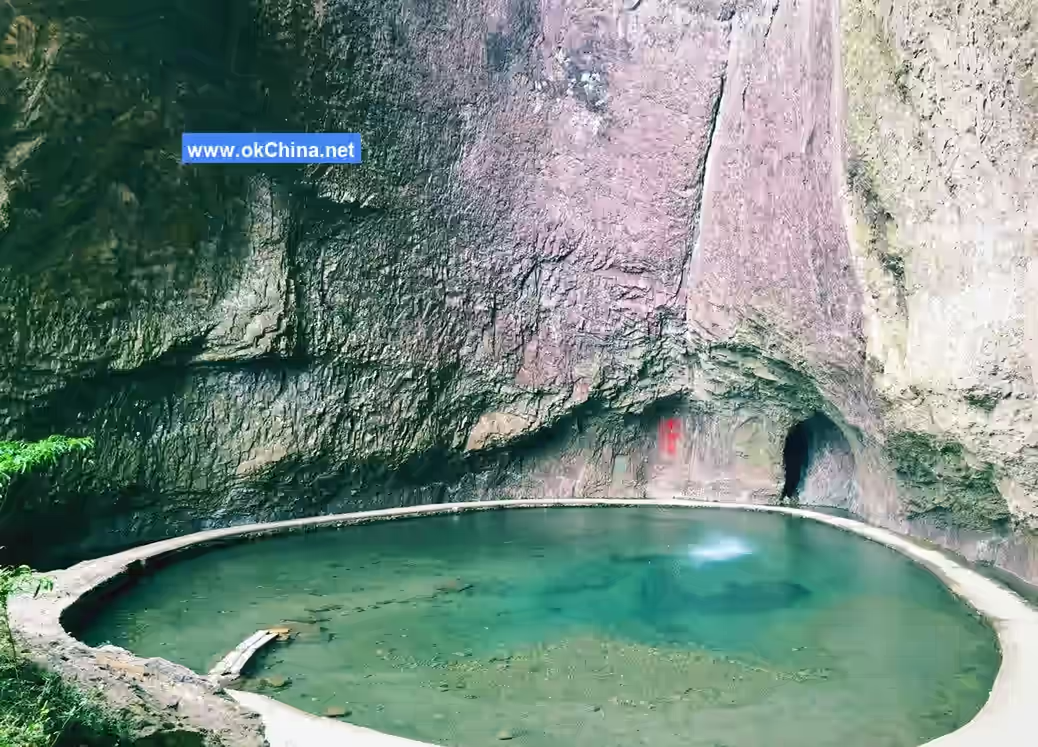
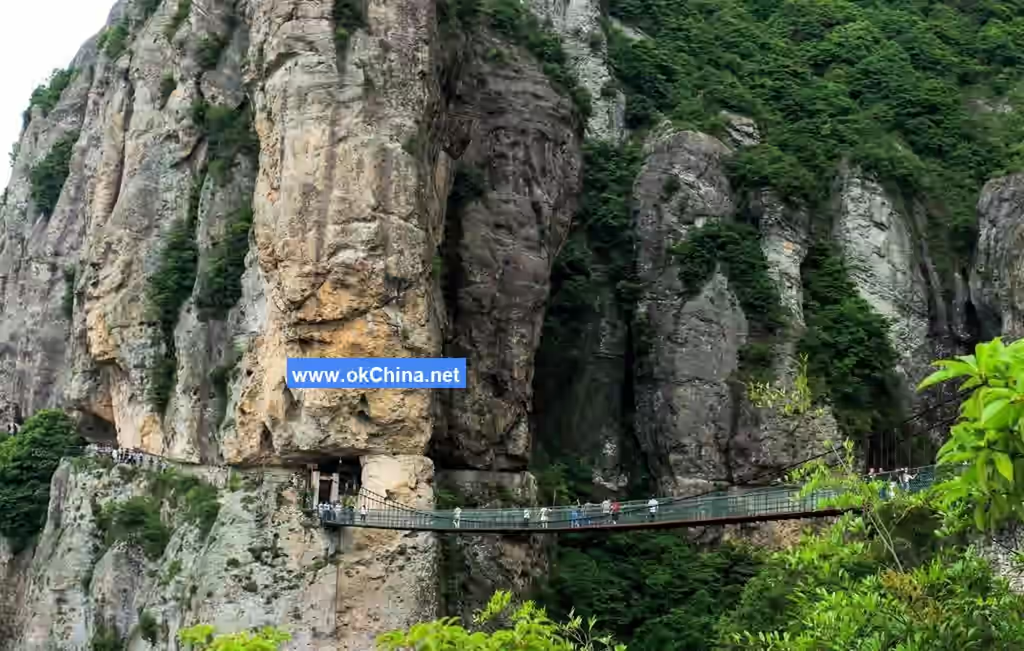
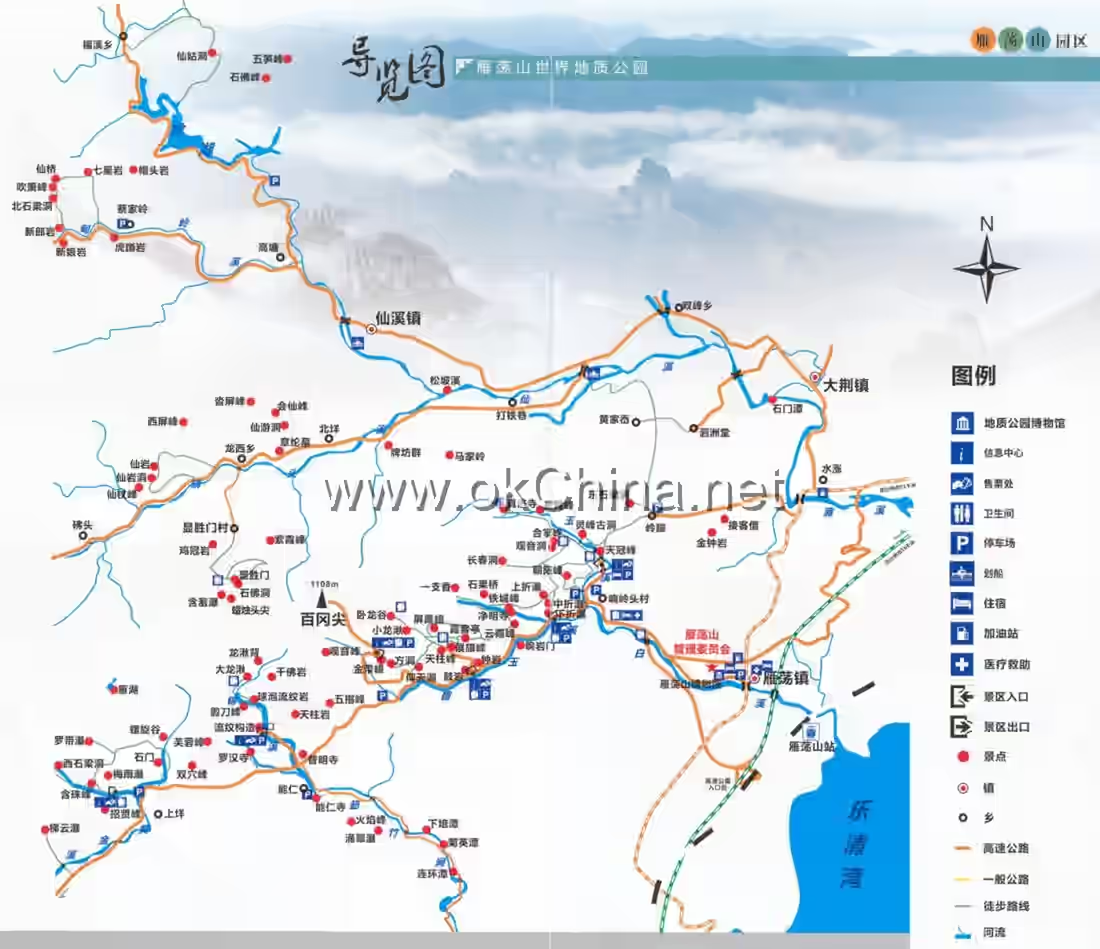
The development of Yandang Mountain as a scenic site began during the Northern and Southern Dynasties, flourished in the Tang Dynasty, and peaked in the Song Dynasty, resulting in a rich cultural heritage. Yandang Mountain comprises eight major scenic areas: Lingfeng, Lingyan, Dalongqiu (Great Dragon Waterfall), Sanzhepu (Three-step Waterfall), Yanhu (Wild Goose Lake), Xianshengmen, Yangjiaodong, and Xianqiao, featuring over 500 scenic spots. There are 260 recorded geological sites, including 33 volcanic rock base layers, 167 geological landforms, 2 (ancient) geological hazard sites, 33 ecological landscape resources, and 25 geological and cultural historical sites.
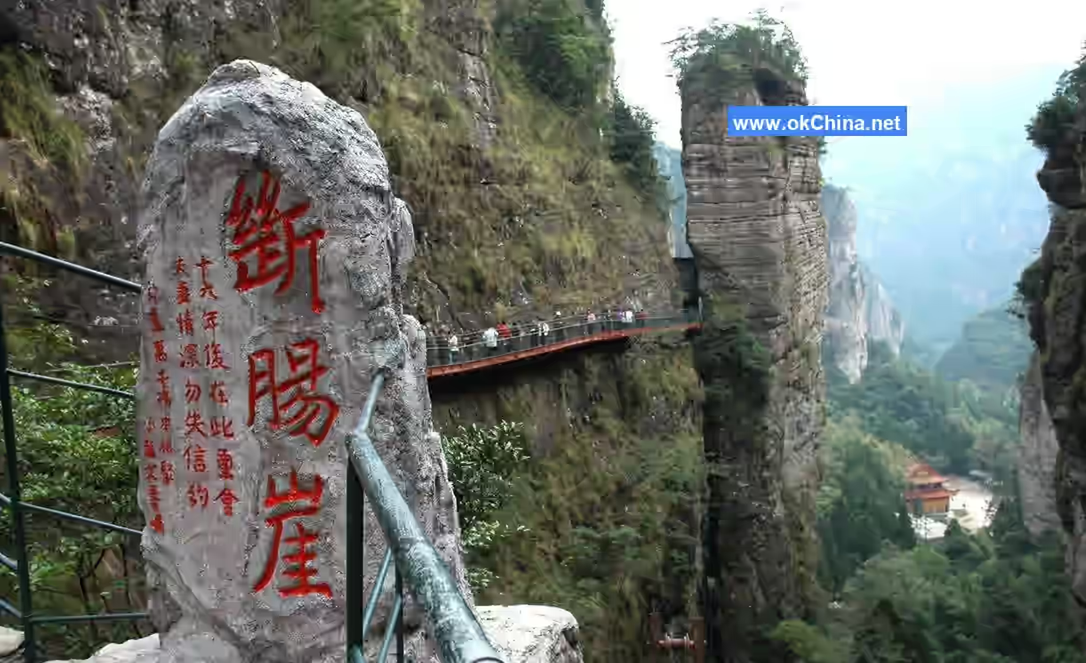
The large-scale, peculiar landscapes of Yandang Mountain have inspired strong aesthetic feelings and creativity in poets, painters, and scholars. Numerous works have been created here, including over 5,000 poems and more than 400 cliff inscriptions such as those at Longbi Cave, along with historical relics like the Nange Archway. Figures such as Xie Lingyun, Guanxiu, Shen Kuo, Xu Xiake, Kang Youwei, Zhang Daqian, Sha Menghai, Pan Tianshou, Yu Dafu, Guo Moruo, Deng Tuo, and Shu Ting have all left behind poems and calligraphy.
2. Geographical Environment
2.1 Location
Yandang Mountain is located at No. 88 Yanshan Road, Yandang Town, Yueqing City, Wenzhou, Zhejiang Province, between 27°50′–28°30′ north latitude and 120°27′–120°41′ east longitude. It is divided into South Yandang Mountain and North Yandang Mountain by the Oujiang River fault. The main peak is Baigangjian, with an elevation of 1,057 meters, and the total area covers 450 square kilometers.
North Yandang Mountain is the southern extension of the Kuocang Mountain Range, starting from Dasijian in Taizhou City in the north and extending to Wanghaigang in the southeast before turning sharply towards the borders of Yongjia and Yueqing counties. The elevation gradually decreases from around 1,000 meters to about 500 meters, forming the watershed between the Nanxi River and other rivers flowing into the sea. The terrain of North Yandang is higher in the northwest and lower in the southeast, with mountains trending northeast-southwest. The northwestern part is characterized by uplift, featuring continuous rolling hills belonging to a denuded mid-low mountain area with an average height of about 800 meters. The southeastern part is dominated by subsidence, belonging to a hilly plain area with an average height of 5–6 meters.
South Yandang Mountain is an extension of the Donggong Mountain Range. It enters from Fu'an County, Fujian Province in the south, passes through six counties (cities, districts) including Taishun, Cangnan, Ouhai, Rui'an, Pingyang, and Wencheng, and is divided by the Feiyun River and Aojiang River, forming various-sized mountain valleys and basins.
2.2 Geology
Yandang Mountain is a typical representative of Cretaceous volcanoes in the giant volcanic belt along the edge of the Asian continent and is also a large caldera formed by rhyolitic magma eruptions. The ancient volcano of Yandang Mountain originated from plate tectonics: during the Mesozoic era, the subduction of the Pacific Plate (known as the ancient Pacific) beneath the Asian continental plate generated heat through compression and friction, causing partial melting of the upper and lower crust to form magma. When fractures reached the surface, magma ascended through these channels, leading to volcanic eruptions. After processes of eruption, collapse, revival, and uplift, the magma covered the original landscape, and the rhyolite within the magma became the primary geology of Yandang Mountain.
2.3 Climate
Yandang Mountain has a subtropical maritime monsoon climate with abundant rainfall, warm temperatures, mild winters without severe cold, and summers without extreme heat. The annual average temperature is 13.5°C. The coldest month, January, averages 5–7°C, with an extreme minimum of -7°C. The hottest month, July, averages 27°C, with an extreme maximum of 33°C. The average frost-free period is 269 days.
The annual average rainfall at Yandang Mountain is 1,935.6 mm, with a maximum annual precipitation of 2,127 mm and an average relative humidity of 77%. Seasonal rainfall is distinct. During the early summer plum rain season from May to June, continuous overcast and rainy days account for 26–28% of the annual rainfall. From July to September, influenced by typhoons, thunderstorms or heavy rains are common, accounting for 33–40% of the annual rainfall, making plains and valleys prone to flooding. The main peak, at 1,056.5 meters, helps block cold fronts from the north.
The average number of sea-of-clouds days at Yandang Mountain varies with the seasons. It occurs most frequently in spring (March–May) and least in autumn (September–November). The average number of sea-of-clouds days in spring is 50.89, with a maximum of 70 days (in 1960, 1973, and 1980). The average in autumn is 32.02 days.
2.4 Major Mountain Ranges
Besides the main Yandang Mountain range, the area also includes the Cangshan branch. Overall, based on geographical location, it can be divided into North Yandang Mountain, Central Yandang Mountain, South Yandang Mountain, West Yandang Mountain (Zeya), and East Yandang Mountain (Dongtou Banping Mountain).
2.4.1 East Yandang Mountain
East Yandang Mountain covers an area of 0.95 square kilometers. Its eastern coastal cliffs are steep and sheer, as if cut by a knife or axe, forming half a mountain standing thousands of meters high. The continuous cliffs stretching for several kilometers unfold like magnificent natural rock carvings, including the Wind Screen, Red Elephant Screen, Peacock Screen, and Drum Wave Screen. This is the longest and largest natural coastal rock carving in China, hailed as the "Number One Coastal Screen in China" and the "Coastal Natural Rock Carving Corridor."
2.4.2 West Yandang Mountain
West Yandang Mountain, known as the Zeya Provincial Scenic Area, is located in Zeya, Ouhai District, Wenzhou City, 35 kilometers from the urban area, covering a total area of 128.6 square kilometers. Its landscape is characterized by numerous waterfalls, clear pools, deep gorges, and peculiar rocks, integrated with the rustic charm of mountain villages. It includes eight scenic areas: Jinkeng Gorge, Qipujian, Gaoshanjiao, Zhuyan, Xishan, Longxi, Qiyun, and Wufeng, with over 230 scenic spots.
West Yandang Mountain is known for its picturesque scenery, perilous peaks, and secluded caves, often called the "Grand Canyon of Southern Zhejiang." It features the Jinkeng Gorge Scenic Area.
2.4.3 South Yandang Mountain
South Yandang Mountain, abbreviated as South Yandang, is located in the western part of Pingyang County, 87 kilometers from downtown Wenzhou. Its main peak, Mingwang Peak, stands at 1,080 meters. The mountaintop has muddy ponds and marshes where wild geese rest during autumn, and it faces North Yandang Mountain from afar, hence the name South Yandang. The total area is 97.68 square kilometers, featuring layered green peaks, flying waterfalls, and streams. It comprises 67 peaks, 28 cliffs, 24 caves, 13 pools, 8 ponds, and 9 rocks. Development of South Yandang began earlier than North Yandang; during the Five Dynasties period, the eminent monk Yuanqi led three hundred disciples to develop the area.
2.4.4 North Yandang Mountain
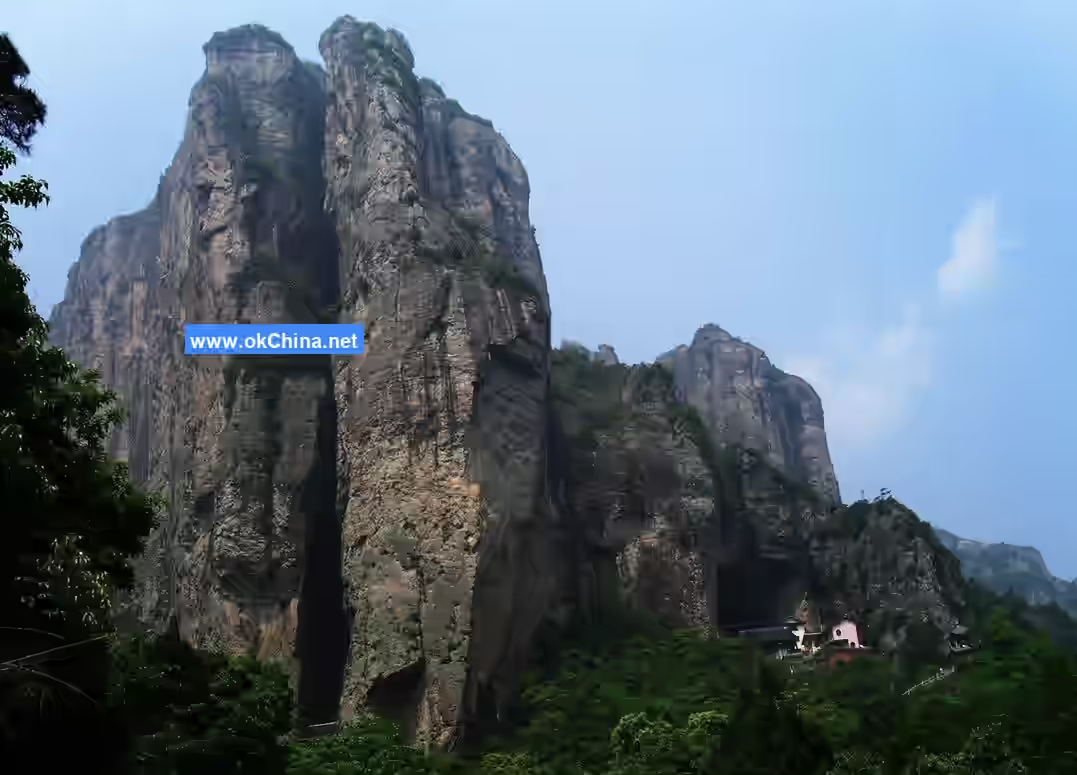
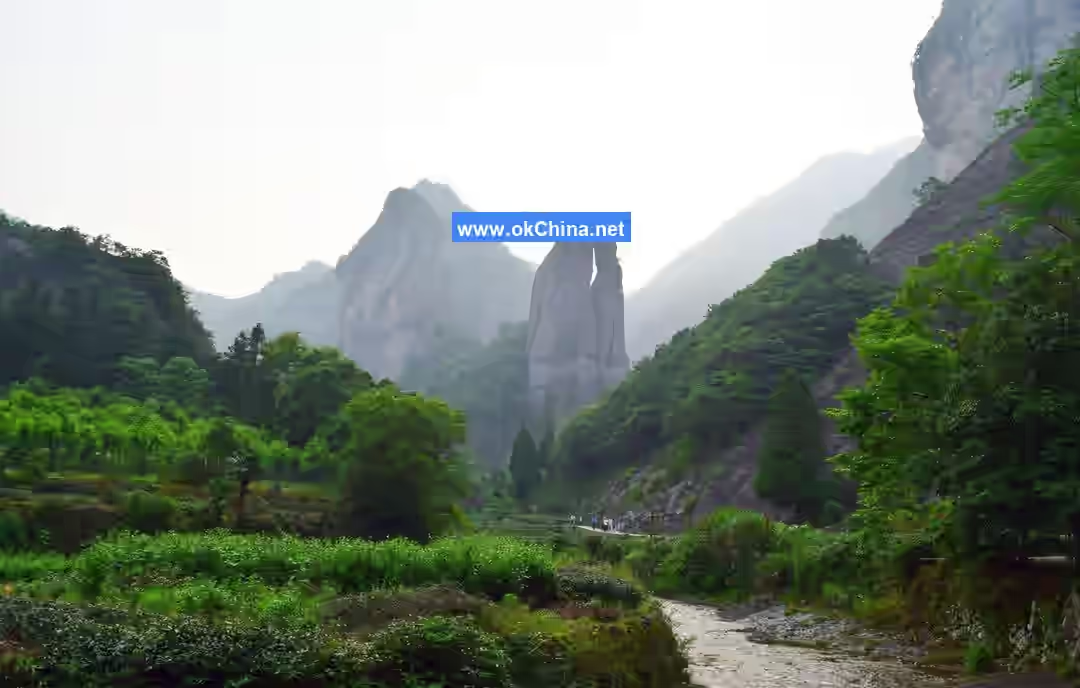
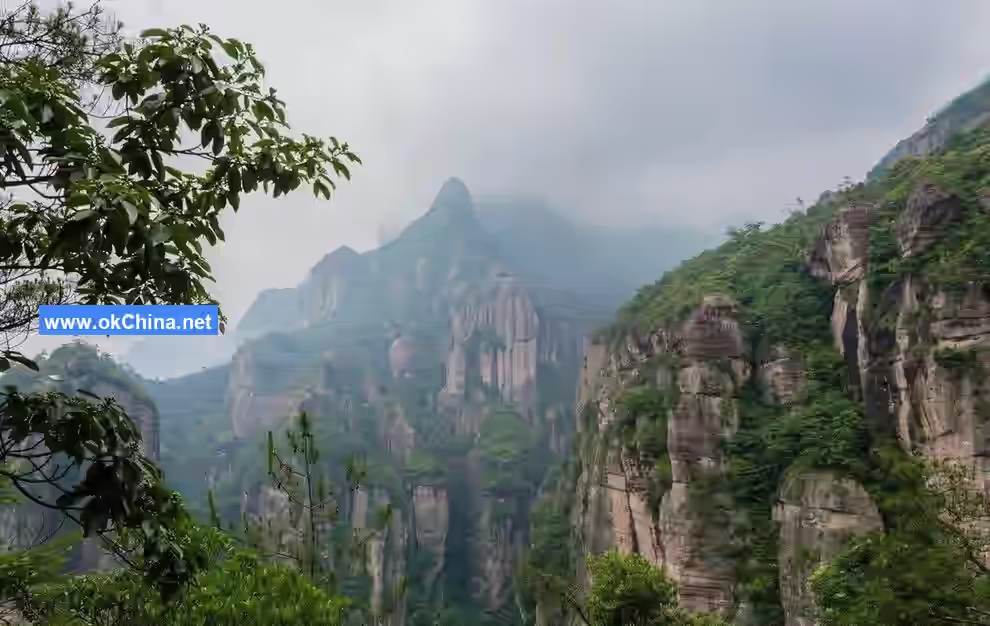
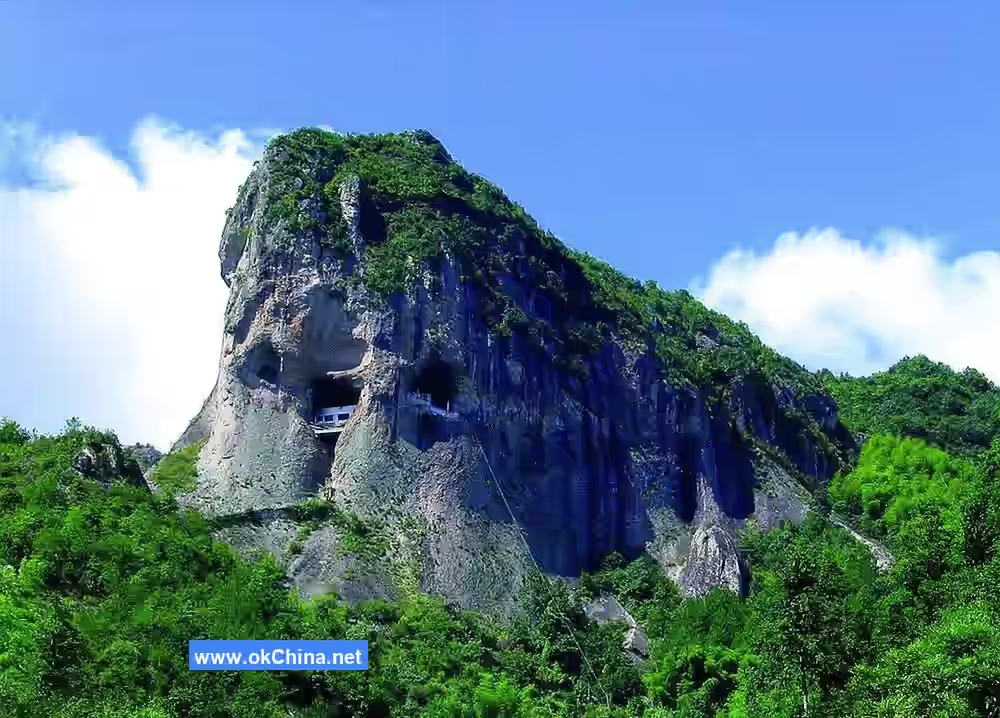
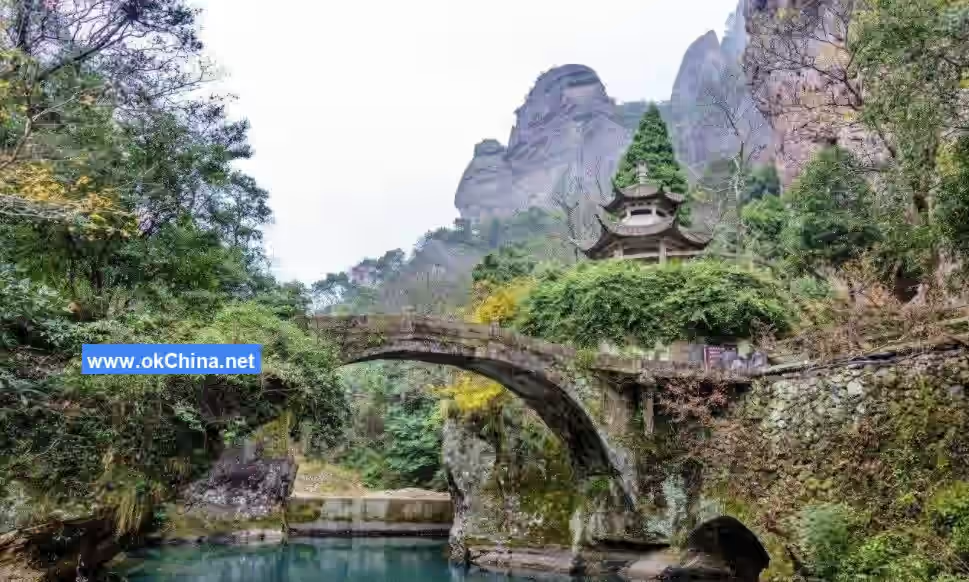
North Yandang Mountain is located in the northeastern part of Yueqing City. It features overlapping mountains, competing peaks, sheer cliffs blocking the sun, soaring waterfalls, and ancient towering trees. It has long been praised as a "Peerless Wonder Under Heaven" and is one of China's top ten famous mountains. North Yandang Mountain boasts 102 peaks, 64 cliffs, 26 rocks, 46 caves, 14 screens, 18 waterfalls, 28 pools, 13 pits, 13 ridges, 10 springs, 2 waters, 8 gates, 4 que (watchtowers), 7 streams and 1 brook, 8 bridges and 2 lakes, 5 summits and 2 gorges, etc. It is divided into five scenic areas: Lingfeng, Lingyan, Dalongqiu, Xianshengmen, and Yanhu.
2.4.5 Central Yandang Mountain
Central Yandang Mountain, originally named Baishi Mountain, is located 10 kilometers southwest of Yueqing City and 20 kilometers from downtown Wenzhou. It covers a total area of 93.44 square kilometers and is renowned for its majestic peaks, perilous screens, ancient secluded caves and temples, and emerald pools and forests. It comprises seven scenic areas: Yuzeng, Xiji, Sanhu, Dongji, Fenghuang Mountain, Yangbadong, and Liugong Valley, with over 300 scenic spots. Scholars and literati throughout history have been drawn here, leaving behind numerous precious calligraphic works. Xie Lingyun of the Southern Dynasty wrote: "A thousand acres belt the distant dike, ten thousand miles pour into the long shore." Wang Shipeng of the Song Dynasty also wrote: "Ten li of lake and mountains stretch with dark brows, two streams of cold jade contend in tinkling sounds."
3. Major Scenic Spots
3.1 Lingfeng Scenic Area
The name Lingfeng dates from before the Xiantong era (860–874 AD) of the Tang Dynasty and has since been the general name representing this scenic area. The area extends from Puxi in the east to Wuyanjian in the west, from Baixi in the south to Majiashan Ridge in the north, covering 46 square kilometers. It is one of the "Two Lings and One Dragon," the essence of Yandang Mountain's scenery. The area is rich in scenic spots with a long cultural history. Natural and cultural landscapes include 132 sites: 26 peaks, 24 cliffs, 18 caves, 4 temples, 2 nunneries, 3 screens, 5 rocks, 1 summit, 3 ridges, 4 valleys, 1 sky, 5 springs, 3 waterfalls, 4 pools, 3 streams, 2 pits, 1 lake, 4 bridges, 7 pavilions, and 2 archways.
3.2 Lingyan Scenic Area
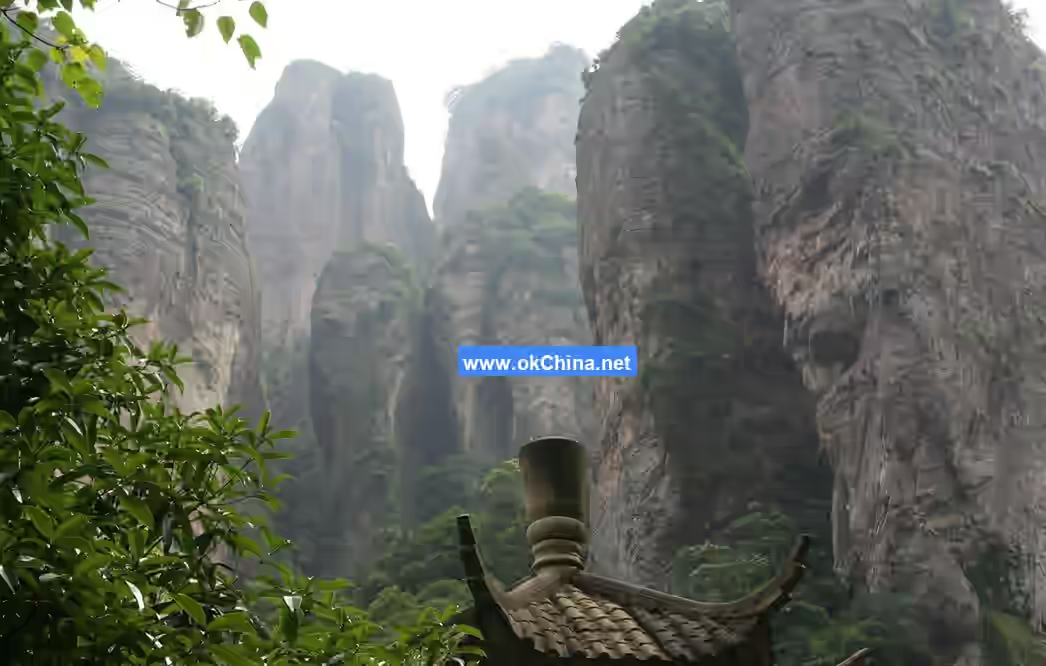
Lingyan Scenic Area is one of the "Two Lings and One Dragon," the essence of the mountain's scenery. It is named after the ancient name "Lingyan" for the Pingxia Screen behind Lingyan Temple. The area stretches from Xiangyanmen in the east to Ma'an Ridge in the west, from Feiquan Temple in the south to Baigangjian in the north, covering about 9 square kilometers. Although not large, the area is densely packed with scenic spots and has long been a destination for visitors. It features over 100 landscapes: 18 peaks, 21 cliffs, 12 caves, 7 rocks, 6 screens, 3 waterfalls, 6 springs, 2 waters, 2 streams, 2 lakes, 2 pools, 3 ridges, 2 pits, 3 pavilions, 3 bridges, 3 valleys, 2 gates, 1 que, 1 pagoda, 2 temples, 1 nunnery, and 1 studio.
Among the "Three Wonders of Yandang" (Lingfeng, Lingyan, and Dalongqiu), Lingyan holds a central position. Located deep in the western end of the East Inner Valley, it is one of the most secluded scenic areas in the mountains, regarded as the "Bright Courtyard" of Yandang Mountain. The Yuan Dynasty writer Li Xiaoguang said: "For sheer, exquisite beauty, nothing surpasses Lingfeng; for majestic grandeur, nothing surpasses Lingyan." This aptly describes the aesthetic differences between the "Two Lings." Centered around the ancient Lingyan Temple, with the resplendent, cloud-brocade-like Pingxia Screen behind it, and the Tianzhu and Zhanqi cliffs standing opposite each other on the left and right, the area evokes solemnity through its "grandeur."### 3.3 Three-Step Waterfall Scenic Area The Three-Step Waterfall Scenic Area was separated from the Lingfeng Scenic Area in the 1990s, incorporating attractions such as the Three-Step Waterfall, Jingming Valley, and Shijing Pit to form an independent scenic area named after the Three-Step Waterfall. The area extends east from the Mingyu Bridge at the confluence of the Mingyu Stream and Biyu Stream, west to the Cuweizhang connecting with the Lingyan Scenic Area, north to the Canxia Ridge, and south to the Shijing Pit, covering approximately 10.5 square kilometers. It features seventy-seven scenic spots, including fourteen peaks, seventeen rock formations, seven cliffs and eight caves, three valleys and five pavilions, three waterfalls and two streams, two pits and two bridges, one temple and one mausoleum, one gate, two natural skylights, and ten wells.
Located between the "Two Lings" (Lingfeng and Lingyan), the Three-Step Waterfall Scenic Area offers convenient transportation and relatively concentrated attractions. Its main landscapes include flying waterfalls, peculiar rocks, overlapping cliffs, and secluded valleys. The primary attractions are centered around the Three-Step Waterfall and Jingming Valley. The Three-Step Waterfall is formed by a single stream cascading through three majestic cliffs, creating three distinct tiers of waterfalls. The development of the Three-Step Waterfall remains a historical mystery. It lies adjacent to the Jingming Temple, originally built in the second year of the Taiping Xingguo era of the Song Dynasty (977 AD). On the cliff face of the middle waterfall, there is an inscription from the Chunxi Renyin year (1182 AD) by Zhang Junqing, who visited the site. However, no records of it appear in travelogues or poems from the Song, Yuan, or Ming dynasties. It was not until the Daoguang era of the Qing Dynasty that the name "Three-Step Waterfall" appeared in Dao Rong's New Guide to Yanshan. Yet, apart from a mention in the Guang Yandang Mountain Records compiled in the 54th year of the Qianlong era of the Qing Dynasty, which states "Longyou Cave, beside it is a waterfall," no other literary works or travel notes reference it. It was only during the Republican era that the name Three-Step Waterfall gained prominence.
Jingming Valley was developed earlier. The Jingming Temple at the valley entrance was originally built in the second year of the Taiping Xingguo era of the Song Dynasty (977 AD). However, based on the line "I most admire the old monk of eighty, who has lived his whole life amidst the emerald mists" from the poem Jingming Temple by Lü Yijian, who served as the judicial commissioner of Liangzhe during the Dazhong Xiangfu era, it can be inferred that this eighty-year-old monk had already resided there before the founding of the Northern Song Dynasty. Jingming Valley is densely packed with scenery and has long been praised by visitors. Shijing Pit is a small east-west valley famous for its ten round, well-like water pools scattered along the valley floor. However, due to its remote environment, it has often been overlooked by tourists.
3.4 Big Dragon Waterfall Scenic Area
The Big Dragon Waterfall Scenic Area is named after the Big Dragon Waterfall. Its scope corresponds to the entire former Western Inner Valley, extending east from Ma'an Ridge, west to Tong Ridge, south to the mouth of Jinzhu Stream, and north to Baigang Peak, covering approximately 38 square kilometers. It features one hundred and ten scenic spots, including sixteen peaks, fourteen rock formations, seven stones and five cliffs, six caves, two gateways, and three gates, six waterfalls and three streams, ten pools and one gorge, six temples and four nunneries, seven pavilions, one veranda, and one courtyard, eight ridges and two peaks, two bridges and one cauldron. Additionally, there are two natural "dragon" characters and one "galloping horse" pattern.
The Big Dragon Waterfall Scenic Area is one of the earliest developed areas in the mountain, with a profound historical and cultural heritage and the most preserved historical sites. Many records indicate that during the Two Jin and Northern and Southern Dynasties periods, the main landscapes of Yandang Mountain were already known to the outside world. Among the six events from the Six Dynasties period scattered in various records, four occurred in this area (it is said that during the Yonghe era of the Jin Dynasty, the Western Regions arhat Norjana led eight hundred disciples to live in front of the Big Dragon Waterfall; the poet Xie Lingyun composed the poem "Crossing the Ridge and Stream from Jinzhu Stream"; during the Liang Dynasty, Crown Prince Zhaoming built the Zhaoming Chan Temple at the eastern foot of Furong Peak; during the Chen and Sui dynasties, the eminent Tiantai sect master Zhiyi instructed the Big Dragon Waterfall to "bestow sweet dew in times of drought"). The earliest surviving cliff inscription is the signature of the Tang Dynasty poet Du Shenyan in front of the Big Dragon Waterfall. Among the legendary eighteen ancient temples, six are located in this area. Meanwhile, among the ancient temples, the Dragon Waterfall Courtyard has long been overlooked by outsiders. It is said that the Dragon Waterfall Courtyard was originally the Snow House, the nirvana site of Venerable Norjana, and was relocated to its current site during the Qianlong era of the Qing Dynasty. These numerous ancient temples illustrate the deep-rooted traditional Buddhist culture of the Big Dragon Waterfall Scenic Area.
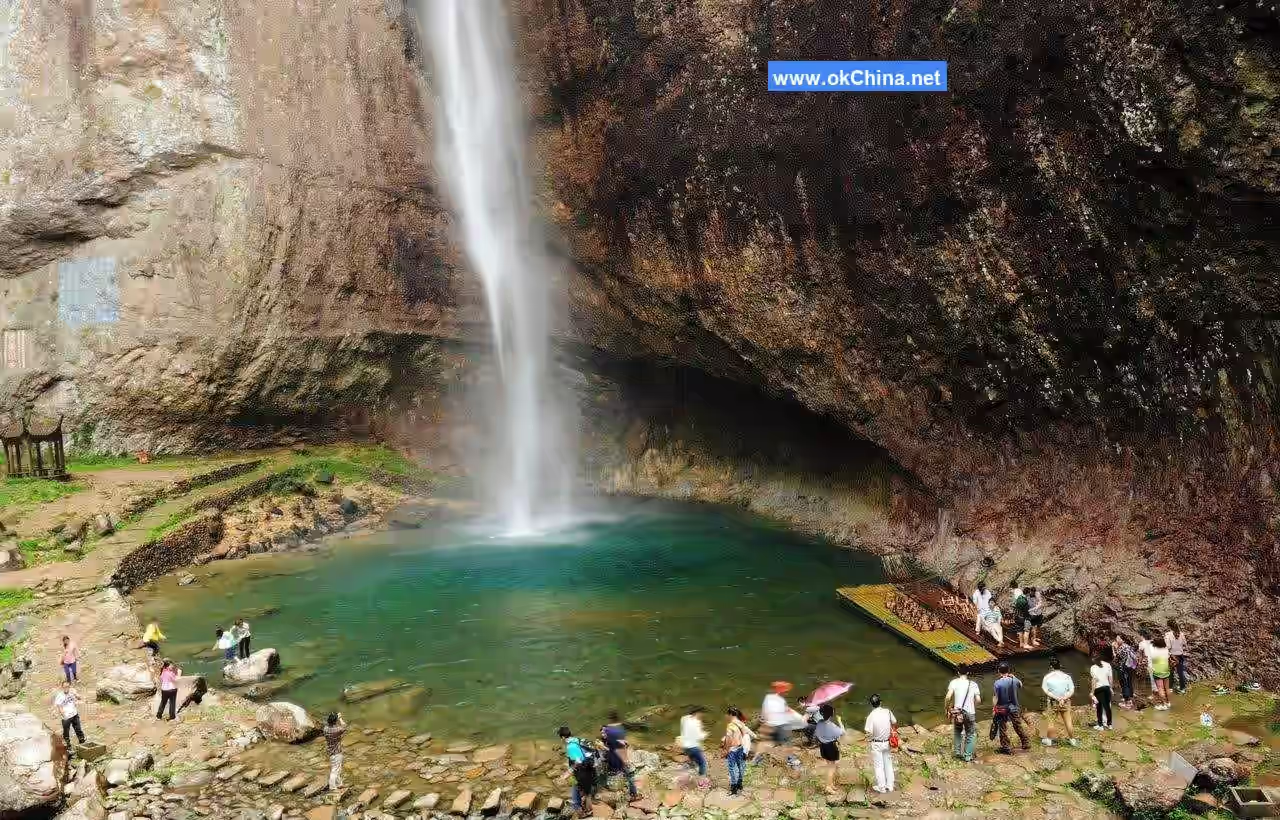
In terms of natural scenery, the Big Dragon Waterfall, with a single-drop height of 197 meters, ranks first among Chinese waterfalls and is also one of China's Four Great Waterfalls. Within Jinzhu Stream, waterfalls, pools, gorges, streams, and peaks complement each other, forming a distinctive aquatic landscape different from other scenic areas. The area also boasts the highest peak in the entire mountain, Baigang Peak, and the ever-changing Scissors Peak, contributing to a rich tourism culture characterized by towering mountains, peculiar peaks, beautiful waters, ancient temples, and rare sights.
3.5 Yanhu (Wild Goose Lake) Scenic Area
The Yanhu Scenic Area, formerly known as the Western Outer Valley, retains its original boundaries after the name change. It extends east from Tong Ridge (East Ridge), west to Baiyan (Biluo Peak), south to Furong Lake, and north to Yanhu Ridge, covering approximately 60 square kilometers. It features fifty-four scenic spots, including thirteen peaks, two rock formations and two stones, six caves, six waterfalls, and three pools, two lakes, two streams, and two valleys, two gates, four temples, and one natural skylight.
The Yanhu Scenic Area is the birthplace of Yandang Mountain. Yanhu (Wild Goose Lake) is the origin of the mountain's name, and the renowned praise "flower village, bird mountain" that has been recited for over 1,500 years originated from two scenic spots in this area. According to mountain records, this area once housed five famous temples belonging to the eighteen ancient temples of Yandang Mountain: Benjue, Lingyun, Baoguan, Guta, and Shimen. Due to historical reasons, only Benjue Temple remains today. Furthermore, according to Li Xiaoguang's Records of Yandang Mountain, there was also a Buddhist temple called "Bhiṣu Monastery" on Yanhu that had been submerged for over five hundred years by the Yuan Dynasty. All this indicates that this area once possessed a profound Buddhist cultural heritage. Simultaneously, watching the sunrise from Yanhu Ridge has long been celebrated as a significant and beautiful scene in the mountain, forming a distinctive tourism culture to this day.
In terms of scenery, the area still primarily features peculiar peaks, strange rocks, and flying waterfalls as the main attractions. The main scenic areas—Yanhu, West Stone Beam, Tianzhu Gate, and Shimen—are relatively close to the Big Dragon Waterfall Scenic Area and constitute the densely scenic part of this region. The southern Furong Lake has a vast water surface and pastoral scenery, a landscape unique within the mountain.
3.6 Xianshengmen (Gate of Victory) Scenic Area
The Xianshengmen Scenic Area is named after the Xianshengmen (Gate of Victory) within its territory. It extends northeast from Hengxitou, west to the Juban Ridge bordering Yongjia County; south to Yanhu Ridge, and north to Dashuai Rock, covering approximately 50 square kilometers. It features fifty-two scenic spots, including ten peaks, eleven rock formations, two cliffs and five caves, two stones and two gates, six pools, one slide, one stream, and one National Key Cultural Relics Protection Unit.
The Xianshengmen Scenic Area is elongated in shape, stretching from northeast to southwest. The main attractions are mostly distributed along both banks of the Feitou-Nange Stream. Xu Xiake wrote in his travelogue: "North of the stream, the great mountains stretch from Jinao, all layered cliffs and strange peaks, transforming and opening, vying with the clouds and mist in fantasy." This aptly captures the characteristic scenery of this area.
3.7 Xianqiao (Immortal Bridge) Scenic Area
The Xianqiao Scenic Area is named after the Xianqiao (Immortal Bridge) on the ridge of Xianting Mountain. Historically, because it and the Xianshengmen Scenic Area are both located in the northern part of Yandang Mountain, they were collectively called the "Dangyin Landscape." In the Guang Yandang Mountain Records, because the Song Dynasty magistrate of Yueqing, Yuan Cai, mentioned the names "Nange" and "Beige" in his Preface to the Map of Yanshan, the Xianshengmen Scenic Area was called the "Nange Landscape," and this area was called the "Beige Landscape," before being officially designated its current name. The scenic area extends east from Laoshuzui, west to the Shuangkeng Ridge bordering Yongjia, south to Baiyan Mountain, and north to Liuping Mountain, covering approximately 100 square kilometers. It includes the administrative regions of one town and three townships, making it the largest scenic area in the mountain. It features thirty-seven scenic spots, including ten peaks, twelve rock formations, four caves and three stones, one gate and one pool, three streams and one lake, one bridge and one temple.
Most of the attraction names in the Xianqiao Scenic Area contain the character "xian" (immortal), forming a stark contrast to the many attraction names in the mountain's core area that contain the character "fo" (Buddha) or are related to Buddhism. This is likely due to the many immortal legends within the area. This area is one of the earliest developed in the mountain. According to the Zhejiang General Chronicle, the Yuying Village in Fuxi Township within the area was named after the camp where General Pan Duanming stationed his troops during the Southern Qi Dynasty. Furthermore, the Old Yanshan Records cited in the Guang Yandang Mountain Records contains content such as "During the Qi and Liang dynasties, farmers in Beige plowed the streams," indicating that this area already had residents and farming activities during the Southern Dynasties. If combined with the analysis of the legends of Xianqiao and Prince Jin, the development of this area might date back even earlier.
3.8 Yangjiao Cave (Goat Horn Cave) Scenic Area
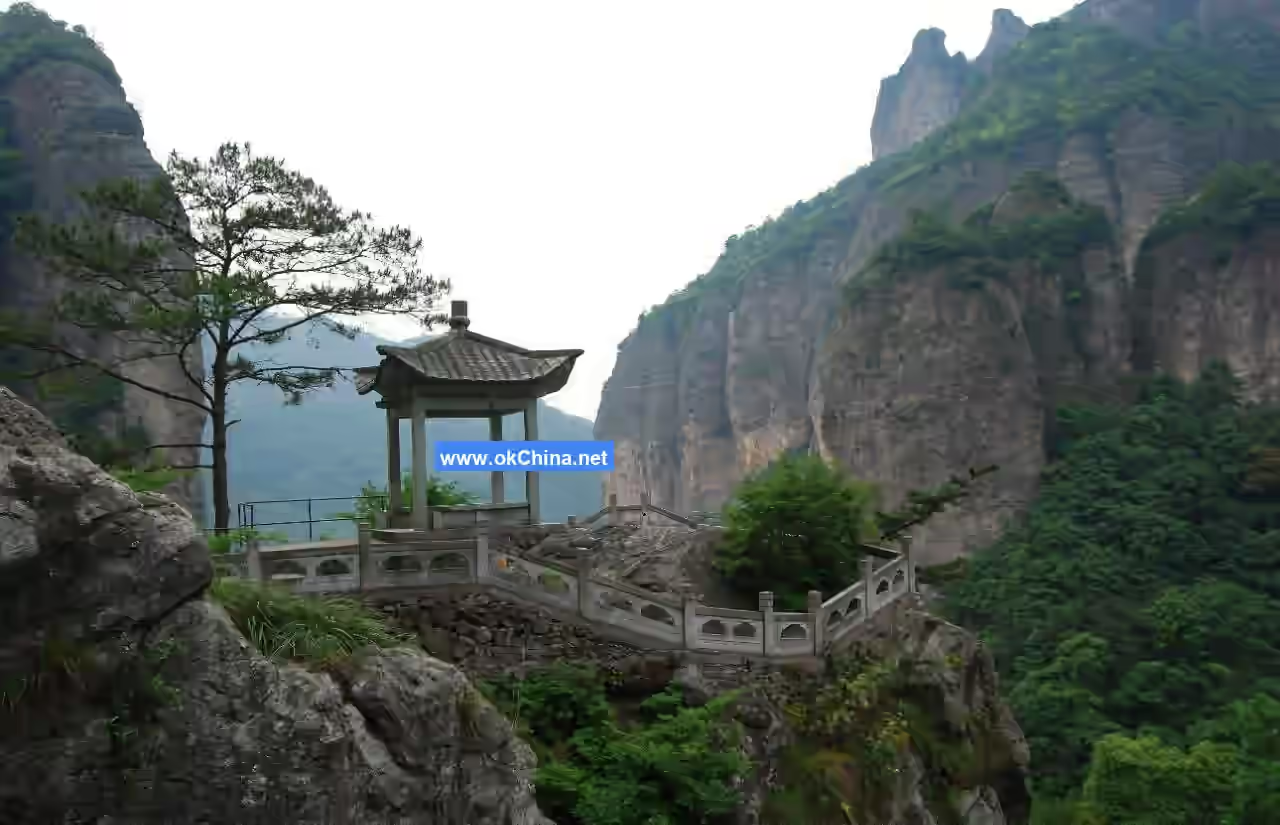
The Yangjiao Cave Scenic Area consists of two independent scenic sub-areas: Yangjiao Cave and Shuanglong Valley. It is located in the easternmost part of Yandang Mountain, bordering Wenling City to the north and east, covering an area of 3 square kilometers. The scenic area is named after Yangjiao Cave and features twenty-eight scenic spots, including one peak, one valley, and two ridges; nine rock formations, eight caves, and two palaces; one lake, one hall, and three pools. This area was once independent of Yandang Mountain before being incorporated into the Yandang Mountain Scenic Area. The area primarily features peculiar caves, majestic cliffs, gorges, and secluded pools as its main landscapes. Unlike the numerous Buddhist temple buildings in the core area of Yandang Mountain, this area has a strong Taoist atmosphere, with religious buildings mostly being Taoist temples. Among them, the Yuchan Palace in Yangjiao Cave is one of the largest Taoist temples in Yueqing City. It is said that the Perfected Purple Sun, Zhou Yishan, and the Song Dynasty Taoist Xiang Xi successively cultivated and attained the Dao here, indicating the long and profound Taoist history of Yangjiao Cave. By the Qing Dynasty, Yangjiao Cave's status as the largest Taoist cave temple on the border between Yueqing and Wenling counties had gradually become clear and established. Due to this reason, many neighboring caves also enshrine Taoist deities, forming a strong Taoist cultural atmosphere in this scenic area. Shuanglong Valley, located two kilometers from Yangjiao Cave, features serene landscapes, and a Song Dynasty cliff inscription is preserved on a cliff, indicating its discovery over eight hundred years ago.
4. History and Culture
4.1 Historical Development
Yandang Mountain was formed over 120 million years ago. It is the most complete and typical Cretaceous rhyolitic caldera within the circum-Pacific continental margin volcanic belt. Four periods of volcanic eruptions created Yandang Mountain's majestic and spectacular landscapes.
The pioneering development and appreciation of Yandang Mountain's scenery began during the Northern and Southern Dynasties, flourished in the Tang Dynasty, and peaked in the Song Dynasty, resulting in a rich cultural heritage.
During the Southern Dynasties period, Crown Prince Zhaoming of the Liang Dynasty built temples and pagodas at the foot of Furong Peak, marking the beginning of Yandang Mountain's development.
During the Tang Dynasty, the eminent monk from the Western Regions, Norjana, admiring the beauty of Yandang Mountain's "flower village, bird mountain," led three hundred disciples to promote Buddhism in Yandang Mountain. He is revered as the founding patriarch of Yandang Mountain.
By the Song Dynasty, the scale of Yandang Mountain's development gradually increased, with the construction of eighteen temples, ten courtyards, and sixteen pavilions, marking the peak period of its development.### 4.2 Origin of the Name Yandang originally meant a marsh where wild geese dwelled, referring to a lake atop the peak in the western part of the Yandang Mountains. According to the old General Gazetteer of Zhejiang: "Mount Yandang is located ninety li east of Yueqing County, Wenzhou Prefecture, forty li in height. On its summit lies a lake, approximately ten li in circumference, whose water never dries up. In spring, returning wild geese often roost here, hence the name." This passage explains the origin of the name "Yanhu" (Wild Goose Lake) and indicates that Mount Yandang was named after this lake. While it is called Yanhu, there is another reason for the name Yandang.
The term "hu" (lake) refers to a large body of accumulated water, whereas "dang" (荡) refers to a depression that holds water and also grows grass. Analysis of historical records, which mention that Yanhu had silted up and become overgrown farmland very early on, suggests that "Yanhu" and "Yandang" are two terms with similar but distinct meanings that emerged successively due to changes in the natural environment. Historically, the name "Yanhu" likely came first and was later changed to "Yandang." The emergence of the name "Yandang" was initially intended to replace the name "Yanhu," which had silted up and become overgrown with grass. Later, as "Yandang" came to be used as the mountain's name, Yanhu reverted to its original name.
Historically, "Yandangshan" (雁荡山) was sometimes written as "Yandangshan" (雁宕山). According to Zheng Zi Tong: "(荡) is interchangeable with (宕)," meaning "Yandangshan" and "Yandangshan" are synonymous. However, Shi Yuanfu (1706—?), a Qing Dynasty literatus from Yueqing, held a different view: "Dang refers to water, while Dang refers to rocks." In essence, he suggested that "Yandangshan" is named for the Wild Goose Lake, whereas "Yandangshan" is named for the rocky peaks. This interpretation offers an alternative perspective.
4.3 Folk Customs and Traditions
Yueqing's traditional market customs have been preserved to this day. The main ones include: Puqi Market from the 1st to the 5th day of the ninth lunar month; Dajing Market on the 3rd, 6th, and 9th days of each ten-day period; Hongqiao Market on the 3rd and 8th days of each ten-day period; Furong Market on the 2nd and 7th days of each ten-day period; and Baishi Market on the 10th day of the third lunar month.
Lantern festival performances in Yueqing's urban and rural areas include: Nanyue stilt walking, Puqi platform carrying, Naogiong Hua (a festive activity), swing playing, Shimen lion dance, Gaodi dragon rolling, East County bench dragon, Siqian jewelry dragon, Sulv dragon parade, fish lanterns, river lanterns, and horse lanterns.
Yueqing has many folk songs, which can be categorized into five types: mountain songs (e.g., "Dui Niao" – "Matching Birds," "Cai Cha Diao" – "Tea-Picking Tune," "Pao Ge" – "Throwing Songs"), field songs (also called "Tian Shi Wen" or "Tian Shi," e.g., "Chang Gong Tan" – "The Farmhand's Lament," "Shi Er Yue Tan Ku" – "Lament of the Twelve Months"), fishing songs (e.g., "Qing Jiang Hao Zi" – "Qingjiang Work Song," "Diao Dai Yu" – "Fishing for Beltfish," "Shen Jiang Hao Zi" – "Shenjiang Work Song"), pastoral songs, and children's songs.
The main folk performing arts popular in Yueqing's urban and rural areas include "Gu Ci" (drum lyrics), "Dao Qing" (a narrative singing genre), "Lian Hua" (lotus flower singing), "Dou Ge" (antiphonal singing or dialogue), "Da Hua Gu" (flower drum dance), "Shuang Chui" (double hammers), and "Mai Ji" (skill selling).
4.4 Folk Arts
The Yandang Mountains possess a profound cultural heritage, with a long history of folk crafts and a wide variety of arts and crafts. Dozens of types, such as Yueqing dragon lantern frames, Yueqing jewelry dragons, bamboo shell carvings, craft weaving, gold-lacquered round woodwork, stone carvings, and ivory carvings, each have their own distinctive features and rich content. Among these, boxwood carving and fine-pattern paper-cutting are particularly renowned.
In Puqi Town, the platform carrying activity during the Lantern Festival lasts from the 8th to the 10th day of the first lunar month, jointly organized by the East Gate, South Gate, West Gate, and North Gate communities. Puqi platform carrying has a long history of over 170 years. It is not only famous locally but also invited to perform in other regions. The platform carrying performances take place annually during the Lantern Festival. Sometimes, they also perform during the September market fair. The performances often depict traditional operas with strong popular appeal, such as "The Eight Immortals Cross the Sea," "The Heavenly Maiden Scatters Blossoms," "White Water Beach," "Journey to the West," "Eastern Zhou," "Three Kingdoms," "Investiture of the Gods," etc. They are highly artistic and uniquely decorated. Each platform requires at least three to as many as seven children, dressed in elaborate costumes and makeup, who can stand on shoulders, hands, cups, knife tips, and sword points.
Dou Ge, also known as "antiphonal singing" or "dialogue," is a folk entertainment art form originating from Beibaixiang. According to the Yueqing County Gazetteer, during the Lantern Festival in the 11th year of the Guangxu reign (1885), a dragon lantern parade was held in Shichuan Village (today's Laizhai Village). The Canglong Master made some errors in the historical allusions within his congratulatory verses, which were noticed by a 20-year-old farmer named Wen Fuzhen present at the scene. Wen boldly sang out corrections. However, the Canglong Master refused to admit his mistakes and rebutted from other angles, leading to a contest between the two. Seeing the situation turn sour, the audience intervened to mediate. Through negotiation, it was decided that each would take turns singing a section, asking and answering questions. In the end, the Canglong Master lost. The crowd, seeing Wen Fuzhen best the Canglong Master, awarded him a piece of "colorful red cloth" on the spot, which was hung high on a bamboo pole, and he was sent home accompanied by the sounds of gongs and drums.
The following year during the Lantern Festival, Shichuan Village held a Dou Ge competition, attracting thousands of spectators from surrounding areas, creating a lively and extraordinary atmosphere. From then on, this form of antiphonal singing gradually became a popular entertainment activity among the masses.
Around the time of the founding of the People's Republic, a group of Dou Ge artists emerged in Yueqing, with Li Peijin being one of the most outstanding. As he was from Tangxia Village, Beibaixiang, everyone called him "Tangxia Jin." Li Peijin gained recognition from the county party committee and government due to his fame in "antiphonal singing" and storytelling skills.
4.5 Cliff Inscriptions and Stone Tablets
Literati and famous figures visiting the Yandang Mountains often carved inscriptions on rocks, leaving behind cliff inscriptions and stone tablets. These relics imbue the landscape with an ancient charm and enhance the allure of the Yandang Mountains.
According to 2009 statistics, there are over 370 cliff inscriptions and stone tablets in the Yandang Mountains. These are scattered throughout the scenic area. Among them, the Longbi Cave (Dragon Nose Cave) in the Lingyan scenic area alone contains over 80 cliff inscriptions, including 38 with date signatures and 44 without, earning it the title "Forest of Steles of Yandang."
The cliff inscriptions and stone tablets of the Yandang Mountains exhibit diverse styles and rich content. Some reflect significant local events, some record the arduous process of earlier development of the scenic area, and of course, many more are records of travels and visits, possessing considerable historical and artistic value.
The cliff inscriptions and stone tablets are historical witnesses to the development of the Yandang Mountains. Located in the remote southeastern frontier with overlapping mountain ranges and extremely inconvenient transportation, only those deeply enamored with landscapes and undaunted by hardships could reach the area in the past.
The cliff inscriptions and stone tablets constitute a rich treasure trove of calligraphy art. The famous Southern Song Dynasty Neo-Confucian scholar Zhu Xi visited the Yandang Mountains while lecturing in Yueqing. On a large rock at the foot of Longbi Cave ridge, he inscribed the four large characters "Tian Kai Tu Hua" (Heaven Opens a Painting). The characters are over a foot in size, executed with vigorous brushstrokes.
4.6 Local Specialties and Cuisine
Local specialties of the Yandang Mountains include Yandang tea, sweetfish, Guanyin bamboo, Venus grass, and Shanleguan (a bird), collectively known as the "Five Treasures of Yandang." Among these, Yandang tea primarily refers to Baiyun tea. Sweetfish, scientifically named Plecoglossus altivelis, is hailed as the "king of freshwater fish." Guanyin bamboo, with its slender stems and small leaves, reaching about one meter in height, is an elegant ornamental plant, now nearly extinct. Venus grass is a medicinal herb. Shanleguan is a bird resembling a goldfinch; its melodious and varying song echoes through the valleys like a mountain orchestra, hence the name. Additionally, there are tourist foods such as sesame pastries, peanut pastries, winter rice candy, black rice pastries, as well as dried seafood.
Signature dishes of the Yandang Mountains primarily feature seafood. The locally famous eight renowned dishes are: Minced Chicken with Sweetfish, Clam and Tofu Soup (locally praised as "the freshest under heaven"), Coiling Dragon Playing with a Pearl (made mainly with Yandang mountain stream eel), Beautiful Yellow Croaker, Jade Green Shrimp, Steamed Sea Crab, Yandang Stone Frog (a rare delicacy in summer and autumn), and Potato and Game Clay Pot (braised wild rabbit with potatoes).
Yandang-style snacks emphasize color, aroma, and taste. Merely seeing their appearance and smelling their aroma is enough to whet one's appetite. Famous ones include fragrant snails, sweet potato noodle soup, Yandang griddle cakes, rice noodle soup, fennel five-spice dried tofu, and mung bean noodles. During the Qingming Festival, one can also taste the local delicacy, Yandang Qingming Guo (a type of glutinous rice dumpling).
Comments
Post a Comment