Yanchuan Yellow River Qiankun Bay Scenic Area in Yan'an
I. Introduction
The Yanchuan Yellow River Qiankun Bay Scenic Area in Yan'an, also known as the Yanchuan Yellow River Qiankun Bay Scenic Area or simply the Qiankun Bay Scenic Area, is located in the southeastern part of Yanchuan County, Yan'an City, Shaanxi Province. Covering a total area of 32 square kilometers, it serves as the core section of the Yellow River Meander National Geopark.
The Yanchuan Yellow River Qiankun Bay Scenic Area is a comprehensive tourist destination integrating five major product systems: natural landscapes, red culture, historical and cultural heritage, folk culture, and leisure vacations. Since initiating the creation of a National 5A-level Tourist Attraction in August 2017, the scenic area has undergone comprehensive improvements in strict accordance with national standards. Being rated as a National 5A-level Tourist Attraction will bring new opportunities for the development of the cultural and tourism industry in northern Shaanxi and the province as a whole.
II. Geographical Location
Geographical Location
The Yanchuan Yellow River Qiankun Bay Scenic Area is situated on the western bank of the Yellow River in Qiankun Bay Town, Yanchuan County, Yan'an City, Shaanxi Province. Its geographical coordinates range from 35°21′ to 37°31′ north latitude and 107°41′ to 110°31′ east longitude. The county borders Yulin City to the north, Xianyang City, Tongchuan City, and Weinan City to the south, faces Linfen City and Lüliang City in Shanxi Province across the Yellow River to the east, and neighbors Qingyang City in Gansu Province along the Ziwu Ridge to the west.
Climate and Hydrology
- Climate: The area where the scenic area is located features a temperate continental climate with four distinct seasons. Summers are hot and rainy, while winters are cold and dry. The average annual temperature is around 10°C, and the average annual precipitation is approximately 500 mm.
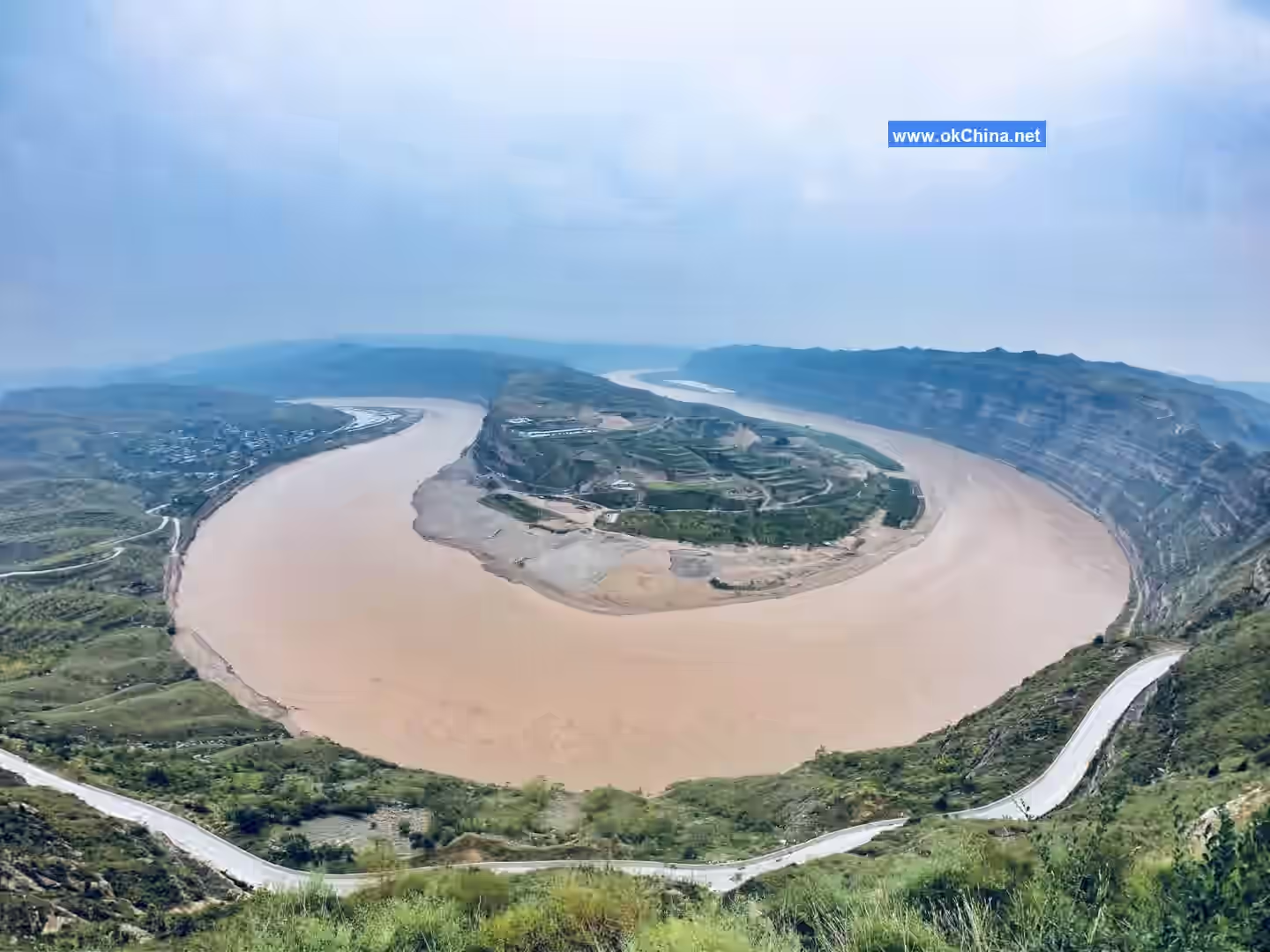
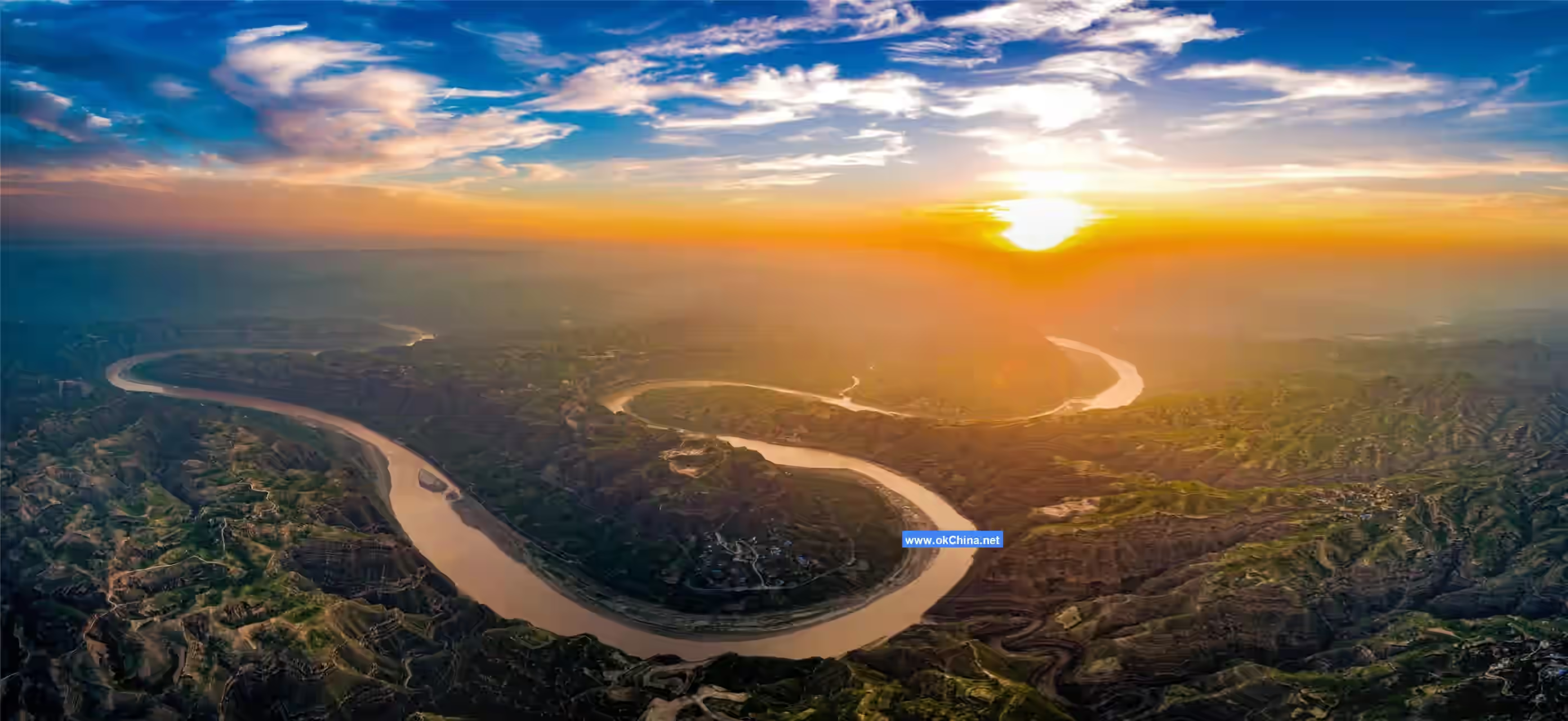
- Hydrology: The Yellow River is the primary water body in the scenic area. Originating from the northern foothills of the Bayan Har Mountains on the Qinghai-Tibet Plateau, it flows eastward and forms five S-shaped bends as it passes through the Yanchuan section of the Qin-Jin Gorge. Among these, the Qiankun Bay has the greatest curvature, reaching up to 320 degrees, earning it the title of the "World's First Bend of the Yellow River."
Flora and Fauna Resources
- Flora: The scenic area is home to a variety of plants, including common trees such as poplars, willows, and locust trees, as well as some drought-tolerant herbaceous plants. Along the Yellow River banks and near wetlands, aquatic plants like reeds grow, forming unique wetland landscapes.
- Fauna: The area hosts small mammals such as hares and squirrels, as well as common bird species like sparrows and magpies. In the Yellow River waters, fish resources such as carp and crucian carp can be found.
III. Key Attractions
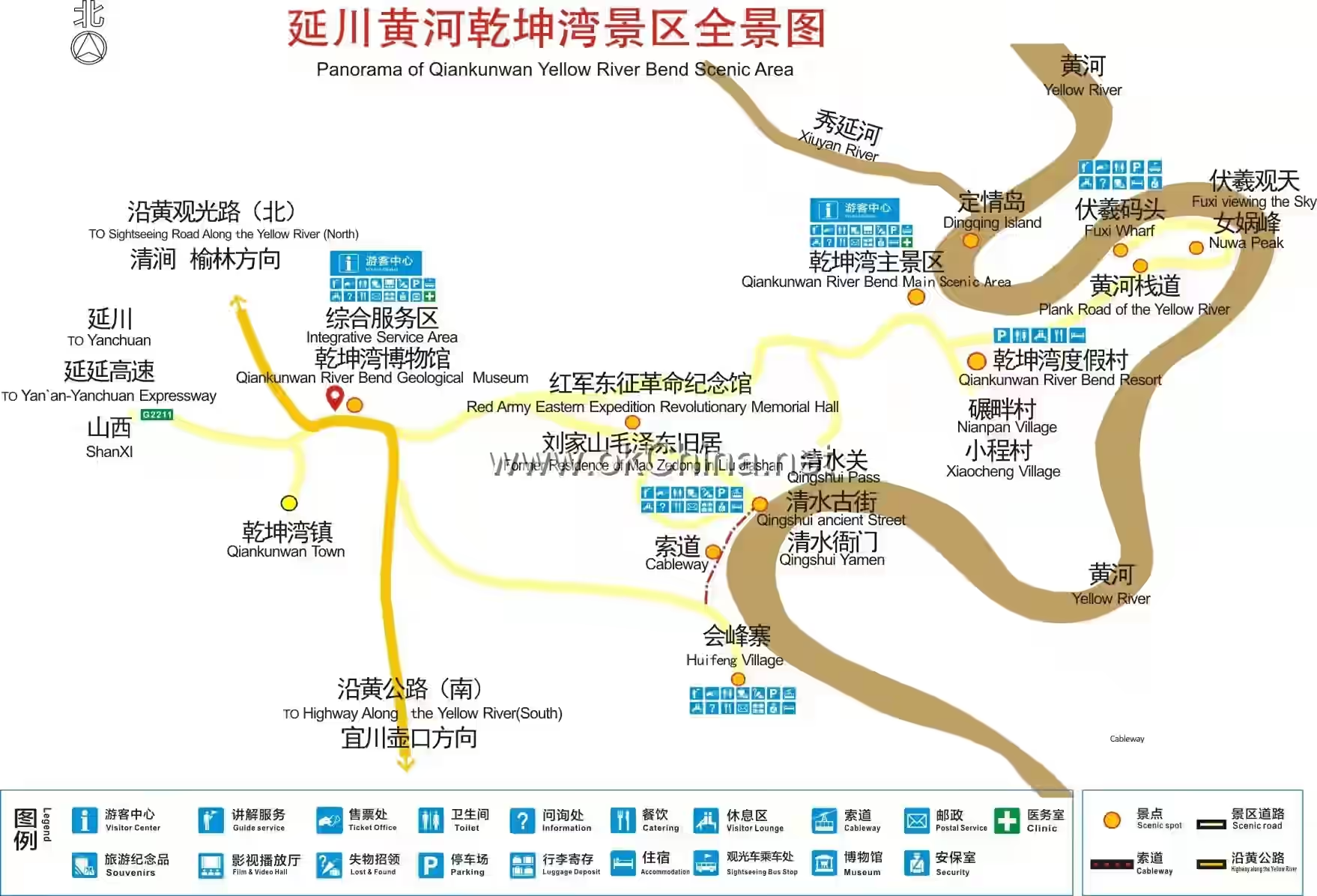
Huifengzhai
Huifengzhai is located in Niujiashan Village, Qiankun Bay Town, Yanchuan County, and is a natural ancient fortress. The fortress faces the Yellow River to the east and is surrounded by water on three sides. The man-made architectural remains within the fortress date back to the 25th year of the Jiajing era in the Ming Dynasty (1546). Ancient people built fortress walls, gates, watchtowers, and other structures by leveraging the natural defenses of Huifeng Mountain, creating a strategic position described as "like a tiger crouching and a dragon coiling, as solid as metal and stone." It is one of the earliest surviving military defensive works in northern Shaanxi and is hailed as the "Little Huashan Mountain of Northern Shaanxi." Visiting this site evokes a sense of grandeur, as expressed in the sentiment: "The Yellow River flows day and night, as the old gives way to the new through the ages."
The Huifengzhai scenic area is divided into two parts: the tourist service center and the ancient fortress. The tourist service center includes functional areas such as Huifeng Inn, family amusement park, and dining center. The ancient fortress resembles a conical peak resting on a turtle's back, surrounded by a moat on three sides, with only a small path connecting the north gate to the land. The fortress is divided into three levels: the first level consists of cliffside stone chambers, fortress gates, and walls; the second level is the residential area, accessible through the west and north gates. Inscriptions record that in the 25th year of the Jiajing era of the Ming Dynasty, the fortress and temples were built, and troops were stationed for defense; the third level houses the Ancestral Temple, primarily used for sacrificial activities.
There are two paths to the north gate of the fortress. The first is a steep stone staircase with 257 steps, known as the "Stairway to Heaven" or "Cloud Ladder." The staircase is divided into three sections: the upper and lower sections each have 81 steps, symbolizing the concept of "returning to oneness," while the middle section has 95 steps, symbolizing the "supreme dignity of the emperor." The second path is a wooden scenic walkway with a gentle slope, featuring a zigzag design that connects to the fortress and also leads directly to its base.
The Huifengzhai fortress features various scenic spots, including Green Snake Cliff, Divine Frog Delivering a Son, Mountain God Guarding the Fortress, Heart-Linked Stones, Flying Stones, Primordial Taiji Stone, Stone Nest Treasure Mirror, Ancestral Temple, Watchtower, and Imperial Qing Dynasty Inscriptions. Among these, on the cliff face between the second and third levels, a naturally formed giant human face with distinct contours overlooks the entire fortress and is revered as the Mountain God Guarding the Fortress. The Imperial Qing Dynasty Stele is located in a stone cave on the second level of the fortress. The top of the stele features two dragons playing with a pearl, hence it is also called the "Double Dragon Stele." The characters "Kangxi" are faintly visible on the stele, and according to experts, this is a commemorative stele from the Kangxi era of the Qing Dynasty, recording rewards for the protection and maintenance of the fortress.
The base of the fortress offers a unique landscape, including Yangshao Cultural relics, moat scenery, and various rock formations. Following the walkway from the west gate down to where the moat meets the Yellow River, an ancient trail along the Yellow River extends for about 3 kilometers, connecting to Qingguan Wharf. It is said that in ancient times, water transport in Yanchuan was well-developed, and Qingshuiguan Wharf was a commodity hub for hundreds of miles around. As a major fortress, Huifengzhai maintained connections with Qingshuiguan, and merchants and villagers voluntarily funded the construction of roads for convenience. Additionally, due to frequent conflicts in northern Shaanxi in the past, Niuweizhai was built north of Qingshuiguan, and Huifengzhai to the south, forming a pincer-like defensive position to support each other and protect the Qingshuiguan crossing.
Qingshuiguan
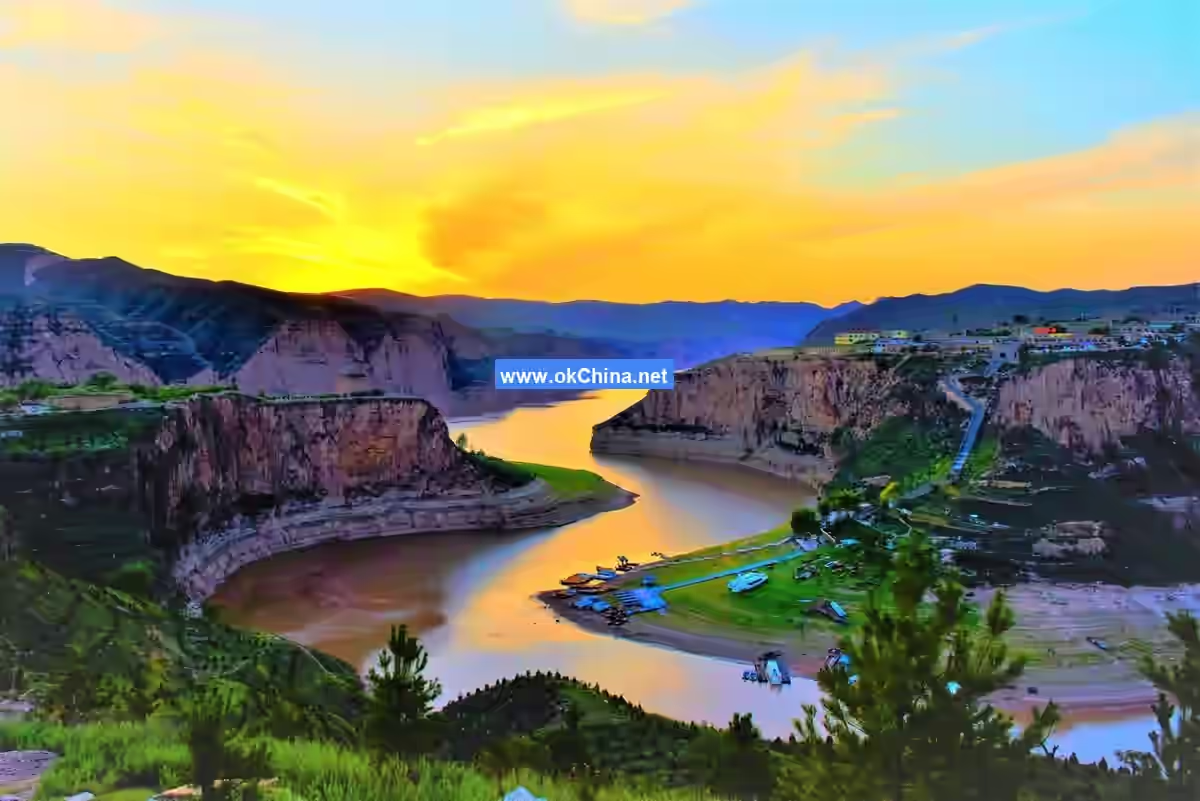
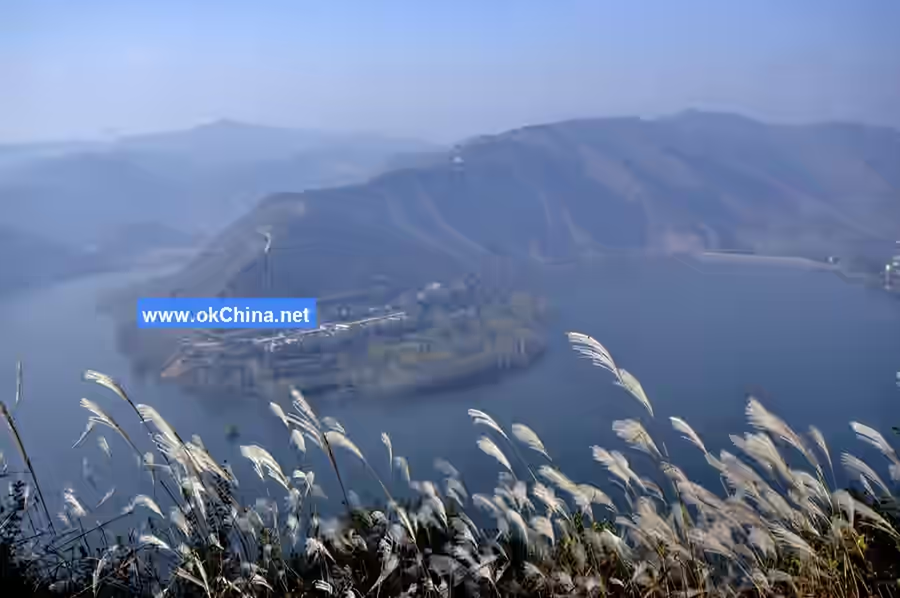
Qingshui Bay is a major bend of the Yellow River within the Shaanxi Meander National Geopark, with a curvature said to reach 302 degrees. It is located within the Meander Park, approximately 7.5 kilometers from Tugang Township and about 38 kilometers from Yanchuan County. The name "Qingshui Bay" does not refer to the Yellow River's water becoming clear here but rather to the historical presence of a Qingshuiguan pass and an ancient wharf in the area. The pass was named "Qingshuiguan" because of a very clear stream beside it that flows into the Yellow River. Due to the striking contrast between the clear stream and the Yellow River, people also refer to this major bend of the Yellow River as Qingshui Bay.
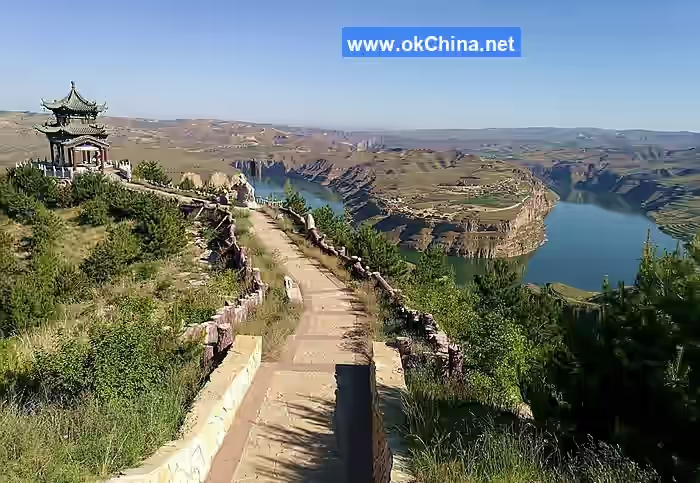
After visiting the Qingshui Bay attraction in the Meander Park, visitors can walk along the Yellow River plank road. The plank road starts from the mountaintop and is built along the cliffside, with steep cliffs on the left and the roaring Yellow River on the right. From a distance, the plank road resembles a zigzagging snake winding its way down to the banks of the Yellow River. The plank road is approximately 2 kilometers long.
As early as the 11th year of the Daoguang era in the Qing Dynasty (1831), Qingshuiguan was a famous market within a hundred-mile radius. About 2.5 kilometers south of Qingshuiguan is Huifengzhai, and to the north is Niuweizhai. The three locations form a triangular defensive position, and it is said that troops were stationed there as early as the Ming Dynasty.
During the Qing Dynasty, Qingshuiguan thrived with commerce, lined with shops, and served as an important commodity distribution center along the Yellow River bend. With its fortress walls built against the mountains and wharves connecting to various places, it naturally became a strategic location contested by military forces. In May 1936, after completing their eastern expedition, the Anti-Japanese Vanguard Army led by Zhu De and Mao Zedong returned to northern Shaanxi via this area, leaving footprints at the wharf and local farmhouses.
Qiankun Bay
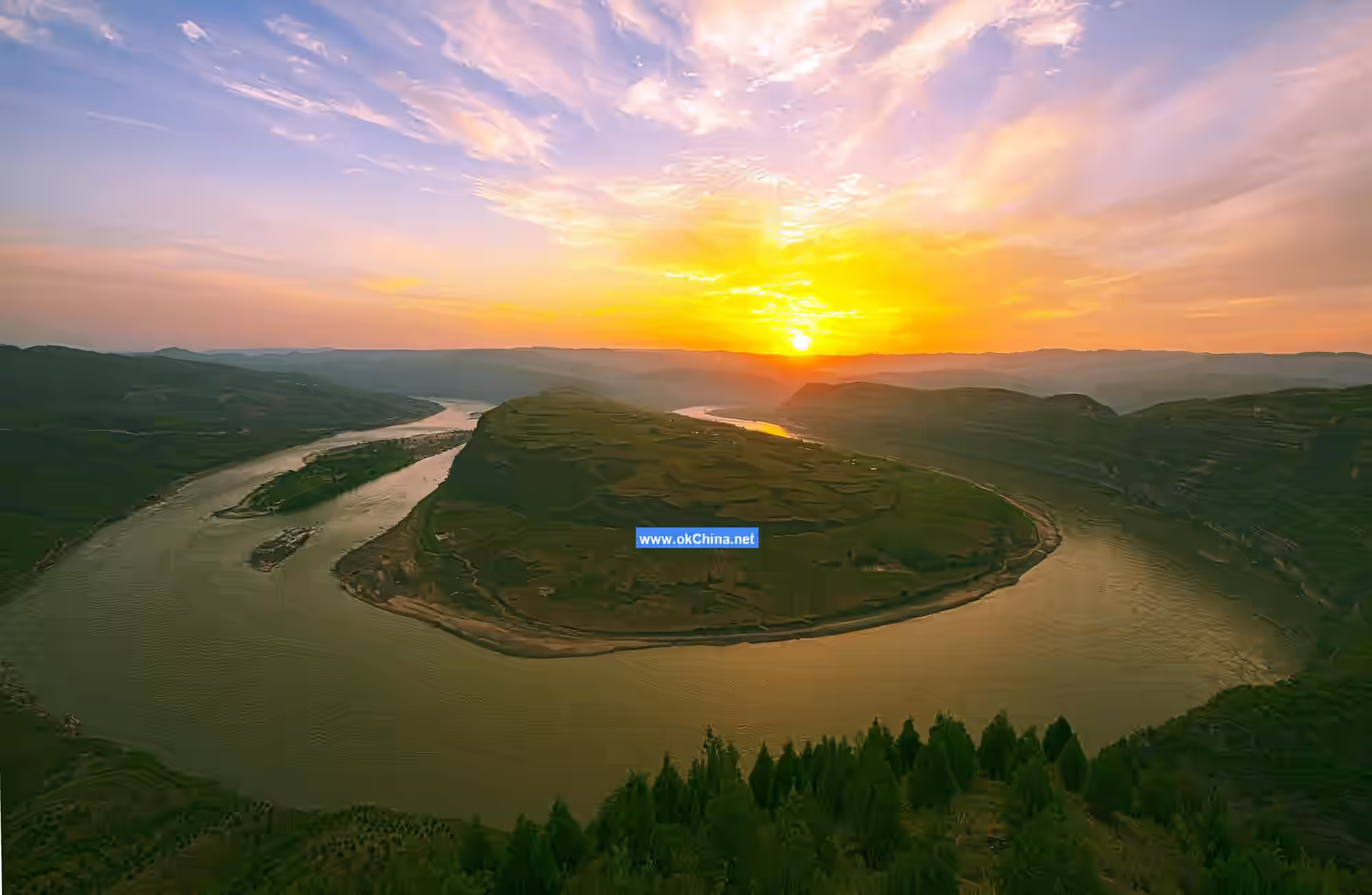
Qiankun Bay is an S-shaped bend formed by the winding of the Yellow River, with a curvature of 320 degrees. Legend has it that Fuxi, the ancestral figure of Chinese civilization, once observed the heavens and surveyed the earth at Qiankun Bay, where he was inspired to create the Eight Trigrams, marking the beginning of Chinese civilization. The main scenic area of Qiankun Bay features 12 attractions, including four viewing platforms, Giant Snake Viewing Island, Mother Stone, Heaven Altar, Earth Altar, Relief Wall, Qiankun Platform, and Qiankun Pavilion. Qiankun Bay is a natural Taiji diagram integrating heaven and earth, yin and yang, and the Eight Trigrams. There are four viewing platforms:
- Viewing Platform No. 1: Located on the north side of Qiankun Bay, this is the best spot to admire the bay. From here, the S-shaped bend forming the Taiji and Eight Trigrams imagery is fully visible. In the distance, the yin-yang fish-eye mountains appear faintly, and the majestic landscape of the Mother River is on full display.
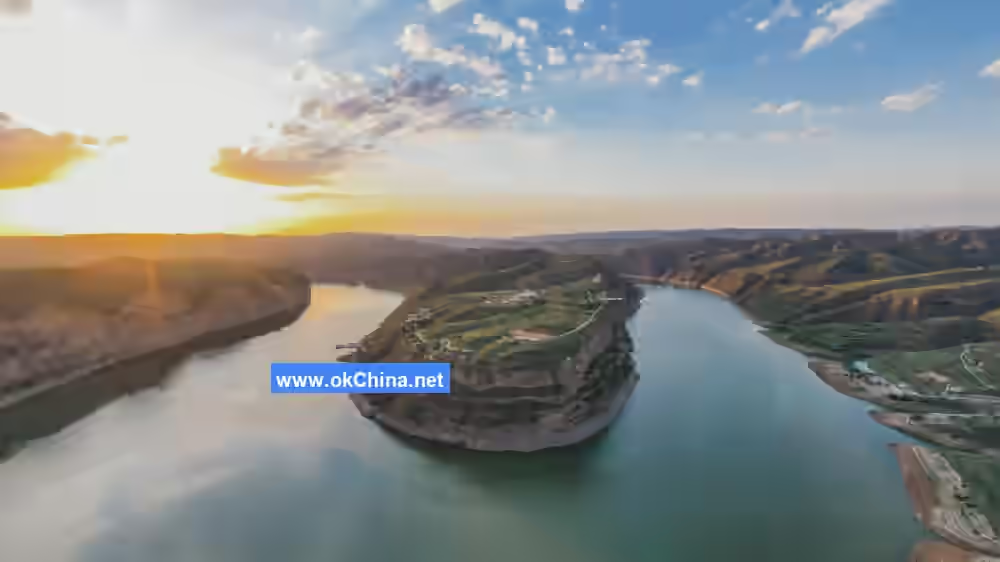
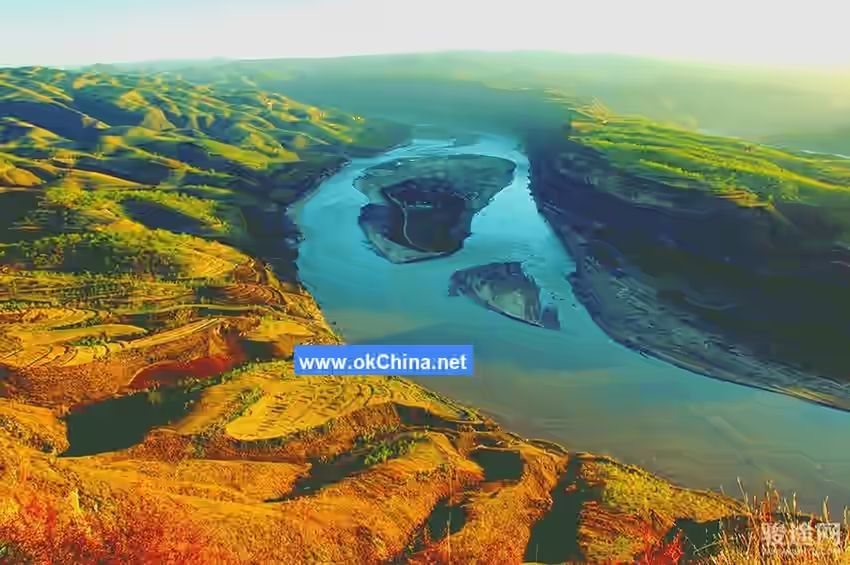
- Viewing Platform No. 2: Located on the northwest side of Qiankun Bay, this is the best spot to view Dingqing Island. Dingqing Island is a naturally formed islet in the middle of the Yellow River, associated with the love legend of Fuxi and Nüwa, hence its name "Dingqing Island" (meaning "Island of Pledged Love"). Due to its shape resembling a giant's left footprint, it is also called "Shoe Island." The characters for "Dingqing Island" were inscribed by the famous writer Hou Fu. The island features numerous strange rocks, pebbles scattered everywhere, and a fun sandy beach, making it an ideal place for photography and collecting pebbles. It also includes meaningful attractions such as the Pledged Love Stone, Eight Trigrams Maze, Fuxi Statue, and Pledged Love Bridge. For sweet families, loving couples, and friendly friends, a must-do activity on Dingqing Island is taking a photo under the Pledged Love Stone or on the Pledged Love Bridge to symbolize enduring affection. Nearby the viewing platform are smaller attractions such as Giant Snake Viewing Island, Eagle Beak Stone, and Mother Stone.
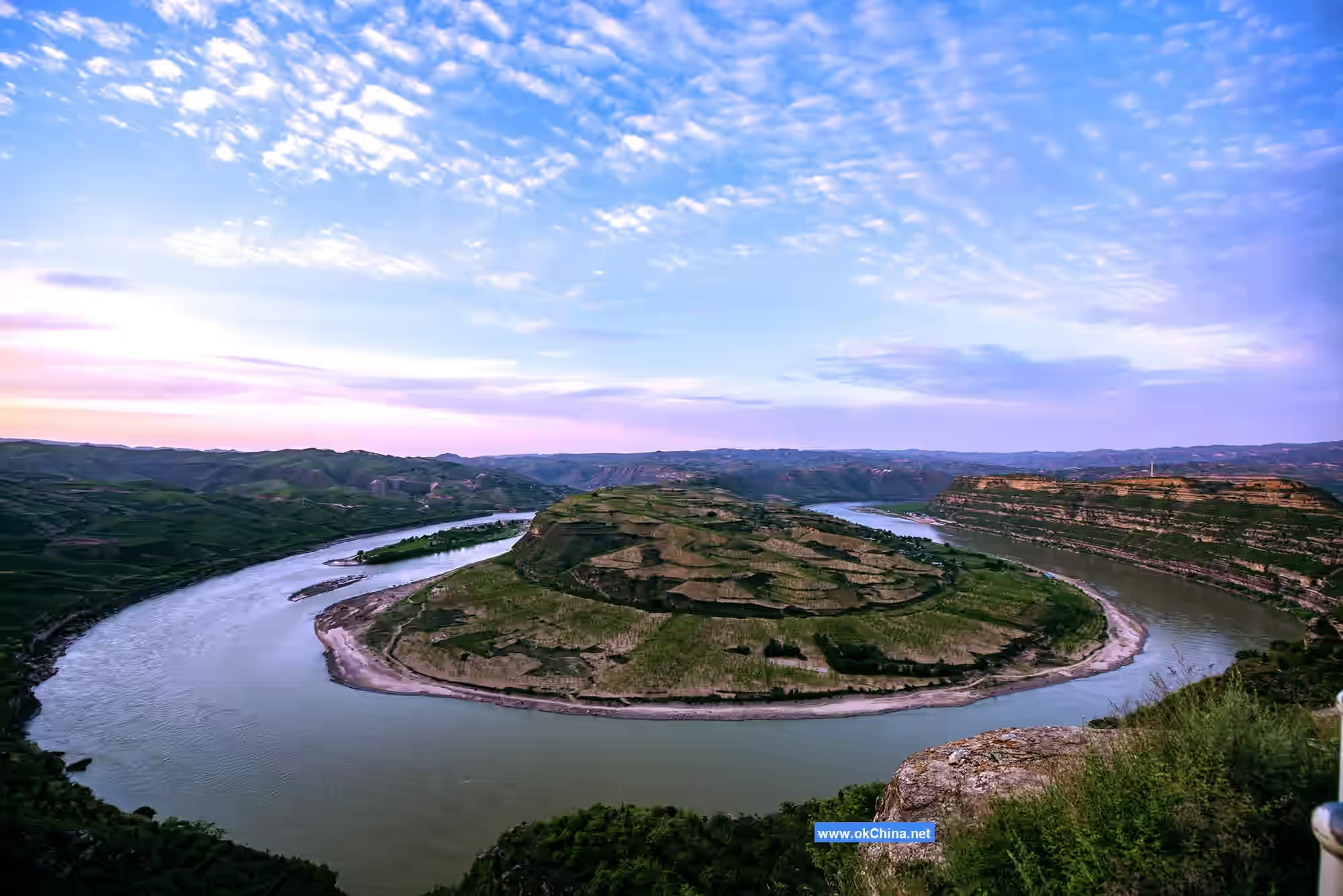
- Viewing Platform No. 3: Located on the west side of Qiankun Bay, this platform offers a view of the yang eye in the Taiji and Eight Trigrams diagram. The S-shaped bend of the Yellow River encircles the area, presenting a landscape of mountains embracing water. Nearby the viewing platform are smaller attractions such as Qiankun Platform and the Cultural Relief Wall.
- Viewing Platform No. 4: Located at the 320-degree bend of the Yellow River, the circular hill on the opposite bank of the river resembles the yang eye embedded in the Taiji and Eight Trigrams diagram.
Fuxi Wharf
Fuxi Wharf is situated near Fuxi Village and is a comprehensive wharf integrating dining, entertainment, and accommodation. Visitors can enjoy various local snacks, experience staying in ancient boat inns, partake in Yellow River Gorge rafting, and reminisce about ancient myths and legends.The Fuxi Wharf covers a construction area of approximately 3,000 square meters, with an estimated investment of 15 million yuan. The main construction projects include a parking lot, a ticket center, a dining and entertainment center, and a rafting wharf. People often say, "One who fails to reach the Great Wall is not a true hero." Here, however, there is a saying: "One who fails to see the Yellow River will never be satisfied." This phrase is full of strength and ambition, inspiring the people of the jujube-growing villages along the Yellow River to stand tall and face greater challenges.
From the wharf, visitors can take speedboats upstream to visit the Love Island in the middle of the river.
Love Island
Love Island is a small island in the Yanchuan section of the Yellow River's Qin-Jin Gorge, covering an area of about 300 mu. Due to its resemblance to the left footprint of a giant, local residents also call it "Shoe Island." Legend has it that Fuxi's mother, Feng Huaxu, stepped on a giant footprint here and conceived Fuxi. Located at the border between Shaanxi and Shanxi provinces, in the very center of the Yellow River, the island is named "Love Island," symbolizing the "alliance between Qin and Jin."
Yellow River Plank Road
The Yellow River Plank Road is built on the cliffs of a canyon as high as 200 meters. It stretches over 1,600 meters in length and is 1.5 meters wide, connecting the Fuxi Cultural Center above to the Fuxi Wharf below. Standing on the plank road, one can look up at the vast sky and down at the winding Yellow River, fully appreciating the unique scenery on both sides of the Qin and Jin regions. From a distance, it resembles a giant dragon winding through the cliffs or a silk ribbon gently swirling around the mountains—this is the Yellow River Plank Road. At the entrance of the plank road is a massive black-and-white Taiji diagram, symbolizing the interdependence and endless cycle of all things in the world. The entire plank road is paved with preservative-treated wood and extends four meters into the cliff rock layers. With steep cliffs above and the Yellow River below, the plank road winds through the crevices of the river rocks.
Fumu Village
Fumu Village is built precariously on the cliffs. Legend has it that this was the dwelling place of Fuxi's maternal clan, hence the name "Fumu Village." It is a representative example of cave dwellings along the Yellow River. When first discovered, the walls of the village had collapsed, and remnants such as stoves and tiles were found. Based on the traces of human activity and scattered artifacts, it is inferred that the earliest civilization here dates back to ancient times.
Nuwa Peak
To the right of the Qiankun Bay lies a village called Fuxi Village, through which the Yellow River flows. In the center of the village stands a tall mountain peak, whose shape strikingly resembles a great mother with flowing long hair. This sacred figure becomes even more vivid and lifelike under the glow of the setting sun, with a high nose bridge, clear eyes, and a serene expression as she gazes upon the Yellow River, guarding Fuxi Village. Locals refer to it as "Nuwa Praying for Blessings."
Red Army Eastern Expedition Revolutionary Memorial Hall
Northern Shaanxi is a land rich in revolutionary history. Located in Liujiashan Village, the Red Army Eastern Expedition Revolutionary Memorial Hall is the first of its kind in northern Shaanxi dedicated to the theme of the Red Army's Eastern Expedition. It covers a total area of 2,000 square meters, with a construction area of 1,400 square meters. Through texts, historical materials, and photographs, it recounts the entire process of the Red Army's Eastern Expedition, comprehensively showcasing this arduous revolutionary journey of significant historical importance. The Yanchuan Red Army Eastern Expedition Revolutionary Memorial Hall has become an important base for researching the Red Army's Eastern Expedition and collecting and preserving revolutionary artifacts and materials from that period. It also serves as a vital site for inheriting and learning from the revolutionary spirit.
Qingshui Yamen
Qingshui Yamen is situated beside the ancient ferry of Qingshui Pass. In ancient times, Qingshui Pass was an important crossing on the Yellow River, bustling with merchants and lined with shops, serving as a commodity distribution center for hundreds of miles around. Tea houses, restaurants, and inns were common sights along the streets. A clear stream flows naturally, and a yamen stands amidst the mountains—this is Qingshui Yamen. According to the Yanchuan County Annals, officials in ancient times were upright, honest, and beloved by the people. Because it also embraced a clear spring, local residents praised it as "Qingshui Yamen."
IV. Folk Culture
The Yanchuan Yellow River Qiankun Bay Scenic Area is imbued with rich, diverse, and uniquely charming folk cultures. These folk cultures are like dazzling pearls embedded in this ancient land.
In the realm of folk art, paper-cutting stands out as distinctive. Local women use scissors as brushes and colored paper as ink to create exquisite paper-cutting works. The themes are wide-ranging, covering flowers, birds, fish, insects, myths, legends, and farming life. Whether it is festive wedding paper-cuttings or auspicious New Year paper-cuttings, they all reflect people's longing and hope for a better life. Each piece of paper-cutting is infused with the creator's emotions and wisdom, with delicate lines and vivid imagery that inspire admiration.
Yanchuan's cloth collage paintings are equally captivating. Using scraps of cloth as raw materials, they form three-dimensional and layered images through clever stitching and arrangement. The colors are vibrant and eye-catching, and the patterns are simple yet creative. They often depict labor scenes, folk stories, and other content, reflecting the rich and diverse lives of the local people and their profound cultural heritage.
In terms of folk activities, Shehuo performances are a major event in the area. During important festivals or celebrations, villagers spontaneously organize Shehuo performances, which include stilt walking, land boat dancing, and Yangko dancing. Stilt walkers, dressed in brightly colored costumes, portray various mythological or historical characters, weaving through the crowd with thrilling and amusing performances. In land boat dancing, actors mimic rowing movements, with the boat swaying to the rhythm as if navigating the waves of the Yellow River. Clowns and other characters interact humorously, eliciting laughter from the audience. Yangko troupes sing and dance, waving colorful ribbons and moving with joyful steps, spreading happiness to everyone.
Additionally, local folk songs are highly distinctive. These songs feature beautiful melodies and simple lyrics, often improvised by laborers working in the fields or along the Yellow River. The content covers emotions and aspects of life such as love, labor, and homesickness, expressing the heartfelt sentiments of the Yanchuan people. Along the Yellow River, melodious songs echo, recounting the stories and legends of this land. They form a moving part of the folk culture in the Qiankun Bay Scenic Area, allowing visitors to not only appreciate the beautiful scenery but also deeply experience the rich folk customs and the unique charm of traditional culture.
Comments
Post a Comment