Yan'an Revolutionary Memorial Scenic Area
I. Introduction
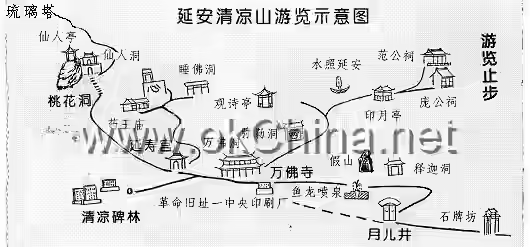
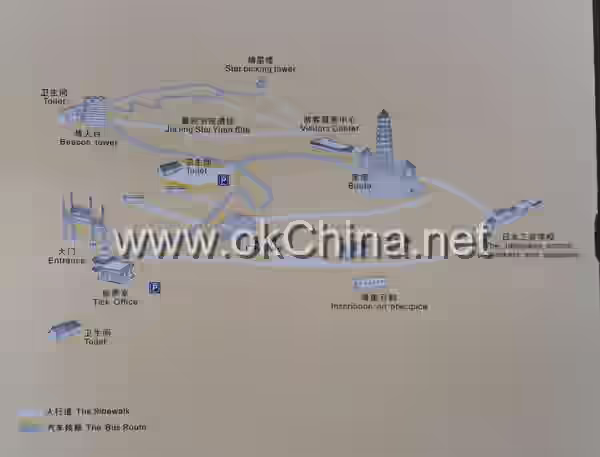
The Yan'an Revolutionary Memorial Scenic Area, often abbreviated as the Yan'an Revolutionary Memorial Area, comprises the Pagoda Hill, the Zaoyuan Revolutionary Site, the Yangjialing Revolutionary Site, the former site of the Northwest Bureau of the CPC Central Committee, and the Yan'an Revolutionary Memorial Hall. This scenic area represents the classic core of Yan'an's 445 revolutionary heritage sites. It is a National Key Cultural Relics Protection Unit, a national demonstration base for patriotism education, revolutionary tradition education, and Yan'an Spirit education, and one of China's first classic red tourism scenic spots. On January 7, 2020, the Yan'an Revolutionary Memorial Scenic Area was designated as a National 5A-level Tourist Attraction by the Ministry of Culture and Tourism of the People's Republic of China.
II. Main Attractions
Yan'an Pagoda
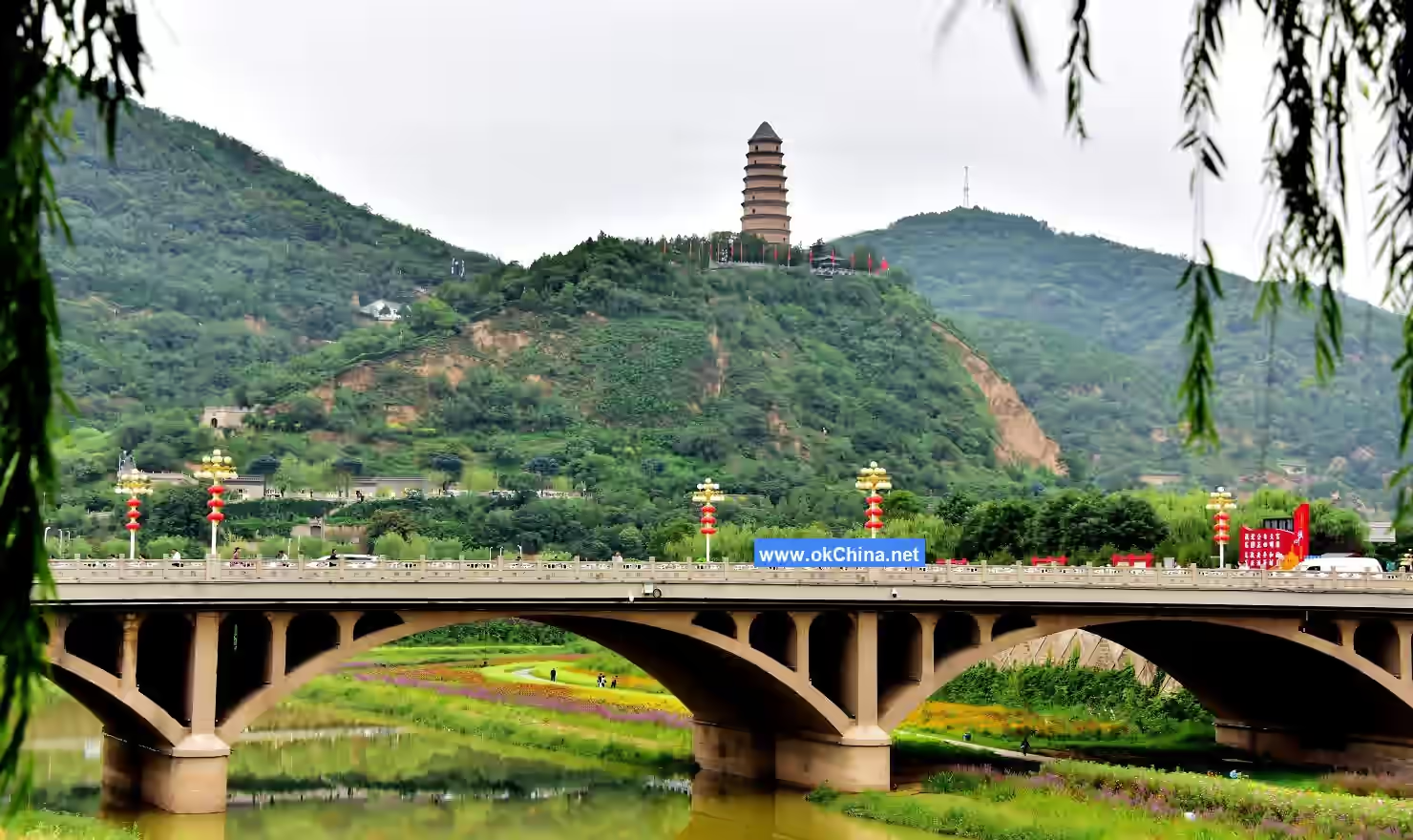
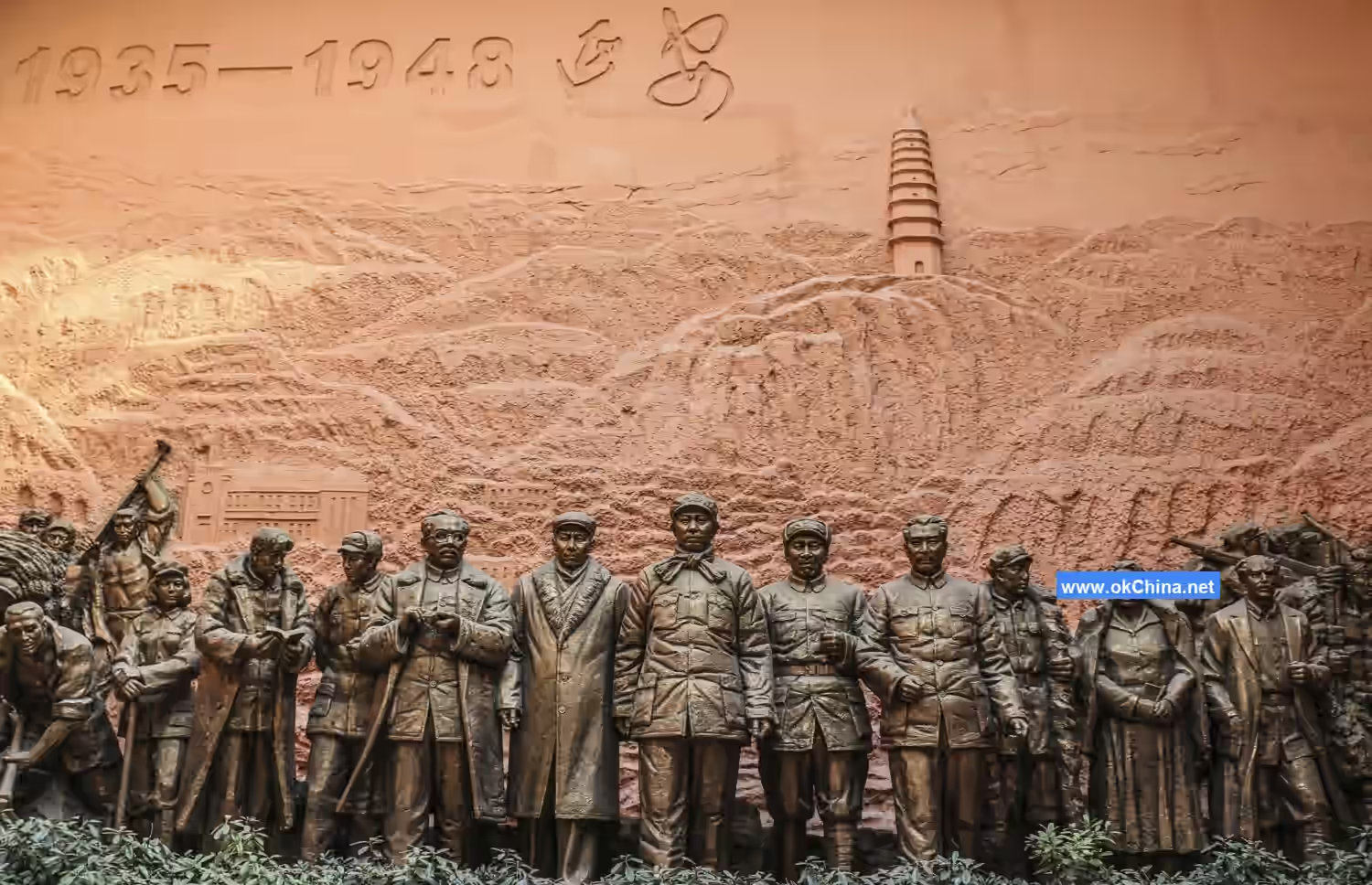
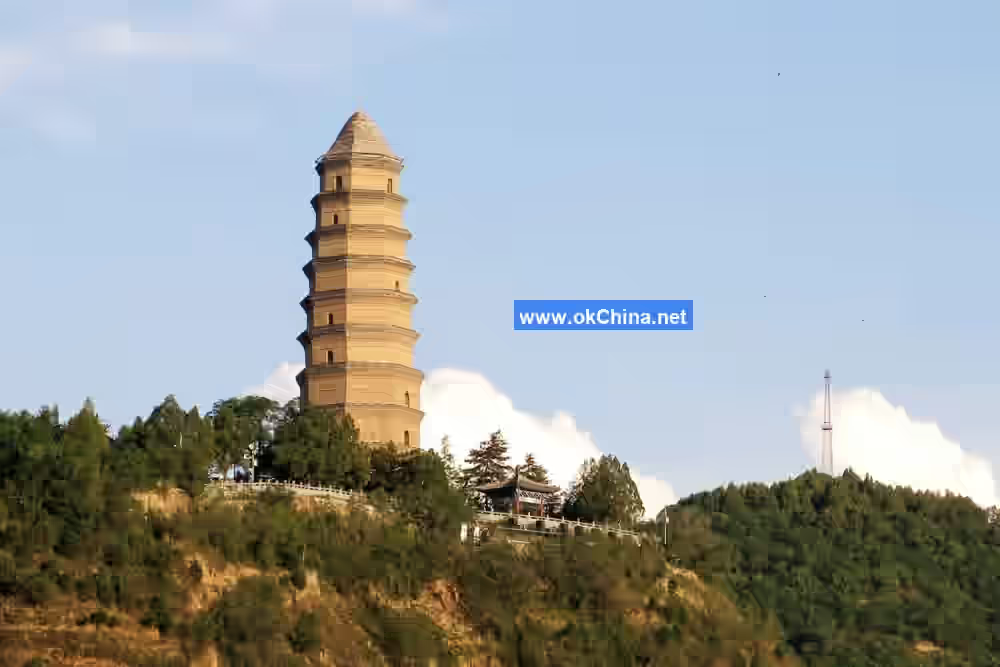
The Yan'an Pagoda (also known as the Lingshan Temple Pagoda) was first built during the Dali era of the Tang Dynasty (766-779 AD), rebuilt during the Qingli era of the Song Dynasty (1041-1048 AD), and renovated in the 9th year of the Dading era of the Jin Dynasty (1169 AD) and the 36th year of the Wanli era of the Ming Dynasty (1608 AD). The pagoda stands 44 meters high with a base circumference of 36.8 meters. It is an octagonal, nine-story pavilion-style brick pagoda. It has two gates, north and south, inscribed with "High Above the Azure Heavens" (高超碧落) and "Overlooking the Mortal World" (俯视红尘) respectively. Entering from the north gate, one can climb to the top via an internal staircase. The pagoda is the iconic symbol of Yan'an, the sacred site of the revolution. It was designated as a Shaanxi Provincial Key Cultural Relics Protection Unit on August 6, 1956, and as a National Key Cultural Relics Protection Unit on November 20, 1996. Major conservation and restoration projects were undertaken in 1959, 1984, and 2014.
Zaoyuan Revolutionary Site
Located 8 kilometers northwest of Yan'an city, the Zaoyuan Revolutionary Site is a garden-style revolutionary memorial area featuring a wide variety of flowers, plants, and trees, offering beautiful scenery and a tranquil environment. Originally a landlord's estate, it was renamed "Yanyuan" after the CPC Central Committee moved to Yan'an and it became the headquarters of the Central Social Department. From 1944 to March 1947, the Secretariat of the CPC Central Committee relocated here from Yangjialing. During this period, it led the Party-wide Rectification Movement and the large-scale production campaign in the liberated areas, and prepared for the Seventh National Congress of the Communist Party of China. Zaoyuan served as the location of the Secretariat of the CPC Central Committee and played a pivotal leadership role during the War of Resistance Against Japan and the War of Liberation. Here, the leaders of the CPC strategized and formulated a series of strategic decisions crucial to the nation's fate and the course of the revolution. Many important military deployments were issued from here, directing the Eighth Route Army, the New Fourth Army, and other people's armed forces in fierce battles against the enemy, laying a solid foundation for victory in the War of Resistance. In terms of political construction, Zaoyuan witnessed the continuous advancement and refinement of Party building. The Party leaders deeply contemplated and explored how to better organize the masses, unite various forces, and strengthen the construction of base area political power. This made the liberated areas a model of national democratic progress, attracting countless patriots to join the revolutionary cause, expanding the revolutionary ranks, and accumulating valuable experience for the political construction of New China. Zaoyuan is also a significant site where Mao Zedong Thought matured and was established as the Party's guiding ideology. Here, leaders like Mao Zedong conducted in-depth research and systematic exposition on a series of fundamental issues concerning the nature, tasks, driving forces, and future of the Chinese revolution. They formulated a series of revolutionary theories and policies with Chinese characteristics, providing scientific theoretical guidance for the CPC to lead the Chinese people to the ultimate victory of the New Democratic Revolution. The spiritual power embodied in Zaoyuan's revolutionary history is profound and far-reaching. It reflects the noble qualities and great sentiments of the Chinese Communists—hard struggle, self-reliance, and wholehearted service to the people. It has become a powerful source of spiritual motivation, inspiring generations of Chinese to strive for the great rejuvenation of the Chinese nation. It is forever etched in the glorious annals of the Chinese revolution, reminding future generations of that magnificent historical era, urging them to inherit the red gene, remain true to the original aspiration, and continue marching forward. In December 2016, the Zaoyuan Revolutionary Site was included in the National List of Classic Red Tourism Scenic Spots.
Yangjialing Revolutionary Site
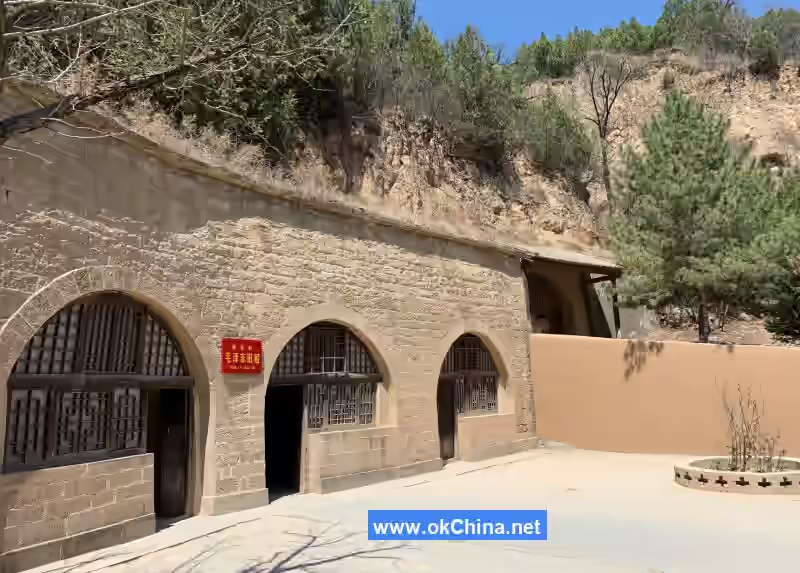
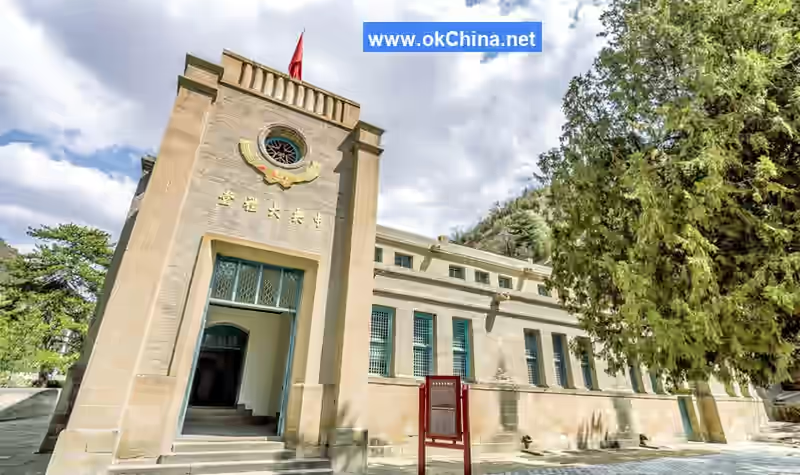
The Yangjialing Revolutionary Site is the former residence site of the CPC Central Committee, located 2 kilometers northwest of Yan'an city. From November 1938 to March 1947, Mao Zedong and other central leaders, along with the CPC Central Committee organs, resided here. During this period, the CPC Central Committee continued to command the battlefields behind enemy lines in the War of Resistance Against Japan and led the War of Liberation. It also led the large-scale production campaign and the Rectification Movement, and convened the Seventh National Congress of the CPC and the Yan'an Forum on Literature and Art. The Central Auditorium was built here in 1942, where the Seventh National Congress of the CPC was solemnly held from April 23 to June 21, 1945. During the War of Resistance Against Japan, Yangjialing was the seat of the CPC Central Committee's leading organs, witnessing the Party's crucial leadership of the resistance under arduous conditions. Here, the CPC formulated numerous strategic policies for resisting Japan, which guided the Eighth Route Army, the New Fourth Army, and other anti-Japanese forces in bloody battles behind enemy lines, effectively combating the Japanese invaders and playing a pivotal role in the victory of the War of Resistance. Yangjialing was also an important venue for the maturation and development of the New Democratic Theory. Leaders like Mao Zedong deeply contemplated the direction of the Chinese revolution here and authored numerous important works. For instance, Mao Zedong delivered "On New Democracy" from his cave dwelling in Yangjialing, systematically expounding on the politics, economy, and culture of New Democracy, charting the course for the development of the Chinese revolution. This provided the entire Party and the Chinese people with a clear understanding of the nature and tasks of the Chinese revolution, unifying thought and consolidating strength. From the perspective of Party building, the Party organization continued to develop and grow during the Yangjialing period. Party leaders strengthened inner-Party democracy and carried out the Rectification Movement here. Through criticism and self-criticism, they rectified the styles of study, Party conduct, and writing, overcoming non-proletarian ideologies within the Party. This achieved unprecedented unity within the Party, laying a solid foundation for Party building in terms of organization and ideology, and enhancing the Party's cohesion and combat effectiveness. Simultaneously, Yangjialing witnessed the profound bond between the Communist Party of China and the masses. Here, the Party actively promoted the large-scale production campaign. Leading cadres set an example by working alongside the masses to reclaim wasteland for farming, spin yarn, and weave cloth. This spirit of self-reliance and hard struggle not only overcame material difficulties but also strengthened the Party-mass relationship, providing valuable spiritual wealth for national construction after the revolutionary victory. In summary, the significance of the Yangjialing Revolutionary Site spans multiple crucial aspects of Chinese revolutionary history, standing as an immortal historical monument. In December 2016, the Yangjialing Revolutionary Site was included in the National List of Classic Red Tourism Scenic Spots.
Former Site of the Northwest Bureau of the CPC Central Committee
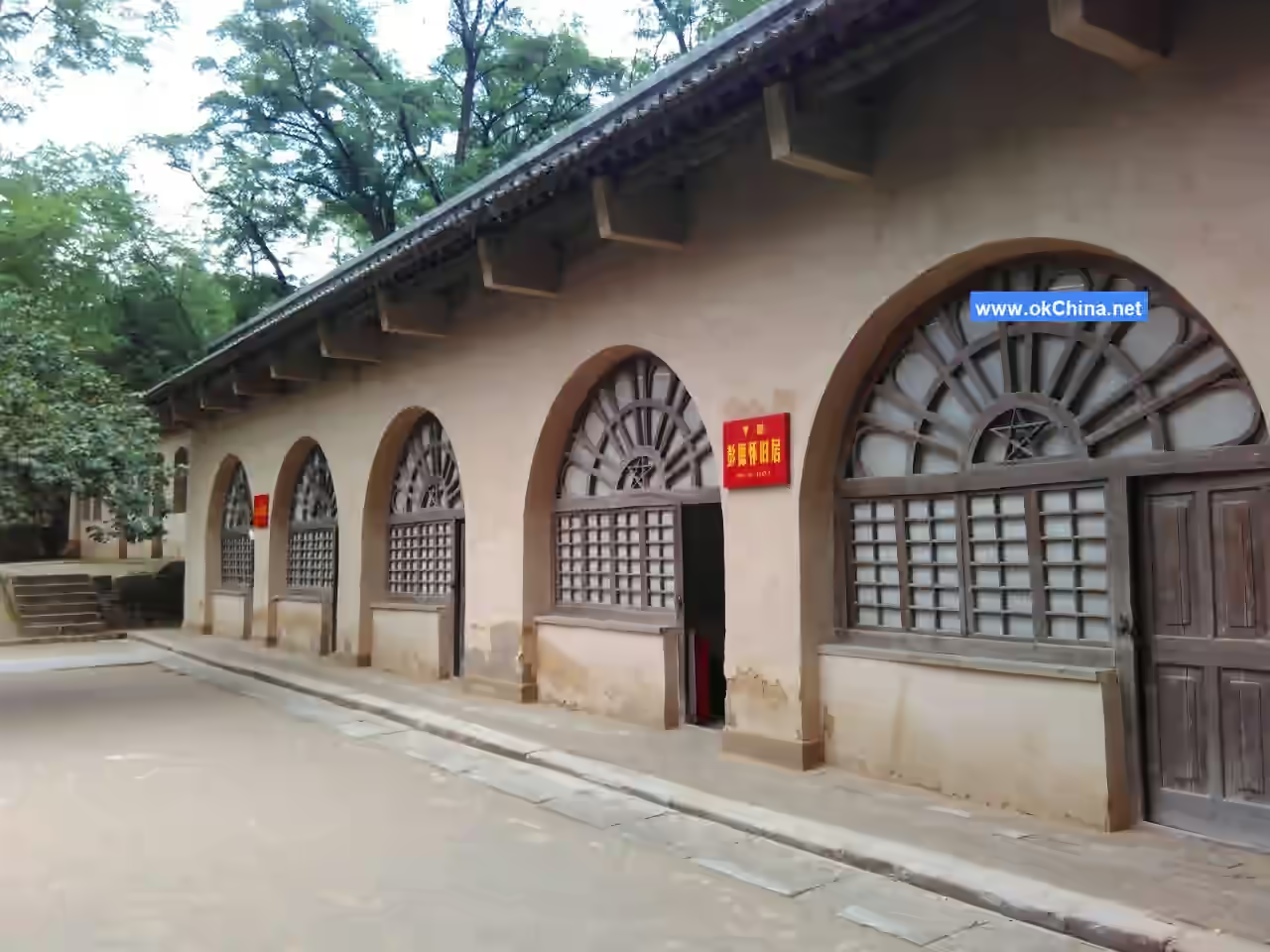
The former site of the Northwest Bureau of the CPC Central Committee is located at Huashiban, on the west bank of the Nanchuan River, south of Yan'an city, Shaanxi Province. The Northwest Bureau was established on May 13, 1941, in Zhangya Village, Zaoyuan. It moved to this location in September 1942. Gao Gang, Peng Dehuai, and Xi Zhongxun successively served as its secretaries. It relocated in March 1947. The site currently preserves 17 stone cave dwellings and dozens of earthen cave dwellings. The establishment of the Northwest Bureau of the CPC Central Committee played a multifaceted and crucial role in the process of China's revolution and construction, holding profound historical significance. From a strategic command perspective, the Northwest Bureau served as the core leadership organ of the Party in the Northwest region. During the revolutionary wars, it was responsible for coordinating military operations in the Northwest, harmonizing various armed forces, including the Red Army and local guerrilla units. For instance, during the War of Resistance Against Japan, it directed the military in effectively waging guerrilla warfare against Japan, resisting Japanese aggression, while simultaneously dealing with friction from Kuomintang hardliners to protect the security of the border region. During the War of Liberation, it strategically deployed operations on the Northwest battlefield, organizing famous campaigns such as the Defense of Yan'an, playing a key command role in liberating the greater Northwest. In terms of political power construction, the Northwest Bureau promoted the establishment of political power in the base areas of the Northwest. It actively organized elections, established democratic governance, enabling the people to truly be masters of their own affairs. By formulating policies and regulations, it strengthened the administrative management of the base areas, promoted economic development and progress in culture and education, laying a solid political foundation for building stable revolutionary base areas. It also focused on ethnic unity work, coordinating relations among different ethnic groups, making the Northwest region a model area for the united struggle of all ethnicities. In the field of economic construction, the Northwest Bureau led important activities such as the large-scale production campaign. Faced with the Kuomintang's economic blockade and severe material shortages, it called on the military and civilians to be self-reliant, reclaim wasteland for farming, and develop handicrafts. This not only ensured the material supply for the base areas, overcoming numerous difficulties, but also fostered a spirit of hard struggle. This spirit was significant for uniting the people and enhancing the economic resilience of the base areas. From the ideological and cultural perspective, the Northwest Bureau actively disseminated the Party's ideological theories. Through propaganda and education activities, it raised the political consciousness and cultural literacy of the masses, strengthened the Party's ideological leadership, consolidated the Party's ideological position in the Northwest, and ensured that Marxism and Mao Zedong Thought took deep root among the people in the region. This provided a powerful spiritual impetus for the victory of the revolution and the sustained progress of society.
Yan'an Revolutionary Memorial Hall
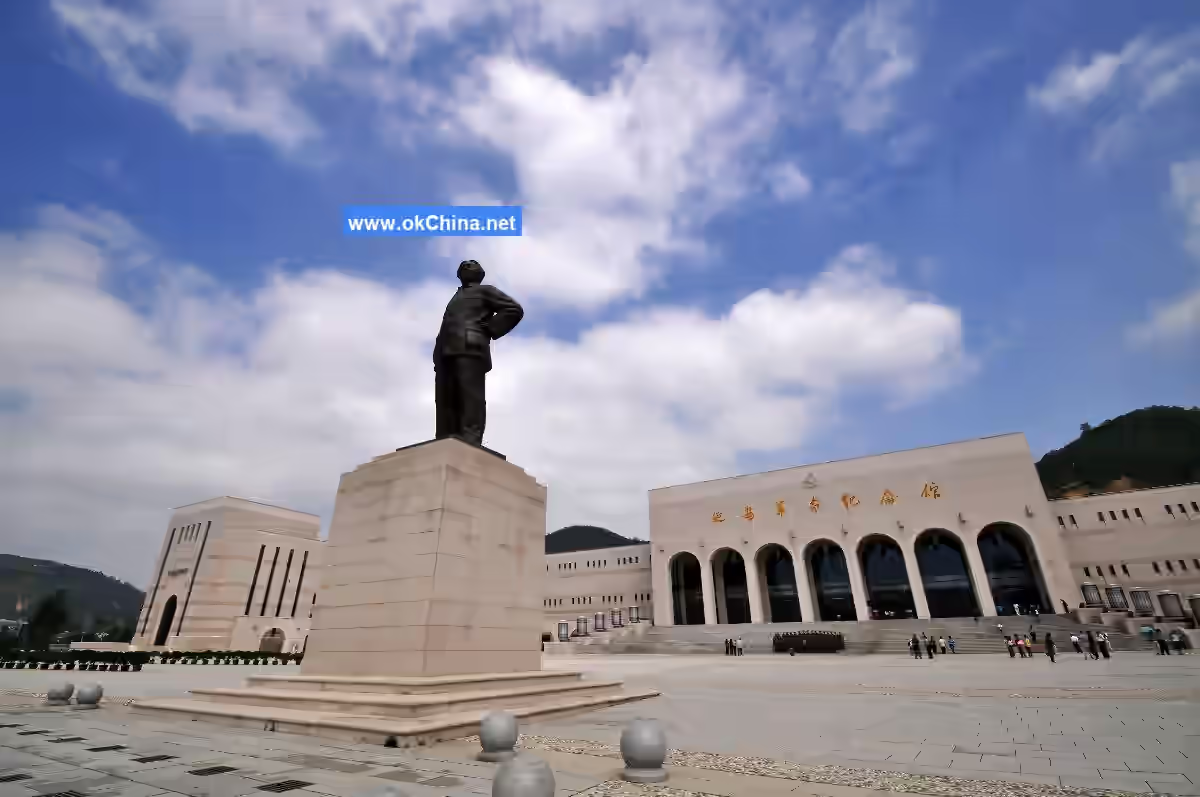
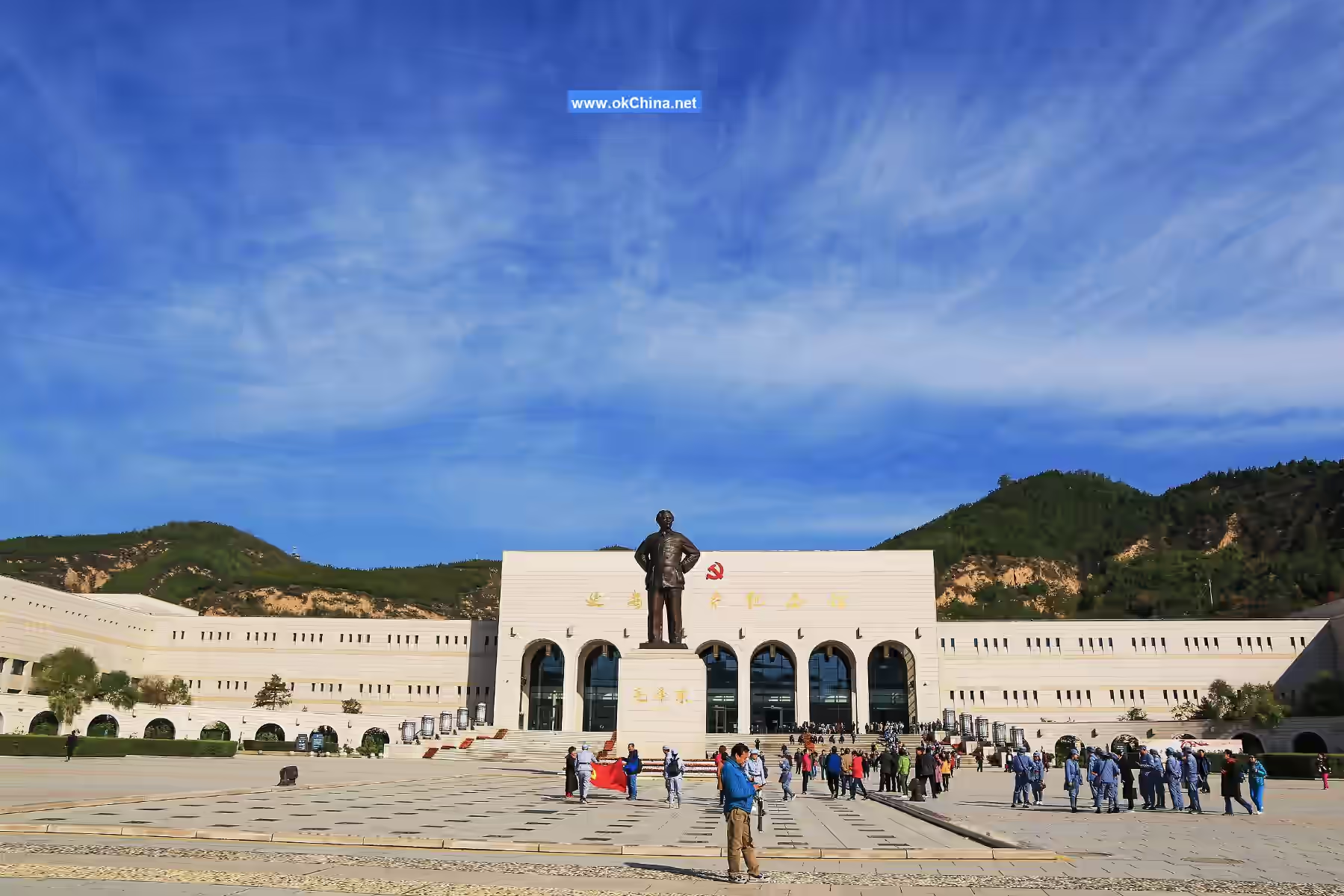
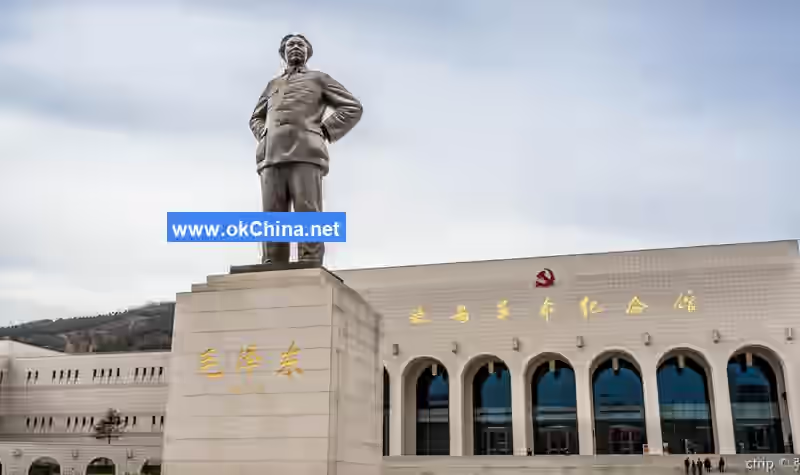
The Yan'an Revolutionary Memorial Hall is located on the east bank of the Yan River, northwest of Baota District, Yan'an city, Shaanxi Province, approximately 1 kilometer from the city center. The Yan'an Revolutionary Memorial Hall was first established in January 1950. Its original site was at the South Gate Reception Center, making it one of the earliest revolutionary memorial halls established after the founding of the People's Republic of China. In 1954, it moved to the former site of the CPC Central Committee organs at Yangjialing and was named "Yan'an Museum." In 1955, it relocated to the courtyard of the revolutionary site at the foot of Fenghuang Mountain within the city and was renamed "Yan'an Revolutionary Memorial Hall." In June 1973, it moved to its current location at Wangjiaping.Above the main entrance of the exhibition hall hangs a red plaque inscribed with the name of the museum, calligraphed by Guo Moruo during his visit to Yan’an in 1971. The museum houses over 35,000 cultural relics, more than 5,500 historical photographs, and over 12,000 books and archival materials. Among these, there are more than 1,700 first- and second-grade cultural relics, as well as over 100 types of newspapers and magazines published during the Yan’an period. [2] In March 2008, it was designated as a National First-Class Museum by the National Cultural Heritage Administration. In December 2016, the Yan’an Revolutionary Memorial Hall was included in the National Red Tourism Classic Scenic Spots List. In December 2017, it was selected as one of the first national research and practice education bases and camps for primary and secondary school students by the Ministry of Education.
The Yan’an Revolution holds profound significance in modern Chinese history.
The Yan’an period was a critical stage in the maturation of the Chinese Communist Party and its leadership of the Chinese revolution toward victory. Politically, Yan’an served as the command center of the Chinese Communist Party at that time. Here, the Party Central Committee formulated a series of correct political policies and strategic decisions. By establishing anti-Japanese democratic regimes and implementing the "tripartite system," the Party united all forces that could be rallied to resist Japanese aggression, making Yan’an a model for anti-Japanese base areas across the country. This demonstrated the principles of democratic politics and provided valuable examples for the construction of the new China’s political system.
In terms of military strategy, Yan’an witnessed the growth and strengthening of people’s armed forces such as the Eighth Route Army and the New Fourth Army. The Central Committee of the Chinese Communist Party directed guerrilla warfare behind enemy lines from Yan’an, carrying out military struggles such as counter-"mopping-up" campaigns, which dealt heavy blows to the Japanese invaders. Meanwhile, during the early stages of the Liberation War, military actions like the Defense of Yan’an showcased an indomitable fighting spirit, tying down and depleting the Nationalist forces’ effective strength and accumulating military experience for strategic counteroffensives and national liberation.
The Yan’an Revolution also had a profound impact in the ideological and cultural spheres. Mao Zedong Thought matured during the Yan’an period and was established as the Party’s guiding ideology. Through the Rectification Movement, the entire Party achieved unprecedented ideological unity, correcting erroneous tendencies such as subjectivism and sectarianism within the Party and enhancing the Marxist theoretical level of Party members and cadres. Moreover, cultural and artistic activities flourished in Yan’an, with artists and writers creating numerous outstanding works reflecting people’s lives and revolutionary struggles, such as The White-Haired Girl. These works inspired revolutionary morale and enriched people’s spiritual world.
The spirit of hard work and self-reliance demonstrated by the Yan’an Revolution continues to inspire countless generations. During the Great Production Movement, soldiers and civilians worked together to reclaim wasteland for farming, spin yarn, and weave cloth. This spirit has become a treasured asset of the Chinese nation, reflecting the Chinese Communist Party’s firm determination to lead the people in overcoming difficulties.
Comments
Post a Comment