Yandi Mausoleum Scenic Area in Zhuzhou City
1. Introduction
The Yandi Mausoleum Scenic Area in Zhuzhou City, abbreviated as the Yandi Mausoleum Scenic Area, is a tourist attraction located within Yanling County, Zhuzhou City, Hunan Province. Its overall planned protected area covers 121.79 square kilometers (some sources say 102.5 square kilometers), with 3.6 square kilometers open to tourists.
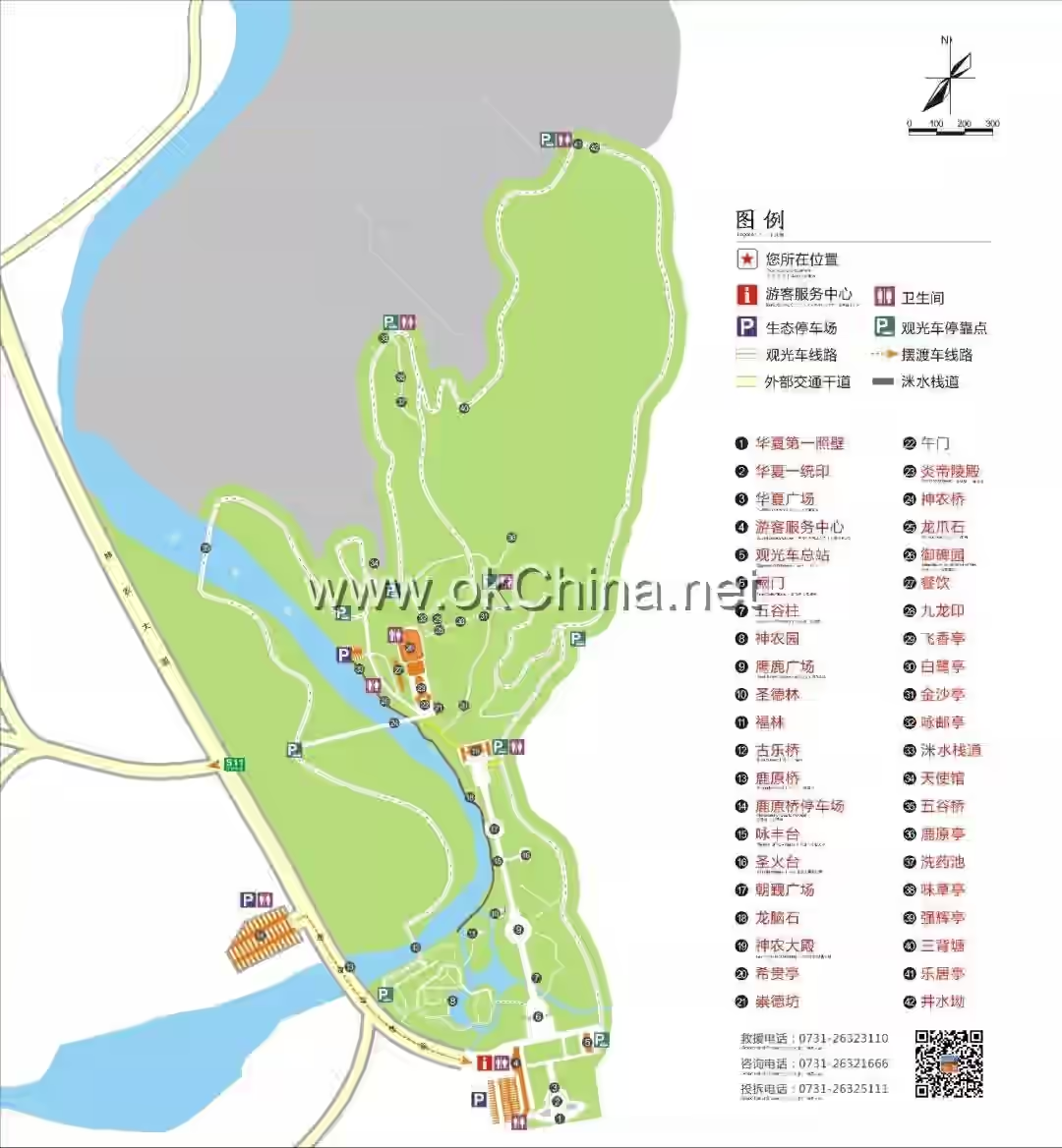
The Yandi Mausoleum Scenic Area primarily consists of five functional zones: the Mausoleum Hall Worship Area, the Shennong Hall Public Sacrifice Area, the "Shennong Garden" Memorial Area, the Huangshan Ecological Sightseeing Area, and the Mishui River Scenic Belt. It comprises over 110 (some sources say over 80) natural and cultural landscapes, including the Yandi Mausoleum Hall, Shennong Hall, Shennong Garden, Que Gate, Huaxia Square, Fuling Forest, Shengde Forest, Huangshan Stele Forest, and the Yandi Mausoleum Memorial Archway. Since opening to the public, the scenic area has received over 15 million domestic and international visitors, hosted more than 100 Chinese Party and state leaders, and held over 5,000 cultural and sacrificial ceremonies. Among these, the Hunan Provincial People's Government has conducted 10 public sacrifices, and over 30 Party and state leaders, including Chen Yun and Jiang Zemin, have inscribed calligraphy for the mausoleum.
2. Geographical Environment
2.1 Location and Territory
The Yandi Mausoleum Scenic Area is situated at the southern foot of Yanling Mountain in Luyuan Town, Yanling County, Zhuzhou City, Hunan Province. Yanling County, where the scenic area is located, lies in the southeastern border of Hunan Province, in the middle section of the Luoxiao Mountains and the upper reaches of the Mishui River. Its coordinates range from approximately 113°34′ to 140°07′ east longitude and 26°03′ to 26°39′ north latitude. It borders Jinggangshan, Jiangxi Province to the east; Guidong and Zixing to the south; Anren and Yongxing to the west; and Chaling to the north.
2.2 Topography and Landforms
Yanling Mountain is also known as "Huangshan." The terrain of Yanling Mountain slopes from south to north. It is 1.8 kilometers long from north to south, 1.1 kilometers wide from east to west, covering an area of approximately 2 square kilometers. It is flanked by Baihe Peak and Bijia Mountain to the north, and shielded by Jinzi Peak and Hengyue Mountain to the south. The majestic Yanglu Immortal Peak lies to its east, and the imposing Jinhua Cliff to its west.
2.3 Climatic Characteristics
Yanling County, where the Yandi Mausoleum Scenic Area is located, has a subtropical monsoon climate characterized by "mild temperatures, distinct seasons, early and rapid spring warming, abundant rain in spring and summer, frequent droughts in summer and autumn, short severe cold periods, and long hot periods." According to meteorological data from the Yanling County Weather Station, the multi-year average temperature is 17.3°C. The extreme maximum temperature recorded was 39.5°C (July 17, 1991), and the extreme minimum was -9.3°C (February 9, 1972). The average relative humidity is 82.6%. The multi-year average annual rainfall is 1753.1 mm, with a maximum annual rainfall of 2447.2 mm and a maximum daily rainfall of 195.4 mm. The multi-year average number of rainy days is 141, concentrated from March to August, accounting for 70.2% of the annual rainfall.
2.4 Hydrological Features
The Mishui River is a first-level tributary of the Xiang River and a second-level tributary of the Yangtze River. It is the third largest tributary of the Xiang River after the Leishui and Xiaoshui Rivers. Legend has it that the Mishui River is called the "Holy Water River" because it flows past the resting place of Emperor Yandi.
3. Main Attractions
3.1 Mausoleum Hall Worship Area
3.1.1 Yandi Mausoleum Hall
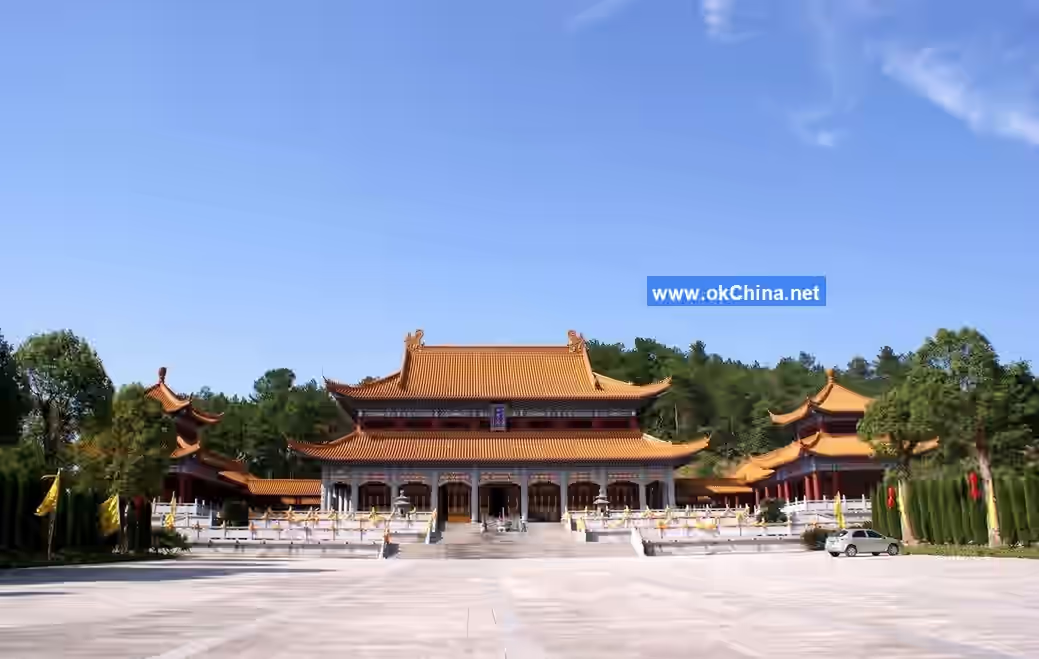
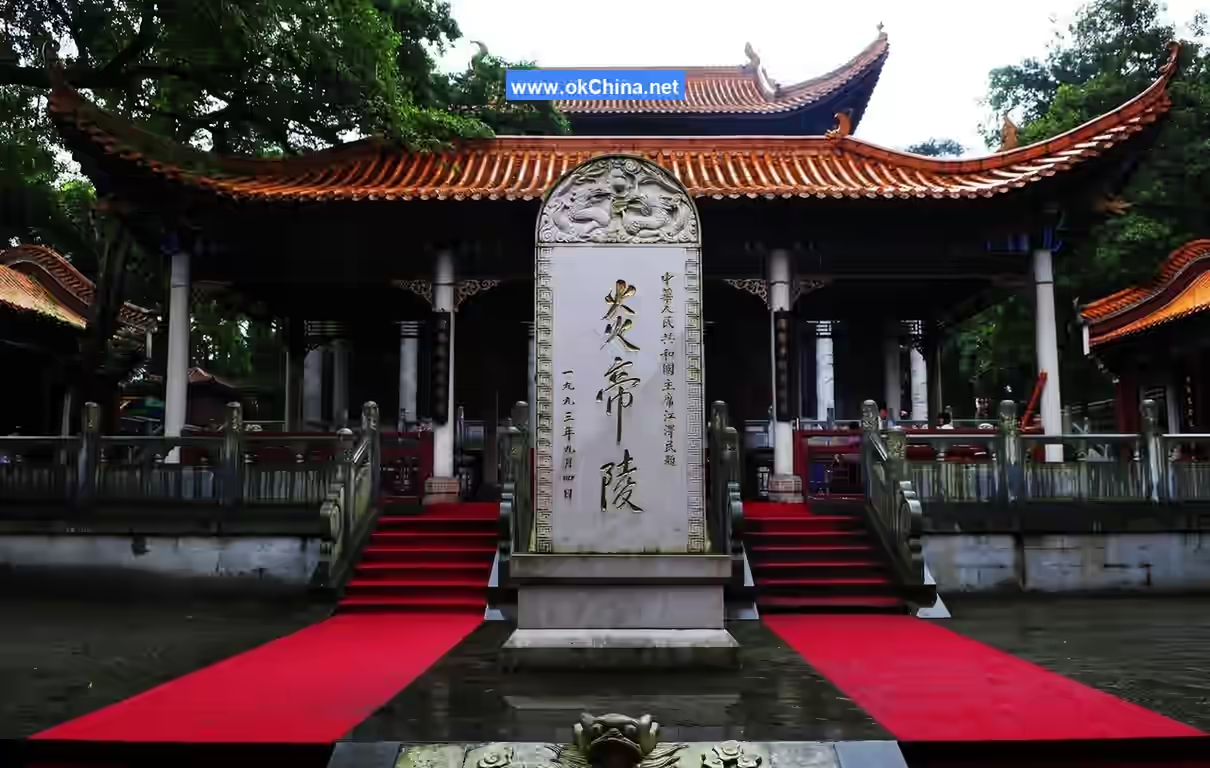
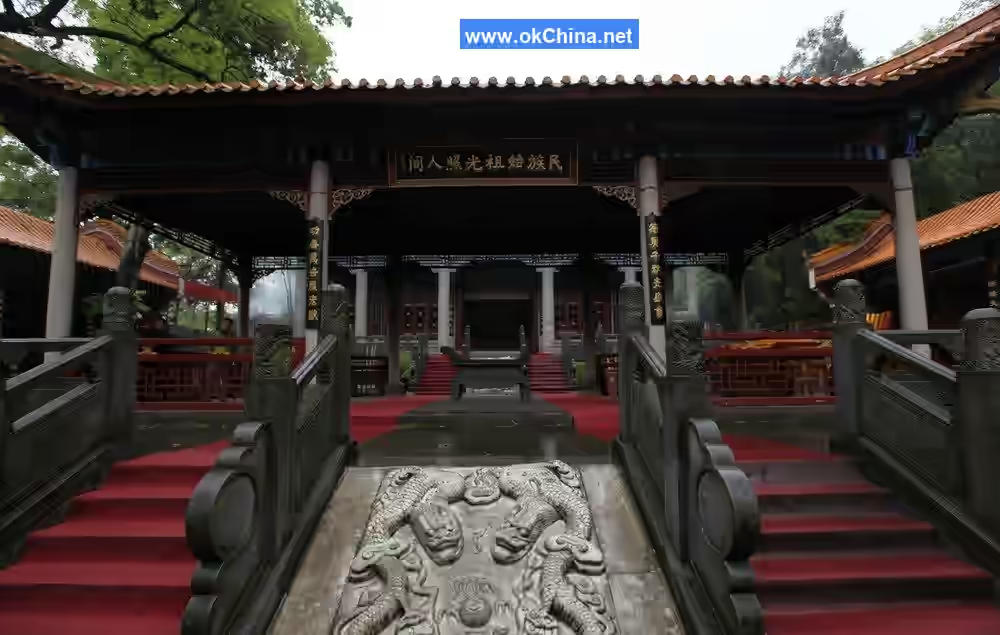
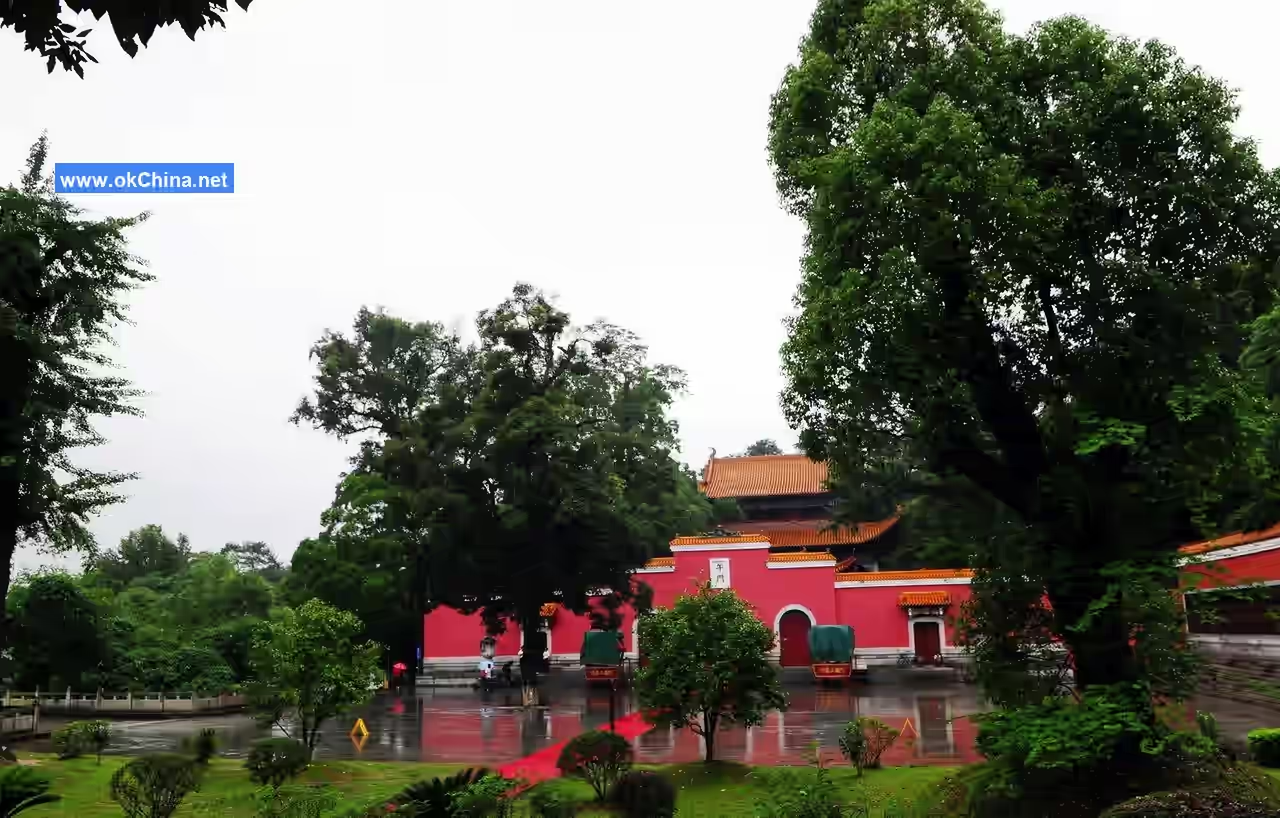
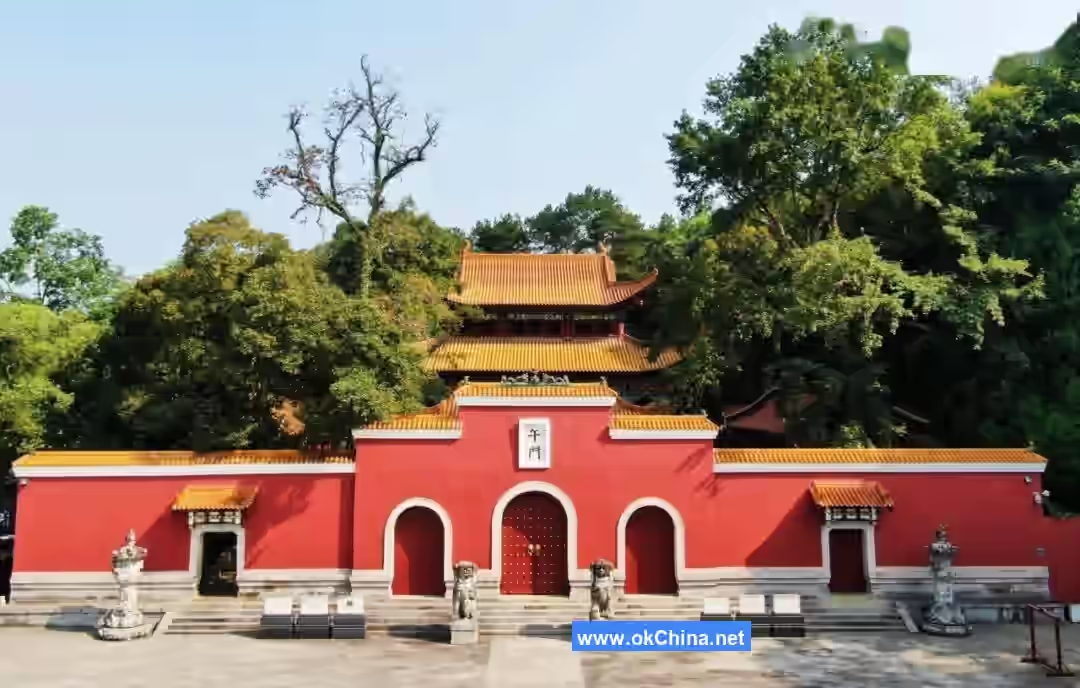
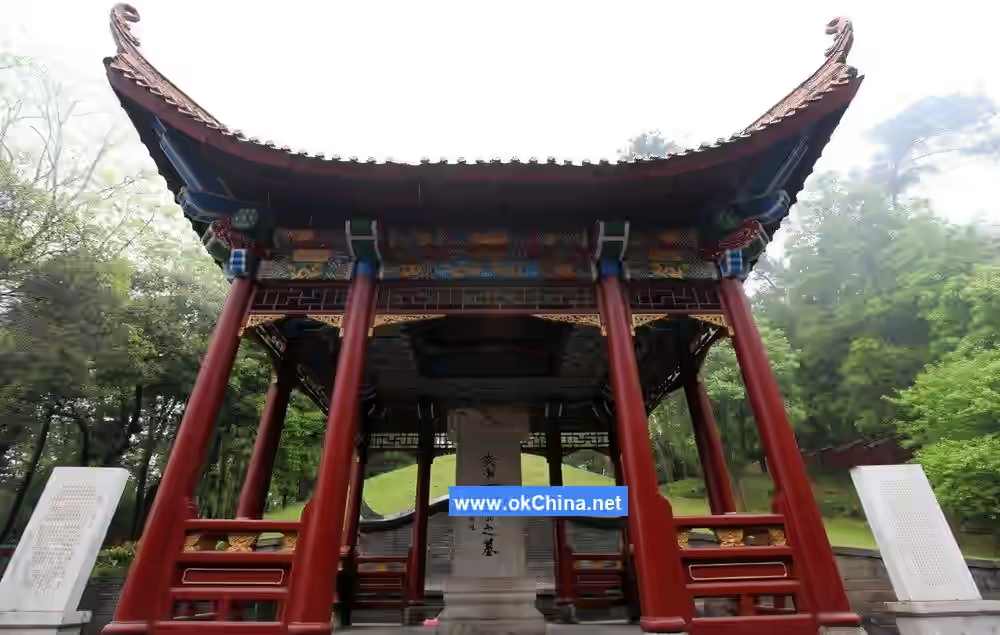
The Yandi Mausoleum Hall was first built in the fifth year of the Qiande era of the Northern Song Dynasty (967 AD). Through expansions and improvements over successive dynasties, it has evolved into its current five-courtyard layout with Qing Dynasty architectural style. It measures 73.4 meters north-south, 40 meters east-west, covering a site area of 4,936 square meters with a building area of 903 square meters, featuring an imperial palace architectural layout. It consists of five sections: the Meridian Gate, the Ceremonial Pavilion, the Mausoleum Hall, the Tombstone Pavilion, and the Tomb Mound.
3.1.2 Imperial Stele Garden
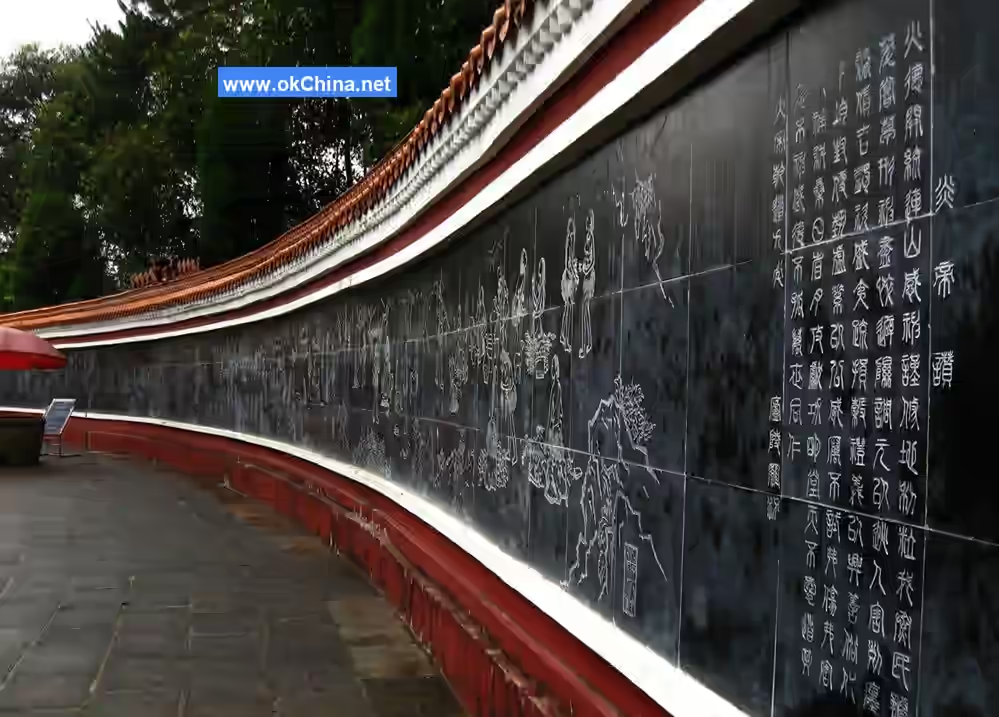
The Imperial Stele Garden is located north of the central axis of the Yandi Mausoleum Hall, covering an area of 6,400 square meters with a building area of 280 square meters. The garden is divided into four cultural sections: The "One Corridor" refers to the Imperial Stele Corridor, a hard-mountain roof with a rolled-shed roof style antique-style building flanking the east and west sides. The corridor is 84 meters long and 3.3 meters wide, with walls inlaid with 51 imperial sacrificial steles from the Ming and Qing dynasties and 5 commemorative steles, totaling 56 steles, symbolizing the great unity of China's 56 ethnic groups. The "One Wall" refers to the "Shennong's Achievements" mural, embedded in the screen wall on the north side of the Imperial Stele Garden. It is arc-shaped, 40 meters long and 1.5 meters high, composed of 160 pieces of dark bluish granite. The mural integrates traditional carving and painting arts, using line-carving techniques to vividly depict Shennong Yandi's ten great achievements: making bows from bent wood and arrows from sharpened wood; developing the 64 hexagrams from the Eight Trigrams; tasting hundreds of herbs to promote medicine and cure diseases; fashioning plows from carved wood and bending wood for plowshares; teaching people farming and cultivating the five grains; crafting the first zither from tung wood and initiating wax sacrifices; building the first Mingtang (ceremonial hall) and choosing land for settlement; making pottery from clay while farming; weaving hemp into cloth and making clothes; establishing the midday market and initiating trade. It portrays Yandi's persevering pioneering spirit, indomitable innovative spirit, self-reliant enterprising spirit, and selfless dedication. The mural covers 60 square meters, depicting 99 figures, 30 types of animals, 30 types of plants, and 60 types of objects across 10 relatively independent scenes. Due to ingenious design and fine craftsmanship, the mural has sound transmission and amplification effects, earning it the name "Shennong Sound Transmission Wall." The "Four Steles" refer to the Imperial Sacrificial Stele, Commemorative Stele, Folk Sacrificial Stele, and Reunification Stele. On the east and west sides of the flowerbed platform north of the Nine Cauldrons Terrace stand the "Resumption of Chinese Sovereignty over Hong Kong" monument erected on June 30, 1997, and the "Resumption of Chinese Sovereignty over Macao" monument erected on December 20, 1999. Both Reunification Monuments are made of white marble, 3.3 meters high, with a stele body height of 2.2 meters, thickness of 25.5 cm, and width of 1.2 meters. The front is carved with nine dragons and clouds (also called the "Nine Dragons Stele"). The back is inscribed with the administrative maps of Hong Kong and Macao and quotations from Deng Xiaoping and Jiang Zemin. Along the central axis north of the Nine Cauldrons Terrace stands the "Longing for the Complete Reunification of the Motherland" stele. Its front is carved with a complete map of China's administrative regions, accompanied by a date-changing plate updated daily. The back bears Deng Xiaoping's quotation on "one country, two systems." Behind it stands the "Sacrifice to Yandi Shennong" stele inscribed by Comrade Li Tieying. The "Nine Cauldrons" refer to the Nine Cauldrons Terrace located at the center of the Imperial Stele Garden's axis. It has a double-layer structure, circular on the outside and square on the inside. The outer circular platform has a diameter of 18 meters and a height of 0.9 meters, paved with cobblestones. The inner square platform has sides measuring 9.999 meters and a height of 0.5999 meters, paved with polished granite slabs. Nine square granite cauldrons, each weighing 1.11 tons, are placed on the square platform in three parallel, evenly spaced rows. The Nine Cauldrons symbolize the highest state power in ancient China, here embodying the aspiration for national reunification and prosperity.
3.2 Shennong Hall Public Sacrifice Area
3.2.1 Yandi Mausoleum Que Gate
The Yandi Mausoleum Que Gate is located at the entrance of the Public Sacrifice Area. In May 2011, this project was honored as one of Zhuzhou City's "Ten Landmark Key Projects." It was constructed using the dry-hanging stone technique. The main tower is 17.09 meters high and is acclaimed as the "First Que in China."
3.2.2 Yandi Mausoleum Memorial Archway
The Yandi Mausoleum Memorial Archway was built to welcome the 1994 public sacrifice to Yandi Mausoleum by various sectors of Hunan Province. The archway is located at the intersection of National Highway 106 and the road to Yandi Mausoleum, about 9 kilometers from the mausoleum. It covers an area of over 2,000 square meters, stands 18.66 meters high, and spans 22 meters across its main structure. It is a four-pillar, three-bay structure faced with granite slabs. The northern horizontal plaque is inscribed with the calligraphy of President Jiang Zemin: "Yandi Mausoleum." The southern horizontal plaque bears the inscription by Comrade Chen Yun: "Descendants of Yan and Huang, never forget the first ancestor." Steps and a small circular plaza are built in front of and behind the archway. The area is lush with juniper, creating a majestic atmosphere.
3.2.3 Shennong Hall
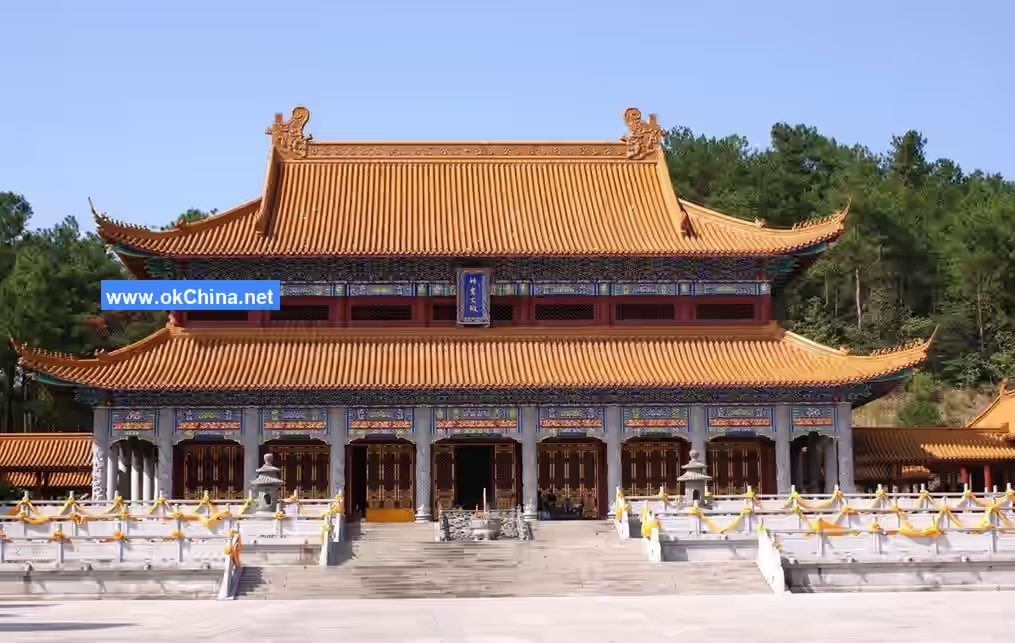
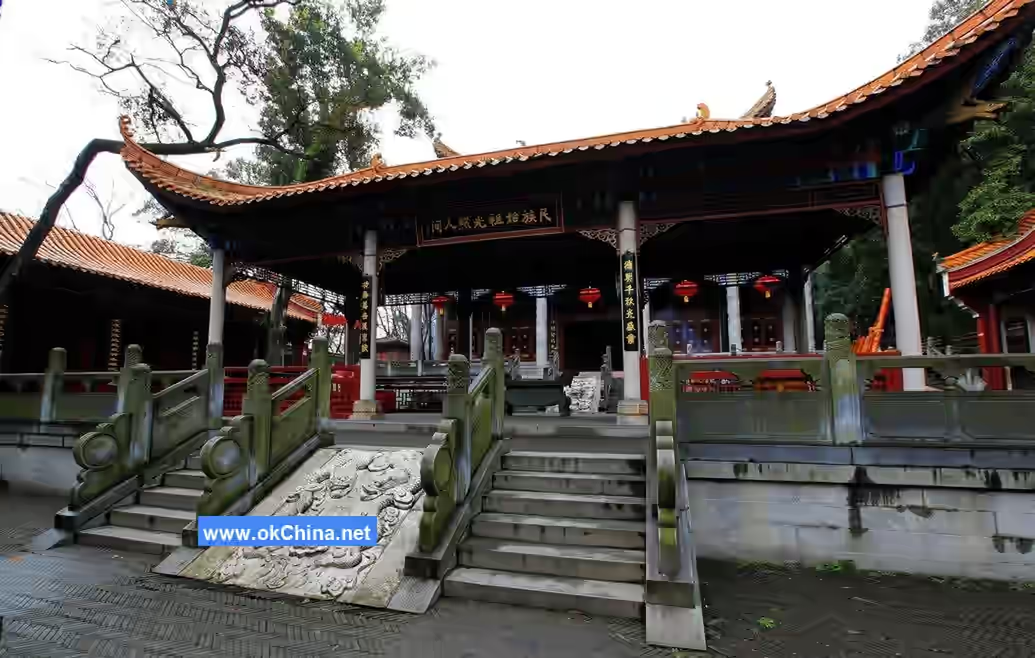
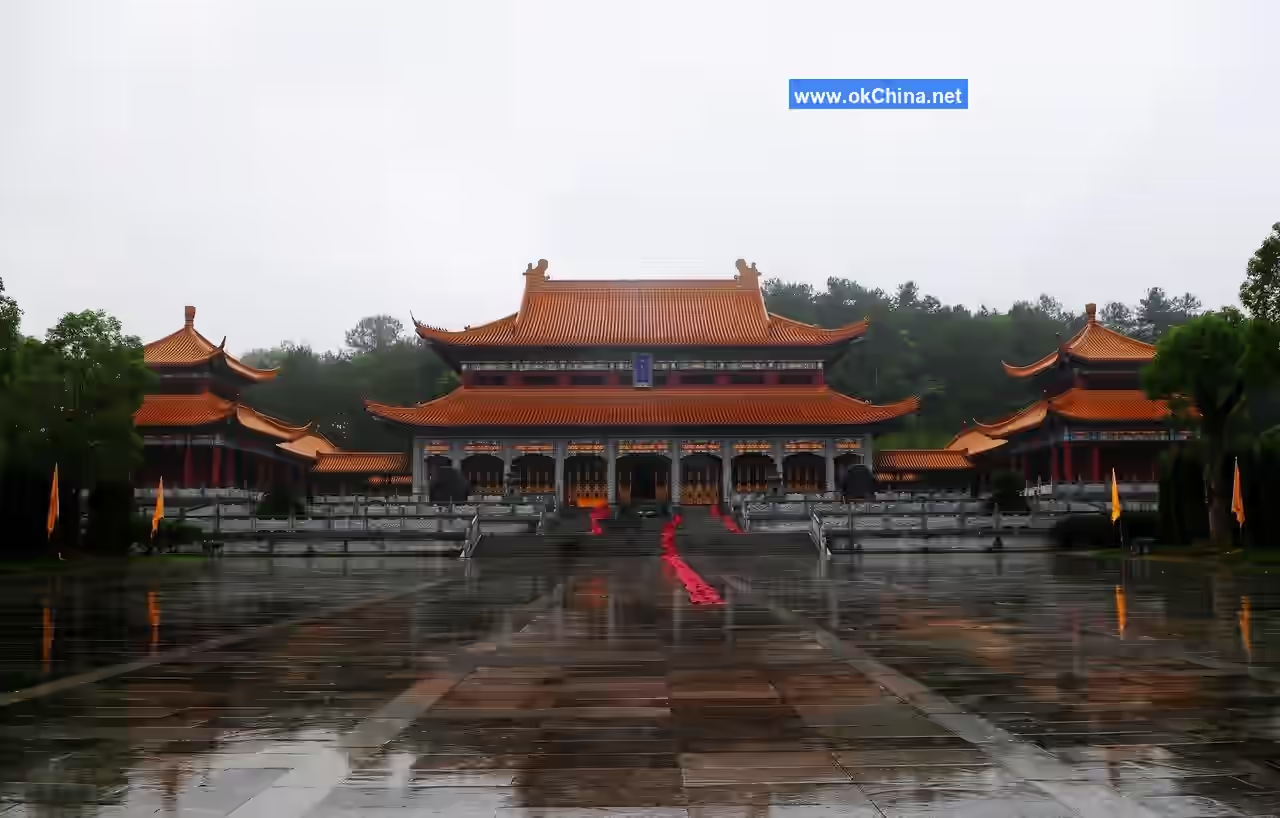
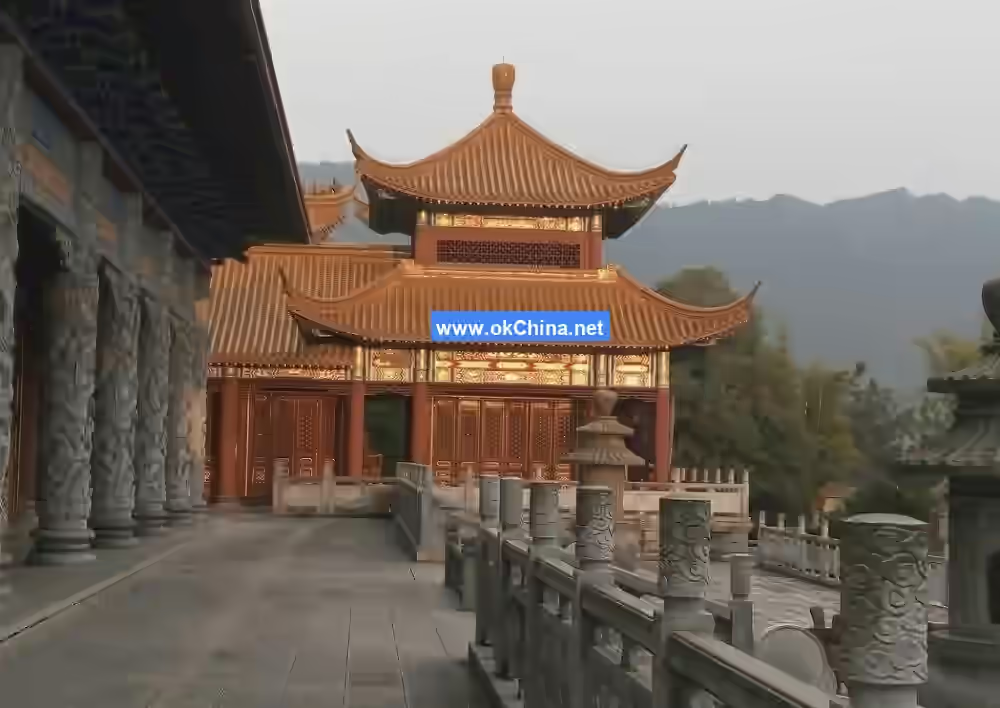
Shennong Hall is a Qing Dynasty-style building with a double-eave hip-and-gable roof structure, consisting of a main hall, side halls, connecting corridors, and square pavilions. It covers a site area of 3,920 square meters with a building area of 1,680 square meters. The main hall is 37 meters wide, 24 meters deep, and 22.9 meters high. The front corridor features coiling dragon stone pillars, each 5.4 meters high and 0.8 meters in diameter. There are 20 stone pillars in the rear and side outer corridors, each 5.4 meters high and 0.6 meters in diameter, all made from single pieces of granite.
3.2.4 Statue of Yandi
The statue of Yandi is 9.7 meters tall. Its base is 8.7 meters long and 4.7 meters wide. The statue weighs approximately 390 tons and is carved from red granite. Yandi holds a grain ear in one hand and a plow (leisi) in the other, symbolizing the pioneering of agricultural culture.
3.3 "Shennong Garden" Memorial Area
Shennong Garden is located in the core area of Yandi Mausoleum, covering over 140 acres. It represents a exquisite combination of human artifice and nature, serving as an important supplement to the Worship and Sacrifice Areas of Yandi Mausoleum, and enriching the functions and attractions of the scenic area.
3.4 Huangshan Ecological Sightseeing Area
3.4.1 Nine Dragons Seal
The Nine Dragons Seal is located on the Seal Terrace of the Huangshan Stele Forest. The stone seal is a rectangular parallelepiped made of white marble, placed horizontally on a cube-shaped seal base. The seal face is a square with sides of 1 meter, inscribed with the seal script "First Mausoleum in China" by the famous Chinese epigrapher Mr. Li Li. The seal body is 1.5 meters long, and the seal knob is carved with nine dragons, appearing crystal clear and lifelike. The seal base is 1.3 meters high and consists of three tiers: the top is a black diabase seal pad, and the bottom is a white marble pedestal. The seal weighs 4.5 tons, with a total weight of 8 tons. The seal script "First Mausoleum in China" and the pedestal inscription "Nine Dragons Seal" are simple, ancient, vigorous, powerful, and concise. The seal's volume, weight, and the style of its calligraphy and carving are considered the "Three Uniques," earning it the title "World's First Seal."
3.4.2 Chongde Archway
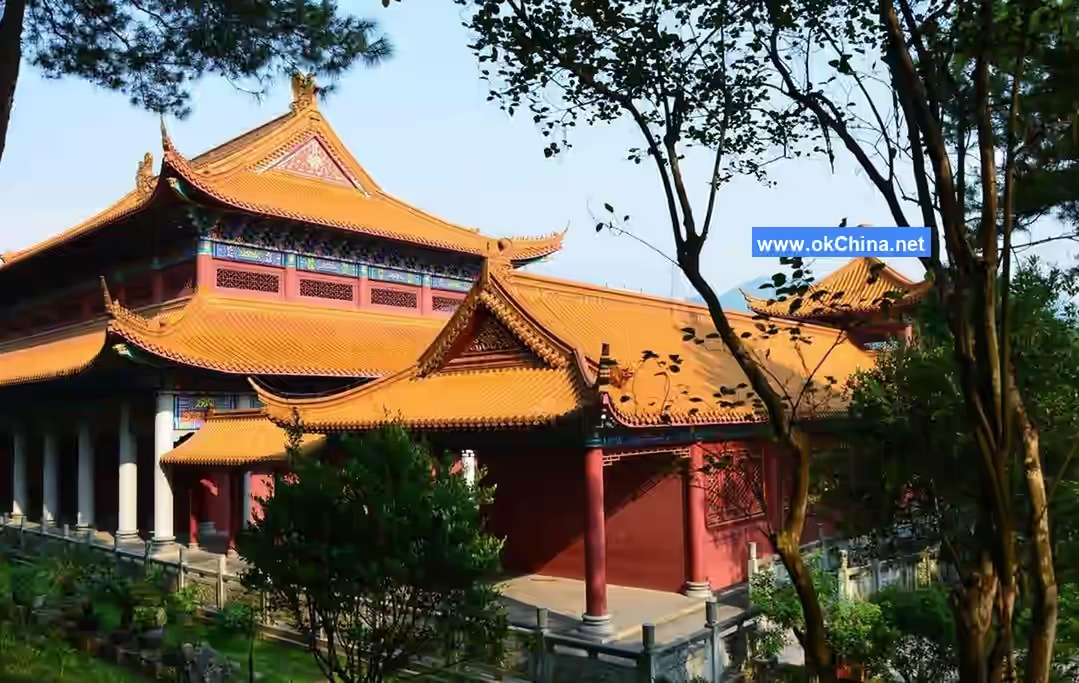
The Chongde Archway is located on the left side of the plaza in front of the Meridian Gate. It is 8.67 meters high and was converted from the "Huangshan" mountain gate in 2004. It is inlaid with stone tablets listing the names of organizations and individuals who donated to the construction of Yandi Mausoleum, serving as recognition. The top is inscribed with the three gilded characters "Chongde Archway."#### 3.4.3 Angel Hall Angel Hall, also known as the Angel's Traveling Lodge, was initially built in the early Ming Dynasty. It originally consisted of three parallel buildings, serving as the fasting and residence quarters for officials conducting sacrificial ceremonies throughout successive dynasties. The central building was designated for the chief sacrificial officer appointed by imperial decree, while the left and right buildings housed the accompanying officers. Due to repeated damage from disasters and wars, it was destroyed and rebuilt multiple times. In 1988, it was reconstructed on a hillside 400 meters northwest of the Mausoleum of Emperor Yan. This three-story structure features a double-eave gable and hip roof with a brick-concrete and wood framework, covering an area of 513 square meters. It is characterized by blue brick walls, yellow tile roofs, bright red pillars, and latticed doors and windows. The hall is supported by southern-style Ruyi bracket sets and surrounded by garden paths lined with Elaeocarpus, osmanthus, glossy privet, pines, and cypresses, creating a serene and solemn atmosphere. It currently serves as the office of the Mausoleum of Emperor Yan Management Bureau.
3.4.4 Ode to Bounty Terrace
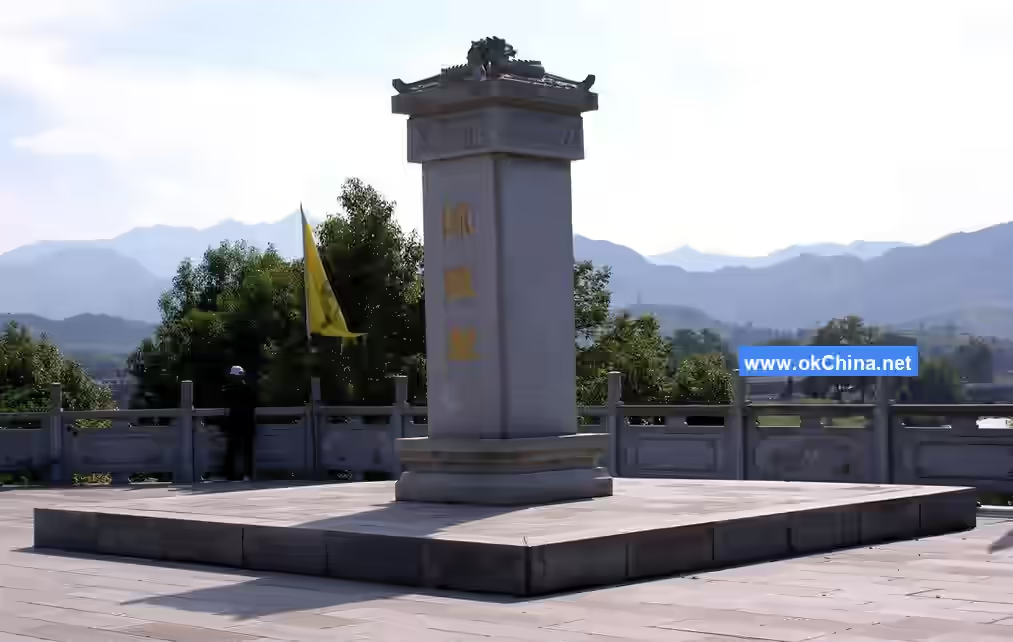
Ode to Bounty Terrace is located on the western slope of Longzhu Mountain, echoing the Sacred Fire Terrace from afar. It was first built in the seventh year of the Daoguang reign of the Qing Dynasty (1827) and collapsed in the early years of the Republic of China. During the restoration of the Mausoleum of Emperor Yan in 1988, it was rebuilt on the left hillside of the mausoleum hall. Originally, the terrace featured the Ode to Bounty Pavilion, an octagonal double-eave structure with a roof height of 7 meters. The pavilion's plaque bore the horizontal inscription "Ode to Bounty Terrace" and the couplet: "The terrace records the praise of abundant years; the pavilion retains the fragrance of bygone days." In 2002, during the construction of the public sacrificial area of the Mausoleum of Emperor Yan, it was relocated to the platform on the western side of Longzhu Mountain. The current Ode to Bounty Terrace stele is carved from a single piece of granite, standing 2 meters high with sides measuring 1 meter each and weighing approximately 5.5 tons. The top of the stele is engraved with a four-sided dragon pedestal.
3.4.5 Sacred Fire Terrace
The Sacred Fire Terrace is situated on Longzhu Mountain south of the Shennong Grand Hall, positioned east of the sacrificial avenue opposite the Ode to Bounty Terrace. It was constructed in 1993 to ignite the sacred flame for the first "Yan Huang Cup" World Chinese Dragon Boat Series. The terrace stands 40 meters high, with a central brownish-red ignition stone measuring 3.9 meters in height and 31 cubic meters in volume. The front of the stone is carved with a 1.5-meter-high vermilion pictographic character "炎" (Yan), resembling a burning torch. The sacred flame for the 1993 "Yan Huang Cup" World Chinese Dragon Boat Series was ignited here by Yuan Longping, the father of hybrid rice. The terrace consists of three pagoda-shaped tiers, each 0.6 meters high, forming trapezoidal circular platforms with diameters of 9 meters, 6 meters, and 3 meters respectively. The base is paved with granite slabs and enclosed by square granite railings measuring 100 meters on each side, symbolizing the ancient Chinese concept of a round heaven and a square earth. During the 2002 construction of the public sacrificial area of the Mausoleum of Emperor Yan, the original north-south stone steps of the Sacred Fire Terrace were removed and replaced with a stone staircase of 132 steps built on the western side, connecting to the Ode to Bounty Terrace below. Visitors ascending the Sacred Fire Terrace can enjoy panoramic views of the Mausoleum of Emperor Yan Hall and the Shennong Grand Hall, as well as appreciate the landscape of Yanling Mountain, which resembles a reclining dragon drinking water.
3.5 Mishui Scenic Belt
The Mishui Scenic Belt stretches from Xianren Bay at the north gate of Yunyang Mountain to Xiaoche Village in Xiadong Township. Utilizing the scenic resource advantages and topographical conditions of different sections, public facilities such as the Wind Sound Corridor, Bonfire Dance Ground, Landscape Pavilions, Leisure Clubs, and Resort Hotels have been developed. The belt comprises seven distinct areas, including the Qujiang Qixia Water Purification Ecological Park and the Jinsheng Lishui Urban Exhibition Park. As an important linear landscape within Chaling County's tourism spatial structure of "six zones, three centers, two axes, one ring, and one belt," the Mishui Scenic Belt integrates natural sightseeing and water recreation. It serves as a green ecological retreat and corridor in the northern part of Chaling City and is a key development project of Chaling County.
4. Historical Development
In the fifth year of Emperor Gaozu of Han (202 BC), Chaling County was established under the Changsha Kingdom. The location of the Mausoleum of Emperor Yan was within Kangle Township of Chaling County in the Changsha Kingdom.
In the sixth year of the Jianwu era of the Eastern Han Dynasty (30 AD), the Changsha Kingdom was changed to Changsha Commandery. According to the Ling County Annals, during the late Western Han Dynasty, uprisings such as the Red Eyebrows and Green Forests caused social turmoil. To prevent disorderly soldiers from desecrating the Mausoleum of Emperor Yan, local residents leveled the burial mound.
In the seventh year of the Tianbao era of the Tang Dynasty (748 AD), a Buddhist temple named "Tangxing Temple" was built in front of the mausoleum, yet sacrificial activities "occasionally took place" at the mausoleum.
In the fifth year of the Qiande era of the Northern Song Dynasty (967 AD), an imperial decree ordered the repair of the Mausoleum of Emperor Yan Temple to worship Emperor Yan Shennong, with Zhurong as a secondary deity. The court dispatched Ding Guyuan, an official from the Ministry of Justice, to Tanzhou to conduct the sacrificial ceremony.
In the thirty-fifth year of the Kangxi reign of the Qing Dynasty (1696 AD), Wang Shen, the Junior Minister of the Court of Imperial Stud, was sent by imperial decree to conduct sacrifices. He petitioned for and received approval to renovate the mausoleum and inscribed the tombstone with "Tomb of Emperor Yan Shennong."
In the eleventh year of the Yongzheng reign of the Qing Dynasty (1733 AD), Zhang Jun, the magistrate of Ling County, used state funds to reconstruct the Mausoleum of Emperor Yan according to designs issued by the Ministry of Works, initially forming the layout of the Meridian Gate, Ceremony Pavilion, Resting Hall, and the tomb mound.
In the seventeenth year of the Qianlong reign of the Qing Dynasty (1752 AD), Huang Yuemu, the prefect of Hengzhou Prefecture, inscribed the cliff at the foot of Jiaotouling with the four large characters "Yi You Sheng Ling" (The County Possesses a Sacred Mausoleum) in his own hand. He also inscribed "Lu Yuan Po" on the cliff beside Longzhao Stone.
In the seventh year of the Daoguang reign of the Qing Dynasty (1827 AD), Tang Caiwan, a government student, rebuilt the Feixiang Pavilion. Magistrate Shen Daokuan inscribed the four characters "Fei Xiang Jiu Ji" (Site of the Former Feixiang) in clerical script and had them engraved on a stele inside the pavilion.
In the seventeenth year of the Daoguang reign of the Qing Dynasty (1837 AD), a major restoration project was undertaken under the direction of Magistrate Yu Changhui, funded by donations from local gentry and commoners. This was the largest restoration during the Qing Dynasty.
In the twenty-ninth year of the Republic of China (1940 AD), Xue Yue, Chairman of the Hunan Provincial Government, temporarily relocated the provincial government to Yanling Mountain in Ling County. During the construction of the provincial government residences, the officials in charge, noting the dilapidated state of the Mausoleum of Emperor Yan, reported to Xue Yue and obtained approval for special provincial funds to repair the mausoleum.
On New Year's Eve of 1954, a fire accidentally ignited by incense and candles used by worshippers burned the colored banners inside the hall, resulting in the destruction of the main hall and the Ceremony Pavilion of the Mausoleum of Emperor Yan.
During the period from May 1966 to October 1976, the mausoleum hall and its auxiliary buildings were severely damaged again, with everything except the tomb mound being razed to the ground.
On June 28, 1986, the restoration project of the mausoleum hall officially commenced under the direction of the Ling County People's Government and was successfully completed in October 1988.
In October 1988, the main restoration project of the Mausoleum of Emperor Yan was completed, and the mausoleum was officially opened to the public.
5. Cultural History
According to historical records, Emperor Yan Shennong was the leader of the Jiang surname tribe in ancient times, emerging during the Neolithic Age, with its upper limit around 10,000 years ago and its lower limit approximately 4,800 years ago. Emperor Yan Shennong is the founder of Chinese agricultural culture and made pioneering and great contributions to the rise and proliferation of the Chinese nation. He invented the plow and taught people farming; tasted numerous herbs and invented medicine; wove hemp into cloth and made clothing; established markets at noon, initiating trade; engaged in pottery making while farming and built the first Mingtang (ritual hall); carved tong wood to make the first qin (zither) and initiated wax sacrificial ceremonies; strung wood to make bows and sharpened wood to make arrows to assert authority over the land. Emperor Yan's persevering pioneering spirit, indomitable innovative spirit, self-reliant and enterprising spirit, and selfless dedication are integral components of the Chinese national spirit and serve as a perpetual source of strength for the enduring prosperity of the Chinese nation. In his later years, Emperor Yan traveled to Hunan to gather herbs and treat people's illnesses. Despite encountering seventy poisons in a single day, he persisted until he mistakenly consumed "Duanchang Cao" (a poisonous herb) and was buried at "the end of Changsha Tea Township," present-day Luyuanpo, Luyuan Town, Yanling County, Zhuzhou City, Hunan Province.
Comments
Post a Comment