
Nanyang Xixia Dinosaur Relics Park - Funiu Mountain - Laojieling Tourist Area
1. Introduction
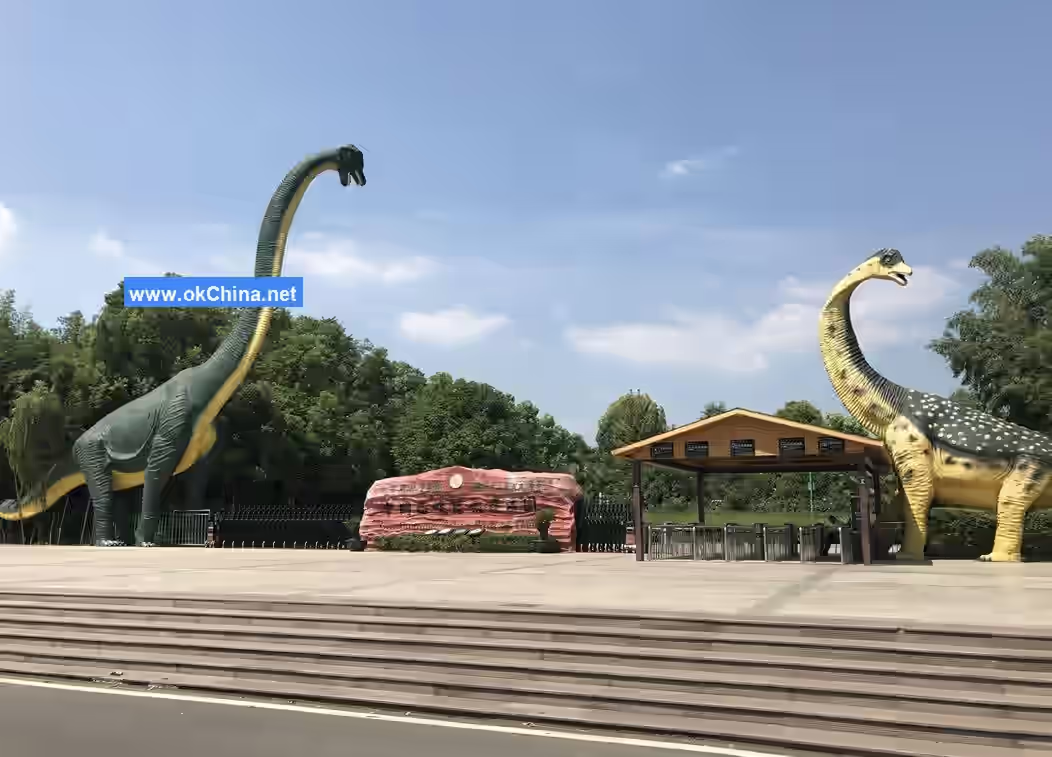
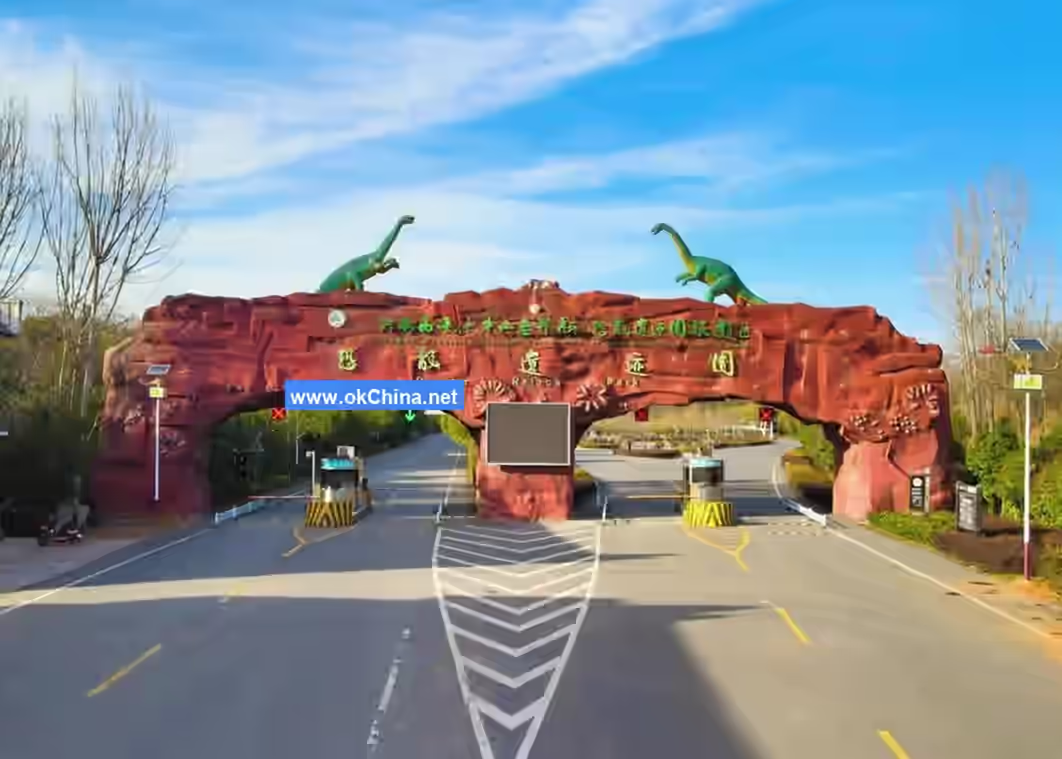
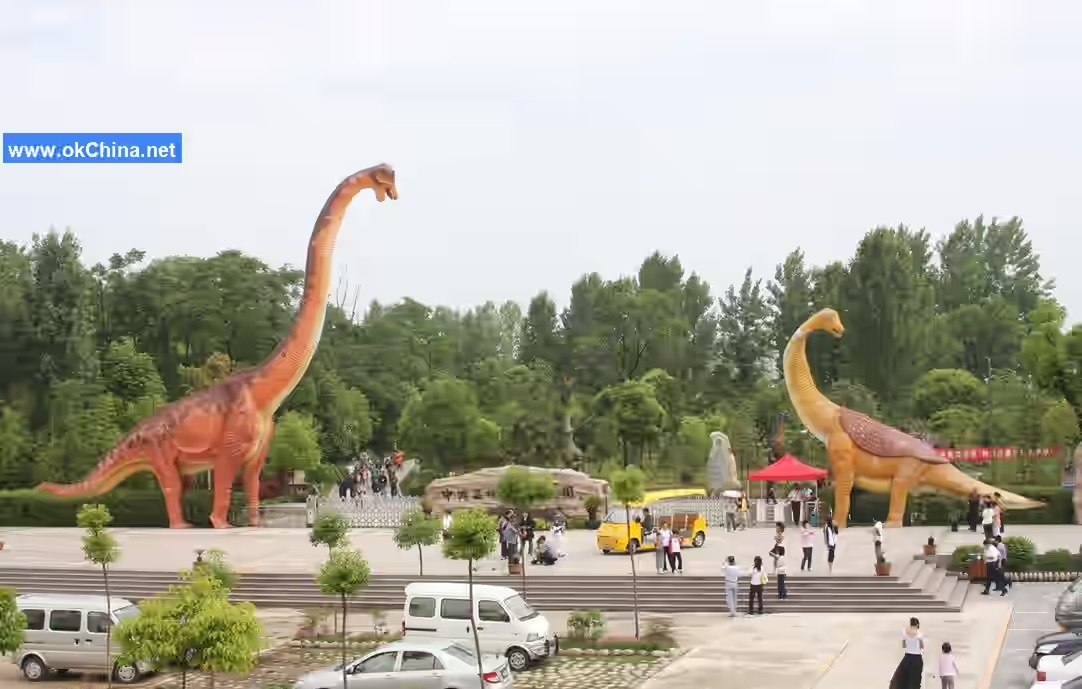
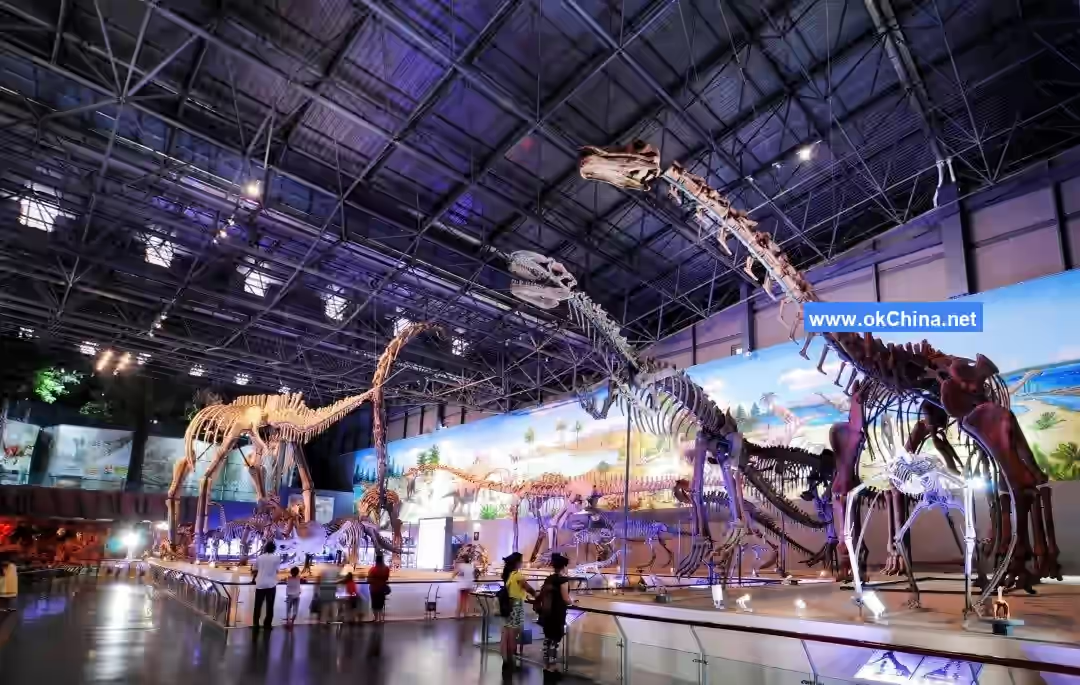
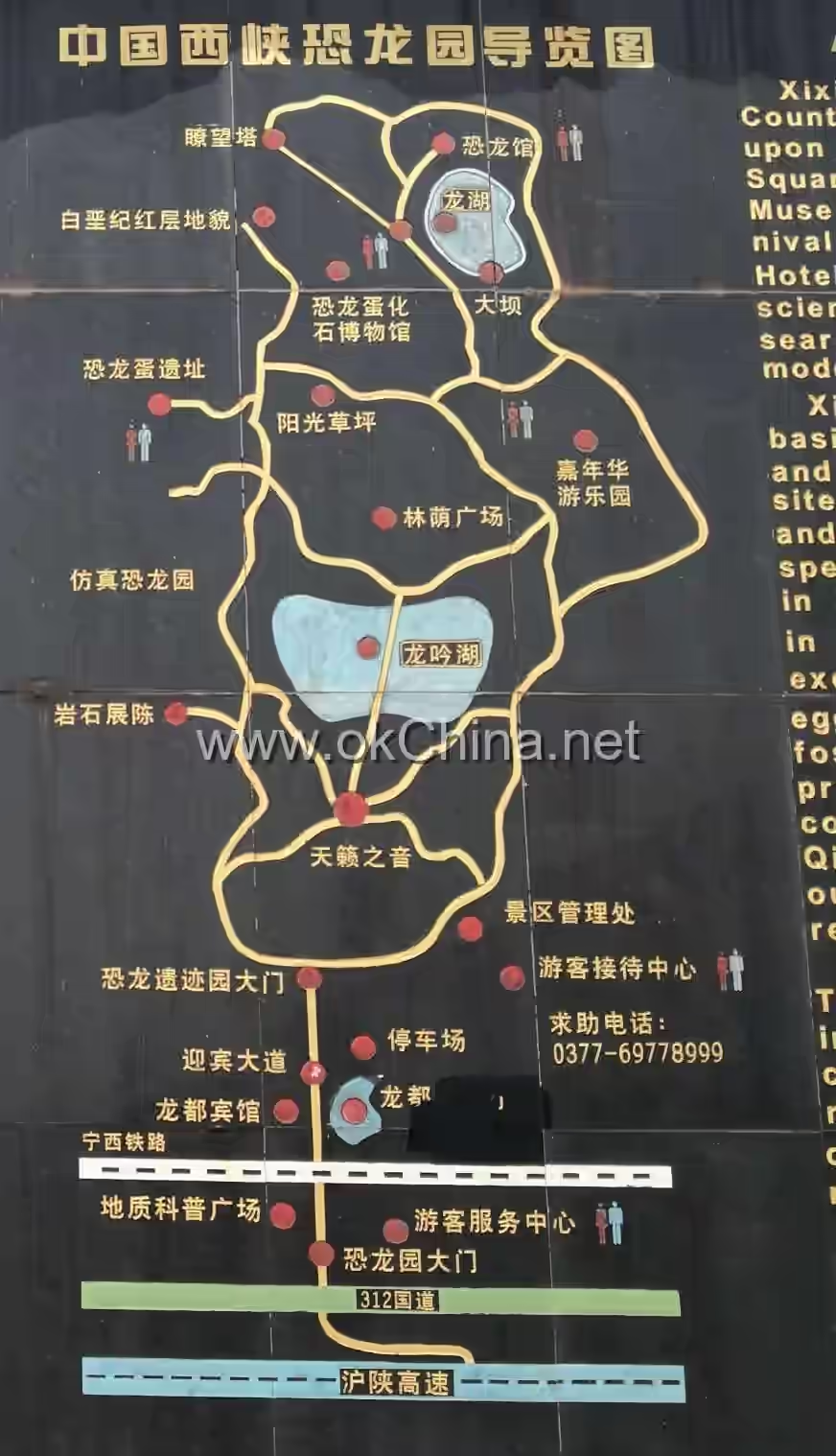
The Nanyang Xixia Dinosaur Relics Park - Funiu Mountain - Laojieling Tourist Area is located in Xixia County, Nanyang City, Henan Province, and is an important component of a National 5A-level Tourist Attraction. This tourist area consists of three core scenic spots: the Xixia Dinosaur Relics Park, Funiu Mountain, and Laojieling. It covers a vast total area and encompasses rich geological, ecological, and cultural resources. The Xixia Dinosaur Relics Park is renowned for its dinosaur egg fossil clusters. Located in Danshui Town, Xixia County, Henan Province, at the eastern end of the Qinling Mountains and the southern foothills of Funiu Mountain, the park primarily comprises a Geological Science Plaza, a Dinosaur Egg Fossil Museum, a Dinosaur Museum, Dinosaur Egg Sites, a Simulated Dinosaur Park, and Longdu Water Park. It is a large dinosaur-themed park integrating science education, sightseeing, entertainment, and scientific research, seamlessly blending the primitive with the modern. As a core scenic area of the Nanyang Funiu Mountain UNESCO Global Geopark, it is hailed as the "Ninth Wonder of the World." Funiu Mountain is famous for its majestic peaks and diverse ecosystems, while Laojieling is the main peak of Funiu Mountain, boasting magnificent mountain scenery and profound cultural heritage.
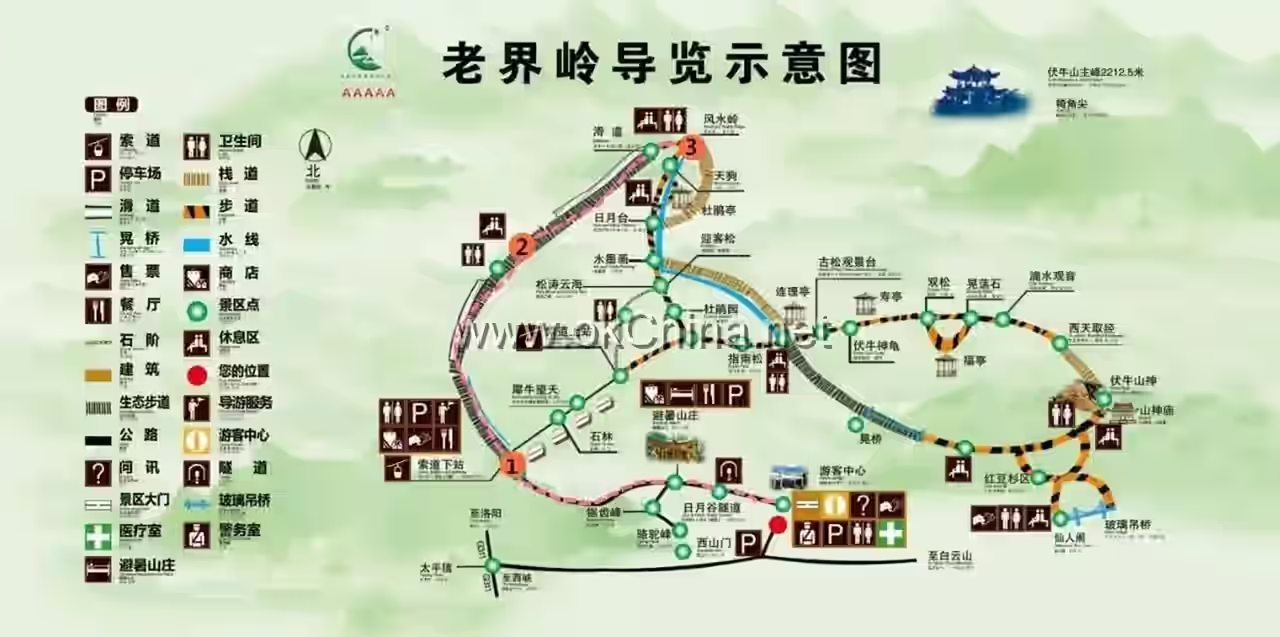
The Laojieling Scenic Area is located in the northern part of Xixia County, Nanyang City, Henan Province, on the upper section of the southern slope of Funiu Mountain, covering a total area of 86 square kilometers. The areas open to the public include three parts: the Watershed Scenic Area, the Immortal Peak Scenic Area, and the Summer Resort Area. The name "Laojieling" carries three layers of meaning:
- Lao (Old): Legend has it that Laozi once practiced asceticism and lived in seclusion at Laojieling. He is said to have transformed into stone (as the Mountain God) while praying for the peace of the eight-hundred-li Funiu Mountain.
- Jie (Boundary): Laojieling is an east-west trending mountain range in China, forming the climatic boundary between north and south.
- Ling (Ridge): It is the watershed between the Yangtze River and Yellow River basins, hence the name Laojieling.
Laojieling was established as a provincial-level nature reserve in 1982 and was upgraded to a national-level nature reserve in 1998, becoming the largest nature reserve in Henan Province by area. In 2014, the Xixia Funiu Mountain Laojieling Scenic Area was honored as a National 5A-level Tourist Attraction, being the only scenic area in Henan Province to receive this recognition that year and one of only two National 5A-level scenic areas in Nanyang City as of 2023.
2. Geographical Environment
2.1 Geographical Location
The Funiu Mountain area is located in western Henan Province, bordering Shaanxi Province to the west, extending to the north of Fangcheng County in the east, reaching the northern edge of the Nanyang Basin in the south, and bordering Xiaoshan Mountain in the north. Within China's three major topographic steps, Funiu Mountain lies in the transition zone from the second to the third step, trending northwest-southeast. It stretches approximately 400 kilometers east-west, covering a total area of about 10,000 square kilometers.
The northern branch of the Funiu Mountains developed into the Xiong'er Mountains and Waifang Mountains; the southern part borders the Nanyang Basin. The mountain range extends eastward to the northeast of Fangcheng, Nanyang, where it abruptly terminates, forming the famous "Fangcheng Gap." This gap is about 30 kilometers long and 8-15 kilometers wide, forming a southwest-northeast trending intermountain alluvial plain. Southeast of the gap lies undulating low hills. The "Fangcheng Gap" is a natural transportation corridor connecting the North China Plain with the Nanyang Basin and the Jianghan Plain.
2.2 Climatic Features
The Funiu Mountains form a transitional zone between northern and southern climates in China and serve as the watershed for the Yangtze River, Yellow River, and Huai River. Belonging to the transition zone from the northern subtropical to warm temperate zones, it is also the mountain range in Henan Province with the highest average elevation, relatively sparse human activity, and well-preserved natural ecology.
This area is a landmark for the northern subtropical mountain ecological environment, the source of the South-to-North Water Diversion Project, and the homeland of Cretaceous dinosaurs from the Mesozoic Era. Here, peaks rise one after another, forests stretch vast and green, springs and waterfalls cascade, birds sing, and flowers bloom. Grandeur blends with serene elegance, and rugged power coexists with delicate beauty, making it a region with highly unique ecological tourism resources in Henan Province.
3. Scenic Spots and Attractions
Major Tourist Attractions in Funiu Mountain: Laojieling, Yaoshan Mountain, Laojun Mountain, Baiyun Mountain, Chaya Mountain, Baotianman, Wuduo Mountain, China Nanyang Funiu Mountain UNESCO Global Geopark, etc.
3.1 Luoyang Laojun Mountain
The Luoyang Laojun Mountain Scenic Area is a National AAAAA-level Tourist Attraction, a National Nature Reserve, a UNESCO Global Geopark, and a National Geopark. Located about 3 kilometers south of Luanchuan County, Luoyang City, it was originally named Jingshi Mountain. It is the main peak of the eight-hundred-li Funiu Mountain, a branch of the Qinling Mountains, with an elevation of 2,200 meters. It was later renamed "Laojun Mountain" by Emperor Taizong of the Tang Dynasty because Li Er, the "Historian Keeper of the Archives" during the Western Zhou Dynasty, retreated here for seclusion and cultivation and was revered by Taoism as Taishang Laojun (the deified Laozi). This name has been used ever since.
3.2 Song County Baiyun Mountain
Luoyang Baiyun Mountain is located in the heart of the Funiu Mountains in southern Song County, Luoyang City, Henan Province. It is a National Forest Park, National Nature Reserve, National AAAAA-level Tourist Attraction, one of China's Top Ten Leisure Destinations, and was selected by Chinese National Geography as one of "China's Most Beautiful Places."
The scenic area covers a total of 168 square kilometers. Five major sightseeing areas have been developed: Baiyun Peak, Yuhuangding (Jade Emperor Summit), Jijiaoman (Little Huangshan), Jiulong Waterfall, and the Primeval Forest. It also features five major leisure areas: Baiyun Lake, the High Mountain Forest Oxygen Bar, the High Mountain Peony Garden, Liuhou Temple, and Luhua Valley.
The Baiyun Mountain Scenic Area uniquely gathers the waters of the three major basins—Yangtze River, Yellow River, and Huai River—on one peak, concentrating the essence of the three rivers on one mountain. This is unique in the Central Plains and can be called the ultimate masterpiece of "Central Plains Landscape Grand View."
Baiyun Mountain lies in the transition zone between the warm temperate and northern subtropical zones, with an average elevation of 1,800 meters. The summer maximum temperature does not exceed 26°C. It boasts extremely rich animal and plant resources. Surveys indicate 204 animal species and 1,991 plant species, with a forest coverage rate exceeding 95%. It is praised by experts and scholars as a "Natural Museum."
Within its territory, there are 37 peaks with elevations above 1,500 meters. Among them, Yuhuangding, at 2,216 meters, is the highest peak in the Central Plains and the best spot for watching the sunrise and sea of clouds.
Here, strange peaks stand elegant, clouds drift leisurely, waterfalls plunge, and deep forests and quiet valleys abound. The main landscapes include:
- Peculiar rock and perilous peak landscapes represented by the Central Plains' highest peak Yuhuangding, Jijiao Jian, and Immortal Bridge.
- Forest landscapes represented by the Alpine Rhododendron Forest, the vast Primeval Forest, and the Tang Dynasty Ginkgo Forest.
- Waterfall and pool landscapes represented by the Jiulong Waterfall, Pearl Pool, and Huanglong Well.
- Cultural landscapes represented by Liuhou Temple, Yuhuang Pavilion, Wuman Temple, and Yunyan Temple.
- Phenological landscapes represented by the Sea of Clouds at Sunrise, Jijiao Evening Glow, and Golden Autumn Red Leaves.
The entire scenic area integrates mountains, rocks, water, caves, forests, grass, flowers, birds, and beasts, where grandeur, peril, peculiarity, serenity, beauty, and wonder shine together. It has now become a comprehensive tourist area in the Central Plains region, combining sightseeing, vacationing and summer retreats, scientific research and field studies, and exploring ancient mysteries.
3.3 Xixia Laojieling
The Nanyang Xixia Laojieling Scenic Area is the main peak of Funiu Mountain and the core area of the Nanyang Funiu Mountain UNESCO Global Geopark. It is a National AAAAA-level Tourist Attraction and a National Nature Reserve. The Laojieling Nature Reserve in Xixia County is located in the northern part of the county, on the upper section of the southern slope of Funiu Mountain. It borders Luanchuan County and Song County of Luoyang City along the Laojieling ridge to the north and connects with the Neixiang Baotianman Nature Reserve to the east. The Laojieling Nature Reserve was established in 1982, at that time being the largest provincial-level nature reserve in Nanyang City by area. It was designated as a national-level nature reserve in 1998. Its western part belongs to the Yanzhen Forest Farm, and the eastern part to the Huangshi'an Forest Farm. Its geographical coordinates are 33°38"–33°47" N, 111°17"–111°31" E. It is 23 kilometers long east-west and 16.7 kilometers wide north-south, with a total area of 230,000 mu (approx. 153 sq km), of which 150,000 mu is within the Yanzhen Forest Farm and 80,000 mu within the Huangshi'an Forest Farm.
3.3.1 Jijiao Jian (Horn Tip)
The main peak, Jijiao Jian, is located in the northeast of Taipingzhen Township. It marks the boundary of Xixia, Luanchuan, and Song counties, with an elevation of 2,222.5 meters, making it the highest among the peaks. It is famous because the towering peak, viewed from afar, resembles a rooster stretching its neck eastward and crowing loudly. On clear days, Jijiao Jian appears bluish-purple, distinct and majestic. On cloudy or rainy days, it is shrouded in swirling clouds and mist, appearing and disappearing, creating an exceptionally spectacular scene.
3.3.2 Watershed Ridge
The Watershed Ridge, also called Fengshui Ridge, has an elevation of 1,900 meters. Figuratively speaking, a single drop of water from heaven or earth splits here: half flows into the Yangtze River basin to the south, and half into the Yellow River basin to the north. On the ridge, there is a watershed line. To the left of the line, the wind blows incessantly, while to the right, the air remains perfectly still, forming a magical natural phenomenon.
3.3.3 Funiu Mountain God
On the north side of the Goddess Peak at Laojieling, there stands a tall, upright stone peak remarkably resembling a seated statue of Laojun (Laozi). Viewed from the front, the eyes, nose, and mouth are clearly outlined and lifelike. Because it stands tall beside the main peak Jijiao Jian of Funiu Mountain, people customarily call it the Funiu Mountain God.
Legend has it that after Laozi achieved immortality through cultivation in the Laojun Cave, the first fairyland he chose to dwell in was Jijiao Jian. However, his immortal body was so heavy that with just one step, he caused the mountain peak to tilt southward. Having no choice, Laozi soared into the air and flew directly west to settle on Jingshi Mountain, which was subsequently renamed Laojun Mountain. Thus, although Laozi resided at Laojun Mountain, his heart remained at Jijiao Jian. Through his will, he transformed his soul into a wisp of smoke, which drifted directly towards Laojieling and quietly descended near the Goddess Peak, not far from Jijiao Jian, becoming a tall and massive divine statue, permanently settled. Over a hundred generations, through all vicissitudes, it has steadfastly guarded Funiu Mountain, protecting the peace and well-being of the eight-hundred-li Funiu Mountain range.
3.3.4 Goddess Peak
The Goddess Peak has an elevation of 1,910 meters and is the highest viewing platform accessible within the Laojieling Scenic Area. From here, one can simultaneously view three National 5A-level scenic areas: Laojun Mountain, Baiyun Mountain, and Laojieling. Furthermore, it offers the closest viewing distance of the Central Plains' highest peak—Jijiao Jian.#### 3.3.5 Sawtooth Peak The Sawtooth Peak viewing platform offers the best vantage point to observe the Sawtooth Peak. The mountains of Laojieling formed along the suture zone between the ancient North China Plate and the Yangtze Plate from the Sinian period, approximately 114 million years ago. Over a hundred million years of mountain uplift, continuous granite collapse created the current Sawtooth Peak landscape, characterized by steep mountains, crisscrossing canyons, and sheer cliffs. As a representative feature of the Funiu Mountain Geopark, the Sawtooth Peak stretches in undulating waves, presenting a majestic, magnificent, and awe-inspiring spectacle.
3.4 Yaoshan Mountain in Pingdingshan
The Yaoshan (Shirenshan) Scenic Area is located west of Lushan County, Pingdingshan City, Henan Province, in the eastern section of the Funiu Mountains. It is a national geopark. The mountain gained its name because Liu Lei, a descendant of Emperor Yao, built a Yao Temple here to worship his ancestors. After 1980, it became a coveted tourist destination. In 1997, it was approved by the State Council as a national nature reserve. In 2002, it was announced by the State Council as a national key scenic area. In 2003, it was approved by the National Tourism Administration as a national AAAAA tourist attraction. In 2006, the Funiu Mountain range was designated a UNESCO Global Geopark. In 2011, it was rated as a national AAAAA scenic tourist area.
Yaoshan features peculiar peaks, numerous waterfalls, dense forests, excellent hot springs, and splendid cultural landscapes, combining grandeur, peril, elegance, uniqueness, and serenity. It is divided into ten main sections: Dongling Pond, Shifei Yuzhang, Sanchakou, Bailong Pond, Banxian Residence, Stone Figures, Jiguan Stone, Bainiu City, Secret Cave, and Hot Springs. Experts praise it for possessing the peril of Huashan, the steepness of Emei, the beauty of Zhangjiajie, and the elegance of Huangshan. It is an ideal place for tourism, sightseeing, summer retreats, convalescence, scientific research, and adventure.
Sheer cliffs, uniquely sculpted peaks, and myriad bizarre rocks are distinctive features of Yaoshan's natural scenery. Standing atop the main peak, Yuhuangding, one can see countless ridges and ravines, resembling flying dragons and dancing phoenixes. The scenery varies dramatically with distance and elevation, composing endlessly beautiful pictures. Mu Qing, former director of Xinhua News Agency, climbed Yaoshan twice and was enchanted by its beauty, leaving the inscription "The Finest in Central Plains" in admiration.
Yaoshan is also known as Dalong Mountain (Great Dragon Mountain). It is where Liu Lei, a descendant of Emperor Yao, established the Yao Temple to commemorate his ancestor, making it the ancestral origin of the Liu surname. Additionally, because many stone peaks on the mountain resemble human figures, it was historically called Shirenduo or Shirenshan (Stone Figure Mountain).
Yaoshan's peculiar peaks and rocks, mountain flowers, red leaves, waterfalls, hot springs, lakes, sea of clouds, primitive forests, rare birds and animals, along with cultural landscapes, form a complete scenic system. Over 240 sites have been named; there are 17 waterfalls ranging from 60 to 200 meters high, more than 40 stone pillars, and attractions such as Stone Figures, General Peak, Thousand-Zhang Cliff, Hehe Peak, Bainiu City Pass, Queen Mother's Sedan, Tongtian River, Nine-Bend Waterfall, Ghost Gate Pass, South Heavenly Gate, Rooster Crowing Peak, and Monkey Worshipping Guanyin scattered throughout the area.
Particularly enchanting are the mountain springs, streams, waterfalls, and deep pools. The springs of Yaoshan are lively and playful, seeming to whisper, laugh, weep, or narrate, ever-changing and full of vitality. Hundreds of springs converge into clear streams, like the mountain's soulful spirits, gurgling and tinkling, singing along with travelers while guiding the way. These streams leap out from deep valleys and, encountering cliffs, form waterfalls large and small—some light and flying, some majestic and unrestrained, some a dozen feet high, others cascading dozens of zhang. Dripping water wears through stone, accumulating into pools.
Black Dragon Pool, White Dragon Pool, Hundred-Foot Pool... hidden in steep gullies, concealed within mountain forests. Among the many waterfalls, White Dragon Pool Waterfall is the most spectacular. Water plunges directly from the mountaintop, rushing down like a descending white dragon, its roaring sound like a tiger's roar or thunder, audible for miles. At lower levels, water droplets sprinkle and spray; higher up, clouds, water, and mist drift and linger. Fish in the pool appear and disappear, gather and scatter, floating freely. "Scenery changes with mist, rain, or shine, shifting with the four seasons." Due to Yaoshan's humid climate and terrain, foggy days are frequent. When thick fog spreads, peaks appear and disappear like boats drifting on a vast sea. When thin mist lingers, it resembles light gauze or wisps of smoke, drifting leisurely. Sometimes, rolling clouds and waves surge, appearing and fading. Under certain weather conditions, phenomena like Buddha's Halo and rainbows may appear, mystical and ever-changing, like a dreamy fairyland.
Wang Anshi once said: "Where the path is smooth and near, many travelers go; where it is perilous and far, few reach. Yet the world's most extraordinary, magnificent, and remarkable sights are often found in those perilous and distant places." Yaoshan's deep forests and wild vines have kept even its hidden wonders from widespread fame. However, its thirty-six famous sites and seventy-two scenic spots are each as beautiful as a painting, each with a moving historical story or wonderful mythical legend.
3.5 Nanyang Baotianman
Baotianman Nature Reserve is one of China's 21 World Biosphere Reserves, a national nature reserve, a national AAAA tourist attraction, the core area of the Nanyang Funiu Mountain UNESCO Global Geopark, a national youth science and technology education base, and one of China's best tourist destinations. Within the reserve, ancient trees reach for the sky, birds and animals gather in abundance. The southern foothills of Shirenshan feature competing peaks of stunning beauty, a vista of surging greenery. The Longtan Gully waterfall group in Xixia County presents a unique landscape where water and rock intertwine. The magnificent and mystical Tongbai Mountain, with its exquisitely carved peaks and picturesque waters, is the source of the thousand-mile Huai River. Climbing the main peak, Taibai Ding, one can hear the soft whispers of the vast forest and enjoy both mountain vistas and water scenery. Designated by UNESCO as a "World Network of Biosphere Reserves," Baotianman is located on the southern slopes of the middle section of the eight-hundred-li Funiu Mountains. It covers a total area of over 81,000 mu, with the main peak reaching 1,870 meters. Its forest vegetation exhibits characteristics of multi-regional convergence and compatibility between north and south.
3.6 UNESCO Global Geopark
The China Nanyang Funiu Mountain UNESCO Global Geopark is located in the core eastern section of the Qinling orogenic belt, part of China's central mountain system. The park was integrated based on the Baotianman National Geopark, the Nanyang Dinosaur Egg Fossil Cluster National Nature Reserve, the Baotianman National Forest Park and World Biosphere Reserve, the Funiu Mountain National Geopark, and the Nanyang Dushan Jade National Mining Park.
3.7 China Xixia Dinosaur Heritage Park
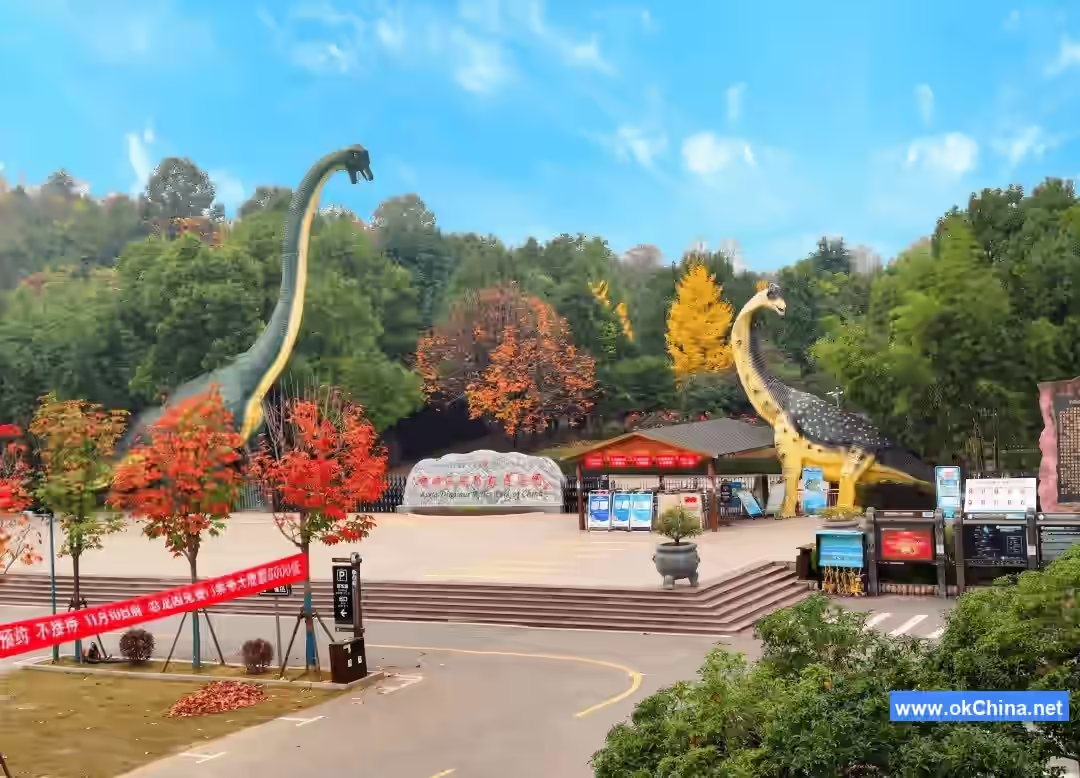
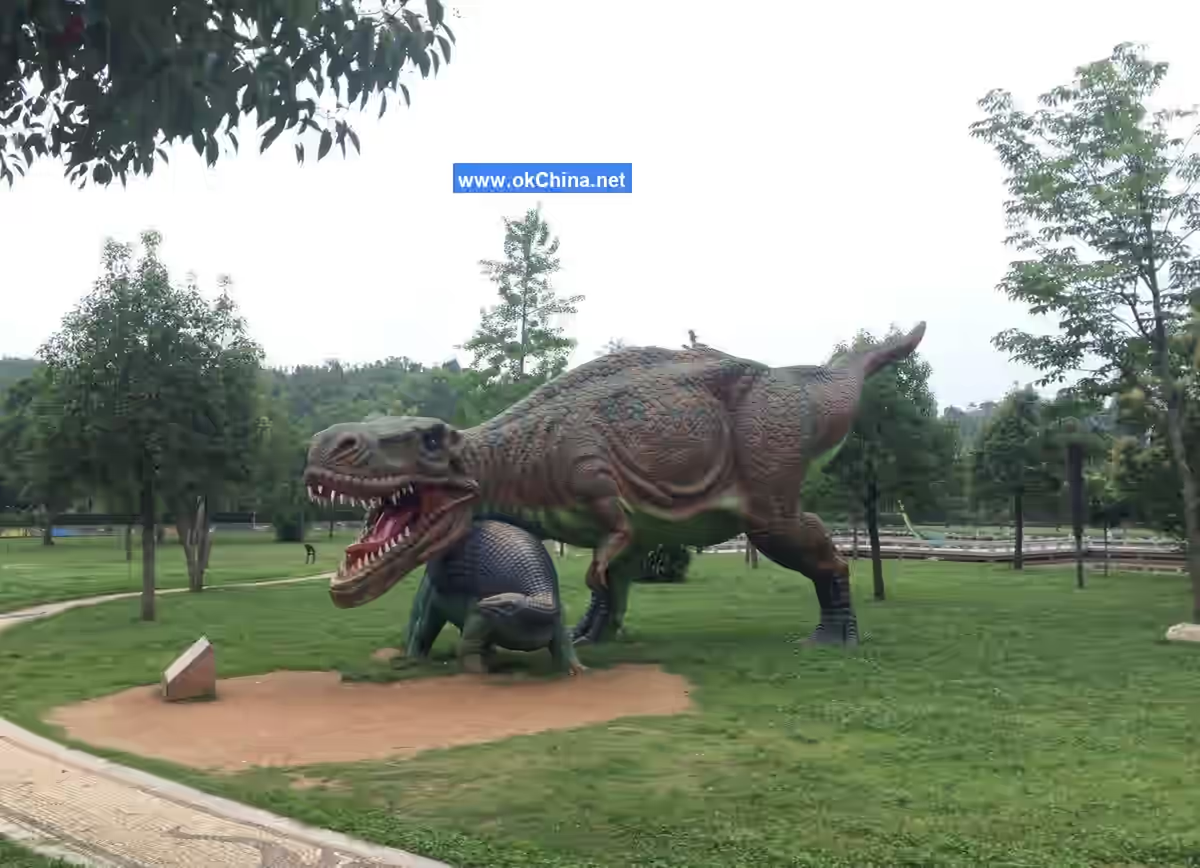
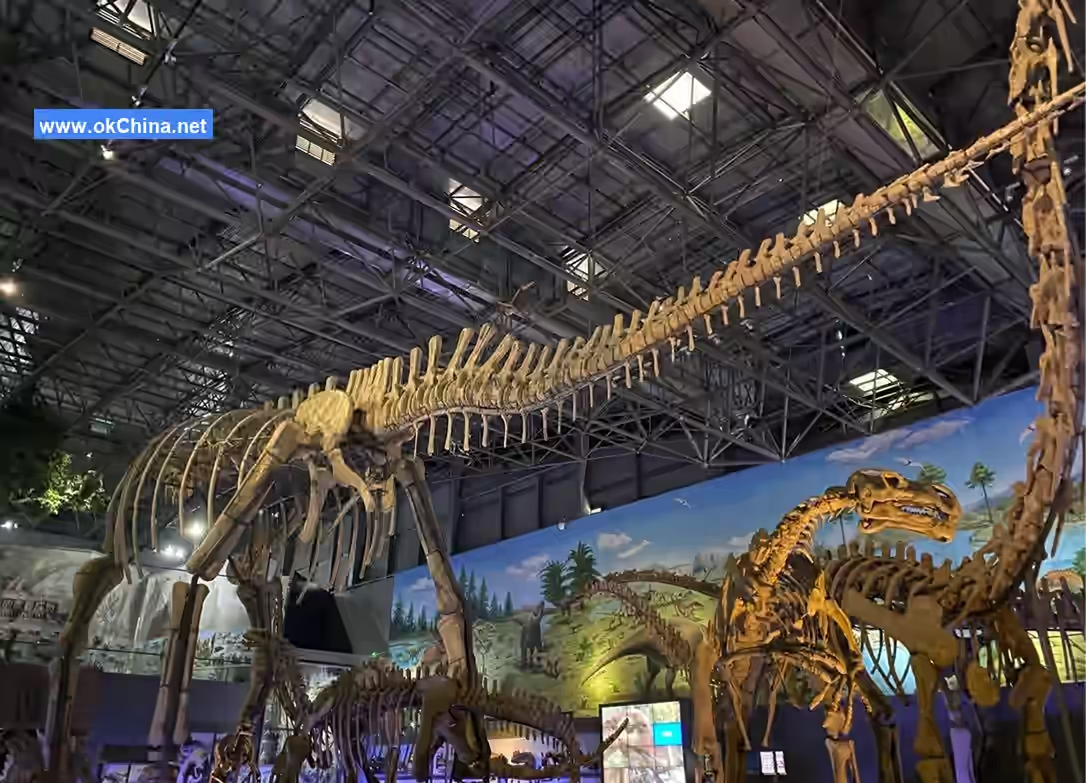
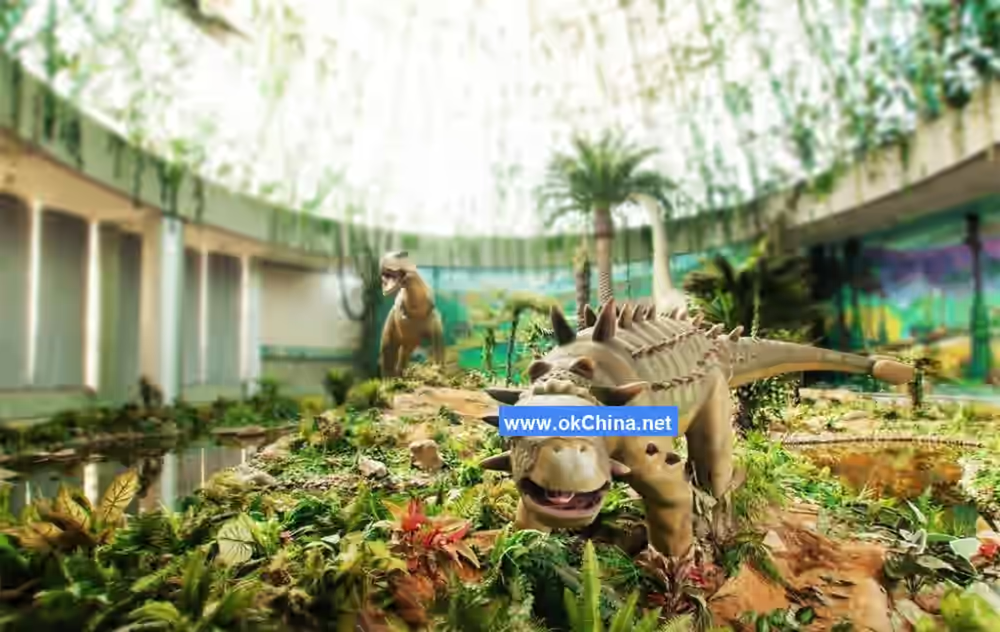
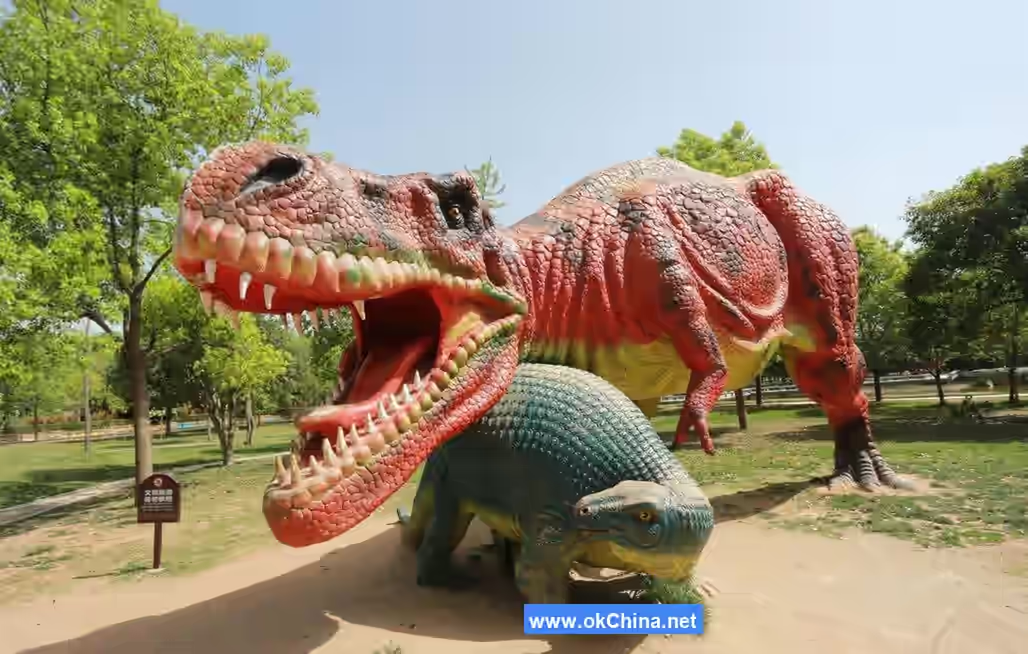
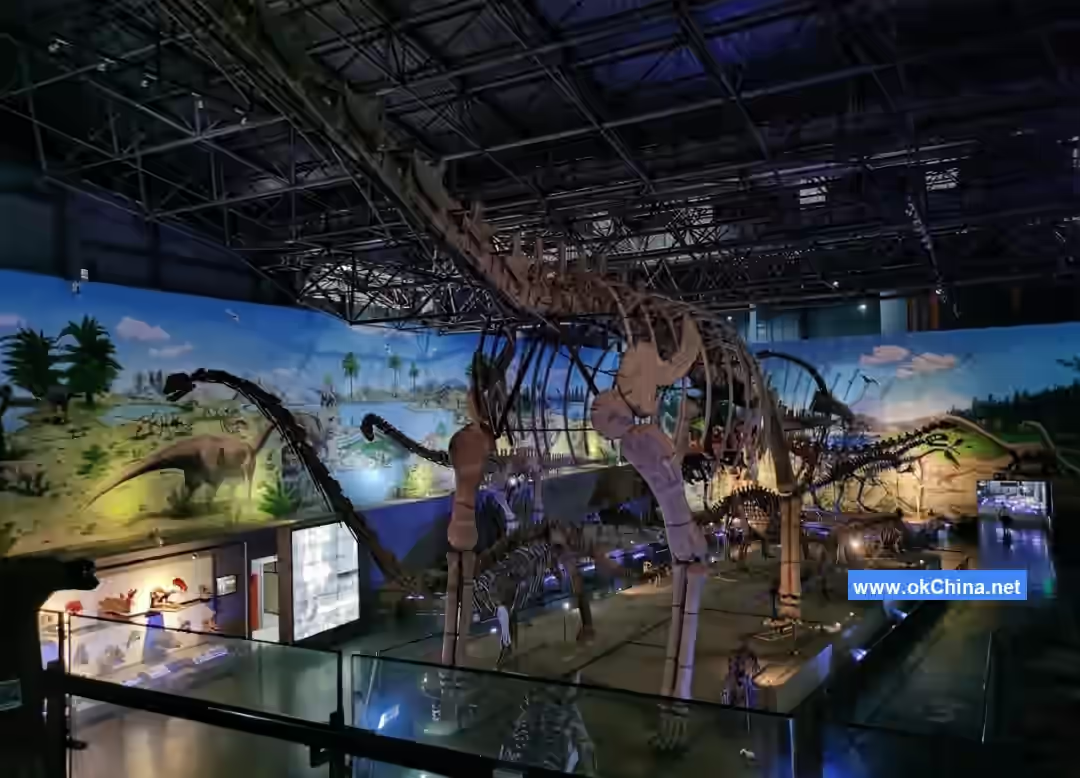
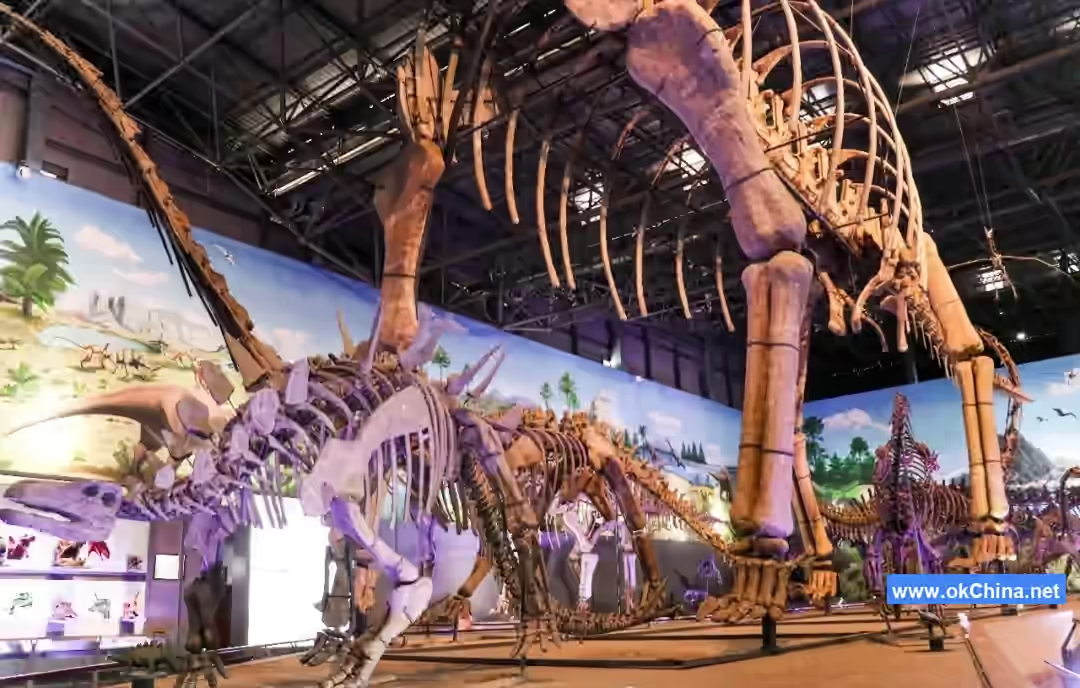
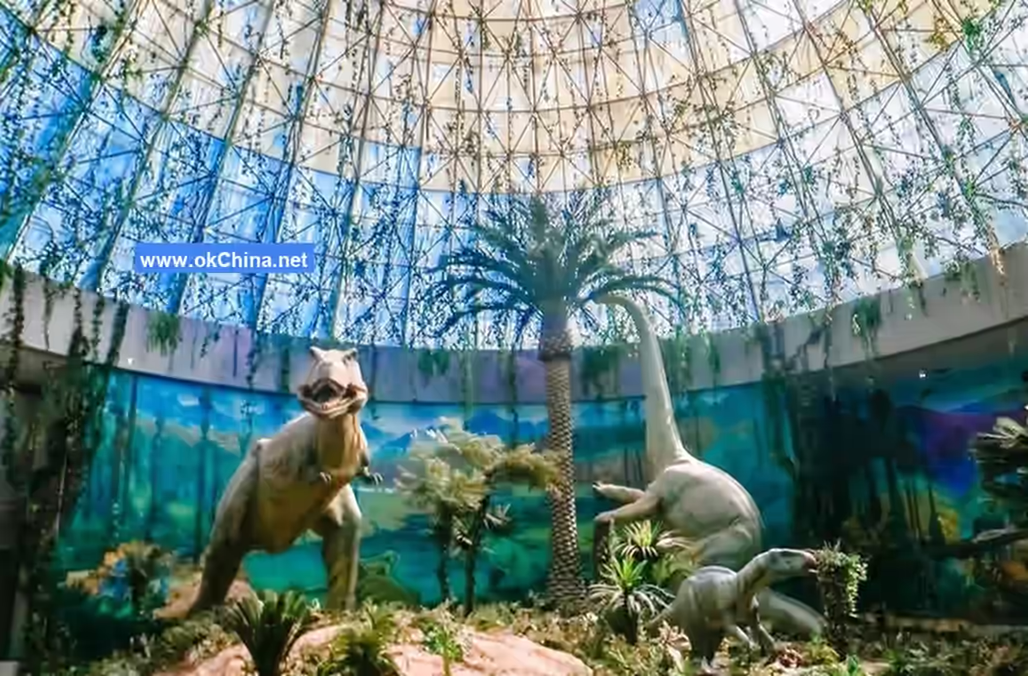
China Xixia Dinosaur Heritage Park is a large dinosaur-themed park located in Sanlimiao Village, Danshui Town, Xixia County, Henan Province, on the eastern section of the Qinling Mountains and the southern foothills of the Funiu Mountains, approximately 100 kilometers from downtown Nanyang. The park primarily consists of a Geological Science Plaza, a Dinosaur Egg Fossil Museum, a Dinosaur Egg Site and Simulation Dinosaur Park, a Carnival Amusement Park, a Longdu Water Park, and the Longdu Hotel. It is a large dinosaur-themed park that integrates science education, sightseeing, entertainment, leisure, and scientific research, seamlessly blending the primitive with the modern.
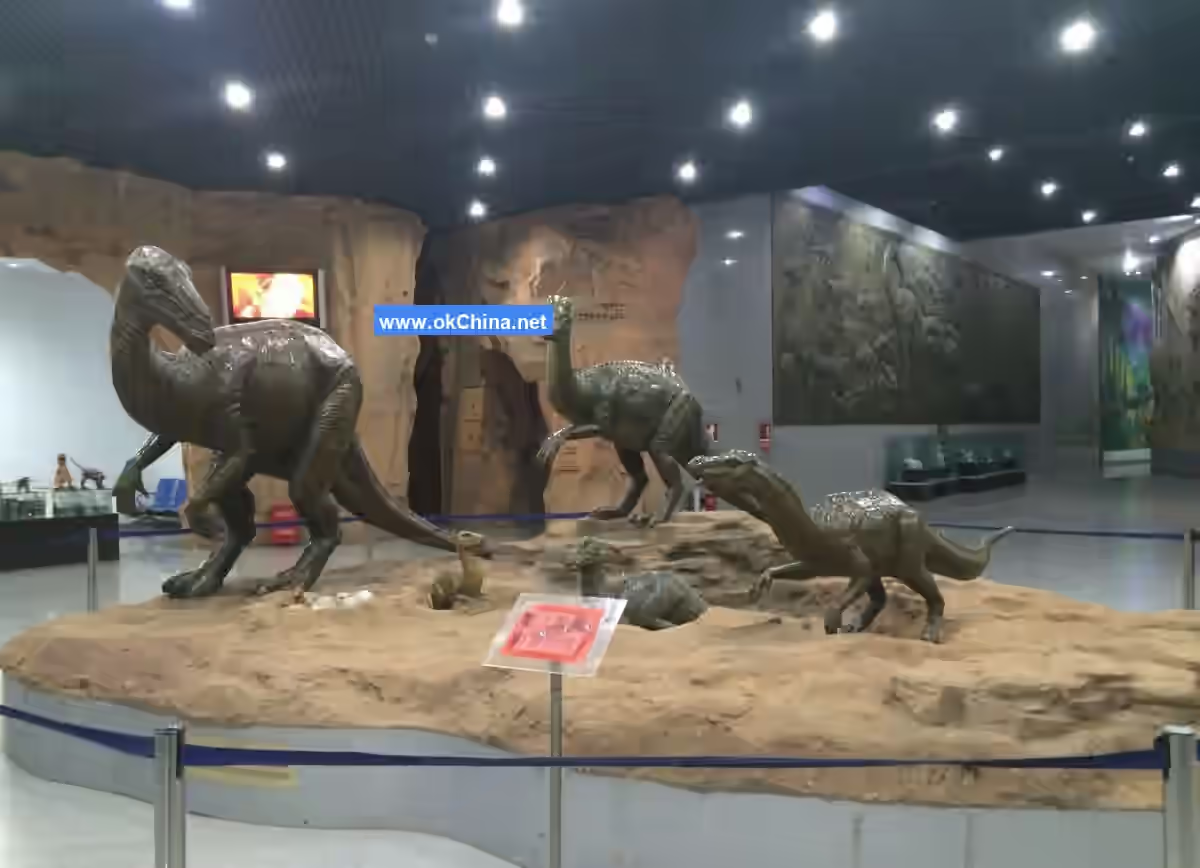
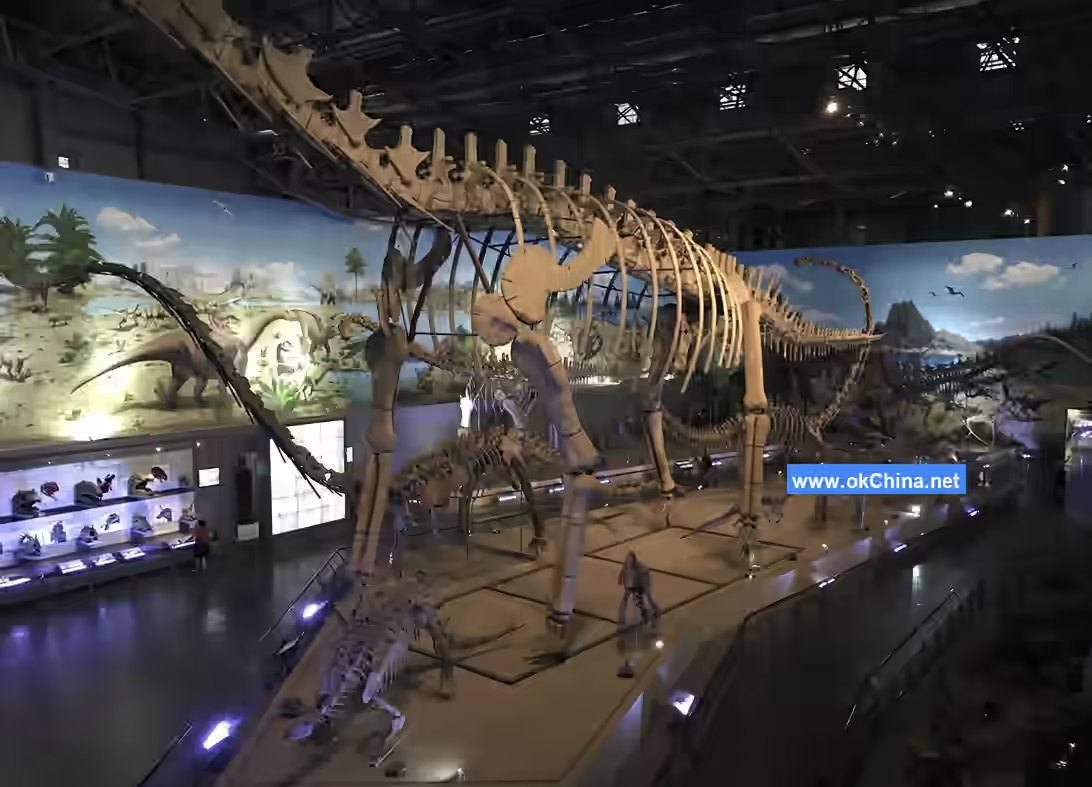
China Xixia Dinosaur Heritage Park features Xixia dinosaur egg fossils as its main exhibition highlight. It houses not only the Xixia Dinosaur Egg Fossil Museum—the only museum in China primarily displaying dinosaur egg fossils—but also a Dinosaur Egg Site exhibition hall showcasing the fossils in their original burial state. The scenic area also includes the first dynamic 4D theater in Central China and a "Tunnel of Time and Space" that displays the vast changes of the Earth and the complex evolution of life.
4. Cultural Resources
4.1 Funiu Mountain
Origin of the Mountain Name The origin of the name "Funiu Mountain" is related to Master Zizai, the founder of Yunyan Temple in the Tang Dynasty. Master Zizai was originally from the south. After completing his studies, he asked his master for guidance. His master said: "Stop when you encounter an ox." Master Zizai then traveled north to Yeniuling (Wild Ox Ridge). Several hunters descending from the mountain advised him not to proceed alone because fierce wild oxen on the ridge had devoured many travelers; hunters only dared to pass in groups of three or five, beating gongs to bolster their courage. Remembering his master's words, Master Zizai went straight up Yeniuling. The ridge was indeed gloomy and terrifying, with towering ancient trees and tangled vines. As he walked, he suddenly heard a roar, and a wild ox charged out. However, just as its horns were about to gore him, it suddenly became docile and lay down beside Master Zizai. Because Master Zizai subdued the wild ox here, the eight-hundred-li mountain range came to be called Funiu Mountain (Subdued Ox Mountain).
4.2 History of the Nanyang Xixia Dinosaur Site
The Nanyang Xixia dinosaur site belongs to Cretaceous fault-basin deposits. The discovered egg fossils are classified into 8 families, 11 genera, and 15 species. The dinosaur egg fossil layer at the site is the highest stratum in the Xiping–Danshui Basin, with over 1,000 eggs already exposed. In the lower strata, there are at least 16 additional egg-bearing layers, where fossils have been identified as belonging to 6 families, 9 genera, and 13 species. Particularly, the Xixia giant elongated eggs and Gobi prismatic eggs are rare worldwide and are iconic fossils of Xixia. The quantity, variety, distribution, and preservation quality of dinosaur egg fossils unearthed in Xixia are considered "the best in the world." The discovery of numerous dinosaur skeletal fossils, including hadrosaurs, iguanodons, protoceratops, and carnivorous dinosaurs, adds new dimensions to the Xixia fossil collection. The quantity, variety, distribution, and preservation quality of dinosaur egg fossils unearthed in Xixia are indeed "the best in the world." The mysterious veil of the Xixia dinosaur heritage is gradually being lifted with the continuous discovery of dinosaur skeletal fossils.
Comments
Post a Comment