Xixi National Wetland Park, Hangzhou, Zhejiang
1. Introduction
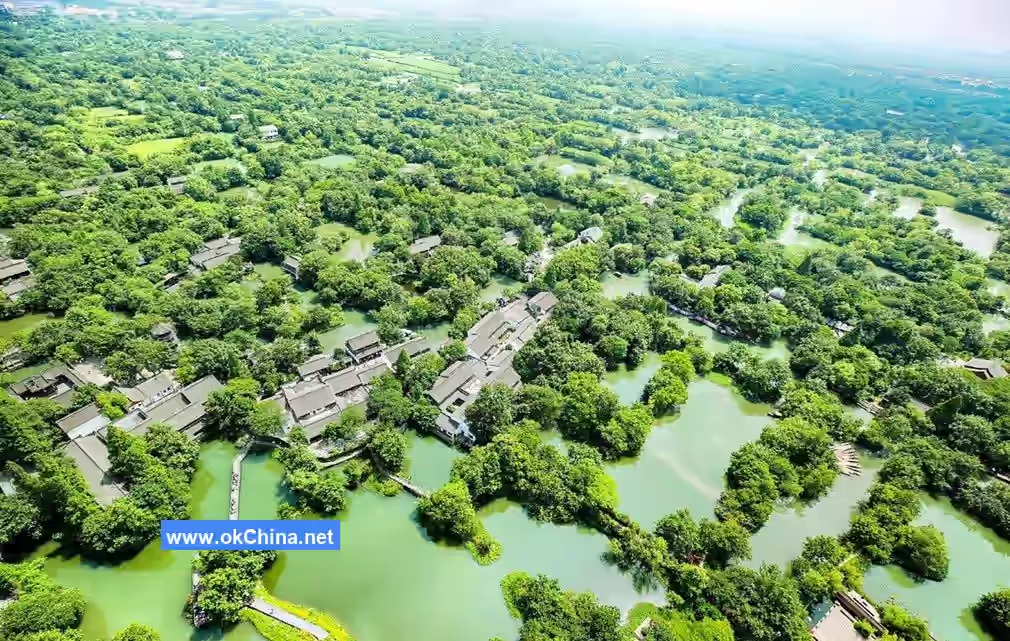
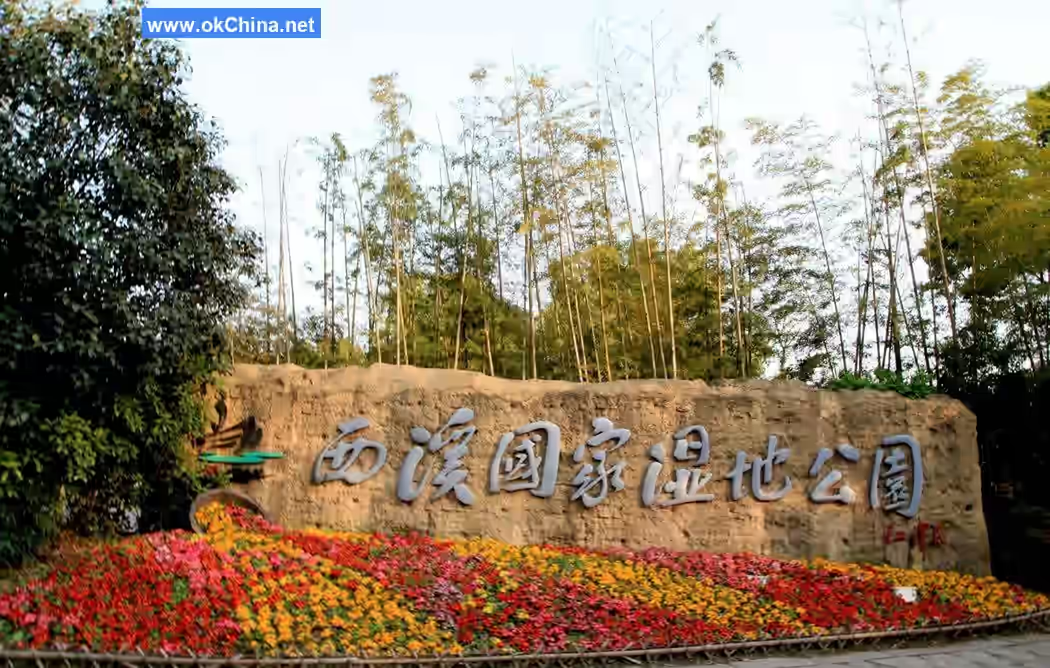
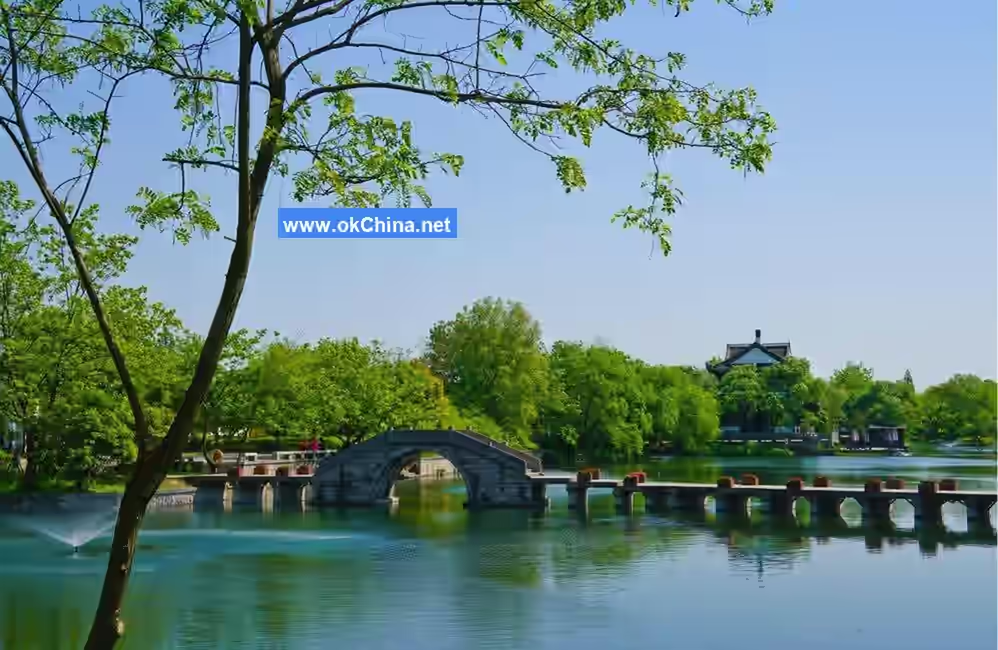
Xixi National Wetland Park, Hangzhou, Zhejiang, is located at the junction of Xihu District and Yuhang District in Hangzhou, Zhejiang Province, less than 5 kilometers from West Lake. Its total planned area is 11.5 square kilometers.
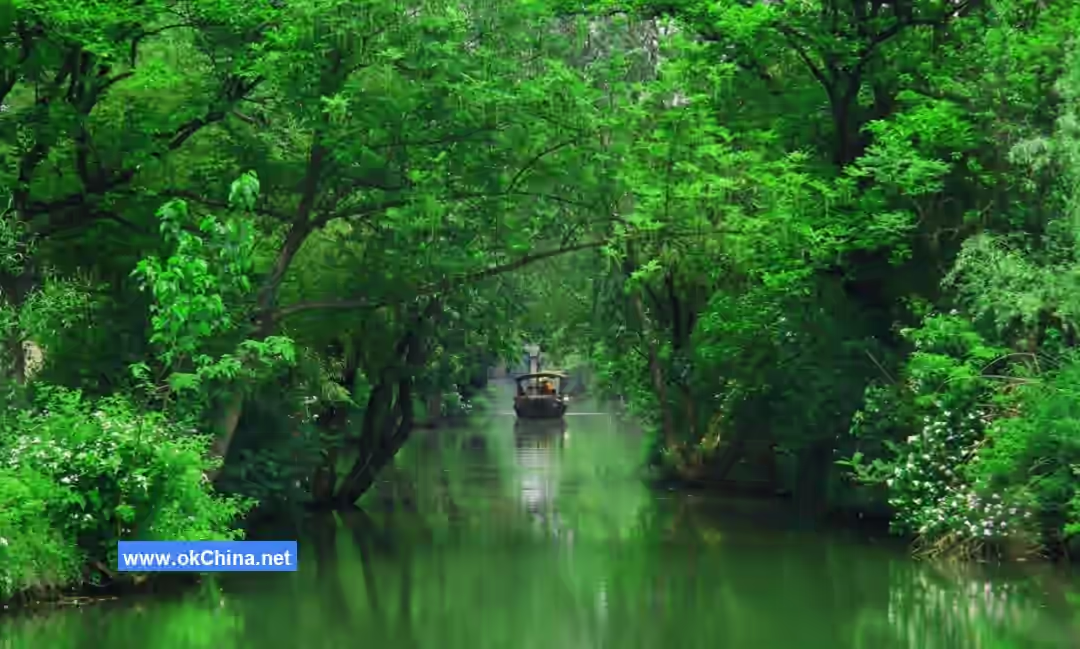
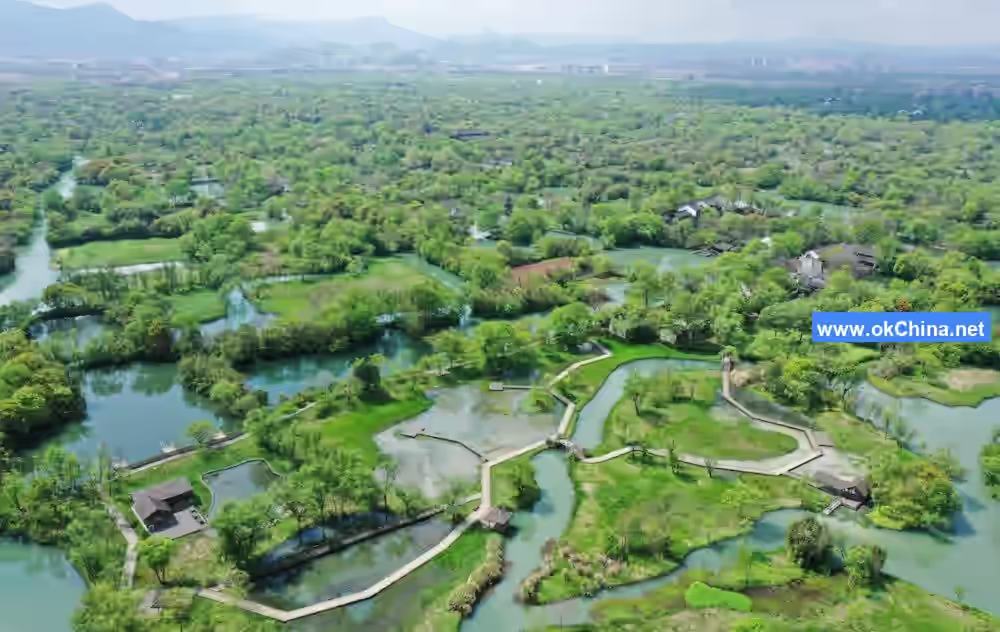
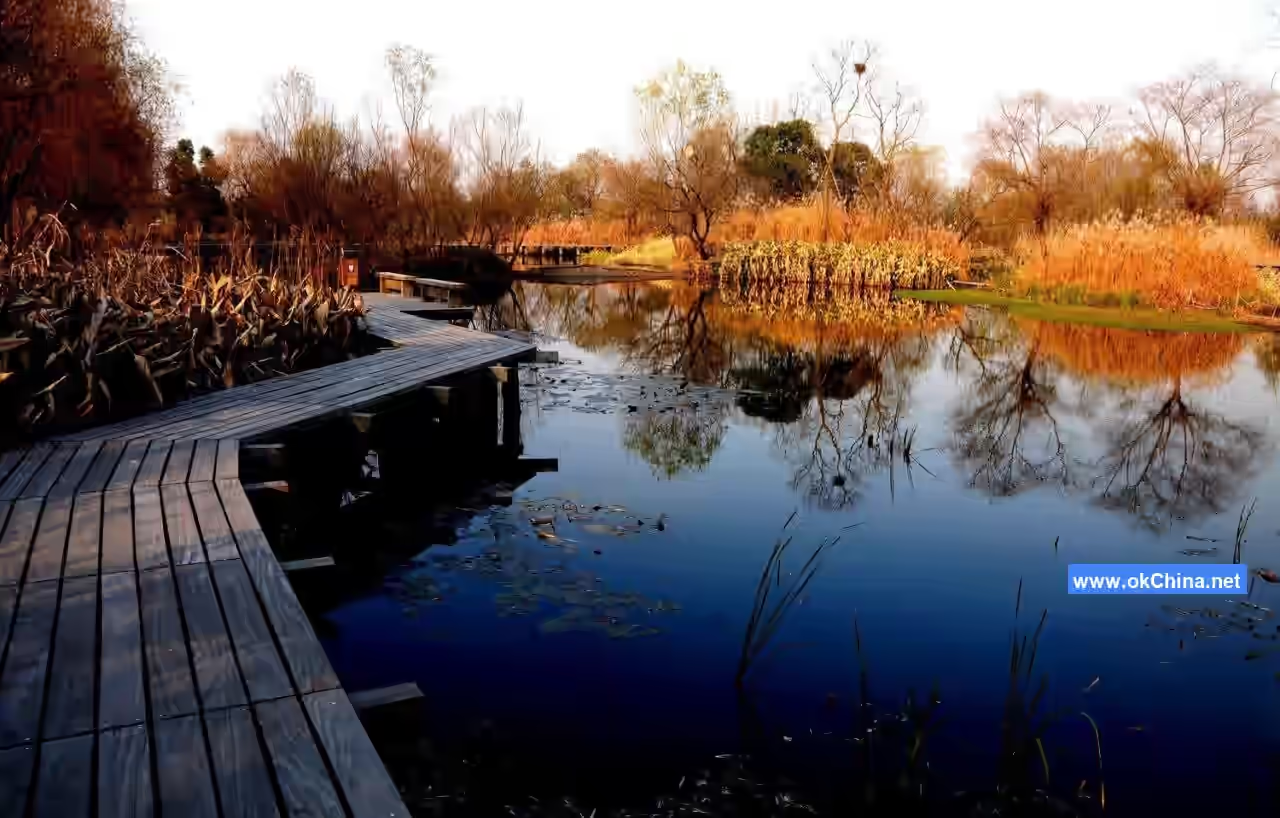
The total length of rivers within Xixi National Wetland Park, Hangzhou, Zhejiang, is approximately 100 kilometers, with about 70% of the area consisting of water bodies such as river ports, ponds, lakes, and marshes. The wetland park boasts rich ecological resources, elegant natural landscapes, and profound cultural heritage. Together with West Lake and Xiling, it is known as Hangzhou's "Three Xis."
Xixi National Wetland Park, Hangzhou, Zhejiang, is China's first national wetland park that integrates urban wetlands, agricultural wetlands, and cultural wetlands. In 2012, it was rated as a National AAAAA Tourist Attraction in China.
2. Geographical Environment
2.1 Geology and Geomorphology
The terrain of Xixi National Wetland Park, Hangzhou, Zhejiang, is slightly higher in the south and lower in the north. It features a secondary wetland landscape composed of extensive networks of rivers, ports, lakes, and marshes, interspersed with narrow pond embankments and larger islets. The main soil types in the area are red soil, paddy soil, and lithologic soil, with red soil and paddy soil being the most widely distributed, accounting for over 90% of the total area.
2.2 Hydrology
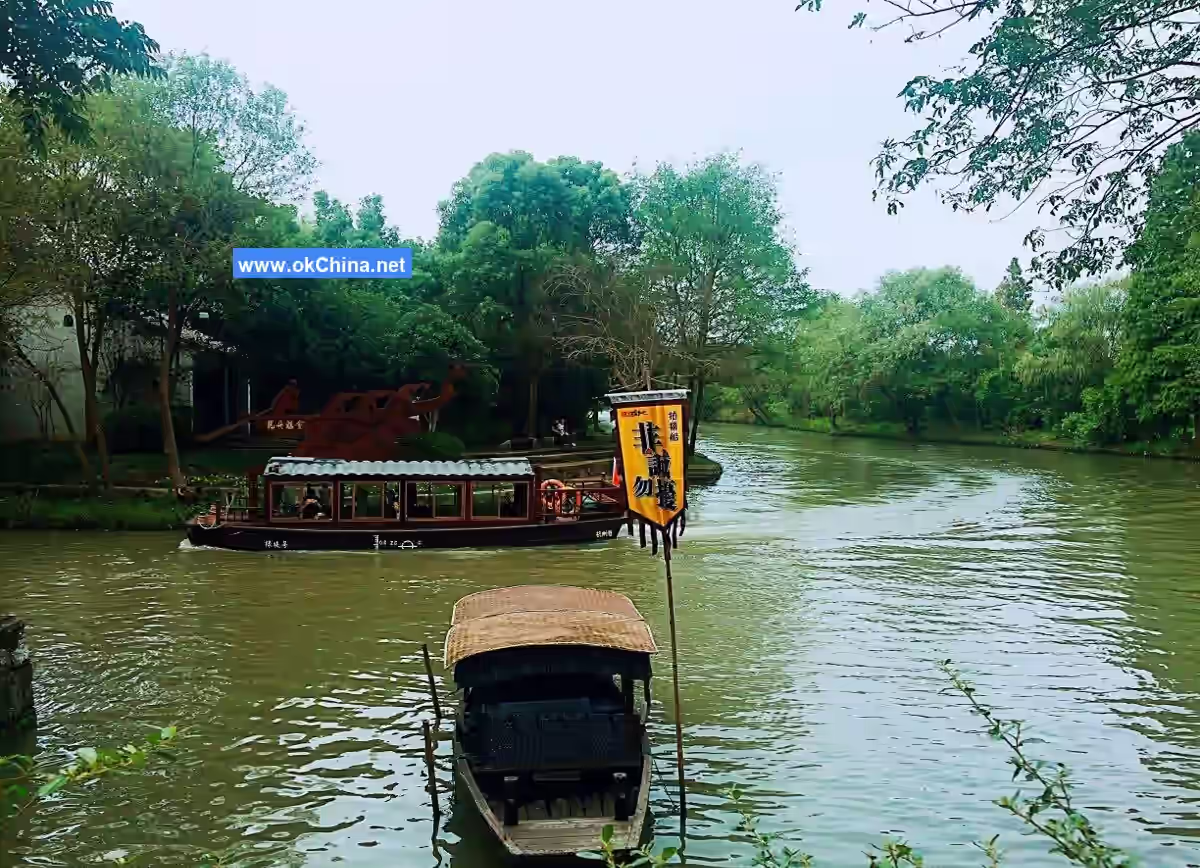
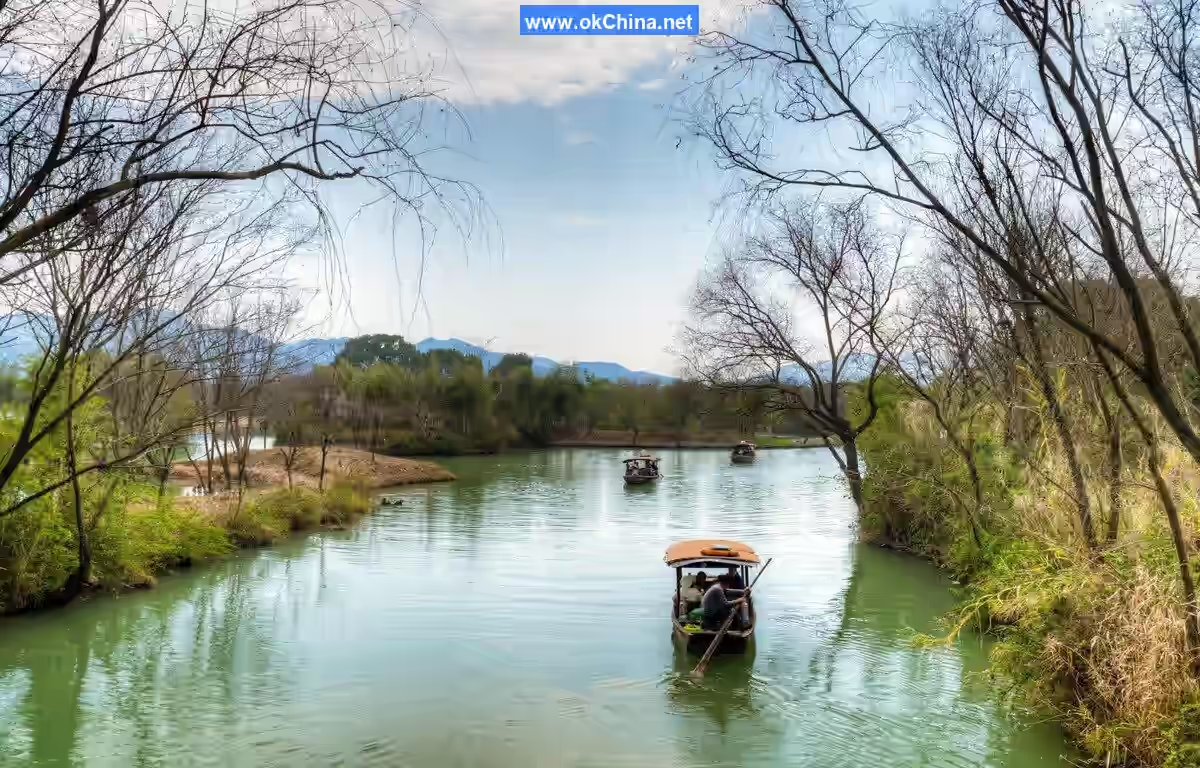
The total length of rivers in Xixi National Wetland Park, Hangzhou, Zhejiang, is approximately 100 kilometers, with about 70% of the area consisting of water bodies such as river ports, ponds, lakes, and marshes. The waterways are like alleys, and the river branches form a network, with fish ponds arranged closely and numerous islands scattered throughout.
2.3 Climate
Xixi National Wetland Park, Hangzhou, Zhejiang, has a subtropical monsoon climate. The annual average temperature is 15.17°C, the annual average relative humidity is 78%, and the annual average precipitation is 1399 mm. The climate is mild, with abundant rainfall, long sunshine hours, and distinct four seasons.
3. Main Attractions
3.1 Fu Di (Blessing Causeway)
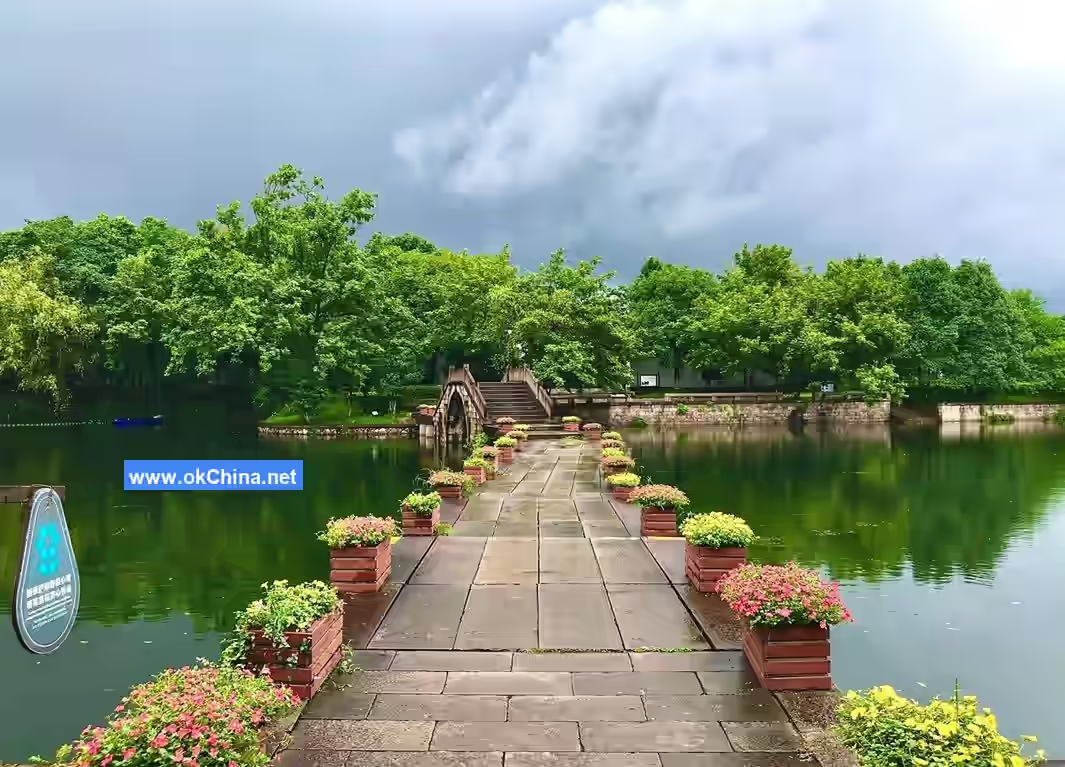
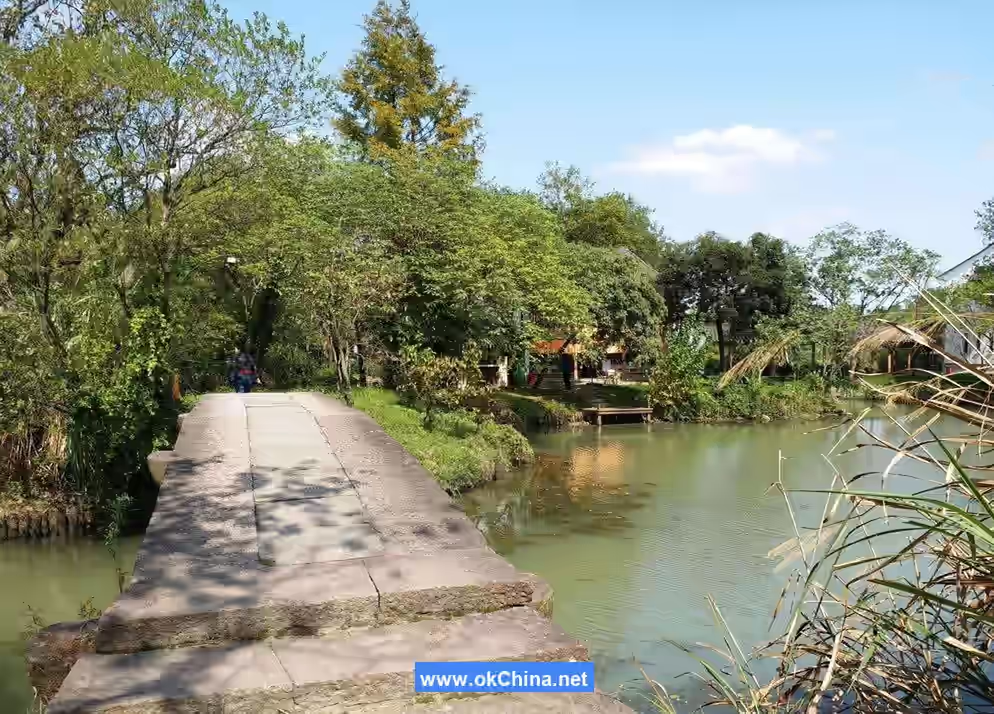
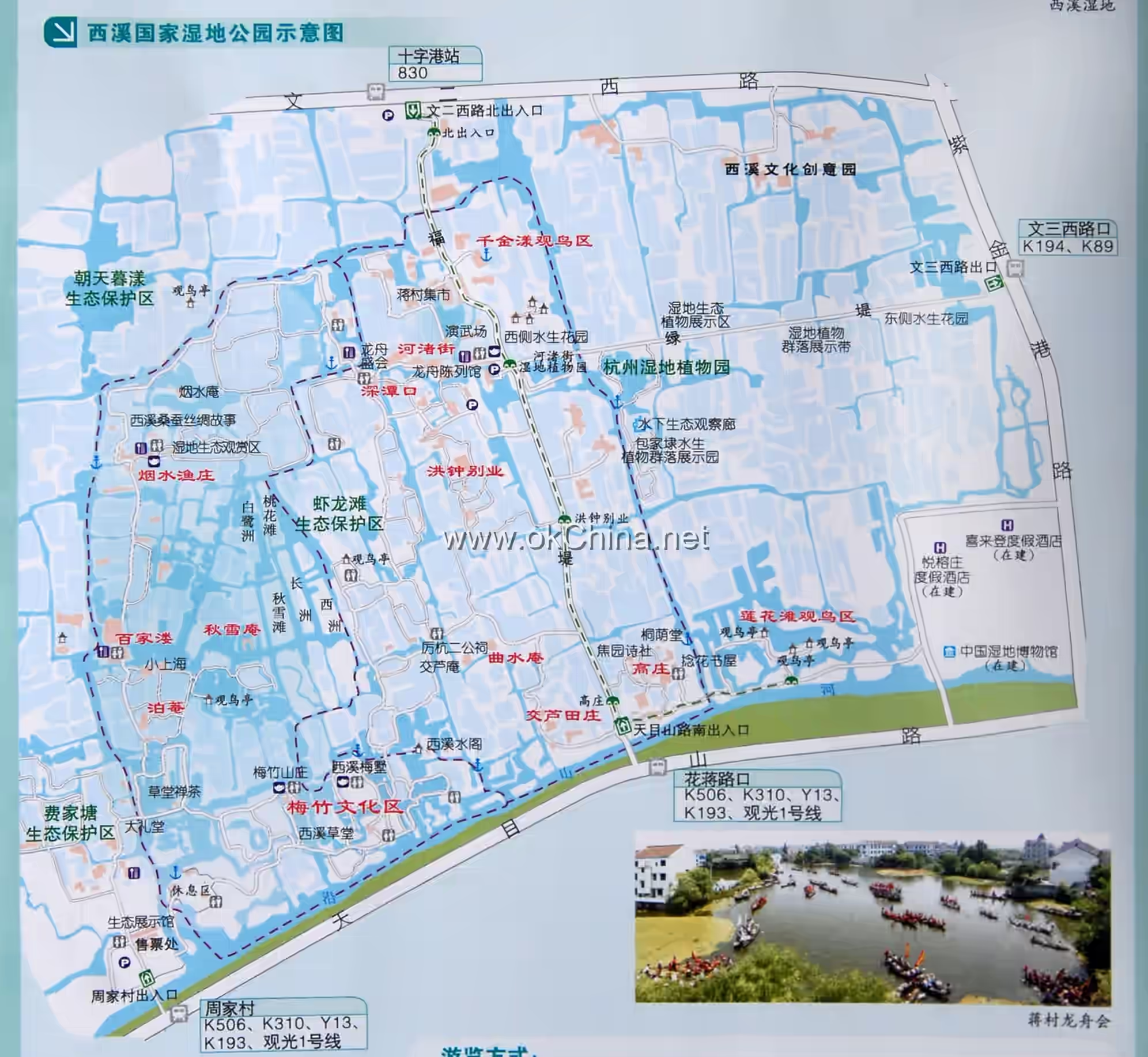
Fu Di is named after the six bridges along it, each bearing the character "福" (blessing). The causeway is approximately 2300 meters long, 7 meters wide, with a total area of about 0.8 square kilometers. It connects the park's northern and southern entrances and links the main scenic spots. It is a long embankment with an ecological theme and cultural characteristics, embodying the cultural essence of Xixi: "spirituality, seclusion, folk culture, leisure, and wilderness."
3.2 Lü Di (Green Causeway)
Lü Di is an east-west oriented causeway, 1600 meters long and 7 meters wide. Both sides are mostly connected to fish ponds, with rich vegetation on the pond embankments, a good ecological environment, and beautiful scenery. In the eastern part of Lü Di, where it meets the city, lies the "One Belt, Four Zones" of Xixi National Wetland Park, Hangzhou, Zhejiang—the Lü Di Wetland Plant Community Display Belt, along with the Baojiadai Aquatic Plant Community Display Area, the Western Aquatic Garden Display Area, the Eastern Aquatic Garden Display Area, and the Wetland Economic Plant Display Area. Lü Di traverses the core conservation area of Xixi, connecting the Wetland Ecological Botanical Garden and major wetland ecological research and popular science projects from west to east. It is an ecological embankment of Xixi.
3.3 Shou Di (Longevity Causeway)
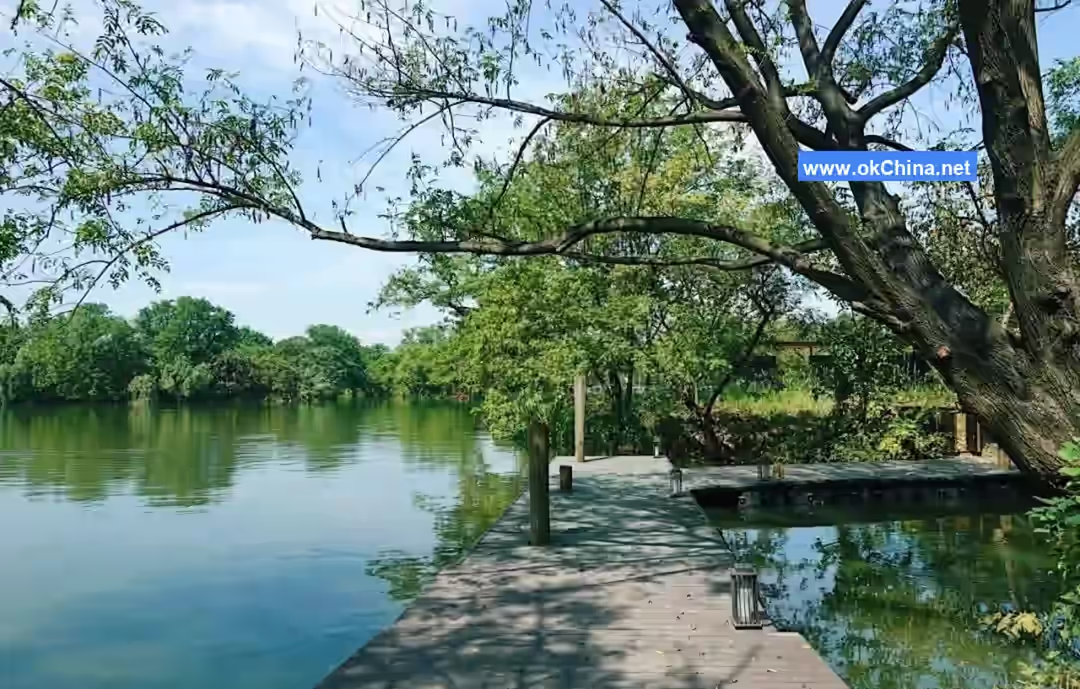
Shou Di is located within Phase III of Xixi National Wetland Park, Hangzhou, Zhejiang, running parallel to Wuchang Port in a north-south direction. It is approximately 3600 meters long and 4.5 meters wide, making it the longest causeway in the park. It starts from the Phase III entrance on Wuchang Avenue in the south and extends to the water bus terminal south of Wen'er West Road in the north. The crisscrossing waterways on both banks and century-old tree-lined docks create a naturally formed ecological landscape. It connects scenic spots such as Longshe Huan Lü, Cihang Songzi, Longzhou Shenghui, Hongyuan Yinxiu, Mangang Xunyou, Qiaoting Simu, Shilin Qiuse, and Cundai Tianyuan, stringing together the beautiful scenery of Xixi like a chain of pearls.
3.4 Bo An (Mooring Retreat)
Bo An is located south of Qiuxue An (Autumn Snow Nunnery). It was the manor of Zou Xiaozhi (also known as Zou Shiji), a native of Qiantang during the late Ming and early Qing dynasties. The area is overgrown with reeds, exuding a rustic charm. Viewed from a high vantage point, the entire manor resembles a fairy island moored on water, hence its name. The two sets of buildings, Zizai Tang and Kongming Xuan, echo the Nianhua Fang from front to back, forming three distinct spaces from south to north.
3.5 Shentankou (Deep Pool Mouth)
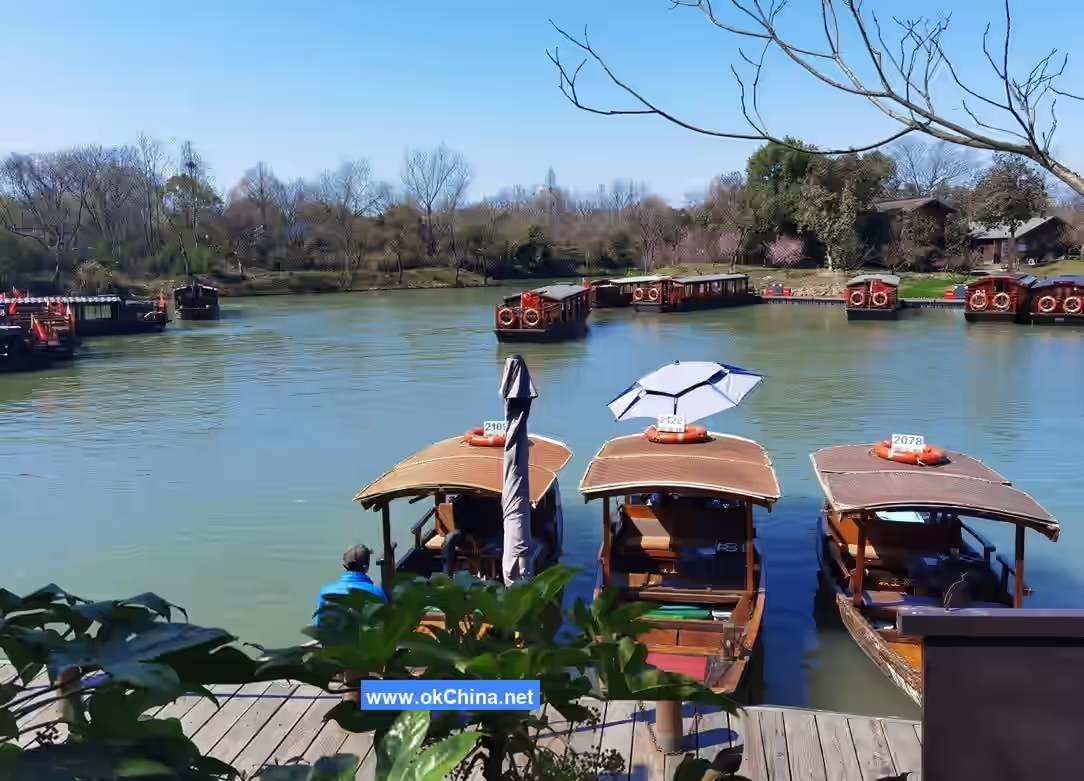
Shentankou, also known as Shentan Port, is named as such according to records in Nanzhangzi: "Shentankou cannot be crossed without a boat; it is said there is a dragon, and the deep pool is unfathomable." It serves as the main folk culture exhibition center of Xixi. The Xixi Dragon Boat Festival is held here annually.
3.6 Hezhu Street
Hezhu is an ancient place name in Xixi National Wetland Park, Hangzhou, Zhejiang, located in the northeastern part of the park. The main entrance is at Fu Di, about 400 meters from the Wen'er Road entrance of Fu Di. The restored Hezhu Street is a folk commercial street integrating leisure, trade markets, and tourism, showcasing the unique folk culture and local products of Xixi. Visitors can enjoy tea in teahouses, purchase local specialties such as Xixi small flower baskets, blue calico, Xixi rice wine, pastries, Gudang persimmons, bamboo shoots, and Xixi fish products in shops, pay respects to the three Jiang brothers who were known for their charity and philanthropy at Jiang Xianggong Ancestral Hall, appreciate Yue opera performances at the ancient stage, learn about the history of Xixi dragon boats at the Dragon Boat Exhibition Hall, and admire the craftsmanship of dragon boat carvings and models.
3.7 Hongzhong Bieye (Hongzhong's Villa)
Hongzhong Bieye is located next to Gao Zhuang. It was the villa built in Xixi by Hong Zhong (styled Yizhi), Minister of Justice during the Chenghua reign of the Ming Dynasty, after he retired and returned to his hometown in his later years. The villa complex consists of residential buildings (such as Sanrui Tang, Guiyi Ju, Xiangxue Tang, Qinfang Lou, etc.) and a study complex (such as Zhuqing Shanfang, Qingping Shantang, Luoyin Ge, Baoyue Xuan, etc.).
3.8 Gao Zhuang (Gao's Villa)
Gao Zhuang, also known as Xixi Mountain Villa or commonly called Xi Zhuang, was built between the 14th year of the Shunzhi reign (1657) and the 3rd year of the Kangxi reign (1664) of the Qing Dynasty. It was the mountain villa of the Qing Dynasty literatus Gao Shiqi (1645–1704), featuring the typical official residence style of the late Ming to mid-Qing periods, with a front residence and a rear garden. The villa comprises buildings such as Gao Zhai, Zhuchuang, Nianhua Shuwu, Tongyin Tang, and Jiaoyuan Shishe.
3.9 Meizhu Shanzhuang (Plum and Bamboo Mountain Villa)
Meizhu Shanzhuang was the mountain villa of the Qing Dynasty Qiantang literatus Zhang Fu (styled Cibai) (c. 1777–1857). He planted numerous plum and bamboo trees around the villa. Being a man of noble character who likened himself to plum and bamboo, and who loved reading and excelled in calligraphy and painting, he often invited friends here to compose poetry and paint, hence the name. The villa mainly consists of three main buildings: "Meizhu Wulu," "Xuanhui Tang," and "Xu Ge." It is a primary area for admiring plum blossoms in Xixi.
3.10 Xixi Meishu (Xixi Plum Villa)
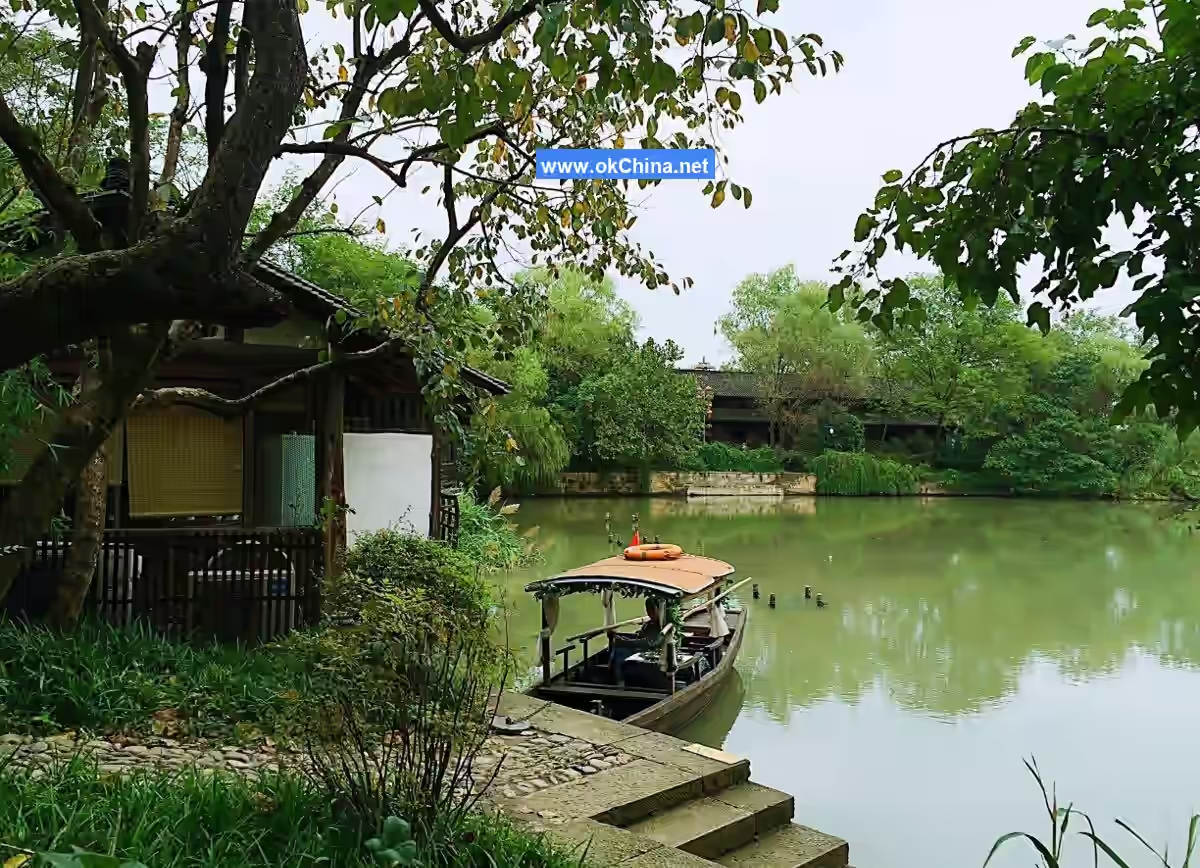
Xixi Meishu is located in the southeastern part of the park, adjacent to the core area of Xixi, the "Qiuxue An" conservation zone. It is a group of buildings in a rustic farmhouse style, mainly including Xixi Meishu, Xiangxue Wu, Tanchun Ting, and Gongshan Xiaozhu. The main structures feature wooden board surfaces and adobe walls, with overhanging gable roofs arranged in an orderly, staggered manner, creating varied and irregular forms. The attraction uses rural farmhouses as its载体, plum culture as its内涵, and an expansive, open environment as its特色. It is a primary area for admiring plum blossoms in Xixi.
3.11 Xixi Shuige (Xixi Waterside Pavilion)
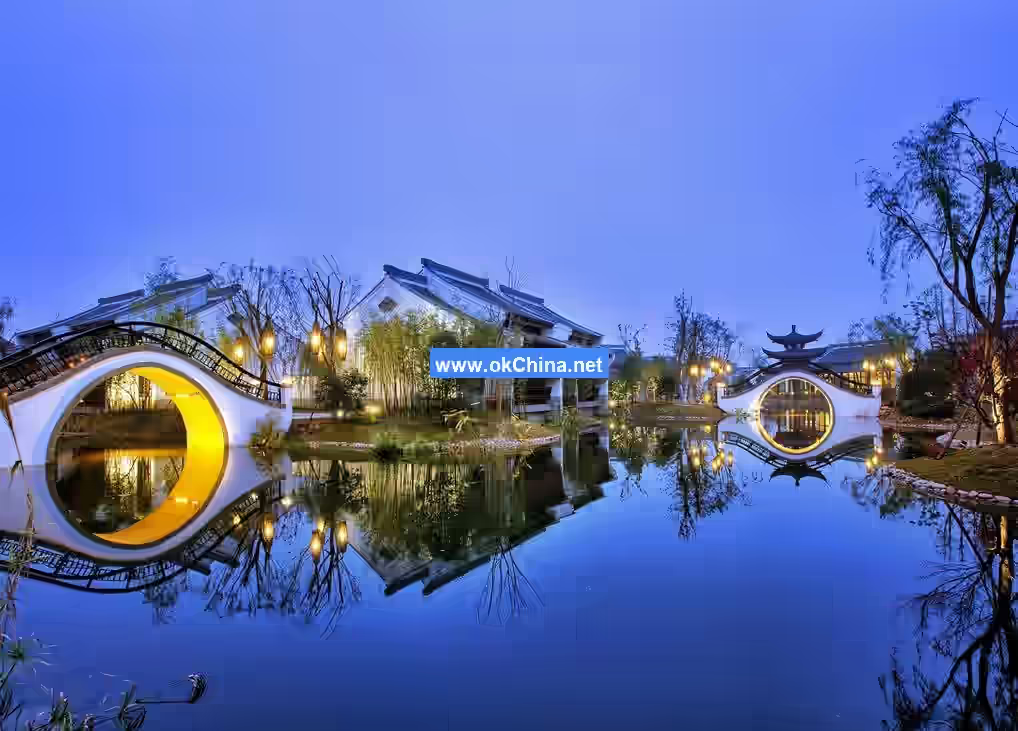
Xixi Shuige is located within the Xixi Meizhu Leisure Area. It is a group of literati-style villa buildings constructed by the water's edge, historically serving as a place for scholars and literati to seclude themselves and store books in Xixi. The waterside pavilion consists of two building groups: the eastern one is Yongshu Lou, and the western one is Lanxi Shuwu. The walls of the pavilion have lower gable walls made of rammed earth and upper walls of woven bamboo and mud plaster exposing the beam framework, exuding a strong rural atmosphere.
3.12 Qiuxue An (Autumn Snow Nunnery)
Qiuxue An is located in the most secluded waters of the Hezhu Wetland in Xixi. It was first built during the Chunxi reign (1174–1189) of the Song Dynasty and was initially named "Dasheng An." In the late Ming Dynasty, the Shen brothers of Xixi renovated the buildings and invited famous monks to preside over the nunnery. The late Ming scholar Chen Jiru named it "Qiuxue An" based on the poetic line "autumn snow covers the fishing boat" from a Tang poem. It was renovated during the Republic of China period by the notable scholar Zhou Qingyun (styled Mengpo) from Nanxun. It is a national poetry research base and one of the important temples and nunneries in Xixi. Qiuxue An has a two-courtyard layout. The buildings in the first courtyard primarily serve Buddhist cultural functions. In the second courtyard, the "Liangzhe Ci Ren Citang" (Two-Zhe Poets' Ancestral Hall) was added in the early Republic of China period, enshrining a list of over a thousand poets. A flagstone path is laid in front of the gate.
3.13 Kongzhong Lansheng (Aerial Panorama)
The "Kongzhong Lansheng" sightseeing helium balloon is located in the Slow Life Block of Xixi National Wetland Park, Hangzhou, Zhejiang. It is a manned sightseeing helium balloon independently developed and manufactured in China and is the only high-altitude helium balloon experience project in Hangzhou, capable of ascending to a maximum height of 150 meters. The balloon has a volume of 6000 cubic meters, and the cabin can accommodate 29 people per ride.
4. Cultural Activities
4.1 Naming
When Emperor Gaozong of the Song Dynasty moved south, he first came to Xixi in Hangzhou and intended to build a temporary imperial palace there. Later, after going to Phoenix Mountain, he changed his mind and said, "Let Xixi remain as it is" ("西溪且留下"). Consequently, Xixi was renamed "Liuxia" (Remain).
4.2 Historical Evolution
Xixi Wetland was anciently called Hezhu. Its history can be traced back to the Neolithic Age around 5000 BC, making it one of the areas with the longest history in the Hangzhou region.
Xixi Wetland was discovered during the Eastern Jin Dynasty.
During the Southern Song Dynasty, Xixi National Wetland Park, Hangzhou, Zhejiang, served as a royal hunting ground. In the Song Dynasty, it was known as "Xixi Shanzhuang" (Xixi Mountain Villa) and was a royal garden at the time.
During the Ming and Qing dynasties, Xixi National Wetland Park, Hangzhou, Zhejiang, gradually evolved into private gardens.
Comments
Post a Comment