Xitang Ancient Town
1. Introduction
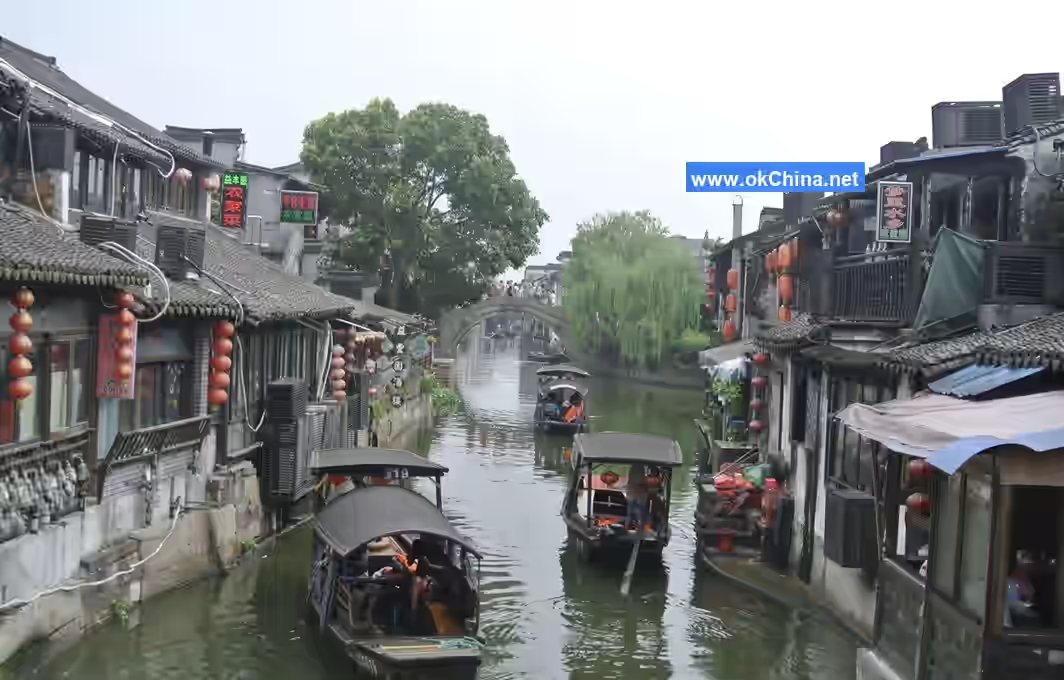
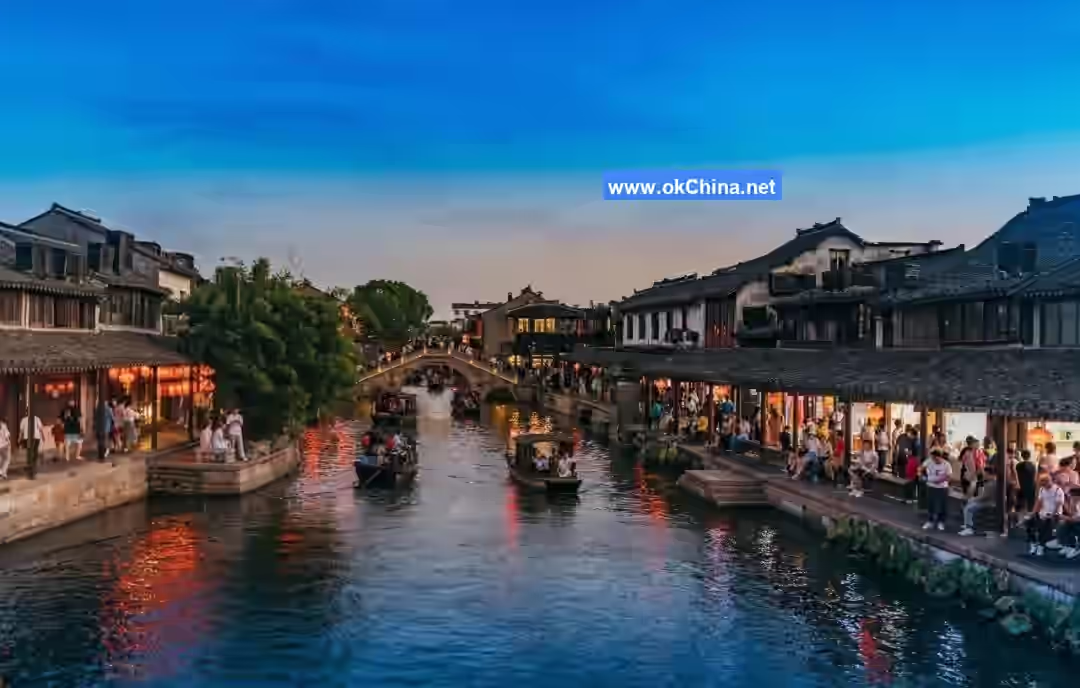
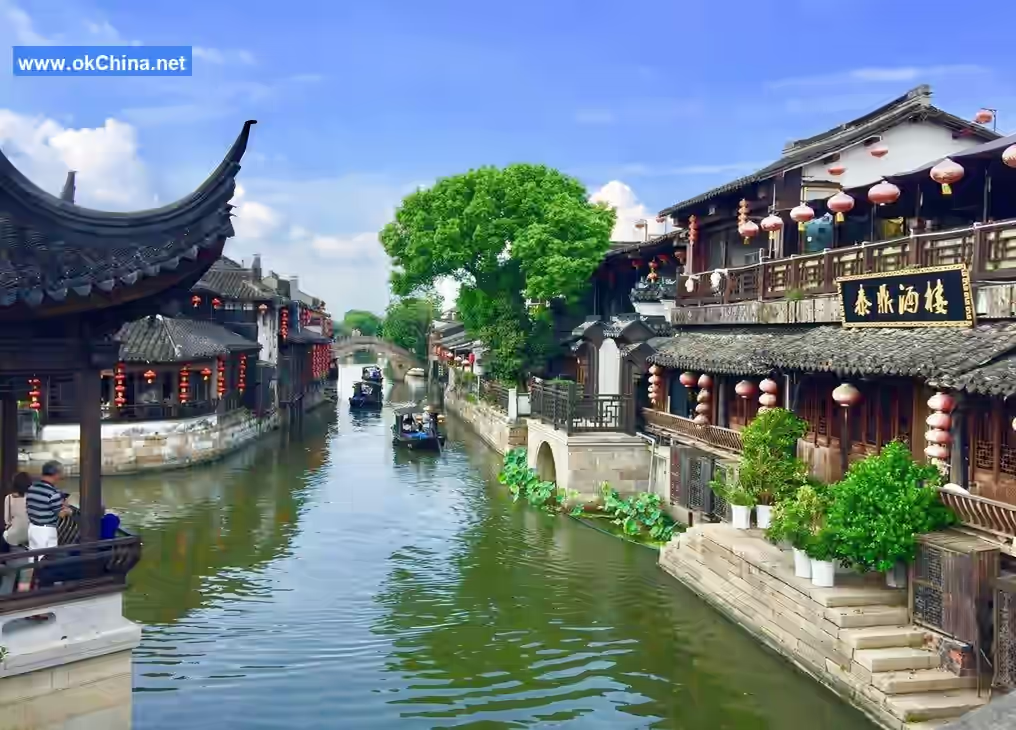
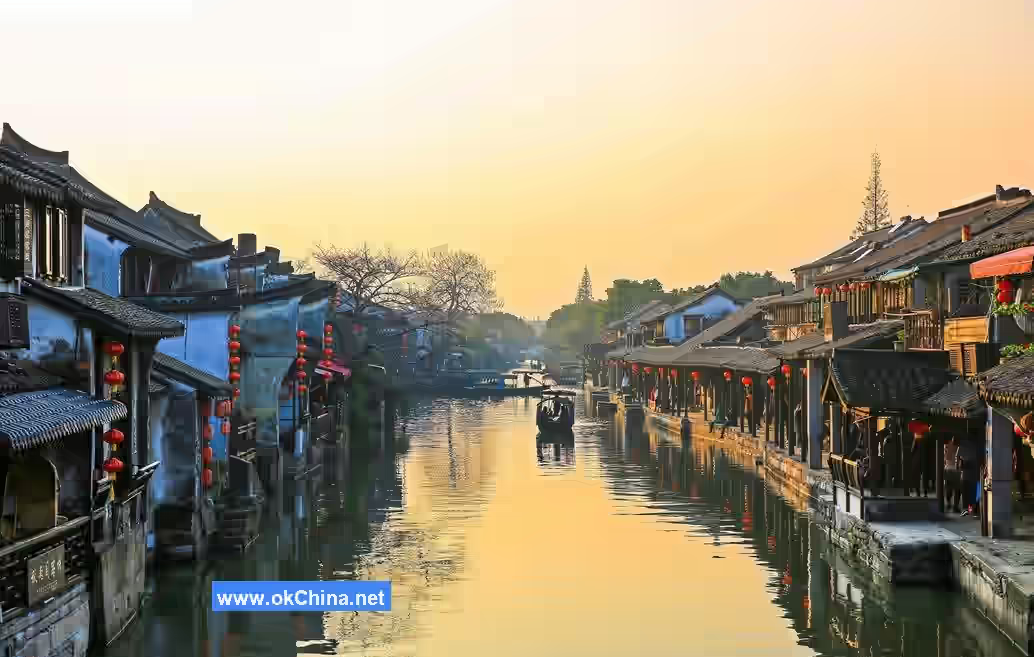
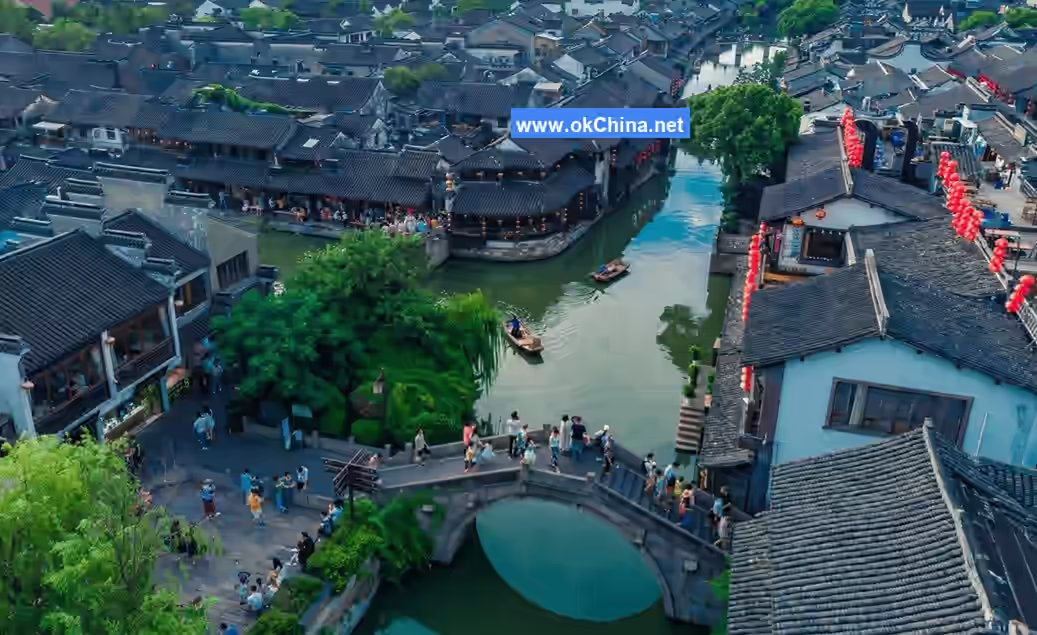
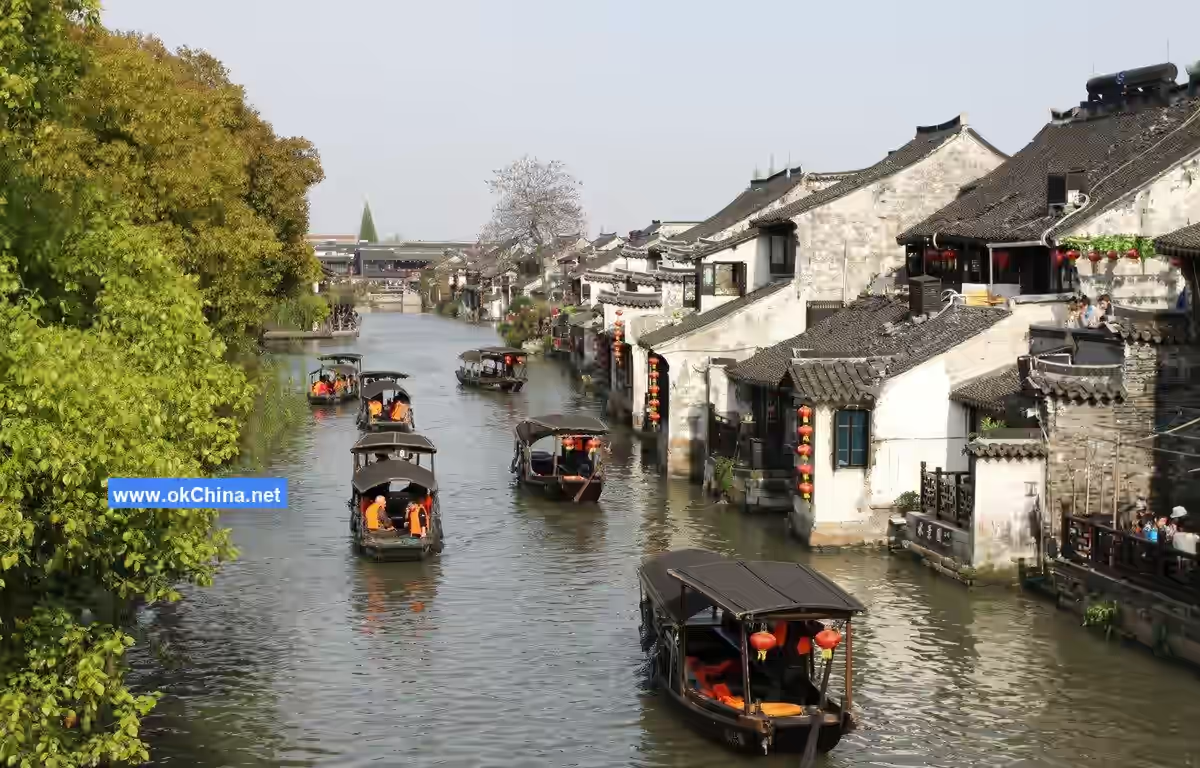
Xitang Town, under the jurisdiction of Jiashan County, Jiaxing City, Zhejiang Province, is located at the junction of Jiangsu, Zhejiang, and Shanghai. It was historically known as Xietang and Pingchuan. It borders Yaozhuang Town to the east, Tianning Town and Taozhuang Town to the west, Ganyao Town to the south, and Luxu Town to the north. Its central geographical coordinates are 120°53′ east longitude and 30°56′ north latitude, approximately 10 kilometers from downtown Jiashan. The town's total administrative area is 82.87 square kilometers (2017). Xitang Town is situated in the river network area of the Hangjiahu Plain, belonging to the East Asian monsoon region on the southern edge of the northern subtropical zone. Xitang Town governs 18 villages and 4 communities, with a population of 91,135 (2017). In 2016, the town achieved a regional GDP of 5.44 billion yuan. Xitang has a long history, being one of the birthplaces of the ancient Wu-Yue culture and one of the six major ancient towns in the Jiangnan region. It is a millennia-old water town representing Wu regional culture. During the Spring and Autumn and Warring States periods, it was a border area between the states of Wu and Yue, often referred to as the "Root of Wu, Corner of Yue" and "Homes at the Corner of Yue." In October 2003, it was listed among the first batch of Chinese Famous Historical and Cultural Towns. In 2003, it was awarded the "UNESCO Asia-Pacific Heritage Awards for Culture Heritage Conservation." In 2006, Xitang Ancient Town was included in China's Tentative List for World Cultural Heritage. Since 2013, the Xitang Hanfu Culture Week has been held annually. In 2017, Xitang Ancient Town was promoted to a National 5A-level Tourist Attraction.
2. Geographical Environment
2.1 Location and Territory
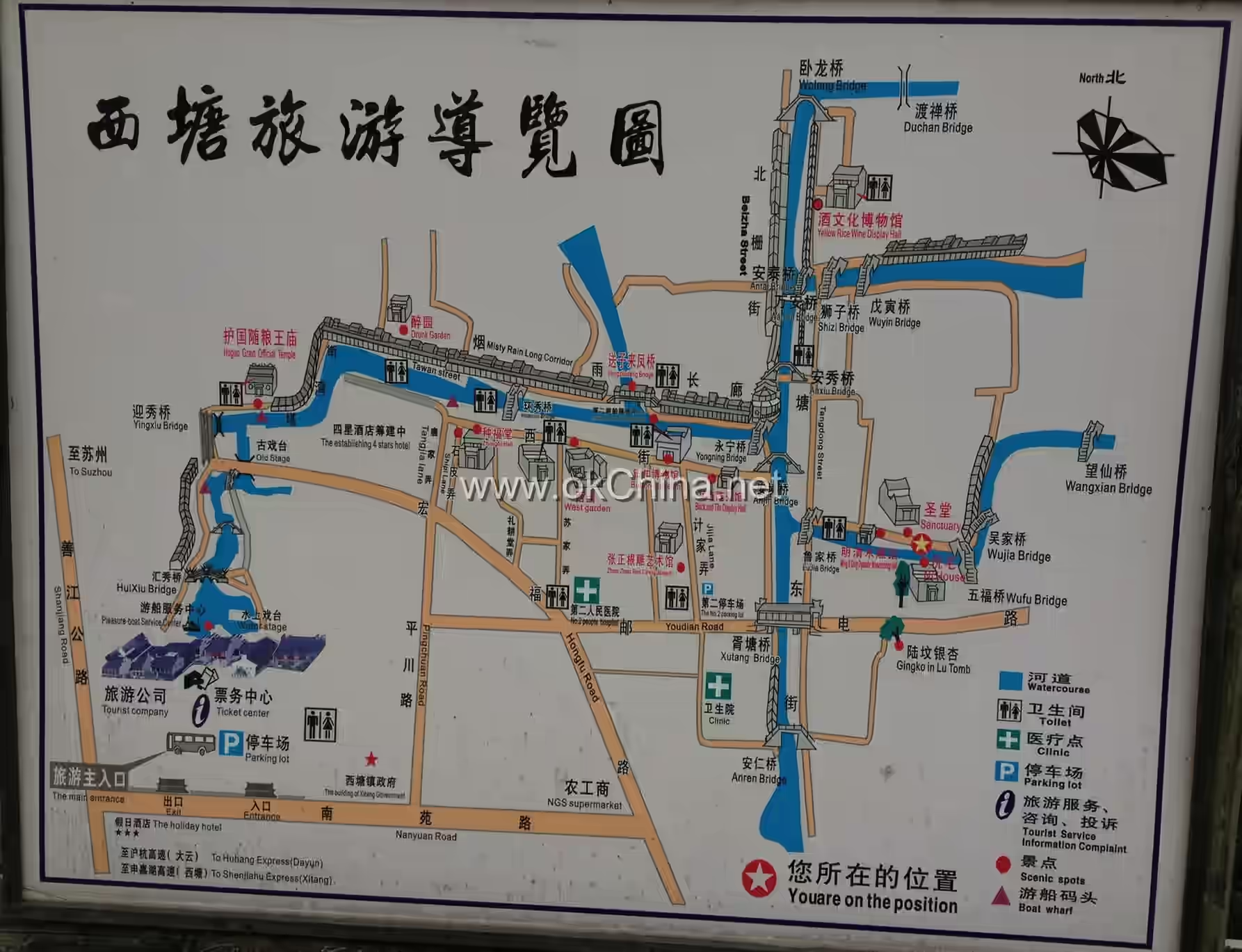
The Xitang Ancient Town Tourist Attraction in Jiaxing City is located in Xitang Town, Jiashan County, Jiaxing City, Zhejiang Province, at the junction of Jiangsu, Zhejiang, and Shanghai provinces/municipality, often called the "Root of Wu, Corner of Yue." The scenic area covers 3.03 square kilometers, including a 1.01-square-kilometer core ancient town preservation area and a 2.02-square-kilometer town area.
2.2 Climate Characteristics
Jiashan County, where the Xitang Ancient Town Tourist Attraction is located, lies in the Southeast Asian monsoon region on the southern edge of the northern subtropical zone. The climate is mild with distinct seasons and ample sunshine. January is the coldest month, with an average temperature of 3.6°C; July is the hottest, with an average temperature of 28.1°C. The annual average temperature is 15.6°C, with an average relative humidity of 68%, annual sunshine duration of 1,978.3 hours, and a frost-free period of 236 days. The prevailing wind direction throughout the year is southeast.
3. Main Attractions
3.1 Huguo Suiliangwang Temple
Commonly known as the "Seventh Lord Temple," the Huguo Suiliangwang Temple was initially built in the late Ming Dynasty. Legend has it that a grain transport official surnamed Jin passed through the town during a severe locust plague in the surrounding countryside, where the people had no harvest and suffered greatly. Moved by compassion, Jin distributed grain without authorization to relieve the people, enabling the victims to survive, but he himself was executed for violating the law. After his death, the imperial court investigated the matter, posthumously honored him as "Liji Marquis," and later further conferred the title "Huguo Suiliangwang" (Grain-Following King Protecting the Country). The townspeople, grateful for his kindness, built this temple in his memory. As Jin was the seventh son in his family, the people called him "Seventh Lord." Every year on the third day of the fourth lunar month, believed to be his birthday, people from all trades in the town hold sacrificial ceremonies, attracting numerous merchants and forming a temple fair.
3.2 Drunken Garden
Named after the Drunken Sutra Hall of the Wang Residence, the garden was first built in the Ming Dynasty. Originally consisting of five courtyards, it now has three, featuring ancient brick flower beds and a rare miniature brick arch bridge in the Jiangnan region. Strolling through the garden, one encounters exquisite ponds and rocks, winding corridors leading to secluded spots, lush bamboo adding beauty, and captivating scenery. The main hall, "Yixiang Zhai," displays woodblock prints with water town charm by father and son Wang Heng and Wang Xiaozheng, offering visitors a glimpse into the cultural heritage of an ordinary family in Xitang.
3.3 Wang Residence
The Wang family originated from Wang Yuan, the Commander of the Imperial Guard during the Song Dynasty. After escorting Emperor Gaozong of Song, Zhao Gou, south across the Yangtze River, Wang Yuan was killed in the Miao Liu Mutiny, and his descendants scattered around the Hangjiahu area. During the Shunzhi and Kangxi reigns of the Qing Dynasty, one branch of the family moved to Xitang and built this residence. With seven courtyards and a back garden, it is a typical example of Ming and Qing residential architecture. The third courtyard is the main hall, where a plaque inscribed "Zhongfu Tang" (Hall of Planting Good Fortune) by Chen Bangyan, a Hanlin Bachelor Reader from Haining during the Kangxi period, hangs in the center. It serves to admonish descendants that "accumulating good deeds and virtue will surely bring blessings to future generations."
3.4 West Garden
West Garden was the private mansion of the Zhu family during the Ming Dynasty, representing the architecture of wealthy Jiangnan families. The garden contains pavilions, towers, artificial hills, and fish ponds, making it a scenic spot in the town at that time. In the early Republic of China period, the poet Liu Yazi from Wujiang often visited Xitang with Chen Chaonan and other members of the Southern Society (Nanshe) to recite poetry and take commemorative photos in the garden, which became a celebrated story. The garden now houses exhibition halls such as the "Zhu Nianci Fan Calligraphy Art Gallery," "Hundred Seals Gallery," and "Southern Society Exhibition Room."
3.5 Button Museum
Located on West Street, the Button Museum collects over a thousand buttons of various types from the Han Dynasty to modern times.
3.6 Zhang Zheng Root Carving Art Gallery
Root carving artist Mr. Zhang Zheng, whose ancestral home is in Shucheng, Anhui, was born in 1958. In 1999, he was recruited as a talent and settled in Xitang. Master Zhang Zheng's works are based on seventy percent natural form and thirty percent craftsmanship. Over five hundred of his large-scale works have been recorded in the "Guinness World Records."
3.7 Ni Residence
Located south of Shaogang Port, the Ni family was a scholarly family in the town. The Ni Residence originally consisted of five courtyards, with covered corridors in the front and a garden in the back. The main hall is named "Chengqing Tang." It is the ancestral home of the late Ni Tianzeng, Vice Mayor of Shanghai. Ni Tianzeng was the Vice Mayor in charge of urban construction in Shanghai. His integrity and clean governance earned him deep affection from the people, and he was praised as a good mayor and public servant. Originally a five-courtyard residence, only the first two courtyards are currently open to the public. The main hall is Chengqing Tang, the ancestral hall name of the Ni family. The front hall and side rooms are set up as a kitchen, dining room, accounting room, music room, etc., while the upstairs contains boudoirs and bedrooms, portraying the lifestyle of a prosperous Xitang family during the Ming and Qing dynasties. After integrating and enriching materials for integrity education and undergoing renovation, the "Ni Tianzeng Ancestral Home," along with ten other sites including the Yu Qian Temple in Hangzhou, the Qingfeng Garden in Ningbo, and the Jiaxing South Lake Revolutionary Memorial Hall, was named among the first batch of "Zhejiang Provincial Integrity Culture Education Bases." It has become a place for Party members and cadres to receive education on clean governance and for ordinary tourists to cultivate their sentiments.
3.8 Covered Corridors (Langpeng)
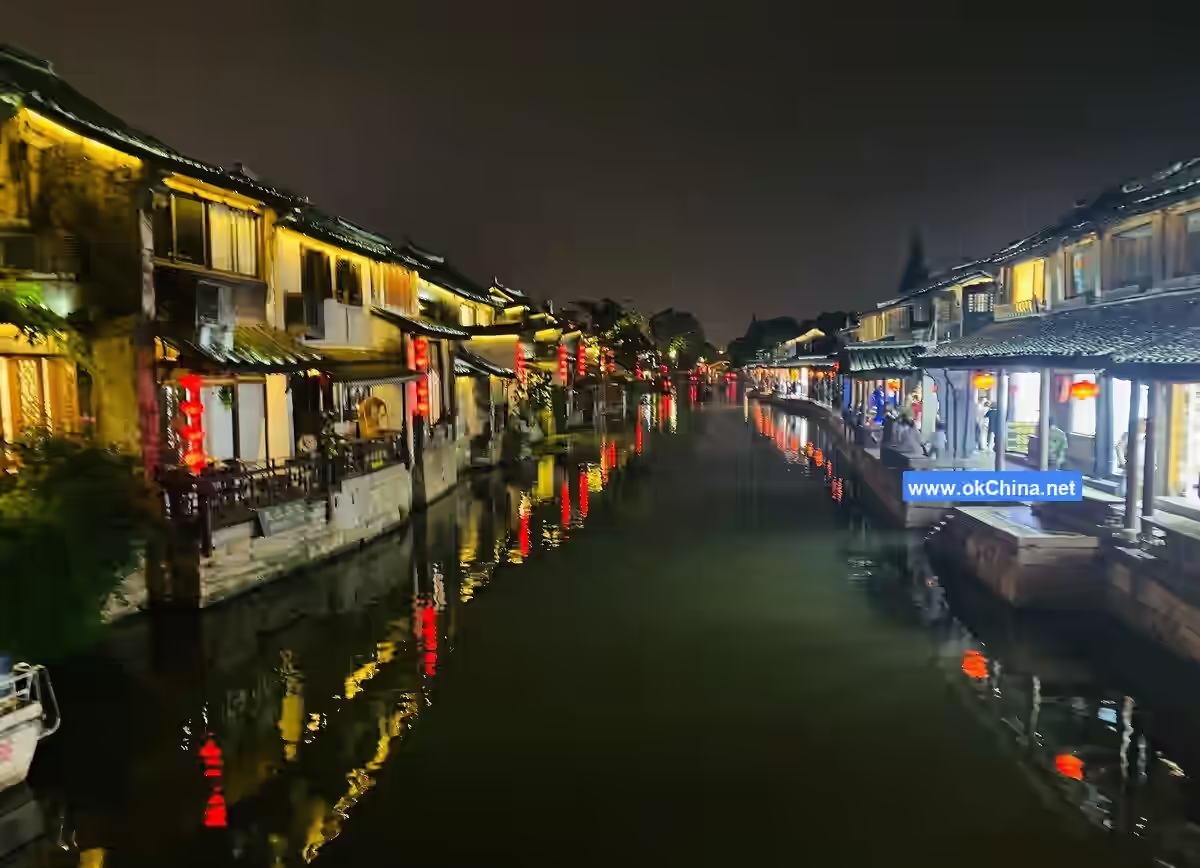
The ancient town preserves many well-maintained Ming and Qing architectural complexes, which hold high artistic and research value and attract attention from domestic and international experts studying ancient architecture. The riverside covered corridors along the streets in Xitang are unique water town structures that connect the river channel with shops while providing shade and shelter from rain. Xitang still preserves over 1,300 meters of these covered corridors.
3.9 Shipi Lane (Stone Slab Lane)
Before the Ming Dynasty, the prominent families in the ancient town included the Tang, Wang, Zhao, and Lu surnames. After the Ming Dynasty, families like Ni, Jiang, Zhu, Bu, and Lu also became prominent, leading to the construction of many deep, spacious mansions. The depth of these mansions formed long lanes. The town still has 122 lanes of varying lengths, with five exceeding one hundred meters. The most distinctive open-air lane is called Shipi Lane (Stone Slab Lane).
3.10 Huanxiu Bridge (Embracing Beauty Bridge)
Huanxiu Bridge was built in the ninth year of the Wanli era of the Ming Dynasty (1581), spanning the former Xiaotong and Beicui polders. It was the earliest high bridge in Xitang Town. It is said that in the past, on clear days, one could see the green hills near Lake Taihu from the top of the bridge. The stone arch bridge with steps was rebuilt in 1997. A couplet here reads: "Boats pass through the circle of emerald jade; people walk along the belt of the rainbow," describing the two ways of crossing the bridge.
4. Cultural Resources
4.1 Historical Development
Xitang has a long history and is one of the birthplaces of the ancient Wu-Yue culture. During the Spring and Autumn and Warring States periods, it was the intersecting area of the states of Wu and Yue, often referred to as the "Root of Wu, Corner of Yue" and "Homes at the Corner of Yue." Villages and towns had already formed during the Tang and Song dynasties. During the Kaiyuan era of the Tang Dynasty, numerous villages were established, with people building houses along the river and living by the water. By the Southern Song Dynasty, the villages gradually took shape, forming markets. Starting from the Yuan Dynasty, markets developed along the waterways, gradually forming a town, and commerce began to flourish. By the Ming and Qing dynasties, it had developed into an important center for handicrafts and commerce in Jiangnan. "Water from the Spring and Autumn period, towns from the Tang and Song, architecture from the Ming and Qing, and people of modern times" is the most fitting description of Xitang. The song "Tang Song Yuan Ming Qing" by Hou Xian was also inspired by and written about the ancient town of Xitang. By the Yuan and Ming dynasties, Xitang, leveraging its economic foundation as a land of fish and rice and a hub of silk production, along with its convenient waterways, developed into a prosperous and affluent large market town, with industries like kiln production, rice markets, food processing, and pottery making thriving.
4.2 Intangible Cultural Heritage
4.2.1 Tian Ge (Field Songs)
Tian Ge are rural folk songs passed down among the people of Xitang, still sung in the adjacent areas of Jiangsu, Zhejiang, and Shanghai. They represent a precious local musical cultural heritage of China. It is particularly worth mentioning that the musical "Fifth Girl," adapted from Xitang's Tian Ge, won the Wenhua Grand Prize at the 7th China International Arts Festival.
4.2.2 Huguo Suiliangwang Belief and Custom GatheringThe Huguo Suiliangwang Temple Fair The Huguo Suiliangwang Temple was first built in the late Ming Dynasty and relocated to its current site in the early Qing Dynasty. The temple houses a statue of Suiliangwang, and by the mid-to-late Qing Dynasty, the temple's incense gradually flourished, with believers primarily consisting of residents of Xitang Town in Jiashan County and nearby farmers. By the late Qing and early Republic of China periods, the temple fair reached its largest scale, with participation peaking at two to three thousand people before the War of Resistance Against Japan, making it the most famous temple fair within dozens of miles. The Suiliangwang Temple Fair is a birthday celebration for Huguo Suiliangwang, held at Tawan in Xitang Town. The temple covers approximately ten acres, facing south, with the Yangxiujing River flowing in front, its broad surface connecting to all parts of the town. Across the river is the community opera stage, where actors perform during the celebration to entertain both deities and people. The temple is surrounded by residential houses to the west, north, and east. The Suiliangwang Temple Fair is held annually on the third day of the fourth lunar month (Suiliangwang's birthday). The fair is divided into two types: the "procession fair" and the "temple fair." The "procession fair" involves carrying the statue of Suiliangwang through the streets, with a procession of thirteen sections and specialized roles. There are over ten resting points along the way, known as "community sheds." At each stop, nearby residents offer food and flowers and perform various artistic acts to entertain the deity. The "temple fair" is celebrated within the temple grounds, smaller in scale but equally lively. To commemorate the seventh lord, Suiliangwang, who distributed grain to save the people in the late Ming Dynasty, believers hold a grand event each year on the third day of the fourth lunar month, integrating religious, cultural, and commercial activities to praise and entertain the deity. This custom formed from the mid-to-late Qing Dynasty to the early Republic of China and continues to this day.
4.2.3 Paper Cutting
Paper cutting is widely popular among the people of Jiashan and is the simplest folk art for adding joy to countless households. It adorns people's lives with a variety of beautiful and vivid patterns. It is mainly prevalent in Weitang Subdistrict, Xitang Town, Yaozhuang Town, and Ganyao Town. Currently, paper cutting has been included in the second batch of Jiaxing City's Intangible Cultural Heritage List.
4.2.4 Printmaking
A form of painting. Images are carved or etched onto a plate using knives or chemicals and then printed onto paper. Varieties include woodblock, lithography, copperplate, zinc plate, and linocut.
4.2.5 Frog Buttons
The thousand-year-old ancient town of Xitang is known as the "Hometown of Buttons" in China. Frog buttons are among the most traditional handmade buttons, exquisitely styled and diverse in form, hailed as the "Flower of the East." They have been passed down through generations as an important skill of Jiangnan women's handicrafts. In 2009, the "Frog Button Craft" of Xitang Town was included in the third batch of Zhejiang Province's Intangible Cultural Heritage List.
4.2.6 Ancient Residential Architecture of Xitang
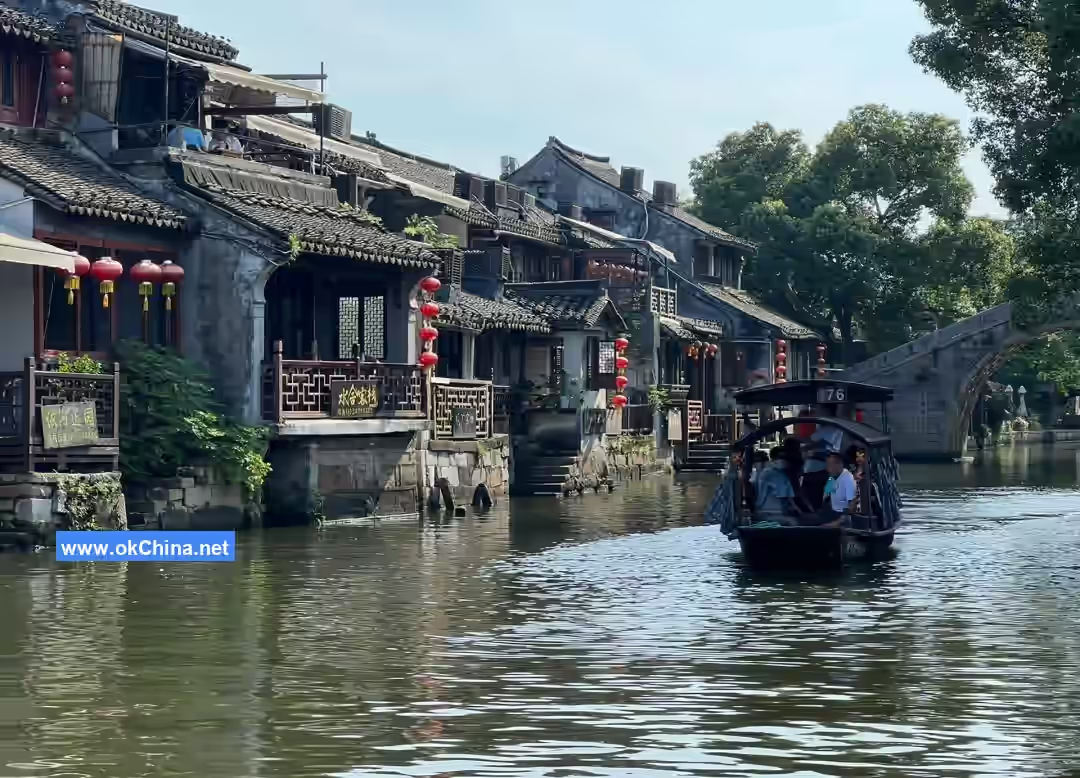
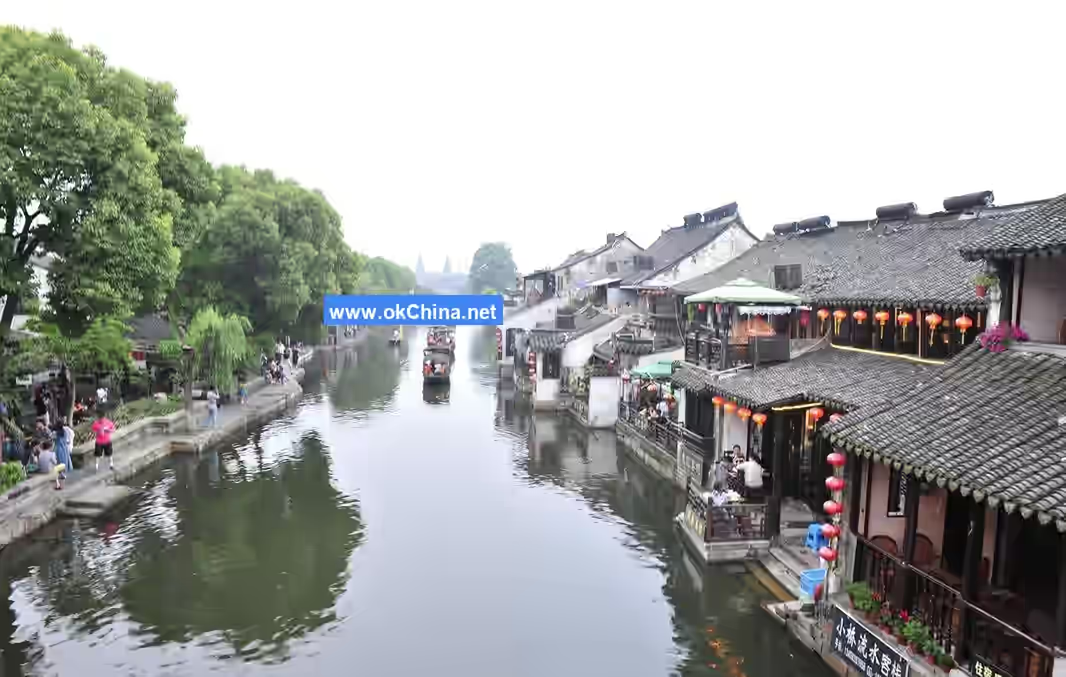
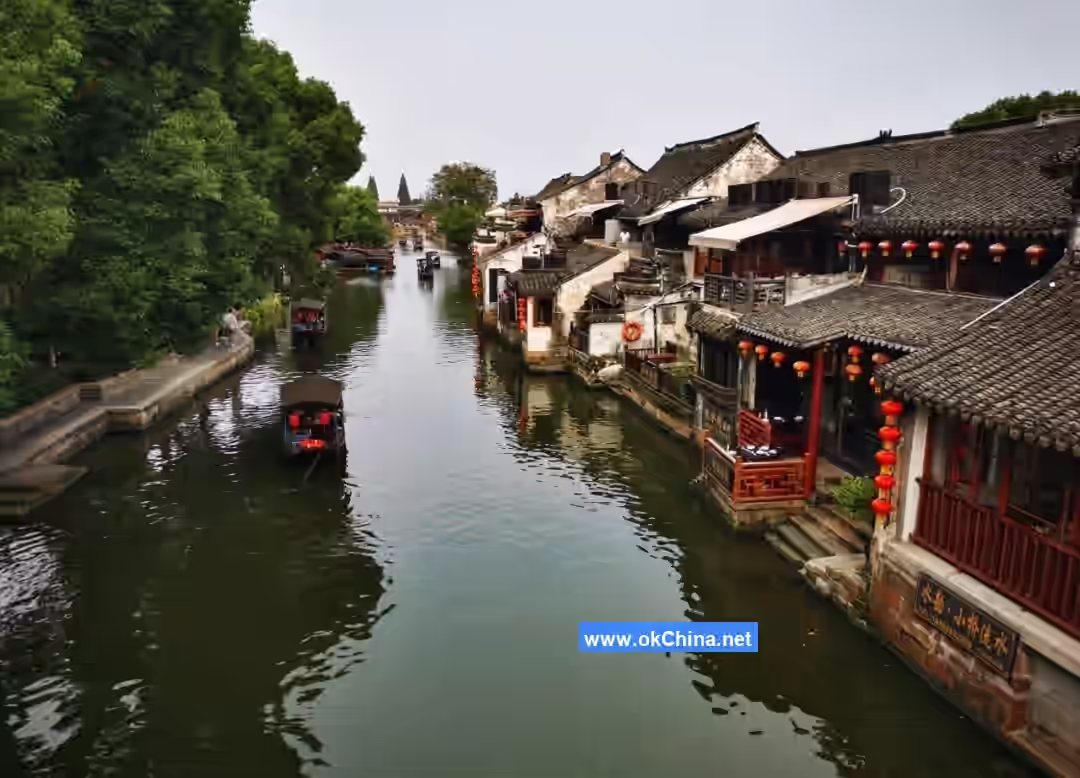
The ancient residences of Xitang were built during the Ming, Qing, and Republic of China periods, reflecting the social and cultural characteristics of Jiangnan in different historical eras. The town is crisscrossed with rivers, and residents live by the water. At the rear riverheads, there are docks, and the "beauty's recliner" on the docks adds a scenic touch characteristic of water towns.
4.3 Xitang Customs
4.3.1 Ming and Qing Architecture
Xitang boasts simple and honest folk customs, a bustling market, serene beauty, and ever-changing scenery. Ancient residences like Zhongfu Hall and Xue Residence, ancient temples like the Huguo Suiliangwang Temple and Sheng Tang, as well as famous gardens like Xiyuan and Zuiyuan, are all places for sightseeing and exploration, each telling a tale intertwined with Xitang's history.
4.3.2 Ancient Bridges
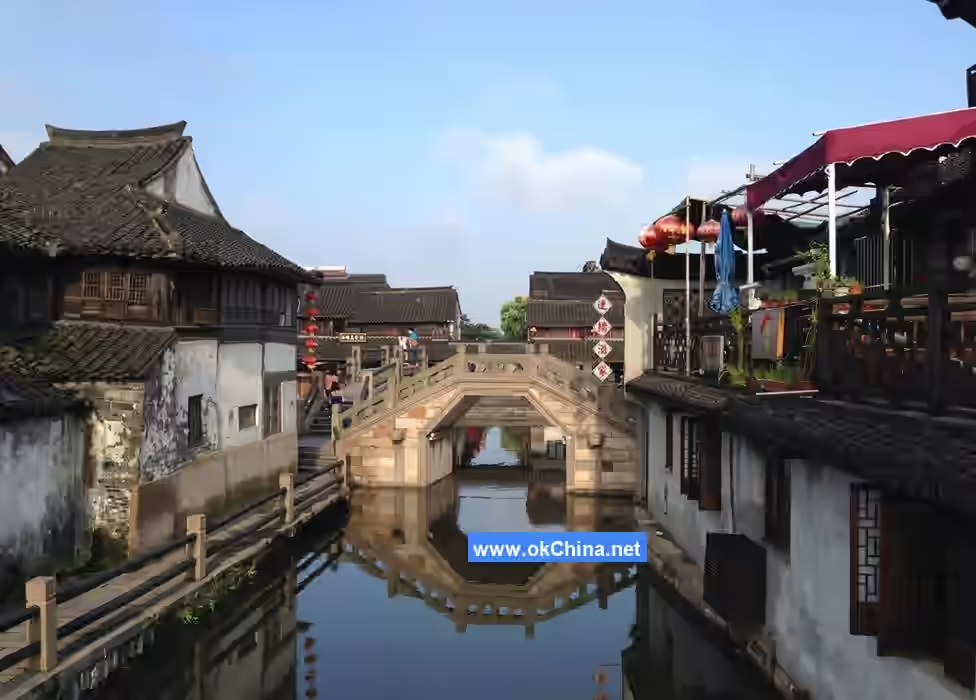
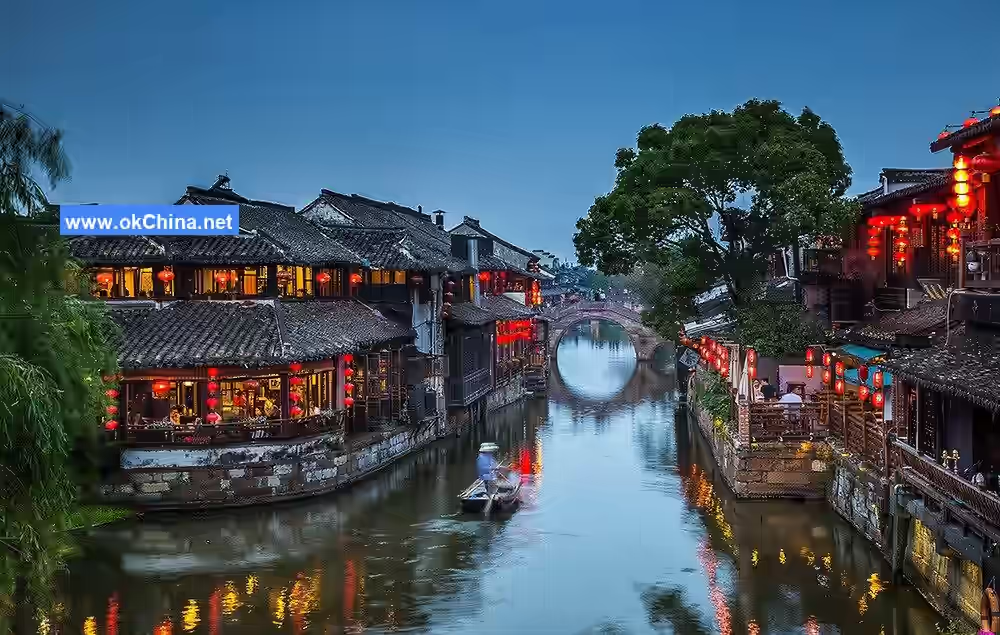
The water town of Xitang is unique among similar ancient towns in China, renowned for its many bridges, lanes, and covered corridors. The town is interlaced with rivers and densely dotted with bridges. By 1998, the town had built a total of 104 bridges. Since the Song Dynasty, Xitang has constructed 11 bridges, including Anren Bridge, Anjing Bridge, Anshan Bridge, Wufu Bridge, and Yongning Bridge. During the Qing Dynasty, bridges such as Wolong Bridge, Duchan Bridge, and Laifeng Bridge were added. Most of these ancient bridges are single-arch or three-arch stone-pillar wooden-beam bridges. The bridge craftsmanship is exquisite, well-preserved to this day, and holds ornamental value, earning the ancient reputation of "Wolong soaring over waves, a rainbow flying across."
4.3.3 Misty Rain Corridors
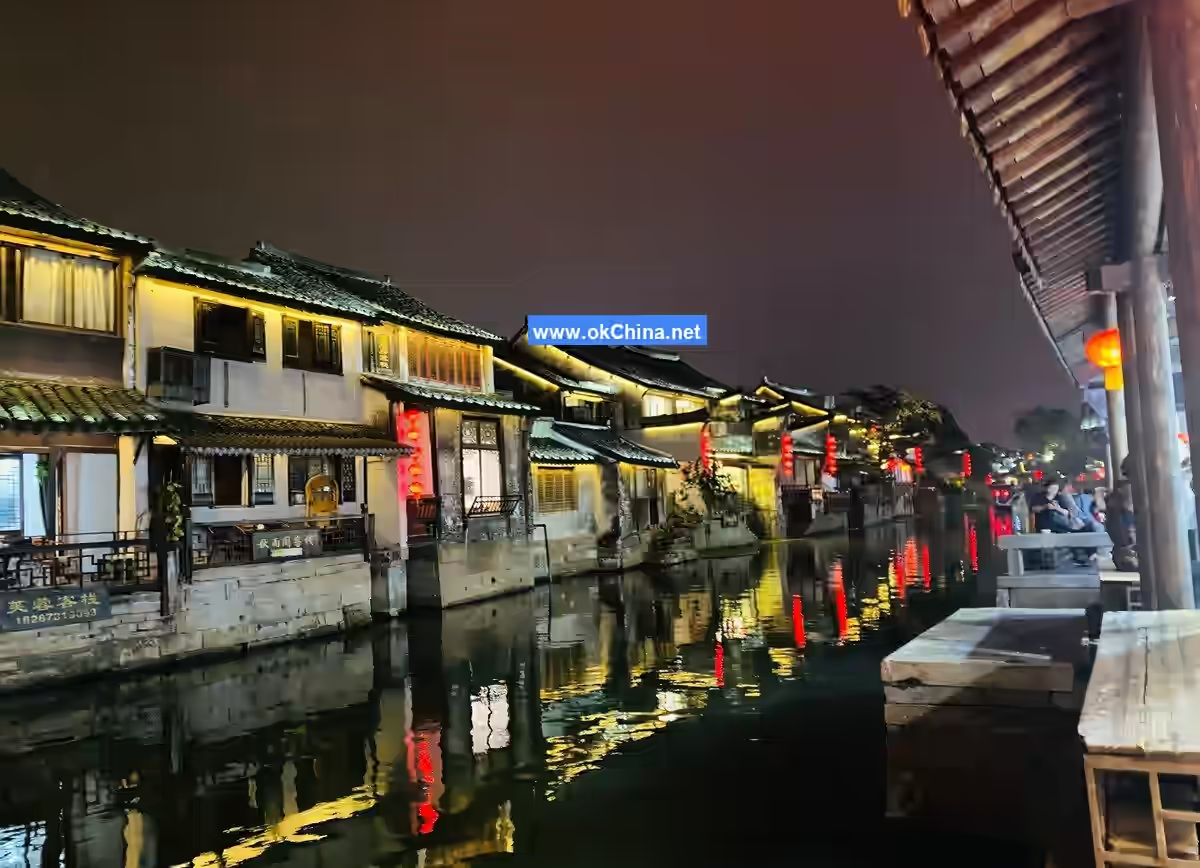
Xitang's covered corridors attract Chinese and foreign tourists with their unique and graceful charm. Most streets in Xitang are covered by corridors, providing shelter from rain and sun for commerce and pedestrians. Some corridors along the river are equipped with backrest benches for rest. The corridors are mostly wooden-framed with tile roofs, generally 2-2.5 meters wide, concentrated on Beizha Street and Chaonandi, with a total length of nearly 2,000 meters, offering shade and rain protection. One section is particularly elegant and outstanding, featuring two layers of carved patterns on the eaves, leaving tourists in awe.
4.3.4 Lanes
The residential lanes are another distinctive feature of the ancient town of Xitang, reflecting the character of its people. Deep within the lanes, winding paths lead to serene spots, their depth unknown until the end, where one suddenly finds a bright and open space, a hidden world. The town's lanes are deep and long, some with three to five courtyards, others with five to seven, housing twenty to thirty households, all accessed through these lanes.
4.3.5 Homes by the Water
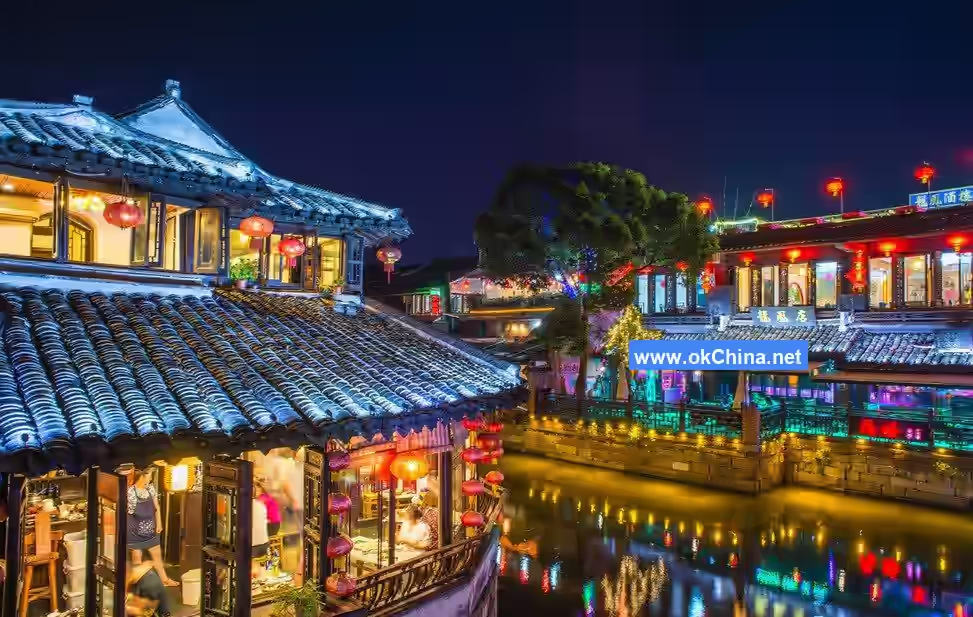
Opening a window reveals flowing water and verdant willow trees, instantly making one forget worldly troubles. Thus, after a day of hustle and bustle, in the fading night, amidst the sound of oars and the glow of lanterns, one falls into a deep sleep, listening to time resting by the water.
4.3.6 Jiangnan Folk Music
"Jiangnan Silk and Bamboo" is a traditional cultural art of Jiangnan, characterized by a fresh, lively, delicate, and elegant style; its melodies are beautiful, smooth, soft, and graceful. In Xiyuan, an ancient courtyard, you can hear authentic Jiangnan silk and bamboo music and experience another facet of the water town's charm.
4.3.7 Morning Market in the Neighborhood
The elderly residents here still rise with the sun and rest at sunset... chatting leisurely in the lanes, listening to the wind and enjoying the scenery on the bridges, letting their skirts lightly brush past bridges and lanes, filled with the flavor of life. The living ancient town has been passed down for a thousand years in such scenes, thriving endlessly.
4.3.8 Savoring Fragrant Tea
When tired from walking in Xitang, find a place to rest and drink tea, such as a small teahouse along the street. A cup of fragrant tea evokes emotions from the setting, and the setting arises from the tea, savoring Xitang and life itself.
4.3.9 Watching Community Opera
In the evening, the "water stage" will perform traditional Jiangnan operas, with rich and varied content, captivating viewers across the river.
4.3.10 Nanshe
Nanshe was a revolutionary group that primarily used literature to advocate for anti-Qing revolution, echoing the Tongmenghui and forming a strategic partnership. For a time, many newspapers in Beijing, Shanghai, Jiangsu, Zhejiang, Hunan, and even Southeast Asia were controlled by Nanshe members. "Seeking to spread thunder with words" (as Liu Yazi said), they created momentum for the anti-Qing national democratic revolution.
In Xitang, eighteen members joined Nanshe, including Yu Shimei, Li Ximou, Yu Zuomei, Shen Yuzhong, and Jiang Xuecheng. Their留下的诗词文章,指点江山,评说时政,是当时小镇文人倾向革命的真实写照。After Liu Yazi went south to Guangzhou, he gradually drifted away from his friends in Xitang, and Nanshe fragmented in the tide of the Great Revolution. However, a group of Nanshe friends in Xitang organized and established Xushe, with Jiang Xuecheng as its head, maintaining the same purpose and members, effectively an extension of Nanshe in Xitang. The majority of their literary works have been preserved.
4.3.11 Ten Scenes of Pingchuan
In the past, literati and scholars often harbored strong sentiments for their hometowns, fond of chanting about the culture, scenery, and history of their native land. In the water town of Xitang, literati and poets have emerged through the ages, leaving behind dozens of volumes and over a thousand poems and songs. Among these, the Ming Dynasty poet Zhou Ding and his "Ten Scenes of Pingchuan" poems stand out.
4.3.12 Watching Community Opera
Xiyuan was the private garden of the Zhu family during the Ming Dynasty and is the largest private garden in Xitang Town. In the spring of the ninth year of the Republic of China, Liu Yazi from Wujiang, along with Chen Chaonan, came to Xitang and met with local literary friends Yu Shimei, Cai Shaosheng, Chen Jueshu, etc., in this garden for poetry and photography. They imitated the Northern Song painter Li Gonglin's "Elegant Gathering," which depicted Su Dongpo, Mi Fu, Huang Tingjian, and others, naming their photo "The Second Elegant Gathering in Xiyuan."
Comments
Post a Comment