Foshan Xiqiao Mountain
1. Introduction
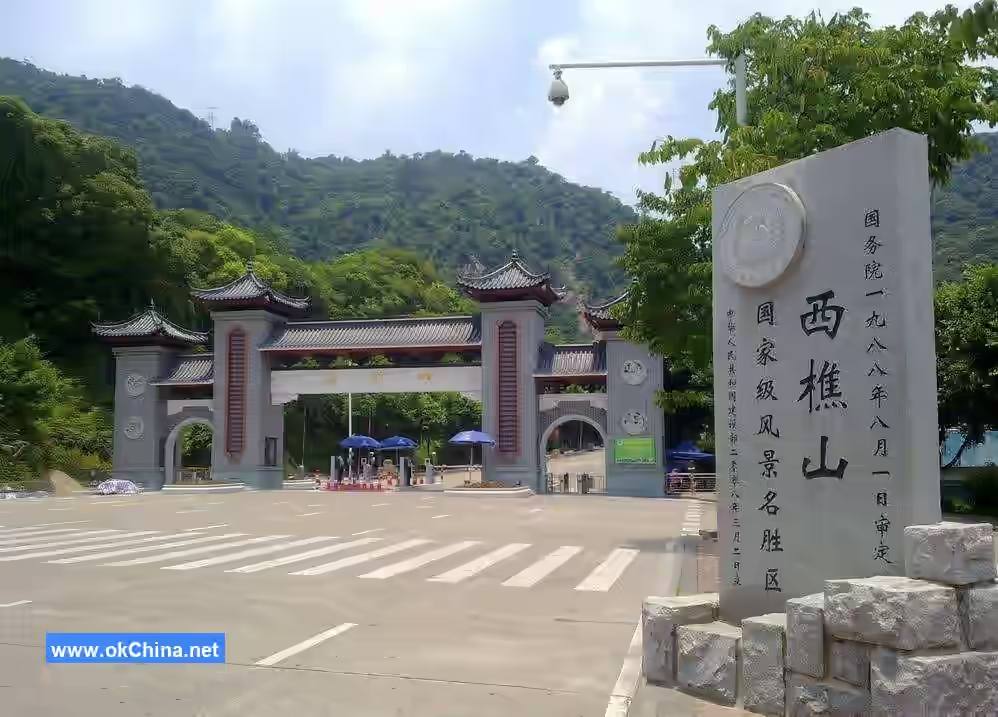
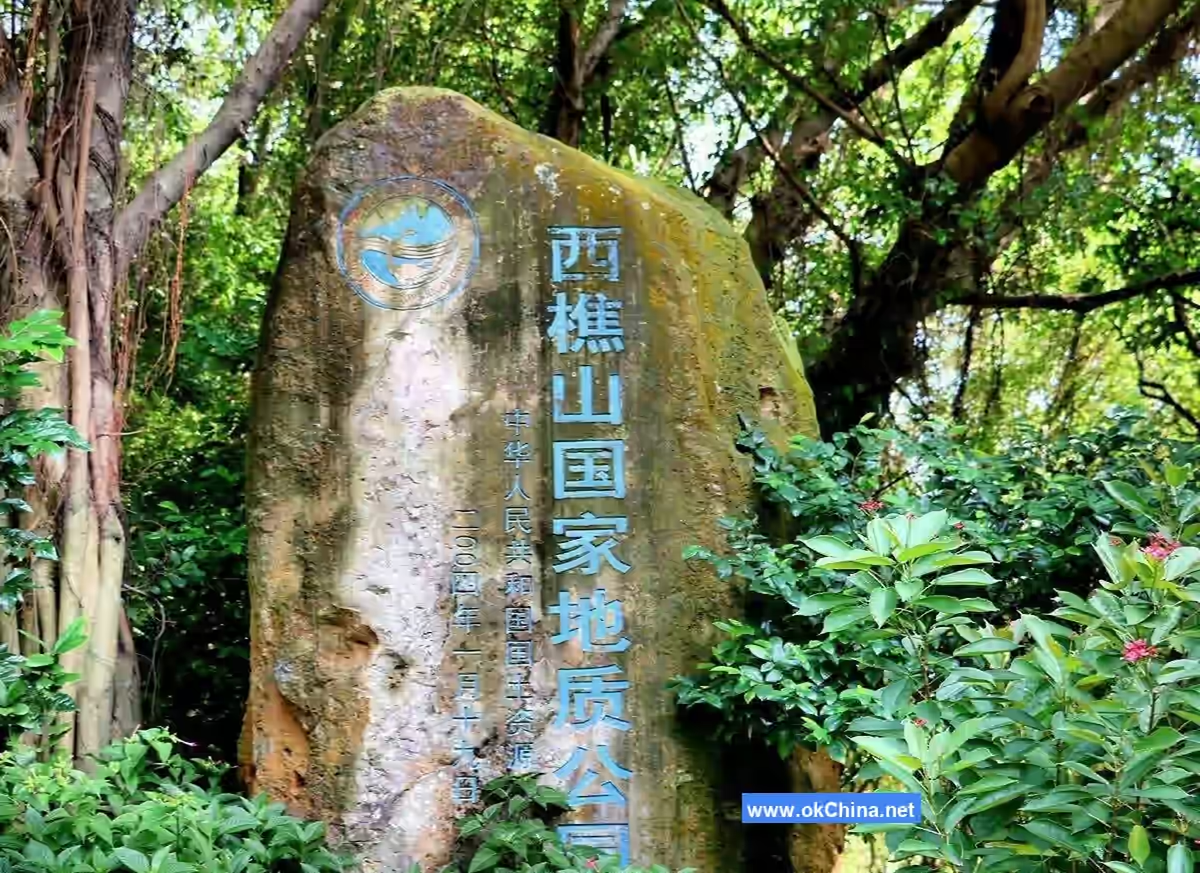
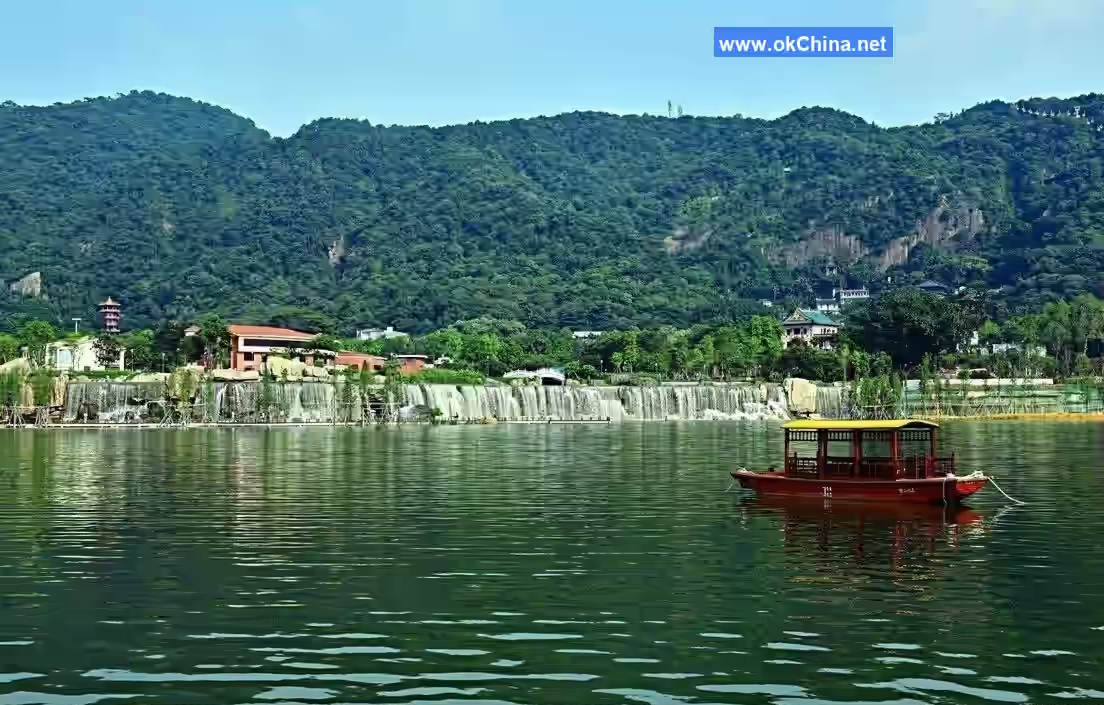
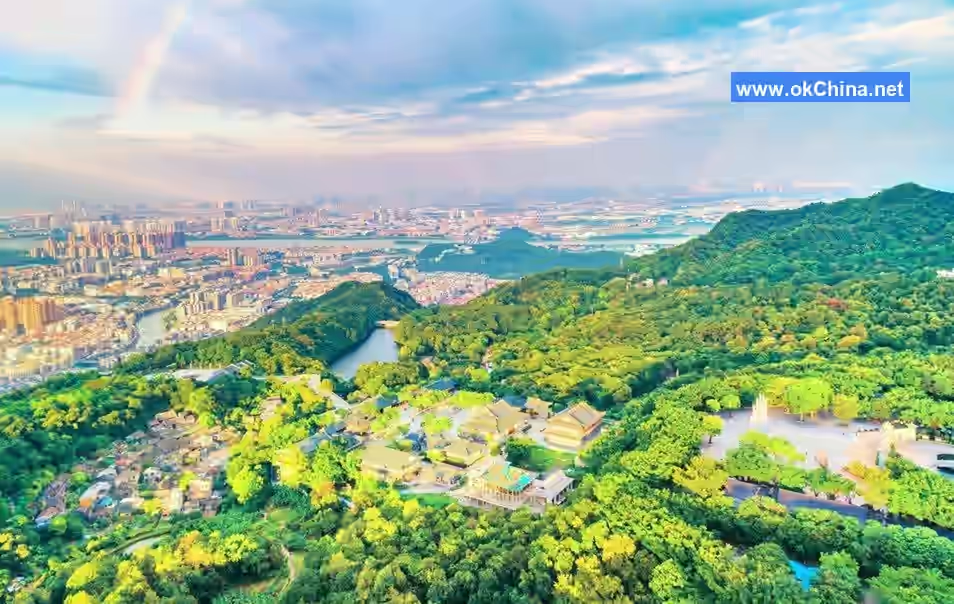
The Foshan Xiqiao Mountain Scenic Area is centered around an ancient extinct volcano, located in the southwest of Nanhai District, Foshan City, Guangdong Province, at the heart of the Pearl River Delta. The scenic area has a diameter of 4 kilometers and covers an area of 13.03 square kilometers.
The Foshan Xiqiao Mountain Scenic Area features a subtropical monsoon climate and is dominated by low hills, with surrounding plains, terraces, and alluvial fans. Xiqiao Mountain was formed by multiple volcanic eruptions during the middle to late Cretaceous period, 45 to 51 million years ago. Since the Ming Dynasty, numerous renowned Confucian scholars have established academies here, earning it the title "Mountain of Neo-Confucianism." In 1988, the State Council designated Xiqiao Mountain as a National Scenic Area, and the government began managing its natural resources that same year. The Foshan Xiqiao Mountain Scenic Area boasts 72 spectacular peaks, 36 caves, 232 clear springs, 28 waterfalls, two sky lakes (East and West), and includes nine scenic spots such as White Cloud Cave, Nine Dragon Rock, Stone Swallow Rock, Jasper Cave, Sky Lake, Emerald Rock, Sea of Clouds Lotus Platform, Wong Tai Sin Holy Land Garden, and Huang Feihong Lion Dance and Martial Arts Hall.
2. Geographical Environment
2.1 Location and Territory
The Foshan Xiqiao Mountain Scenic Area is located in the southwest of Nanhai District, Foshan City, Guangdong Province, at the heart of the Pearl River Delta. The scenic area has a diameter of 4 kilometers and covers an area of 13.03 square kilometers.
2.2 Climate
The Foshan Xiqiao Mountain Scenic Area lies within a subtropical monsoon zone. The soil pH is moderate, and the climate is conducive to the formation and growth of subtropical evergreen broad-leaved forests. The annual average temperature is 21.8°C, with ample sunshine and abundant rainfall.
2.3 Topography
The mountains within the Foshan Xiqiao Mountain Scenic Area are primarily composed of low hills. The main peak, Dake Peak, has an elevation of 344 meters. The surrounding area features landforms such as plains, terraces, and alluvial fans.
2.4 Geology
Xiqiao Mountain is an ancient volcano. When the Pearl River Delta was still an ancient bay, a volcanic eruption occurred, ejecting large amounts of magma that solidified in the seawater, forming a conical mountain mass. Later, several more magma eruptions occurred, shaping the clustered peaks that resemble a lotus flower emerging from water. Subsequently, the Pearl River Delta alluvial plain formed, the seawater receded, and Xiqiao Mountain transformed into a prominent landmass rising from the plain, covered with green grass and trees, inhabited by birds and animals, marking the beginning of the ancient history of the Pearl River Delta. Geological investigations using potassium-argon isotope dating indicate that the volcanic activity of Xiqiao Mountain occurred 45 to 51 million years ago.
2.5 Hydrology
The Foshan Xiqiao Mountain Scenic Area has 232 clear springs, 28 waterfalls, and two sky lakes (East and West).
2.6 Biodiversity
The Foshan Xiqiao Mountain Scenic Area is rich in biological species, including plants such as pine, camphor, poplar, and tung trees; birds like the golden pheasant, spring oriole, and golden finch; mammals such as wild boar, fox, and leopard cat; fish including mountain barb and fighting fish; and insects like stone swallows, mantises, and spiders. Among the wildlife, there are nationally protected species such as the Tiger-striped Frog (a Class II protected animal in China) and birds like the Hoopoe, Black Drongo, and Chestnut Munia, which are listed as "Three Haves" protected wildlife (animals with ecological, scientific, and social value).
3. Major Attractions
Scenic Area Layout
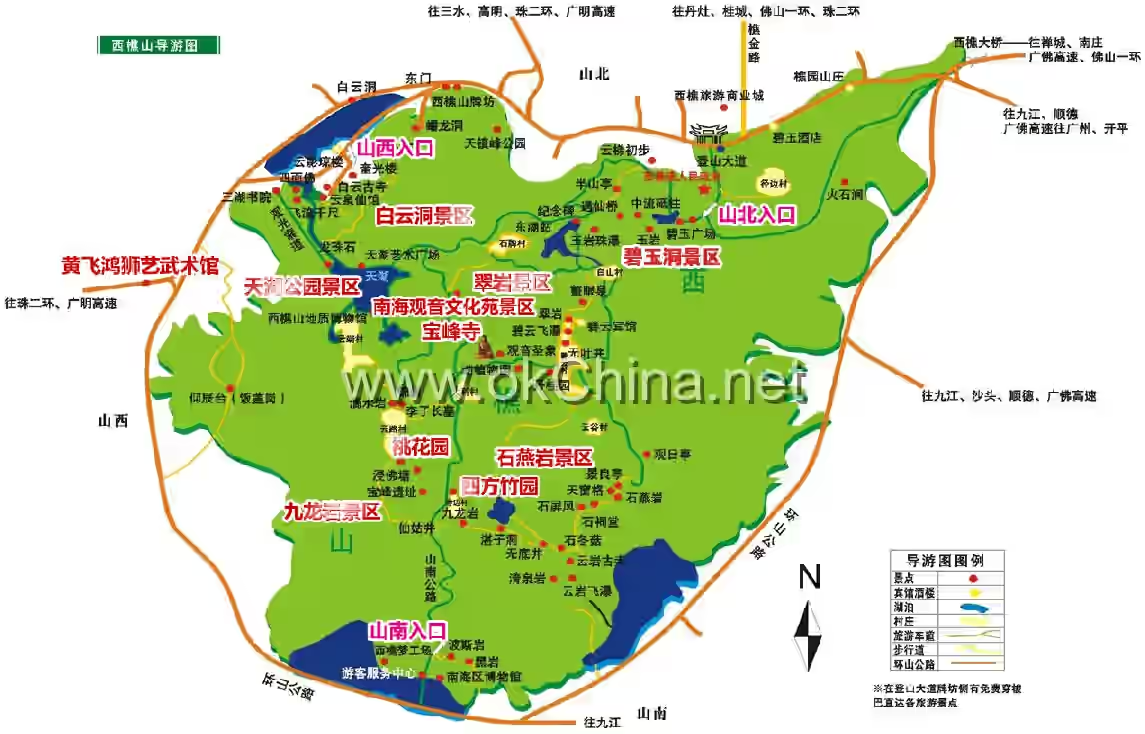
The Foshan Xiqiao Mountain Scenic Area boasts 72 spectacular peaks, 36 caves, 232 clear springs, 28 waterfalls, two sky lakes (East and West), and includes nine scenic spots such as White Cloud Cave, Nine Dragon Rock, Stone Swallow Rock, Jasper Cave, Sky Lake, Emerald Rock, Sea of Clouds Lotus Platform, Wong Tai Sin Holy Land Garden, and Huang Feihong Lion Dance and Martial Arts Hall. Among these, the White Cloud Cave Scenic Area is located at the northern foot of Xiqiao Mountain, Baofeng Temple is situated in the central part of the scenic area, the Stone Swallow Rock Scenic Area is in the southeast of Xiqiao Mountain, and the Nine Dragon Rock Scenic Area is in the south-central part.
3.1 White Cloud Cave Scenic Area
3.1.1 White Cloud Cave
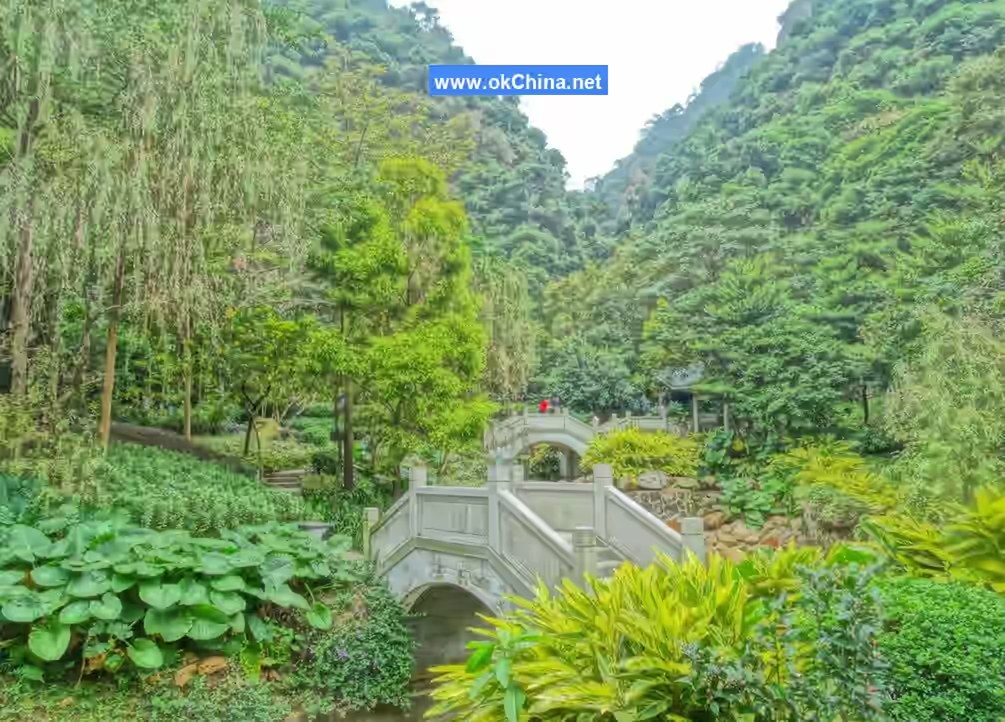
White Cloud Cave, the foremost of Xiqiao's "Thirty-Six Caves," is renowned as the epitome of Xiqiao Mountain's scenery. Dong Biwu once wrote a poem: "To appreciate the beauty of Xiqiao, one should first visit White Cloud."
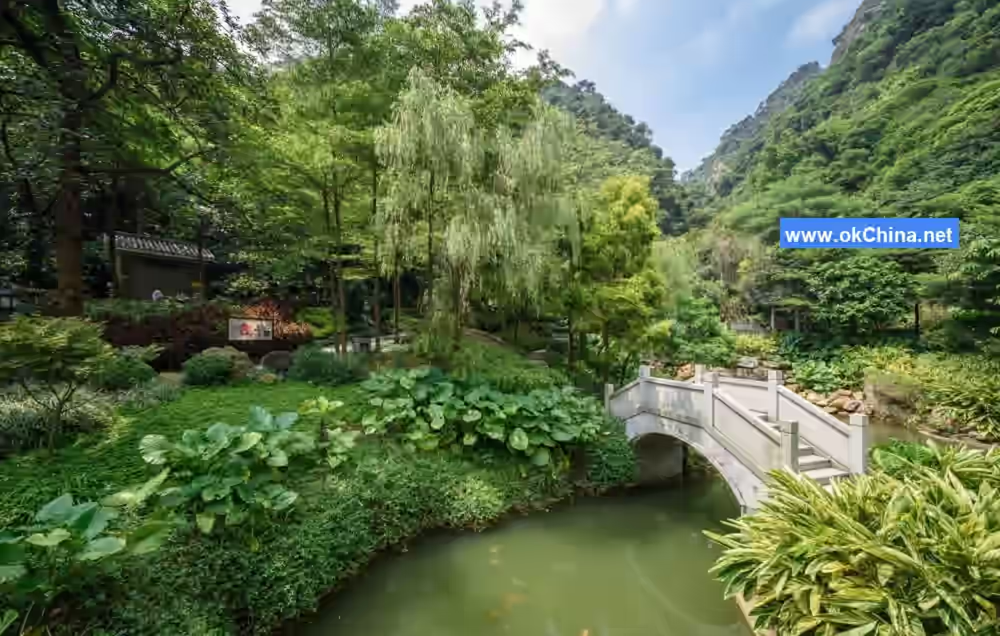
The "cave" of White Cloud Cave is actually a deep valley embraced by three peaks: Changgeng, Baiyun (White Cloud), and Huagai. With sheer cliffs, flowing springs and waterfalls, deep tranquility, and natural charm, it is a place of wonder. During the Jiajing period of the Ming Dynasty, a scholar from Xiqiao named He Liang built a study and residence here for self-cultivation and reading, calling himself "Mr. White Cloud," hence the cave's name. Subsequently, celebrities gathered, monks and Taoists arrived, establishing altars, building halls, opening temples, and creating a shared sanctuary for Confucianism, Buddhism, and Taoism for cultivation, teaching, and learning. Historically, the White Cloud Cave Scenic Area was said to have "Three Caves" and "Twenty-Four Scenes."
3.1.2 White Cloud Ancient Temple
To the right of the White Cloud Cave entrance stands a majestic temple, nestled against the mountain and facing a lake, with a platform in front and a three-courtyard layout. This is the White Cloud Ancient Temple. Originally built in the second year of the Zhengde era of the Ming Dynasty (1507 AD), it was first named Baozhen Nunnery. In the 48th year of the Qianlong era of the Qing Dynasty (1783 AD), it was renamed Baozhen Temple. Rebuilt in the 24th year of the Jiaqing era (1819 AD), it was renamed White Cloud Baozhen Temple. Rebuilt again in the second year of the Guangxu era (1876 AD), it was renamed White Cloud Ancient Temple. The temple venerates Tathagata Buddha. A couplet on the temple gate reads: "The winding stream flows long, riding a crane to seek the ancient three caves; White Cloud still remains, dwelling with plum blossoms in the mountain's serene seclusion."
3.1.3 Character Temple
The Character Temple, also known as Cangjie Temple, is located to the left of White Cloud Ancient Temple. It venerates Cangjie, the legendary creator of Chinese characters. Such temples are rare. Originally the Yunxi Academy, it was first built in the 42nd year of the Qianlong era (1777 AD) and renamed Cangjie Temple after renovation in the 19th year of the Daoguang era (1839 AD). The temple has two courtyards, with a square pavilion at its center housing a statue of Cangjie, flanked by corridors. The temple contains many couplets.
3.1.4 Three Lakes Academy
The Three Lakes Academy is located behind and above the White Jade Pagoda. Originally built beside Mirror Lake in White Cloud Cave, it was relocated and reconstructed here in its original layout in 1987. The academy is a two-courtyard compound. Outside the main gate is a spacious platform paved with granite slabs, surrounded by railings. The plaque on the main gate was inscribed by the national hero Lin Zexu. Founded in the 54th year of the Qianlong era (1789 AD) by Cen Huaijin and other notable scholars from Jin'ou Fort in Xiqiao, it was renovated in the 20th year of the Daoguang era (1840 AD). In the fifth year of the Guangxu era (1879 AD), the 22-year-old Kang Youwei studied here.
3.1.5 Yunquan Immortal Hall
Yunquan Immortal Hall, located in the middle of White Cloud Cave, above Mirror Lake, at the end of the valley, is an ancient Taoist temple. This site was originally the location of Yunyu Mountain Lodge. In the 40th year of the Qianlong era (1775 AD), Li Aiting from Shigang, Nanhai, renamed it the Jade-Carving Tower, a place for scholars to study and recite poetry during the late Ming and early Qing dynasties. Outside the tower, ancient trees provided deep shade, and cicadas filled the air with their songs in summer and autumn, making "Listening to Cicadas at the Jade-Carving Tower" a scenic spot within White Cloud Cave. After reconstruction in the 28th year of the Daoguang era (1848 AD), it was named Yunquan Immortal Hall, derived from the large and small Yunquan springs on its left and right. It was rebuilt again in the 34th year of the Guangxu era (1908 AD). The hall consists of two courtyards. A stone bridge leads to the main hall, which enshrines Lü Dongbin. Beside the stone bridge is a "Life-Freeing Pond." To the right of the main hall are the "Ink Studio" and "Ancestral Hall," with the "Emperor's Proximity Hall" behind. The plaque above the gate, inscribed with the four large characters "Yunquan Immortal Hall," was written by Imperial Commissioner, Junior Guardian of the Heir Apparent, Assistant Grand Secretary, Minister of War, Viceroy of Liangguang, and Imperial Clan Member Qiying, dated "the first month of the Wushen year of Daoguang," i.e., the first lunar month of 1848 AD. The area in front of the gate is open, with stacked stone steps. A pair of ornamental pillars and stone lions stand on each side. The protective walls are decorated with ceramic reliefs of lions, phoenixes, fish, and murals such as "Six Steeds" and "Hundred Birds Paying Homage to the Phoenix."
3.2 Sea of Clouds Lotus Platform Scenic Area
3.2.1 Nanhai Guanyin Cultural Park
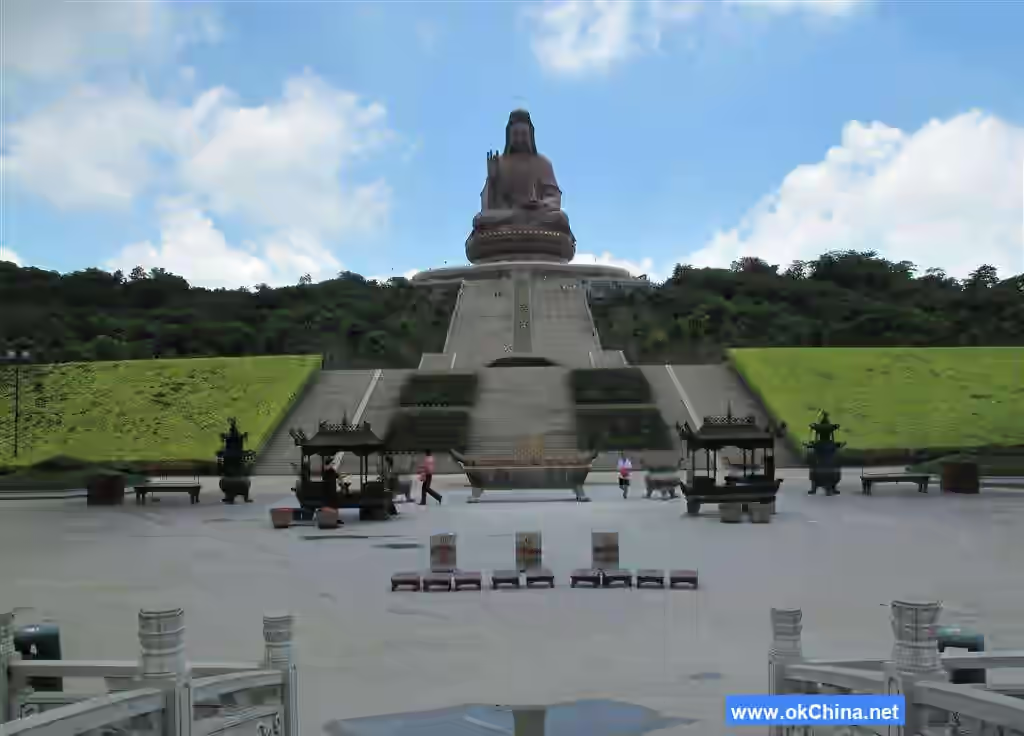
The Nanhai Guanyin Cultural Park is situated on Daxian Peak, one of the seventy-two peaks of Xiqiao Mountain. Its foundation was laid on the 19th day of the sixth lunar month in 1995. After three years of construction, it was consecrated and opened to the public on the 19th day of the second lunar month in 1998. The scenic area covers 2 million square meters.
3.2.2 Guanyin Statue
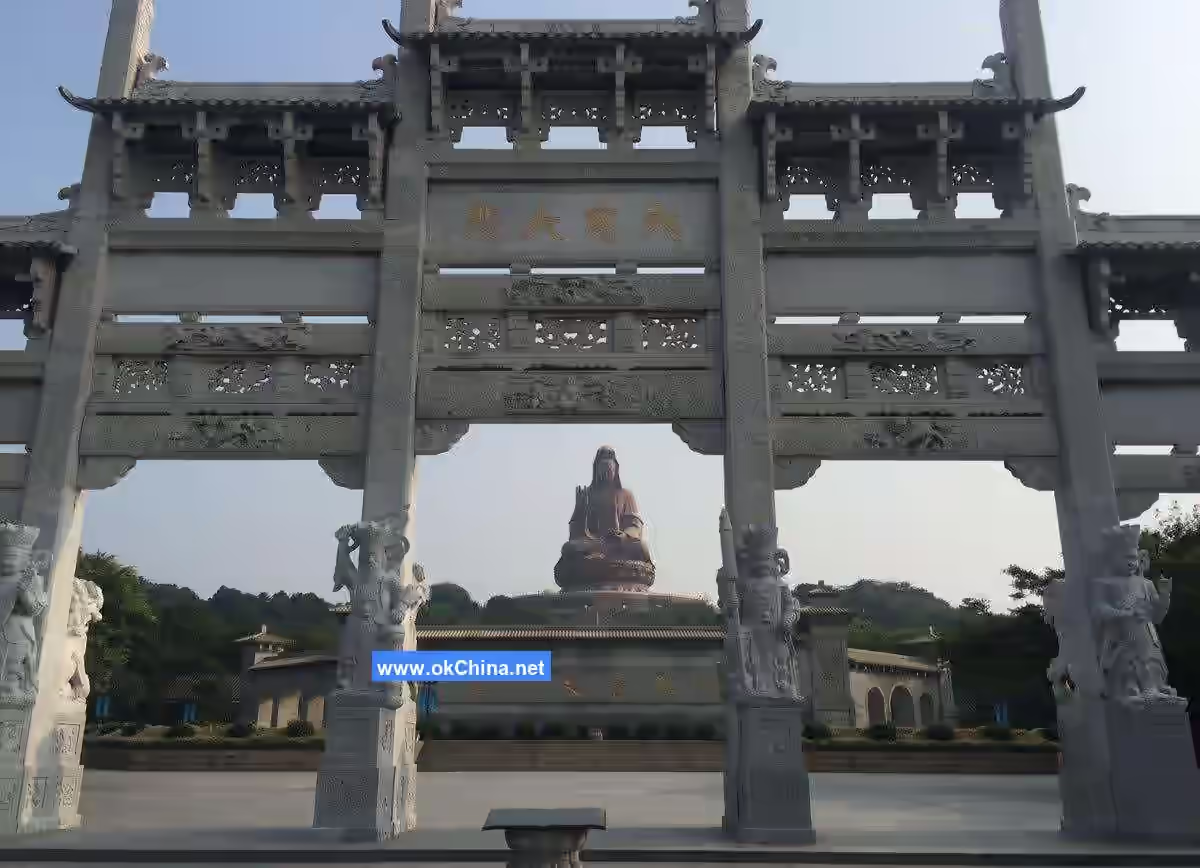
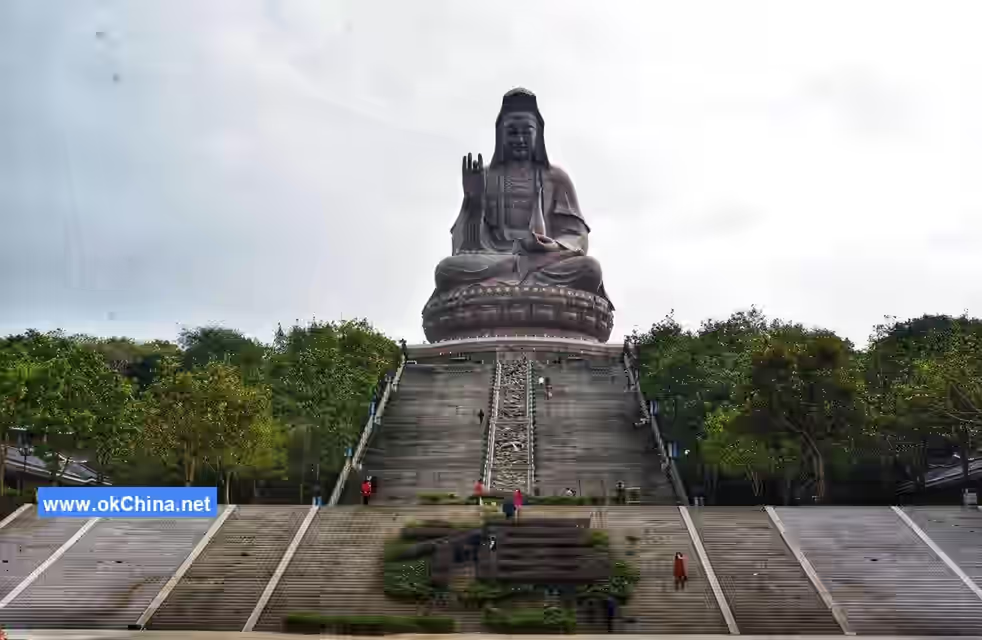
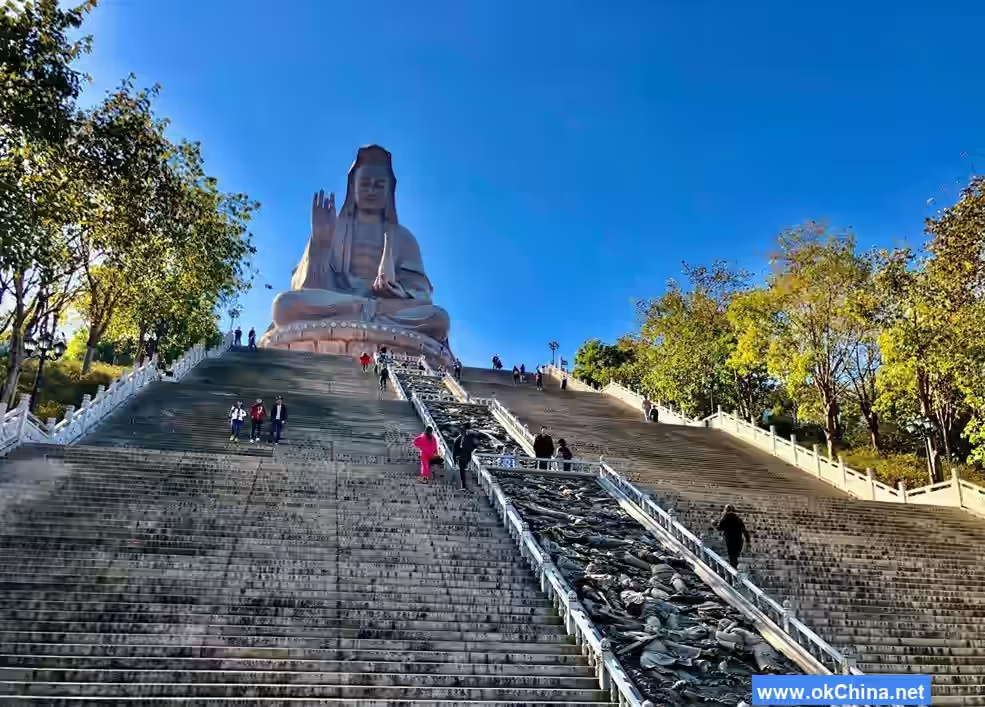
The Guanyin Statue, made of bronze, sits atop Daxian Peak at an elevation of 292 meters. The statue's total height is 61.9 meters, making it the tallest seated Guanyin statue in the world. Facing north with its back to the south, the statue sits cross-legged on a lotus throne, wearing a jeweled celestial crown and celestial robes over a gauze skirt. With curved eyebrows, red lips, star-like eyes, and a kind, benevolent expression, it gazes down upon the land of Nanhai, wishing peace and happiness for humanity. The statue itself is 47 meters tall, with a lotus throne 14.9 meters high and 36 meters in diameter. The throne is adorned with 60 lotus petals arranged in three layers. Below the lotus throne is a spacious five-story hall housing a museum exhibition hall and a Merit Hall. The exhibition hall displays paintings, sculptures, embroideries, literary works related to Guanyin culture, and porcelain portraits with inscribed names of donors.
3.2.3 Six-Syllable Mantra Screen Wall
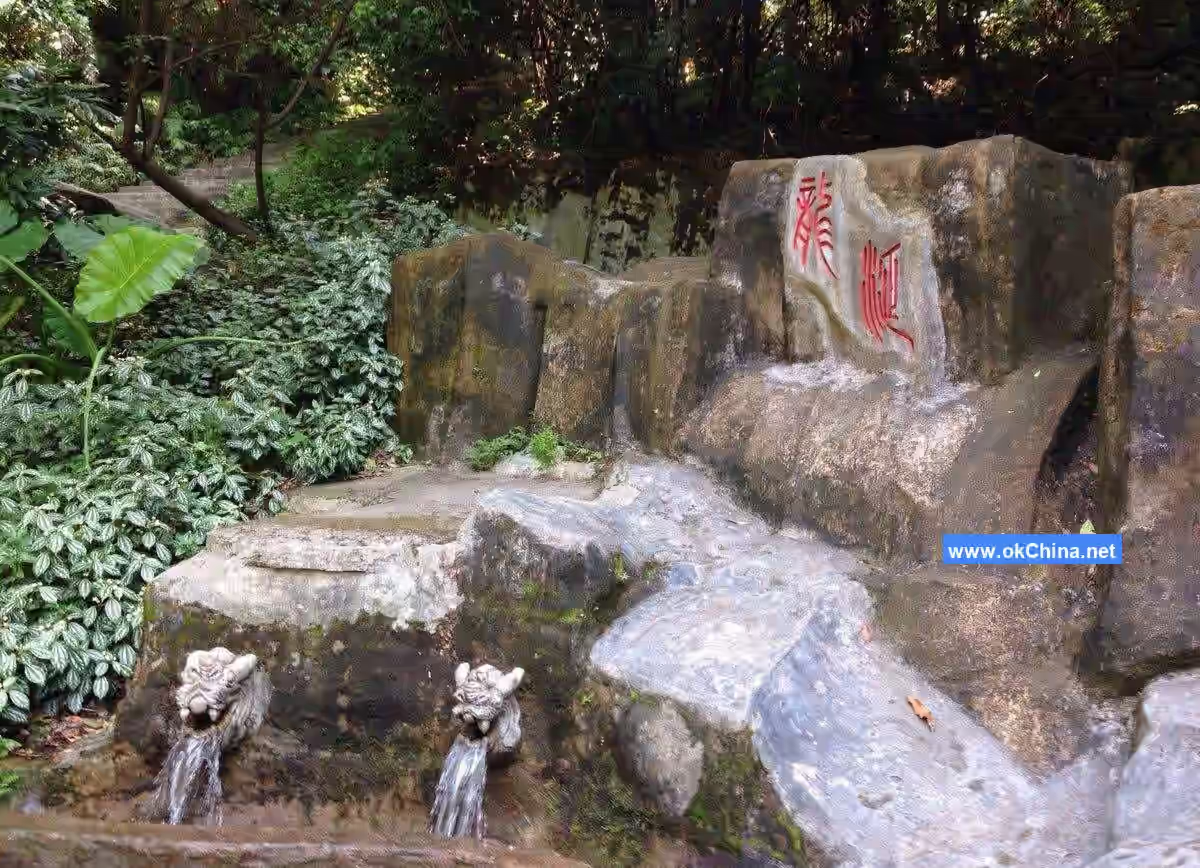
The Six-Syllable Mantra Screen Wall is carved from high-quality stone from Anhui. The wall is inscribed with the "Guanyin Six-Syllable Mantra," handwritten by Rende, the Abbot of Jiuhua Mountain, Vice President of the Chinese Buddhist Association, and President of the Anhui Buddhist Association. Below it is the Tibetan script of the "Mantra," inscribed by a Tibetan Living Buddha. The Chinese pronunciation of the "Six-Syllable Mantra" is "Ōng, mā, nī, bēi, mēi, hōng." Tibetan Buddhism considers this the root of Buddhist scriptures; frequent recitation is believed to accumulate merit, and "perfection of merit" leads to liberation. In the center of the screen wall is a statue of Weituo (Skanda), clad in armor and holding a vajra pestle. He is the "Dharma Protector" who safeguards Buddhist teachings and dispels evil spirits. Buddhist scriptures refer to him as "Dharma Protector Skanda Honored Celestial Bodhisattva." It is said that Shakyamuni Buddha held special affection for him and often preached the Dharma to him individually.#### 3.2.4 Memorial Archway Square In front of the screen wall lies the Memorial Archway Square. The archway is tall and imposing, featuring six pillars and five bays, standing 18 meters high and 32 meters wide. Its design is unique, with the central section towering highest, flanked by sections that step down gracefully on either side. This entire archway is carved from high-quality granite sourced from Anhui Province. The outer pillars are adorned with "inverted lion" carvings, while the four central pillars are embedded with giant stone statues of the Four Heavenly Kings. The one holding a sword is Virūḍhaka (Growth King); the one holding a pipa is Dhṛtarāṣṭra (Upholder of the Realm); the one holding a precious parasol in his right hand and a divine mongoose in his left is Vaiśravaṇa (He Who Hears All); and the one entwined with a dragon is Virūpākṣa (Wide-Eyed King). Also known as the Four Vajra Warriors, they are the most influential deities among the Buddhist protector deities. The objects held by the Four Heavenly Kings symbolize the wish for "favorable weather and good harvests." The sword (剑, jiàn) has a sharp edge (锋, fēng), homophonous with "wind" (风, fēng); the pipa has strings, representing "harmony" or "regulation" (调, tiáo); the parasol shields from "rain" (雨, yǔ); and the entwined dragon signifies "order" or "smoothness" (顺, shùn). Together, they embody the phrase "fēng tiáo yǔ shùn" (风调雨顺), meaning favorable weather for the crops.
3.3 Nine Dragon Rock Scenic Area
The Nine Dragon Rock Scenic Area includes attractions such as Zigui Well, Nine Dragon Rock, the Tomb of Zhan Ganquan, Zhanzi's Lecture Rock, Zhanzi Cave, and Baofeng Temple. Baofeng Temple boasts a history of over six hundred years. Originally located within the Camellia Garden, it was one of the four famous temples in the Lingnan region. In 2005, it was relocated and rebuilt at the foot of Daxian Peak on Shegang Hill, officially opening to visitors on January 28, 2007. The new Baofeng Temple retains the architectural style of the Ming Dynasty, featuring carved beams and painted rafters, an elegant and classical simplicity, and a grand, imposing layout. Nestled amidst green mountains and clear waters, surrounded by forests, with auspicious mists swirling and birds singing in harmony, it presents a magnificent scene. Nine Dragon Rock, also known as Jiuzhen Cave or Jiuyao Rock, is located on a cliff face beside Longzhua Peak, below the west side of Zigui Well. The rock formation features nine holes of varying heights and orientations, winding and interconnected. They were formed by the weathering and expansion of gas cavities within the volcanic rock. Entering from an outer hole, one twists and turns as if inside a spiral shell, crawling up, down, left, and right like a snake or a mouse—a deep, mysterious, and fascinating experience—finally emerging from an inner hole in the darkness to the Tongtian Rock at the cliff top, back into the daylight. A local saying goes, "If you can crawl through the holes of Nine Dragon Rock, good luck will see you live to ninety-nine."
3.4 Stone Swallow Rock Scenic Area
The Stone Swallow Rock Scenic Area is renowned for its lofty, strange, and perilous landscapes, offering unique characteristics. Its main attractions include Jingliang Pavilion, Tianchuangge (Skylight Grid), Stone Screen, Stone Swallow Rock, Stone Ancestral Hall, Yunyan Ancient Temple, and Winter Mushroom Rock. Jingliang Pavilion is situated at the southeastern foot of Tengyun Peak, one of the seventy-two peaks of Xiqiao Mountain. Built in 1984, it is a cement-constructed, twelve-pillared, double-eaved, four-cornered square pavilion in an antique style. It was once praised by UNESCO as "a rare beauty in the world" and "a model of a sound ecological environment." Stone Swallow Rock is located at the southern foot of Shinao Peak, another of the seventy-two peaks. Originally a massive cave formed by quarrying during the Ming Dynasty, it is the most famous cave on Xiqiao Mountain. In earlier times, the cave was inhabited by stone swallows, creatures resembling bats, hence its name. The cave entrance is flat and oval like lips, but inside it opens up suddenly, vast and spacious, capable of holding three thousand people for song and dance. The cave is warm in winter and cool in summer, acting as a natural air conditioner. Deep within the cave lies a dark lake formed by accumulated water, clear and deep enough for boating.
3.5 Sky Lake Scenic Area
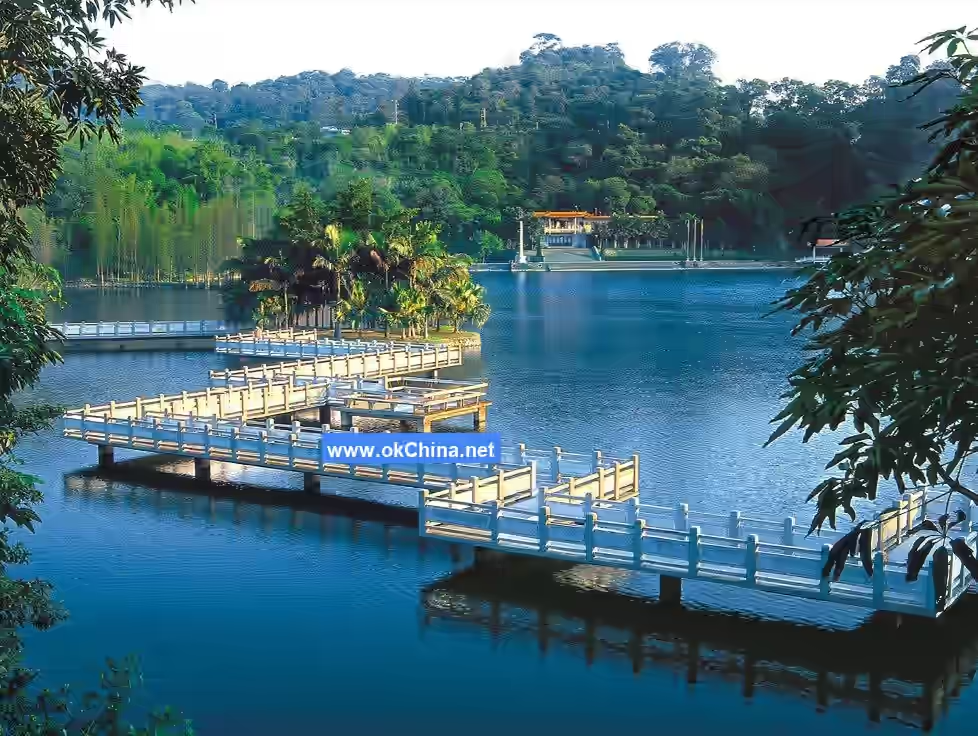
Sky Lake, formerly known as Guangping, is a crater lake formed in an ancient volcano, located in the northern part of Xiqiao Mountain. Originally, the lake was not very deep and its surface area was limited. After the founding of the People's Republic of China, during the era of "vigorously developing water conservancy," the northern embankment was heightened to store more water. Following the establishment of the Xiqiao Mountain Tourism Resort District People's Government, Sky Lake underwent large-scale planning and construction. Its surface area now reaches 130,000 square meters, with a maximum depth of over 20 meters. A series of pavilions, towers, and terraces have been constructed, along with entertainment and recreational facilities such as a water screen cinema, a water stage, and an art square, transforming Sky Lake into a uniquely characteristic leisure park.
3.6 Huang Feihong Lion Dance and Martial Arts Hall
To promote the noble martial and medical ethics of Huang Feihong, the Huang Feihong Lion Dance and Martial Arts Hall was constructed in 1996 in Luzhou Village at the foot of Xiqiao Mountain, Huang Feihong's birthplace. The hall houses the Huang Feihong Historical Exhibition Hall and the Guan Dexing Memorial Hall. Southern Lion Dance is Huang Feihong's legacy skill. The majestic lions, clad in splendid golden armor, perform breathtaking feats such as leaping onto high poles, walking on tightropes, and plucking the "high green" (a symbolic prize), tumbling, leaping, and maneuvering as if on flat ground, showcasing exquisite skill and detailed artistry. The Dragon and Lion Dance Troupe and the Martial Arts Troupe perform lion dance and martial arts daily for visiting tourists.
3.7 Peach Blossom Garden
The Peach Blossom Garden was originally part of Yanxia Cave on the west side of Dake Peak. The valley is broad and open. During the Ming Jiajing period, the scholar Zhan Ruoshui established the Dake Academy here to study Neo-Confucianism, making it as renowned as academies like Bailu and Yuelu. After its destruction, peach trees began to be planted in 1998. Now covering over 200 acres with more than 20 varieties and over 5,000 trees, it is the largest peach blossom garden in the Pearl River Delta region with the most varieties. Main varieties include the rare white peach blossom, thirteen-petal peach blossom, Gongfen Dahong (palace pink deep red) peach blossom, Shoudai (longevity ribbon) peach blossom, Qingzhi Milun (slender branch dense bud) peach blossom, and Shuangtuo Dahong (double-support deep red) peach blossom.
3.8 Cuiyan (Emerald Rock)
Cuiyan, also known as Guancui Rock (Emerald Viewing Rock), is a steep and short gorge north of Biyun Peak, named for its lush greenery. The cliffs within the gorge are densely shaded by trees, with banyan aerial roots interlacing like a net. The Biyun Spring flows through, forming waterfalls and streams, with the sound of flowing water ever-present. The cliff faces bear many inscriptions left by scholars from the Qing Dynasty, filling the area with poetic and picturesque charm. Qing Dynasty painters Li Jian and He Danshan once built cottages here to compose poetry and paint, leaving behind sites like the "Hundred Flowers Terrace" used for sketching and the "Half-Moon Spring" used for drinking water. Within the rock are the "Waterfall Listening Tower" and the "Linglong Path"; traversing the perilous path leads to Biyun Village.
3.9 Seasonal Landscapes
3.9.1 Ring Mountain Sea of Flowers
The Ring Mountain Sea of Flowers on Xiqiao Mountain reaches its peak bloom every February. Red, pink, and purple cosmos flowers radiate the auspicious meaning of "flowers blooming bring wealth," welcoming good luck for visiting tourists! The Ring Mountain Sea of Flowers landscape belt is a highlight project of Foshan City's "Green City Flying Flowers" colorful theme greening initiative. Starting from 2015, utilizing opportunities like New Year tree planting, voluntary tree planting, and parent-child tree planting activities, over 530 acres of demonstration projects featuring famous and excellent Lingnan trees and 2.5 kilometers of yellow bellflower trees around the Ring Mountain Lake have been planted. It is truly a beautiful place with both flowers and water.
3.9.2 Camellia Garden
The Xiqiao Mountain Camellia Garden covers over a hundred acres, featuring more than 200 varieties of camellias, totaling approximately over ten thousand plants. Among these, over 100 are domestic varieties, and over 90 are imported from abroad. Varieties include well-known domestic and international types such as Yuhuan, Yuedan, Hedinghong (Crane's Crest Red), Daliujiao (Large Hexagon), Baibaozhu (White Precious Pearl), Dahongzhucha (Deep Red Pearl Tea), Dahongshancha (Deep Red Mountain Tea), and Xiaoliujiao (Small Hexagon). Colors range from deep red and rose red to white and yellow. The camellia blooming period lasts 2-3 months. As springtime is fleeting, those who cherish spring and flowers should visit early.
4. Cultural Resources and Activities
4.1 Origin of the Name
Xiqiao Mountain was originally named Jinshi Mountain (Brocade Stone Mountain) because its peaks and rocks were as splendid as brocade. "Qiao" (樵) means firewood gathering. In ancient times, people from Guangzhou would go to Luofu Mountain in the east to gather firewood, calling it "Dongqiao" (East Qiao). When they went to Jinshi Mountain in the west for the same purpose, they began calling it "Xiqiao" (West Qiao).
4.2 Historical Development
Xiqiao Mountain was formed approximately 45 million years ago by volcanic activity, subsequently developing the "Shouldered Stone Tool" civilization, earning it the title "Beacon of Pearl River Civilization." Starting from the Ming Dynasty, numerous renowned Confucian scholars established academies here, leading to its reputation as the "Famous Mountain of Neo-Confucianism."
4.3 Stone Tool Culture
In 1958, renowned archaeologist Jia Lanpo and others discovered prehistoric human activity sites on Xiqiao Mountain characterized by microliths and shouldered stone tools. This site became the largest prehistoric stone tool workshop in South China, forming the unique "Xiqiao Mountain Culture," pioneering the Pearl River civilization and earning the title "Beacon of Pearl River Civilization." Along with the Emaokou site in Huairen, Shanxi, it is listed as one of the two major northern and southern stone tool workshops of China's Neolithic Age. Preliminary discoveries by archaeologists in the Stone Swallow Rock Scenic Area indicate that its underwater site covers an area of several hundred thousand square meters, six times larger than the above-water site. It is the largest, most complete, and most magnificent underwater ancient production site discovered in China to date, holding significant historical and scientific research value.
4.4 Mulberry-dyke Fish Pond Culture
The landscape at the foot of Xiqiao Mountain has undergone great changes over time. The intelligent and hardworking villagers developed vast mulberry-dyke fish ponds since the Ming and Qing dynasties, creating a complete and scientific artificial ecosystem. This not only promoted the development of mulberry planting, sericulture, and fish farming in the Pearl River Delta but also spurred the growth and prosperity of China's textile industry. Xiqiao Town became a nationally recognized "Famous Textile Town" and has now evolved into a typical high-yield, high-value, and high-tech agricultural breeding area. The mulberry-dyke fish pond ecological agricultural landscape covering over ten thousand acres on the southern foothills of Xiqiao Mountain has been designated a protected unit by UNESCO and praised as "a rare beauty in the world" and "a model of a sound ecological cycle."
4.5 Cultural Activities
4.5.1 Kaibi Li (Initiating the Brush Ceremony)
During the Ming Dynasty, famous Neo-Confucian scholars such as Chen Baisha, Zhan Ganquan, Fang Xianfu, and Huo Tao established halls and lectured on Xiqiao Mountain. Zhan Ganquan, Fang Xianfu, and Huo Tao respectively founded the Dake Academy, Yungu Academy, Shiquan Academy, and Sifeng Academy. In the Qing Dynasty, literati and scholars further built the Sanhu Academy, Yunxi Academy, and Yunying Academy on the mountain. The tradition of study and research remained strong, solidifying Xiqiao Mountain's nationwide reputation as a "Famous Mountain of Humanities" and "Famous Mountain of Neo-Confucianism." Today, preschool children annually participate in the Kaibi Li (Initiating the Brush Ceremony) in front of the academies to inherit this cultural tradition.#### 4.5.2 Flower Appraisal Fair According to the Records of Xiqiao Mountain, the Flower Appraisal Fair on Xiqiao Mountain began in the Ming Dynasty and flourished in the Qing Dynasty, boasting a history of over 600 years. Ancient literati and scholars left behind many widely acclaimed poems. Later, the fair disappeared due to the War of Resistance Against Japan. During the appraisal, local villagers would display rare flowers and plants they had collected in the pavilions and towers of Baiyun Cave for literati, calligraphers, painters, and tourists to appreciate. Poems, calligraphy, paintings, and couplets were solicited for various flowers, culminating in the selection of a "Flower Champion." After the reform and opening-up, tourism planning revived this traditional activity, bringing joy to the mountain flowers and delight to the villagers. The mountain flowers, full of sentiment, inspire human progress.
4.5.3 Lion King Championship
In the 27th year of the Daoguang era of the Qing Dynasty (1847), the martial arts master Huang Feihong was born in Luzhou Village at the foot of Xiqiao Mountain. Xiqiao is renowned as the birthplace of Southern Fist and Southern Lion culture. In 2005, Xiqiao Town was awarded the title of "China's Famous Town of Dragon and Lion" by the National Sports Bureau. Since 2003, the "Huang Feihong Cup" Lion King Championship has been held, attracting outstanding lion dance teams from home and abroad, further promoting the culture of dragon and lion martial arts.
4.5.4 Double Ninth Festival Mountain Climbing
The Double Ninth Festival, also known as the Double Ninth Day or the Cornel Festival, traditionally includes activities such as outings to enjoy scenery, mountain climbing, drinking osmanthus wine, and honoring the elderly. According to the Records of Xiqiao Mountain, mountain climbing on Xiqiao Mountain during the Double Ninth Festival has a history of over 1,000 years. It is considered the best climbing spot in the Pearl River Delta region and has remained popular from the Ming and Qing dynasties to the present day. Hoping to avoid disasters and change their fortunes, people from all directions climb the mountain the day before the festival, camping in groups overnight while the mountain is brightly lit and crowded with visitors. At the foot of the mountain, Guanshan Market caters to climbers' needs, with vendors from all around competing for stalls day and night. They sell daily necessities, offerings or lucky charms, children's toys, and seasonal delicacies, each employing creative strategies. Climbers often return with large incense sticks and pinwheels to symbolize warding off misfortune and attracting good fortune. Some also take the opportunity to sweep ancestral graves or relocate ancestors' remains, while others fly kites in the crisp autumn air of the festival to pray for good luck. The climbing paths of Xiqiao Mountain and other hills are bustling with climbers, and kite-flying events are also organized during the festival. After the reform and opening-up, the state designated the Double Ninth Festival as "Senior Citizens' Day."
Comments
Post a Comment