Xibaipo Scenic Area, Shijiazhuang City, Hebei Province
I. Introduction
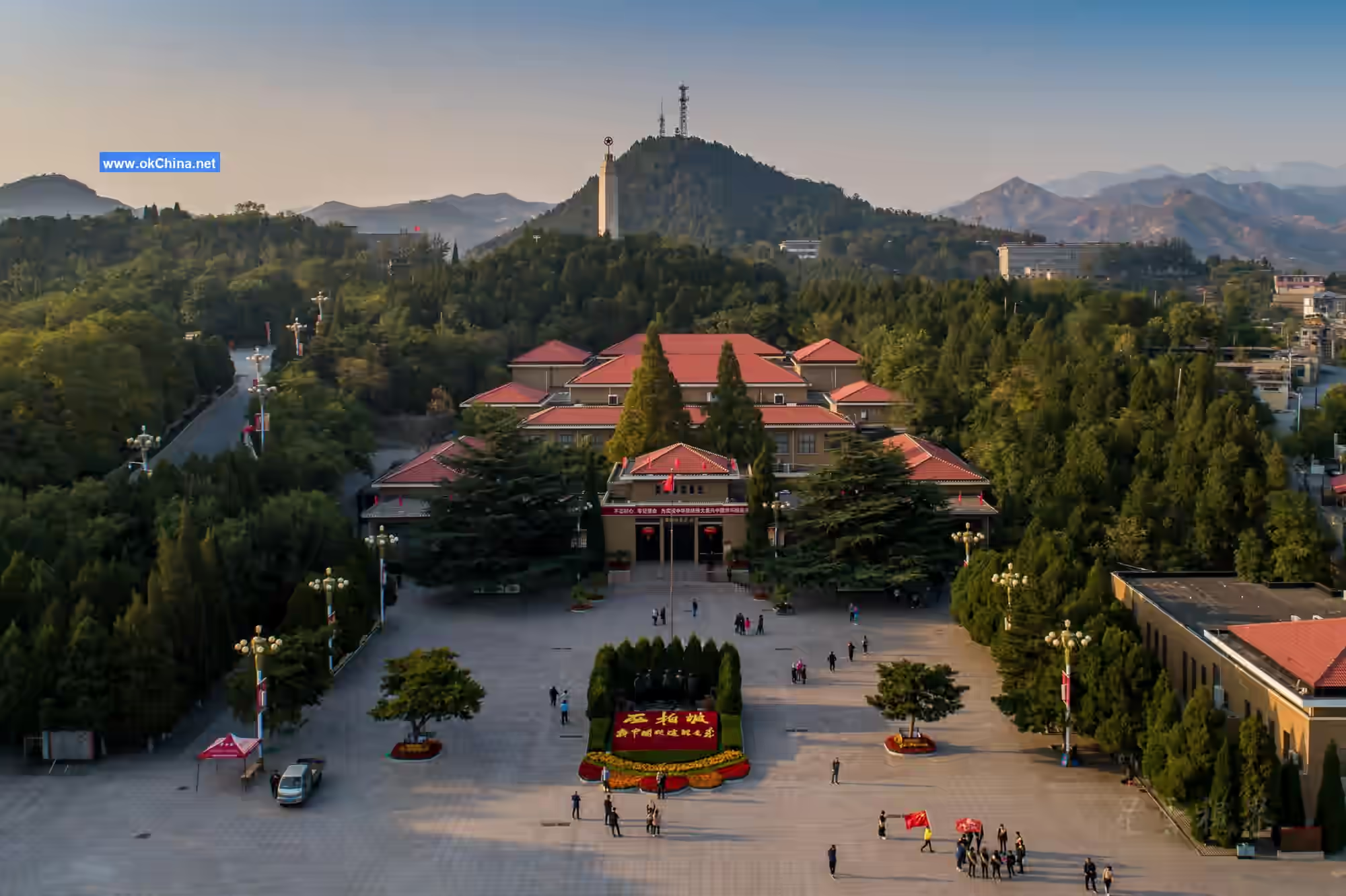
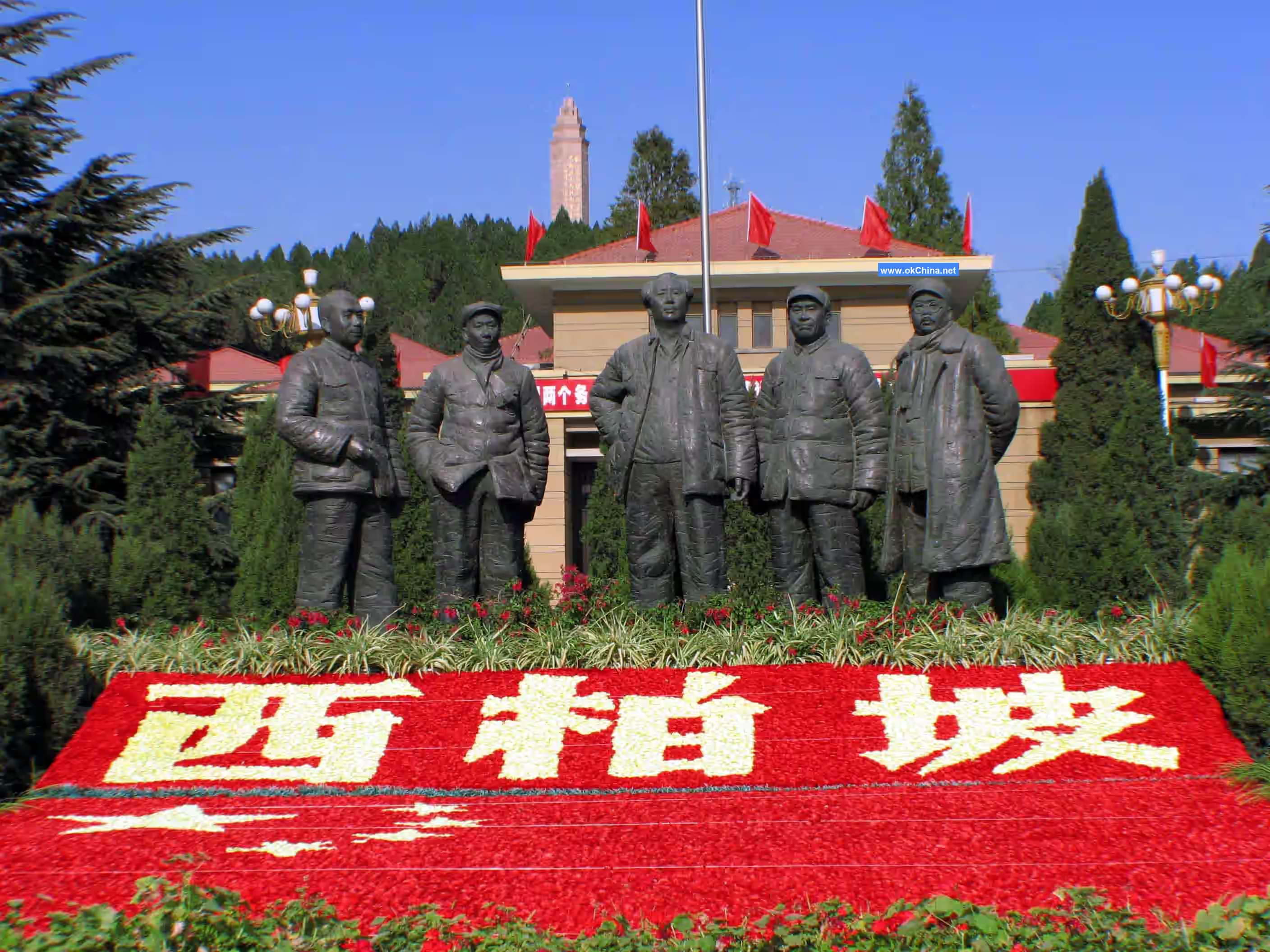
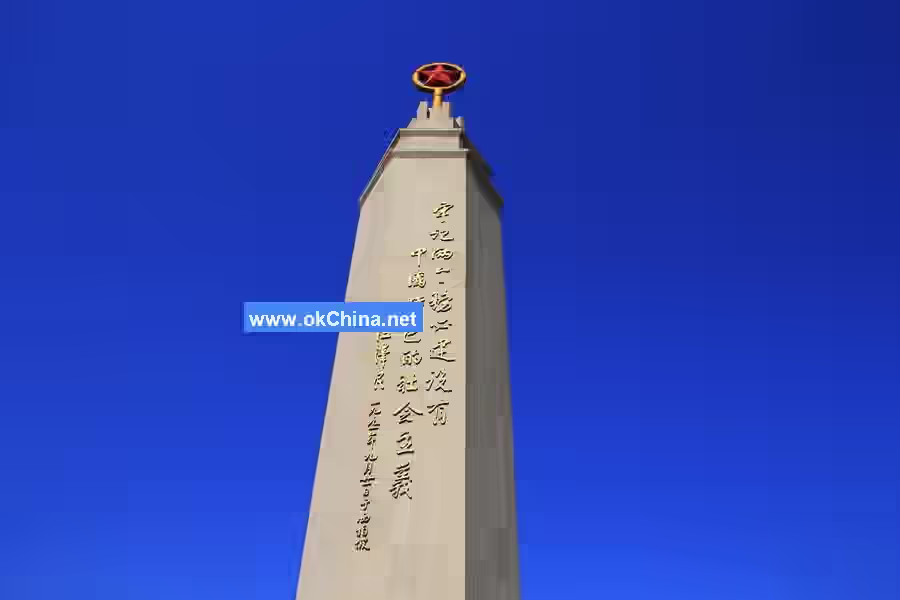
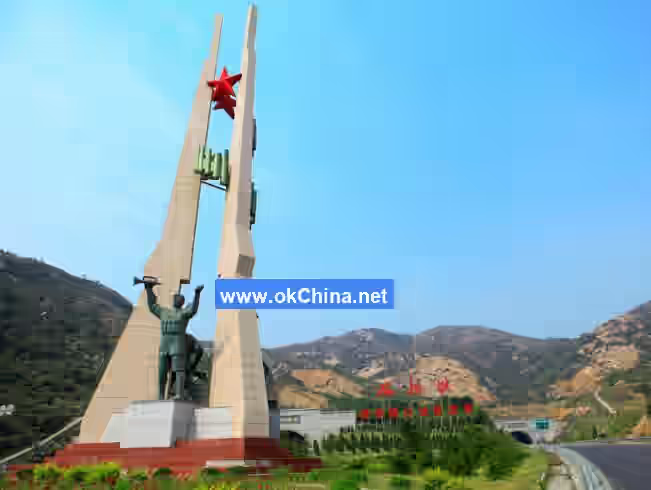
Xibaipo Scenic Area, Shijiazhuang City, Hebei Province (Hebei Shijiazhuang Xibaipo Scenic Area) is located on Yingbin Road, Pingshan County, Shijiazhuang City, Hebei Province. Situated at the eastern foot of the Taihang Mountains and backed by Beijing and Tianjin, it is 90 kilometers away from the provincial capital, Shijiazhuang. The scenic area covers a total area of 390,000 square meters and is a National AAAAA Tourist Attraction and one of China's revolutionary memorial sites.
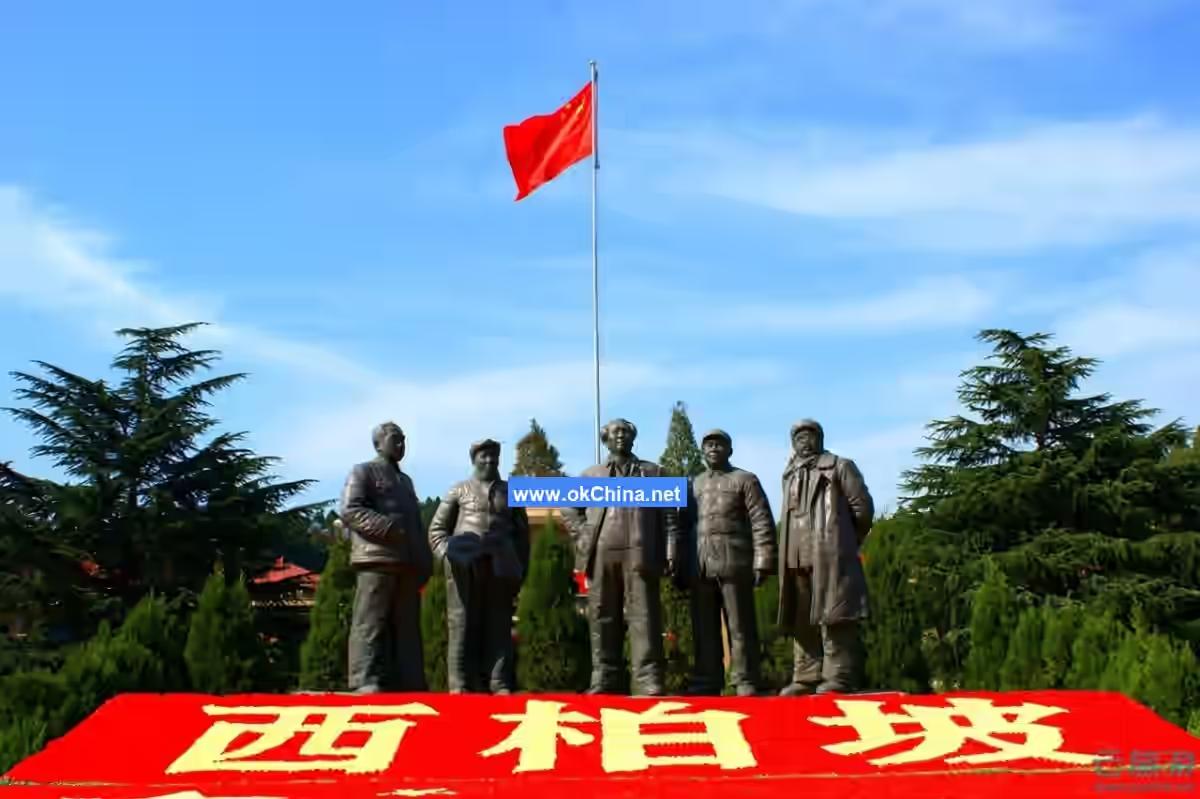
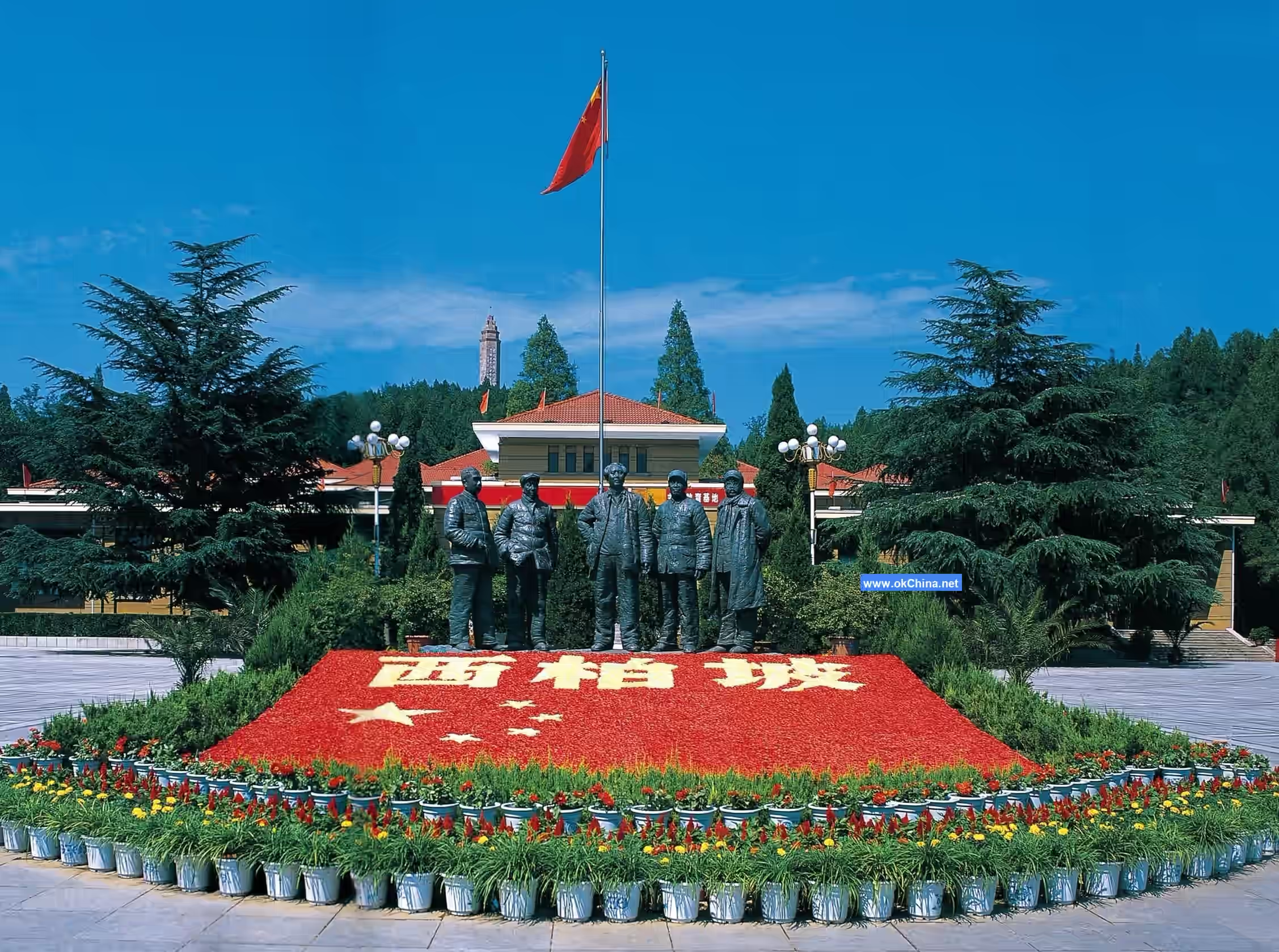
Xibaipo Scenic Area, Shijiazhuang City, Hebei Province was originally built during the Tang Dynasty and later served as the location of the Central Working Committee, the Central Committee of the Communist Party of China, and the headquarters of the People's Liberation Army during the War of Liberation. In May 1947, Liu Shaoqi and Zhu De led the Central Working Committee into Xibaipo; in May 1948, Mao Zedong, Zhou Enlai, and Ren Bishi led the Central Front Committee and the headquarters of the People's Liberation Army into Xibaipo. Here, the Party Central Committee convened the National Land Conference of the Communist Party of China; directed the three major campaigns of Liaoshen, Huaihai, and Pingjin; and held the Second Plenary Session of the Seventh Central Committee of the Communist Party of China. The scenic area is divided into two parts: the Xibaipo Revolutionary Sacred Site Tourist Area and the Xibaipo Red Victory Scenic Area. Attractions available for visit include the former site of the Central Committee of the Communist Party of China in Xibaipo, the Xibaipo Memorial Hall, the Xibaipo Stone Carving Garden, and the National Security Education Hall, forming a comprehensive, multi-level patriotic education system.
Naming
Xibaipo was originally built during the Tang Dynasty and was initially named "Bai Bu," derived from the lush cypress trees on the hills behind the village. During the Later Zhou Dynasty of the Five Dynasties, the Hutuo River flooded and destroyed the original Bai Bu village. In the early Song Dynasty, some residents relocated to the foot of the northern hills to establish a new village. As it was situated west of the East Bai Bu village across a reed field, it was named West Bai Bu. During the Republic of China era, the village teacher Qi Yujun changed "Bu" to "Po," and the name evolved into Xibaipo.
II. Historical Evolution
In May of the 36th year of the Republic of China (1947 AD), the Central Working Committee, led by Liu Shaoqi and Zhu De, first entered Xibaipo. They convened the Chinese Land Conference in Xibaipo and promulgated and implemented the "Chinese Land Law Outline."
In May of the 37th year of the Republic of China (1948 AD), Mao Zedong, Zhou Enlai, and Ren Bishi led the Central Committee of the Communist Party of China and the headquarters of the People's Liberation Army to relocate to Xibaipo. Here, they organized and directed the famous three major campaigns of Liaoshen, Huaihai, and Pingjin. Xibaipo, as the last rural command post for liberating all of China, became the leadership center of the Chinese revolution at that time.
In March of the 38th year of the Republic of China (1949 AD), the historically significant Second Plenary Session of the Seventh Central Committee of the Communist Party of China was held in Xibaipo. The plenary session passed the "Resolution of the Second Plenary Session of the Seventh Central Committee of the Communist Party of China" and the "Resolution on the Military Flag." On March 23 of the same year, Chairman Mao Zedong and the Party Central Committee left Xibaipo and moved to Beijing. Xibaipo was recorded in the annals of the Chinese revolution for its special contributions.
In 1958, due to the construction of the Gangnan Reservoir, Xibaipo and 20 other villages, including Dongbaipo, were relocated.
In 1978, to commemorate the 30th anniversary of the relocation of the Central Committee of the Communist Party of China and the headquarters of the People's Liberation Army to Xibaipo, the former site of the Central Committee of the Communist Party of China in Xibaipo and the Xibaipo Memorial Hall were officially opened to the public.
III. Geographical Environment
Location
Xibaipo Scenic Area, Shijiazhuang City, Hebei Province is located on Yingbin Road, Pingshan County, Shijiazhuang City, Hebei Province. Situated at the eastern foot of the Taihang Mountains and backed by Beijing and Tianjin, it is 90 kilometers away from the provincial capital, Shijiazhuang. The scenic area covers a total area of 390,000 square meters.
Climate
Xibaipo Scenic Area, Shijiazhuang City, Hebei Province is located in the warm temperate zone and belongs to a semi-arid continental monsoon climate. The climate is characterized by four distinct seasons: cold and dry winters, hot and rainy summers, with an average annual temperature of only 12.5°C.
IV. Main Scenic Areas
Xibaipo Scenic Area, Shijiazhuang City, Hebei Province is divided into two parts: the Xibaipo Revolutionary Sacred Site Tourist Area and the Xibaipo Red Victory Scenic Area. Among them, the Revolutionary Sacred Site Tourist Area includes attractions such as the former site of the Central Committee of the Communist Party of China, the Mao Zedong Life Hall, the former residence of Comrade Liu Shaoqi, the Xibaipo Memorial Hall, and the Gangnan Reservoir, serving as the main venue for visiting and learning about revolutionary history and culture. The Red Victory Scenic Area includes attractions such as the Xibaipo Red Victory Square, the Xibaipo National Defense Education Hall, the Xibaipo Pingshan Revolutionary History Exhibition Hall, and the Stone Carving Garden, serving as the main venue for showcasing revolutionary achievements and spirit.
1. Former Site of the Central Committee of the Communist Party of China in Xibaipo
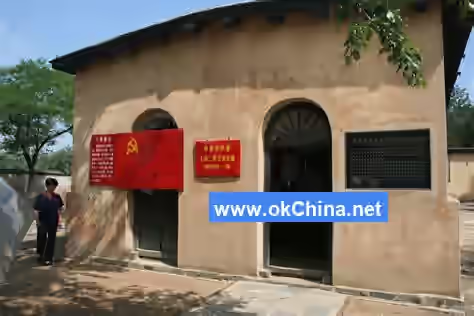
The former site of the Central Committee of the Communist Party of China in Xibaipo covers an area of 16,440 square meters, with a building area of 2,600 square meters. Currently, 12 sites are open to the public, including the former residences of comrades Mao Zedong, Zhu De, Liu Shaoqi, Zhou Enlai, Ren Bishi, the Central Military Commission Operations Room, and the site of the Second Plenary Session of the Seventh Central Committee. On March 11, 1982, the State Council designated the former site of the Central Committee of the Communist Party of China in Xibaipo as a National Key Cultural Relics Protection Unit.
2. Xibaipo Exhibition Hall
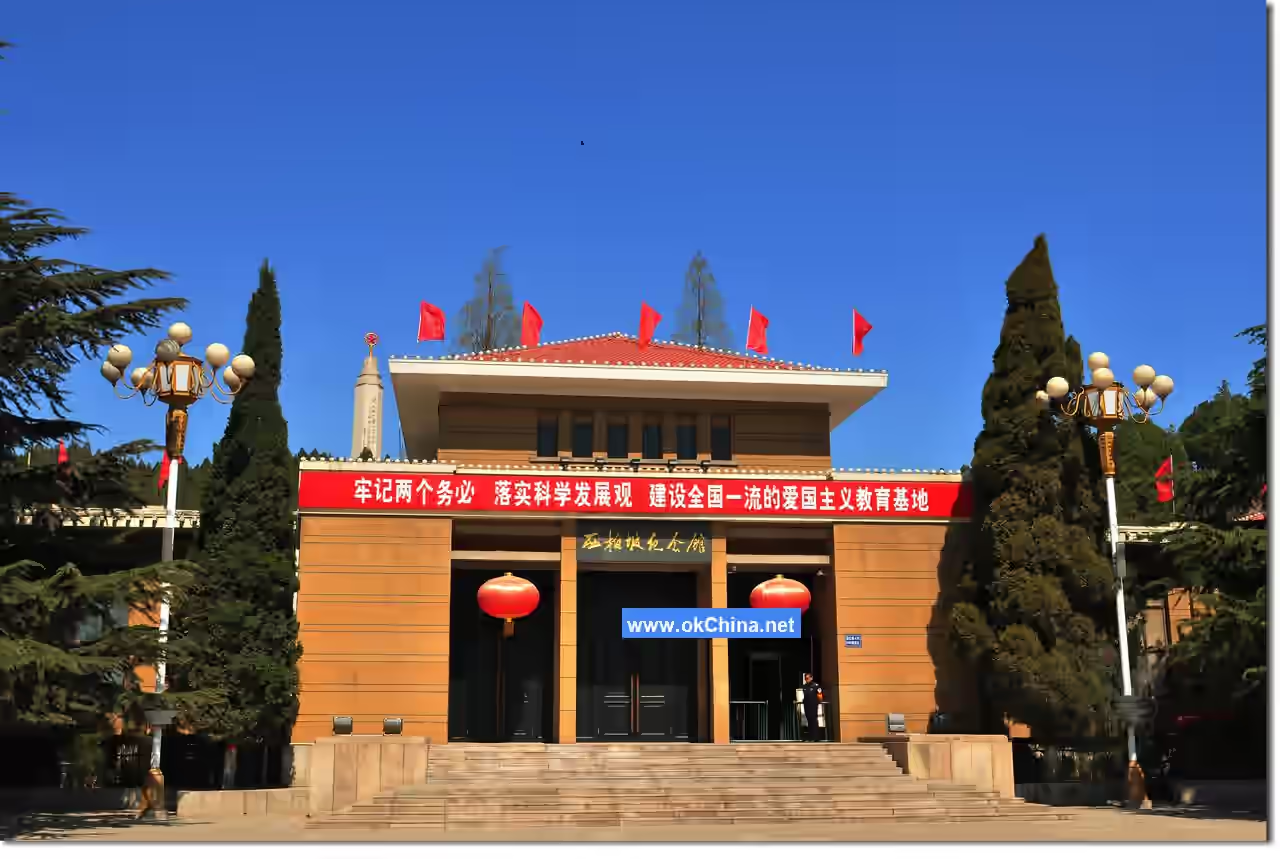
Construction began in October 1976, and it opened to the public on May 26, 1978. The basic exhibition, "New China Started from Here," takes the activities of the Central Committee of the Communist Party of China in Xibaipo during the late period of the War of Liberation as the main theme. It adopts a compilation style combining chronology and documentary records, utilizes a large number of cultural relics, photographs, and materials, supplemented by various display methods, to systematically introduce the major historical events of the Central Working Committee and the Central Committee of the Communist Party of China in Xibaipo, showcasing the Xibaipo spirit centered on the "Two Musts" and the "Going to the Capital for the Examination."
3. National Security Education Hall
Construction began in April 1999, and it officially opened on December 6, 2005. The exhibition "The Nameless Monument" is jointly organized by the Ministry of State Security, the Hebei Provincial Department of State Security, and the Xibaipo Memorial Hall. It introduces the outstanding contributions made by nameless heroes in the covert front under the leadership of the Party to the establishment of New China, as well as the significance of practicing the overall national security concept and safeguarding national security under the new circumstances.
4. Xibaipo Integrity Education Hall
Construction of the Xibaipo Integrity Education Hall began in January 2008, and it officially opened to the public on April 14, 2009. The exhibition theme is "The Examination is Always on the Road." It introduces the history of the Communist Party of China's integrity construction, truthfully reflects the characteristics of the Party's integrity construction in different historical periods, and vividly displays typical examples and exemplary figures of integrity construction in various periods.
5. Xibaipo Monument Forest
Located on the (original) Baipo Hill surrounded by water on three sides, construction began in 1996. Originally named the Xibaipo Stone Carving Garden, it was renamed the Xibaipo Main Monument Forest after expansion and enhancement in 2012. The architectural design draws on the characteristics of classical gardens. The walls are inlaid with more than 560 calligraphy works inscribed by Party and state leaders, senior generals awarded the rank of major general or above in 1955, celebrities from all walks of life, and famous calligraphers for Xibaipo.
6. Former Site Area of Central Ministries and Commissions in Xibaipo
Located in Beizhuang Village, Xibaipo Town, 1 kilometer east of the Xibaipo Memorial Hall, restoration began in November 2010, and it opened to the public on June 25, 2011. It centrally restored 11 sites, including the General Office of the Central Committee, the CPPCC Auditorium, the Central Legal Committee, the Central Youth Committee, the Logistics Department of the Military Commission, the Central Marxism-Leninism Academy, the Central Finance Department, the Central Foreign Affairs Group, the Central Social Department, the Central Health Department and Central Hospital, and the Central Radio Station.
7. Former Site of the Central Propaganda Department
The former site of the Central Propaganda Department is located in Beizhuang Village, Xibaipo Town. Restoration began in November 2010, and it opened to the public on June 25, 2011. It centrally restored the former sites of the Xinhua News Agency, the Education Research Group, the Compilation and Review Group, the Inner-Party Education Group, the Translation Group, and the Publishing Group, which were under the responsibility of the Central Propaganda Department during the Xibaipo period. The photo exhibition "The Central Propaganda Department of the Communist Party of China During the Xibaipo Period" showcases the historical contributions of the Central Propaganda Department during that time.
8. Former Site of the Central Organization Department
Located in Nanzhuang Village, Xibaipo Town, restoration began in November 2010, and it opened to the public on June 25, 2011. It restored the offices and residences of comrades such as Liu Shaoqi, Peng Zhen, and An Ziwen, as well as the former sites of various offices of the Central Organization Department and the Central Organization Department Guest House. The photo exhibition displays the historical contributions of the Central Organization Department during the Xibaipo period.
9. Former Site of the Central Women's Committee
Located in Dongbaipo Village, Xibaipo Town, construction began in October 2007, and it opened to the public on July 1, 2011. The former site restored the leadership offices, residences, and meeting rooms of the Central Women's Committee. The photo exhibition details the important contributions made by the Central Women's Committee during the Xibaipo period to the establishment of New China.
V. Cultural Activities
Xibaipo Spirit Concert
On the afternoon of August 11, 2024, to celebrate the 75th anniversary of the founding of the Communist Party of China, the "Red Movement: Xibaipo Spirit Concert" red song singing event was successfully held in Nanta Community. Suitable red songs for singing were collected, including classic songs such as "March of the Volunteers," "Ode to the Motherland," and "Without the Communist Party, There Would Be No New China." The organizing committee also arranged for members of the propaganda group to rehearse multiple times and provided professional guidance and training to the young university students participating in the performance, aiming to inspire their patriotic sentiments and national pride through the form of red song singing.
Comments
Post a Comment