Resonant Sand Gorge
I. Introduction (General Overview, including bilingual name, location, and significance)
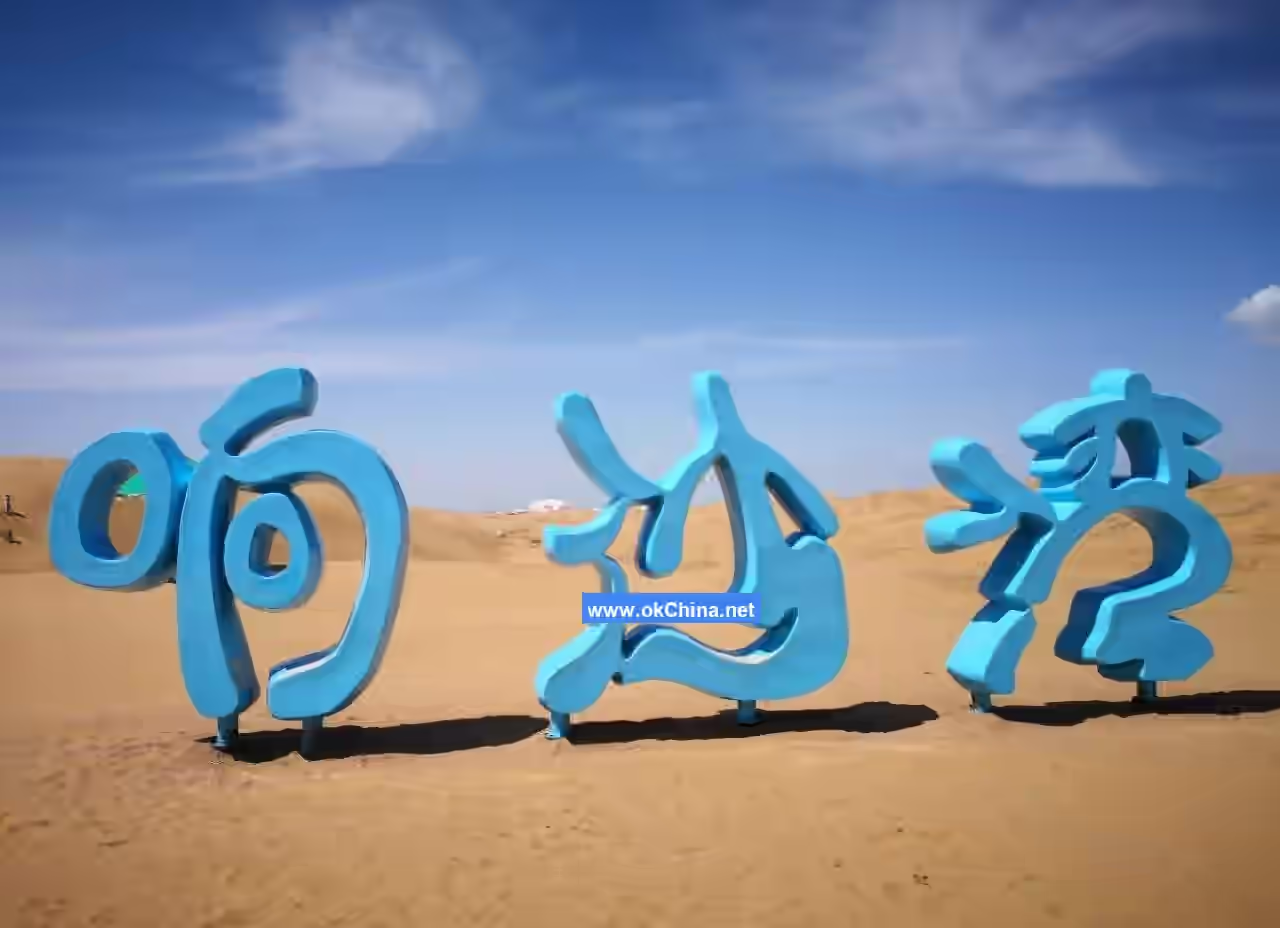
Resonant Sand Gorge is a comprehensive desert leisure resort integrating sightseeing and vacationing. Located at the easternmost end of China's famous Kubuqi Desert, it is a desert tourist destination very close to inland China and Beijing. It is a National AAAAA Tourist Attraction and a National Cultural Industry Demonstration Base.
Resonant Sand Gorge was opened as a tourist attraction in January 1984. It was listed as a national tourist route site by the National Tourism Administration in 1991, transformed into a private joint-stock enterprise in 1999, rated as a National AAAA Tourist Attraction by the National Tourism Administration in 2002, and upgraded to a National AAAAA Tourist Attraction in January 2011. It is a comprehensive desert leisure resort integrating sightseeing and vacationing.
II. Location and Layout (Introducing the scenic area's geographical location, climate, hydrology, flora and fauna resources, etc.)
Geographical Location
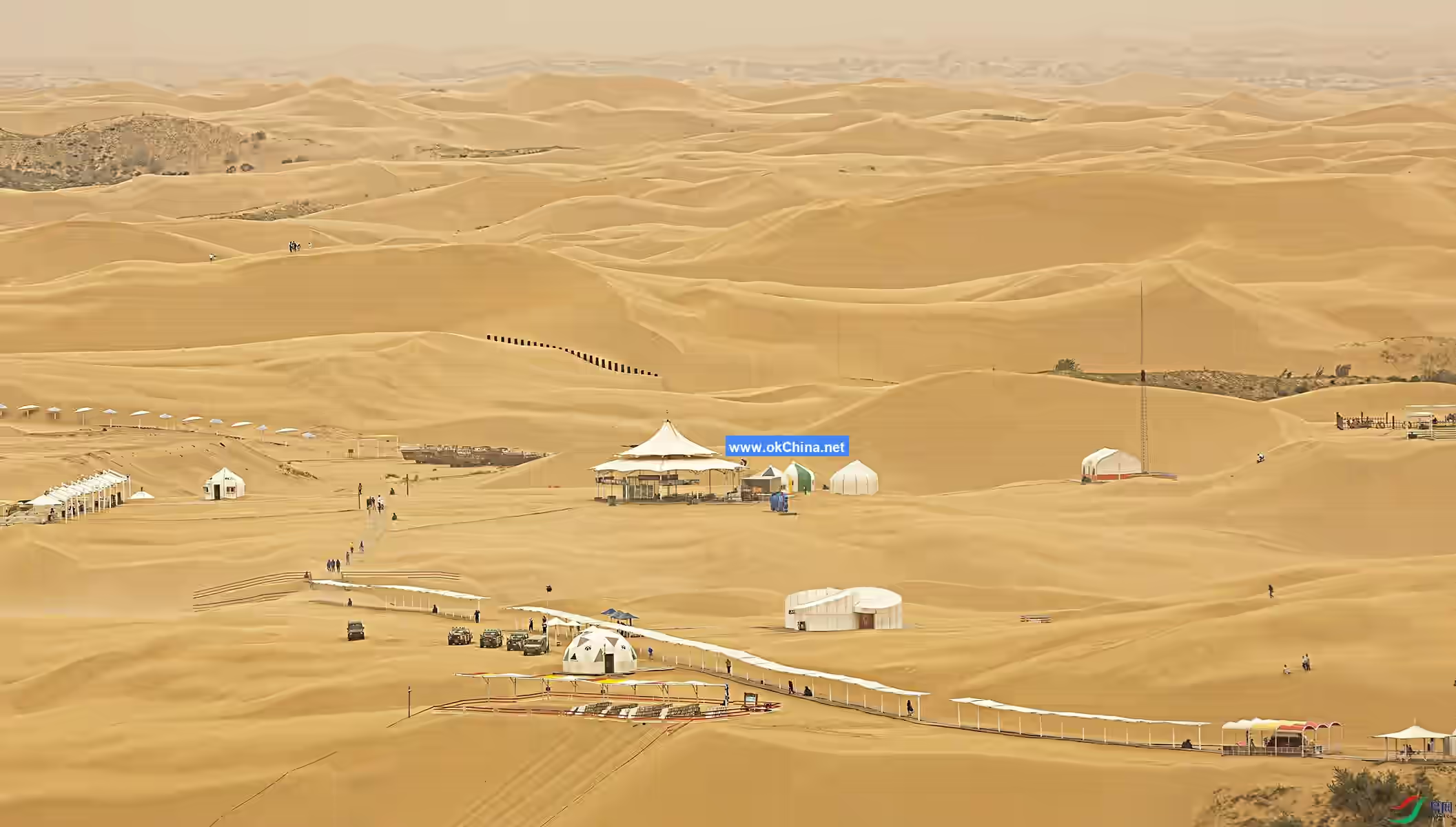
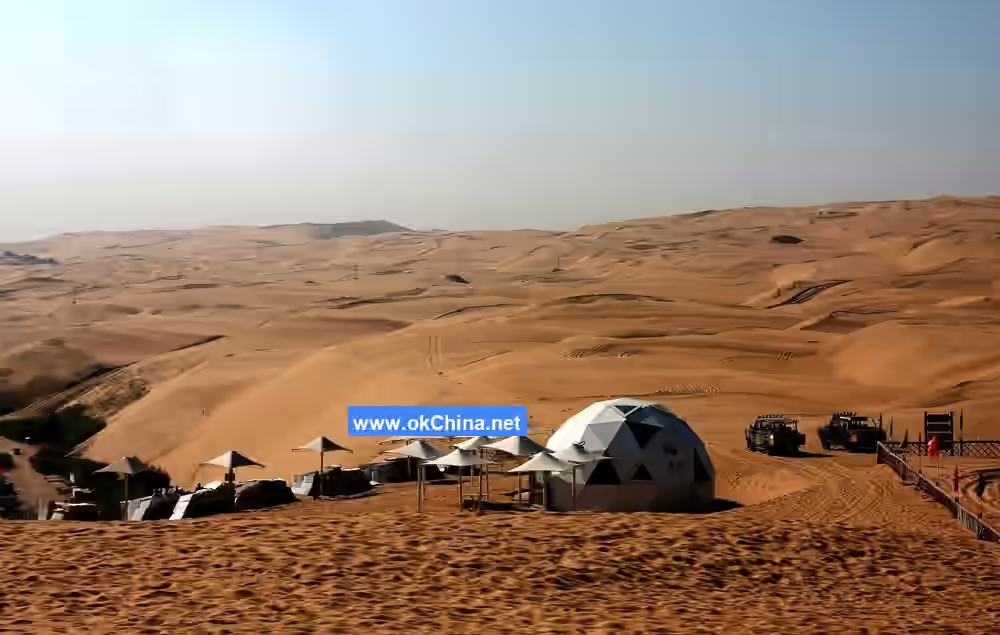
Resonant Sand Gorge is situated in the Shaanxi-Shanxi-Inner Mongolia "Golden Triangle" region, at the easternmost end of China's famous Kubuqi Desert. The scenic area covers 24 square kilometers, located at the center of the "Golden Triangle" development zone of Hohhot, Baotou, and Ordos, and is known as "the golden button on the Yellow River's golden belt."
The Mystery of the Resonant Sand
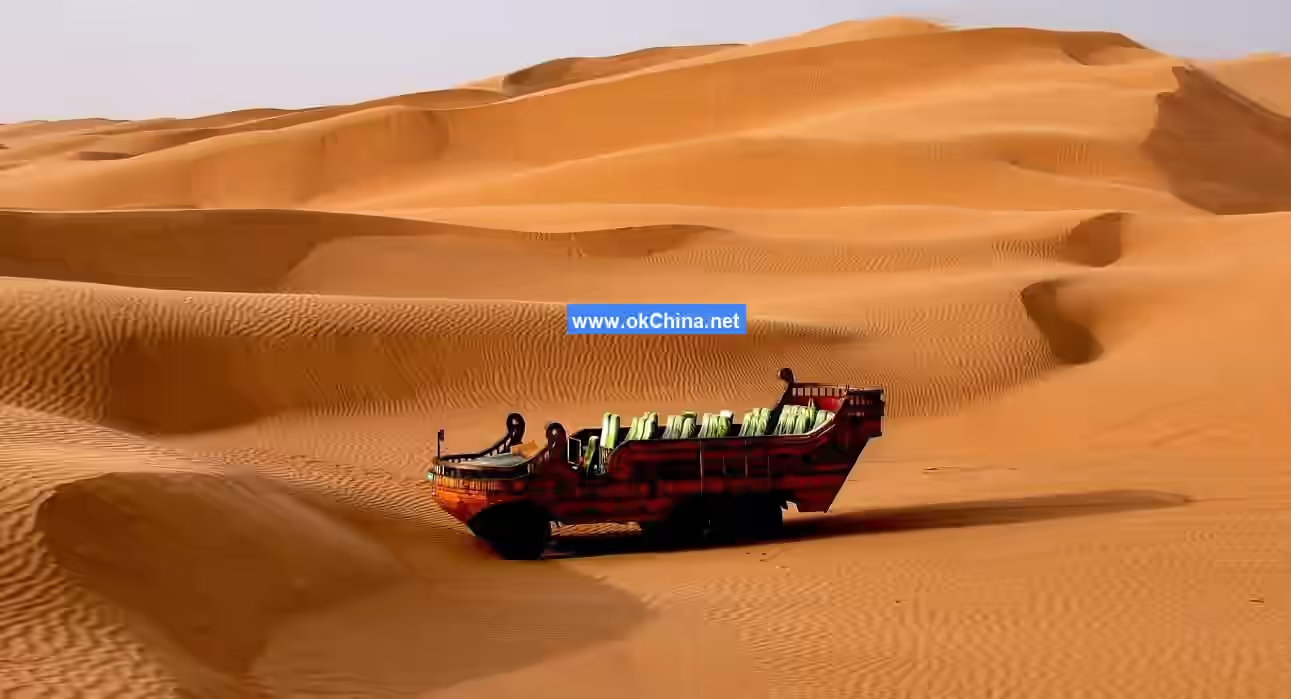
Resonant Sand Gorge features sand dunes 110 meters high and 400 meters wide, leaning against rolling sand hills, facing a great river, with a sheltered, sun-facing slope. The terrain is crescent-shaped with a 45-degree slope, forming a massive sand dune echo wall.
When the sand is dry, visitors climbing the soft ladder or taking the cable car to the top of the "Yinken" sand dune and sliding down will hear the dunes roar. The sound can be as light as a frog's croak or as heavy as the roar of cars and airplanes, like thunder piercing the ears, or even like a passionate symphony.
The phenomenon of the sand's sound at Resonant Sand Gorge remains a mystery to this day. For thousands of years, people have been unable to explain the cause of the resonant sand but have endowed it with many beautiful legends.
There are various theories about the cause of the resonant sand. Scientific researchers have conducted multiple investigations, proposing theories such as the screening and sorting theory, frictional static electricity theory, geographical environment theory, and "resonance box" theory, but no consensus has been reached. The mystery of the resonant sand is still being explored.
Tourism Resources
Resonant Sand Gorge has sand dunes 110 meters high with a 45-degree slope, forming a crescent-shaped, massive sand mountain echo wall. Here, the sand dunes are tall, standing shoulder to shoulder, vast and boundless.
Climbing up the cloud ladder, when people slide down from the sand top, they hear a huge roar like an airplane flying overhead; when you vigorously scoop sand with both hands towards the center, you hear the croaking of frogs. Hence the name Resonant Sand Gorge.
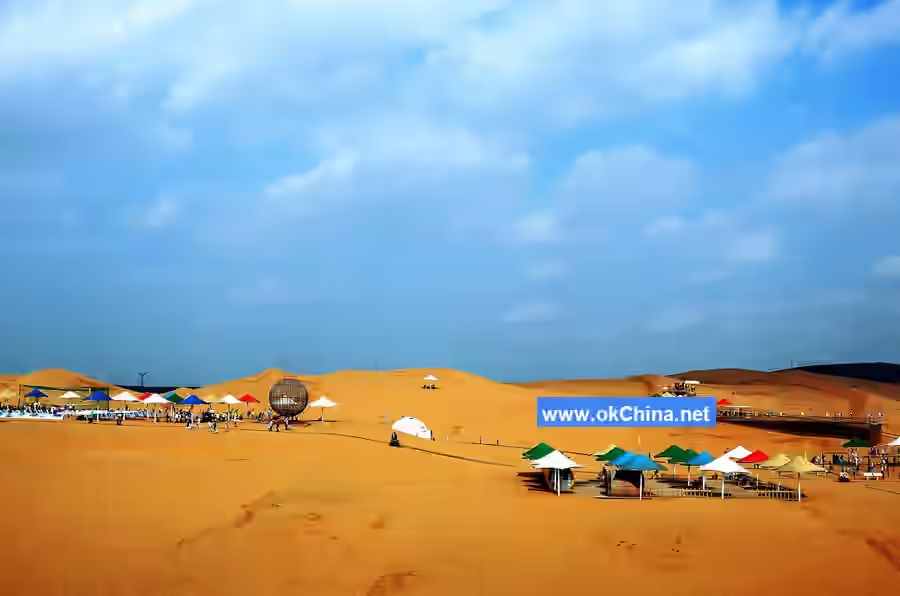
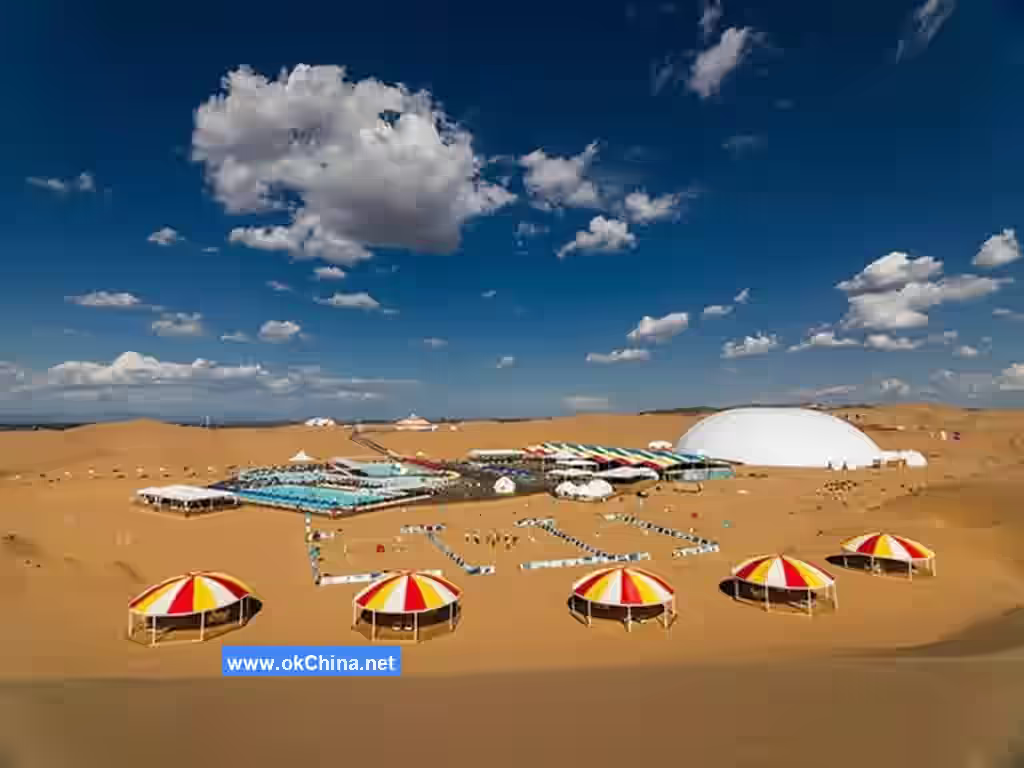
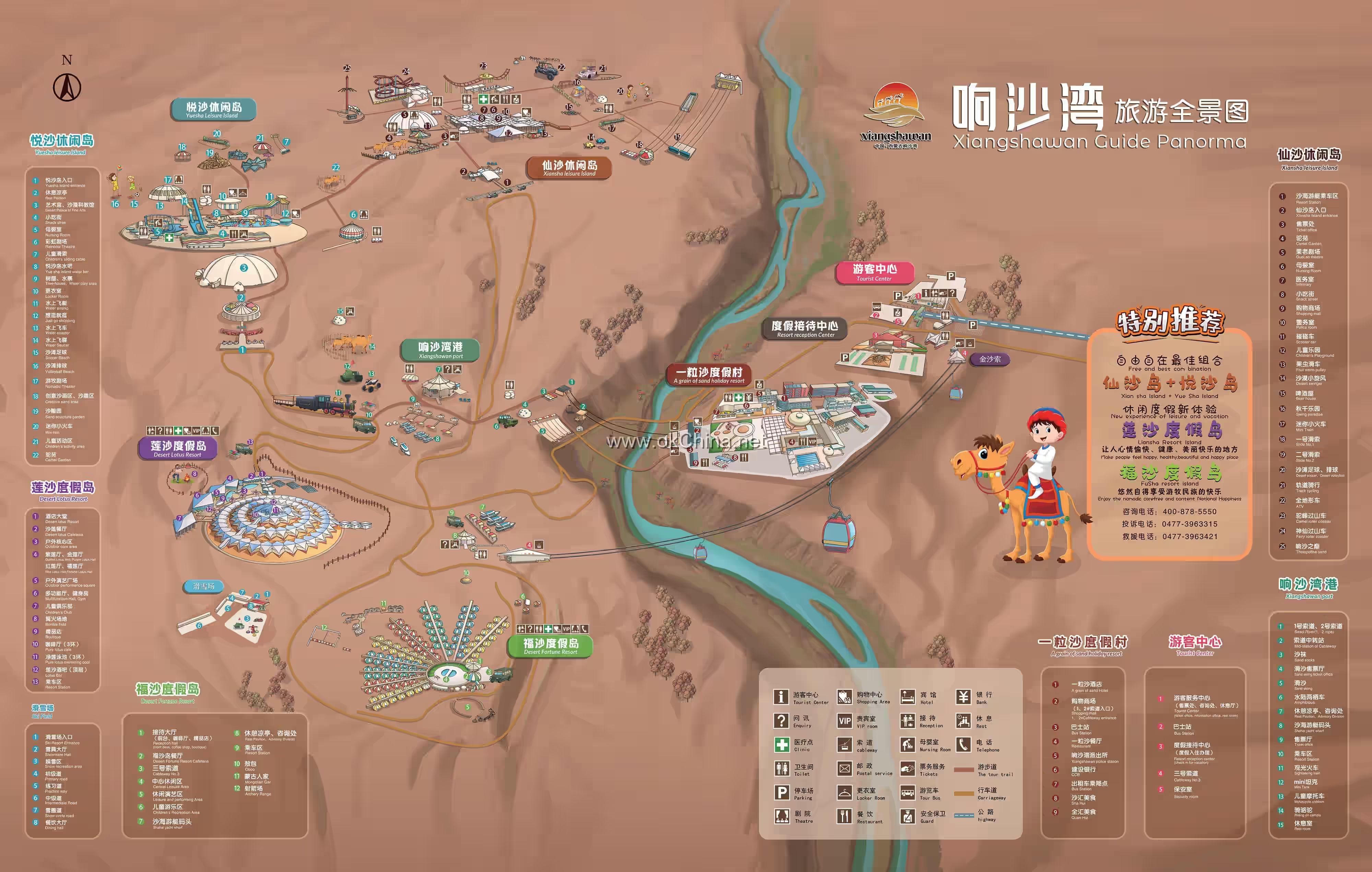
Based on its unique topography and geographical location, Resonant Sand Gorge has developed into a large comprehensive desert leisure resort integrating sightseeing and vacationing, comprising five areas: Lotus Sand Resort Island, Fortune Sand Resort Island, One Grain Sand Resort, Joy Sand Leisure Island, and Fairy Sand Leisure Island.
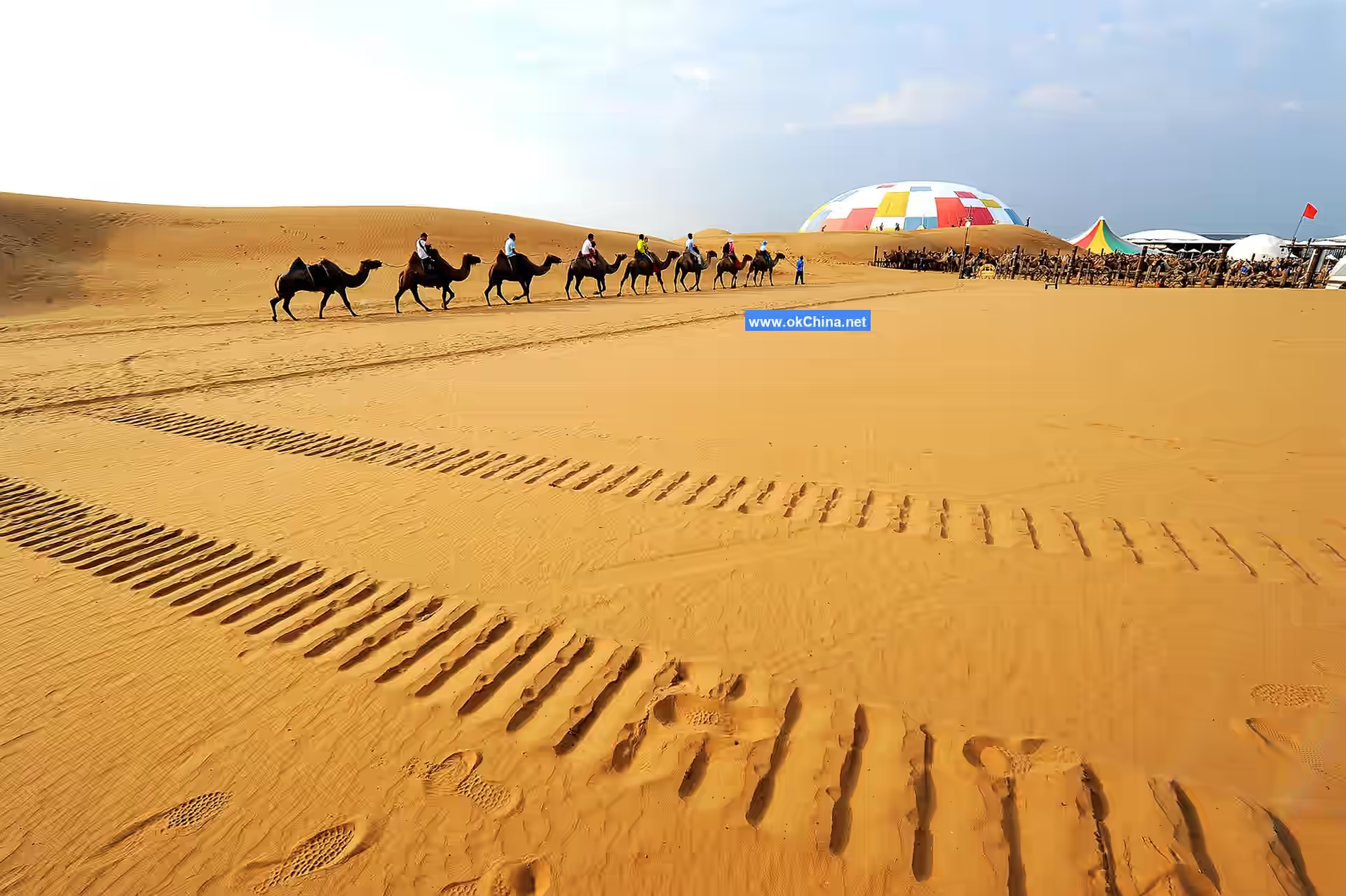
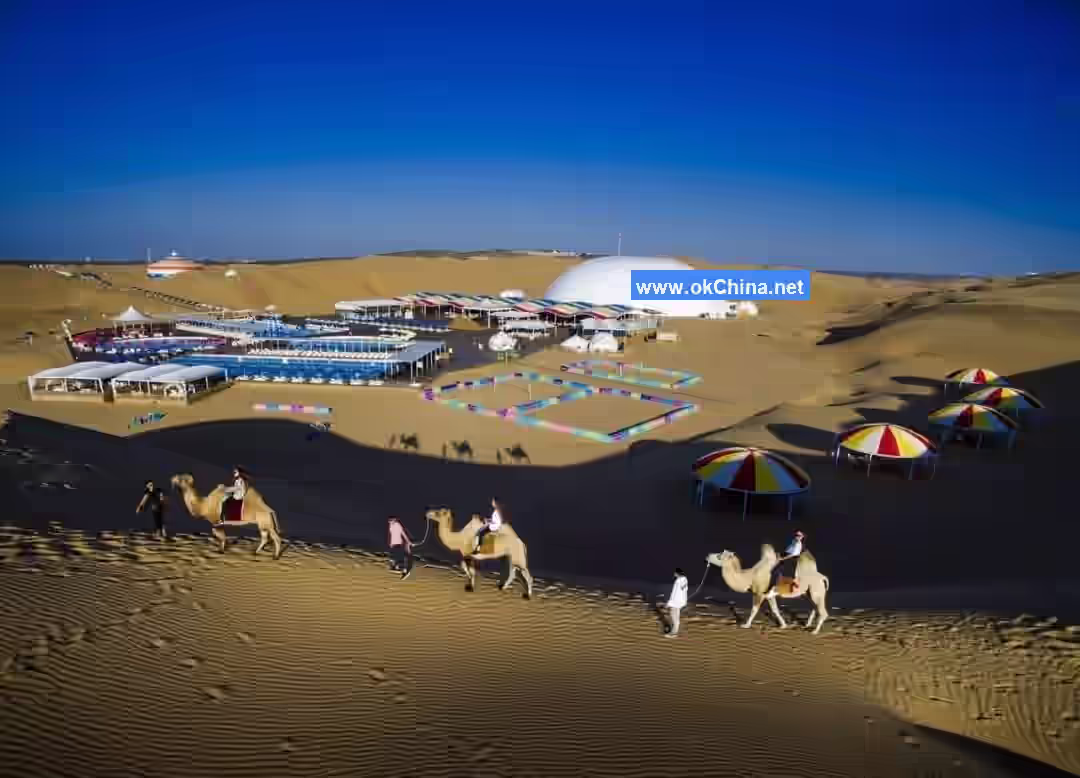
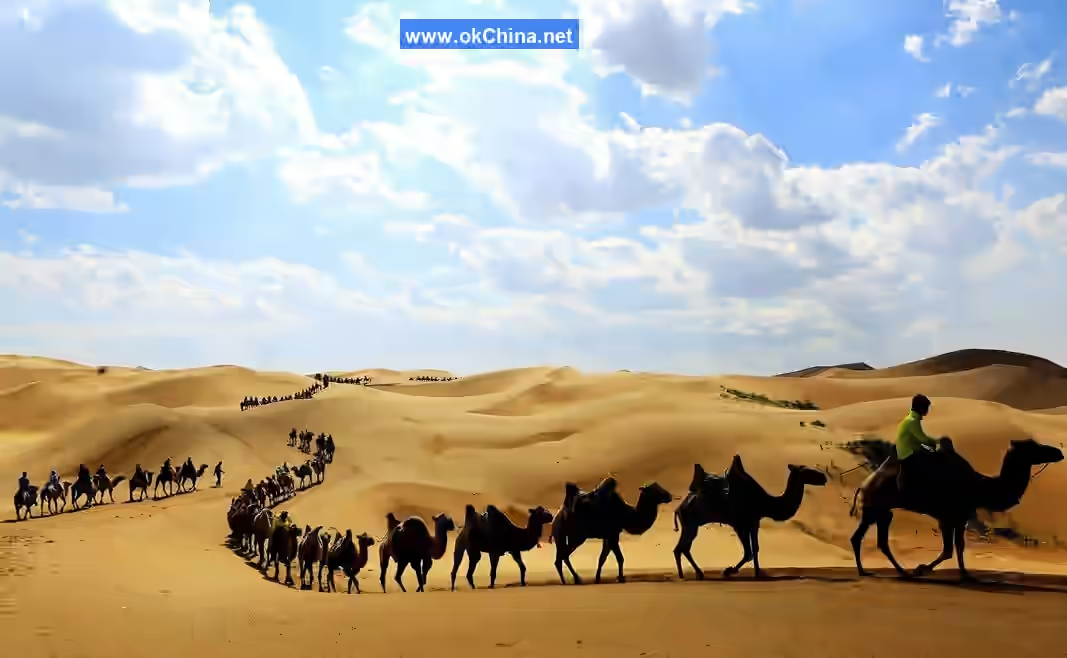
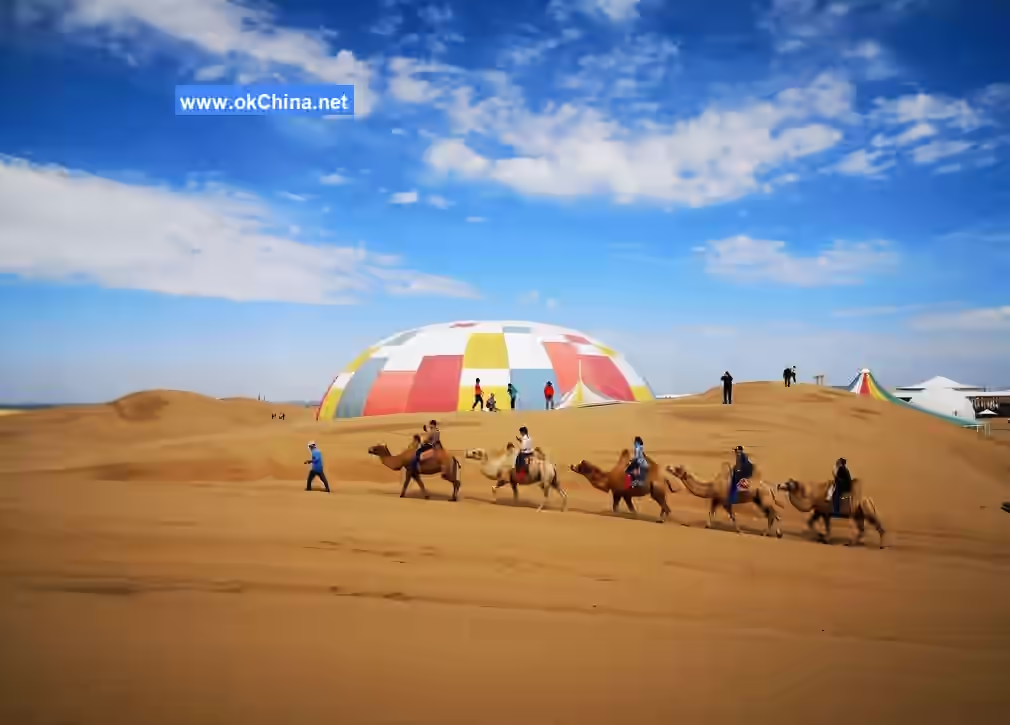
Camels are everywhere at Resonant Sand Gorge; you can ride them or take photos with them as you wish.
III. Major Scenic Areas
Lotus Sand Resort Island
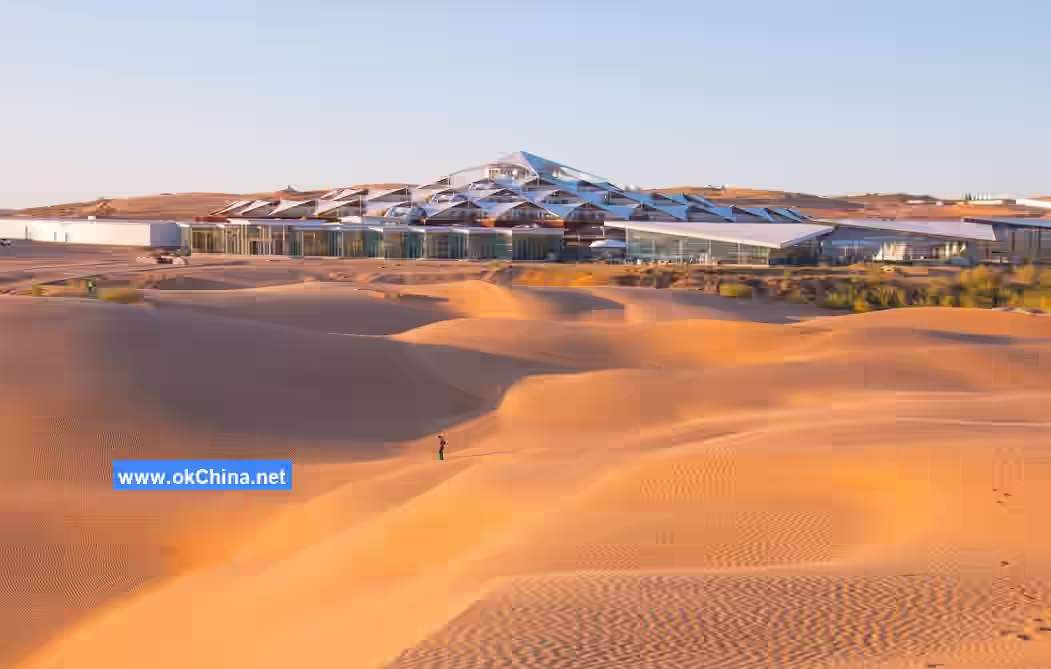
Lotus Sand Resort Island is a place centered on Buddhist culture where one can truly relax. It is a place of joy, health, beauty, and happiness.
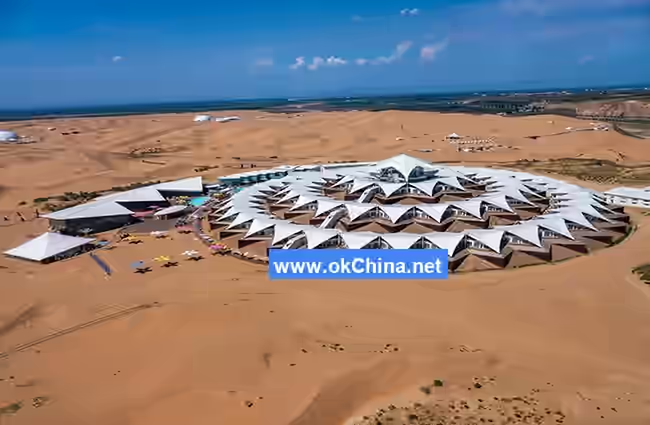
The massive Lotus Resort Hotel on Lotus Sand Resort Island is a green building constructed without bricks, tiles, sand, stones, cement, or steel bars. It is eco-friendly and a pure land deep within the soul.
Fortune Sand Resort Island
Fortune Sand Resort Island is the world of the Mongols.
Here, people live the Mongolian way of life, leisurely enjoying the happiness of the nomadic people: from worshipping the Ovoo to Mongolian horsewomen, from participating in the "Ordos Wedding" to野外自助烧烤 (field self-service barbecues), from shepherdesses to勒勒车 (lele carts), from galloping horse herds to the great migration of Mongolians across the grasslands, from the grassland swimming pool to clusters of Mongolian tents, as well as shamans, dairy products, singing and dancing, bonfires, and more.
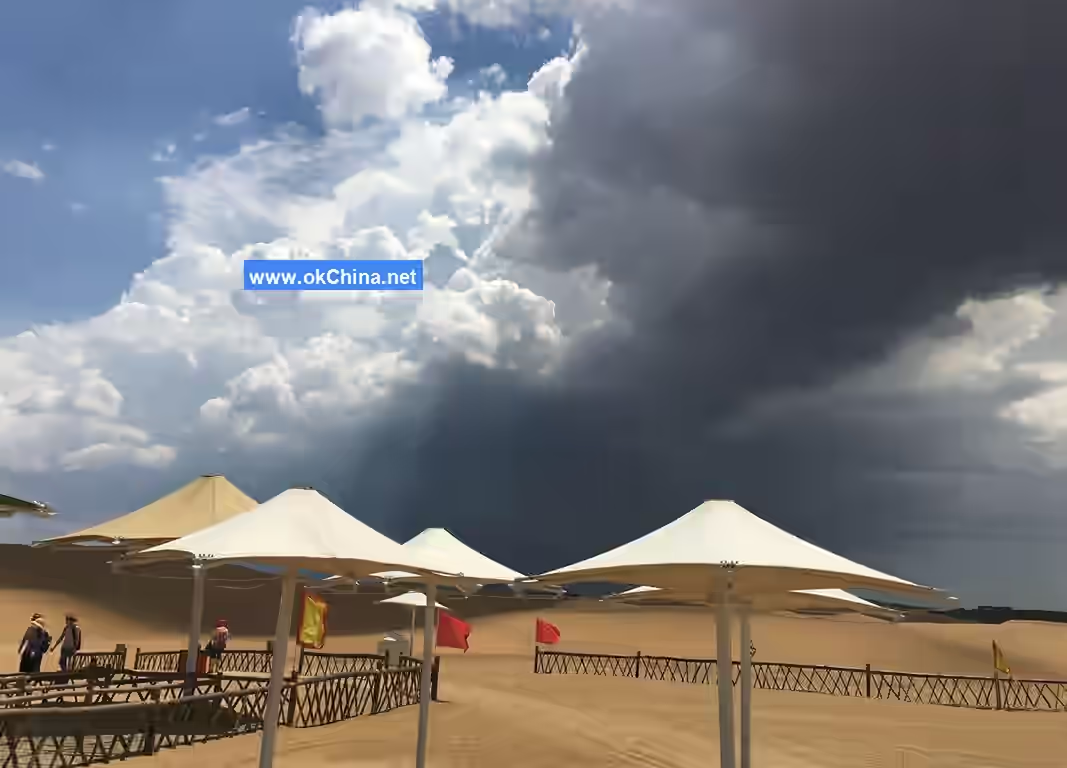
You can lie under the blue sky from a commanding height, close your eyes and relax, chat under the蒙古大蓬 (Mongolian awning) brushed by a cool breeze, with endless vastness before you. Spend several days and nights like this.
One Grain Sand Resort
One Grain Sand Resort faces the various desert islands across the river, located halfway up the mountain on the east bank of the Hantai River. The river flows past its doorstep, with a vast sea of sand on the opposite bank. Here, you can experience water yoga, aquatic aerobics, or participate in swimming competitions.
And the carefree atmosphere of One Grain Sand will transport you to the past or the future, into a TV show or movie, or to some small island.
It will make you forget everything that belongs to you, yet everything belongs to you. You seem to be over a hundred meters in the air, with the river forming a semicircle at your feet, the distant world of sand, the swimming pool beside the dining table as if suspended in the air, the sun just rising in the east, level with you. The desert on the opposite bank also belongs to you. Stroll as you wish.
Joy Sand Leisure Island
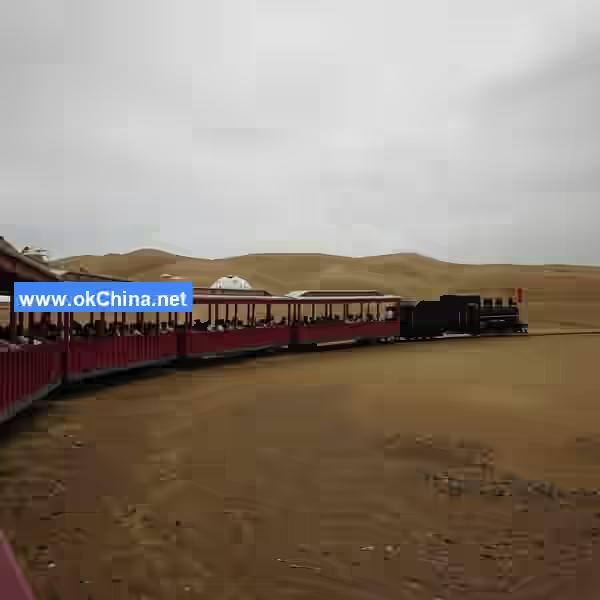
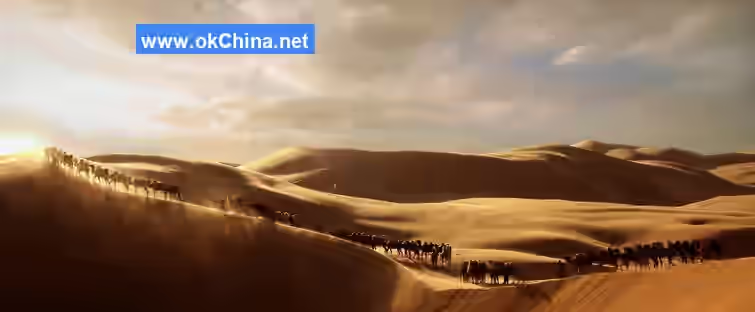
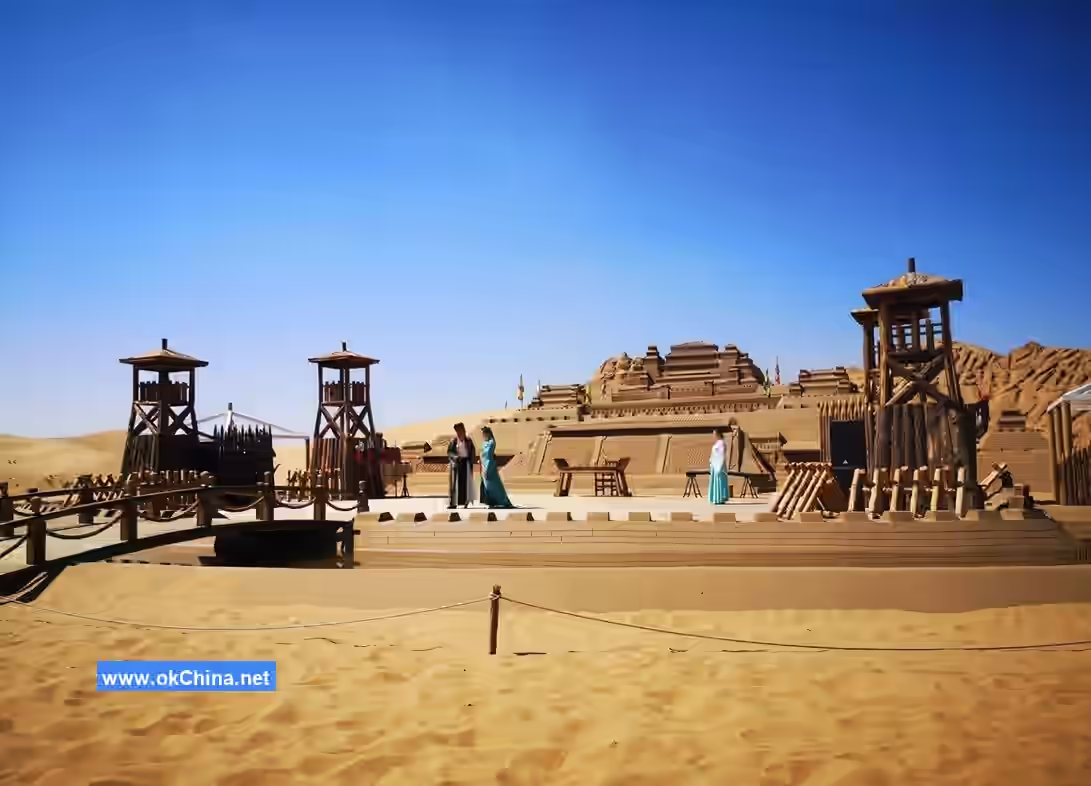
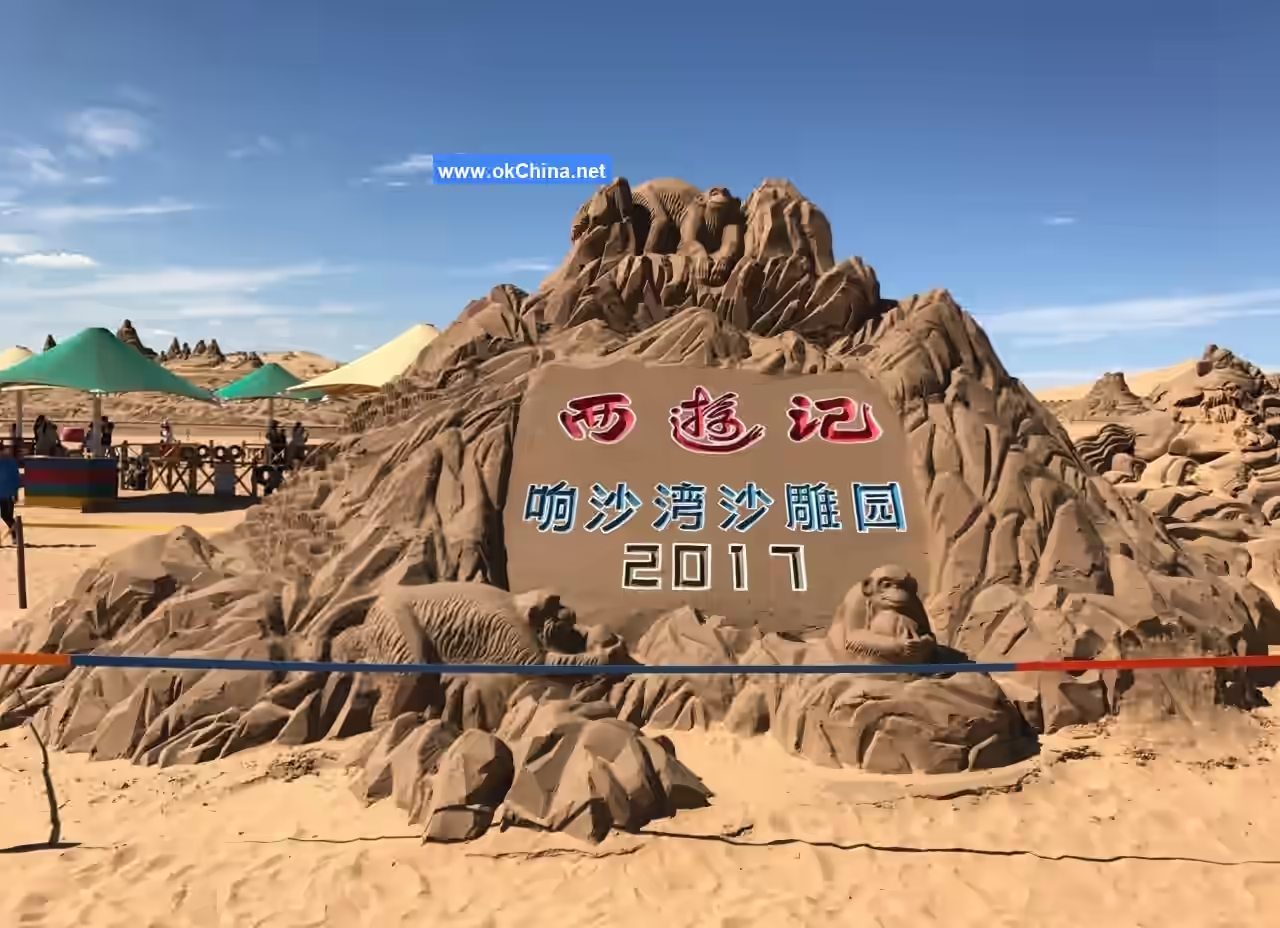
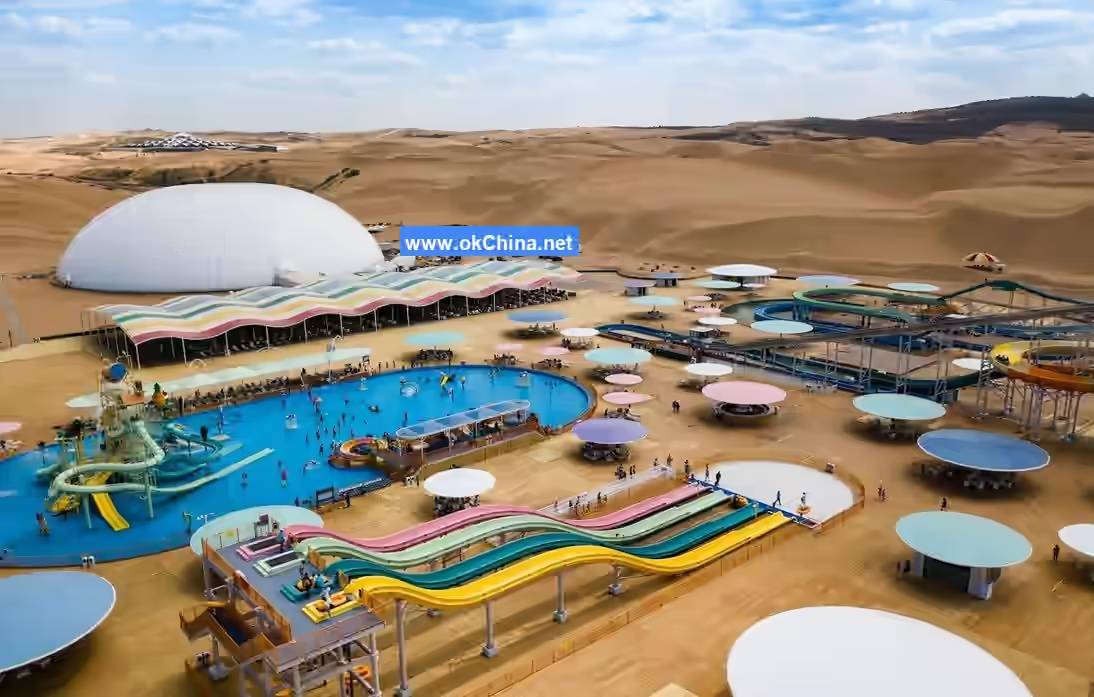
Joy Sand Leisure Island – you can also take a train deep into the desert, where you might see long camel caravan商队 (merchant teams), pass by ancient Mongolian tribes, and enter Joy Sand Leisure Island. Here, experience the joy brought by art and sports: rhythmic gymnastics, aerobics, street dance, beach volleyball, etc. You can watch their performances, participate yourself, or尽情享受 (thoroughly enjoy) the indescribable "爽" (coolness/refreshment) in the desert water world. Gaze at the boundless sand. Or go to the sand sculpture tribe to展示 (showcase) your更加美丽的身姿 (even more beautiful posture) or carve one yourself, or experience creating on a sand painting board and take your creation home – hang it on the wall.
In the various large swimming pools of different depths in the desert, release yourself with各种泳姿 (various swimming strokes) – amidst the undulating, boundless sand dunes of the desert – in your own world of water in the desert. When tired, lie on a清爽的沙滩床 (refreshing beach bed) and spend a few delightful hours. You can also eat, drink, and chat with your companions. Don't fall asleep; there will definitely be performances. Joy Sand Island hosts over ten different performances or competitions daily, both artistic and sporting.
Fairy Sand Leisure Island
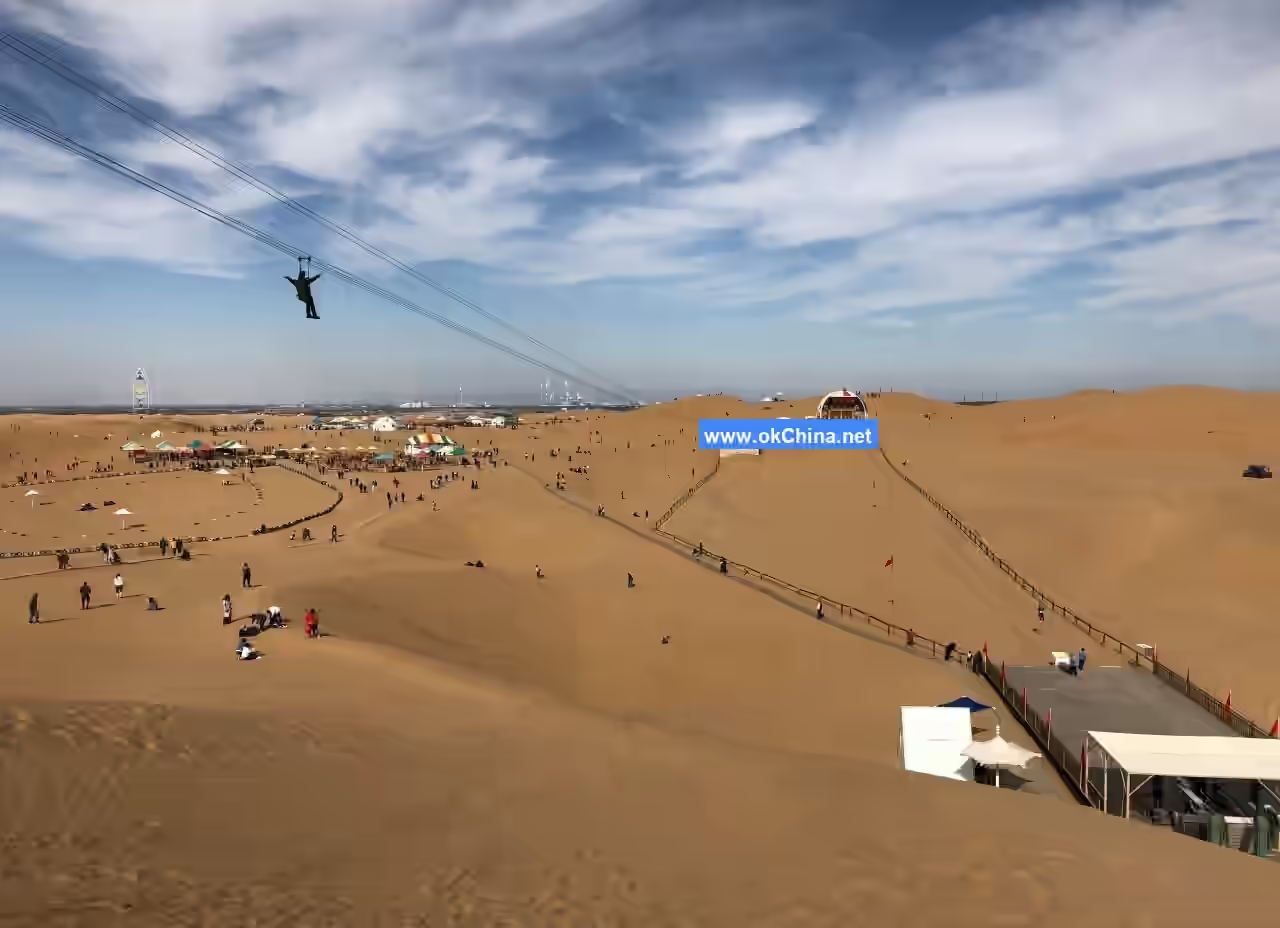
If you arrive at Fairy Sand Leisure Island, it's a different scene altogether. This is the world of Zhang Guolao (a legendary figure). Besides leisure, you can participate in various thrilling体验活动 (experience activities): desert exploration and aerial zip lines, surfing and swings,轨道自行车 (track bicycles), and projects for children.
The performances here are all thrilling: high-wire walking,环球飞车 (globe of death),刀山 (knife mountain), fire eating, fire breathing, and the large "Desert Acrobatics World" theater welcomes you. You can also eat, drink, and lie in the cool, refreshing breeze like an immortal.
IV. Cultural History
Origin of the Name
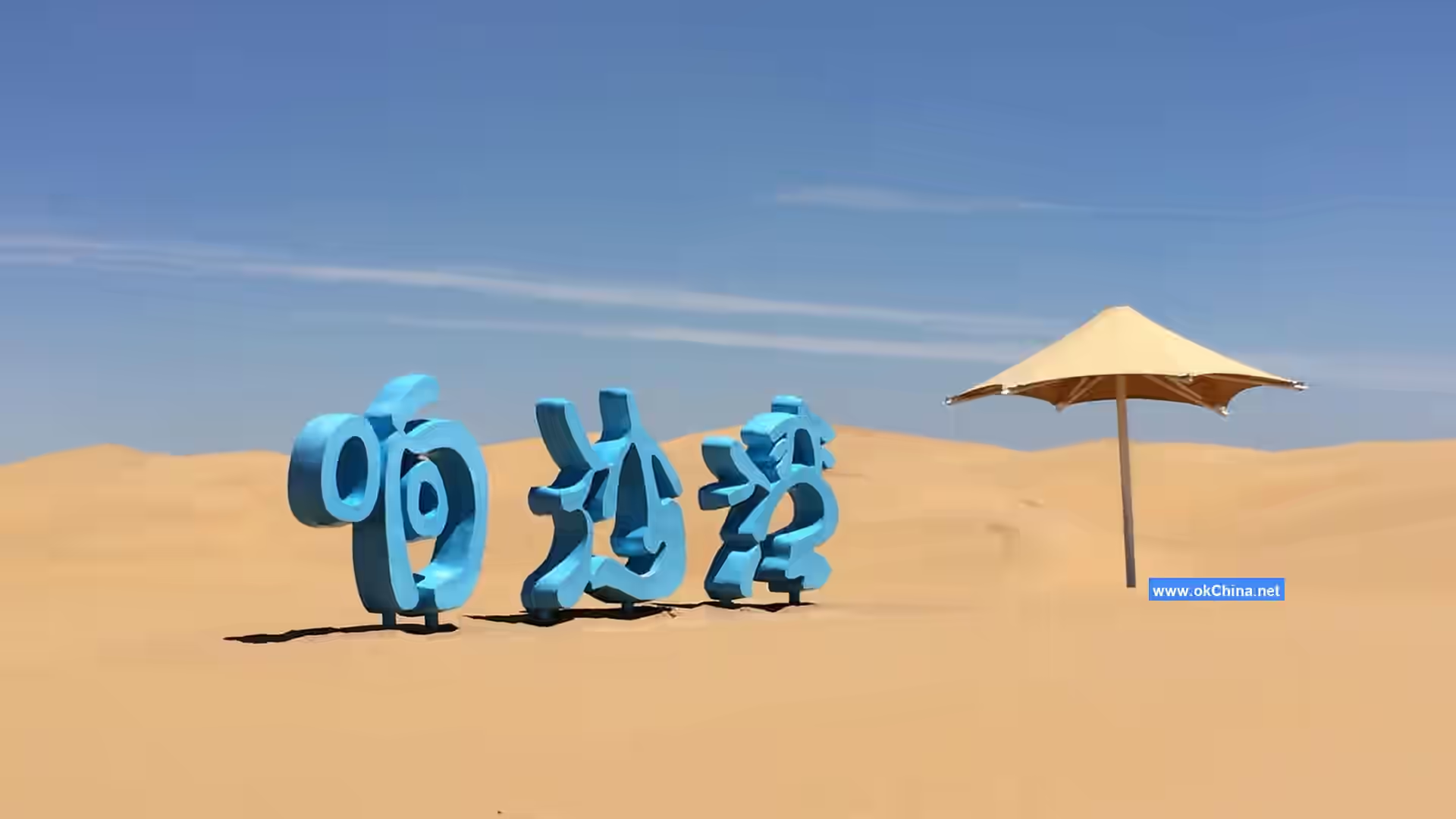
In Mongolian, Resonant Sand Gorge is called "Buremangha," meaning "the sand dune with a horn."
The sand dunes here stretch continuously, and even more astonishingly, the sand here sings.
Experience the famous sand sliding activity here. Starting from the top of a tall sand dune and sliding down, you will hear the sand dune beside you making strange sounds, as light as a frog's croak or as heavy as the roar of airplanes and cars, like thunder piercing the ears. Resonant Sand Gorge gets its name from this.
Historical Legend
Long ago, a brave and skilled army crossed the Yellow River and entered the Kubuqi Desert. A Mongolian soldier named Buriwa had to stay behind due to injuries.
Under the blazing red sun, Buriwa suffered from extreme thirst, even lacking the strength and courage to find water. At that moment, a young wolf separated from its mother came into Buriwa's sight, regarding him as family. This gave Buriwa great encouragement. Buriwa named the young wolf Batutai. They lived together harmoniously, depending on each other for survival.
Buriwa and Batutai continued forward, searching for a suitable home.
Suddenly, their eyes lit up. In the vast desert, they discovered a place with lush water and grass. A clear lake shimmered with碧波 (green waves). A light mist rose from the lake surface, wafting缕缕清香 (strands of delicate fragrance). A sacred goddess appeared,亲切而郑重地 (kindly and solemnly) telling Buriwa to spare no effort in protecting this sacred place – Junlan Lake. Buriwa solemnly accepted the使命 (mission).
Beside Junlan Lake, there was a fishing and hunting tribe. People lived in棚穴 (shelters) built from firewood and grass. The people here respected and loved each other, living in harmony,似乎带着一种与生俱来的慈爱去呵护着这个世界 (seemingly caring for this world with an innate kindness).
There was no war, no discrimination here; it kept people away from loneliness and made them feel warmth. Buriwa decided to stay here with Batutai.
Buriwa坦诚地 (frankly) told the local chief, Maigong, where he came from. To his great surprise, Maigong didn't mind. The people here harbored no dissatisfaction towards him, offering him无限包容 (limitless包容 tolerance).
He discovered that Junlan Lake had a type of fish in large numbers, with半透明的身体 (translucent bodies) – crystal fish. The people cherished them极其 (extremely), never捕食 (catching and eating) them, because for every crystal fish lost, the desert would advance several miles, posing a great threat to the tribe's living environment.
Crystal fish lived only in Junlan Lake. Their unique appearance and mysterious传说 (legends) made the emperor and imperial concubine垂涎三尺 (drool with envy), who sent troops to fish and hunt. Maigong told them that crystal fish were the保护神 (protective deities) of Junlan Lake; for every one lost, the sand would advance several miles.
The imperial troops置若罔闻 (turned a deaf ear). The tribe's people顽强对抗 (stubbornly resisted) those who came to fish to protect the crystal fish. Ultimately, the imperial troops still caught many crystal fish.
The loss of the crystal fish angered the heavenly gods. They决定 (decided) to move the浩瀚的沙漠 (vast desert) to cover the lake water, a force难以阻挡 (difficult to阻挡 resist).
Maigong's daughter, Ruiqin, unwilling to become an imperial concubine, jumped into Junlan Lake and transformed into a crystal fish.
After千辛万苦 (untold hardships) escaping from prison, Buriwa arrived at Junlan Lake, which had already turned into desert. Batutai, who had grown from a young wolf into an old wolf, led the wolf pack and, together with Buriwa after successfully resisting the enemy invasion, disappeared into the desert horizon.They did not die; instead, they reported everything here to the Jade Emperor. The Jade Emperor dispatched Zhang Guolao, who wielded a divine brush, causing the Hantai River to appear. From then on, the desert ceased its eastward advance.
As time passed, lamas chanted sutras and blew long horns, both in remembrance of Buriwa and as a clarion call to protect the ecology. Gradually, the Mongolian herders who settled here began to call this desert "Buremangha." "Bure" refers to the long horn blown by the lamas, and "mangha" means desert. This crescent-shaped "Buremangha" thus became known as "Xiangshawan" (Singing Sand Bay).
Comments
Post a Comment