
Xiamen Botanical Garden
1. Introduction
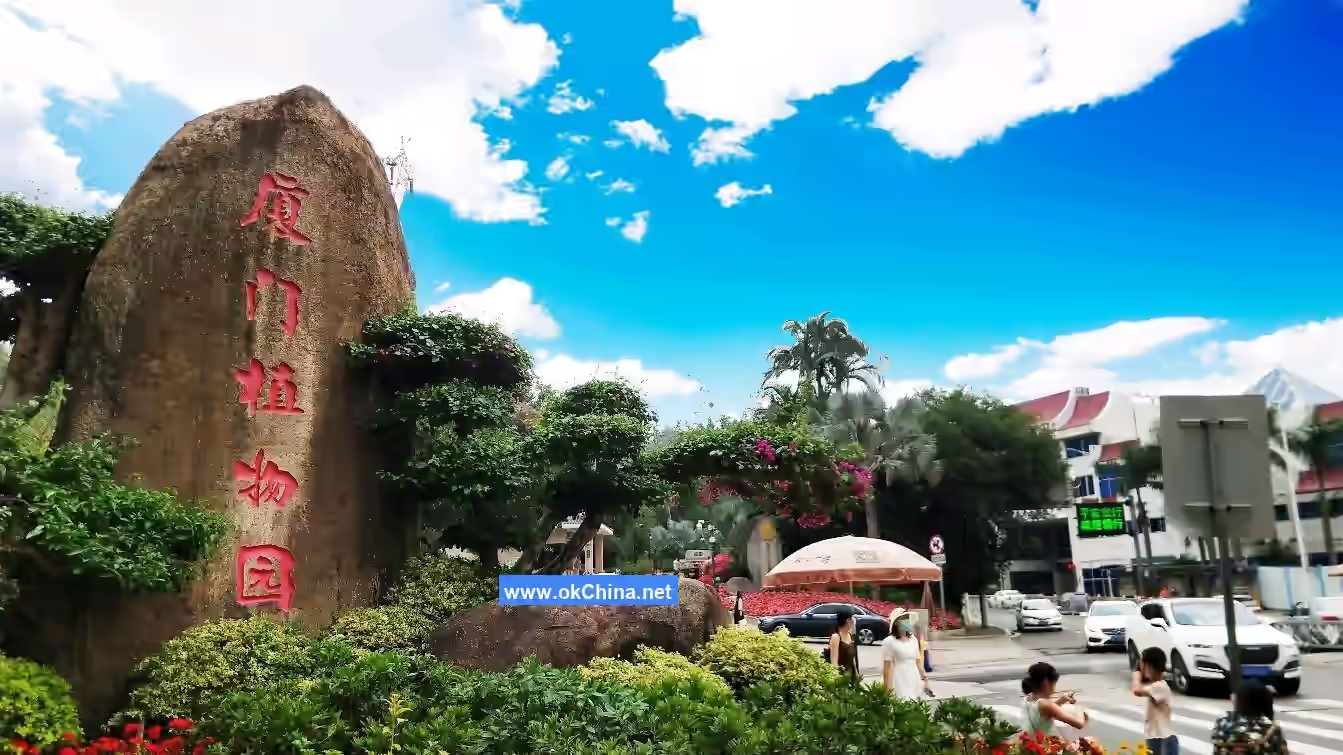
Established in 1960, Xiamen Botanical Garden is located on Wanshi Mountain in the southeastern part of Xiamen Island. Covering an area of 4.93 square kilometers, it is a comprehensive botanical garden integrating multiple functions including plant species conservation, scientific research, science education, development and application, ecological protection, and tourism services.
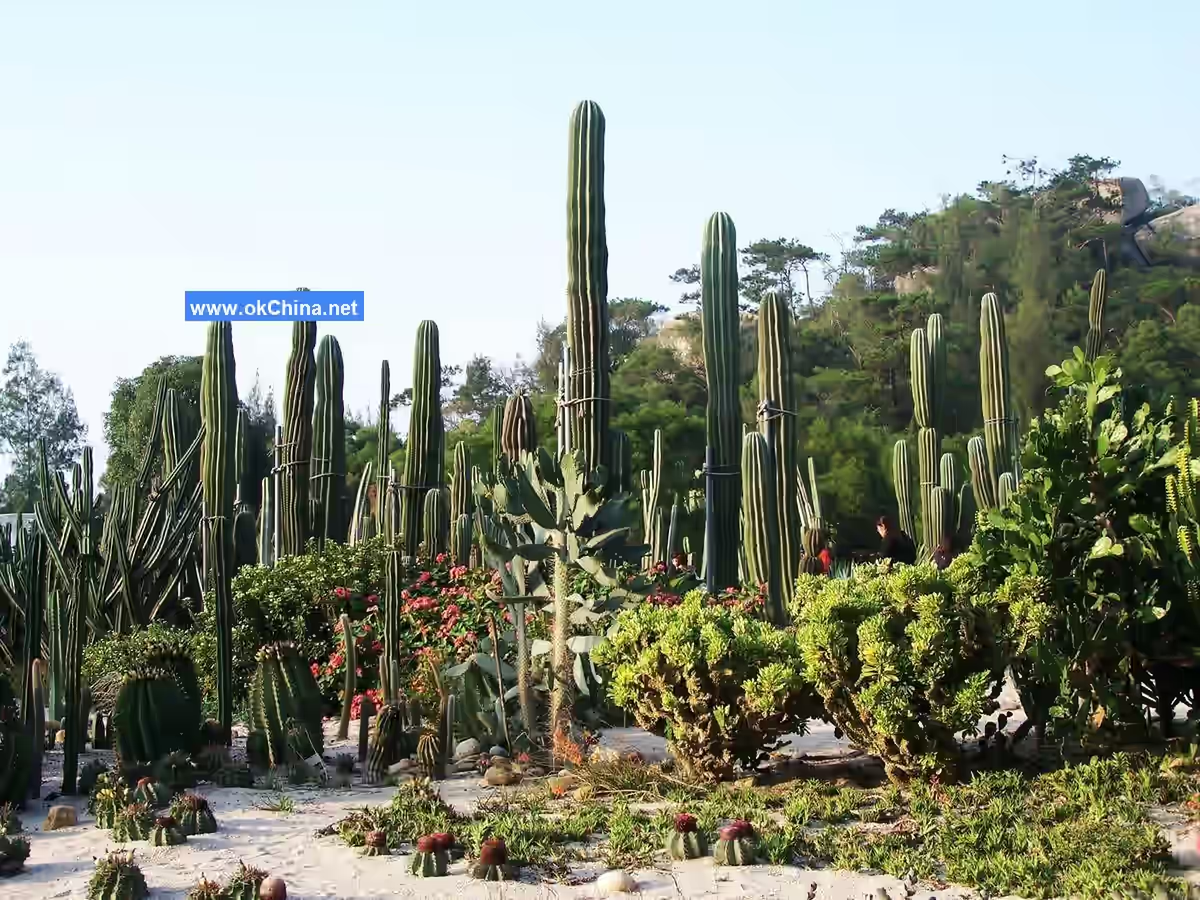
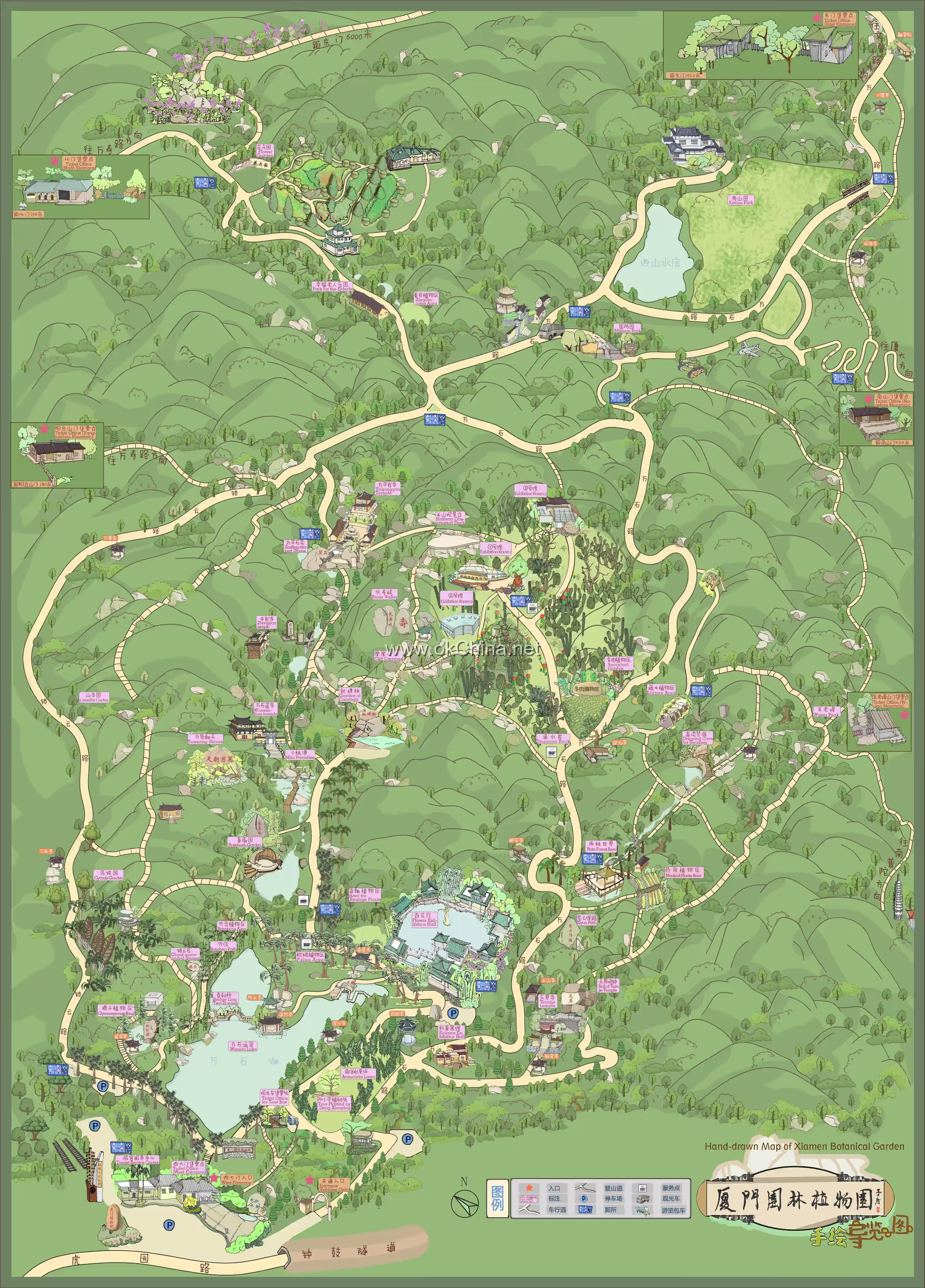
The garden has introduced, cultivated, and conserved over 9,000 species (including varieties and infraspecific taxa) of plants from around the world. It has established 16 specialized plant zones, such as the Palm Plant Zone, Succulent Plant Zone, Gymnosperm Zone, Fascinating Plant Zone, Zingiberales Plant Zone, and Rainforest World. It boasts the largest outdoor succulent plant display area in China and is recognized as a National Science Education Base, a China Biodiversity Conservation Demonstration Base, and the Palm Plant Conservation Center under the National Wildlife Conservation and Nature Reserve Construction Project.
Xiamen Botanical Garden features a harmonious blend of plant landscapes, natural wonders, and cultural attractions. With its picturesque and pleasant scenery, it is a core component of the Gulangyu–Wanshi Mountain National Key Scenic Area and a National AAAAA Tourist Attraction. The garden is characterized by rolling hills and interesting rock formations, gathering famous Xiamen scenic spots such as "Wanshi Han Cui," "Taiping Shi Xiao," "Tianjie Xiao Zhong," and "Wanhu Chao Tian." It is also home to renowned ancient temples like Tianjie Temple, Wanshi Lian Temple, and Taiping Rock Temple.
Party and state leaders such as Deng Xiaoping and Hu Jintao, along with other domestic and international dignitaries, have visited the garden for inspections, tours, or tree-planting commemorations. On February 10, 1984, Comrade Deng Xiaoping personally planted a Large-leaf Camphor tree on the Araucaria Lawn, which has now become a site for people to remember the great leader.
2. Geographical Environment
2.1 Location and Area
Xiamen Botanical Garden is situated in the center of Xiamen, backing against Wulao Peak and Nanputuo Temple, adjacent to Xiamen University, and close to the Zhongshan Road commercial district. It covers an area of 4.93 square kilometers. It is approximately 1 km from Zhongshan Road, 2 km from the ferry terminal, 3 km from Xiamen Railway Station, and 15 km from Gaoqi Airport.
2.2 Climate
The climate of Xiamen Botanical Garden is a subtropical monsoon climate, characterized by hot and rainy summers, and mild and humid winters. The annual average temperature is 21.2°C. The average temperature in the coldest month (February) is above 12°C, while the average temperature in the hottest months (July to August) is 28°C, with no winter in terms of temperature. The annual rainfall is about 1513 mm, concentrated mainly from March to June during the spring-summer transition. Typhoons occasionally occur from July to September. The annual average humidity is 76%.
2.3 Water Systems within the Garden
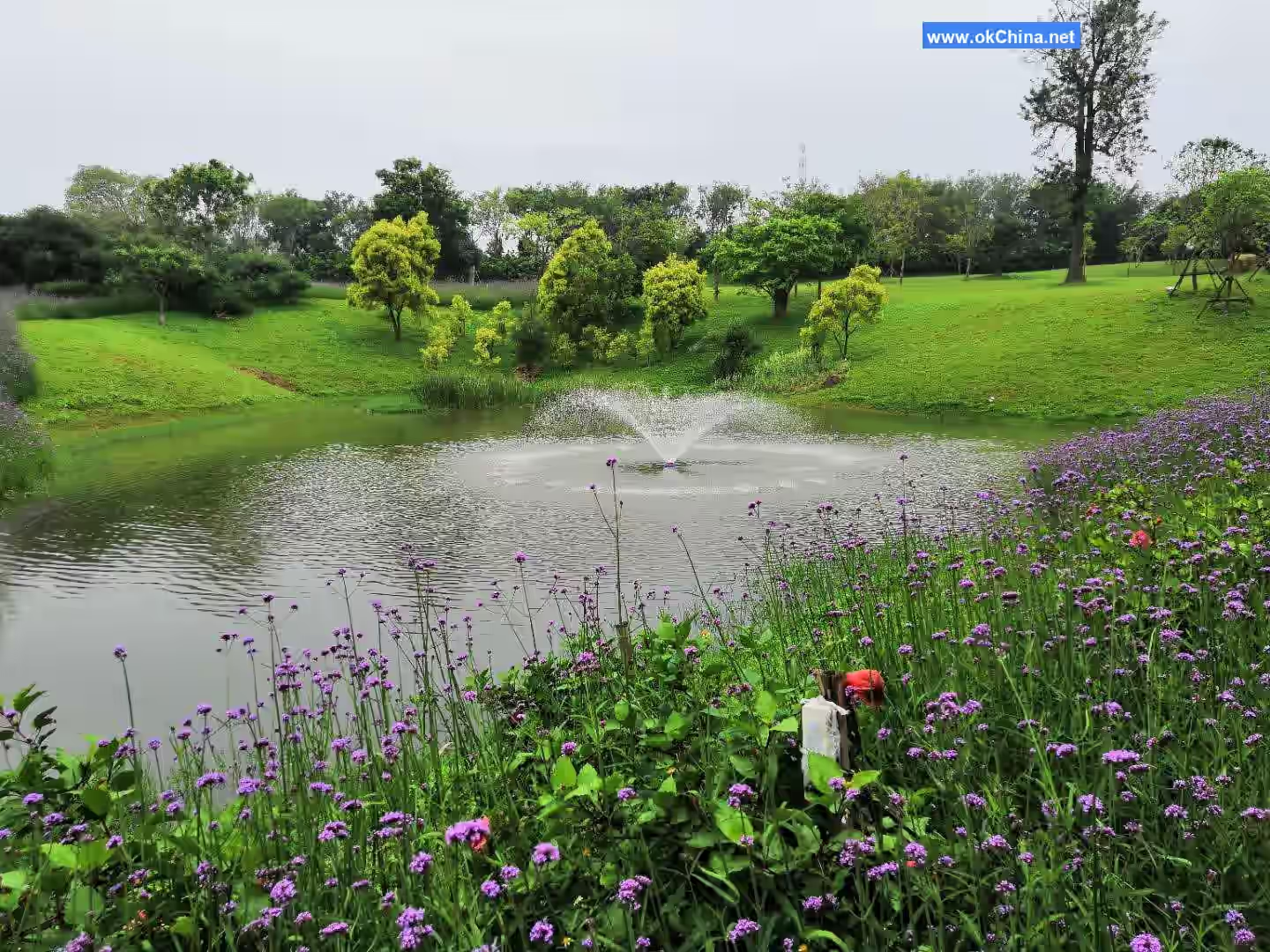
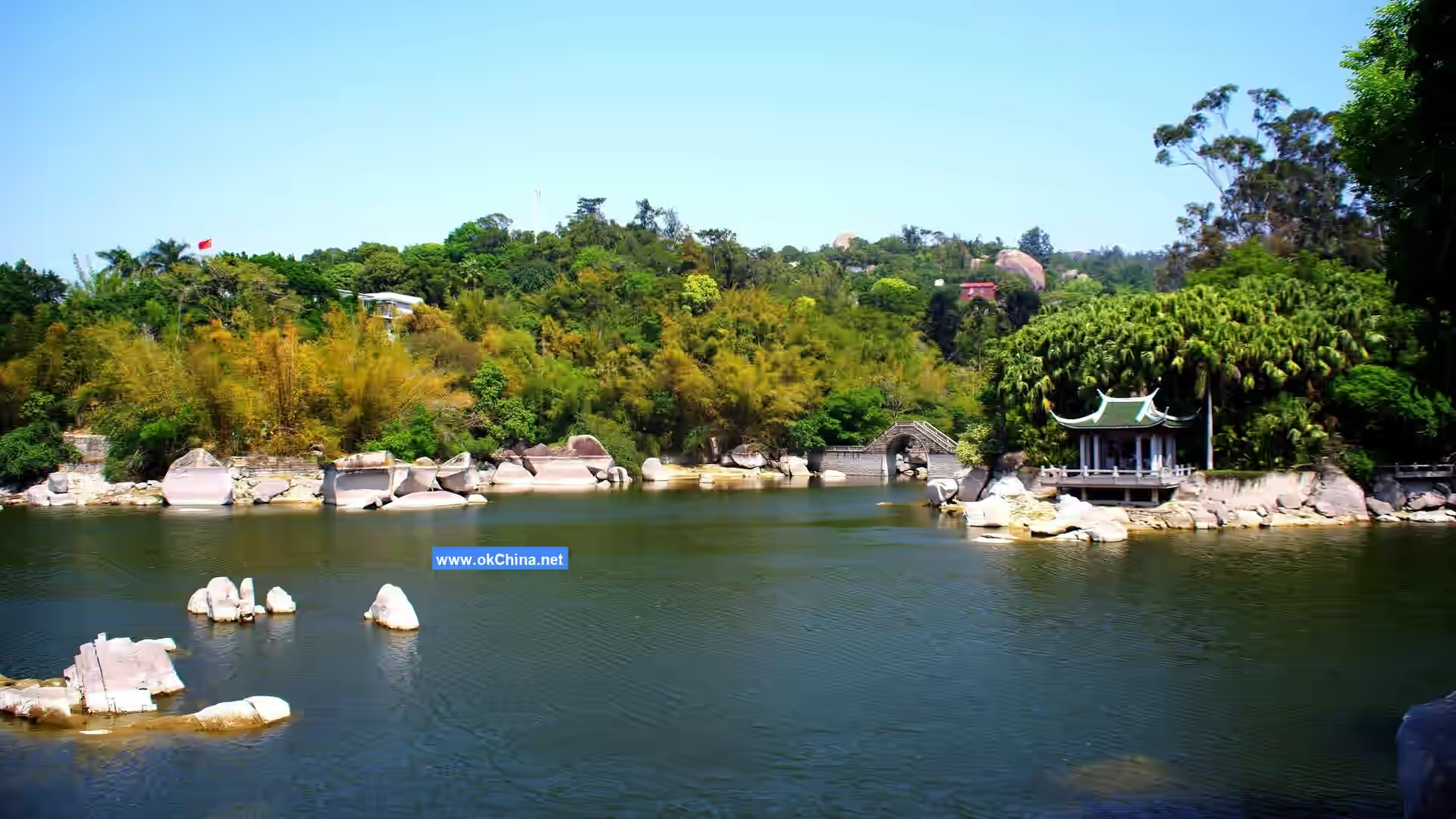
The main water systems within the botanical garden, Zhuixi Stream and Shuimokeng Stream, run from east to west across the entire garden. Zhuixi Stream, originating from the northern foothills of Wulao Peak, winds its way past Ziyun Rock, flows through Baihua Hall, and enters Wanshi Lake in the northwest. Wanshi Lake has a maximum storage capacity of 147,000 cubic meters, primarily fed by mountain torrents during the rainy season, making it the largest water body in the Wanshi Mountain area.
3. Main Attractions
3.1 Plant Zones
3.1.1 Succulent Plant Zone
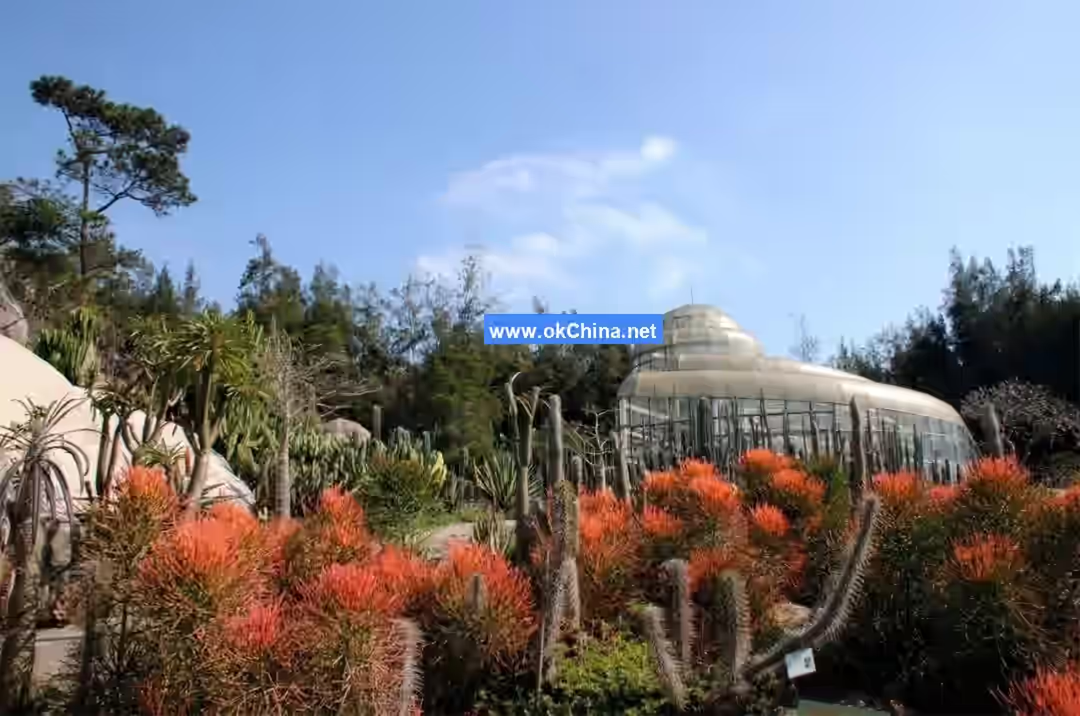
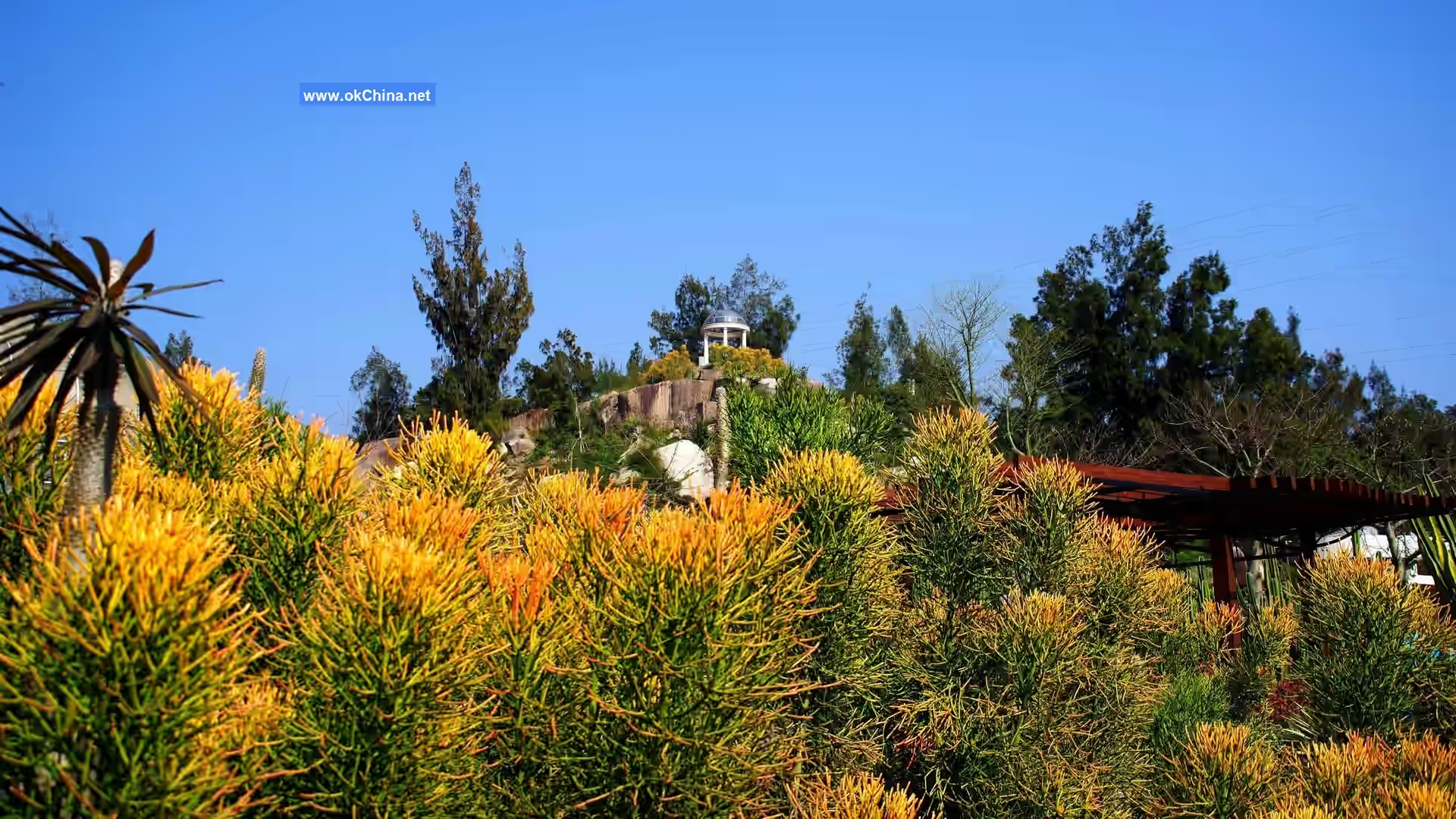
Succulent plants, also known as fleshy plants, refer to plants with thick, juicy stems, leaves, or roots. The Succulent Plant Zone covers an area of about 4 hectares and was established in 1999. It includes three indoor exhibition halls (Cactus Family Hall, Succulent Plant Hall, and Forest Succulent Plant Hall) and an outdoor exhibition area simulating a desert environment. The zone currently houses over 3,000 species (including varieties) of succulent plants from more than 50 families. It is one of the garden's most distinctive specialized zones and an important base in China for succulent plant cultivation, landscape application demonstration, scientific research, and science education.
3.1.2 Rainforest World
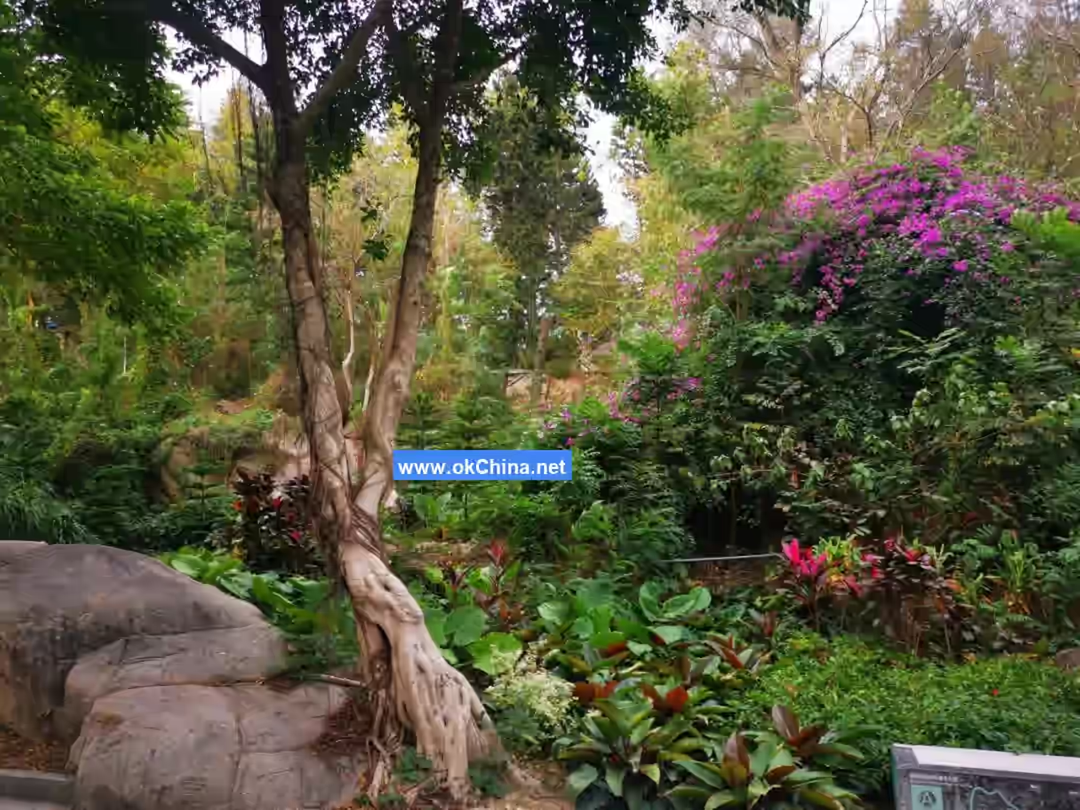
Rainforest World covers an area of approximately 16 hectares. Within the zone are the historic Xiamen scenic spots "Ziyun Delu" and "Gaodu Qindong," as well as the municipal-level cultural relic protection unit—the Qiaoxi Bridge built in the Ming Dynasty. While preserving the original natural vegetation, the zone has enriched species diversity by introducing and cultivating plants with rainforest characteristics, forming rainforest vegetation with multiple community layers that exhibit features such as strangler figs, cauliflory, aerial gardens, and buttress roots. A misting system has been installed in the zone, atomizing tap water to create a misty, ethereal atmosphere, crafting a fantastical world that seems both illusory and real.
3.1.3 Fascinating Plant Zone
Established in 2014 and located north of Baihua Hall, the Fascinating Plant Zone covers about 2.35 hectares. It houses over 200 species of fascinating plants and includes greenhouses and cool houses to create suitable habitats for these uniquely shaped and interesting plants. The zone gathers various fascinating plants, such as the critically endangered palm species Medemia argun, the Welwitschia (Welwitschia mirabilis) which has only two leaves in its lifetime and can live over 2000 years, the peculiarly shaped crested cycad (Cycas revoluta f. cristata), the uniquely colored Black Dragon Bamboo (Phyllostachys nigra 'Boryana') and Black Grass Bamboo, the medicinal plant Ceylon Cinnamon (Cinnamomum verum), the Buddha's Belly Tree (Ceiba insignis) with its large, ball-like trunk, Balsa (Ochroma pyramidale) which has the world's lightest wood, Ylang-Ylang (Cananga odorata) used for extracting perfume fixatives, the highly toxic Antiaris (Antiaris toxicaria), the stag-horn fern (Platycerium) with antler-like leaves, carnivorous plants like pitcher plants (Nepenthes), sundews (Drosera), and Venus flytraps (Dionaea muscipula), the Dancing Plant (Codariocalyx motorius) that sways to music, the Miracle Fruit (Synsepalum dulcificum) that alters taste perception, the oddly flowered Dutchman's Pipe (Aristolochia grandiflora), and air plants (Tillandsia) that grow without soil.
3.1.4 Palm Plant Zone
The Palm Plant Zone (Palm Island) is located on the east side of Wanshi Lake, forming a peninsula jutting into the lake. With coconut trees, lake views, mountain scenery, and green reflections, it presents a unique landscape reminiscent of a southern island coconut grove. Deep within the zone is a tea house built in the style of a Dai ethnic building, alongside a lotus-leaf-shaped footbridge and a lotus pond. Palm family plants are mainly trees and shrubs, with a few being vines, distributed in tropical America and tropical Asia. There are about 2,500 species worldwide. China is home to 18 native genera and 117 species (including varieties), mainly found in South and Southwest China. Palm plants are often excellent ornamental garden plants and also have uses for fiber, food, oil, starch, medicine, and more. The garden ranks among the top botanical gardens in China in terms of the number of palm species introduced from around the world. In November 2011, the National Forestry and Grassland Administration established the "Palm Plant Conservation Center" within the garden as part of the National Wildlife Conservation and Nature Reserve Construction Project.
3.1.5 Flower Garden
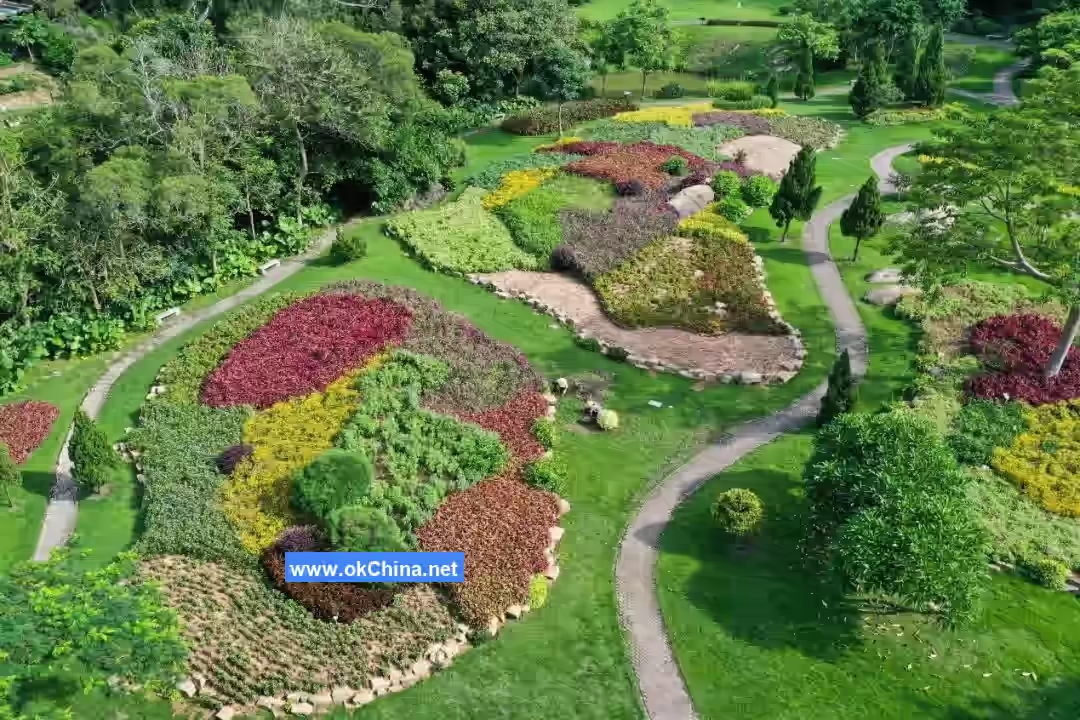
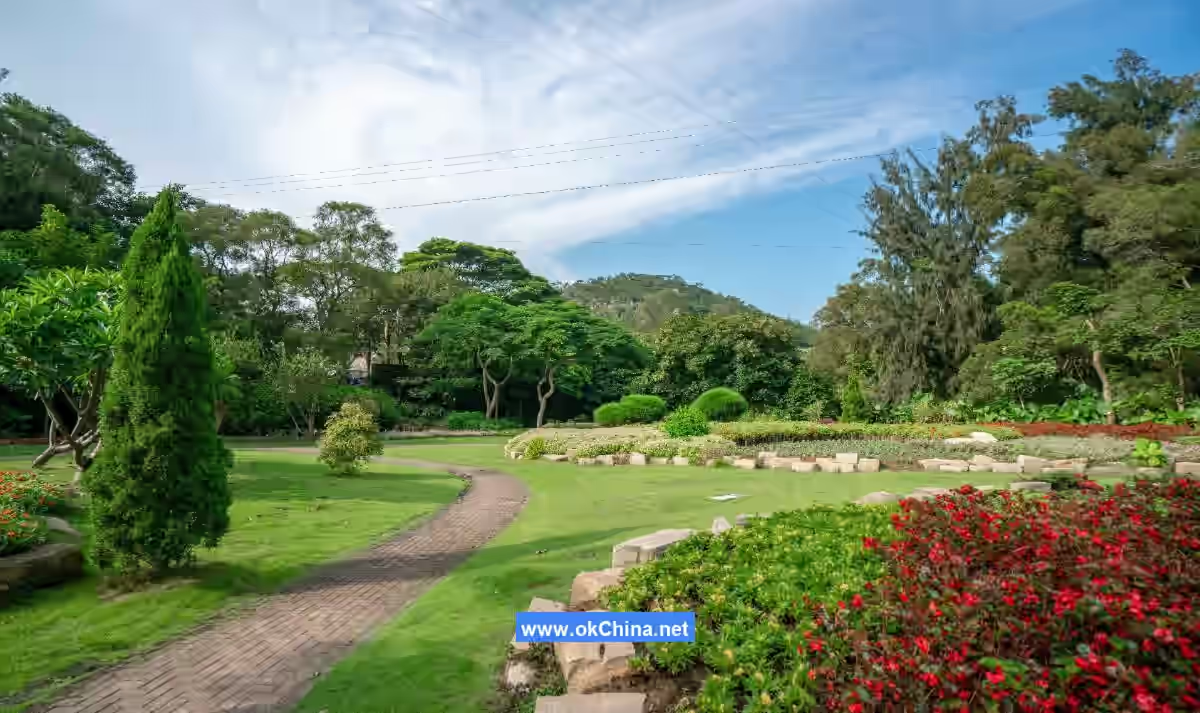
Located in the northwest corner of the botanical garden and covering about 5.7 hectares, the Flower Garden primarily cultivates herbaceous flowers. Herbaceous flowers refer to those with underdeveloped xylem and herbaceous stems, which can be annual, biennial, or perennial. Built following the mountain's contours with a European-style layout, and drawing inspiration from Canada's Butchart Gardens, the garden features naturalistic flower borders arranged in open spaces. Lush green mountains, showy large-flowered trees, two corresponding European-style buildings, and straight cypress trees serve as different backdrops to highlight the vibrant and diverse exotic flowers. It fully displays the tropical and subtropical herbaceous flower landscapes that offer colorful blooms throughout the four seasons.
3.1.6 Rose Garden
The Rose Garden was established in 1995. Within the zone are scenic spots like "Elephant Trunk Peak" and "Wanhu Chao Tian," and a music stage shaped like a rose petal is located in the northeast corner. The Rosaceae family is an important economic plant family, comprising over 124 genera and 3,300 species, mainly found in the temperate zones of the Northern Hemisphere. China has 51 genera and over 1,000 species, including peach, plum, apricot, apple, pear, cherry blossom, Chinese rose, rose, strawberry, etc. The garden has selected nearly a hundred Rosaceae species. There is a pond within the garden planted with water lilies and other aquatic plants, surrounded by expansive lawns. The overall layout of the Rose Garden is appropriate, achieving grandeur through simplicity and coherence through a connecting stream. Visitors can appreciate the beauty of peach blossoms, the delicate charm of Chinese roses, and the proud elegance and fragrance of plum blossoms amidst the sound of flowing water, experiencing the beauty of nature.
3.1.7 National Bougainvillea Germplasm Resource Bank
In October 2020, the National Forestry and Grassland Administration approved Xiamen Botanical Garden as the National Bougainvillea Germplasm Resource Bank. To further strengthen the collection and display of bougainvillea germplasm resources, the garden initiated the construction of the National Bougainvillea Germplasm Resource Bank in 2022, which was preliminarily completed and opened in November 2023.
3.1.8 City Flower Garden
Also known as Meihailing, the City Flower Garden is located in the middle of Dongping Mountain. It was preliminarily completed and opened in November 2005, covering an area of about 4 hectares. Planted with over 10,000 bougainvillea plants of more than 60 varieties, it was built following the mountain terrain and is China's first specialized garden themed on bougainvillea. Bougainvillea, also known as paper flower, is a scrambling shrub of the Nyctaginaceae family, native to Brazil in South America. It was introduced to Taiwan for cultivation in 1872 and later gradually spread to provinces across China. In 1986, the 23rd meeting of the 8th Standing Committee of the Xiamen Municipal People's Congress designated bougainvillea as the city flower of Xiamen. Bougainvillea boasts vibrant colors and a long flowering period. It is widely introduced and cultivated in tropical and subtropical regions worldwide, and a large number of bougainvillea varieties have been bred. There are currently over 400 registered bougainvillea varieties worldwide. The garden has introduced and collected more than 300 varieties, making it one of the institutions in China with the largest collection of bougainvillea.#### 3.1.9 Vine Plant Zone Vine plants refer to a category of plants with slender stems that cannot grow upright on their own. They include climbing, twining, adhering, sprawling, creeping, and trailing types, and are valued for their foliage, flowers, or fruits. The Vine Plant Zone is located south of the Succulent Plant Zone, at the northern foot of Wulao Peak, adjacent to the Rainforest World, covering an area of 15 hectares. The pergolas and trellises built along the roadsides within the zone wind and undulate for over 600 meters, forming the longest group of vine plant pergolas in China. The area features flower trellises and covered walkways, displaying over a hundred species of ornamental vines such as the beautiful Red Pagoda Flower (Clerodendrum splendens), Garlic Vine (Mansoa alliacea), Rangoon Creeper (Combretum indicum), Red Passion Flower (Passiflora coccinea), Starfruit Vine (Trichosanthes cucumerina), and Snake Creeper (Mikania micrantha). Throughout the year, flowers bloom continuously, vying for beauty and splendor.
3.1.10 Camellia Garden
The Camellia Garden is situated in the middle section of Suoyun Road, adjacent to the Cycad Plant Zone, covering approximately 4 hectares. It was completed and opened during the 2018 Spring Festival. It currently houses nearly 400 species and varieties of plants from the Theaceae family, including many with high ornamental value, such as Camellia azalea, Vietnamese Stalked Camellia (Camellia amplexicaulis), and Golden Camellia (Camellia nitidissima). The period around the Spring Festival is the best time for viewing flowers, while some camellias bloom throughout all four seasons. The garden is planted with large flowering companion trees like Yellow Trumpet Tree (Handroanthus chrysanthus), Silk Floss Tree (Ceiba speciosa), and Coral Tree (Erythrina variegata), ensuring continuous blooms year-round in a staggered, unique, and interesting arrangement. The winding mountain trails are dotted with pavilions and complemented by babbling streams and waterfalls. At the summit stands the Cuiyi Pavilion, offering a panoramic view of the central urban area of Egret Island from its railings.
3.1.11 Bamboo Plant Zone (Bamboo Path)
The Bamboo Plant Zone (Bamboo Path) was initially established in 1960. It stretches along the northern shore of Wanshi Lake at the foot of Banling Mountain, reaching Xishan Lake. The path is lined with dense, serene bamboo groves. The Bamboo Path features varying heights, graceful curves, and straight sections, with lush green bamboo forests and reflections on the lake, creating a fairy-tale-like scene. Bamboos belong to the Bambusoideae subfamily of the Poaceae family. Worldwide, there are over 100 genera and 1,000 species (including infraspecific taxa). Bamboo is a traditional Chinese plant used for garden ornamentation, shoots, and timber, and is regarded as a symbol of virtue, forming a unique Chinese bamboo culture. Su Dongpo (Su Shi) once wrote, "I would rather eat without meat than live without bamboo." Our garden has introduced nearly 200 species from 28 genera, primarily featuring ornamental clumping bamboos such as Pink Single Bamboo (Bambusa chungii), Small Lute Bamboo (Bambusa multiplex 'Alphonse Karr'), Silver Thread Bamboo (Bambusa multiplex 'Silverstripe'), Golden Bamboo with Green Jade (Bambusa vulgaris 'Vittata'), Mottled Bamboo (Phyllostachys bambusoides f. lacrima-deae), and Thai Bamboo (Thyrsostachys siamensis). These diverse species create a grand spectacle of the bamboo family.
3.1.12 Gymnosperm Zone
The Gymnosperm Zone is located on the northern side of Wanshi Lake, covering about 2 hectares, and was established in 1970. The plant landscape and garden features are cleverly integrated, with the lake, mountain scenery, and green reflections enhancing each other's beauty. A pond was excavated in a low-lying area within the garden, featuring sculptures of cranes playing in the water—some with wings spread as if about to fly, others foraging—each with different, lifelike postures. The "Yannian Pavilion" stands by the pond. In gymnosperms, the ovules are not enclosed by an ovary wall, so no fruit pericarp is formed, and the seeds are exposed. There are approximately 800 extant gymnosperm species worldwide, belonging to 5 classes, 9 orders, 12 families, and 71 genera. China has 236 species from 5 classes, 9 orders, 12 families, and 41 genera. Our garden cultivates nearly 100 species (including varieties) from 5 classes, 6 orders, 11 families, and 26 genera, primarily from the Araucariaceae and Cycadaceae families. It collects world-renowned garden trees such as Golden Larch (Pseudolarix amabilis), Cedar (Cedrus), and Araucaria, as well as living fossils like Dawn Redwood (Metasequoia glyptostroboides) and the relict plant Ginkgo (Ginkgo biloba).
3.1.13 Medicinal Plant Zone
Plants whose roots, stems, bark, leaves, flowers, fruits, seeds, or entire bodies contain chemical components that can prevent or treat diseases and have certain medical uses are collectively referred to as medicinal plants. This zone cultivates approximately 350 species of medicinal plants, primarily planted according to their growth habits and adapted to local conditions. It includes traditional famous medicinal plants like Eucommia Bark (Eucommia ulmoides), Amomum Fruit (Amomum villosum), Agarwood (Aquilaria sinensis), Sandalwood (Santalum album), and Glossy Privet (Ligustrum lucidum), as well as traditional Minnan (Southern Fujian) herbal medicines like Blood Amaranth (Iresine herbstii), Plantain (Plantago asiatica), and Andrographis (Andrographis paniculata).
3.1.14 Zingiberales Plant Zone
The Zingiberales Plant Zone was established in 2015, covering about 2 hectares. It borders the Flower Garden to the east, follows the mountain's contours, and features serene valleys and clear streams and ponds. The winding mountain trails offer changing scenery with every step. Most Zingiberales plants are large perennial herbs, comprising 8 families—Musaceae (bananas), Zingiberaceae (gingers), Cannaceae (cannas), Heliconiaceae (heliconias), Marantaceae (prayer plants), Strelitziaceae (traveler's trees), Lowiaceae (orchid bananas), and Costaceae (spiral gingers)—with over 2,100 species. This zone cultivates over 400 species and varieties of Zingiberales plants. These include plants with unique forms like Traveler's Tree (Ravenala madagascariensis) and Elephant Foot Banana (Ensete ventricosum); plants with variegated leaves like Rainbow Calathea (Calathea roseopicta) and Painted Calathea (Calathea picturata); plants with brightly colored flowers like Pink Banana (Musa velutina) and Red Ginger Lily (Hedychium coccineum); and plants with unusual flower shapes like Golden Lobster Claw (Heliconia rostrata) and Chinese Yellow Banana (Musella lasiocarpa).
3.1.15 Lion Mountain Garden
Lion Mountain Garden is located in the central part of the botanical garden. It was established in 2019, covers approximately 20 hectares, and features undulating terrain. At its center is Lion Mountain Lake, constructed in 1952 with a total storage capacity of about 84,000 cubic meters. The vegetation in the area primarily consists of lawns, ground covers, and large flowering trees. The surrounding area is a mixed forest dominated by Masson Pine (Pinus massoniana), Horsetail Tree (Casuarina equisetifolia), and Acacia (Acacia confusa). The garden is equipped with viewing pavilions, viewing platforms, wooden boardwalks, a primary scenic transportation station, and a service station, providing visitors with a space for sightseeing and relaxation.
3.1.16 Min-Tai (Fujian-Taiwan) Plant Zone
The Min-Tai (Fujian-Taiwan) Plant Zone is located in the South Gate entrance area of the botanical garden, built around the Dongzhaikeng Reservoir. It was established in 2021 and covers approximately 3.0 hectares. It cultivates about 500 species and varieties of characteristic plants from Taiwan and Fujian, such as Taiwan Syzygium (Syzygium formosanum), Lanyu Cinnamon (Cinnamomum kotoense), Sweetgum (Liquidambar formosana), Fujian Mountain Cherry (Prunus campanulata), Fujian Crape Myrtle (Lagerstroemia fauriei), and Fujian Phoebe (Phoebe bournei). The zone is divided into four sections: Colorful Foliage Plants, Fruit Trees, Fujian Characteristic Plants, and Taiwan Characteristic Plants, representing vegetation types such as subtropical evergreen broad-leaved forests and mixed coniferous-broadleaf forests. The area features small-scale landscape structures like pavilions, corridors, and platforms, with refined flower borders along the main paths and waterfront. The zone is filled with clusters of flowers, fragrant fruits, and shaded by trees. On the west side, there are escalators, stairs, and mountain trails leading directly to Wanshi Road, offering distant views of the Xiamen-Kinmen Strait and nearby vistas of lush greenery. The Min-Tai Plant Zone is China's first specialized garden themed on characteristic plants from Taiwan and Fujian. It is set to become a research and education base for botanical scientific research, science popularization, and cultural exchange across the Taiwan Strait.
3.2 Scenic Subdivisions
3.2.1 Araucaria Open Forest Lawn
The Araucaria Open Forest Lawn,简称 Araucaria Lawn, was initially established in the 1960s and designed by the renowned Chinese landscape architect Professor Sun Xiaoxiang. It is located on the southern side of Wanshi Lake, covering about 1 hectare. The Araucariaceae family has 3 genera and 37 species. Our garden has introduced 15 species from 3 genera. On the southeastern side of the Araucaria Lawn, approximately 10 hectares of Hoop Pine (Araucaria heterophylla) forest are planted, currently the largest pure stand of Hoop Pine in China. Party and state leaders have planted several commemorative trees here. Among them is a Large-leaf Camphor Tree (Cinnamomum parthenoxylon) personally planted by Comrade Deng Xiaoping, the chief architect of China's reform and opening-up, during his inspection of Xiamen in February 1984. This site has become a place for people to commemorate the great achievements of this eminent leader. Leaders such as Peng Zhen, Wan Li, and Wang Zhen have also planted commemorative trees here.
3.2.2 Wanshi Han Cui · Wanshi Lake
Wanshi Lake was originally the Wanshiyan Reservoir, built in 1952 as a strategic reserve reservoir for Xiamen City. It is formed by the confluence of the two major water systems in the garden: Shuimokeng Stream and Qiao Stream. Today, it has become the core landscape of the botanical garden. To the north of Wanshi Lake are the Pine and Fir Garden and the Bamboo Path; to the south is the Araucaria Lawn; to the east are Palm Island and the Hundred Flowers Hall; on the western dam, rows of Washingtonia palms (Washingtonia robusta), native to the Americas and full of southern charm, are planted. The reflections on the lake create a unique scenery. The twin bridges "Chunqiu" (Spring and Autumn) and "Tianqu" (Natural Charm) add interest on the lake, along with waterside pavilions like "Yangzhi Ting," "Cangqu Ting," and "Shiran Xie" dotting the shores, with shimmering waves creating extraordinary charm. The lake, mountain scenery, and lush vegetation combine to form one of Xiamen's famous scenes—"Wanshi Han Cui" (Wanshi Embracing Emerald).
3.2.3 Hundred Flowers Hall
The Hundred Flowers Hall features a garden-within-a-garden layout, with a lotus pond at its center where lotuses, Victoria water lilies, and water lilies display their elegance. The overall architecture is based on a traditional Chinese garden framework. Five exhibition halls are arranged around the pond, connected by corridors or paths, all featuring white walls, pink columns, and glazed tile roofs in a harmonious, staggered arrangement. Themed exhibitions are held regularly during holidays and throughout the year. Along the corridors and paths within the Hundred Flowers Hall, visitors can admire over a hundred plant species, including Large-flowered Thunbergia (Thunbergia grandiflora), Flat Vine (Tetrastigma planicaule), Wax Apple (Syzygium samarangense), Sausage Tree (Kigelia africana), Ashoka Tree (Saraca asoca), and Golden Camellia (Camellia nitidissima). A separate corner houses the Shade Plant Area, primarily featuring ferns. Ancient vines, winding rocks, moss-covered stones, and limited space create an infinite landscape, forming a three-dimensional painting with distinctive southern scenery. In a corner of the corridor, there are two running script stone carvings: "Yan Wu" by the famous Chinese landscape architect Chen Congzhou and "Rong Yin Huan Shu" (Shade of Banyans for Escaping Summer Heat) by the renowned Xiamen calligrapher Gao Huai.
3.2.4 Large-leaf Camphor Tree Planted by Deng Xiaoping
The Araucaria Lawn is dominated by elegant and straight Araucariaceae plants, complemented by tall trees like Kapok (Bombax ceiba) and Southern Kauri (Agathis australis). Expansive green lawns spread along gentle slopes, offering open and expansive views. Comrade Deng Xiaoping visited the garden during his inspection of Xiamen in February 1984 and personally planted a Large-leaf Camphor Tree on the Araucaria Lawn. Today, this site has become a must-visit place for people to commemorate this great leader.
3.2.5 Little Peach Blossom Spring (Xiao Taoyuan)
Legend has it that "Little Peach Blossom Spring" was an "underground villa" built for himself by the late Ming dynasty Marquis Dingyuan, Zheng Lian. It was expanded during the Kangxi reign of the Qing dynasty by Shi Lang. Crossing the "Jingtong Bridge" and walking along the path, one enters the cave chamber from in front of the stone carving "Die Cui Lian Yun" (Layered Green Reaching the Clouds). Inside, accumulated sand forms peaks, and there are features like "Shui Xin Shan Gu" (Water Heart, Mountain Bone), "Yu Dong" (Fisherman's Cave), "Shui Ming Shao" (Water Sounds Like Ancient Music), "Yin Xin" (Hidden Fragrance), "Shui Shi Sheng Hua" (Water and Stones Give Birth to Flowers), "Wan Si Chao Yin" (Resembling Tide Sounds), as well as several poetic couplets and inscriptions. The beautiful name "Little Peach Blossom Spring" was given by Ji Xuguo of the Ming dynasty, implying that the scenery here resembles the "Peach Blossom Spring" described by Tao Yuanming.#### 3.2.6 Myriad Ministers Paying Homage to Heaven & Elephant Trunk Peak Both "Elephant Trunk Peak" and "Myriad Ministers Paying Homage to Heaven" are located within the Rose Garden area. "Myriad Ministers Paying Homage to Heaven" is one of the "Minor Eight Scenes" among the old Twenty-Four Scenes of Xiamen. In the past, before extensive tree planting on Wanshi Mountain, the view from afar was dominated by peculiar rocks. Rows of rocks, all facing the same direction, resembled court officials holding "memorial tablets" while paying homage to the emperor, hence the name "Myriad Ministers Paying Homage to Heaven." Today, amidst the lush greenery, only the stone inscriptions remain to commemorate it for future generations.
3.2.7 New Forest of Steles
The New Forest of Steles is a typical example of coastal low-hill granite landform. After tens of millions of years of crustal changes, it has become the area within Wanshi Mountain where "myriad rocks" are concentrated. Most of the rocks here are spheroidal weathering bodies, standing alone or piled together. Adapted to the local conditions, this area was developed into a "Forest of Steles District." As the rocks are inscribed with poems and writings by contemporary celebrities and masters, it is named the "New Forest of Steles." Over more than a decade, the Botanical Garden has carefully selected over a hundred calligraphic works by calligraphers and celebrities from home and abroad, engraving them onto the rocks according to the rock's orientation, size, and the content of the inscription. The content is rich, the techniques diverse, covering regular, running, cursive, clerical, and seal scripts, possessing high ornamental value.
3.2.8 Wanshi Lotus Temple
Wanshi Lotus Temple is located below the giant rock of "Myriad Ministers Paying Homage to Heaven." It got its name because the temple is surrounded by numerous large rocks. Legend has it that it was built during the Kaiyuan era of the Tang Dynasty when the Chen family from the Central Plains entered the island for development, making it one of the earliest temples on Xiamen Island, with a history of over 1000 years. It underwent several periods of prosperity and decline and was rebuilt several times later. Its current appearance is the result of a reconstruction by Venerable Hongchuan, President of the Singapore Buddhist Federation, after Xiamen's opening up. The mountain gate of Wanshi Lotus Temple is a stone archway. The couplet on the archway, "The chant of Amitabha spreads across Egret Island; A thousand-year abode continues the legacy of Lushan," was written by Master Hongyi for Master Huiquan's revival of Wanshi Rock.
3.2.9 Locking Clouds (Site where Zheng Chenggong killed Zheng Lian)
On the northeastern shore of Wanshi Lake, there is a large rock with the two characters "锁云" (Locking Clouds) inscribed horizontally. This inscription was made by Yao Yingfeng, the Xiamen Coastal Defense Subprefect during the Qing Dynasty's Kangxi era in 1698. It is said that this is the place where Zheng Chenggong lured and killed Zheng Lian. In the late Ming and early Qing period, Zheng Lian, Zheng Chenggong's cousin, was granted the title of Marquis Dingyuan for his merits accompanying Prince Lu of the Southern Ming court into Fujian and stationed troops on Wanshi Rock in Xiamen. On the Mid-Autumn Festival in the eighth month of the seventh year of the Shunzhi reign (1650), Zheng Chenggong, under the pretext of a military rendezvous, designed to lure and kill Zheng Lian here, annexing his naval forces, thereby removing an obstacle to establishing an anti-Qing and Taiwan-recovery base in Xiamen. This site is a municipal-level cultural relics protection unit.
3.2.10 Tianjie Temple & Tianjie Morning Bell
Tianjie Temple was built through donations raised by Monk Yuesong in the late Ming and early Qing period. Since ancient times, the temple has rung its bell 108 times every morning. The melodious bell sound cleanses the heart, aiming to dispel the "108 dreams of vexation." "Tianjie Morning Bell" is one of the scenes in the old "Minor Eight Scenes" of Xiamen and also one of the scenes in the new Twenty Scenes of Xiamen. Behind Tianjie Temple, there are jagged giant rocks and naturally formed caves and gullies. Inside a cave, there is a stone inscription by Huang Riji from the Qianlong era of the Qing Dynasty. The cave is open at both ends. When the wind blows, the sound resonates within the cave, echoing through the mountains and valleys with a continuous roar resembling a tiger's roar, hence the name. The cave's inner and outer stone walls bear numerous inscriptions and dozens of poems. Among them, Huang Riji's "Four Scenes of Immortal Rock" is the most famous, while the poems by Ming generals who fought against Japanese pirates are the most valuable, the latter being listed as a municipal-level cultural relics protection unit.
3.2.11 Taiping Rock Temple
Proceeding past "Laughing Rock," one arrives at Taiping Rock Temple. On the cliff below the temple, the three characters "极乐天" (Land of Ultimate Bliss) complement "Laughing Rock," symbolizing the ultimate bliss of the Buddhist land of Taiping Rock Temple. Legend has it that Taiping Rock Temple was first built in the Tang Dynasty, experiencing periods of prosperity and decline. The theory that it was built in the Ming Dynasty is likely more accurate. The current structures were rebuilt in 2008. The scenic beauty here was known to the ancients, as evidenced by numerous stone inscriptions inside and outside the temple.
3.2.12 Taiping Laughing Rocks
"Taiping Laughing Rocks," one of the Twenty Scenes of Xiamen, consists of four natural giant rocks. Two rocks are stacked, joined at one end and open at the other, while the other two rocks stand upright, forming a stone gate that naturally resembles an "open-mouthed laugh." On the rock to the right of the stone gate, the characters "石笑" (Laughing Rocks) are inscribed with vigorous and powerful strokes, showcasing excellent calligraphy. As this place is within the Taiping Rock area, it got its name. Behind the stone gate, there is a couplet of two seven-character lines: "The rocks open their mouths in laughter to welcome guests; The mountains act as hosts, delighting in nature's perfection."
3.2.13 Zhongyan Temple
Zhongyan (Middle Rock) is named for its location between Wanshi Rock and Taiping Rock. An ancient poem says: "Zhongyan lies between two rocks, a winding mountain path threads through like a line; Arriving at the temple's front, the joyful ground, before it the jade tablet soars again into the sky." The first line describes its location: the temple is Zhongyan Temple, the mountain is Zhongyan Mountain. Below it is Wanshi Rock's Wanshi Lotus Temple, also called Lower Rock; above it is Taiping Rock Temple, called Upper Rock. Zhongyan Temple is not large. Built against the mountain, it follows the terrain in a staggered layout. The main temple complex forms a viewing platform with an extremely wide field of view. "Broadening one's horizons" is the characteristic feature of the scenery here. On a huge solitary rock within the temple, the two characters "玉笏" (Jade Tablet) are inscribed, handwritten by Zheng Lian in the autumn of the fourth year of the Shunzhi reign (1647) of the Qing Dynasty. The rock is flat, smooth, and stands majestically, resembling a memorial tablet, hence the famous scenic name "Zhongyan Jade Tablet."
3.2.14 Zheng Chenggong's Study Site
In front of the main hall of Taiping Rock Temple, there is a Haiyun Cave (Sea Cloud Cave). Above the cave stands an octagonal pavilion, which is the "Study Site of Prince Yanping, Zheng Chenggong." In those days, this place was shaded by dense foliage and exceptionally tranquil. Zheng Chenggong once lived in Taiping Rock Temple and often went to Haiyun Cave to study, listening to the rushing stream water. This site is now listed as a cultural relics protection unit. When Zheng Pengyun, a descendant of Zheng Chenggong, visited Taiping Rock, he left a poem on a rock wall near "Laughing Rock," titled "Visiting Taiping Rock, Passing the Study Site of My Ancestor Prince Yanping." The poem reads: "The rock cannot speak but its mouth is ever open; Deep in the study place, moss grows green. Ask not of the 'Grass Chicken' and affairs of yore; Across the Kun Sea, riding a whale, he returns no more." Here, "Grass Chicken" refers to Zheng Chenggong. The traditional character for Zheng (鄭) resembles the components for "grass" and "chicken," so folk culture used "Grass Chicken" or "Grass Chicken with Big Ears" as a covert reference to Zheng Chenggong. "Kun Sea" refers to the Taiwan Strait. Borrowing the allusion of "Li Bai riding a whale to become an immortal," it metaphorically refers to Zheng Chenggong recovering Taiwan and dying of illness there half a year later.
3.2.15 Purple Clouds Path Attained
The area now known as the Rainforest World was formerly called Ziyun Rock (Purple Clouds Rock). Since ancient times, it has been a place of deep seclusion, elegance, dense vegetation, and scattered massive rocks. During the Ming Dynasty, a Wenchang Temple (God of Literature Temple) was built here, presiding over literary prosperity, scholarly honor, and official rank. Although Ziyun Rock Temple had thriving incense offerings, the path was difficult to traverse. It was not until the thirteenth year of the Jiaqing reign (1808) of the Qing Dynasty that Zheng Guangyi opened a path here and inscribed the four characters "紫云得路" (Purple Clouds Path Attained) on a rock, both praising the convenience of having a path and implying that scholars should study hard to seek fame and success. Today, no trace of the ancient temple remains, only the stone inscription hidden by the secluded forest path silently witnesses the changes of time.
3.2.16 Penghu Fallen Soldiers Terrace
Exiting the mountain gate of Wanshi Lotus Temple and ascending along the bamboo forest path, one crosses Haihui Bridge to reach the Taiwan-related cultural relics protection unit—the Penghu Fallen Soldiers Monument. It was erected by Lan Li, the Fujian Provincial Military Commander, to commemorate the Qing army soldiers who died in the battle against Zheng Keshuang in Penghu. Originally, there was a Soldiers Pavilion inside the gate, which was destroyed. It was rebuilt on the right side in 1998.
3.2.17 Qiao Creek Ancient Bridge & High Reading Zither Cave
Qiao Creek Ancient Bridge and High Reading Zither Cave are located within the Rainforest World. Qiao Creek Bridge was built in the tenth year of the Shunzhi reign (1653, corresponding to the seventh year of the Yongli reign of the Southern Ming). It is one of the oldest existing stone bridges in Xiamen. The bridge structure is made of granite slabs, with a total length of 6 meters and a width of 1.5 meters. The eastern end rests on a giant rock, while the western end is supported by a stone pier 3 meters high and 2.2 meters wide. On a large rock beside the stone bridge, the three regular script characters "樵溪桥" (Qiao Creek Bridge) are inscribed, with the signature "Yongli Seventh Year, Yang Month, Daizhou Yu Hongzhi." The ancients chose to live near water. In the past, there were several perennial streams on Wanshi Mountain, so people lived along these streams, relying on woodcutting and land reclamation for livelihood. Numerous unnamed stone inscriptions and relics remain nearby, hinting at the history that once existed here. About 100 meters from Qiao Creek Bridge, there is a cave. Above the cave, the two characters "琴洞" (Zither Cave) are inscribed in running-regular script, with the signature "Qianlong Xinyou Year (1771), Pu Month, Nanhu Zheng Junyang." The cave is 5 meters high, 13 meters deep, and 3 meters wide. Inside the cave, there is a rock shaped like an ancient zither. The stream water flows beneath it, producing a sound like zither music, hence the name Zither Cave. It is also said that because Qiao Creek Bridge and Zither Cave were once places where Zheng Chenggong studied when he stationed troops in Xiamen, it is called "High Reading Zither Cave." This site is a municipal-level cultural relics protection unit.
4. Historical Development
Xiamen Botanical Garden was established in 1960.
On February 10, 1984, Comrade Deng Xiaoping personally planted a large-leaf camphor tree on the Casuarina Lawn, which has now become a place for people to remember the great leader.
In 1992, the "Master Plan for Xiamen Botanical Garden (1993-2012)" was completed. It passed expert review in 1993 and was approved for implementation by the city planning department. Subsequently, due to various internal and external factors, it was first revised in July 2003 and revised again in 2005 after the adjustment of the Botanical Garden's red-line boundary.
In February 2024, it was designated as a National 5A-level Tourist Attraction.
Comments
Post a Comment