Wuzhen Ancient Town Tourist Area in Jiaxing
1. Introduction
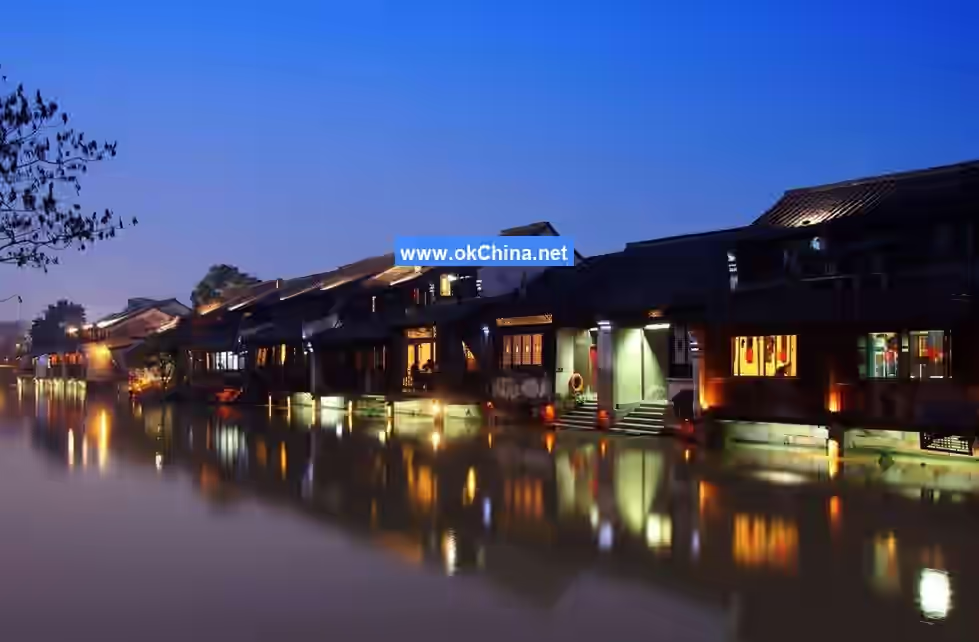
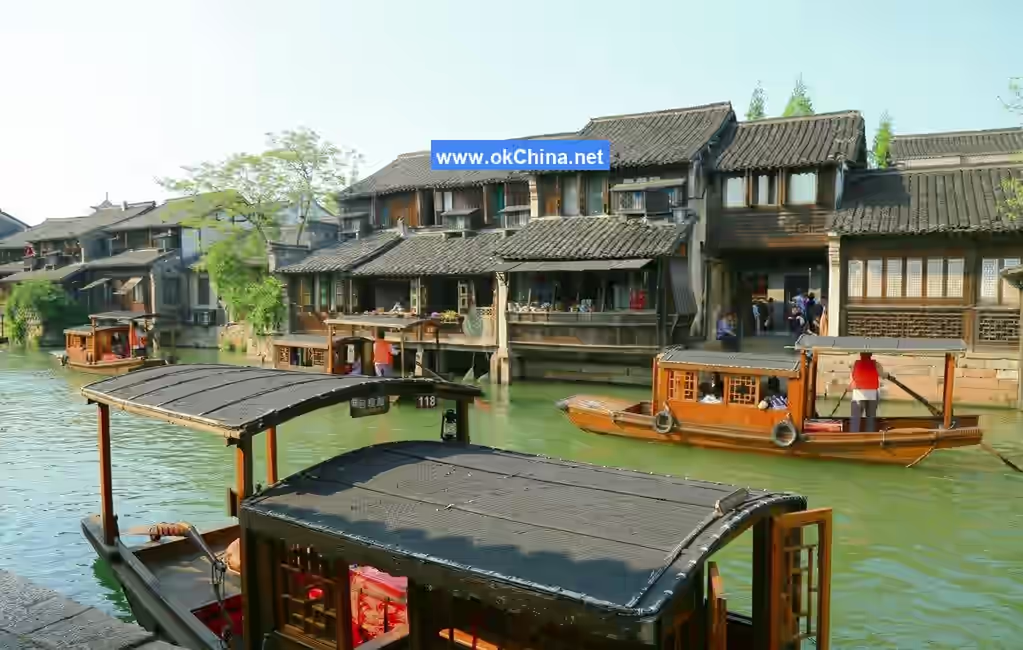
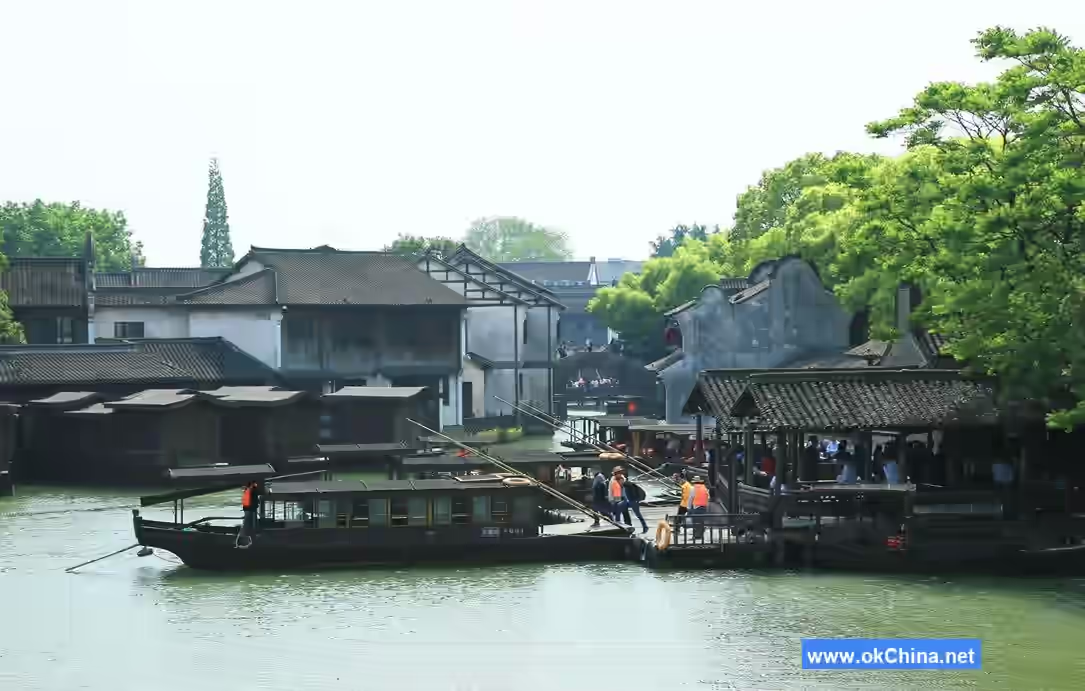
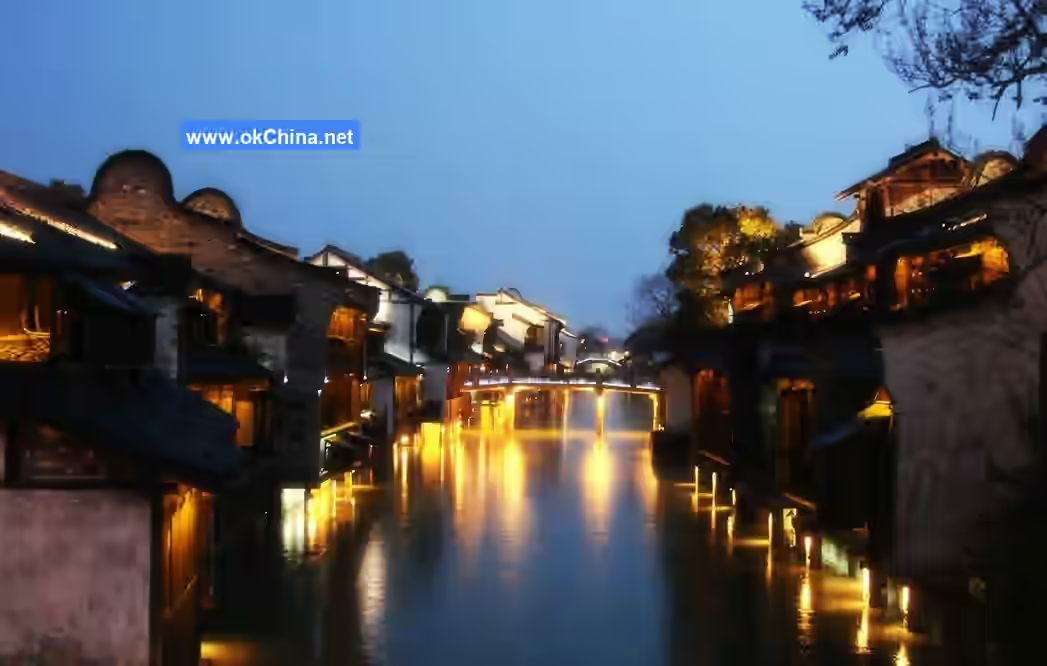
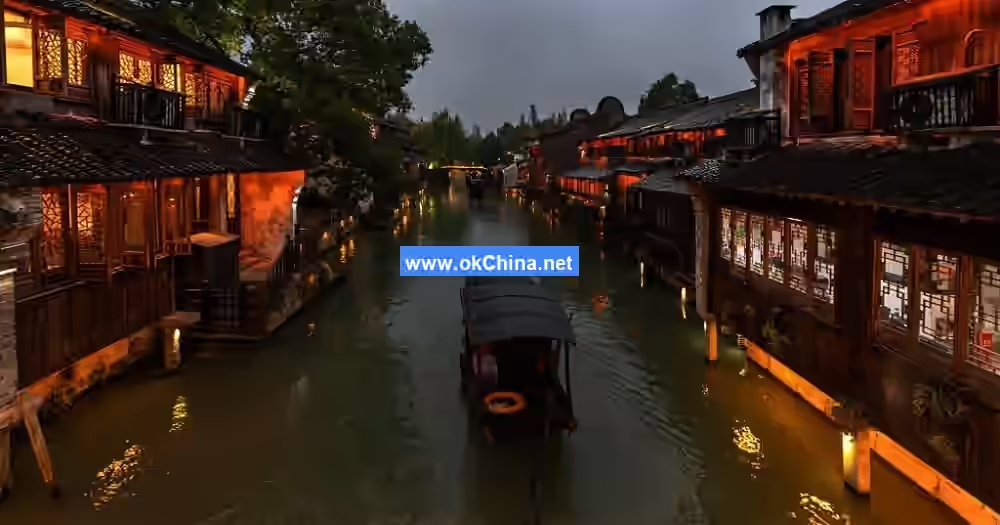
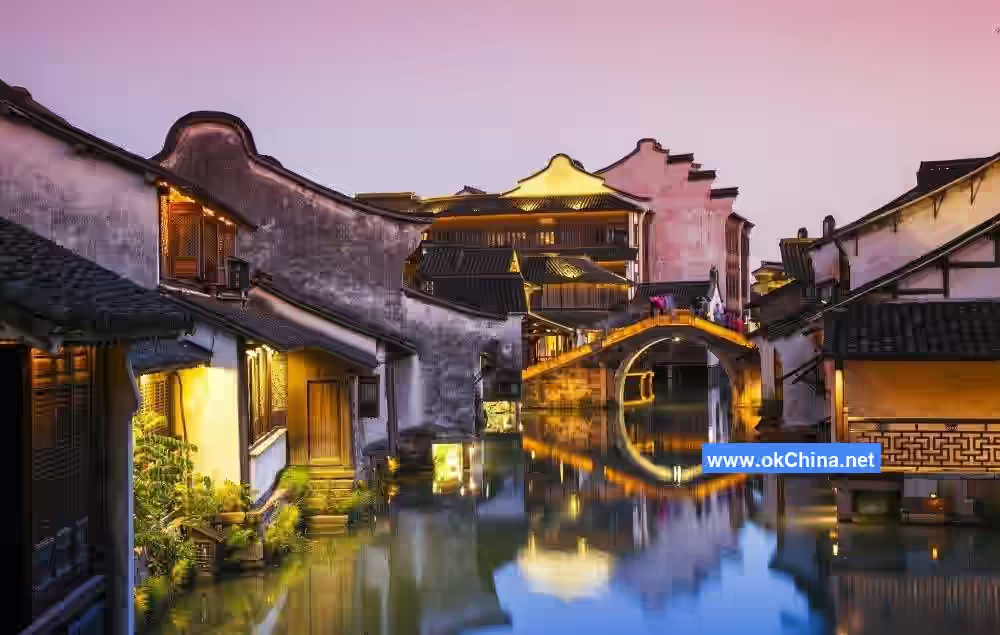
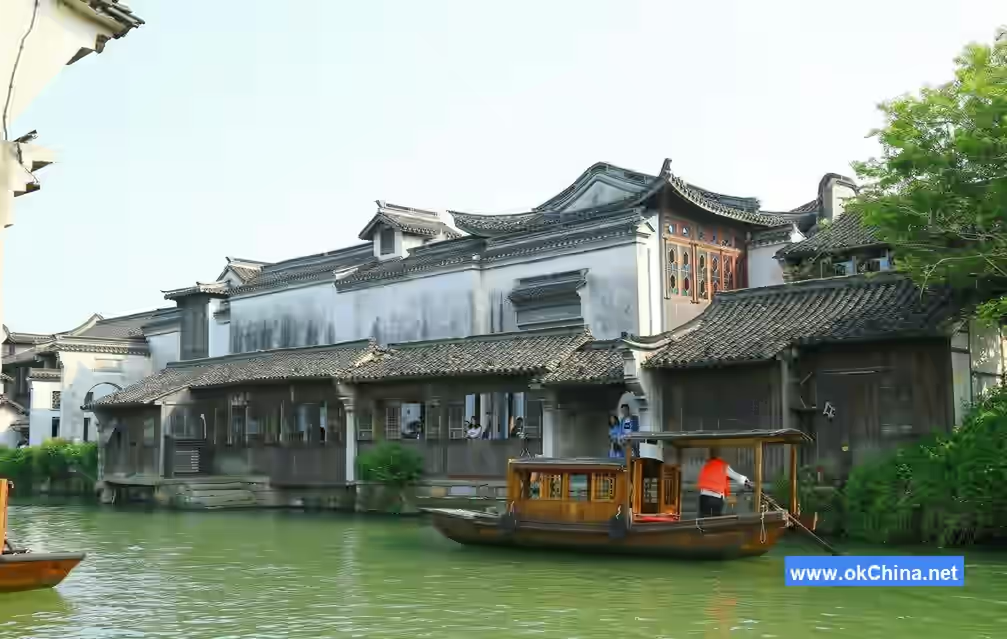
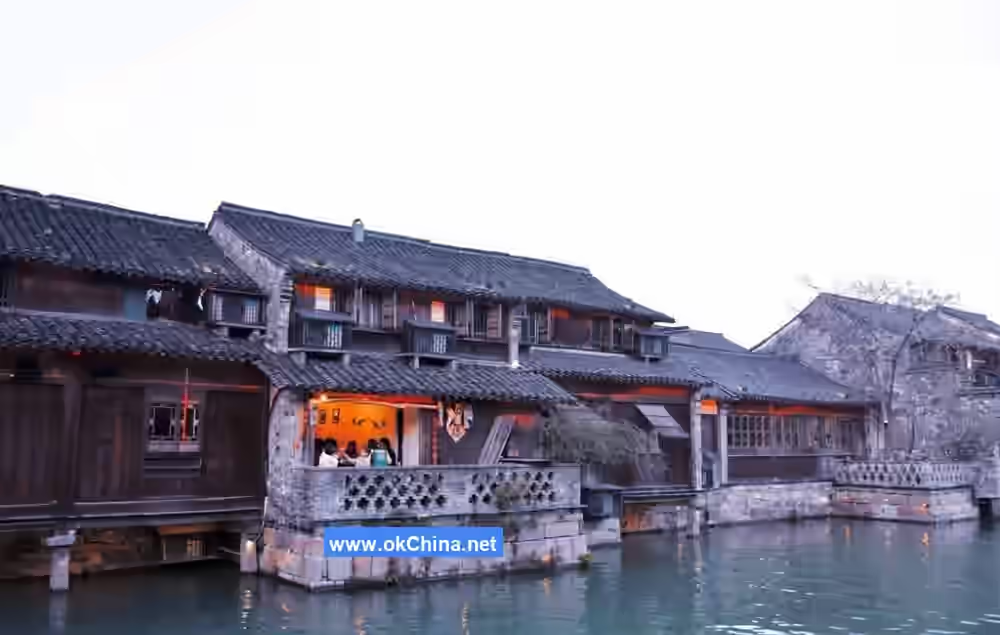
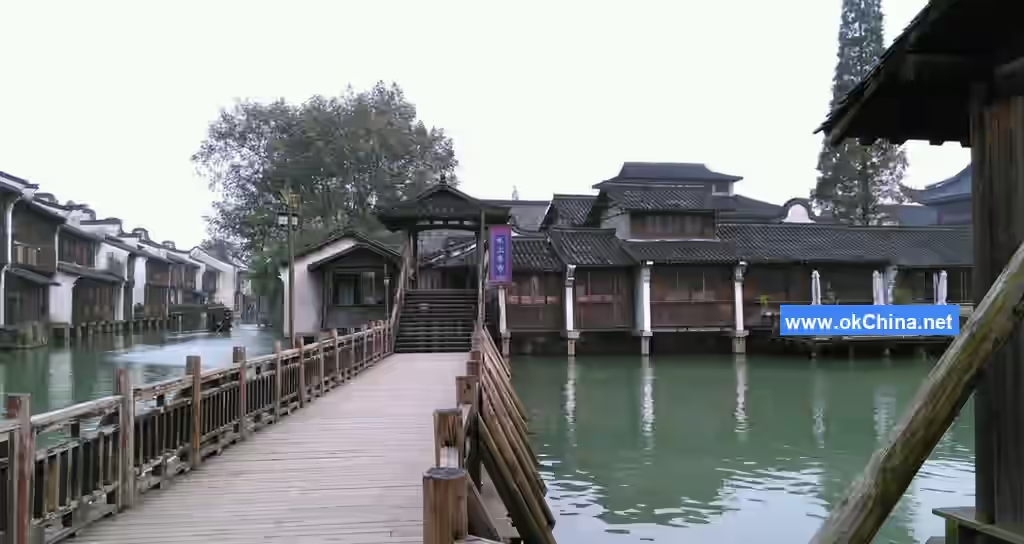
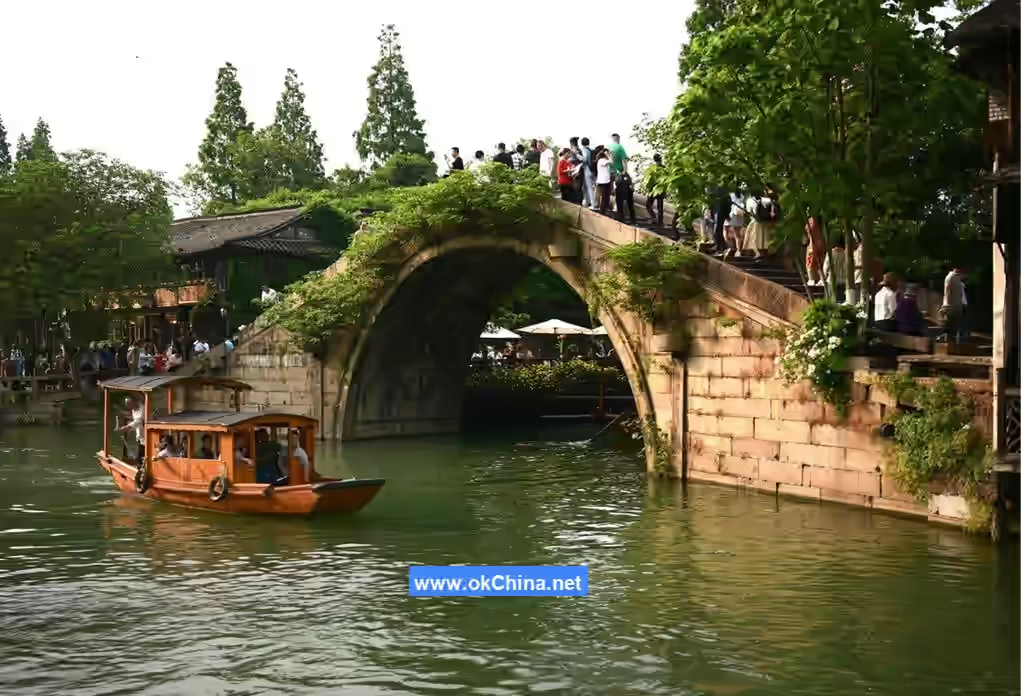
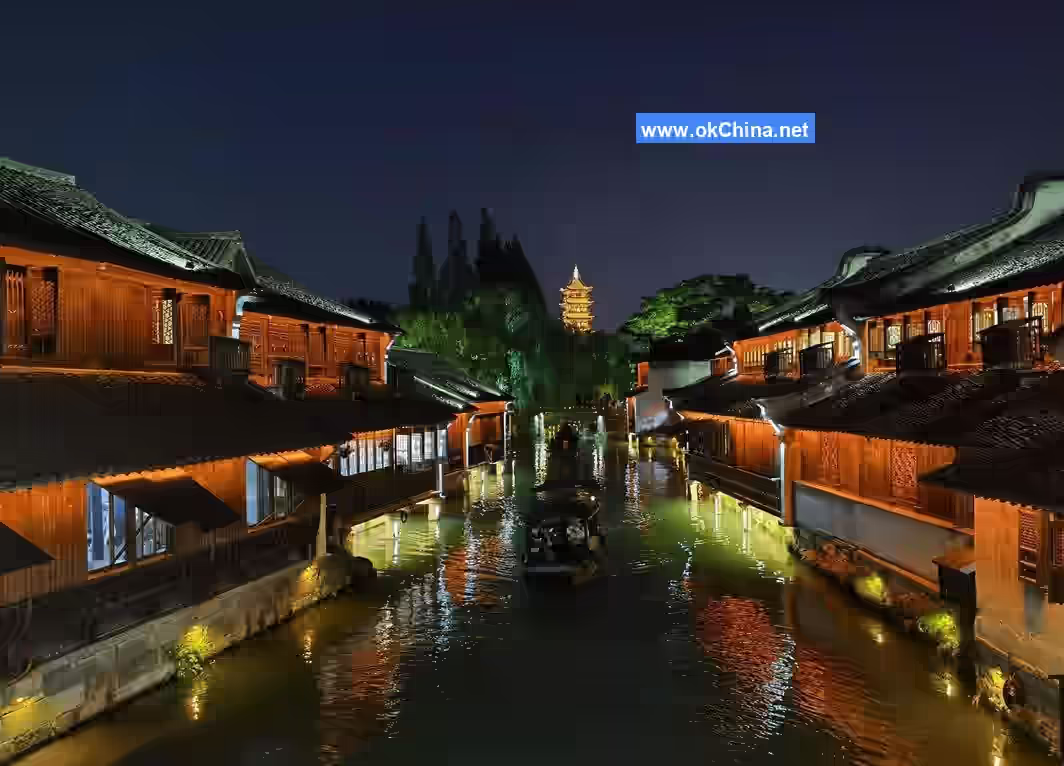
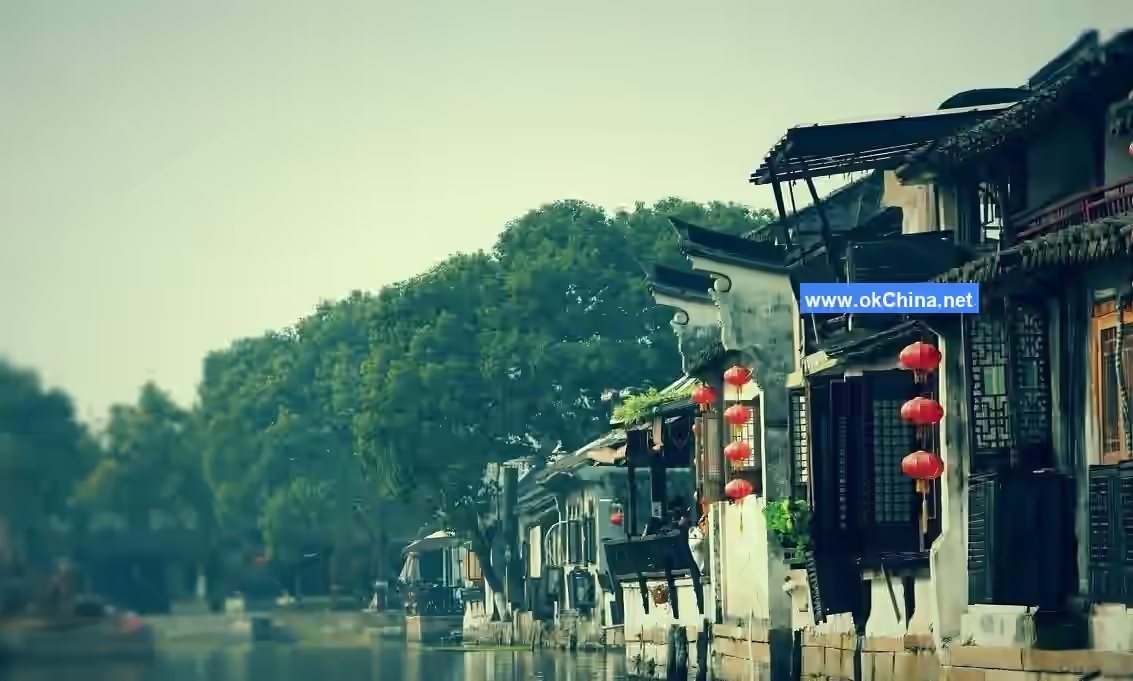
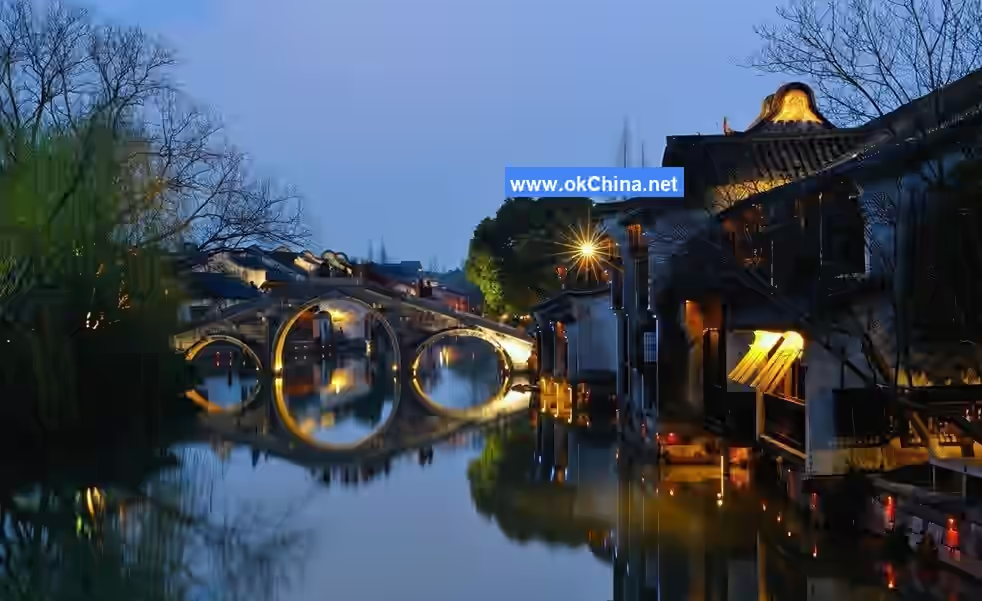
The Wuzhen Ancient Town Tourist Area in Jiaxing is located at No. 18 Shifo South Road, Tongxiang City, Jiaxing City, Zhejiang Province. A cross-shaped inland river system divides the entire town into four blocks: east, south, west, and north, locally referred to as "Dongzha, Nanzha, Xizha, and Beizha." The town covers an area of 79 square kilometers. Wuzhen, historically known as Wudun and Wushu, boasts a history of over 7,000 years and a history as a town for more than 1,300 years. It is a typical ancient water town in the Jiangnan region of China, traditionally known as the "Land of Fish and Rice" and the "Home of Silk," and is acclaimed as "China's Last Waterfront Community." Wuzhen features streets formed along rivers, interconnected bridges and lanes, houses built by the water, arcades spanning streets, bamboo and stone railings, waterside pavilions, and a wealth of residential architecture from the Ming and Qing dynasties, such as the Jiangnan Woodcarving Exhibition Hall, the Xiuzhen Taoist Temple Ancient Stage, the Huiyuan Pawnshop, the Yichang Smelting Workshop, and the Zhaoming Academy. Major attractions include the Wuzhen Folk Customs Museum, the Jiangnan Hundred-Bed Museum, the Traditional Workshop Area, the Xiangshan Hall, the Fist Boat Performance, and the Fengyuan Twin Bridges. The original appearance and layout of this ancient water town have been meticulously preserved.
2. Geographical Environment
2.1 Location and Territory
The Wuzhen Ancient Town Tourist Area in Jiaxing is located at No. 18 Shifo South Road, Tongxiang City, Jiaxing City, Zhejiang Province, situated in the heart of the Hangjiahu Plain. It borders Nanxun District of Huzhou City to the west and Wujiang City of Suzhou, Jiangsu Province to the north, marking the junction of two provinces (Zhejiang and Jiangsu) and three cities (Jiaxing, Huzhou, and Suzhou). Land transportation includes the county-level Yaozhen Road traversing the town area, connecting via Yaozhen Road to provincial highway Yanhu Road, national highways 320 and 318, the Shanghai-Hangzhou Expressway, the Shenjiahu Expressway, and the Zhajiasu Expressway. Wuzhen is 13 kilometers from downtown Tongxiang, approximately 27 kilometers, 45 kilometers, and 60 kilometers from the surrounding cities of Jiaxing, Huzhou, and Wujiang respectively, 80 kilometers from both Hangzhou and Suzhou, and 140 kilometers from Shanghai. The built-up area covers 2.5 square kilometers.
2.2 Climate Characteristics
The Wuzhen Ancient Town Tourist Area in Jiaxing is located on the southeastern coast and belongs to a typical subtropical monsoon climate. It is characterized by warmth, humidity, abundant rainfall, and ample sunshine, with distinct seasons: long springs and short autumns, cold winters and hot summers, warm springs and cool autumns. The annual average temperature is 16.1°C. January is the coldest month with an average temperature of 3.6°C; July is the hottest with an average of 28.1°C. The annual average precipitation is 1233.9 millimeters, with three distinct rainy periods: April-May (spring rain), June-July (plum rain), and August-September (autumn rain). Snow occurs in winter. Wuzhen averages 1842.3 hours of sunshine annually. The year is divided into 78 days of spring, 90 days of summer, 64 days of autumn, and a long winter of 133 days.
2.3 Hydrology
The rivers within the Wuzhen Ancient Town Tourist Area in Jiaxing belong to the Taihu Canal system of the Yangtze River Basin. The rivers in the area connect to the Chang'an Shangtang River system in Haining to the south and border Jiangsu Province via Lanxi Pond to the north. The Beijing-Hangzhou Grand Canal flows through the area for 41.77 kilometers. There are 46 main waterways in the city, most intersecting perpendicularly with the canal, forming a network. The main waterways connected to the Tongxiang section of the canal include Jinniutang, Baimatang, Kangjingtang, Chang'antang, Hanshantang, Ling'antang, Gaoyangtang, Xishengdaitang, and Changshan River. The total length of waterways is 2401 kilometers, with a combined water area of 46.3 square kilometers, accounting for 6.73% of the city's total area. The river network density is 3.3 kilometers per square kilometer, making it a typical Jiangnan water network plain.
3. Main Attractions
Scenic Area Layout
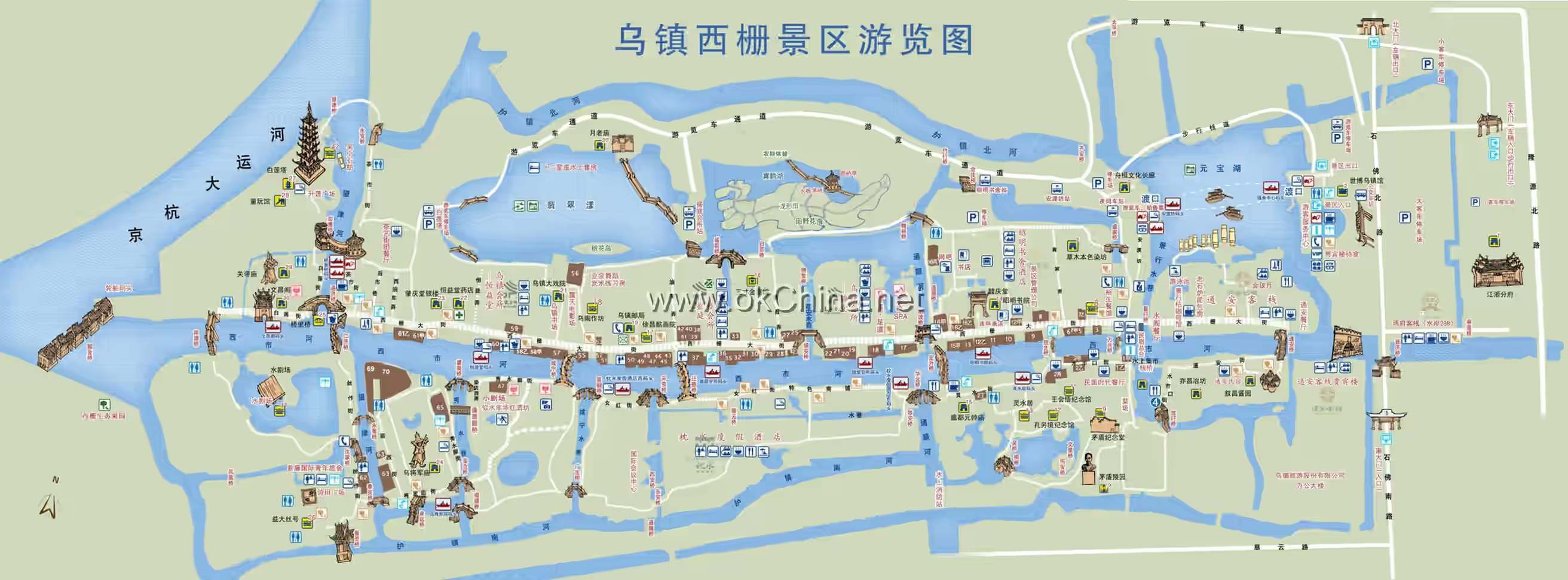
Wuzhen Ancient Town in Jiaxing is a typical Jiangnan water town, traditionally known as the "Land of Fish and Rice" and the "Home of Silk." The cross-shaped inland river system divides the town into four blocks: east, south, west, and north, referred to as "Dongzha, Nanzha, Xizha, and Beizha." The areas developed for tourism are Dongzha (East Scenic Area) and Xizha (West Scenic Area). The Dongzha Scenic Area is vast, with a tour route of about 2 kilometers, composed of the Dongzha Old Street, Guanqian Street, waterside pavilions, and covered corridors. Immersing oneself in Dongzha allows for a deep appreciation of the unique tranquil and graceful atmosphere of the Jiangnan water town. Attractions in Dongzha include the Huiyuan Pawnshop, Fanglu Pavilion, Shadow Puppetry, Hanlin Mansion, Xiuzhen Taoist Temple, Ancient Stage, Mao Dun's Former Residence, Yu Liuliang Coin Museum, Woodcarving Museum, Indigo Calico Printing Workshop, Gongsheng Distillery, Wuzhen Folk Customs Museum, Jiangnan Hundred-Bed Museum, Traditional Workshop Area, Xiangshan Hall, Fist Boat Performance, Fengyuan Twin Bridges (Tongji Bridge and Renji Bridge), and over twenty other sites. The Xizha Scenic Area is located on West Street in Wuzhen, adjacent to the ancient Beijing-Hangzhou Grand Canal, with direct road access to Jiangsu, Suzhou, and downtown Tongxiang, offering convenient transportation. Unlike Dongzha, which focuses on sightseeing tourism, Xizha emphasizes business tourism and leisure vacations. The Xizha Scenic Area is expansive, with crisscrossing waterways and 72 ancient bridges, boasting the highest density of canals and number of stone bridges among ancient towns nationwide. [23] Main attractions in Xizha include Zhaoming Academy, Caomu Bense Dye Workshop, Waterside Pavilions and Gongbu Stone Tablet, Water Stage and Storytelling Hall, Bridge within a Bridge, Dingsheng Bridge and Dingsheng Cake, General Wu Temple, Yue Lao Temple (Matchmaker Temple), North Wetland, Beijing-Hangzhou Grand Canal, Dragon-shaped Field, and Yuanbao Lake.
3.1 Dongzha (East Scenic Area)
3.1.1 Jiangnan Woodcarving Exhibition Hall
The Jiangnan Woodcarving Exhibition Hall was originally the mansion of the Xu family in Dongzha, also known as Baihua Hall (Hundred Flowers Hall), famous for its exquisite woodcarvings. Today, the main and side rooms display a rich collection of fine ancient Chinese woodcarvings. The woodcarvings are diverse in type and subject matter, featuring folk legends like "The Eight Immortals Crossing the Sea" and "Guo Ziyi's Birthday Celebration," scenes from daily life such as "Fishing" and "Cricket Fighting," and traditional patterns like "Dragon and Phoenix Bringing Prosperity" and "Plum, Orchid, Bamboo, and Chrysanthemum," depicting folk customs with Jiangnan characteristics.
3.1.2 Mao Dun's Former Residence
Mao Dun's Former Residence is located at No. 17 Guanqian Street on the east bank of the city river in Wuzhen. It is a two-story wooden structure with four bays across and two rows deep, facing south, covering a total area of about 450 square meters. The residence is divided into eastern and western units, purchased separately by Mao Dun's great-grandfather. The residence includes buildings such as bedrooms, a study, and a dining room, with furniture and arrangements remaining as they were when Mao Dun lived there.
Related Figure
Mao Dun (1896~1981), originally named Shen Dehong, courtesy name Yanbing, was a renowned modern Chinese writer and literary activist.
Main Structures
Front Row, First Section The first section, with four rooms upstairs and four downstairs, faces Guanqian Street. Above the main door hangs a plaque inscribed "Mao Dun's Former Residence" by Comrade Chen Yun. Adjacent to this is the family school where Mao Dun studied, containing desks and chairs. The two westernmost rooms form a single space serving as the family dining room. The easternmost room upstairs was the bedroom of Mao Dun's grandparents, next to which was his parents' room. Mao Dun and his younger brother Shen Zemin were born in this room. A desk under the south-facing street window is where Mao Dun studied and wrote during his childhood. The two western rooms upstairs were the bedrooms of Mao Dun's second and fourth paternal great-uncles respectively.
Front Row, Second Section Passing through a small courtyard leads to the second section, also with four rooms upstairs and four downstairs, slightly shorter than the first section. The two western rooms upstairs and downstairs are slightly taller than the others, with more elaborate door and window styles, appearing luxurious and refined. The ground floor has two rooms: the western one is a living room, and the eastern one is a passageway. Descending the eastern stairs leads to the kitchen, east of which is a guest hall. Upstairs are bedrooms, from west to east: the bedroom of the great-grandparents, the bedroom of the maid/aunt, connected to the first section by a side corridor.
Rear Row The rear row consists of three single-story houses with a floor area of 104.92 square meters. Mao Dun personally designed the sketches and used the royalties from his novel Midnight to rebuild it into a study with a slight Japanese residential style. The north and south sides feature full-length glass windows, and the doors and windows are also Western-style. Mao Dun lived and wrote here during his subsequent visits to his hometown.
3.1.3 Old Streets and Long Alleys
The number and scale of streets, neighborhoods, and alleys in Wuzhen are remarkable, commonly said to include four gates, eight neighborhoods, and dozens of alleys. The eight main streets are Changchunli Street, Chengjiangli Street, Tongli Street, South Street, Central Street, North Street, Guanqian Street, and East Street.
3.1.4 Fengyuan Twin Bridges
The Fengyuan Twin Bridges are also called Corridor Bridges because they have a covered corridor on top. Under the bridges are water railings, which served as checkpoints for water traffic in ancient times. Legend has it that there is a custom of men walking on the left and women on the right when crossing these twin bridges. To cross once, one must walk separately on the left and right halves, hence the derivation that walking this bridge brings favorable outcomes from both sides (a play on the name Fengyuan, meaning "meeting sources").
3.1.5 Jiangnan Hundred-Bed Museum
The Jiangnan Hundred-Bed Museum is China's first museum dedicated to collecting and exhibiting ancient Jiangnan beds, locally known as Zhao Family Hall. Covering an area of about 1200 square meters, it houses dozens of fine ancient beds from the Ming, Qing, and modern periods. It includes various wooden beds from wealthy merchants to ordinary commoners, ranging from single-room beds to multi-room beds (equipped with dressing rooms, bathrooms, servant quarters, etc.), showcasing both the extravagance of the nobility and the simplicity of ordinary people.
3.2 Xizha (West Scenic Area)
3.2.1 Mu Xin Art Museum
The Mu Xin Art Museum commemorates and displays the lifelong efforts and aesthetic legacy of the painter, writer, and poet Mu Xin, providing comprehensive documentation for Mu Xin studies. The entire museum building faces south, spanning the surface of Yuanbao Lake in Wuzhen with its elongated, highly modern minimalist form.
3.2.2 White Lotus Pagoda
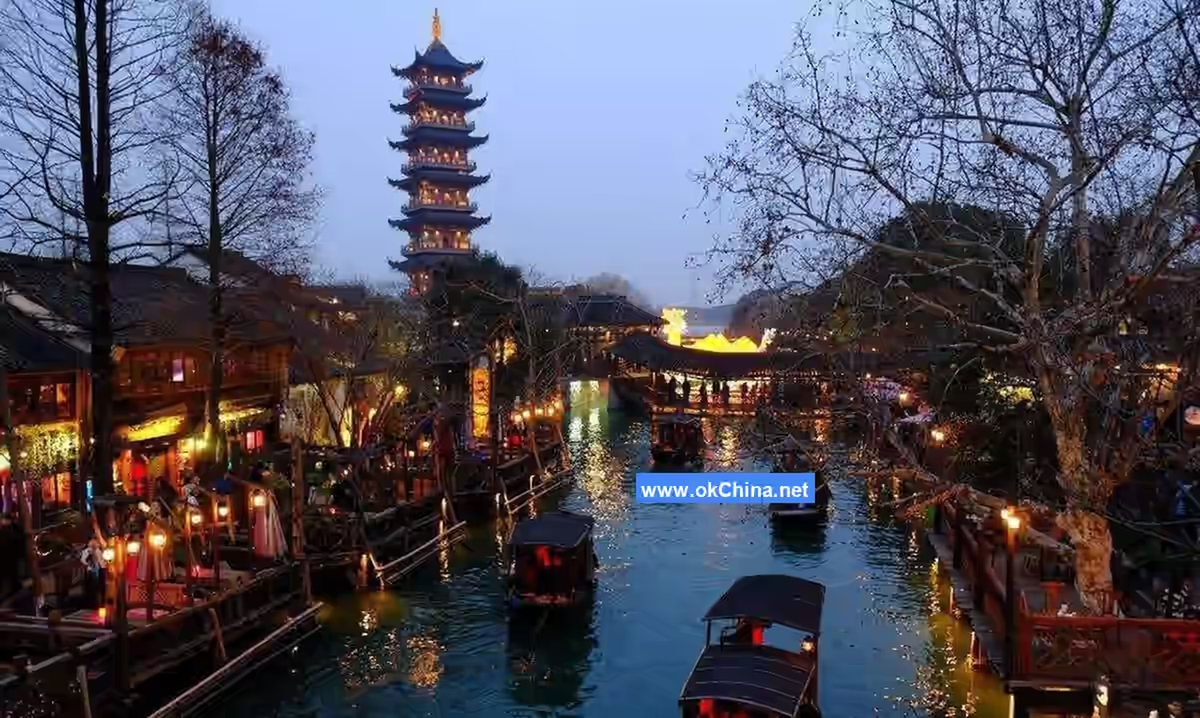
The White Lotus Pagoda is located on Huanhe Island by the Grand Canal in Xizha. The pagoda has seven stories, stands about 51 meters tall, and is the tallest structure in Wuzhen. Below the pagoda is an octagonal Shenglian Square, featuring a release pond in the center and a stone boat on the eastern riverbank. The White Lotus Pagoda belongs to the pavilion-style pagodas with mixed brick-and-wood structures common in the Jiangsu-Zhejiang region during the Song and Yuan dynasties. Viewed overall, its exterior appears spindle-shaped, but its plan is actually square. The pagoda base is also a 24-meter by 24-meter square, and the interior floor is paved with plain square bricks.#### 3.2.3 Mao Dun Memorial Hall The Lizhi Academy is located east of Mao Dun's former residence. It was originally founded by the local gentry Yan Chen in the fourth year of the Tongzhi reign (1865) and now serves as the Mao Dun Memorial Hall. Its predecessor was the renowned Fenshui Academy, which was situated west of the Fenshui Mound in the north gate area of Wuzhen. The Lizhi Academy stretches from Guanqian Street in the front to Guanhou Street in the back, consisting of five successive courtyards. The lintel above the main gate is inscribed with the characters "Li Zhi" (Aspiration), flanked by a couplet that elucidates the academy's name: "First establish the great, those with determination will ultimately succeed." Beyond the courtyard lies the lecture hall, where a plaque inscribed "You Zhi Jing Cheng" (Where There's a Will, There's a Way) hangs, a gift from Yang Changjun, the Provincial Administration Commissioner of Zhejiang. On either side hangs a couplet composed by the master of Chinese studies Yu Quyuan, which reads: "Following the old model of Fenshui, may all who hear of it aspire to lofty goals; Nurtured by the auspicious aura of Shu Mountain, surely in time talents will emerge."
3.2.4 Zhaoming Academy
The Zhaoming Academy is located on the west bank of the city river in Wuzhen. It is named after Crown Prince Xiao Tong of the Liang Dynasty during the Southern Dynasties period, who once studied here, and is now a key cultural relics protection unit of Tongxiang City. According to the "Wuqing Town Records" from the Qianlong reign of the Qing Dynasty, in the second year of the Tianjian era of Liang (503 AD), Xiao Tong accompanied his teacher Shen Yue to study in Wuzhen, where a study hall was built. Later, the study hall collapsed, leaving only ruins. During the Wanli reign of the Ming Dynasty, out of admiration for Xiao Tong's scholarship, the local official Quan Tingxun erected a stone memorial archway in front of the original site of the study hall. The local scholar Shen Shimao inscribed the archway with the words "Relic of the Six Dynasties" and "The Study Place of Crown Prince Zhaoming of Liang and Minister Shen." In 1977, Mao Dun was delighted to hear that this historic site in his hometown had survived the Cultural Revolution unscathed. In a poem dedicated to his hometown, he wrote the beautiful lines: "The Tang Dynasty ginkgo tree still stands, the Zhaoming Study Room faintly visible."
4. History and Culture
4.1 Naming
Wuzhen was anciently known as Wudun and Wushu. Regarding the "dun" in Wudun, Wang Yuzhou stated in "Er Xi Bian": "Wuzhen was anciently Wudun, named so because its terrain rises like a mound above the surrounding flatland..." There are many theories about the origin of "Wu." One suggests that "when the sons of the King of Yue contended for leadership and were enfeoffed along the coast, one was granted here, becoming the Wuyu clan, hence the name Wudun." Another theory attributes it to "the land god General Wu." Yet another states that "'Wu' has the ancient site of Wutuo, and 'Qing' has the Zhaoming Qing Suo," hence the names Wu and Qing. The explanation put forward by Lu Xuebo in compiling the "Wuqing Town Records," and proposed by local worthies in the "Wuqing Wenxian" in the 27th year of the Kangxi reign (1688), is: "The names Wudun and Qingdun have existed for a long time... Generally, since the creation of the world, how did mountains and rivers get their names? They are all worldly designations passed down through tradition, like 'The green of Qi and Lu never fades,' 'The clear river lies serene like a white ribbon'—these are phrases that capture the spirit of landscapes. The meaning of Wuqing is likely similar."
4.2 Historical Evolution
Archaeological studies of the ancient Tanjiawan cultural site in the suburbs of Wuzhen indicate that approximately 7,000 years ago, the ancestors of Wuzhen were already living and multiplying in this area. That period belongs to the Majiabang culture of the Neolithic Age. During the Spring and Autumn period, Wuzhen was on the border between Wu and Yue. The State of Wu stationed troops here to guard against Yue, historically called "Wushu." During the Qin Dynasty, Wuzhen belonged to the Kuaiji Commandery. It was divided by Chexi (the present city river): the west was Wudun, belonging to Wucheng County, and the east was Qingdun, belonging to Youquan County. Thus, Wuzhen was administered separately. Subsequently, Wuzhen was sometimes under the jurisdiction of Huzhou or Jiaxing in Zhejiang, and sometimes under the administration of Suzhou in Jiangsu. During the Tang Dynasty, Wuzhen was subordinate to Suzhou Prefecture. In the Later Liang, its affiliation remained unchanged, being part of the territory of the Wuyue Kingdom. In the fifth year of the Tianfu era of the Later Jin (940 AD), Xiuzhou was established, and Qingdun then belonged to Jiaxing County under Xiuzhou. In the third year of the Chunhua era of the Song Dynasty (992 AD), Wuzhen belonged to Wucheng under Huzhou. In the tenth year of the Xining era (1077 AD), five western districts of Jiaxing County—Wutong, Yongxin, Qingfeng, etc.—were separated and assigned to Chongde County. Qingzhen was in the Qingfeng district, belonging to Chongde under Xiuzhou. In the early Yuanfeng era of the Song Dynasty (1078 AD), records again mention Wudun Town and Qingdun Town. Later, to avoid the taboo of Emperor Guangzong's name, they were renamed Wuzhen and Qingzhen. During the Jiading era of the Song Dynasty, Jiaxing was elevated to a military prefecture (Jun), and Qingzhen then belonged to Chongde under the Jiaxing Jun. In the second year of the Baoqing era (1226 AD), Huzhou was renamed Anji, and Wuzhen became part of Wucheng County in Anji Prefecture. During the Song Dynasty, the town had a supervisory town official responsible for fire prevention and liquor taxes, and also recruited soldiers for military training to defend against bandits. In the fourteenth year of the Zhiyuan era of the Yuan Dynasty (1277 AD), Wuzhen was part of Wucheng County under Huzhou Lu, and Qingzhen was part of Chongde County under Jiaxing Lu. The town established a Chief Inspectorate. In the fifth year of the Xuande era of the Ming Dynasty (1430 AD), six districts of Chongde County—Muhua, Qianjin, Baoning, Qingfeng, Yongxing, and Wutong—were separated to establish Tongxiang County. Qingzhen belonged to it, under Jiaxing Prefecture; Wuzhen still belonged to Wucheng under Huzhou Prefecture. This administrative relationship remained unchanged until the end of the Qing Dynasty. In the first year of the Republic of China (1912), Wuzhen and Qingzhen remained separately administered. In May 1950, Wuzhen and Qingzhen were finally merged, called Wuzhen, belonging to Tongxiang County under Jiaxing. In 1999, the Dongzha area of Wuzhen formulated the "Overall Plan for the First Phase of Protection and Renovation of the Ancient Town of Wuzhen" and detailed restoration and renovation plans, initiating the Dongzha project for the development of the ancient town,简称 "Dongzha Scenic Area." In 2001, the first phase of Wuzhen's protection and development project, the Dongzha Scenic Area, officially opened to the public. It was praised by a UN expert inspection team as the "Wuzhen Model" for ancient town protection in China. UNESCO approved Wuzhen's inclusion on the World Cultural Heritage Tentative List. On February 18, 2007, the second phase of Wuzhen's protection and development project, the Xizha Scenic Area, officially opened to the public.
4.3 Cultural Activities
In May 2013, the Wuzhen Theatre Festival was founded. Initiated by Chen Xianghong, Huang Lei, Lai Shengchuan, and Meng Jinghui, it is hosted by Culture Wuzhen Co., Ltd. Using the 1300-year-old town of Wuzhen as its stage, the festival comprises elements such as Invited Plays, Youth Competition, Ancient Town Carnival, and Town Dialogues. It is held annually at different times with varying themes. The first Wuzhen Theatre Festival was held from May 9 to May 20, 2013. As of 2024, eleven theatre festivals have been held. Since 2014, it has become the permanent site of the World Internet Conference. (The World Internet Conference is a global internet event initiated by China and held annually in Wuzhen, Zhejiang Province. It aims to promote the global construction of a community with a shared future in cyberspace, establish an international platform for connectivity between China and the world and for shared governance of the international internet, enabling countries to seek consensus amidst differences, pursue cooperation based on consensus, and achieve mutual benefits through cooperation.)
http://www.wuzhen.com.cn/
Comments
Post a Comment