Wuyishan Scenic Area in Nanping City
1. Introduction
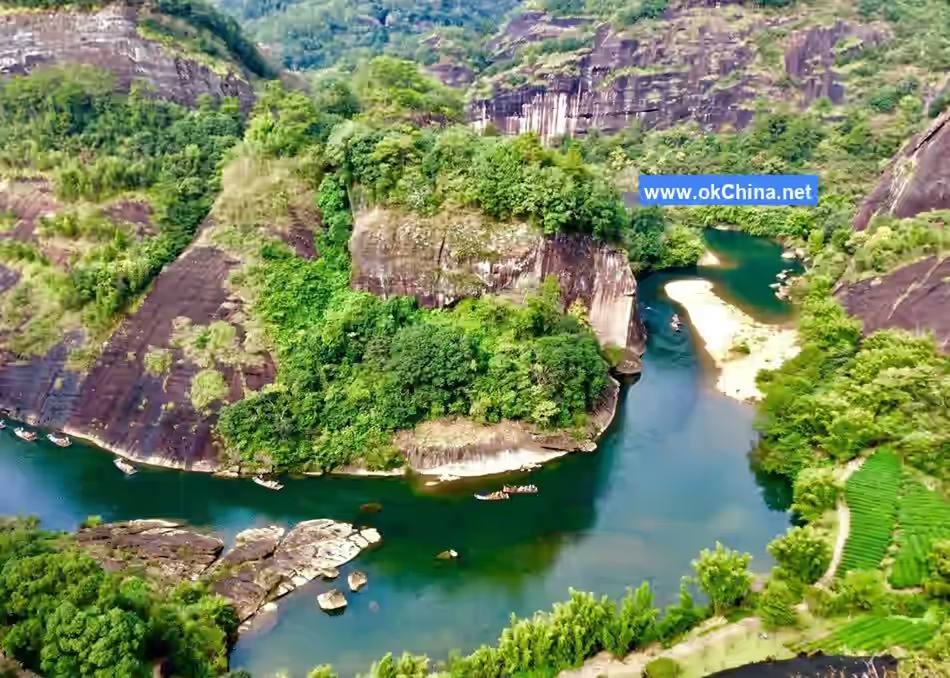
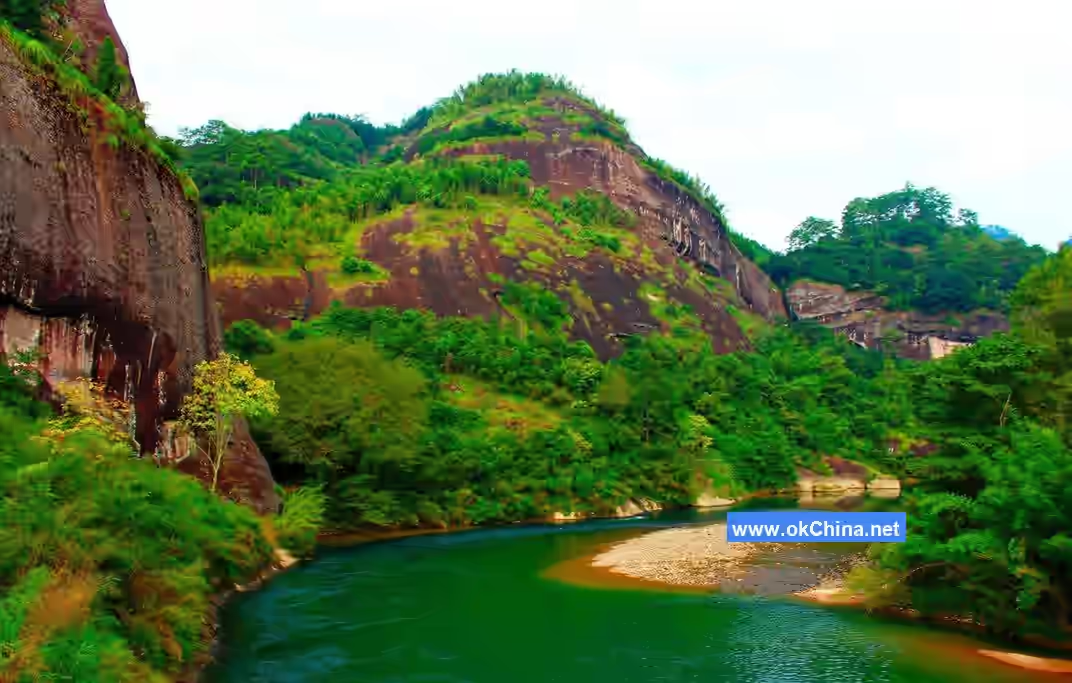
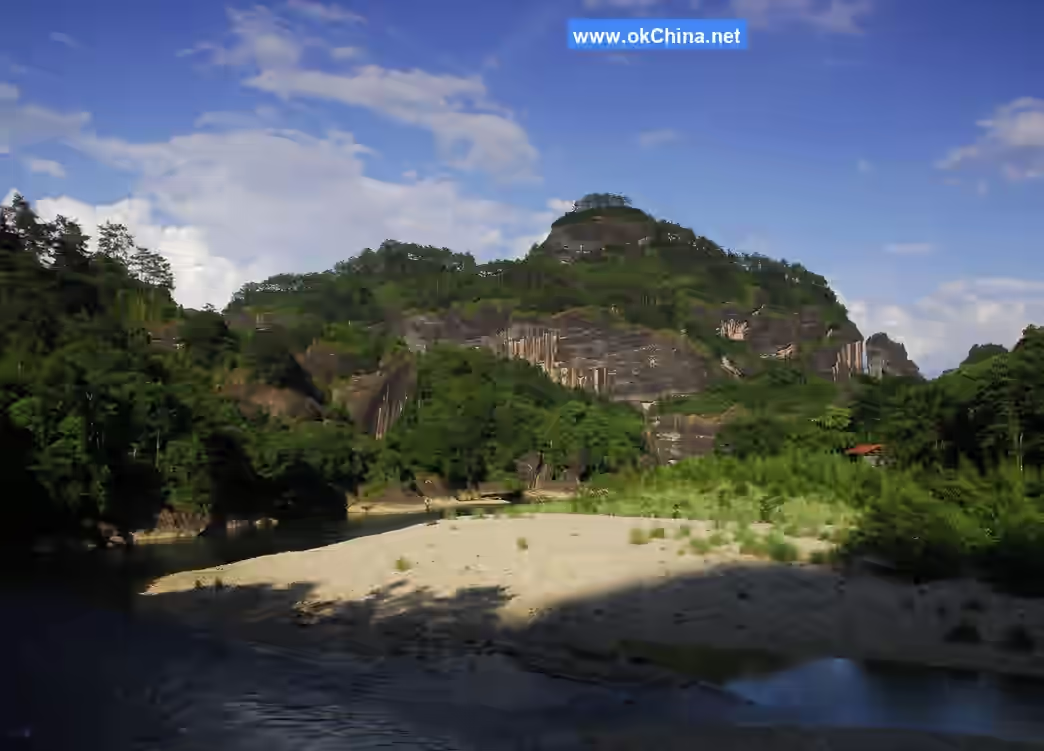
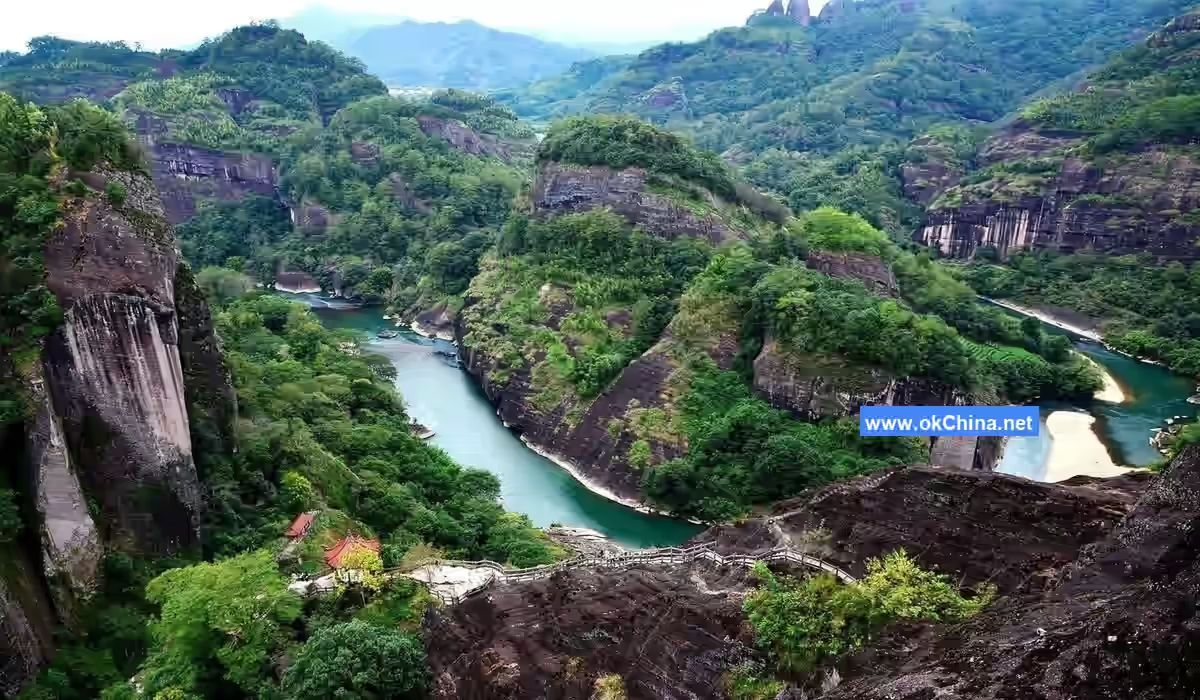
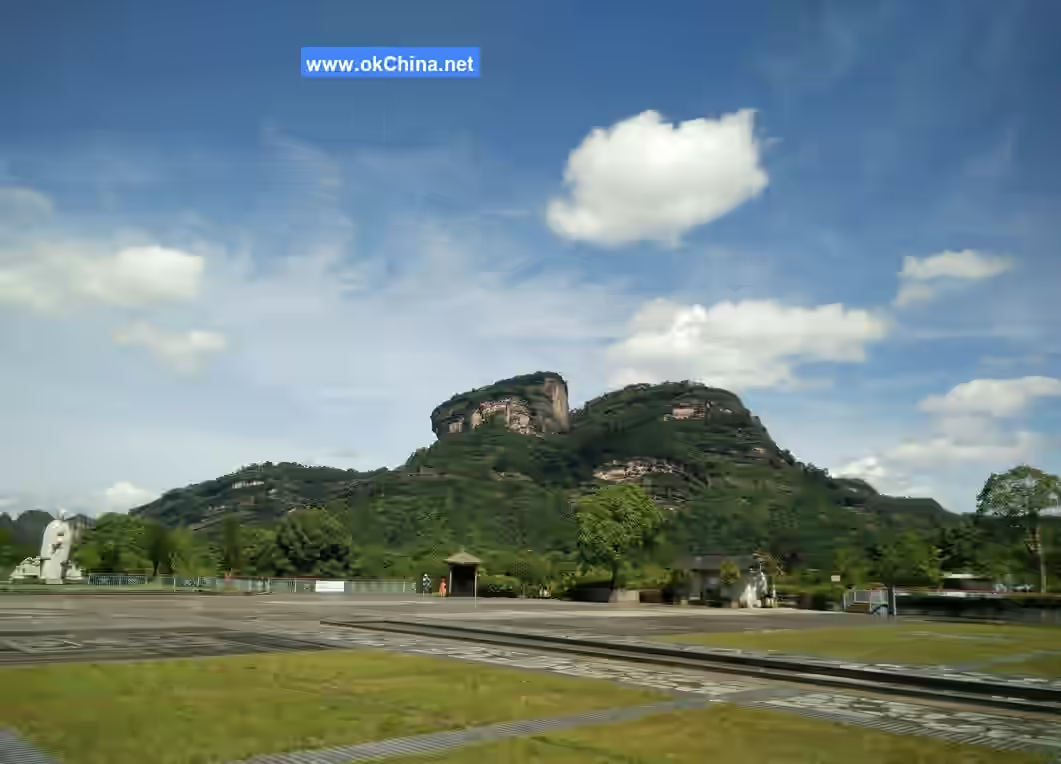
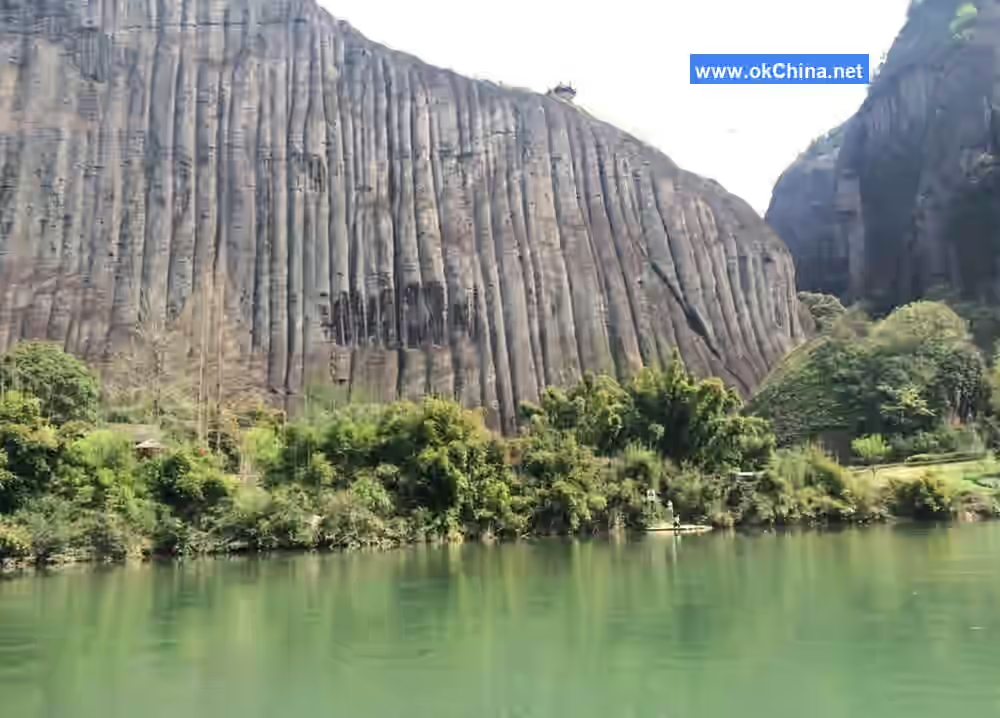
Wuyishan is located at the border of Jiangxi and northwestern Fujian provinces, on the southeastern foothills of the northern section of the Wuyi Mountains, covering a total area of 999.75 square kilometers. It is a famous scenic tourist area and summer resort in China. Characterized by typical Danxia landform, it is one of the first batch of national key scenic areas. The Wuyishan Nature Reserve is the best-preserved and most species-rich ecosystem at the same latitude on Earth, home to 2,527 plant species and nearly 5,000 species of wild animals.
Wuyishan is a mountain of historical and cultural significance. As early as the Neolithic Age, the ancient Yue people lived and thrived here. The "Jiahe Boat" and "Rainbow Bridge Plank" relics on the cliffs are unique burial customs of the ancient Yue people. During the Western Han Dynasty, Emperor Wu sent envoys to Wuyishan to offer dried fish in sacrifice to the Lord of Wuyi. In the Tang Dynasty, Emperor Xuanzong conferred titles upon famous mountains and rivers across the land, and Wuyishan was also honored with an inscribed stele. He also issued decrees to protect the forests, prohibiting logging. In the late Tang and early Five Dynasties period, Du Guangting listed Wuyishan as one of the thirty-six Grotto-Heavens in the world in his "Records of Grotto-Heavens and Blessed Lands," calling it the "Sixteenth Grotto-Heaven of Ascending to Truth and Transforming Primordial Qi." In the second year of the Shaosheng era of the Song Dynasty (1095), prayers for rain were answered, and the Lord of Wuyi was further enfeoffed as the "Perfected Being of Manifesting the Dao."
Wuyishan is a sacred mountain for three religions. Since the Qin and Han dynasties, it has been a dwelling place for Taoist ascetics and Buddhist monks, leaving behind many sites of temples, Taoist monasteries, and nunneries. Wuyishan was also a place where Confucian scholars advocated and lectured on the Dao.
2. Geographical Environment
2.1 Location and Territory
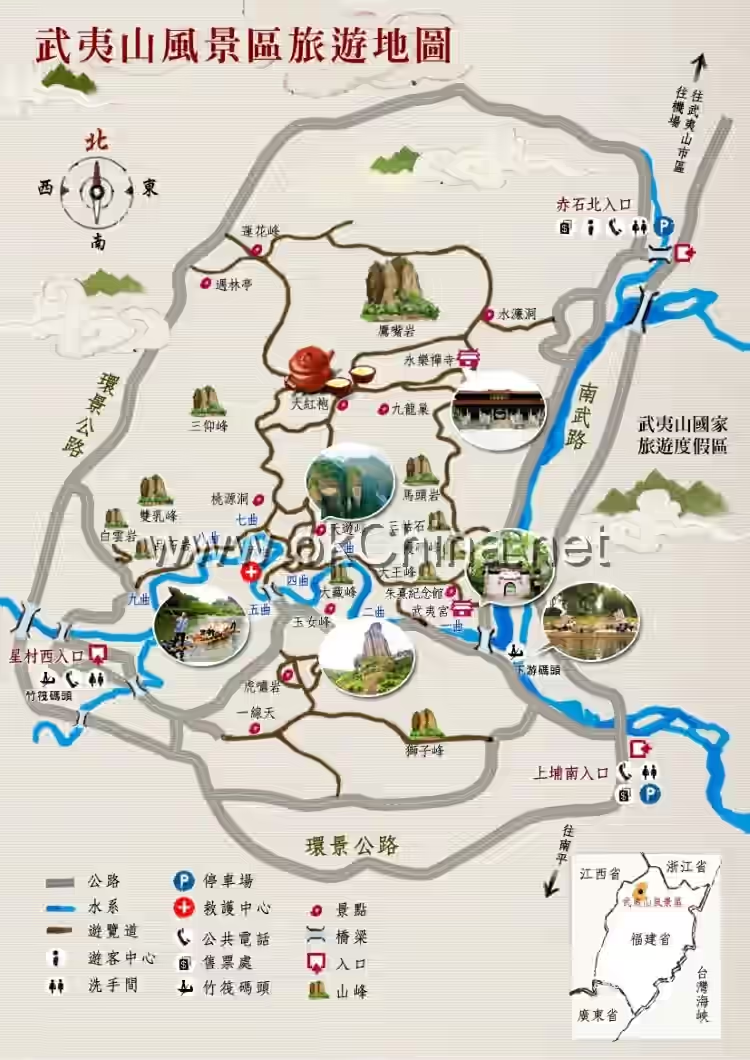
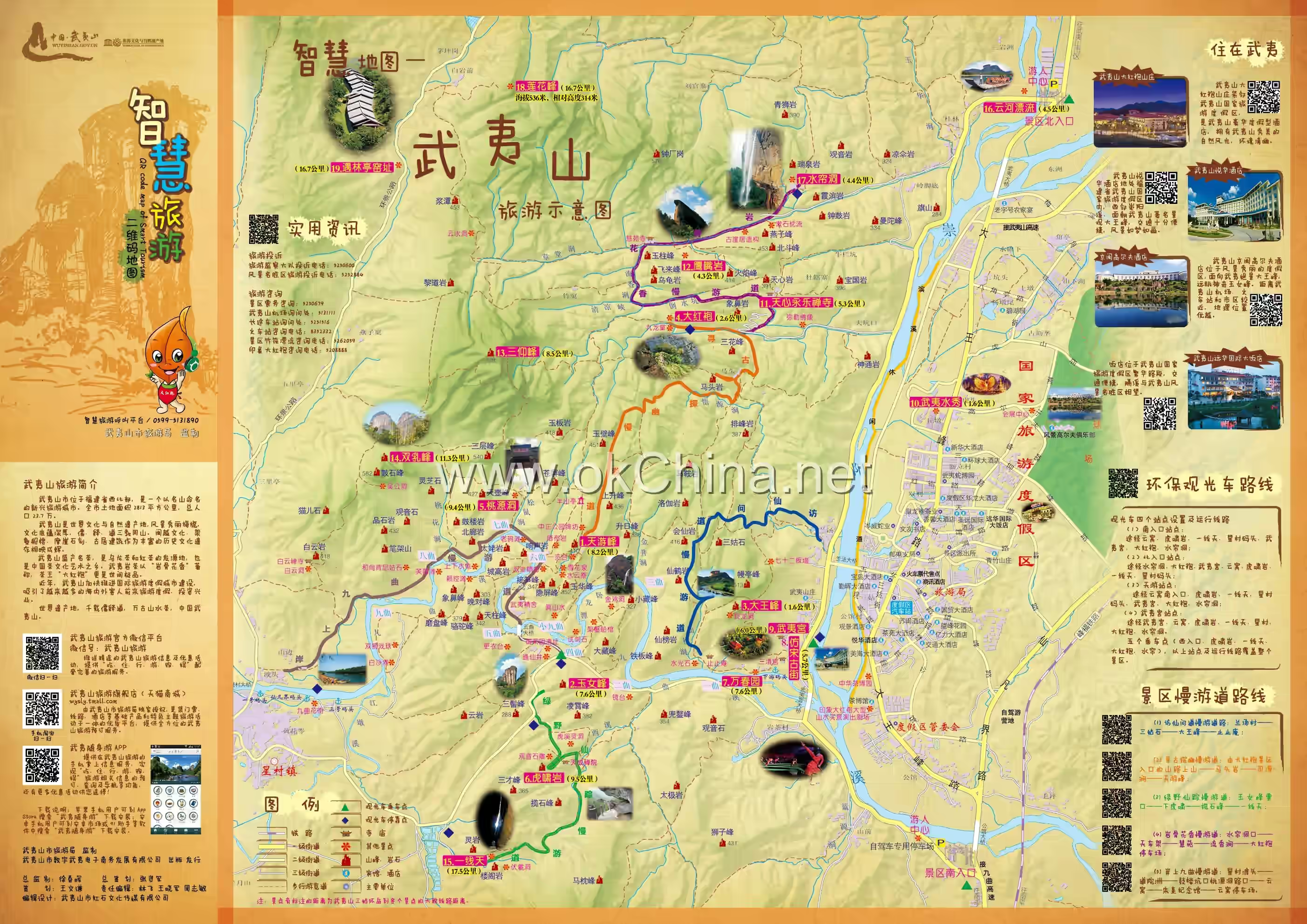
The Wuyishan Scenic Area in Nanping City is located in Wuyi Subdistrict and Xingcun Town, Wuyishan City, Nanping City, Fujian Province.
2.2 Geology and Landform
The Wuyishan Scenic Area in Nanping City is mainly composed of metamorphic rock series from the Presinian and Sinian systems, as well as volcanic rocks, granites, and clastic rocks from the Mesozoic era. In the late Mesozoic, intense volcanic eruptions occurred in Wuyishan, followed by large-scale granite intrusions. Numerous volcanic structures have been discovered in this area, showcasing typical tectonic features of the Circum-Pacific Belt in eastern Asia. The red sandstone and conglomerate from the late Cretaceous period form the main body of the Danxia landform. The crustal movements of the Mesozoic era laid the basic framework of Wuyishan's topography. Peaks above 1,500 meters in the western part are primarily composed of hard tuff lava and rhyolite, while the eastern red sandstone and shale areas often develop wider valleys and basins. Therefore, the rich variety of landforms in Wuyishan results from the combined effects of geological structure, fluvial erosion, weathering and denudation, and gravitational collapse.
2.3 Climate Characteristics
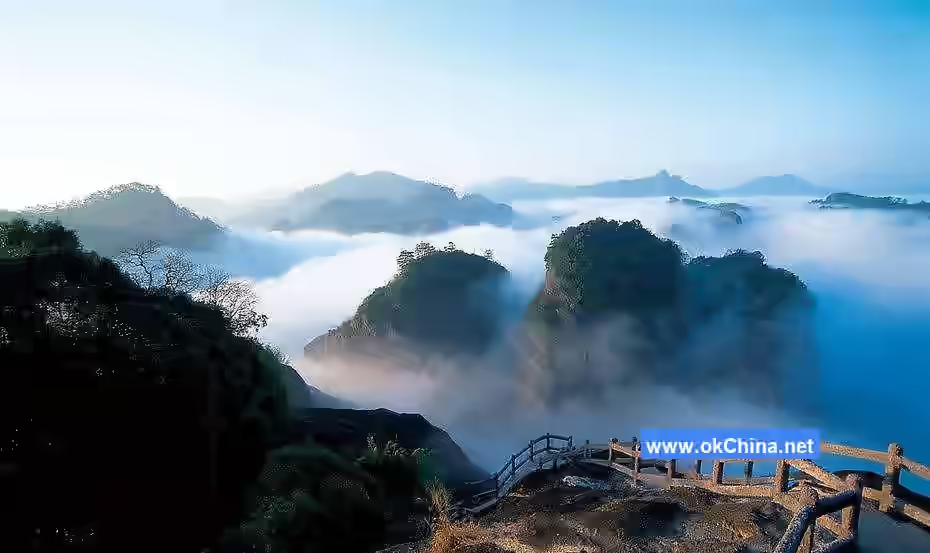
The Wuyishan Scenic Area in Nanping City experiences four distinct seasons. Located in the central subtropical zone, it has relatively uniform, mild, and humid temperatures throughout the year. The annual average temperature is about 12°C to 13°C, with January averaging around 3°C and extreme lows reaching -15°C; July averages 23°C to 24°C. Annual precipitation exceeds 2,000 mm, making it the area with the highest precipitation in Fujian Province. The annual relative humidity is as high as 85%, with over 100 foggy days per year.
3. Attraction Introduction
3.1 Wuyi Palace
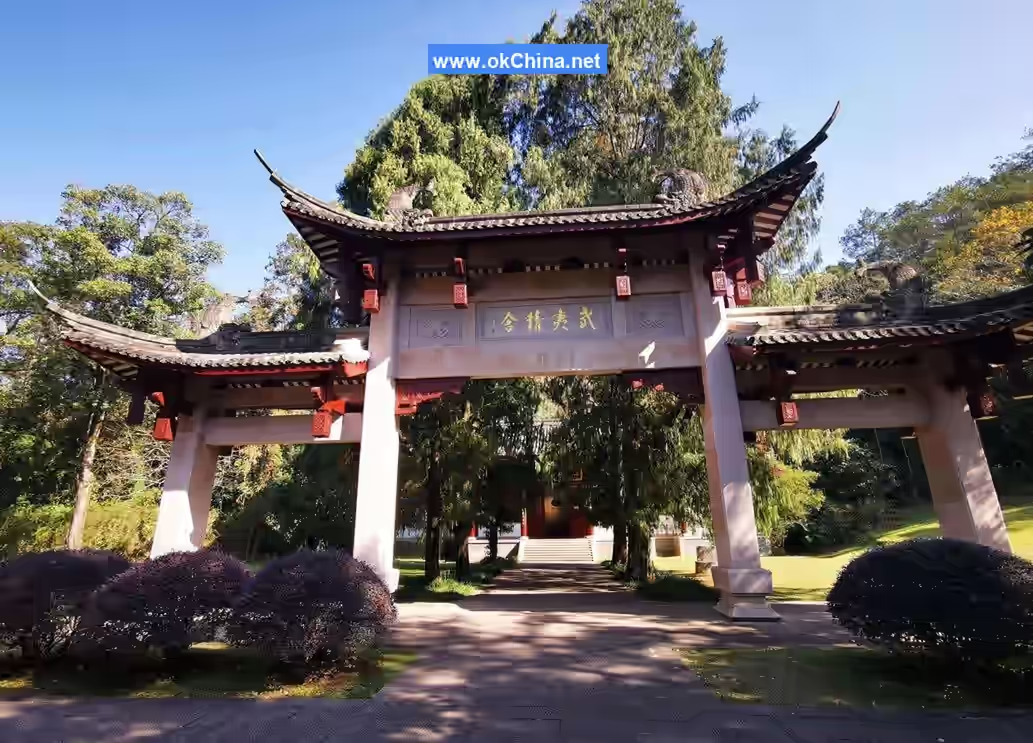
Wuyi Palace, also known as Huixian Temple, Chongyou Temple, and Wannian Palace, is situated at the southern foot of Dawang Peak, facing the mouth of the Nine Bend Stream. It is where emperors throughout history offered sacrifices to the Lord of Wuyi and was one of the six famous temples nationwide during the Song Dynasty. According to "Wuyishan Chronicles," Wuyi Palace was first built during the Tianbao era of the Tang Dynasty (742–755 AD) and is the oldest palace in Wuyishan, with a history of over a thousand years. Initially, Wuyi Palace was not at its current location but was built on a shoal at the first bend, called Tianbao Hall. In the second year of the Baoda era of the Southern Tang Dynasty (944 AD), Emperor Yuanzong Li Jing moved it to the current site for his brother Li Liangzuo, who "renounced worldly honors to follow the Dao," and renamed it "Huixian Temple." After its completion, feudal rulers devout in Taoist immortals repeatedly spent large sums to repair and expand the temple, renaming it "Chongyou Temple." Notable figures such as the Southern Song poet Xin Qiji, poet Lu You, Neo-Confucian scholars Liu Zijun, and Zhu Xi all oversaw Chongyou Temple. In the fifth year of the Taiding era of the Yuan Dynasty (1328 AD), it was renamed "Wannian Palace." In the fourth year of the Zhengtong era of the Ming Dynasty (1439 AD), the temple was destroyed by war. During the Tianshun and Chenghua eras (1457–1487 AD), despite repeated government funding for repairs, it never fully recovered. In the fourth year of the Jiajing era (1525 AD), the temple was burned down again and rebuilt the following year, becoming the current Wuyi Palace. Despite repairs throughout the ages, the ancient Wuyi Palace could not withstand multiple fires and wars, leaving only a few empty rooms. Between 2006 and 2008, with support from tourism and cultural departments, the main hall of Wuyi Palace was restored. The two osmanthus trees in the courtyard are relics from the Song Dynasty, ancient trees 800–900 years old. Plans to fully restore Wuyi Palace will proceed gradually, and this ancient temple will surely regain its former grandeur.
3.2 Yulin Pavilion
The Yulin Pavilion Kiln Site, built during the Northern Song Dynasty, covers an area of nearly 60,000 square meters and is one of the relatively well-preserved ancient kiln sites in China. The kiln primarily produced tea ware, especially tea bowls, ranging from fine to coarse, and fired both black-glazed and celadon porcelain. As an ancient kiln site focused on producing tea ware, it is closely linked to Wuyishan's long history of tea cultivation. Complementing each other, the "gold and silver painted" black-glazed porcelain bowls unearthed at the site are extremely rare in China and hold significant scientific, cultural, historical, and artistic value.
3.3 Huanggang Mountain
Huanggang Mountain is located in Yanshan County, Shangrao, Jiangxi, in the northern section of the Wuyi Mountains. With an elevation of 2,160.8 meters, it is the highest peak in southeastern mainland China, known as the "Roof of East China" and the "Pillar of Wuyi." From low to high altitudes, the vegetation zones include bamboo forests, evergreen broad-leaved forests, mixed evergreen and deciduous broad-leaved forests, mixed coniferous and broad-leaved forests, coniferous forests, mid-mountain dwarf forests, and summit shrub meadows. This area preserves the most complete forest vegetation types in Jiangxi, earning Huanggang Mountain the title of nature's "masterpiece."
3.4 Tianyou Peak
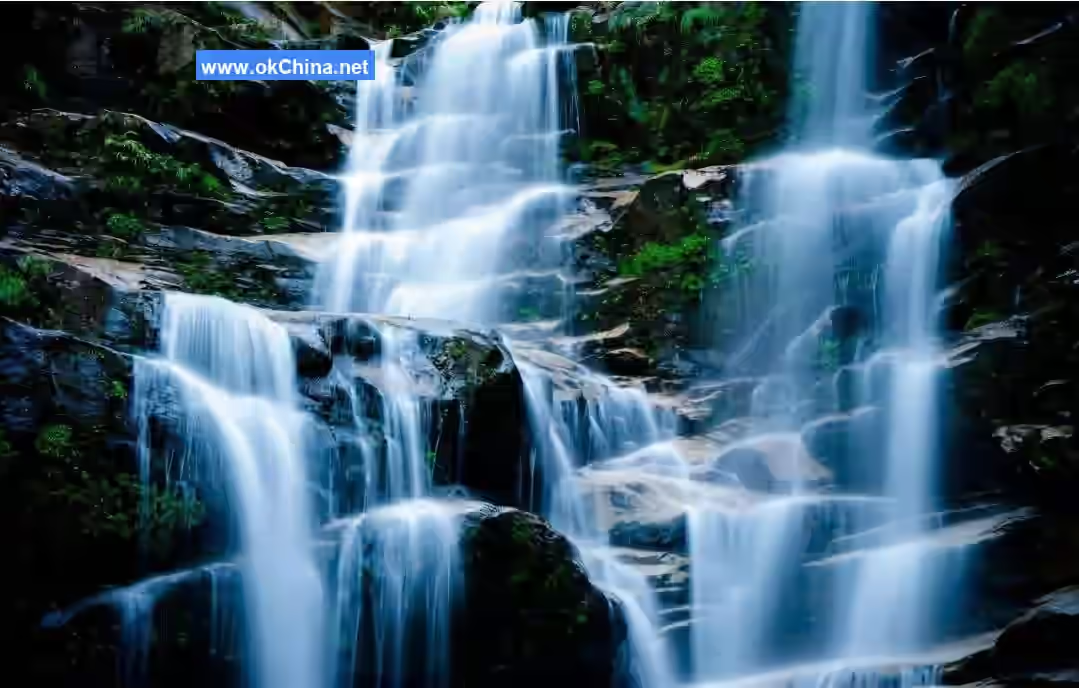
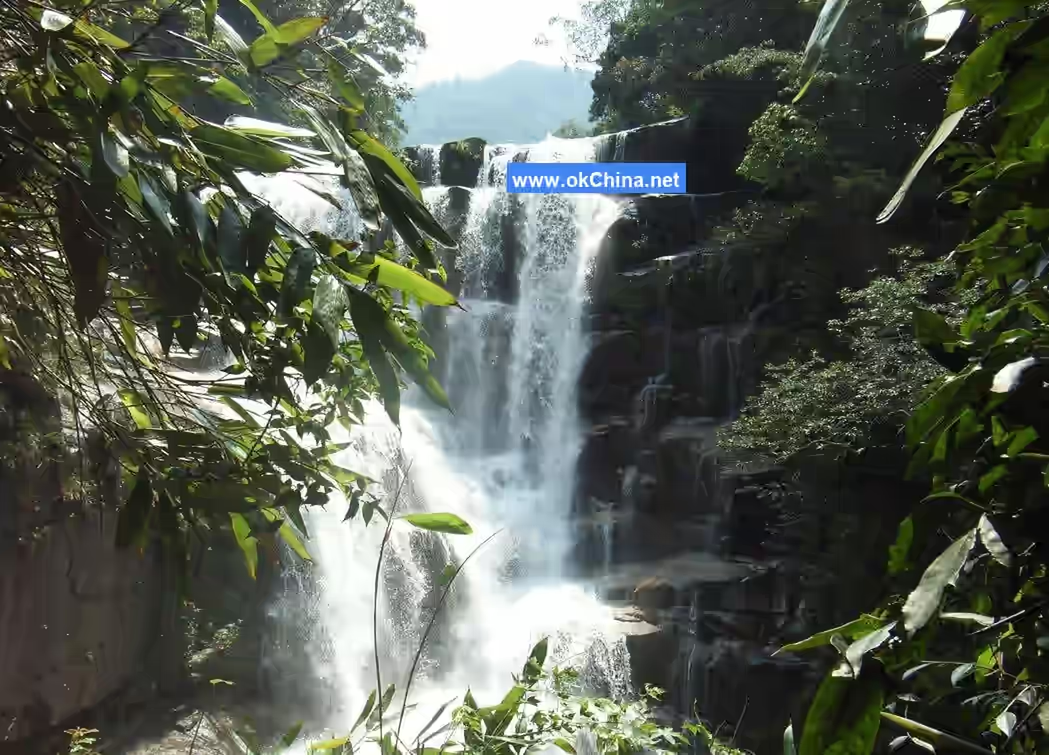
Tianyou Peak has an elevation of 408 meters and a relative height of 215 meters. It is a rocky ridge extending from north to south, connecting Xianyou Rock to the east and Xianzhang Peak to the west. With sheer cliffs rising precipitously, it towers above the surrounding peaks. A stream flows down the cliff face to the base, forming a waterfall with a drop of about 120 meters. The peak is home to many famous ancient trees and lush evergreen broad-leaved forests. The famous Ming Dynasty geographer Xu Xiake praised it: "Without approaching the stream, one can fully appreciate the beauty of the nine streams; this peak truly deserves to be ranked first."
On the rock face beside Huma Stream at the peak, there are nearly a hundred cliff inscriptions from various dynasties. The largest reads "First Mountain," inscribed by General Wu Xian, Lingnan Xu Qingchao, in the winter of the Renchen year during the Daoguang era. It means that Tianyou Peak is the "foremost scenic spot in Wuyi" and rightly deserves the title "First Mountain." Others explain that Wuyishan is a sacred Taoist mountain, listed as the sixteenth Grotto-Heaven of Ascending to Truth and Transforming Primordial Qi among the thirty-six Grotto-Heavens.
3.5 Nine Bend Stream
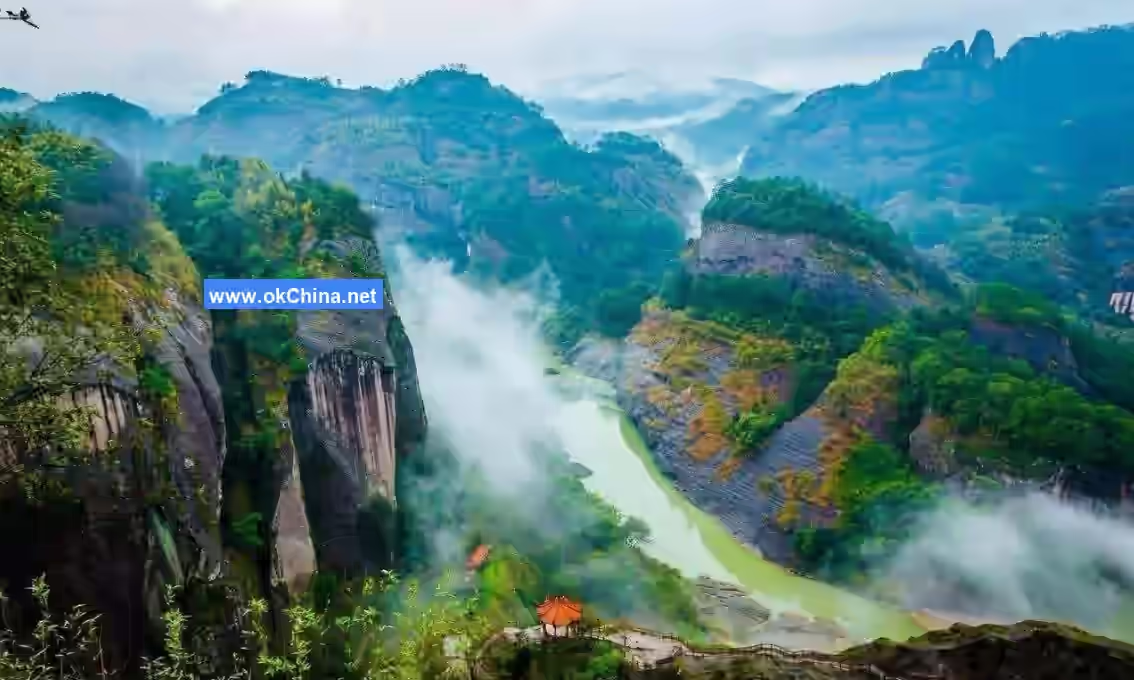
The Nine Bend Stream originates from the densely forested Wuyishan Nature Reserve, with a total length of 62.8 kilometers. The section entering the scenic area, influenced by natural river meandering and controlled by multiple sets of fault directions, forms a deeply incised meandering stream. Over a 9.5-kilometer stretch, the straight-line distance is only 5 kilometers, giving a sinuosity of 1.9. The Nine Bend Stream has clear water, abundant flow, and water quality meeting the national Class I surface water standard.
3.6 Dahongpao Scenic Area
The Dahongpao Scenic Area is located in the central part of the Wuyishan Scenic Area, within the famous "Nine Dragon Gorge." This is a deep, long valley developed under the control of east-west fault structures. The valley is deeply incised, with nine towering, rugged peaks on both sides, standing in north-south对峙 pairs. Unique joint development gives the ridge a undulating profile.
The world-famous Dahongpao tea bushes grow on the northern cliff face at the bottom of Nine Dragon Gorge. Here lie two盆景-style ancient tea gardens, one large and one small, with six ancient, lush tea plants with luxuriant foliage. They are over 340 years old.
In July 2007, 20 grams of Dahongpao tea leaves, the last harvest from the 350-year-old mother trees, were collected and preserved by the National Museum of China. This was also the first time modern tea leaves were collected into the national museum. Henceforth, Wuyishan will no longer produce tea from the mother tree Dahongpao bushes.
3.7 Water Curtain Cave
The Water Curtain Cave in Wuyishan is one of the famous seventy-two caves of Wuyishan. It is located north of Zhangtang Stream. Upon entering the attraction, a small waterfall cascades down from the top of Xiabin Rock, known as the Small Water Curtain Cave. Ascending the steps leads to the Water Curtain Cave. The cave roof is formed by overhanging cliffs, and the cave is deeply hidden within the收敛 rock waist. The cave entrance slopes open wide, providing cool shade. Two streams of flying water pour down from the overhanging cliff top over a hundred meters high, resembling two dragons spewing dragon saliva, sprinkling over the mountains, or like two pearl curtains hanging from the sky to the human world, hence also called the Pearl Curtain Cave.
The Water Curtain Cave is set against a丹崖 cliff covered with纵横 inscriptions. These include a seal-script inscription quoting Zhu Xi's famous line: "Ask the canal how it can be so clear? Because fresh water flows from its source." There are also Ming Dynasty inscriptions naming the site "Water Curtain Cave" and couplet inscriptions: "Ancient and modern, clear eaves with rain all day; Spring and autumn, flowers and moon like a string of pearls."
3.8 Dawang Peak
Dawang Peak, also known as Gauze Cap Rock and Heavenly Pillar Peak, is named for its resemblance to an official's gauze cap, exuding a unique kingly majesty. With an elevation of 530 meters, it is broad at the top and narrow at the base, imposing and majestic. Viewed from afar, it resembles a pillar propping up the sky. Among the thirty-six peaks of Wuyi, it has long been called the "King of Immortal Ravines." The peak top is covered with ancient trees and features attractions like Tianjian Pond, Dragon Casting Cave, Immortal Crane Rock, and the ruins of Shengzhen Temple. The southern wall is a sheer cliff, with only a narrow passage on the southern side allowing ascent to the summit.
3.9 Huxiao Rock
Huxiao Rock is steep on all sides, standing majestically alone, surrounded by rugged rocks and hanging vines, offering a unique charm of springs and rocks. Scenic spots such as White Lotus Crossing, Cloud Gathering Pass, Immortal's Sash Slope, Pumen Dou, Dharma Rain Suspended River, Child's Voice Spring, Calm Boat, and Binxi Cave "combine the best of the thirty-six peaks."### 3.10 Thread of Sky
Thread of Sky, also known as Lingyan, is a fissure formed by east-west tectonic faults and vertical joints in the rock mass. It is 178 meters long, with a maximum height of 49 meters and a narrowest point of only 0.3 meters. Below it lie the Fuxi Cave, Wind Cave, and Ling Cave. Looking up from the cave floor, a winding thread of sky light is visible at the top of the rock, hence the name. South of Lingyan are attractions such as Splashing Pearl Rock, Pavilion Rock, Seeking Heaven Gate, and Taibao Screen.
3.11 Peach Blossom Cave
Peach Blossom Cave is named for its scenery, which resembles that of Wuling. The entrance gives an impression of "no path," while inside, one discovers the delight of "another village." Enclosed by red cliffs and dotted with mountain springs, the cave is shaded by bamboo, peach, plum, and apricot trees, creating a tranquil and elegant environment. It has been a favored retreat for reclusive scholars throughout history. The Peach Blossom Taoist Temple was rebuilt in 2005.
3.12 Nine-Bend Stream
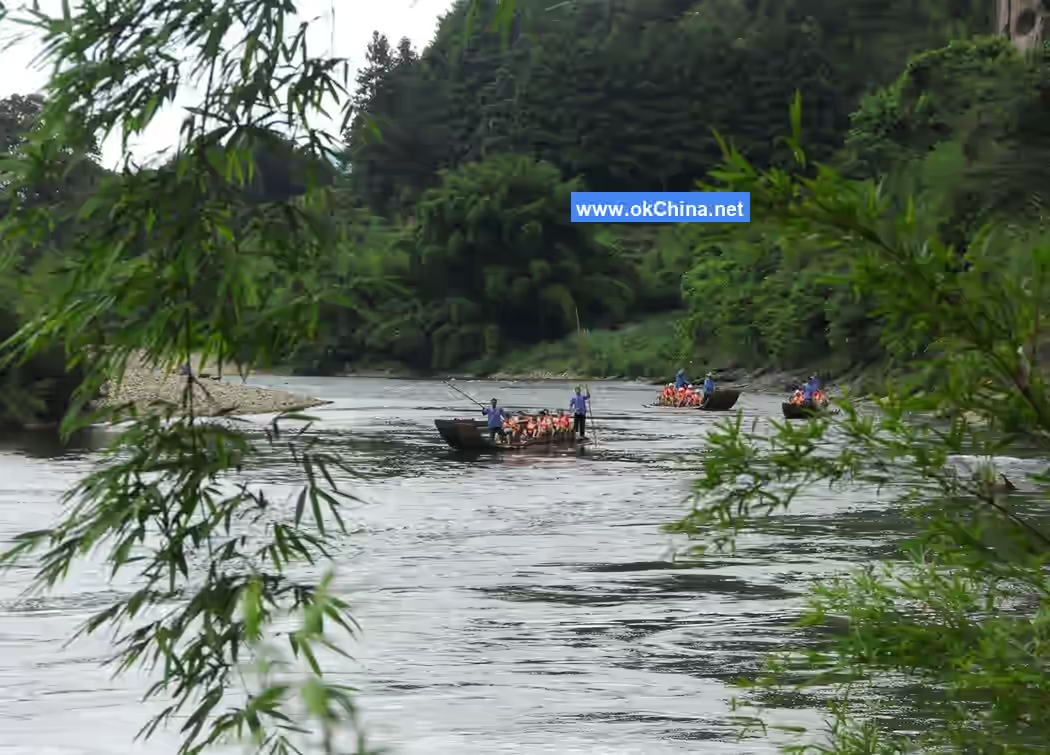
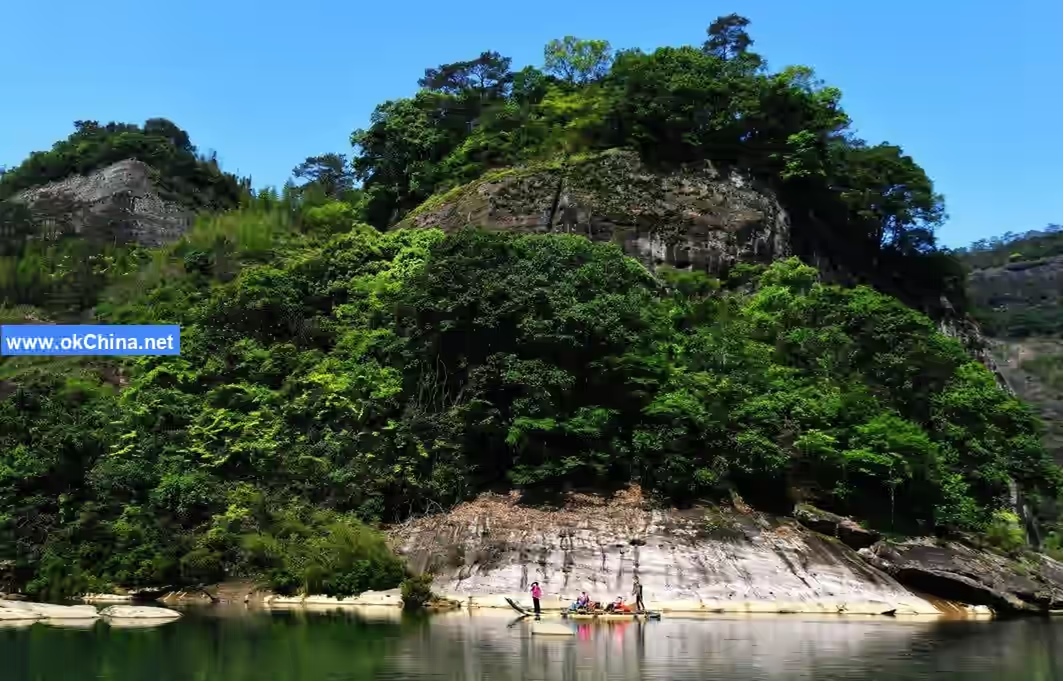
The Nine-Bend Stream originates from Tongmu Pass in the Wuyi Mountains, stretching 62.8 kilometers before flowing eastward into the Chongyang Stream. The lower 9.5-kilometer section, due to geological faulting, meanders into nine bends, featuring eight rapids and five deep pools. Steep peaks and cliffs flank its banks. The mountains encircle the water, and the water threads through the mountains, with the red cliffs and green streams complementing each other beautifully. A bamboo raft ride offers a picturesque journey through this landscape gallery, providing a delightful visual feast.
3.13 Jade Maiden Peak
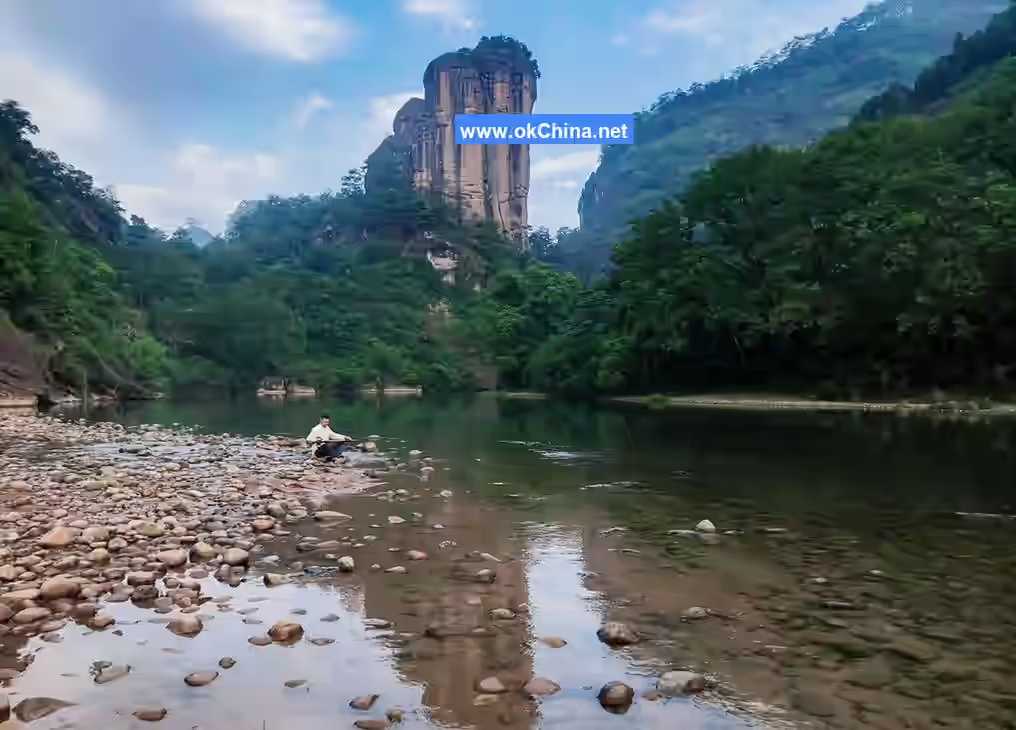
Jade Maiden Peak is located on the south bank of the second bend of the Nine-Bend Stream. It is named for its striking resemblance to a graceful, slender maiden. The peak rises abruptly and towers dozens of zhang high. Flowers cluster on its summit like hair ornaments; its smooth, lustrous rock walls resemble carved jade. Viewed from a bamboo raft on the water, it appears as an exquisitely beautiful young woman. "A singular peak adorned with flowers by the water, with the jade-like purity and maidenly grace of untouched ice." This verse captures the true charm and spirit of Jade Maiden Peak.
Jade Maiden Peak and Great King Peak face each other across the stream like a pair of lovers gazing affectionately, with Iron Plank Peak lying between them as if deliberately obstructing their union. Legend has it that long ago, the Wuyi Mountain area was plagued by floods and wild beasts, leaving the people destitute and struggling to survive. Later, a brave young man named Great King arrived from afar. He led the people in cutting through mountains and rocks, dredging the river channels, and finally taming the floods. The channel they dredged became today's Nine-Bend Stream, and the excavated sand and stones formed the thirty-six peaks and ninety-nine rocks.
3.14 Tianxin Yongle Chan Temple
Tianxin Yongle Chan Temple was first built during the Zhenyuan period of the Tang Dynasty (790 AD). It is the largest Buddhist temple in the Wuyi Mountains and one of the "Eight Famous Mountains of the Buddhist Lineage," historically known as "Shanxin Nunnery." The temple is surrounded by ancient trees and deep cliffs, with every step revealing wonders and every glance offering delight. This millennium-old temple and famous mountain of the Buddhist lineage features structures along its central axis including the Maitreya Hall, Heavenly King Hall, Mahavira Hall, Guanyin Hall, Dharma Hall, storage rooms, dining halls, meditation halls, guest halls, pilgrim lodgings, bell and drum towers, and side halls.
3.15 Lotus Peak
Named for its resemblance to a lotus flower, Lotus Peak features ancient temples nestled in rock crevices, stone Buddhas reclining in wondrous grottoes, and plank roads hanging at the edge of clouds. Strange rocks, secluded caves, forests, and springs vie in splendor, making it an excellent destination for sightseeing, Buddhist worship, spiritual cultivation, leisure, and tea appreciation. Main attractions include Lotus Peak, Miaolian Temple, Ancient Buddha Koubing, Reclining Buddha, Reclining Guanyin, stone pillars, and cliff inscriptions.
3.16 Cliff Inscriptions
The cliff inscriptions in the Wuyi Mountains span from the Jin and Tang dynasties to the contemporary era, having undergone three stages of formation, development, and change. During this process, two peaks of inscription activity occurred in the Southern Song and late Ming dynasties. Although some inscriptions continued from the Qing to the Republic of China, a clear declining trend was evident. Compared to the late Ming, the Southern Song period represented only a minor peak. The inscriptions in Wuyi are rich in content, with a relatively high number of verses praising scenery and expressing emotions, recording travels, documenting events, and naming scenic spots. Their content often relates to the doctrines or figures of the Three Teachings (Confucianism, Buddhism, Taoism), with government prohibition edicts being the most distinctive type.
3.16.1 Scenic and Lyrical Inscriptions
Scenic and lyrical inscriptions are the most numerous. Each scenic area contains many excellent works from various periods by literati and travelers, mostly in the form of poems and short phrases.
3.16.2 Travel Record Inscriptions
Travel records also constitute a major part of Wuyi's cliff inscriptions. Inscriptions recording travels, events, and government prohibitions serve as important primary historical sources. While scenic/lyrical inscriptions and travel records are inseparable, the distinction lies in the greater historical value of the travel record inscriptions. These often bear the handwriting of officials or famous figures of the Three Teachings who visited Taoist temples, Buddhist monasteries, academies, and scenic or perilous sites in the company of Taoist priests, monks, or Neo-Confucian scholars.
3.16.3 Event Record Inscriptions
Event record inscriptions document important occurrences involving different figures across various periods, preserved relatively intact as significant historical materials.
3.16.4 Government Prohibition Inscriptions
Inscriptions with government prohibition content mainly include several Yuan Dynasty inscriptions on Poem Inscription Rock north of the Fourth Bend, concerning the supervision of tribute tea production, as well as edicts and announcements from the Kangxi period prohibiting fishing forever, forbidding encroachment on Liu Zihui's shrine, and strictly banning extortion from tea farmers and tea-monks.
3.16.5 Scenic Spot Naming Inscriptions
Wuyi Mountain boasts numerous scenic spots, and the names of its most prominent ones are often engraved with inscriptions by famous figures. These add a cultural dimension to the natural landscape, rightfully contributing to Wuyi's status as a World Cultural and Natural Heritage site.
3.16.6 Three Teachings Inscriptions
The coexistence of the Three Teachings on the same mountain is a cornerstone of Wuyi's designation as a World Cultural Heritage site. Confucianism, Buddhism, and Taoism have shaped Wuyi's unique character, reflected in the inscriptions through their sheer quantity and broad thematic scope.
4. Cultural Resources
4.1 Historical Culture
4.1.1 Naming
Origin of the Name "Wuyi"
Legend has it that during the era of the ancient Emperor Yao, Peng Zu led his clan to settle in northern Fujian. At that time, the area was flooded and submerged. Peng Zu's two sons, Peng Wu and Peng Yi, led the people in piling up mountains and digging rivers to channel the floodwaters. Later generations, to commemorate the two brothers Wu and Yi, named the mountain range they piled up "Wuyi."
4.1.2 Historical Development
Pre-Qin to Qin-Han Period
During the Neolithic Age, the Minyue people hunted and fished in the Wuyi Mountains. As early as over 4,000 years ago, the "Ancient Min" culture and later the "Minyue" culture had formed. Over millennia of change, the Wuyi Mountain area became the political, economic, and cultural center of the Minyue Kingdom. In 202 BC, Minyue King Wuzhu undertook large-scale construction, building the Minyue Royal City at the foot of Wuyi Mountain, known as the "Chinese Pompeii." Later, Wuzhu's descendant Yushan rebelled. Emperor Wu of Han dispatched troops to suppress the rebellion, the royal city was burned, and the area below Wuyi Mountain lay in ruins.
Qin-Han to Ming-Qing Period
During the prosperous Zhenguan era of the Tang Dynasty, General Peng Qian was appointed Governor of Jianzhou (which administered Wuyi Mountain). After retiring from military service, he funded the hiring of laborers to clear vegetation, reclaim land, construct dwellings, and irrigate over 3,000 qing of farmland at the foot of Wuyi Mountain, simultaneously relocating tens of thousands of people to settle there. After Peng Qian, his descendants Peng Han and Peng Dang continued his legacy, reclaiming land and developing their homeland. It was also during the Tang Dynasty that Wuyi Mountain, in the southeastern corner of China, began to gain nationwide fame. Wuyi Rock Tea also entered the ranks of imperial tribute under the unique identity of "Lord of Late Sweetness."
- In the 7th year of Tianbao, Tang Dynasty (748 AD), the court dispatched official Yan Xingzhi to confer upon Wuyi Mountain the status of a famous mountain and great river, and an inscription was made by the lake at the first bend of the Nine-Bend Stream.
- In the 2nd year of Baoda, Southern Tang (944 AD), "Chief Minister of Min" Weng Chengzan retired to Wuyi Mountain. While serving in Fujian, he established schools widely in prefectures, counties, and townships, allowing commoners to study, which gradually fostered a scholarly atmosphere at the foot of Wuyi. He also vigorously promoted tea cultivation, filling Wuyi Mountain with the fragrance of tea.
- In the 4th year of Yuanyou, Northern Song (1089 AD), Hu Anguo from Wuyi Mountain founded the "Huxiang School." In his later years, he returned to Wuyi to lecture. His Commentary on the Spring and Autumn Annals, completed over thirty years, became a required textbook for imperial examination candidates in later generations, and he was revered as "Master Wuyi." Confucianism took root and flourished at the foot of Wuyi Mountain.
- In the 1st year of Kangding, Northern Song (1040 AD), Zhao, a famously upright official comparable to Bao Zheng, served as magistrate of Chong'an County (present-day Wuyi). He channeled the water from the western suburbs to irrigate farmland in the southern suburbs, enabling the people to live and work in peace.
- In the 14th year of Shaoxing, Southern Song (1144 AD), Zhu Xi studied at Ziyang Tower in Wufu Li, Wuyi Mountain. He was influenced not only by Confucianism. Wuyi Mountain is a famous mountain of the Three Teachings; Neo-Confucianism thrived here, while Buddhism and Taoism also flourished. The ideas of Buddhism and Taoism continuously impacted his thoughts and were subsequently absorbed into Zhu Xi's Neo-Confucian system.
- In the 10th year of Chunxi, Southern Song (1183 AD), Zhu Xi's Wuyi Retreat (also known as Ziyang Academy or Wuyi Academy) was completed at the foot of Yinping Peak in Wuyi Mountain and began holding lectures and discussions. For a time, famous scholars flocked there, making Wuyi Mountain a cradle for the gestation and dissemination of Neo-Confucian culture.
- In the 2nd year of Chunxi, Southern Song (1175 AD), two giants of Chinese intellectual history met at Goose Lake Temple. Over three hundred years after the Goose Lake Debate, Wang Yangming, fleeing persecution by the eunuch Liu Jin, took refuge in Wuyi Mountain. He paid homage to the Ziyang Academy founded by Zhu Xi, stayed for over a month, and then proceeded to Longchang in Guizhou, where he attained enlightenment.
- In the 15th year of Zhengde, Ming Dynasty (1520 AD), Wang Yangming, by imperial decree, toured Jiangxi as an inspector and returned to Wuyi Mountain to study and lecture. Meanwhile, Wuyi Rock Tea not only became beloved by the Chinese but also came to represent "Chinese tea" as a symbol of elegance and refinement in the eyes of Europeans.
- In the 5th year of Yongzheng (1727 AD), the "Ten Thousand Li Tea Road" for overland and maritime foreign trade opened, promoting and expanding the international influence of Wuyi tea.
Republic of China PeriodIn July 1926, the Communist Party of China (CPC) Jian'ou Branch was established, marking the first CPC organization in northern Fujian and one of the four earliest CPC organizations in Fujian Province. In 1928, the revolutionary movement in Da'an and even Chong'an (Wuyishan) flourished vigorously. Following the Shangmei Uprising, Zhangshantou became a key revolutionary rear area, where a Red Army hospital was established (later upgraded to the Northern Fujian Red Army Central Hospital in 1931). In May 1930, the Chong'an County (Wuyishan City) Soviet Government was officially established, becoming the first county-level Soviet regime in northern Fujian. In January 1935, as enemy forces launched a frenzied "encirclement and suppression" campaign against the Northern Fujian Soviet Area, the Northern Fujian Red Army Central Hospital evacuated along with the Party, government, and military institutions. To prevent the hospital from being reused by the Red Army, the enemy destroyed its buildings. In 1935 and 1941, Zhangshantou was subjected to two "village clearance" operations, turning it into a "ghost village" for a time.
Period of the People's Republic of China
After the founding of the People's Republic of China (October 1, 1949), the state placed great emphasis on the protection of ecological resources and cultural heritage in the Wuyishan area. The primary forests in the northern section of the Wuyi Mountains, within the present-day Wuyishan region, were designated as a no-construction zone for enhanced protection. Nature reserves, national key scenic spots, and cultural relic protection units were successively established in the western and eastern parts of Wuyishan, along with corresponding protection institutions.
- December 1999: Based on the World Heritage selection criteria (III)(VI)(VII)(X), Mount Wuyi was inscribed by UNESCO on the World Heritage List (No. 911) as a mixed cultural and natural heritage site, becoming one of China's World Heritage sites.
4.2 Related Culture
4.2.1 Tea Culture
During the Dade period of the Yuan Dynasty, a royal tea processing bureau was established on the banks of the Si Qu (Fourth Bend) in Wuyishan. With its elegantly arranged pavilions, halls, and towers, it was hailed as the Imperial Tea Garden, significantly enhancing the value of rock tea. During the late Ming and early Qing dynasties, oolong tea first emerged in Wuyishan. Its unique blend of the freshness of green tea and the sweetness of black tea made it highly sought after. The Qing Dynasty scholar Yuan Mei from Qiantang famously savored tea in Wuyishan, a story that has been passed down as a delightful anecdote. Rock tea was exported to Europe, America, and Southeast Asia via both land and sea routes, earning global acclaim. During the Daoguang and Xianfeng periods of the Qing Dynasty, it was even introduced to Taiwan and India, where it thrived and multiplied. Through long-term practice, the people of Wuyishan selected and cultivated over a thousand famous tea varieties based on the characteristics of certain rock teas. Examples include Shui Zhong Xian, Ban Tian Yao, Zui Hai Tang, Shui Hong Mei, Bu Zhi Chun, Bai Rui Xiang, Lü Dongbin, and Bai Mudan.
Wuyi Rougui tea has won the National Famous Tea title five times consecutively and received gold awards at the China Agricultural Expo. The "King of Tea," Da Hong Pao, has been successfully propagated, eliminating concerns about its lineage discontinuity. It is now available in limited quantities on the market, marking a significant new achievement in Wuyi's tea industry and a marvel in the tea world.
4.2.2 Religious Culture
Wuyishan is a famous historical and cultural mountain. As early as the Neolithic Age, the ancient Yue people thrived here. The "Jiahe Boat Coffins" and "Hongqiao Planks" still found on the cliffs are remnants of the unique burial customs of the ancient Yue people. During the Western Han Dynasty, Emperor Wu dispatched envoys to Wuyishan to offer dried fish in sacrifice to the Lord of Wuyi. In the Tang Dynasty, Emperor Xuanzong conferred titles upon famous mountains and rivers across the land, and Wuyishan was honored with an inscribed stone tablet. He also issued decrees to protect the forests, prohibiting logging. In the late Tang and early Five Dynasties period, Du Guangting listed Wuyishan as one of the thirty-six sacred grotto-heavens in his Record of Grotto-Heavens and Blissful Lands, calling it the "Sixteenth Grotto-Heaven of Ascending to Truth and Transforming Origin." In the second year of the Shaosheng era of the Song Dynasty (1095), prayers for rain were answered, and the Lord of Wuyi was further honored as the Manifest Dao True Man.
Wuyishan is a sacred mountain for the three teachings (Confucianism, Buddhism, and Taoism). Since the Qin and Han dynasties, it has been a dwelling place for Taoist ascetics and Buddhist monks, leaving behind numerous sites of temples, monasteries, and nunneries. Wuyishan was also a place where Confucian scholars advocated and lectured on their doctrines.
4.2.3 Legends
Legend of Tianyou Peak
Zhu Xi once lectured and wrote at the Wuyi Retreat at the foot of Yinping Peak. One night, while drinking alone under the moon in a small pavilion at the foot of Tianyou Peak, a beautiful young woman appeared, and they drank together. As days passed, they lived a loving life together. In truth, Li Niang was a fox who had cultivated for a thousand years to take human form. She feared losing Zhu Xi and never dared mention her origins. Later, a pair of turtle spirits, jealous of Li Niang's magical power, took advantage of her absence to tell Zhu Xi, "Your wife is a fox spirit. If you don't believe it, watch her nose tonight; you'll see something unexpected." Though reluctant to believe, Zhu Xi kept this in mind. That night, he pretended to sleep and later saw a pair of crystal-clear jade chopsticks hanging from Li Niang's nose.
Zhu Xi cried out in shock. Li Niang woke from her dream, and the crystal pieces fell to the ground, turning to dust. Covering her face, she wept, explaining that these were the essence of her thousand-year cultivation, and without them, she had to leave.
The old turtle couple, watching gleefully from outside, chuckled. Hearing the sound, Zhu Xi rushed out, and they hastily fled. Enraged, Zhu Xi grabbed a brush from the table and flicked ink at them. Thus, the "Upper and Lower Water Turtles" by the Nine Bend Stream came to be. Li Niang ran away. Zhu Xi, filled with regret, chased after her, but it was too late. In a small temple, he found Li Niang lying peacefully among a hundred flowers, never to return.
Legend of the Golden Water Turtle
One year, the earth-shaking cries of the "Mountain Calling" tea ceremony in the Imperial Tea Garden startled the Golden Turtle in the Jade Emperor's celestial tea garden, whose duty was to water the tea plants. This old turtle had cultivated for a thousand years in the Yunxu Cave of Qingyun Mountain, hoping to secure an official position in heaven after attaining enlightenment.
Unexpectedly, upon reaching heaven, the heartless Jade Emperor assigned it the mundane task of watering tea plants in the celestial garden. Initially, it found the job leisurely, but over time, it grew bored and restless.
That day, it suddenly heard the human world echoing with cries of "Tea, sprout! Tea, sprout!" Unable to resist, it sneaked to the South Heavenly Gate and peered down: at the Imperial Tea Garden by the Nine Bend Stream in Wuyishan, a ceremony was being held to worship the tea deity. Red candles burned brightly, golden drums sounded in unison, and tea farmers knelt uniformly, paying homage. Seeing how mortals revered tea, the Golden Turtle couldn't help but sigh in admiration.
Thinking of its own long years of tending tea in heaven, unnoticed and unappreciated, it grew angry. "Enough, enough! This thousand-year-old Golden Turtle is inferior to a mere tea plant in the human world. Why shouldn't I descend to become a tea plant myself?" The Golden Turtle's gaze slowly shifted from the Nine Bend Stream to the Niulan Pit in the northern mountains, where strange peaks rose abruptly and countless cliffs vied in beauty.
4.2.4 Deeds of Notable Figures
In 849 AD, Li Shangyin, who served as an advisor to various military governors, came to Dazhulan. Seeing the layered bamboo forests, he borrowed this imagery to lament the hardships of his own official career.
In 1179 AD, Lu You, over fifty years old, halted his efforts against the Jin dynasty upon receiving an imperial decree and came to Jianning Prefecture in northern Fujian (present-day Jian'ou City) to serve as a vice-prefect. For the next eight years, Lu You resided here, finding joy in composing poetry about Wuyishan.
What truly made Wuyishan famous worldwide was the Song Dynasty Neo-Confucian scholar Zhu Xi. He built the Wuyi Retreat here, later known as the Ziyang Academy. "Zhuzi's Neo-Confucianism" also sprouted, developed, and spread from here. Having lived in Wuyishan for nearly 50 years, Wuyishan is rightly regarded as the "birthplace and dissemination center of Zhuzi's Neo-Confucianism." In early autumn 1178, Zhu Xi and friends traveled upstream along the Nine Bend Stream. Seeing the winding stream with its distinct character at each bend, the venerable Zhu was inspired to compose the "Song of Rowing on the Nine Bends," which later prompted many poets to write matching verses.
In 1616 AD, Xu Xiake first entered Fujian. In just three days, his footsteps covered a radius of 120 li around Wuyishan. Today, many Danxia landscape enthusiasts still use Xu Xiake's Diary of a Journey to Wuyishan as primary material to study typical Danxia formations like Tianyou Peak and Yünü Peak.
4.2.6 Local Customs
Mountain Calling and Mountain Opening
"Mountain Calling" and "Mountain Opening" were originally ceremonies held within the Imperial Tea Garden of Wuyishan. Each year on the day of Jingzhe (the Waking of Insects), the county magistrate presided over a sacrificial ceremony. During the prescribed procedures, tea farmers would shout in unison, "Tea, sprout! Tea, sprout!" to pray for divine blessing for a bountiful and flavorful harvest of Wuyi rock tea. This was "Mountain Calling." "Mountain Opening" was usually scheduled within the three days before the Start of Summer (Lixia). Tea farmers would gather early to silently worship before the statue of Yang Taibai, the patron saint of tea making. After breakfast, a designated person would lead them to the tea-picking areas, where they would disperse to pick tea. After the sun rose and the dew had dried, the mountain guide would distribute cigarettes to the pickers, signaling that conversation was permitted, and the Mountain Opening ceremony would formally conclude. Mountain Calling and Mountain Opening are unique customs of Wuyishan tea farmers.
Tea-Picking Opera Triangle
Tea-picking opera has two places of origin: one is the Jiulong Mountain tea area in southern Jiangxi, and the other is the Wuyishan tea area in Yanshan County, eastern Jiangxi (the Wuyishan tea area actually includes ancient famous tea-producing regions like Chong'an, Guangze, Jianyang, and Jian'ou on the southern slopes of Wuyishan). Hekou Town in Yanshan County, Jiangxi Province, was an important distribution center for Wuyi tea heading north. Tea-picking songs and dances were very active there, so it is said that the Wuyishan tea area nurtured the embryonic form of tea-picking opera.
Fengpo Candle Bridge PullingThe "Candle Bridge Pulling" in Fengpo Village of Wuyi Mountain is a very unique folk custom. This custom is related to the prohibition of gambling. According to legend, in the eighth year of the Xianfeng era of the Qing Dynasty (1858), the "father" of the capital official Qiu Meijin saw that gambling was rampant in his hometown and the land was lying fallow, which made him very anxious. Therefore, he devised a plan, sending a message from the capital: due to the miasma of gambling obscuring the hometown, the qilin could not see the fields of the hometown, and could not ensure a good harvest and peace. The villagers must make a hundred lanterns and a hundred wooden candle holders during the first lunar month, parade them around the village for three days from the 14th to the 16th, then pile up and burn the lanterns, throw gambling tools into the fire to destroy them, and clear the miasma to seek the qilin's protection. The villagers followed this method, burned the gambling tools, focused on production, and indeed experienced favorable weather and prosperity for both people and livestock the following year. Since then, this custom has been passed down and gradually evolved into the "Candle Bridge Pulling" activity.
Emphasis on Etiquette in Wedding and Funeral Customs
The traditional wedding customs in Wuyi Mountain generally involve the following procedures: matchmaking, meeting, exchanging cards (exchanging birth dates), sending betrothal gifts, crossing the threshold, and returning to the bride's home. Among these, "exchanging cards" is very subtle. After exchanging the birth date cards, the cards must be placed in front of the ancestral altar for seven days, with incense and candles lit continuously without letting them extinguish. If the candles burn out, the incense is damaged, or cups and plates are broken, and if there are conflicts in the birth dates, the marriage proposal will be called off. If successful, the groom's family sends a betrothal letter and gifts to the bride's family through the matchmaker, which is called "inserting the record."
Grand Folk Traditional Gatherings
The Candle Festival and the Firewood Head Festival are the two major folk gatherings in Wuyi Mountain.
Leap Month Meal and Tea Drinking Customs
The "Leap Month Meal," also known as the "Six Relatives Meal," is a tradition where, during leap years and leap months, parents and brothers must invite their daughters and sisters back home for a reunion meal. If the parents are alive, they invite their married daughters home; if the parents are deceased, the brothers invite their married sisters back for a "Leap Month Meal."
4.2.7 Specialty Foods
Wengong Dish
Legend has it that Zhu Xi, a Confucian scholar of the Song Dynasty, personally made "Ten Brocades" to entertain guests while teaching at Wuyi Academy. Because Zhu Xi's posthumous title was "Wengong," people named the dish he created "Wengong Dish." For 800 years, Wengong Dish has been passed down among the folk in the Wuyi Mountain area, becoming a local traditional famous dish. Before exams, local students' families always prepare this dish, wishing the candidates quick thinking. The ingredients of this dish include lean pork, refined flour, eggs, and white lentils. It is delicious, highly nutritious, and a famous specialty dish of Wuyi Mountain.
Langu Smoked Goose
Langu Smoked Goose emphasizes color, aroma, and taste. Its nutritional value is higher than that of chicken, duck, pork, beef, and other livestock, and it has low fat content. Color: The goose meat after roasting and smoking is golden and translucent. Aroma: Authentic Langu Smoked Goose is smoked for a long time, infusing the goose meat with tea fragrance, osmanthus leaf aroma, and glutinous rice fragrance, resulting in a lasting aroma. The strong smoky flavor does not overpower the spicy and numbing fragrance. Taste: Langu Smoked Goose emphasizes one word: "spicy." The spiciness is long-lasting and does not fade, with a sweet aftertaste. Langu Smoked Goose is suitable for generally healthy people. Those who are physically weak or malnourished should eat it sparingly. People with skin diseases (those with internal damp-heat, skin sores, or itching), chronic diseases, hypertension, or arteriosclerosis should avoid it.
Lychee Pork
Lychee Pork is a traditional famous dish in Wuyi Mountain, Fujian, with a history of two to three hundred years. It is named for its resemblance to lychees in color, shape, and taste. Lean pork is scored with a crosshatch pattern and cut into diagonal pieces. Because the scoring is deep and wide enough, it curls into a lychee shape after frying. It is then seasoned with tomato sauce, aromatic vinegar, sugar, soy sauce, and other condiments.
Classic Snacks
Wuyi Mountain has a wide variety of snacks, including Zixi Noodles, Smoked Goose, Lean Meat Soup, Qingming Guo, Guang Cake, Thousand-Layer Cake, Sesame Rice, and Zhu Xi's Filial Piety Cake. Among them, Zhu Xi's Filial Piety Cake was created by Zhu Xi, a great scholar of the Southern Song Dynasty. Guang Cake, like Zhu Xi's Filial Piety Cake, is named after its creator. During the Ming Dynasty, when Qi Jiguang pursued Japanese pirates to northern Fujian, he created Guang Cake to make it convenient for soldiers to carry dry rations.
Manting Banquet
The Manting Banquet is a traditional famous feast in Fujian Province and the banquet with the most ancient history in Wuyi Mountain legends. According to legend, on the Mid-Autumn Festival of the second year of Qin Shi Huang's reign, Wuyi Jun, Huang Taigu, Wei Ziqian, and the other thirteen immortals of Wuyi set up hundreds of colorful tents on the peak of Manting in Wuyi Mountain and held a grand banquet for the villagers, bringing immortals and mortals together. This is the origin of the Manting Banquet.
- The banquet features local dishes from Wuyi Mountain villages: Wuyi Dawn Cold Platter, including ten small dishes such as pumpkin preserves, spicy and sour bean sprouts, dried eggplant, pickled fern shoots, and smoked field dragon;
- Homemade recipes from local households: Wengong Welcoming Guests, Langu Smoked Goose, Peng Zu's Delicacies, Four Treasures Egg Mushroom, Dragon Swimming and Phoenix Dancing, Five-Colored Deer Meat Shreds, etc.;
- Main dishes full of folk and rustic flavors:鼠曲饺 (a type of dumpling), immortal tofu, cordyceps, and other rural snacks made from wild herbs and vegetables from the mountains; also, homemade white rice wine aged for many years;
Bagua Banquet
A grand ceremony created by the Southern Song Dynasty scholar Zhu Xi for entertaining guests. The Bagua Banquet is based on the cooking ingredients, techniques, and distinctive flavors of Zhu Xi's time. The dishes include platters, soups, broths, and meatballs, prepared through methods such as frying, deep-frying, and stewing. The biggest feature of the Bagua Banquet is its arrangement. The arrangement of various dishes follows the Bagua diagram advocated by Zhu Xi. The arrangement method is: first, draw the Bagua diagram on the Eight Immortals table, with the Tai Chi symbol in the center and the eight trigrams—Qian, Kun, Zhen, Xun, Gen, Kan, Li, and Dui—in the eight directions. Each trigram position displays a delicacy related to the trigram's meaning and rich in Wuyi Mountain flavor. The entire banquet resembles a Bagua diagram.
- The head of Tai Chi is Jadeite Soup;
- Yi gives birth to Liang Yi, represented by Xuantian Mixed Meatballs and Taiyi Yin-Yang Eggs;
- Liang Yi gives birth to Si Xiang, represented respectively by Hundred Hair Meatballs, Lotus Pond Gentleman, Osmanthus Shrimp, and Braised Double Winter Bamboo Shoots.
- According to the Bagua directions, the dishes in each direction are: stir-fried shredded eel, fragrant oil phoenix legs, fermented rice wine winter mushrooms, Kung Pao chicken, bamboo shoot shredded pork, quick-fried chicken liver rolls, stir-fried white fungus, and Eight Treasures Auspicious.
The main alcoholic beverages in Wuyi Mountain include Wuyi Liuxiang, Wuyi Qinquan, Wengong Wine, October White Rice Wine, Chrysanthemum Wine, and Five-Step Snake Wine. Wuyi Liuxiang is the most famous, made from local high-quality glutinous rice and clear mountain spring water.
Comments
Post a Comment