Mount Wutai
I. Introduction
Mount Wutai, located in the northeastern part of Wutai County, Xinzhou City, Shanxi Province, is currently a National AAAAA Tourist Attraction, a National Key Scenic Area, a National Geological Park, a National Natural and Cultural Heritage Site, one of China's Ten Famous Mountains, one of the Four Sacred Buddhist Mountains in China, and one of the Five Great Buddhist Holy Sites in the world.
II. Geographical Overview
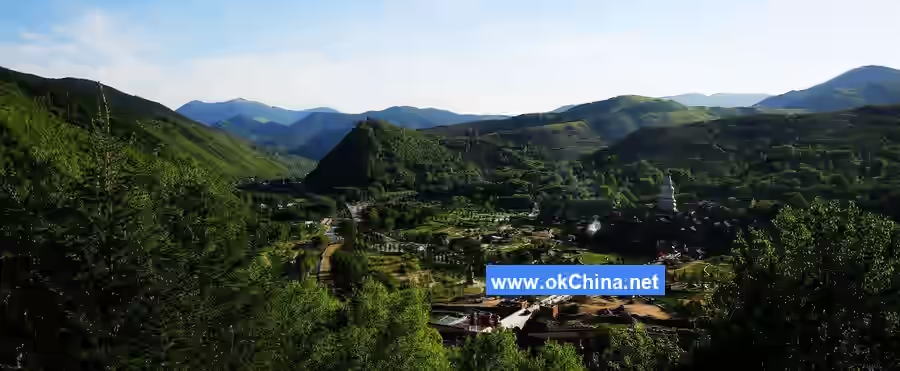
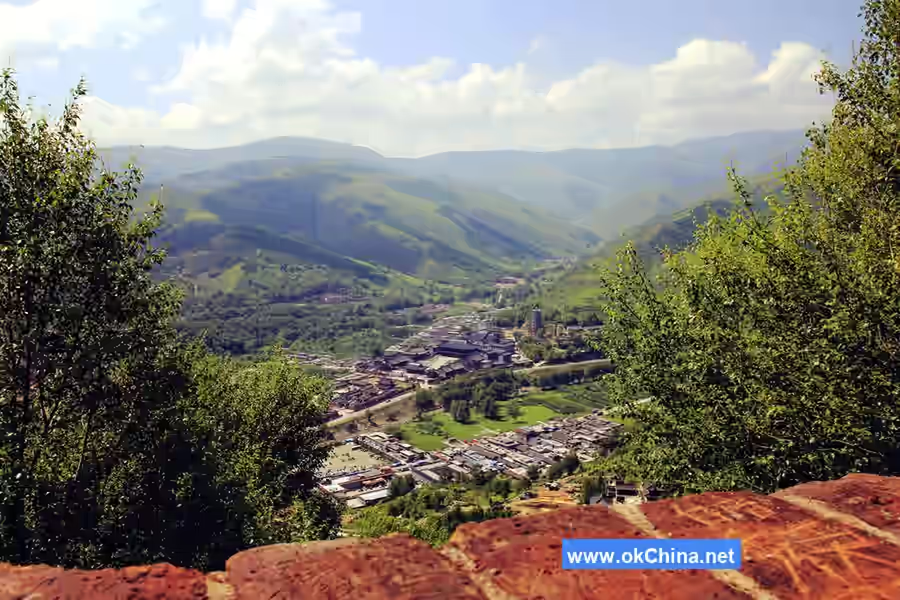
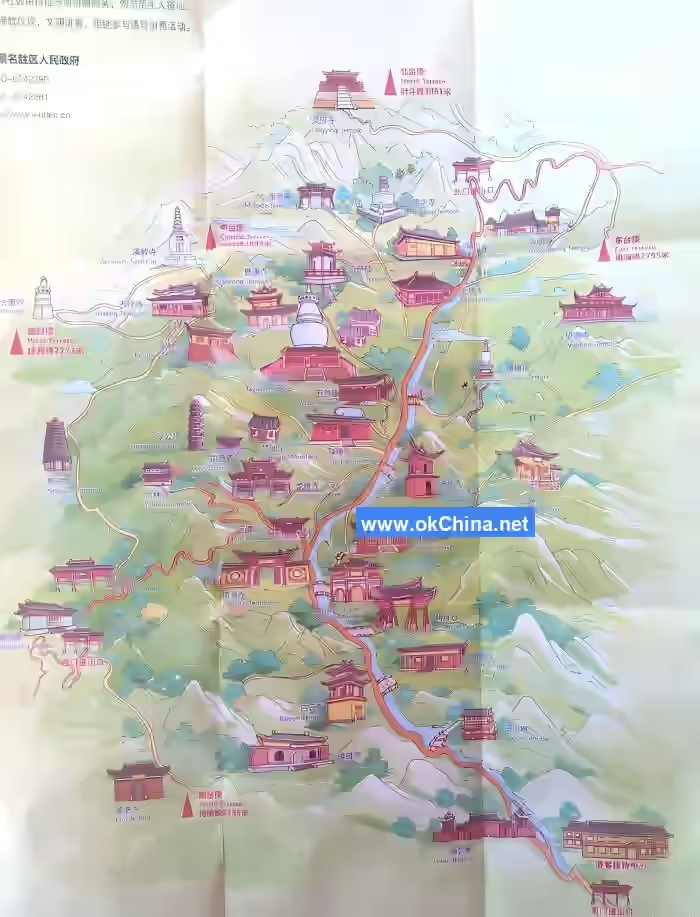
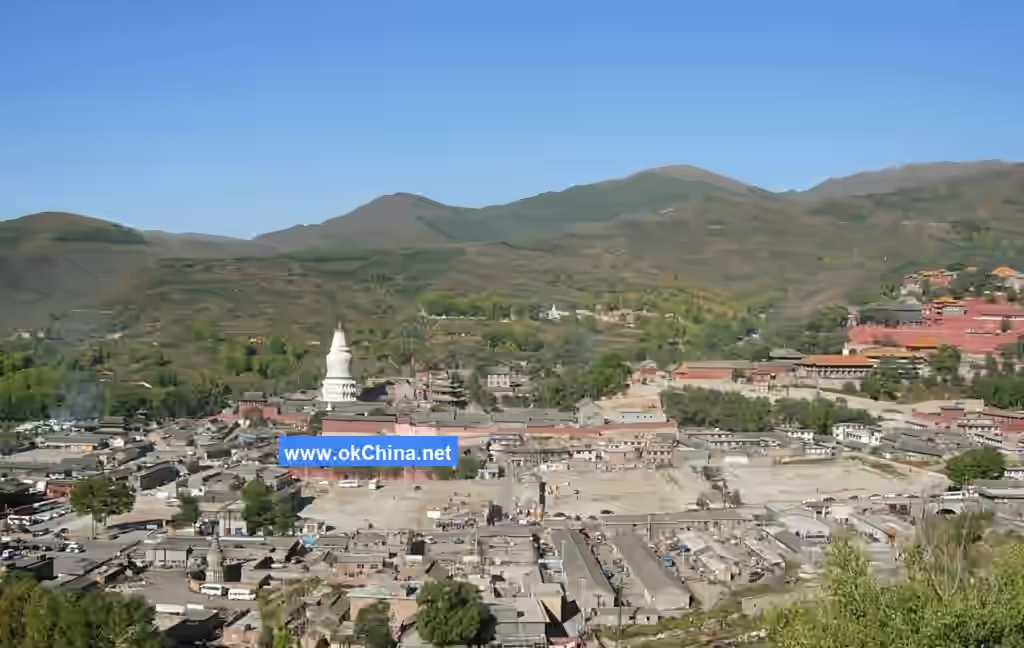
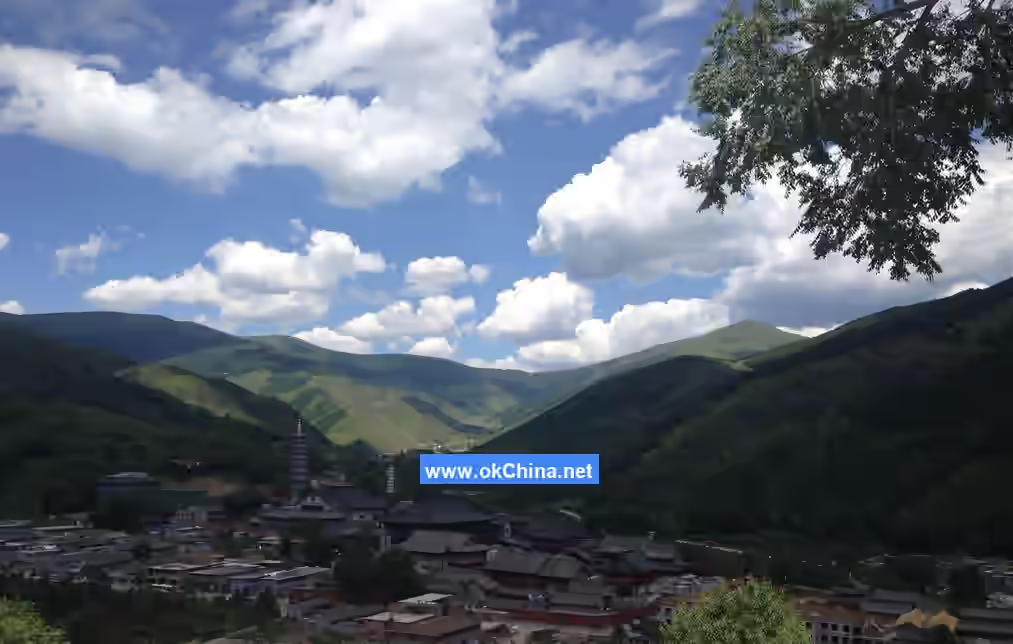
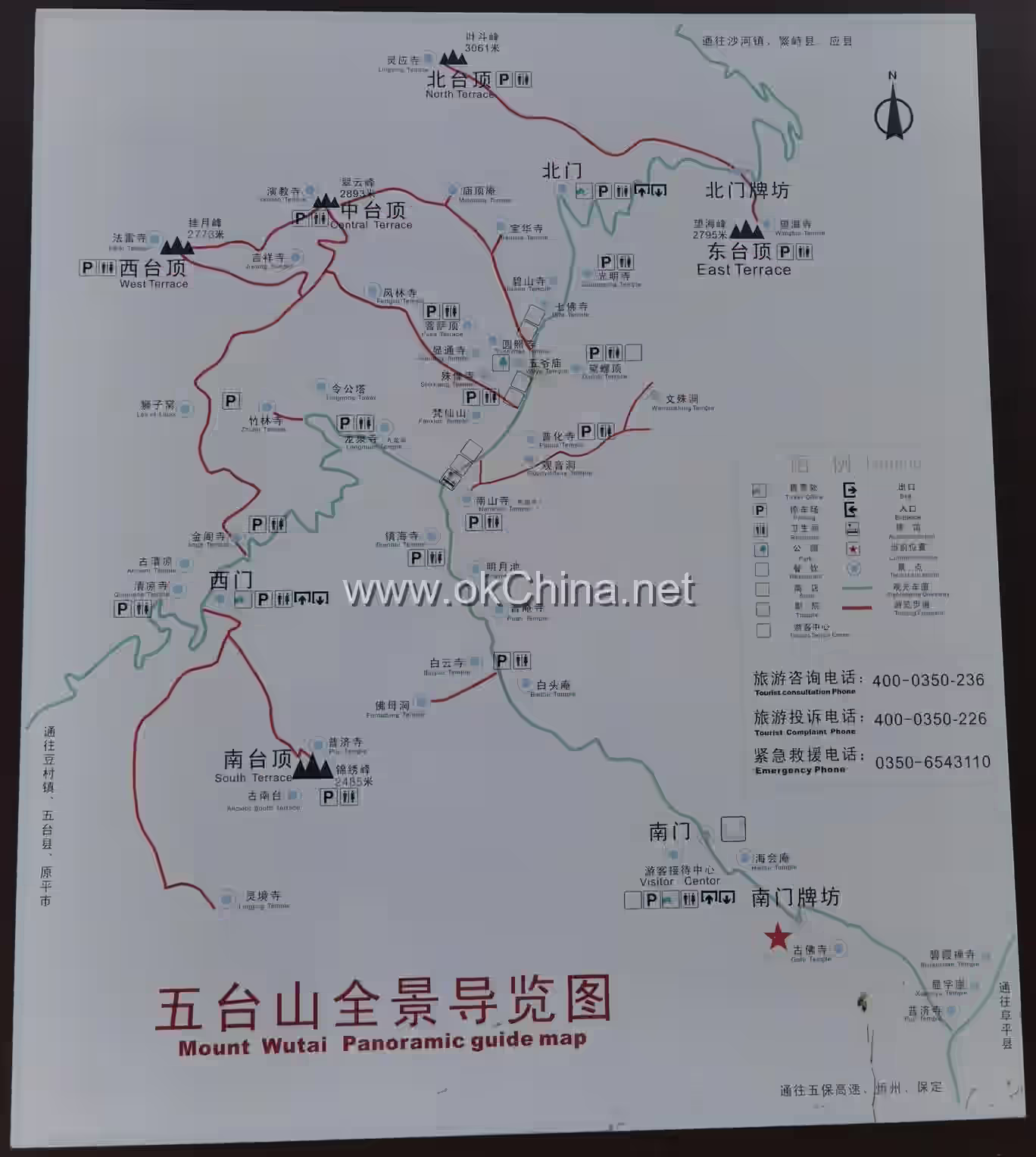
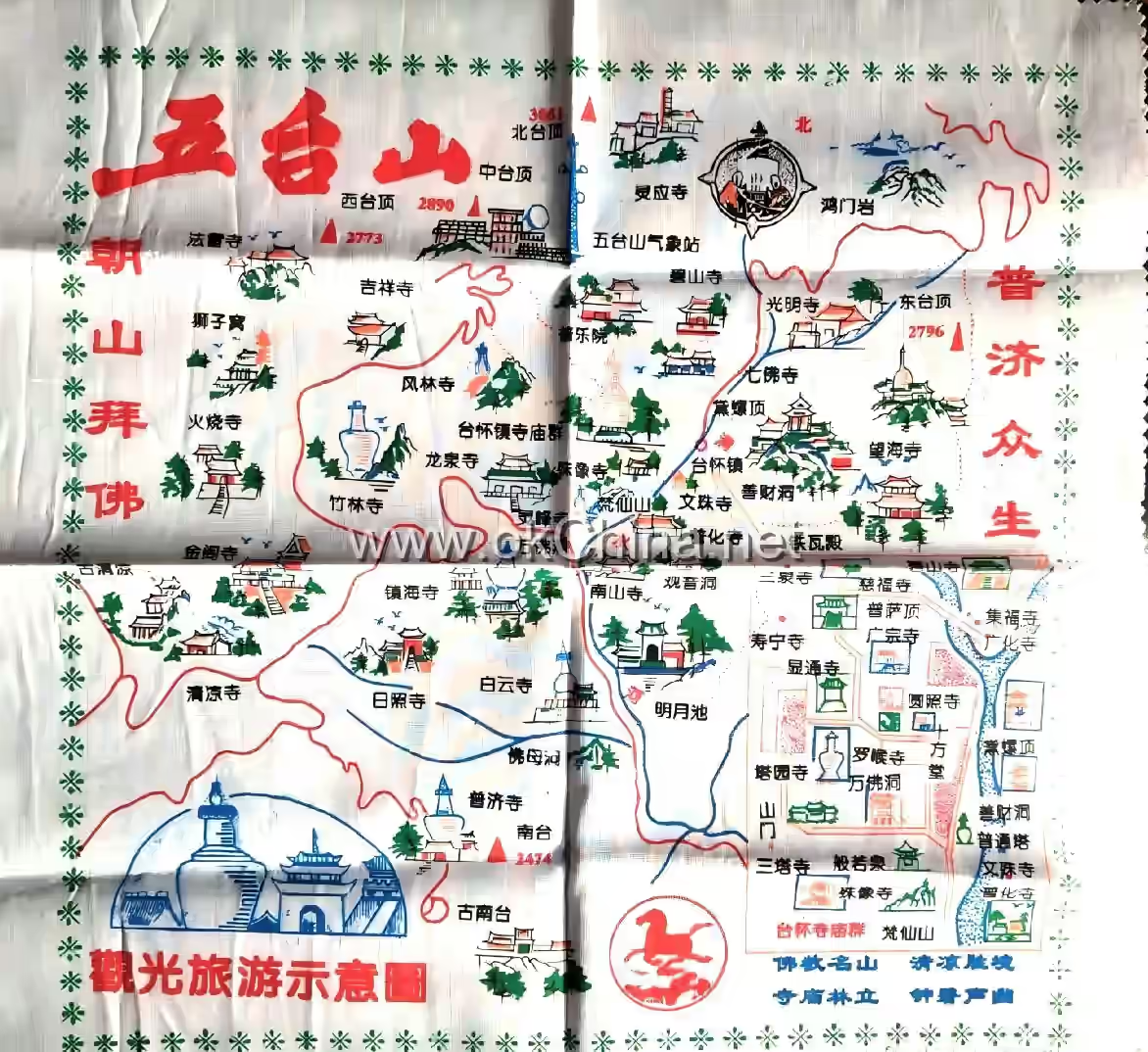
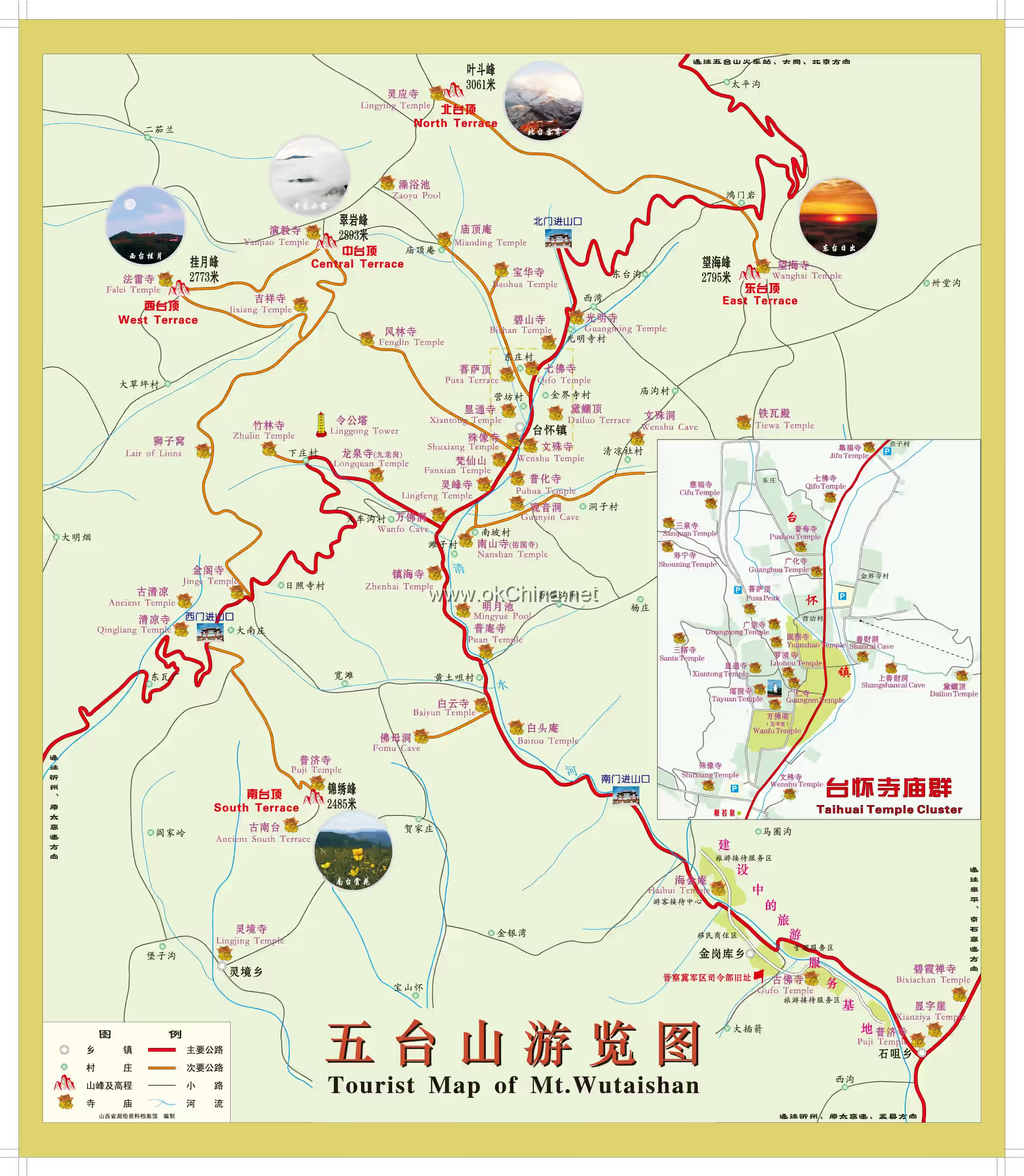
Mount Wutai spans approximately 250 kilometers in circumference, with a total area of 2,837 square kilometers. Centered around Taihuai Town, it is surrounded by five peaks—East, West, South, North, and Central—that tower above the clouds. The summits are devoid of trees and resemble earthen platforms, hence the name "Five Terraces." The highest point, Yedou Peak of the North Terrace, stands at an elevation of 3,058 meters and is known as the "Roof of North China."
III. Cultural Background
Buddhist Culture
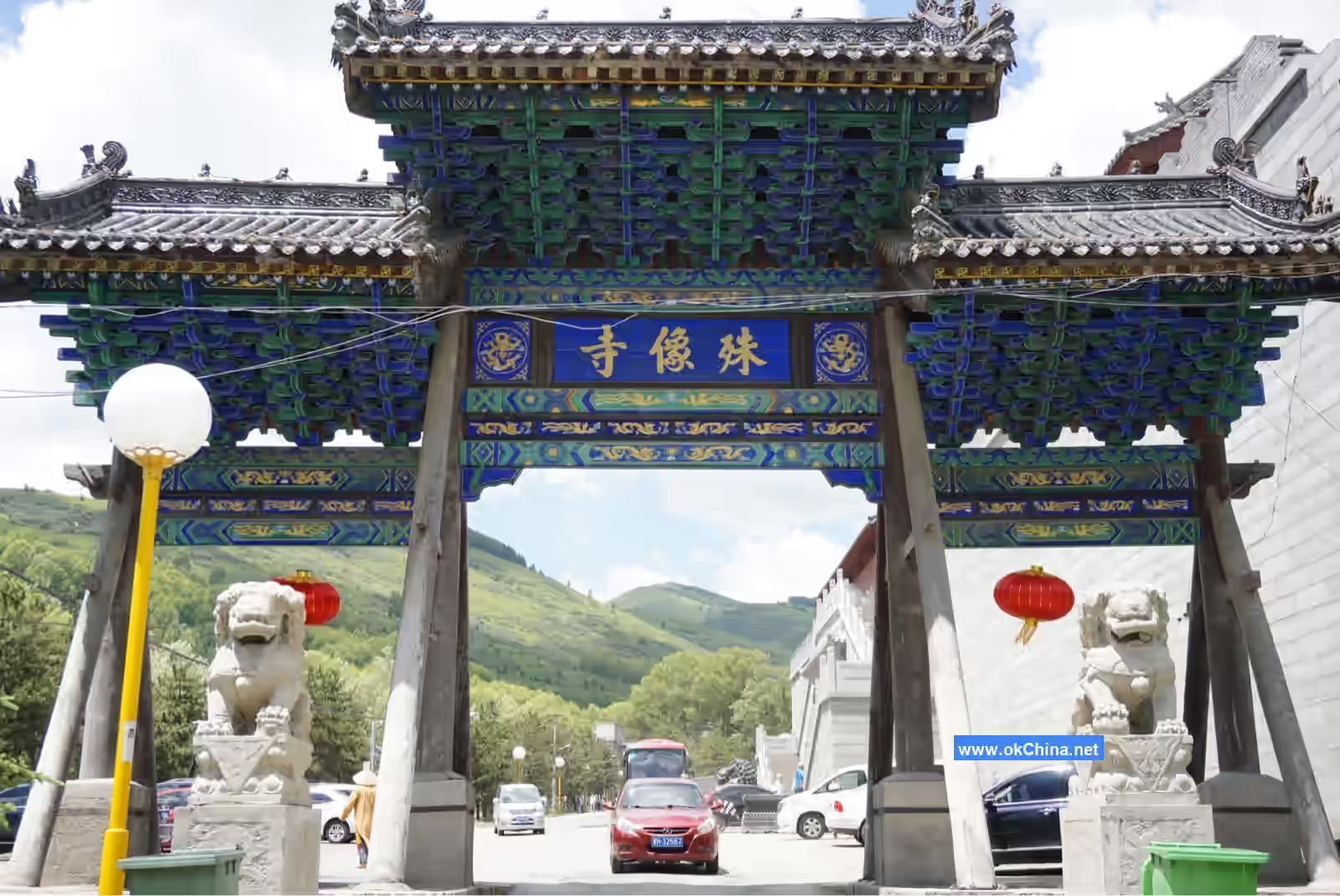
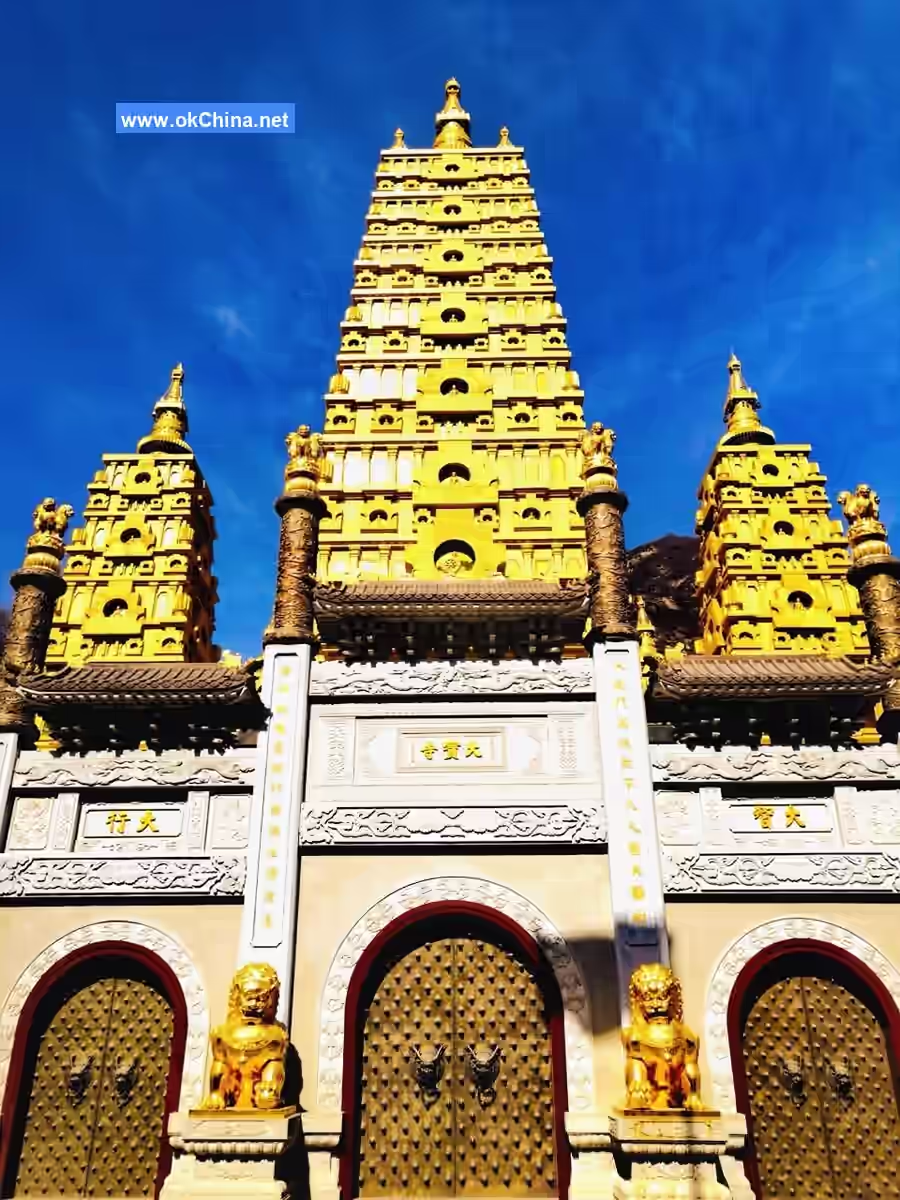
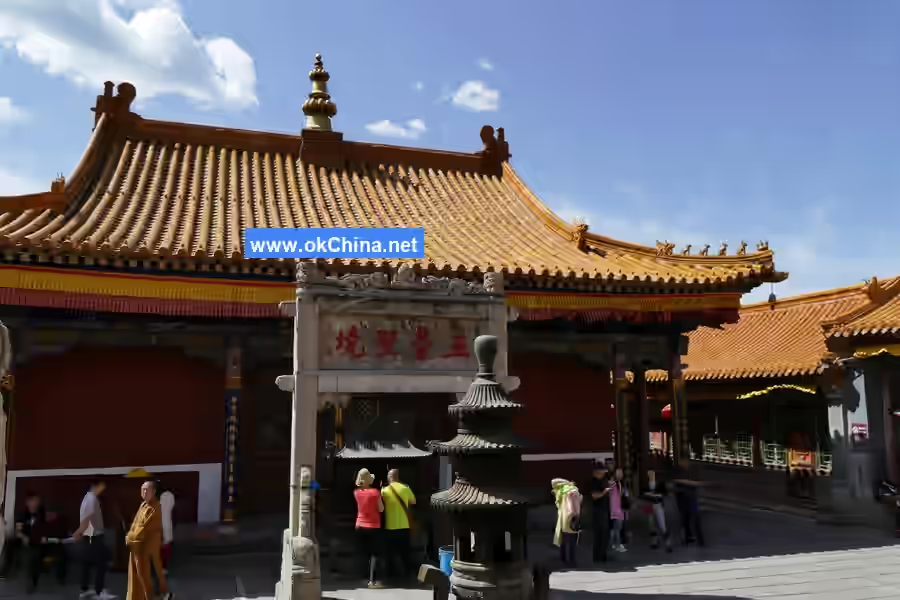
Mount Wutai is the sacred site of Manjushri Bodhisattva and is the only Buddhist site in China where both Han Chinese (Qingmiao) and Tibetan (Huangmiao) Buddhist temples coexist. It is also a comprehensive tourist destination integrating natural scenery, historical relics, ancient architectural art, Buddhist culture, folk customs, and summer retreats. Currently, there are 47 monasteries, with 39 located within the terraces and 8 outside. Many of these are imperially commissioned temples, visited by emperors from various dynasties. Notable ones include Xiantong Temple, Tayuan Temple, Pusading Temple, Nanshan Temple, Dailuo Peak, Guangji Temple, and Wanfo Pavilion.
Cultural Relics
Mount Wutai boasts a vast collection of Buddhist statues, numbering over 30,000. These include not only Buddhas, Bodhisattvas, Arhats, attendants, donors, and guardian deities but also figures from Confucianism, Taoism, local religions, emperors, generals, monks, and lay practitioners. The statues are categorized into eight types: clay, metal, stone, wood, porcelain, lacquer, embroidery, and paintings. Additionally, there are pagodas, screen walls, archways, and steles.
Historical Development
Mount Wutai was originally inhabited by Taoist immortals and alchemists, hence its earlier name, "Purple Mansion" (Zifu). It was also known as Zifu Mountain or the Five Peaks Mountain Taoist Site, where the Zifu Temple was built for Taoist practitioners. According to the Records of Mount Qingliang, when Manjushri Bodhisattva first arrived in China, he resided in the Stone Basin Cave, which was located within the Taoist Xuanguan Temple, indicating that Mount Wutai was originally a Taoist site.
The Tang Dynasty monk Huixiang, in his Ancient Records of Mount Qingliang, cited the Scripture of Immortals, stating: "Mount Wutai is named Purple Mansion, often shrouded in purple aura, where immortals dwell." The same text also mentions: "In the third year of Yongjia in the Jin Dynasty, over a hundred families from Yanmen County fled chaos and entered this mountain. They saw mountain dwellers walking without returning, so they settled peacefully in the rocky wilderness. Travelers occasionally glimpsed their dwellings, but upon searching, could not find them. Thus, people regarded this mountain as a capital of immortals."
The introduction of Buddhism to Mount Wutai is widely believed to have begun during the Eastern Han Dynasty. In the 11th year of Yongping (68 AD), Kasyapa Matanga and Dharmaraksha arrived at Mount Wutai (then called Mount Qingliang). Due to the early presence of King Ashoka's stupa and Mount Wutai being the site of Manjushri Bodhisattva's teachings and residence, the two monks built a temple here.
The area within the terraces is mountainous and vast, with crisscrossing rivers, making site selection for temple construction crucial. The Records of Mount Qingliang notes: "To the left of the great stupa, there is a footprint left by Shakyamuni Buddha, measuring one foot six inches in length and six inches in width, with a thousand-spoked wheel pattern and all ten toes visible." Legend has it that Kasyapa Matanga and Dharmaraksha not only discovered this footprint but also found Buddha's relics. Additionally, the majestic terrain of Yingfang Village resembled India's Vulture Peak (where Shakyamuni Buddha practiced). For these three reasons, they decided to build a temple here. Upon completion, the temple was named Lingjiu Temple after the mountain's shape. Emperor Ming of Han, to express his faith in Buddhism, added the prefix "Dafu" (meaning "great faith"), resulting in the full name Dafu Lingjiu Temple. Dafu Lingjiu Temple was the predecessor of Xiantong Temple. From then on, Mount Wutai began to emerge as a center of Chinese Buddhism, with Dafu Lingjiu Temple being the earliest monastery in China.
During the Northern and Southern Dynasties, Mount Wutai experienced its first peak in Buddhist development. Emperor Xiaowen of the Northern Wei Dynasty expanded Lingjiu Temple on a large scale and built twelve surrounding monasteries, including Shanjingyuan and Zhenrongyuan. By the Northern Qi Dynasty, the number of temples on Mount Wutai had surged to over 200.
During the Sui Dynasty, Emperor Wen ordered the construction of a temple on each of the five terrace peaks: Wanghai Temple on the East Terrace, Puji Temple on the South Terrace, Falei Temple on the West Terrace, Lingying Temple on the North Terrace, and Yanjiao Temple on the Central Terrace. Since Mount Wutai is the site of Manjushri Bodhisattva's teachings, each of these temples enshrines a manifestation of Manjushri, but with different epithets: the East Terrace's Wanghai Temple enshrines "Clever Manjushri," the South Terrace's Puji Temple enshrines "Wise Manjushri," the West Terrace's Falei Temple enshrines "Lion's Roar Manjushri," the North Terrace's Lingying Temple enshrines "Unstained Manjushri," and the Central Terrace's Yanjiao Temple enshrines "Youthful Manjushri." From then on, pilgrims to Mount Wutai would visit and pay homage at these five terrace temples, a practice known as "terrace pilgrimage." By this time, the name "Mount Wutai" had already appeared frequently in Northern Qi historical records.
The Tang Dynasty marked the second peak in Mount Wutai's Buddhist development. According to the Ancient Records of Mount Qingliang, there were as many as 300 monasteries across the mountain, housing over 3,000 monks. During this period, Mount Wutai was not only one of China's famous Buddhist mountains but also a true Buddhist holy site, acclaimed as the foremost of China's Four Sacred Buddhist Mountains. This marked the beginning of Mount Wutai's dominance in Chinese Buddhism and its development into a sacred mountain under the patronage and utilization by feudal rulers.
In the Tang Dynasty, Buddhism was highly revered, with Manjushri Bodhisattva particularly esteemed by Buddhists. The state mandated that all monastery dining halls across the country enshrine an image of Manjushri Bodhisattva. As both the court and the public revered Manjushri and regarded Mount Wutai as a Buddhist holy site, the mountain flourished unprecedentedly, producing many renowned monks, with Chengguan being a prominent example.
With the construction and expansion of temples, the number of monks on Mount Wutai also increased. During the Zhenyuan era of Emperor Dezong of Tang, the mountain housed as many as 10,000 monks and nuns. The flourishing of monasteries had significant negative impacts on society, politics, and the economy, leading Emperor Wuzong to issue an edict in the fifth year of Huichang (854 AD) to suppress Buddhism, ordering the destruction of temples and the return of monks and nuns to secular life. Across China, over 44,600 temples of various sizes were destroyed, more than 260,000 monks and nuns returned to secular life, and millions of hectares of land were reclaimed. Mount Wutai was no exception, with monks dispersed and temples destroyed—an event known as the "Huichang Persecution of Buddhism." When Emperor Xuanzong ascended the throne, Buddhism was revived. The government stipulated that the number of monks on Mount Wutai should be "5,000," though in reality, including privately ordained and itinerant monks, the number far exceeded this. Throughout history, the Tang Dynasty saw the highest number of monks on Mount Wutai. The proliferation of temples and monks was a hallmark of Mount Wutai's status as a Buddhist holy site during the Tang Dynasty.
Another hallmark of Mount Wutai's status as a Buddhist holy site during the Tang Dynasty was the profound reverence and pilgrimage by foreign Buddhists. The Tang Dynasty was prosperous and powerful, with high international prestige, serving as the center of economic and cultural exchange in Asia. With expanding international interactions, Mount Wutai also gained reverence from Buddhists in India, Japan, Korea, and Sri Lanka. Many foreign monks came to Mount Wutai on pilgrimage or to seek Buddhist scriptures and teachings.
IV. Main Attractions
Natural Landscapes
Writing Cliff
Mount Wutai is replete with majestic peaks and spiritual cliffs, with over fifty famous sites. Among them, the Writing Cliff reveals characters resembling seal or clerical script when wetted with water and carefully wiped with a cloth. The characters disappear once the water dries. Some have removed the surface layer of stone, only to find that characters can still be revealed from the underlying layers. Each layer bears characters, and each character is different. It is recorded that couplets such as "The three treasures of heaven: sun, moon, and stars; the three treasures of earth: water, fire, and wind; the three treasures of humanity: essence, energy, and spirit" have been discovered.
Wanghai Peak
Mount Wutai consists of five major peaks—East, West, South, North, and Central—said to represent the five wisdoms of Manjushri Bodhisattva: the Great Mirror Wisdom, the Wisdom of Observing the Nature, the Wisdom of Equality, the Wisdom of Accomplishing Activities, and the Wisdom of the Essence of the Dharma Realm; as well as the Five Dhyani Buddhas: Akshobhya Buddha of the East, Amitabha Buddha of the West, Ratnasambhava Buddha of the South, Amoghasiddhi Buddha of the North, and Vairocana Buddha of the Center.
The East Terrace, named Wanghai Peak, stands at 2,795 meters above sea level. The summit "steams clouds and bathes in sunlight, with clear autumn air; looking east at the bright clouds, like a slope or a mirror, is the sea," hence its name. Due to its high altitude, temperatures at the summit are low, requiring cotton clothing even in midsummer. Zhao Puchu, former president of the Buddhist Association of China, praised it in a poem: "On the East Terrace peak, still clad in fur in midsummer. Heaven dons rosy attire to greet the sunrise, peaks float like boats on a sea of clouds, vigor fills the divine land."
Guayue Peak
The West Terrace, named Guayue Peak, stands at 2,773 meters above sea level. The peak "has a broad, flat summit; the moon descends upon it, hanging like a mirror, hence its name." A poem praises it: "The western ridges tower, connecting to the distant azure; looking back, the homeland lies beside white clouds. The solitary peak's emerald connects to the three Jin regions, eight rivers flow, nourishing the four directions. On sunny days, wild flowers spread like Shu brocade; in autumn breeze, celestial osmanthus sheds heavenly fragrance. Where lions once left their traces, the rocky valleys often glow with five-colored light."
Jinxiu Peak
The South Terrace, named Jinxiu Peak, stands at 2,485 meters above sea level. This peak "has a summit like an overturned bowl, with a circumference of one li; its peaks rise steeply, with misty light condensing into emerald hues, fine grass and scattered flowers spread across a thousand ridges, as if paved with brocade, hence its name." The renowned poet Yuan Haowen praised it in a poem: "Deep dragon caves store clouds and mist, a hundred grasses and a thousand flowers bask in rain and dew. Do not compare this Buddha land to the human realm; whose steps here tread upon golden lotuses?"
Yedou Peak
The North Terrace, named Yedou Peak, stands at 3,061 meters above sea level, the highest of the five terraces, known as the "Roof of North China." Its terrace "has a flat and broad summit, with a circular circumference of four li; looking up from below, its peak rubs against the Dipper, hence its name." Emperor Kangxi praised it in a poem: "Steep paths climb the rugged cliffs, the high cold presses close to the Dipper Palace. Bell tolls echo beyond a thousand peaks, human voices murmur in the ninth heaven. Northern snow still accumulates in clear weather, spring ice remains unmelted in warmth. Leaning into emptiness, gazing at the land-sea, this place is the very Penglai."#### Cuiyan Peak
Cuiyan Peak, part of the Central Terrace, stands at an elevation of 2,896 meters. Its summit is described as "broad and flat, with a circumference of five li, featuring majestic ridges and peaks enveloped in verdant mists that float in the sky, hence its name." A poem praises it: "Peaks on all sides embrace wondrous views, / Morning rain and mist gather on emerald slopes. / Leaning on my staff, I tire not of a thousand hills; / Wearing fur in June, I still feel a lingering chill. / Azure cliffs and jade-green ridges encircle all around, / Ancient trees and yellow sands stretch wide in every gaze. / Clouds and mist gradually rise from the mountainside, / As if I were already standing amid the clouds."
Cultural Landscapes
Tayuan Temple
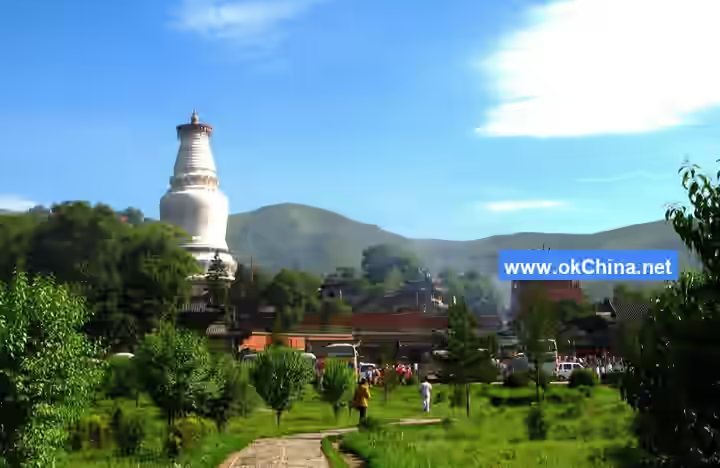
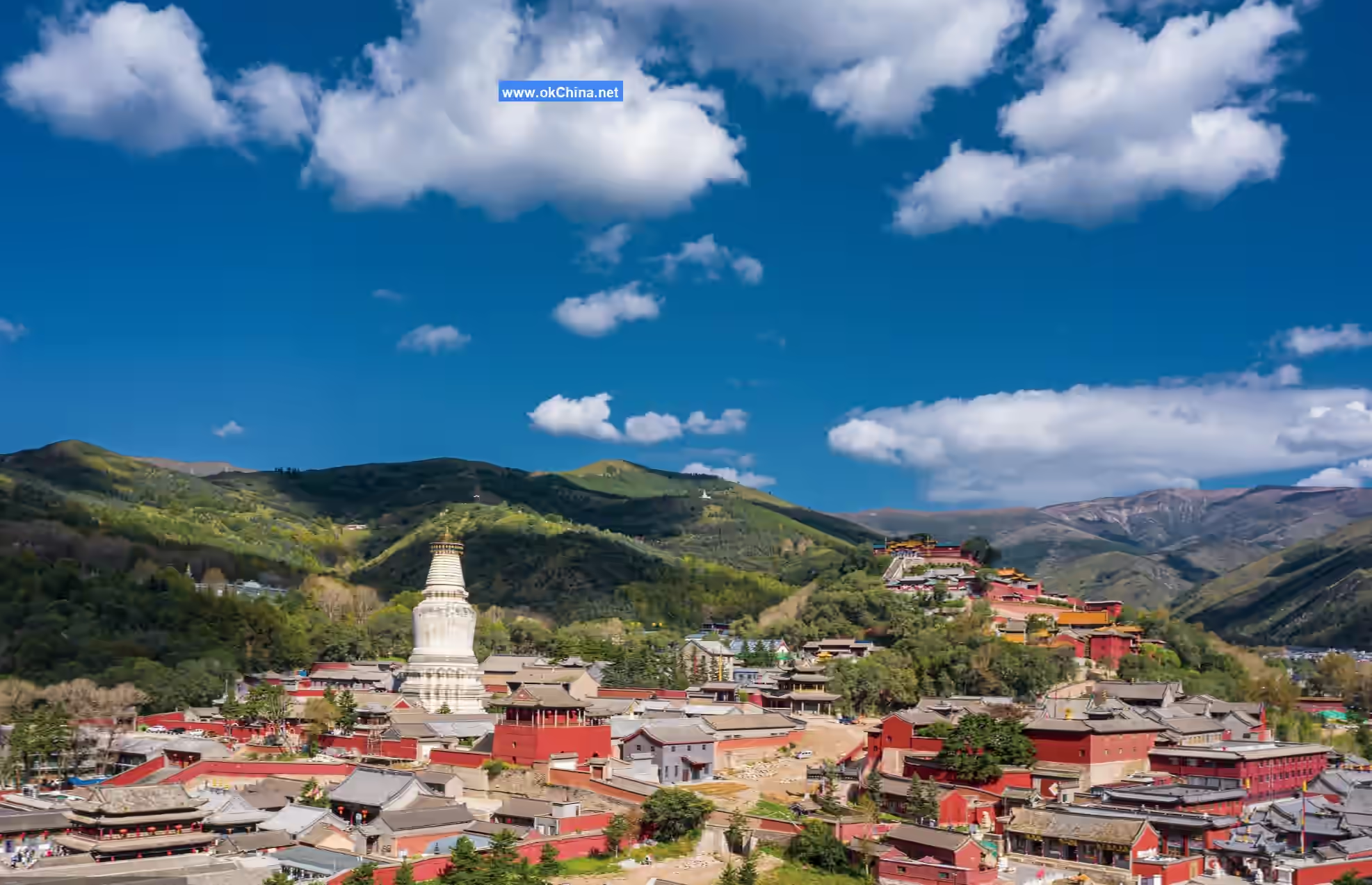
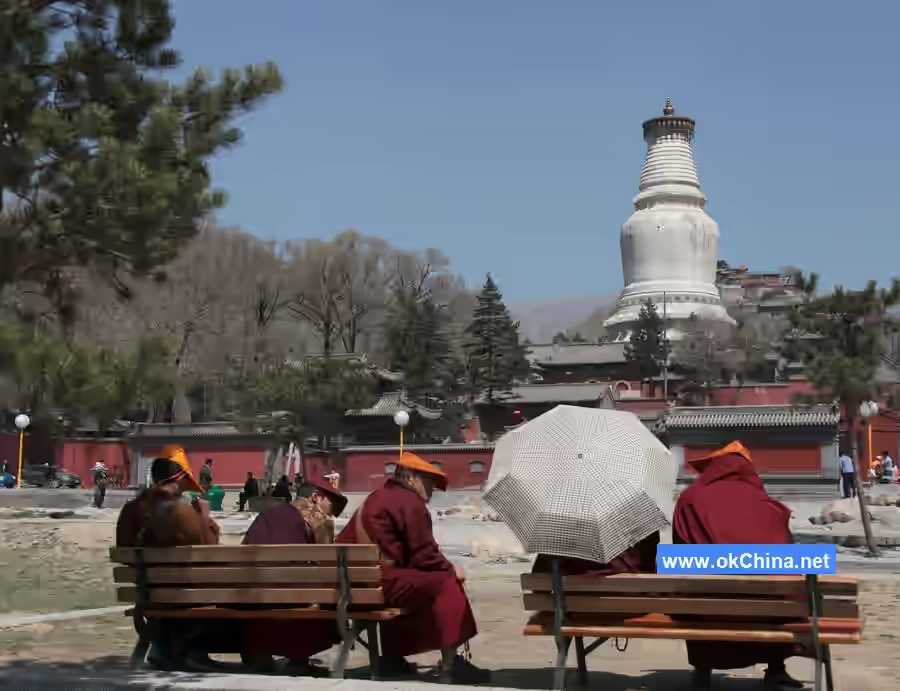
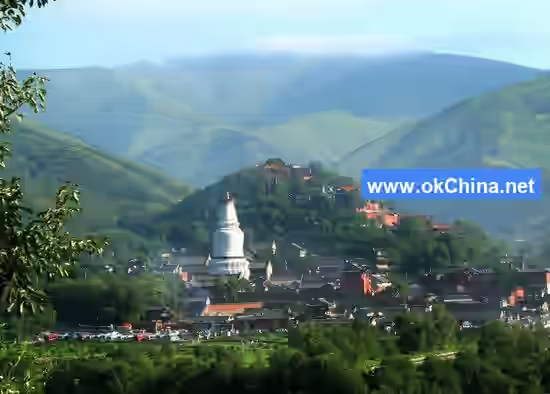
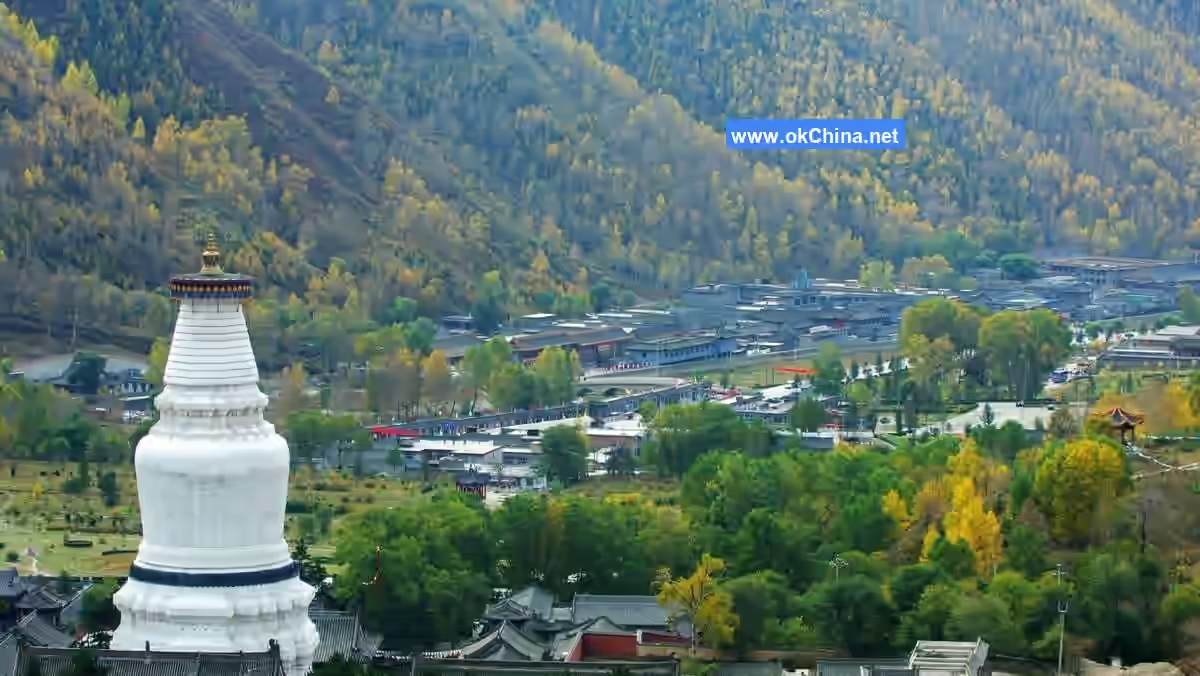
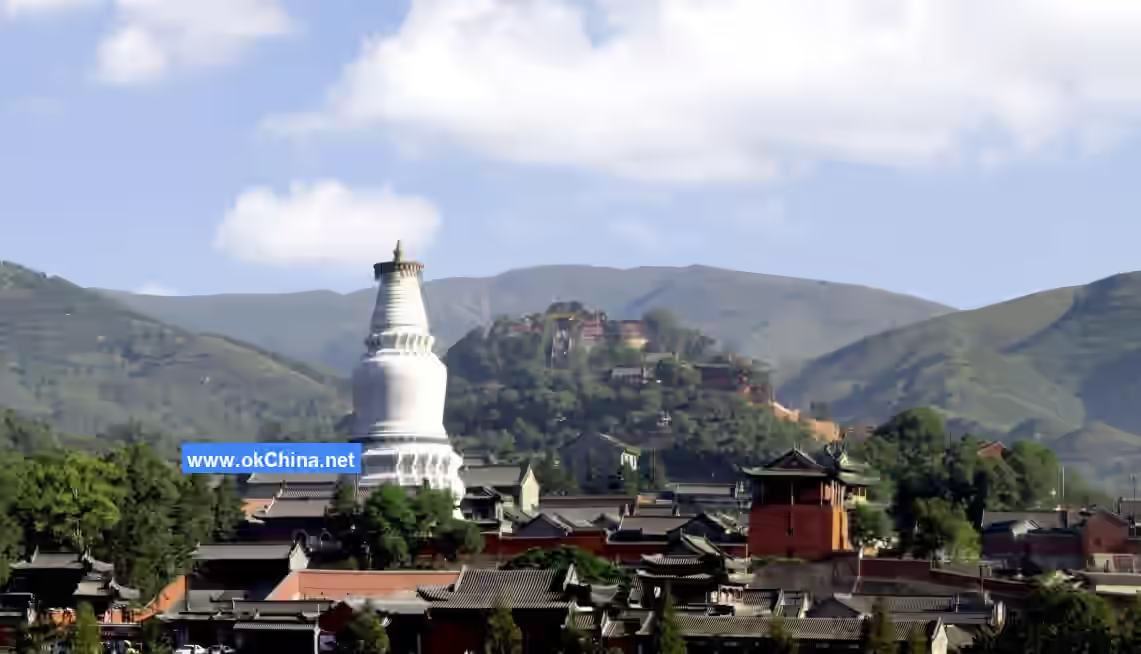
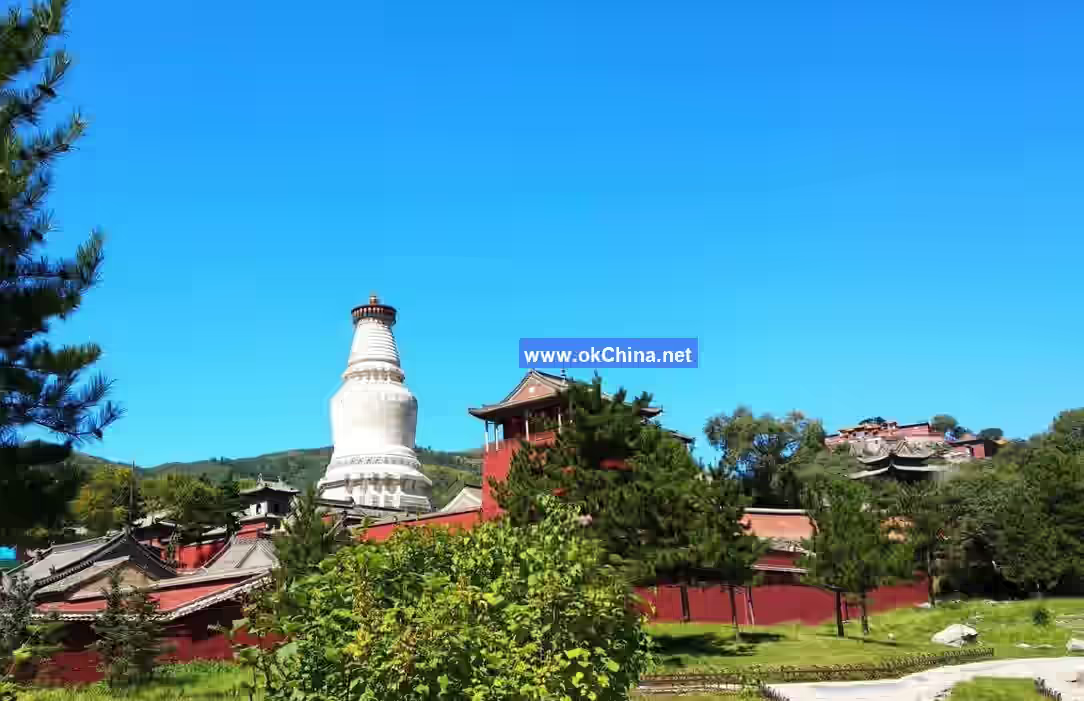
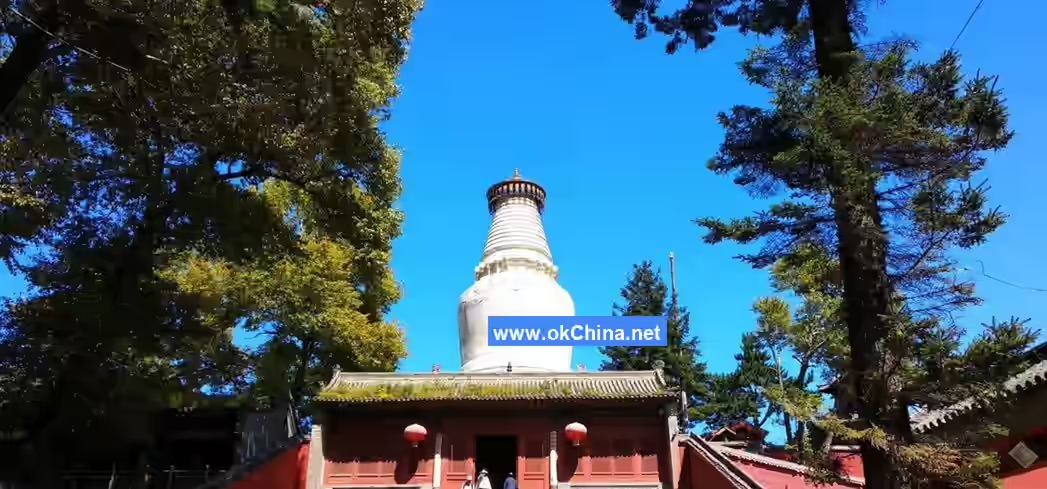
Located at the center of Taihuai Town, Tayuan Temple is named after the iconic Great White Pagoda of Mount Wutai. This pagoda, towering at 75.3 meters with a circumference of 83 meters, was first built during the reign of Emperor Xiaowen of the Northern Wei Dynasty and has been renovated and reconstructed throughout successive dynasties, including a major reconstruction during the Ming Dynasty. According to records, the Great White Pagoda houses a stupa containing relics built by the Indian King Ashoka, making it a sacred site that Buddhist pilgrims first visit when arriving at Mount Wutai. The temple also houses a Manjushri Pagoda, which is said to contain a strand of Manjushri Bodhisattva's hair.
Xiantong Temple
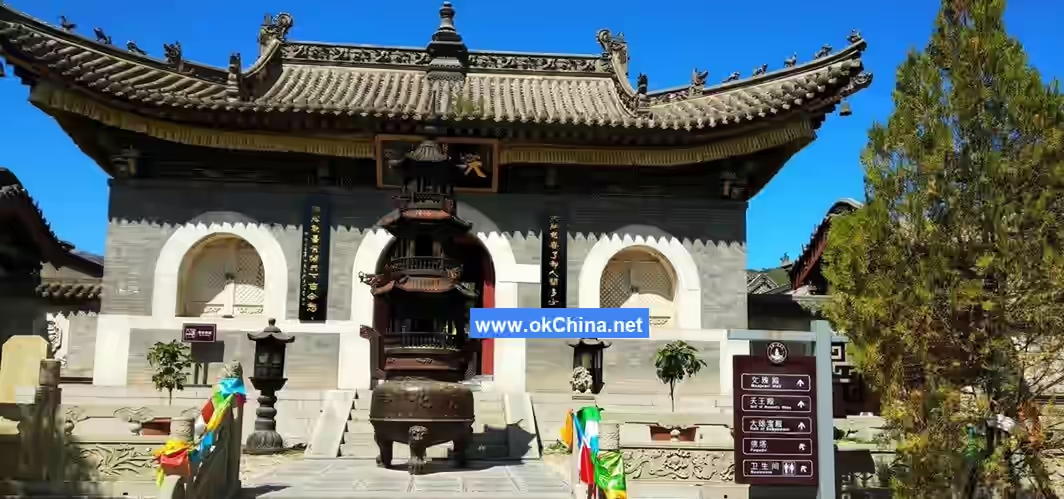
Situated behind Tayuan Temple, the existing structures of Xiantong Temple date back to the Ming and Qing Dynasties. The temple complex covers an area of over 80,000 square meters and comprises more than 400 buildings. Along its central axis are seven main halls, from front to back: the Guanyin Hall, Manjushri Hall, Great Buddha Hall, Wuliang Hall, Qianbo Hall, Bronze Hall, and Sutra Repository Hall. The Wuliang Hall, standing 21 meters tall, is uniquely constructed without a single wooden beam, entirely built with bricks. Its exterior eaves feature brick-carved brackets and floral patterns, while the interior is adorned with intricately carved caisson ceilings that appear to float, resembling a floral canopy. Inside the hall, the "Avatamsaka Sutra Pagoda" is composed of white silk, inscribed with over 600,000 characters of the Avatamsaka Sutra in neat, elegant small regular script. The Bronze Hall, measuring three bays square and five meters high, is exquisitely cast with depictions of flowers, figures, birds, and beasts.
Pusading Temple
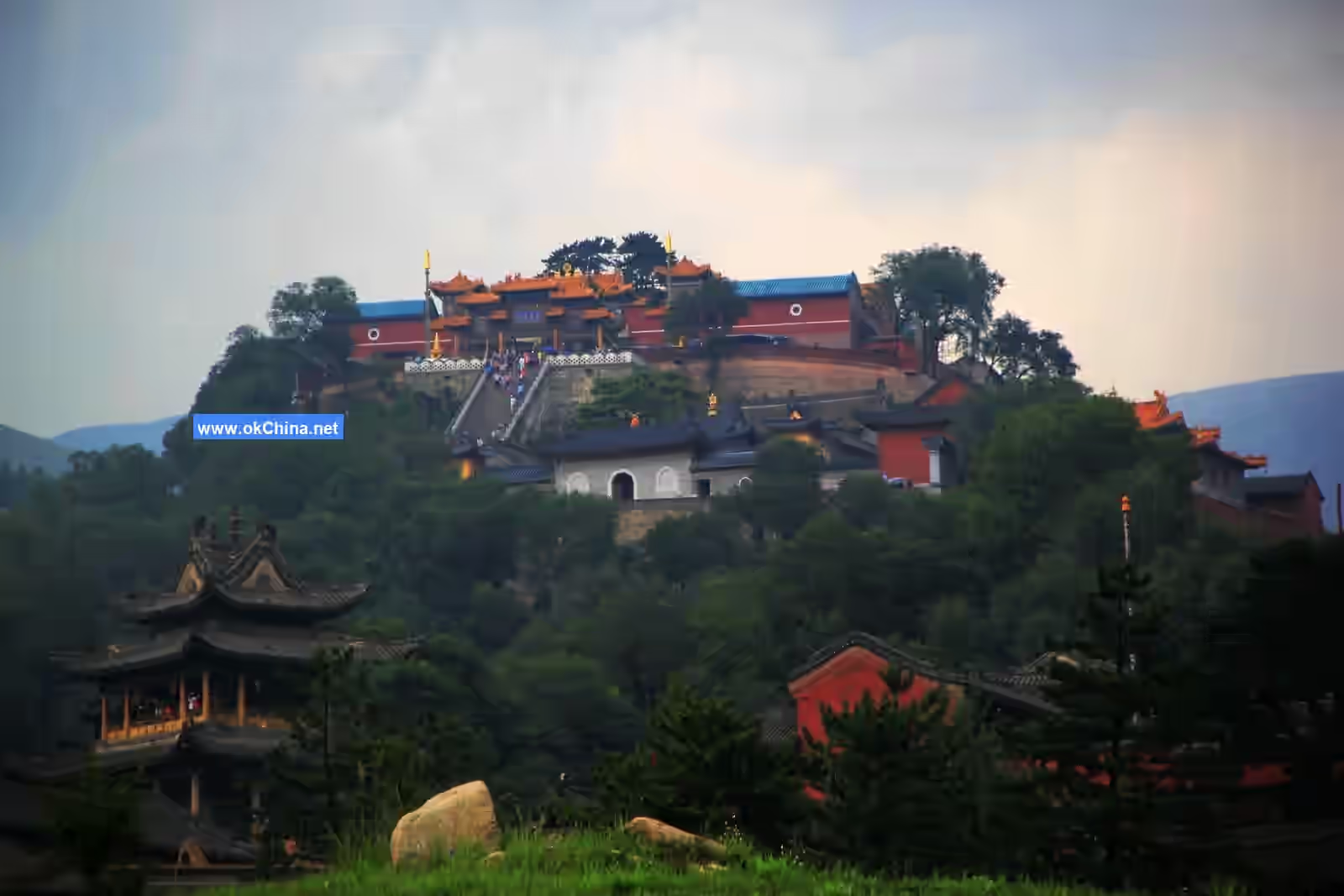
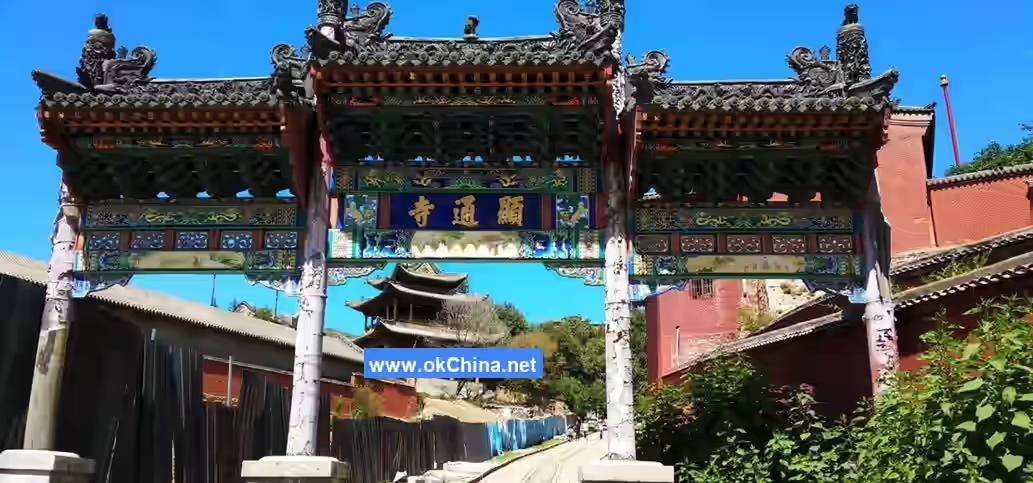
Perched on Lingjiu Peak behind Xiantong Temple, Pusading Temple is said to be the dwelling place of Manjushri Bodhisattva. Also known as Manjushri Temple or Zhenrong Monastery, it features 108 stone steps leading up to a wooden archway inscribed with the characters "Lingfeng Shengjing" (Scenic Peak of Wonders). In Buddhism, it is believed that humans have 108 afflictions, and the path to liberation from these afflictions is called a "Dharma gate." Each step before the temple symbolizes a Dharma gate; ascending a step signifies freeing oneself from one affliction, and reaching the top of the steps represents entering the transcendent realm of Buddha-land. The main halls of Pusading Temple are covered with glazed tiles in yellow, green, and blue. In the front courtyard stands a stele inscribed by Emperor Kangxi, while the eastern courtyard houses a stele erected by Emperor Qianlong. Carved from a massive square stone, this stele stands six meters tall with each side measuring one meter wide. Its inscriptions are engraved in Chinese, Mongolian, Manchu, and Tibetan scripts, making it the tallest stele on Mount Wutai.
Nanchan Temple
Nanchan Temple holds a special place in the history of Chinese Buddhism. During the Great Anti-Buddhist Persecution under Emperor Wuzong of the Tang Dynasty, Nanchan Temple was the only temple on Mount Wutai to escape destruction, making it the oldest surviving wooden structure in China. This ancient temple is small and exquisite. According to ink inscriptions on its beams, its Mahavira Hall was built in the third year of the Jianzhong era of Emperor Dezong of the Tang Dynasty, over 1,200 years ago, preserving the typical architectural style of the Tang Dynasty. Inside the hall, the altar features 17 Tang Dynasty colored clay statues, including Buddha, bodhisattvas, disciples, attendants, and heavenly kings. These statues are plump and lifelike, with expressive faces and fluid lines, representing invaluable artistic treasures.
Foguang Temple
Nestled on the mountainside of Foguang Mountain, Foguang Temple is renowned as the "Buddhist Light of Asia." Built against the mountain and surrounded by peaks to the east, south, and north, the temple complex is grand in scale. Its architecture, sculptures, murals, and ink inscriptions are celebrated as the "Four Wonders." The temple was originally built during the reign of Emperor Xiaowen of the Northern Wei Dynasty but was destroyed during the Great Anti-Buddhist Persecution under Emperor Wuzong of the Tang Dynasty. It was rebuilt in the 11th year of the Dazhong era of the Tang Dynasty. Foguang Temple is a prime example of surviving Tang Dynasty wooden architecture and holds a prominent place in architectural history. The altar in the East Hall houses 35 Tang Dynasty colored clay statues of Buddha, plump and vivid in appearance. Most of the murals are original works from the Tang Dynasty, with some from the Song and Ming Dynasties, all being rare artistic masterpieces. The Manjushri Hall is the only surviving Jin Dynasty structure on Mount Wutai.
Nanshan Temple
Built against the mountain, Nanshan Temple features 108 steps carved into the slope, shrouded in clouds and greenery like a ladder to heaven. Each of its buildings has unique characteristics, and all are renowned for their exquisite carvings. The temple is situated on the mountainside, with a grand white marble archway at the top of the steps. Behind it, seven layers of resplendent halls rise tier by tier, nestled among ancient trees and surrounded by flowing springs. The temple gate is fronted by a finely crafted screen wall made of intricate brick carvings. Inside, from the walls to the railings, white marble reliefs depict flowers, birds, insects, animals, historical figures, and Buddhist stories, all vivid and lifelike in their diversity.
Longquan Temple
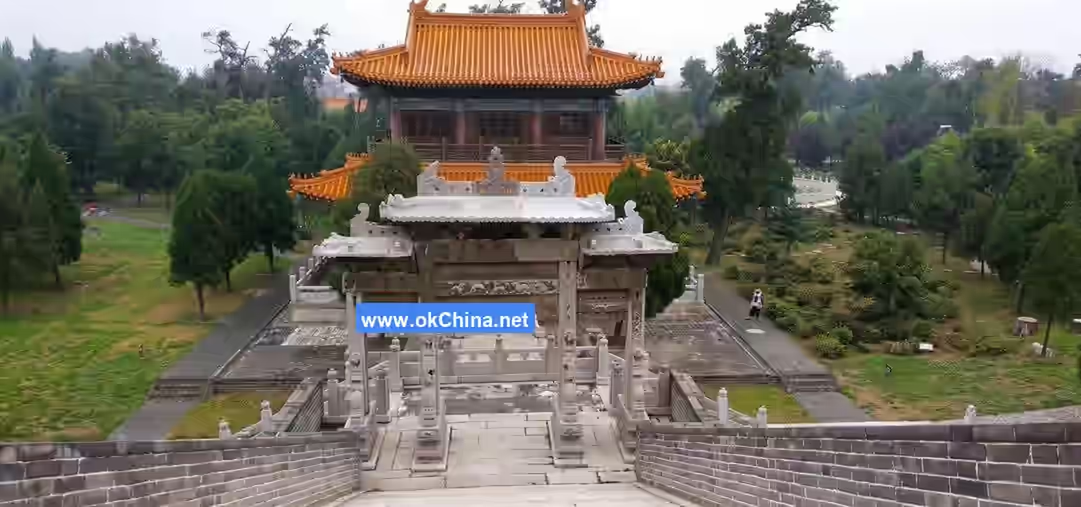
Located within the embrace of Jiulong Ridge, Longquan Temple consists of three courtyards arranged horizontally, forming a unique layout. The stone railings flanking the steps are carved with monkeys, birds, flowers, peaches, and other motifs. In front of the temple gate stands a pair of white marble lions, an arched bridge with railings, and flagpoles on both sides, all showcasing superior craftsmanship. The most striking feature is the white marble archway, celebrated as one of the temple's wonders. From its foundation to its roof, every part is meticulously carved, featuring dignified Buddha statues, exquisitely crafted dragons coiling around stone pillars, as well as rare flowers, birds, and beasts. The screen wall is inlaid with a large stone carving, said to depict the Hall of Guanyin in the South Sea, characterized by its rigorous composition and ingenious design.
Tourism Resources
Mount Wutai ranks first among China's Four Sacred Buddhist Mountains and is known as the "Golden Wutai," serving as the bodhimanda of Manjushri Bodhisattva. Mount Wutai is not a single mountain but a series of peaks situated on the "Roof of North China," with the highest elevation reaching 3,061 meters. The five peaks (Wanghai Peak on the East Terrace, Jinxiu Peak on the South Terrace, Cuiyan Peak on the Central Terrace, Guayue Peak on the West Terrace, and Yedou Peak on the North Terrace) encircle the entire area. Their summits are flat and broad, devoid of trees, resembling earthen platforms, hence the name "Wutai" (Five Terraces). Mount Wutai is the only Buddhist site in China where Green Temples (Han Chinese Buddhism) and Yellow Temples (Tibetan Buddhism) coexist harmoniously. It currently has 86 active religious sites, many of which were imperially commissioned and visited by emperors from various dynasties. Notable temples include Xiantong Temple, Tayuan Temple, Pusading Temple, Nanshan Temple, Dailuo Peak, Guangji Temple, and Wanfo Pavilion.
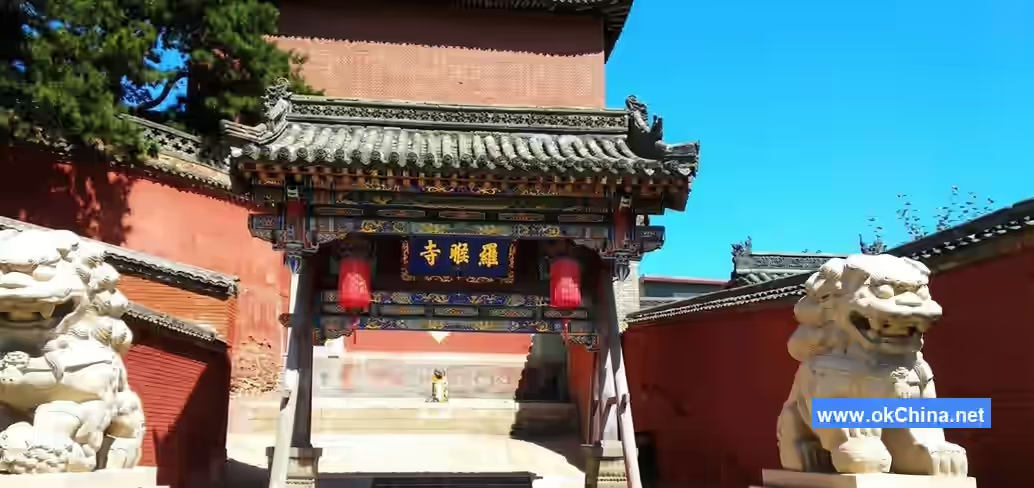
Mount Wutai currently has 86 well-preserved religious sites, including 5 designated as National Key Cultural Relics Protection Units: Xiantong Temple, Pusading Temple, Tayuan Temple, Luohou Temple, and Bishan Temple. Additionally, 5 are designated as Provincial Key Cultural Relics Protection Units: Yuanzhao Temple, Shuxiang Temple, Jinge Temple, Nanshan Temple, and Longquan Temple. There are also 33 County-level Key Cultural Relics Protection Units. From the perspective of religious activity sites, 11 temples have been designated as National Key Buddhist Temples: Xiantong Temple, Tayuan Temple, Pusading Temple, Luohou Temple, Shuxiang Temple, Bishan Temple, Jinge Temple, Guangzong Temple, Guangren Temple, Dailuo Peak, and Guanyin Cave.
The Buddhist organization on Mount Wutai is structured around temples, which are divided into Green Temples and Yellow Temples based on their Buddhist traditions. Green Temples, also known as monk temples, are predominantly inhabited by Han Chinese monks who typically wear gray robes and are called "gray-robed monks." Most temples on Mount Wutai belong to the Green Temple category. Among Green Temples, there are further distinctions between "Ten Directions Temples" and "Lineage Temples." Lineage Temples operate on a master-disciple inheritance system, and monks from other temples cannot hold positions within them. Historically, most Green Temples on Mount Wutai were Lineage Temples. Ten Directions Temples, on the other hand, can accommodate monks from all directions, and their resident monks are free to travel widely. Their management follows a merit-based selection system. According to the "Management Measures for Han Chinese Buddhist Temples" issued by the Buddhist Association of China, former Lineage Temples no longer practice the inheritance system and have adopted the merit-based selection system, blurring the distinction between Lineage Temples and Ten Directions Temples.
Yellow Temples, also known as lama temples, belong to Tibetan Buddhism. The Tibetan Buddhist traditions on Mount Wutai all belong to the Gelug school founded by Master Tsongkhapa. The lamas wear yellow robes and hats, hence the name "yellow-robed monks." During the Yongle era of the Ming Dynasty, some Green Temples on Mount Wutai were converted into Yellow Temples. In the Kangxi era of the Qing Dynasty, an imperial decree converted ten temples—Luohou Temple, Shouning Temple, Sanquan Temple, Yuhua Pond, Qifo Temple, Jingang Cave, Shancai Cave, Pu'an Temple, Tailu Temple, and Yongquan Temple—into Yellow Temples. As a result, gray-robed monks became yellow-robed monks, giving rise to Han Chinese lamas. Mount Wutai currently has 12 Yellow Temples: Pusading Temple, Luohou Temple, Guangren Temple, Wanfo Pavilion, Zhenhai Temple, Guanghua Temple, Guanyin Cave, Shangshancai Cave, Tiancheng Temple, Tailu Temple, Manjushri Temple, and Ruiying Temple.
V. Cultural Activities
Buddhist Activities
Jumping Buzha: Held around the 15th day of the sixth lunar month, this activity originated in Tibet and is a major Buddhist event for the Yellow Sect on Mount Wutai. On the day before the event, lamas in the temple begin chanting protective sutras and performing Vajra dances to "subdue demons" at Pusading Temple. On the 15th, over a hundred distinguished lamas proceed from Pusading Temple through the streets, led by a statue of Maitreya Bodhisattva, followed by high lamas in sedan chairs and secondary lamas on horseback, with the rest of the monks playing temple music, heading to Luohou Temple to "perform sacred dances." On the 16th, they return to Pusading Temple to "behead demons," with high and secondary lamas wearing imperial robes and other monks donning masks to portray the 28 constellations. They draw circles on the ground, walk within them, and accompany their movements with gestures, all aimed at dispelling evil and ushering in peace and auspiciousness.
Mule and Horse Fair: Held annually during the sixth lunar month, this event features large-scale Buddhist activities, folk cultural activities, and a mule and horse trading fair. The pilgrimage activities are rich in content, with a key component being monks from all directions gathering in Taihuai Town to perform rituals and chant sutras, imbuing Mount Wutai with a mysterious religious atmosphere.
Cuisine
The Mount Wutai region boasts many unique dishes and local snacks. Here, visitors can savor traditional delicacies such as Sliced Pork with Fragrant Mushrooms, Stir-fried Tai Mushrooms, and Braised Chicken with Tai Mushrooms, all characterized by their light and refreshing flavors without being greasy.### Celebrating the New Year
"Celebrating the New Year on Mount Wutai" has been welcomed by Buddhist communities, tourism sectors, and various social circles both domestically and internationally, paving a new path for the development of winter tourism on Mount Wutai. In 2002, Mount Wutai hosted its first Buddhist and Folk Customs New Year celebration. The event focused on showcasing the New Year customs of monks and nuns in this Buddhist sacred land, along with the unique local traditions of the "Two Festivals." This concept catered to the psychological needs of many Chinese people who sought to "escape" the tense and noisy urban life and pursue the simple and authentic pleasures of traditional New Year celebrations.
During the Spring Festival each year, hundreds of thousands of tourists visit the mountain.
VI. Value and Significance
Religious Value
Mount Wutai is the sacred site of Manjushri Bodhisattva. In the 11th year of the Yongping era (68 AD), Kasyapa Matanga and Dharmaratna came to Qingliang Mountain and built the Great Fu Lingjiu Temple. This pioneering temple of Mount Wutai, now known as Xiantong Temple, is the oldest Buddhist monastery in China and can be regarded as the earliest record of mountain-based temple construction in China.
In the history of Chinese Buddhism, there were four major "Buddhist Persecutions," and Mount Wutai was always the first to be affected. With the rise of the Sui Dynasty, Emperor Wen and Emperor Yang, both devout Buddhists, enthusiastically supported Buddhism and ordered the construction of temples on all five peaks. The early and middle periods of the Tang Dynasty marked the golden age of Chinese Buddhism, a time when the religion matured. During this period, Mount Wutai had over 360 temples. The mural "Map of Mount Wutai" in Cave 61 of the Mogao Caves in Dunhuang covers an area of more than 60 square meters, depicting numerous temples and throngs of pilgrims, reflecting the flourishing scene of Mount Wutai during its peak.
Another distinctive feature of Mount Wutai is the coexistence of Green Temples (Han Buddhism) and Yellow Temples (Tibetan Buddhism), with both traditions equally emphasized. Green Temples and Yellow Temples stand side by side and develop together, a unique phenomenon among the four major Buddhist sacred mountains. Pusading is the foremost Yellow Temple on Mount Wutai, where the Grand Lama, who oversees Tibetan Buddhist affairs on the mountain, resides. Emperors Kangxi and Qianlong of the Qing Dynasty visited Mount Wutai multiple times to pay homage, staying at Pusading. They bestowed upon the Grand Lama the Seal of the Military Governor and the Sword of Execution, and ordered the entire province of Shanxi to pay tribute to the Grand Lama. According to a 1956 survey by the Mount Wutai Cultural Relics Protection Institute, there were still 124 temples within the Mount Wutai area, including 99 Green Temples and 25 Yellow Temples.
Cultural Value
Mount Wutai boasts numerous Buddhist pagodas and temples. The construction materials include brick, stone, glazed tile, wood, iron, bronze, silver, jade, crystal, and more. The architectural styles encompass stupa-style pagodas, multi-eaved pagodas, pavilion-style pagodas, pavilion-style pagodas, diamond throne pagodas, and composite pagodas. In terms of nature, they are divided into Buddhist pagodas and tomb pagodas. Buddhist pagodas include relic pagodas, sacred trace pagodas, and general worship pagodas. Tomb pagodas can be further categorized into those for eminent monks and general memorial pagodas. The earliest pagoda dates back to the Northern Wei Dynasty, with examples from every subsequent period, the most recent being relic pagodas built in recent years for eminent monks who passed away on Mount Wutai. In terms of scale, the largest pagoda stands 56.4 meters tall, piercing the sky as if challenging the heavens, while the smallest is a mere 0.05 meters, exquisitely delicate. Among the existing Buddhist pagodas in China, the Yuan Dynasty Ashoka Pagoda at Yuanguo Temple, the Shakyamuni Buddha Relic Pagoda at Tayuan Temple, the composite bronze pagodas at Xiantong Temple, and the "Avatamsaka Sutra" Character Pagoda are all considered treasures. The pagodas of Mount Wutai are rare nationwide for their long history, large quantity, diverse materials, comprehensive styles, and varied functions.
The Buddha statues on Mount Wutai, in terms of materials and craftsmanship, can be broadly classified into eight types: clay sculptures (including hanging sculptures and molded reliefs), metal castings (iron, bronze, gilded, gold), stone carvings (including jade carvings, which can be fully carved, relief, or cliff carvings), wood carvings, porcelain, gauze rubbings, embroidery, and paintings (including murals, scroll paintings, and illustrations in sutras or leaf paintings). The earliest Buddha statues date back to the Northern and Southern Dynasties, showing clear Gandharan artistic influences. The most common are clay sculptures, which have been continuously produced from the Tang Dynasty to the present, forming a unique and complete historical system. The rarest are the eighteen arhat paintings by the famous Ming Dynasty painter Ding Yunpeng, painted in color on bodhi leaves. There are 12 paintings in total, with odd-numbered ones depicting single figures and even-numbered ones depicting pairs, all executed in meticulous brushwork and rich colors, compiled into a single volume. The Buddha statues of Mount Wutai, with their varied materials, distinct craftsmanship, and different stylistic approaches across eras, present a dazzling and colorful array, turning Mount Wutai into a rare treasure trove of Buddhist statue art.
Mount Wutai preserves a vast number of bells, drums, bowls, tablets, steles, stone tablets, pillars, plaques, boards, couplets, poems, and texts, both inside and outside its temples. Many of these are precious national cultural relics.
Through its long historical evolution, Mount Wutai has preserved a rare ancient architectural complex, an exceptional collection of Buddhist statues, and unique Buddhist music. It is acclaimed as the "Center of Manjushri Faith," a "Treasure House of Ancient Chinese Architectural Art," an "Exhibition Hall of Chinese Buddhist Statue Art," and a "Wonder of Chinese Buddhist Music," accumulating an immensely rich historical and cultural heritage.
Comments
Post a Comment