Wulingyuan Scenic and Historic Interest Area
1. Introduction
The Wulingyuan Scenic and Historic Interest Area covers an area of 369 square kilometers, featuring over 3,000 peculiar mountains and peaks, of which 243 have elevations exceeding 1,000 meters. The northern part of the scenic area is characterized by extensive limestone karst topography. Over hundreds of millions of years, river evolution, downcutting erosion, and dissolution have formed countless caves, sinkholes, skylights, and spring clusters. As Wulingyuan is situated at the junction of quartz sandstone and limestone, the extensive limestone karst terrain in the north has been shaped by eons of fluvial changes, erosion, and dissolution, resulting in numerous caves, sinkholes, skylights, and spring clusters. The forest coverage rate in Wulingyuan reaches 67%, hosting more than 400 species of wild animals and over 850 species of woody plants. It is home to three first-class nationally protected animals: the leopard, clouded leopard, and yellow-bellied tragopan; and 25 second-class nationally protected animals, including the Chinese giant salamander, rhesus macaque, and Chinese pangolin. The area also contains five first-class nationally protected plant species, such as the dove tree, Bretschneidera sinensis, and Taxus chinensis var. mairei, along with 16 second-class nationally protected plants like Pseudotaxus chienii, Eucommia ulmoides, and Magnolia officinalis.
Wulingyuan served as a filming location for the American movie Avatar, as well as for Chinese classical literary adaptations and films such as Dream of the Red Chamber, Journey to the West, Zhong Kui: Snow Girl and the Dark Crystal, and Monster Hunt. The Wulingyuan Scenic and Historic Interest Area has been successively included in the second batch of National Key Scenic and Historic Interest Areas, the UNESCO World Natural Heritage List, China's first batch of Global Geoparks, and is a National AAAAA Tourist Attraction.
2. Geographical Environment
2.1 Location and Area
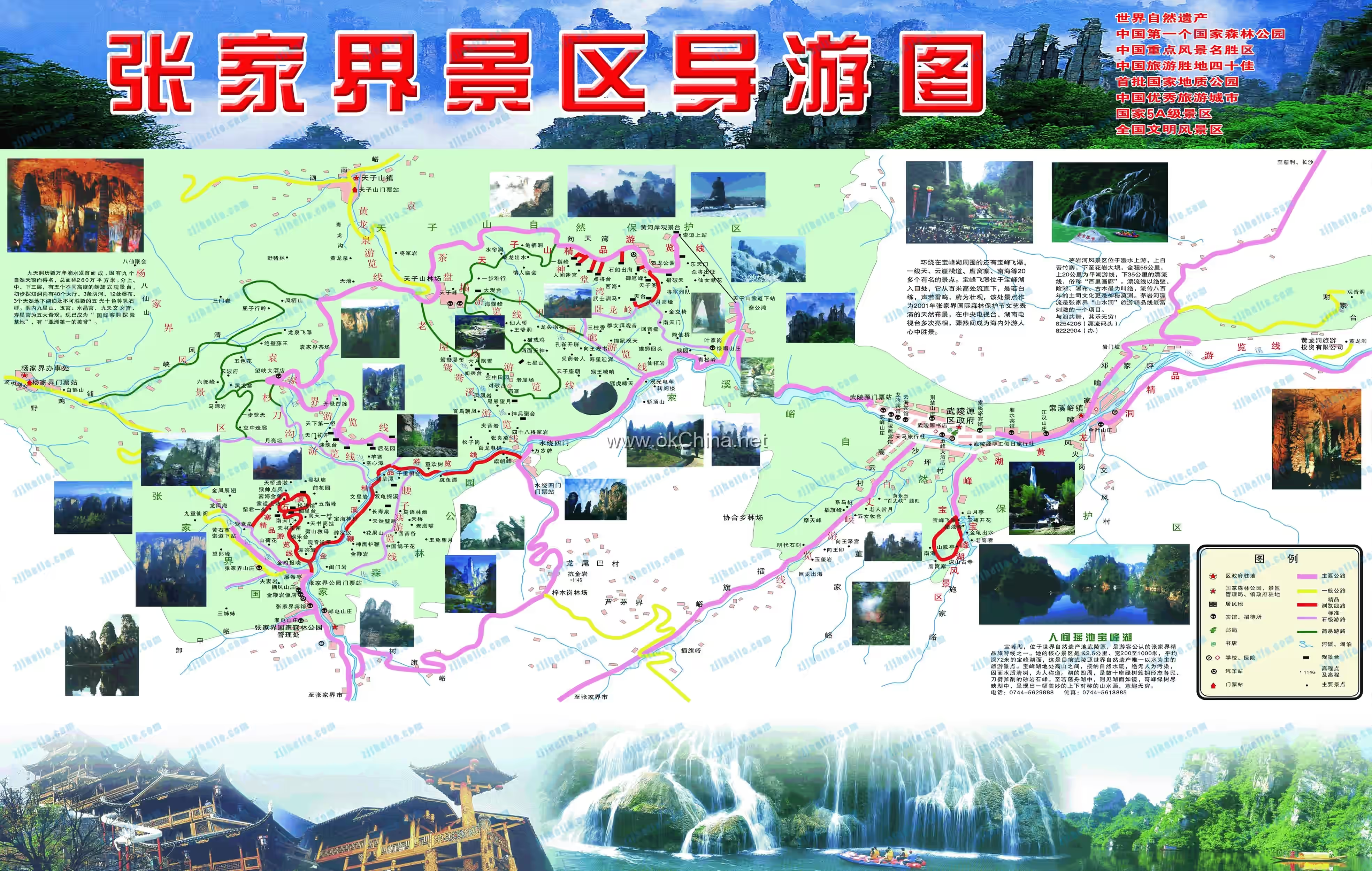
The Wulingyuan Scenic and Historic Interest Area is located in northwestern Hunan Province in central China, between longitudes 110°20'30"E to 110°41'15"E and latitudes 29°16'25"N to 29°24'25"N. It comprises the Zhangjiajie National Forest Park in Zhangjiajie City, the Suoxiyu Nature Reserve in Cili County, and the Tianzi Mountain Nature Reserve in Sangzhi County, with a total area of approximately 500 square kilometers.
2.2 Geographical Features
2.2.1 Geology
Within the regional tectonic system, the Wulingyuan area lies in the third uplift zone of the Neocathaysian tectonic system. Throughout geological history, it has roughly experienced the Wuling-Xuefeng, Indosinian, Yanshanian, Himalayan, and Neotectonic movements. The Wuling-Xuefeng movement established the area's basement structure, the Indosinian movement shaped its basic tectonic and geomorphological framework, while the Himalayan and Neotectonic movements are among the most fundamental internal factors contributing to the formation of Wulingyuan's unique quartz sandstone peak forest landscape.
2.2.2 Geomorphology
The Zhangjiajie landform is a unique type of sandstone landform. It is primarily composed of quartz sandstone as the parent rock, shaped by forces such as fluvial erosion, gravitational collapse, and weathering, resulting in a landscape dominated by tall stone pillar forests with flat tops and steep, angular sides. Under the influence of intermittent uplift and tilting from regional neotectonic movements, along with various external forces including fluvial erosion and incision, gravitational processes, physical weathering, biochemical actions, and root wedging, the mountains evolved through complex natural processes to form the peak forest, displaying characteristics of great height, flat summits, and steep cliffs.
2.2.3 Tectonic-Karst Landform
The tectonic-karst landform in Wulingyuan is mainly exposed in areas with Permian and Triassic carbonate rock distributions, covering an area of 30.6 square kilometers. It can be classified into five subtypes and is considered a typical representative of the "Western Hunan Type" karst landscape. Its main features include solution ripples, solution grooves, sinkholes, grikes, stone teeth, stone forests, through caves, depressions, sinkholes, shafts, skylights, underground streams, subterranean rivers, karst springs, solution pockets, solution channels, stone films, buried stone teeth, and funnels.
2.2.4 Denudational-Tectonic Landform
The denudational-tectonic landform is distributed in Silurian clastic rock areas and can be seen in three subtypes: monoclinal mountain landforms in clastic rock mid-mountains, distributed in areas from Majingjie to Baihutang and from Chaotianguan to Dajian surrounding the quartz sandstone peak forest landscape; carp-ridge V-valley mid-mountain landforms, distributed in areas like Huping, Shijiayu, and Huangjiaping; and clastic rock low-mountain landforms, distributed on the outer edges of the mid-mountains, characterized by gentler slopes and open V-shaped valleys.
2.2.5 Valley Landform
Valley landforms can be categorized into piedmont alluvial-proluvial fans, terraces, and high floodplains. The former is distributed in Shaping Village, developed around the mouths of the Chaqiyu-Shijiayu valleys. Two levels of terraces are developed along the banks of the Suoxi River, with the second level being a bedrock terrace, 3–10 meters above the river surface. High floodplains are well-developed along the line from Jundiping to Yujiazui, covering an area of 4–5 square kilometers.
2.2.6 Geological Heritage Landscapes
The sand ripples in the Devonian strata on the Echo Wall and the wave marks on the rock paintings near the Jumping Fish Pond in the Wulingyuan Scenic Area are rare geological heritage sites. They are not only for viewing but also serve as evidence for studying paleoenvironments and sea-land changes. Coral fossils distributed in the Permian strata of Tianzi Mountain, resembling tortoise shell patterns, are called "tortoise-pattern stones."
2.2.7 Climate
The Wulingyuan Scenic and Historic Interest Area has a mid-subtropical mountain prototype monsoon humid climate. The average annual precipitation within the area ranges from 1380.0 to 1450.0 mm. Precipitation is unevenly distributed throughout the months, concentrated from April to July, with precipitation occurring on about 49 days, accounting for approximately 32% of the annual precipitation days. The period of heavy precipitation is concentrated from May to July, with rainfall reaching 650 mm, constituting 46% of the annual total. Precipitation is low from December to January, about 56 mm, accounting for only 4% of the annual total. Within a year, April to July is the relatively wet season, while August to September is the relatively dry season. The average annual sunshine duration is 1297.2 hours. August has the most sunshine, averaging 202.5 hours; February has the least, averaging 55.7 hours. The average annual wind speed is 1.1 m/s, with higher speeds from February to April, ranging from 1.3 to 1.5 m/s, and speeds between 1.0 and 1.2 m/s in other months.
Snowfall in the Wulingyuan Scenic Area is mainly concentrated from December to February of the following year. Based on 30-year averages, the area has an average frost period of 91 days, with actual frost days averaging 24.5 days, and an average frost-free period of 274 days per year. The earliest frost years start in November, and the latest end in March of the following year. January has the most frost days, averaging 9.8 days; December and February follow, with 7.2 days and 5.3 days respectively. The average annual number of glaze ice days is 1.3 days, with the longest continuous period being 8 days. The maximum ice accretion diameter recorded was 9 mm (on February 16, 1964), with December having the most occurrences.
2.3 Natural Resources
2.3.1 Forest Resources
The forest coverage rate in the Wulingyuan Scenic and Historic Interest Area is 85%. Plant distribution within the area exhibits characteristics of diversity, transitional nature, vertical zonation, antiquity, as well as lush and diverse vegetation on the stone peaks. Tree species are predominantly arboreal, with a mix of trees, shrubs, and herbs; primarily evergreen, coexisting with semi-evergreen and deciduous species; mainly natural forests, interspersed with plantations; and dominated by broad-leaved forests, mixed with coniferous forests.
2.3.2 Plant Resources
Within the natural vegetation of the Wulingyuan Scenic Area, there are 1,630 species of vascular plants belonging to 193 families and 730 genera. This includes 700 species of woody plants from 107 families and 250 genera, and 879 species of herbaceous plants. Among the woody plants, there are 17 species of gymnosperms from 7 families and 11 genera; and 734 species of angiosperms from 96 families and 286 genera.
2.3.3 Animal Resources
In 1988, the wildlife of the Wulingyuan Scenic and Historic Interest Area was classified as belonging to the Western Mountain Plateau Subregion of the Central China Region within the Oriental Realm (according to Professor Zheng Zuoxin's faunal system). It borders the Shennongjia area in northwestern Hubei to the northeast, is adjacent to the Fanjingshan World Biosphere Reserve in northeastern Guizhou to the southwest, and is located on the left edge of the boundary line between the Western Mountain Plateau Subregion and the Eastern Hill Plain Subregion of China.According to the 1980 survey by the South China Expedition Team of the Chinese Academy of Sciences, the Wulingyuan area is home to 149 species of terrestrial vertebrate wildlife, belonging to 22 orders and 58 families. Birds are the most numerous, accounting for 46.9% of the total species; followed by mammals at 28.9%; reptiles at 16.1%; and amphibians at 8.1%. Three species are under first-class state protection: the leopard, clouded leopard, and yellow-bellied tragopan. Twenty-five species are under second-class state protection: rhesus macaque, stump-tailed macaque, serow, pangolin, Asiatic black bear, large Indian civet, Eurasian otter, forest musk deer, sambar deer, dhole, mandarin duck, black kite, Eurasian sparrowhawk, besra, satyr tragopan, Reeves's pheasant, golden pheasant, greater coucal, grass owl, Asian barred owlet, short-eared owl, long-eared owl, tiger-striped leaf frog, and Chinese giant salamander. Among these, 18 species are listed in the CITES (Convention on International Trade in Endangered Species of Wild Fauna and Flora). Fifty-four species are under provincial protection in Hunan, such as the Chinese water deer, tufted deer, and red-billed leiothrix. There are also animals like the fragile skink, beauty snake, checkered keelback, and the transparent blind fish in the Wildman Well of the Suoxi Valley scenic area.
3. Main Attractions
3.1 Zhangjiajie National Forest Park
Zhangjiajie National Forest Park covers an area of 130 square kilometers and is China's first national forest park. It features peculiar landforms with numerous stone peaks of various shapes and lush vegetation; the peaks rise high into the clouds with broad, flat summits, presenting a majestic and imposing sight. Zhangjiajie National Forest Park can be divided into six smaller scenic areas: Huangshi Village, Pipa Stream, Golden Whip Stream, Yaozi Village, Shedao Gully, and Yuanjiajie. Zhangjiajie National Forest Park covers an area of 130 square kilometers and is China's first national forest park. Geologically, it is in the youthful stage of peak forest evolution, characterized by peculiar landforms, numerous stone peaks of various shapes, and lush vegetation. Surrounded by mountains with steep slopes and deep gullies, it enjoys a warm, humid climate and boasts numerous scenic spots. Within the park, there are two broad, thick mesa mountains with flat tops and steep slopes, both exceeding 1,000 meters in altitude: one is Huangshi Village, and the other is Yaozi Village. Geomorphologically, these mesas are still in the youthful stage of peak forest evolution. Due to the broad and hard rock masses, with surrounding slopes forming cliffs composed of vertical joint planes, they have developed into majestic mountain strongholds that soar into the clouds with broad, flat summits, giving a sense of grandeur with their high elevation and level platforms. Zhangjiajie National Forest Park can be divided into six smaller scenic areas: Huangshi Village, Pipa Stream, Golden Whip Stream, Yaozi Village, Shedao Gully, and Yuanjiajie.
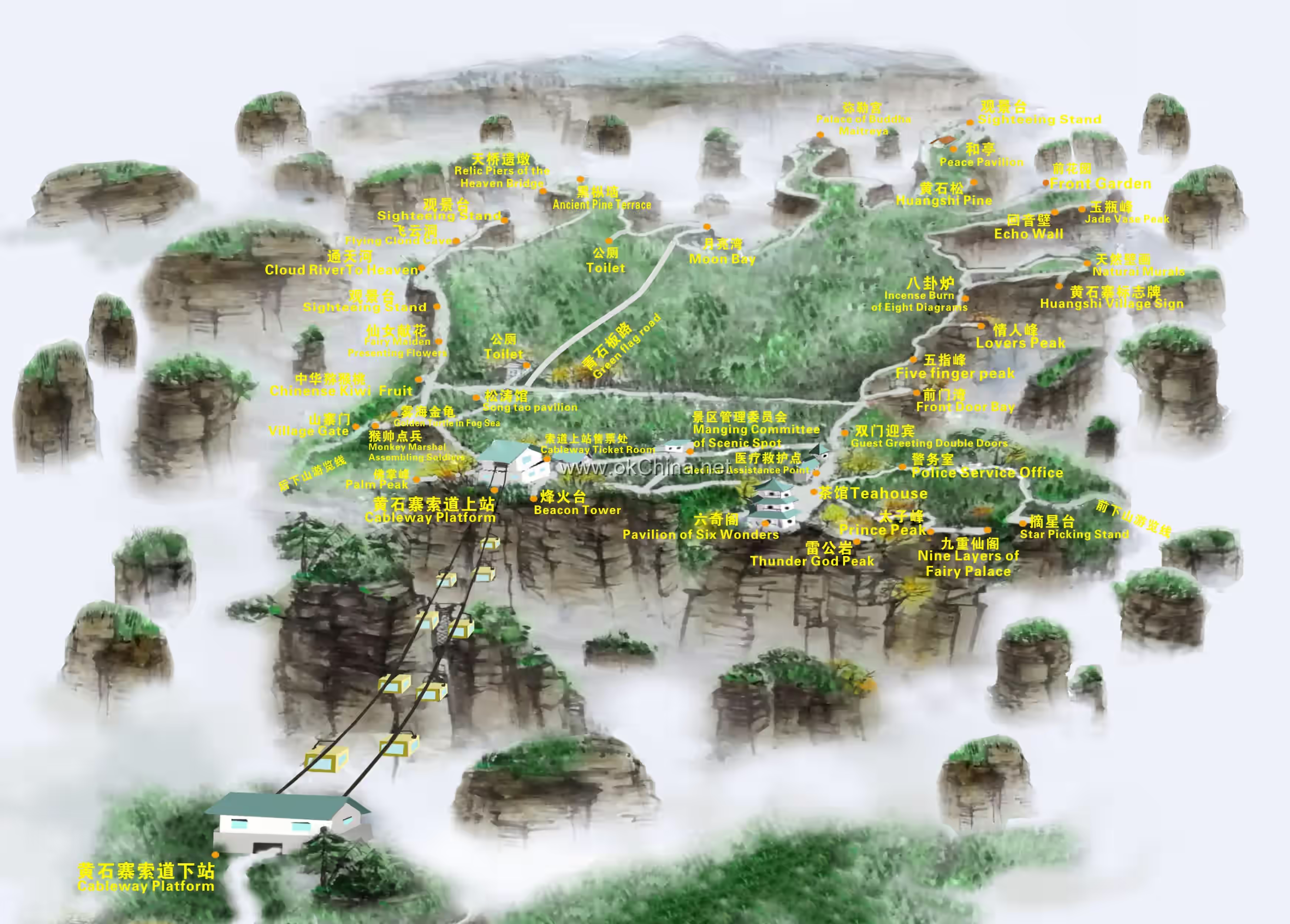
3.1.1 Huangshi Village
Huangshi Village is the most famous scenic area within Zhangjiajie National Forest Park, often summed up by the saying, "If you haven't been to Huangshi Village, you've wasted your trip to Zhangjiajie."
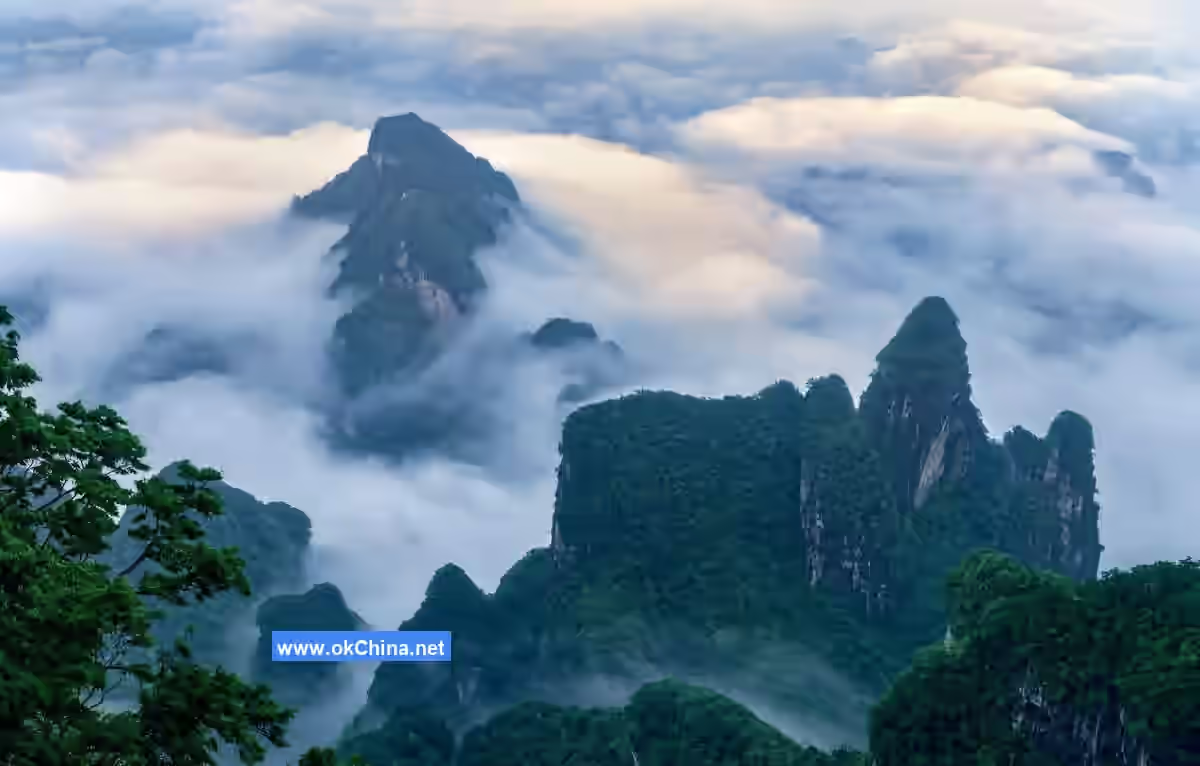
Legend has it that Huang Shigong, the teacher of Zhang Liang, once came here to refine elixirs, hence the name Huangshi Village. Located in the central part of Zhangjiajie National Forest Park, it is a massive mesa platform with an altitude of 1,080 meters and a summit area of 16.5 hectares, considered the most beautiful viewing platform in Wulingyuan. Standing on this natural grand observation deck, one can see countless stone peaks and pillars, rugged and towering, vying for prominence, densely distributed to form a vast forest of peaks, which instantly broadens one's mind and brings immense joy. When a sea of clouds appears, the peaks seem draped in white veils, majestically appearing and disappearing amidst the ethereal, ever-changing mist.
There are over 20 main scenic spots within the area, such as the Treasure Box of Heavenly Books, South Heaven Pillar, Natural Fresco, Star Picking Platform, Black Fir Summit, Heavenly Bridge Remnant Piers, Mandarin Duck Spring, etc.
3.1.1.1 Treasure Box of Heavenly Books
The Treasure Box of Heavenly Books is a famous tourist attraction in Zhangjiajie, located within Zhangjiajie Forest Park. On the lower right side of the Entertainment Platform on the front mountainside of Huangshi Village stands a solitary circular stone pillar. On its top are two overlapping stone slabs, one thin and one thick, resembling a bookcase with its lid half-opened. Folklore says this was discarded by the ancient King Xiangwang, hence the name Treasure Box of Heavenly Books.
3.1.1.2 South Heaven Pillar
On January 25, 2010, the South Heaven Pillar in Zhangjiajie was renamed "Avatar Hallelujah Mountain." It is understood that many prototypes for the "Pandora" planet in the movie Avatar were drawn from the mountains of Zhangjiajie, with an image of the "South Heaven Pillar" serving as the prototype for the "Hallelujah Mountain," or the floating mountains.
3.1.1.3 Natural Fresco
Near the summit of Huangshi Village in Zhangjiajie Forest Park, looking back eastward, one can see, on the western cliff of Yaozhai about a kilometer away, textures formed by weathering and erosion, dotted with flowers, grass, and shrubs, composing a natural fresco full of Tujia ethnic rural charm.
3.1.1.4 Star Picking Platform
At the eastern end of Huangshi Village's summit in Zhangjiajie, a ridge extends about 100 meters. At the end of this ridge is a viewing platform formed by two overlapping sandstone rocks.
3.1.1.5 Black Fir Summit
Black Fir Summit is located within Zhangjiajie National Forest Park, at the northern end of the platform atop Huangshi Village. It gets its name from a large, dense patch of dark fir forest on its surface. This landscape is visible but inaccessible, standing sheer within a deep gorge. The platform's four sides are steep as if cut by a knife, covered with tall, lush pine forests and numerous miscellaneous trees, forming a vast, dark expanse of primeval forest.
3.1.1.6 Heavenly Bridge Remnant Piers
Located below the northwestern cliff edge of Huangshi Village in Zhangjiajie Forest Park, the Heavenly Bridge Remnant Piers consist of six oval stone pillars, each over 200 meters high. They are arranged in a north-south line within a roughly 3,000-meter-long valley between Huangshi Village and Yuanjiajie.
3.1.1.7 Mandarin Duck Spring
Mandarin Duck Spring, commonly known as White Sand Well, is located where the Huangshi Village trail intersects with the Huaxi Valley tour route. The environment is secluded, with towering trees. The spring water collects into a well, clear to the bottom; the well bed is covered with white sand, clean as crushed silver. The water quality is excellent, sweet and pleasant to drink. A folk ballad says: "Chives bloom fine and fluffy, / If I love you, I fear no poverty. / As long as our feelings are true, / Cold water brews tea, slowly rich it'll be."
3.1.1.8 Three Sisters Peaks
About 2 kilometers southwest of the Husband and Wife Rocks, there are three stone peaks spaced about 80 meters apart, resembling three graceful young maidens. Legend says they were flower fairies who were turned into peaks by the Dragon King after causing trouble in the South Sea to save mountain villagers.
3.1.1.9 Thousand-Mile Reunion
Going east downstream from Purple Grass Pool along the stream and rounding a mountain bend, among the scattered peaks southeast of the stream, two peaks stand facing each other, just like a long-separated couple gazing affectionately at each other. The husband is tall and sturdy, wearing a helmet and armor with a long sword at his waist; as if returning from afar, slightly bowing, head slightly lowered, comforting his wife. The wife has a well-proportioned figure, full-bodied, with long hair and graceful charm, her left arm around her husband's waist, face slightly raised. The two, full of tender affection, cling closely as if whispering intimately, pouring out their longing. They resemble a couple reunited after a thousand-mile separation.
3.1.1.10 Sea-Calming Needle
Looking east from the eastern part of the circular trail around Huangshi Village, amidst the emerald green valley like a curtain of brocade, a single peak stands erect, rising hundreds of meters from the ground. The peak's top is covered with shrubs like jade, and its walls are gray-white, gleaming in the sunlight. On cloudy or rainy days, when clouds and mist surge in the valley like raging sea waves, this peak stands firm and unshakable amidst the clouds and mist like a midstream pillar, hence its name. About a hundred meters southwest, another peak resembles a monkey's head, with neck retracted and fists clenched, peeping as if Sun Wukong is about to seize this Sea-Calming Needle. To the right of the trail, looking into the distance along the mountain stream, stands a conical stone peak over a hundred meters high, pointed at the top and blunt at the bottom. At dawn and dusk, it often appears and disappears amidst clouds, mist, and haze, exactly like the Sea-Calming Needle Sun Wukong encountered during his treasure hunt in the Dragon Palace, hence named "Sea-Calming Needle."
3.1.1.11 South Heaven Gate
On the southeastern side of the mountain path leading up to Huangshi Village, a sloping rock peak of over ten square meters and a thousand-ren (ancient measure of depth) stone wall arch to form a gate, opening southward. A stone path passes through the gate; the gate opening is narrow and deep. Wild trees cluster on both sides, and outside the gate, clouds and mist rise and glow, quite resembling the majesty of the mythical South Heaven Gate. Even more remarkable, to the right of the South Heaven Gate protrudes a strange rock resembling a human figure, about 20 meters tall, standing威武 and solemnly, like a general guarding the heavenly gate.
3.1.2 Yuanjiajie
Yuanjiajie is located in the northern part of Zhangjiajie National Forest Park, covering an area of about 1,200 hectares with an average altitude of 1,074 meters. It borders Golden Whip Stream to the east, overlooks Yaozi Village in the distance, faces Huangshi Village to the south, adjoins Tianbo Mansion, connects to Tianzi Mountain to the west, and is north of Suoxi Valley. It is a pearl inlaid in the core scenic area of Wulingyuan.
Legend has it that during the Later Tang period, after the Huang Chao Rebellion failed, the imperial court issued warrants everywhere to capture the rebel army to彻底肃清乱党. A soldier surnamed Yuan from Huang Chao's army came to these remote, secluded deep mountains and wild forests to hide from pursuit. He built a hut, reclaimed wasteland for farming, and named the place after his own surname, calling it "Yuanjiajie."
Main attractions include the First Bridge Under Heaven, Soul-Touching Terrace, Back Garden, Yangzhai, Avatar Hallelujah Floating Mountain, Bailong Elevator, etc.
3.1.2.1 First Bridge Under Heaven
The "First Bridge Under Heaven" is one of Zhangjiajie's "Ten Ultimate Sceneries" and a landmark attraction of Yuanjiajie. It is a natural stone bridge formed between two mountains that were originally one. The bridge body is the key connecting part of the two mountains. However, due to the relatively weak rock quality in the middle, and influenced by weathering, collapse, exposure to sun and rain, water erosion, and mountain torrents, over time, this特别奇景 was formed. The "First Bridge Under Heaven" has a bridge deck two meters wide, four meters thick, a span of over twenty meters, and a height of over three hundred meters. It is the natural stone bridge with the highest落差 discovered in the world to date.
3.1.2.2 Soul-Touching Terrace
About 800 meters east of Yuanjiajie, a small path winds south to a platform atop a solitary rock. Standing on this platform and looking around, one can take in countless sights. The岩峰石柱 resemble tables, chairs, buildings, and pavilions, with奇异形态 that are wonderfully indescribable. Especially after rain when the sky first clears, light clouds and淡雾 often float and linger among the peaks. The mountains seem to shift and潜藏, like jade towers and pavilions appearing and disappearing. Visitors here often become utterly enchanted, unsure of where they are, hence the reputation of Soul-Touching Terrace.##### 3.1.2.3 The Back Garden At the junction of Zhongping and Xiaping in Yuanjiajie, there lies a hidden landscape known as "The Back Garden." As visitors descend through the bamboo groves among the cliffs, they are suddenly blocked by a stone wall. Just when they think there is no way forward, they see a round, moon-like white stone gateway at a bend in the sheer cliff. Passing through the gate, dozens of fantastically shaped peaks suddenly come into view, rising unevenly from a deep, dark green ravine.
3.1.2.4 Yangzhai (Goat Village)
It stands opposite the viewing platform of the Back Garden in Yuanjiajie. With an elevation of 949 meters and a relative height of over 400 meters, its summit covers an area of 3 hectares. It is named for the abundance of wild goats. The entire stone peak features sheer cliffs on its east, west, and south sides, with only a single path ascending from the north. The top is a gentle, elongated stone ridge, nearly 500 meters long and 20-30 meters wide, running east-west and covered in pristine secondary forest. Three smaller stone ridges extend westward, each 10-20 meters long and 2-3 meters wide, with their forward edges forming perilously high and spectacular aerial viewing platforms. Standing on these platforms feels like being amidst the clouds, overlooking the Golden Whip Stream and Shedao Gully, which appear like ribbons winding through the peaks and verdant valleys. Looking around, thousands of stone peaks encircle one's feet, vast and majestic, resembling a dense forest of swords, generals arrayed for battle, or ancient pagodas vying in splendor. To the west, seven pairs of stone peaks resemble seven couples, with the male figures leaning forward and the female figures looking up, standing opposite each other. During the Republican era, this village was a bandit stronghold, leaving behind remnants such as checkpoints, ruined forts, broken trenches, house sites, wells, damaged mortars, and mills.
3.1.2.5 Hallelujah Floating Mountain
On January 25, 2010, Zhangjiajie's "South Heaven Pillar" (also known as the Qiankun Pillar) was officially renamed "Hallelujah Mountain" from the movie Avatar. Hundreds of local residents and tourists from home and abroad witnessed the renaming ceremony that day. The "South Heaven Pillar" is one of Zhangjiajie's "Three Thousand Peculiar Peaks," located at the southern end of the Yuanjiajie scenic area within the World Natural Heritage site of Wulingyuan. With an elevation of 1074 meters and a vertical height of about 150 meters, its summit is lush with vegetation. The peak's structure is uniquely shaped, with clear vertical joints and cleavages, as if carved by axes and knives, majestically standing in Zhangjiajie with a sky-propping, earth-supporting presence, hence its alternative name, Qiankun Pillar.
3.1.3 Golden Whip Stream
The Golden Whip Stream scenic area is located in the eastern part of Zhangjiajie National Forest Park and is named after the Golden Whip Rock it flows past. The Golden Whip Stream converges with the Pipa Stream to the west and flows into the Suoxi Stream to the east, forming a winding and secluded gorge. The scenery along both banks is beautiful, with attractions too numerous to take in at once. The most remarkable include the Golden Whip Rock, the Divine Eagle Protecting the Whip, Wenxing Rock, Zicao Pond, Thousand-Mile Meeting, and Jumping Fish Pond. The Golden Whip Stream stretches 7.5 kilometers in total, and a typical tour takes about two and a half to three hours. It is named after the Golden Whip Rock, which is part of one of "Zhangjiajie's Ten Ultimate Scenes"—the Divine Eagle Protecting the Whip. The area along the Golden Whip Stream is considered the most beautiful part of Wulingyuan. Winding through the peaks and secluded valleys, the stream's water is clear and pure, cascading in varied forms, with small fish swimming within. The banks are adorned with fresh flowers and plants, and the air is filled with birdsong. Walking along the clear stream feels like being in a painting. It is hailed as "one of the most beautiful gorges in the world."
3.1.3.1 Golden Whip Rock
This is another classic example among Zhangjiajie's thousands of peculiar peaks and strange rocks. It rises abruptly from the mountainside, with three steep sides, distinct edges and corners, a golden shimmer, and a majestic presence. It is named for its resemblance to a whip, an ancient weapon. Legend has it that when Qin Shi Huang was driving mountains to fill the sea, he got drunk and accidentally dropped his golden whip here, which then turned into this stone peak.
3.1.3.2 Divine Eagle Protecting the Whip
To the left of the Golden Whip Rock in Zhangjiajie Forest Park, there is a peak resembling an eagle. With its head held high, hooked beak, and wings half-spread, it stands majestically close to the Golden Whip Rock, as if ready to fight off any who would threaten the whip. It is called the Divine Eagle Protecting the Whip.
3.1.3.3 Wenxing Rock (Literary Star Rock)
Along the Golden Whip Stream, there is a stone peak that strikingly resembles the head of Lu Xun. As Mr. Lu Xun was a literary giant, people named it "Wenxing Rock" (Literary Star Rock). Lu Xun is considered modern China's greatest writer and thinker, an unprecedented national hero. The poet Zang Kejia wrote a poem in memory of Lu Xun titled "Some People," which begins: "Some people are alive, but they are already dead; some people are dead, but they are still alive." Lu Xun continues to live in the hearts of the Chinese people and also by the Golden Whip Stream in Zhangjiajie, Hunan, China. Some say it resembles Maxim Gorky. Whether it's Lu Xun or Gorky, both are literary giants of the world.
3.1.3.4 Zicao Pond (Purple Grass Pond)
Located within Zhangjiajie National Forest Park at the confluence of the Golden Whip Stream and Shadao Gully. Zicao Pond was originally named "Paper Grass Pond" because local villagers in the Qing Dynasty used it for rinsing paper pulp during handmade paper production.
3.1.3.5 Thousand-Mile Meeting
Located within Zhangjiajie National Forest Park, this is a figurative stone peak resembling a man and a woman in an embrace, hence the name. It is situated about 600 meters east of Zicao Pond, where the lower parts of two taller stone peaks within a cluster merge seamlessly.
3.1.3.6 Jumping Fish Pond
Located downstream from Zicao Pond. If the Golden Whip Stream is likened to a peerless beauty, then these two ponds are her pair of captivating eyes. Jumping Fish Pond is also a stone trough carved by the stream's flow. Water cascades into the pond, creating a drop. During spawning season, fish swim upstream and leap about here, giving the pond its name.
3.1.3.7 Drunken Arhat
Standing opposite the Golden Whip Rock across the stream, it rises over 200 meters on a slope. It is uniformly thick from top to bottom, with a rounded, reddish peak body leaning at a 70-degree angle towards the Golden Whip Stream. It resembles a drunken arhat, seemingly about to topple but not falling, appearing intoxicated yet not entirely, creating a humorous sight. During the Qing Jiaqing period, scholar Peng Zhichen inscribed the character "Zhong" (loyalty) on the cliff face. In the fourth year of the Daoguang reign (1824), tribute student Peng Zhiyun wrote the essay "Bi Zhong Ji" to celebrate this wonder. Over time, weathering and erosion caused the "Zhong" character to be destroyed due to rock collapse, but the essay is preserved in local historical records.
3.1.3.8 Water Winding Around Four Gates
"Water follows the mountains' turns, mountains come alive with water"; "The stream winds because of the mountains, the mountain stream levels out with the land." Here, where the Golden Whip Stream flows, the terrain is flat, and accumulated sand has formed a shoal. Legend says this is the birthplace of "Prince Xiang Wang," so it was anciently known as "Tianzi Zhou" (Prince's Shoal). Standing on Tianzi Zhou and looking ahead, the seven large characters "Qiantong Bijia Wansuipai" (Inkpot, Brush Rest, Longevity Tablet) on a distant stone peak are still faintly discernible. Legend holds this was where Prince Xiang Wang held court and received homage. Here, one can also see several of the ancient-looking "Forty-Eight Generals." From here, one can travel northeast to Suoxiyu, southwest to Zhangjiajie, or west to Tianzi Mountain, making it a convenient travel hub. Today, a tourist village has been built here specifically for visitor accommodation and rest, allowing travelers to recover from a day's fatigue, recharge their energy, and better explore the unknown scenic wonders.
3.1.3.9 Splitting the Mountain to Rescue Mother
Ahead lies a mountain peak whose base is connected but whose top is split in two, as if cleaved by something. Coincidentally, nearby stands a smaller peak resembling a giant axe. This scene is called "Splitting the Mountain to Rescue Mother." Legend says when Chenxiang went to rescue his mother, he mistook this for Mount Hua and began splitting it. Halfway through, someone told him this wasn't Mount Hua. From a geological perspective, it was primarily formed by the collapse of hard and soft rock layers under gravity and erosion by flowing water—a masterpiece of nature's craftsmanship.
3.1.3.10 Camel Peak
On the upper right side of the lower reaches of the Golden Whip Stream, several peaks are arranged from top to bottom, resembling a camel descending the mountain. With its neck erect and head raised, two humps stand tall, and the green trees on the peak body look like camel hair. A Camel Pavilion and viewing platform (Nanmu Ping) are built by the stream; this area is called Nanmu Ping.
3.1.4 Pipa Stream (Lute Stream)
The Pipa Stream is located in the western part of Zhangjiajie National Forest Park and is the upstream section of the Golden Whip Stream. With the Pipa Stream as its axis, the landscape of peak forests and secluded valleys unfolds in groups to the north of the stream, presenting a uniquely ancient and wild scenery. Golden Rooster Announces Dawn, Husband-and-Wife Rock, Wanglang Peak, and Nine-Layered Celestial Pavilion are among the premier attractions of the Pipa Stream scenic area. The Pipa Stream area is lush with forests and studded with jagged rock peaks, forming a splendid scenic line within the forest park.
3.1.4.1 Golden Rooster Announces Dawn
A natural rock formation standing between two peaks, resembling a rooster heralding the arrival of dawn. It is vivid and lifelike, hence the name "Golden Rooster Announces Dawn."
3.1.4.2 Husband-and-Wife Rock
Located atop a stone peak on a mountain ridge, it resembles two human heads in close embrace, carved in relief. Both have complete facial features—one with a continuous smile, the other with a calm expression—as if wrapped together in a large overcoat, conveying boundless affection to each other. This "couple" has stood here for billions of years, enduring the shifting stars, wind, and rain, remaining steadfastly loyal.
3.1.4.3 Wanglang Peak (Gazing-at-Husband Peak)
Wanglang Peak is a famous attraction in Zhangjiajie. A stone stands on the high peak, vividly resembling a village girl looking eastward with her head raised.
3.1.4.4 Nine-Layered Celestial Pavilion
This spectacle is situated high on a mountain opposite Chaolongfeng Temple from the direction of Baisha Well. From afar, one can see a stone structure resembling a jade palace or jeweled tower, complete with a roof, framework, stone walls, and a stone door. Even more astonishing, one can also see what looks like a large sedan chair, said to be used by the Jade Emperor during his inspection tours. Because this sight is high on the mountain and resembles a palace or pavilion, it was named "Nine-Layered Celestial Pavilion." Around it, there are also scenes resembling the Jade Rabbit, Cassia Tree, Chang'e (the Moon Goddess), Taibai Jinxing (the planet Venus), and below, a large group of monkeys among other landscapes.#### 3.1.5 Yaozizhai (Sparrowhawk Fortress) Yaozizhai, also known as the Cliff of Mountain Eagles, is located northeast of Zhangjiajie National Forest Park, 2.5 kilometers from Laomowan. It forms a tripartite balance with Huangshizhai and Yuanjiajie. Three hiking trails lead to the top of Yaozizhai: from Laomowan, from Jinbianxi (Golden Whip Stream), and from Luotuofeng (Camel Peak).
With an altitude of 1,050 meters, Yaozizhai is named for its Laoyingzui (Eagle's Beak) rock formation, which resembles a sparrowhawk's beak. The mountaintop is a narrow ridge, a flat viewing platform standing in the clouds with sheer cliffs over 300 meters deep on its west, north, and east sides, renowned for its peculiarity and peril.
It is said that even sparrowhawks find it difficult to fly past here, hence the name Yaozizhai. Its main attractions include Tianqiao (Heavenly Bridge), Laoyingzui (Eagle's Beak), Wansun Zhengchun (Myriad Bamboo Shoots Vying for Spring), the site of Jiegong Temple, and Suobiaoyan (Javelin Rock).
3.1.5.1 Tianqiao (Heavenly Bridge)
Located northeast of Zhangjiajie National Forest Park, this is an extremely precipitous natural bridge between two peaks, so breathtaking it is called the "Heavenly Bridge."
3.1.5.2 Laoyingzui (Eagle's Beak)
Laoyingzui is a peculiar peak within the Yaozizhai scenic area. Its shape strikingly resembles an eagle's beak, proudly facing the sky.
3.1.5.3 Wansun Zhengchun (Myriad Bamboo Shoots Vying for Spring)
Tens of thousands of uniquely shaped rock formations rise like bamboo shoots after rain, vying with each other in a spectacular display.
3.1.5.4 Junbiaoyan (Handsome Marker Rock)
Located within Zhangjiajie National Forest Park, this rock resembles a goddess with exquisite and elegant features.
3.1.6 Shedaogou (Knife Valley)
Shedaogou is a canyon on the north side of the middle reaches of Jinbianxi (Golden Whip Stream). It is named after the local farmers who historically cleared land by fire and planted corn here. The canyon is V-shaped, 20-30 meters wide.
The stream in the valley originates from Yuanjiajie, flowing from northwest to southeast for 5 kilometers before joining Jinbianxi at Zicaotan (Purple Grass Pool). Walking upstream along the stream, one encounters main attractions such as Qingxintan (Clear Heart Pool), Wuqingfeng (Heartless Peak), Wunü Baishuai (Five Maidens Paying Homage to the Marshal), and Bainiao Leyuan (Hundred Birds Paradise).
3.2 Suoxiyu Scenic Area
The Suoxiyu Scenic Area borders Zhangjiajie National Forest Park to the west and Tianzishan (Heavenly Son Mountain) to the north, covering a total area of 160 square kilometers. It represents the late stage of peak forest evolution, where mountains and waters reflect each other, painting a marvelous picture where "mountains appear more fantastic because of the water, and water appears more beautiful because of the mountains." The Suoxiyu area includes six smaller scenic zones: Huanglongdong (Yellow Dragon Cave), Baofenghu (Baofeng Lake), Shuirao Simen (Water Encircling Four Gates), Shili Hualang (Ten-Mile Gallery), Xihai (West Sea), and Baizhangxia (Hundred-Zhang Gorge).
3.2.1 Shuirao Simen (Water Encircling Four Gates)
Located at the center of Wulingyuan, Shuirao Simen serves as the east gate of Zhangjiajie Forest Park and the west gate of the Suoxiyu Scenic Area. It is named for the four streams—Jinbianxi, Kuangdongxi, Yuanyangxi, and Longweixi—that meander and converge in this mountain valley basin of less than 200 square meters.
Standing here, one sees "water flowing among the mountains, people seeming to swim in the water," a scene considered a world-class wonder.
Main attractions within the area include Zhang Liang's Tomb, Forty-Eight General Rocks, Qiganfeng (Flagpole Peak), Jiutianyinlian (Nine-Heaven Silver Ribbon), and Zimugang Pastoral Scenery.
3.2.1.1 Zhang Liang's Tomb
Zhang Liang's Tomb in Zhangjiajie is currently located on an isolated platform beneath Bailiuyan at Shuirao Simen within Zhangjiajie National Forest Park. It is one of the important cultural landscapes in the Zhangjiajie scenic area.
3.2.1.2 Forty-Eight General Rocks
The Forty-Eight General Rocks, also known as the General's Formation, suddenly appear before the eyes, staggered in height yet orderly arranged, resembling a formation of soldiers.
3.2.1.3 Zhangjiajie UNESCO Global Geopark Exhibition Hall
The Zhangjiajie UNESCO Global Geopark Exhibition Hall is located at Shuirao Simen in Wulingyuan District. Initially built in 2004, it serves as an important window for visitors to understand Zhangjiajie from a scientific perspective.
3.2.2 Xihai (West Sea)
Xihai is a basin-type canyon peak forest landform located in the western part of the Suoxiyu Scenic Area, known as the "Sea of Peaks."
Within this "sea," stone peaks stand in great numbers, assuming various shapes, amidst lush and dense forests. In spring, summer, or early autumn, especially after rain when the sky clears, clouds surge like waves, either flowing or cascading, covering the sky and earth in a magnificent spectacle. The combination of the sea of peaks, sea of forests, and sea of clouds constitutes the distinctive feature of Xihai.
There are over ten main attractions, including Monkey Garden, Nantianmen (South Heavenly Gate), Tiantai (Heavenly Terrace), Wolongling (Crouching Dragon Ridge, also known as Sleeping Dragon Ridge), Wuzibei (Wordless Stele), and Baotafeng (Pagoda Peak).
3.2.3 Shili Hualang (Ten-Mile Gallery)
The Shili Hualang in Suoxiyu Nature Reserve stretches for 5 kilometers. Both sides of the canyon are lush with trees and fragrant wildflowers. Peculiar peaks and rocks of myriad forms hang side by side on thousand-ren (ancient unit of length) cliffs like a giant landscape painting, blending sublime natural wonders into the ink-and-wash artistry of master painters. Along the Ten-Mile Gallery, attractions include Zhuangelou (Revolving Pavilion), Shouxing Yingbin (Longevity Star Welcoming Guests), Caiyao Laoren (Herb-Gathering Old Man), Fuqi Baozi (Husband and Wife Holding a Child), and Sanjiemeifeng (Three Sisters Peak).
3.2.3.1 Shouxing Yingbin (Longevity Star Welcoming Guests)
When touring the Ten-Mile Gallery, the first attraction is "Shouxing Yingbin." It is a stone peak rising abruptly from the ground. The peak top is hollow with a "window." Viewed from afar, the entire peak resembles a multi-tiered pagoda; up close, it looks like a revolving pavilion. A winding narrow path spirals up to the top. The lower rocks of the revolving pavilion form a circular corridor. Standing within this stone corridor, one is embraced by beautiful peaks. On one side of the stone pavilion, there is an attached stone chamber spacious enough for a hundred people, complementing the main pavilion like a master and servant, creating an interesting contrast. About 30 meters into the Ten-Mile Gallery, a stone peak stands facing visitors like an old longevity star. His facial features are distinct, with short hair, long eyebrows, deep-set eyes, and a beaming smile. His left hand is raised high, as if greeting distant tourists. The longevity star's form and spirit are perfectly captured, making it a remarkable sight.
3.2.3.2 Caiyao Laoren (Herb-Gathering Old Man)
Not far from "Shouxing Yingbin," a hundred-meter-high stone peak stands sideways, vividly resembling an old man with a hunched back. He wears a square scarf and a long gown, carrying a full basket of herbs on his back. A smooth, jade-like tree grows diagonally from the basket, resembling an inverted herb hoe. His eyes shine brightly as he gazes intently at the opposite mountain, seemingly deep in thought or filled with pleasant surprise, as if he has suddenly discovered a rare herb—truly resembling the Medicine King Sun Simiao. The Old Man Rock is one of the famous sights in the Ten-Mile Gallery. Looking westward from the gallery, two peaks run from high to low in a north-south direction. From a distance, they distinctly resemble a fierce tiger with its head held high, roaring at the sky—this is the famous "Fierce Tiger Roaring at the Sky" scene. Opposite this peak, "Jinshu Guantian" (Brocade Rat Gazing at the Sky) lies coiled. This peak looks like a brocade rat ("brocade" referring to its emerald-green color). The rat's eyes are wide open, its ears erect, gazing up at the blue sky, staring intently for what seems like hundreds of millions of years without change.
3.2.3.3 Fuqi Baozi (Husband and Wife Holding a Child)
Within the Ten-Mile Gallery scenic area, two rocks embrace a smaller rock, resembling a husband and wife holding their child, imbuing even nature with warmth and harmony.
3.2.3.4 Sanjiemeifeng (Three Sisters Peak)
Located in the deepest part of the Ten-Mile Gallery canyon, the Three Sisters Peak is one of the essence attractions of the gallery. Three stone peaks stand side by side, vividly resembling three sisters standing together. The one on the left is the eldest sister, carrying a child on her back. The one in the middle is the second sister, holding a child in her arms. The one on the right is the youngest sister, recently married, with a child in her womb.
3.2.3.5 Shili Hualang Sightseeing Cable Car
The Ten-Mile Gallery sightseeing train is the best means of transportation for viewing the attractions along the Ten-Mile Gallery. It is also the necessary route for hiking to Tianzishan (Heavenly Son Mountain), passing numerous scenic spots along the way.
3.2.4 Baizhangxia (Hundred-Zhang Gorge)
Baizhangxia is a gorge traversed by the highway connecting the Wulingyuan Scenic Area to Zhangjiajie City. Its nearly hundred-zhang-high stone walls thrust straight into the clouds. The name "Baizhangxia" emphasizes the gorge's profound and unfathomable depth. Located in the Suoxiyu Scenic Area, legend has it that Xiang Dakun, the leader of the Tujia ethnic group's peasant uprising who called himself the "Heavenly Prince Xiang Wang," fought government troops at the mouth of Baizhangxia as many as a hundred times, hence it is also called "Baizhangxia" (Hundred-Battle Gorge). Within the gorge stands a stone wall named the Baizhangxia Wall, rising beside the stream. Approximately 300 meters high and 800 meters long, it stands tall between heaven and earth, imposing and majestic, exuding a powerful and heroic aura. Viewed from the Jundiping urban area, Baizhangxia resembles a stunning central scroll painting. Historical records are scarce for most scenic spots in Wulingyuan, but due to its strategic location, this place was documented as early as the early Ming Dynasty. According to the Cili County Annals, "The gorge is a hundred zhang high, towering elegantly into the clouds. The stone screen is reddish-brown, with prominent key passes, uniquely supreme under heaven."
Main attractions within the area include the Baizhangxia Wall, Cliff Carvings, Bazhutan (Eight Pearl Pool), and Shaping Pastoral Scenery.
3.2.4.1 Baizhangxia Wall
Within the Baizhangxia scenic area, on the right side of the central part of Chaqiyu (Flag-Planted Valley), there is a stone wall soaring from the streamside. Unadorned and sheer, with clear bedding planes and sharp edges, it is perilous, majestic, towering, and indomitable. The stone wall is approximately 300 meters high and 800 meters long.
3.2.4.2 Cliff Carvings
Cliff carvings are a form of ancient Chinese stone carving art, referring to calligraphy, statues, or rock paintings carved on mountain cliffs. They originated as a method of recording events in ancient times, flourished during the Northern Dynasties period, and continued uninterrupted through the Sui, Tang, Song, and Yuan dynasties onwards.
3.2.4.3 Shaping Pastoral Scenery
Standing at Jundiping and looking south across the Suoxi River, one sees the undulating hills of Shaping and Chenjiagang. Terraced fields are arranged in overlapping layers, streams meander, village houses are scattered amidst green trees, with Chinese tallow trees adding to the lushness, and cooking smoke curls upwards. In late spring and early summer, the rape flowers bloom yellow, covering the hills and ridges, creating an even more beautiful and elegant scene. Behind them, "ten thousand stone bamboo shoots stand, tall and elegant, reaching the sky." Layer upon layer of verdant peaks and patches of yellow flowers complement each other in perfect harmony. When clouds and mist linger around the waists and summits of the peaks, the scene becomes even more exhilarating, forming a magical and spectacular ink-splashed landscape painting.#### 3.2.5 Huanglong Cave Huanglong Cave is located within the Wulingyuan Scenic Area, the core scenic zone of Zhangjiajie City, Hunan Province. As an integral part of Zhangjiajie, a UNESCO World Natural Heritage site and Global Geopark, it features typical karst topography. It is listed as a member of the International Show Caves Association, one of China's 35 premier tourist attractions, among the first batch of national AAAAA tourist attractions, one of China's first well-known tourism brands, Hunan Province's Best Tourist Attraction, a Famous Trademark of Hunan Province, and one of Zhangjiajie's premium tourist routes. It enjoys the reputation of being a peerless wonder.
In 2005, it was selected as "China's Most Beautiful Tourist Karst Cave." In 2009, Huanglong Cave was chosen as "China's Most Beautiful Tourist Wonder Cave."
Wulingyuan primarily comprises two types of landforms: quartz sandstone peak forest, also known as Zhangjiajie landform, and karst topography. Huanglong Cave belongs to the typical karst landform and is renowned worldwide for holding top honors such as "World Karst Cave Wonder," "World Karst Cave All-Round Champion," and "China's Most Beautiful Tourist Karst Cave."
3.2.5.1 Front Hall
The Assembly Hall is the smallest among the thirteen halls in Huanglong Cave, covering an area of approximately 6,000 square meters. Opposite, where lights twinkle and stalagmites stand like a forest, is the Dragon Stage. Legend has it that this is where the Dragon King held dances. Every year on this day, the Dragon King would host a grand ball here. On the adjacent cliff, there is also an ornate private box, said to be where the Dragon King's youngest daughter would meet her beloved.
3.2.5.2 Xiangshui River
This is an underground river on the second level of Huanglong Cave. The Xiangshui River stretches 2,820 meters in total, with an 800-meter section open for tours, taking about 8 minutes to traverse. With an average depth of 6 meters and a maximum depth of 12 meters, the river maintains a constant temperature of 16°C, providing an ideal habitat for the nationally protected giant salamander. Along the river, visitors can see wonders such as the Dragon King's Golden Helmet, Floating Seashells, Skyward Conch, Hidden Dragon Gorge, Incense Burner Platform, and Celestial Bridge.
3.2.5.3 Loess High Slope
The Celestial Palace is the widest hall within Huanglong Cave, measuring 96 meters from north to south and 105 meters from east to west. To the right lies a massive stone waterfall group, 62 meters wide north-south, 105 meters wide east-west, with a drop of 40 meters. It is the largest stone waterfall group among currently developed tourist caves in China. In speleology, this is called "flowstone," a secondary calcium carbonate deposit formed by sheet flow from dripping water moving across the cave floor. Due to the thin cave roof and high clay content in the water, the flowstone appears yellow, hence the name "Loess High Slope."
3.2.5.4 Flower and Fruit Mountain
The Flower and Fruit Mountain scenic area is a hall within Huanglong Cave where small-scale dripstones are well-developed. Dripstones are formed by the precipitation of calcium carbonate-saturated solutions dripping from the cave ceiling. Those growing downward from the ceiling are called stalactites; those growing upward from the floor are called stalagmites; when they meet and join, they form a column. Stalagmites, stalactites, and columns are collectively referred to as speleothems.
3.2.5.5 Sea-Calming Needle
Within the Dragon Palace stands a tall and slender stalagmite known as the "Sea-Calming Needle." It has a peculiar shape, standing 19.2 meters high, thick at both ends and thin in the middle, with the thinnest diameter being only 10 centimeters. Growing on a collapsed slope, it is the tallest stalagmite in Huanglong Cave. Speleologists estimate it took nearly 200,000 years to reach its current height. The top of the "Sea-Calming Needle" is still 6 meters from the cave ceiling, and water continues to drip from above, indicating it is still growing. It is estimated that in about 60,000 years, it will "reach the sky and stand firm on the earth." As a landmark attraction of Huanglong Cave, to highlight its value and enhance public awareness for its protection, the Huanglong Cave scenic area purchased an insurance policy worth 100 million RMB for it on April 18, 1998, pioneering the insurance of resource-based assets worldwide.
3.2.5.6 Maze
The Maze currently includes tour routes such as the Dragon Palace, Crystal Palace, Stone Harp Mountain, Celestial Water, Countryside River, and the Maze itself. The Maze is the essence of Huanglong Cave, covering an area of about 1,600 square meters. The "Dragon King's Throne" sits at the center, surrounded by thousands of stone columns and stalagmites. Additionally, there are acoustic stones inside the cave. The cave also features waterfalls, with the highest exceeding 50 meters. The presence of both water and mountains within the cave, especially the mountains, is exceptionally rare among domestic karst caves.
3.2.5.7 Huanglong Cave Ecological Square
Located at the entrance of the Huanglong Cave scenic area, the Huanglong Cave Ecological Square covers 138 mu (approximately 9.2 hectares) with a total investment of 200 million RMB. It was designed by Yu Kongjian, Dean of the College of Architecture and Landscape Architecture at Peking University and a professor at Harvard University. The square is planted with nearly 1,600 trees and shrubs, and the lawn and greening projects cover nearly 30,000 square meters, accounting for 61% of the total area. Nearly 20,000 square meters of farmland are concentrated in the southeastern part of the square, integrating rice, corn, various fruits and vegetables with farmhouses, poultry, and doves.
3.2.5.8 Hallelujah Concert Hall
The Hallelujah Concert Hall is situated at the entrance of the Huanglong Cave Ecological Square, with a floor area of 4,970 square meters. The renowned painting master Huang Yongyu inscribed the hall's name. Adjacent to Huanglong Cave and backed by the lush vegetation of Huanglong Cave mountain, the concert hall has a greening area of 3,000 square meters. It boasts China's largest single-slope green roof and is the world's only ecological theater.
3.2.6 Baofeng Lake
World Natural Heritage – Baofeng Lake: Known as the "Classic of World Lakes," it is a man-made lake surrounded by peaks, originally named Shijiayu Reservoir. Located in the core area of the Zhangjiajie Wulingyuan Scenic Area, it is 8 km from Tianzi Mountain, 1.5 km from the Wulingyuan District government, and 8 km from Huanglong Cave. The Baofeng Lake Scenic Area integrates mountains and water, blending folk customs, and is particularly famous for the stunning spectacle of a high gorge with a placid lake, the Baofeng Waterfall that seems to "fly down three thousand feet," and the mysterious ancient temple deep in the mountains. It was renamed after the Baofeng Mountain within its bounds and developed into a park.
The park covers a total area of 274 hectares, consisting of Baofeng Lake and Yingwozhai (Eagle's Nest Village). The southeastern part is Baofeng Lake, with a water surface of 30 hectares, a depth of 72 meters, a maximum width of 150 meters, and a storage capacity of over 4 million cubic meters. The northwestern part is Yingwozhai, renowned for its mountains. From the mountaintop, one can enjoy both the spectacular peaks and a bird's-eye view of the new tourist town.
Major attractions within the area include Baofeng Waterfall, High Gorge with Placid Lake, Baofeng Temple, Yingwozhai, and Shufeng Terrace.
3.2.6.1 Baofeng Waterfall
Baofeng Lake is 72 meters deep and 2.5 kilometers long. Its beautiful lake scenery and secluded cave charm make it a representative water landscape of Wulingyuan. The exterior scenes of the Water Curtain Cave in the Flower and Fruit Mountain from the TV series "Journey to the West" were filmed at the "Fantastic Peak and Flying Waterfall."
3.2.6.2 High Gorge with Placid Lake
Surrounded by green mountains on all sides, the High Gorge with Placid Lake features a stretch of emerald water and enchanting scenery, making it a masterpiece of landscape.
3.2.6.3 Yingwozhai (Eagle's Nest Village)
Yingwozhai is located on a sheer cliff southwest of Baofeng Lake. In earlier times, it was a famous bandit stronghold, and the TV series "The Bandit Suppression in Wulong Mountain" was filmed here. From Baofeng Lake, a path leads through overgrown mountain trails, becoming increasingly steep and narrow, finally arriving at the "Thread of Sky," a narrow passage squeezed between two peaks.
3.3 Tianzi Mountain Scenic Area
The Tianzi Mountain Scenic Area is located in the northern part of Wulingyuan, adjacent to Zhangjiajie and Suoxiyu. It covers a total area of 67 square kilometers, with the highest peak reaching 1,262.5 meters above sea level. It was named after Xiang Dakun, an ancient Tujia ethnic leader who proclaimed himself "Son of Heaven" (Tianzi). It is in the mature stage of peak forest evolution and is known as the "King of Peak Forests." Stone peaks and deep ravines are densely distributed on its eastern, western, and southern sides. The area includes six smaller scenic zones: Shijiayan, Chapanta, Laowuchang, Yuanyangxi (Mandarin Duck Stream), Huanglongquan (Yellow Dragon Spring), and Fengqishan (Phoenix Perching Mountain).
3.3.1 Shijiayan
Shijiayan is located on the north side of the Tianzi Mountain Scenic Area, 16 km from the seat of the Tianzi Mountain Town People's Government. It features concentrated scenery and is praised as "a place to view all heavenly scenery from the railings." Major attractions here include He Long Park, Imperial Brush Peaks, Fairy Presenting Flowers, Warrior Taming a Horse, Commander's Platform, Shentang Bay, and the ruins of the Upper Tianzi Temple.
3.3.1.1 He Long Park
Located on the east side of Shijiayan, the park features a bronze statue of Marshal He Long. The head of the statue is vividly realistic, while the body from the shoulders down is sculpted to resemble rock, akin to the wondrous peaks of Wulingyuan, standing majestically on a stone platform. The posture is resolute, with chest out and gaze distant, holding a pipe, expression serene and righteous. A warhorse stands closely by its master's right side.
3.3.1.2 Imperial Brush Peaks
Located in a deep valley 80 meters west of Tianzi Pavilion. A row of six stone pillars, each about 100 meters high, stand square and sharply cut, reaching for the sky side by side, connected yet uneven, thicker at the base and thinner at the top, resembling brush handles. Legend says they were the brushes used by King Xiang Tianzi. Surrounding peaks form a circular embrace, with open space nearby left and right, embraced by green trees. Behind them, thousands of peaks and ridges fade into the mist. Only these Imperial Brush Peaks, situated relatively high, have clear lines and edges, appearing more prominent and towering. Particularly, the pillars are slender, almost man-made in appearance, with seams like tears, leaning against each other in sequence, and a few hardy pines stand proudly among them, exceptionally handsome.
3.3.1.3 Fairy Scattering Flowers
Not far east from the gate of He Long Park, three layers of peak groups lie directly ahead. One peak, viewed from the side, resembles a young maiden holding a flower basket, standing facing east. Her features are delicate, lines distinct, and posture graceful. The pines on the peak top resemble decorations in her hair. The entire formation is beautifully lifelike and full of charm.##### 3.3.1.4 General Reviewing Platform Located 1500 meters west of Helong Park, it is a viewing platform. The platform is divided into three levels and is surrounded by iron railings for protection. In the valley, numerous peaks compete for prominence, with dozens of pillar-like peaks resembling the scene of forty-eight generals mustering troops for a military review. Viewed from above, Shentang Bay appears vast and open. Looking down into the bottomless abyss is dizzying. The bay bottom is serene, with birds singing like songs and cicadas playing like zithers, creating a symphony that echoes through the empty valley. After rain or snow, mist rises and peaks seem to float. At sunrise on a clear day, the rocks glow with radiance.
3.3.1.5 Shentang Bay
The "Cili County Annals" from the Wanli period of the Ming Dynasty records: "Shentang Bay is also named Shentang Stockade." Legend has it that after being defeated and wounded, King Xiang, refusing to yield, jumped into this canyon to die a martyr. Since then, whenever heavy rain falls, the valley fills with mist and clouds, and the faint sounds of water striking rocks can be heard, resembling gongs and drums, human shouts, and horse neighs. A lone small pine stands on the platform, its crown emerald green like a fan, its trunk leaning gracefully, its posture leisurely and elegant, surpassing even a bonsai.
3.3.2 Old House Site
Located in the southeastern part of Tianzi Mountain Town, the Old House Site is accessible via a simple road passing through Dingxiangrong, covering a total distance of 5 kilometers. It is traditionally believed to be the former residence site of King Xiang. The main scenic spots within the area include Tianzi Peak, Scripture in Clouds, Garden in the Sky, and Gathering of Divine Warriors.
3.3.2.1 Tianzi Peak
Tianzi Peak majestically stands southwest of Chapanta, with an altitude of 1262.5 meters, making it the highest point of Tianzi Mountain.
3.3.2.2 Garden in the Sky
Located in a deep valley 80 meters west of Tianzi Pavilion. A row of six stone pillars, each about a hundred meters high, stand square and upright as if cut by a knife, reaching for the sky side by side, connected unevenly. They are thinner at the top and thicker at the bottom, resembling writing brush handles. Legend says they were the brushes used by King Xiang. Surrounding peaks form a circular embrace. The immediate foreground is open and spacious, embraced by verdant trees, while behind, thousands of peaks and ridges gradually fade into the misty haze. Only this cluster of Imperial Brush Peaks, situated relatively high, displays clear lines and edges, appearing even more prominent and towering. Particularly, the slender pillar stones seem almost man-made, with fissures like tears, leaning against each other in sequence. A few hardy pines stand proudly among them, exceptionally handsome.
3.3.2.3 Gathering of Divine Warriors
On the way from Immortal Bridge to the Old House Site, one can see hundreds of stone peaks densely packed in the deep valley, vividly resembling a group of mighty and majestic soldiers lined up to receive orders. Legend says this is where King Xiang's divine warriors gathered.
3.3.3 Mandarin Duck Stream
Mandarin Duck Stream is located in the southeastern part of Tianzi Mountain Town, renowned for its numerous waterfalls. Walking along the stream, one encounters ancient forests and elegant peaks, a feast for the eyes from every angle, creating delightful scenes whether looking up or down. Main scenic spots within the area include the Tianzi Temple Ruins, Mandarin Duck Stream Waterfall, Snow in June, and Hundred-Step Waterfall.
3.3.3.1 Tianzi Temple Ruins
The Tianzi Temple Ruins are located at Dingxiangrong in the central part of Tianzi Mountain within Zhangjiajie National Forest Park, Zhangjiajie City. The temple faced west and was first built in the 23rd year of the Hongwu era of the Ming Dynasty (1390), and restored in the 2nd year of the Shunzhi era of the Qing Dynasty (1645). It was a brick-and-wood structure with a floor area of over 150 square meters. Inside were three main halls housing gilded wooden statues of King Xiang and his wife.
3.3.3.2 Mandarin Duck Stream Waterfall
Mandarin Duck Stream is located in the southeastern part of Tianzi Mountain Town, renowned for its numerous waterfalls. Walking along the stream, one encounters ancient forests and elegant peaks, a feast for the eyes from every angle, creating delightful scenes whether looking up or down.
3.3.3.3 Snow in June
Located within the Mandarin Duck Stream scenic area of Tianzi Mountain, it presents a wondrous spectacle akin to heavy snowfall in June.
3.3.3.4 Hundred-Step Waterfall
The waterfall cascades down from a height of a hundred zhang. After rain or snow, mist rises and peaks seem to float. At sunrise on a clear day, the rocks glow with radiance.
3.3.4 Yellow Dragon Spring
Yellow Dragon Spring is located in the northwestern part of Tianzi Mountain, 3 kilometers from Tianzi Mountain Town. It features a high-platform quartz sandstone peak forest landscape. Over 20 named scenic spots exist within the area, with the main ones being General Rock, City Wall Rock, Monk Cave, and Yellow Dragon Spring.
3.3.4.1 General Rock
General Rock is located 3 kilometers southeast of Tianzi Mountain Town, on the north bank of the Yellow Dragon Spring stream. The rock is over 200 meters high, and its peak shape resembles a cone, with the tip like a standing person. Facing southwest, it appears clad in armor, with clusters of trees growing on its chest and back of the head. Legend says it was a fierce general of King Xiang who guarded Sinanyu, preferring death to surrender. He died but did not fall, eventually transforming into this stone peak. Several attendant peaks stand around it, and the valley between is densely covered with trees, often shrouded in mist and clouds.
3.3.4.2 City Wall Rock
From General Rock, walk 200 meters along the road to the Kuangdongpo area. A peak suddenly rises in the valley, dividing the Yellow Dragon Spring into two. The front peak has a wall-like cliff, the thinnest part less than 1 meter. The rear peak is majestic, named City Wall Rock. It is over 1000 meters long and 200 meters high, with steep cliffs and a flat top. The top is split into several peaks, resembling battlements, crenellations, and gun emplacements; the cliff face is densely dotted with caves like loopholes, and above it lies a continuous ridge like a city gate tower.
3.3.4.3 Monk Cave
Monk Cave is located at a right turn in the road below City Wall Rock. A section of a rock wall is level in the middle and curves upward at both ends, resembling a monk's hat. To the left of the hat's brim is a square stone cave. Below the cave is a bend where spring water flows year-round. Its sound can be heard dozens of steps away, but the stream itself is not visible.
3.3.4.4 Yellow Dragon Spring
Yellow Dragon Spring is located 60 meters south of Monk Cave after turning. There are several caves from which yellow water gushes. Due to high sulfur content, it is undrinkable. The largest cave is 30 meters high and 8 meters wide. Someone once explored it to a depth of 1500 meters but could not proceed further due to a deep pool blocking the way. The cave divides into water and dry sub-caves. Entering the water cave for over 10 meters brings extreme cold. The dry cave contains a terraced field model over 20 meters long and wide, formed by sand deposition, called the Thousand-Mound Fields. The field ridges are thin as blades and hard as iron.
3.3.5 Chapanta
Chapanta is a platform on Tianzi Mountain, its terrain resembling a bear's paw. The platform's top surface is flat, densely covered with trees, flowers, and grass, surrounded by sheer cliffs. When cloud waves surge, the platform becomes a peninsula standing majestically. Its top surface is oval-shaped, resembling a tea tray. Main scenic spots within the area include Grand View Terrace, One-Step-Hard-to-Walk, Immortal Bridge, and Tianzi Seat.
3.3.5.1 Grand View Terrace
"Grand View Terrace": One of Zhangjiajie's Four Wonders (sunrise, peak forest, winter snow, sea of clouds) and the sole viewing point for sunrise; "Divine Rooster Pecking Food": Located in the same scenic area as "Immortal Pecking Food", "One-Step-Hard-to-Walk", and "Tianzi Seat"; offers the best angle to view the "Ten-Mile Gallery".
3.3.5.2 One-Step-Hard-to-Walk
Because one must step across from one stone peak to another! Two adjacent stone peaks form a crevice, beneath which lies a bottomless chasm, hence the name.
3.3.5.3 Immortal Bridge
Zhangjiajie's Immortal Bridge, also known as the Natural Bridge, is a classic site located 1 kilometer to the right of the Chapanta tour route. It is best viewed from the Tianzi Seat stone platform. The bridge body is made of quartz sandstone, spanning a deep chasm below, flying across the eastern and western peaks, "turning a natural chasm into a thoroughfare." A marvel of nature, breathtaking to behold.
3.3.5.4 Tianzi Seat
Tianzi Seat is a giant rock soaring into the sky. One end connects to the mountain mass, while the other extends into the canyon interior, resembling a dragon's head thrusting out horizontally. It is said this was where King Xiang (Xiang Dakun, a Tujia chieftain in the early Ming Dynasty) practiced meditation and issued commands to the world, hence the name Tianzi Seat (Emperor's Seat).
3.3.6 Phoenix Perching Mountain
Phoenix Perching Mountain is located at the western end of Tianzi Mountain, 5 kilometers from Tianzi Mountain Town. It features a high-platform quartz sandstone peak forest landform. Main scenic spots within the area include: Imperial Writing Terrace, Qu Yuan Chanting Poetry, Lower Tianzi Temple Ruins, and Phoenix Perching Mountain.
3.3.6.1 Imperial Writing Terrace
Located at the western end of Tianzi Mountain, 5 kilometers from Tianzi Mountain Town, it features a high-platform quartz sandstone peak forest landform. The cylindrical stone peak in front of the Imperial Brush Peaks is the Imperial Writing Terrace.
3.3.6.2 Qu Yuan Chanting Poetry
There is an ancient allusion to "Qu Yuan Chanting Poetry." The stone mountains of Tianzi Mountain present the famous breathtaking scenery of "Qu Yuan Chanting Poetry."
3.3.6.3 Lower Tianzi Temple Ruins
The formal name of Lower Tianzi Temple is "Tianzi Temple." It is located halfway up the mountainside at the Beacon Tower at the western end of Tianzi Mountain, facing south.
3.3.6.4 Phoenix Perching Mountain
Phoenix Perching Mountain is located at the western end of Tianzi Mountain, 5 kilometers from Tianzi Mountain Town. It features a high-platform quartz sandstone peak forest landform.
3.4 Yangjiajie Scenic Area
Yangjiajie Scenic Area borders Zhangjiajie to the east and Tianzi Mountain to the north, covering an area of 34 square kilometers with a maximum altitude of 1130 meters. It is in the youthful stage of peak forest evolution, characterized by crisscrossing gullies and ravines, clear perennial streams, dense vegetation, and a forest coverage rate as high as 95%. Yangjiajie was the last of the four major scenic areas in Wulingyuan to be developed. It includes two smaller scenic areas: Xiangzhi Stream and Qingfeng Gorge.
3.4.1 Xiangzhi Stream
Xiangzhi Stream was formerly named Xiangzi (Box) Stream, as legend says King Xiang buried gold and silver boxes here. A folk rhyme goes: "The key is placed at Longzi Rock, the boxes are buried at the boundary. Whoever finds the golden key will open both the gold and silver boxes." This small scenic area is located in the eastern part of Yangjiazhai Scenic Area. A stream meanders through the middle, with towering peak forests on both banks. There are 35 named scenic spots within the area, with main ones including One-Step-to-Heaven, Sky Corridor, Black Dragon Stockade, and Sixth Brother Peak.
3.4.1.1 One-Step-to-Heaven
From the Wulang Worships Buddha scenic spot, follow the mountain ridge out of the forest and head east for 500 meters. A peak rises on the ridge with an altitude of 1130 meters. A 32-step iron ladder leads to the summit. The peak top is flat, 5 meters long and 4 meters wide, protected by iron railings. Over 20 gnarled pines grow on the platform, some standing upright on the top, others hanging upside down on the cliffs. Looking east from the platform, seven screen-like ridges are clearly layered. To the southeast, Huangshi Stockade and Longfengya can be seen.##### 3.4.1.2 Sky Corridor Located about 200 meters down a stone path from the "Immortals' Banquet" scenic spot, the Sky Corridor is formed by a massive peak split at its waist, creating a passage 300 meters long and 0.1 to 1 meter wide. To the south lies a sheer cliff with a bottomless drop, while to the north stands a 50-meter-high stone wall whose top is out of sight. Walking through it feels like being in an aerial gallery. Within the corridor, ancient pines cling to the cliffs, clouds drift chaotically, and mountain winds howl. To the east, south, and southwest, peaks stand like a forest, some resembling city walls, others like fortresses, each displaying remarkable forms.
3.4.1.3 Black Dragon Fortress
Black Dragon Fortress is the most perilous spot within the Yangjiazhai scenic area and was once a bandit stronghold in the old society. Entering requires passing through four "gates of hell," involving crawling through caves, navigating cliff crevices, or sidling along narrow paths on sheer rock faces. The fortress stands over 300 meters high, surrounded by steep stone cliffs. The only access to the summit is a 1,000-meter-long trail at the front, which features several natural checkpoints along the way.
3.4.1.4 Sixth Lang Peak
Many of the mountain names in Yangjiajie are place names given by the descendants of the Yang Family Generals to commemorate them.
3.4.2 Clear Breeze Gorge
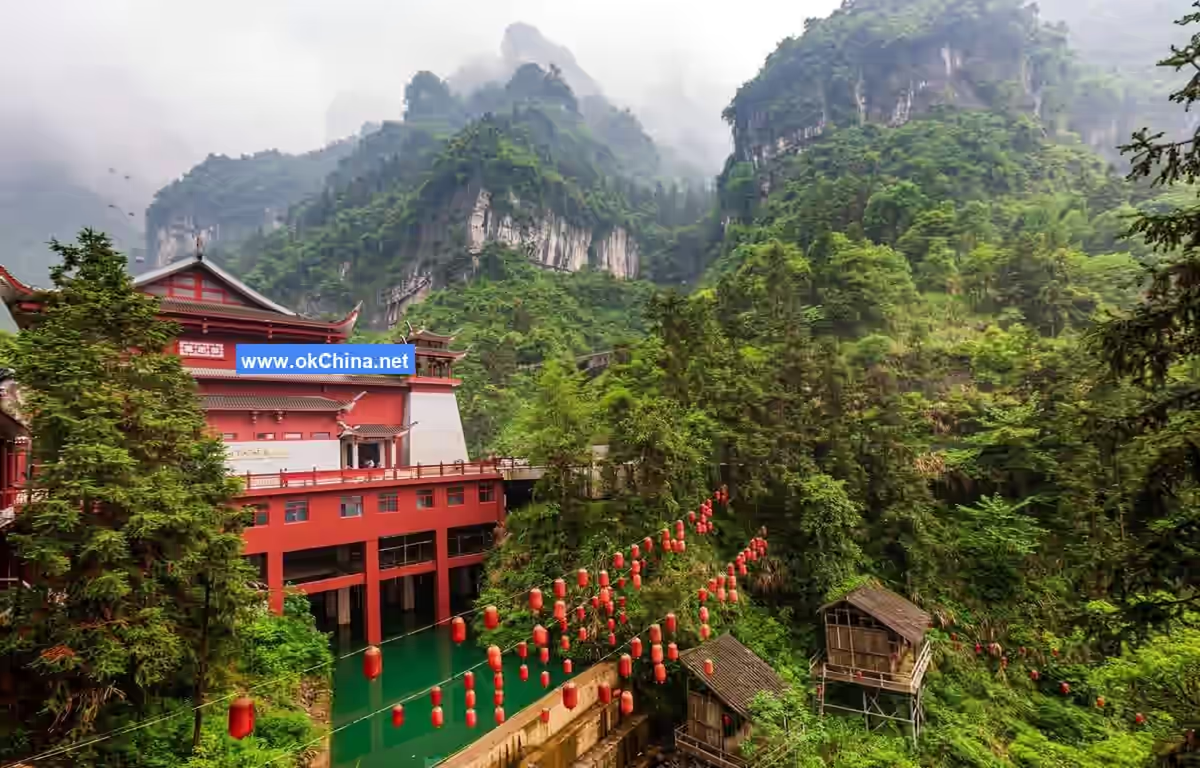
Clear Breeze Gorge is located east of Zhonghu Village. As the gorge's source features the Dragon Spring Waterfall, it is also called Dragon Spring Gorge. The area is characterized by numerous stone peaks, clear flowing streams, secluded pools, and flying waterfalls that complement each other beautifully, presenting a landscape that is scenic, pristine, and tranquil. Main attractions include Tianbo Mansion, Dragon Spring Waterfall, Horse Hoof Rock, and the Cliffside Vine King.
3.4.2.1 Tianbo Mansion
Tianbo Mansion is situated below the Black Dragon Fortress. It features ten stone walls standing parallel to each other, varying in height, creating a majestic scene reminiscent of the ruins of an ancient marquis's or minister's mansion, as if this were originally the grand mansion of the Yang Family Generals.
3.4.2.2 Dragon Spring Waterfall
At the end of Dragon Spring Stream, a cliff over a hundred meters high sees spring water cascading down, misting as it falls into the valley below, forming a waterfall. The waterfall is 80 meters high, 5 meters wide at the top, and 15 meters wide at the base. On the left side, at a 55-meter-high point on the cliff, three sections of strange rocks protrude from the stone wall. The water crashes onto them, creating spray and a misty vapor.
3.4.2.3 Cliffside Vine King
In the Savage Valley, a stone wall about a hundred meters high hosts an ancient vine at its base with a circumference of 93 centimeters. Its roots are anchored at the bottom of the cliff, and the vine stem clings and stretches upward. The lower section is lush with foliage, covering an area of over 300 square meters on the rock face. According to expert research, the vine is several hundred years old and possesses a rare form.
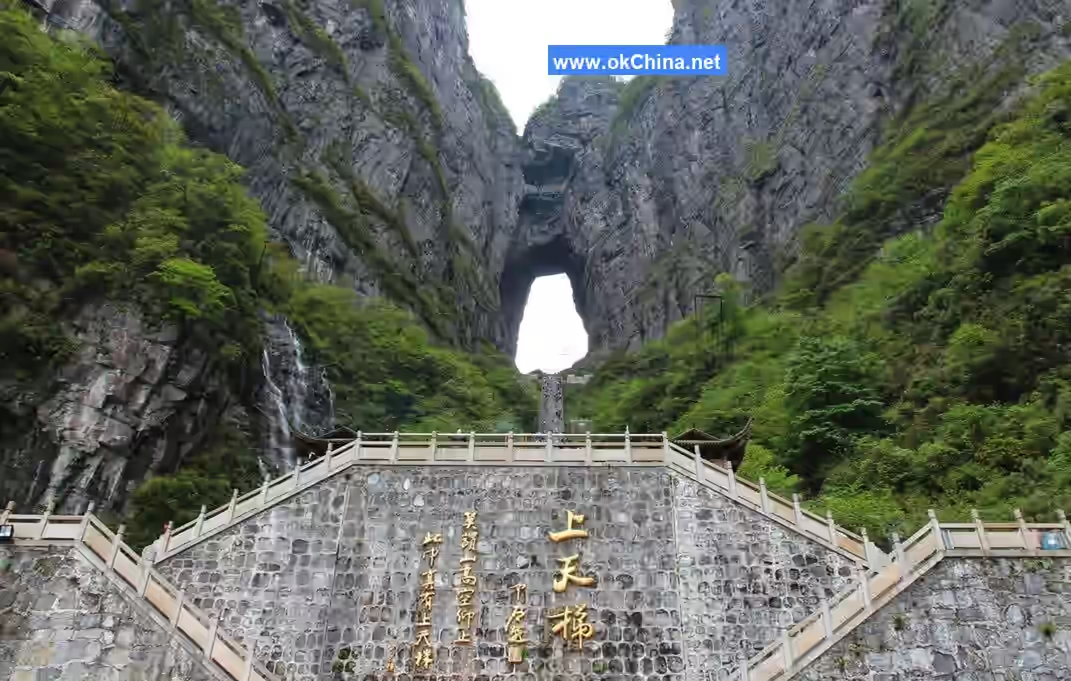
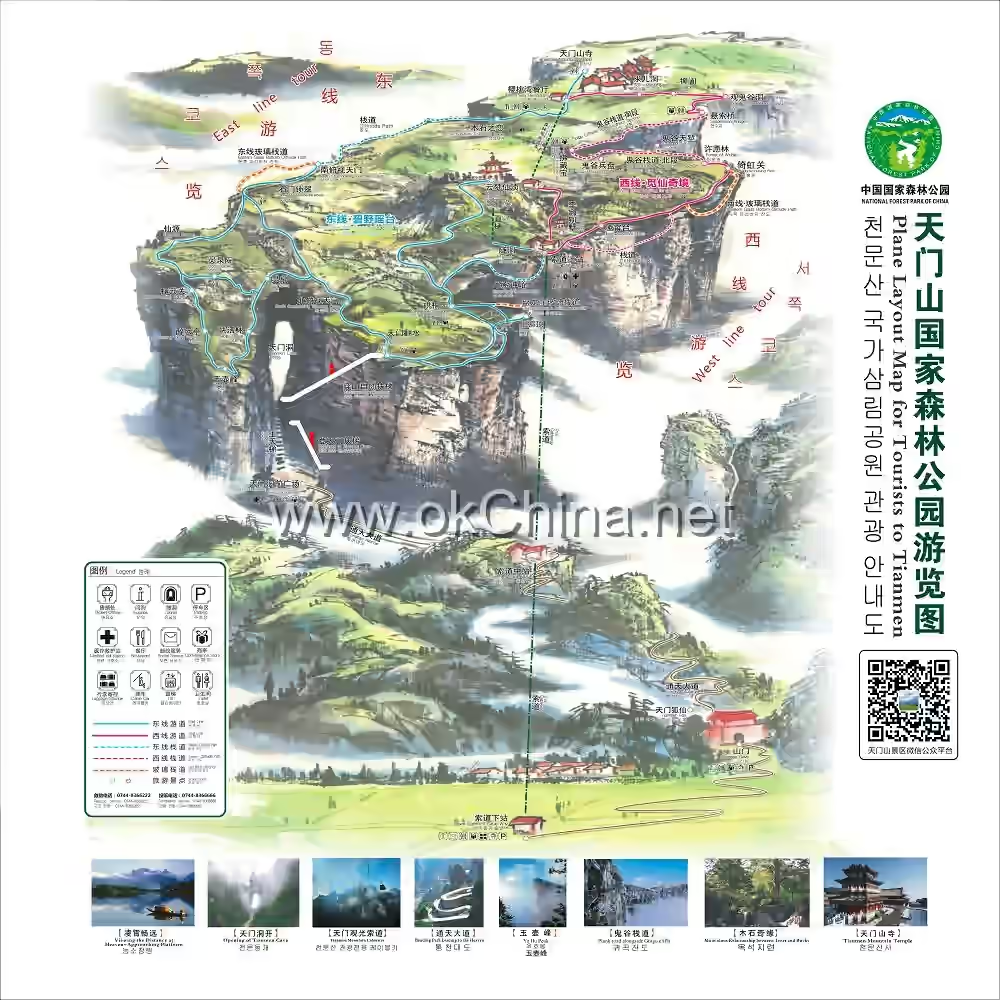
3.5 Tianmen Mountain
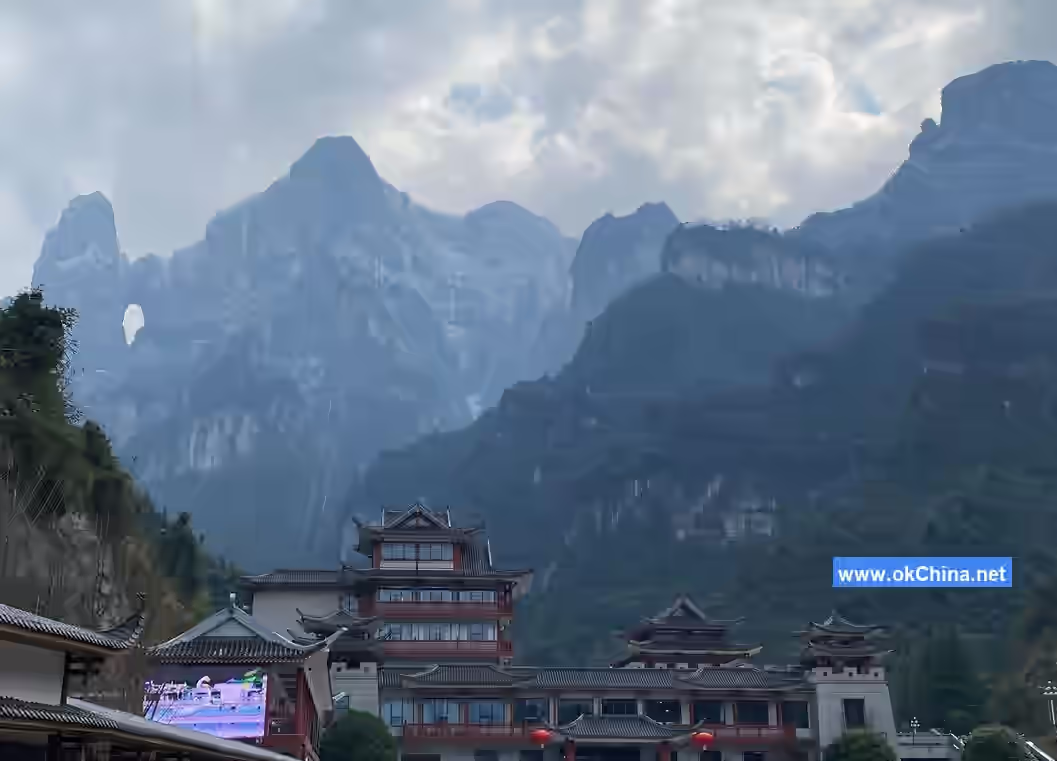
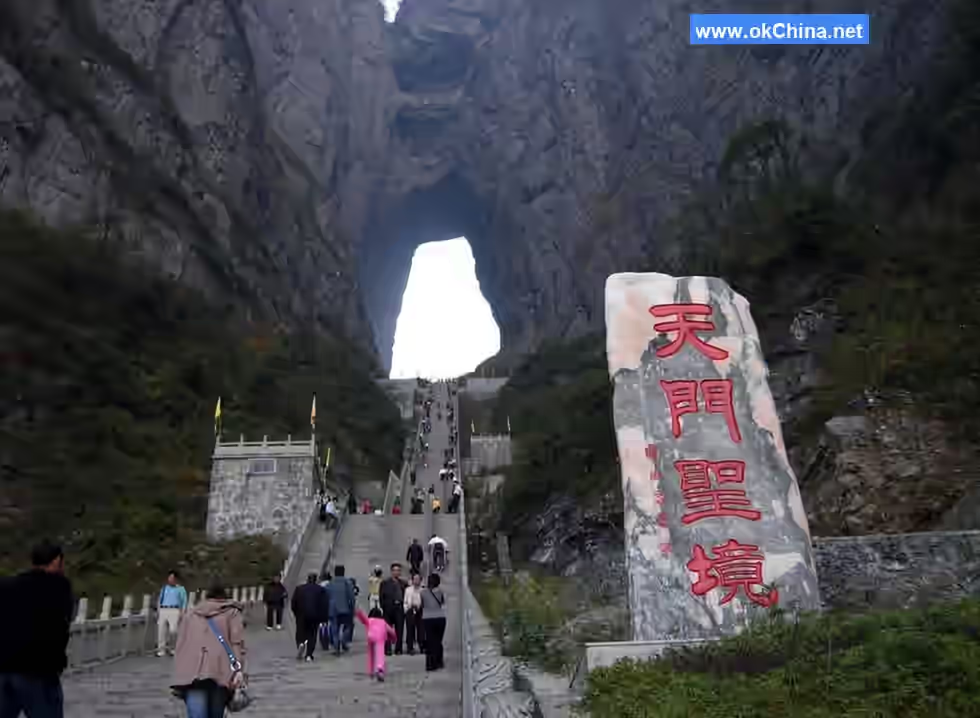
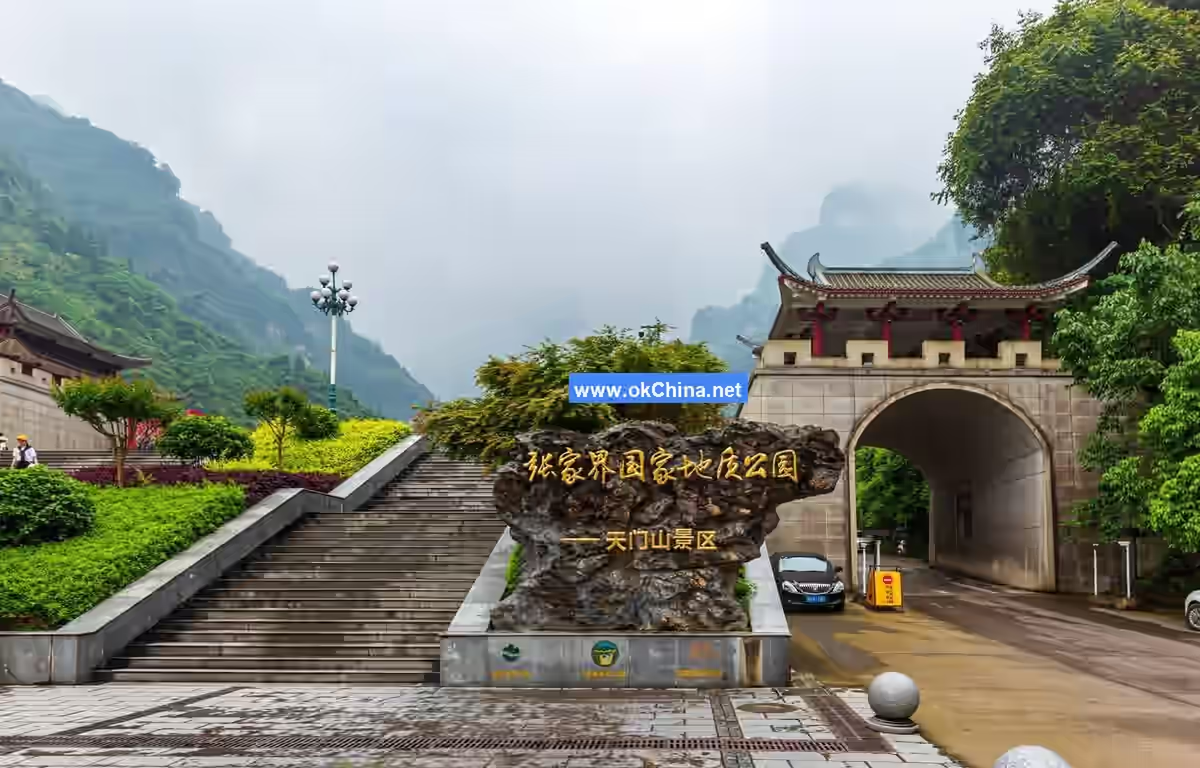
Tianmen Mountain was anciently called Yunmeng Mountain, also known as Yuping Mountain. It is located about 10 kilometers south of Zhangjiajie city proper. In 263 AD, a collapse in the mountain wall opened a gate through the upper part of the mountain, connecting north and south. During the Three Kingdoms period, King Sun Xiu of Wu considered this auspicious and bestowed the name "Tianmen Mountain" (Heaven's Gate Mountain). Tianmen Cave is situated on a sheer cliff at an altitude of over 1,260 meters. The cave opening is 131.5 meters high, 57 meters wide, and over 60 meters deep. Geological experts have determined that the center of the cave opening is the intersection of east-west synclinal rock layers, where compression led to rock fracturing and collapse, ultimately forming the cave opening in 263 AD. Tianmen Mountain has an elevation of 1,517.9 meters. With a relative height difference of over 1,300 meters compared to the city below, it appears particularly majestic and towering. The beauty of its skyline makes it a quintessential mountain.
3.5.1 Tianmen Cave
Tianmen Cave is located in the mid-upper section of Tianmen Mountain at an altitude of 1,300 meters. It is the only one of the mountain's four major scenic areas not situated at the summit. Tianmen Cave gives the mountain its name and is undoubtedly the most representative attraction of Tianmen Mountain. As the world's highest-altitude natural karst cave piercing through a mountain, Tianmen Cave hangs on a thousand-xun sheer cliff, resembling a gateway to heaven embedded in the celestial curtain.
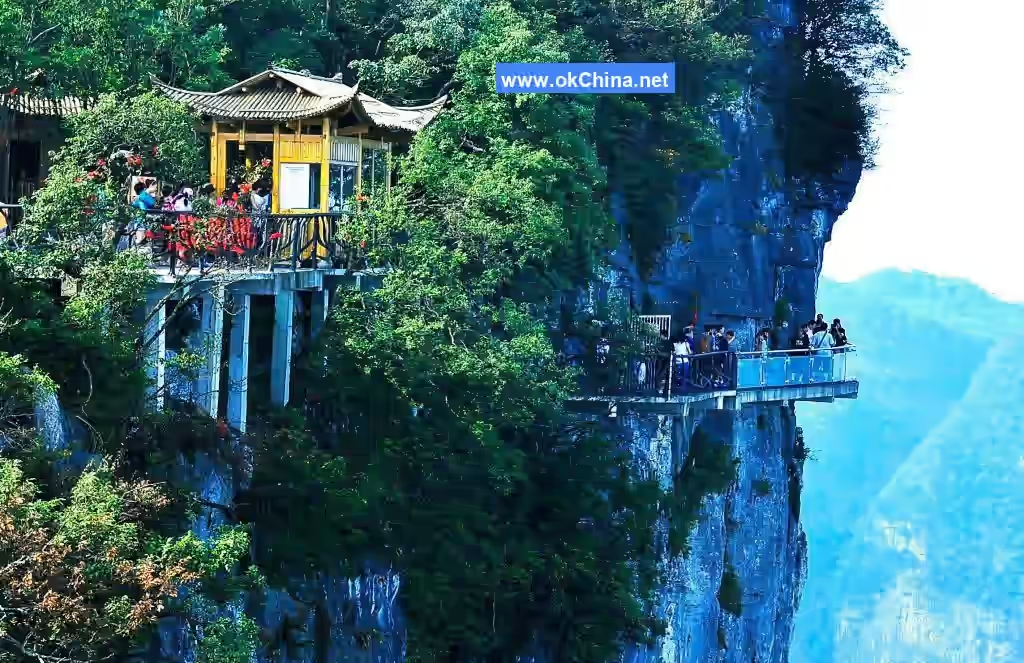
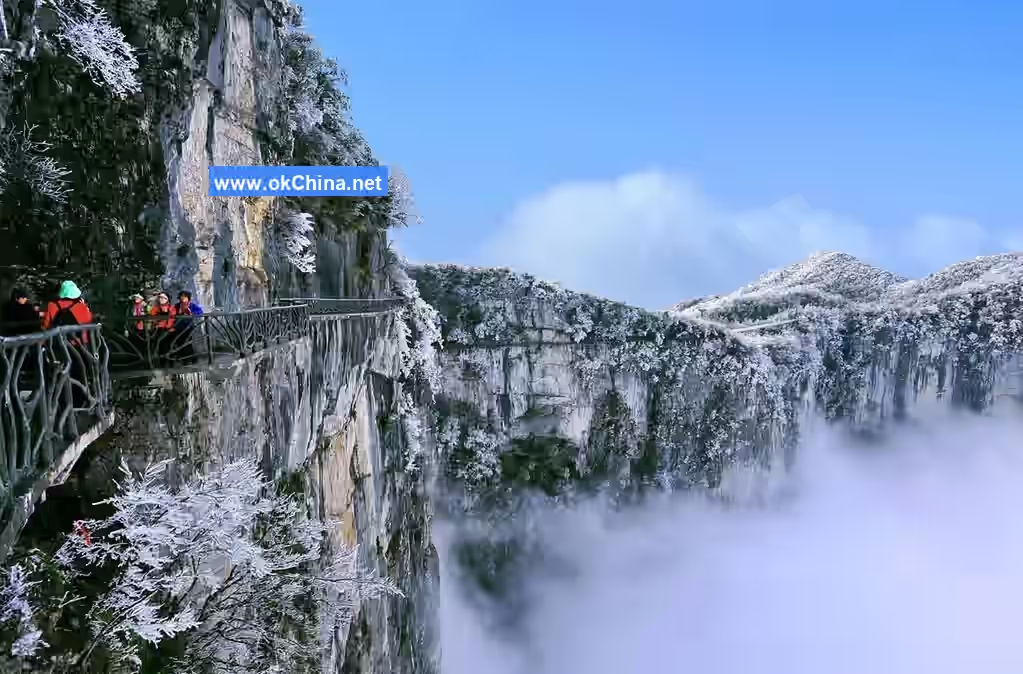
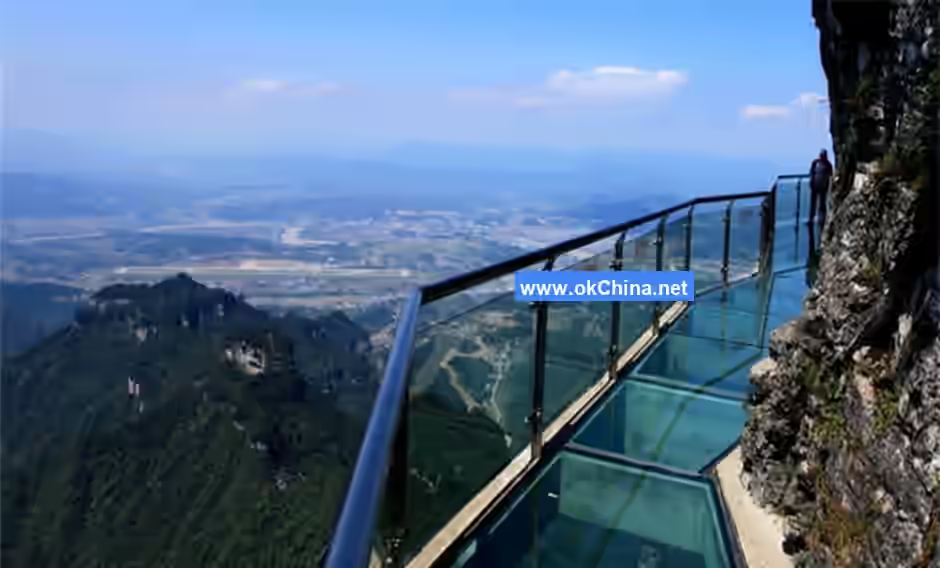
3.5.2 Ghost Valley Plank Walk
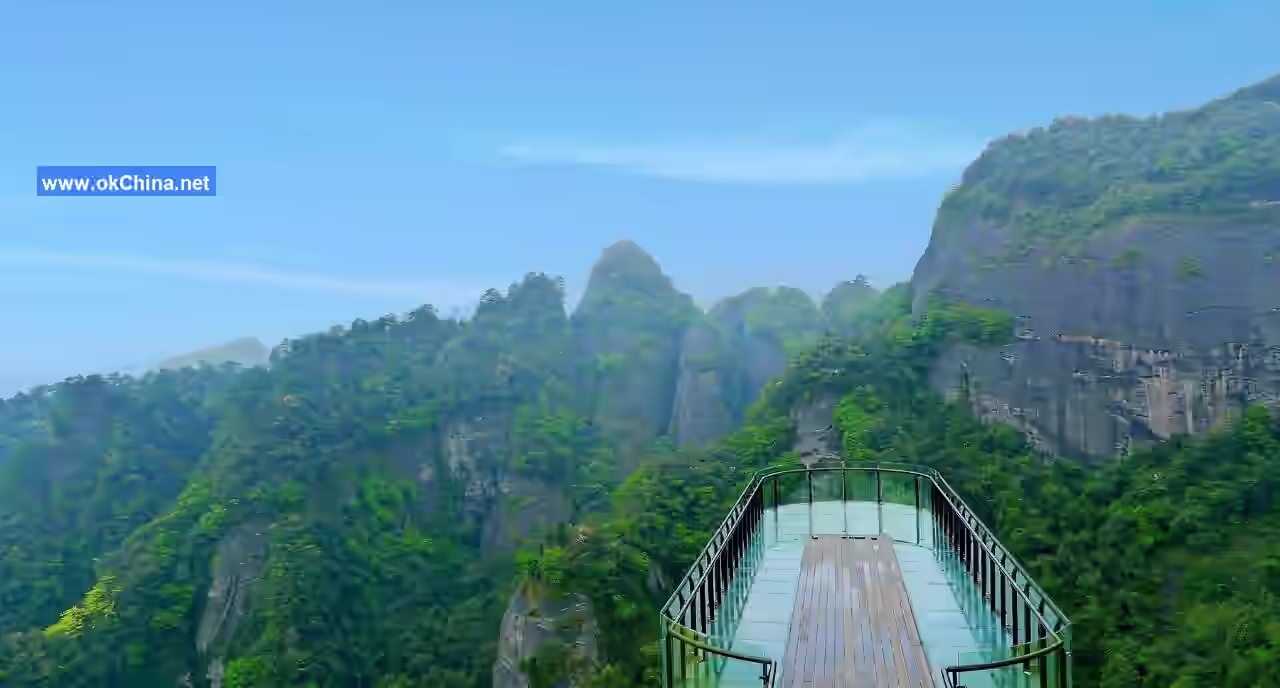
The Ghost Valley Plank Walk is located in the Mixian Qijing (Seeking Immortals Wonderland) scenic area and is named for its path along the cliffs above the Ghost Valley Cave. The plank walk is 1,600 meters long with an average altitude of 1,400 meters, starting at Yihong Pass and ending at Small Tianmen. Unlike other plank walks, the Ghost Valley Plank Walk is neither atop the cliff nor on its side; instead, its entire length is positioned midway up the immense cliff, giving one the sensation of rising and falling, bending and stretching with the precipice.
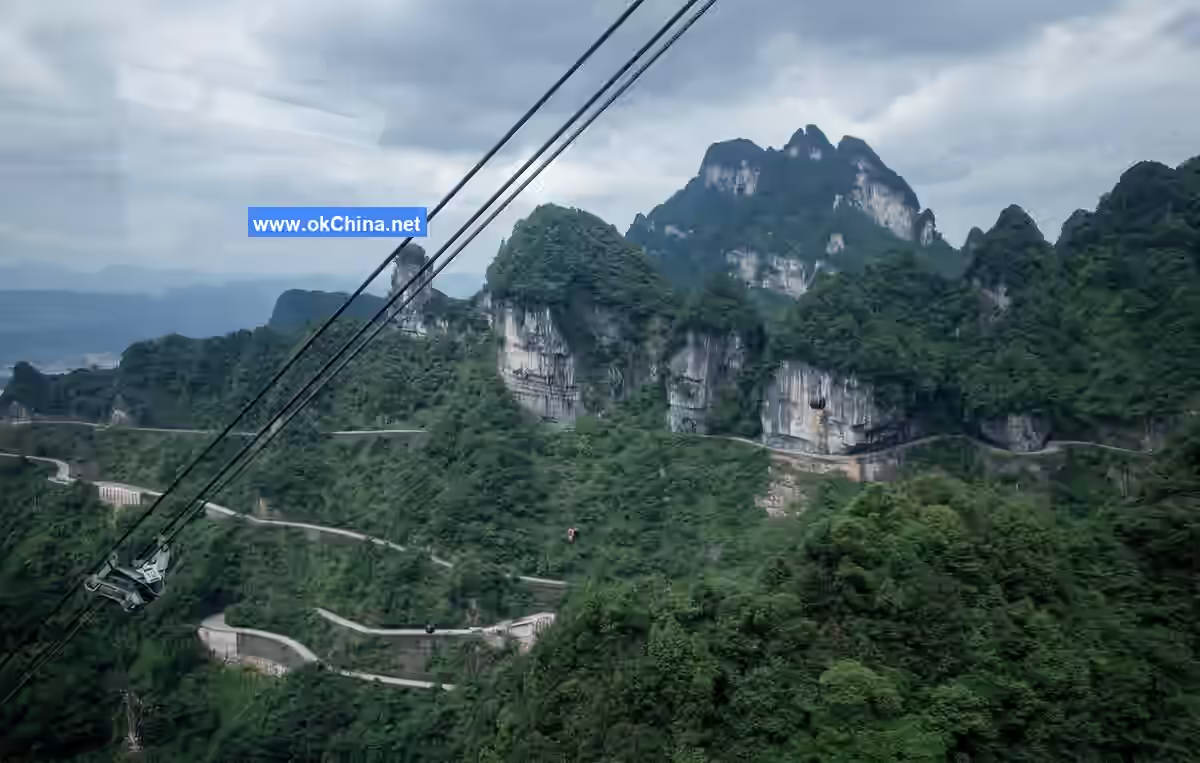
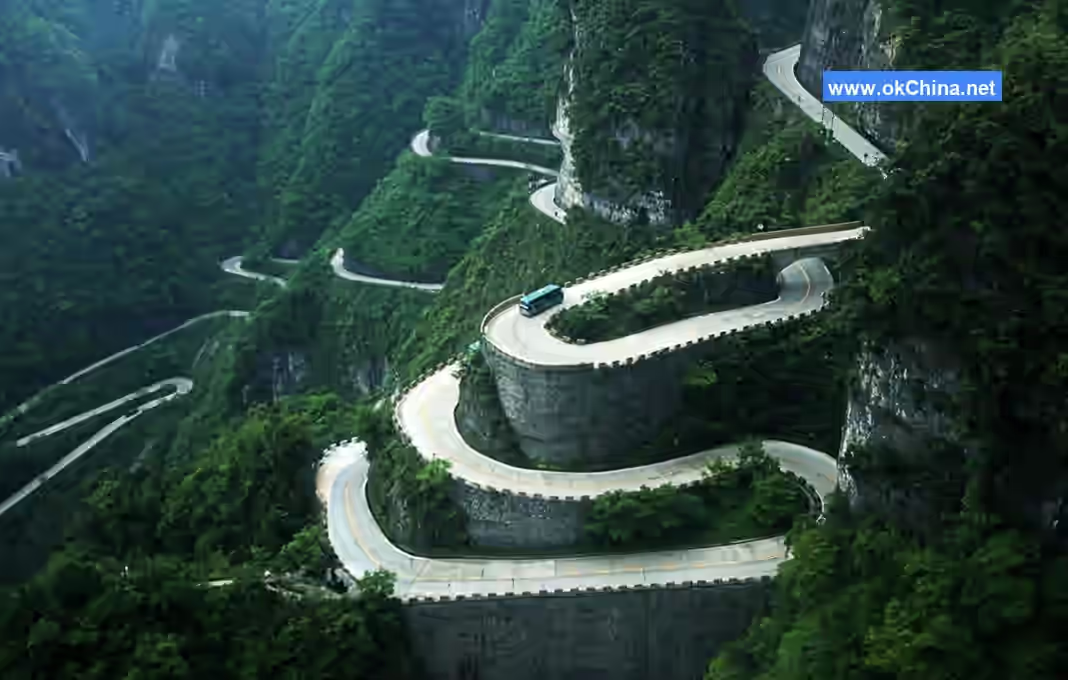
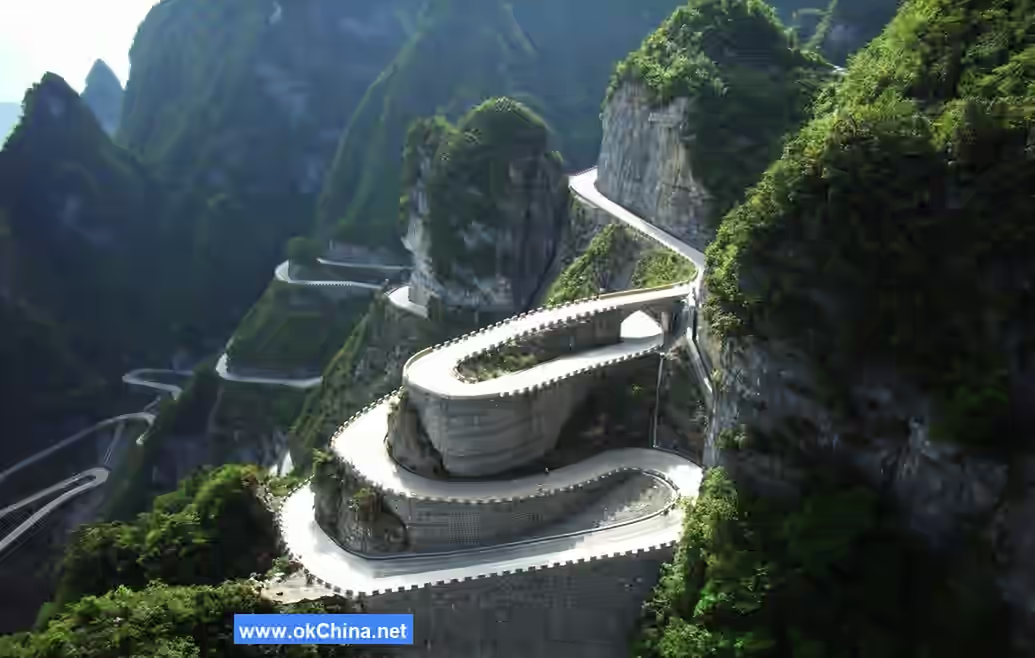
3.5.3 Tongtian Avenue (Road to Heaven)
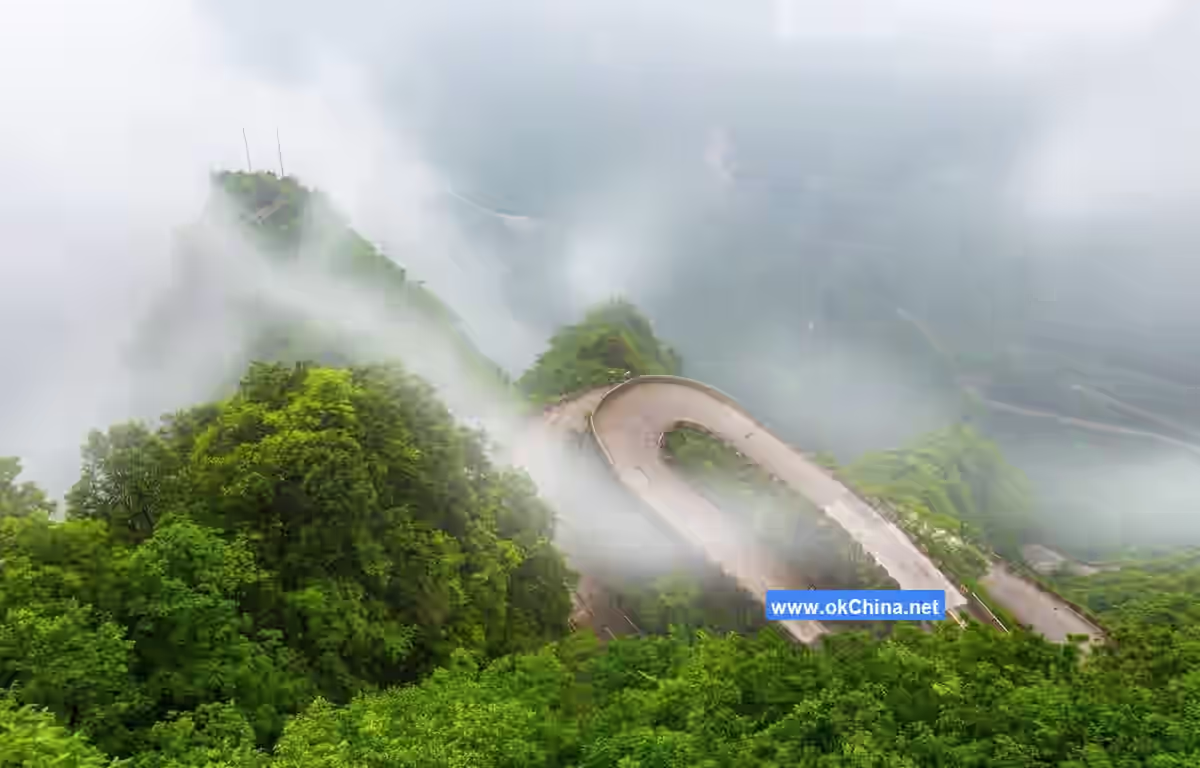
With its posture connecting earth and sky, Tianmen Cave has become a portal to heaven in people's minds. Consequently, the winding mountain road leading to Tianmen Cave is called "Tongtian Avenue" (Road to Heaven). Even more miraculously, upon the road's completion, people were astonished to find that this heavenward road, built following the mountain's contours, has exactly ninety-nine turns, subtly corresponding to the idea that "heaven has nine layers, clouds have nine heavens."
4. Cultural Resources
4.1 Naming
"Wulingyuan" is a name rich in cultural heritage. The origin of its name can be summarized in three aspects. Historically, Wulingyuan was an ancient borderland, isolated by poor transportation, inaccessible by vehicles or boats, rarely visited, and thus little known to outsiders. Later, it was associated with the Changde region, historically called Wuling Prefecture. Before the Qin Dynasty, the area now known as Wulingyuan belonged to Qianzhong Prefecture. For a long historical period starting from the Han Dynasty, it was under the jurisdiction of Wuling Prefecture. During the Republic of China period, it first belonged to Wuling Circuit and later was divided among the Second, Fourth, and Eighth Administrative Inspectorates of Hunan Province. After the founding of the People's Republic of China, it was respectively under the administration of Dayong County and Sangzhi County in the Xiangxi Autonomous Prefecture, and Cili County in the Changde Prefecture. Geographically, present-day Wulingyuan is located on the foothills of the Wuling Mountain Range. From a cultural dissemination perspective, the term "Wulingyuan" appears in the works of many literati and poets. Wang Wei wrote, "The residents all dwell in Wulingyuan, creating fields and gardens beyond the mundane world"; Li Bai also wrote, "When achievements are made, brush off your clothes and depart, returning to Wulingyuan"; Song Dynasty writer Wang Anshi wrote in "Jing Nuan": "Upon returning, telling people, they suspect it is Wulingyuan." The "Wulingyuan" in their writings became a synonym for a transcendent, utopian paradise. The landscapes such as streams, caves, gorges, villages, and woodcutters mentioned in Wang Wei's poem "The Ballad of the Peach Blossom Spring" most closely resemble present-day Wulingyuan.
4.2 Cultural Heritage
Wulingyuan served as a filming location for parts of the American movie "Avatar," Chinese classical masterpieces like "Dream of the Red Chamber" and "Journey to the West," as well as movies and TV shows such as "Zhong Kui: Snow Girl and the Dark Crystal" and "Monster Hunt." In 1978, Wulingyuan was discovered by the world and hailed as a "scenic pearl kept in the inner chambers, unknown to others." In 1982, with State Council approval, China's first national forest park—Zhangjiajie National Forest Park—was established in Zhangjiajie within Wulingyuan. In August 1988, Wulingyuan was included in the second batch of 40 national key scenic spots. In 1992, it was inscribed on the UNESCO World Natural Heritage List. In February 2004, it was designated a UNESCO Global Geopark. In 2007, it was rated as one of China's first batch of 5A-level tourist attractions by the National Tourism Administration. In 2008, it was recognized as a National Civilized Scenic Tourism Area. In November 2010, the quartz sandstone peak forest and canyon landform was officially named "Zhangjiajie Landform" by the international geological academia. In 2012, it was selected for the "2012 Top 200 Chinese Cities with Distinctive Charm."
As of 2012, Zhangjiajie possessed 15 categories with over 100 items of intangible cultural heritage. Among these, Sangzhi Folk Songs were among the first batch listed as National Intangible Cultural Heritage. Zhangjiajie Yang Opera, Zhangjiajie High Flower Lantern, and Cili Banban Dragon Lantern were among the first batch listed as Provincial Intangible Cultural Heritage. Zhangjiajie Hard Qigong once performed in seven European countries accompanying national leaders. Xibu Old Street and Charming Xiangxi successfully obtained approval as Provincial Intangible Cultural Heritage and National 4A-level Scenic Areas.
4.2.1 Ethnic Minorities
The term "Tujia" as an ethnic name began to appear after a large influx of Han Chinese. The Tujia people are one of China's ethnic minorities. They call themselves "Bizika," meaning "locals" or "native people." The Tujia are primarily engaged in agricultural production. The weaving and embroidery art of Tujia women is a proud traditional craft. Tujia people greet each other when they meet and warmly entertain guests in their homes. If visiting during festivals, the host will take out snow-white glutinous rice cakes to roast. Once both sides are golden and puffed, they are blown clean, filled with white sugar or honey, and presented to the guest with both hands. In some specific places, there are special customs when offering cakes to guests: after receiving the roasted cake, the guest must bite into it immediately without blowing off the ash. At that moment, the host will snatch it back, blow and pat it clean, dip it in sugar, and then give it back to the guest.
4.2.2 Folk Customs
Tujia girls welcome their wedding day with crying. The bride typically starts crying over half a month before the wedding, some even crying for over a month, with a minimum of three to five days. The Tujia people consider whether a bride can sing the "Crying Wedding Songs" and how well she sings them as markers of her virtue and intelligence. The "Crying Wedding Songs" are customary folk songs of the Tujia ethnic group. In the month before their wedding, the girls use song to express the unfortunate fate of Tujia women under the feudal arranged marriage system, while also singing of their reluctance to part with their loved ones. The Tujia classify the forms of "Crying Wedding Songs" based on the wedding process, generally divided into "solo crying/singing" and "duet crying/singing."#### 4.2.3 Traditional Opera The Tujia people's Three-Stick Drum, known as Sanzhanggu in ancient times, was introduced to China around the Ming Dynasty and gradually became a beloved folk traditional art form. During the Spring Festival, performers travel from village to village to pay New Year visits, performing at every household regardless of the family's wealth. When visiting impoverished families, the performers often share gifts received from other households, expressing the wish for everyone to enjoy the festive season. This practice fully embodies the Tujia people's hospitality and kind-hearted nature. The Three-Stick Drum is typically performed by three to five people: one beats the drum and sings, one provides percussion accompaniment with gongs and drums, and one manipulates decorated sticks. The performance requires great skill, intense concentration, precise force, seamless coordination, and默契配合默契配合默契配合默契配合默契配合默契配合默契配合默契配合默契配合默契配合默契配合默契配合默契配合默契配合默契配合默契配合默契配合默契配合默契配合默契配合默契配合默契配合默契配合默契配合默契配合默契配合默契配合默契配合默契配合默契配合默契配合默契配合默契配合默契配合默契配合默契配合默契配合默契配合默契配合默契配合默契配合默契配合默契配合默契配合默契配合默契配合默契配合默契配合默契配合默契配合默契配合默契配合默契配合默契配合默契配合默契配合默契配合默契配合默契配合默契配合默契配合默契配合默契配合默契配合默契配合默契配合默契配合默契配合默契配合默契配合默契配合默契配合默契配合默契配合默契配合默契配合默契配合默契配合默契配合默契配合默契配合默契配合默契配合默契配合默契配合默契配合默契配合默契配合默契配合默契配合默契配合默契配合默契配合默契配合默契配合默契配合默契配合默契配合默契配合默契配合默契配合默契配合默契配合默契配合默契配合默契配合默契配合默契配合默契配合默契配合默契配合默契配合默契配合默契配合默契配合默契配合默契配合默契配合默契配合默契配合默契配合默契配合默契配合默契配合默契配合默契配合默契配合默契配合默契配合默契配合默契配合默契配合默契配合默契配合默契配合默契配合默契配合默契配合默契配合默契配合默契配合默契配合默契配合默契配合默契配合默契配合默契配合默契配合默契配合默契配合默契配合默契配合默契配合默契配合默契配合默契配合默契配合默契配合默契配合默契配合默契配合默契配合默契配合默契配合默契配合默契配合默契配合默契配合默契配合默契配合默契配合默契配合默契配合默契配合默契配合默契配合默契配合默契配合默契配合默契配合默契配合默契配合默契配合默契配合默契配合默契配合默契配合默契配合默契配合默契配合默契配合默契配合默契配合默契配合默契配合默契配合默契配合默契配合默契配合默契配合默契配合默契配合默契配合默契配合默契配合默契配合默契配合默契配合默契配合默契配合默契配合默契配合默契配合默契配合默契配合默契配合默契配合默契配合默契配合默契配合默契配合默契配合默契配合默契配合默契配合默契配合默契配合默契配合默契配合默契配合默契配合默契配合默契配合默契配合默契配合默契配合默契配合默契配合默契配合默契配合默契配合默契配合默契配合默契配合默契配合默契配合默契配合默契配合默契配合默契配合默契配合默契配合默契配合默契配合默契配合默契配合默契配合默契配合默契配合默契配合默契配合默契配合默契配合默契配合默契配合默契配合默契配合默契配合默契配合默契配合默契配合默契配合默契配合默契配合默契配合默契配合默契配合默契配合默契配合默契配合默契配合默契配合默契配合默契配合默契配合默契配合默契配合默契配合默契配合默契配合默契配合默契配合默契配合默契配合默契配合默契配合默契配合默契配合默契配合默契配合默契配合默契配合默契配合默契配合默契配合默契配合默契配合默契配合默契配合默契配合默契配合默契配合默契配合默契配合默契配合默契配合默契配合默契配合默契配合默契配合默契配合默契配合默契配合默契配合默契配合默契配合默契配合默契配合默契配合默契配合默契配合默契配合默契配合默契配合默契配合默契配合默契配合默契配合默契配合默契配合默契配合默契配合默契配合默契配合默契配合默契配合默契配合默契配合默契配合默契配合默契配合默契配合默契配合默契配合默契配合默契配合默契配合默契配合默契配合默契配合默契配合默契配合默契配合默契配合默契配合默契配合默契配合默契配合默契配合默契配合默契配合默契配合默契配合默契配合默契配合默契配合默契配合默契配合默契配合默契配合默契配合默契配合默契配合默契配合默契配合默契配合默契配合默契配合默契配合默契配合默契配合默契配合默契配合默契配合默契配合默契配合默契配合默契配合默契配合默契配合默契配合默契配合默契配合默契配合默契配合默契配合默契配合默契配合默契配合默契配合默契配合默契配合默契配合默契配合默契配合默契配合默契配合默契配合默契配合默契配合默契配合默契配合默契配合默契配合默契配合默契配合默契配合默契配合默契配合默契配合默契配合默契配合默契配合默契配合默契配合默契配合默契配合默契配合默契配合默契配合默契配合默契配合默契配合默契配合默契配合默契配合默契配合默契配合默契配合默契配合默契配合默契配合默契配合默契配合默契配合默契配合默契配合默契配合默契配合默契配合默契配合默契配合默契配合默契配合默契配合默契配合默契配合默契配合默契配合默契配合默契配合默契配合默契配合默契配合默契配合默契配合默契配合默契配合默契配合默契配合默契配合默契配合默契配合默契配合默契配合默契配合默契配合默契配合默契配合默契配合默契配合默契配合默契配合默契配合默契配合默契配合默契配合默契配合默契配合默契配合默契配合默契配合默契配合默契配合默契配合默契配合默契配合默契配合默契配合默契配合默契配合默契配合默契配合默契配合默契配合默契配合默契配合默契配合默契配合默契配合默契配合默契配合默契配合默契配合默契配合默契配合默契配合默契配合默契配合默契配合默契配合默契配合默契配合默契配合默契配合默契配合默契配合默契配合默契配合默契配合默契配合默契配合默契配合默契配合默契配合默契配合默契配合默契配合默契配合默契配合默契配合默契配合默契配合默契配合默契配合默契配合默契配合默契配合默契配合默契配合默契配合默契配合默契配合默契配合默契配合默契配合默契配合默契配合默契配合默契配合默契配合默契配合默契配合默契配合默契配合默契配合默契配合默契配合默契配合默契配合默契配合默契配合默契配合默契配合默契配合默契配合默契配合默契配合默契配合默契配合默契配合默契配合默契配合默契配合默契配合默契配合默契配合默契配合默契配合默契配合默契配合默契配合默契配合默契配合默契配合默契配合默契配合默契配合默契配合默契配合默契配合默契配合默契配合默契配合默契配合默契配合默契配合默契配合默契配合默契配合默契配合默契配合默契配合默契配合默契配合默契配合默契配合默契配合默契配合默契配合默契配合默契配合默契配合默契配合默契配合默契配合默契配合默契配合默契配合默契配合默契配合默契配合默契配合默契配合默契配合默契配合默契配合默契配合默契配合默契配合默契配合默契配合默契配合默契配合默契配合默契配合默契配合默契配合默契配合默契配合默契配合默契配合默契配合默契配合默契配合默契配合默契配合默契配合默契配合默契配合默契配合默契配合默契配合默契配合默契配合默契配合默契配合默契配合默契配合默契配合默契配合默契配合默契配合默契配合默契配合默契配合默契配合默契配合默契配合默契配合默契配合默契配合默契配合默契配合默契配合默契配合默契配合默契配合默契配合默契配合默契配合默契配合默契配合默契配合默契配合默契配合默契配合默契配合默契配合默契配合默契配合默契配合默契配合默契配合默契配合默契配合默契配合默契配合默契配合默契配合默契配合默契配合默契配合默契配合默契配合默契配合默契配合默契配合默契配合默契配合默契配合默契配合默契配合默契配合默契配合默契配合默契配合默契配合默契配合默契配合默契配合默契配合默契配合默契配合默契配合默契配合默契配合默契配合默契配合默契配合默契配合默契配合默契配合默契配合默契配合默契配合默契配合默契配合默契配合默契配合默契配合默契配合默契配合默契配合默契配合默契配合默契配合默契配合默契配合默契配合默契配合默契配合默契配合默契配合默契配合默契配合默契配合默契配合默契配合默契配合默契配合默契配合默契配合默契配合默契配合默契配合默契配合默契配合默契配合默契配合默契配合默契配合默契配合默契配合默契配合默契配合默契配合默契配合默契配合默契配合默契配合默契配合默契配合默契配合默契配合默契配合默契配合默契配合默契配合默契配合默契配合默契配合默契配合默契配合默契配合默契配合默契配合默契配合默契配合默契配合默契配合默契配合默契配合默契配合默契配合默契配合默契配合默契配合默契配合默契配合默契配合默契配合默契配合默契配合默契配合默契配合默契配合默契配合默契配合默契配合默契配合默契配合默契配合默契配合默契配合默契配合默契配合默契配合默契配合默契配合默契配合默契配合默契配合默契配合默契配合默契配合默契配合默契配合默契配合默契配合默契配合默契配合默契配合默契配合默契配合默契配合默契配合默契配合默契配合默契配合默契配合默契配合默契配合默契配合默契配合默契配合默契配合默契配合默契配合默契配合默契配合默契配合默契配合默契配合默契配合默契配合默契配合默契配合默契配合默契配合默契配合默契配合默契配合默契配合默契配合默契配合默契配合默契配合默契配合默契配合默契配合默契配合默契配合默契配合默契配合默契配合默契配合默契配合默契配合默契配合默契配合默契配合默契配合默契配合默契配合默契配合默契配合默契配合默契配合默契配合默契配合默契配合默契配合默契配合默契配合默契配合默契配合默契配合默契配合默契配合默契配合默契配合默契配合默契配合默契配合默契配合默契配合默契配合默契配合默契配合默契配合默契配合默契配合默契配合默契配合默契配合默契配合默契配合默契配合默契配合默契配合默契配合默契配合默契配合默契配合默契配合默契配合默契配合默契配合默契配合默契配合默契配合默契配合默契配合默契配合默契配合默契配合默契配合默契配合默契配合默契配合默契配合默契配合默契配合默契配合默契配合默契配合默契配合默契配合默契配合默契配合默契配合默契配合默契配合默契配合默契配合默契配合默契配合默契配合默契配合默契配合默契配合默契配合默契配合默契配合默契配合默契配合默契配合默契配合默契配合默契配合默契配合默契配合默契配合默契配合默契配合默契配合默契配合默契配合默契配合默契配合默契配合默契配合默契配合默契配合默契配合默契配合默契配合默契配合默契配合默契配合默契配合默契配合默契配合默契配合默契配合默契配合默契配合默契配合默契配合默契配合默契配合默契配合默契配合默契配合默契配合默契配合默契配合默契配合默契配合默契配合默契配合默契配合默契配合默契配合默契配合默契配合默契配合默契配合默契配合默契配合默契配合默契配合默契配合默契配合默契配合默契配合默契配合默契配合默契配合默契配合默契配合默契配合默契配合默契配合默契配合默契配合默契配合默契配合默契配合默契配合默契配合默契配合默契配合默契配合默契配合默契配合默契配合默契配合默契配合默契配合默契配合默契配合默契配合默契配合默契配合默契配合默契配合默契配合默契配合默契配合默契配合默契配合默契配合默契配合默契配合默契配合默契配合默契配合默契配合默契配合默契配合默契配合默契配合默契配合默契配合默契配合默契配合默契配合默契配合默契配合默契配合默契配合默契配合默契配合默契配合默契配合默契配合默契配合默契配合默契配合默契配合默契配合默契配合默契配合默契配合默契配合默契配合默契配合默契配合默契配合默契配合默契配合默契配合默契配合默契配合默契配合默契配合默契配合默契配合默契配合默契配合默契配合默契配合默契配合默契配合默契配合默契配合默契配合默契配合默契配合默契配合默契配合默契配合默契配合默契配合默契配合默契配合默契配合默契配合默契配合默契配合默契配合默契配合默契配合默契配合默契配合默契配合默契配合默契配合默契配合默契配合默契配合默契配合默契配合默契配合默契配合默契配合默契配合默契配合默契配合默契配合默契配合默契配合默契配合默契配合默契配合默契配合默契配合默契配合默契配合默契配合默契配合默契配合默契配合默契配合默契配合默契配合默契配合默契配合默契配合默契配合默契配合默契配合默契配合默契配合默契配合默契配合默契配合默契配合默契配合默契配合默契配合默契配合默契配合默契配合默契配合默契配合默契配合默契配合默契配合默契配合默契配合默契配合默契配合默契配合默契配合默契配合默契配合默契配合默契配合默契配合默契配合默契配合默契配合默契配合默契配合默契配合默契配合默契配合默契配合默契配合默契配合默契配合默契配合默契配合默契配合默契配合默契配合默契配合默契配合默契配合默契配合默契配合默契配合默契配合默契配合默契配合默契配合默契配合默契配合默契配合默契配合默契配合默契配合默契配合默契配合默契配合默契配合默契配合默契配合默契配合默契配合默契配合默契配合默契配合默契配合默契配合默契配合默契配合默契配合默契配合默契配合默契配合默契配合默契配合默契配合默契配合默契配合默契配合默契配合默契配合默契配合默契配合默契配合默契配合默契配合默契配合默契配合默契配合默契配合默契配合默契配合默契配合默契配合默契配合默契配合默契配合默契配合默契配合默契配合默契配合默契配合默契配合默契配合默契配合默契配合默契配合默契配合默契配合默契配合默契配合默契配合默契配合默契配合默契配合默契配合默契配合默契配合默契配合默契配合默契配合默契配合默契配合默契配合默契配合默契配合默契配合默契配合默契配合默契配合默契配合默契配合默契配合默契配合默契配合默契配合默契配合默契配合默契配合默契配合默契配合默契配合默契配合默契配合默契配合默契配合默契配合默契配合默契配合默契配合默契配合默契配合默契配合默契配合默契配合默契配合默契配合默契配合默契配合默契配合默契配合默契配合默契配合默契配合默契配合默契配合默契配合默契配合默契配合默契配合默契配合默契配合默契配合默契配合默契配合默契配合默契配合默契配合默契配合默契配合默契配合默契配合默契配合默契配合默契配合默契配合默契配合默契配合默契配合默契配合默契配合默契配合默契配合默契配合默契配合默契配合默契配合默契配合默契配合默契配合默契配合默契配合默契配合默契配合默契配合默契配合默契配合默契配合默契配合默契配合默契配合默契配合默契配合默契配合默契配合默契配合默契配合默契配合默契配合默契配合默契配合默契配合默契配合默契配合默契配合默契配合默契配合默契配合默契配合默契配合默契配合默契配合默契配合默契配合默契配合默契配合默契配合默契配合默契配合默契配合默契配合默契配合默契配合默契配合默契配合默契配合默契配合默契配合默契配合默契配合默契配合默契配合默契配合默契配合默契配合默契配合默契配合默契配合默契配合默契配合默契配合默契配合默契配合默契配合默契配合默契配合默契配合默契配合默契配合默契配合默契配合默契配合默契配合默契配合默契配合默契配合默契配合默契配合默契配合默契配合默契配合默契配合默契配合默契配合默契配合默契配合默契配合默契配合默契配合默契配合默契配合默契配合默契配合默契配合默契配合默契配合默契配合默契配合默契配合默契配合默契配合默契配合默契配合默契配合默契配合默契配合默契配合默契配合默契配合默契配合默契配合默契配合默契配合默契配合默契配合默契配合默契配合默契配合默契配合默契配合默契配合默契配合默契配合默契配合默契配合默契配合默契配合默契配合默契配合默契配合默契配合默契配合默契配合默契配合默契配合默契配合默契配合默契配合默契配合默契配合默契配合默契配合默契配合默契配合默契配合默契配合默契配合默契配合默契配合默契配合默契配合默契配合默契配合默契配合默契配合默契配合默契配合默契配合默契配合默契配合默契配合默契配合默契配合默契配合默契配合默契配合默契配合默契配合默契配合默契配合默契配合默契配合默契配合默契配合默契配合默契配合默契配合默契配合默契配合默契配合默契配合默契配合默契配合默契配合默契配合默契配合默契配合默契配合默契配合默契配合默契配合默契配合默契配合默契配合默契配合默契配合默契配合默契配合默契配合默契配合默契配合默契配合默契配合默契配合默契配合默契配合默契配合默契配合默契配合默契配合默契配合默契配合默契配合默契配合默契配合默契配合默契配合默契配合默契配合默契配合默契配合默契配合默契配合默契配合默契配合默契配合默契配合默契配合默契配合默契配合默契配合默契配合默契配合默契配合默契配合默契配合默契配合默契配合默契配合默契配合默契配合默契配合默契配合默契配合默契配合默契配合默契配合默契配合默契配合默契配合默契配合默契配合默契配合默契配合默契配合默契配合默契配合默契配合默契配合默契配合默契配合默契配合默契配合默契配合默契配合默契配合默契配合默契配合默契配合默契配合默契配合默契配合默契配合默契配合默契配合默契配合默契配合默契配合默契配合默契配合默契配合默契配合默契配合默契配合默契配合默契配合默契配合默契配合默契配合默契配合默契配合默契配合默契配合默契配合默契配合默契配合默契配合默契配合默契配合默契配合默契配合默契配合默契配合默契配合默契配合默契配合默契配合默契配合默契配合默契配合默契配合默契配合默契配合默契配合默契配合默契配合默契配合默契配合默契配合默契配合默契配合默契配合默契配合默契配合默契配合默契配合默契配合默契配合默契配合默契配合默契配合默契配合默契配合默契配合默契配合默契配合默契配合默契配合默契配合默契配合默契配合默契配合默契配合默契配合默契配合默契配合默契配合默契配合默契配合默契配合默契配合默契配合默契配合默契配合默契配合默契配合默契配合默契配合默契配合默契配合默契配合默契配合默契配合默契配合默契配合默契配合默契配合默契配合默契配合默契配合默契配合默契配合默契配合默契配合默契配合默契配合默契配合默契配合默契配合默契配合默契配合默契配合默契配合默契配合默契配合默契配合默契配合默契配合默契配合默契配合默契配合默契配合默契配合默契配合默契配合默契配合默契配合默契配合默契配合默契配合默契配合默契配合默契配合默契配合默契配合默契配合默契配合默契配合默契配合默契配合默契配合默契配合默契配合默契配合默契配合默契配合默契配合默契配合默契配合默契配合默契配合默契配合默契配合默契配合默契配合默契配合默契配合默契配合默契配合默契配合默契配合默契配合默契配合默契配合默契配合默契配合默契配合默契配合默契配合默契配合默契配合默契配合默契配合默契配合默契配合默契配合默契配合默契配合默契配合默契配合默契配合默契配合默契配合默契配合默契配合默契配合默契配合默契配合默契配合默契配合默契配合默契配合默契配合默契配合默契配合默契配合默契配合默契配合默契配合默契配合默契配合默契配合默契配合默契配合默契配合默契配合默契配合默契配合默契配合默契配合默契配合默契配合默契配合默契配合默契配合默契配合默契配合默契配合默契配合默契配合默契配合默契配合默契配合默契配合默契配合默契配合默契配合默契配合默契配合默契配合默契配合默契配合默契配合默契配合默契配合默契配合默契配合默契配合默契配合默契配合默契配合默契配合默契配合默契配合默契配合默契配合默契配合默契配合默契配合默契配合默契配合默契配合默契配合默契配合默契配合默契配合默契配合默契配合默契配合默契配合默契配合默契配合默契配合默契配合默契配合默契配合默契配合默契配合默契配合默契配合默契配合默契配合默契配合默契配合默契配合默契配合默契配合默契配合默契配合默契配合默契
Comments
Post a Comment