Wuling Mountain Grand Canyon Scenic Area
1. Introduction
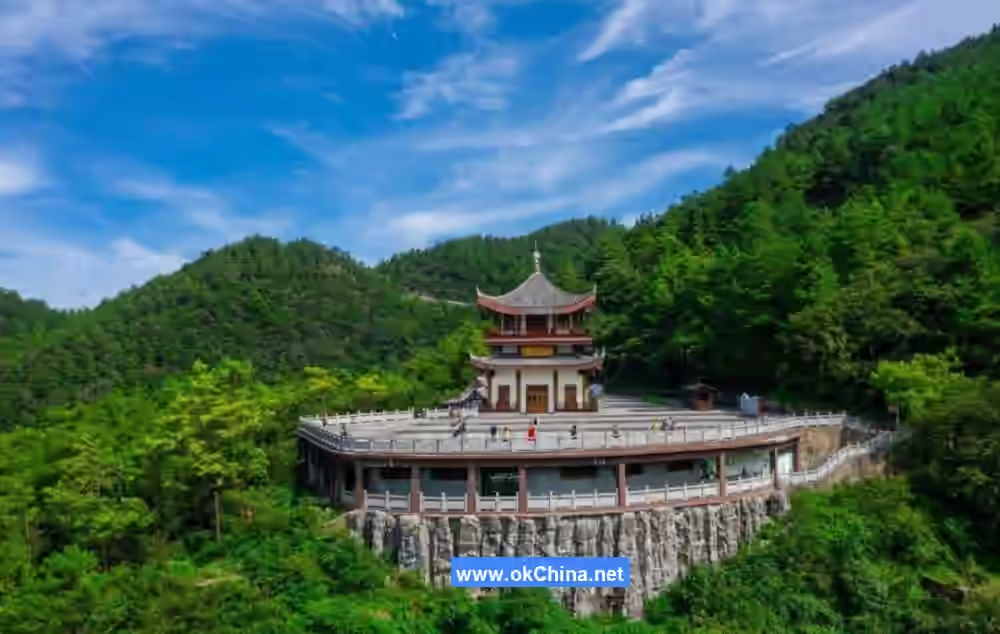
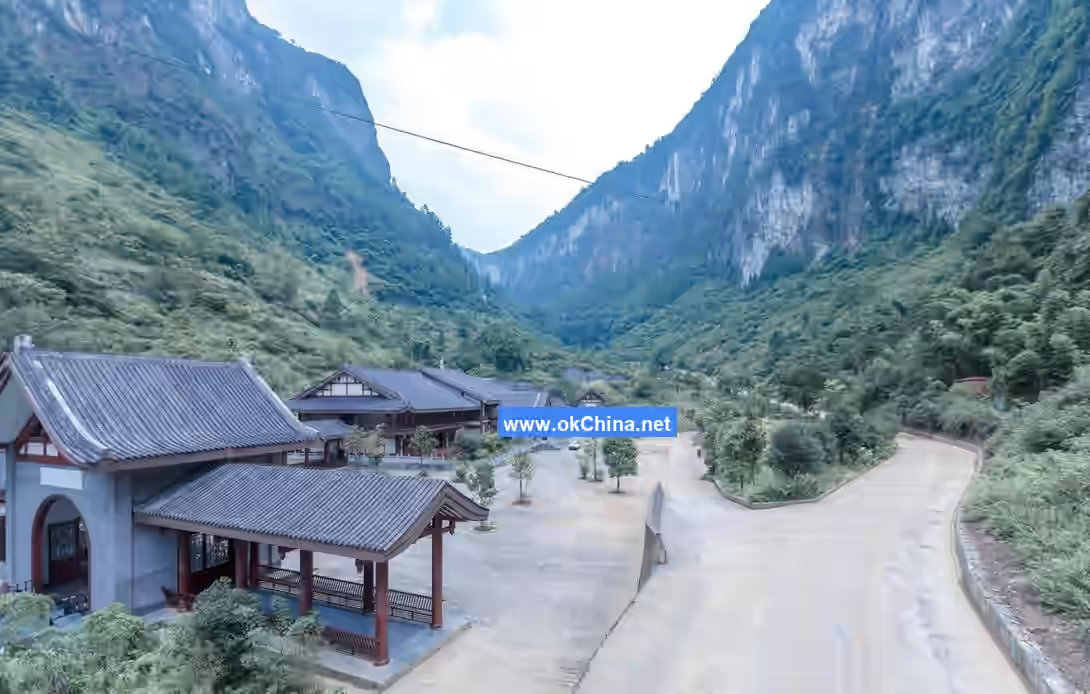
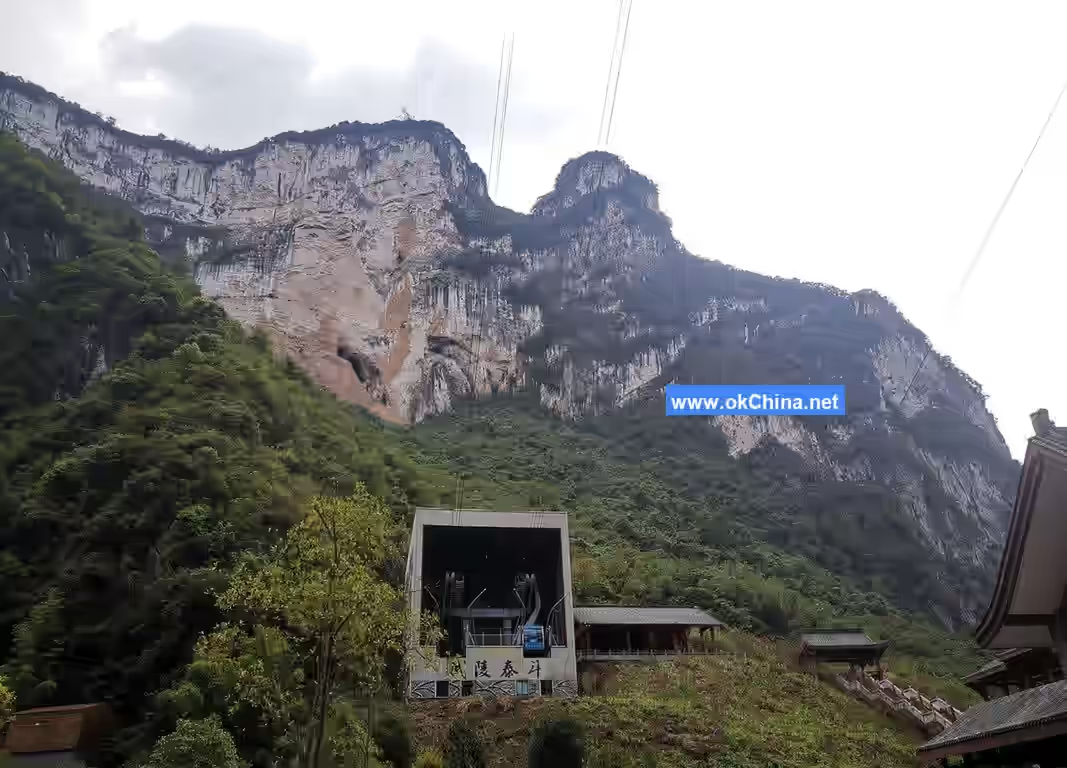
The Wuling Mountain Grand Canyon is located within Wuling Township, approximately 40 kilometers southeast of Fuling District, Chongqing City. It sits at the northwestern end of the Wuling Mountain Range, on the eastern bank of the lower reaches of the Wu River. It is a landscape of sheer cliffs and fissures created by intense tectonic movements. The canyon belongs to the ancient Wuling Mountain, a branch of the Miaoling Mountains, with elevations ranging from 600 to 1,980 meters.
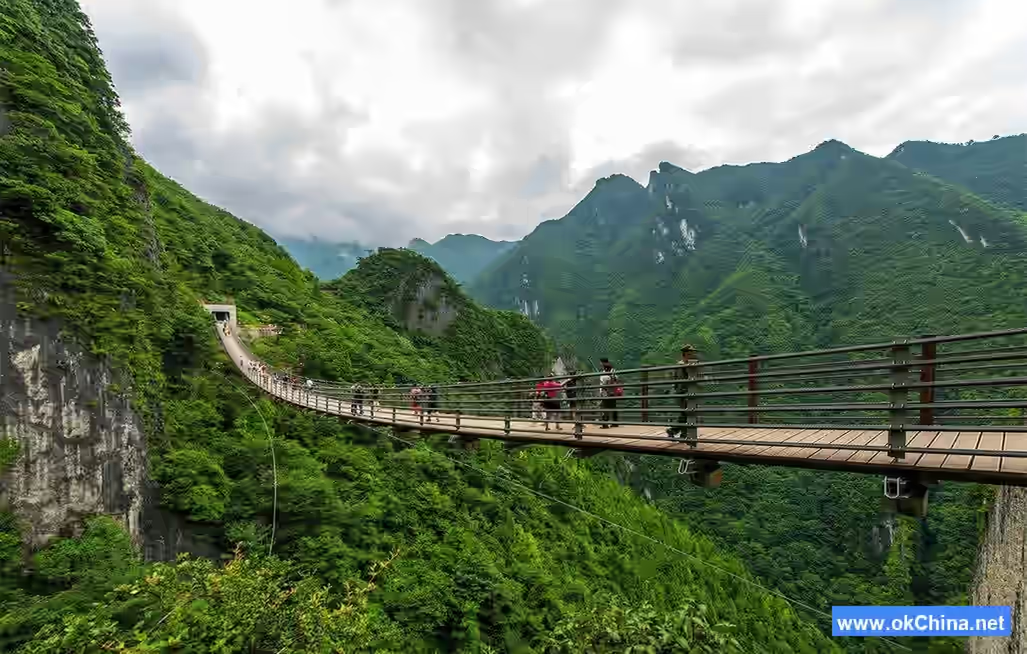
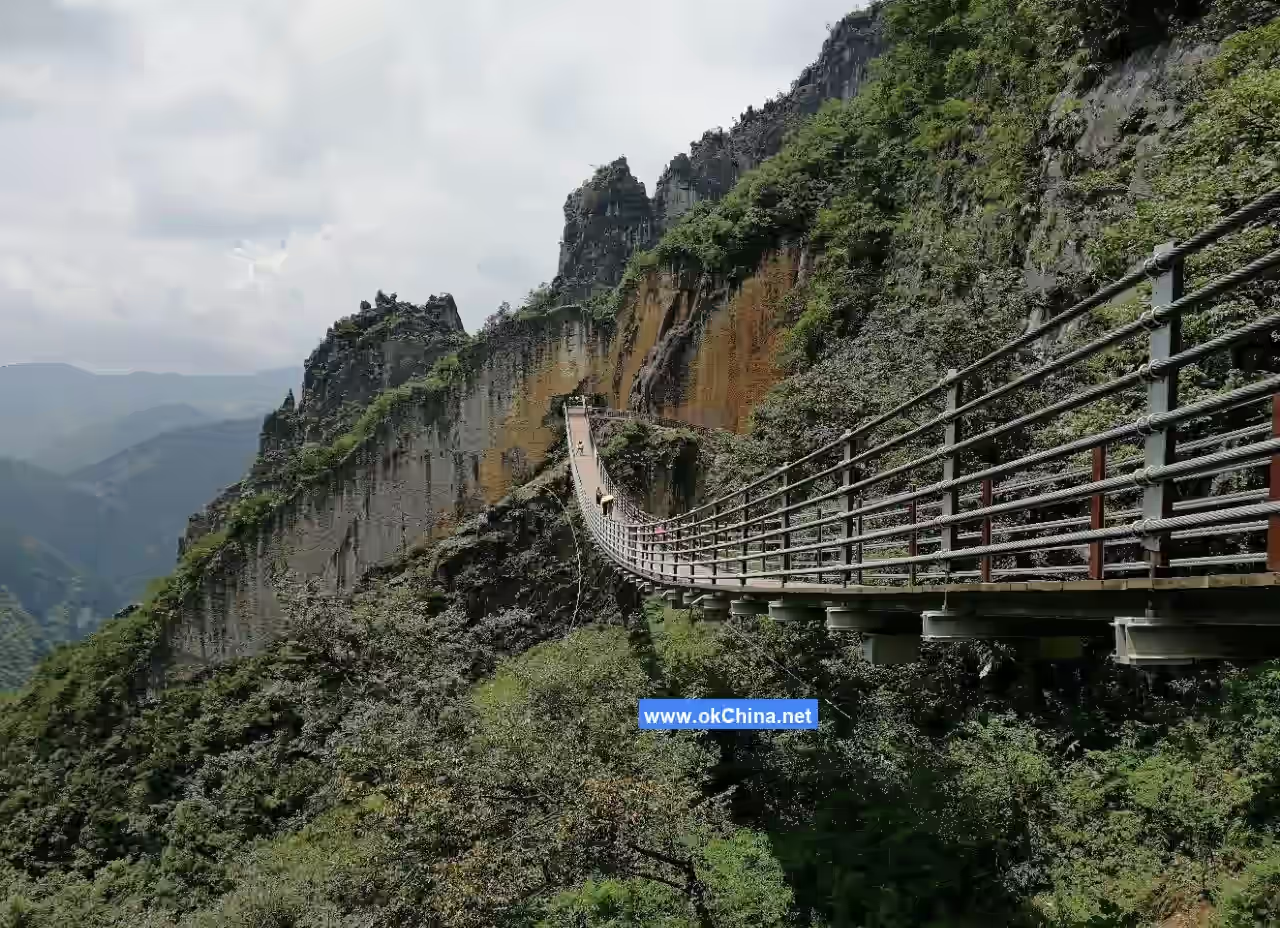
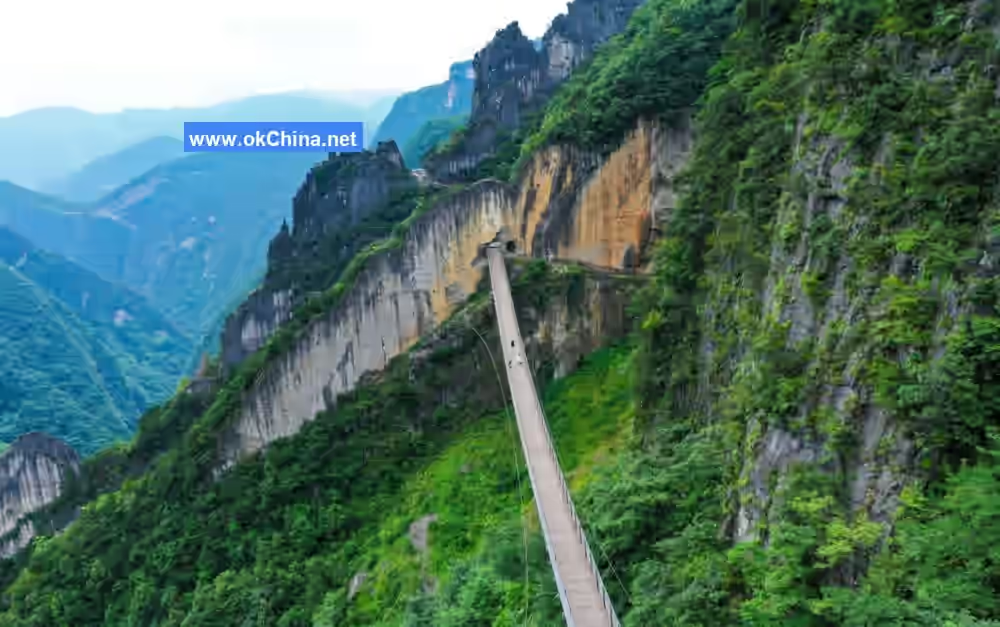
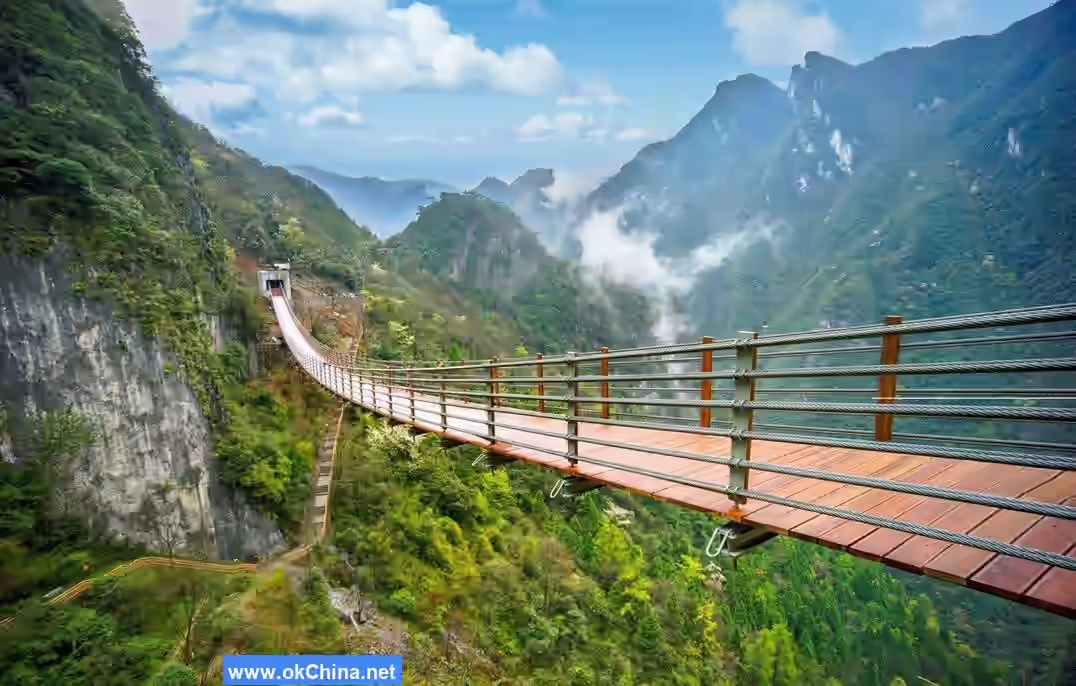
The Wuling Mountain Grand Canyon Scenic Area covers 29.96 square kilometers and is composed of numerous cliffs, peculiar peaks, and ground fissures, making it a typical representative of karst landforms in southern China. Its core is a 10-kilometer-long pristine karst valley that integrates mountains, forests, springs, caves, waterfalls, lakes, pools, gorges, sinkholes, and fissures, boasting rich tourism resources. The ten-li (approx. 5 km) grand canyon is majestic and magnificent, with uniquely piled rocks at its base, murmuring streams, and natural sheer cliffs stretching for miles. Famous scenic spots include the Copper Wall and Iron Rampart, Tathagata's Divine Palm, General Stone, and Qingtianxia Ground Fissure.
2. Geographical Environment
2.1 Location and Region
The Wuling Mountain Grand Canyon Scenic Area is located within Wuling Township, approximately 40 kilometers southeast of Fuling District, Chongqing City. It sits at the northwestern end of the Wuling Mountain Range, on the eastern bank of the lower reaches of the Wu River.
2.2 Topography and Landforms
The Wuling Mountain Grand Canyon is a landscape of sheer cliffs and fissures created by intense tectonic movements. The canyon belongs to the ancient Wuling Mountain, a branch of the Miaoling Mountains, with elevations ranging from 600 to 1,980 meters.
2.3 Climate Characteristics
The Wuling Mountain Grand Canyon Scenic Area features a subtropical humid monsoon climate. Winters are not cold, with average January temperatures generally above 0°C; summers are cool, with average July temperatures around 22°C. Annual precipitation generally exceeds 1,000 mm, concentrated mainly in summer, with less in winter. The average annual number of snowfall days is 33, with a maximum snow depth of 25 cm.
2.4 Natural Resources
2.4.1 Plant Resources
The Wuling Mountain Grand Canyon Scenic Area is home to 1,190 species of vascular plants belonging to 608 genera and 178 families. This includes 103 species of ferns (60 genera, 35 families), 19 species of gymnosperms (14 genera, 7 families), and 1,068 species of angiosperms (534 genera, 136 families). Rare tree species such as Taxus chinensis var. mairei and Metasequoia glyptostroboides are distributed throughout the area.
2.4.2 Animal Resources
The Wuling Mountain Grand Canyon Scenic Area is rich in animal resources, with 260 species recorded. This includes 13 species of amphibians, 27 species of reptiles, 167 species of birds, and 53 species of mammals. There are 48 species of national and regional key protected wildlife, with the most representative being the wild macaque, which has a large population.
3. Main Attractions
3.1 Little Kuimen
Located in the eastern part of the scenic area at an altitude of 1,200 meters, Little Kuimen was formed by the long-term weathering and erosion of limestone, resulting in rock walls that appear as if carved by knives and axes. The windward sheer cliffs display a rich palette of colors—white, crimson, yellow, brown—which interplay with the morning glow, evening sunset, and moonlight to create breathtakingly spectacular views. It shares a similar charm with the Kuimen of the Three Gorges of the Yangtze River, yet possesses its own unique allure.
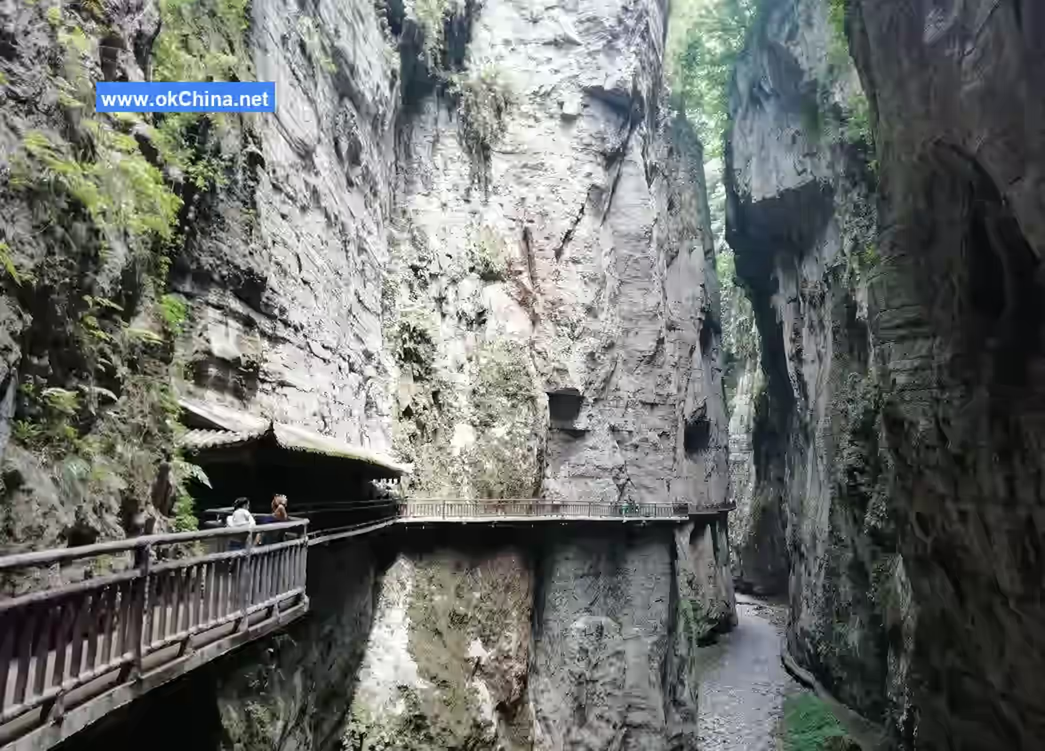
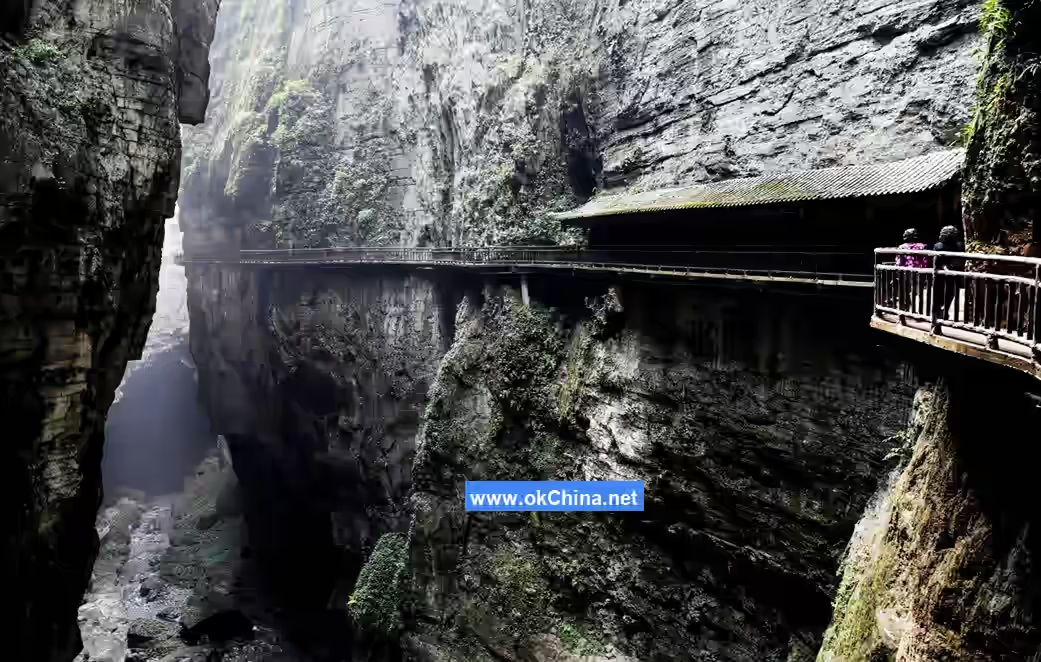
The steep peaks on either side, towering into the clouds, look as if sliced by knives and split by axes. The layered rocks on the cliff faces resemble history books left by time. The distance between the peaks is narrow, with the narrowest point being only a few meters wide. Looking up, the sky is compressed into a slender blue ribbon, creating a powerful visual impact. When sunlight filters down, the interplay of light and shadow transforms within the gorge, seeming to narrate ancient tales.
Entering Little Kuimen, one can hear the murmuring of the stream at the valley floor. The clear water weaves through scattered rocks, playing a natural symphony. A gentle breeze brings coolness and freshness, dispelling the fatigue of the journey. Standing on the viewing platform of Little Kuimen and looking down from the railing, the scenery deep within the canyon unfolds before one's eyes—the winding paths, dense vegetation, and faintly visible streams compose a magnificent landscape painting.
Little Kuimen has witnessed countless changes over time. Its resilience and grandeur make one marvel at the uncanny craftsmanship of nature. Whether for photography enthusiasts eager to capture its magnificent moments with their lenses, or for ordinary visitors simply wanting to quietly feel this natural awe, Little Kuimen never disappoints. It is one of the iconic attractions of the Wuling Grand Canyon, attracting people to explore. In its presence, humans seem so small, and a sense of reverence for nature spontaneously arises. It feels like traversing time and space, conversing with ancient mountains and rivers, and appreciating their endless charm and the vastness of heaven and earth.
3.2 Python Mountain
Located in the middle section of the scenic area's canyon at an altitude of 1,200–1,500 meters, Python Mountain is named for its resemblance to a giant python. Due to differences in rock hardness, the relatively softer mudstone and argillaceous limestone have weaker resistance to weathering and were preferentially eroded, creating concave landforms. The relatively harder limestone has stronger resistance to weathering, is less prone to erosion, and forms protruding landforms, resulting in undulating peaks resembling a giant python. The mountain's head is held high, as if gazing into the distance, with vivid eyes that seem to gleam with cunning and majesty. Its massive body follows the mountain's contours, with smooth and natural curves, as if ready to soar into the sky and glide through the canyon at any moment. The lush vegetation on the mountain resembles a splendid layer of scales on the python, shimmering with the luster of life under the sunlight.
Walking slowly along the tour route, one can admire the wondrous posture of Python Mountain from different angles. Sometimes it is hidden amidst clouds and mist, appearing and disappearing as if playing with the mist; other times, under direct sunlight, it reveals its full form, its lifelike shape astonishing. When a breeze passes, the trees on the mountain rustle, as if the python is murmuring, telling the legendary stories of the canyon.
Python Mountain is not merely a peculiar peak; it is an artistic masterpiece bestowed upon the Wuling Grand Canyon by nature. With its unique form and mysterious aura, it attracts numerous visitors to pause, gaze, and take photos. Here, people can freely unleash their imagination, feel nature's creativity and infinite charm, immerse themselves in this marvelous landscape painting, forget the troubles and noise of the mundane world, and allow their souls to experience an unprecedented cleansing and tranquility.
3.3 Cockscomb Ridge
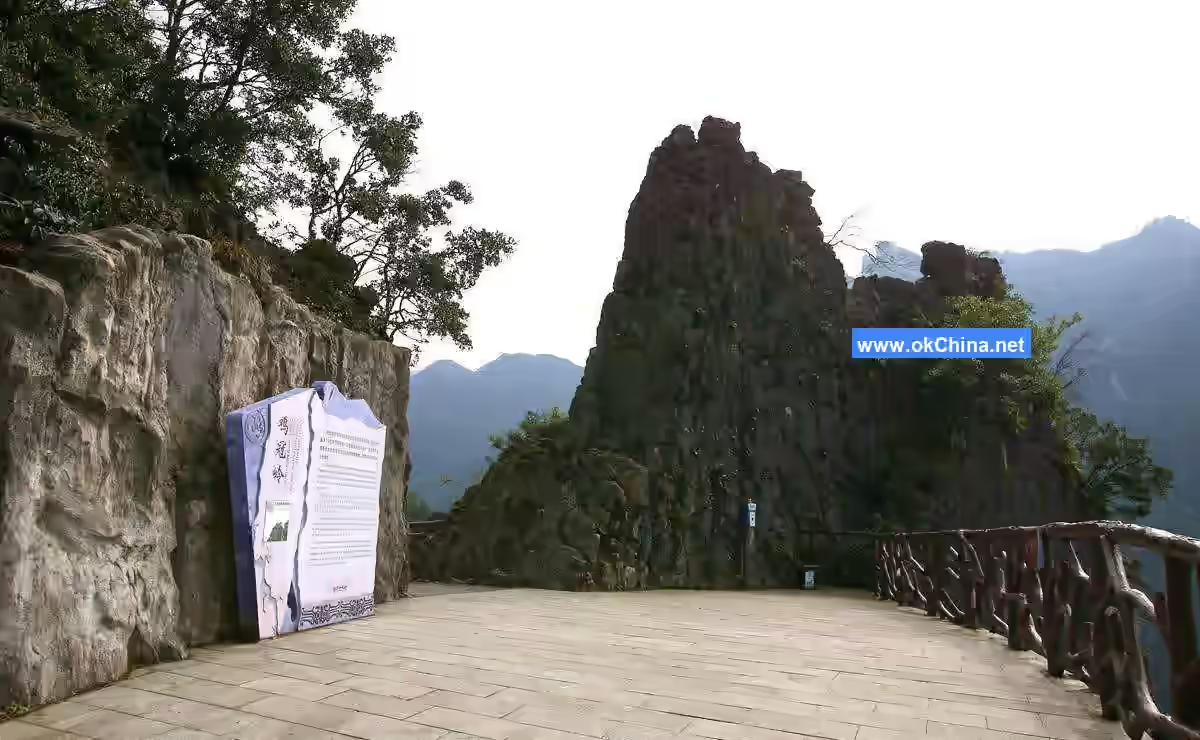
Located in the upper section of the scenic area, Cockscomb Ridge is a typical karst landform of peak clusters. The vertical rock walls, formed by intense tectonic movements, consist of Permian Changxing Formation limestone from 250 million years ago. It is an assemblage of peaks formed by the strong dissolution of limestone by rainwater, named for one section's striking resemblance to a rooster's comb. Upon ascending Cockscomb Ridge, the first sight is the peculiarly shaped rock formations. Massive rocks are stacked in layers, forming an outline similar to a cockscomb, with lines that are vigorous and powerful yet retain a flowing beauty. The rock surfaces, weathered by wind and rain, display mottled textures, as if narrating the vicissitudes of time. Under the sunlight, the rocks of Cockscomb Ridge present a rich array of colors—golden, orange-red, gray-brown interwoven—like a splendid oil painting.
Standing atop Cockscomb Ridge offers an extremely broad view. Gazing into the distance, the rolling mountain ranges rise and fall like a turbulent green ocean. Looking down into the canyon, it is deep and serene, with the stream at the bottom like a silver ribbon, faintly visible amidst the emerald vegetation. A refreshing breeze brushes the face, bringing a hint of coolness and making one feel relaxed and happy. At this moment, the sounds of birdsong and mountain echoes reach the ears, like a symphony performed by nature, adding a touch of vitality and liveliness to this magnificent scenery.
Cockscomb Ridge is not only an excellent place to enjoy beautiful views but also an ideal spot to challenge oneself and feel the majestic power of nature. When you climb up the steep mountain path, overcome difficulties, and reach the summit, a sense of conquering joy and reverence for nature wells up simultaneously. Here, you can breathe the fresh air to your heart's content, relax your body and mind, let your soul merge with nature, and feel this gift and awe bestowed by the heavens and the earth.
3.4 Tathagata's Divine Palm
Located below Cockscomb Ridge, Tathagata's Divine Palm is approximately 200 meters high and about 80 centimeters thick, its shape precisely resembling the Abhaya Mudra (fearlessness gesture) of the Buddha. Its formation is due to varying thicknesses of a single rock layer. The thinner layers collapsed to both sides under rainwater erosion, while the thicker layer, being stronger and less prone to collapse, formed this wall-like landform.
3.5 Guanyin on Lotus Throne
Located below Cockscomb Ridge, the stone shape resembles the Bodhisattva Guanyin seated in meditation on a lotus throne. The Bodhisattva Guanyin has her hands joined in prayer, with kind eyebrows and benevolent eyes, entering a state of deep meditation. Her headscarf and kasaya robe are vividly lifelike.
3.6 Heavenly Gate Cave
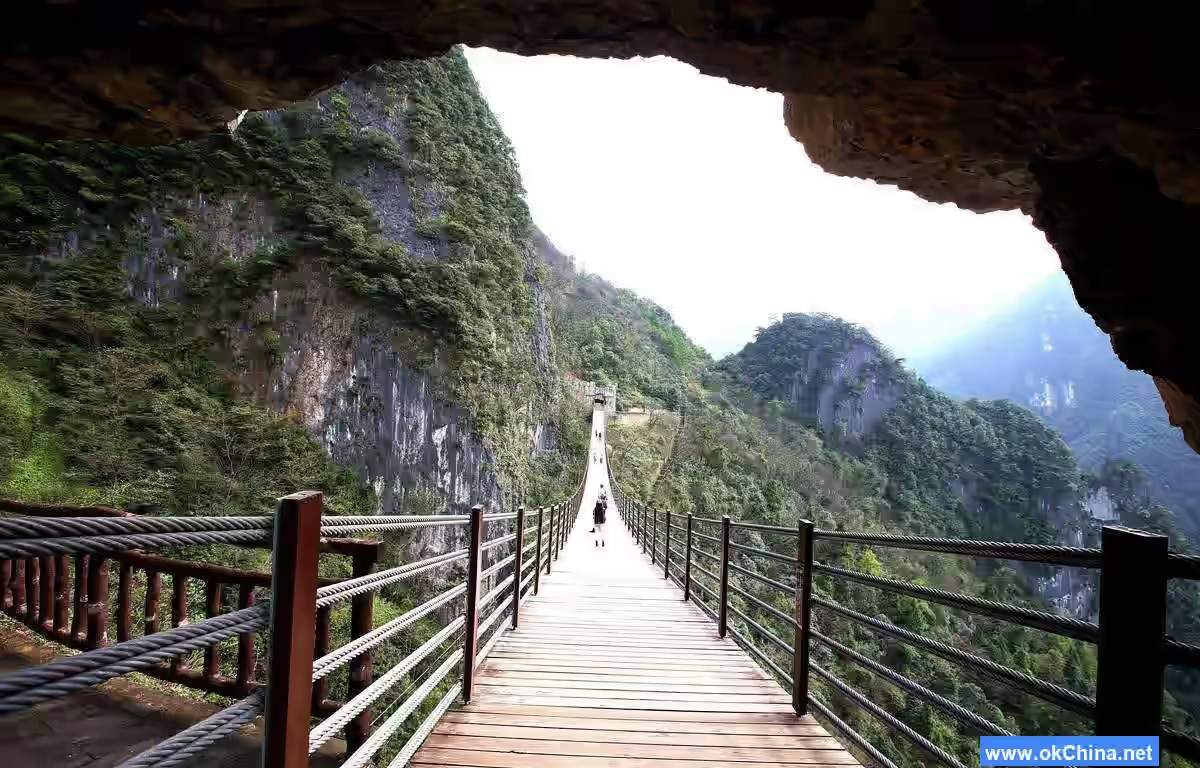
Located in the middle section of Bodao Ridge, the Heavenly Gate Cave has an entrance about 3 meters high and 4 meters wide. The cave resembles a gate connecting the human world and the celestial realm, hence the name "Heavenly Gate Cave." Viewed from afar, the Heavenly Gate Cave appears circular, like a bright moon hanging in the sky. Its entrance edges are neat and smooth, as if meticulously carved by deities. The surrounding peaks are steep and perilous, with clouds and mist swirling around, adding to the mysterious atmosphere of the Heavenly Gate Cave. When sunlight pierces the clouds and shines on the cave entrance, the Heavenly Gate Cave seems endowed with life, emitting a sacred glow like a gate to a fairyland, irresistibly drawing people closer.
Approaching the Heavenly Gate Cave, one can feel its grandeur and magnificence. The entrance is enormous, tens of meters high and also tens of meters wide, large enough for a large passenger aircraft to pass through. Standing inside the cave and looking up, the sky is framed into a circle, like a natural painting. The interior of the cave is cool and pleasant; a gentle breeze brings in fresh air, refreshing the spirit. The cave walls are covered with peculiar rock textures and stalactites of various shapes—some resembling animals, others like human figures—as if narrating ancient legends.Passing through Tianmen Cave feels like traversing through time and space. Looking from one end of the cave to the other, the scenery outside unfolds like a scroll painting, with distant mountains, valleys, and streams all coming into view. Tianmen Cave is not only a natural wonder but also a symbol of culture and history, embodying people’s aspirations for a better life and their desire to explore the mysterious unknown. Here, visitors can capture unforgettable photos to record these awe-inspiring moments, or simply sit in quiet contemplation, feeling the greatness and magic of nature, allowing their souls to be nourished and elevated in this mysterious realm.
3.7 The Copper Wall and Iron Barrier
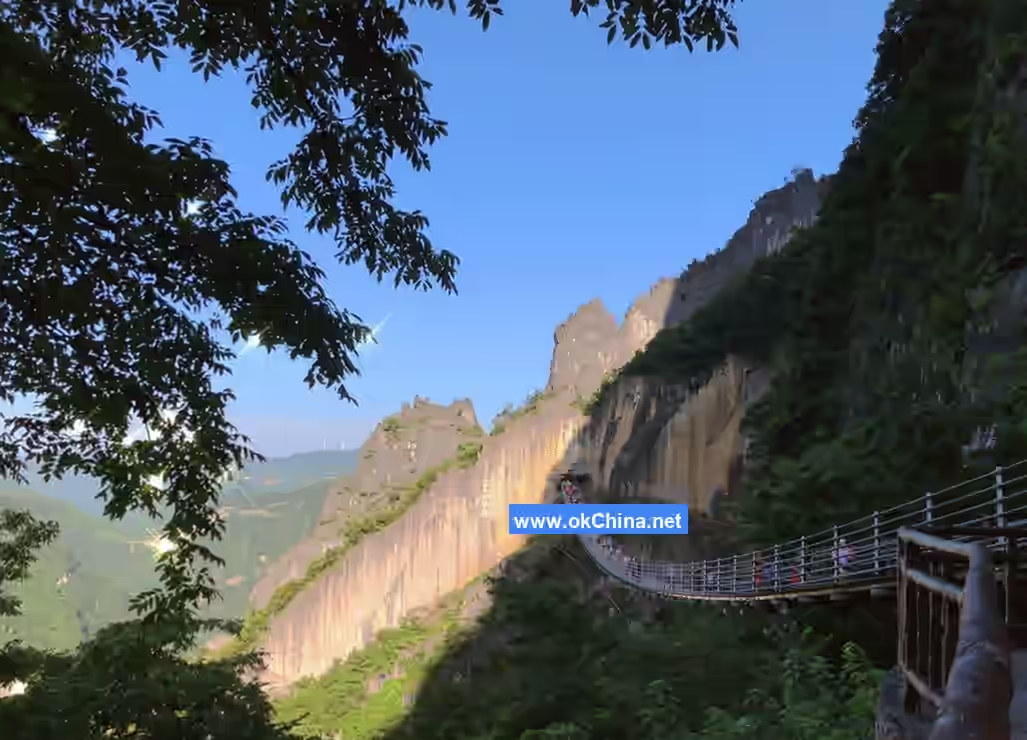
Located east of Bodao Ridge, the Copper Wall and Iron Barrier is a fault within the karst landscape. Named for its rust-colored cliffs that shimmer golden under the sunlight, it stands thousands of feet tall, resembling a thin blade. Its surface is smooth, flat, and vertically precipitous, stretching for kilometers—a rare sight in China. Marine shell fossils are embedded in the wall. The Copper Wall and Iron Barrier is like a history book written in stone, standing silently to showcase the majestic power of nature and the marks carved by the passage of time.
The Copper Wall and Iron Barrier is composed of a single massive rock, its scale truly astonishing. It rises vertically on one side of the canyon, towering hundreds of meters high and extending for kilometers like a natural barrier, guarding this magical land. The rock’s surface is smooth and hard, gleaming with a metallic luster under the sun, as if forged from copper and iron—hence its name. Its color is deep, primarily bluish-gray, interspersed with brownish veins like the traces of time, recording the countless seasons it has witnessed.
Approaching the Copper Wall and Iron Barrier, one can clearly see the dense textures and folds on the rock. These patterns run parallel, crisscross, undulate like waves, or stand straight as if carved by a knife—they are vivid witnesses to the Earth’s internal movements and geological changes. Over the long geological history, this area experienced crustal uplift, compression, folding, and fracturing. Rocks originally deposited on the seabed were gradually lifted to the surface and, under various geological stresses, formed the spectacular sight seen today. These textures and folds are not only valuable materials for geologists studying Earth’s history but also an excellent textbook for visitors to appreciate nature’s craftsmanship.
Walking slowly along the canyon’s viewing trail and observing the Copper Wall and Iron Barrier from different angles reveals its varying postures and beauty. At times, it resembles a majestic giant overlooking everything in the canyon; at other times, it appears like a colossal scroll, perfectly blending nature’s grandeur with delicacy. When sunlight shines from different directions, the contrast between light and shadow on the rock becomes more pronounced, and the textures and folds appear more three-dimensional and vivid, as if narrating ancient and mysterious stories.
Standing beneath the Copper Wall and Iron Barrier, one cannot help but feel deep reverence for the great power of nature. Having endured hundreds of millions of years of wind and rain, it still stands unyielding—a testament to resilience and eternity that makes one feel the insignificance of human existence and the brevity of life. Visitors who pause here can not only admire the unique geological landscape but also carry with them a profound respect and admiration for nature. This awe becomes the most unforgettable memory of their journey, inspiring them to continue exploring the mysteries and beauty of the Wulingyuan Grand Canyon with reverence and insight into natural wonders.
4. Cultural Resources
4.1 Local Specialties
-
Assorted Pickled Rouge Radish: Rouge radish, also known as Fuling red-heart radish, contains natural red pigment and grows along the Yangtze River in Fuling. Assorted pickled rouge radish is a product of Fuling locals combining rouge radish with Sichuan pickling techniques. Originating from traditional Fuling household pickles, it has a long history. Its processing methods resemble those of traditional Chinese pickles, but due to its unique ingredients and meticulous craftsmanship, the product boasts distinctive flavor, color, and quality.
-
Wuling Mountain Red-Heart Kiwifruit: A red-fleshed variety of Chinese kiwifruit, this is an extra-early ripening red-heart type. The fruit is relatively large, with tender flesh and a rich, sweet taste, serving both culinary and medicinal purposes.
-
Wuling Mountain Highland Corn: The Wuling Mountain region enjoys a mild and humid climate, abundant rainfall, and fertile soil rich in trace elements such as nitrogen, phosphorus, and potassium. Combined with high altitude and significant temperature variations, these conditions are ideal for corn cultivation and growth, resulting in plump kernels with a bright sheen.
-
Wuling Mountain Spring Bamboo Shoots: In spring, the pristine bamboo shoots in the Wuling Mountain area grow vigorously. They can be eaten fresh or sun-dried to make dried bamboo shoots. Spring bamboo shoots are delicious and nutritious, containing ample moisture, rich plant protein, and essential nutrients and trace elements like calcium, phosphorus, and iron, with high crude fiber content.
4.2 Culinary Delights
-
Fuling Preserved Vegetable Banquet: Fuling is known as the hometown of preserved vegetables in China. Fuling preserved vegetables are renowned for their unique crisp, tender, fresh, and fragrant flavor, having won a gold medal at the Panama International Commodities Exposition. Along with German sweet and sour kale and European pickled cucumbers, they are celebrated as one of the world’s three great pickled vegetables. There are 357 original preserved vegetable recipes, with dishes like preserved vegetable meat patty steamed egg, "Pearls and Jewels," "Flowers Blooming in Wealth," preserved vegetable tofu pouch, and preserved vegetable mushroom pork pan-fried dumplings being the most distinctive.
-
Fuling Oil-Fermented Glutinous Rice: In earlier times, this was a pre-meal beverage served to guests in households. When guests arrived, the host would prepare a bowl of oil-fermented glutinous rice (sometimes with added eggs) for them to enjoy—a hospitality custom in the Fuling region known as "having boiled water." Made from premium glutinous rice fermented into rice mash, it is stir-fried in oil with sesame, candied kumquat, walnut kernels, crispy flower seeds, candied dates, rock sugar, and then boiled in water with eggs and glutinous rice balls. The final product is sweet, delicious, rich but not greasy, and highly nutritious.
-
Zhiren Copper Pot Mutton: This dish features locally sourced Wuling Mountain goat as the main ingredient, with strict requirements regarding the goat’s breeding altitude and growth period. Through meticulous cooking, the resulting mutton is exceptionally tender.
Comments
Post a Comment