Changchun World Sculpture Park
1. Introduction
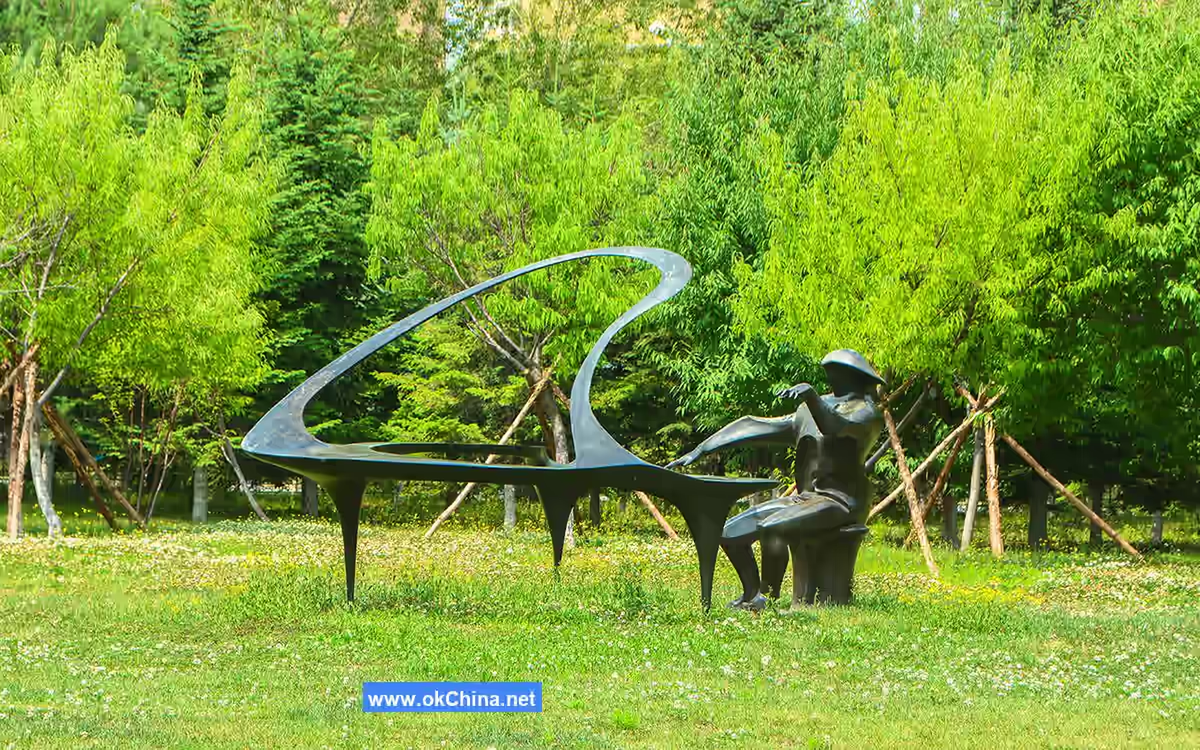
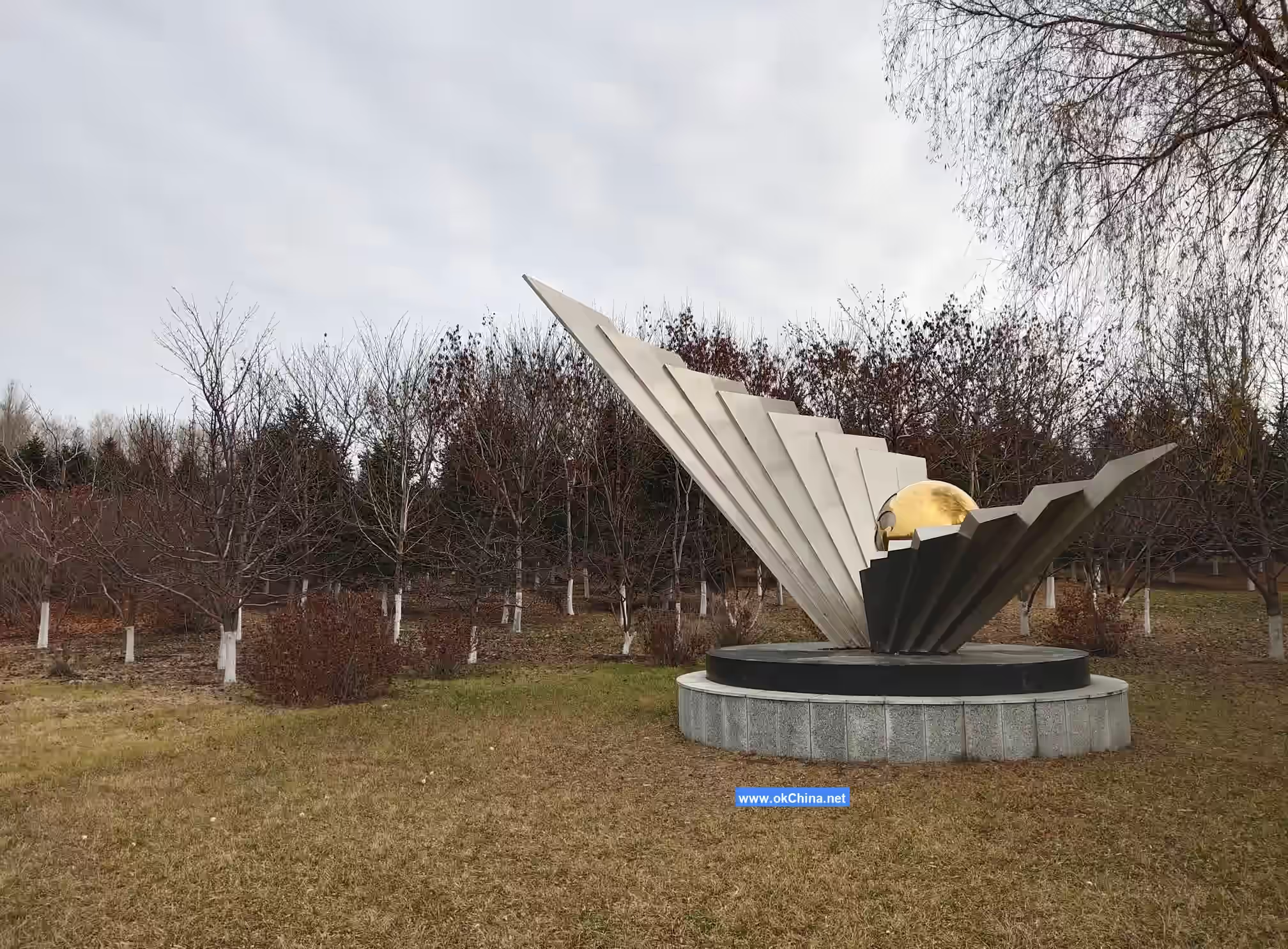
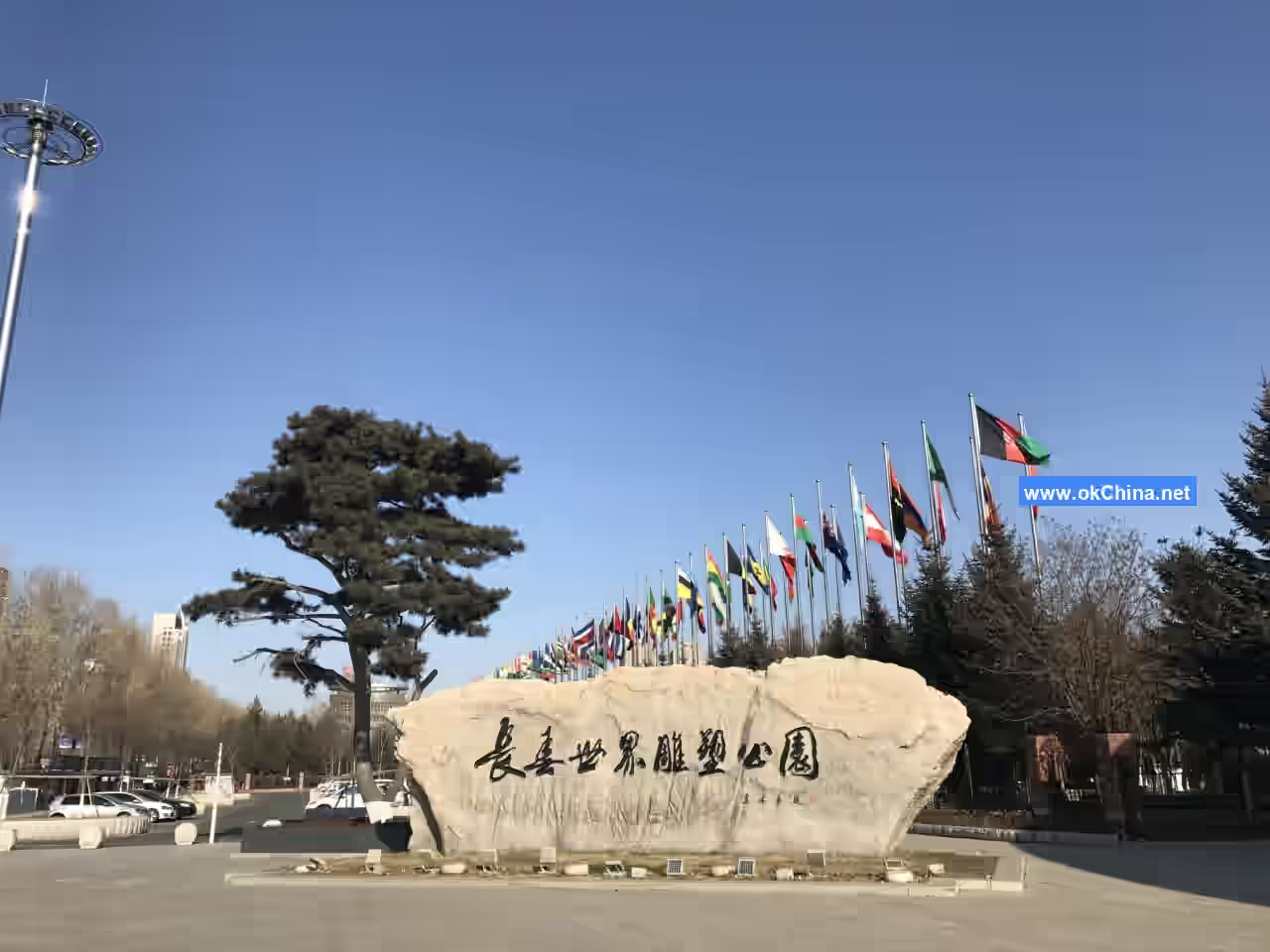
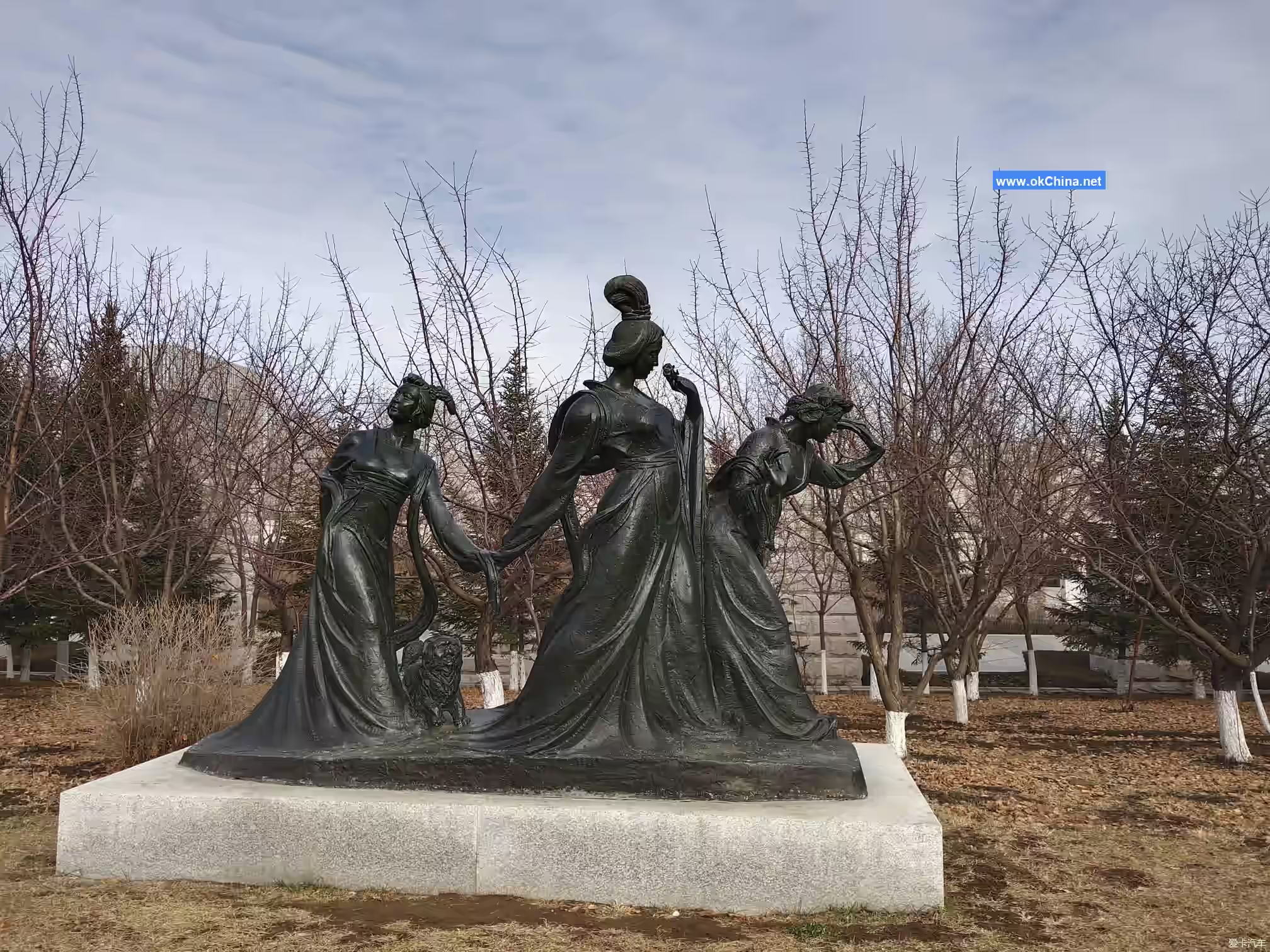
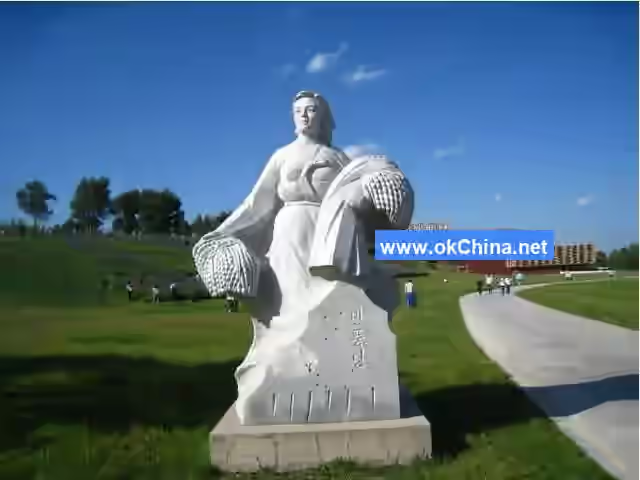
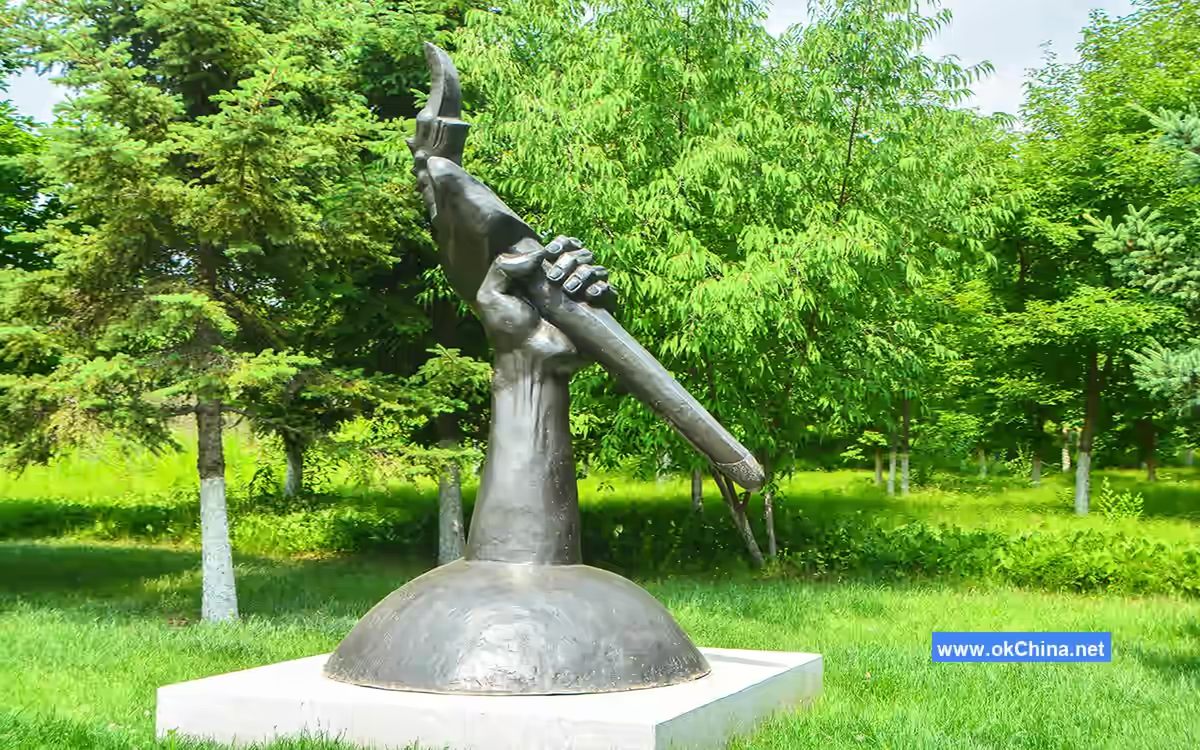
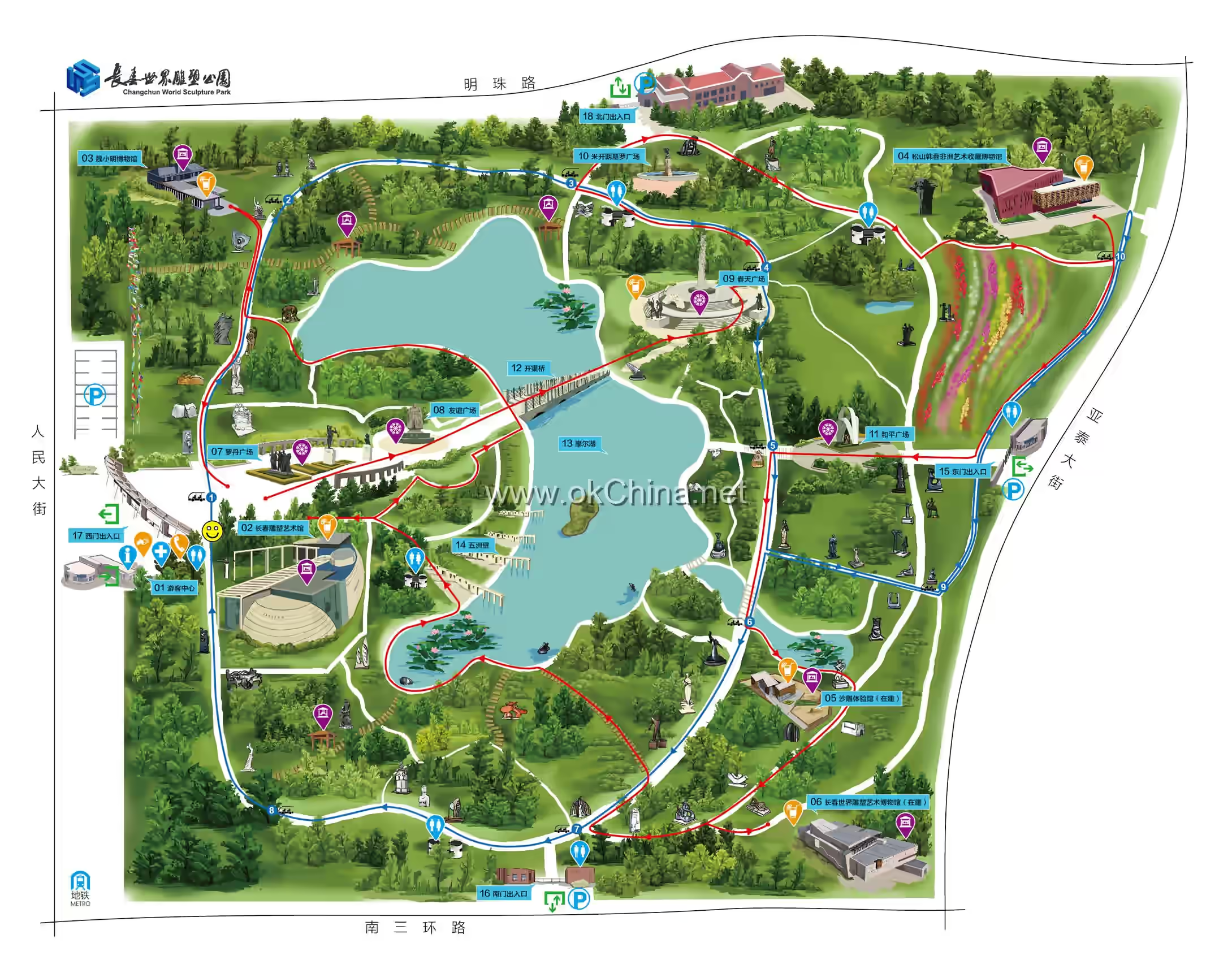
Changchun World Sculpture Park, originally named Changchun City World Sculpture Park Scenic Area or Changchun World Sculpture Park, is a National AAAAA Tourist Attraction and one of the first National Key Parks. It is located in Nanguan District, Changchun City, Jilin Province, bounded by Mingzhu Road to the north, Nanhuancheng Road to the south, Renmin Street to the west, and Yatai Street to the east. The park covers an area of 92 hectares, including a water area of 11.8 hectares. It houses a collection of 454 (sets of) sculpture artworks created by 404 sculptors from 216 countries and regions.
Changchun World Sculpture Park is a theme park that integrates contemporary sculpture art and showcases various schools of world sculpture art. It is a modern urban sculpture garden that blends natural landscapes with cultural scenery. It serves as the venue for the Changchun World Sculpture Conference and the Changchun International Sculpture Invitational Exhibition. It has been awarded the "Achievement Award for Urban Sculpture Construction in New China," the only such award given to a sculpture park.
As of June 2020, five World Sculpture Conferences and twenty International Sculpture Invitational Exhibitions have been held at Changchun World Sculpture Park.
2. Main Attractions
2.1 Changchun Sculpture Art Museum
The Changchun Sculpture Art Museum is located in the southwest corner of Changchun World Sculpture Park. It opened to the public on September 6, 2003, with a building area of 12,500 square meters, designed by the national architectural designer Chen Shimin. Built on a slope, the museum features a unique architectural form combining elegant curves and straight lines, making it a massive modern sculpture artwork in itself, which complements the exquisite sculptures displayed inside. The museum contains exhibition halls, lecture halls, multi-functional halls, conference rooms, and studios, meeting various needs for exhibitions, exchanges, and creation. It houses the "Peng Zushu Art Museum," "3D Art Experience Hall," and "Yin Xiaofeng Sculpture Art Museum." The Peng Zushu Art Museum collects the miniature carving work The Story of the Stone and a large number of manuscripts donated by Master of Arts and Crafts Peng Zushu. The 3D Art Experience Hall introduces advanced domestic 3D printing and internal carving equipment and technology, perfectly integrating sculpture art with high technology for personalized 3D physical models and 3D portrait scanning and production. The Yin Xiaofeng Sculpture Art Museum, located in Building B of the Changchun Sculpture Art Museum, has an indoor area of 1,200 square meters and an outdoor exhibition area of 2,200 square meters. It displays 2,745 works by Yin Xiaofeng, including sculptures, watercolors, mixed-media paintings, and sketches, comprising 945 sculptures and 1,800 paper-based works. These include the artist's representative series such as Soul of Guandong, The Walker, and Momo People. All works were donated free of charge to the Changchun Municipal Government, making this museum the most comprehensive collection of works by Yin Xiaofeng, an artist from Changchun, both domestically and internationally. Currently, the Changchun Sculpture Art Museum has become an important venue for hosting international and domestic sculpture and other art exhibition activities.
2.2 Songshan Hanrong African Art Collection Museum
The Songshan Hanrong African Art Collection Museum is located at the east gate of Changchun World Sculpture Park. It was designed by Mr. He Jingtang, a member of the Chinese Academy of Engineering and a renowned master architect. The museum covers a building area of 5,640 square meters and opened in September 2011. It features three main exhibition halls: "Artistic Africa," "Charming Africa," and "Black Africa," each showcasing distinctive African culture through different themes.
The museum houses a collection of 12,000 art pieces, including carvings and paintings, from southeastern African countries such as Tanzania, Mozambique, Malawi, and Zambia. It provides a relatively complete record of the modern art development in eastern Africa over the past 50 years. It is a gathering place for African Makonde wood carving art in China and the museum with the largest number, most complete variety, and highest artistic level of Makonde wood carvings in the country.
Makonde wood carvings embody a mysterious uniqueness and hold a place in the hall of modern art with their brilliant artistic achievements. With their simple and concise style, rich imagination, and strong expressiveness, they are increasingly attracting worldwide attention and admiration.
2.3 Wang Keqing Art Museum
Mr. Wang Keqing is a renowned master sculptor in China, having created many high-quality sculptures that capture both form and spirit. His artistic style, which bridges ancient and modern times and integrates Chinese and Western influences, is highly praised in the industry. Simultaneously, he is a leader and promoter of urban sculpture construction in China, having made significant contributions to the development of the country's urban sculpture. Mr. Wang is an old friend of Changchun. Over the years, as an urban sculpture construction consultant for Changchun City, he has consistently cared about the development of sculpture in Changchun. Mr. Wang donated 76 of his most representative sculptures from his decades-long career to the Changchun Municipal People's Government. To better display his works, the Changchun Municipal People's Government specially established this museum.
The museum is located in Building B of the Changchun Sculpture Art Museum and opened on September 5, 2010. In addition to Mr. Wang's sculptures, the museum also exhibits over 30 of his paintings, a large number of creative manuscripts, and several print works by his wife, Ms. Gu Tongfen, all of which are exquisite pieces.
2.4 Peng Zushu Art Museum
Mr. Peng Zushu is a renowned Master of Arts and Crafts and calligrapher in China, formerly the Vice Chairman of the Changchun Federation of Literary and Art Circles. He excels in calligraphy, seal carving, micro-carving, and sculpture. His works are characterized by their vigor, boldness, strength, and a strong sense of epigraphy. After retiring in 1992, he devoted himself to the art of comprehensive micro-carving. His micro-carving works, such as The Basic Law of the Hong Kong Special Administrative Region and The Story of the Stone, integrate calligraphy, seal carving, painting, sculpture, and decoration. Particularly, his micro-carving The Story of the Stone was reported worldwide and nationally by Xinhua News Agency, followed by over a hundred news media outlets in foreign countries, Hong Kong, Macau, and mainland China. Major publications like People's Daily, Guangming Daily, Hong Kong's Ta Kung Pao, the magazine Chinese People's Political Consultative Conference, and the Dream of the Red Chamber journal of the Chinese Redology Society also published special reports and reviews. Mr. Peng Zushu takes pride in being from Changchun and holds deep affection for the city. He donated his entire micro-carving The Story of the Stone to Changchun. In return for Mr. Peng's generous act, the Changchun Municipal Government specially established this museum.
The Peng Zushu Art Museum was completed on September 26, 2010. The micro-carving The Story of the Stone displayed in the museum is a stone book completed by Mr. Peng Zushu in early 2002 after eight years of creation and two years of revision. This stone book is novel in conception, clever in composition, and profound in meaning. The story of The Story of the Stone is said to have originally been inscribed on a stone tablet at the foot of the Great Waste Mountain, later copied and passed down among humans, and then compiled by Cao Xueqin into The Story of the Stone. Now, Mr. Peng has returned it to stone, which is an artistic recreation, making it even more fascinating and showcasing extraordinary talent. This stone book is based on the 80-chapter version of The Story of the Stone with Qi Liaosheng's preface. It contains over 600,000 characters in total, with one stone for each chapter, plus the preface and postscript, making 82 stones in all. Besides the micro-carved text on each stone, the central idea of each chapter is summarized into images carved around the stone, expressing the author's viewpoint. The stones used for this book are all top-quality seal stones, including Changhua Tianhuang stone, Balin Fuhuang stone, Changhua and Balin chicken-blood stone, Shoushan Furong stone, Litchi stone, and Qingtian Fengmenqing stone, encompassing nearly fifty varieties of famous seal stones. The stones vary in size, with larger ones resembling books and smaller ones fitting in the palm, displaying brilliant colors and diverse shapes, either square or round. The text is micro-carved in the center of the seal stones, with characters as small as fly heads and strokes as fine as spider silk. Under a tenfold magnifying glass, the calligraphic style is revealed, with each stroke meticulously executed, elegant and fluent, exuding a strong epigraphic charm. This stone book breaks through traditional creative models, establishing its own unique style. It integrates text, painting, calligraphy, seal carving, sculpture, micro-carving, and decoration into one. This stone book is a pioneering work both in China and worldwide.
2.5 Wei Xiaoming Art Museum
Located in the northwest corner of the park, it was completed and opened in the autumn of 2016. Its building area is approximately 3,500 square meters, consisting of a sculpture exhibition hall, a painting and manuscript display room, an artist's studio, a sunroom, an art salon, and an outdoor sculpture garden. This museum permanently displays 232 sculptures by sculptor Wei Xiaoming, along with 178 prints, illustrations, watercolors, sketches, oil paintings, and design manuscripts, almost encompassing all of Wei Xiaoming's artworks since the 1980s, and it will continue to collect all of his future works.
2.6 Rodin Square
Upon entering Changchun World Sculpture Park from the main gate, visitors are first greeted by three famous works created by the world-renowned sculpture master Auguste Rodin: The Thinker, The Age of Bronze, and Balzac. The square covers an area of 8,000 square meters, with its southern and northern sides symmetrically defined by tall curved walls.
The Thinker was successfully introduced by the Changchun Municipal Government after three years of navigating through various levels of approval, including the European Commission and the French Ministry of Culture. It was installed in Changchun during the 9th Changchun International Sculpture Invitational Exhibition in 2008. This piece was cast from the original mold of The Thinker held by the Rodin Museum, and the Musée Rodin in France issued a certificate of origin for it, which can be verified by the 'R' shaped mark on the back of the sculpture. Subsequently, The Age of Bronze and Balzac were also successfully introduced. This year, two more Rodin works will be installed in the park, permanently residing in "Rodin Square," becoming the first scenic spot encountered upon entering the park.The prototype of The Thinker originated from the Italian poet Dante. Originally named The Poet, it symbolizes Dante's contemplation of the various sins in hell. It is depicted as a powerful nude male figure, placed atop the Gates of Hell. Between 1902 and 1904, Rodin enlarged The Thinker into an independent statue. The Thinker is in a state of deep contemplation: bent at the waist and knees, with his right hand supporting his chin, his gaze profound, muscles tense, and body contracted. This surface calm conceals an inner strength, and the spirit it radiates is even more thought-provoking. As Rodin said, he thinks not only with his brain, his flared nostrils, and his compressed lips, but also with every muscle of his arms, legs, and back, with his clenched fist and his gripping toes. Rodin's The Thinker employs a realistic and precise technique to express profound thought, showing great compassion for human suffering and engaging in deep reflection.
The Age of Bronze fully demonstrates Rodin's masterful command of the human form and his profound realistic technique. This statue stands 1.8 meters tall, lifelike and life-sized. The man's posture is natural, his face thoughtful, with his left hand clenched in a fist and his right hand resting on his head. His left leg supports his entire body, while his right leg is slightly bent with toes touching the ground. The entire sculpture is evenly and perfectly structured. After being cast in bronze, Rodin inscribed his name on the back of the base. The name "The Age of Bronze" imbues the statue with profound meaning. The man slowly awakening from his slumber symbolizes the awakening of human self-consciousness, the transition from ignorance to civilization.
Balzac is another masterpiece by Auguste Rodin, depicting the French writer Honoré de Balzac (1799-1850). In 1891, the Société des Gens de Lettres, led by Émile Zola, commissioned Rodin to create a statue of Balzac. This statue, achieving harmony in both form and spirit, employs a figurative yet expressive approach, interpreting a new concept of figurative sculpture. Balzac is draped in a large robe, with disheveled hair and his body leaning slightly backward, embodying a demeanor of openness, nobility, and wisdom.
2.7 Spring Square
Spring Square is located at the highest point of Changchun World Sculpture Park, covering an area of 5,200 square meters. At its center stands the large group sculpture Friendship, Peace, Spring, symbolizing the park's theme, with the main sculpture reaching a height of 29.5 meters. This work was jointly created by five renowned Chinese master sculptors: Ye Yushan, Pan He, Wang Keqing, Cheng Yunxian, and Cao Chunsheng.
The main stele is upright and spirited, soaring upward, best embodying the theme of "Friendship, Peace, Spring." Three young maidens, with graceful postures and flowing garments, are surrounded by flowers and doves about to take flight, full of youthful vitality. Their facial expressions are delicate, gentle, and sweet, revealing the joy of spring, the comfort of friendship, and the happiness of peace.
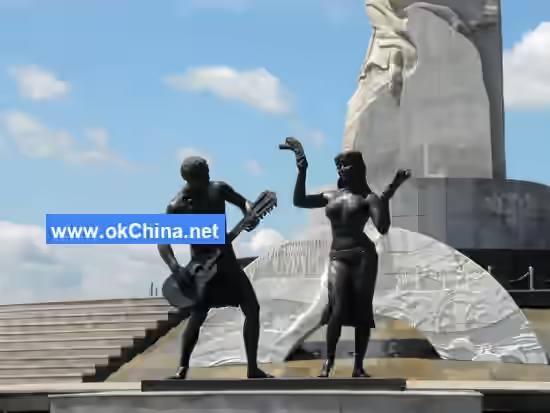
The accompanying sculptures are diverse and colorful, representing five men and five women from the five continents, engaged in song, music, and dance. In Asia, a woman passionately plays the suona while a man harmonizes with a flute; in Africa, a man beats a long drum leading a high song, with a woman dancing wildly in the street; in Europe, a woman plays a small violin expressing her heart, accompanied by a man strumming a large string instrument; in the Americas, a man starts a tune with panpipes while a woman whirls in a samba dance; in Oceania, a man strums a guitar showing friendship, and a woman shakes a bell expressing heartfelt emotion.
The reliefs are vivid, depicting five animals from the five continents: the fierce tiger of Asia, the majestic lion of Africa, the spotted jaguar of the Americas, the wild bison of Europe, and the kangaroo of Oceania. Each animal is set against distinctive flora and trees from its respective continent, with lifelike expressions that seem ready to leap out.
The sculptures complement each other, making the circular square vibrant and further highlighting the splendor of the main stele. They symbolize the strong desire of people from all over the world to cherish friendship, love peace, and yearn for spring.
2.8 Peace Square
Starting from the east gate of Changchun World Sculpture Park and ascending the steps, one reaches "Peace Square." At the center of the square stands Extension of Peace, created by American sculptor Mark Wisbeck. The work consists of two sets of curved surfaces forming two gate-like structures, straddling the marble pavement, creating a visual impact that extends from afar to near, symbolizing the extension of the path of peace and expressing humanity's shared hope for peace and beauty. Several flower beds surround the main sculpture, often planted with colorful herbaceous flowers in purple, yellow, and other hues. Many photography enthusiasts choose to shoot facing the east gate, where the blue sky, white clouds, and the perspective of extension evoke a sense of tranquility and harmony.
2.1 Michelangelo Square
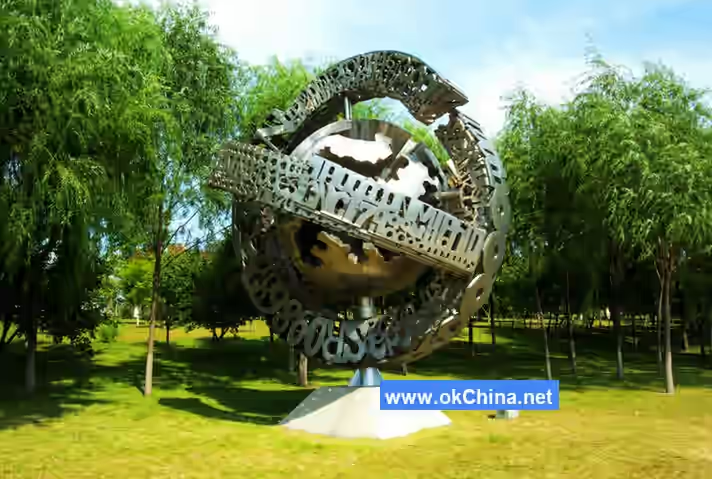
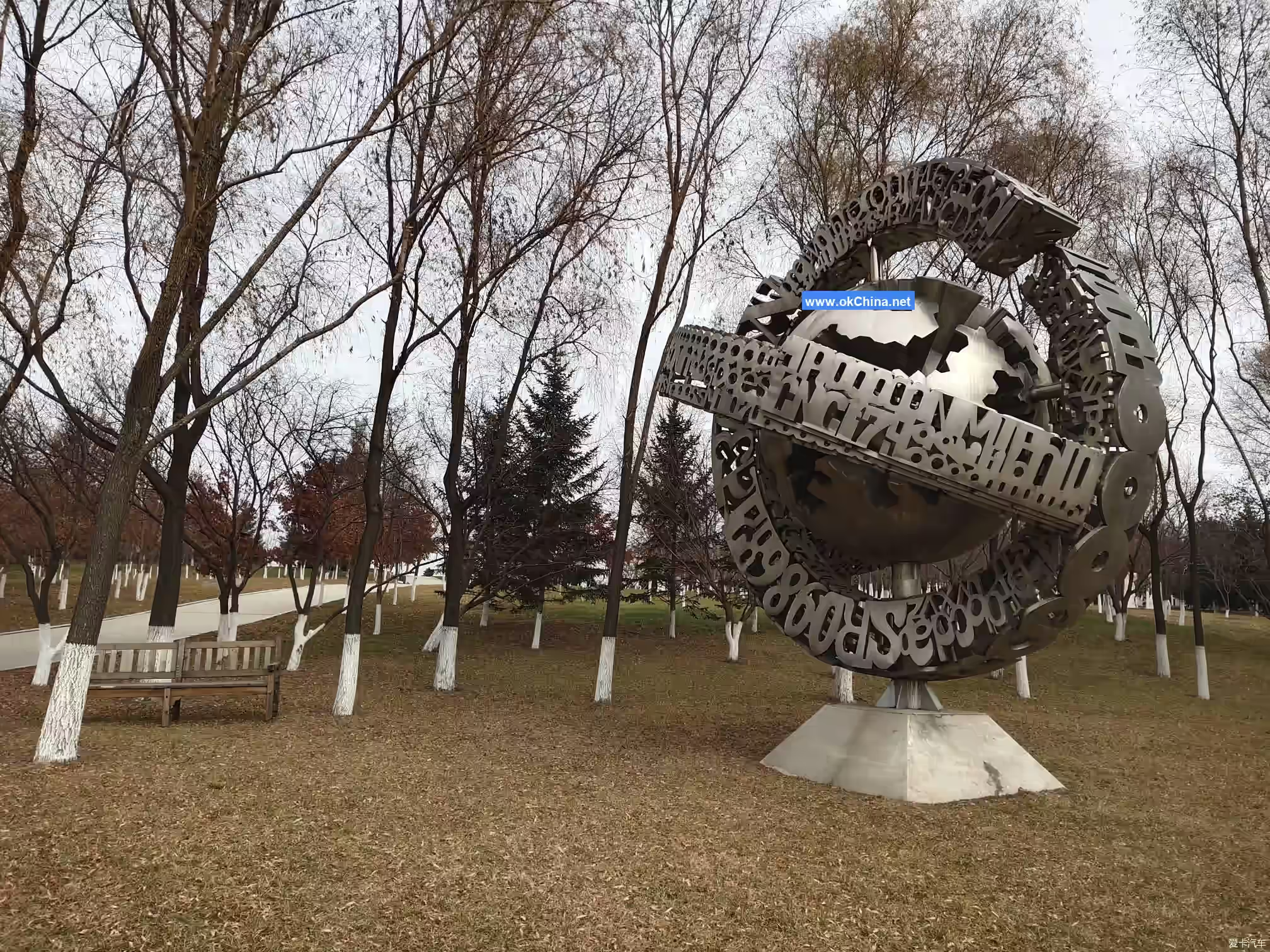
Michelangelo Square is located at the north entrance of Changchun World Sculpture Park, composed of five (groups of) works: The Age of Aquarius Replacing the Age of Pisces, Mountains and Flowing Water, Girl Riding a Bear, Music Enthusiast, and Urban Romance. The square is triangular, with The Age of Aquarius Replacing the Age of Pisces centrally placed. This work by Russian sculptor Alexander Vinogradov symbolizes the alternation and cycle of time, forming a distinctly European-style visual effect together with the other works. A wooden pavilion for visitors to rest is set on the east side of the square, complementing the moods expressed by Music Enthusiast and Urban Romance.
The Age of Aquarius Replacing the Age of Pisces was created by Russian sculptor Alexander Vinogradov. The work symbolizes the alternation and cycle of time. The artist believes: "According to Western astrology, the Age of Pisces is followed by the Age of Aquarius. Aquarius symbolizes a new beginning, hence this beginning is sculpted as a vibrant young boy, with the water of life flowing ceaselessly from the shell in his hands."
Mountains and Flowing Water was created by Chinese sculptor Liu Wei. The vastness of maternal love is like a mountain, the innocence of childhood is like water. The work pursues the perfect combination of the natural beauty and human beauty constituted by "mountain and water."
Girl Riding a Bear was created by Lithuanian sculptor Marius Grusas. The work is fundamentally composed of the bear, an animal beloved by Europeans, and a young girl from the Americas. It possesses both a light and graceful aspect and a strong, powerful aspect. This combination of contradictory elements symbolizes the opposition and unity between humanity and nature.
Music Enthusiast was created by Chinese sculptor Long Xiang. Using generalized and exaggerated techniques, the work portrays a Miao youth entranced in the dance of the sheng (a reed pipe wind instrument), reflecting an optimistic attitude towards life.
Urban Romance was created by Chinese sculptor Wang Shaojun. Combining realism and expressionism, the work uses figures and scenes from a city subway to depict typical forms of the masses in contemporary public spaces, also metaphorically presenting an image of the urban pulse. It resembles a fleeting snapshot of life's journey for all beings.
2.1 Moore Lake
Moore Lake is located in the central area of Changchun World Sculpture Park, covering 11.8 hectares. The lake's retaining embankment surrounds it in a scallop shape. Shenzhou Road encircles the lake, with weeping willows along the shore. In midsummer, they create a delightful scene with the lotuses and aquatic plants on the lake surface, and occasionally released fish can be seen playing in the water.
Moore Lake is named after the world-renowned sculptor Henry Moore. Henry Moore's works often conceal a pure heart within abstract forms. There are plans to introduce works by this master sculptor to the park.
2.1 Five Continents Wall
The Five Continents Wall consists of four sets of radiating landscape walls, with lengths of 60 meters, 80 meters, 100 meters, and 120 meters respectively. Each landscape wall features grooves and light strips. A circulation system pours water from the walls into the lake, resembling a water dragon playing and about to leap out. The artificial waterfalls on the four sets of landscape walls are like giant dragons spraying clear springs towards the center of the lake. Wuzhou Road (the main loop road) and Shenzhou Road (the lakeside road) resemble two jade belts encircling the sparkling lake. Rippling waves lap against the pebbles on the shore, willow branches droop low, almost touching the lake surface, and the patterned flower beds have well-defined contours, creating a static beauty of stillness and motion, curves and straight lines.
2.1 Friendship Fountain Square
Friendship Fountain Square is a sunken circular square, adjacent to "Rodin Square" on the west. Steps on the east side lead directly to the Nine-Arch Flat Bridge and echo the theme sculpture. The south side is complemented by sculptural works and greenery, while the north side features a stepped, modern modular landscape platform. A large musical fountain sits at the center of the square, with water jets reaching up to 50 meters high. The square covers an area of 15,505 square meters, offering a flat and open view. It is an important venue for large-scale events, having served as the opening ceremony site for three World Sculpture Conferences and hosted numerous concerts and other major evening galas.
3. Exchange and Influence
3.1 Honors ReceivedChangchun World Sculpture Park not only embodies the cultural taste of modern sculpture but also fully realizes the landscape concept of "mountain-water gardens."
The sunken large-scale musical fountain square, artificial lake, viewing walls, and other features, together with the themed sculpture squares and sculpture art galleries, form the scenic landscape of the sculpture park. It is one of the most famous theme parks in Changchun and even Northeast China, an art garden of world-class standards, highly praised by Changchun citizens and tourists from home and abroad.
Changchun World Sculpture Park is considered first-class in the world due to its large number of works, wide range of artistic styles, and high artistic standards.
Among all the sculptures, there are representative works reflecting Maya, Inuit, and Maori cultures, as well as masterpieces symbolizing European, African, Latin American, and Eastern cultures, fully showcasing the characteristics of different countries, ethnicities, and regions. Moreover, the rich variety of materials and diverse styles make it a veritable garden of world sculpture.
There are also highly impactful themed sculptures symbolizing people from five continents, holding high the banner of peace, playing the strong notes of friendship, welcoming a beautiful spring, and coming together for shared prosperity and happiness.
An increasing number of sculptors from around the world hope to have their original works displayed in the park. Changchun World Sculpture Park has become a charming and creative artistic realm.
On November 20, 2020, Changchun World Sculpture Park was included in the list of the "Sixth National Civilized Units." In November 2021, it was rated as one of the first national-level civilized tourism demonstration units by the National Tourism Standardization Technical Committee.
3.2 Social Impact
On February 20, 2007, Changchun World Sculpture Park, along with 20 other parks such as Beijing's Summer Palace and Suzhou's Humble Administrator's Garden, was approved by the Ministry of Construction as one of China's first national key parks.
Changchun World Sculpture Park integrates various artistic schools from around the world, skillfully combining the many outstanding works left by the eight Changchun Sculpture Invitational Exhibitions with the superior natural conditions of southern Changchun. It blends natural landscapes with humanistic features, showcasing not only the design art of Chinese landscape gardens but also the fusion and collision of Eastern and Western cultures and arts. Known as the "park of solidified music" and the "back garden of world sculpture art," it was selected as one of China's first national key parks for its high artistic and cultural value.
Comments
Post a Comment