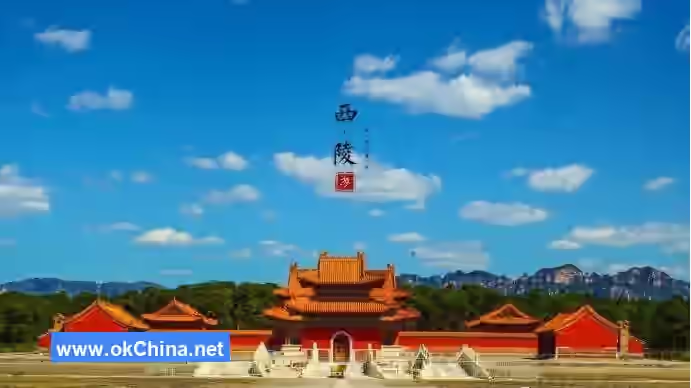

The Western Qing Tombs
I. Introduction
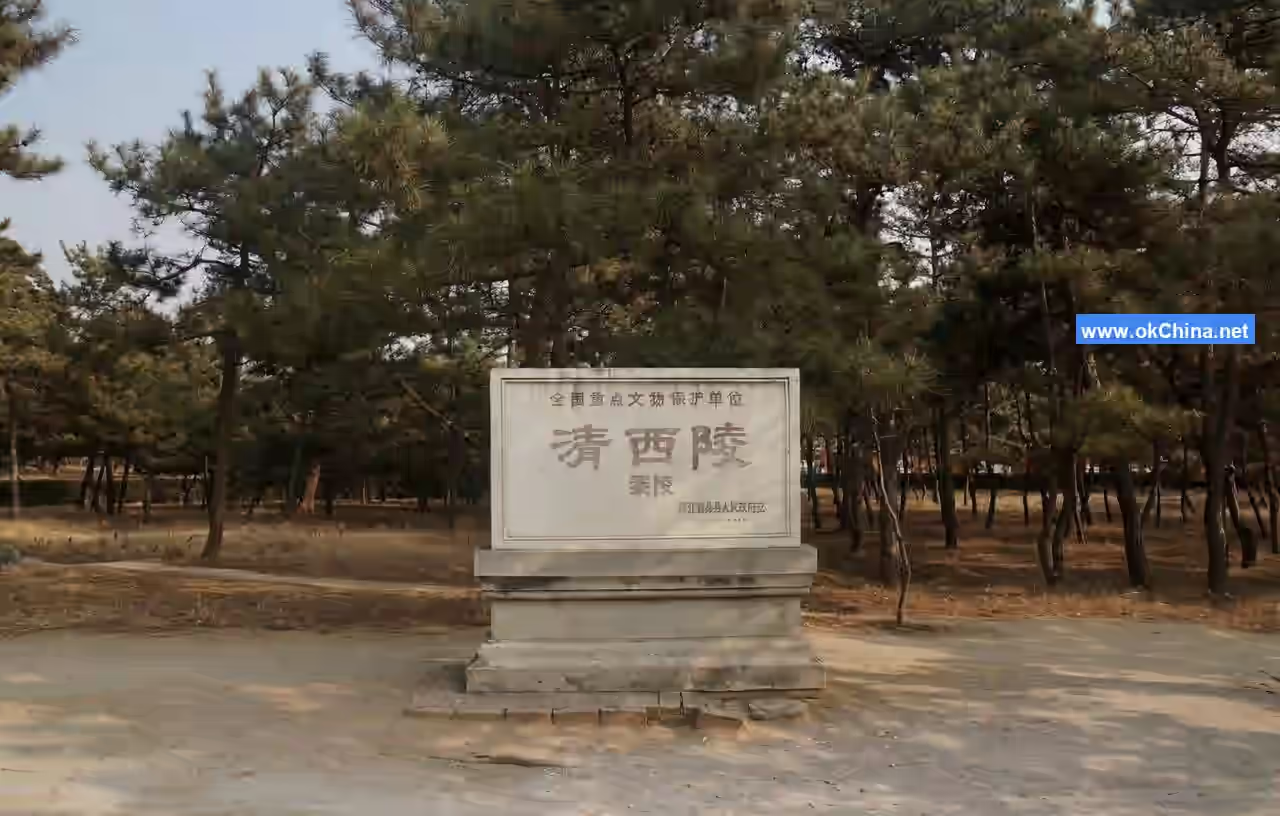
The Western Qing Tombs are located at the foot of Yongning Mountain, 15 kilometers west of Liangezhuang Village, Yi County, Baoding City, Hebei Province, approximately 98 kilometers from Beijing. Serving as the burial grounds for four emperors starting from the Yongzheng period of the Qing Dynasty, construction began in the eighth year of Yongzheng's reign (1730) and was completed in the fourth year of the Republic of China (1915), spanning 185 years. It stands as the largest, most well-preserved, and most complete ancient imperial tomb complex in terms of architectural types.
II. Architectural Layout
Overall Scale
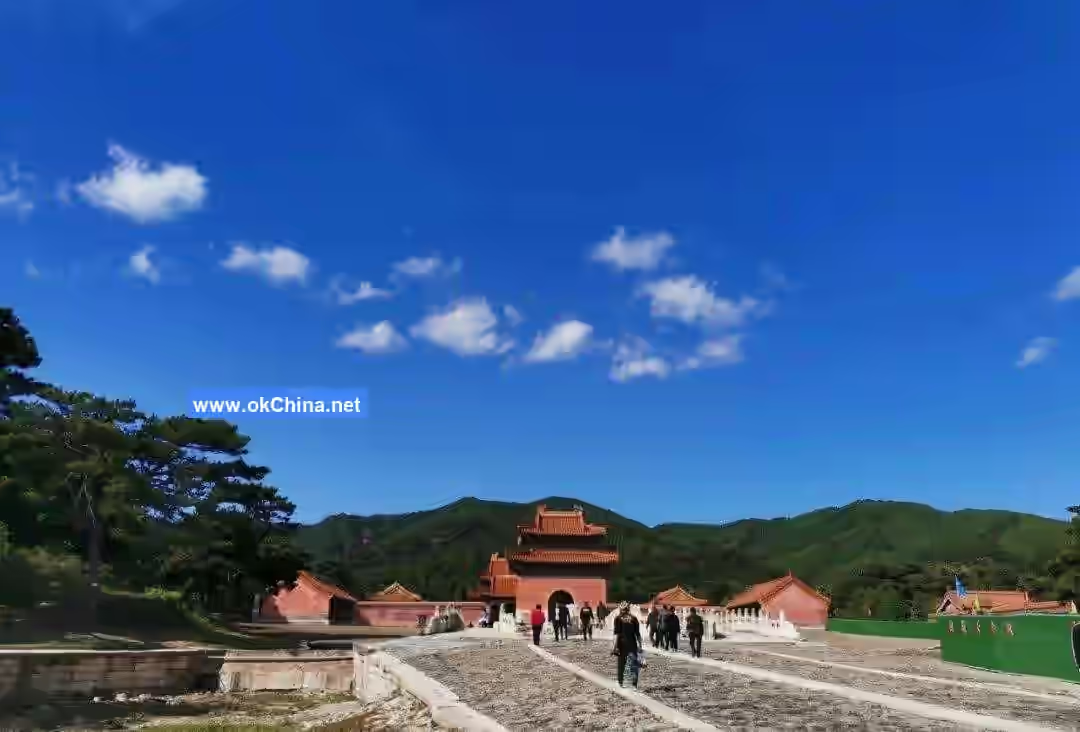
The Western Qing Tombs feature a grand and systematically complete complex of ancient structures. Within the tomb area, covering a radius of 200 li and an area of 800 square kilometers, lies the largest artificial ancient pine forest in North China. Since the establishment of the tombs, the Qing Dynasty planted tens of thousands of pine trees at the foot of Yongning Mountain, along the Yishui River, and inside and outside the tomb grounds. Today, there are approximately 15,000 ancient pines and over 200,000 young pines and cypresses.
The tomb area includes over a thousand palace buildings and more than a hundred ancient structures and carvings. Each tomb strictly adheres to the Qing imperial tomb-building system: emperor tombs, empress tombs, and prince tombs are roofed with yellow glazed tiles, while concubine, princess, and prince garden tombs are roofed with green glazed tiles. These varying architectural styles showcase diverse landscapes and designs.
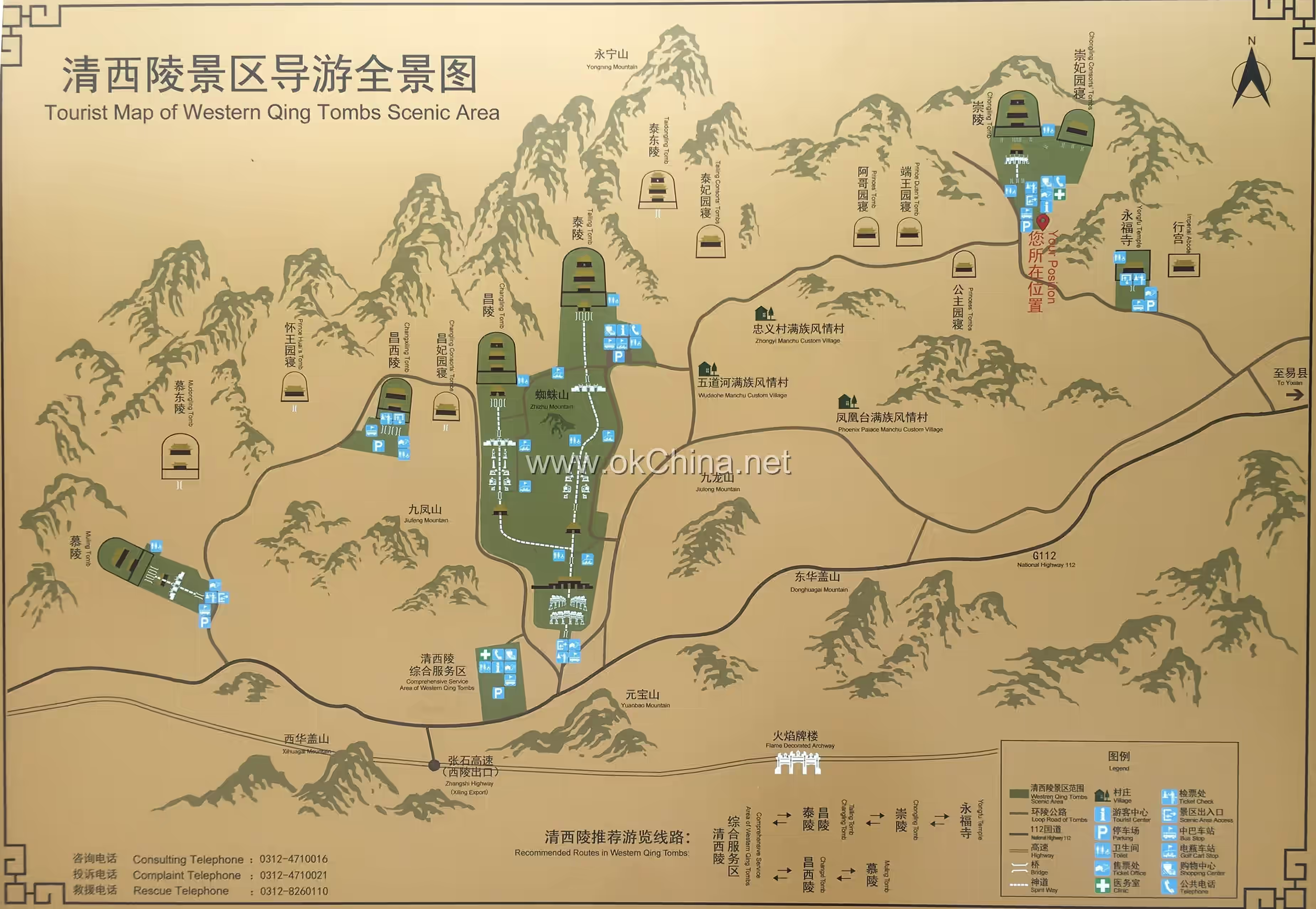
The Western Qing Tombs consist of 14 tombs: 4 emperor tombs—Tailing (Emperor Yongzheng), Changling (Emperor Jiaqing), Muling (Emperor Daoguang), and Chongling (Emperor Guangxu); 3 empress tombs—Taidongling, Changxiling, and Mudongling; 3 concubine tombs; and 4 other tombs (such as Huaiwangling, Princess Tomb, Prince Tomb, etc.). In total, 4 emperors, 9 empresses, 56 concubines, and over 70 princes, princesses, and other nobles are buried here.
Layout of the Tomb Area
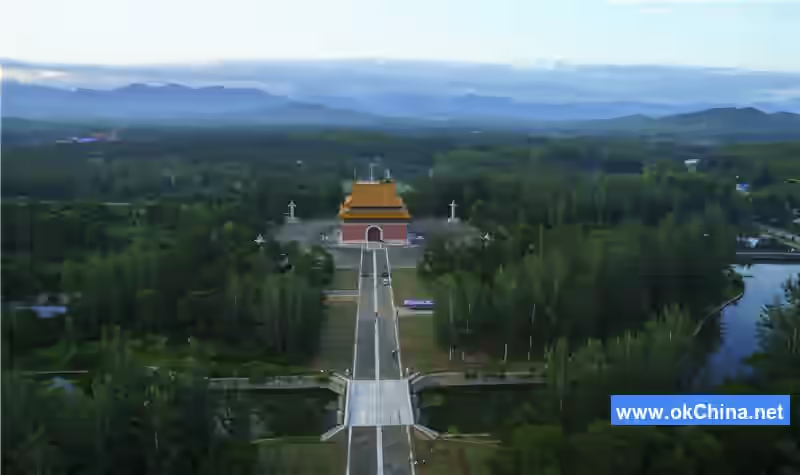
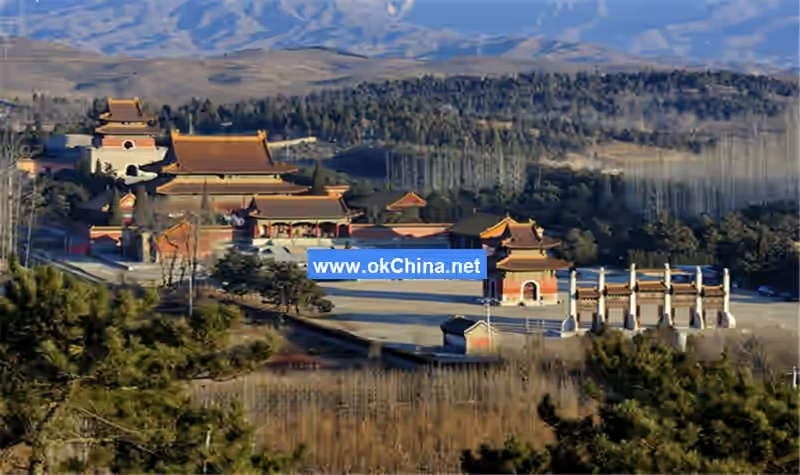
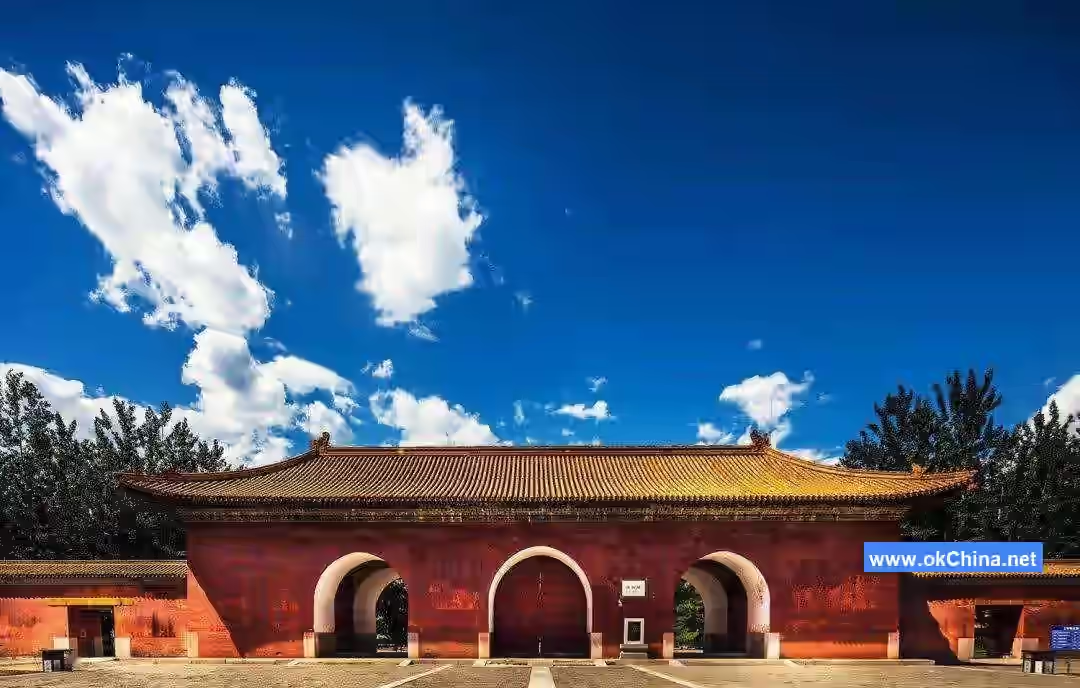
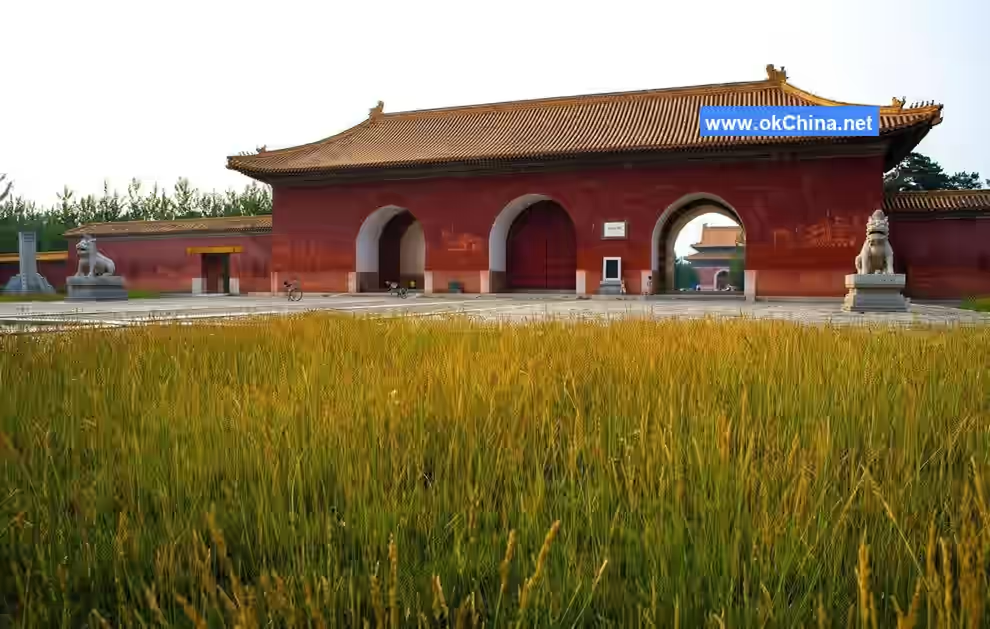
The tombs in the Western Qing Tombs share a common ancestral mountain, stone archways, and the Grand Red Gate. They are surrounded by feng shui walls, firebreaks, and boundary markers. The layout of the tombs follows a hierarchical order, with empress tombs and concubine garden tombs centered around the emperor tombs of their respective dynasties, arranged to the left and right to form independent sections, reflecting their subordinate and accompanying burial status. The spirit paths of each emperor tomb connect to the main tomb’s spirit path, while the spirit paths of empress tombs connect to the spirit paths of their respective emperor tombs, forming a branch-like network of spirit paths. These features are unique to the Qing Dynasty and were not present in earlier imperial tombs. The entire Western Qing Tombs area is centered around Emperor Yongzheng’s Tailing, with Emperor Jiaqing’s Changling and Emperor Daoguang’s Muling to the west, and Emperor Guangxu’s Chongling, Puyi’s tomb, prince and princess garden tombs, and Yongfu Temple to the east.
III. Highlights of the Scenic Area
Overview of the Tombs
The Western Qing Tombs comprise 14 tombs, including Yongzheng’s Tailing, Jiaqing’s Changling, Daoguang’s Muling, and Guangxu’s Chongling, as well as 3 empress tombs. Additionally, there are tombs such as Huaiwangling, Princess Tomb, and Prince Tomb, totaling 14. The architectural forms reflect feudal regulations: emperor and empress tombs are roofed with yellow glazed tiles, while concubine, princess, and prince garden tombs are roofed with green glazed tiles or gray cloth tiles.
Covering an area of over 800 square kilometers, the Western Qing Tombs include more than 50,000 square meters of built-up area, over 1,000 palace buildings, and more than 100 stone carvings and structures. The architecture largely follows the styles of Ming Dynasty imperial tombs, incorporating Qing official practices. While strictly adhering to hierarchical systems, it also demonstrates creativity and flexibility.
Many structures in the Western Qing Tombs feature painted decorations and carvings. Palaces often display xuanzi painted patterns, temples and archways feature hexi painted patterns, and temporary palaces and residences showcase Suzhou-style paintings. Carvings predominantly depict dragons and phoenixes. The entire complex reflects the high artistic level and ethnic style of Qing Dynasty architecture.
Qing Tailing
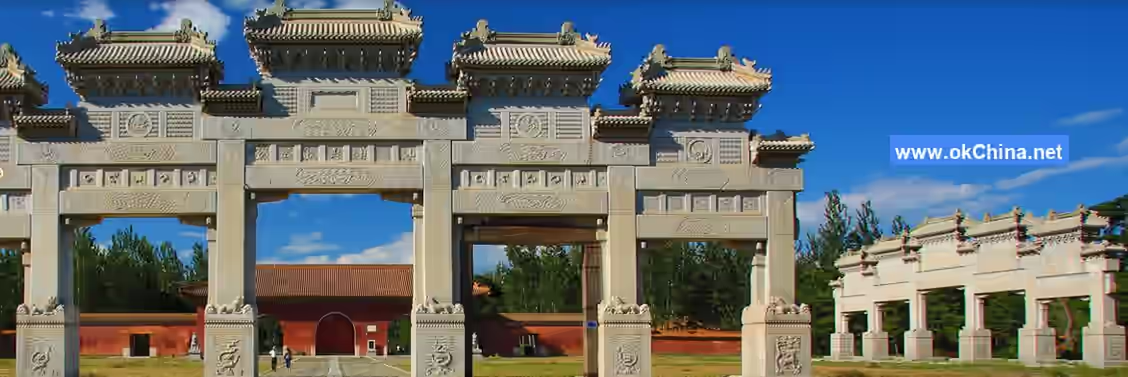
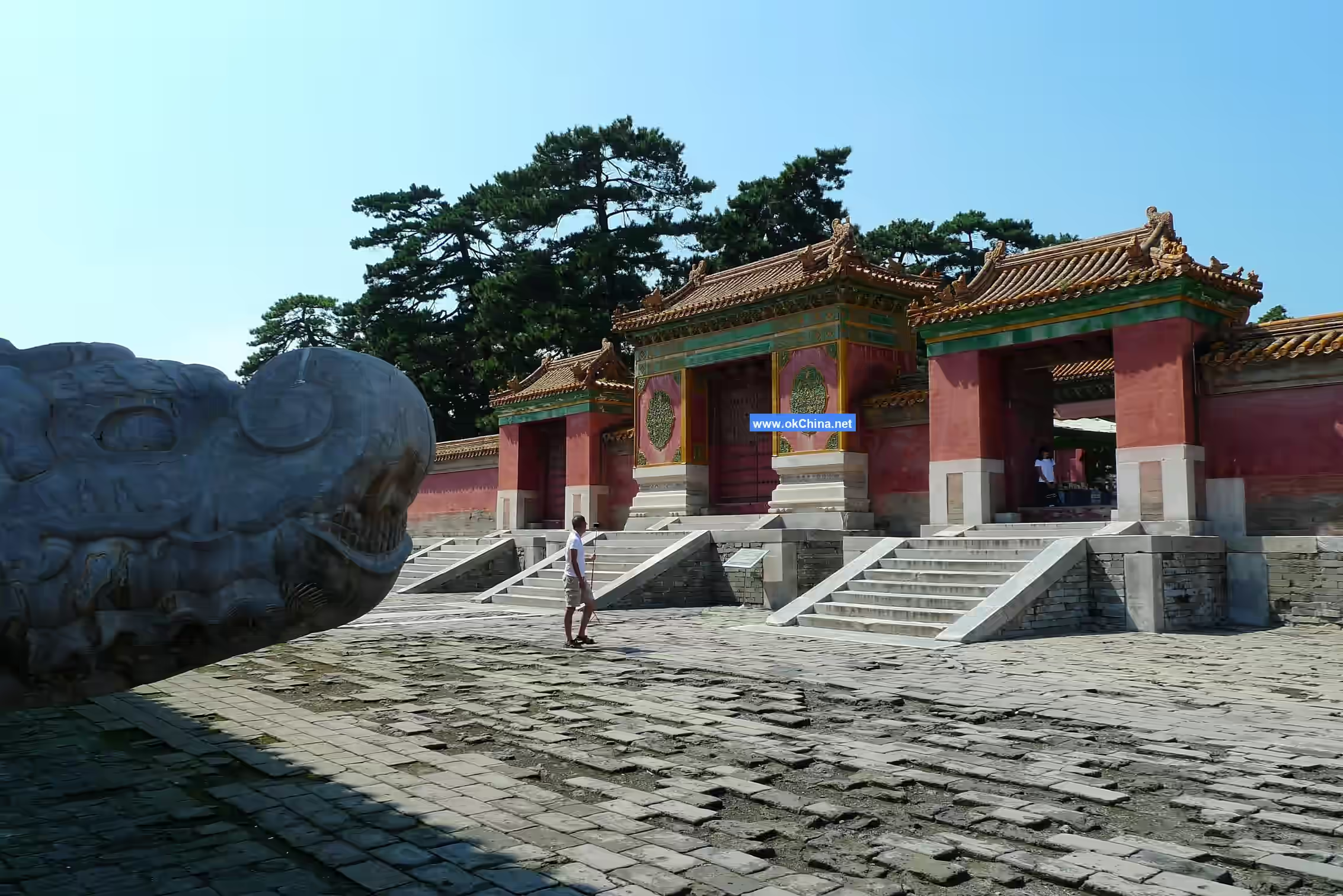
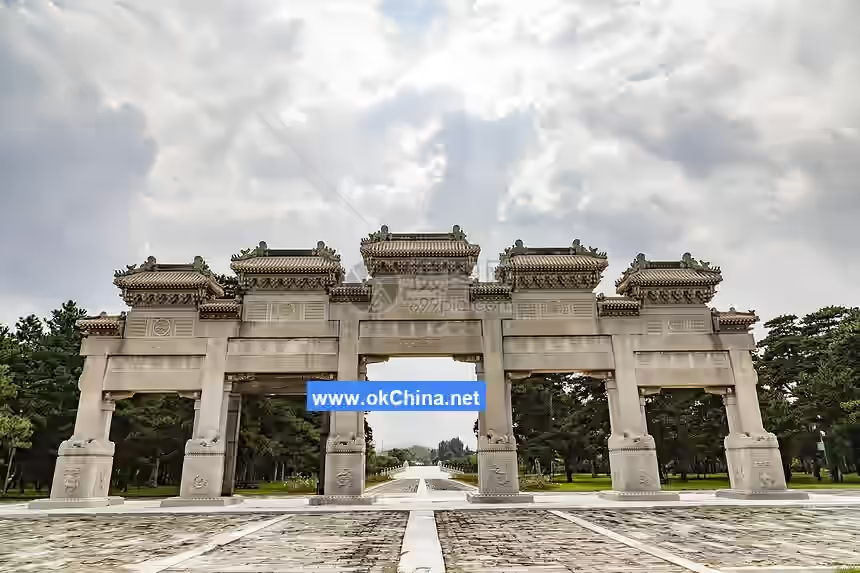
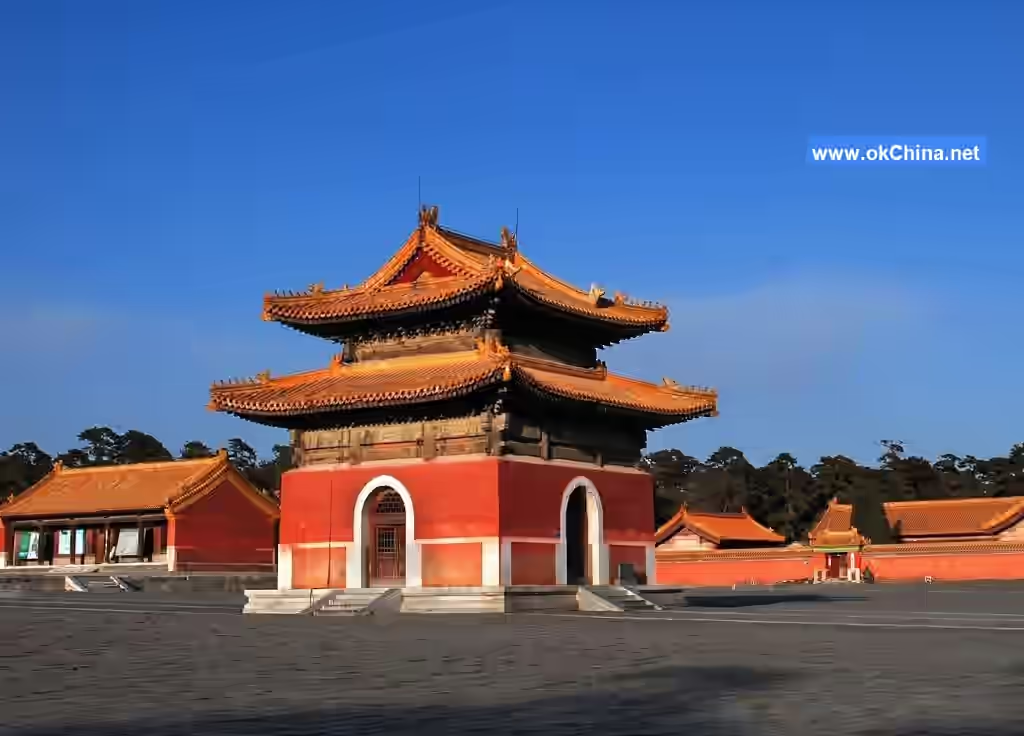
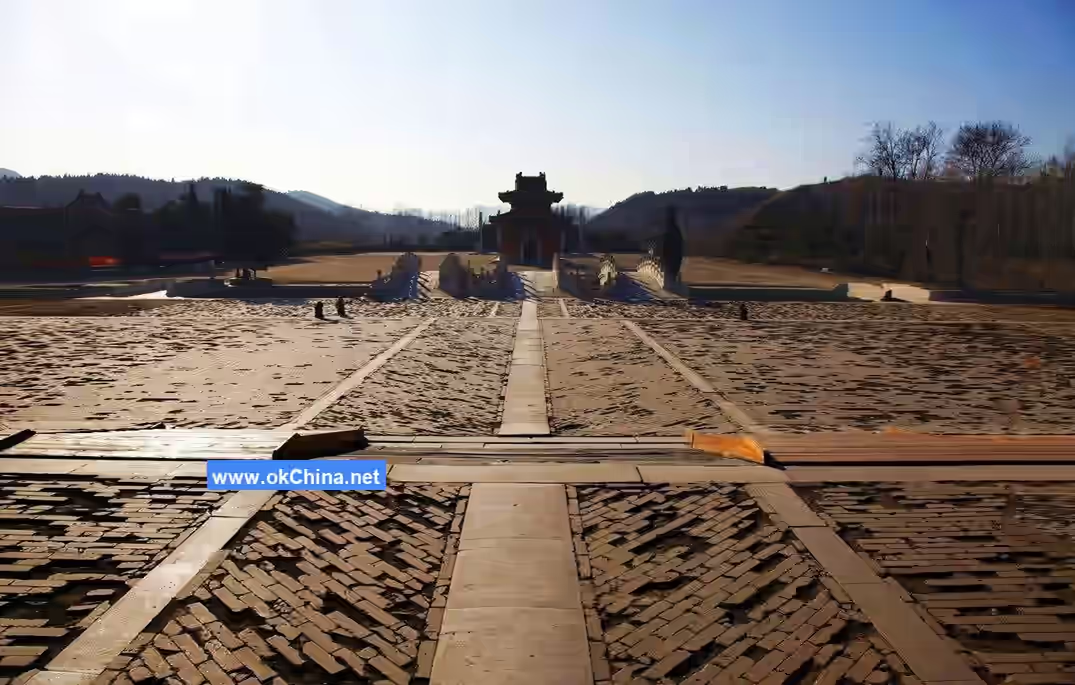
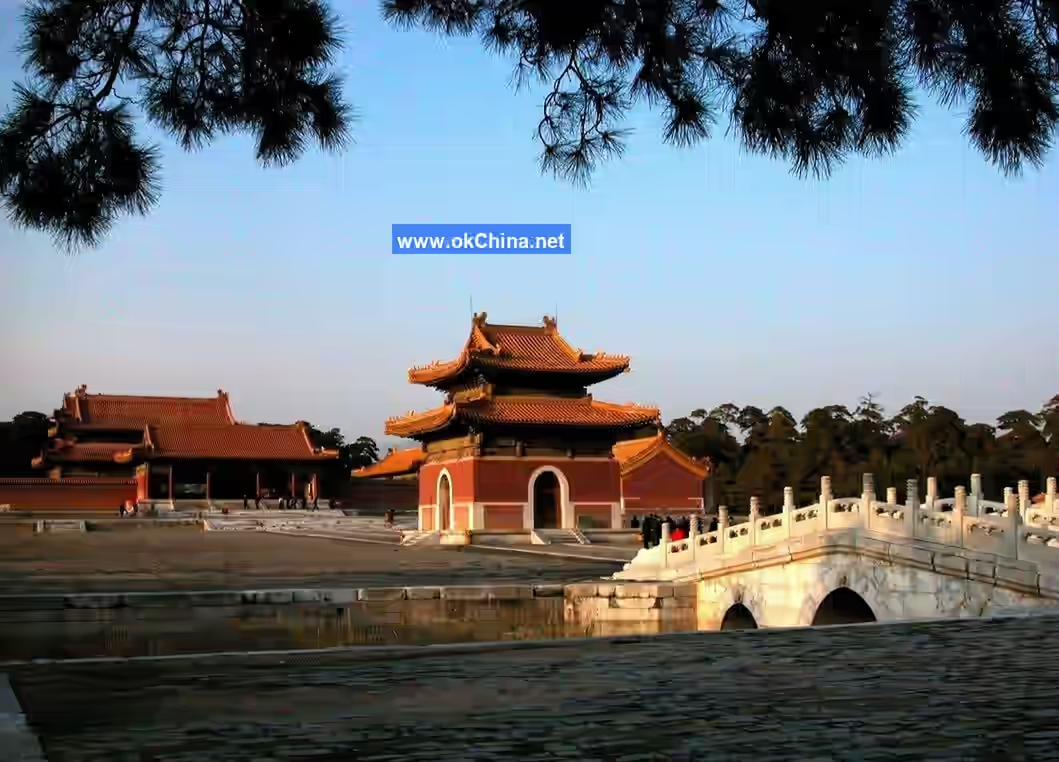
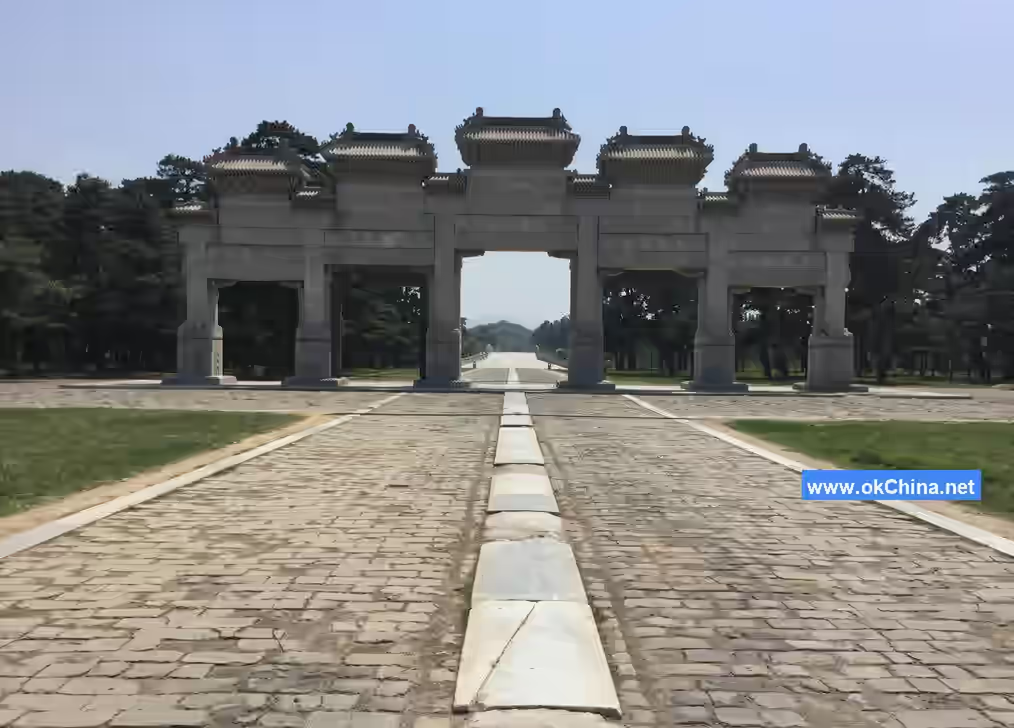
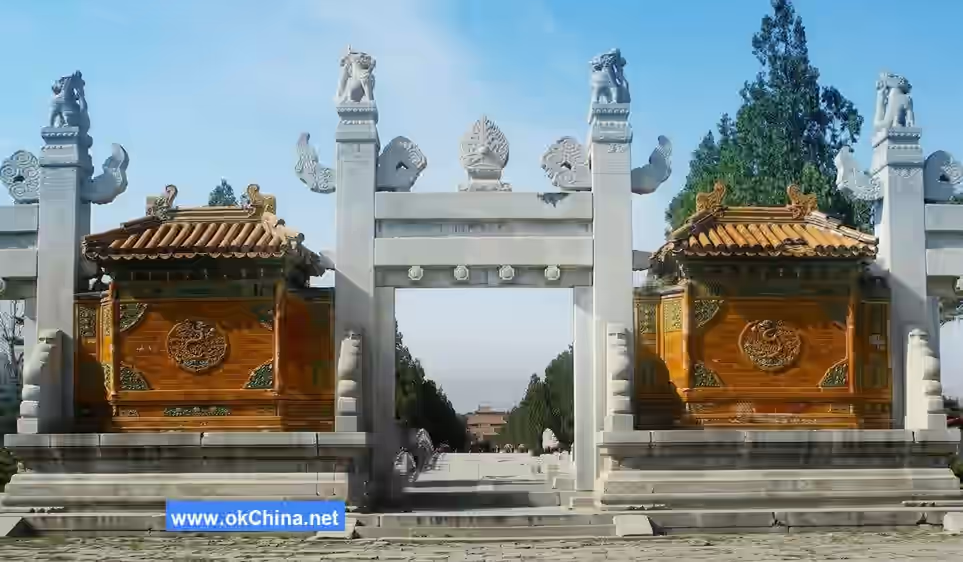
Emperor Yongzheng’s Tailing occupies the central position in the Western Qing Tombs and is the earliest and largest structure in the complex. The other tombs are distributed to its east and west. As the primary tomb of the Western Qing Tombs, Tailing houses Emperor Yongzheng, Empress Xiaojingxian, and Imperial Noble Consort Dunsu. Located at the foot of the main peak of Yongning Mountain, construction began in the eighth year of Yongzheng’s reign (1730). The spirit path of Tailing is paved with three layers of large bricks and features over 40 structures of varying sizes from south to north. The first structure is a five-arch bridge at the entrance of the tomb area, north of which stand three tall stone archways. These archways, each with five bays, six pillars, and eleven towers, are built of blue stone and carved with images of mountains, water, flowers, grass, and animals. They are considered representative works of art in the Western Qing Tombs.
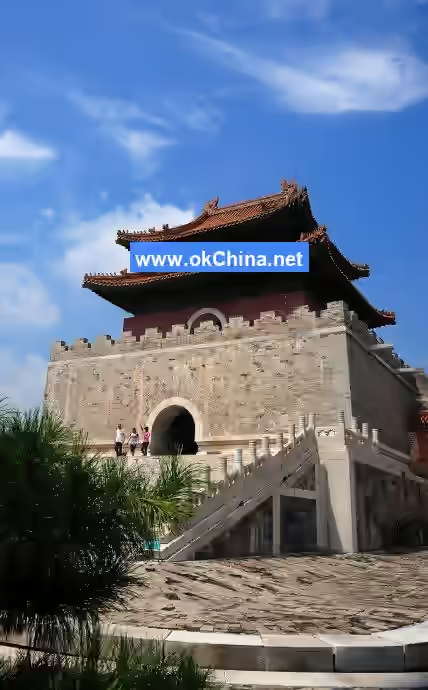
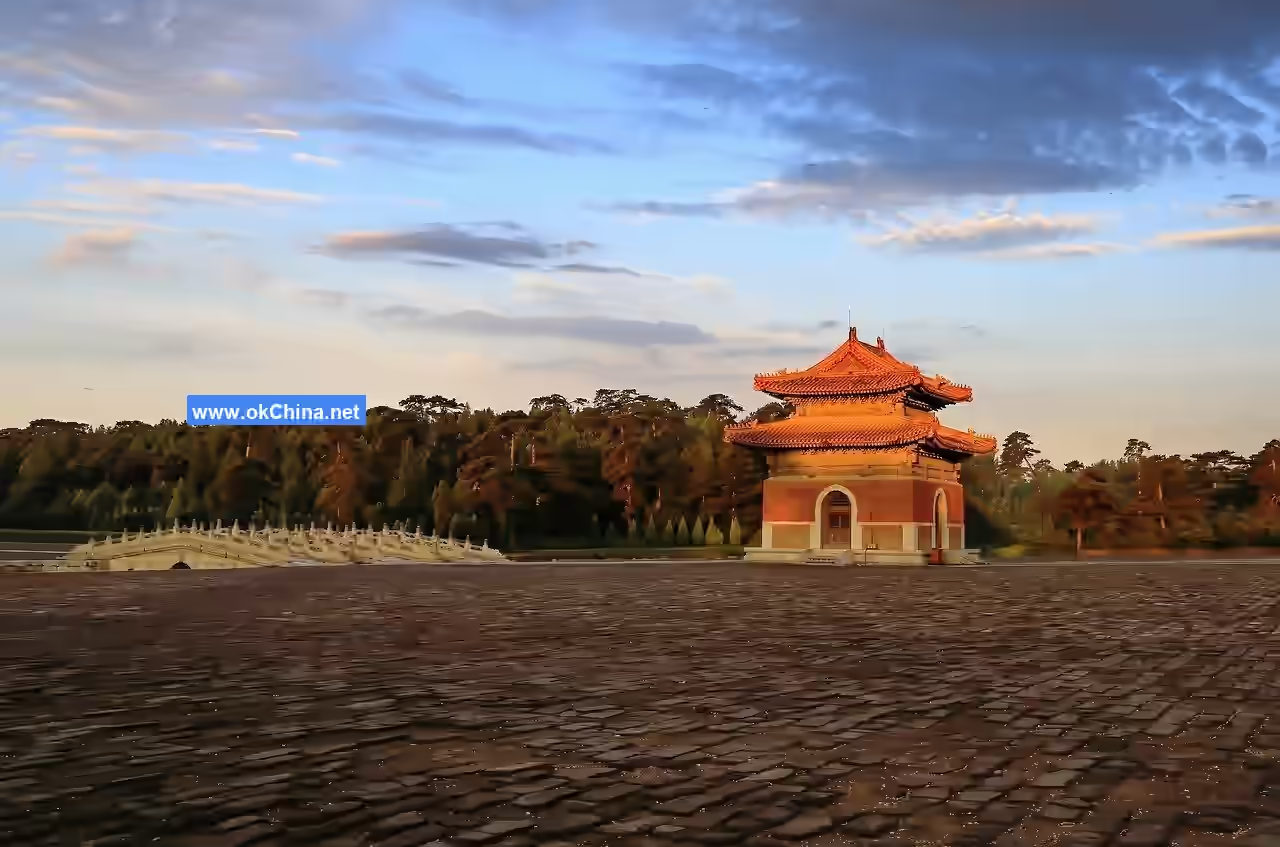
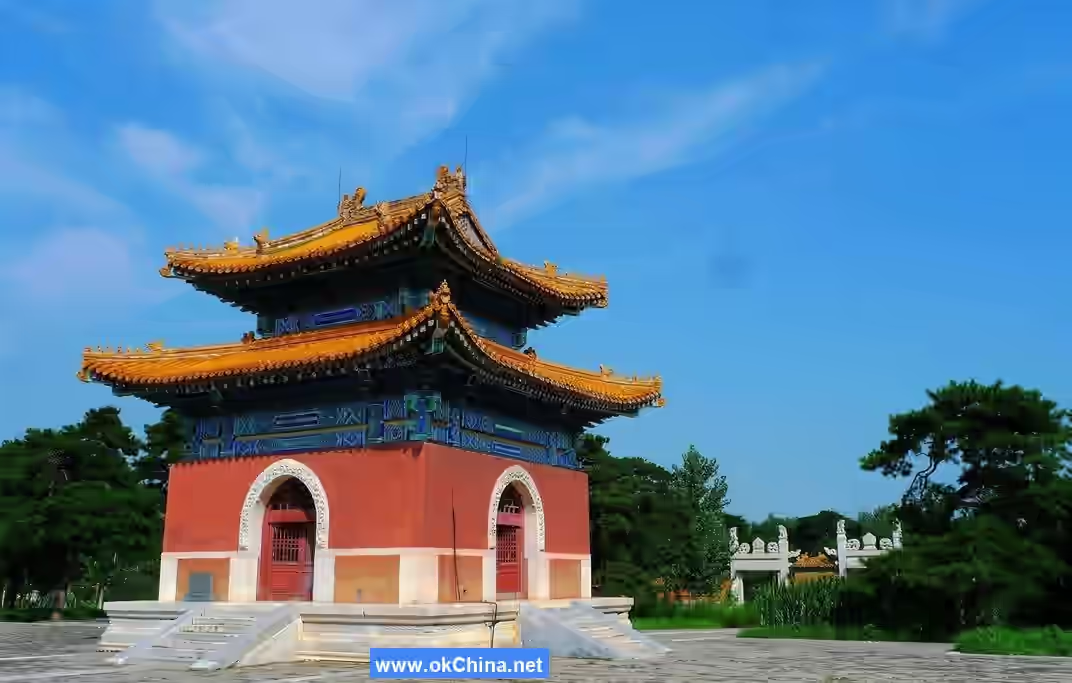
Tailing is the main structure of the Western Qing Tombs, notable for its grand scale and complete system. Centered around Tailing, the other tombs are arranged to its east and west, following a layout similar to the Eastern Qing Tombs. Crossing a five-arch bridge leads into the tomb area, where three exquisitely crafted stone archways and a spirit path over 10 meters wide and 5 li long run through the entire complex. Structures and stone carvings include stone archways, the Grand Red Gate, the Changing Hall, the Shengde Shengong Stele Pavilion, a seven-arch stone bridge, stone statues, the Long’en Gate, the Long’en Hall, the Fangcheng Minglou, and the Baoding. The Long’en Hall is magnificently constructed, with five bays in width and three bays in depth. It features a double-eaved hip-and-gable roof with yellow glazed tiles and a wooden structure joined by mortise and tenon. The columns are decorated with gold leaf, and the ceiling is adorned with xuanzi painted patterns. The beams and brackets are embellished with gold-lined dot patterns, and the central panels feature paintings of "Unified Rivers and Mountains" and "Universal Illumination," creating a harmonious and resplendent appearance.
Taidongling
Taidongling is the burial place of Empress Xiaoshengxian, the mother of Emperor Qianlong and a concubine of Emperor Yongzheng. Located about 1 kilometer northeast of Emperor Yongzheng’s Tailing in Dongzhengyu, Taidongling is the largest of the three empress tombs in the Western Qing Tombs. In September of the first year of Qianlong’s reign (1736), Prince Heng Hongzhi, who oversaw the Tailing project, and Minister of the Interior and Revenue Haiwang inquired with Emperor Qianlong about whether to reserve a burial space for the empress dowager after Emperor Yongzheng was interred in the Tailing underground palace. Unable to decide, Emperor Qianlong sought the empress dowager’s opinion. She decreed: "After Emperor Shizong is laid to rest in the underground palace, it should remain undisturbed forever. Reopening it would be inconsistent with the principles of respect and hierarchy. Moreover, precedents such as the Zhaoxiling and Xiaodongling of our dynasty can be followed, so no space needs to be reserved in the Tailing underground palace." Following her decree, Emperor Qianlong began constructing Taidongling for the empress dowager in Dongzhengyu in the second year of his reign (1737), completing it around the eighth year (1743).
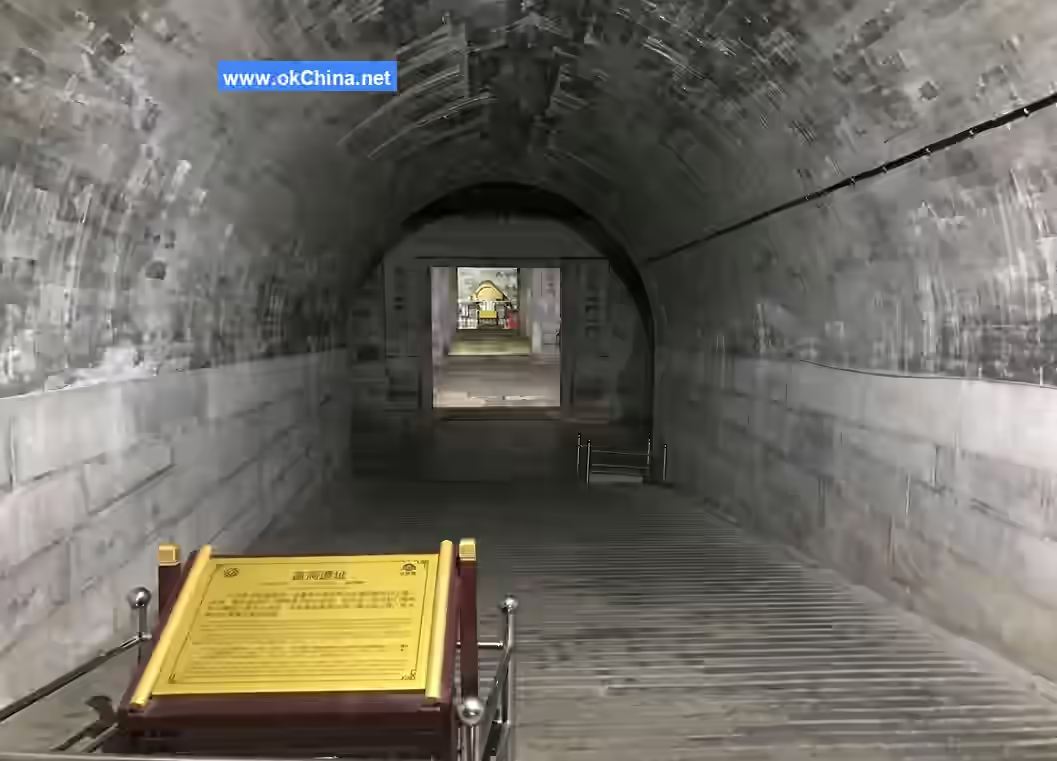
Its main structures, from south to north, include: a three-arch bridge, east and west dismounting steles, east and west auxiliary halls (5 bays each), east and west duty rooms (3 bays each), and the Long’en Gate (5 bays). Other features include east and west incense burners, east and west side halls (5 bays each), and a double-eaved main hall (5 bays). The tomb area also includes three tomb gates, a stone altar, the Fangcheng, the Minglou, the Baocheng, and the Baoding, beneath which lies the underground palace. To the left of the tomb is the Divine Kitchen, and outside it stands a well pavilion.
Qing Changling
Emperor Jiaqing’s Changling is the burial place of Emperor Jiaqing and Empress Xiaoshurui of the Hitara clan. Located 2 li west of Tailing and connected to it by a spirit path, it is the only tomb in the Western Qing Tombs with a spirit path linking it to the main tomb. The architectural form and layout of Changling are largely similar to Tailing, and its opulence rivals that of Tailing. The columns of the Long’en Hall are wrapped in gold and decorated with cloud and dragon patterns, and the floor is paved with precious spotted stones. The yellow square stone slabs feature distinctive purple patterns. Changling also houses the last Shengde Shengong Stele Pavilion built during the Qing Dynasty, as subsequent emperor tombs did not include such structures.
In the first year of Jiaqing’s reign (1796), Emperor Jiaqing ascended the throne. Following his father Emperor Qianlong’s system of building tombs in the Eastern and Western Tombs according to the zhaomu order, he selected a site 500 meters west of Tailing and began construction that year, completing it in the eighth year of his reign (1803). Upon completion, the tomb was named "Changling." It is the second emperor tomb built in the Western Qing Tombs. Concurrently, the Chang Concubine Garden Tomb, housing 17 of Emperor Jiaqing’s concubines, was also constructed and completed at the same time.
Changling houses Emperor Jiaqing and Empress Xiaoshurui. Located west of Tailing and completed in the eighth year of Jiaqing’s reign (1803), its architectural form is similar to Tailing, and its scale is comparable. When Emperor Qianlong passed the throne to Jiaqing, he also selected a tomb site for him about 1 kilometer southwest of Tailing. The tomb includes everything from the spirit path at the front to the Baocheng at the rear, but the Baocheng of Changling is even taller than that of Tailing. The Long’en Hall of Changling is particularly notable for its floor, paved with expensive yellow spotted stones featuring natural and elegant purple patterns, earning it the nickname "Hall of Gems." The echo stones and echo walls of Empress Jiaqing’s Changxiling produce remarkable acoustic effects, comparable to the Echo Wall of the Temple of Heaven in Beijing. To the west of Changling are Changxiling and the Chang Concubine Garden Tomb, housing Empress Xiaoherui and other concubines.
Changxiling
Changxiling houses Empress Xiaoherui, the second empress of Emperor Jiaqing. Construction of Changxiling took place from 1851 to the second year of Xianfeng’s reign (1853).
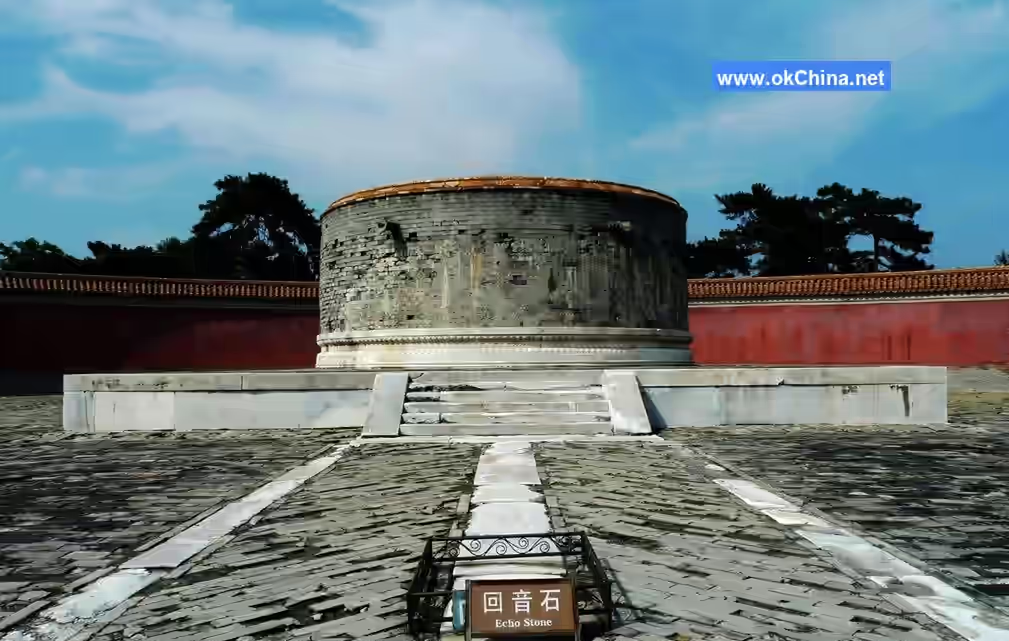
Changxiling is neither as grand nor as opulent as Empress Xiaoshengxian’s (Emperor Qianlong’s mother) Taidongling. The structures inside the Long’en Gate are arranged from front to back, each higher than the last. The tomb walls are square in the front and round in the back, symbolizing "round heaven and square earth." On the spirit path in front of the Baoding platform, the seventh stone slab is an echo stone. Standing on it, one can hear a clear and resonant echo regardless of the volume of speech.
The echo stones and echo walls of Changxiling represent a new innovation by Qing Dynasty architects, applying acoustic principles to tomb construction. The arched walls are semicircular, with sound wavelengths smaller than the radius of the walls. Sound waves travel along the walls through continuous reflection, allowing people standing at either end of the wall to hear each other clearly.Changxi Tomb is similar in structure to Muliang Tomb, with a circular mound built directly on a square platform, lacking a square city wall or a bright tower. Although its architectural regulations are modest, it has unique features: first, the caisson ceiling painting in the Long'en Hall depicts a red phoenix spreading its wings, while other empress tombs feature three lotus flowers set against a water wave pattern with 18 golden dots; second, there is a royal belt river between the Long'en Hall and the three gates, with three bridges spanning it—the middle one has railings, while the left and right ones are flat bridges without railings; third, the wall in front of the three gates is square, while the northern wall behind the three gates is arc-shaped, cutting into the straight walls of the three gates. The circular treasure dome stands in front of the northern arc wall, and the sacrificial altar is located inside the middle gate of the three gates. The arc-shaped wall creates a unique echo wall and echo stone phenomenon, making it a unique example in Chinese tomb architecture.
Qing Muliang Tomb
The Muliang Tomb of Emperor Xuanzong of the Qing Dynasty is located at Longquanyu, 15 kilometers west of Changling Tomb in the Western Qing Tombs. This tomb is uniquely constructed, differing from other imperial tombs, and is the innovative work of Emperor Daoguang. The characteristics of Muliang Tomb include its small scale, lacking structures such as a square city wall, bright tower, large stele pavilion, and stone statues. However, its engineering strength surpasses that of Tai and Chang Tombs. The entire enclosing wall is built with finely ground bricks fitted seamlessly, filled with mortar, making the wall flat, neat, and sturdy. The Long'en Hall is exquisitely crafted, entirely made of golden nanmu wood, without painted decorations, preserving the natural color of the wood. When the hall doors are opened, the fragrance of nanmu wood fills the air.
Initially, Daoguang’s tomb was located in the Eastern Qing Tombs. In line with Daoguang’s pursuit of frugality, parts such as the two-pillar gate, the tile roof of the underground palace, and carved scriptures and Buddha statues were omitted. The scale of the main hall, stele pavilion, and stone statues was also reduced. Completed in the seventh year of Daoguang’s reign (1827), the tomb was used to bury Empress Xiaomucheng. Unexpectedly, a year later, it was discovered that the underground palace had water seepage of 1.7 feet. In a fit of rage, the entire tomb was razed to the ground. Disregarding the ancestral custom established by Emperor Qianlong of alternating burial sites, Emperor Daoguang chose a new location in the Western Qing Tombs to rebuild the tomb. The design of this tomb was even more deliberately simplified, with only 27 structures covering an area of 45.6 mu, nearly 80 mu smaller than Tai Tomb. However, while externally "frugal," it was internally "luxurious," with exquisite materials. The walls were built with finely ground bricks fitted seamlessly and filled with mortar to the top, without red paint or gray plaster, deviating from the traditional method of rough brickwork on the upper part, painted red, and dry-laid on the lower part. Coupled with the experience of building twice and demolishing once, the cost of constructing Daoguang’s tomb exceeded that of any other tomb in the Western Qing Tombs.
Mudong Tomb
Mudong Tomb is the burial place of Empress Xiaojingcheng, consort of Emperor Daoguang, located at Shuangfengxiu, northeast of Muliang Tomb. It was originally the tomb for imperial concubines of Muliang Tomb. At the southernmost end are two dismounting steles beside the sacred path. On the left are the divine kitchen storehouse and well pavilion (originally absent, added later). The sacred path is entirely paved with bricks, lacking the central stone and side curb stones typical of empress tomb paths. The three five-arch flat bridges are remnants of the concubine tomb garden.
The east and west audience halls have five bays in width and two bays in depth, with yellow glazed tile hipped roofs (originally gray tiles). The gray-tiled east and west guardrooms each have three bays, and the Long'en Gate has three bays with a yellow glazed tile gable and hip roof (originally green glazed tiles, later all changed to yellow). Inside the gate are two incense burners. The east and west side halls have three bays each (originally absent). The Long'en Hall has three bays with a front moon platform but no railings, bronze tripods, deer, or cranes. Behind the hall is a wall with a gate tower in the middle gate, featuring a yellow glazed tile single-eave gable and hip roof. On the front lintel is a bluestone plaque inscribed with the words "Mudong Tomb" in Manchu, Mongolian, and Chinese. Flanking the middle gate are side gates. North of the wall is the stone five-offerings altar, and further north is a moon platform with a circular treasure dome, lacking a square city wall and bright tower. East of the treasure dome, another treasure dome stands side by side, belonging to Imperial Noble Consort Zhuangshun of the Uya clan.
Qing Chong Tomb
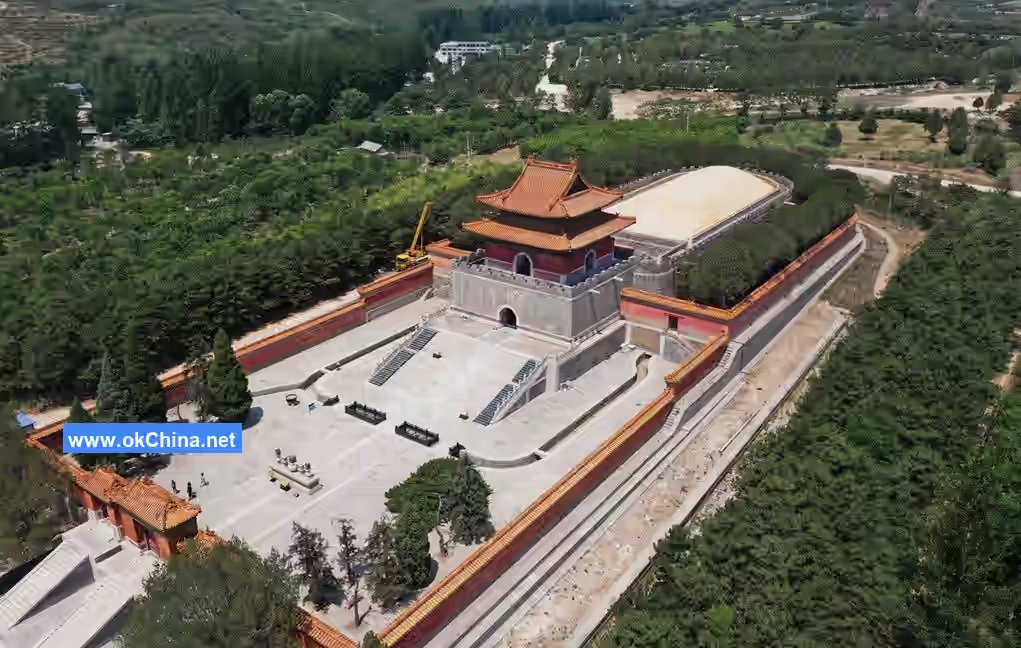
Qing Chong Tomb is located at Jinlongyu, about 4 kilometers southeast of Tai Tomb, and is the last existing imperial tomb in China. The number and scale of Chong Tomb’s structures fully adhere to those of Huiling Tomb of Emperor Tongzhi. The craftsmanship is exquisite, and among the ceremonial trees in the tomb garden are rare podocarpus and silver pine trees. The underground palace houses the joint burial of Emperor Guangxu and Empress Longyu.
The site of Chong Tomb is named Jinlongyu. Although its scale is not as grand as the tombs of Yongzheng and Jiaqing, lacking structures such as a large stele pavilion and stone statues, it inherits the regulations of Qing Dynasty tomb construction and references the styles of Dingling Tomb of Emperor Xianfeng and Huiling Tomb of Emperor Tongzhi, while also incorporating certain essences of ancient architectural techniques, giving it unique characteristics. To meet the needs of guarding and sacrificial rituals, the entire tomb complex includes a five-arch bridge, patrol rooms, a memorial archway gate, divine kitchen storehouse, three three-arch bridges, audience halls, guardrooms, Long'en Gate, incense burners, side halls, Long'en Hall, three gates, stone five-offerings altar, square city wall, bright tower, treasure dome, and underground palace. To enhance drainage, each palace base is equipped with a 2-meter-wide apron, and royal belt rivers were dug and constructed in front of the bright tower and the three gates. Fourteen water outlets were carved in the underground palace, connecting to the dragon-whisker ditches. The wood used in the Long'en Hall is exceptionally precious copper algae and iron algae wood. A simple armchair made from this wood can weigh over a hundred jin, earning the Long'en Hall the reputation of "copper beams and iron pillars." Additionally, partition materials were added between the beams, both supporting the structure and enhancing the hall’s aesthetic appeal. The four bright pillars in the Long'en Hall feature sea and mountain patterns at the base, with golden dragons coiling upward along the pillars, making them more magnificent than the treasure flower patterns in other imperial tombs.
Puyi’s Tomb
Puyi’s Tomb is located in Hualong Royal Cemetery. Puyi passed away in 1967 and was initially buried at Babaoshan. In 1995, he was reburied at Hualong Royal Cemetery in the Western Qing Tombs. On either side of Puyi’s tomb are Tan Yuling and Wanrong.
IV. Cultural Relic Value
Artistic Value
The Western Qing Tombs are a museum of traditional Chinese culture and art. Among the four imperial tombs, except for the looted underground palace of Chong Tomb, the others are well-preserved. The three stone memorial archways of Tai Tomb, the flower-patterned stone pavement in the Long'en Hall of Changling Tomb, the golden nanmu wood hall of Muliang Tomb, the echo wall of Changxi Tomb, and the copper beams and iron pillars of Chong Tomb are among the most completely preserved treasures of Qing tomb architecture. The 432 ancient structures, along with thousands of carvings and painted works, showcase the significant development and changes in Chinese tomb architectural styles and imperial religious beliefs from the 1730s to the early 20th century.
Through a wealth of physical imagery and textual historical materials, the Western Qing Tombs demonstrate the major developments and changes in Chinese tomb architectural styles and imperial religious beliefs from the 1730s to the early 20th century. They have made significant contributions to the innovation and development of ancient Chinese tomb architecture and possess irreplaceable historical, artistic, scientific, and appreciative value compared to tombs from earlier dynasties.
Cultural Value
The Western Qing Tombs also serve as a cultural park of Manchu folk customs. With the construction of the Western Qing Tombs, a large number of Manchu people migrated here to engage in sacrificial rituals and tomb management. Over nearly 300 years of historical changes, dozens of tomb-guarding barracks have evolved into villages, most of which still retain the architectural layout of the Qing Dynasty, with original features such as walls, gates, government offices, temples, and streets preserved. The descendants of the tomb guards continue to uphold their unique Beijing dialect, distinctive cuisine, ceremonial songs and dances, and other highly characteristic folk cultures. Additionally, Yunmeng Mountain, Emo Temple, and Yongfu Temple within the protected area are historically renowned Buddhist activity sites.
Historical Value
The scale and form of the subsidiary tombs of the four imperial tombs in the Western Qing Tombs reflect the evolution of the Qing Dynasty from prosperity to decline. The complete and grand scale of Tai Tomb and Changling Tomb reflects the glory of the Qing Dynasty’s peak period. The reduction in structures in Muliang Tomb (the first Qing tomb to omit the Sage Virtue and Divine Merit Stele Pavilion, stone statues, bright tower, and treasure city) and the diminished scale of Chong Tomb truthfully record the historical trajectory of the Qing Dynasty’s decline from strength and its transition from a feudal society to a semi-feudal, semi-colonial one. The fate of Emperor Guangxu and Imperial Noble Consort Zhen, buried in Chong Tomb and its subsidiary tombs in the Western Qing Tombs, further documents the history of Empress Dowager Cixi’s monopolization of the court, national humiliation, and harm to the country and its people. The termination of the tomb construction for the last emperor, Aisin Gioro Puyi, due to the overthrow of the Qing Dynasty, serves as physical evidence of the end of China’s millennia-long feudal history. In terms of preservation, the Western Qing Tombs are among the most completely preserved tomb complexes in China.
World Heritage Committee Evaluation: The Imperial Tombs of the Ming and Qing Dynasties were carefully selected according to Feng Shui theory, with numerous structures skillfully arranged underground. They are products of human alteration of nature, embodying traditional architectural and decorative ideas, and explaining the worldview and power concepts of feudal China over more than 500 years.
Comments
Post a Comment