


Wenchuan Special Tourism Zone
1. Introduction
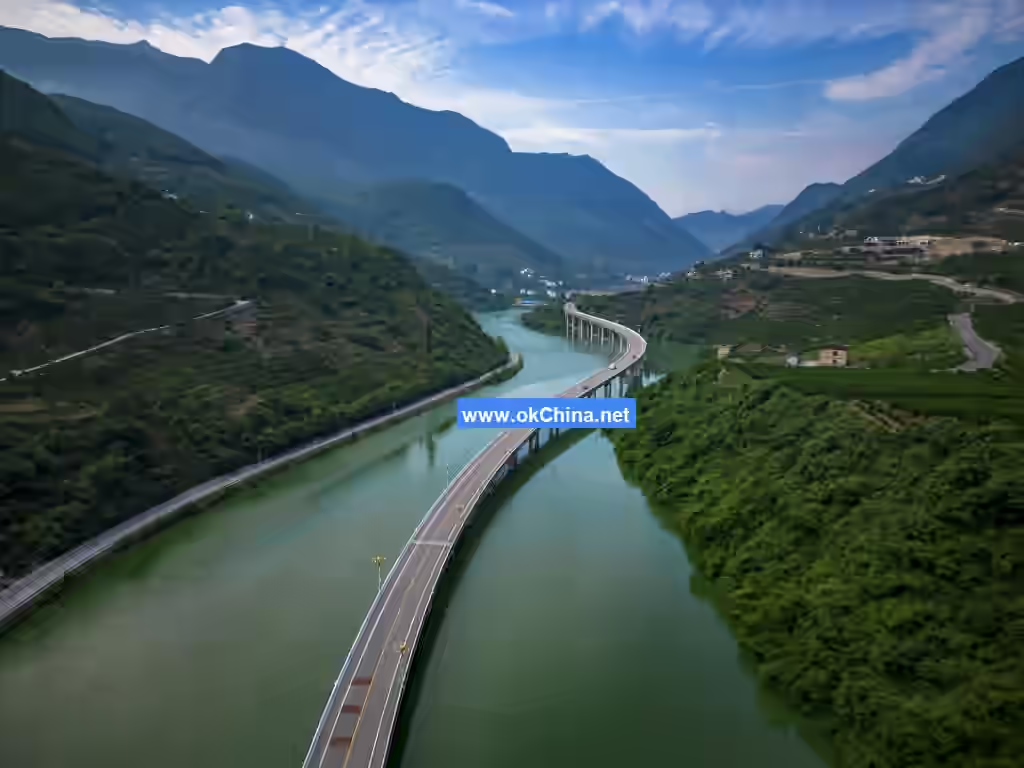
The Wenchuan Special Tourism Zone, located within Wenchuan County of the Aba Tibetan and Qiang Autonomous Prefecture in Sichuan Province, is a tourist area.
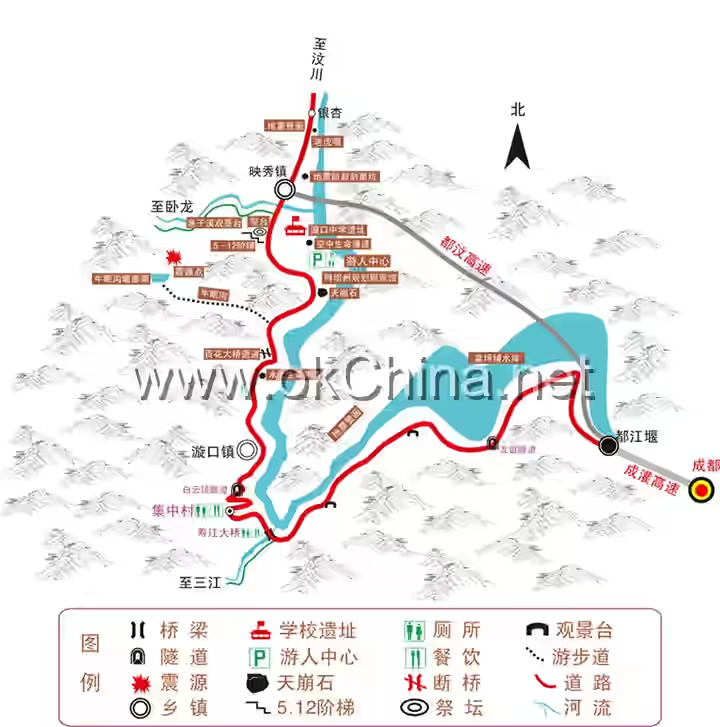
Developed specifically as a memorial and cultural-themed site following the reconstruction after the 2008 "5.12 Wenchuan Earthquake," the tourism zone encompasses Sanjiang Township, Yingxiu Town, and Shuimo Town in the southern part of Wenchuan County. It consists of the Yingxiu Earthquake Relics (also known as Yingxiu Epicenter, Heaven and Earth Yingxiu), Shuimo Ancient Town (also known as Shuimo Qiang City, Danqing Shuimo), and the Sanjiang Ecological Tourism Area (also known as Sanjiang Scenic Area, Misty Rain Sanjiang). The zone features well-preserved natural ecology, Tibetan and Qiang folk cultures, and the historical culture of the Ancient Tea Horse Road. It is a scenic area integrating sightseeing, experiential activities, and summer retreat vacations.
2. Geographical Environment
2.1 Location and Territory
The Wenchuan Special Tourism Zone is located in Wenchuan County, Aba Tibetan and Qiang Autonomous Prefecture, Sichuan Province. The Yingxiu Earthquake Relics are situated within Yingxiu Town, Wenchuan County. Shuimo Ancient Town is located within Shuimo Town, Wenchuan County. The Sanjiang Scenic Area is situated within Sanjiang Township, Wenchuan County, spanning approximately 14 kilometers east-west and 20 kilometers north-south, with a total area of 188 square kilometers.
2.2 Climatic Features
The Wenchuan Special Tourism Zone experiences a temperate monsoon climate. The climate exhibits a relatively complete vertical zonation as the terrain rises from southeast to northwest, which can be divided into eight distinct natural climatic zones. However, the distribution of sunlight, heat, and water is uneven. The area enjoys over 1,600 hours of annual sunshine on average, with an average annual temperature of 12.9°C.
3. Main Scenic Areas
3.1 Yingxiu Earthquake Relics
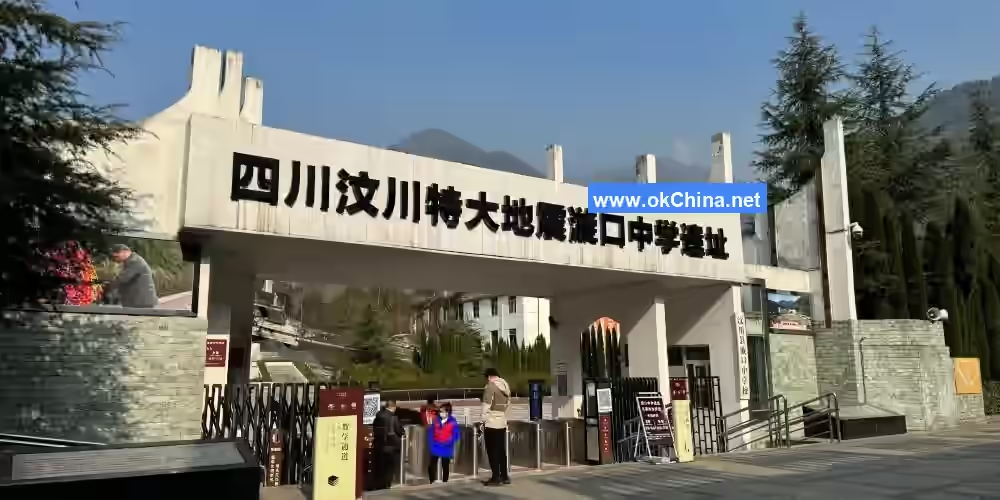
Yingxiu Town is located in the southeastern part of Wenchuan County. With abundant vegetation and beautiful scenery, it serves as the gateway from the Western Sichuan Plain into Aba Prefecture and is a crucial passage to world natural heritage sites like Jiuzhaigou and Huanglong, as well as the Wolong-Four Sisters Mountain Giant Panda Habitat. It is a convergence point for the integration of Tibetan, Qiang, Hui, and Han ethnic groups, historically known as the "Western Qiang Gateway." As a severely affected area in the "5.12 Wenchuan Earthquake," Yingxiu preserves the original earthquake scenes, including the epicenter point and the Xuankou Middle School ruins. A new "5.12" Wenchuan Earthquake Epicenter Memorial Hall has been built to commemorate the tragic moment, offering free admission.
3.1.2 Xuankou Middle School Ruins
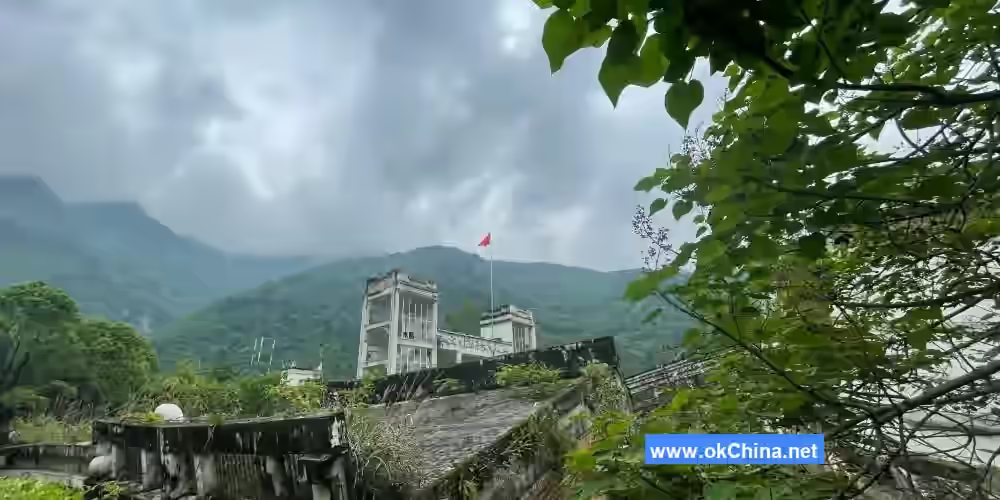
During the 2008 "5.12 Wenchuan Earthquake," all school buildings of Xuankou Middle School sank and collapsed. The pre-earthquake five-story buildings were reduced; only three stories remained of the original five, with the third floor becoming the first floor, and the original first and second floors turning into debris. Severely damaged, the ruins of Xuankou Middle School were preserved intact as a historical site during post-disaster reconstruction to remember and retain this history. It is the only large-scale site from the "5.12 Wenchuan Earthquake" that has been relatively completely preserved and also served as the venue for the earthquake's anniversary memorial ceremonies.
3.1.3 Yingxiu Bay Park
Yingxiu Bay Park was once the site of Yingxiu Primary School, which collapsed during the "5.12 Wenchuan Earthquake," claiming 260 lives. Located on a fault zone where permanent buildings are unsuitable, the Aba Prefecture Wenchuan Special Tourism Zone developed it into Yingxiu Bay Park, integrating ecological sightseeing and tourist distribution.
3.1.4 Lama Temple
Built during the Jiaqing period of the Qing Dynasty, the Lama Temple served as the ancestral hall for the Wasi Chieftain, housing statues of the chieftain and the Three Buddhas. It was demolished in 1958, and the current temple was rebuilt in recent years. It is located on a hill at the confluence of the Zhong River and the Heishi River, where Wang Bao's tomb is also situated.
3.1.5 Baihua Bridge Ruins
Located at the border between Xuankou Town and Yingxiu Town in Wenchuan County, Baihua Bridge was a vital passage on National Highway 213 leading to Aba Prefecture and its 13 counties, serving as a key node in the prefecture's transportation network. During the "5.12 Wenchuan Earthquake," Baihua Bridge was completely destroyed and rendered irreparable.
3.1.6 Epicenter Memorial Hall
The "5.12" Wenchuan Earthquake Yingxiu Epicenter Memorial Hall is located in Yuzixi Village along National Highway 213. Designed under the guidance of Academician He Jingtang from the Chinese Academy of Engineering, it covers a construction area of 4,800 square meters. Construction began in December 2009, and it officially opened on May 12, 2012, with an exhibition area of 4,000 square meters. The hall consists of five sections: the Preface Hall, the Severe Destruction of the Major Earthquake Exhibition Area, the United Efforts in Earthquake Relief Exhibition Area, the Self-Reliance and Scientific Reconstruction Exhibition Area, and the Scientific Response and Earthquake Prevention/Disaster Reduction Exhibition Area. Through rich texts, images, video materials, multimedia, dynamic panoramic screens, and other artistic techniques and scenes, it comprehensively presents the wise decisions of the Party Central Committee, the great love and support from all sectors of society, and the indomitable, grateful, and striving spirit of the people in the disaster area during the earthquake relief and post-disaster reconstruction process.
3.2 Shuimo Ancient Town
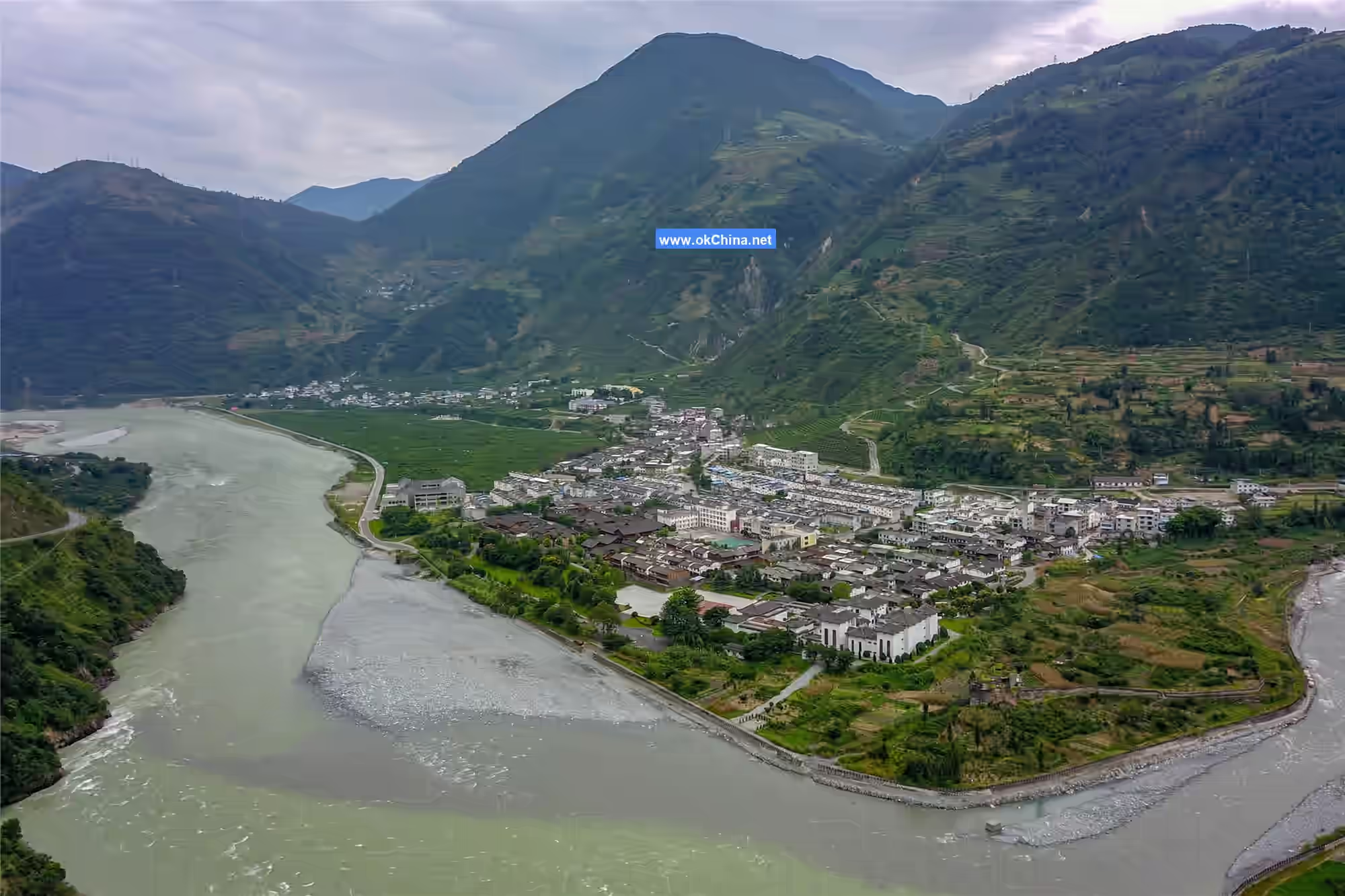
Shuimo Ancient Town is located along the Shouxi River, a tributary of the Minjiang River in southern Wenchuan County. As early as the Shang Dynasty, it enjoyed the reputation of the "Land of Longevity," then called the Elderly Village, later renamed Shuimo, which it retains today. Shuimo Town is an integration area of Han and ethnic minorities, where inland customs and Tibetan-Qiang culture shine together, and Western Sichuan culture and Zen Buddhism bloom jointly. After the "5.12 Wenchuan Earthquake," Shuimo Ancient Town was rebuilt into three major areas: "Chanshou Old Street, Shouxi Lake, and Qiang City." With its numerous ancient streets, it is hailed as the first town reconstructed after the Wenchuan Earthquake.
3.2.1 Chunfeng Pavilion
"Chunfeng Pavilion" is a landscape structure built by deeply exploring the historical and cultural heritage of Shuimo Ancient Town and refining the architectural essence combining Tibetan, Qiang, and Han characteristics. The design is ingenious and unique. The main structure adheres to traditional Chinese architectural methods, with detailed decorations rich in religious and Tibetan-Qiang cultural colors. It represents an organic fusion of multi-ethnic cultures, reflecting the resilience and cohesion displayed by people of all ethnicities in the face of disaster. It stands as a powerful testament to national unity and also offers an excellent vantage point for viewing the landscape.
3.2.2 Xiqiang Hui
Xiqiang Hui, located at the foot of Chunfeng Pavilion in Shuimo Town and east of Shouxi Lake, is one of Shuimo's landmark landscapes. Its architectural plan evolved from a square, and the facade incorporates features of Qiang watchtowers. The watchtower and blue waves complement each other; at night, the colorful lights of the glass structure blend with the water, adding a fantastical hue to Shouxi Lake. Xiqiang Hui combines modern architecture and decorative art with traditional Western Qiang culture, integrating elements of Foshan ceramic art. It serves multiple functions including exhibitions, performances, conferences, and receptions. Xiqiang Hui showcases the spirit of self-reliance and homeland reconstruction after the Wenchuan Earthquake, symbolizing the continuation of life and cultural heritage, and embodies the deep bond between Foshan and Shuimo.
3.2.3 Chanshou Old Street
Chanshou Old Street stretches 1,300 meters, laid out in a "U" shape. The buildings lining both sides, such as Chunfeng Pavilion, Dafudi, Wannian Stage, Ziku (Character Repository), and White Pagoda, represent the culmination of traditional Chinese architectural systems. They are typical Ming and Qing style structures combining Qiang, Tibetan, and Han elements, characterized by clear outlines, profound layouts, and multiple distinct axes. They reflect the ancient architectural philosophy and design concept of "harmony between man and nature." With its Western Sichuan residential style and antique charm, Chanshou Old Street not only resolved housing issues for 227 households post-disaster but also created a "home-with-shop" model suitable for living and business, creating favorable conditions for tourism development and increasing residents' income.
3.2.4 Wannian Stage
The Wannian Stage was first built in the 25th year of the Wanli era of the Ming Dynasty (1588 AD) and was destroyed in the late 1990s. After the "5.12" Wenchuan Earthquake, it was restored to its original form following archaeological investigation. The structure faces north, covering a total area of 86 square meters. Its plan is distributed in a "convex" shape, featuring a hip-and-gable roof, a post-and-lintel structural system, seven purlins and nine ridge beams, plain barrel tile roofing, gray molded ridges, a ceiling with caisson decoration, and painted designs. It possesses古朴典雅 (simple and elegant) ethnic characteristics and local artistic style, drawing on the simplicity, plainness, and solemnity of traditional Chinese and Western Sichuan residential architecture. It serves as valuable physical material for studying the history of Chinese theater development.
3.2.5 Ziku Pagoda (Character Repository Pagoda)
Also known as "Xizi Gong" (Cherish Characters Palace), "Jingzi Ting" (Respect Characters Pavilion), "Shengji Ting" (Sage Traces Pavilion), "Wenfeng Ta" (Literary Style Pagoda), or "Fenzi Lu" (Character Incinerator), the Ziku Pagoda was a structure specifically used by ancients for burning paper with written characters. Originating in the Tang and Song dynasties and flourishing in the Ming and Qing, it is a product of the traditional Chinese cultural concepts of "cherishing characters like gold" and "respecting heaven, cherishing characters." This particular pagoda was initially built in the Qing Dynasty, destroyed in the early 1990s, and restored to its original form after archaeological investigation following the "5.12" Wenchuan Earthquake. The screen wall in Ziku Square bears the four characters "Da Ai Wu Jiang" (Great Love Knows No Bounds), expressing the gratitude of the disaster area people towards their compatriots in Foshan, Guangdong, for their tremendous assistance and joint reconstruction efforts.
3.2.6 Shuimo Pavilion (Water Mill Pavilion)
The water mill, as a traditional living tool in ancient China, was first recorded in the Jin Dynasty, flourished after the Han Dynasty, and multi-functional water mill machinery had already taken shape by the Three Kingdoms period. Ye Shi of the Song Dynasty wrote in "General Discussion on Wealth Part Two": "The quotas for workshops, river ferry exemptions, tea markets, and water mills were only sufficient to provide official salaries." This specific water mill was built in the late Ming Dynasty, over 400 years ago. It is a historical缩影 (microcosm) of Shuimo Ancient Town's traditional agriculture-led industry and a真实写照 (true portrayal) of the farming culture in the ancient Minjiang River basin.
3.2.7 Shuimo Qiang CityShuimo Qiang City covers an area of 61,117 square meters and is a people-centered project constructed after the disaster. With a seismic fortification intensity of 9 degrees, it comprehensively utilizes Qiang architectural techniques such as stone structures, mud structures, stone-wood structures, and wooden structures, inheriting and promoting Qiang architectural culture. It embodies the new concept of a Qiang city transitioning from simple, rustic traditional architectural clusters to a modern town. The inheritance and innovation of Shuimo Qiang City have made it a model for the urbanization of Qiang architecture, earning it the title of "China's Most Beautiful Qiang City."
3.2.8 Shouxi Lake
Shouxi Lake is formed by the convergence of five mountain spring streams that flow through medicinal herbs. These spring waters are believed to have special effects in regulating bodily functions and promoting longevity. Just as Shennong tasted hundreds of herbs to achieve longevity, drinking from Shouxi Lake in Shuimo brings blessings. The great Song Dynasty literary figure Su Shi recorded in his poem Harmonizing with the Peach Blossom Spring Poem and Preface: "...In the Elderly Village of Qingcheng Mountain in Shu, there are those who have seen their fifth-generation descendants... The stream is abundant with Chinese wolfberries, their roots resembling dragons and snakes. Drinking its water, hence the name Shouxi Lake."
3.2.9 Chancheng Bridge
Chancheng Bridge is a pedestrian bridge in Shuimo Ancient Town rebuilt after the disaster. Construction began in September 2009 and was completed in January 2010. The main structure is a simply supported girder bridge using prefabricated small box girders, with an upper wooden corridor made of imported Russian Scots pine. The bridge has a total length of 87.4 meters, featuring a unique design and classical charm.
3.2.10 Qiang Watchtower
The watchtower in "Shuimo Qiang City" is the iconic structure of the entire Qiang city, standing about 10 meters tall, majestic and grand. It embodies the millennia-old history and architectural culture of the Qiang people,凝结了 the wisdom and sweat of the Qiang people, and represents a unique architectural form of the Qiang ethnicity. For thousands of years, to avoid warfare, the Qiang ancestors migrated from generation to generation, and watchtowers became their defensive structures.
3.2.11 White Pagoda
The White Pagoda, transliterated from Tibetan as "Qudeng Gabu," is also known as the "Auspicious White Pagoda." Its shape resembles an algae vase, alternating between thick and thin sections, combining square and round forms, with an elegant design. The Shuimo White Pagoda serves as physical evidence of the eastward spread of ancient Hinduism and Tibetan Buddhism, as well as a historical testament to ethnic unity and cultural exchange. It expresses the sincere prayers of all ethnic groups for peace and happiness.
3.2.12 Feima Village
Feima Village is located in Gaofeng Village of Shuimo Ancient Town. Historically, it served as the origin for horse caravans traveling across rivers and lakes and was the operational headquarters of the ancient Tea-Horse Road. Originally known as Dama Village, due to its location at a strategic pass on the Tea-Horse Road, it was historically a bandit stronghold where robbers gathered to ambush and loot passing caravans and merchants. After being attacked and destroyed by the Wasi Tusi of Wenchuan in the 14th year of the Qing Jiaqing reign, it was rebuilt by the horse caravans of the time and renamed Feima Village. Behind the village are historical sites such as Shuishen Gully, Rhinoceros Pool, and Wangshan Slope. It is now a horseback riding sightseeing attraction within the Shuimo Ancient Town scenic area.
3.2.13 Harmony Square
Harmony Square is located at the intersection of Chanshou Old Street and Shuimo Qiang City, symbolizing harmonious coexistence and mutual assistance among all ethnic groups and peoples. At the same time, the architectural styles and cultural elements of the Qiang, Tibetan, and Han ethnicities are fully displayed and integrated here.
3.2.14 Sheepskin Drum Square
The Qiang people have held a special affection for sheep since ancient times, and sacrificing sheep to the mountains was a major ceremony of the ancient Qiang. In areas where the Qiang people are active, the deity worshipped by the Qiang is a "sheep-body with a human face," regarding the sheep as their ancestor. Legend has it that during the Qiang migration to the upper reaches of the Minjiang River, the Qiang shamans were exhausted and fell into a deep sleep, and their scriptures fell to the ground and were eaten by a hungry sheep. Later, the sheep appeared in a dream to the Qiang people, saying, "After I die, you can make my skin into a drum. Beat it three times, and the scriptures will fall out." This shows that sheep were赋予极高的地位 by the Qiang people, even becoming sacred bearers of Qiang culture.
3.2.15 Qiang Embroidery Square
Qiang embroidery is a treasure of the Chinese nation's 5,000-year splendid culture and a specialty skill of Qiang girls. Cloud-patterned shoes and embroidered aprons are the most representative handicrafts of Qiang embroidery. Others include Tibetan-style bags, satchels, hats, pulu (Tibetan woolen fabric), felt, mattresses, wall hangings, etc., each exquisitely crafted.
3.2.16 Qiang Flute Square
The Qiang people are an ancient ethnic group skilled in singing and dancing, with numerous musical instruments. The Qiang flute has been流传 in Gansu, Sichuan, and other regions since the Han Dynasty, with a history of over 2,000 years. The Qiang flute is most suitable for solo performance but can also accompany singing and dancing. The line "Why should the Qiang flute complain about the willow? The spring breeze does not pass the Yumen Pass" is the best depiction of its expressive power.
3.2.17 Feihong Square
Feihong Square is a "Shuimo painting" that brings joy and relaxation, created through the hard work and dedication of Foshan aid workers over more than 600 days and nights. It integrates elements of local farming labor customs, regional characteristics, and ethnic songs and dances, reflecting ethnic风貌. The circle symbolizes the close kinship between Foshan and Shuimo, with the Qiang totem of a sheep's head as the central symbol reflecting folk characteristics. Typical figures from Foshan and Shuimo are used as elements, with hands holding a dove of peace寓意 a bright future. The iconic Chunfeng Pavilion of Shuimo serves as a symbol强化 regional characteristics. The rubble and hands at the bottom of the circle symbolize how the earthquake connected the people of Foshan and Shuimo,携手共建家园 on the ruins. It showcases the selfless aid spirit of the Foshan people and the resilient, indomitable spirit of the Shuimo people.
3.3 Sanjiang Ecotourism Area
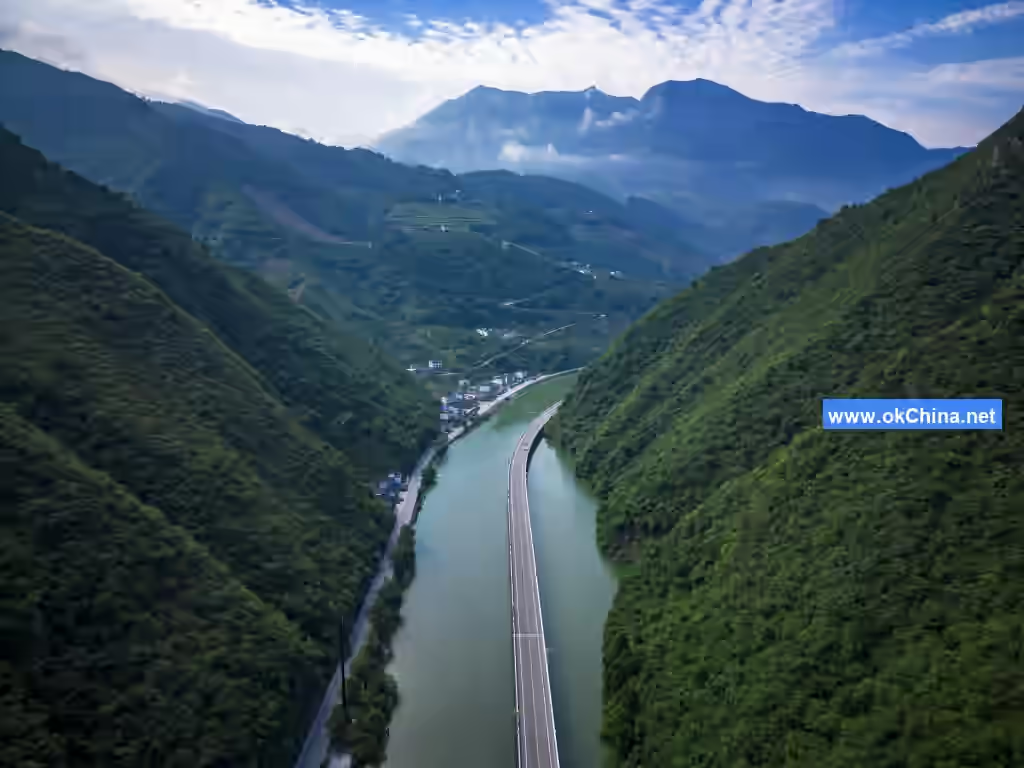
The Wenchuan Sanjiang Ecotourism Area is located within Sanjiang Township in southern Wenchuan County. The Xi River, Zhong River, and Heishi River converge here, hence the name Sanjiang (Three Rivers). Waterfalls, ancient paths, and bridges create a landscape of原始好风光. The scenic area is adjacent to the Wolong National Nature Reserve and the Qingcheng Mountain Scenic Area. It is a habitat for the world natural heritage giant panda and also the world's largest growing area for the "living plant fossil," the dove tree (Davidia involucrata). It features well-preserved natural ecology, Tibetan and Qiang folk cultures, and the historical culture of the Tea-Horse Road. It is a short-distance tourism scenic area integrating sightseeing, experience, and summer retreats.
3.3.1 Water Town Tibetan Village
After the "5.12" Wenchuan特大 earthquake, Sanjiang Township, centered around its unique natural water system, built an ethnic-characteristic Water Town Tibetan Village, including archways, waterwheel landscapes, Mingyue Pavilion, Tibetan Folk Custom Garden, shopping长廊, tourist center, etc.
4. Cultural Activities
May 12 Wenchuan Earthquake
At 14:28:04 on May 12, 2008, a magnitude 8.0 earthquake struck Wenchuan County, Sichuan Province, China, with a focal depth of 14 kilometers. This sudden disaster instantly changed the lives of countless people. The earthquake affected 417 counties (cities, districts) in 10 provinces (autonomous regions, municipalities) including Sichuan, Gansu, Shaanxi, and Chongqing, with a disaster area of approximately 500,000 square kilometers. It became the most destructive, widespread, and challenging earthquake to rescue since the founding of the People's Republic of China. As of September 25, 2008, the Wenchuan earthquake had confirmed 69,227 fatalities, 374,643 injuries, and 17,923 missing persons, with direct economic losses reaching 845.1 billion yuan. Collapsed houses, landslides, and中断 roads left the disaster area in ruins, countless families torn apart, and the entire nation shaken.
After the earthquake, the Chinese government迅速启动 emergency mechanisms, mobilizing military, armed police, firefighting, and other rescue forces to the disaster area. Then-Premier Wen Jiabao arrived in the disaster area within hours of the earthquake to指挥救援工作. Simultaneously, the international community extended援助, with rescue teams and medical teams from Russia, Japan, South Korea, Singapore, and other countries陆续抵达 the disaster area, standing side by side with the Chinese people. The entire nation united as one, donating money and materials, and volunteers rushed to the front lines from all directions, demonstrating the强大的凝聚力 of the Chinese nation. The people in the disaster area坚强求生 amidst the ruins, while rescue workers争分夺秒 in dangerous conditions. Touching scenes brought tears to people's eyes and made them feel the resilience of life and the power of unity.
Post-disaster reconstruction was a daunting task, but the Chinese government delivered a remarkable答卷 through scientific planning and efficient execution. A master plan for post-disaster recovery and reconstruction was迅速制定, with central财政投入巨资, active participation from local governments and all sectors of society. Infrastructure, housing, schools, hospitals, etc., in the disaster area were快速重建. Newly built houses were more坚固, schools were equipped with advanced teaching facilities, and hospitals had improved medical conditions. Moreover, post-disaster reconstruction also注重生态保护和可持续发展. Many disaster areas焕发出新的生机 after reconstruction. For example, Yingxiu Town in Wenchuan County was几乎被夷为平地 in the earthquake, but after reconstruction, it has now become a modern tourist town, attracting numerous visitors.
In addition to physical reconstruction, psychological援助 was also an important part of post-disaster recovery. The earthquake caused profound psychological trauma to survivors. Many lost loved ones, their homes destroyed, filled with fear and despair. To this end, the government and all sectors of society积极开展心理援助, organizing psychological counselors and volunteers to provide psychological疏导 for the affected people, helping them走出阴影 and regain confidence in life. Many children who lost their parents in the earthquake were placed in new families, receiving社会关爱和照顾. Their smiles重新绽放, becoming symbols of hope in the disaster area.The Wenchuan earthquake was not only a disaster but also a profound test for the nation and society. It exposed China's shortcomings in disaster prevention and mitigation while also driving rapid development in related fields. After the earthquake, China strengthened the construction of its earthquake monitoring and early warning systems, enhanced public awareness of disaster prevention, and implemented regular emergency drills in many schools and enterprises. At the same time, the country established stricter building seismic standards to ensure that new constructions could withstand the impact of strong earthquakes. These measures not only laid the foundation for future disaster prevention and mitigation efforts but also provided valuable experience for the global response to natural disasters.
From a historical perspective, the Wenchuan earthquake was a tremendous test for the Chinese nation, yet it also became an opportunity for the sublimation of national spirit. During this disaster, the Chinese people demonstrated a great spirit of unity and collective determination, which not only inspired the people in the disaster-stricken areas to rebuild their homes but also became a driving force for the nation's progress. Post-earthquake China placed greater emphasis on people's livelihoods, environmental protection, and sustainable development, promoting comprehensive social progress. At the same time, the international community's collaboration with China during the rescue and reconstruction efforts showcased the concept of a shared future for humanity, setting an example for global responses to natural disasters.
Every year on May 12th, China holds various commemorative activities to honor the victims of the earthquake and promote the spirit of earthquake relief and disaster response. These activities not only pay tribute to the deceased but also inspire the living. The Wenchuan earthquake reminds us that natural disasters are a common enemy of humanity, and only through unity, collaboration, and scientific responses can we reduce the losses caused by such calamities. The story of the Wenchuan earthquake is not merely a recollection of a disaster but also a profound reflection on human courage, wisdom, and solidarity. It teaches us that no matter the difficulties we face, as long as we hold onto hope and work together, we can overcome challenges and create a brighter future.
Comments
Post a Comment