Weishan Lake Tourist Area
1. Introduction
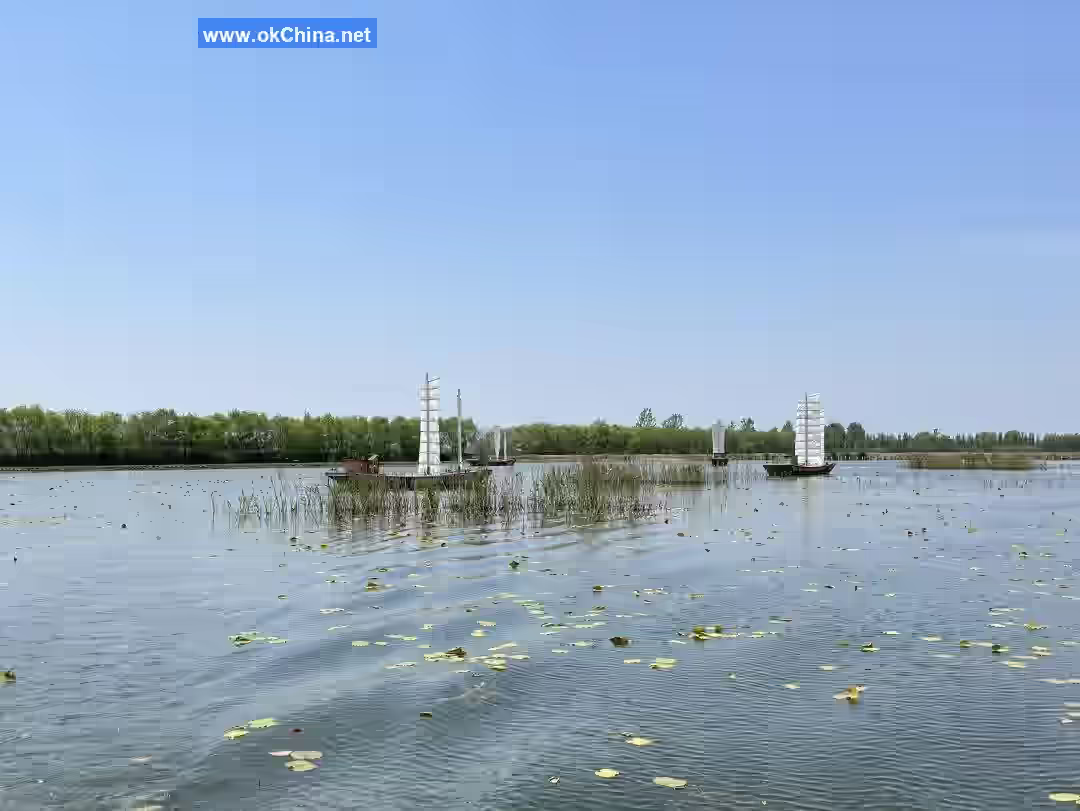
Weishan Lake, also known as the Southern Four Lakes, is located at the border of Shandong and Jiangsu provinces in China. It consists of four interconnected lakes: Weishan Lake, Zhaoyang Lake, Nanyang Lake, and Dushan Lake. Stretching 120 kilometers from north to south and up to 25 kilometers at its widest point from east to west, Weishan Lake covers a water area of 1,266 square kilometers, making it the largest freshwater lake in northern China.
The Weishan Lake Tourist Area spans a planned area of 76.78 square kilometers. It extends north to the Weishan Lake National Wetland Park, east to the Lake East Embankment, south to Weishan Island, and west to the Beijing-Hangzhou Grand Canal. As the largest freshwater lake in northern China, Weishan Lake is a brilliant pearl embedded in the Grand Canal. It is also a historic red revolutionary base. During the War of Resistance Against Japan, relying on Weishan Lake, the Weihu Brigade, the Canal Detachment, and the Railway Guerrilla Force achieved illustrious military feats, gaining fame across China. The area has been included among the nation's 12 key red tourism areas, 30 premium red tourism routes, and 100 classic red tourism scenic spots.
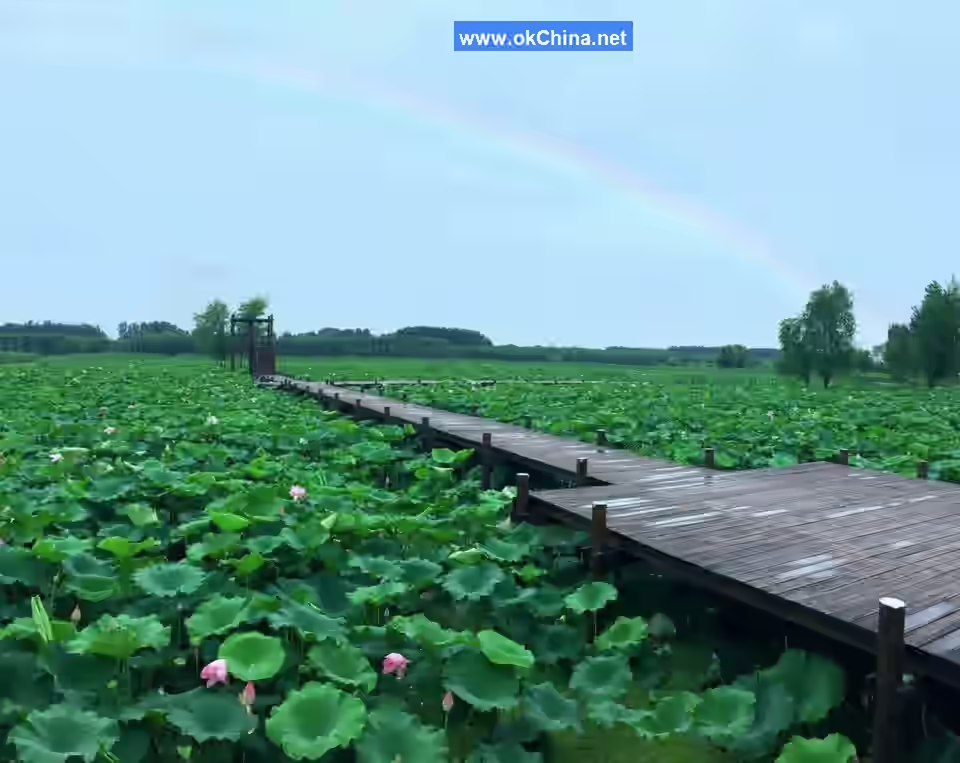
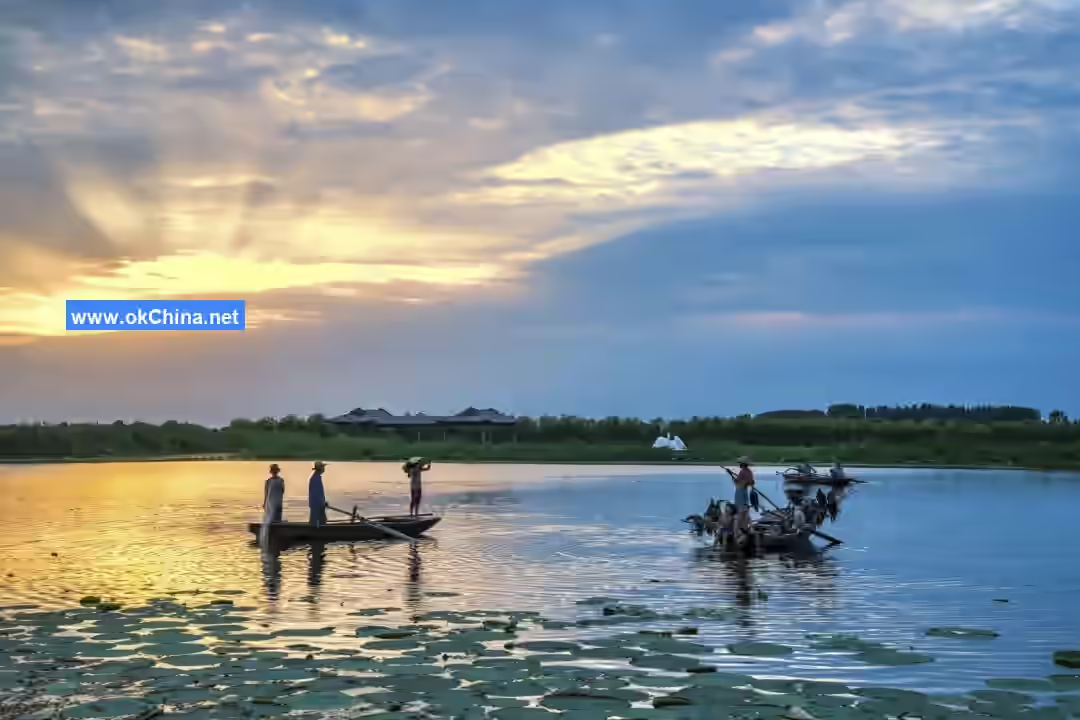
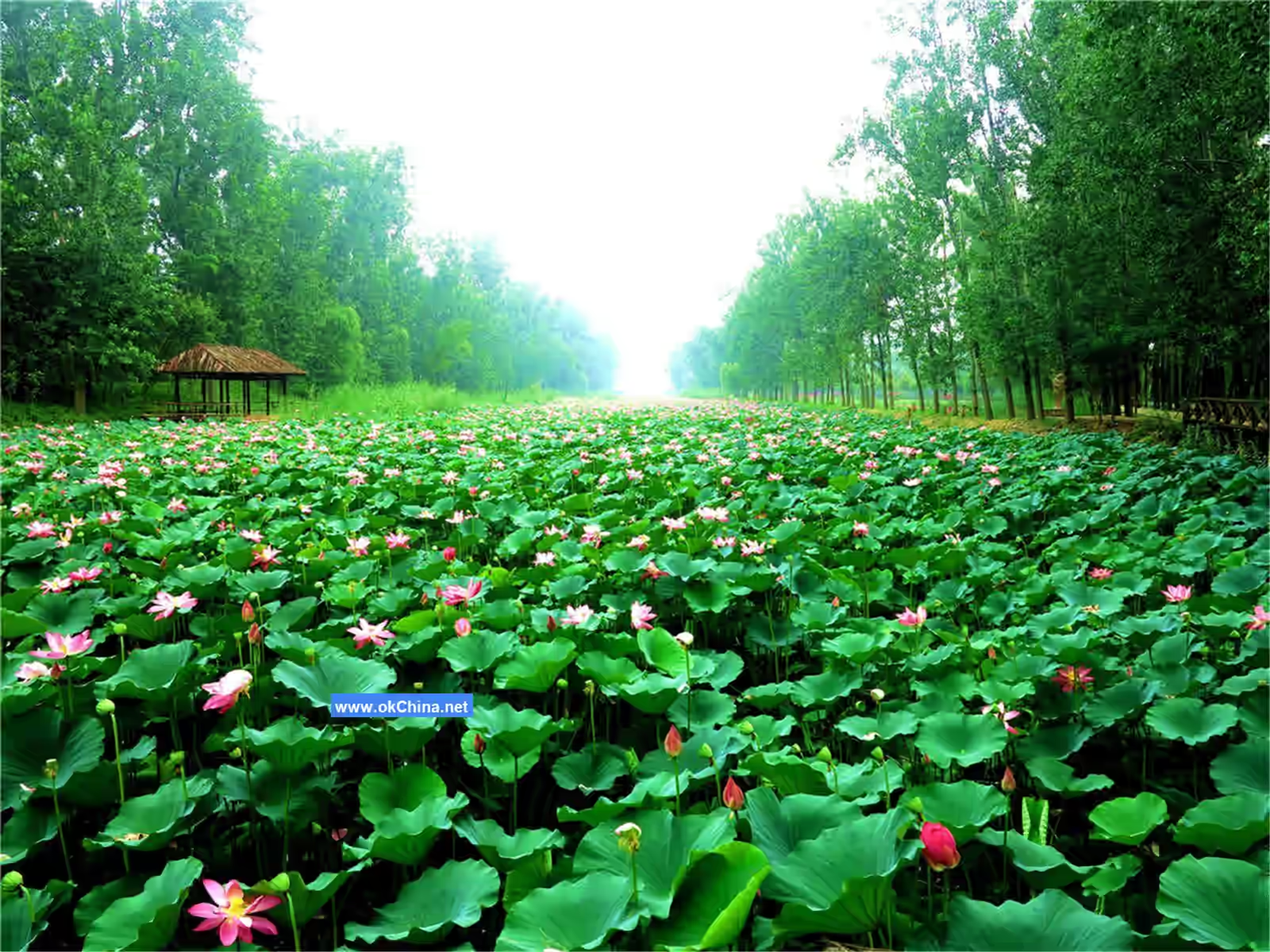
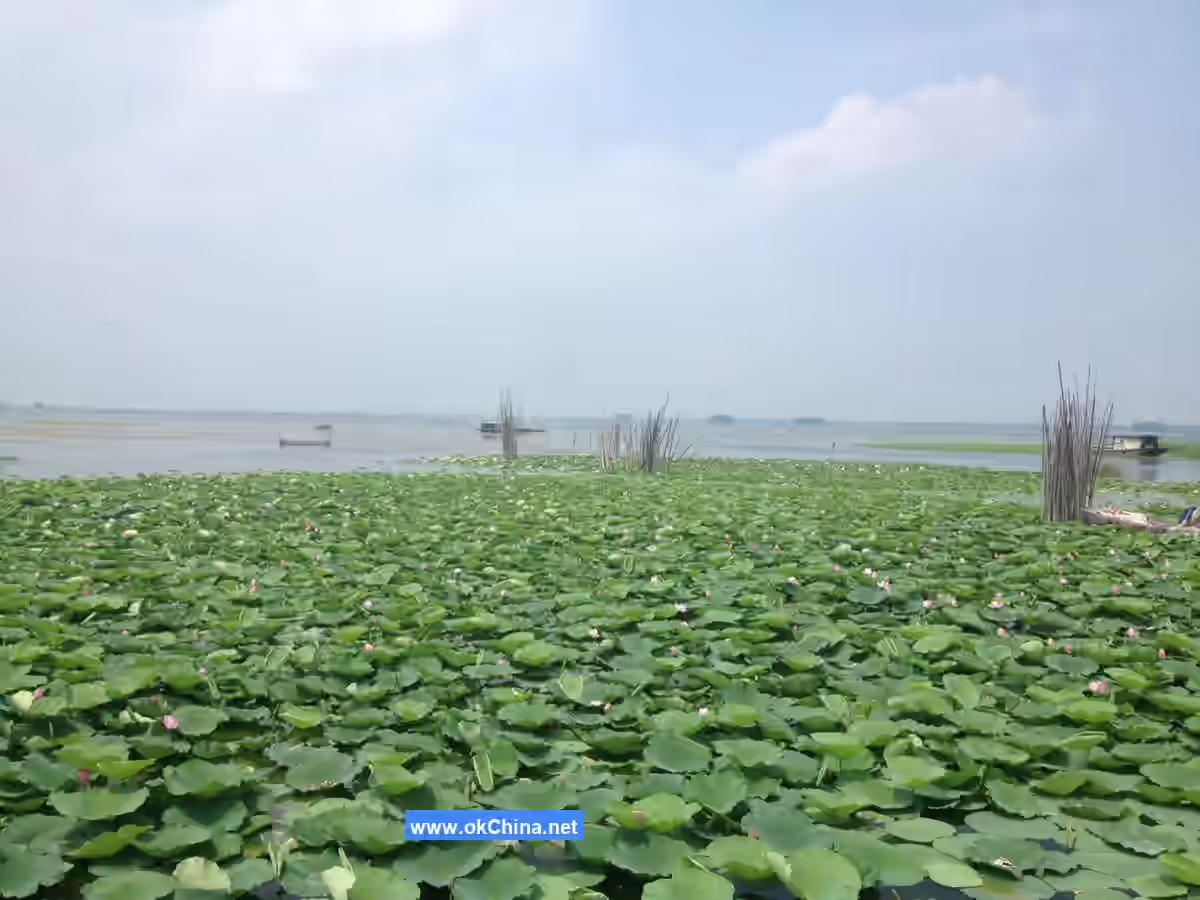
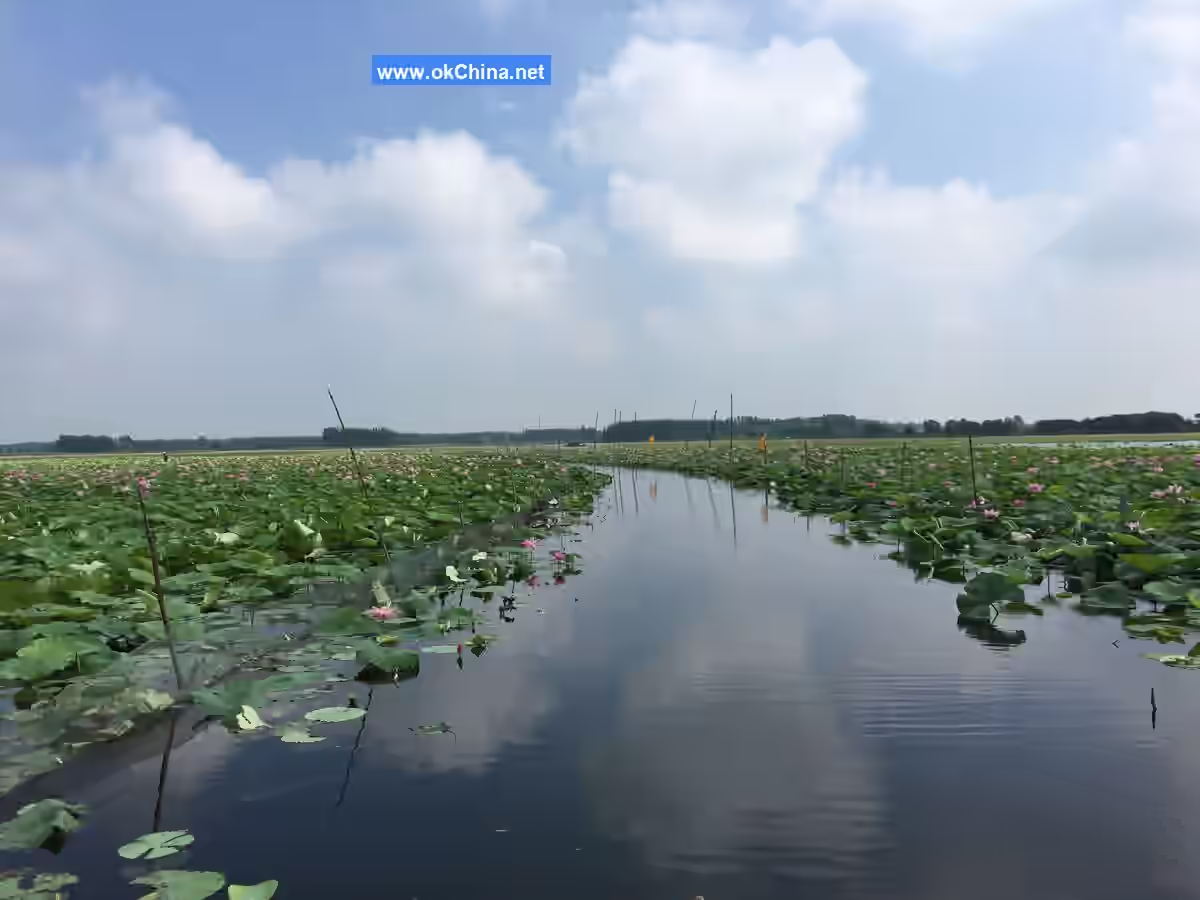
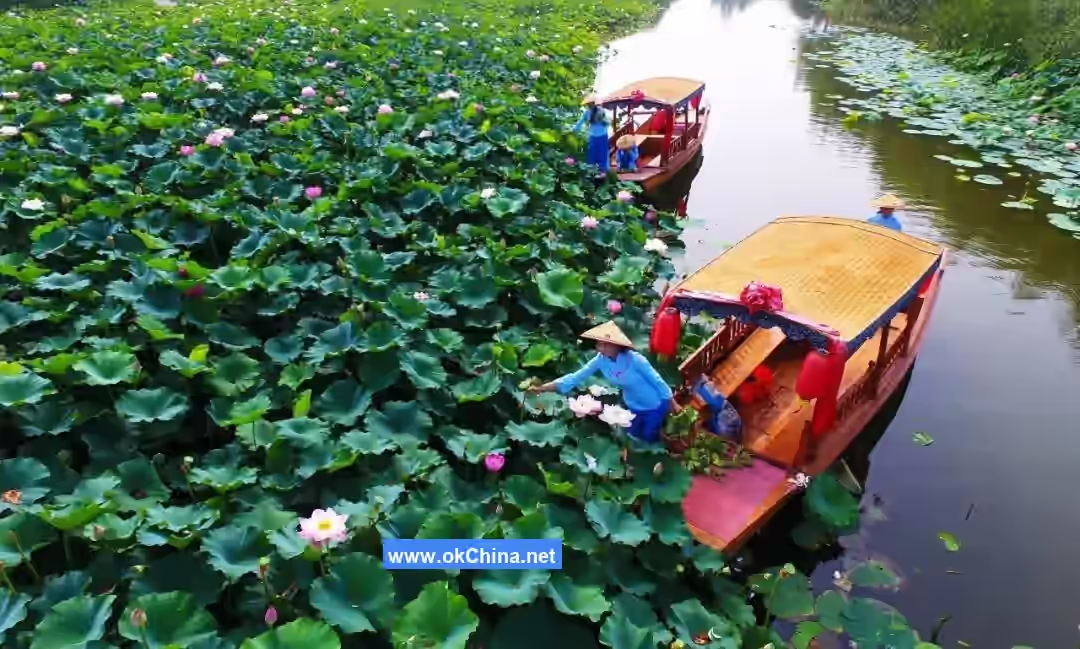
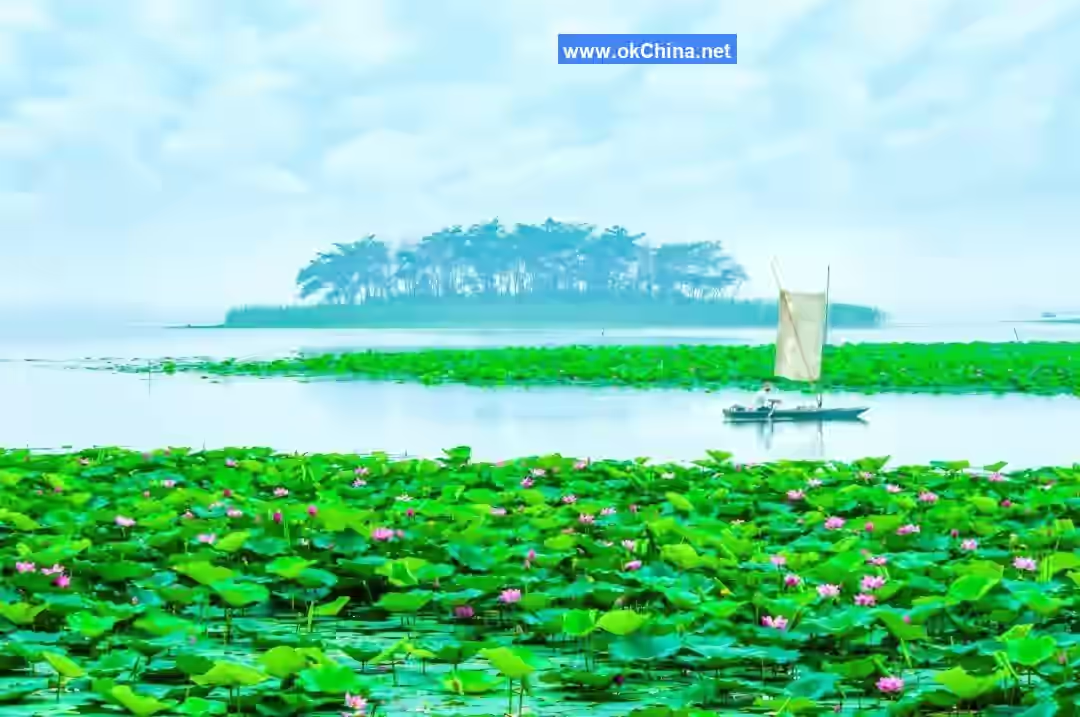
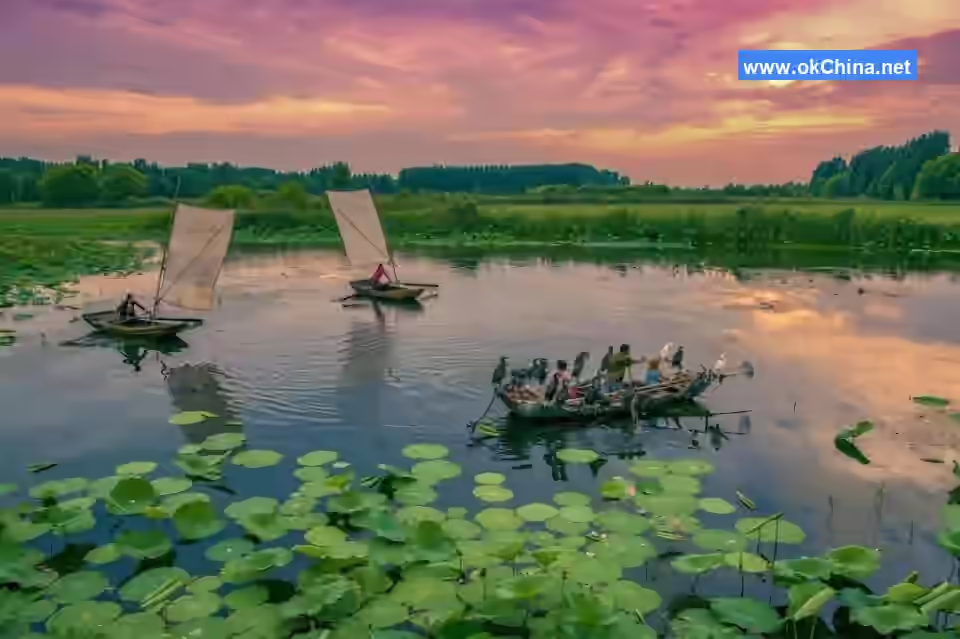
Weishan Lake boasts beautiful, mysterious, natural, and unrestrained scenery. Mountains, islands, forests, the lake surface, fishing boats, reed marshes, lotus ponds, along with intoxicating sunsets and curling cooking smoke, combine harmoniously to form the unique and beautiful picture of Weishan Lake, making it a natural grand park. Among these scenic features, the lotus flower, known as the "Fairy among Flowers," is particularly dazzling. Loved for its graceful form, its character of emerging unstained from the mud, and its value as a plant where every part is useful, the lotus spreads magnificently across the lake surface, sometimes covering hundreds of thousands of acres, creating a spectacular sight. Hence, this place is also called the Lotus Capital of China.
2. Main Attractions
2.1 Weishan Lake National Wetland Park
Located 3 kilometers from the center of Weishan County, Weishan Lake National Wetland Park is the largest meadow-type lake wetland in Asia. On December 13, 2011, the State Forestry Administration officially approved the establishment of the Weishan Lake National Wetland Park. It is the only national wetland park in Jining City, Shandong Province, and the only wetland park in the Weishan Lake area approved to bear the name "Weishan Lake." The park covers a total planned area of 150,000 mu (approximately 100 square kilometers). It is a large-scale public welfare ecological project focusing on wetland conservation, science education, water purification, and eco-tourism. With a complete ecological environment featuring various wetland forms, the park provides a solid guarantee for water purification in the South-to-North Water Diversion Project. It has earned titles such as "Asia's Premier Wetland," "China's Top Ten Charming Wetlands," and "National Ecological Demonstration Zone."
2.1.1 Art Exhibition Gallery
The 300-meter-long Art Exhibition Gallery displays wetland landscapes and birds photographed by enthusiasts, along with some scientific knowledge about wetlands. Weishan Lake National Wetland Park has its charm in winter and its grace in summer. The beautiful scenery and rich local character endow this land with an even more captivating charm.
2.1.2 Weishan Lake Train
During the War of Resistance Against Japan, the Railway Guerrilla Force fought fiercely along hundred-mile railway lines, climbing moving trains and blowing up bridges, engaging in desperate battles against Japanese and puppet forces, and establishing immortal merits. The "Weishan Lake" train was produced by the Shanghai Locomotive Factory in 1953 and operated between Shanghai and Xuzhou, carrying the memories of generations. Currently, this green-painted train rests quietly by the lakeshore where the Railway Guerrilla Force fought and lived, as if reminiscing with us about the arduous years of the War of Resistance and recalling the thrilling scenes of the Flying Tiger commanders raiding ticket trains and intercepting cloth transport trains.
2.1.3 Performance Square
Covering a total area of 1,900 square meters, the Performance Square features an embedded stage design where performers are viewed from a slightly elevated angle. The backdrop consists of flowing river water, colorful fountains, and flying egrets. This震撼的自然效果 (stunning natural effect) cleverly integrates performers and audience with nature.
2.1.4 Red Dock
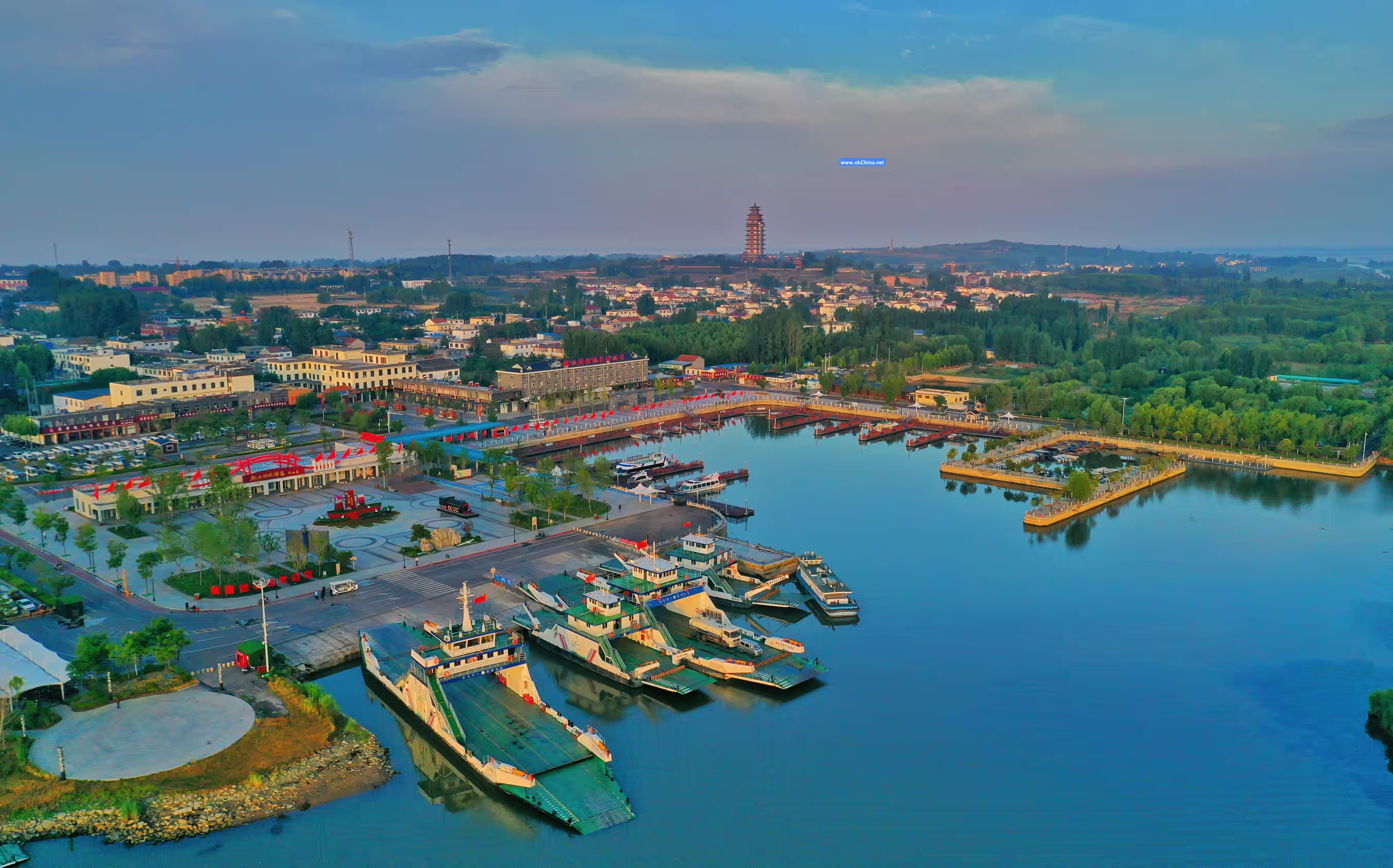
Located on the west bank of the Xinxue River, the Red Dock is the largest tourist dock in the scenic area, capable of accommodating tour boats, speedboats, and kayaks. During the War of Resistance Against Japan, the Weishan Lake area was a famous revolutionary base and an important transportation line to Yan'an. Relying on Weishan Lake, the Railway Guerrilla Force, along with the Weihu Brigade and the Canal Detachment, fought hundreds of battles alongside the main forces of the Eighth Route Army against the Japanese along the Jinpu and Linzao hundred-mile railway lines. Consequently, Weishan Lake has become a national key red tourism area and a patriotic education base. To commemorate this combat history, it is named the Red Dock. From here, visitors can take boats to the Gaolou Wetland and the Weishan Island scenic area.
2.1.5 Waterfront Pontoon Bridge
The approximately 130-meter-long Waterfront Pontoon Bridge is a scenic floating bridge connecting the east and west banks of the Xinxue River. Its height can be adjusted automatically according to water levels. During the annual flood season, when the water reaches a certain level, it can open automatically to ensure the safe passage of floods on the Xinxue River. Strolling on the pontoon bridge, looking at the clear river water, watching the flying birds, and breathing the fresh wetland air is refreshing and delightful.
2.1.6 Lovey-Dovey Three Islands
The Lovey-Dovey Three Islands consist of three adjacent small islands. During summer and autumn, they are embraced by lush lotus leaves and blooming lotus flowers, symbolizing the three stages of love: meeting, getting acquainted, and understanding each other. On the largest island stand two intertwined red hearts, like two lovers in love snuggling together, with the holy hearts reflected in the shimmering water, hence also named "Hearts in Harmony."
2.1.7 Cherry Blossom Garden
The Cherry Blossom Garden covers an area of over 160 mu (approximately 10.7 hectares), planted with over 6,300 cherry trees of various varieties. Every April, more than ten types of cherry blossoms, such as雏菊樱 (Bellflower Cherry), Kanzan,松月樱 (Shogetsu), and寒绯樱 (Winter Cherry), bloom in competition, showcasing their beauty.
2.1.8 Bird-Watching Gallery
The Bird-Watching Gallery is the best observation point for birds in the scenic area. Equipped with viewing ports at different heights, it is an important venue and platform for close observation of bird activities.
2.1.9 Plant Science Zone
Covering an area of 6,900 square meters, the Plant Science Zone is planted with over 50 species of aquatic plants, mainly including芦荻 (Amur silvergrass), Miscanthus, Canna, Common Rush, Purple Loosestrife, Monochoria, Thalia, and Pickerelweed. It is an important base for science education and research in Weishan Lake.
2.1.10 Inquiring of Lotuses in the Reed Marsh
The reed marsh covers an area of about 300 mu (approximately 20 hectares), making it the largest reed marsh within the wetland park. In early autumn, white reed spikes slowly emerge from the reed tips, blooming into silvery reed flowers. The reed flowers dance in the wind, scattering and drifting gracefully, resembling March catkins or flying snow in cold winter. In summer, with the lake's碧波荡漾 (rippling blue waves), visitors can walk through the reed marsh into the depths of the lotus pond to view and admire the lotuses. The swaying reeds and elegant lotuses complement each other beautifully, making it an excellent spot for photography.
2.1.11 Red Relay Station
During the War of Resistance Against Japan, there was a secret transportation line across Weishan Lake. It started from Penglou west of Shagou Station on the Jinpu Railway in the east, extended to the Shan-Yu base area west of the lake in the west, covering 15 kilometers by water and 70 kilometers by land, divided into three sections: east of the lake, on the lake, and west of the lake. On this line, the Railway Guerrilla Force was responsible for escorting personnel and supplies of the Eighth Route Army and the New Fourth Army across the Jinpu line in the east, handing them over to the Weihu Brigade around Qiaomiao and Jiangji on the eastern shore of Weishan Lake. They then boarded boats at Hulutou to cross Weishan Lake, passing through "Yan'an of the Lake Area" — Nanzhuang and Dajuan Village in the lake, to the west of the lake. The west section was escorted by the Huxi Military Sub-district. This line successfully escorted over 1,000 mid-to-high-level leaders of our Party, including Liu Shaoqi, Chen Yi, Luo Ronghuan, Zhu Rui, and Xiao Hua, across Weishan Lake to Yan'an without a single error, making an indelible contribution to the victory of the War of Resistance. Hulutou was originally a lakeshore land shaped like a gourd extending into Weishan Lake. A few thatched cottages were hidden among reeds and willows, serving as a relay station for the famous anti-Japanese armed force, the Weihu Brigade. During the war, Liu Shaoqi, Chen Yi, Xiao Hua, and others boarded boats here to cross Weishan Lake.
2.1.12 Heron Nest Hideaway
Within the wetland park, intertwined trees and water systems form a natural bird forest. In the丛林 (thicket), between the branches of almost every tree, there are several carefully constructed heron nests. When thousands of herons take flight or return to their nests at dusk, the spectacle is magnificent, attracting countless tourists and photography enthusiasts to watch and photograph, hence the name Heron Nest Hideaway.
2.1.13 Lakeshore Square
Located at the southernmost end of the wetland park, the Lakeshore Square features a natural lotus garden covering about 400 mu (approximately 26.7 hectares). It is a leisure venue for tourists and residents for fitness and wellness. It is also a paradise for birds, where egrets, grey herons, pond herons, and others forage and fly.
2.2 Weishan Island
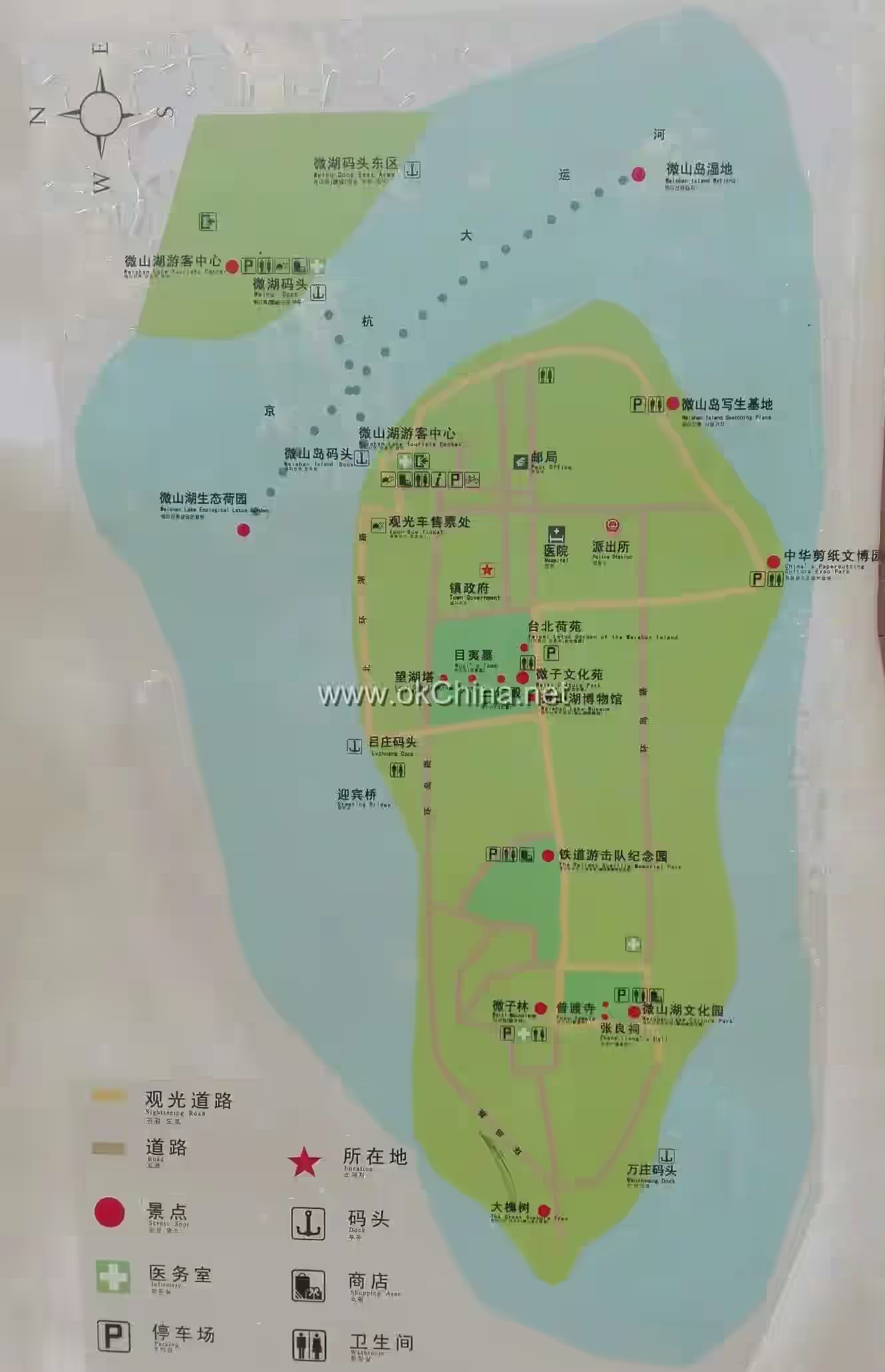
Weishan Island is located in the southeastern part of Weishan Lake in Weishan County, Shandong Province. Surrounded by water on all sides, the island is 6 kilometers long from east to west and 3.5 kilometers wide from north to south, with an area of 9.6 square kilometers. It is named after the tomb of Weizi, a benevolent figure from the Shang Dynasty, preserved on the island. Weishan Island is the largest inland island in northern China and one of the first provincial-level scenic spots in Shandong Province. Every midsummer, hundreds of thousands of acres of wild lotus flowers bloom in succession around the island, creating a spectacular view, earning it the title "Lotus Capital of China." Weishan Island is a famous anti-Japanese base, the cradle for revolutionary armed forces like the Railway Guerrilla Force, the Weihu Brigade, and the Canal Detachment. It is included among the nation's 12 "Key Red Tourism Areas," 30 "Premium Red Tourism Routes," and 100 "Classic Red Tourism Scenic Spots." Weishan Island has a long history and numerous historical sites, including the Tomb of Yin Weizi, the Tomb of Zhang Liang from the Han Dynasty, and the Tomb of Muyi from the Spring and Autumn Period.#### 2.2.1 Railway Guerrilla Memorial Park The Weishan Lake area is a renowned anti-Japanese base, having nurtured the heroic spirits of the Railway Guerrillas whose deeds are recorded in history. The Railway Guerrilla Memorial Park, a landmark scenic spot in the Weishan Lake Tourist Area, is located on the mountainside in the central part of Weishan Island. Covering nearly a hundred acres, it is lush with pine and cypress trees. Ascending the steps, visitors encounter vivid group sculptures of figures, a solemn and dignified memorial hall, and a towering monument that reaches into the clouds, allowing one to trace history and engage in respectful contemplation. This site serves as an excellent classroom for commemorating the anti-Japanese heroes and martyrs, continuing the legacy of revolutionary traditions, promoting patriotism, and conducting national defense education. In 1997, it was designated as the Patriotic Education Base of Jining City and the National Defense Education Base of Shandong Province. In 2006, it was included in the national list of 30 premium red tourism routes and 100 classic red tourism scenic spots. It also serves as an on-site teaching site for the Party Spirit Education Base of Weishan Lake in Jining.
2.2.2 Weizi Cultural Garden
The Weizi Cultural Garden is situated on Weizi Middle Road in the eastern part of Weishan Island, built around the tomb of the Song Dynasty worthy, Lord Muyi. The horizontal plaque at the front bears the four characters "Weizi Culture," written in oracle bone script by the renowned ancient script expert Fan Zhenghong. Within the garden, the Sanyi Hall, Chongde Pavilion (Wanghu Tower), and the Tomb of Lord Muyi align with the Weishan Lake Ecological Lotus Garden along a central axis, stretching 3 kilometers from south to north, from land to lotus ponds. The Weizi Cultural Garden integrates historical culture, natural scenery, and leisure entertainment, embodying the combination of mountains and water, history and nature, making it an ideal destination for tourists seeking relaxation and vacation.
2.2.3 Weishan Lake Lotus Garden
Located on the northern side of Weishan Island, the Lotus Garden centers around a thousand-acre lake surface and focuses on lotus flowers. It is a water-based ecological and cultural park that integrates three major cultures: lotus culture, fishing culture, and water culture. The garden features a lotus-viewing corridor over 300 meters long and two lotus-viewing pavilions each covering 600 square meters. Supporting facilities include a cross-lake landscape leisure corridor and rural sightseeing streetlights. Key tourist activities such as large lake sightseeing and cormorant fishing performances are highlighted, allowing visitors to fully experience the distinctive fishing village customs rich in lake region characteristics.
2.2.4 Weizi Forest
Covering a total area of 43,740 square meters and stretching 324 meters from north to south, the Weizi Forest was established to commemorate the ancient sage Yin Weizi and protect his tomb mound. It is a key cultural relic protection unit of the Shandong Provincial People's Government. According to local records and genealogies, the structures within the Weizi Mausoleum were initially built during the Han Dynasty but were later destroyed by war. In 1986, they were restored with government funding. The garden features winding paths, covered corridors, and dense woods, presenting a uniquely styled architectural blend of ancient and modern elements.
2.2.5 Fishing Folk Customs Museum
The Fishing Folk Customs Museum centers on showcasing "fishing culture" and houses three exhibition halls: "The Fishing Industry," "The Fun of Fishing," and "The Taste of Fishing." Through physical displays and interactive experiences, it presents the century-long history and cultural heritage of the fishing communities on Weishan Island and its surrounding areas.
3. Cultural Resources
3.1 Naming
Weishan Lake is located in Weishan County, Jining, Shandong Province. It is the largest freshwater lake in Shandong, composed of four interconnected lakes: Weishan, Zhaoyang, Dushan, and Nanyang, hence also known as the "South Four Lakes." Among these, Weishan Lake has the largest area, leading to the collective name "Weishan Lake."
The origin of the name "Weishan Lake" can be traced back to the Shang Dynasty when King Zhou of Shang indulged in wine and women, ruling tyrannically. His elder brother, Weizi (named Qi), repeatedly advised him but was ignored. In anger, Weizi left and lived in seclusion on Weishan Island, where he was buried after his death. To commemorate him, the lake was named Weishan Lake.
3.2 Historical Evolution
The Fuxi Mausoleum and Fuxi Temple (containing a statue of Nüwa) at Weishan Lake were built by ancient people to worship their ancestors. They have been renovated by successive emperors and preserved through inscribed steles, surviving to this day.
After the Xia Dynasty, states and cities were established multiple times within the area of the present South Four Lakes. Historical records indicate that the "Reng State" of the Xia Dynasty was located at Zhongjiaqian Village on the eastern shore of the South Four Lakes; the "Shi State" enfeoffed during the Zhou Dynasty was established 6 kilometers west of Luqiao Town. During the Zhou Dynasty, Weizi was enfeoffed in the State of Song. After his death, he was buried at Weishan, and the lake came to be called Weishan Lake.
During the Qin Dynasty, counties such as Pei, Liu, and Qi were established here. The "Reading History and Survey of Strategic Places" records: "The old city of Pei. The county seat is southeast of Weishan. The mountain has no rocks, merely a raised earthen ridge." Liu Bang, Emperor Gaozu of Han, launched his uprising in Pei County by Weishan Lake, overthrowing the Qin Dynasty and establishing the Han Dynasty.
In the third year of Yuanguang of Emperor Wu of Han (132 BC), the Yellow River first captured the Si River and flowed into the Huai. The Yellow River breached at Huzi (southwest of present-day Puyang, Henan), with the main flow rushing southeast towards the Juye Marsh, capturing the old course of the Si River and turning to pour into the Huai River and then to the sea. The Yellow River flooded between Ji and Pu for 23 years until the second year of Yuanfeng of Emperor Wu (109 BC), when the emperor sent Guo Chang and others with tens of thousands of laborers to block the Huzi breach. At that time, the Yellow River did not fully capture the Si River. Before the early Song Dynasty, despite the second migration of the Yellow River in the third year of Wang Mang's Shijianguo era, its impact on the Si River was not severe. However, the movement of the Yellow River's waters created some depression sedimentary facies zones on the western Shandong plain.
During the Northern and Southern Dynasties, Weishan Lake had not yet formed. The "Book of Wei" records: "Liu. Belonged to the Two Han and Jin. Has Weishan, Liucheng, Weizi's tomb, Zhang Liang's tomb, temples, Guangqi City, Xue City, Lady Qi's temple, Huangshan Temple."
According to the "Biography of Xue Zhou" in the "History of Sui": "The Yi (i.e., the small Yi River) and Si rivers east of Yanzhou City converge and flow south, flooding into the great marsh," indicating that south of Jining, below Yanzhou on the eastern bank of the ancient Si River, marshland and lakes had already formed by the Sui Dynasty.
Starting from the tenth year of Xining of Emperor Shenzong of Northern Song (1077 AD), the Yellow River changed its course, and breaches gradually became more frequent. The role of the Yellow River's flow in accelerating the evolution of Weishan Lake correspondingly increased. In the fifth year of Mingchang of Emperor Zhangzong of Jin (1194 AD), the Yellow River breached at Yangwu in Henan, entering Liangshan Marsh and dividing into north and south branches. The southern branch entered the Huai via the South Qing River, passing through Wenshang, Jiaxiang, and Jining, converging with the Si River southwest of present-day Luqiao Town in Weishan County, and then entering the Huai at Qingjiang City in Jiangsu.
With the northward shift of the political center through successive dynasties, and the Jin, Yuan, Ming, and Qing dynasties establishing their capitals in Beijing, to "transport grain from Jianghuai to supply the capital's needs," they abandoned the Sui Dynasty canal route centered on Luoyang. Starting from the Yuan Dynasty, to connect the north-south canal, the Huitong River and Tonghui River were excavated in the 26th year of Zhiyuan (1289 AD) and the 30th year of Zhiyuan (1293 AD), respectively. During this period, the natural channel of the Si River between Jining and Xuzhou was used as the canal. To maintain navigable depth, sluices were built on the Si River channel. Waters from eastern mountains accumulated on the eastern bank, beginning to form Zhaoyang Lake and Dushan Lake. During the Ming Dynasty, frequent flooding of the Yellow River, with its stronger flow overwhelming the weaker Si River, blocked the Si River's outlet, causing Zhaoyang and Dushan lakes to expand continuously. Small interconnected lakes such as Chishan, Weishan, Lü Meng, and Zhangzhuang appeared near Weishan.
In the eighth year of Hongzhi of Ming (1495 AD), Liu Daxia built the Huanglinggang embankment and repaired the Taihang Dyke. The northern-flowing Yellow River waters then all came south, capturing the Bian River from Kaifeng to Xuzhou, then capturing the Si River to Huaiyin. From Huaiyin to Tongwaxiang in Lankao, Henan, the river shifted north, capturing the Daqing River and entering the sea at Lijin, Shandong, forming the present course of the Yellow River, a process spanning over 660 years. This capture of the Si and Huai by the Yellow River led, on one hand, to massive silt deposition, forming the present Yellow River bed and blocking the Si River's southward flow into the Huai, causing long-term flood stagnation. On the other hand, due to the combined action of the Yellow River and eastern rivers, the region from north to south developed the embryonic forms of the South Four Lakes, varying in size, shape, and bottom elevation. Analysis of geological drilling data and sediments indicates that the lake formed on Quaternary deposits relatively recently. During the Jiajing era of the Ming Dynasty, the Nanyang New River was excavated, shifting the canal route away from the Si River from the west of Zhaoyang Lake to its east. Waters from eastern rivers like the Sha River were directed into Dushan Lake, and waters from the Xue River into Lü Meng Lake.
From the Longqing era to the 18th year of Wanli of Ming (1567–1590 AD), Weishan, Dushan, and Lü Meng lakes merged into one, collectively called Lü Meng Lake. In the 19th year of Wanli (1591 AD), Pan Jixun, the Minister of Waterways, oversaw the excavation of the Lijiakou River, "from Lü Gongtang in Xia Town (old dam village of Zhaoyang) winding west, turning southeast, near Weishan (Island), passing Longtang to Neihua Sluice (southeast of Zhanggushan in Xuzhou), to connect with the newly opened Zhenkou River, totaling 100 li" (Republican-era "Pei County Annals"). This indicates that this line had not yet become a lake at that time, and there was still some distance between the Lü Meng lakes and the accumulated waters near Liucheng. However, within a few years, the Lijiakou River was "washed and its banks collapsed by the Yellow River's impact," causing the Lü Meng lakes to merge with the accumulated waters near Liucheng. In the 21st year of Wanli (1593 AD), "heavy rains occurred in Xu, Pei, Yu, Teng and other prefectures and counties, springs and lakes overflowed, creating a vast expanse of water reaching the sky. Over 200 li of the canal embankments collapsed... Waters from the mountains of Zou and Teng converged in the Chi and Lü lakes, covering tens of li in circumference." Minister Shu Yinglong oversaw the excavation of the Hanzhuang branch channel to drain the lake waters. In the 31st year of Wanli (1603 AD), the Yellow River breached at Shanxian and Caoxian, "flooding Zhaoyang Lake, entering Xia Town, and crossing the canal..." The following autumn, the Yellow River breached again at Fengxian, entering Zhaoyang Lake, passing through Lijiagang, and exiting south at Zhenkou. After several infusions of Yellow River water, the Dushan and Lü Meng lakes connected with the Wujia Lake to the west.Weishan Lake was formed by the confluence of several smaller lakes, including Weishan, Xishan, Lü Meng, Wujia, and Huangshan. Wujia Lake lies south of Liucheng, while Huangshan Lake is east of Huangshan Mountain. The other small lakes are located near present-day Weishan Island. These lakes gradually emerged between the Hongzhi and Jiajing periods of the Ming Dynasty. Initially, they existed as separate bodies of water. In the 32nd year of the Wanli era (1640 AD), the Hui River (now the Hanzhuang Canal) was extensively excavated, and the Grand Canal shifted eastward once again, laying the foundation for the Beijing-Hangzhou Grand Canal. By this time, the surfaces of Chishan, Weishan, Lü Meng, and Zhangzhuang lakes expanded rapidly, merging to form Weishan Lake. With the development of the Grand Canal, to store water from the eastern mountains for canal use, lakes such as Zhaoyang became water reservoirs for the canal. Consequently, Nanyang, Dushan, Zhaoyang, and Weishan lakes connected, initially forming today’s Southern Four Lakes. According to the Wanli edition of Gazetteer of Yanzhou Prefecture: Mountains and Waters, "Weishan is located 100 li south of Teng County. Below it lies Weishan Lake, into which the Huanggou River flows. Further southeast is Xishan, below which lies Xishan Lake. Slightly south is Lü Meng Mountain, with Lü Meng Lake to its southeast." When Zhu Heng excavated the new canal for water transport, the small lakes of Xishan and Lü Meng were not yet connected and were far from Wujia Lake to the west.
By the mid-Shunzhi period of the Qing Dynasty, Lü Meng Lake and Zhaoyang Lake had fully merged. The Kangxi edition of Teng County Gazetteer records, "During the Shunzhi era (1644–1661), the Zhenkou River was abandoned, and the Jia River was exclusively used. Weishan, Xishan, Lü Meng, and Zhaoyang lakes merged into one, submerging the old channels of the Lijiakou River and others." The interconnected Chishan and Lü Meng lakes joined with Zhaoyang Lake to the north, stretching from Hanzhuang in the east to the west of ancient Liucheng in the west, and reaching Chacheng in the south. Thus, Weishan Lake, measuring "40 li from east to west and 80 li from north to south," was formed. Today, Weishan Lake has a circumference of 130 kilometers, an area of 531.17 square kilometers, and a minimum lakebed elevation of 30 meters.
Weishan Lake is also renowned as one of the battlefields of the famous Railway Guerrillas. In the autumn of 1941, after the official establishment of the Weishan Lake Guerrillas, they cooperated with sibling forces active in the Weishan Lake area—such as the Railway Guerrillas, the Canal Detachment, and the Lake District Squadron—to persist in the struggle in the lake region. They engaged in heroic and tenacious battles against Japanese puppet forces and stubborn adversaries, participating in many significant engagements and playing a crucial role. Simultaneously, under the leadership of the Southern Shandong Military District, the Western Lake Military District, and the Pei-Teng Border County Committee, they contributed to establishing and consolidating the lake transportation route from Yan’an to East China, escorting cadres passing through the area.
Due to geographical conditions and administrative divisions, since liberation, residents on both sides of Weishan Lake have engaged in over 400 conflicts, large and small, over economic interests such as lake fields and lake products. These conflicts resulted in the deaths of 31 people and injuries to over 800 from Shandong and Jiangsu provinces, severely impacting local social stability and economic development, and posing challenges for central and local governments.
Through negotiations between Jiangsu and Shandong provinces and with the approval of the Government Administration Council, Weishan County was established in August 1953, under the jurisdiction of Shandong Province.
In 1956, the State Council, in its批复 on adjusting the boundary between Shandong and Jiangsu provinces, stated, "The surface of Weishan Lake shall be uniformly managed by Weishan County, Shandong Province."
During the Great Leap Forward, due to drought and reduced lake area, approximately 180,000 mu of lake fields emerged near Pei County, Jiangsu, on the western side of Weishan Lake. The Pei County Committee of Jiangsu then established a command center for seizing lake fields, organizing over 20,000 people from 17 communes and more than 1,000 livestock to seize and cultivate 84,000 mu of lake fields. This provoked dissatisfaction in Shandong, leading to clashes and multiple injuries.
In the autumn of 1961, Pei County proposed the slogan "March into the Great Lake," reorganizing efforts to seize Weishan Lake fields. After disputes arose, Shandong and Jiangsu provinces held three-level consultations at the provincial, prefectural, and county levels. However, after more than 50 days, the矛盾 remained unresolved.
After the Cultural Revolution, conflicts further intensified. Disputes over land for grain cultivation led to frequent clashes of varying scales. Relevant national departments dispatched work teams multiple times to mediate, and adjustments were made to the lake area boundaries in 1967 and 1984. However, due to both sides insisting on their own interests, the Weishan Lake region remained unsettled until recent years, when conditions improved.
When Weishan County, Shandong Province, was established in 1953, the boundary between Jiangsu and Shandong in the Weishan Lake area was defined by lake fields. Lake fields vary with water levels: high water levels reduce lake fields, while low water levels increase them. Locals often say, "Where the water reaches is Shandong; where the water recedes is Jiangsu."
In August 2004, Pei County and Weishan County established a友好县 relationship, agreeing that the top party and government leaders of both counties would hold regular meetings. Through reasonable government coordination and staggered crop harvesting times on both sides of the lake, economic disputes between farmers were avoided. After several years of effort, economic disputes in the lake area were largely resolved, and the Weishan Lake region entered a period of rapid economic development.
3.3 Cultural Legends
3.3.1 Footsteps of Celebrities
Weizi, named Qi, was the eldest son of Emperor Yi of Yin and the half-brother of King Zhou of Yin. Weizi was the founder of the State of Song and was buried on Dongshan Mountain in Liuyi of Song (the seat of Liu County, now within West Lake of Weishan Island), which is present-day Weishan Island.
Muyi, styled Ziyu, lived during the Spring and Autumn period. He was the 17th-generation descendant of Yin Weizi, the half-brother of Duke Xiang of Song, and a renowned statesman and military strategist. Muyi’s tomb is located on the eastern peak of Weishan, 2.5 kilometers from Weishan Tomb. The现存 tomb is a circular earthen mound, with a stele erected in front. It was established by Fu Yaoyu, the prefect of Xuzhou, in the fifth year of the Xining era of Emperor Shenzong of Song (1072 AD). The front bears carved seal script: "Tomb of Lord Muyi, a Worthy of Song." The rectangular stele with rounded corners measures 2.3 meters in height, 0.9 meters in width, and 0.4 meters in thickness.
Zhang Liang, styled Zifang, was from the State of Han (present-day Yingchuan, Henan) during the Warring States period. He was a founding statesman who strategized for Liu Bang and achieved numerous military successes, serving as a rare military advisor. After Liu Bang defeated Xiang Yu and established the Han Dynasty, he enfeoffed his meritorious officials in the sixth year of his reign (201 BC). Emperor Gaozu said, "Formulating strategies within the command tent to secure victory a thousand miles away—this is the achievement of Zifang." He offered Zhang Liang a fief of 30,000 households, but Zhang Liang declined, saying, "When I first met the Emperor, it was in Liu. Enfeoffing me in Liu would suffice." Thus, Zhang Liang was titled the Marquis of Liu. Zhang Liang suffered from frequent illness and retired to his fief in Liucheng in his later years. After his death, he was buried on Weishan Island east of Liucheng. Today, a large village called "Muqian Village" remains in front of his tomb.
Xi Jian (269–339) was a minister of the Eastern Jin Dynasty. Styled Daohui, he was of Han ethnicity from Gaoping Jinxiang (present-day Jinxiang, Shandong). He was a general and military strategist of the Eastern Jin Dynasty and the great-great-grandson of Xi Lü, the Imperial Censor of the Eastern Han Dynasty. Orphaned and impoverished in his youth, he广泛 read classics, engaged in farming, and composed poetry, declining official appointments. In the early years of Emperor Ming of Jin (323 AD), he was appointed General of the West, with authority over Hefei. Feared by Wang Dun, he was recalled. Soon after, he was promoted to General of Chariots and Cavalry, overseeing military affairs in Xu, Yan, and Qing provinces. Alongside Wang Dao and Bian Kun, he received the遗诏 to assist the young emperor. During the rebellions of Zu Yue and Su Jun, Xi Jian ascended the altar, shed tears, and pledged to support the emperor. After peace was restored, he was promoted to Grand Commandant and enfeoffed as the Duke of Nanchang County. He died at the age of 71, posthumously honored as Wencheng, and was buried on Xishan Mountain on the eastern shore of Weishan Lake.
Ming Dynasty poets Wang Shizhen and Wan Shouqi, as well as Qing Dynasty poet Shen Deqian, passed through Xia Town (then called Xiayang) and left behind enduring verses: "A flying cloud guards Xiayang, where the emperor’s son is said to have roamed," "Xiayang in its full glory, half the city walls overlooking the river," and "A boat moored in a bay divides two provinces, a tower a hundred feet high marks three levels." The renowned Qing Dynasty poet Zhao Zhixin praised Weishan Lake in verse: "It seems like the Peach Blossom Spring, with houses scattered here and there." Emperor Qianlong traveled south along the Grand Canal multiple times,陶醉 by the scenery of Weishan Lake and the canal, composing several regulated poems, including "Viewing the Lake at Hanzhuang." Marshal Chen Yi, crossing Weishan Lake, wrote, "Crossing seven hundred li of the Jianghuai region, the sight of Weishan Lake comforts the journey." Chen Yunhe wrote the poem "Passing by Weishan Lake,"怀念 familiar senior poets and Lu Mang, the lyricist for the插曲 of the film Railway Guerrillas.
3.3.2 Folk Legends
Legend has it that long ago, the area now known as Weishan Lake was originally a massive mountain几十里 long and几百丈 high. Because Weizi’s tomb was on the mountain, people named it Weishan. On the mountainside lived a family of two—a grandfather and his grandson. The pair cultivated a few mu of山坡地, growing crops to sustain themselves. Though life was hard, it was peaceful and content.
One autumn, the soybeans were nearly ripe, plump and large. The grandfather and grandson were delighted, anticipating a bountiful harvest and no worries about food. One evening, the grandson went to check on the soybean field and saw an old man with a white beard herding a flock of sheep among the beans. The grandson ran over and asked, "Old grandfather, why are you grazing sheep in our soybean field?" The old man replied, "You won’t be able to harvest these soybeans. Within ten days, this great mountain will collapse, and this place will become a vast lake. How can you harvest soybeans then? It’s better to feed my sheep." After a pause, he added, "You and your grandfather are good people. Hurry and flee toward the direction of dawn. Do not linger here." With that, he vanished in a gust of wind, and the sheep disappeared without a trace.
The grandson rushed home and told his grandfather what had happened. The grandfather, believing it was divine guidance, packed their belongings overnight. While preparing to lead his grandson eastward, he also warned the villagers to flee with them. Word spread quickly, and within days, everyone from the mountain top to its base had fled.
On the midnight of the ninth day, a deafening sound of山崩地裂 echoed, and Weishan collapsed and sank. The mountain’s subsidence created a vast expanse of water, with its highest peak becoming a small island. From then on, people called this vast water Weishan Lake and the island within it Weishan Island.
Comments
Post a Comment