

Tongli Ancient Town
1. Introduction
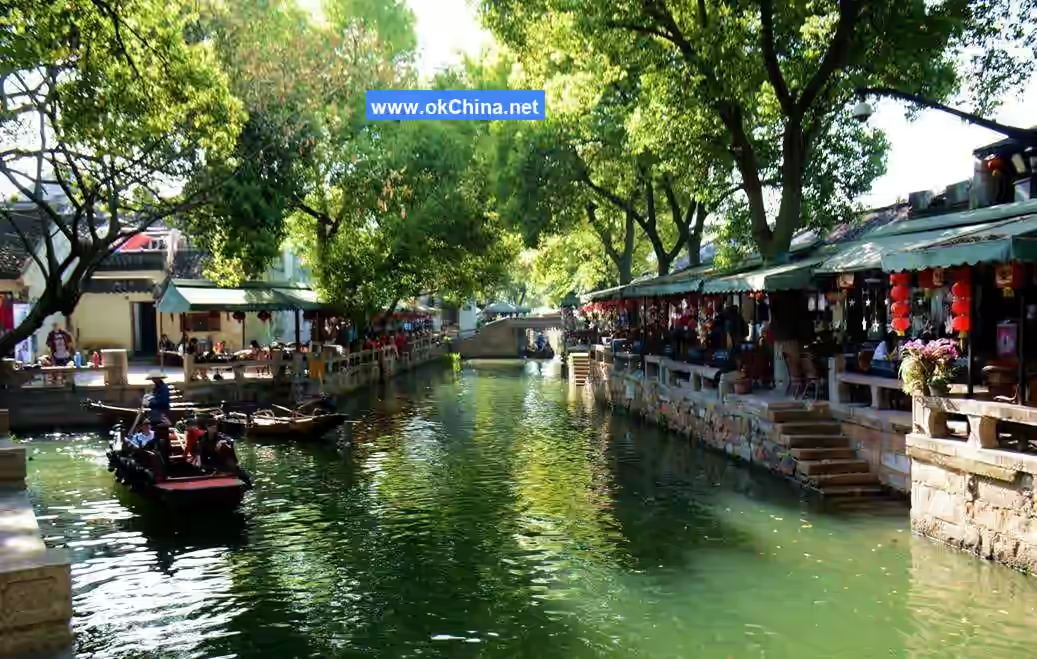
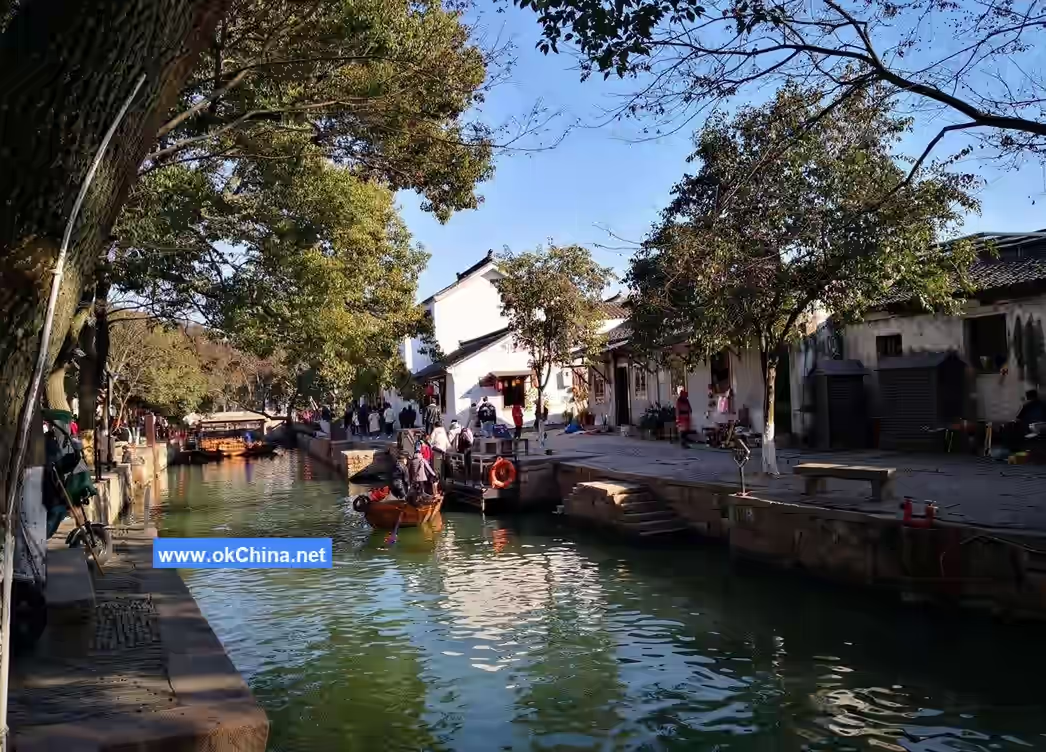
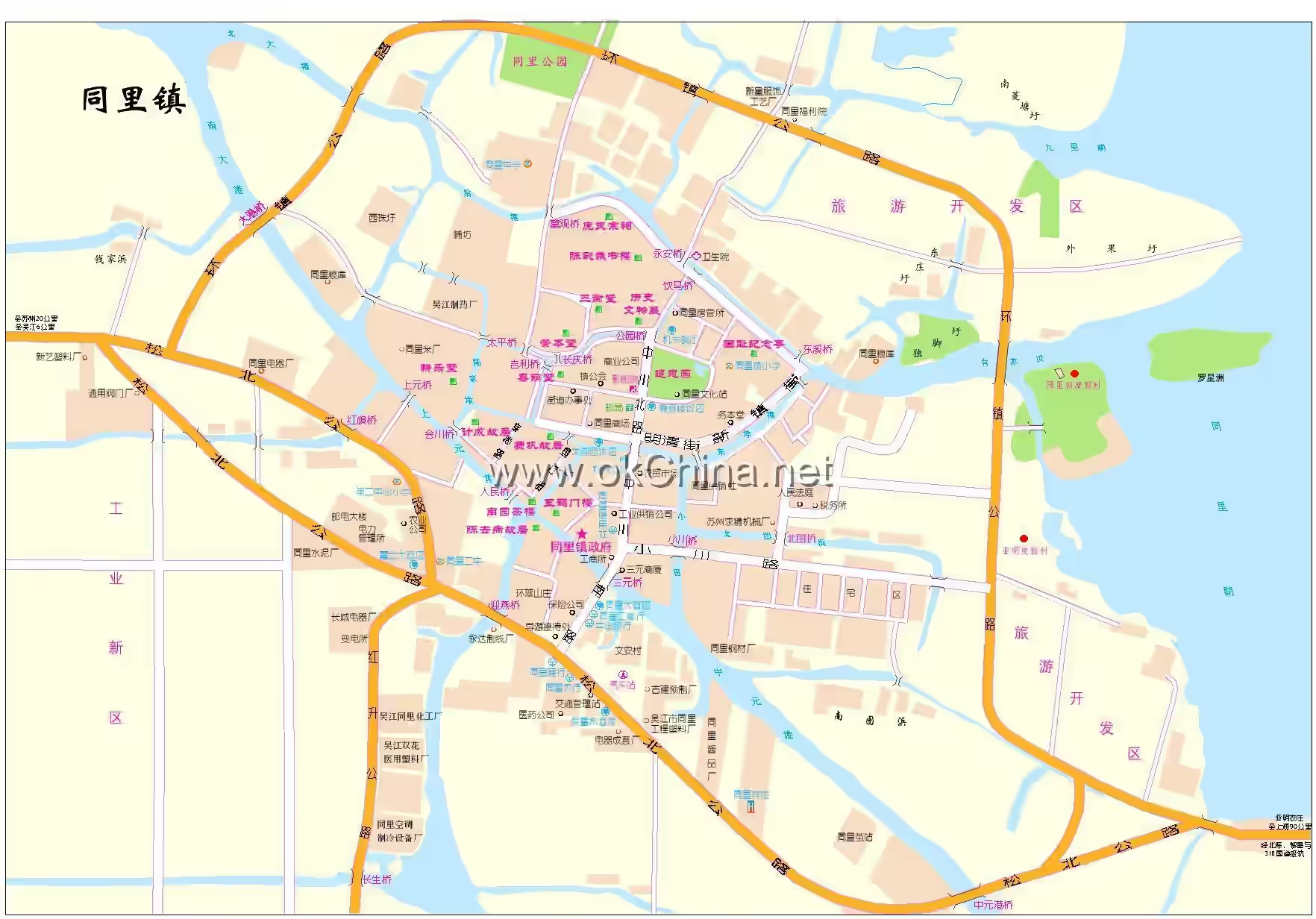
Tongli Ancient Town is situated on the shores of Taihu Lake and the Grand Canal, 18 kilometers from Suzhou and 80 kilometers from Shanghai Hongqiao Airport. It boasts excellent geographical location and convenient water and land transportation, connecting to National Highway 318 and the Su-Tong-Li Highway in the southeast, and linking to the Su-Jia-Hang Expressway and Provincial Highway 227 in the west. The ancient town area covers 0.87 square kilometers with a population of 11,161 residents. Tongli is a water paradise, dotted with numerous lakes and crisscrossed by rivers and waterways, with water bodies accounting for 40.3% of its total area.
Archaeological evidence confirms that Tongli's history dates back to the "Songze Culture" and "Liangzhu Culture" periods, some five to six thousand years ago. As early as the Neolithic Age, ancient inhabitants practiced slash-and-burn cultivation and thrived here. The superior natural conditions made this area one of the most affluent places in the Wu region, hence its old name "Futu" (Rich Land). In the early Tang Dynasty, it was renamed Tongli. After officially becoming a town in the Song Dynasty, the two characters of the old name "Futu" were stacked, the top dot removed, and then split to form "Tongli".
The superior natural environment and long history nurtured Tongli's brilliant culture. According to historical records, from the Northern Song Dynasty to the late Qing Dynasty, Tongli produced one Zhuangyuan (top scholar in imperial examinations), 45 Jinshi (imperial examination graduates), and 95 Juren (provincial examination graduates). Notable figures include Southern Song poet Ye Yin; Liang Shi, Deputy Chief Compiler of the Yongle Encyclopedia in the Ming Dynasty; Ji Cheng, author of Yuanye and an outstanding garden design master; Lu Hui, a master painter of the Wu School in the Qing Dynasty; Grand Councilor Shen Guifen; modern revolutionary figure of the 1911 Revolution, Chen Qubing; renowned master of Chinese studies, Jin Songcen; social activists Wang Shao'ao and Lan Gongwu; Yan Baoli, founder of Wenhui Bao; famous economist Jin Guobao; revolutionary martyr and renowned professor Fei Gong; contemporary figures include Chinese Academy of Sciences academicians Feng Xinde and Shen Shanjiong, among others.
In 1981, Tongli Town was approved by the Ministry of Construction as one of the 13 scenic areas of the National Taihu Lake Scenic Area. It was listed as a Jiangsu Provincial Cultural Relics Protection Unit in 1982, designated as one of the first "Jiangsu Provincial Famous Historical and Cultural Towns" in 1995. In 2000, the Qing Dynasty garden "Tuisi Yuan" within the ancient town was inscribed by UNESCO as a "World Cultural Heritage Site". In 2003, it was rated as one of the "Top Ten Historical and Cultural Towns of China" by the Ministry of Construction and the State Administration of Cultural Heritage. In 2010, the Tongli Scenic Area was rated as a "National AAAAA-level Tourist Attraction".
2. Naming
According to the Tongli Zhi from the Jiaqing period of the Qing Dynasty, Tongli "was named Tongli in the early Tang Dynasty, changed to Tongli in the Song Dynasty. Its old name was Futu. Because the name was considered too extravagant, the character '田' (field) was added to '土' (earth) to form '里', creating 'Tongli'."
3. Historical Development
3.1 Prehistoric Era
Tongli's history can be traced back to the "Songze Culture" and "Liangzhu Culture" from five to six thousand years ago. As early as the Neolithic Age, ancient inhabitants practiced slash-and-burn cultivation and thrived here. The superior natural conditions made this area the most affluent place in the Wu region, hence its original name "Futu" (Rich Land).
3.2 Pre-Qin Period
By the Pre-Qin period, it had already become a market town, belonging to Wu County, Kuaiji Commandery, and prospered through the Han and Tang dynasties.
3.3 Tang and Song Dynasties
In the early Tang Dynasty, because its name was considered too extravagant, it was renamed Tongli. It was still a village market located in Jiuli Village. In the 3rd year of Kaiping of the Later Liang (909 AD), Qian Liu, the King of Wuyue, divided the southern part of Wu County and the northern part of Jiaxing to establish Wujiang County. Tongli belonged to the Ganhua Township of Wujiang County.
In the Song Dynasty, Ganhua Township was abolished, and Tongli belonged to Fanyu Township, officially becoming a town. The two characters of the old name "Futu" were stacked, the top dot removed, and then the character was split in two. The upper part became "同", and the lower part combined "田" (field) with "土" (earth) to form "里", thus becoming "Tongli".
3.4 Yuan and Ming Dynasties
During the Yuan and Ming dynasties, Tongli gradually shifted southward. Because of the three east-west market rivers within the town forming a "川" shape, it was also called "Tongchuan". Tuncun became a market in the Han Dynasty, initially called "Tunshi", and reached its peak in the early Tang Dynasty. During the Jianyan period of the Song Dynasty, over a thousand families lived here.
During the Yuan and Ming dynasties, it "changed from a market to a village". In the 16th year of Zhizheng of the Yuan Dynasty (1356 AD), Zhang Shicheng's brother Zhang Shide occupied Wujiang, stationed troops under Tan Daoji to guard the eastern pass of Tunshi, controlling the strategic points of Xiuzhou and Songjiang. During the Jiajing period of the Ming Dynasty, there were several hundred households, over half being ironworkers. Later, the population increased slightly, forming its own market. In the 1st year of Hongzhi of the Ming Dynasty (1488 AD), Tuncun belonged to Jiuyong Township of Wujiang County.
3.5 Qing Dynasty
During the Qianlong period of the Qing Dynasty, administrative regions were readjusted. The original Fangsheng River, covering several mu of water surface in the center of Tongli Town, was filled in and buildings were constructed, also becoming a bustling market, called "Xintiandi" (Newly Filled Land). The town area continued to expand southeast.
In the 2nd year of Xuantong (1910), regional autonomy was implemented.
3.6 Republic of China Era
In the first year of the Republic of China, Tongli established a City Office.
3.7 Modern Era
In October 1985, Tongli Town and Township merged, implementing a town-administering-village system.
Starting in 1999, local residents began opening homestays.
From early 2000, the Tongli Town government vigorously guided residents to utilize their houses to open homestay inns.
In 2006, the first batch of residential inns in Tongli Ancient Town reached 20.
In 2014, the Tongli Star-rated Residential Inn Rating Standards (2014) established a clear evaluation standard system, effectively ensuring the quality of ancient town residential inns.
4. Geographical Environment
4.1 Location and Territory
Tongli Ancient Town is located in the southeast of Suzhou City and the northeast of Wujiang District, at 120°44' east longitude and 31°9' north latitude. The total area is 972.18 hectares, with wetland area covering 830.33 hectares.
4.2 Climate
Tongli Ancient Town has a cool, humid subtropical monsoon climate, characterized by mild temperatures, distinct seasons, ample sunshine, and abundant rainfall. The annual average temperature is 15.7°C, with an average annual precipitation of 1019.5 mm. The average first frost date is in mid-November, and the last frost ends by March of the following year. The prevailing wind is the southeast trade wind.
4.3 Natural Resources
Tongli Ancient Town's predecessor was the Xiaodian Lake Forest Park, an "ecological kidney" embedded among three industrial parks. The current park area is 960 mu, consisting of three parts: forest, ponds, and buildings. The forest area is over 700 mu (including 220 mu of fir, 140 mu of bamboo forest, 160 mu of fruit trees such as pear, peach, apricot, and loquat, 100 mu of camphor and silk trees, and 100 mu of seedling base). The pond area is over 100 mu, and dry land is 140 mu. The wetland park is a paradise for birds, plants, and humans. The park hosts 91 species of birds from 28 families and 12 orders, including 45 species listed as provincial key protected or above, and 6 species listed as national second-class protected animals. Visitors to the wetland park find the environment beautiful, the air fresh, and consider it a cool, refreshing world.
5. Main Attractions
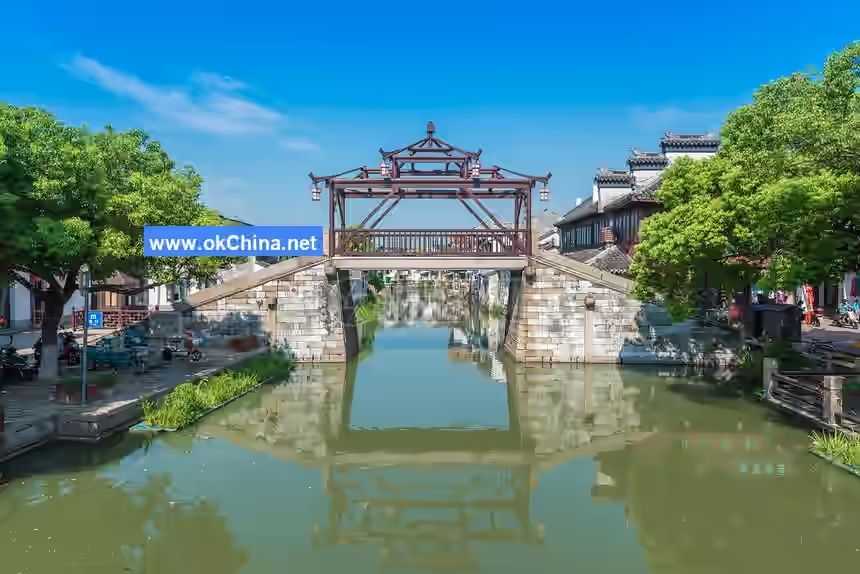
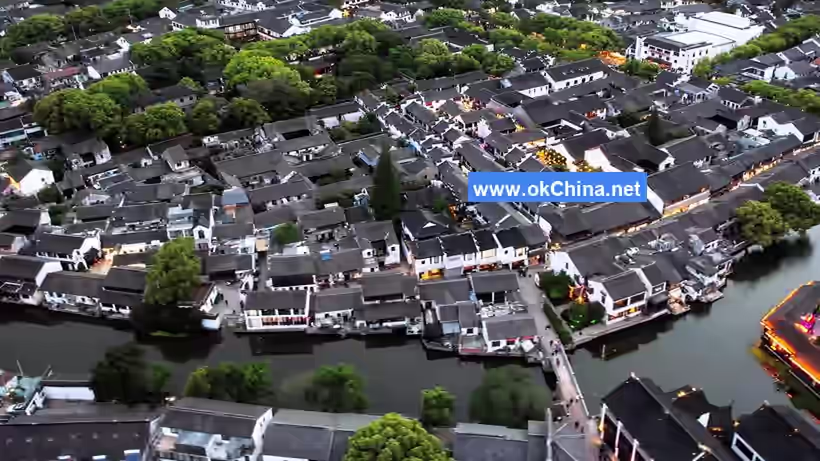
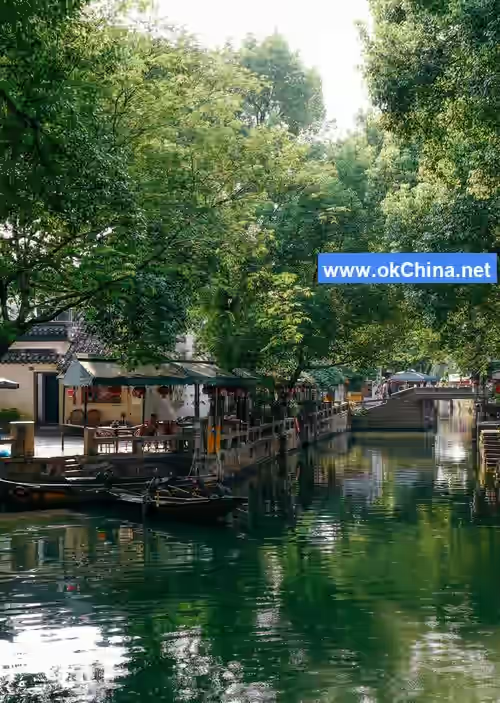
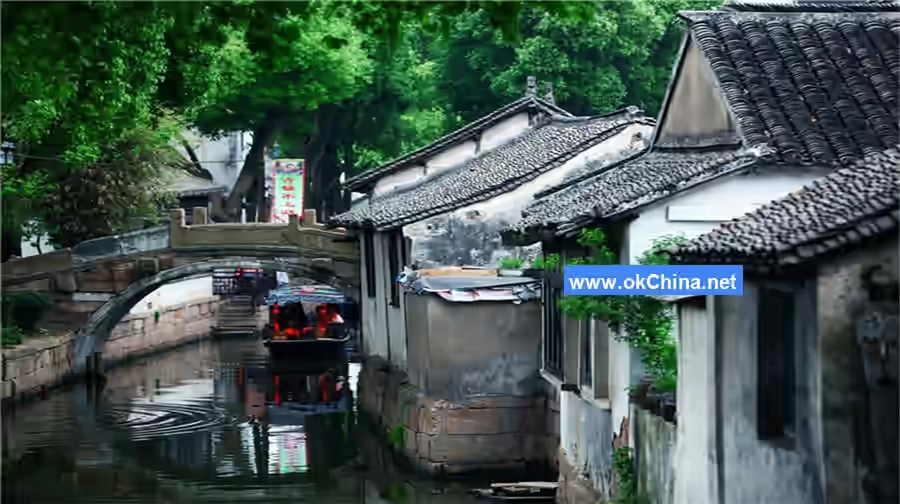
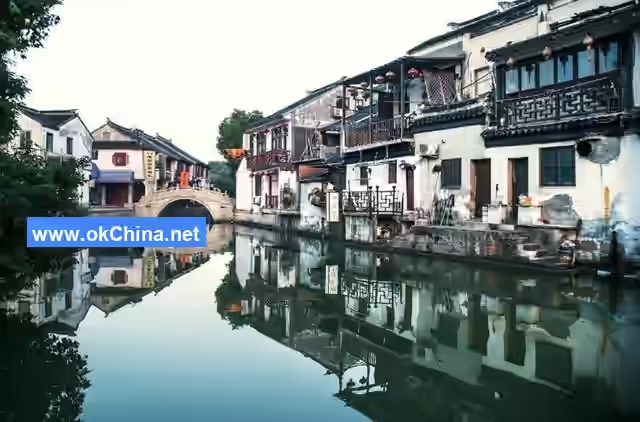
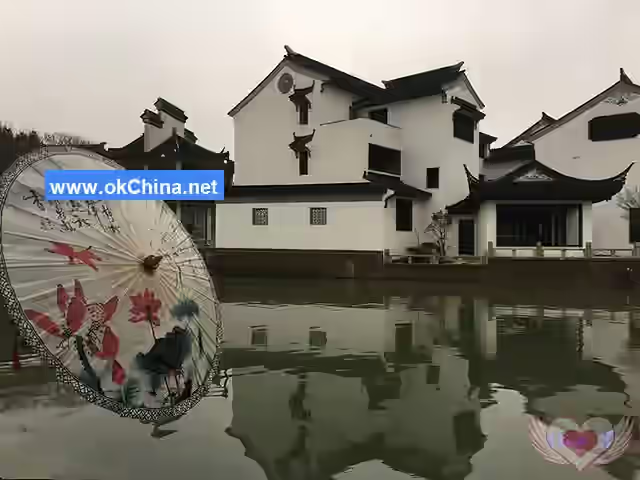
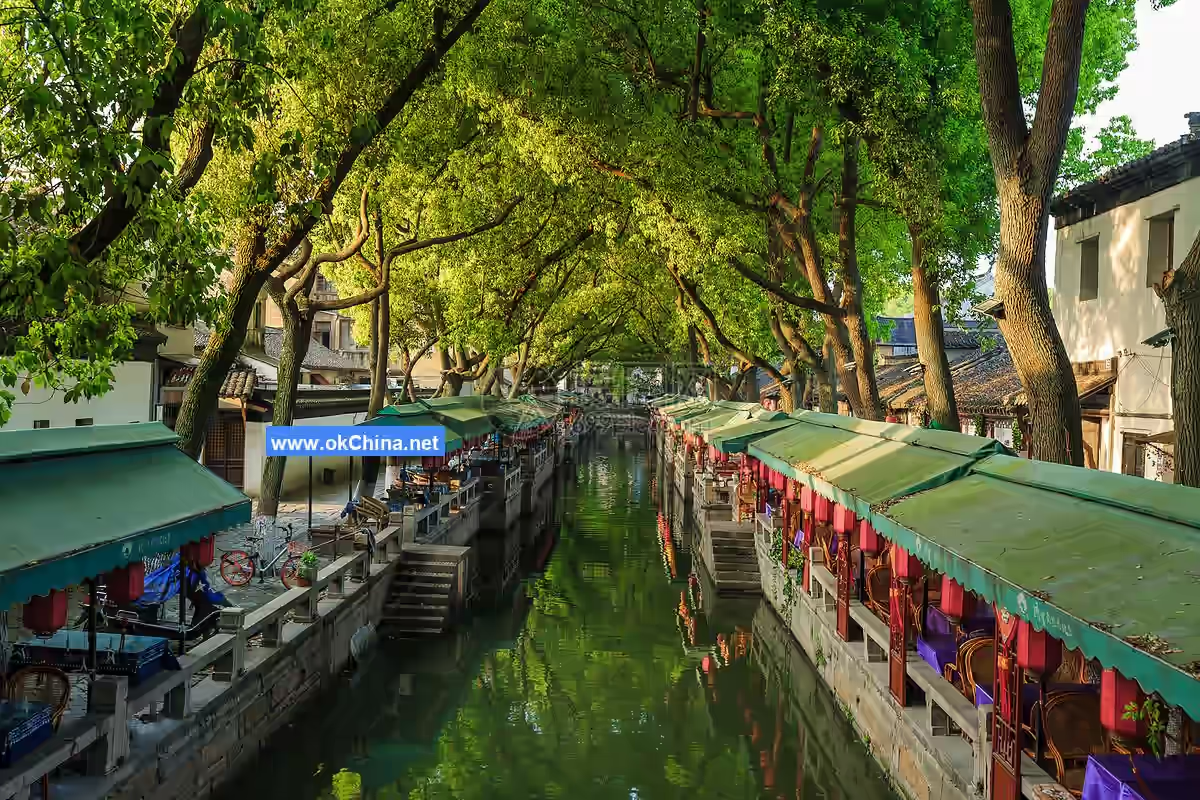
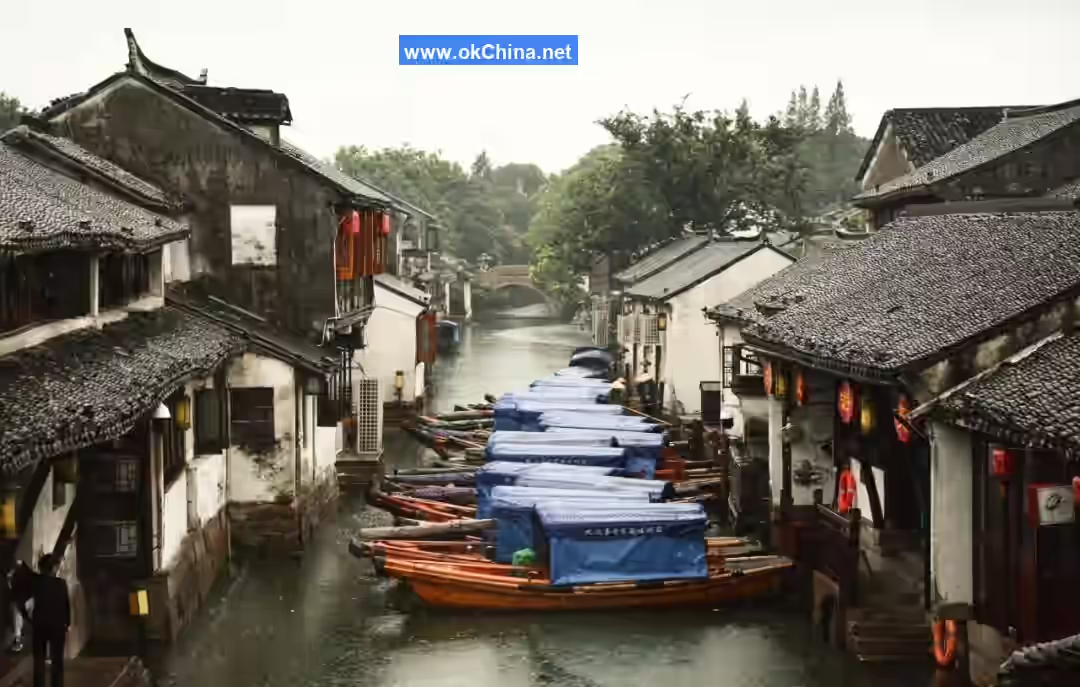
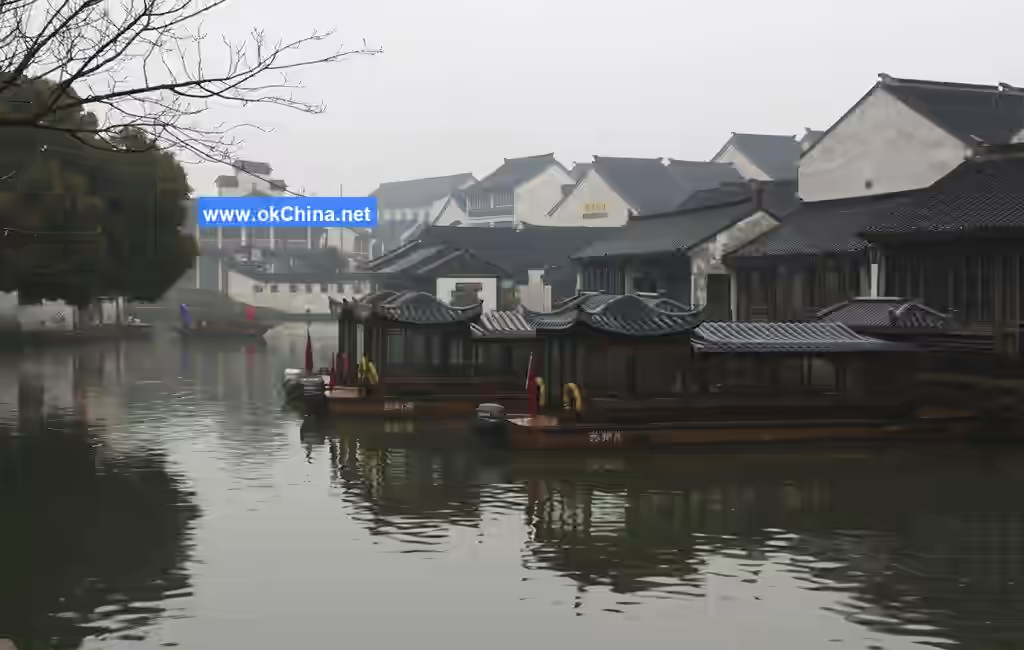
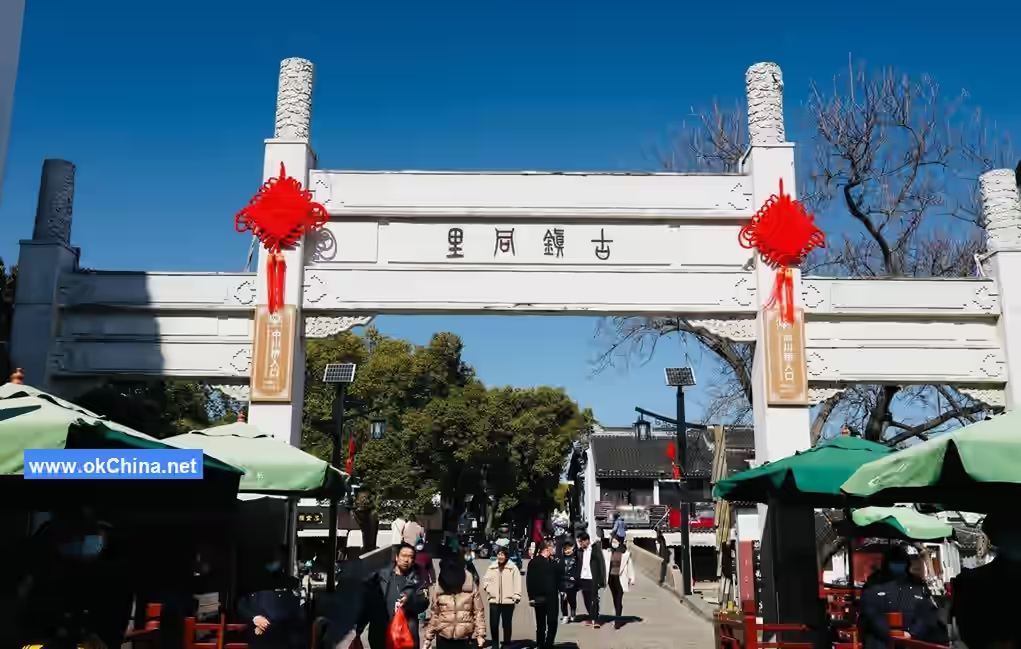
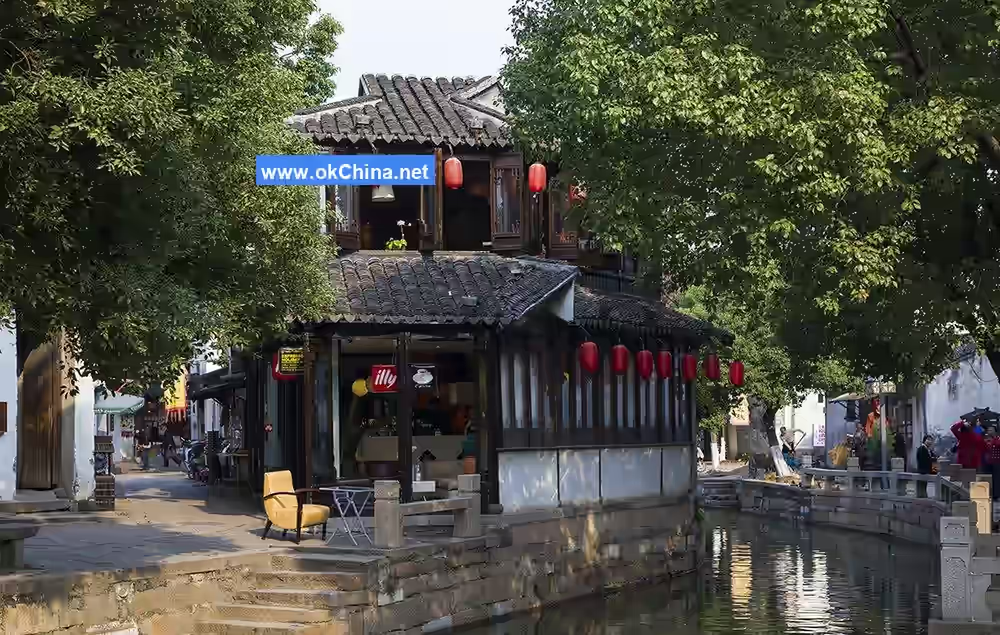
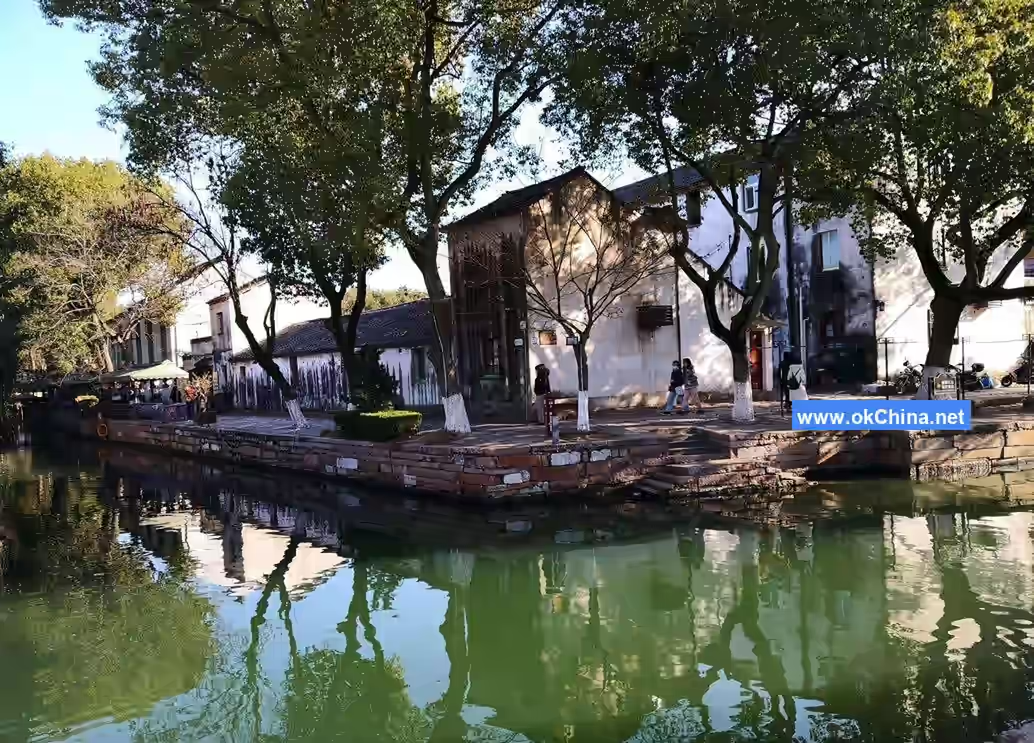
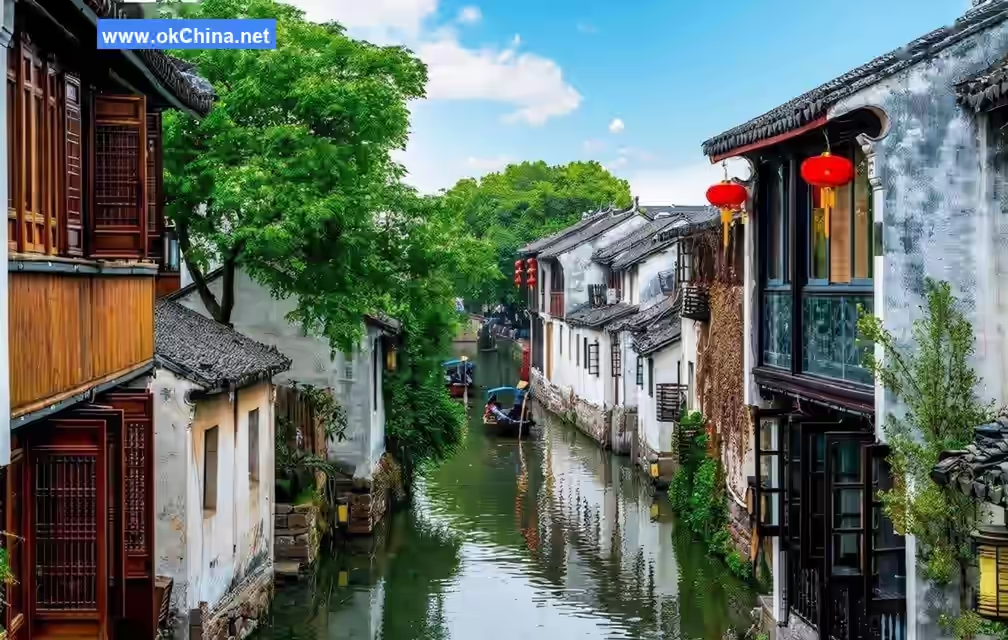
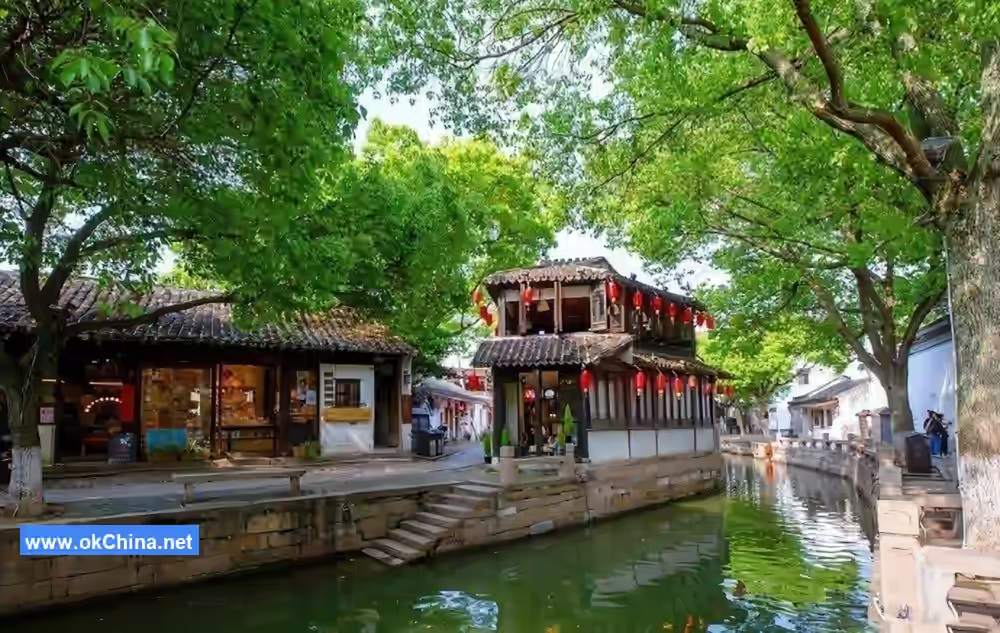
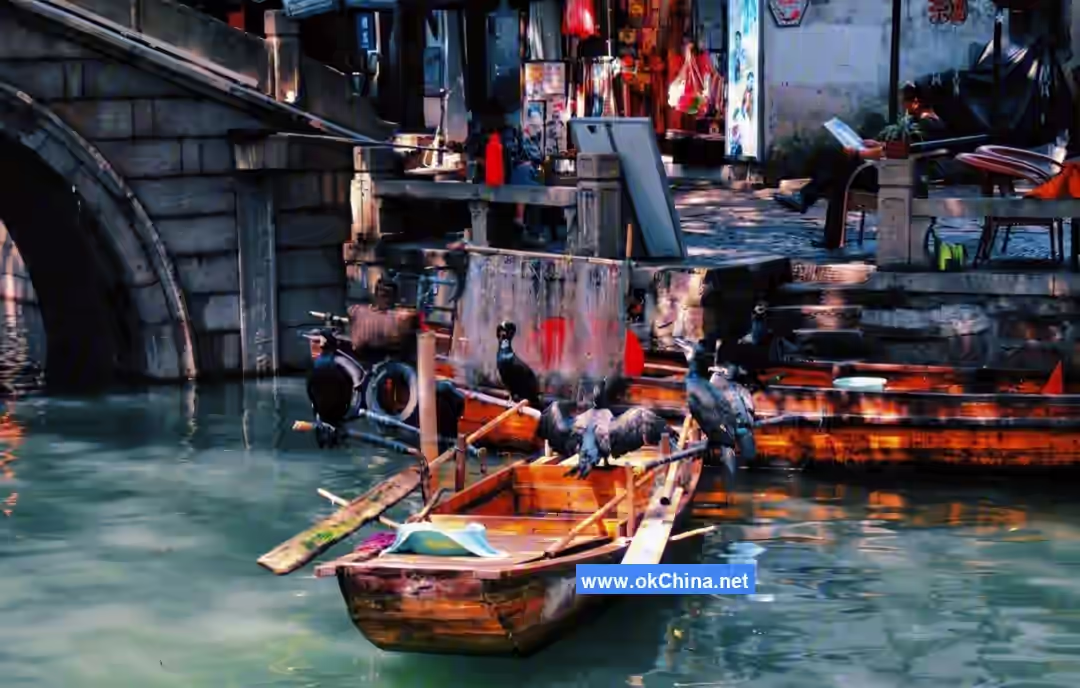
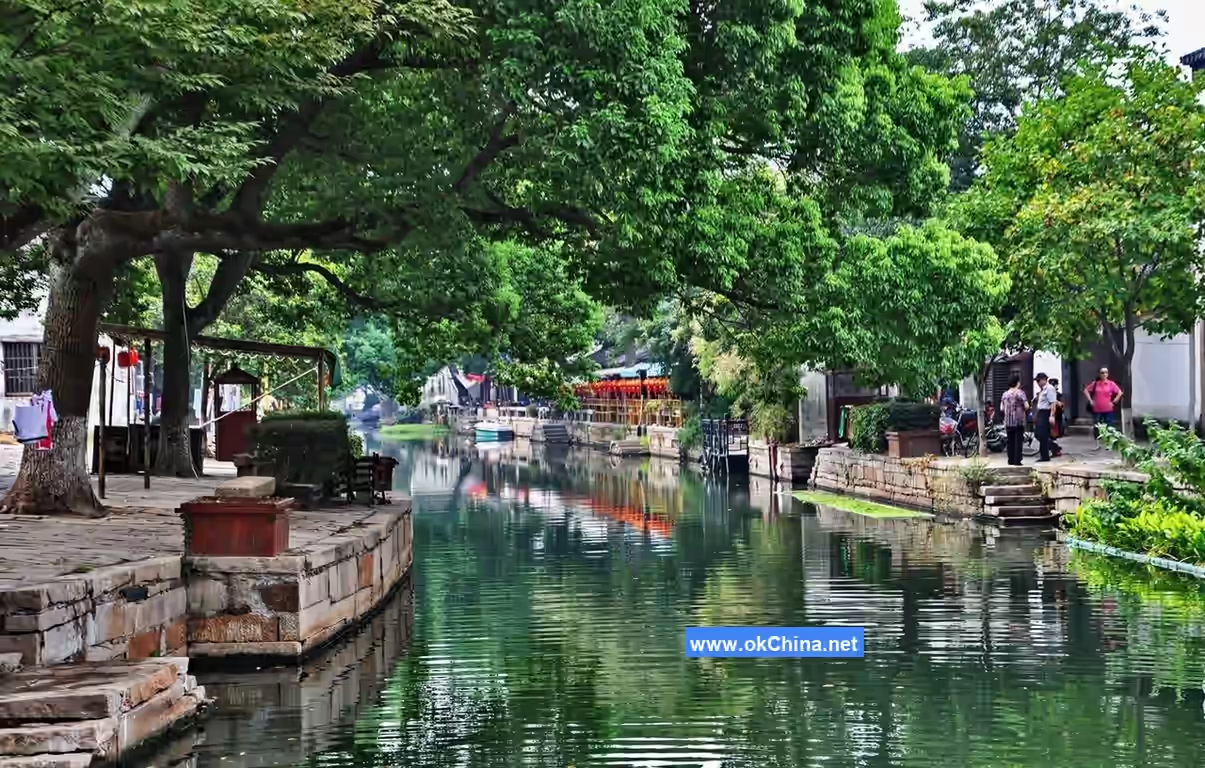
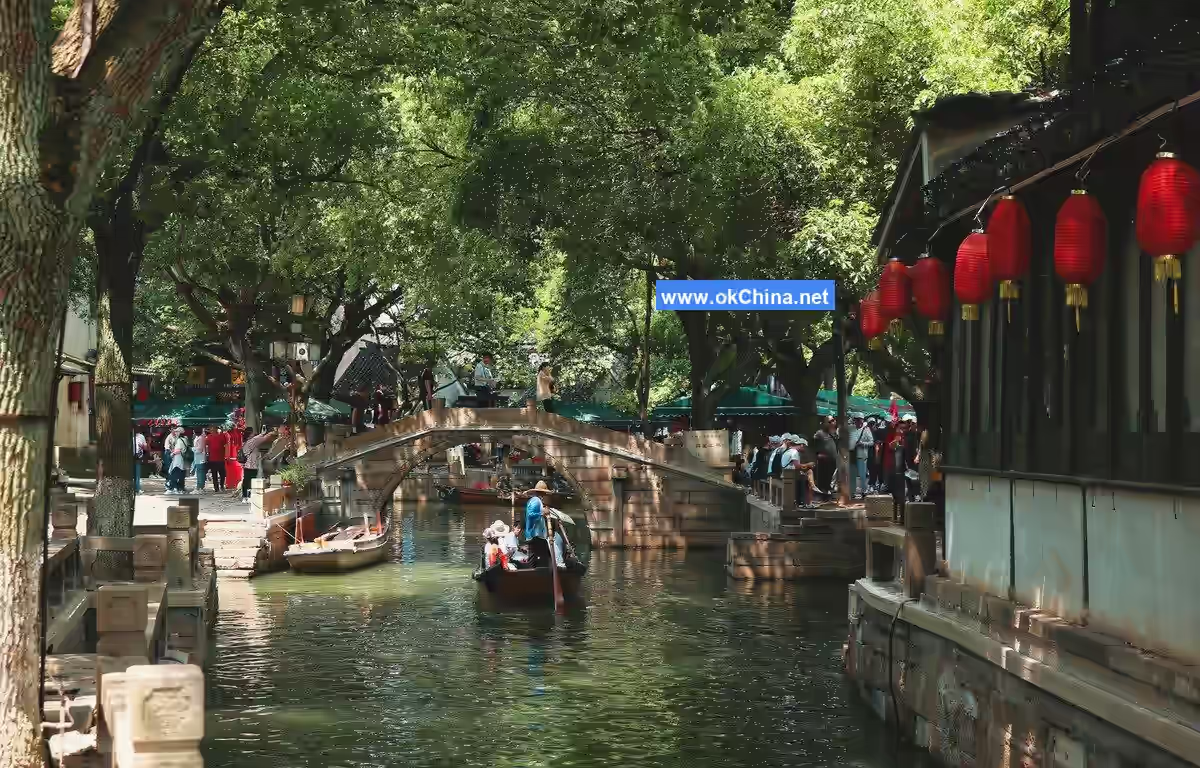
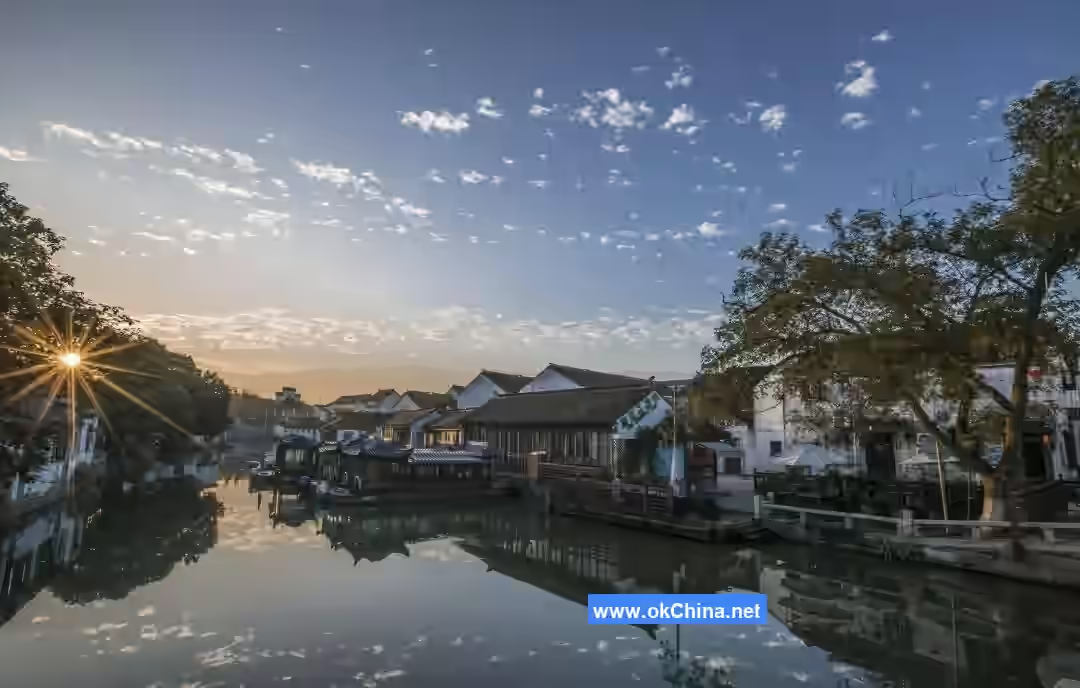
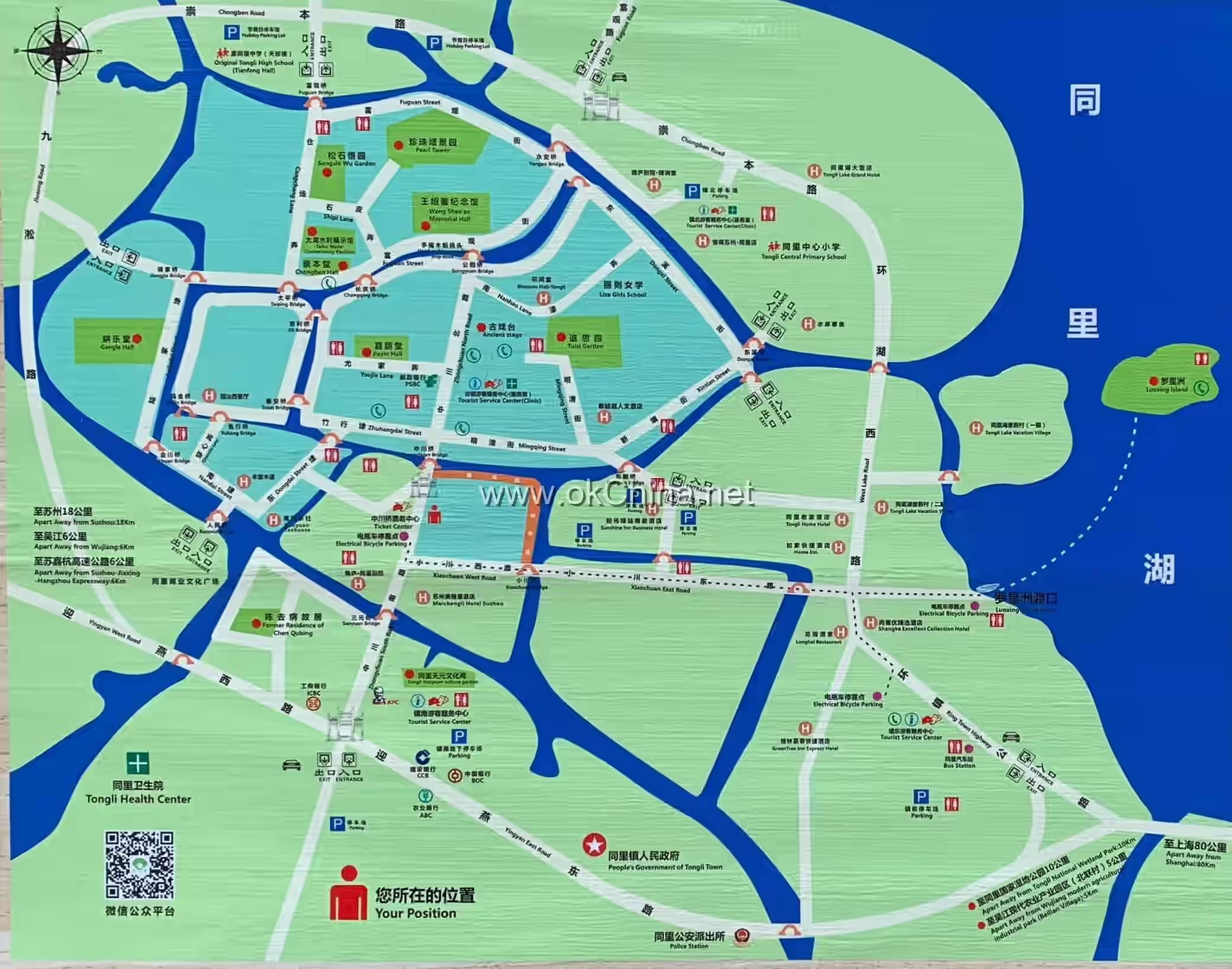
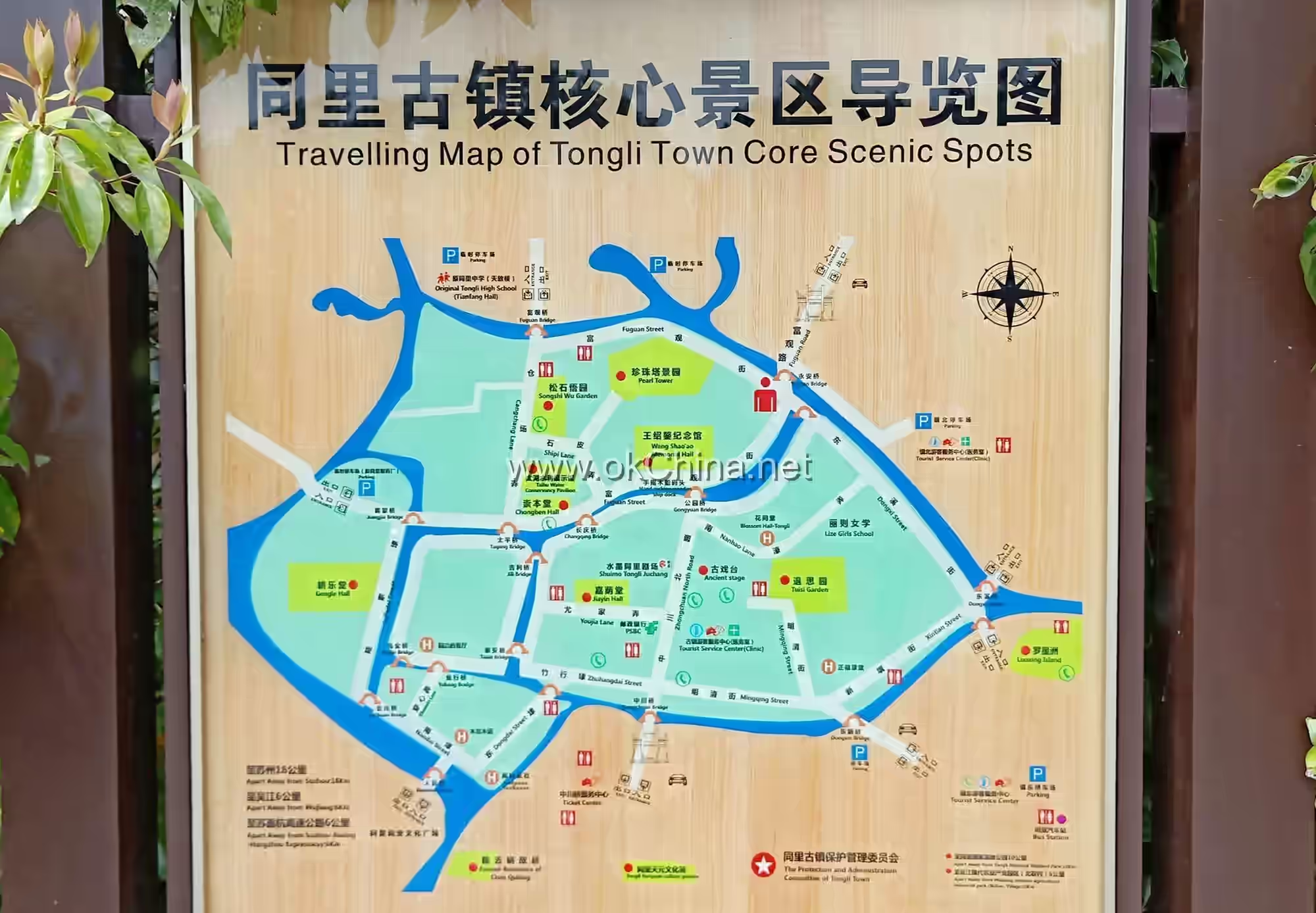
Layout and Orientation The town area of Tongli is divided by a川-shaped river course and intersecting tributaries into 7 small islands, connected by 49 bridges. Like a pearl set among the five lakes of Tongli, Yeze, Nanxing, Pangshan, and Jiuli, its pattern of small bridges, flowing water, and households has earned it the reputation of the "Little Venice of the East". The residential architecture in Tongli Ancient Town exhibits typical characteristics of Jiangnan water town dwellings. Most residences feature a "white walls and black tiles" exterior, which is not only fresh and elegant but also aligns with the gentle and delicate cultural temperament of the Jiangnan region. In ancient times, the town was a rice market. Buildings along the river were mostly commercial-residential structures with shops in front and residences behind, or shops downstairs and residences upstairs. The houses typically have narrow, long entrances and deep, layered interiors. The roof ridges gradually increase in height from south to north, meeting both lighting needs and drainage principles.
5.1 Ming-Qing Street
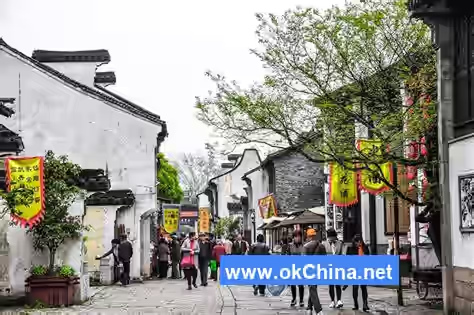
One of the ancient town's commercial streets. Built in 1996, it is over 160 meters long and features Ming-Qing architectural style. It relatively completely preserves the unique Jiangnan layout of parallel upper and lower streets. The inscription "Qing Ming Yi Feng" (Legacy of Purity and Brightness) at the entrance was written by Fei Xiaotong.
5.2 Gengle Hall
Located in Xiliuwei, in the middle section of Lujiadai, facing east towards the river. It was built by the Ming Dynasty scholar Zhu Xiang, with a record written by Mo Dan, then the Director of the Imperial Academy in Nanjing and a local. Zhu Xiang, courtesy name Tingrui, style name Gengle. The hall is named after his style name.
5.3 Wang Shao'ao Memorial Hall
Located at No. 35 Fuguan Street, with a building area of 500 square meters and an exhibition area of 400 square meters. It focuses on promoting the spirit of Wang Shao'ao, using his revolutionary and combative life as the main theme, and recreating his glorious achievements through artifacts, paintings, and pictures. The first floor is a dedicated hall, displaying documents, artifacts, pictures, and texts. The content is divided into twelve parts, showcasing Comrade Wang Shao'ao's experiences in different historical periods.
5.4 Songshi Wuyuan (Pine-Stone Enlightenment Garden)
Abbreviated as "Wuyuan", it is the location of the "Songping Stone Exhibition Hall". Situated in Shipi Lane, near the three bridges of Jili, Taiping, and Changqing, separated from the Pearl Pagoda Scenic Area by a wall, it is reached by walking a hundred steps south from Fuguan Bridge. It covers an area of 1,600 square meters. The garden's name comes from a poem by the collector: "In Shipi Lane, stones break, stone skins reveal heavenly script; Where my heart is calm, I enlighten, my heart attains Bodhi." The purpose of the exhibition hall is to decipher the heavenly script and contemplate life, hence the name "Wuyuan" (Enlightenment Garden).
5.5 Chen Qubing Former Residence
A simple and elegant Qing Dynasty residential house covering 1,364 square meters. Originally, a plaque inscribed "Xiao You Jiu Ye" (Old Estate of Filial Piety and Friendship) hung above the lintel. Entering, one finds a half-pavilion, traces of the family ancestral hall, the Baichi Lou (Hundred-foot Tower), Haoge Tang (Hall of Grand Songs), and other structures. Haoge Tang has three bays. When this house was completed in 1920, Chen Qubing happened to be reading Bai Juyi's "Haoge Xing" and felt a joyful resonance, thus naming it "Haoge Tang", which served as a reception hall. The hall originally hung horizontal plaques inscribed "Nü Zong Gong Yang" (Revered by All Women) and "Haoge Tang". The "Nü Zong Gong Yang" plaque was personally inscribed by Dr. Sun Yat-sen to praise Chen Qubing's mother, Madame Ni, for "nurturing and instructing, leading to success". Baichi Lou was a place for storing books and writing, a simple two-story building. The Baichi Lou Congshu (Baichi Lou Collection) he authored was named after this building.
5.6 Nanyuan Tea HouseLocated within the historically renowned former "Eight Scenic Spots" of the ancient town area—specifically the "Morning Mist over Southern Market" scene at the southern end—it faces the former residence of Chen Qubing across the river. Initially named "Fu'an Tea House," it was built in the late Qing Dynasty. The structure features four bays, a traditional brick-and-timber framework, Qing-style wooden carvings, and two floors, covering a total area of approximately 400 square meters.
5.7 Chongben Hall
Located at the northern end of Fu'guan Street by Changqing Bridge, it faces south and is built overlooking the water. To the southeast, it faces Jiayin Hall across the river, and to the west, it overlooks three bridges including Changqing Bridge. It was rebuilt by Qian Youqin, a native of Tongli, in the first year of the Republic of China (1912) after purchasing part of the old residence of the Gu family's "Western Estate Villa." The complex includes five sections: an entrance hall, main hall, front building, rear building, and kitchen. Although covering less than one mu and modest in scale, the architecture is exceptionally compact and exquisite.
5.8 Jiayin Hall
Situated at the entrance of Youjia Lane on Zhuhang Street, it was built in the 11th year of the Republic of China (1922) and consists of four sections. The doors, windows, beams, and pillars are exquisitely carved. The owner, Liu Bingnan, originally from Beiku, first operated an oil mill in Luxu. After achieving prosperity, he relocated to Tongli to construct this residence, spending a total of 20,000 taels of silver. He shares the same ancestral lineage as the poet Liu Yazi. The main structure imitates Ming Dynasty architecture and is commonly known as the "Gauze Cap Hall" because the beam-end brackets resemble the wings of an official's hat from the Ming Dynasty. The courtyard is tall, spacious, solemn, and dignified. The center of the five-purlin beam is carved with the "Eight Steeds" motif on both sides, while the ends of the beam feature "Phoenixes Among Peonies." The underside of the beam is carved with patterns such as "As You Wish" and "Success in Imperial Examinations." The "gauze cap wings" (i.e., the beam-end brackets) are adorned with eight openwork carvings depicting scenes from Romance of the Three Kingdoms, including "Meeting in the Ancient City" and "Three Heroes Battle Lü Bu." These carvings are vivid and lifelike. This set of openwork carvings is recorded in the Chinese Opera Chronicles: Suzhou Volume.
5.9 The Three Bridges
Refers to Taiping Bridge, Jili Bridge, and Changqing Bridge. Taiping Bridge spans Dongliu and Qizi areas and is a beam bridge. Jili Bridge spans Qizi and Nianqiao areas, situated between Taiping Bridge and Changqing Bridge. It is an arch bridge with couplets inscribed on both its northern and southern sides. Changqing Bridge, commonly known as Xiejia Bridge, spans Dongliu and Nianqiao areas. It was formerly known as Fujian Bridge and also called Guangli Bridge.
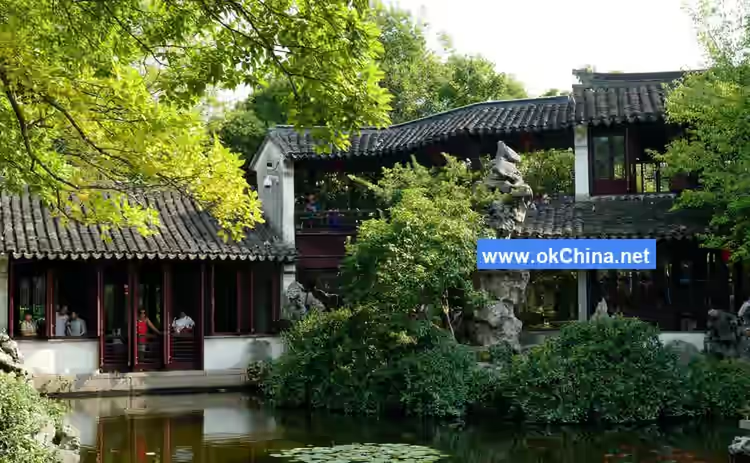
5.10 Tuisi Garden
Built between the 11th and 13th years of the Guangxu reign in the Qing Dynasty (1885–1887). It features a complete array of structures including pavilions, terraces, towers, galleries, bridges, waterside pavilions, halls, and studies, all centered around a pond, giving the impression that the buildings float on the water. The inner residence consists of two north-south buildings (totaling ten upper and ten lower rooms), named Wansiang Tower after the garden owner's courtesy name. This served as the living quarters for the owner and his family. The two buildings are connected by a "Horse-Riding Tower" corridor, with uniform full-length windows on the north and south sides, hanging railings on the fifth floor, and connected eaves corridors, creating an elegant and bright space. Staircases are installed on the eastern and western sides of the double corridor, allowing passage without getting wet on rainy days and providing shade on sunny days, while also facilitating courtesy between masters and servants. Below Wansiang Tower, several additional rooms were built for servants. As the inner residence was the owner's living area and a treasure storage site, the stone-framed gates on both sides were constructed with plain square bricks for fire and theft prevention. The fireproof doors of brick-and-timber construction are said to be the only two original ones among Tongli's Ming and Qing architecture, with the rest being modern replicas.
6. Cultural Activities
6.1 Intangible Cultural Heritage Projects
6.1.1 Tongli Xuanjuan
Tongli Xuanjuan is a traditional storytelling and singing art performed in the Wu dialect in Tongli Ancient Town, Wujiang. With Tongli as its epicenter, it has spread to various towns in Wujiang and radiated to areas such as Jiaxing and Jiashan in Zhejiang, Qingpu in Shanghai, Wuzhong District and Kunshan in Suzhou, wielding considerable influence in the northern Wu dialect region. In 2014, Tongli Xuanjuan, as part of the Wu region's Baojuan, was included in the extended list of the fourth batch of National Intangible Cultural Heritage Representative Projects.
6.1.2 Tongli Paper-Cutting
Tongli Paper-Cutting is an important branch of the Southern school of paper-cutting. Through the continuous development of techniques by generations of intangible cultural heritage inheritors, the water town scenery and local customs of Tongli have been integrated into the art, forming a distinctive Tongli paper-cutting style. It has been included in the Wujiang District Intangible Cultural Heritage List.
6.2 Folk Customs
6.2.1 Walking the Three Bridges
The "Three Bridges" in the Tongli custom of Walking the Three Bridges are three ancient stone bridges located in the center of Tongli Ancient Town, arranged in a triangular formation: Taiping Bridge, Jili Bridge, and Changqing Bridge. They are the gems among Tongli's bridges—small, exquisite,古朴雅致, and standing at the confluence of three rivers. Surrounded by clear waters and lush trees, with streets forming a ring, the area combines the serene elegance of shaded greenery with the bustling prosperity of a lively marketplace.
The Tongli custom of Walking the Three Bridges roughly originated in the mid-Qianlong period of the Qing Dynasty, though its exact formation date is difficult to ascertain. It originated from wedding customs. During auspicious occasions such as weddings, birthday celebrations, or a baby's full moon, accompanied by joyful drumming, firecrackers, and scattered candies, beaming people and jubilant relatives and friends parade around the "Three Bridges" in a grand procession, chanting the blessing "Taiping Jili Changqing" (Peace, Auspiciousness, and Celebration). Residents along the streets come out to watch and offer congratulations. This heartwarming scene of universal celebration is not only a beautiful sight in Tongli Ancient Town but also a genuine expression of the淳朴善意的民风民心.
In the past, whenever a wedding took place in the town, the wedding procession would carry the bridal sedan chair around the Three Bridges. Elderly people celebrating their 66th birthday would walk the Three Bridges after lunch on that day, and a baby's full moon would be marked by the mother carrying the infant around the bridges. The walk typically followed the sequence of Jili Bridge, Taiping Bridge, and Changqing Bridge, completing a full circle without retracing steps. In wedding customs, the groom would carry the bride on his back across the first bridge, hold her in his arms across the second, and finally lead her by hand across the third.
As a ritual in local wedding customs, the Walking the Three Bridges tradition holds significant value in cultural anthropology, folklore, psychology, and sociological studies. As a全民性的社会风俗 of Tongli, it plays a crucial role in传承区域文化,凝聚文化认同, and promoting social harmony. Its significance in facilitating multiple forms of communication, harmonizing social relations, and optimizing the living conditions and social atmosphere of the people is profound.
In 2011, the Wujiang Municipal People's Government listed the Tongli Walking the Three Bridges custom as a project in the fourth batch of Wujiang Municipal Intangible Cultural Heritage.
6.2.2 Da Lianxiang (Playing the Linked Bamboo)
Lianxiang is a folk self-made musical instrument流传于江浙沪一带. It is typically made from a one-meter-long green bamboo with an inner diameter of about two centimeters. Artisans drill holes through the bamboo at intervals of approximately 10 centimeters from both ends, embedding two copper coins in each hole (the hole is slightly larger than the coins to allow them to rattle) and securing them with screws and nuts. Colorful silk ribbons in red, green, and yellow are tied at these points. Usually, three holes are made at each end, with three pairs of multicolored silk ribbons attached.
Da Lianxiang involves performers holding the Lianxiang and, accompanied by music, striking their hands, feet, arms, shoulders, and legs with it in various ways. When danced, the copper coins inside the Lianxiang produce pleasant sounds, and the colorful ribbons flutter up and down, creating a delightful spectacle. Initially, Lianxiang performers were usually men dressed in white shirts and pants, performing at temple fairs and major events. Later, women also began performing Da Lianxiang. Women often wear blue cloth printed clothing and blue cloth floral headscarves, dancing gracefully at various festive occasions and holidays.
6.3 Festivals and Celebrations
6.3.1 New Year Customs
The first day of the lunar new year is the Spring Festival, also called "New Year," commonly known as "Niantoulang" (the beginning of the year). As the start of the lunar year, it is highly valued by the locals. In the early hours of New Year's Day, every household rushes to open their doors and set off "opening firecrackers," symbolizing the removal of the old and welcoming the new, and expressing hopes for万事如意 and prosperity in the coming year. Everyone, young and old, wears new clothes and is filled with joy. Breakfast includes "sweet water dumplings," symbolizing sweetness and团圆. Neighbors and亲友相见, exchange auspicious greetings, and wish each other a happy new year. On this day, quarreling, lending or borrowing money, using knives, washing rice or vegetables, and doing laundry or sweeping the floor are avoided. Those who believe in deities and Buddhas may set up altars at home for worship or go to temples early to烧头香, praying for吉利平安. Elderly people go to teahouses early to drink "yuanbao tea," both to seek auspiciousness for wealth and to exchange New Year's news. From the second day of the new year onward, families visit relatives and friends, with younger generations paying respects to elders ("bainian"). Hosts treat guests to lavish meals. Neighbors and亲友互相请吃 "niantangjiu" (New Year's feast), sometimes延续到年初十. In the past, Tongli's Spring Festival lantern fairs were very lively, with frequent folk performances such as dragon dances and lion dances, usually lasting until around the tenth day of the new year. In prosperous years, they would continue until the fifteenth day of the first lunar month. After the founding of New China, the state明确规定春节放假3天. Before the festival, activities such as "Supporting the Army and Giving Preferential Treatment to Families of Servicemen, Supporting the Government and Cherishing the People" and "Poverty Alleviation and Assistance" are carried out. During the festival, various chess and ball games, as well as cultural and artistic activities, are organized.
6.3.2 Intangible Cultural Heritage Xuanjuan
Xuanjuan is short for "preaching Baojuan." It began during the Song and Yuan dynasties as a new form of storytelling and singing that继承唐代佛教 "讲经说法" traditions, with its演唱的文本 being Baojuan. Tongli's Xuanjuan is a branch of民间宣卷 in the Wu dialect region, mostly performed in the Wu dialect. The exact time when Xuanjuan was introduced to Tongli is difficult to verify. Tongli Xuanjuan flourished during the Tongzhi and Guangxu reigns of the Qing Dynasty. At that time, performers used two wooden fish and a醒木, with the卷书上盖一块 "经盖," known as "Wooden Fish Xuanjuan" (also called "Pingjuan"). It involved one main preacher and one or two assistants, with instruments limited to wooden fish,磬子, and碰铃. Tongli Xuanjuan was known as a "grassroots troupe," often performing流动演出 in villages or towns. This folk art carries a strong乡土情 and is deeply loved by the masses.#### 6.3.3 Welcoming the God of Wealth on the Fifth Day The fifth day of the first lunar month is traditionally believed to be the birthday of the God of Wealth, specifically the Five Roads (east, west, south, north, and center) Gods of Wealth, known as the "Road Head Birthday." On this morning, Tongli Town holds a ceremony to welcome the God of Wealth at the opera stage and Tuisi Square. After the ceremony, various Gods of Wealth perform along the Three Bridges and the ancient town area. The business community regards the Road God as the God of Wealth. At dawn, shops open their doors, set off firecrackers, and decorate with lanterns and colorful banners, a custom commonly known as "welcoming the road head." On the fifth day of the new year, after each business conducts its own "welcoming the road head" ceremony, various industries resume work and reopen for business. Shop owners invite their employees to a "road head banquet."
6.3.4 Dragon Raises Head on the Second Day of the Second Month
The second day of the second lunar month is commonly known as "Er Yue Er" (Second Month Second). On this day, people in Tongli make and enjoy "Waist-Supporting Cake," a custom widely practiced in the rural areas of this region. To make Waist-Supporting Cake, leavened dough is first shaped into palm-sized strips. These strips are then cooked on a hot griddle until fully done. Next, they are soaked in another pot where brown sugar has been melted into syrup. Only then is a sweet, soft, and glutinous Waist-Supporting Cake truly ready. The cake is best eaten hot for optimal texture. People believe that eating Waist-Supporting Cake strengthens the back, builds bones and muscles, and prevents backaches from work. On this day, people of all ages flock to barbershops for a haircut, commonly called "getting a shave," which carries the auspicious meaning of good luck arriving and fortune shining upon them.
6.3.5 The Third Day of the Third Month
The third day of the third month marks a renewal of all things. With the warmth of spring, flowers blooming, willows greening, and rapeseed flowers in full bloom, townsfolk venture to the outskirts in groups to pick willow branches, admire the flowers, and get close to the fields. This is called "treading on the green" or commonly known as "wandering among the rapeseed flowers." Schools organize spring outings for teachers and students, formerly called "excursions." Additionally, the third day of the third lunar month is Children's Picnic Day (wildfire rice). On this day, children gather in small groups, asking neighbors for rice and vegetables, picking wild greens, digging for vegetables, building makeshift stoves, and cooking outdoors, enjoying themselves immensely.
6.3.6 Immortals' Gathering on the Fourteenth Day of the Fourth Month
This is an activity with a relatively wide regional scope, but Tongli has its own unique characteristics. The Immortals' Gathering features performances such as stilt walking, carrying incense with arms raised, lake boat swinging, and dressing up as clam spirits. There are also devout men and women wearing "sin skirts" to show repentance. It is difficult to ascertain when Tongli's Immortals' Gathering began; it disappeared by the late 1950s.
6.3.7 Dragon Boat Racing on the Dragon Boat Festival in the Fifth Month
With its vast water surfaces, this activity is the most lively in Tongli. The so-called dragon boats are simply ordinary wooden farming boats decorated with colorful silk ribbons tied along both sides, along with various small flags and paper flowers. A large colorful ball hangs on each side of the bow. When setting out, two oars are used. A long plank is added below the middle part of each oar, extending about one meter beyond each side of the boat and fixed in place. People then stand on these protruding planks, working together to row the oars. It is said the boat speed is very fast at this time, hence Tongli people also call them "fast boats." During races, except for the drum team cheering in the front cabin, the elderly, children, and women all go ashore to watch. Only young and strong adults remain on the boats. This lightening of the load inadvertently increases the boat's speed.
6.3.8 Tiankuang Festival on the Sixth Day of the Sixth Month
The sixth day of the sixth lunar month is the Tiankuang Festival, commonly known in Tongli as "Liu Yue Liu" (Sixth Month Sixth) or "Cat and Dog Birthday." After the rainy season, many items in the home are prone to dampness. As it is midsummer with intense sunlight, clothes, quilts, books, paintings, and crop seeds are sunned to eliminate insects and prevent mold. Cats and dogs, having gone through the humid season, become smelly. Owners bathe them to remove lice and fleas, called "bathing cats and dogs." There is also a custom on this day for every household to eat wontons, as the saying goes, "On the sixth of the sixth, buy a wonton to drop in."
6.3.9 Qiqiao Festival on the Seventh Day of the Seventh Month
The seventh day of the seventh lunar month is the Qiqiao Festival (Begging for Skills Festival). In the past, women (mostly young girls) would often set up an altar under the moonlight, offering seasonal fruits and snacks to worship the Weaving Maiden. Additionally, they would place a basin of clear water on the altar and gently drop an embroidery needle into it. By observing the shadow's shape in the water, they would distinguish skill from clumsiness. A shadow resembling clouds, dragons, or grass was considered "gaining skill," while one resembling an awl or axle was seen as an "omen of clumsiness." There were also gatherings in courtyards to compete in embroidery skills and threading needles under moonlight with silk threads, all to beg the Weaving Maiden for wisdom and dexterity, hence the name "Begging for Skills Festival." For beauty, women and children would crush balsam flowers with alum to dye their nails red. The Qiqiao customs have now faded, but the legend of the Cowherd and the Weaving Maiden meeting on a magpie bridge on the seventh of the seventh (now called "Valentine's Day") and the saying "On the seventh of the seventh, take a watermelon and cut it" are still流传 (circulated/passed down).
6.3.10 Burning Ground Incense and Releasing Water Lanterns on the Thirtieth Day of the Seventh Month
The thirtieth day of the seventh lunar month is the birthday of Ksitigarbha Bodhisattva. At dusk on this day, every household lights candles and burns incense at their doorstep or in their courtyard. The incense, often stick incense, can be inserted one by one into the ground, a custom commonly known as "dog ritual ground." After this, the release of water lanterns begins, a practice unique to Tongli within the Wujiang region. Water lanterns are made of kraft paper into round, bottomed lamp bowls. Inside, a sun-dried clay duck foot, shaped like a triangular claw with a small hole, is placed to hold a wick. Then, vegetable oil is added to the lamp bowl. When releasing the lanterns, a boat in front carries monks playing Buddhist music, while a boat behind specializes in lighting the wicks inside the oil-paper lanterns and gently placing them on the water's surface. Thus, with music playing and lanterns being released, in less than two hours, the rivers throughout Tongli Town twinkle with water lanterns, like a sky full of stars fallen into the river, creating a magnificent scene.
6.3.11 Mid-Autumn Festival on the Fifteenth Day of the Eighth Month
This festival is highly regarded by Tongli people. Every household offers incense cones and eats mooncakes. The cones are made of incense sticks, with osmanthus placed inside and a pagoda-shaped pillar incense at the center, having several layers. On this day, incense shops specially supply these incense cones for customers to choose from. The offering of cones usually begins at dusk. Besides mooncakes, other various fruits such as water caltrop, lotus root, and oranges are also prepared. Around midnight, the incense cone is moved to the courtyard and burned. Only then does the family begin to eat mooncakes and admire the moon.
Comments
Post a Comment