Tianzhu Mountain Scenic Area in Anqing City
1. Introduction
Tianzhu Mountain Scenic Area in Anqing City, also known as the Tianzhu Mountain National Park of Anqing City, abbreviated as Tianzhu Mountain Scenic Area, is located in Tianzhu Mountain Town, Qianshan City, Anqing City, Anhui Province. Its main peak has an elevation of 1,488.4 meters, with a planned protected area of 333 square kilometers and a scenic area covering 82.46 square kilometers.
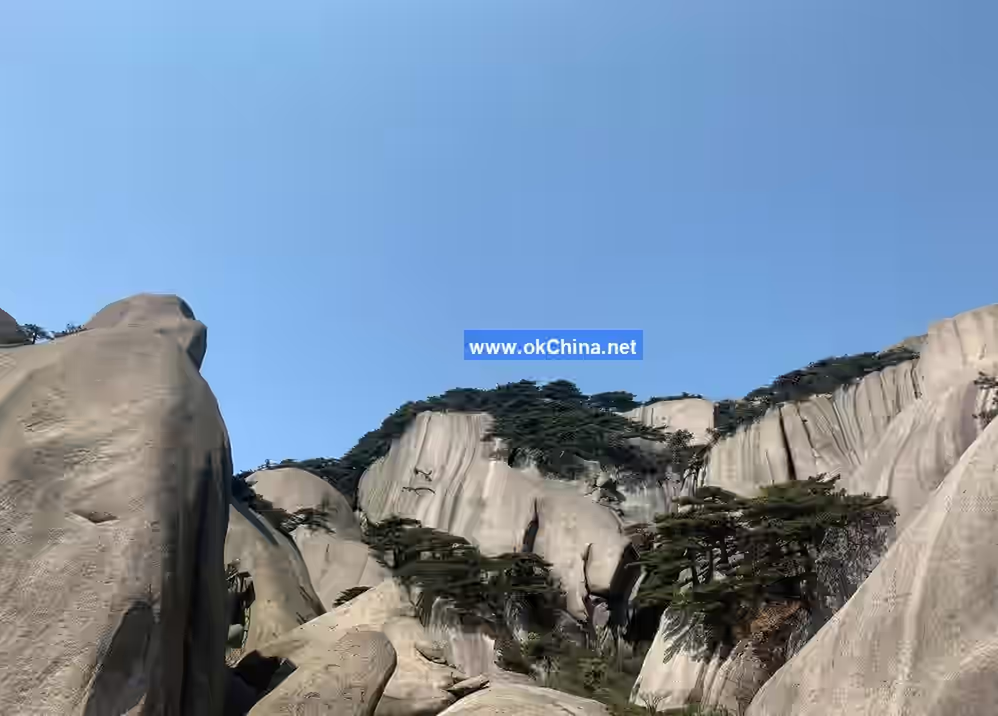
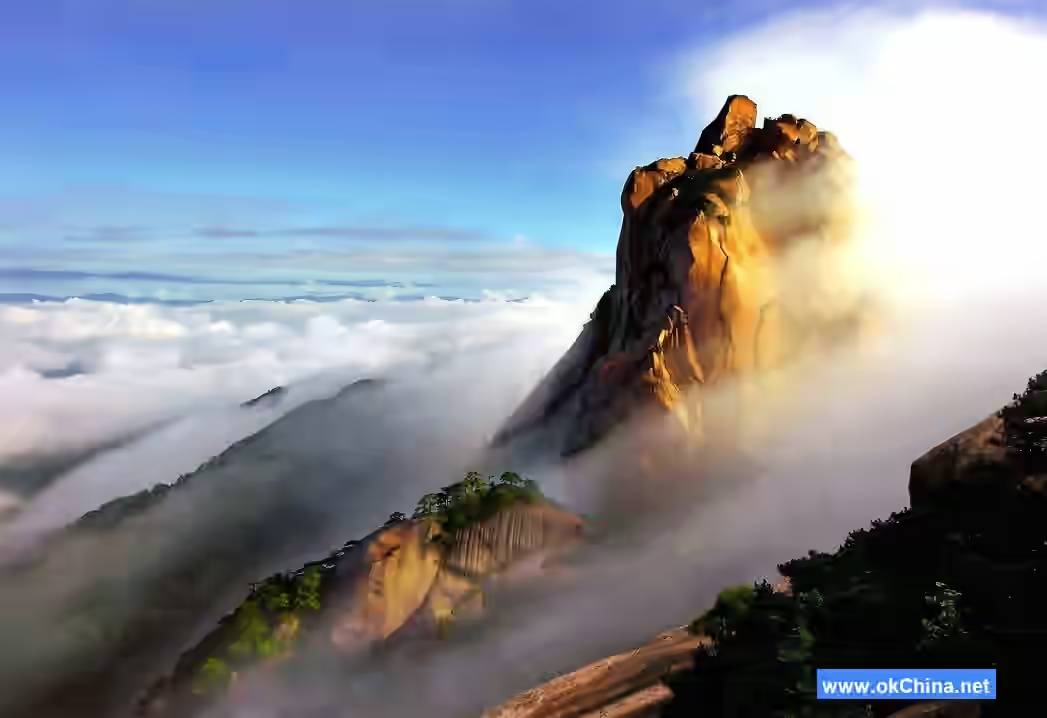
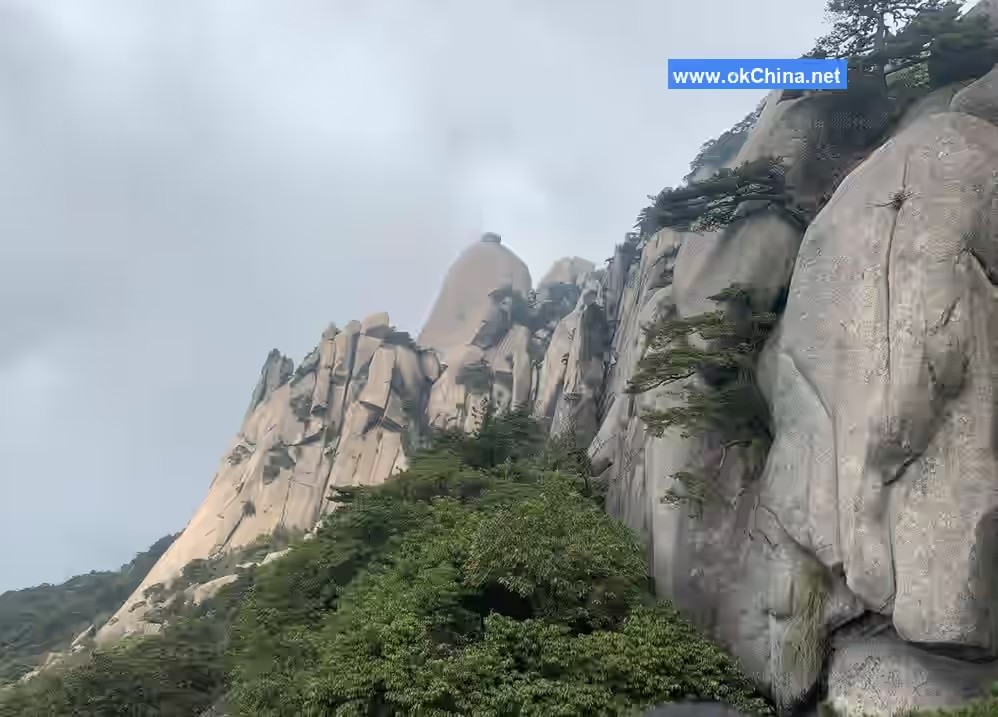
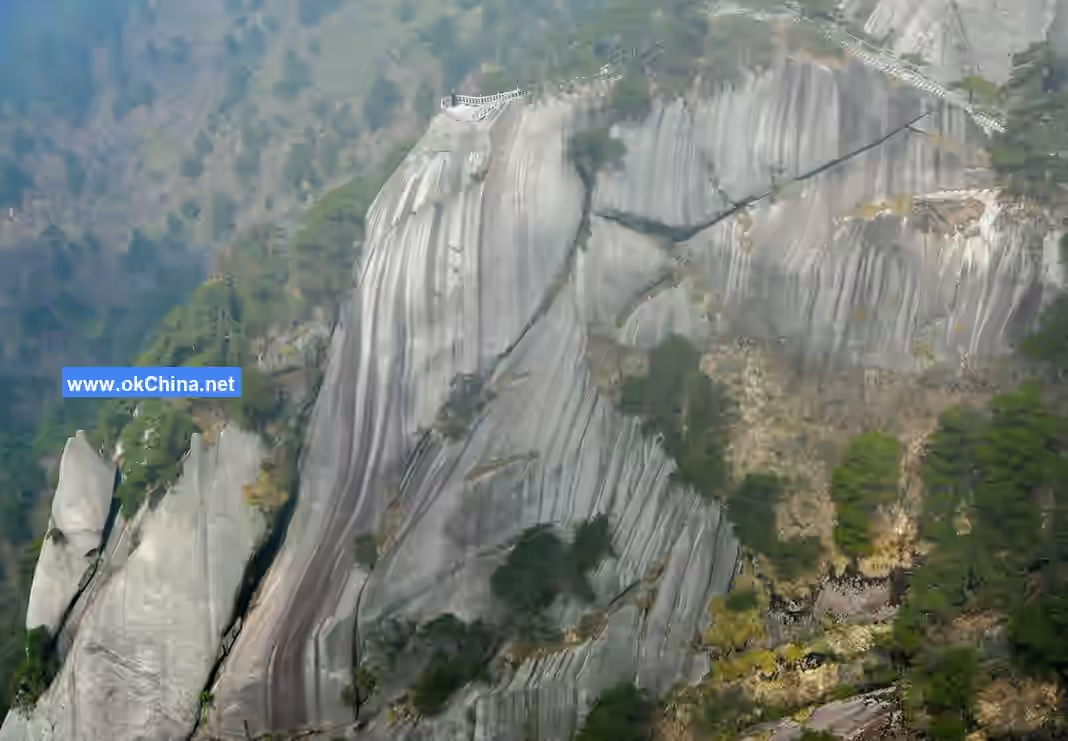
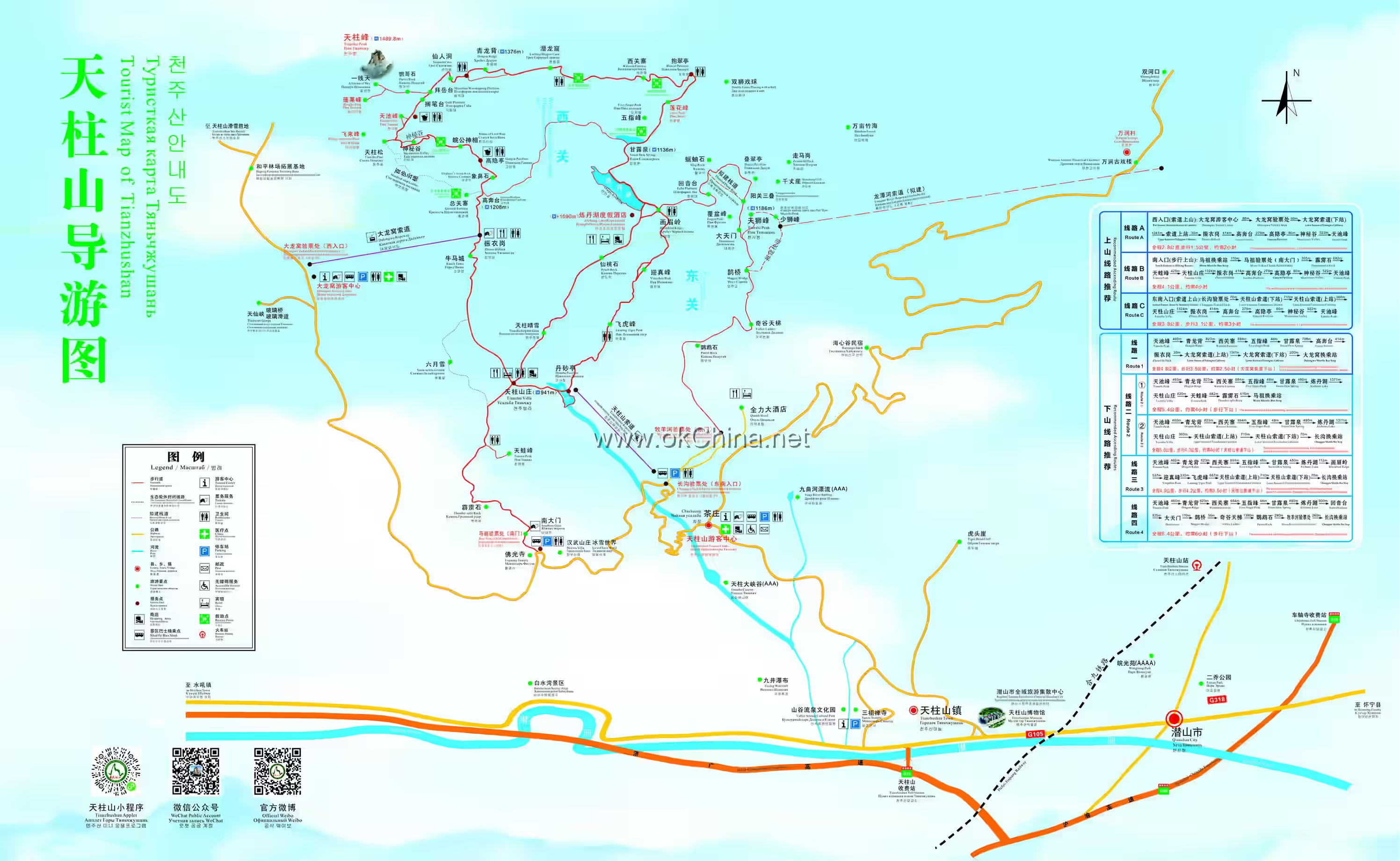
The Tianzhu Mountain Scenic Area in Anqing City is divided into eight major scenic zones: the Main Peak, Dalongwo, Mazhu Temple, Hutouya, Jiujing River, Sanzu Temple, Longtan River, and the Back Mountain. The area features famous cliffs, peculiar rocks, exotic caves, streams and waterfalls, and sea of clouds among other natural landscapes, ranking as one of the three famous mountains in Anhui Province (Huangshan, Jiuhua Mountain, and Tianzhu Mountain). The Tianzhu Mountain Scenic Area belongs to the Dabie Mountain range, with mixed granite as the primary rock type, and some gneiss on its southern foothills. Formed in the late Mesozoic era, and shaped by long-term natural forces, especially surface water erosion and cutting, the rocks have undergone intense weathering and denudation, gradually forming natural landscapes characterized by grandeur and elegance.
On November 8, 1982, the Tianzhu Mountain Scenic Area in Anqing City was listed as a National Key Scenic Area by the State Council. On May 5, 2011, it was awarded the title of "National AAAAA Tourist Attraction" by the National Tourism Administration.
2. Geographical Environment
2.1 Location and Territory
Tianzhu Mountain Scenic Area in Anqing City is located in Tianzhu Mountain Town, Qianshan City, Anqing City, Anhui Province. Its central position is approximately 30°44′12.99″ N, 116°27′18.84″ E, forming an eastern extension (or branch) of the Dabie Mountain range. The main peak has an elevation of 1,488.4 meters, with a planned protected area of 333 square kilometers and a scenic area covering 82.46 square kilometers.
2.2 Topography and Landforms
Tianzhu Mountain Scenic Area in Anqing City belongs to the Dabie Mountain range, with mixed granite as the primary rock type, and some gneiss on its southern foothills. Formed in the late Mesozoic era, and shaped by long-term natural forces, especially surface water erosion and cutting, the rocks have undergone intense weathering and denudation, gradually forming natural landscapes characterized by grandeur and elegance.
2.3 Climate Characteristics
Tianzhu Mountain is located at the northern edge of the central subtropical zone. Moist air currents along the river are blocked by the Dabie Mountains and meet cold air above the mountainous area, directly influencing Tianzhu Mountain's climate. It has an average annual rainfall of over 1,900 mm, with 180 foggy days per year, a frost-free period of 235 days, an average annual temperature of 9.5°C, an average July temperature of 20°C, and an average January temperature of -2°C.
3. Main Attractions
3.1 Tianzhu Peak
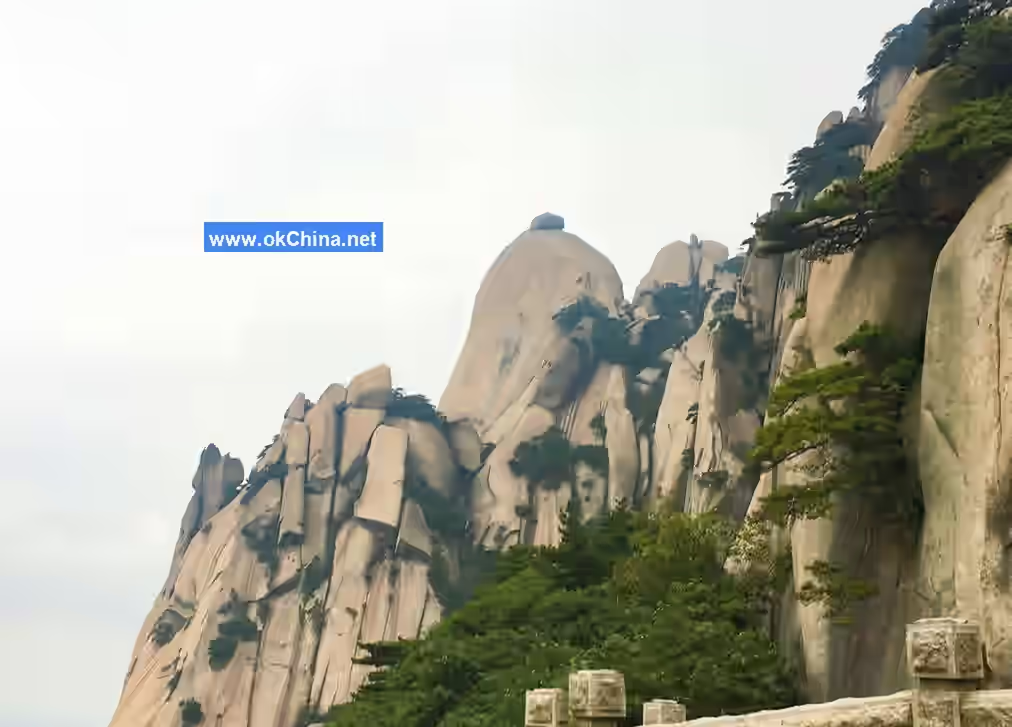
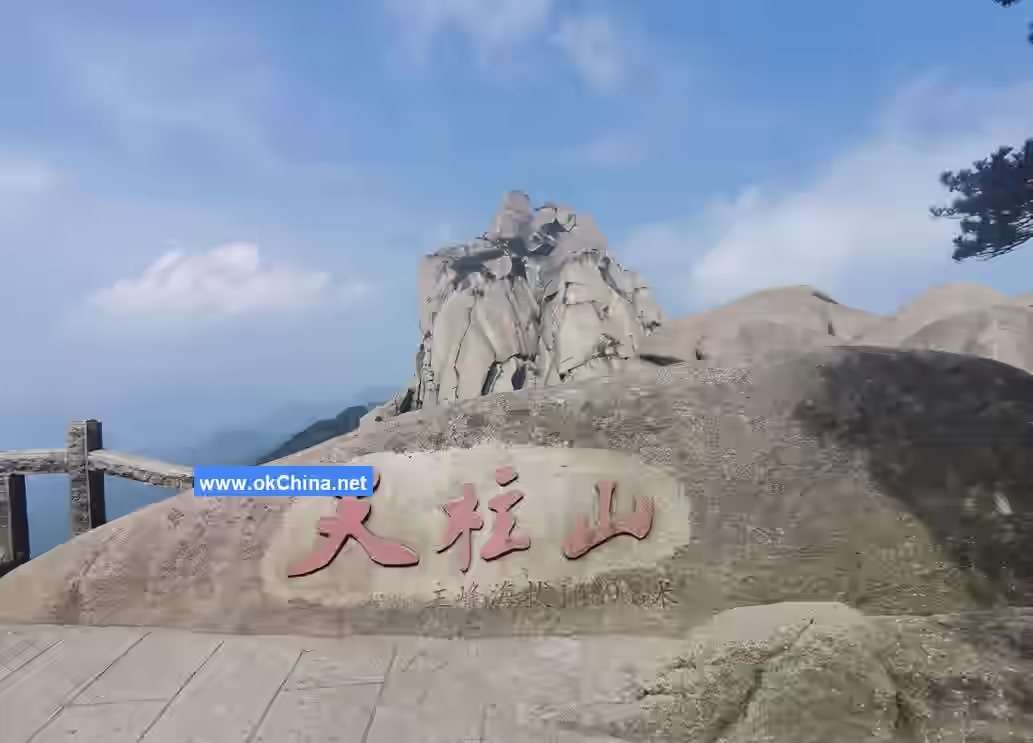
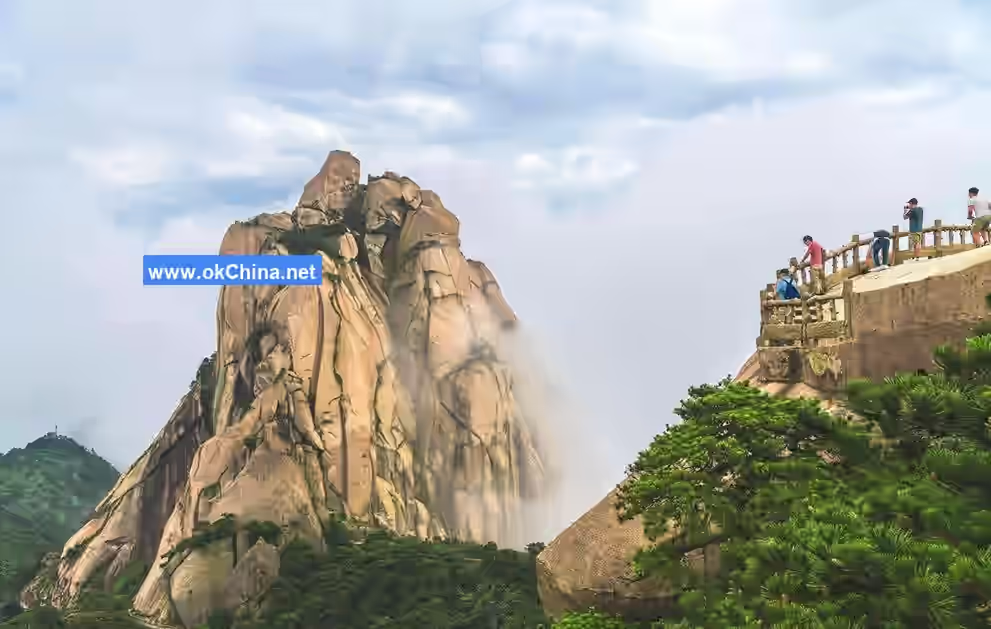
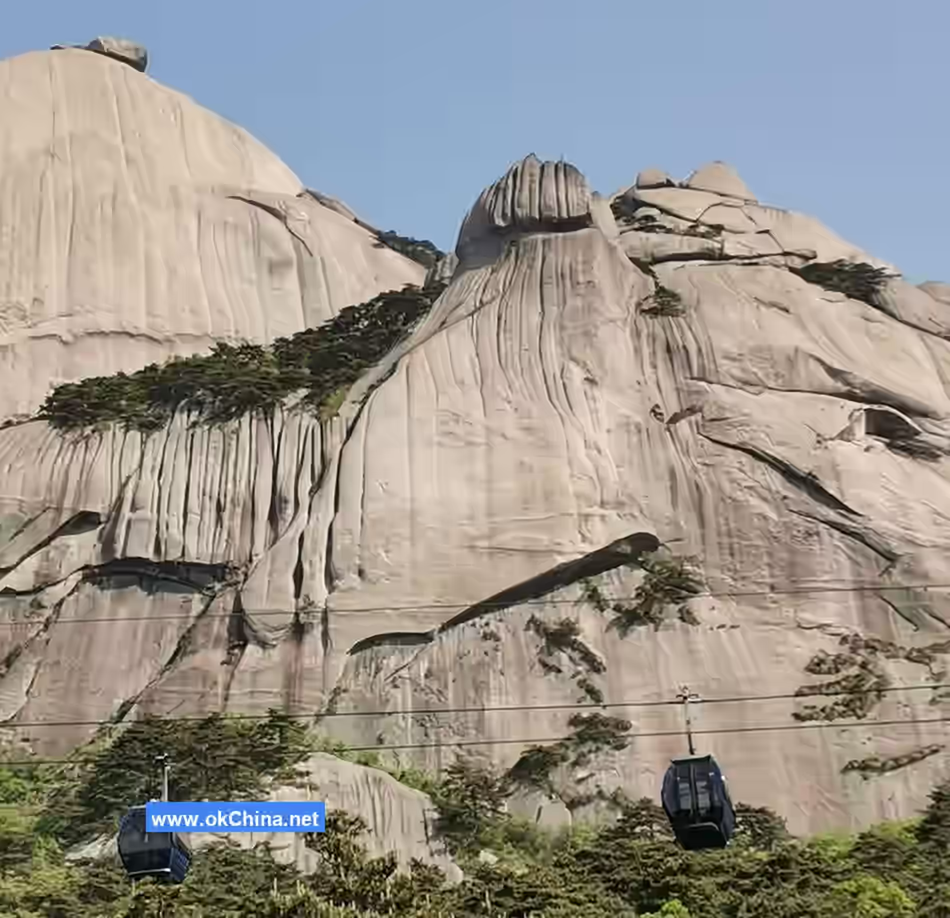
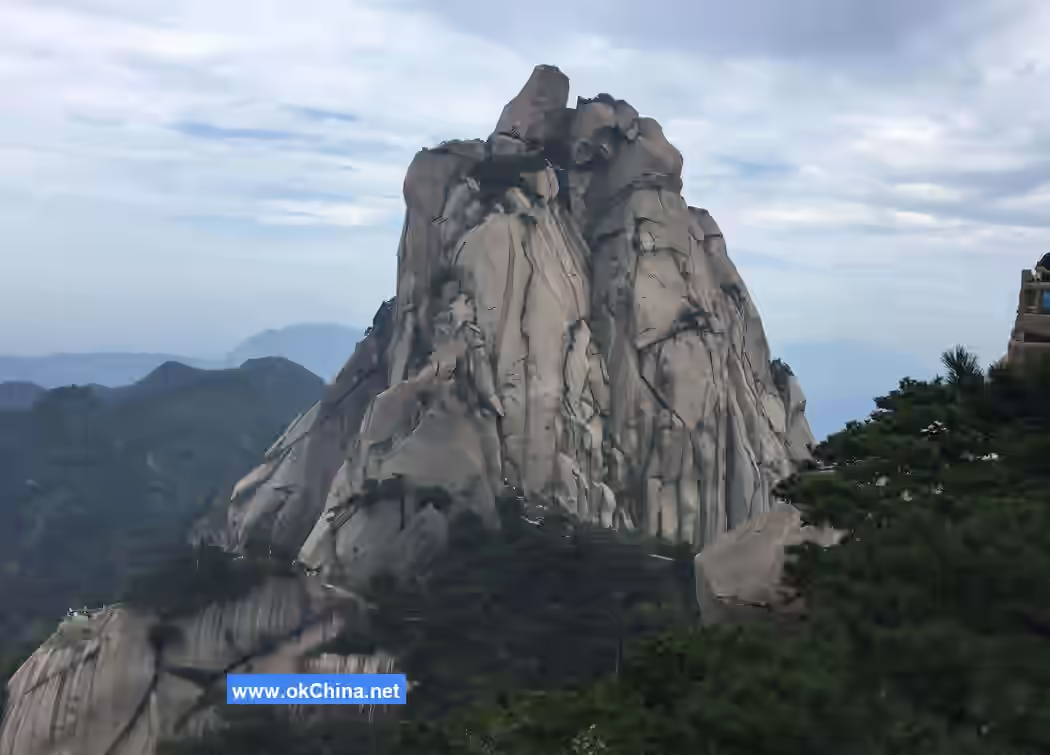
Tianzhu Peak, also known as Sunzi Jian (Bamboo Shoot Tip), stands at 1,488.4 meters above sea level. Hidden deep among myriad valleys and towering above the surrounding mountains, its entire body consists of rugged, bony rock. Qing Dynasty writer Chu Guangqian wrote in "Travel Notes of Wan Mountain": Tianzhu Peak is "sharp at the top and full at the base, jagged on all sides, like a spring bamboo shoot breaking through the soil and shedding its sheath." On the southern cliff face of the peak, there are horizontally inscribed characters reading "Gu Li Qing Xiao" (Standing Alone, Propping up the Sky) and "Zhong Tian Yi Zhu" (A Pillar in the Midst of Heaven), each character about five feet square. "Gu Li Qing Xiao" was written by Li Yunlin, a Qing army commander under Zeng Guofan when he was stationed in Qianshan, and was carved by herbalists He Liangmou and He Liangzuo.
3.2 Yixiantian (A Thread of Sky)
Yixiantian (A Thread of Sky) is located below Tianzhu Peak, where a crack separates a smaller peak from the main peak. Commonly known as Xiao Tianmen (Small Heavenly Gate), it is also called "Yixiantian." The peak is no more than 10 meters high, resembling a newly bloomed flower, hence its name "Hua Feng" (Flower Peak). On the rock face of Tianzhu Peak, there are horizontally inscribed regular script characters "Ding Tian Li Di" (Pillar of Heaven, Foundation of Earth), written in 1940 by Nationalist (Kuomintang) general Liu Yichun.
3.3 Duxian Bridge (Immortal-Crossing Bridge)
Tianchi Peak is the second highest peak of Tianzhu Mountain, slightly higher than Feilai Peak, with an elevation of 1,426 meters. Tianchi Peak is split into three parts. Two stone slabs connect them, forming the "Duxian Bridge."
3.4 Feilai Peak (Peak that Flew Here)
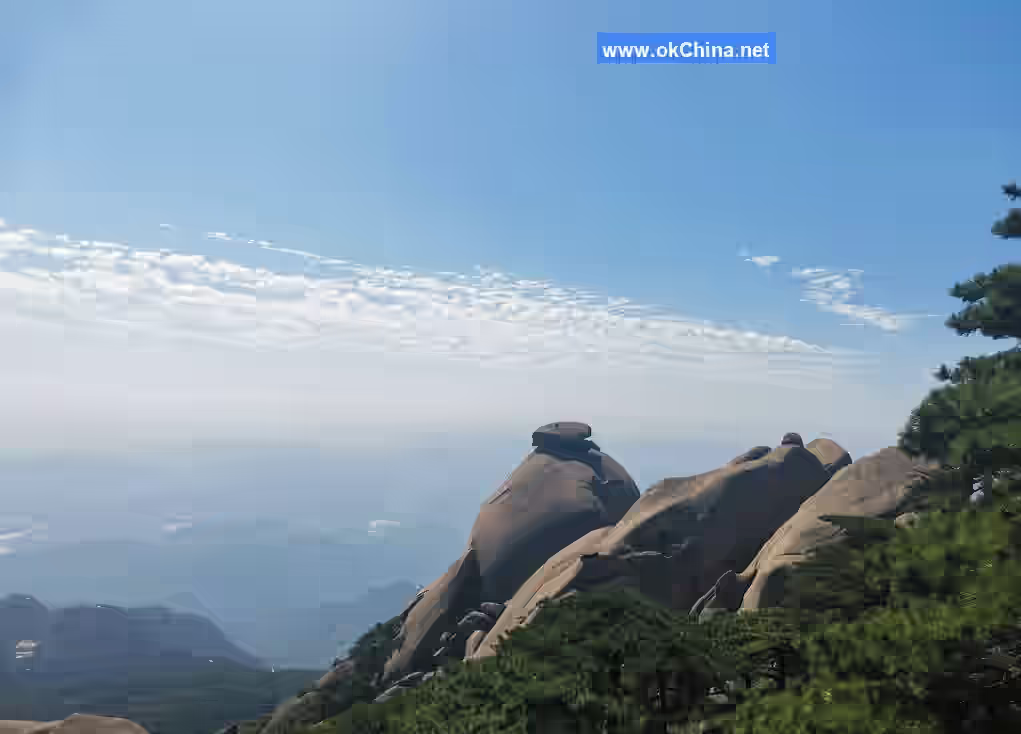
Feilai Peak is the third highest peak of Tianzhu Mountain. At 1,424 meters, the entire peak is composed of a single massive rock. On its summit lies a stone about 10 meters long, over 100 meters in circumference, and over 3 meters high, round like a lid pressing on the peak, as if it had flown from beyond the sky. This stone is called the "Feilai Stone" (Stone that Flew Here), and the peak is named after it.
3.5 Penglai Island
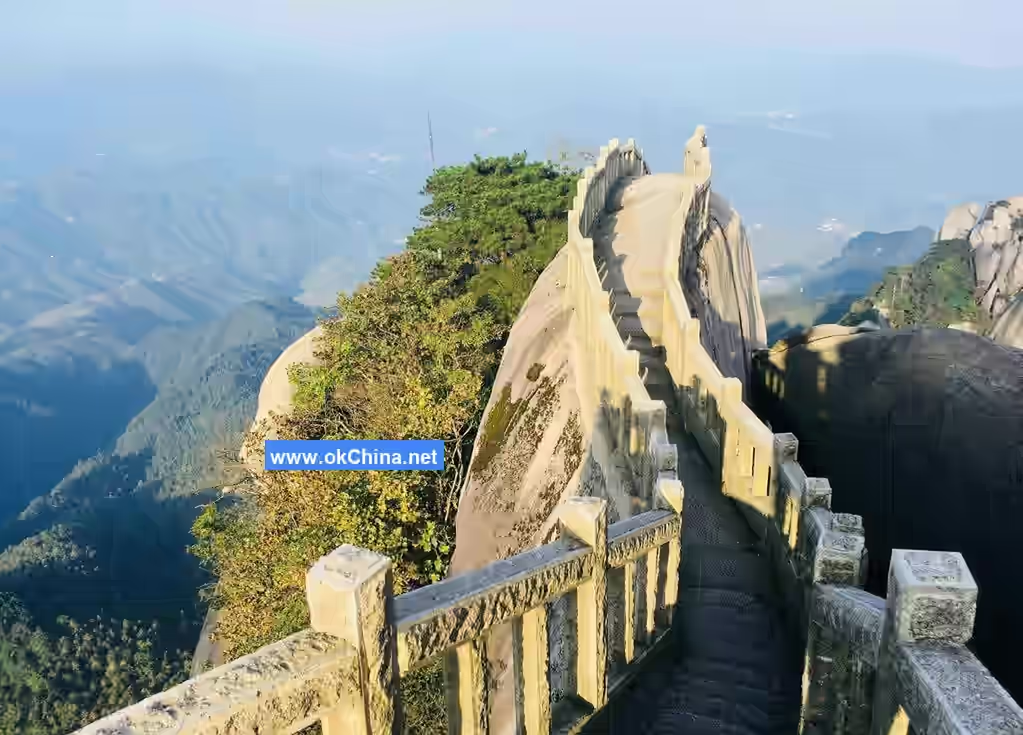
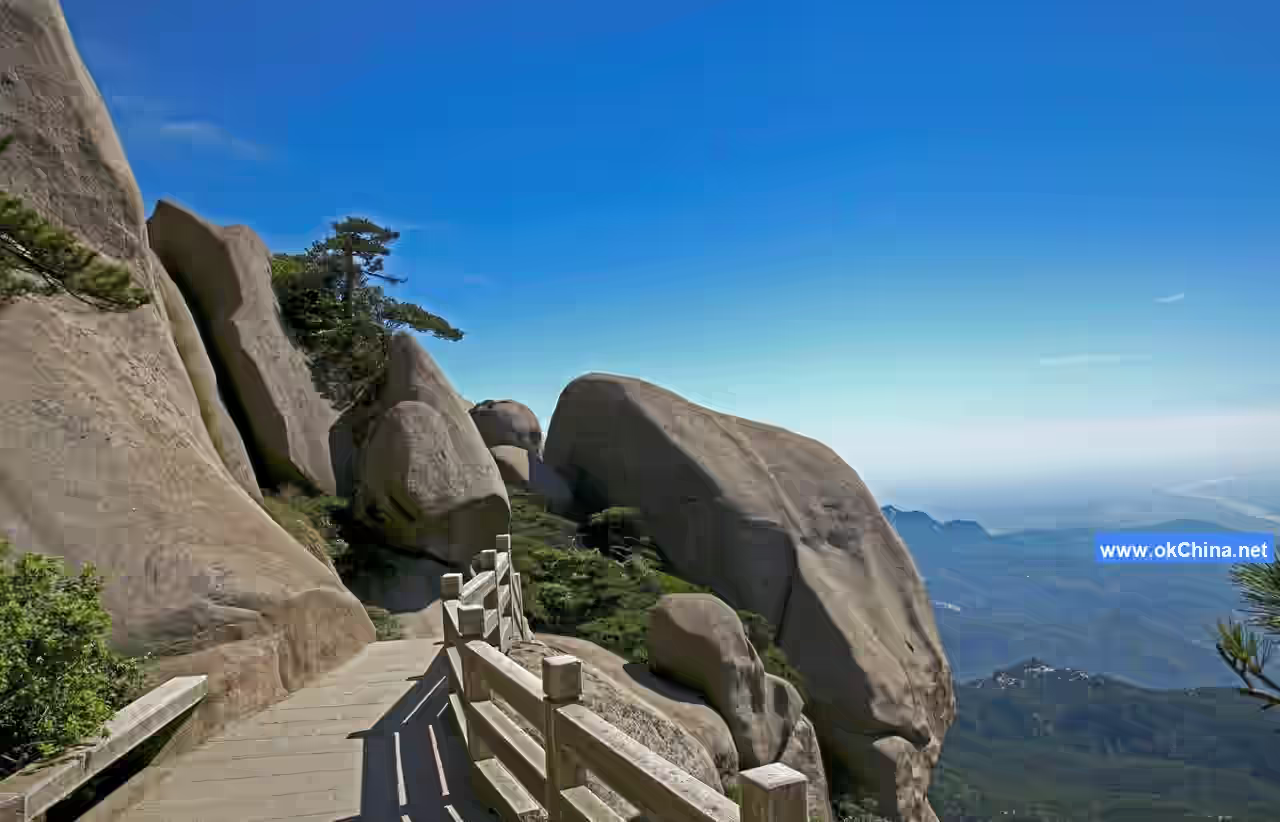
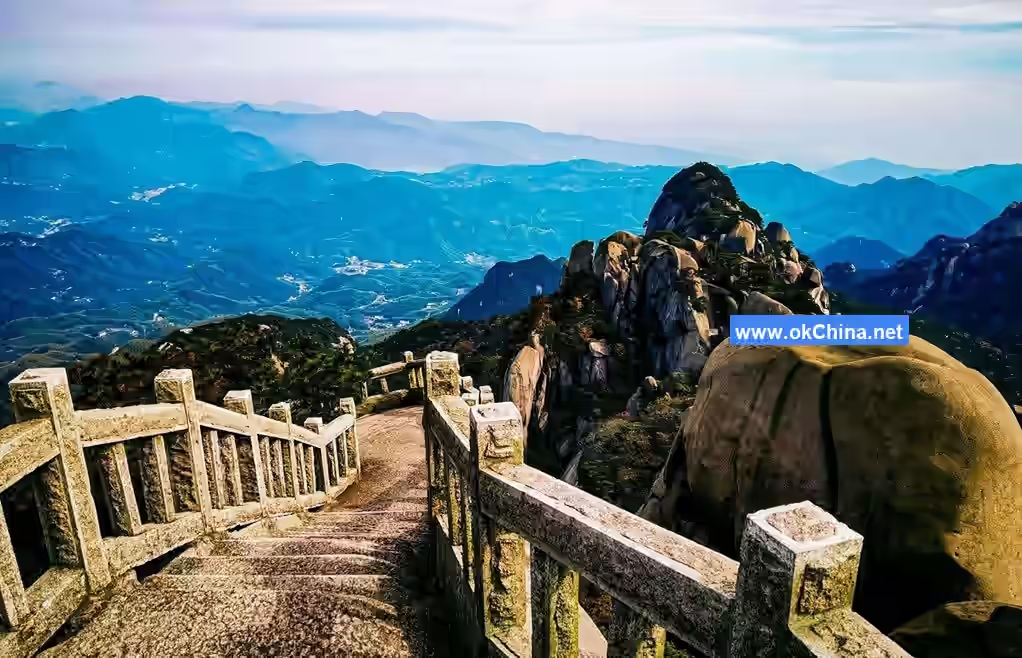
Penglai Island is located to the left of Hua Feng, at an elevation of 1,350 meters, overlooking Tianchi Peak to the south and backed by Tianzhu Peak to the north. Its west, south, and north sides feature steep, sheer cliffs. Extending over a hundred meters to the west is a bottomless abyss. The peak's summit is narrow, long, and extremely perilous, stretching over a hundred meters long but only two to three meters wide. Ancient trees guard the rocks, vines wind around, and traversing it is fraught with danger. Stone steps and guardrails have now been built.
3.6 Foguang Temple (Buddha's Light Temple)
Foguang Temple, originally named Mazhu Temple, has a history of over 1,300 years. During the Tang Dynasty, the eminent monk Mazu Daoyi, a disciple of the Sixth Patriarch Huineng's disciple, traveled to Tianzhu Mountain. Seeing the tall pines and beautiful landscape, he considered it a sacred place for enlightenment (Bodhi) and thus meditated and practiced stillness here for many years.
3.7 Tianzhu Qingxue (Tianzhu Clear Snow)
Tianzhu Qingxue, commonly known as "June Snow," is located on the hill north of Qinglong Stream on Tianzhu Mountain. Ming Dynasty poet Li Kuang praised it in a poem: "Cold resides here in May and June; snow never melts for millennia." The formation of "Tianzhu Clear Snow" is related to the local geology and landform. The "snow mountain" is composed of mixed granite rich in feldspar with relatively low quartz content. The rocks are often damp, experiencing sun during the day and cold at night. The rock layers gradually weather and peel off, slowly loosening into sand, accumulating over time to form the hill.
3.8 Tianzhu Pine
On the cliffs beside Tianchi Peak stands a tall pine tree. This Tianzhu Pine grows on a rock face a thousand meters high, facing Tianzhu Peak and Feilai Peak. It clings to the cliff, not exceeding 5 meters in height or 80 cm in diameter, yet according to surveys, it is over 1,500 years old.
3.9 Mazhu Temple
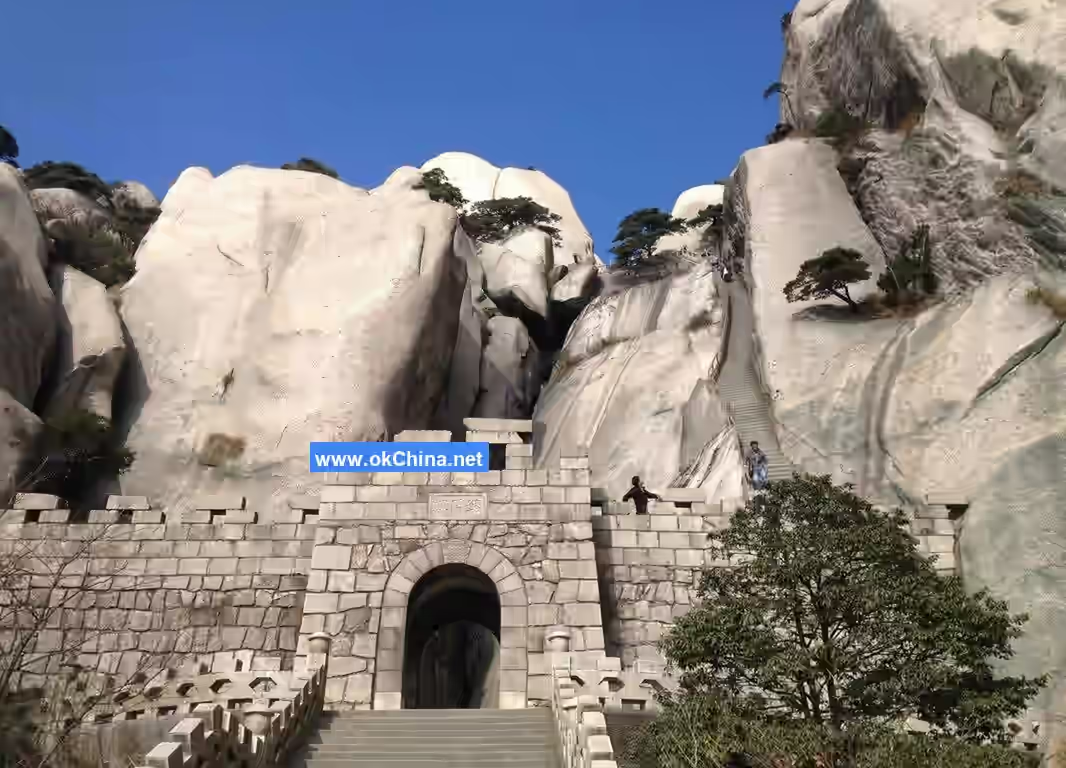
The main attractions of the Mazhu Temple area include Mazhu Temple, Foguang Temple, Thunderbolt Stone, Bajie Chanting Sutras, Heavenly Book Peak, Heavenly Frog Peak, Pig Head Stone, etc. Xiangzi Peak, Screen Peak, and Stone Dragon Peak are arranged in front, while Heavenly Gate Peak, Heavenly Frog Peak, and Jiangdan Peak stand behind. In front of Mazhu Temple is Mazhu Cave, said to be where Taoist Mazu rested and practiced stillness. To the right of the cave is a pillar-like stone, inscribed with the characters "Nan Tian Yi Zhu" (A Pillar of the Southern Sky) by Sichuan warlord Yang Sen of the Kuomintang. Further right is Lotus Cave (also called Danfang), said to be where the Han Dynasty alchemist Zuo Ci practiced alchemy. Nearby is a large stone called "Leida Shi" (Thunder-Struck Stone). Qing Dynasty figure Li Yunlin carved the characters "Hun Yuan Xia Wu" (Primordial Mist and Clouds). South of Mazhu Temple is Xuepu Cliff. Foguang Temple was originally the cave where Tang Dynasty Chan Master Mazu Daoyi practiced and cultivated stillness. During the Five Dynasties period, local villagers built a temple on the site, which became known as Mazhu Temple.
3.10 Cliff Carvings
The "Shangu Liuquan Cliff Carvings" refer to the inscriptions near Sanzu Temple, including the Shangu Liuquan (Mountain Valley Flowing Spring) and Shiniu Gudong (Ancient Stone Ox Cave) areas, with the latter having the most carvings. Along this roughly 300-meter river valley, the eastern cliff face and boulders in the riverbed bear nearly 300 inscriptions from the Tang Zhenyuan period onwards until the late Republican era. Inscriptions by Tang figures like Lü Wei, Li Ao, Li Dexiu; Song figures like Wang Anshi, Huang Tingjian, Li Shizhong, Li Jianzhi, Liu Zheng, Zhao Xigun, Zhang Tongzhi; and Ming figures like Hu Zuanzong and Li Yuanyang are all precious works. Particularly rare are the authentic calligraphy of Tang's Li Ao and Song's Wang Anshi and Huang Tingjian. Legend says the great Northern Song painter Li Gonglin once painted Huang Tingjian sitting on a stone ox here, carved onto the cliff, but unfortunately, it has been stolen. The carvings include poems, prose, titles, and records, in running, regular, clerical, seal, and cursive scripts. This site is both a natural archive for researching over 1,200 years of related history and a natural museum for directly admiring the literary talent and calligraphy of ancient masters.
4. Cultural Resources
4.1 Origin of the Name
In ancient times, because Tianzhu Mountain was hidden among myriad mountains, with one peak towering high, surrounded by countless cliffs and valleys of varying sizes and distances, all seemingly paying homage to it, the mountain was called "Huo Mountain" during the Qin and Han dynasties. The main peak of Tianzhu Mountain stands at 1,489.8 meters, lofty and soaring, piercing the clouds like a pillar propping up the sky, hence the name Tianzhu (Heavenly Pillar). Also, because it is concealed among myriad mountains (note: "Qian" in ancient times meant "hairpin," shaped like a "point," and since Tianzhu Mountain has many pointed peaks, it is also called Qianshan, with alternative names like Danjian and Sunzijian), it shares the name Qianshan (Hidden Mountain) with Wanshan (Myriad Mountains). The name Wanshan is also said to derive from the Han Dynasty's enfeoffment of the Southern Sacred Mountain, hence also called Wansui Mountain (Longevity Mountain). "The county is named after the mountain, and the mountain is named for being hidden" (old "Qianshan City Records"). During the Spring and Autumn period, the Zhou Dynasty established the Wan State here, enfeoffing Lord Wan to govern Wan. Tianzhu Mountain was part of Lord Wan's fief, so the mountain is also called Wan Mountain. To praise Lord Wan's effective and virtuous governance, it is also called Wan Gong Mountain (Lord Wan Mountain). Thus, "Wan" also became the abbreviation for Anhui Province.
4.2 Cultural History
4.2.1 Poetry
"Gazing at Wan Gong Mountain from the River"
Tang Dynasty. Li Bai
Strange peaks emerge from strange clouds; beautiful trees contain beautiful aura.
Serene and peaceful is Wan Gong Mountain, its precipitous beauty satisfies one's heart.
Alone I wander on the vast river, all day bland and tasteless.
But I love this ridge's height; how can I seek its spiritual wonders?
Silently I pledge from afar, my wish to go remains unfulfilled.
Wait until my elixir is complete, then I'll return and settle here.
In the seventh year of the Tianbao era (748 AD), Li Bai left Jinling and traveled up the river. On the river, he viewed Tianzhu Mountain and wrote this poem.
4.2.2 Legend of Baishui Bay
There is a beautiful legend at Baishui Bay at the foot of Tianzhu Mountain: Lady Yu was beautiful and wise; her husband, Yu Lang, garrisoned far away and never returned. Gazing for her husband without sight or sound, she turned into a stone figure. Li Bai went to pay his respects and chanted the poem "Wangfu Shi" (Gazing-Husband Stone): "Resembling an ancient figure's form, veiled in mist with dawn's glow; dew like today's tears, moss like clothes of years ago; sharing regret with the Xiang River maiden, wordless like the Chu king's consort; silent within fragrant haze, as if still waiting for her husband's return." There are many Gazing-Husband Stones in the world, but only Tianzhu Mountain's received praise from the Poet Immortal.#### 4.2.3 Stone Carving Culture From the Ancient Stone Ox Cave to Mazhu Nunnery, from Tiger Head Cliff to the summit of Tianzhu Peak, and from the banks of the Nine-Well River to the South Heavenly Gate, inscriptions by ancient sages and worthies are found everywhere on Tianzhu Mountain. Among them, the cliff inscriptions in the Valley Flowing Spring within the Ancient Stone Ox Cave are designated as a National Key Cultural Relics Protection Unit by the State Council due to their antiquity. On a stone wall approximately 300 meters long, over 300 inscriptions from the Tang, Song, Yuan, Ming, Qing, Republic of China, and modern periods are gathered. These inscriptions vary in form, including poems, lyrics, prose, illustrations, and rhapsodies, and feature all five major script styles: running, cursive, clerical, regular, and seal script. Among them are authentic works by Wang Anshi and Huang Tingjian.
4.2.4 Religious Culture
Tianzhu Mountain encompasses both Buddhist and Taoist religious cultures. Taoists rank it as the 14th of China's 36 sacred mountain grotto-heavens and designate it as the Central Sacred Mountain among the Five Great Guardian Mountains. Since the Eastern Han Dynasty, when the Taoist master Zuo Ci preached here, Taoism took root. During the Liang Dynasty of the Southern Dynasties, the eminent monk Baozhi from Jinling came to spread Buddhist teachings, establishing Tianzhu Mountain as a sacred site for both Buddhism and Taoism. By the Tang and Song dynasties, there were no fewer than a hundred temples and monasteries. Representative Buddhist structures include the Three Ancestors Chan Temple, Foguang Temple, and Taiping Pagoda. The Three Ancestors Temple was listed as one of the 142 key temples in Han Chinese regions by the State Council in 1982. Originally named "Valley Temple" by Emperor Wu of Liang, Xiao Yan, it was later renamed "Three Ancestors Temple" after the Third Patriarch of Chan Buddhism, Sengcan, resided there.
4.2.5 Historical Relics Culture (Ancient Wan Culture)
Within the Tianzhu Mountain Scenic Area lies the "Xuejiagang Cultural Site," dating back over 5,000 years. Located in Wanghe Town, Qianshan County, the site covers an excavated area of over 2,000 square meters and has yielded more than 2,000 cultural relics. These artifacts fall into three main categories: stoneware, pottery, and jade objects, with stone tools predominating as production implements and pottery as daily utensils. Most items date to the Neolithic Age, with a small number of relics from the Shang Dynasty and the Tang and Song dynasties.
4.3 Traces of Famous Visitors
In the fifth year of the Yuanfeng era of the Western Han Dynasty (106 BCE), Emperor Wu of Han, Liu Che, embarked on an imperial southern tour. Starting from Xunyang, he sailed down the Yangtze River, passed through Sheng Tang (modern-day Sheng Tang Bay in Anqing City), entered Wan Kou (modern-day Shankou Town in Huaining County), and then traveled upstream. His imperial procession reached the valley entrance (modern-day Yerenzhai at Tianzhu Mountain), where he ascended to pay homage to Tianzhu Peak, bestowing upon it the title "Southern Sacred Mountain" (Nanyue). For the subsequent 700 years, until Emperor Wen of Sui decreed the southern sacred mountain title be transferred to Mount Heng in Jiangnan, Tianzhu Mountain was referred to as Nanyue. After the title shifted southward, Tianzhu Mountain came to be known as the "Ancient Southern Sacred Mountain."
Due to its uniquely spectacular scenery, Tianzhu Mountain did not fall into obscurity after losing its prestigious title. Additionally, Qianshan City has been a strategically vital military town since the Han Dynasty. From the establishment of Xizhou in the ninth year of the Kaihuang era of the Sui Dynasty (589 CE) until the relocation of the Anqing Prefecture seat eastward during the Southern Song Duanping era, it served continuously as a seat of prefecture, commandery, and superior prefecture for 627 years. Throughout history, eminent officials, renowned figures, and literati such as Li Bai, Bai Juyi, Li Ao, Li Dexiu, Wang Anshi, Su Dongpo, Huang Tingjian, Lu You, Yang Wanli, Li Yuanyang, and Hu Zuanzong were all captivated by the scenic wonders of Tianzhu Mountain. They admired it from afar, climbed its peaks, built retreats to reside in, constructed pavilions for study, composed poems and essays, and carved inscriptions into stone, leaving behind numerous timeless literary works and precious cultural landscapes.
Bai Juyi sang: "A single peak of Tianzhu props up the sun and moon; / A thousand-ren cave gate locks in clouds and thunder." Wang Anshi wrote: "The water, mindless, winds its way; / The mountains, colorful, encircle round. / Exploring depths, no end in sight; / Sitting on the rock, I forget to return."... These poems praise the majestic and magnificent beauty of Tianzhu Mountain. To this day, visitors recite them softly, and a sense of lingering fascination spontaneously arises.
In the seventh year of the Tianbao era of the Tang Dynasty (748 CE), Li Bai crossed the river to western Anhui, partly to immerse himself in the landscape and partly to seek immortality and visit Taoist masters. Gazing from afar at Tianzhu Peak, he wielded his brush to write the poem "Gazing at Wangong Mountain from the River": "Strange peaks emerge from strange clouds; / Graceful trees contain graceful air. / The azure Wangong Mountain, / Steep and sublime, gratifies the heart..." The entire twelve-line poem can be said to contain pearls in every word and emotion in every stroke. Two years later, while visiting Mount Lu, Li Bai also toured Tianzhu Mountain, finally fulfilling his long-held wish to visit.
4.4 Military History Records
Tianzhu Mountain's geographical location has always been a contested strategic point for military strategists. In the late Southern Song Dynasty, militia leader Liu Yuan established a stronghold at Xiguan, repeatedly repelling Yuan forces and persisting in combat for 18 years. Taiping Rebellion general Chen Yucheng led his troops in the Tianzhu Mountain area, engaging in prolonged conflict with Qing forces. During the War of Resistance Against Japan and the Liberation War, Communist-led guerrilla forces were active in the Tianzhu Mountains.
Comments
Post a Comment