Tiantai Mountain Scenic Area, Taizhou City
1. Introduction
The Tiantai Mountain Scenic Area is located at No. 1 Hehe Street, Tiantai County, Taizhou City, Zhejiang Province. It lies at the junction of the four cities of Ningbo, Shaoxing, Jinhua, and Wenzhou. To the southwest, it connects with the Xianxia Ridge, and to the northeast, it faces the Zhoushan Islands from afar. It serves as the watershed between the Cao'e River and the Yong River, featuring numerous cliffs, precipices, and waterfalls.
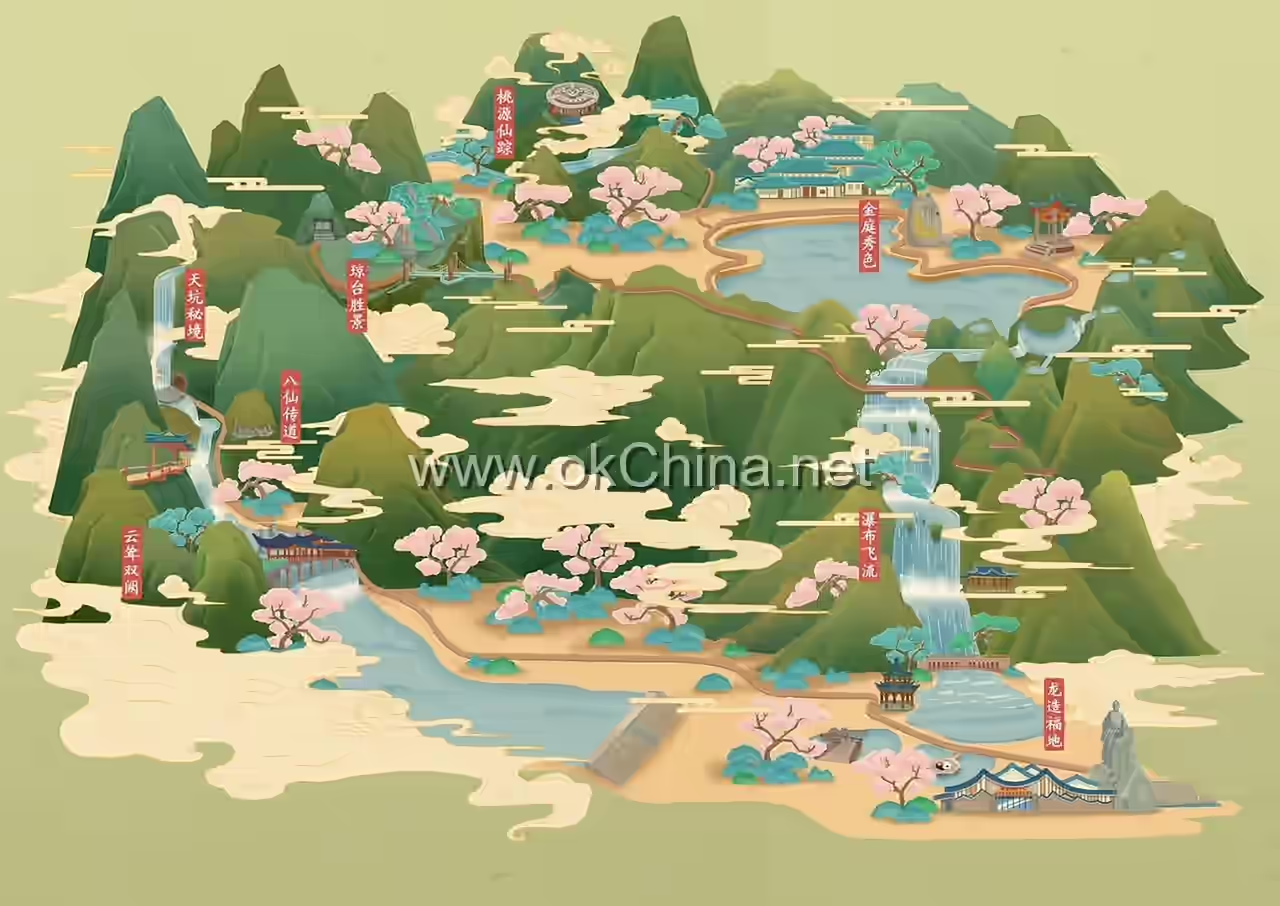
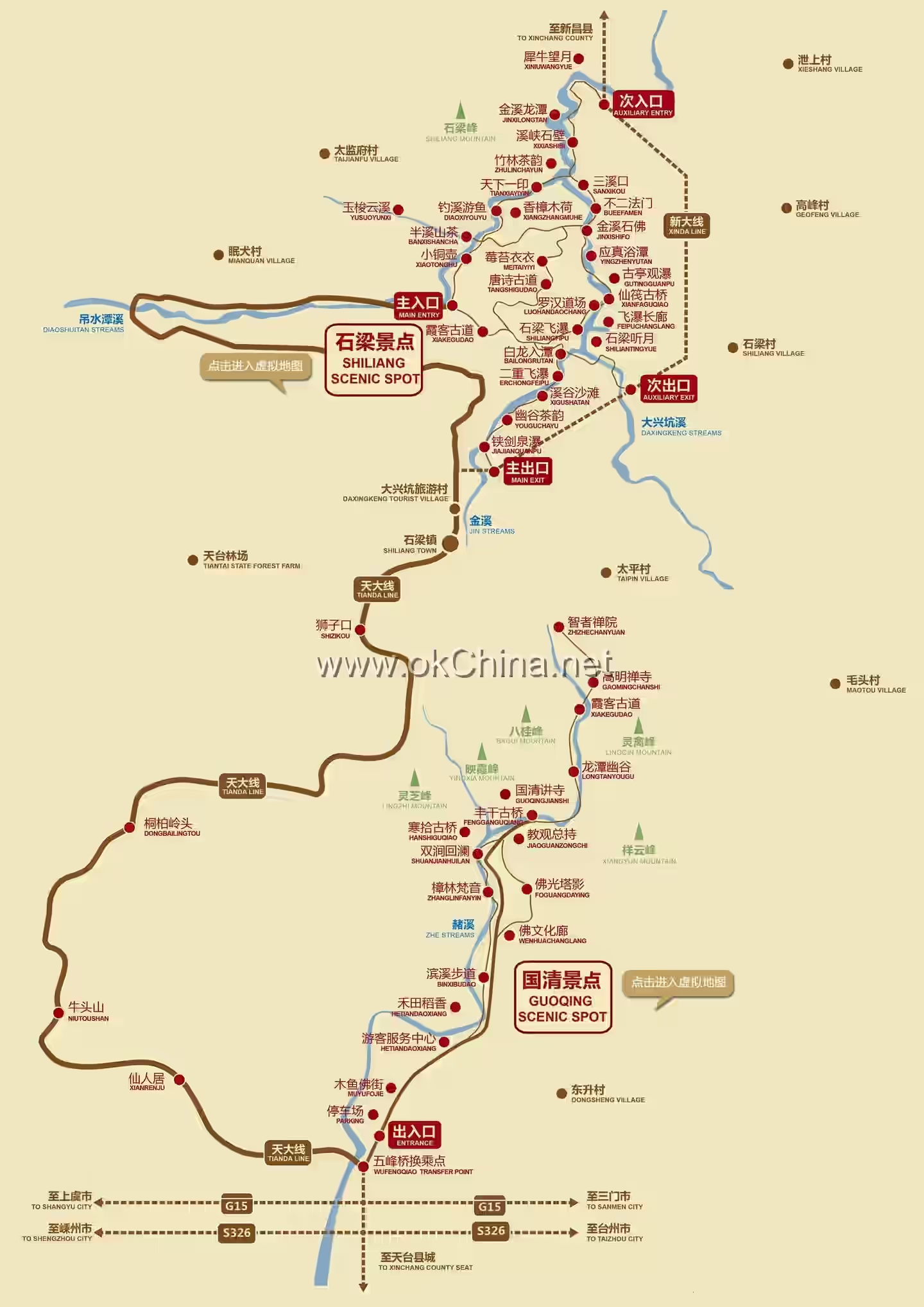
The Tiantai Mountain Scenic Area covers a total area of 187.1 square kilometers. Based on its geographical location and characteristics, the area is divided into 13 scenic zones: Guoqing, Chicheng, Folong, Shiliang-Tonghu, Zhangqiongtai, Huading, Tongkengxi-Wannian Temple, Taoyuan, Kaiyan-Zining, Qingxi, Hanshan Lake, Minghanyan, and Jiuzheshan.
In 1988, the Tiantai Mountain Scenic Area was approved as a National Key Scenic Area by the State Council of the People's Republic of China. In 1992, it was listed as one of the "Top Ten Tourist Destinations in Zhejiang Province." In 2015, it was rated as a National AAAAA Tourist Attraction. In May 2020, Tiantai Mountain was selected for the first batch of the "Zhejiang Cultural Imprints" list.
2. Geographical Environment
2.1 Geographical Location
The Tiantai Mountain Scenic Area is located at No. 1 Hehe Street, Tiantai County, Taizhou City, Zhejiang Province. It lies at the junction of the four cities of Ningbo, Shaoxing, Wenzhou, and Jinhua. To the southwest, it connects with the Xianxia Ridge, and to the northeast, it faces the Zhoushan Islands from afar, serving as the watershed between the Cao'e River and the Yong River.
2.2 Topography and Landforms
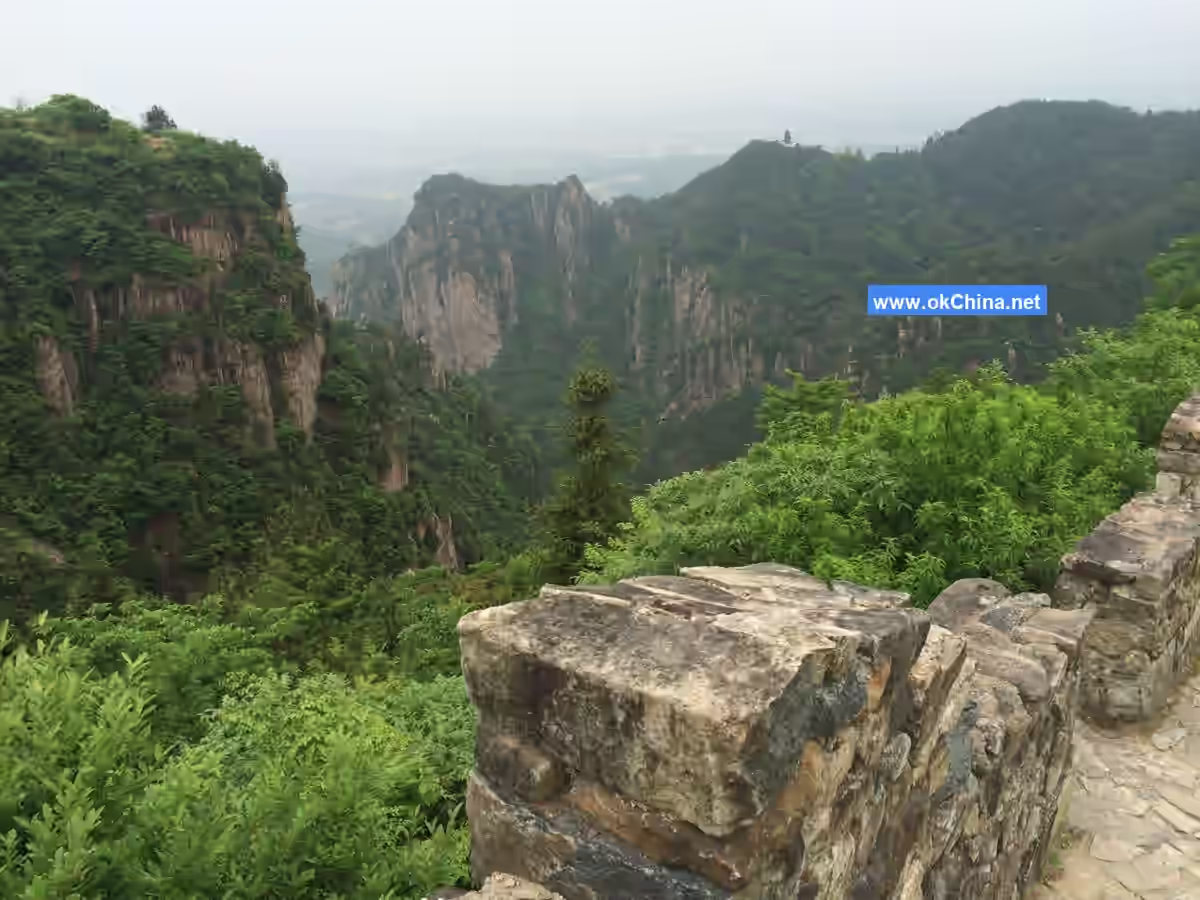
Tiantai Mountain is a branch of the Xianxia Ridge. To the southwest, it merges with the Dapan Mountain, extending northeastward into the sea and forming the Zhoushan Islands. The overall terrain is higher in the northeast, northwest, and southwest, lower in the southeast, with a river valley basin in the center. Tiantai Mountain is composed of granite, featuring numerous cliffs, precipices, and waterfalls.
2.3 Climate Characteristics
The Tiantai Mountain Scenic Area belongs to the subtropical monsoon climate zone, with distinct seasons, abundant precipitation, and sufficient heat. Due to the surrounding mountains and low-lying center, the microregional climate is significant, exhibiting certain basin climate characteristics. The annual average temperature is 17.1°C, and the average annual precipitation is 1351.4 mm. The annual average frost days are 34.4, and the total annual sunshine hours average 1875.3 hours.
2.4 Natural Resources
Tiantai Mountain boasts beautiful landscapes and得天独厚的 natural scenery, with numerous奇石 (strange rocks),幽洞 (secluded caves),飞瀑 (flying waterfalls),清泉 (clear springs),古木 (ancient trees),名花 (famous flowers),珍禽 (rare birds), and异兽 (exotic animals). Its "山水神秀" (divinely beautiful mountains and waters) make it a natural botanical and zoological garden. There are many rare plants and animals, including Sui Dynasty plum trees, Tang Dynasty camphor trees, Song Dynasty cypresses, and Song Dynasty vines, as well as the "elixir of immortality" known as Lindera aggregata and the "life-saving immortal herb" Dendrobium officinale. The云锦杜鹃 (Rhododendron fortunei)广泛分布在千米高山, some over a hundred years old, with ancient trunks as hard as iron, twisted branches like hooks, and lush foliage. The world's oldest, tallest, and largest "King of Azaleas" grows on Huading Peak of Tiantai Mountain at an altitude of 1,200 meters, covering an area of nearly 300 acres. Most of these trees are between 400 and 1,000 years old, with iron-like trunks, hook-like twisted branches, and luxuriant foliage. Additionally, there are rare wild animals such as the large Indian civet, serow, and clouded leopard.
Apart from "铁皮枫斛" (Dendrobium officinale), Tiantai Mountain is also renowned for the "elixir of immortality" Lindera aggregata, as well as "黄精" (Polygonatum sibiricum), "笋干片" (dried bamboo shoot slices), and "豆腐皮" (tofu skin). Tiantai Mountain云雾茶 (cloud mist tea), Tiantai Mountain蜜桔 (honey tangerines), and小红毛花生 (small red-haired peanuts) have long enjoyed a high reputation.
3. Main Attractions
3.1 Overview
The Tiantai Mountain Scenic Area is divided into 13 scenic zones: Guoqing, Chicheng, Folong, Shiliang-Tonghu, Huading, Zhangqiongtai, Tongkengxi-Wannian Temple, Taoyuan, Qingxi, Kaiyan-Zining, Hanshan Lake, Minghanyan, and Jiuzheshan.
3.2 Guoqing Temple
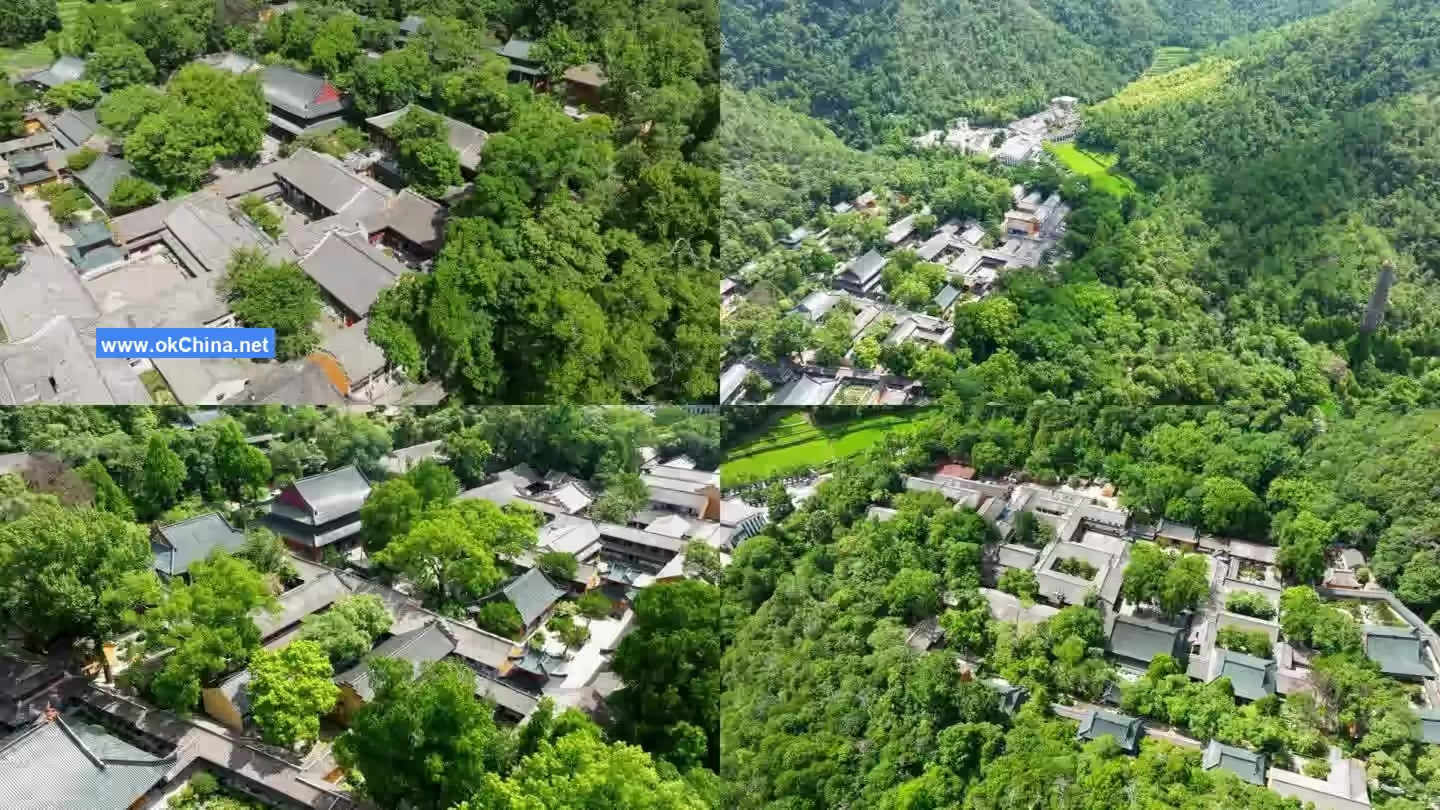
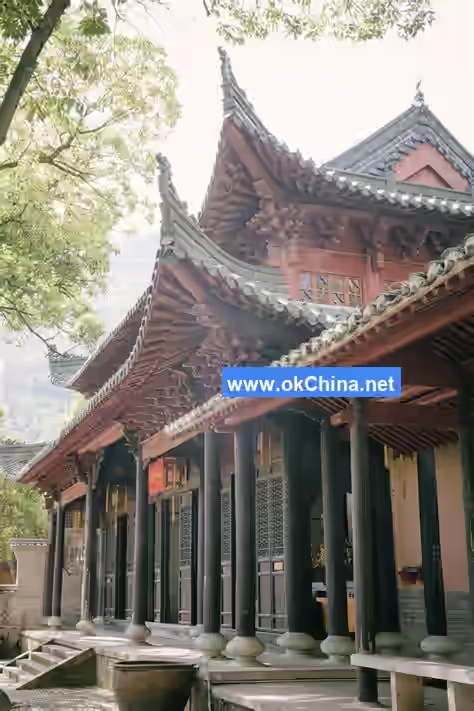
Guoqing Temple was first built during the Sui Dynasty and renovated during the Qing Dynasty's Yongzheng reign. The entire temple covers an area of 73,000 square meters, divided into five longitudinal axes, forming an ancient architectural complex with over 20,000 square meters, more than 800 rooms, complete halls,严谨的建筑, and宏伟的气势. It is now listed as a National Key Cultural Relics Protection Unit.
Guoqing Temple is nestled in a "世外桃源" (land of idyllic beauty) surrounded by mountains and embraced by five peaks. The environment is tranquil and beautiful, with ancient trees reaching for the sky and绿树成荫 (shady green trees). In front of the temple, there is a照壁拱桥 (screen wall and arch bridge) with碧水长流 (clear water flowing endlessly). The ancient Sui Dynasty pagoda still stands tall on the hillside after a thousand years. The temple halls are magnificent, with wonders everywhere, resembling a天然画图 (natural painting).
Guoqing Temple is an ancient temple with极其深厚的文化积淀. During the Chen and Sui dynasties, Master Zhiyi (538–597 AD) founded the Tiantai School, the first Buddhist sect in Chinese Buddhist history, at Tiantai Mountain. During the Tang Dynasty's Zhenyuan period, the Japanese monk Saichō came to Guoqing Temple to seek the Dharma. After returning to Japan, he founded the Japanese Tendai school on Mount Hiei. In the 11th century, the Korean monk Uicheon came to Guoqing Temple to seek the Dharma and introduced this school to Korea. Thus, Guoqing Temple became the ancestral temple of the Japanese and Korean Tiantai Buddhist schools. The "Sui Mei" (Sui Dynasty plum tree) planted by Master Zhang'an in the year the temple was founded is already over 1,400 years old.
Guoqing Temple is a treasure trove of cultural relics and historical sites, preserving a large number of artifacts, including gold and silverware, bronze castings, and silk textiles bestowed by历代御赐 (emperors throughout history), as well as stone inscriptions, sutra manuscripts, calligraphy and paintings, wood carvings, jade ornaments, and Buddha statues, along with precious gifts from cultural exchanges between China and foreign countries. Among them are the贝叶经 (palm-leaf manuscript) relic of Master Zhiyi, identified by Chen Yinke as the ancient Indian Sanskrit play "Shakuntala"; the seven方菩萨像线画碑刻 (line-engraved stele of Bodhisattva images) taken from the Sui pagoda; the磅礴飞动的 (powerful and dynamic) "独笔鹅字" (single-stroke goose character) stele by Wang Xizhi in the temple; the cliff inscriptions behind the temple, such as "大中国清之寺" by Liu Gongquan of the Tang Dynasty, the寒山子诗 (poem of Hanshanzi) by Huang Tingjian of the Song Dynasty, "秀岩" by Mi Fu, and "枕石" by Zhu Xi; the元代十八罗汉楠木像 (18 Arhat statues made of nanmu wood from the Yuan Dynasty); and the明清铜佛像 (bronze Buddha statues from the Ming and Qing dynasties). These are all rare artistic treasures and witnesses of the "佛国" (Buddha land). There is also the "一行到此水西流" (Yixing arrived here, the water flows west) stele commemorating the Tang Dynasty astronomer monk Yixing, who came to Guoqing Temple to study mathematics for compiling the "Dayan Calendar," as well as the衣冠冢 (cenotaph) of Master Yixing.
3.3 Shiliang (Stone Beam)
Shiliang is the essence of the "Tang Poetry Road" in eastern Zhejiang. Famous poets such as Li Bai and Meng Haoran marveled at this奇景 (wonderful scenery) and left immortal poems. Walking upstream along the溪 (stream), one encounters滴翠 (emerald-green) mountains,古木参天 (ancient trees reaching the sky),遍布的怪石 (scattered strange rocks), and突兀的奇峰 (abrupt and peculiar peaks). It is an绝佳胜地 (excellent scenic spot) where the view changes with every step, and everything one sees becomes a scene. The翠谷 (emerald valley) is over 1,800 meters long, with famous sights such as "犀牛望月" (Rhinoceros Gazing at the Moon), "老僧人定" (Old Monk in Meditation), "千年睡狮" (Millennium Sleeping Lion), "万年龟象" (Ten-Thousand-Year Turtle Elephant),原始木荷林 (primitive Schima superba forest), and "应真沐浴潭" (Arhats' Bathing Pool), among others.
The Tiantai Shiliang is a "花岗岩天生桥" (granite natural bridge). A "natural bridge" is a bridge-like landform connected to the ground at both ends but suspended in the middle, most commonly found in limestone and sandstone. According to field investigations by academician Wang Sijing of the Chinese Academy of Engineering and researcher Yang Zhifa of the Institute of Geology and Geophysics, Chinese Academy of Sciences, Shiliang is a masterpiece of nature resulting from the "coincidence" of six unique geological and hydrological conditions. Simply put, internally, the rock mass here contains a system of纵向和横向的 "两陡一缓" (vertical and horizontal "two steep, one gentle") cracks. Externally, the "梯级式的瀑布" (cascading waterfalls) provide sufficient hydraulic force for "冲蚀成梁" (erosion to form the beam).
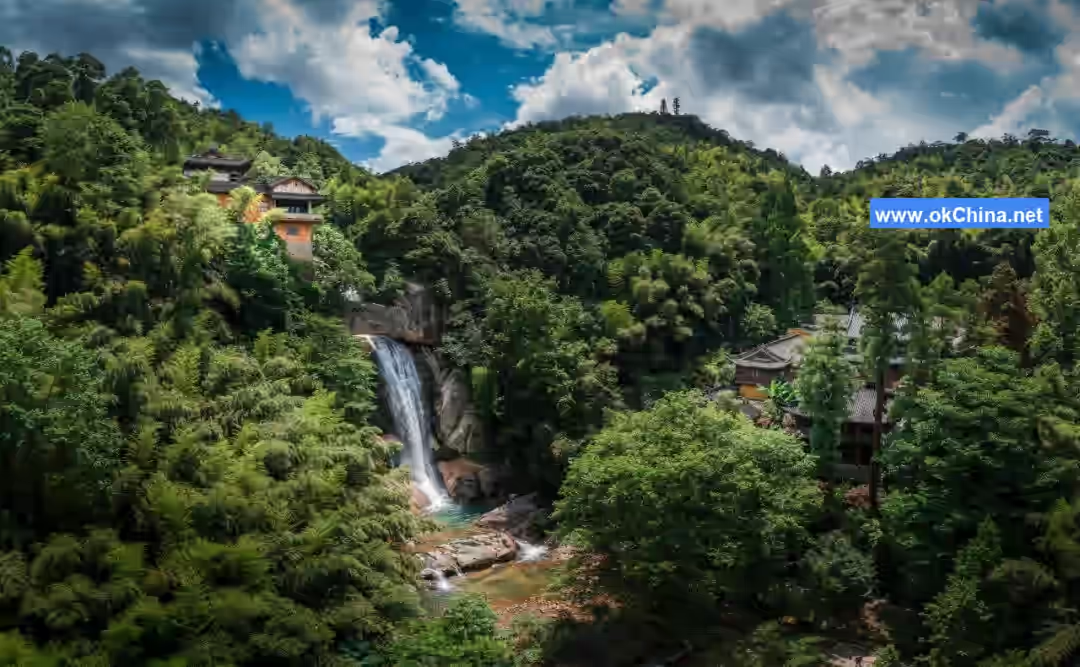
The Shiliang Flying Waterfall is a major奇观 (wonder) within the scenic area. The beam is about 7 meters long, with a surface width of less than a foot, spanning the cliffs of two mountains. The "flying waterfall" passes through the beam after three折 (bends), then cascades down from a 40-meter-high悬崖 (cliff), resembling collapsing white frost and snow, with a轰然乍响的声势 (sudden roaring sound) like thunder. According to records, Xu Xiake, the Ming Dynasty geographer who visited Tiantai three times, once walked across the胆颤心惊的 (heart-stopping) Shiliang Bridge. The entrance to Shiliang Bridge is now closed and cannot be crossed; its惊险的模样 (thrilling appearance) can only be imagined. Next to Shiliang is Zhongfangguang Temple, within which is the昙花亭 (Epiphyllum Pavilion), originally built by Jia Sidao, the Southern Song Dynasty prime minister. To the left at the bottom of the waterfall is Xiafangguang Temple, nestled among茂林修竹 (dense forests and tall bamboo). It is said to be the place where the五百罗汉应真 (Five Hundred Arhats manifested). The temple now houses wooden statues of the Five Hundred Arhats. There are dozens of摩崖题刻 (cliff inscriptions) above and below Shiliang, including those by famous figures such as Mi Fu and Ding Darong of the Song Dynasty, Gan Yu of the Ming Dynasty, and Kang Youwei of modern times, with inscriptions like "第一奇观" (The First Wonder), "盖竹洞天" (Gaizhu Cave Heaven), and "栖真金界" (Abode of Truth, Golden Realm). The inscriptions feature various script styles, including regular, cursive, clerical, and seal scripts, presenting a洋洋大观 (magnificent spectacle). The Shiliang Flying Waterfall scenic area was a primary filming location for China's first martial arts film "Shaolin Temple," as well as many other影视片 (films and TV series) such as "Shaolin Lay Disciples" and "The Legend of the Condor Heroes."
3.4 Tiantai Mountain Grand Waterfall
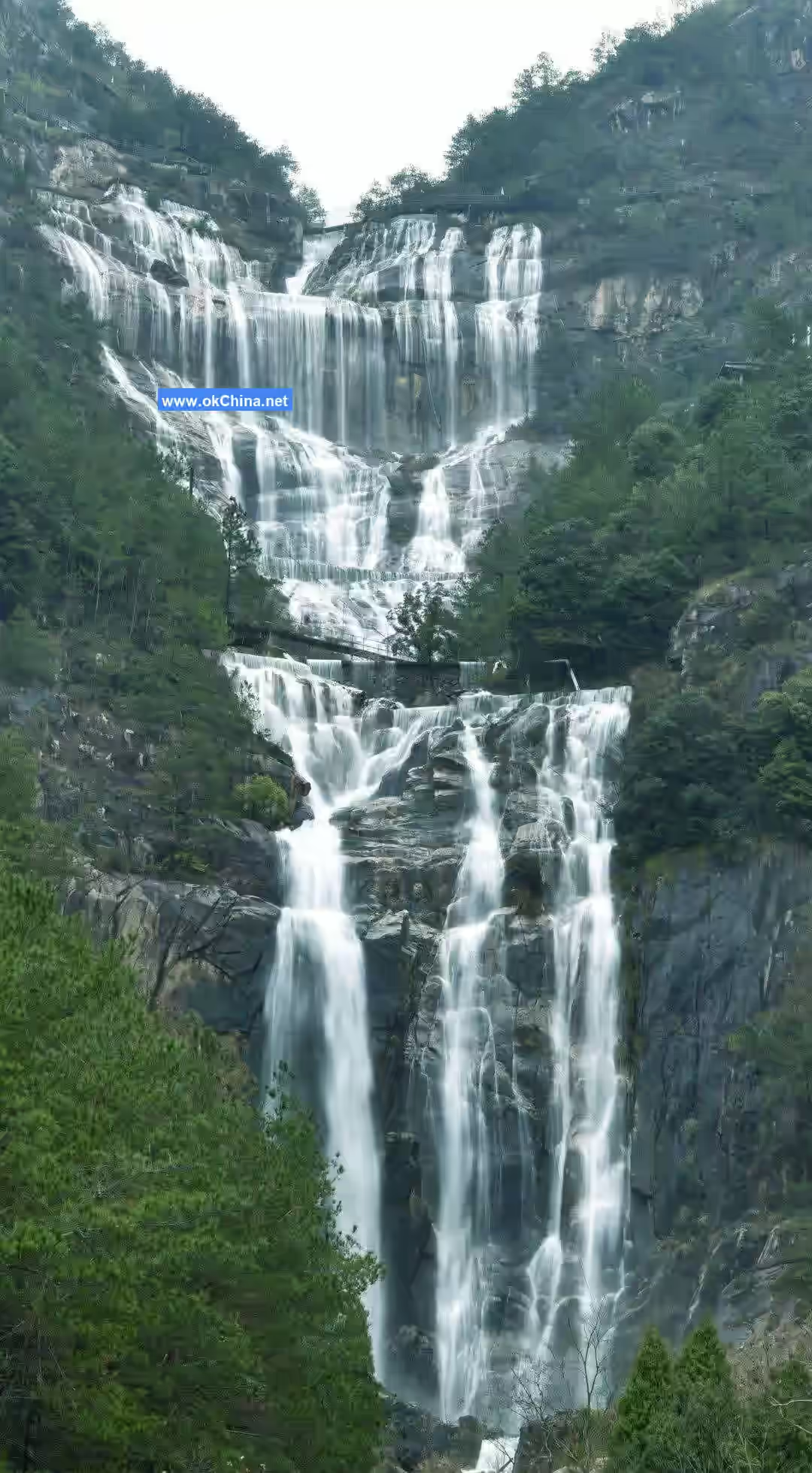
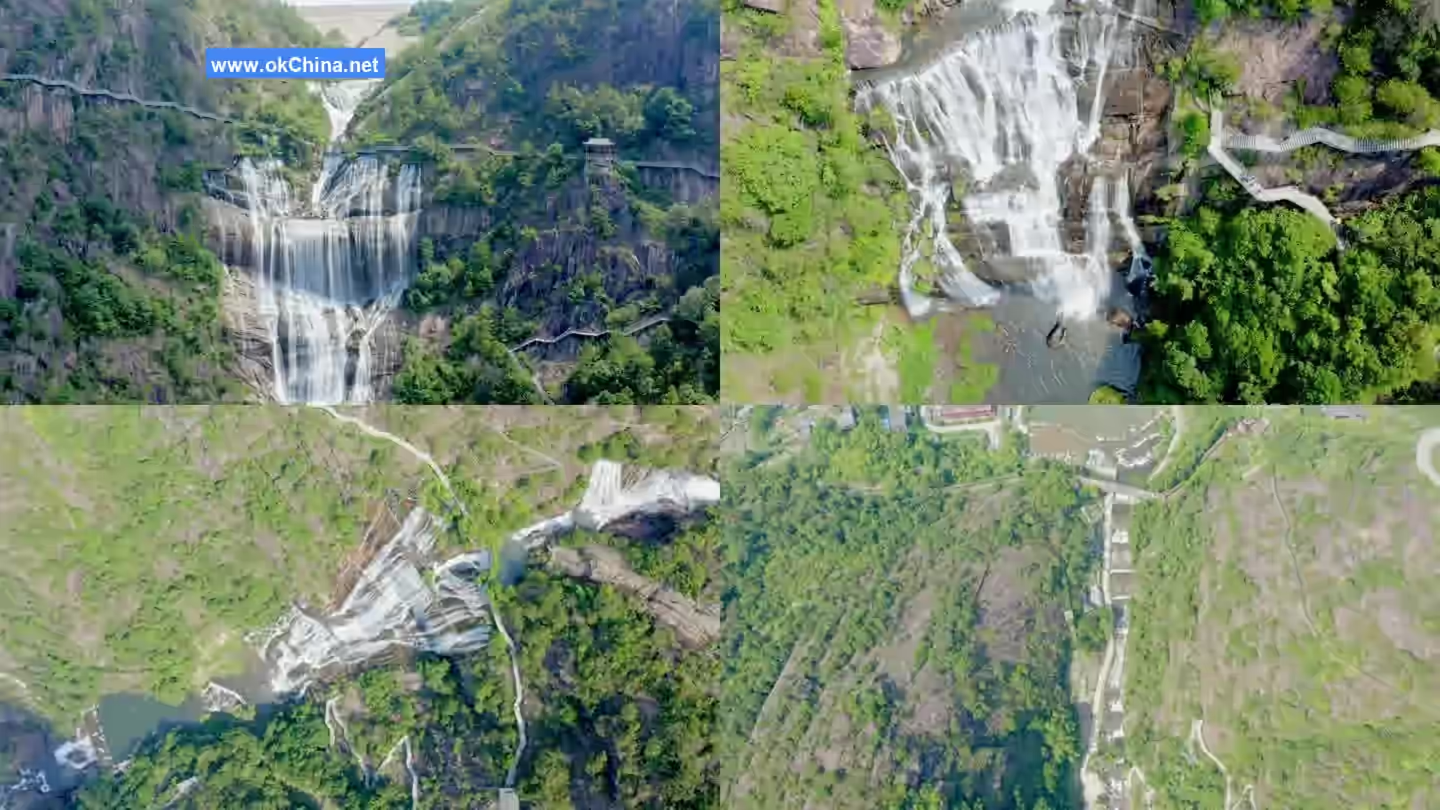
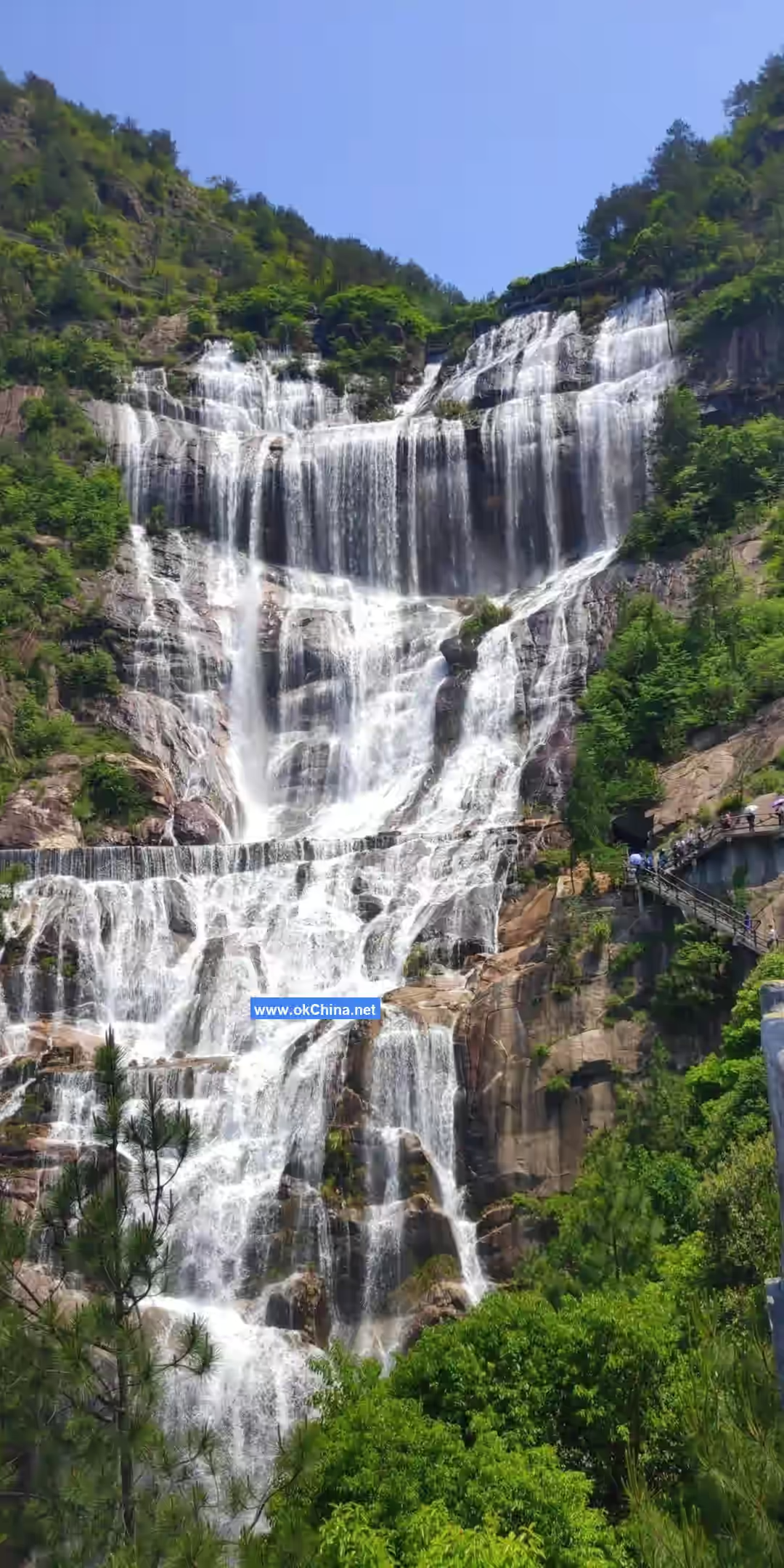
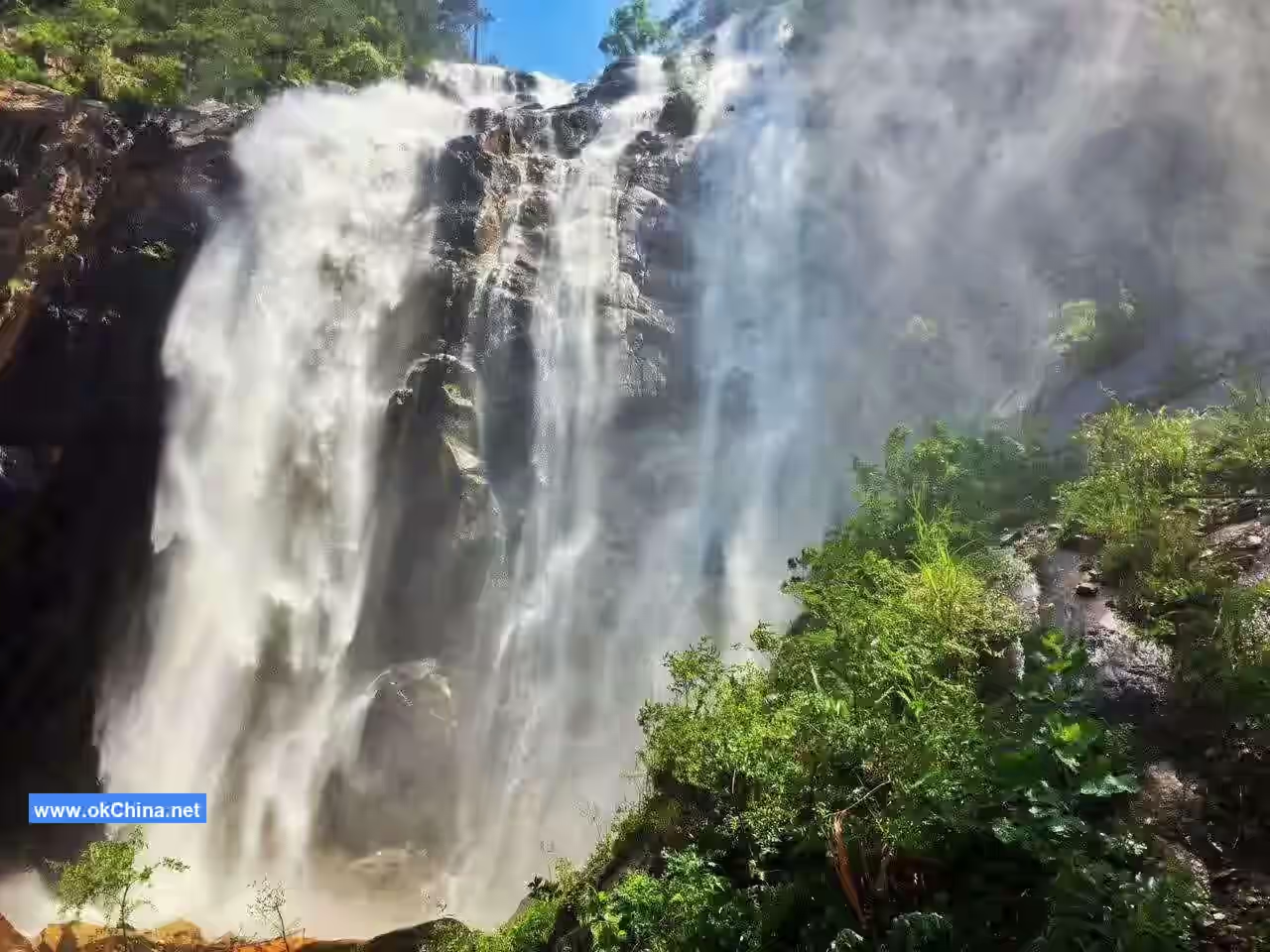
The Tiantai Mountain Grand Waterfall, originally known as Tongbai Waterfall or Sanjing Waterfall, is 325 meters high and up to 90 meters wide at its broadest,堪称中华第一高瀑 (deserving to be called China's tallest waterfall). The Tiantai Mountain Grand Waterfall has been famous since ancient times. The great Eastern Jin writer Sun Chuo, in his "游天台山赋" (Rhapsody on Roaming Tiantai Mountain), listed it alongside Chicheng Mountain as a landmark景观 (landscape) of Tiantai. The development and construction of the Tiantai Mountain Grand Waterfall scenic area is a标志性工程 (landmark project) for building Tiantai into a famous and beautiful county, and点睛之笔 (the finishing touch) for the construction of the Poetry Road Cultural Belt.
On December 31, 2020, the Tiantai Mountain Grand Waterfall was rated as a National 4A Tourist Attraction by the Zhejiang Provincial Tourist Area (Site) Quality等级评定委员会 (Rating Committee).
3.5 Seven Buddha Pagodas
The seven small pagodas enshrine the Seven Buddhas of the Past and are commonly called the Seven Buddha Pagodas. The names of the Seven Buddhas of the Past are inscribed on the pagoda surfaces. The famous Japanese "Kunisaki Pagoda" was modeled after the Seven Buddha Pagodas of Guoqing Temple. Above the Seven Buddha Pagodas is a square tombstone, which is the衣冠冢 (cenotaph) of Tang Dynasty monk Yixing.
3.6 Guanxia Pavilion (Cloud-Viewing Pavilion)
Guanxia Pavilion faces Chicheng Mountain from afar. It is a宋代楼阁式建筑 (Song Dynasty pavilion-style structure) and gets its name from its distant view of one of the八大景 (Eight Great Scenes) of Tiantai, "赤城栖霞" (Rosy Clouds Nesting on Chicheng). Guanxia Pavilion is 32 meters high, with a four-tiered台座 (platform base), red pillars, gray tiles, interlocking斗拱 (brackets), and彩绘装饰 (colorful painted decorations). Climbing Guanxia Pavilion offers a鸟瞰 (bird's-eye view) of the ancient city of Tiantai, a distant view of the top of the Sui Dynasty pagoda at Guoqing Temple, and the风景 (scenery) of "赤城栖霞."### 3.7 Zuixian Tower Zuixian Tower is a relatively tall structure within Longxi Garden, echoing the Guanxia Pavilion. Its top features a gourd, which was the vessel used by Jigong for holding wine. Jigong was fond of drinking wine and composing poetry. As the saying goes, "Wine and meat pass through the intestines, but the Buddha remains in the heart." Hence, it was named Zuixian Tower (Drunken Immortal Tower). It is now converted into the Three Saints Hall.
4. History and Culture
4.1 Historical Development
In the 3rd century AD, Buddhist and Taoist cultures began to take root and develop on Tiantai Mountain. During the Han and Jin dynasties, eminent Taoist Ge Xuan and renowned monk Tan You successively came to Tiantai Mountain to establish hermitages and open the mountain for practice. By the Southern Chen dynasty, Zhiyi founded the Chinese Buddhist Tiantai School. During the Tang dynasty, Sima Chengzhen propagated the Zhengyi teachings and established the Tiantai Immortal School. In the Five Dynasties period, Deshao promoted Chan Buddhism. By the Northern Song dynasty, the local scholar Zhang Boduan founded the Southern School. Tongbai, Chicheng, Lingxu, Tianmu, and Sima Hui Mountain became sacred sites and blessed lands.
In the second year of the Taijian era of the Southern Chen dynasty (570 AD), the eminent Buddhist monk Zhiyi of the Southern Liang dynasty built a temple on Tiantai Mountain, establishing the famous Buddhist Tiantai School.
In the first year of the Daye era of the Sui dynasty (605 AD), Emperor Yang of Sui decreed the construction of Guoqing Temple, which was renovated during the Yongzheng reign of the Qing dynasty. It is one of China's well-preserved famous temples.
From the fourth year of the Xianheng era to the fifteenth year of the Kaiyuan era of the Tang dynasty (673–727 AD), the Tang dynasty astronomer and monk Yixing built a pagoda.
In the eighteenth year of the Kaihuang era of the Sui dynasty (598 AD), the construction of Guoqing Temple began. Initially named Tiantai Temple, it was later renamed Guoqing Temple,寓意 "If the temple is completed, the country will be at peace." During the Southern Song dynasty, it was listed as one of the Ten Great Temples of Jiangnan.
In the twelfth year of the Yongzheng era of the Qing dynasty (1734 AD), Guoqing Temple was renovated by imperial decree.
4.2 Religious Culture
Tiantai Mountain is the birthplace of the Tiantai School, the first Buddhist sect originated in China, and also an important site for the propagation of Chan Buddhism. During the Chiwu era of the Wu Kingdom in the Three Kingdoms period (238–251 AD), a Chan master came here to build a thatched hut for ascetic practice, marking the beginning of Buddhism's spread on Tiantai Mountain. From the Jin and Southern and Northern Dynasties to the Sui dynasty, Buddhism experienced its initial flourishing period. Particularly around the Chen and Sui dynasties, the eminent monk Zhiyi entered Tiantai Mountain, founded the Lotus Sutra School (Fahua Zong), and established 12 practice sites, greatly spreading Buddhism with profound influence. During the Tang dynasty, Chan Buddhism developed significantly on Tiantai Mountain. The Five Dynasties and Ten Kingdoms period and the early Northern Song dynasty marked the peak of Buddhism on Tiantai Mountain, primarily due to the relative stability of the Wuyue region and the patronage of several generations of the Qian royal family who revered monks and Buddhism. After the Ming and Qing dynasties, Buddhism on Tiantai Mountain entered a period of stagnation and decline, with the construction and renovation of temples significantly reduced compared to previous eras.
According to statistics, from the first year of Chiwu in the Three Kingdoms period (238 AD) to the Republican era, over approximately 1700 years, a total of 114 Buddhist temples, monasteries, nunneries, halls, and pavilions were built. The earliest established temples include Zifu Yuan, Cuiping An, and Huiluan An. Zifu Yuan, located on the eastern foothills of Tiantai Mountain, was originally named "Qinghua" and built in the second year of Chiwu (239 AD). It was renamed Xinghua in the third year of the Zhiping era of the Song dynasty (1066 AD) and received its current name around the beginning of the Longxing era (1163 AD). Cuiping Temple, located about 45 li southwest of Tiantai County at the foot of Tiantai Mountain, was built during the Chiwu era. Named Cuiping An due to the mountain resembling a screen, it was renamed Jing'an Yuan in the third year of the Zhiping era of the Song dynasty (1066 AD) and later Cuiping Temple during the Ming dynasty. Huiluan An, built in the second year of Chiwu, was renamed Xingjiao Yuan and Xingjiao Temple during the Song dynasty. Existing major Buddhist temples include Guoqing Temple, Zhenjue Temple, Huading Temple, Gaoming Temple, Fangguang Temple, etc.
4.2.1 Buddhist Sacred Sites
Guoqing Temple, located at the northern foothills of Tiantai Mountain, about 3 kilometers north of Tiantai County, is the birthplace and ancestral temple of the Tiantai School of Chinese Buddhism. Originally the meditation site of Master Zhiyi, the de facto founder of the Tiantai School, it was built in the eighteenth year of the Kaihuang era of the Sui dynasty (598 AD) by Prince Yang Guang of Jin, fulfilling Zhiyi's wish. Initially named Tiantai Mountain Temple, it was granted the name Guoqing Temple in the first year of the Daye era of the Sui dynasty (605 AD). It was destroyed by war during the Huichang era of the Tang dynasty and rebuilt in the fifth year of the Dazhong era (851 AD), with Liu Gongquan inscribing the plaque "Great Middle Kingdom Guoqing Temple." In the second year of the Jingde era of the Song dynasty (1005 AD), it was renamed "Jingde Guoqing Temple." In the fourth year of the Jianyan era (1130 AD), an imperial decree changed it from a teaching temple to a Chan temple. The temple was repeatedly destroyed and rebuilt thereafter. The existing structures date from the twelfth year of the Yongzheng era of the Qing dynasty (1734 AD).
The temple complex is vast, covering 19,600 square meters, with 14 main halls and over 600 rooms. Together with Qixia Temple in Nanjing, Lingyan Temple in Shandong, and Yuquan Temple in Hubei, it is known as one of the Four Great Monasteries of China. The main buildings are distributed along three axes. On the central axis, there are successively the Maitreya Hall, Yuhua Hall, and the Grand Hall (Mahavira Hall). Flanking the front of the Yuhua Hall are the Bell Tower and Drum Tower. Inside the Grand Hall sits a majestic bronze statue of Sakyamuni, 6.8 meters high and weighing 13 tons, cast during the Ming dynasty. On both sides are statues of the Eighteen Arhats, carved from nanmu wood during the Yuan dynasty. The western axis features the Anyang Hall, Guanyin Hall, Cultural Relics Room, and Miaofa Hall. The Miaofa Hall hosts lectures on Tiantai doctrines, where monks expound scriptures. The eastern axis includes the Dining Hall (Zhai Tang), Abbot's Quarters (Fangzhang Lou), and Yingta Tower. Additionally, there are structures like Xiuzhu Pavilion, Chan Hall, and Jingguan Hall.
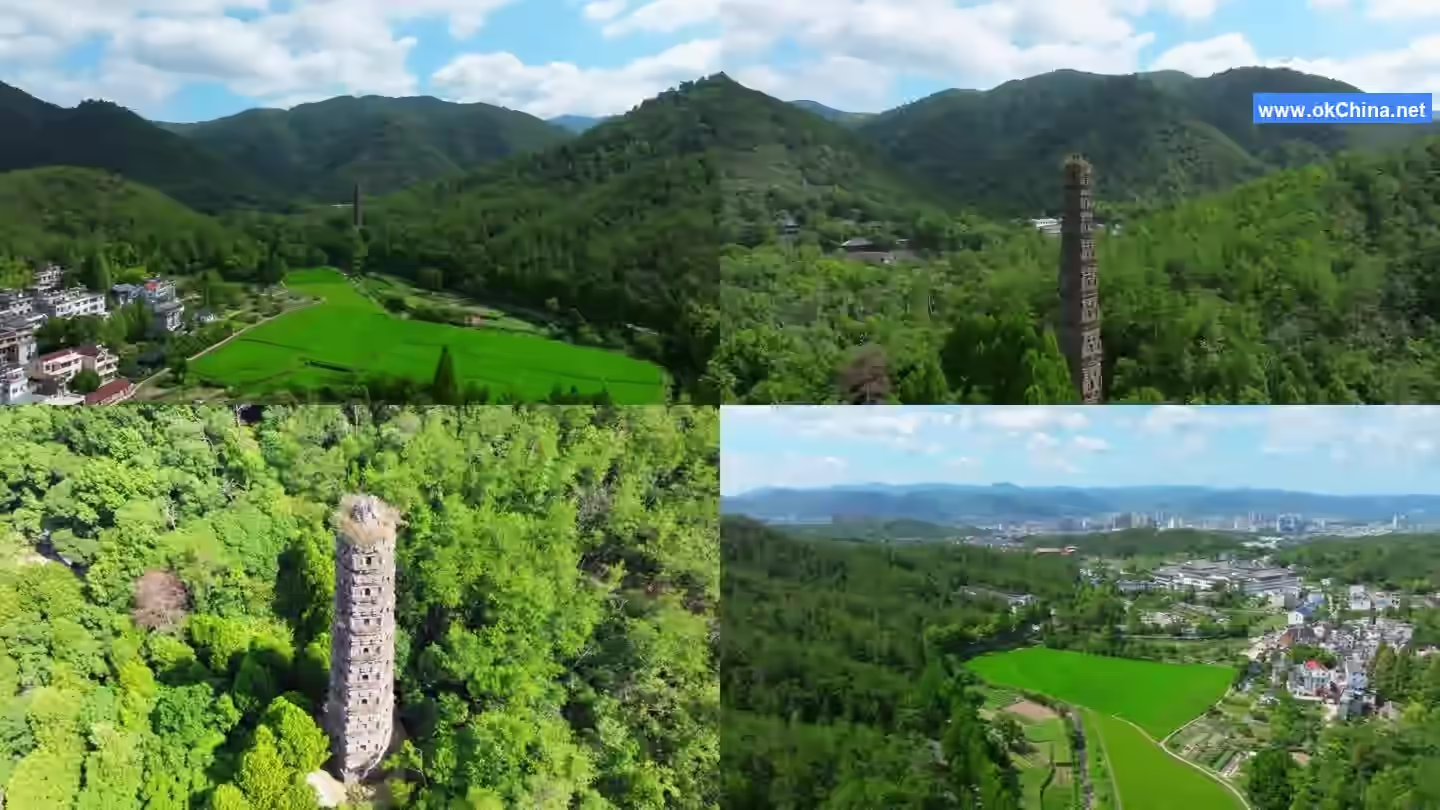
Within the temple grounds is an ancient plum tree, said to have been planted by the Sui dynasty abbot, Monk Guanding. Outside the temple stands a Sui dynasty pagoda, 59.3 meters high, hexagonal with nine stories, hollow and built of bricks, adorned with many relief Buddha images, elegant in form. The temple houses over a thousand cultural relics, including a palm-leaf sutra (Baye Jing) from the Sui dynasty monk Zhiyi, the "Imperially Bestowed Tripitaka" from the Yongzheng era of the Qing dynasty, and the "Cold Mountain Poetry Collection" by the Tang dynasty poet-monk Hanshanzi. The renowned Japanese monk Saichō (最澄) came here in the twentieth year of the Zhenyuan era of the Tang dynasty (804 AD) to study the doctrines and rules from Daosui, the tenth patriarch of the Tiantai School. He returned to Japan the following year and founded the Japanese Tendai (Tiantai) School. Therefore, Guoqing Temple is also regarded as the ancestral temple by the Japanese Tendai School, and Japanese Buddhists often visit to pay homage to their roots. Outside the temple, shaded by dense foliage, lies the tomb of the Tang dynasty monk Yixing. Surrounded by five peaks and two streams, the temple offers serene scenery and is one of the scenic spots of Tiantai.
Zhenjue Temple Zhenjue Temple is located in the Tiantai Mountains, about 23 li north of Tiantai County. It was built in the seventeenth year of the Kaihuang era of the Sui dynasty (597 AD). It contains the stupa courtyard (tayuan) of Master Zhiyi. Originally called the Dinghui True Body Stupa Courtyard, it received its current name in the first year of the Xiangfu era of the Song dynasty. The main hall of the stupa courtyard houses the Master's "flesh-body stupa" (roushen ta). The stupa, including its base, is 7 meters high, two stories and hexagonal, exquisitely carved from bluestone. The first level's front houses a seated statue of Zhiyi. The hall walls are lined with portraits of 17 patriarchs of the Tiantai School, one of whom is the sixteenth patriarch, the Korean-born Master Yitong (also known as Baoyun Chanshi). The stupa courtyard was repeatedly destroyed and rebuilt; the existing structures were renovated during the Ming dynasty. Outside the temple is a stele pavilion housing the "Xiuchan Daochang Stele" (Stele of the Cultivation of Chan Site), erected in the sixth year of the Yuanhe era of the Tang dynasty (811 AD) by Master Xingman, with text composed by Hanlin Academician Liang Su and calligraphy by Xu Fang. The stele has now been moved to a side room within the compound.
Gaoming Temple Gaoming Temple is located about 20 li northeast of Tiantai County, named after its backing against Gaoming Mountain. It was built in the seventh year of the Tianyou era of the Tang dynasty (910 AD, note: likely a transcription/translation issue; Tianyou era was 904-907, might refer to a later date or different era name). Originally the Youxi practice site of Master Zhiyi, it was rebuilt during the Wanli era of the Ming dynasty and renovated in 1980. Main buildings include the Heavenly King Hall, Grand Hall, and Lengyan Altar. The temple surroundings feature many strange rocks with inscriptions. One large rock named "Kan Yun Shi" (Cloud-Watching Rock) is inscribed with a character "Buddha" about 7 meters in diameter, quite spectacular. Over the stream, there is a natural stone bridge forming the Yuantong Cave, inspiring awe at the wonders of nature.
Shanxing Temple Shanxing Temple, originally named Huading Temple, is located on the scenic Huading Peak of Tiantai Mountain. It was originally the meditation site of Master Zhiyi. In the first year of the Tianfu era of the Later Jin dynasty during the Five Dynasties (936 AD), Master Deshao founded it as a temple. It was repeatedly destroyed and rebuilt; the existing main hall was repaired in 1928. The temple plaque reads "Huading Lecture Temple." Currently, a double-eave hip-and-gable roof main hall is under construction. Surrounding the temple are the Taibai Study and Wang Xizhi's Ink Pond. There are also dozens of thatched huts, known as the "Seventy-Two Thatched Huts," providing accommodation for hundreds of monks gathering during retreat periods. Nestled among green trees, these huts form a unique landscape.
4.2.2 Taoist Blessed Lands
Tiantai Mountain is not only the birthplace of the Buddhist Tiantai School but also the ancestral court of the Southern School of Chinese Taoism, hence its reputation as a "Buddhist Cave and Immortal Source." Taoism, with its宗旨 of崇尚 nature and returning to simplicity, found this an ideal place for cultivation. Taoism was introduced to Tiantai also in the first year of Chiwu of the Wu Kingdom during the Three Kingdoms period (238 AD), when the famous Taoist Ge Xuan practiced alchemy on Tongbai Mountain. Legend has it that Huading Peak has Ge Xuan's tea garden, and Tongbai has Ge Xuan's alchemy stove. Subsequently, Taoism developed slowly on Tiantai Mountain until after the Wanli era of the Ming dynasty, when it declined. Among the most famous Taoists associated with Tiantai Mountain are Ge Hong, Tao Hongjing, and Sima Chengzhen.
The most important Taoist site on Tiantai Mountain is the Tongbai Abbey (Tongbai Guan). Located amidst the encircling peaks of Wolong, Yunü, Zixiao, and others, Taoists call it the "Golden Court Cave Heaven." In the first year of Chiwu, Ge Xuan practiced alchemy here and built the Falun Yuan. In the second year of the Jingyun era of the Tang dynasty, Emperor Ruizong re-established an abbey here for Sima Chengzhen, named Tongbai Abbey. It was grand in scale, the foremost Taoist abbey on Tiantai and the ancestral court of Taoism in the southeast. The environment here is serene, with many historical steles and poems. The Tang dynasty poet Meng Haoran was so captivated he was reluctant to leave. In his poem "Staying Overnight at Tongbai Abbey," he expressed: "I wish to untie my official sash, henceforth be rid of troubles. / Striding high over winding cliffs, I trace the paths of the Three Elders. / My wandering thoughts are many, / I learn their way of long life. / Day and night I gaze toward the three rivers, / Cloudy waves stretch vast and empty."
4.2.3 Confucian Culture
Apart from the flourishing development of religious culture, Confucian culture, especially Neo-Confucianism (Lixue), also had a profound influence on Tiantai Mountain. The great Neo-Confucian master Zhu Xi visited Taizhou three times between the ninth year of the Qiandao era and the tenth year of the Chunxi era of the Song dynasty (1173–1183 AD), drawing nourishment from both Buddhism and Taoism, enriching Neo-Confucian thought. Simultaneously, Zhu Xi widely accepted disciples here, leading to a flourishing of Neo-Confucianism in Taizhou, producing renowned scholars like Che Ruoshui and Fang Jiaoru. Additionally, many Confucian scholars considered associating with Buddhists and Taoists fashionable, while many monks and Taoists themselves came from scholarly backgrounds with high cultural cultivation. The poet-monk Hanshanzi of Tiantai Mountain is a典型 example. Living during the Tang dynasty, his poems are rich in content and imbued with Chan insights. Some poems are ethereal,优美, and transcendent, while others reflect profound social reality. Therefore, they were beloved, recited, and have been passed down to this day. His poems were "all written on rock faces," expressing emotions amidst mountains and waters. Later generations compiled them into a volume titled "The Poetry Collection of Hanshanzi," containing over 300 poems.The long-term coexistence and mutual integration of Buddhism, Taoism, and Confucianism constitute another distinctive feature of Tiantai Mountain culture. During the Tang and Song dynasties, the mutual influence among the "Three Teachings" deepened, with their representative figures successively expressing tolerant attitudes. Emperor Xiaozong of the Song Dynasty once proposed the idea of "cultivating the mind with Buddhism, nurturing the body with Taoism, and governing the world with Confucianism." In the early Song Dynasty, Zhi Li, the seventeenth patriarch of the Tiantai School, stated, "Establishing oneself and practicing the Way are the great tasks of the world. Although Confucianism and Buddhism follow different paths, how can they differ? One must first establish oneself, then seek to practice the Way..." This clearly indicated a leaning toward Confucianism. Buddhism and Taoism also absorbed from each other, increasingly merging. The Comprehensive Records of the Buddhas and Patriarchs records: "Zhang Pingshu of Tiantai obtained the Way of Primordial Chaos in his youth. ... After achieving the Way, he wrote Awakening to the True and transmitted it to the world. He extensively studied Chan Buddhism and gained profound insights." This indicates that as early as the early Northern Song Dynasty, there was a trend of Taoists practicing Chan meditation. In fact, as early as the Tang Dynasty, Sima Chengzhen had already introduced Buddhism into Taoism, establishing the theories of the Three Precepts, Five Gradual Steps, and Seven Stages of cultivation, known as the "dual cultivation of Buddhism and Taoism." The integration of the Three Teachings was also based on a common understanding: an emphasis on inner cultivation—"cultivating the mind." Additionally, the complementary nature of the "Three Teachings" was an important condition for their long-term coexistence. Confucianism, as a learning for managing the world, focuses on regulating relationships between people; Taoism emphasizes regulating the relationship between humans and nature; while Buddhism focuses on regulating the relationship between humans and "heaven." People simultaneously need the "Three Teachings," and thus, the Three Teachings have long coexisted interdependently.
4.3 The Culture of the Tang Poetry Route
Among the over 2,200 poets recorded in the Complete Tang Poems, more than 400 poets, and among the 278 talents included in the Biographies of Tang Talents, over 170 embarked from the Qiantang River, passed through Shaoxing, went south from Mirror Lake via the Cao'e River and Shanxi, upstream to Shicheng, Wozhou, and Tianmu in Xinchang, and finally reached Tiantai Mountain. This route is now referred to as the "Tang Poetry Route."
Tiantai Mountain is a famous mountain in China. Since Sun Chuo of the Jin Dynasty wrote Rhapsody on Traveling to Tiantai Mountain, literati and poets throughout the ages have vied to visit, linger, and compose poetry about it. The destination and most exquisite part of this poetic route lie in Tiantai Mountain.
Located in a remote coastal area, Tiantai Mountain stands in profound seclusion with winding, hidden paths. Therefore, despite being "the most divine and splendid among mountains," it remained "rarely climbed by the world, with no monarchs able to offer sacrifices here." It was the anonymous Images and Sun Chuo's Rhapsody on Tiantai Mountain from the Eastern Jin Dynasty that first revealed Tiantai's high-quality natural and cultural landscapes to the world. In the autumn of the sixth year of the Yuanjia era of the Liu Song Dynasty (429), the poet Xie Lingyun led hundreds of people from the southern mountains of Shining County (county seat in present-day Sanjie) to cut through the mountains and open a path, connecting the Yue-Tai travel route. Subsequently, besides the land route, people discovered a "shortcut" that allowed direct access to Tiantai Mountain without detouring a hundred li.
When Tang Dynasty poets came to Jiangnan, most traveled by water, taking boats from Yangzhou in the Huai region south via the Grand Canal, crossing the Qiantang River, entering eastern Zhejiang from Xixing, and then going upstream along the Shanxi to reach the Stone Bridge of Tiantai. Some even set sail from Linhai as the endpoint of their Zhejiang journey. The upper reaches of Shanxi passed through Huangtan, Wuma, Shanghai, and Cisheng, reaching the Stone Bridge connected to Daxingkeng, and ascending to Huading Peak. From Xinchang to Tiantai's Cisheng, bamboo rafts and log rafts could still navigate until the 1970s. In ancient times, with lush vegetation, the waterways there must have been even more accessible. From Meng Haoran's poem Gazing at Dawn from the Boat: "Hoisting sails, gazing southeast, / Green mountains, a distant water country. / Ships compete for favorable passage, / Coming and going with wind and tide. / Ask me where I'm bound now? / To Tiantai, visiting the Stone Bridge. / Sitting, watching the evening glow's hues, / Doubting it's the marker of Red Wall." It is not hard to see that he was traveling precisely along the water route of "Yuezhong—Shanxi—Stone Bridge."
According to statistics, over 400 poets of the Tang Dynasty traveled and sojourned here, nearly one-fifth of the total of over 2,200 poets recorded in the Complete Tang Poems. At that time, eastern Zhejiang's area was only 1/750 of the nation's total, yet so many poets roamed and chanted here, making it a remarkably rare cultural phenomenon.
Among these poets were super stars like Du Fu, who entered the Tai-Yue region in his youth and lingered forgetfully for four years, and Li Bai, who entered Zhejiang four times, visited Yuezhong three times, and ascended Tiantai Mountain twice. There were also masters like Wang Wei, Meng Haoran, Bai Juyi, Yuan Zhen, Liu Yuxi, and Du Mu, as well as renowned figures such as the "Four Masters of Early Tang," the "Three Talents of Mid-Tang," and the "Three Luos of Late Tang." They traveled upstream or downstream, embarked on grand tours or official journeys, sailed with wine, beat time and sang loudly. Some even retired here permanently. Additionally, over 60 local poets all extolled the scenery of eastern Zhejiang to their heart's content, leaving behind a vast number of poems.
Herein lies much leisurely delight, sooner or later heading toward Tiantai. In Tang poetry, eastern Zhejiang refers to the region east of the Puyang River basin, north of the Kuocang Mountains, and west of the East China Sea, with the four mountains of Kuaiji, Siming, Dapan, and Tiantai stretching across, covering a total area of about 20,000 square kilometers, merely 0.13% of the nation's total.
Despite the vastness of the country, so many poets particularly favored the tiny area of eastern Zhejiang, which certainly had multiple reasons. One of them was the unique and immense regional cultural advantage here.
During the Six Dynasties period, northern and southern cultures blended, making Zhejiang a hub of humanities. Xie Lingyun sought out scenic and secluded spots, pioneering landscape poetry, admired by later generations. Especially Tiantai Mountain, with its profound cultural accumulation, was regarded as the "source of Buddhism and Taoism, a land of cultural relics." Shanxi originates from Huading Mountain of Tiantai, long described as "the stream connecting Shengshui, how endless the delight; the path turning toward the immortal source, people naturally get lost." As a tributary of the Shifeng Stream originating from Dapan Mountain, Sanmao Stream was named after the Three Mao True Lords of the Han Dynasty who lingered here. The widely loved story of Liu Chen and Ruan Zhao of Shan County entering Tiantai Mountain took place here.
Therefore, since ancient times, there has been an "Immortal Source Route" from Shan to Tai, with a series of Taoist cave heavens and blessed lands along the way: Wozhou, Tianmu, Red Wall, Tongbo Golden Court, Sima Regret Mountain, Lingxu, etc. At the end of the Han Dynasty, Ge Xuan ascended Tiantai Mountain and opened up the "Immortal Mountain," becoming the ancestor of the Taoist Talismanic School. His grandnephew Ge Hong followed, Lady Wei founded the Shangqing School, and by the Tang Dynasty, Emperor Ruizong built Tongbo Palace for Sima Chengzhen, heralding the Southern School of Taoism's ancestral court, attracting countless seekers of immortality and cultivators.
Buddhism was introduced to Tiantai Mountain as early as the Eastern Han Dynasty. During the Eastern Jin, Tan You opened up the "Buddha Land" of Tiantai, and Stone Bridge Fangguang became the site for five hundred arhats. During the Chen and Sui dynasties, the wise master Zhiyi entered the mountains and founded the Tiantai School, China's first Buddhist sect, revered as the "Little Shakyamuni of the East." By the mid-Tang, Yize widely propagated the Ox-Head Chan, creating the Buddha Cave Learning; Pu'an promoted the Linji School and built Wannian Temple. Tiantai's temples and monasteries were scattered like stars on a chessboard; immortals and Buddhists lived harmoniously; "thousands of monks and tens of thousands of Taoists" made it the religious center of eastern Zhejiang, with a continuous stream of domestic and foreign believers coming to worship and reside. In Jiang Guangdou's On the Monk-Poetry of Tang Dynasty Eastern Zhejiang, about half of the 17 famous monks mentioned had resided at Guoqing Temple or believed in Tiantai doctrines. Chan poet-monks like Tianran and Fachang had also lived in Tiantai. Hanshanzi lived on Han Stone Mountain in Tiantai for seventy years, exchanging poems and gathas with Fenggan and Shide of Guoqing Temple, which became a beautiful tale in poetic circles.
Tiantai was also a dwelling place for Confucian officials and literati. Gao Cha, Grand Master of Ceremonies of Eastern Wu, retired at the foot of Tiantai Mountain. Gu Huan of Southern Qi opened a school here to teach disciples, leaving behind sites like Chaling, Reading Hall, and place names like Huan'ao. Bai Juyi's Record of Wozhou Mountain Chan Monastery lists 18 eminent scholars and celebrities like Dai Kui, Sun Chuo, and Wang Xizhi, many of whom had visited Tiantai. Wang Xizhi also learned calligraphy from the White Cloud Master of Tiantai, leaving behind sites like Huangjing Cave, Ink Pond, and Secrets of Calligraphy. His travels with Zhi Dun and Xu Xun to the Nine Peaks became a celebrated anecdote and also epitomized the integration of the Three Teachings at Tiantai.
The Tang Dynasty was broad-minded and tolerant, creating an atmosphere of relatively free thought and belief. Tiantai Mountain's cultural accumulation in Confucianism, Taoism, and Buddhism was profound, coupled with diverse and uniquely endowed natural landscapes, giving it strong affinity and attraction for Confucian officials, eminent Taoists, and famous monks. This is why, like the Yue Mountains and Shanxi, it became the carrier of the "Tang Poetry Route" and the poets' dreamt-of ideal destination. Li Bai's lines, "Unwilling to stay in dragon towers and phoenix towers, / Soaring straight, I desire to go to Tiantai," precisely expressed the poets' heartfelt sentiments.
4.4 Tea Culture
Located in eastern Zhejiang, Tiantai Mountain is one of China's ten famous mountains. As early as the Han Dynasty, Taoists like Mao Ying and Ge Xuan entered the mountains for cultivation. In the Jin Dynasty, the esteemed monk Tan You from Dunhuang opened forests on Red Wall Mountain and Wannian Mountain. During the Chen and Sui dynasties, the wise master Zhiyi founded the Buddhist Tiantai School here. In the Song Dynasty, Zhang Boduan of Tiantai established the Southern School of Taoism. Hence, it is beautifully called the "Buddha Land and Immortal Mountain." Tiantai Mountain's Danqiu Mist Buds and Huading Cloud Mist Tea have long been renowned. Legend has it that before the Han Dynasty, the old Danqiu woman planted large tea trees, and the Han Dynasty eminent Taoist Ge Xuan planted tea at the Cloud-Returning Cave entrance on Huading Peak. Thus, Tiantai Mountain possesses the rich soil for the emergence and development of tea culture, from which tea culture spread to China and the world.
Comments
Post a Comment