Tianshan Grand Canyon in Urumqi
I. Introduction
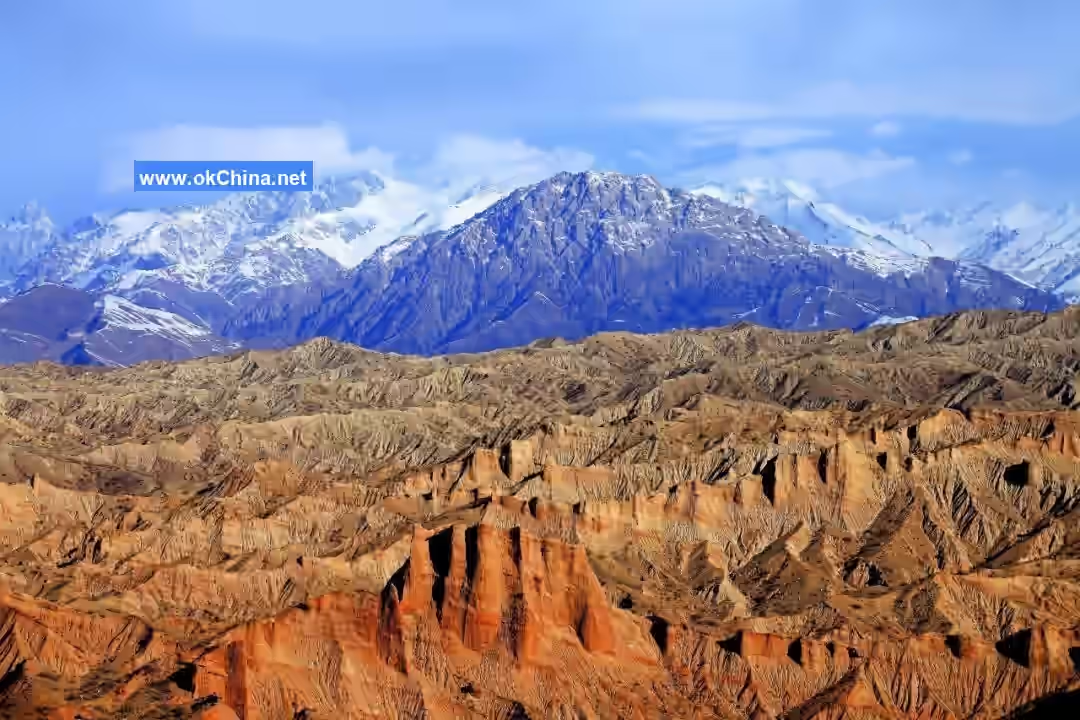
The Tianshan Grand Canyon Scenic Area in Urumqi, abbreviated as Tianshan Grand Canyon Scenic Area, is located in Urumqi County, Urumqi City, Xinjiang Uygur Autonomous Region, 48 kilometers from the city center. The total planned area of the scenic area is 1038.48 km². Surrounded by mountains on three sides, with an average altitude of 2020 meters and an annual average temperature of 4-6°C, it boasts the most complete and visually valuable primitive forest of Picea schrenkiana on the northern slope of the Tianshan Mountains. It encompasses all of Xinjiang's natural landscapes except deserts, serving as a living museum of nomadic culture predating human agrarian civilization. It holds extremely high value for tourism appreciation, scientific research, and historical culture. It has been rated as a National Forest Park, National Sports and Leisure Base, National AAAAA Tourist Attraction, Autonomous Region Public Fitness and Outdoor Sports Training Base, Autonomous Region Hiking Base, and Autonomous Region Public Fitness Mountaineering Training Base.
II. Orientation and Layout
Geographic Location
The Tianshan Grand Canyon Tourism Resort is located in the southern suburbs of Urumqi, the capital of Xinjiang Uygur Autonomous Region, in Banfanggou Township, Nanshan, 48 kilometers from Urumqi City. With an average altitude of 2000 meters and an annual average temperature of 4-6°C, it spans Banfanggou Township, Tuoli Township, and Shuixigou Town in Urumqi County, covering most of the Zhaobi Mountain National Forest Park. The total planned area is 1038.48 km². The scenic area extends north from the Forest Management Station in Banfanggou Township, south to the border of Toksun County, east to National Highway 216 in Urumqi County, and west to Provincial Highway 103. The longest north-south stretch is about 49 km, and the widest east-west span is about 42.5 km. Situated on the northern slope of the middle section of the Tianshan Mountains, between Bogda Peak and Tianger Peak, at the Dengcaogoukou in Banfanggou Township within the Kalawucheng Mountain valley of the middle Tianshan, and on the southern edge of the Junggar Basin, the area features both high mountains and intermountain basins, with majestic and variably undulating terrain.
Topography and Landforms
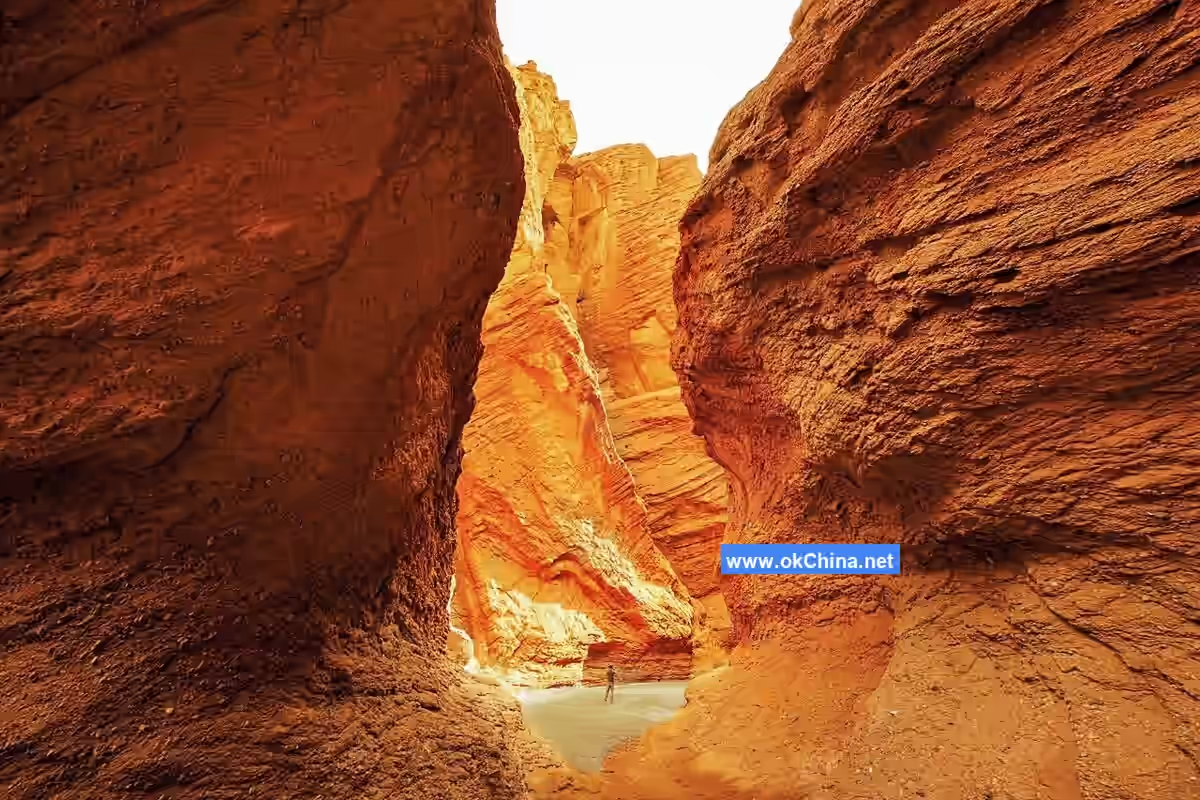
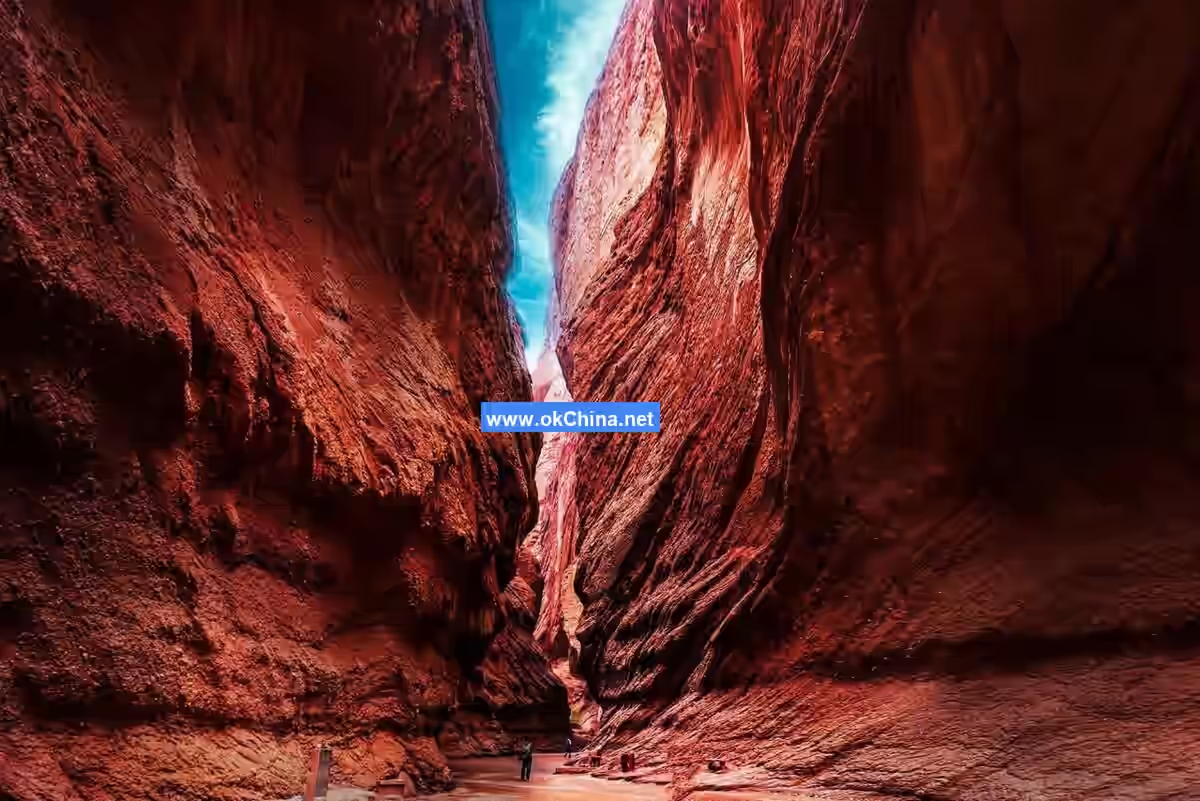
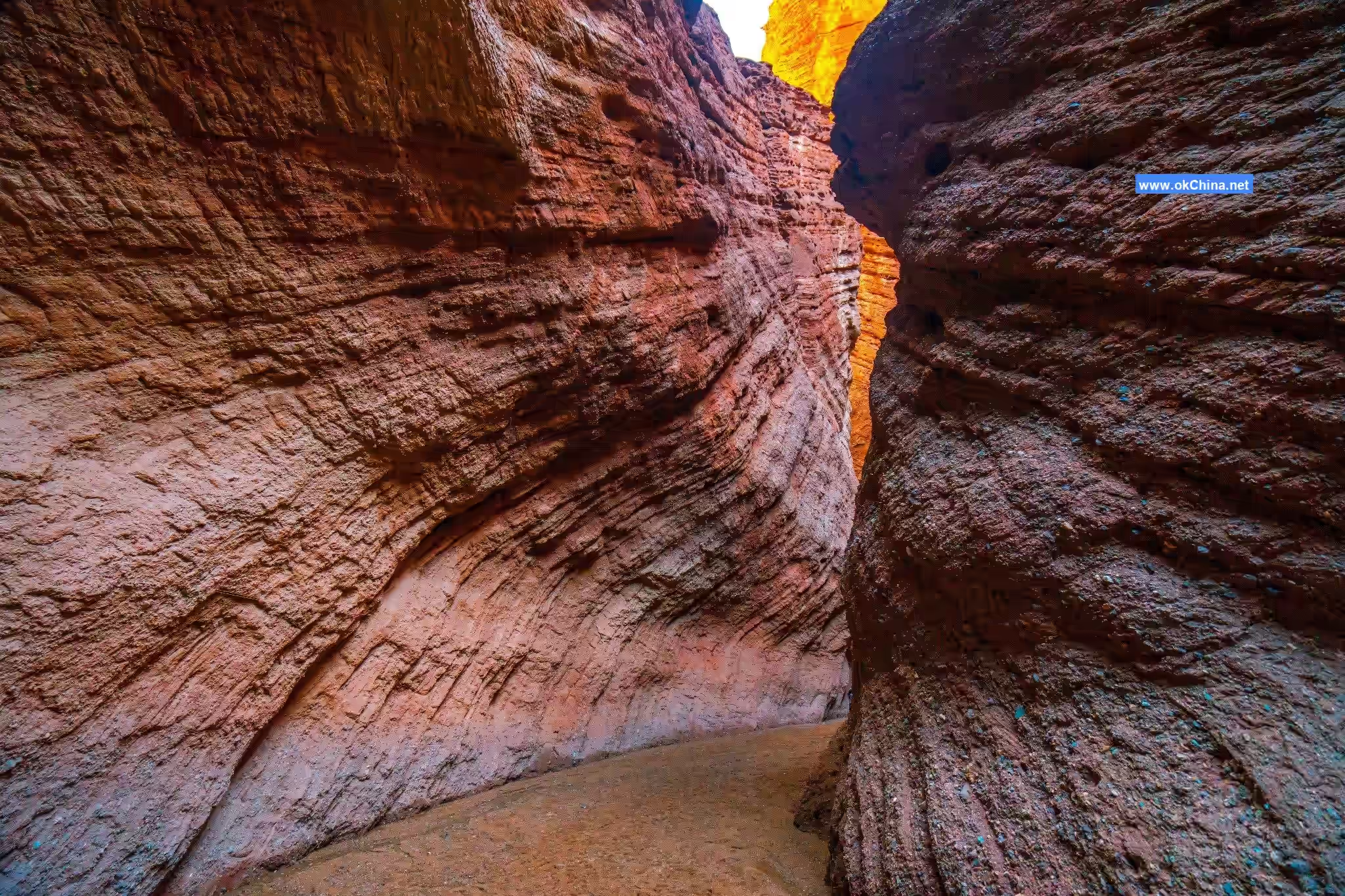
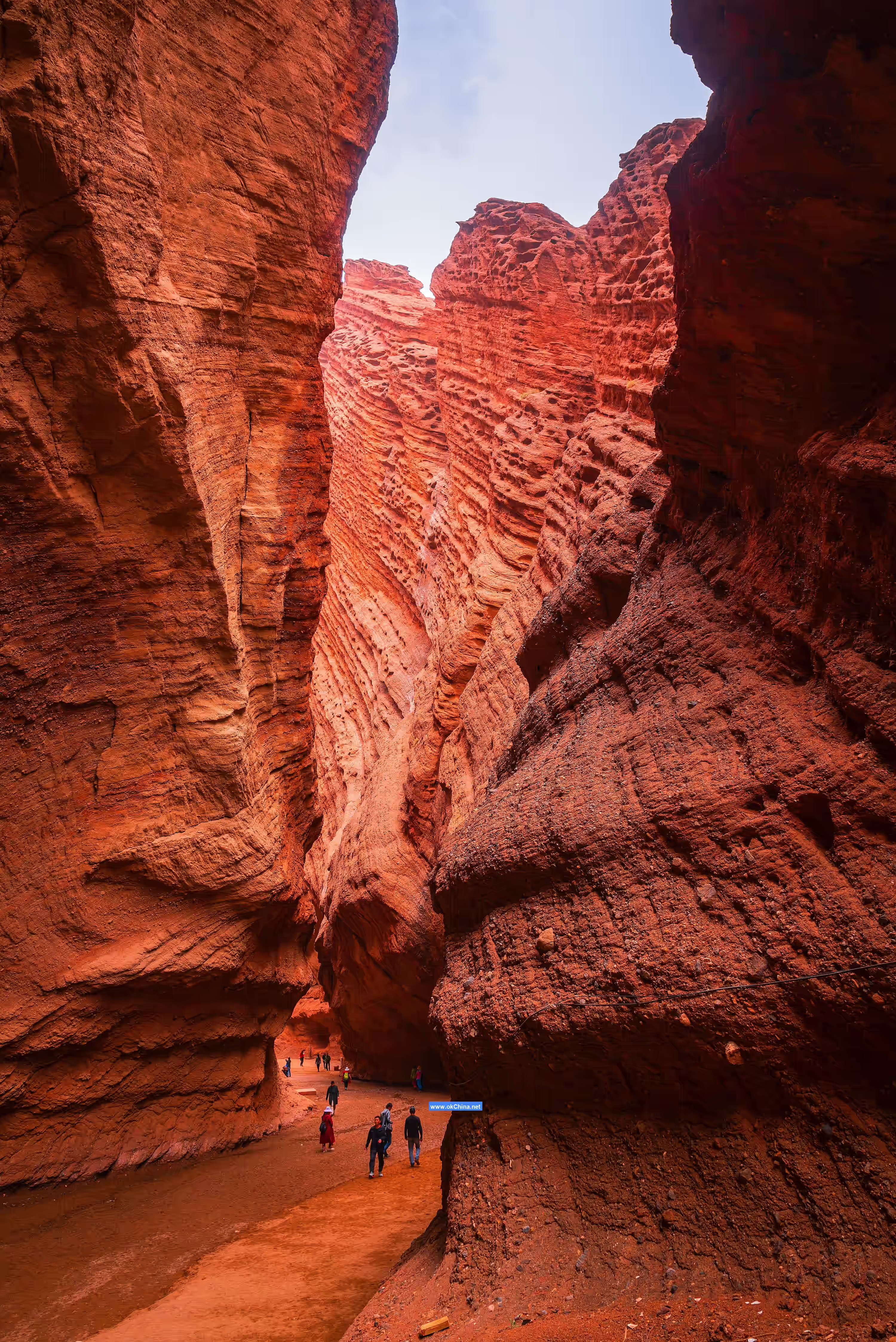
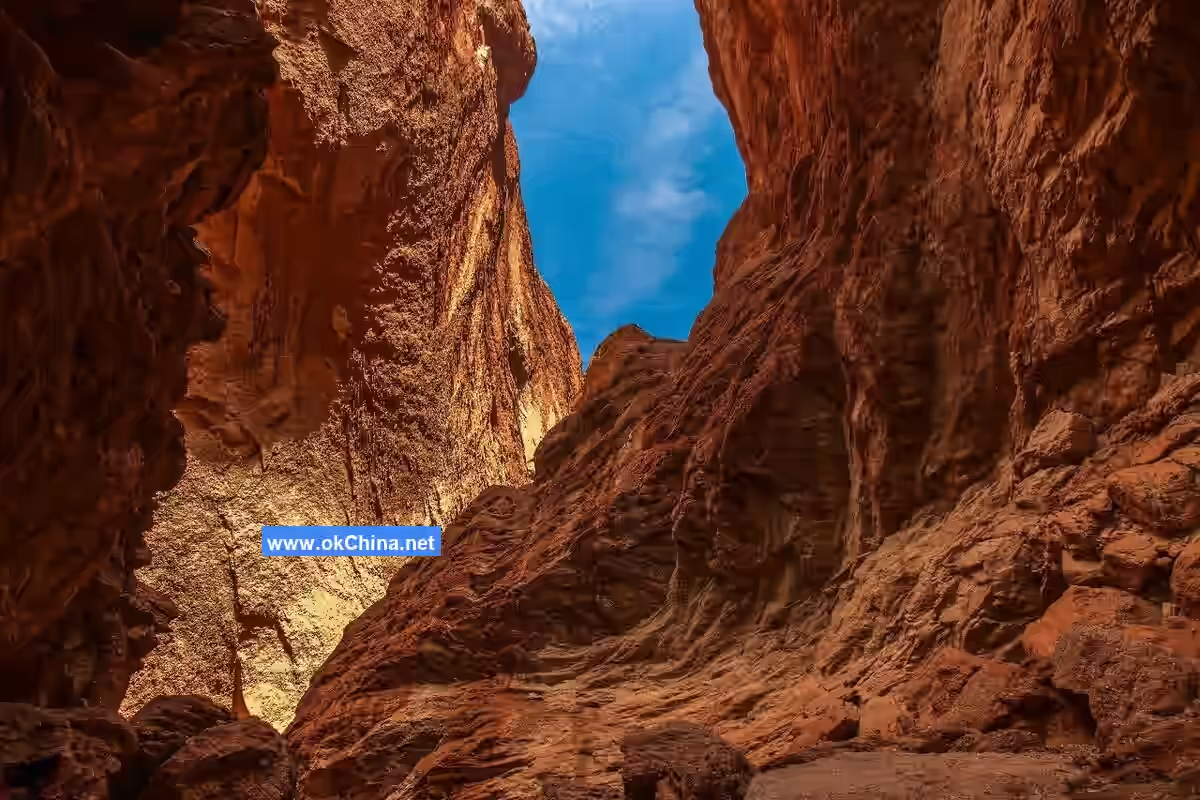
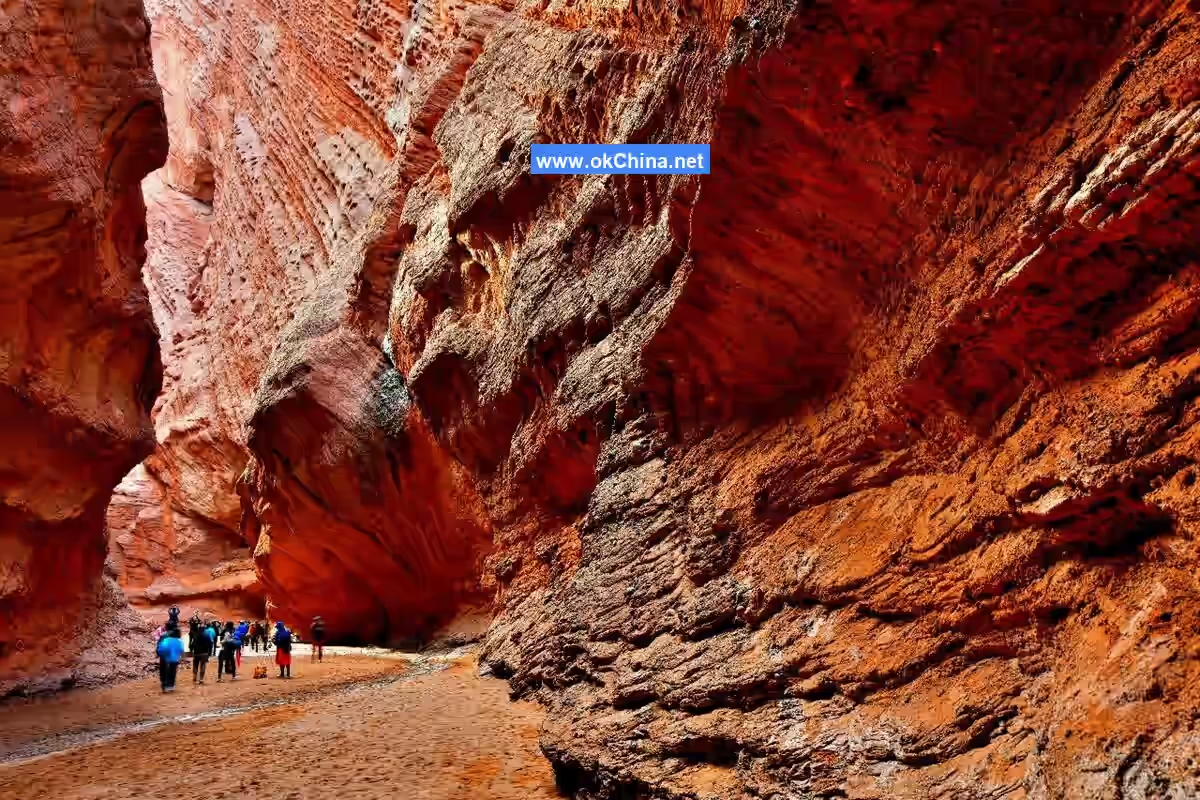
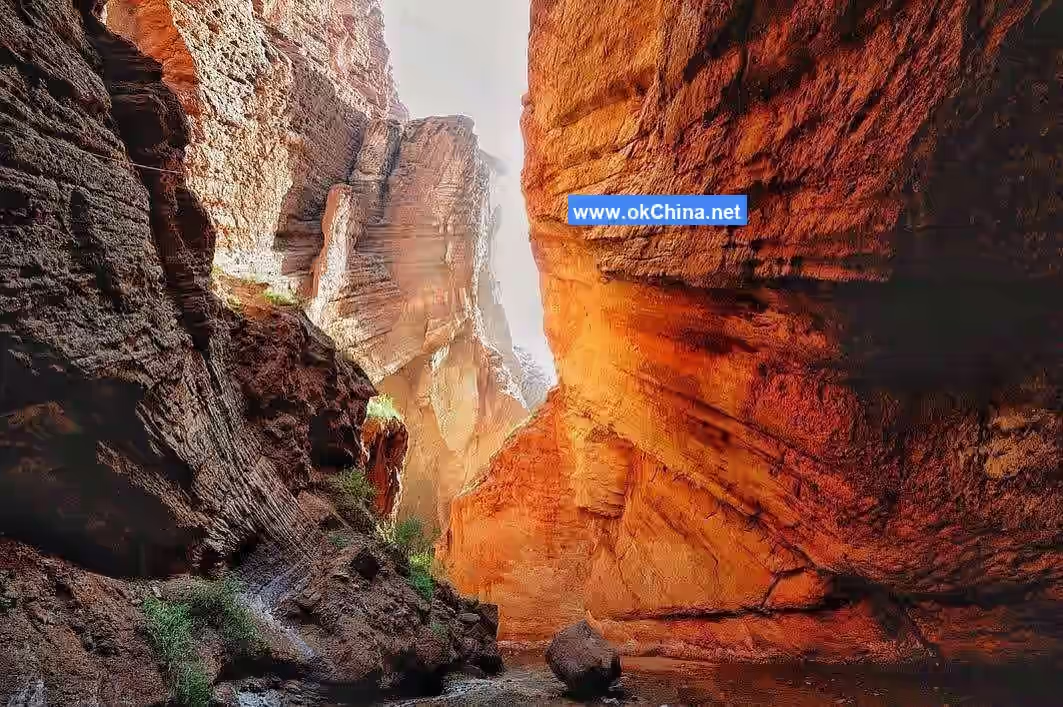
The resort's terrain generally slopes from high in the south to low in the north, tilting from south to north and from southwest to northeast. With a planned scale of 1038 square kilometers, it is developed based on the Zhaobi Mountain National Forest Park and Zhaobi Mountain Scenic Area, forming a new cluster of scenic spots within the famous Nanshan Pasture tourist area. The Tianshan Grand Canyon Scenic Area is located on the upper part of the alluvial fan on the northern slope of the Tianshan Mountains. The stratum consists of Quaternary loose deposits, with a sandy soil layer about 1 meter thick containing a small amount of gravel. The surface vegetation type is desert steppe (suitable for crop cultivation). The area has good water resources, with several mountain streams flowing between the mountains, forming a rare forested grand canyon.
III. Major Scenic Areas
The scenic area features eight unique attractions
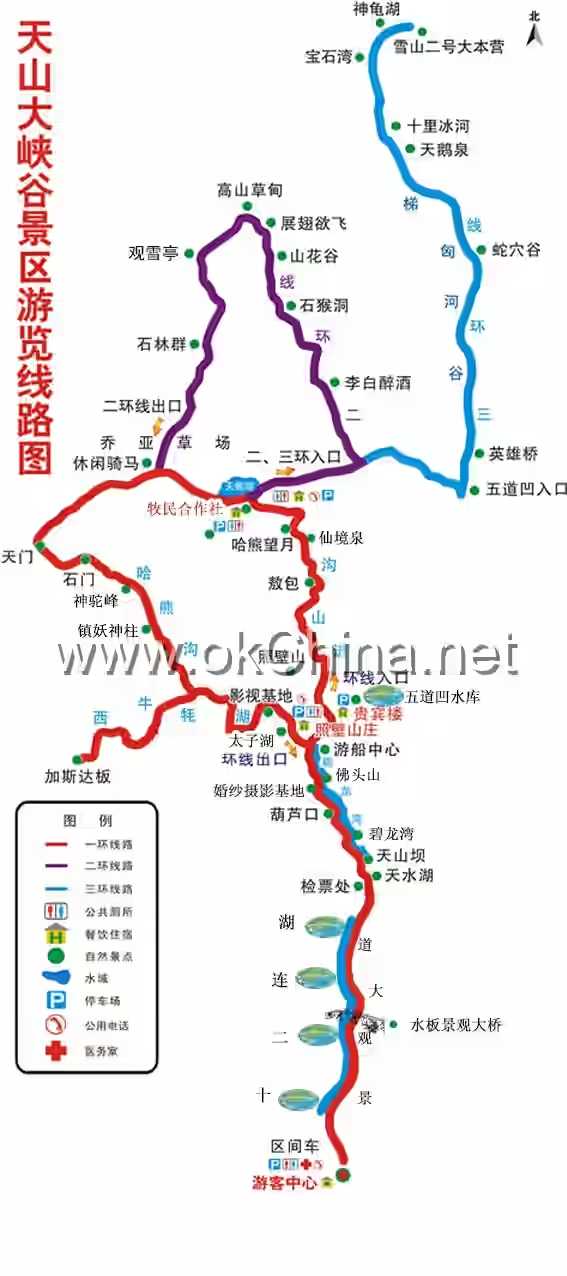
Namely, the Tianshan Dam Leisure Area, Zhaobi Mountain Resort and Recreation Area, Jias Daban Sightseeing Area, Swan Lake Natural Scenic Area, Niu Mao Hu (Yak Lake) Forest and Pine Waves Sightseeing Area, Kazakh Ethnic Culture Park, Alpine Grassland Ecological Area, and Snow Mountain Glacier Sightseeing Area. It harmoniously combines "the grandeur of Mount Tai, the elegance of Mount Emei, the exquisite rocks of Mount Yandang, and the precipitousness of Mount Hua." Two lakes, three waterfalls, four streams, and eighteen valleys compete in beauty, and it is especially renowned for its "unique pines, strange rocks, and sea of clouds."
Bilong Bay (Jade Dragon Bay)
Bilong Bay is named because when the reservoir is full, the water surface resembles a jade dragon. Stepping into Bilong Bay, the first thing that catches the eye is the emerald-green, crystal-clear lake water. The lake is tranquil and deep, like a giant mirror clearly reflecting the surrounding mountains and trees, blending landscape and water into a dreamlike scene. The lake is surrounded by lush forests, with tall and straight spruce and pine trees standing like loyal guardians protecting this peaceful water. Sunlight filters through the gaps in the branches and leaves, casting golden patches of light on the lake surface that sway gently with the breeze, like countless tiny pieces of gold dancing in the water. Walking along the lakeshore, one can hear the crisp chirping of birds, rising and falling like a beautiful symphony performed by nature. Occasionally, squirrels can be seen hopping and darting joyfully among the branches, adding a touch of liveliness and vitality to this serene world. The shoreline of Bilong Bay is winding and曲折, forming many natural harbors and peninsulas. Some peninsulas extend into the lake, covered with various exotic flowers and plants, blooming in profusion and filling the air with fragrance. Visitors can take a boat and slowly sail toward the center of the lake, feeling the gentle lake breeze on their faces and admiring the ever-changing scenery on both banks. As the boat glides across the lake, the潺潺 sound of oars paddling through the water echoes in the quiet valley, enhancing the sense of tranquility. On one side of the lake, a small waterfall cascades down. Though not large in scale, the water flows rapidly, splashing and creating white spray. The waterfall plunges into the lake, creating layers of white waves that contrast beautifully with the碧绿 lake water, forming a stunning picture that combines movement and stillness. Where the waterfall lands, a deep pool has formed from the long-term impact of the water. The pool water is so clear that one can see the stones at the bottom and small fish swimming. Bilong Bay offers different scenery in each season. In spring, wildflowers bloom in vibrant colors along the lakeshore, complementing the碧绿 lake water. In summer, it is a summer retreat with a cool and pleasant climate that refreshes the mind. In autumn, the surrounding trees don colorful autumn attire, with golden and fiery red leaves falling into the lake, creating a poetic and picturesque scene. In winter, the lake surface freezes, and the entire Bilong Bay is draped in silver, resembling an ice and snow kingdom with its own unique charm. No matter which season one visits, Bilong Bay offers different surprises and touches, making visitors feel as if they are in a fairyland on earth, reluctant to leave.
Jias Daban Sightseeing Area
The Jias Daban Sightseeing Area is located east of Zhaobi Mountain, centered around a crescent-shaped lake covering about 1 hectare. From May to August each year, the area is carpeted with green grass and wildflowers, filling the air with fragrance. Jias Daban is at a high altitude with rugged and perilous terrain. As visitors drive along the winding mountain road toward Jias Daban, they can feel the gradual change in the surrounding environment. With increasing altitude, the air becomes fresher and thinner, and the temperature gradually drops. Outside the window,连绵 mountain ranges recede, and the vegetation on the mountains transitions from dense forests to low shrubs and alpine meadows. Arriving at the Jias Daban Sightseeing Area, the sight is breathtaking. Standing on the viewing platform and looking into the distance, the snow-capped mountains stand巍峨 in the distance, with peaks rising one after another. The perennial snow on the mountaintops glitters with dazzling silver light under the sunshine. The pristine white snow contrasts with the sapphire-blue sky, creating a pure and magnificent picture. Between the snow-capped mountains, clouds and mist swirl like light gauze, sometimes covering the peaks and sometimes slowly dispersing to reveal their雄伟轮廓, as if a visual feast carefully orchestrated by nature. Looking down at one's feet, there is a bottomless valley with rugged rocks and潺潺 streams. The peaks on both sides of the valley are steep and precipitous, some almost vertical, making one marvel at the craftsmanship of nature. In the Jias Daban Sightseeing Area, one can also see many rare wild animals, such as snow leopards and Siberian ibex, living and繁衍 freely in this vast high-altitude region. Lucky visitors might catch a distant glimpse of their agile figures, sensing their tenacity and vitality in surviving in nature. The weather here is unpredictable; it can be clear and sunny one moment and snowing the next. When clouds and mist surge, the entire sightseeing area seems shrouded in a mysterious white world with extremely low visibility, giving the illusion of being in a fairyland among the clouds. When the mist disperses and sunlight breaks through the clouds, it bathes the snow-capped mountains, valleys, meadows, and everything else in golden light, stunningly beautiful. The Jias Daban Sightseeing Area is not only an excellent place to欣赏 natural beauty but also an ideal场所 to challenge oneself and experience the charm of the plateau. It allows visitors to feel the greatness and wonder of nature while gaining an unforgettable travel experience, fostering a deep sense of awe for the natural world.
Qiaoya GrasslandThe flat Qiaoya grassland is blanketed in thick snow, making it the canyon area with the deepest winter snow accumulation in the Nanshan region, ideal for winter ice and snow tourism. The Tianshan glaciers and icefalls appear even more magnificent in the white winter. Stepping onto the Qiaoya grassland feels like entering a vast green ocean. The boundless meadows stretch out like a green velvet carpet, extending in all directions until they meet the horizon and connect with the mountains. On the grassland, various unnamed wildflowers bloom freely—red like fire, pink like rosy clouds, white like snow, and purple like dreams—dotting the grass and adding a vibrant palette to this green world. A gentle breeze sways the flowers and grass, as if they are dancing joyfully or softly humming a silent melody. Herds of cattle and sheep graze and wander leisurely on the grassland, some lowering their heads to forage intently, others lying down to rest, and still others playing and frolicking with each other, creating a lively and harmonious pastoral scene. The white sheep resemble clouds scattered across the green carpet, while the sturdy cattle stand like guardians of the grassland, their presence infusing the land with vitality and energy.
The Qiaoya grassland is surrounded by majestic mountains, whose silhouettes stand out sharply against the blue sky and white clouds. The lush vegetation on the mountains echoes the green of the grassland, forming a richly layered green landscape. At the center of the grassland, a crystal-clear stream flows gently, its babbling waters seeming to recount ancient tales. Fish swim freely in the stream, their scales shimmering with a silvery glow under the sunlight. Visitors can stroll along the stream, enjoying the refreshing sensation of the cool water flowing past their feet, or pause by the banks to admire the reflections of the blue sky, white clouds, green mountains, and grass in the water.
On the Qiaoya grassland, the tents of herders are scattered in an orderly fashion. These tents serve as the herders’ homes on the grassland and are an important symbol of grassland culture. Visitors can enter the tents, interact with the hospitable herders, and savor traditional delicacies such as milk tea, cheese, and naan bread made by their hands, immersing themselves in the rich grassland culture. At night, when darkness falls, the sky over the Qiaoya grassland becomes studded with stars, and the Milky Way stretches across the heavens, dazzling and brilliant. Visitors can lie on the grass, gaze up at the starry sky, feel the vastness and mystery of the universe, and allow their minds and bodies to relax and find solace in the tranquil grassland night. Whether strolling on the grassland, galloping on horseback, interacting with herders, or admiring the starry sky, the Qiaoya grassland offers visitors an unparalleled experience, immersing them in this green poetic chapter and allowing them to forget all worries and fatigue.
Zhaobi Mountain
Continuing forward along Bilong Bay, you’ll reach the first core attraction of the scenic area—Zhaobi Mountain. It is a massive cliff nestled between two mountains, resembling the vertical stroke in the Chinese character for "mountain" (山). To its left is Qishe Mountain, and to its right is Qingtou Daban Mountain, with an elevation of approximately 2,600 meters.
Boat Center
The first stop for water recreation in the scenic area is the Boat Entertainment Center. Located in the middle of Bilong Bay, it is also the first drop in the scenic area’s water system. Locals often refer to it as "Hulu Kou" (Gourd Mouth) or "Niao Wo" (Bird’s Nest). This name comes from the terrain: after passing the reservoir dam, the land suddenly narrows here, resembling a gourd in shape. From this point toward Zhaobi Mountain, the terrain resembles a bird’s nest.
Tianshan Dam
Tianshan Dam is the dam of the Zhaobi Mountain Reservoir. It was named Tianshan Dam to commemorate the builders who worked tirelessly for three years, braving wind and snow. The Zhaobi Mountain Reservoir project is a key control reservoir in the Banfanggou River Basin of Urumqi County and the largest water conservancy project in the county to date. The reservoir has a total storage capacity of 7.352 million cubic meters and consists of the dam, a diversion tunnel, a spillway, and reservoir area roads. Upon completion, the reservoir will ensure water supply for the existing 23,000 residents of Shuixigou Town and Banfanggou Township, as well as for a planned small town population of 50,000, along with livestock water needs. It will completely resolve the water supply issues for Shuixigou and Banfanggou. Through reservoir regulation, it will address seasonal water shortages in the Banfanggou irrigation area, alleviate spring drought for 40,000 mu of farmland, and ensure irrigation for 100,000 mu of downstream land. By moderating flood peaks, the reservoir can reduce a 50-year flood event to a 5-year discharge level and a 1,000-year flood event to a 20-year discharge level, fundamentally solving downstream flood control and soil erosion issues.
Tianshui Lake
The planned post-dam park and leisure resort area of the Tianshan Grand Canyon Scenic Area focuses on the folk customs and pastoral landscapes behind the Zhaobi Mountain Reservoir Dam. Designed with a style emphasizing static scenery appreciation and relaxation, it serves as a place for sightseeing and leisure for visitors.
IV. Cultural Resources
Folk Arts
Uyghur Ethnic Crafts
The Uyghur people are hardworking, brave, enthusiastic, and bold in character. They are skilled in singing and dancing and have created a rich and diverse cultural heritage of handicrafts over their long historical development. The vibrant clothing culture, unique culinary culture, and exquisite handicraft culture are important components of Uyghur craftsmanship.
Charming Kanas: Heading Toward the Legendary "Lake Monster" - Folk Arts
Kanas means "beautiful, rich, and mysterious" or "lake in the canyon." It is renowned for legends of the "Sea of Clouds Buddha’s Halo," "Color-Changing Lake," "Floating Wood Long Embankment," and the "Lake Monster."
The Mystery of Loulan Culture - Folk Arts
The ancient Kingdom of Loulan, documented as early as 2,100 years ago, served as a transit trade hub between China, Persia, India, Syria, and the Roman Empire on the Silk Road. It was once one of the most open and prosperous "metropolises" in the world. However, around 500 AD, it mysteriously disappeared from Chinese historical records overnight, along with its inhabitants.
How Were the Karez Wells Dug? - Folk Arts
Many visitors to the Karez wells in Turpan are curious to ask: How were they dug, and who dug them? For many years, these questions have remained a mystery.
Kazakh Kokpar - Folk Arts
Kokpar is an entertainment activity held by the Kazakh people to pray for blessings. It is a highly competitive and intense sport that combines bravery, resilience, and wit on horseback. The number of participants can range from a few dozen to over a hundred, divided into two teams.
The Unique Charm of Xinjiang’s Ethnic Tea Culture - Folk Arts
China’s famous teas complement its beautiful landscapes and renowned figures, creating a harmonious blend. However, in Xinjiang in the west, people often assume that its remote location and vast deserts mean that aside from milk tea, there is little to commend in terms of tea culture. Yet, as the value of traditional ethnic cultures like Xinjiang’s dance, music, and medicine continues to be recognized, people are beginning to appreciate the unique status of Xinjiang’s tea culture.
The Beautiful Legend of Xinjiang’s Pilaf - Folk Arts
Legend has it that over a thousand years ago, a doctor named Abu Ali Ibn Sina, in his later years, became very weak, and no medicine seemed to help. He then developed a dish for dietary therapy, using lamb, carrots, onions, clear oil, lamb fat, and rice, simmered with water and salt over low heat. This dish, known for its color, flavor, and aroma, greatly stimulates the appetite.
The Kazakh "Chashu" - Folk Arts
Every ethnic group has its own way of expressing blessings to people. For example, Tibetans offer hada scarves, and Mongols present milk wine. The Kazakhs, however, scatter dried milk curds, cube sugar, fruit candy, and bauyrsaq (fried dough) during celebrations. This ritual of blessing and welcome is called "Chashu," meaning "to scatter."
The Origin of Xinjiang’s Nowruz Festival - Folk Arts
The Nowruz Festival has a history of at least 3,000 years and shares similarities with the Han Chinese Spring Festival. In its early days, the ancestors of Turkic tribes, including the Uyghurs, led nomadic lives. They referred to the day when the lengths of day and night equalized in late winter and early spring as "Sunrise" or "Beginning of the Year," and named the starting month of this period "Lamb Month."
Kazakh Dietary Culture - Folk Arts
The diet of nomadic Kazakhs primarily consists of three types of food: meat, dairy, and flour-based products. Meat mainly includes lamb, beef, and horse meat, with lamb being the most commonly consumed. Meat is prepared in three ways: boiling, stir-frying, and roasting. The most common method is eating "zhua rou" (hand-torn meat), where lamb is cut into large pieces and boiled in water for several hours until tender.
Eid al-Fitr - Folk Arts
Eid al-Fitr is a festival celebrated by China’s Hui, Uyghur, Kazakh, Uzbek, Tajik, Tatar, Kyrgyz, Salar, Dongxiang, and Bonan ethnic groups. It is also the New Year festival for the Hui people. The festival takes place on the first day of the tenth month in the Islamic calendar.
Comments
Post a Comment