Tianjin Ancient Culture Street
I. Introduction
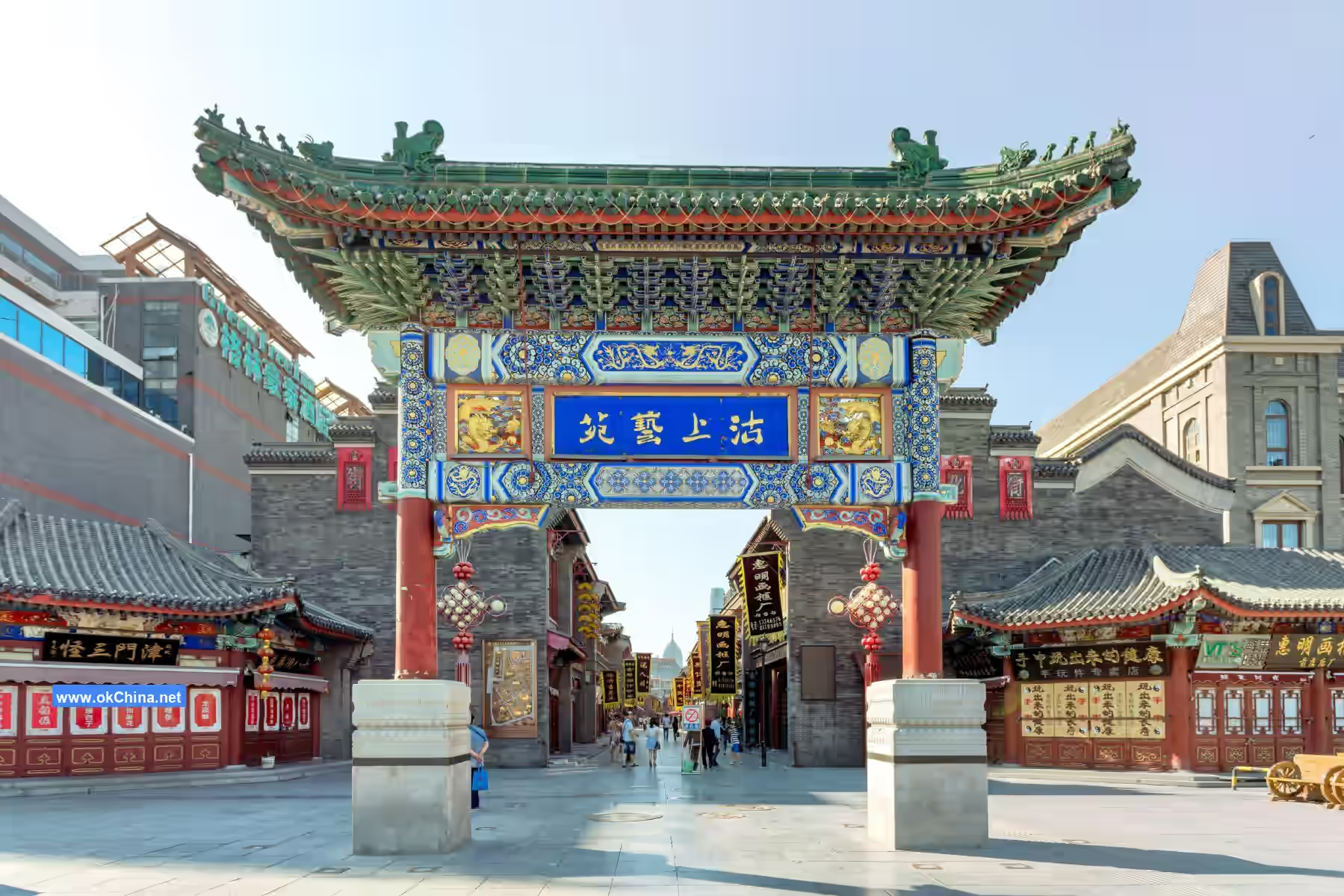
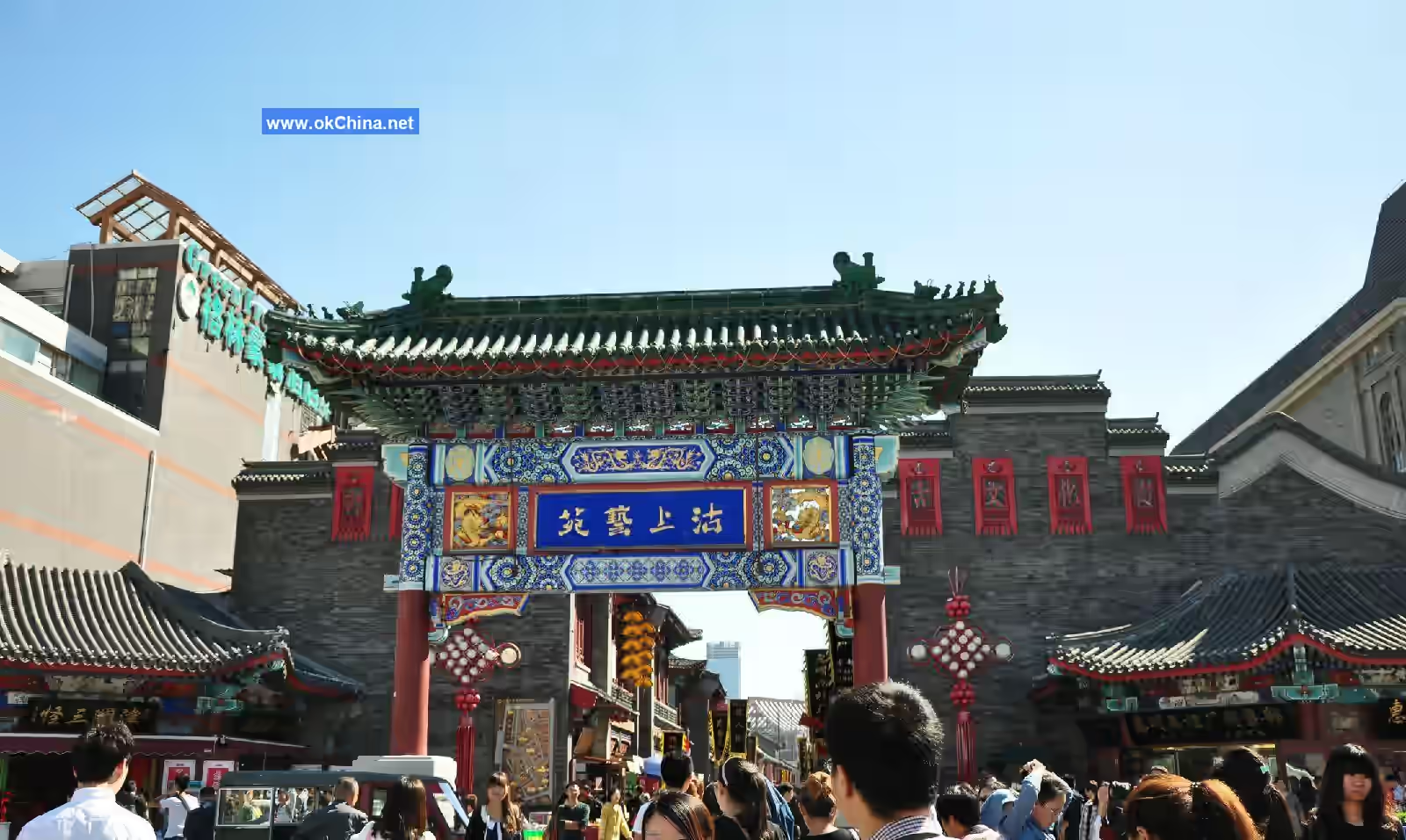
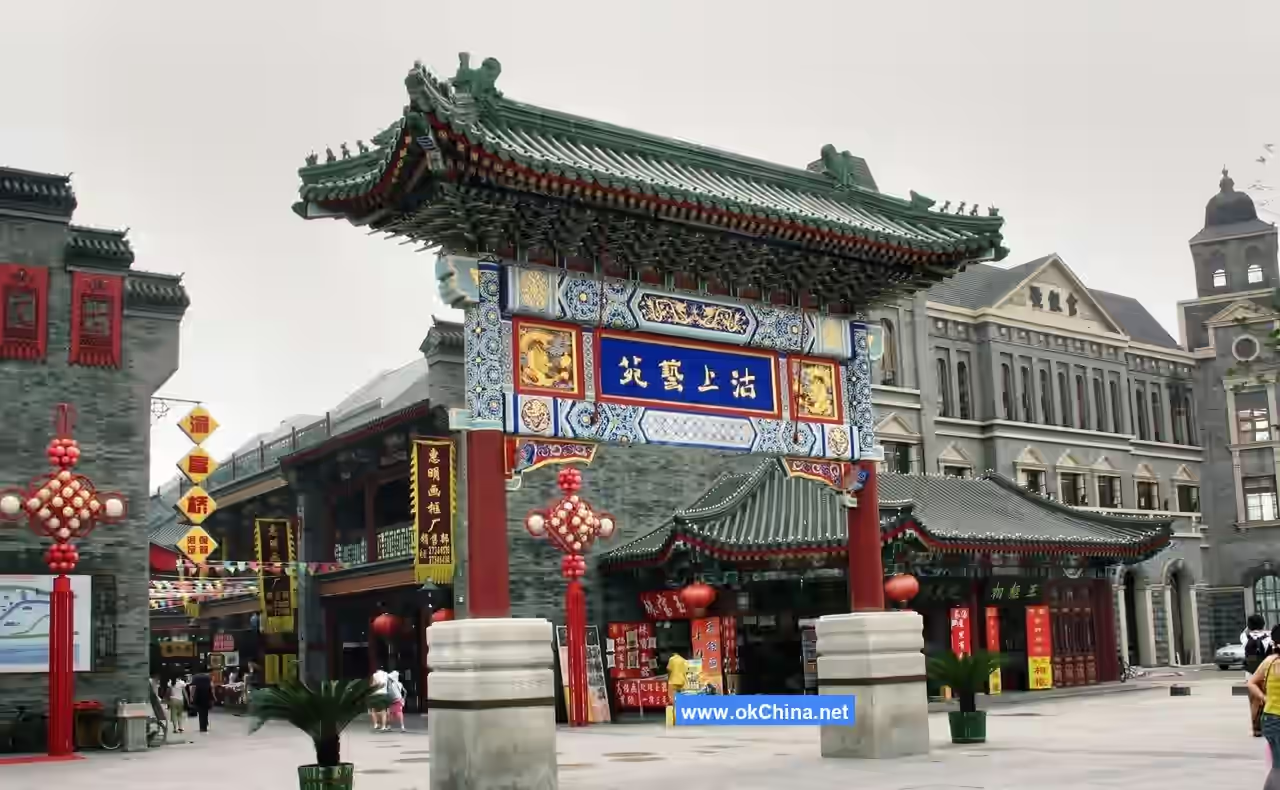
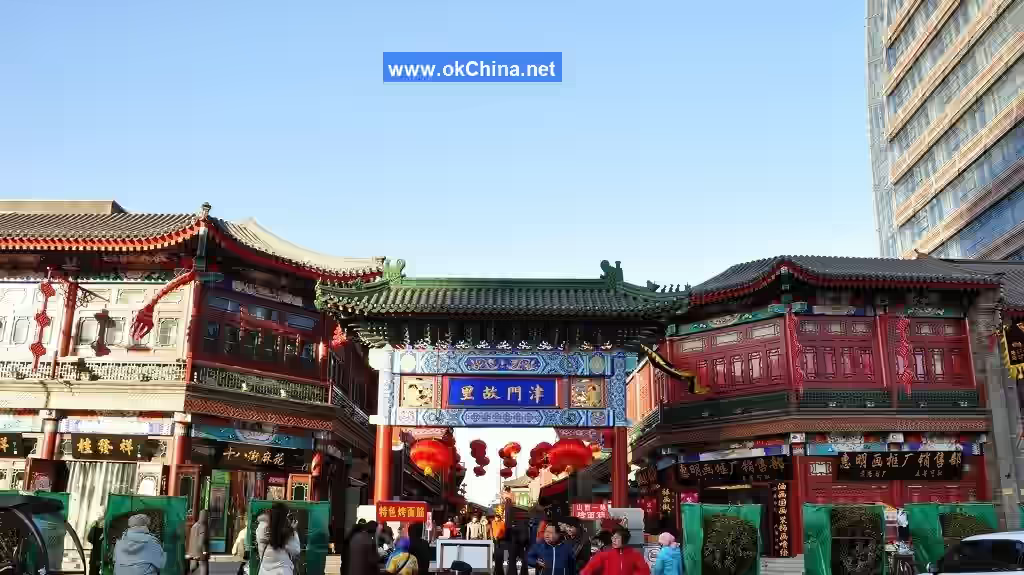
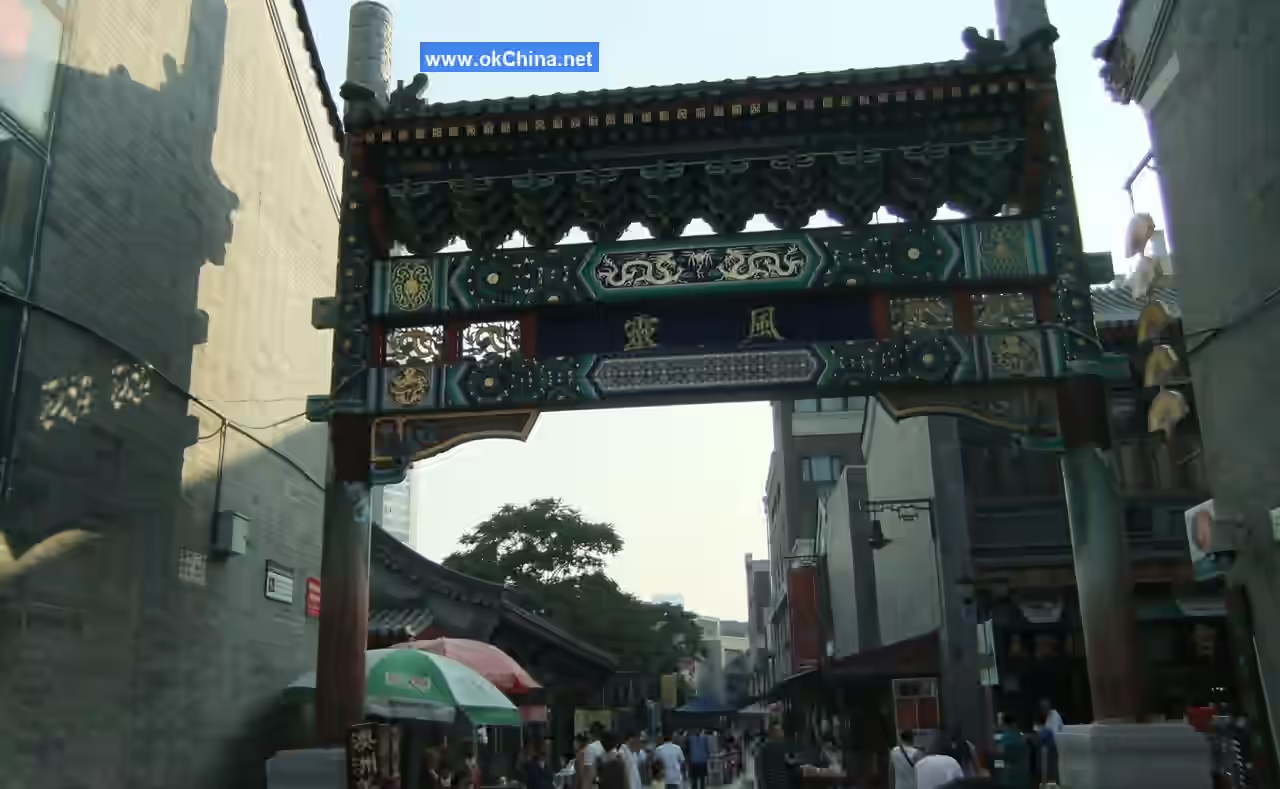
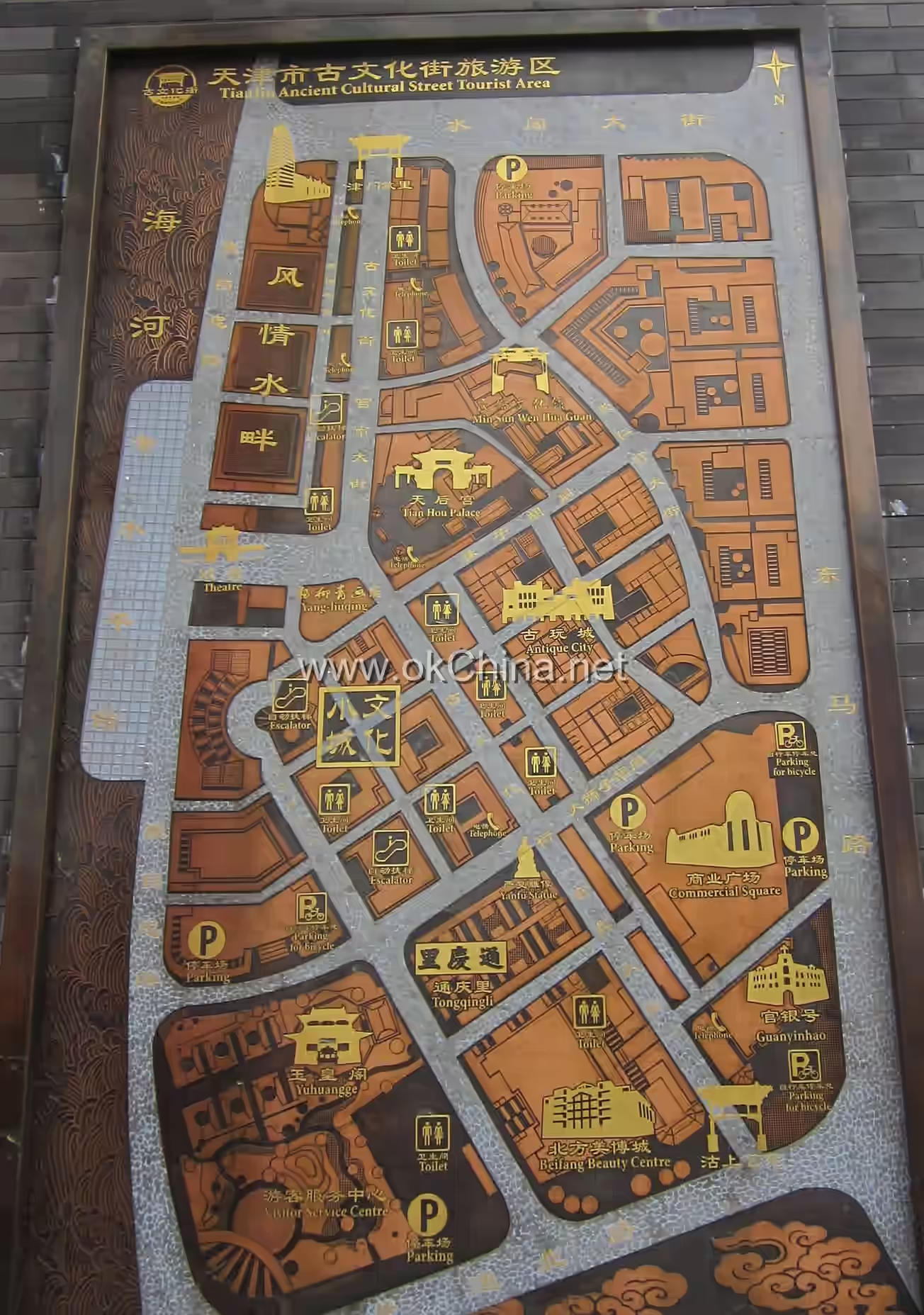
Tianjin Ancient Culture Street is located on the northeast corner of Nankai District, Tianjin, outside the East Gate and on the west bank of the Haihe River. It stretches from Laotieqiao Street (Gongbei Street) in the north to Shuige Street (Gongnan Street) in the south. At both the northern and southern entrances, there are memorial archways inscribed with "Jinmen Guli" and "Gushang Yiyuan." The street is 687 meters long and 5 meters wide, serving as a commercial pedestrian street and a national 5A-level tourist attraction. As one of the ten scenic spots in Tianjin, Tianjin Ancient Culture Street has consistently adhered to the operational characteristics of "Chinese flavor, Tianjin flavor, cultural flavor, and historical flavor," primarily focusing on the sale of cultural goods.
II. Historical Evolution
The Ancient Culture Street historical and cultural district is one of the birthplaces of Tianjin, representing the formation process of the old city area and possessing rich cultural connotations and historical value.
During the Yuan Dynasty, maritime transportation flourished. In the third year of the Taiding era (1326), an order was issued to "build the Tianfei Palace in Haijin Town," which is what people refer to as the Tianhou Palace.
After the completion of the Tianfei Palace, fishermen and boatmen from the north and south came to pray for safety. Boats gathered here, goods were exchanged, and people settled and multiplied. This is precisely why the Sancha River Estuary area became the earliest residential settlement in Tianjin, gradually forming the Gongnan and Gongbei markets, which later developed into Gongnan and Gongbei Streets. The preserved historical buildings such as the Tianhou Palace and Yuhuang Pavilion, along with the traditional urban fabric in the district, serve as important physical evidence of Tianjin's urban development history. They are powerful proof of Tianjin's birth and prosperity due to the river, and the spatial information recorded within them provides crucial historical materials for studying the evolution of Tianjin's urban space.
After the founding of the People's Republic of China, the Ancient Culture Street underwent two major renovations.
It was completed and opened on New Year's Day in 1986.
III. History and Culture
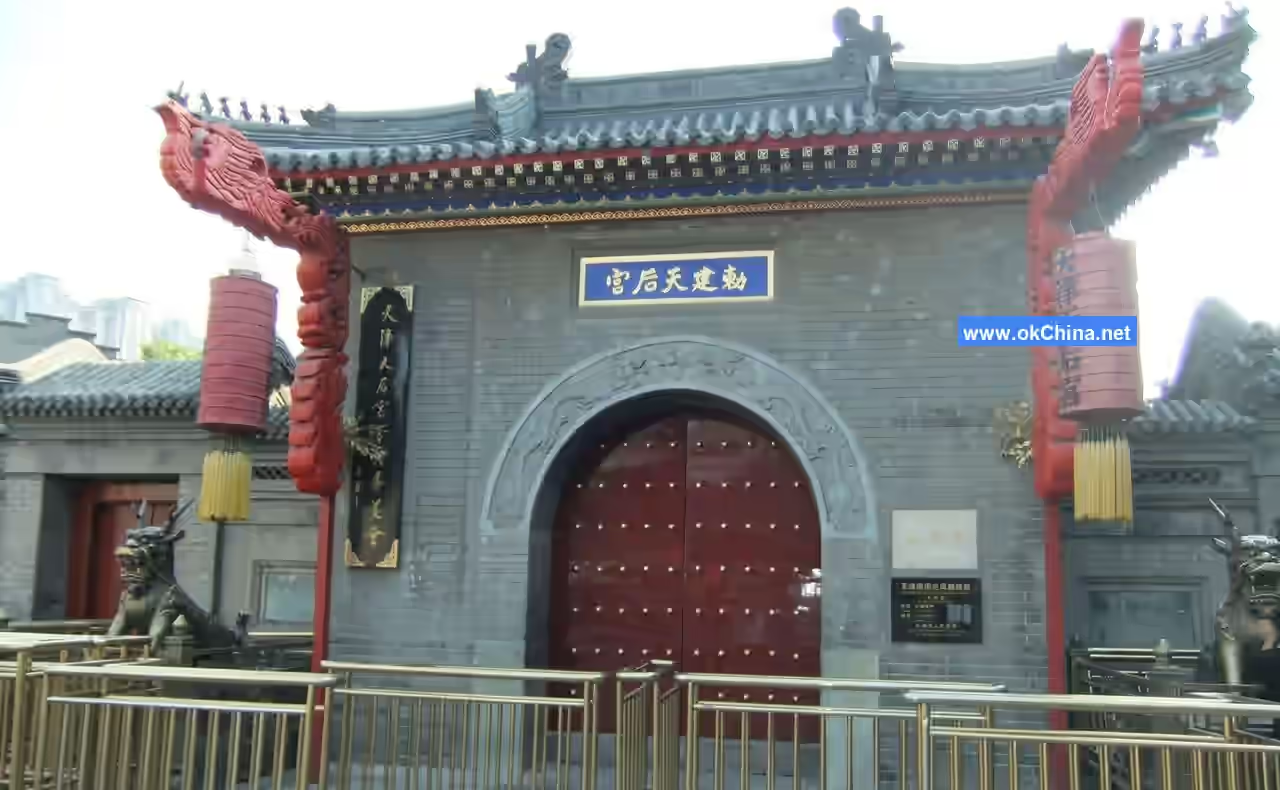
The Ancient Culture Street is composed of shops modeled after small-scale folk architecture from the Qing Dynasty. Centered around the Yuan Dynasty historical site, the Tianhou Palace, commonly known as "Niangniang Palace," it is the main tourist attraction on the Ancient Culture Street.
Tianjin borders the Bohai Sea to the east and is backed by the capital city, making it a hub for land and water transportation since ancient times. The Tianhou Palace was built during the peak of canal transportation as a temple to worship the sea goddess Tianhou for the protection of canal transport.
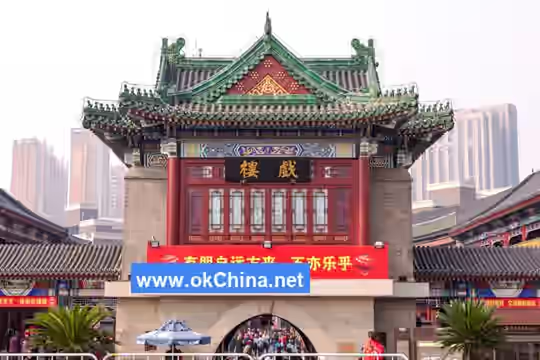
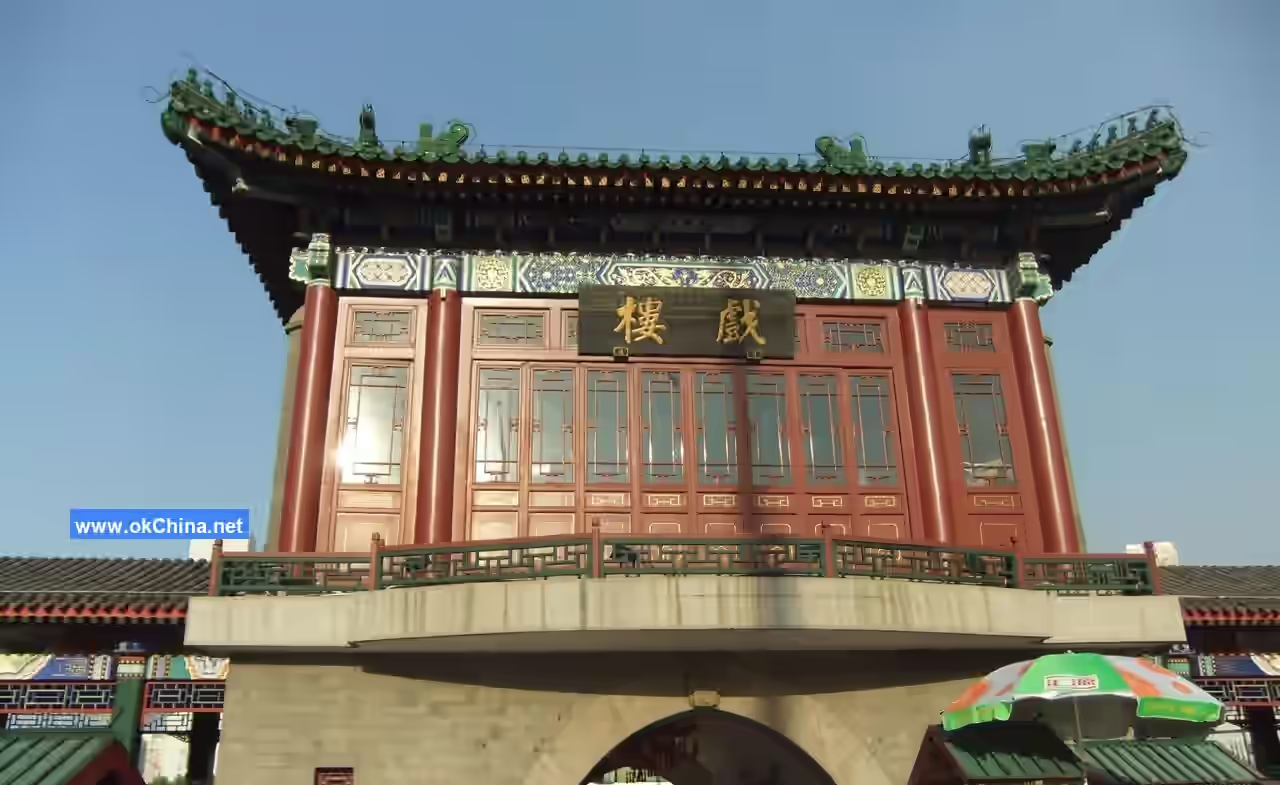
It was completed and opened on New Year's Day in 1986. Since ancient times, this area has been Tianjin's largest market for trade and New Year goods. Every spring, Tianjin's grand imperial fair—the auspicious day of Niangniang's birthday—is held here, featuring performances such as stilt walking, dragon lanterns, land boats, and lion dances. In the newly built Ancient Culture Street, apart from the archways at both ends and the theater in front of the palace, which are modeled after large-scale Qing Dynasty architecture, the remaining nearly hundred buildings are modeled after small-scale Qing Dynasty folk architecture.
IV. Main Structures
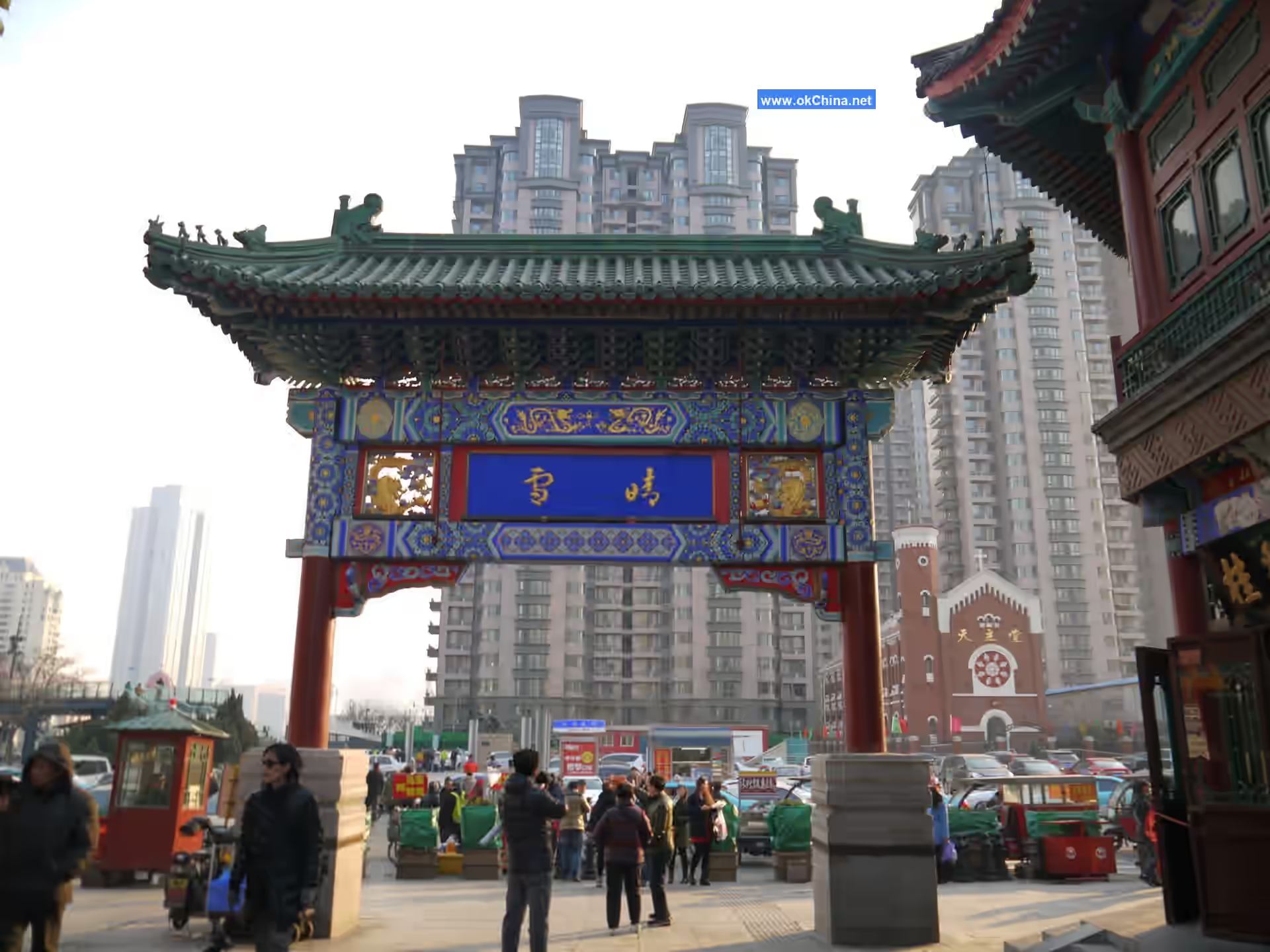
North and South Memorial Archways
Ancient Street Effect
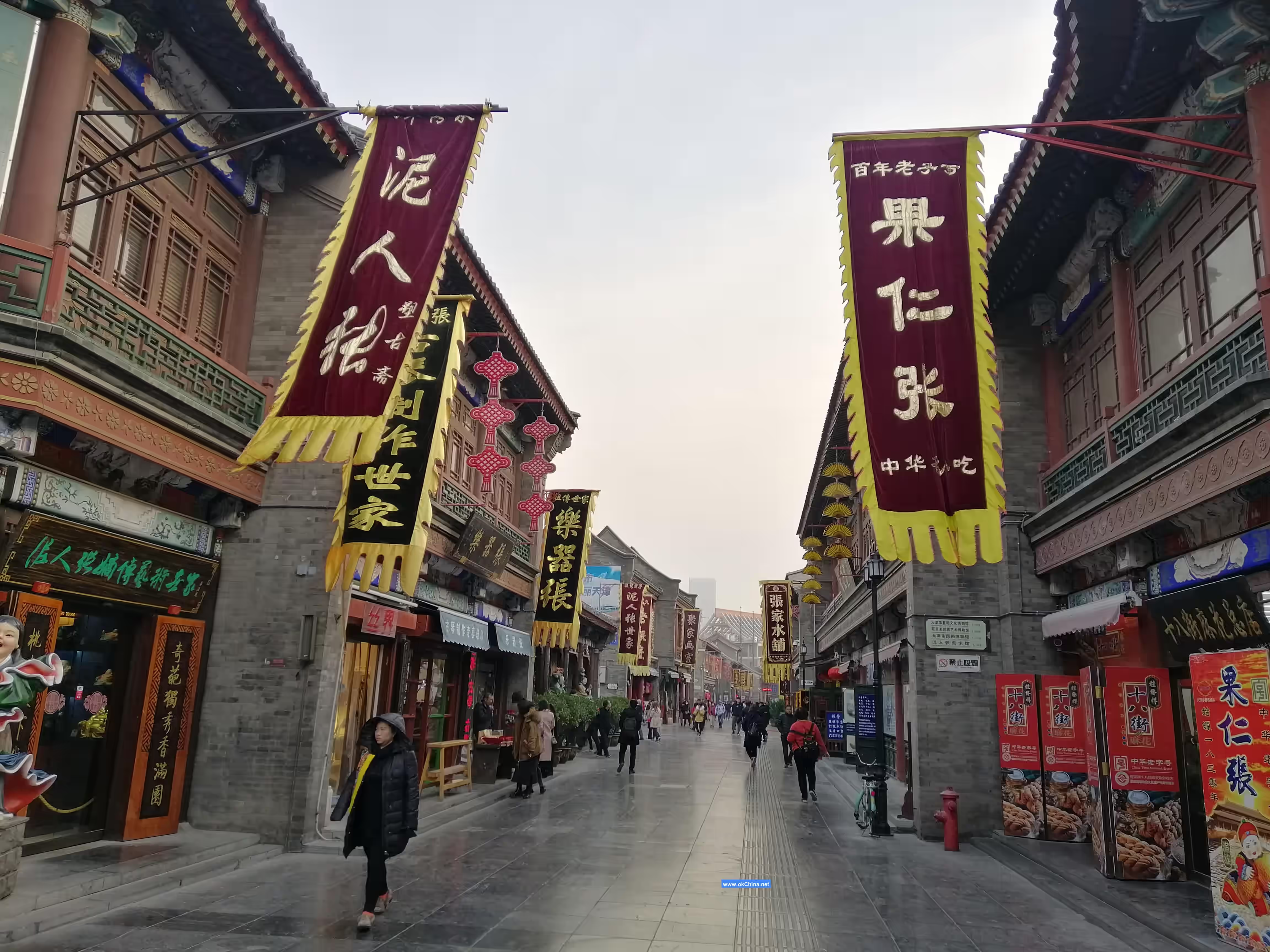
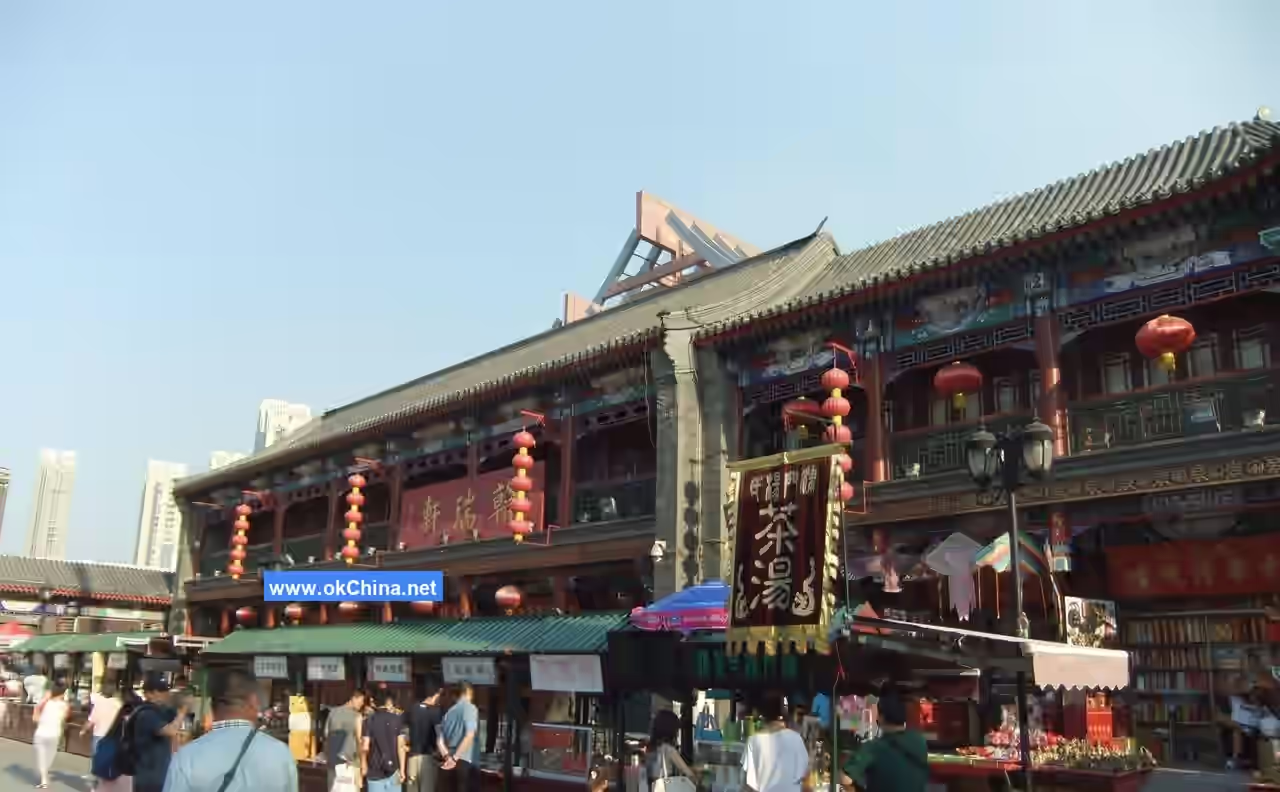
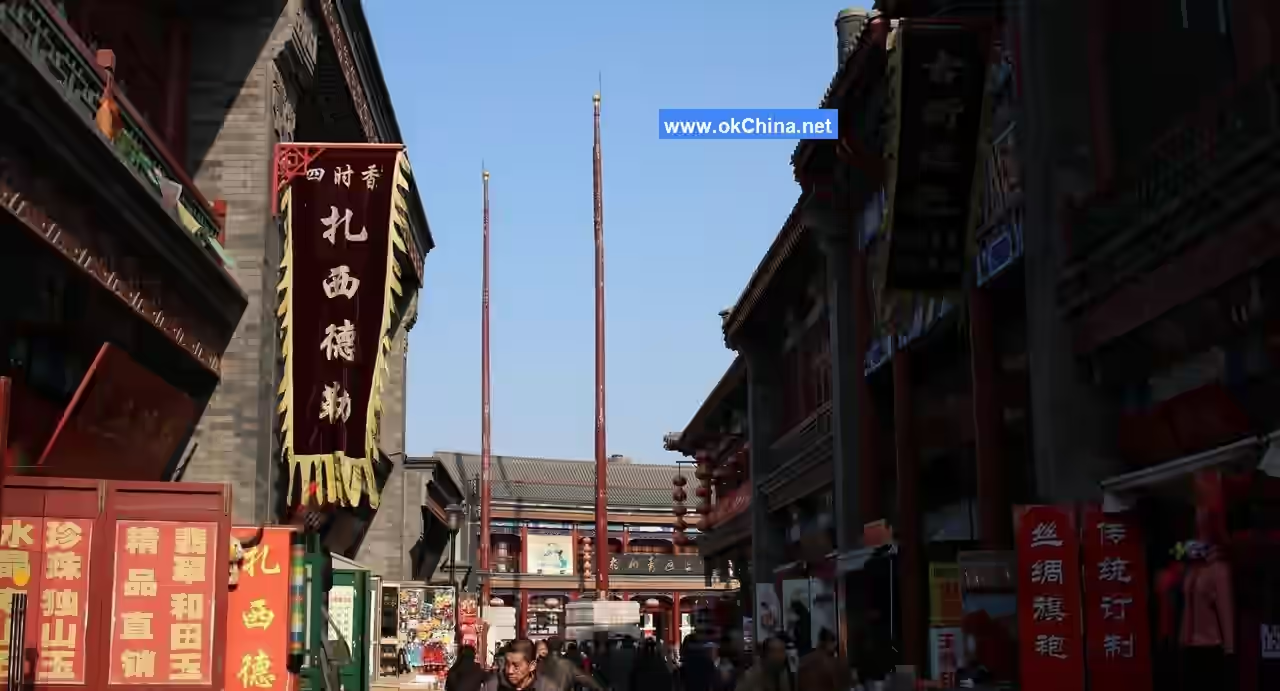
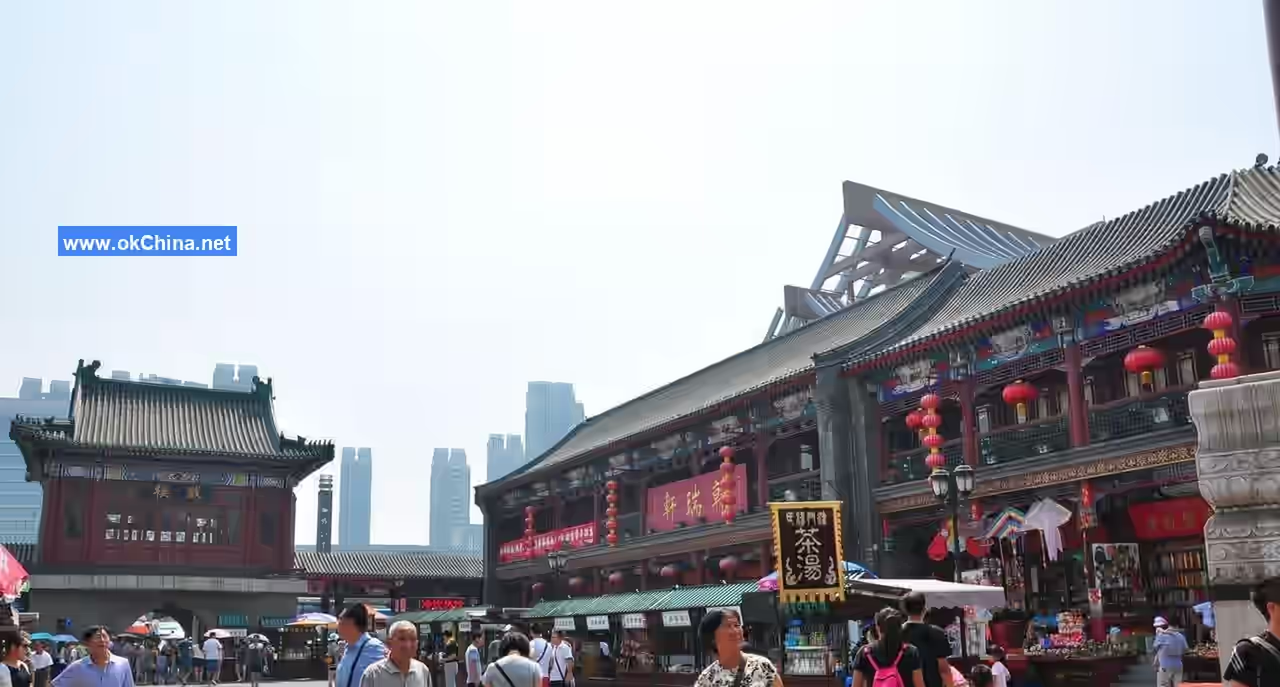
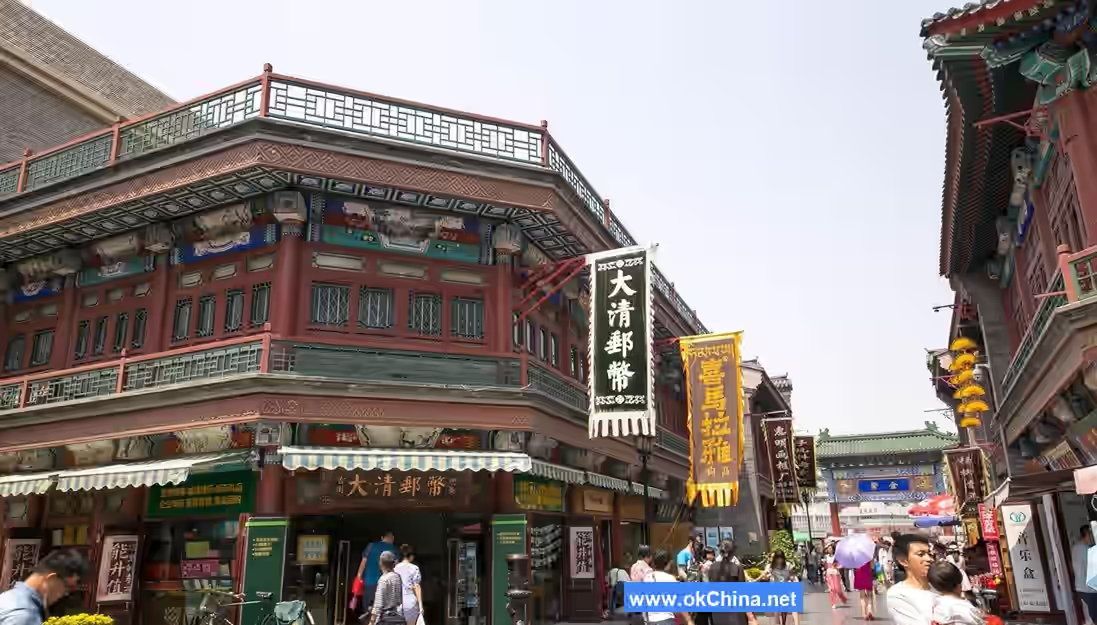
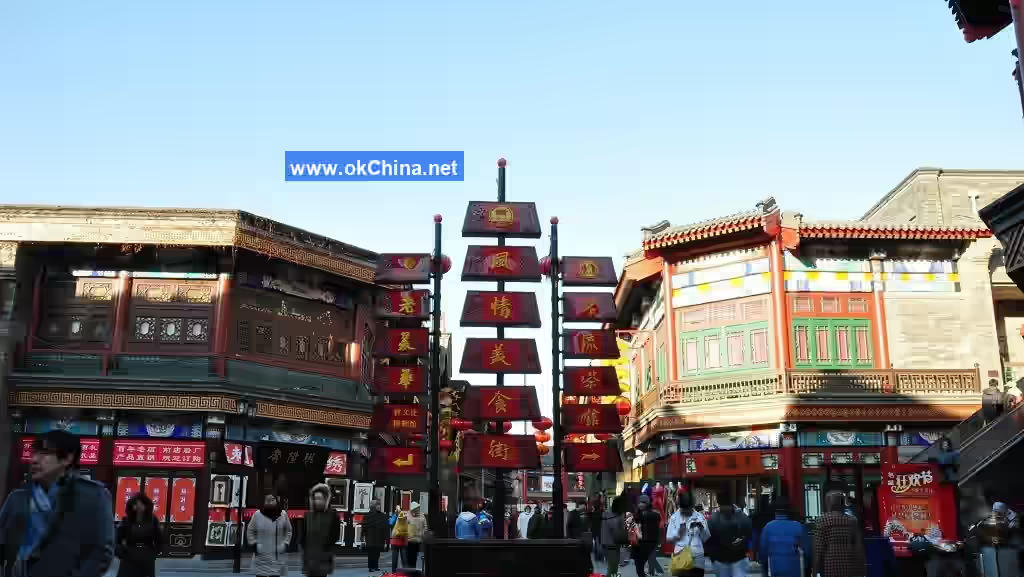
After renovation, the Ancient Culture Street still retains its original architectural style and basic layout. The architectural style is modeled after small-scale Ming and Qing Dynasty buildings, with heights of one or two stories. The street's layout follows natural curves and straight lines, creating a rhythmic and varied arrangement. The exterior building scales are moderate, and the shopfronts are arranged in an orderly manner, presenting the effect of a densely packed ancient street. The Ancient Culture Street is filled with a strong sense of antiquity, culture, Chinese flavor, and Tianjin flavor.
Explanation of Archway Inscriptions
Jinmen Guli:
"Jinmen" is another name for Tianjin, and "Guli" means an old place. "Jinmen Guli" refers to the old place of Tianjin Wei, implying the birthplace of Tianjin Wei.
Qingxue:
"Qing" means good weather, and "xue" (snow) carries the meaning of "washing." "Qingxue" describes the scenery just after a snowfall, with a clear sky and bustling streets. It metaphorically represents people's pure and cleansed feelings when they come here to offer incense to Tianhou Niangniang and pray for good days ahead.
Gushang Yiyuan:
Tianjin is located at the confluence of nine rivers, with abundant water sources and dense water networks since ancient times. Tianjin is also known as "Jingu," "Zhigu," and "Gushang," and within the Tianjin Wei area, there are "seventy-two Gu." "Gushang Yiyuan" means the cultural birthplace of Tianjin Wei.
Jin'ao:
"Jin" means gold or precious, as gold is the most valuable metal. "Ao" refers to the largest fish that, after leaping over the dragon gate, becomes an "Ao," an incarnation of the dragon. "Jin'ao" metaphorically gathers the best, highest-grade, and most precious things together. The Chinese idiom "独占鳌头" (dú zhàn áo tóu) means to take the lead and possess the best position and things.
Tianhou Palace
The Tianhou Palace is the central area of the Ancient Culture Street. In Tianjin, there has long been a saying: "First came the Tianhou Palace, then came Tianjin Wei." The Tianhou Palace enshrines "Tianhou Niangniang"—Lin Mo. In its square, there are two large flagpoles that have stood for over 600 years. On the east side of the square, near the Haihe River, there is a theater building, forming a relatively independent space in the Tianhou Palace square.
The Tianhou Palace mainly consists of 14 halls. They are: Front Hall, Main Hall, Medicine King Hall, Taiwan Hall, Phoenix Tail Hall, Scripture Depository, Guan Yu Hall, Yuanchen Hall, Qisheng Shrine, Wealth God Hall, Bixia Yuanjun Hall, Wang Sannainai Hall, and Liangyuan Pavilion.
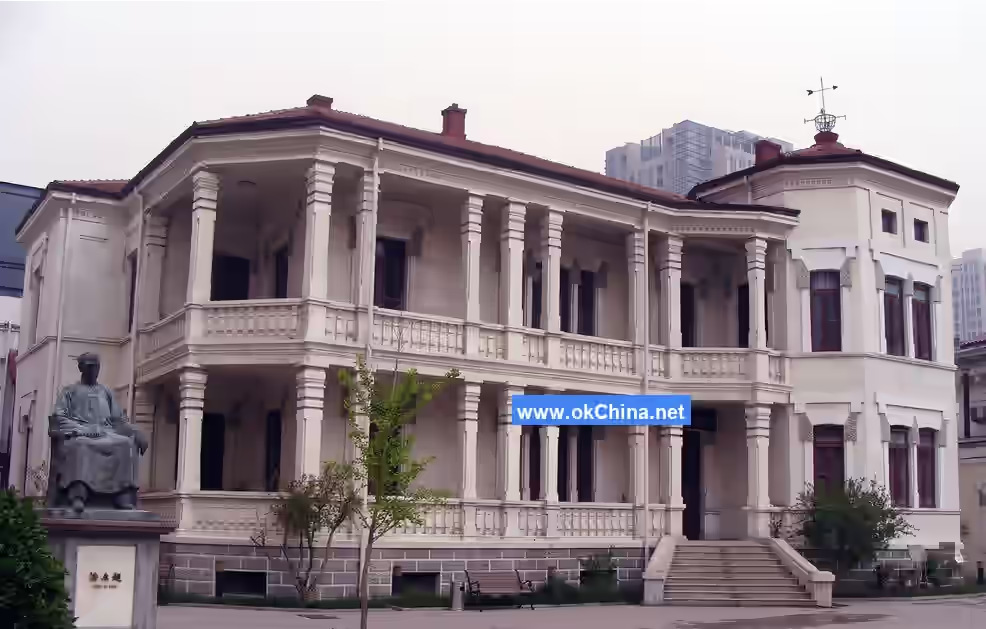
Tianyan Square
Former Residence of Yan Fu
Dashizi Hutong on the Ancient Culture Street is the location of Yan Fu's former residence, though the original house no longer exists. To explore historical culture, visits were made to Yan Fu's descendants and historical experts. Combining landscape design, Tianyan Square was built on the original site of Yan Fu's former residence, featuring a bronze statue of Yan Fu and stone carvings of "Tianyan Lun."
Yan Fu (1854–1921):
A native of Houguan, Fujian (present-day Minhou), he once changed his name to Song Guang, with the courtesy names Youling and Jidao. In his later years, he was known as Yuye Laoren. He gained fame in modern Chinese intellectual circles for translating Thomas Huxley's "Evolution and Ethics" ("Tianyan Lun"). He was a representative figure of China's modern reformist faction, using the theory of evolution as a weapon to awaken people to "strengthen themselves and protect their race" and save the nation from peril. Chairman Mao Zedong praised him as "representing the group of people who sought truth from the West before the emergence of the Chinese Communist Party" (Mao Zedong, "On the People's Democratic Dictatorship"), placing him alongside Hong Xiuquan, Kang Youwei, and Sun Yat-sen. Yan Fu also founded the "Guowen Bao" in Tianjin, actively promoting reform and national strength, leaving a glorious page in modern Chinese history.
Antique-style Colored Paintings
In the construction of the ancient cultural and commercial district, the Tianjin Real Estate Corporation adhered to the principle of "restoring the old as it was" while renovating the Ancient Culture Street. After renovation, while focusing on improving fire and earthquake resistance, heating, cooling, communication, public sanitation facilities, and parking lots were added, comprehensively enhancing the overall supporting functions of the entire district.
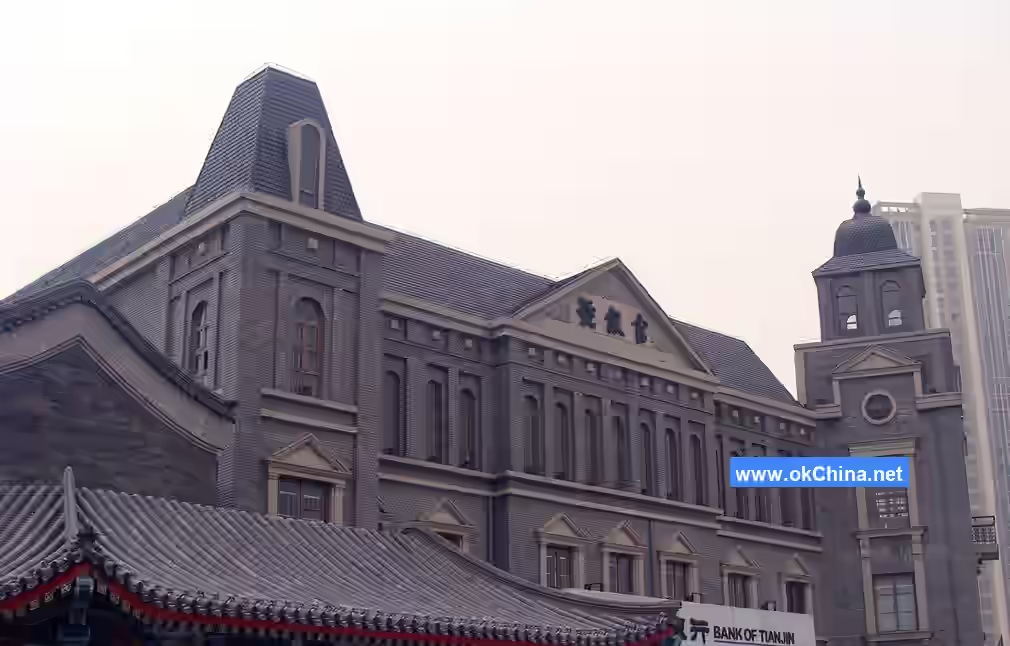
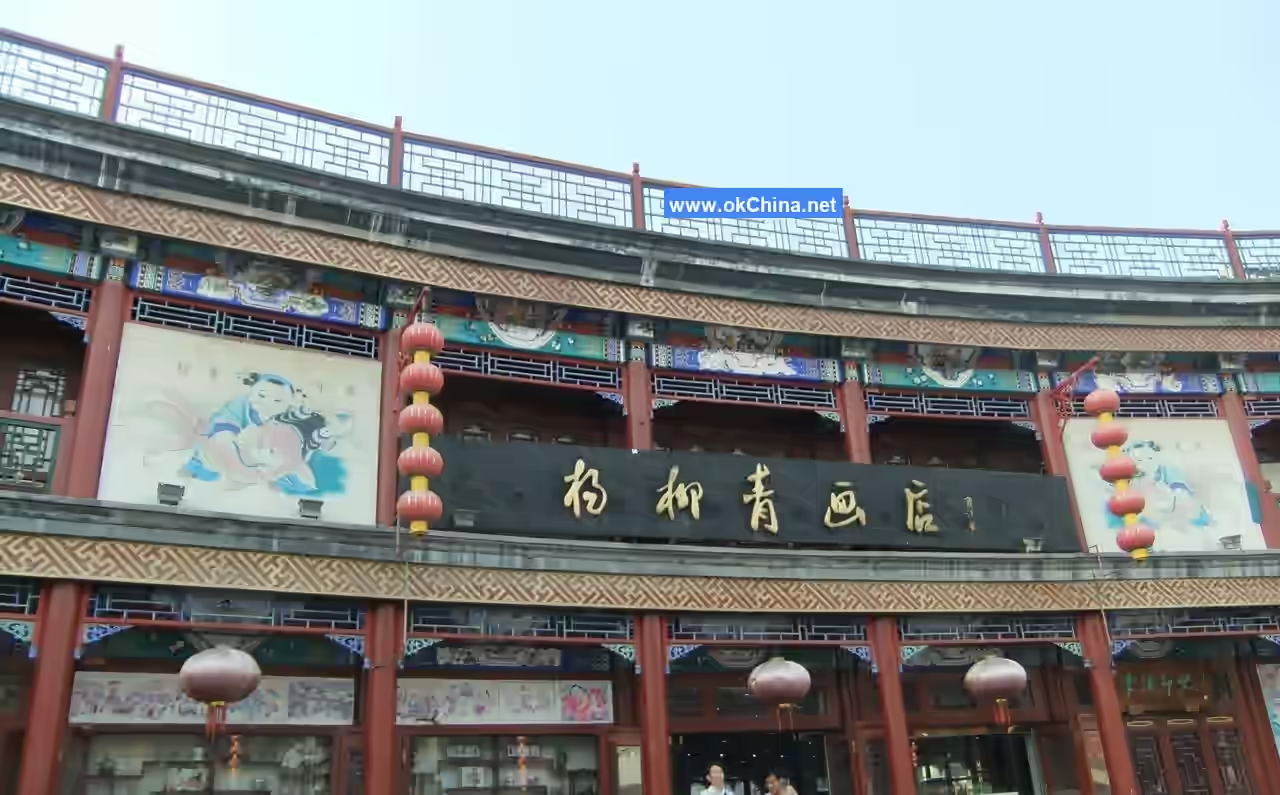
To elevate the cultural品位 of the district, the Tianjin Real Estate Corporation adopted an open bidding process, hiring multiple professional design units for strict screening and selecting the best. Unified layout and meticulous design were implemented for ground paving, sculptures, decorative lighting, and door and window styles. To continue Tianjin's historical and cultural lineage and showcase Tianjin's folk customs, Tongqing Lane—a century-old residential area—was preserved, along with the 600-year-old ancient building Yuhuang Pavilion and the Liu Family Courtyard, which blends Chinese and Western architectural styles. The memorial archways at both ends of the street were restored, with "Xuanzi Dajin"-style colored paintings making the twelve large characters—"Jinmen Guli" and "Qingxue" at the southern entrance, and "Gushang Yiyuan" and "Jin'ao" at the northern entrance—shine with golden light again. The "Tianjin Ancient Culture Street" stone tablet at the northern entrance of the street, sourced from billion-year-old fossils in Jixian County, Tianjin, is engraved with the inscription by Comrade Li Ruihuan, harmonizing with the renovated street scene of the Ancient Culture Street. The most distinctive feature is the antique-style colored paintings on the Ancient Culture Street. The square in front of the palace displays colored paintings depicting Tianjin's folk customs, illustrating the daily life of Tianjin Wei during the late Qing and early Republic periods. The antique-style colored paintings stretching from the south to the north of the street feature themes from China's Four Great Classical Novels—"Romance of the Three Kingdoms," "Water Margin," "Journey to the West," and "Dream of the Red Chamber"—on the west side, while the east side depicts themes from Chinese historical stories, ancient legends, and famous dramas, unfolding in the historical order of the Han, Tang, Song, Yuan, Ming, and Qing dynasties, immersing visitors in the vast river of history.
V. Operational Characteristics
In 1989, Qiaoxiang Pavilion, specializing in cloisonné, Su embroidery, and inside-painted crystal, settled on the Ancient Culture Street. Over the past 20 years, Qiaoxiang Pavilion has expanded its business scope in a timely manner and extended its sales channels to Germany (Bremen, Berlin, Lübeck), Japan (Osaka), Malaysia (Klang, Kuala Lumpur), and other places. Despite the increasing number of similar shops, Qiaoxiang Pavilion has always stood from the customer's perspective, attracting Chinese and foreign customers with new products and high quality.
Today, under the careful management of the shop owner, the variety of goods in Qiaoxiang Pavilion has increased to over a dozen types, including cloisonné, Su embroidery, inside-painted crystal, pearls, jadeite, jadeite bracelets, craft umbrellas, craft swords, and traditional Chinese clothing. There are also necklaces made of various materials such as crystal, pearls, and tourmaline, handcrafted with the owner's ingenuity. Qiaoxiang Pavilion hopes that during the deepening wave of internationalization, Chinese products with distinctive national characteristics can go abroad and bring glory to the country.
There are also many time-honored Tianjin shops, such as Guoren Zhang, Pitang Zhang, Bengdou Zhang, and Niren Zhang, which are nationally renowned brands.
VI. Folk Customs
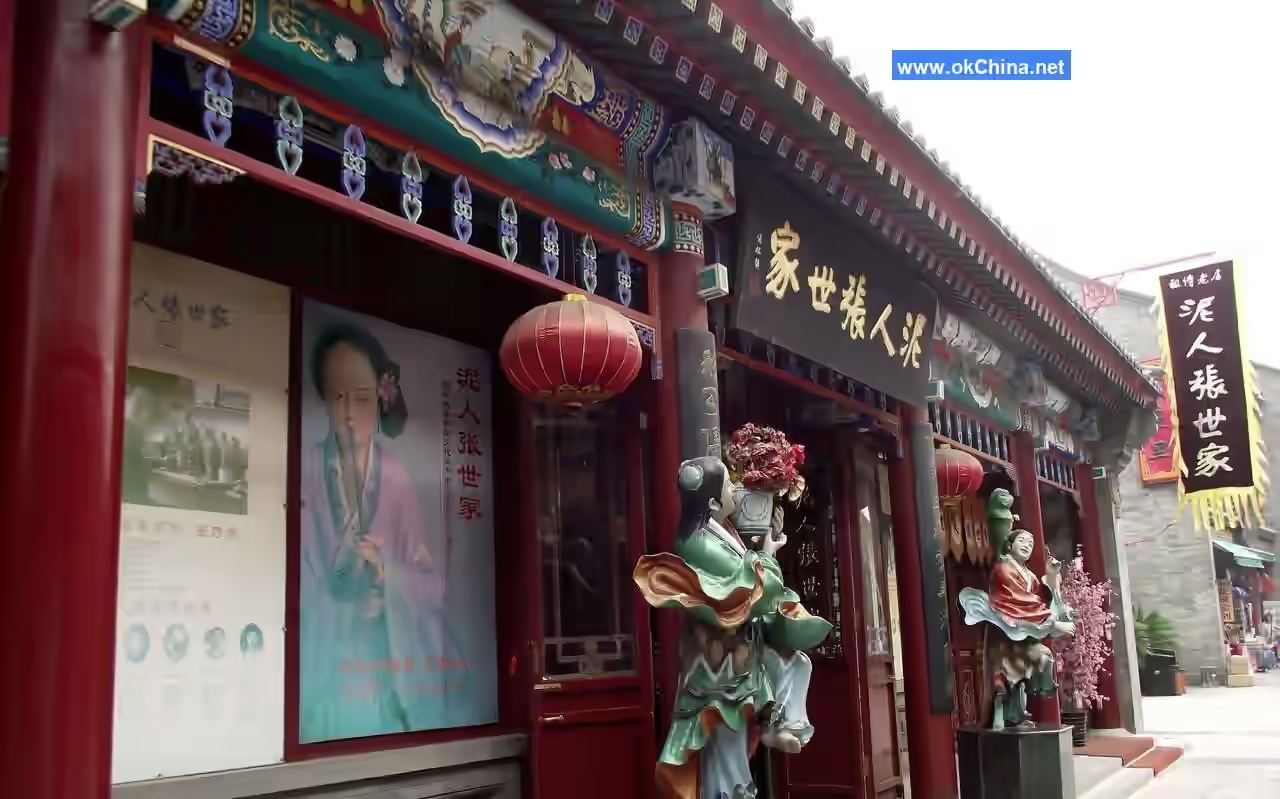
Tianjin Ancient Culture Street was completed and opened on New Year's Day in 1986. The overall architecture follows the folk architectural style of the Qing Dynasty, with the Tianhou Palace (Mazu Temple) located at the center of the street.Nearly a hundred shops line the entire street, including the Yangliuqing Painting Society specializing in locally distinctive Yangliuqing New Year paintings, the Clay Figurine Zhang Arts and Crafts Store dealing in painted clay sculptures, and the Sibao Tang and Chunzai Tang shops offering the "Four Treasures of the Study" and calligraphy and paintings by renowned artists. There is also the Cuivenzhai outlet of the Cultural Relics Company handling antiques and cultural artifacts, along with dozens of other stores selling over ten thousand varieties of high-quality crafts from across the country, such as cloisonné, double-sided embroidery, ivory and jade carvings, artistic ceramics, Chinese and Western musical instruments, and gold and silver ornaments. All goods are genuine, reasonably priced, and of excellent quality, with merchants attracting both domestic and international visitors through their commitment to quality and credibility.
Adhering to the business philosophy of "Chinese flavor, Tianjin flavor, cultural flavor, and antique charm," the Ancient Culture Street has operated diligently for 12 years, achieving a cumulative total turnover of 690 million yuan and generating 58 million yuan in profits and taxes. It has welcomed 12 million Chinese and foreign tourists, with visits from national leaders and Party officials.
During his inspection of the Ancient Culture Street, Comrade Deng Xiaoping remarked, "The Ancient Culture Street is very distinctive and is sure to attract foreigners." With its rich folk customs and warm, attentive service, the Ancient Culture Street welcomes visitors from around the world to tour and shop. It also aspires to expand internationally by participating in various commodity exhibitions and cultural exchanges worldwide.
The "Imperial Fair" of Tianjin Ancient Culture Street
The "Imperial Fair" of the Ancient Culture Street is another renowned traditional event. Originally called the "Goddess Fair," it is said to commemorate the birthday of the Sea Goddess Mazu at the Tianhou Palace on the 23rd day of the third lunar month. Since the Kangxi era of the Qing Dynasty, festivities have been held for four days leading up to the goddess’s birthday. During this time, folk performance troupes such as the Fagu Drum Society, Daluo Music Society, Heling Society, Chongge Society, Zhongfan Society, and Stilt-Walking Society showcase their skills along the street, creating a grand spectacle. After the restoration of the Ancient Culture Street, the "Imperial Fair" was revived annually on the 23rd day of the third lunar month. On this day, performances of dragon lantern dances, stilt-walking, land boat dances, yangko, Fagu drumming, Zhongfan flag balancing, lion dances, and martial arts fill the bustling streets, becoming a major event that enriches the cultural life of residents.
The Ancient Culture Street, seamlessly integrated with the city, offers a wide array of crafts from all over China and Tianjin itself. Among them, the locally distinctive Yangliuqing New Year paintings, "Clay Figurine Zhang" painted sculptures, and "Kite Wei" kites are particularly famous.
7. Street Features
Exquisite Architecture
The Ancient Culture Street covers a total built area of 22,000 square meters. Its ancient buildings are arranged in varying heights, winding and twisting, with every pavilion and eave meticulously designed. All structures feature gray walls and red pillars, finely joined bricks, and various styles of partition doors, windows, railings, and roof corners, exuding elegance, simplicity, and classical charm. Inscriptions, couplets, palace lanterns, banners, exquisite wood carvings, and over 1,500 vibrant painted murals further enhance the street’s classical cultural atmosphere.
Merchandise
The street primarily deals in three categories of goods:
① Cultural relics, antiques, and ancient furniture, such as the "Four Treasures of the Study," old books, traditional New Year paintings, jewelry, jade, and antique furnishings.
② Traditional folk goods, including toys like "Wawa Le," Clay Figurine Zhang’s painted sculptures, Yangliuqing New Year paintings with a history of over 300 years, Kite Wei’s kites, Brick Carver Liu’s brick engravings, Xiuzhuzhai’s Liu Hai diabolo, Jingdezhen porcelain, and Suzhou embroidery.
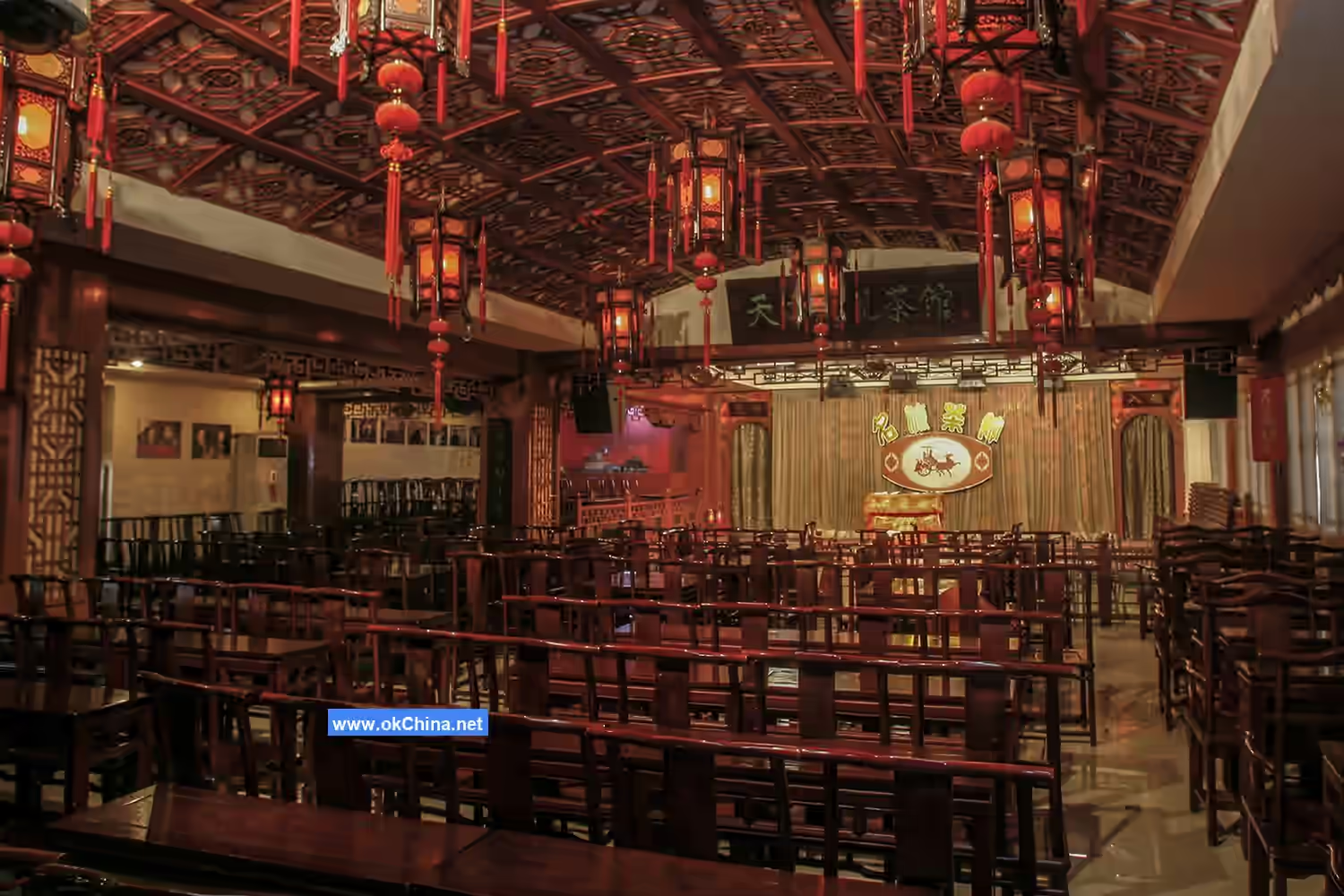
③ Restaurants, teahouses, eateries, and entertainment venues. The square in front of the Tianhou Palace and the open-air stage frequently host local operas and folk performances.
Famous Buildings
Tianjin Ancient Culture Street is one of the "Ten Scenic Spots of Tianjin," known as "Tracing Roots in the Old Hometown." Located outside the East Gate of Nankai District, the street features archways at its northern and southern entrances inscribed with "Jinmen Guli" (Old Hometown of Tianjin) and "Gushang Yiyuan" (Art Garden by the River). In ancient times, this area served as a venue for worshipping the sea god and gatherings of boatmen. The restored Ancient Culture Street includes the Tianhou Palace and the streets to its north and south. The Tianhou Palace, commonly known as the "Goddess Palace," is a major tourist attraction on the street.
Built in 1326 AD, Tianjin’s Tianhou Palace hosts the "Imperial Fair" annually, featuring performances such as stilt-walking, dragon lantern dances, land boat dances, and lion dances, creating a lively and bustling atmosphere. Today, the Tianhou Palace has been transformed into the Tianjin Folk Customs Museum, showcasing the history of Tianjin, the Tianhou Palace, and the evolution of the Imperial Fair. Exhibits include Ming Dynasty city bricks, models of Qing Dynasty grain transport, various folk artifacts (wedding processions, costumes, etc.), and Qing Dynasty water machines.
In addition to the Tianhou Palace, the street is home to the Yuhuang Pavilion, Tianjin’s largest Taoist hall with a history of 600 years; Tongqing Lane, a cluster of courtyard houses most characteristic of Tianjin; and the Liu Family Compound, one of Tianjin’s "Eight Great Families," blending Chinese and Western architectural styles. The street also hosts numerous specialized shops dealing in antiques, calligraphy and paintings, the "Four Treasures of the Study," stone rubbings, ancient books, Yangliuqing New Year paintings, Clay Figurine Zhang sculptures, and Tianjin kites.
With its unique architectural style, rich historical and cultural heritage, diverse business offerings, and vibrant folk customs, Tianjin Ancient Culture Street has become a cultural landmark of Tianjin. Both local residents and visitors can experience the historical depth and cultural charm of Tianjin here.
8. Cultural Activities
The Tianjin Ancient Culture Street Tourist Area (Jinmen Guli) organizes a series of festive folk and commercial cultural activities, blending ancient charm with modern style. These activities allow visitors to fully immerse themselves in the rich antique, cultural, and local flavors of Tianjin. The street hosts folk performances such as flower fairs, dragon and lion dances, celebratory drumming, Peking opera excerpts, and magic shows, creating significant cultural influence. It also organizes festive events like the New Year and Spring Festival celebrations, the Yuhuang Fair for spring blessings, the Lantern Festival series, the "Dragon Head Raising" Folk Culture Festival, the Mazu Festival traditional cultural activities, May Day International Labor Day folk events, National Day special folk activities, and the Double Ninth Festival chrysanthemum viewing and mountain climbing. These activities continuously enrich the cultural lives of residents and tourists. Additionally, the street meticulously plans commercial cultural events such as folk culture temple fairs, tourism cultural festivals, cultural night markets, carnival shopping festivals, the Wenwan Walnut and Gourd Culture Festival, and the New Year shopping festival.
Since the Kangxi era of the Qing Dynasty, festivities have been held for four days leading up to the Sea Goddess’s birthday. During this time, folk performance troupes such as the Fagu Drum Society, Daluo Music Society, Heling Society, Chongge Society, Zhongfan Society, and Stilt-Walking Society showcase their skills along the street. After the restoration of the Ancient Culture Street, the "Imperial Fair" was revived annually on the 23rd day of the third lunar month. [16] Originally called the "Goddess Fair," it was renamed the "Imperial Fair." The goddess "Tianhou Shengmu" is commonly known as "Old Goddess." During times of peace and prosperity, merchants, farmers, officials, and gentry held deep reverence for the goddess. On the 23rd day of the third lunar month, her birthday, devout followers established solemn rituals and grand ceremonies to parade the goddess, seeking blessings and warding off disasters. On this day, performances of dragon lantern dances, stilt-walking, land boat dances, yangko, Fagu drumming, Zhongfan flag balancing, lion dances, and martial arts take center stage.
Comments
Post a Comment