Ningbo Tianyi Pavilion · Moon Lake Scenic Area
1. Introduction
1.1 Tianyi Pavilion
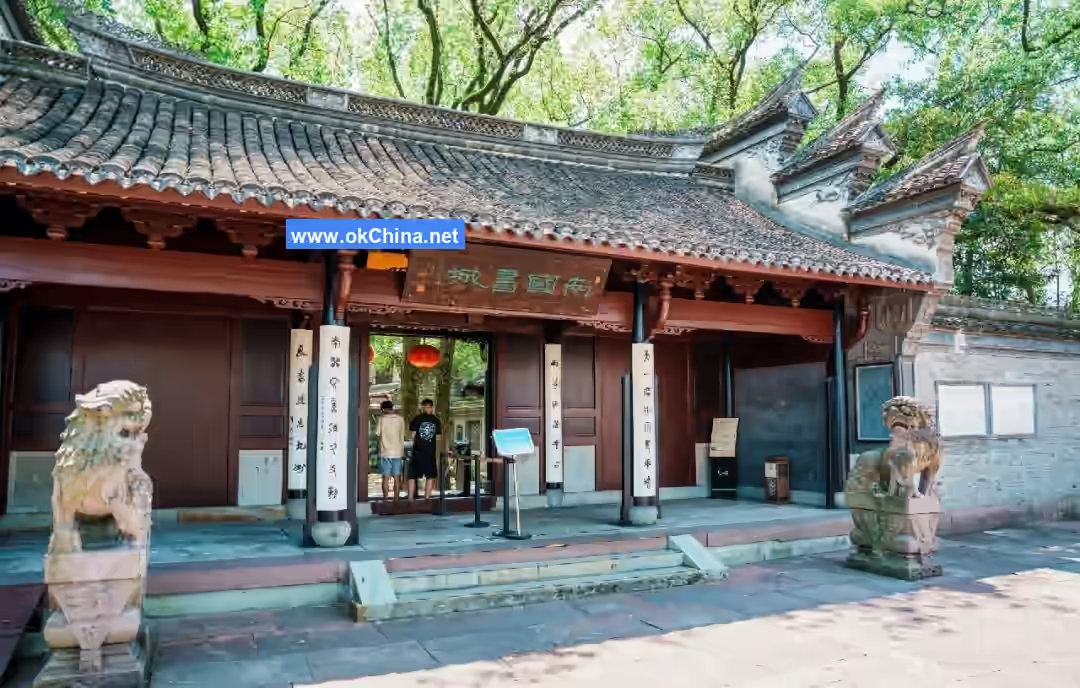
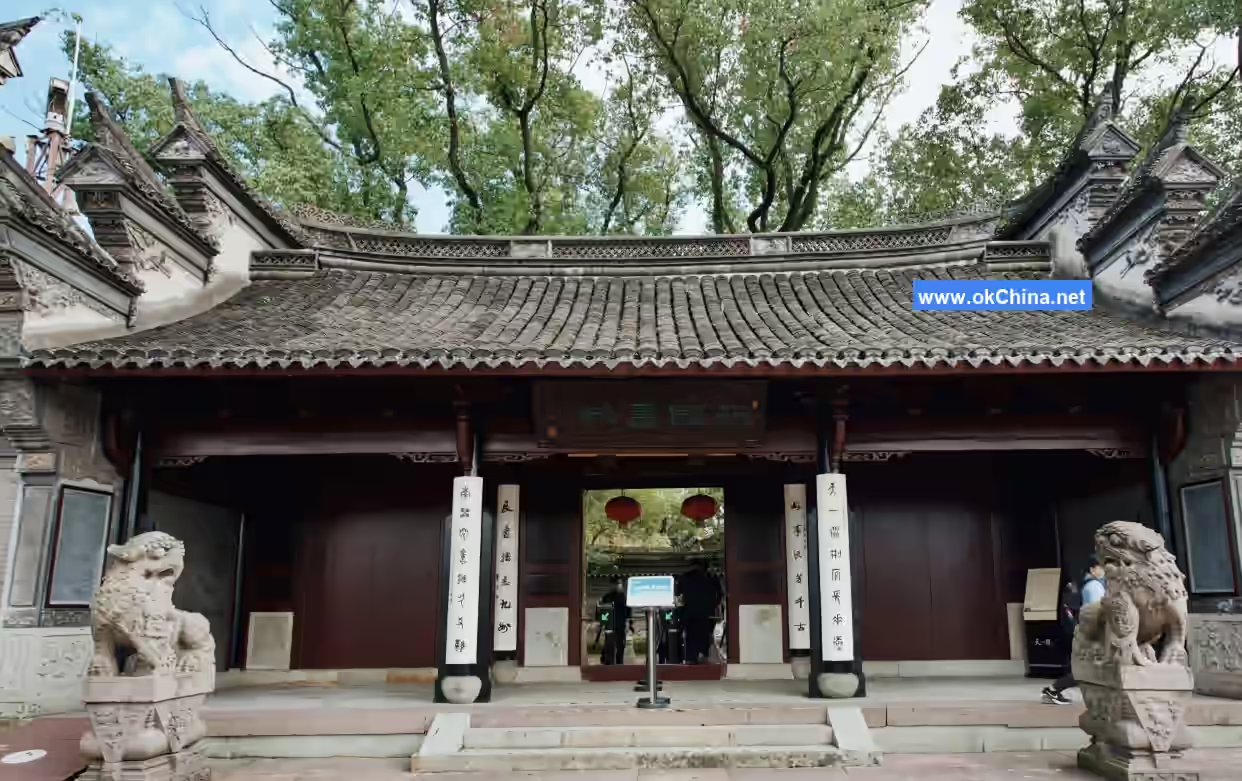
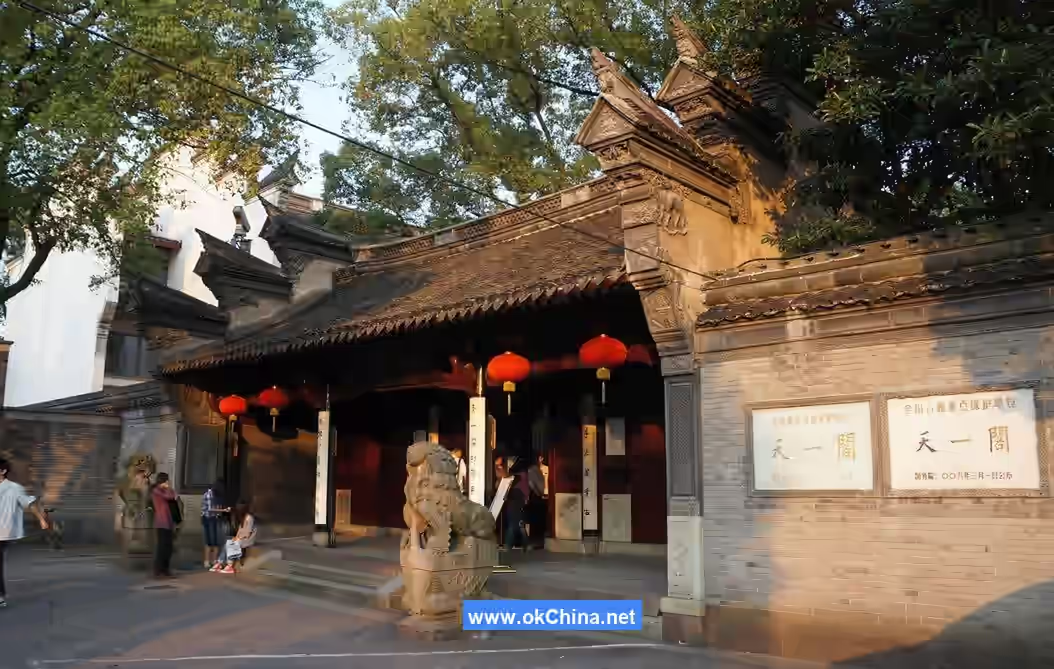
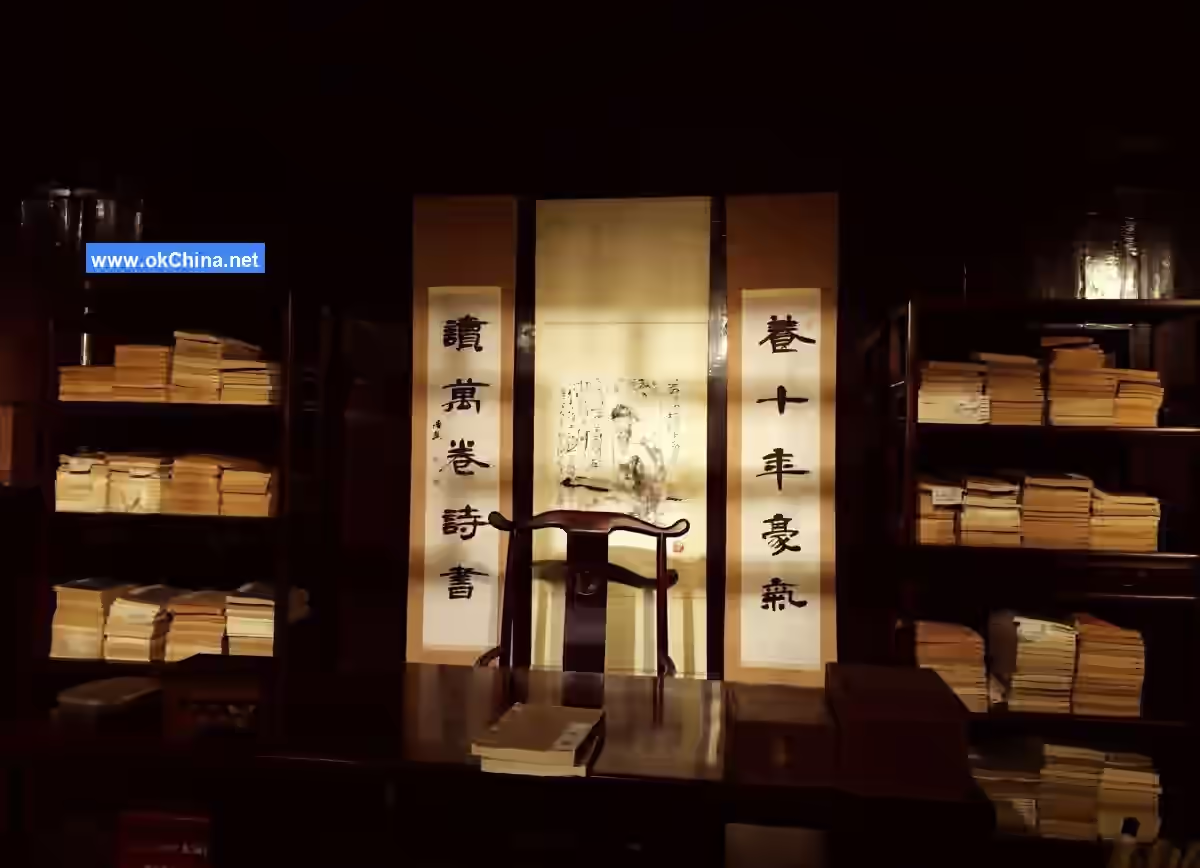
Tianyi Pavilion, located in Haishu District, Ningbo City, Zhejiang Province, was constructed between the 40th and 45th years of the Jiajing era of the Ming Dynasty (1561–1566). It was built under the direction of Fan Qin, a retired Vice Minister of the Ministry of War of the Ming Dynasty. Covering an area of 26,000 square meters, it has a history of over 400 years. Tianyi Pavilion is one of the oldest surviving private library buildings in China and the oldest existing library in Asia.
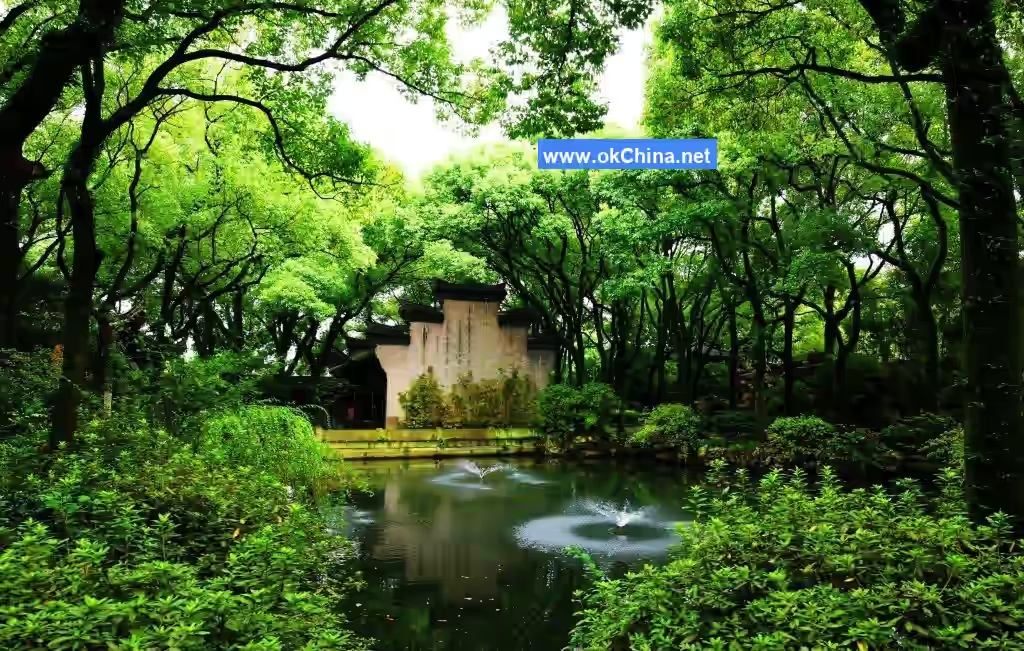
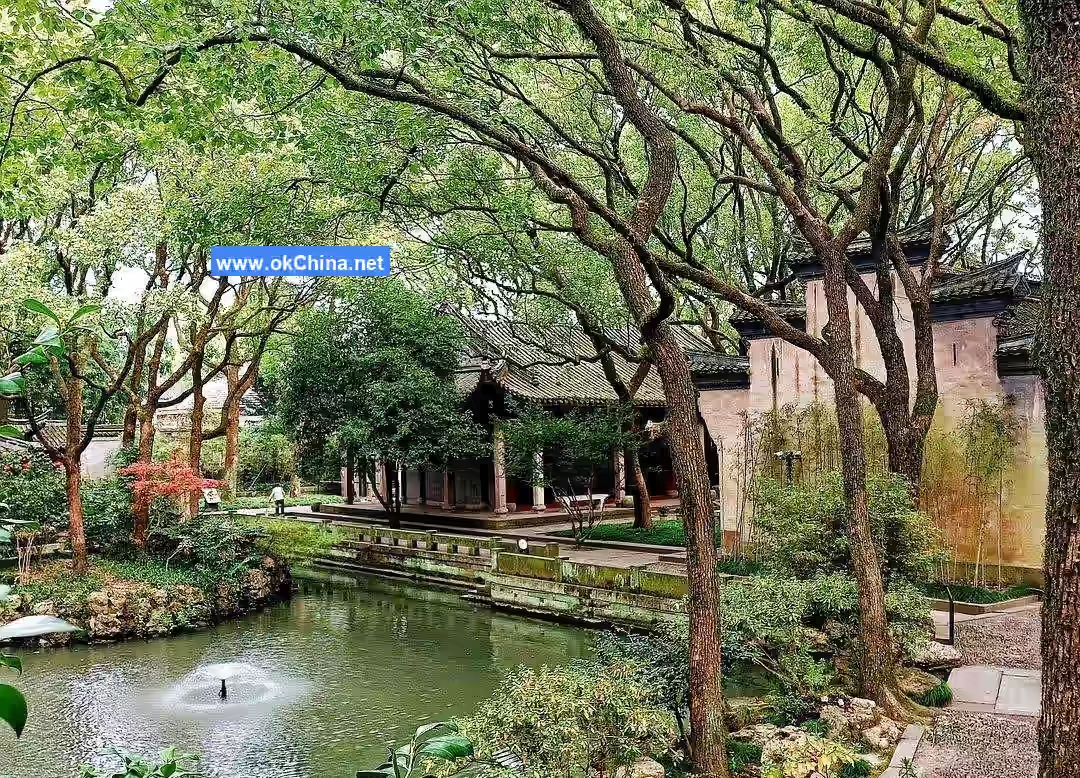
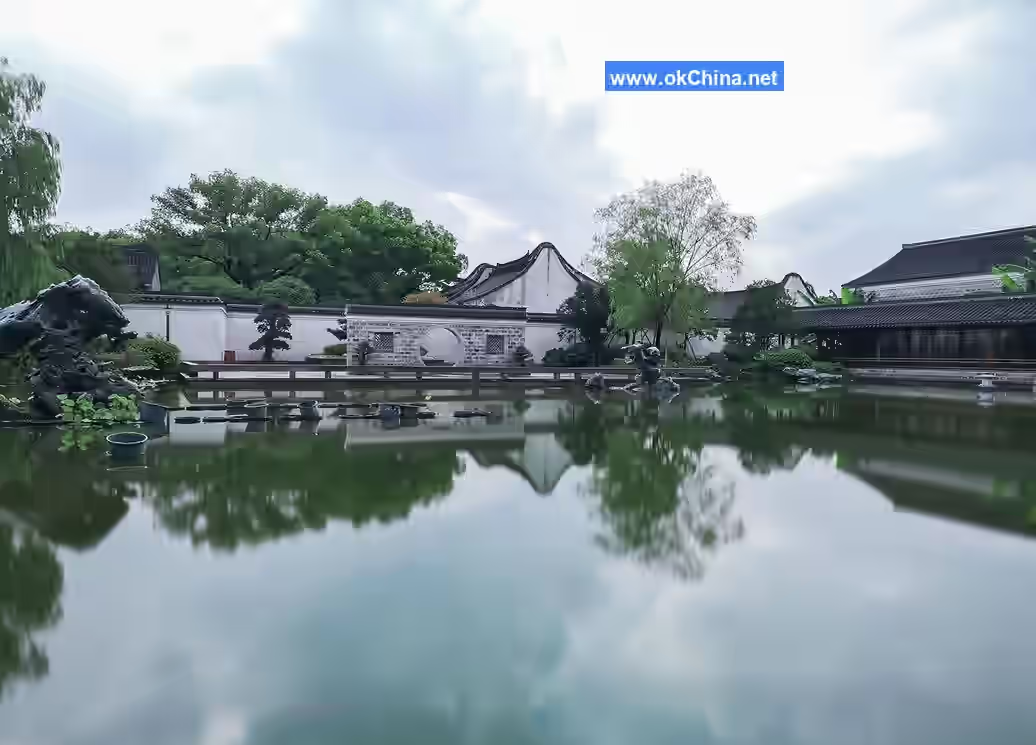
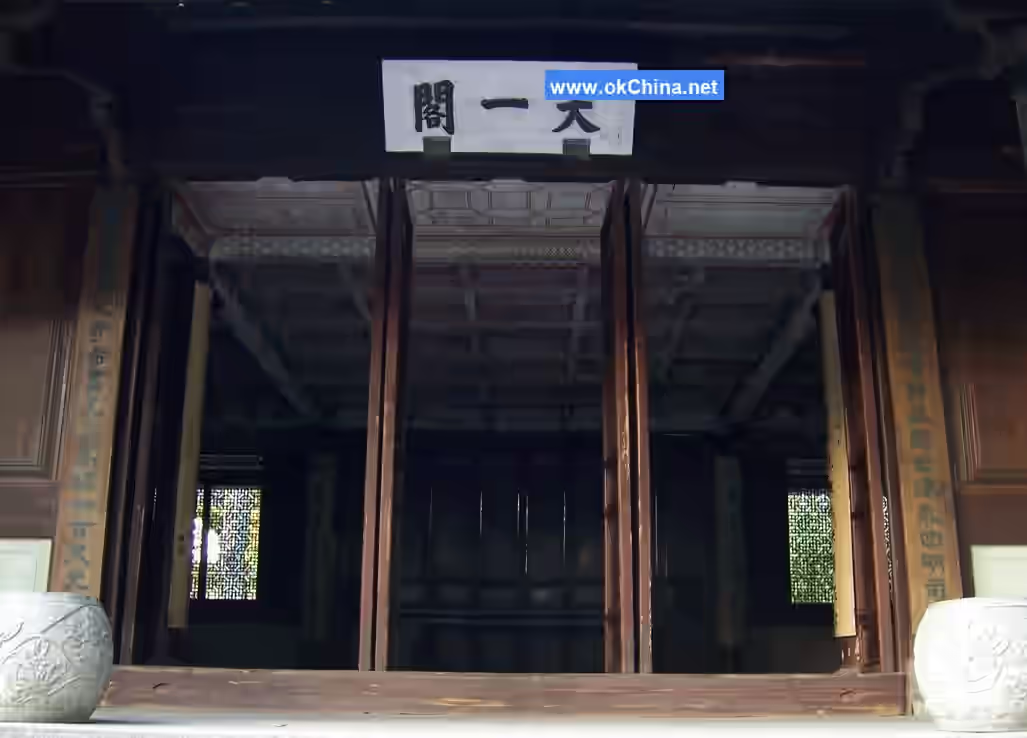
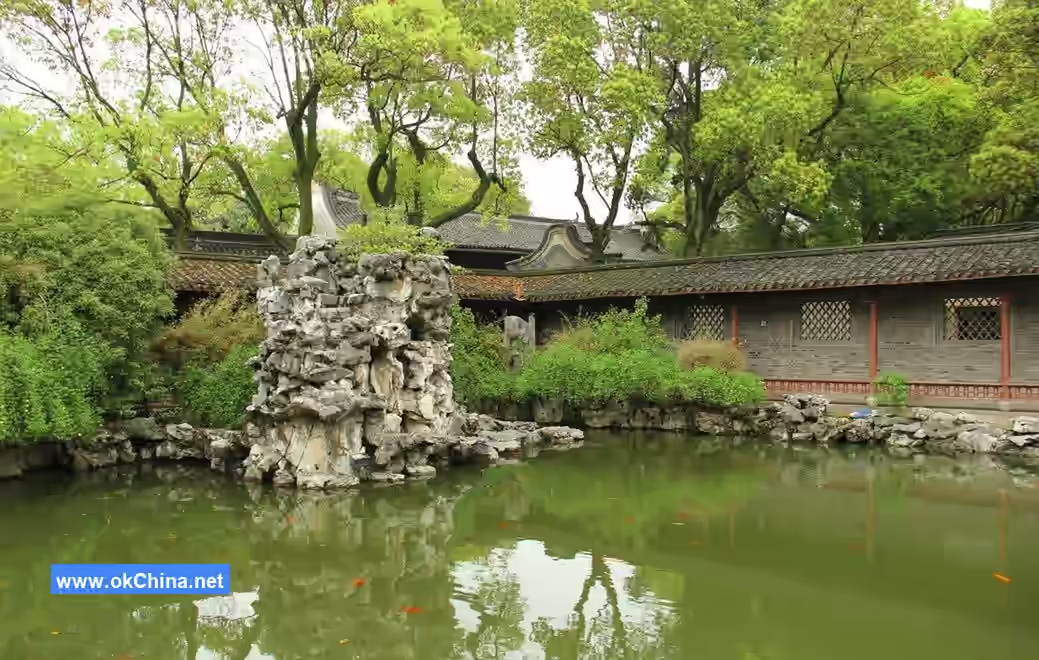
The Tianyi Pavilion library building faces south. It is a two-story brick-and-wood structure with a flush gable roof (ying shan ding) and double stories, standing 8.5 meters tall with a sloping roof covered in grey tiles. The ground floor consists of six bays in both width and depth, while the upper floor, except for the staircase area, is one large open space divided by bookcases. In front of the pavilion, the "Tianyi Pond" was dug, connecting to Moon Lake. The garden's overall layout is based on the themes of "Fortune, Prosperity, and Longevity," featuring rockeries forming scenic spots like "Nine Lions and One Elephant." Tianyi Pavilion and its surrounding gardens embody the characteristics of Jiangnan courtyard-style gardens. The collection and architecture of Tianyi Pavilion provide precious physical materials for the study of calligraphy, local history, stone carvings, stone structures, and residential architecture in eastern Zhejiang.
1.2 Moon Lake
Moon Lake, also known as West Lake, is located in the southwest of Ningbo's urban area. It was excavated during the Zhenguan period of the Tang Dynasty and is a famous scenic spot in downtown Ningbo. The lake is long and narrow, covering an area of approximately 0.2 square kilometers. The Ten Islets of Moon Lake were constructed during the Song and Yuan Dynasties. During the Shaoxing era of the Southern Song Dynasty, numerous pavilions, towers, and terraces were built, and flowers and trees were planted throughout the seasons, forming the ten scenic islets on Moon Lake. These ten islets are: Bamboo Islet (Zhuyu), Moon Islet (Yuedao), and Chrysanthemum Islet (Juhuazhou) on the east side of the lake; Flower Islet (Huayu), Bamboo Islet (Zhuzhou), Willow Embankment (Liuting), and Fragrant Grass Islet (Fangcaozhou) in the middle of the lake; and Misty Islet (Yanyu), Snow Embankment (Xueting), and Lotus Islet (Furongzhou) on the west side. Additionally, three causeways and seven bridges complement each other beautifully. Since the Song and Yuan Dynasties, Moon Lake has been an academic center of eastern Zhejiang and a gathering place for literati and scholars. Prominent figures such as the great Tang poet He Zhizhang, the Northern Song minister Wang Anshi, the Southern Song Prime Minister Shi Hao, the renowned Song scholar Yang Jian, and the great historian Wan Sitong of the late Ming and early Qing periods either lived in seclusion, lectured, served as officials, or wrote books here, leaving indelible marks on Moon Lake. Furthermore, in ancient times, Moon Lake measured about 1,160 meters from north to south and about 130 meters from east to west, with a perimeter of over 2,430 meters. On its islets, embankments, and surrounding land, a profound cultural heritage has accumulated, forming a rich tapestry of traditional culture.
2. Historical Development
2.1 History of Tianyi Pavilion
The construction of Tianyi Pavilion began between the 40th and 45th years of the Jiajing era of the Ming Dynasty (1561–1566), directed by Fan Qin, Vice Minister of the Ministry of War. Fan Qin had a lifelong passion for book collecting. Wherever his official duties took him, he meticulously gathered both public and private printed editions. For books he could not purchase, he hired people to copy them, amassing a comprehensive collection spanning classics, history, and various schools of thought. He sent the books collected from various places back to his ancestral home by Moon Lake in Ningbo. His initial collection was housed in the "Dongming Cottage." Around the 40th year of Jiajing (1561), Fan Qin constructed the Tianyi Pavilion library building and named it "Tianyi Pavilion." At that time, the collection comprised over 70,000 volumes.
In the 19th year of the Yongli era of the Ming Dynasty (1665), Fan Guangwen, Fan Qin's great-grandson, added a pavilion by the Tianyi Pond, planted bamboo and trees around it, and piled up the "Nine Lions and One Elephant" rockery. In the 12th year of the Kangxi era of the Qing Dynasty (1673), Huang Zongxi ascended Tianyi Pavilion, marking the first time an outsider was allowed inside. From then on, Tianyi Pavilion gradually ended its state of complete seclusion and selectively opened its doors to certain great scholars. Huang Zongxi compiled a catalog for Tianyi Pavilion and wrote "A Record of the Tianyi Pavilion Collection." In the 15th year of Kangxi (1676), Fan Guangxie, a descendant of Fan Qin, had over a hundred kinds of books from Tianyi Pavilion copied for scholars to read.
In the 38th year of the Qianlong era of the Qing Dynasty (1773), for the compilation of the Siku Quanshu (Complete Library of the Four Treasuries), Tianyi Pavilion contributed 638 rare books, of which 473 were included in the Siku Quanshu Zongmu Tiyao (Annotated Catalog of the Complete Library of the Four Treasuries), making it the largest contributor among private collectors nationwide. This contribution resulted in the most significant concentrated loss of precious books in Tianyi Pavilion's history. However, through this event, Tianyi Pavilion was hailed as a model and exemplar for private libraries. The imperial libraries, namely the Four Treasuries and Seven Pavilions, were all modeled after Tianyi Pavilion.
In the 9th year of the Daoguang era of the Qing Dynasty (1829), the Fan family residence was rebuilt. In the 21st year of Daoguang (1841), after the city of Ningbo fell during the Opium War, dozens of geographical works from Tianyi Pavilion, including the Da Ming Yitong Zhi (Comprehensive Gazetteer of the Great Ming), were looted by British troops. By the 27th year of Daoguang (1847), only 2,223 titles remained in Tianyi Pavilion. In the 11th year of the Xianfeng era (1861), when the Taiping Army captured Ningbo, books from Tianyi Pavilion were stolen and sold. Later, some were repurchased by Fan Bangsui, the tenth-generation descendant of Fan Qin. According to the Tianyi Ge Jian Cun Shu Mu (Catalog of Existing Books in Tianyi Pavilion) compiled under the order of Xue Fucheng, by the 10th year of the Guangxu era (1884), Tianyi Pavilion held 2,152 original titles totaling 17,382 volumes, plus 8,462 volumes of the Gujin Tushu Jicheng (Complete Collection of Illustrations and Writings from the Earliest to Current Times).
In the 3rd year of the Republic of China (1914), books from Tianyi Pavilion were stolen and transported to Shanghai. Later, Zhang Yuanji of the Commercial Press redeemed a portion, which were stored in the Hanfen Lou of the Oriental Library. However, during the War of Resistance against Japan, the Oriental Library was bombed and burned down, resulting in the loss of about a thousand titles from the Tianyi Pavilion collection. In September of the 22nd year of the Republic of China (1933), a powerful typhoon caused significant damage to the Tianyi Pavilion buildings. A committee for the reconstruction of Tianyi Pavilion was established, with Feng Mengzhu as the main person in charge, to raise funds, plan, repair, relocate, and expand. The nature of Tianyi Pavilion as a private library entered a period of joint public-private management, providing a good transition for its eventual state ownership after the founding of New China.
Between the 22nd and 25th years of the Republic of China (1933–1936), while repairing Tianyi Pavilion, the Fan descendants also added an Orchid Pavilion on the rockery, relocated the Zunjing Pavilion from the original prefectural school to behind the Baoshu Lou, moved over 80 stone tablets to the backyard of Tianyi Pavilion to establish the "Mingzhou Stele Forest," and opened the Qianjin Studio to the west of the Zunjing Pavilion to display ancient bricks collected by Ningbo scholar Ma Lian and city bricks collected after the dismantling of the Ningbo city wall.
In the 26th year of the Republic of China (1937), the War of Resistance against Japan broke out. To protect the collection, Tianyi Pavilion experienced its first large-scale evacuation of books in its 370-year history. The first batch of three boxes of books left Tianyi Pavilion on August 17, 1937. On January 5, 1939, a second batch of eight boxes of pre-Ming editions were also transported away from Tianyi Pavilion to the countryside for temporary safekeeping. On April 12, 1939, the previously evacuated two batches and the remaining books in the pavilion, totaling 28 boxes and 9,080 volumes, were sealed by the Yin County government and transported to the rear area in Longquan County, temporarily stored in Dashi Township, hidden together with the collections of the Zhejiang Provincial Library. On December 16, 1946, the Tianyi Pavilion books were transported back to the pavilion. From March 1 to 3, 1947, Tianyi Pavilion held its first public exhibition since its establishment.
In 1959, on a piece of wasteland southeast of Tianyi Pavilion, roads were built, two stone pavilions were relocated, and stone horses, stone tigers, and an iron ox found in the suburbs were placed among the trees. Later, dozens of stone steles were collected and embedded into newly built surrounding walls, giving initial shape to the East Garden. In 1981, a new book stack for Tianyi Pavilion was built at the northwest corner behind the pavilion. From 1982 to 1986, Tianyi Pavilion expanded the East Garden, relocating one late-Qing flush-gable style and one hip-and-gable style wooden single-story building each. Land was excavated to form ponds and piled up to create hills. In 1994, the Qin Family Branch Ancestral Hall was restored to its original appearance and incorporated into Tianyi Pavilion. Between 1994 and 1995, the Baojing Lou and Shuibei Ge were successively relocated into the South Garden of Tianyi Pavilion.
2.2 History of Moon Lake
The excavation of Moon Lake began during the Zhenguan period of the Tang Dynasty. It was created when Wang Yuanwei, the magistrate of Maoxian County in the 7th year of the Taihe era of the Tang Dynasty, built the Tashan Weir to divert water to Mingzhou (Ningbo) city, solving the city's problems with drought and flooding and also becoming the city's soul and source. Since then, Moon Lake gradually became a gathering place for literati and scholars, attracting numerous cultural celebrities.
In the 7th year of the Qingli era of the Northern Song Dynasty, the famous statesman Wang Anshi was transferred to serve as the magistrate of Yin County. He invited the renowned scholars known as the "Five Masters of Qingli," promoted education, and made significant contributions to the academic prosperity of the eastern Zhejiang region. Thereafter, Moon Lake became the center of Siming scholarship, and the academic culture of eastern Zhejiang began to flourish. During the Yuanyou era, prefects Liu Shu and Liu Cheng successively carried out large-scale restoration and construction of Moon Lake, forming the beautiful "Ten Islets" scenery, complemented by three causeways and seven bridges.
During the Southern Song Dynasty, after the capital was established in Lin'an (Hangzhou), the Mingzhou region, being close to the capital, attracted a series of capable officials from the imperial clan to govern here. The Shi family managed Moon Lake, poetry societies flourished, and academies and library buildings were successively established. Under the influence of the Shi family, known for "three prime ministers in one family and two princes enfeoffed over four generations," the cultural atmosphere of Moon Lake grew increasingly rich. The famous "Four Masters of Chunxi" lectured at Moon Lake, and their thoughts had a profound impact on the scholarship of eastern Zhejiang. These four masters inherited and developed the ideas of Lu Jiuyuan, the founder of the School of Mind, becoming a bridge connecting Lu's learning and the School of Mind, and making important contributions to the development of the School of Mind.
During the Jiajing era of the Ming Dynasty, Fan Qin, Vice Minister of the Ministry of War, built Tianyi Pavilion on the west bank of Moon Lake, which is one of the oldest surviving private library buildings in China. Tianyi Pavilion stood proudly, filled with the fragrance of books, becoming a hall of knowledge. During the Ming and Qing Dynasties, the scholarship of eastern Zhejiang became even more brilliant, and Moon Lake gave rise to one of the most influential schools of thought in Chinese history—the Eastern Zhejiang School.One of the founders of the Eastern Zhejiang School was Huang Zongxi, who lectured by Moon Lake and widely accepted disciples. Others who lived along the shores of Moon Lake alongside Huang Zongxi, such as Wan Sida, Wan Sitong, and Quan Zuwang, also became important representatives of the Eastern Zhejiang School. The school emphasized integrity and moral courage, and Moon Lake became a place where loyalist poets of Eastern Zhejiang sang impassioned and sorrowful songs. The school's idea that "both industry and commerce are fundamental" contributed to the rise of China's first major merchant group—the Ningbo Bang. Moreover, the concept of "applying knowledge to practical affairs" further established Ningbo as a renowned "hometown of academicians."
3. Main Attractions
3.1 Tianyi Pavilion
3.1.1 Baoshu Tower
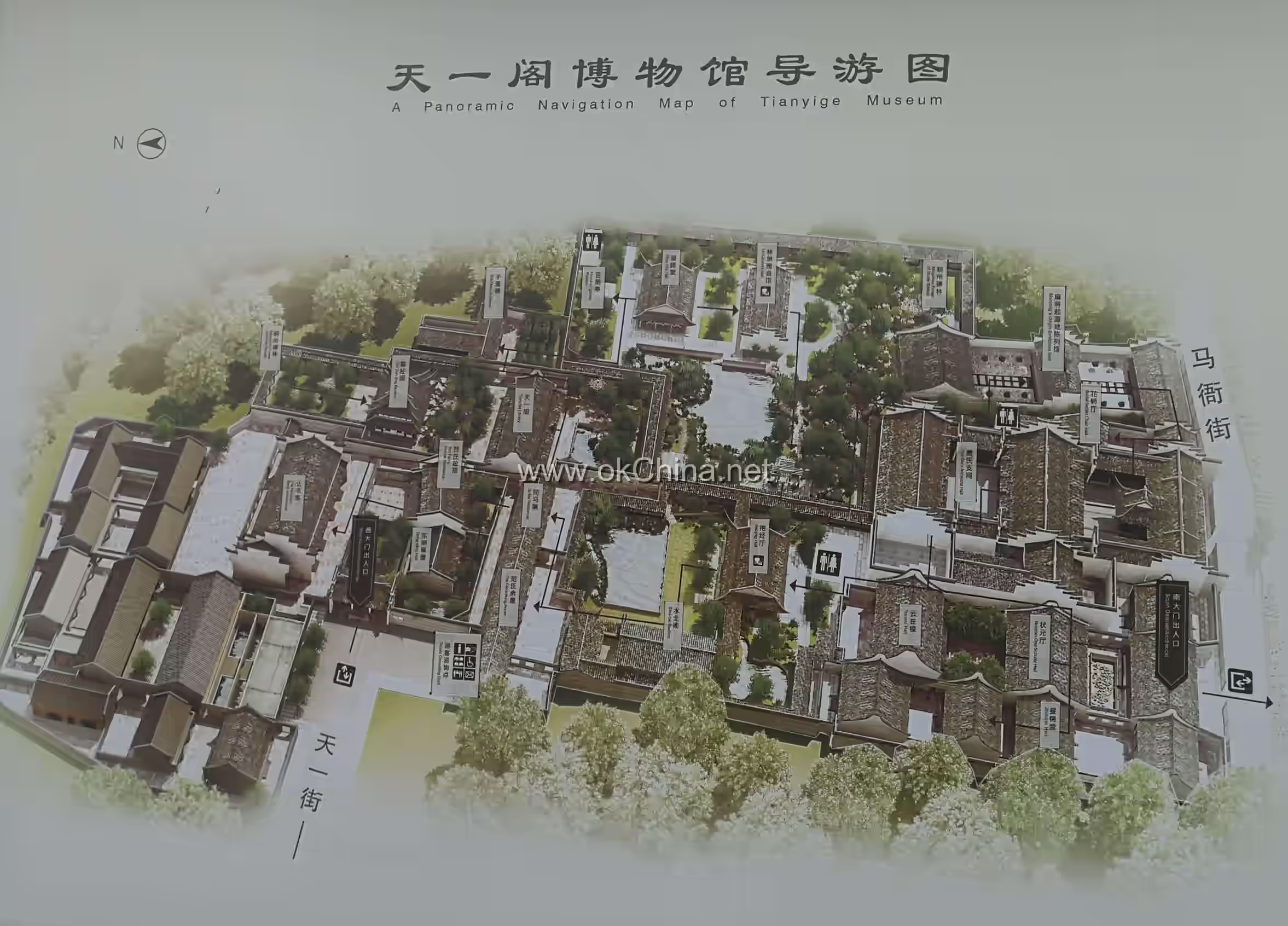
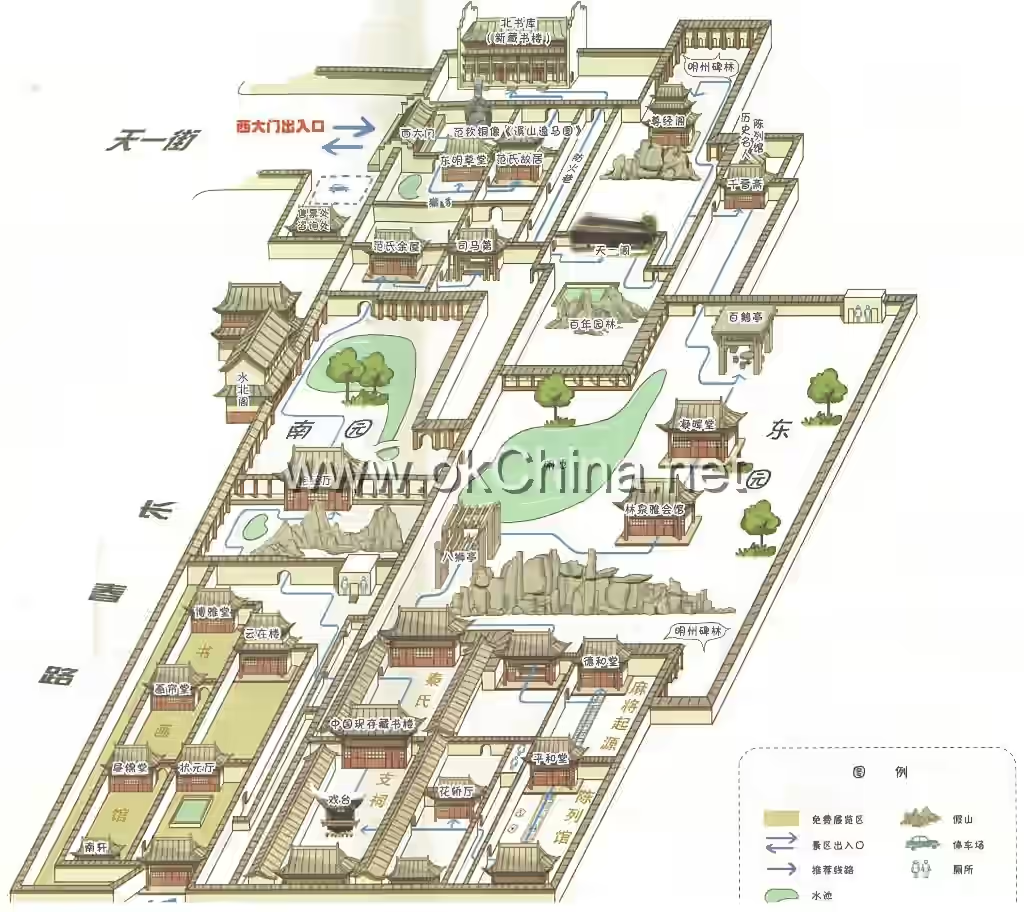
Baoshu Tower, also known as the Tianyi Pavilion Library, is a brick-and-wood structure with a flush gable roof and a double-story design. It faces south, covers an area of approximately 26,000 square meters, and stands 8.5 meters tall. The sloped roof is covered with black tiles, and the two floors feature overhanging eaves. The east and west sides have arched firewalls that extend one foot above the roof. The main gate is located on the central axis, leading to a central hall with three bays. The floor is paved with large polished square bricks, and the ceiling features a grid-like "well" structure adorned with colorful patterns. The second floor is an open space with a wooden floor, divided by bookshelves, and has windows on both the front and back sides. The upper level consists of one bay, while the lower level has five bays, forming a layout symbolizing "one heaven and six earths." The lower level has long corridors connecting the front and back.
3.1.2 Zunjing Pavilion
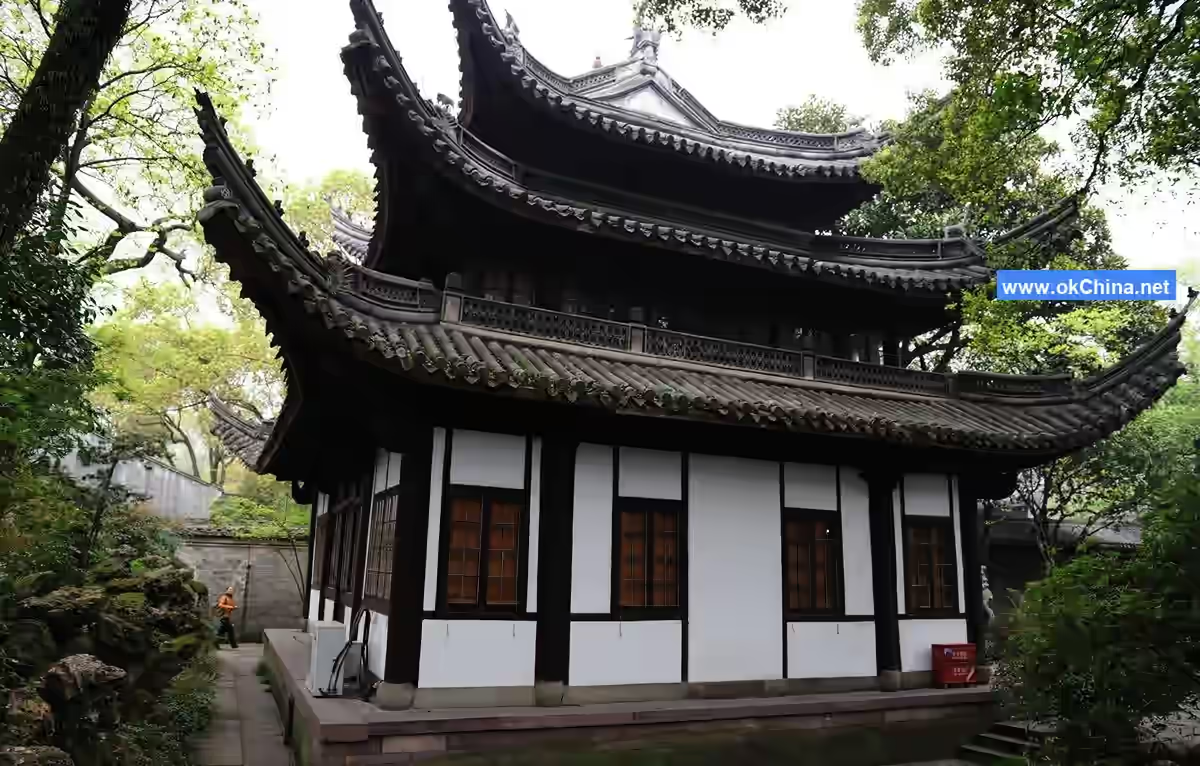
Zunjing Pavilion was originally located within the Ningbo Prefectural School and was built during the Guangxu period. It was relocated to Tianyi Pavilion during its reconstruction in 1935. The architectural style features a double-eaved hip-and-gable roof, and it houses imperial-gifted books and Confucian classics. The pavilion was rebuilt during the Guangxu period of the Qing Dynasty and retains its original double-eaved hip-and-gable roof structure.
3.1.3 Dongming Cottage
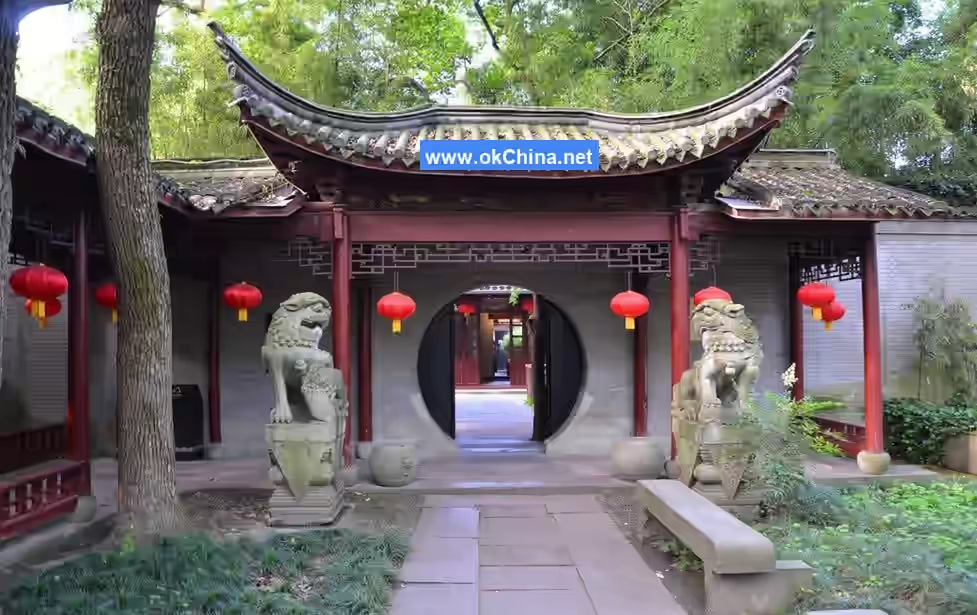
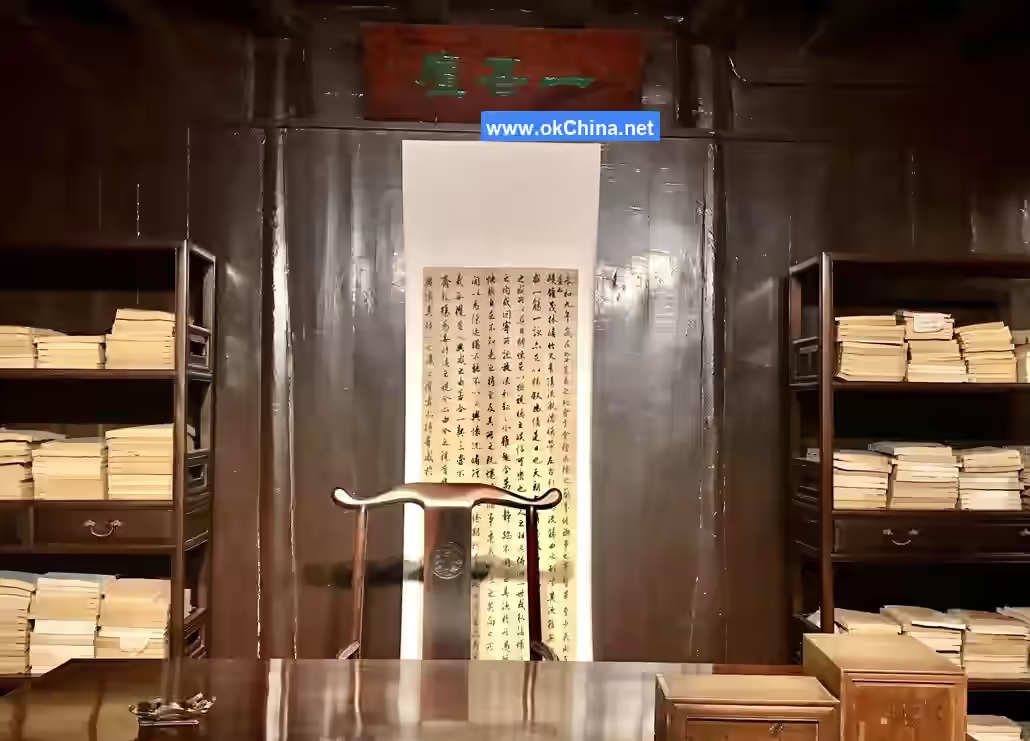
Dongming Cottage was Fan Qin's library before the construction of Tianyi Pavilion. The front gate features a relief of a xiezhi (a mythical creature). Fan Qin, whose literary name was Dongming, named his study "Dongming Cottage," also known as "Yiwu Hut." The cottage was reconstructed in 1980.
3.1.4 Mingzhou Stele Forest
The Mingzhou Stele Forest contains a total of 173 steles. The oldest are from the Song Dynasty, numbering eight and accounting for 8.7% of the collection. Among them, the "Zhongle Pavilion Poem Inscription" from the first year of the Xining era of the Northern Song Dynasty (1068) is the earliest. This stele was originally located at the He Mijian Shrine by Moon Lake and was moved to its current location after the liberation. It is inscribed with 20 poems by 15 individuals, including Qian Gongfu, Wang Anshi, and Sima Guang. The majority of the steles are from the Ming and Qing Dynasties, accounting for 36% and 40% respectively, forming the core of the Mingzhou Stele Forest. The most recent stele is the "Record of Tianyi Pavilion's East Garden," erected in 1988. It was composed by Chen Congzhou, calligraphed by Shen Yuankui, with a seal script title by Gu Tinglong and carving by Zhang Genfang. The inscription describes the construction of Tianyi Pavilion's East Garden.
3.1.5 Fan Family Residence
The Fan Family Residence was originally the east hall of the Fan family mansion, serving as the dwelling for Fan's descendants. The existing structure was built in the ninth year of the Daoguang era of the Qing Dynasty (1829). It now serves as part of the exhibition on the history of Tianyi Pavilion, showcasing the period when the collection was privately owned by the Fan family.
3.1.6 Sima Mansion
Sima Mansion was the residence of Fan Qin, named after his official title. It houses replicas of Fan Qin's official robes and the Fan family genealogy. Located deep within Moon Lake, surrounded by lush trees, the mansion is spacious and grand. Restoration of the mansion's gate and side rooms was completed in 1996.
3.1.7 Mahjong Origins Exhibition Hall
The Mahjong Origins Exhibition Hall was originally the ancestral hall of the Chen Zhengyue family. It displays the history of mahjong, its connection to Ningbo, and showcases various types of mahjong tiles from around the world.
3.1.8 Qianjin Studio
During the Republican era, Ma Lian, a scholar from Ningbo, collected over a thousand Jin Dynasty bricks and named his collection room "Qianjin Studio." After the reconstruction of Tianyi Pavilion in 1935, he donated his entire collection of Jin bricks to Tianyi Pavilion. A special room was established west of Zunjing Pavilion to store and display them, retaining the name "Qianjin Studio." In 1959, during the expansion of Tianyi Pavilion, five civilian houses to the east were purchased, renovated, and converted into exhibition rooms, and "Qianjin Studio" was relocated there.
3.1.9 East Garden
The East Garden is located southeast of Tianyi Pavilion, covering an area of approximately 6,000 square meters. Starting in 1959, the land was leveled, bamboo and trees were planted, and stone pavilions, iron oxen, and stone tigers were relocated here, giving the garden its initial form. In 1974, 69 collected stone steles were embedded into the garden walls. In 1982, the East Garden was expanded, with soil excavated to form a pond and piled to create a hill. A corridor was built around the garden, and two late Qing Dynasty buildings were relocated here. The project was completed and opened to the public in 1986. Attractions include artificial hills, a clear pond, a long corridor, a stele forest, the White Goose Pavilion, the Eight Lions Pavilion, Ninghui Hall, and the East Hall.
3.1.10 South Building
The South Building is located south of the Tianyi Pavilion Library, covering an area of 3,400 square meters. It is an important part of the first phase of Tianyi Pavilion's expansion. Construction began in 1996 and took two years to complete. The garden is centered around water, with the main building "Shuibei Pavilion" situated by the pond and the "Baojing Hall" built to the south of the pond. The entire garden is simple, clear, and evokes a sense of leisure, elegance, and tranquility.
3.1.11 Qin Family Branch Ancestral Hall
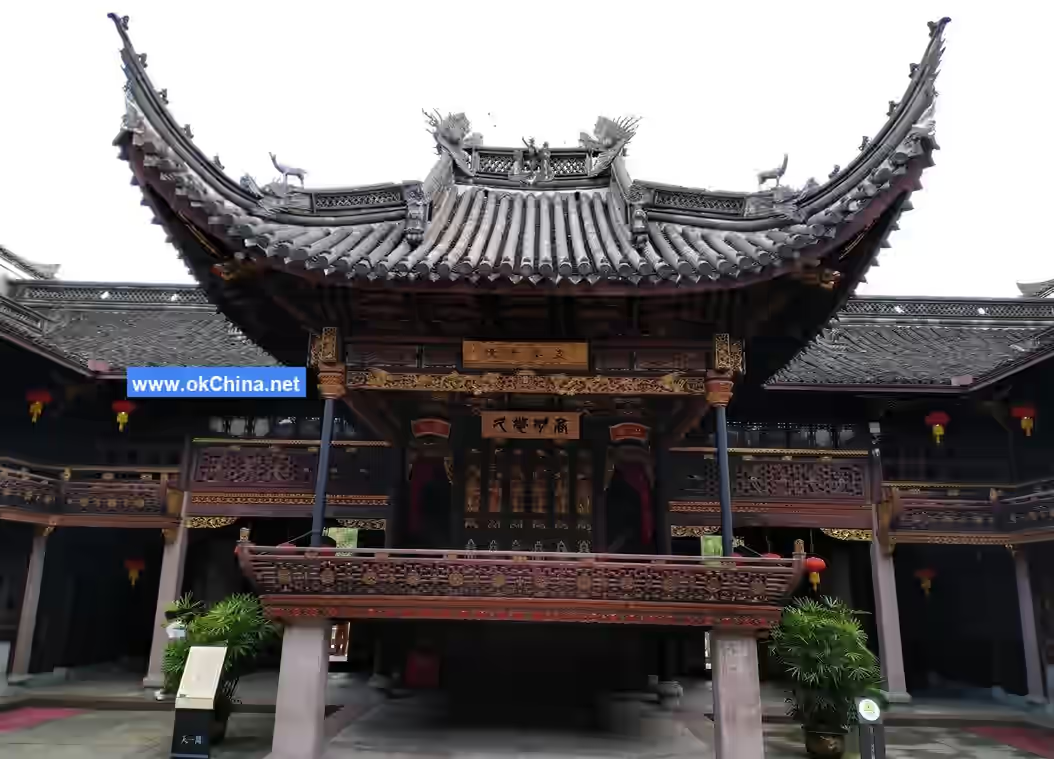
The Qin Family Branch Ancestral Hall was built between 1923 and 1925 by the Qin clan for ancestral worship. The hall is arranged along a central axis consisting of a screen wall, a gate, and a stage. It features five bays with two side rooms, three courtyards front and back, and side halls and viewing galleries on both sides, with a total floor area of over 1,400 square meters. The stage roof is supported by sixteen brackets and features a single-eaved hip-and-gable roof. The dome-shaped caisson ceiling is constructed from thousands of carved wooden pieces joined together, spiraling upward. The hall's architecture incorporates folk crafts such as wood carving, brick carving, stone carving, gold leaf application, and baking techniques.
The Qin Family Branch Ancestral Hall was designated as a municipal cultural heritage protection unit by the Ningbo Municipal People's Government in 1981. Restoration began in 1991 and took three years to complete, returning the hall to its original appearance. It was opened to the public in May 1994.
3.1.12 Painting and Calligraphy Hall
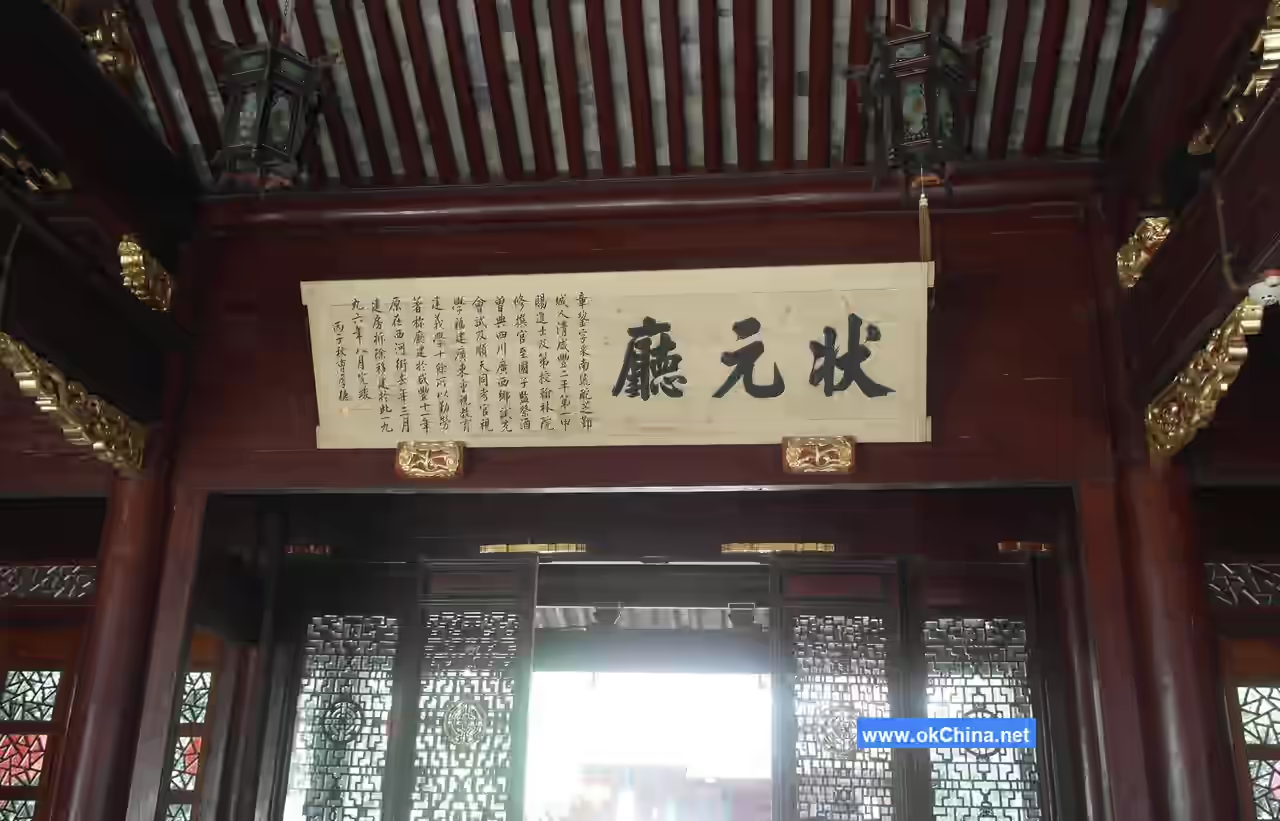
Located west of the Qin Ancestral Hall, the Painting and Calligraphy Hall consists of six buildings: Yunzai Tower, Boya Hall, Zhoujin Hall, Hualian Hall, Zhuangyuan Hall, and Nanxuan.
3.2 Moon Lake
3.2.1 Ten Islets of Moon Lake
The Ten Islets of Moon Lake were constructed during the Song and Yuan Dynasties. During the Shaoxing era of the Southern Song Dynasty, numerous pavilions, towers, and terraces were built, and flowers and trees were planted throughout the seasons, forming the ten scenic islets on Moon Lake. These ten islets are: Zhuyu, Yuedao, and Juhua Zhou on the east side of the lake; Huayu, Zhuzhou, Liuting, and Fangcao Zhou in the middle of the lake; and Yanyu, Xueting, and Furong Zhou on the west side of the lake. Additionally, three causeways and seven bridges complement each other.
3.2.2 Costume Museum
Located in the Moon Lake scenic area in the city center, the Costume Museum was established in October 1998. It is a large museum dedicated to showcasing the culture and history of Chinese clothing and accessories, and it is also China's first professional costume museum. The museum displays the growth and development trajectory of Ningbo's "Hongbang" tailors over the past two centuries. Starting from learning their craft in Yokohama and seeking fortune in Vladivostok, to gaining fame in Shanghai, expanding into the three northeastern provinces, and dominating in Tianjin, the Hongbang tailors eventually accumulated a rich culture of Hongbang clothing. Ningbo's Hongbang tailors hold a significant place and have made substantial contributions to Chinese clothing history. China's first Western-style suit, the first Western-style clothing store, the first Zhongshan suit, the first theoretical work on Western-style suits, and the first Western-style tailoring school were all created by people from Ningbo. Additionally, Ningbo enjoys reputations such as "China's First Hongbang Village" and "the Cradle of Shanghai's Western-Style Clothing Industry." Particularly precious are the historical materials related to Sun Yat-sen's creation of the first Zhongshan suit, as well as the "Mao suit" made for Chairman Mao Zedong and the Western-style suit samples for Premier Zhou Enlai, all of which are preserved in this museum.
3.2.3 Goryeo Embassy Site
Located in the Bao Kui Lane area on the east bank of Moon Lake, this site is a historical witness to Ningbo Port's foreign exchanges and the friendly interactions between China and Goryeo. In 1074, Ningbo began receiving envoys from Goryeo. In 1117, Lou Yi, the prefect of Mingzhou, following the decree of Emperor Huizong of Song, established the "Goryeo Office" in Mingzhou to manage affairs related to interactions with the Goryeo Kingdom. He also built a state-level guesthouse—the Goryeo Embassy—on the "Juhua Zhou" islet on the east bank of Moon Lake. The Goryeo Embassy served as the residence for Goryeo envoys visiting Mingzhou during the Northern Song Dynasty. It stands as a historical testament to the friendly exchanges between mainland China and the Korean Peninsula and is an important cultural relic of Ningbo's "Maritime Silk Road" and its political and commercial exchanges with foreign regions.
The "Exhibition on the History of Exchanges Between Mingzhou and Goryeo" mainly consists of several sections, including an introductory hall, a Goryeo hall, and a Mingzhou hall, with a total exhibition area of 750 square meters.
3.2.4 Buddhist Lay Practitioners' Forest
Situated on Liuting Islet within the Moon Lake cultural scenic area, the Buddhist Lay Practitioners' Forest is adjacent to the He Mijian Shrine on the right and backs onto Moon Lake. The scenery is elegant, with an auspicious atmosphere permeating the forest. The halls within the forest are grand and majestic, with carved beams and painted rafters, exuding a sense of古朴典雅 (simplicity and elegance). The multi-story buildings with hip-and-gable roofs create a solemn and serene environment. The rippling "Release-Life Pond" and the delicately eaved "Water Cloud Pavilion" form delightful landscapes that people love. The Lay Practitioners' Forest is a place for Buddhist lay practitioners to study Buddhist teachings, develop wisdom, propagate Buddhist doctrines, and purify their body and mind. It was initially established as a family shrine in 1284 during the reign of Kublai Khan. In 1237, it was converted into a courier station and later into the Xuantan Hall. After the Xinhai Revolution, the lay practitioner Bian Wenjin from Jiangshan, Yin County, donated funds to relocate the Lay Practitioners' Forest from the south gate to its current site. The Mahavira Hall, the Hall of the Three Saints of the West, and other structures were built. After 1989, the Mahavira Hall, the Three Saints Hall, the Ksitigarbha Hall, the Maitreya Hall, the Yuantong Hall, the Buddha Recitation Hall, and the Release-Life Pond were restored.
3.2.5 Yintai Mansion Official Residence Museum
Located by Yanyue Causeway, Yintai Mansion was built in 1823 during the Qing Dynasty. Its owner, Tong Huai, served as the Provincial Judge of Jiangxi and Shandong and later as the Vice Commissioner of the Office of Transmission. The Provincial Judge was also known as the "Nie Tai," and the Office of Transmission was called the "Yin Tai," hence the mansion's names "Nie Tai Mansion" and "Yin Tai Mansion."Tong Hua, the son of Tong Huai, served as a Vice Minister of Rites and was appointed to the Imperial Study, becoming a teacher to Emperor Guangxu. The Tong residence was thus regarded as the "Former Home of the Emperor's Teacher." Yintai Di faces south toward Moon Lake, with its central axis featuring a gate hall, main hall, principal building, and rear hall, flanked by wing rooms and study buildings on the east and west sides. Covering an area of approximately 2,300 square meters, the complex boasts a regular layout, rational arrangement, exquisite materials, and decorations rich in local style, making it a typical example of mid-to-late Qing Dynasty official residences in Ningbo's urban area. It provides a concrete example for understanding the architectural art of ancient Chinese official residences, Qing Dynasty furniture art, the lifestyle of official families, and their inherent cultural value, thereby deepening our understanding of Chinese history.
3.2.6 He Mijian Shrine
Located on Liuting Island in the Moon Lake Scenic Area, the He Mijian Shrine was built during the Southern Song Dynasty's Shaoxing period under the supervision of Prefect Mo Jiang to commemorate the great Tang Dynasty poet He Zhizhang. To the east are the Lay Buddhist Forest, Guan Yu Temple, and He Mijian Shrine, collectively known as the Lake Pavilion Temple. The existing structure, rebuilt in the fourth year of the Tongzhi reign of the Qing Dynasty (1865 AD), faces south. The complex consists of three rows of buildings, each with five bays. The main hall's plaque reads "Shrine of Secretary Supervisor He of the Tang Dynasty." Originally, the shrine housed the "Poetry Inscription of Zhongle Pavilion" from the first year of the Xining era of the Northern Song Dynasty (1068 AD), featuring twenty poems by fifteen individuals, including Wang Anshi and Sima Guang; the "Record of Rebuilding the Yilao Hall" from the first year of the Kaiping era of the Southern Song Dynasty (1259 AD), composed by Wu Qian, calligraphed by Zhang Jizhi; the "Record of He Mijian Shrine" from the twentieth year of the Zhizheng era of the Yuan Dynasty (1360 AD), composed by Liu Renben, calligraphed by Shi Quan, with seal script by Zhou Boqi and carving by Xu Zhongyu; and the "Stele Inscription of Secretary Supervisor He Zhizhang of the Tang Dynasty" from the twenty-second year of the Jiajing era of the Ming Dynasty (1543 AD), composed by Shen Kai, with calligraphy collected by Fang Shi from Tang Dynasty calligrapher Li Yong. Some of these inscriptions have been relocated to the East Garden of Tianyi Pavilion.
4. Cultural Resources
4.1 Book Collection Culture
The philosophy behind Tianyi Pavilion's book collection emphasizes both practicality and the quality of the literature. Fan Qin established the principle of "books not to be divided among generations," making the collection a jointly owned and managed family asset. To prevent the dispersion and loss of the books, he implemented mutual restraint measures and strict penalties.
In terms of preservation, Tianyi Pavilion focused on fire prevention by constructing a pond in front and fireproof walls. The books were stored on the second floor, which is relatively dry, with windows on both sides to facilitate ventilation and prevent dampness and mold. Ancient texts were protected from insects by inserting Artemisia leaves, and moisture was absorbed by placing Yingshi stones in the cabinets.
4.2 Historical Figures
4.2.1 Fan Qin
Fan Qin (1506–1585), courtesy name Yaoqing and pseudonym Dongming, was a native of Yin County, Ningbo Prefecture, Zhejiang (present-day Yinzhou District, Ningbo). He passed the imperial examination in the eleventh year of the Jiajing era of the Ming Dynasty (1532) and initially served as the prefect of Suizhou in Huguang. Later, he held positions such as Vice Director of the Ministry of Works, prefect of Yuanzhou in Jiangxi, Provincial Administration Vice Commissioner of Guangxi, Surveillance Commissioner of Fujian, Right Administration Commissioner of Yunnan, and local official in Shaanxi and Henan. He also served as the Grand Coordinator of Nangan, Ting, and Zhang prefectures and commanded troops against Japanese pirates while serving in Fujian. In the thirty-ninth year of the Jiajing era (1560), he was promoted to Vice Minister of War. Throughout his life, Fan Qin had a passion for collecting books, meticulously gathering both public and private editions wherever his official duties took him. For books that could not be purchased, he hired scribes to copy them, amassing a comprehensive collection spanning classics, history, and various schools of thought. He sent the books collected from different regions back to his ancestral home by Moon Lake in Ningbo, where his library, "Dongming Thatched Hall," was located. Around the fortieth year of the Jiajing era (1561), Fan Qin constructed the Tianyi Pavilion library.
4.2.2 He Zhizhang
He Zhizhang (659–744 AD), courtesy name Jizhen, was a native of Yongxing County (Xiaoshan), Yuezhou. He passed the imperial examination in the first year of the Zheng Sheng era of the Tang Dynasty (695) and later rose to the position of Secretary Supervisor. In the twelfth month of the second year of the Taibao era (743), he resigned due to illness and returned to his hometown. He Zhizhang excelled in literature and cursive script calligraphy, was open-minded and eloquent, enjoyed drinking, and formed close friendships with Du Fu, Li Bai, and others. In his later years, he became even more unrestrained, calling himself the "Mad Guest of Siming" or "External Supervisor of the Secretariat," finding joy in wandering through neighborhoods. After drinking, he would wield his brush, composing excellent writings in an instant. Unfortunately, very few of his calligraphic works have survived. Today, the renovated He Mijian Shrine has become a famous scenic spot within the Moon Lake Scenic Area.
Comments
Post a Comment