
Xianning Three Kingdoms Chibi Ancient Battlefield Scenic Area
1. Introduction
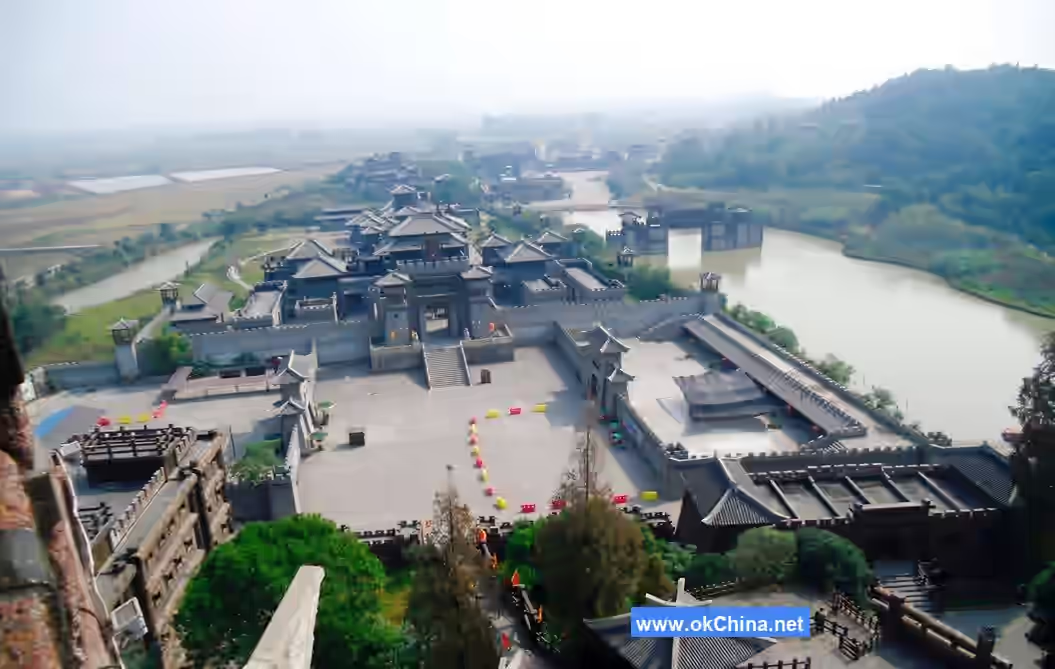
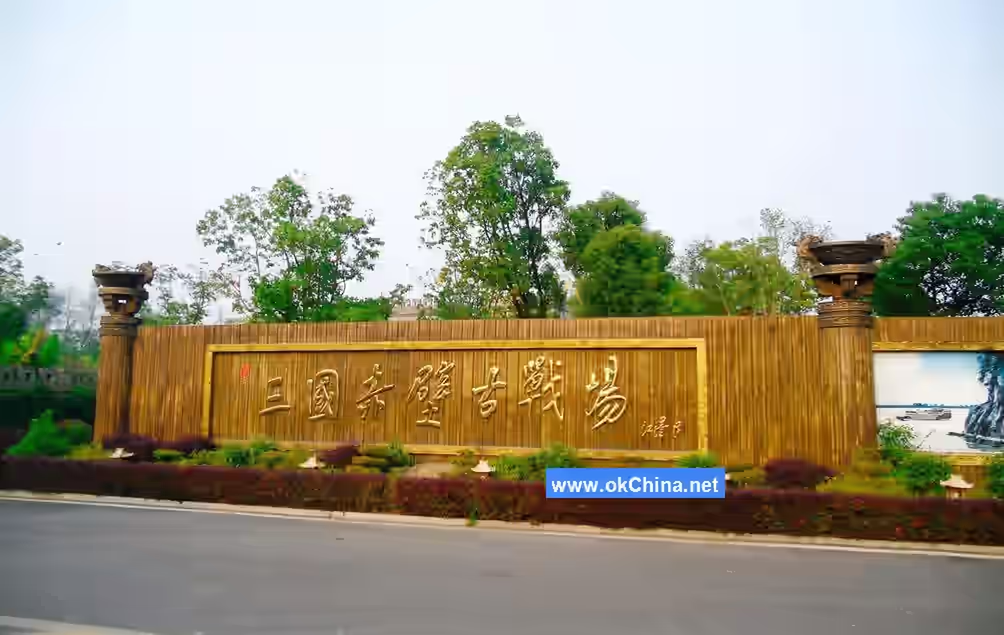
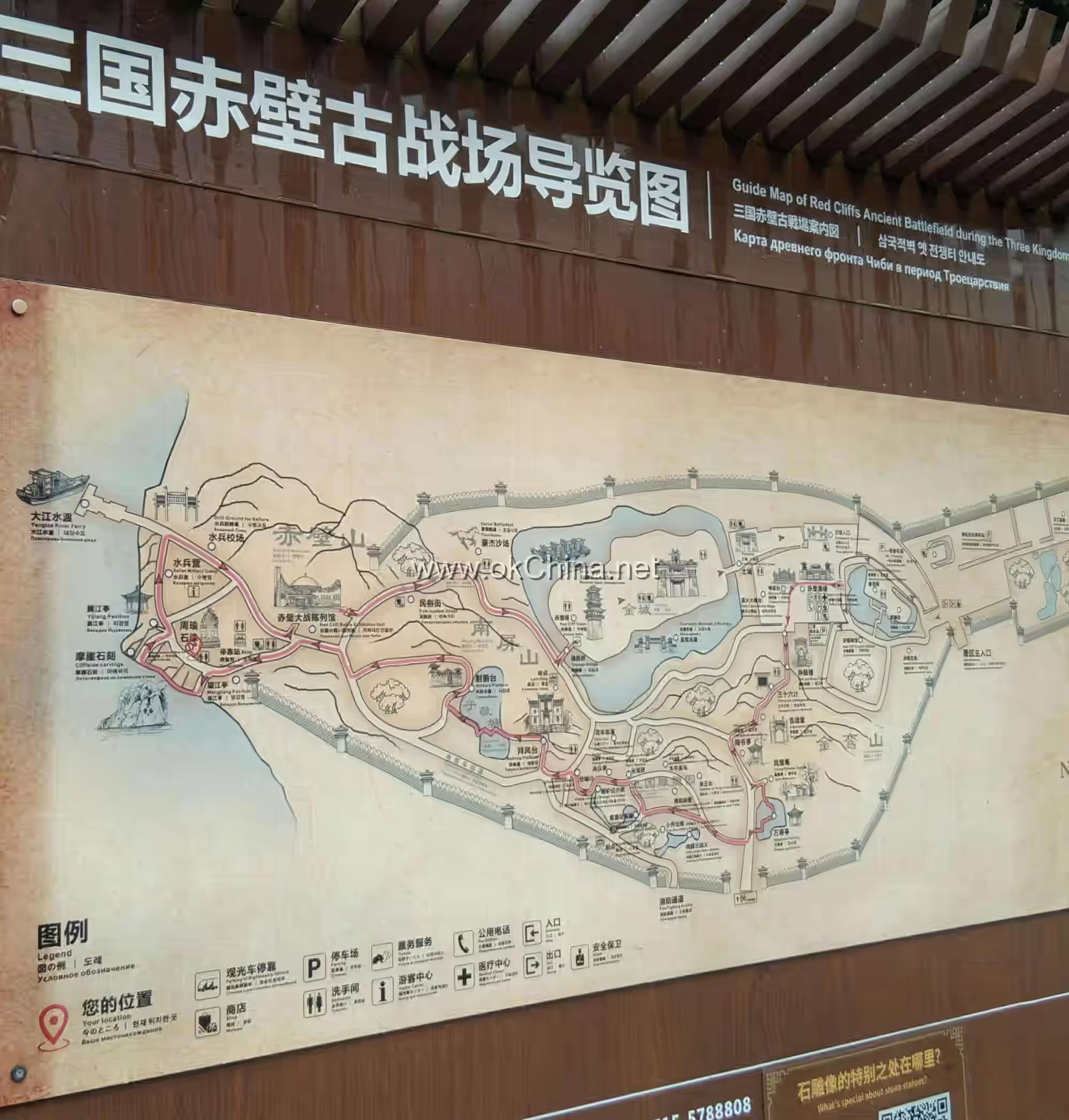
The Xianning Three Kingdoms Chibi Ancient Battlefield Scenic Area, abbreviated as the Three Kingdoms Chibi Ancient Battlefield Scenic Area, is a tourist attraction located in Chibi City, Xianning City, Hubei Province. The scenic area covers 3.5 square kilometers, with a total route length of 5 kilometers.
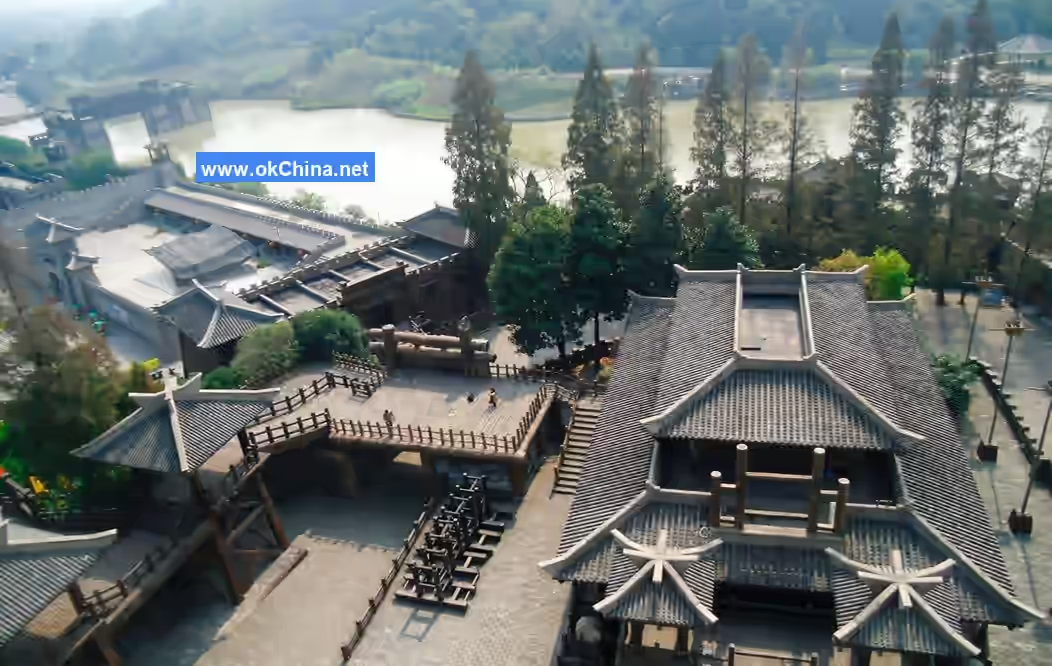
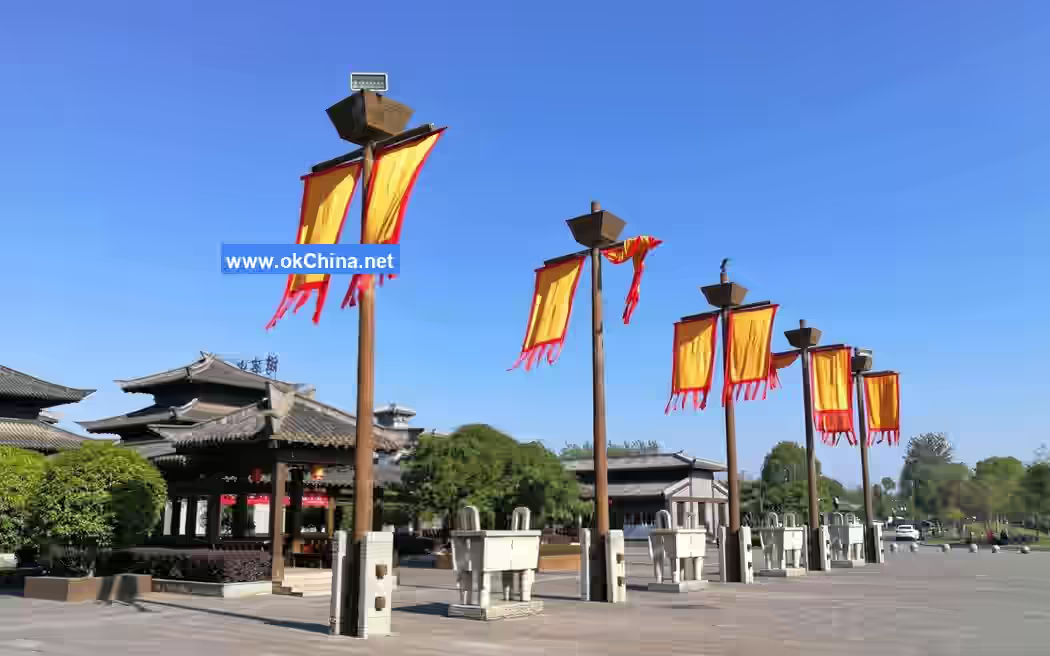
The Three Kingdoms Chibi Ancient Battlefield is the only ancient battlefield site from the seven major battles in ancient Chinese history characterized by "the few defeating the many and the weak defeating the strong" that retains its original appearance. The scenic area is divided into two zones for exploration: the Cultural Route and the Experience Route. The Cultural Route includes ancient relics such as Jinluan Mountain, where Pang Tong once studied military texts; Nanping Mountain, where Zhuge Liang borrowed the east wind; and Chibi Mountain, the forward command post of the Sun-Liu alliance. Visitors can follow in the footsteps of the ancients and explore the secrets of how the Sun-Liu alliance achieved victory through wisdom. All architectural styles in the Experience Zone are crafted based on foundational elements of the Han Dynasty, immersing visitors in a feeling of traveling back to the Three Kingdoms era.
2. Geographical Environment
2.1 Location and Territory
The Xianning Three Kingdoms Chibi Ancient Battlefield Scenic Area is located in Chibi Town, Chibi City, Xianning City, Hubei Province. It lies on the southern bank of the middle reaches of the Yangtze River, bordering the provincial capital Wuhan to the north and the culturally renowned city of Yueyang to the south. The scenic area covers 3.5 square kilometers, with a total route length of 5 kilometers.
2.2 Topography and Landforms
The Chibi Ancient Battlefield site features a hilly landscape, composed of three mountains running from northwest to southeast: Chibi Mountain, Nanping Mountain, and Jinluan Mountain.
2.3 Climate Characteristics
Chibi Town, where the scenic area is located, has a subtropical climate. It is warm and humid with abundant rainfall, distinct seasons, and ample sunshine. The annual temperature variation exhibits continental characteristics. The average annual temperature is 16.9°C, with a maximum temperature of 39°C. The highest annual rainfall is 2,678 mm, and the lowest is 910 mm.
3. Main Attractions
3.1 Overview
Having weathered over a thousand years of changes, the Chibi Ancient Battlefield still retains remnants of its past glory amidst the overgrown vegetation and shifting landscapes. The main attractions include the Chibi Cliff Inscriptions, the Zhou Yu Stone Statue, the Prayer Wind Platform, the Young Phoenix Hut, the Winged River Pavilion, the Chibi Battle Exhibition Hall, the Chibi Stele Corridor, the Millennium Ginkgo Tree, the Three Kingdoms Sculpture Garden, and dozens of other sites.
3.2 Attractions
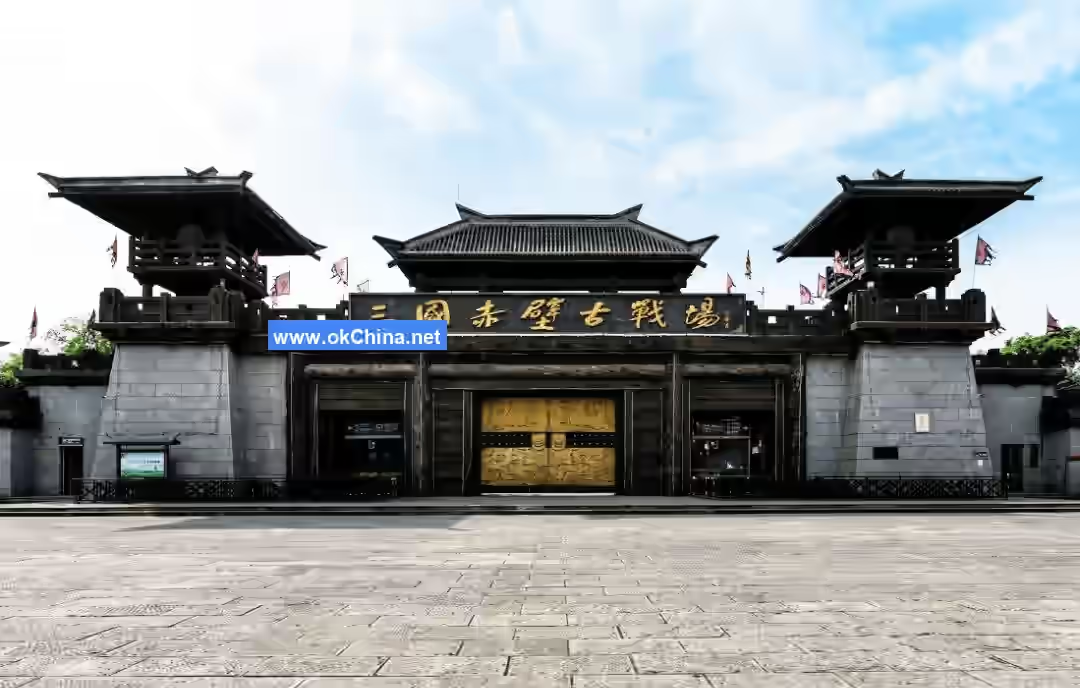
3.2.1 Chibi Watchtower Gate
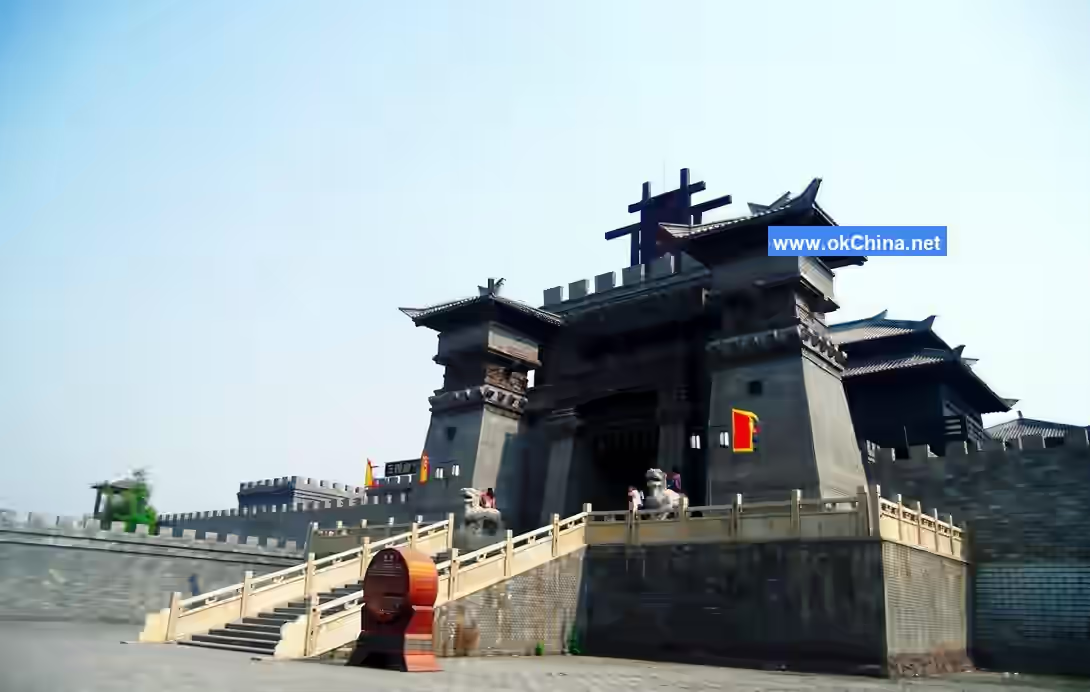
The main gate of the scenic area is named the Chibi Watchtower Gate. A watchtower, or "qiaolou," is an observation tower atop a city gate, fully reflecting the architectural style of the Three Kingdoms period. The Chibi Watchtower Gate consists of three parts: a central gate and two side gates. The entire gate complex is 120 meters wide, with the central gate being 12 meters wide and 16 meters high, making it grand in scale and solemn in atmosphere.
3.2.2 Chibi Cliff Inscriptions
The Chibi Cliff Inscriptions are located deep within the cliffs of Chibi Mountain. Having endured countless storms, they appear even more elegant and exquisite. The two large Chinese characters "赤壁" (Chibi) are powerful and vigorous, each measuring 1.5 meters long and 1.04 meters wide. According to the "Hubei General Annals," the characters "赤壁" were inscribed by Zhou Yu. Legend has it that after the Battle of Chibi, Zhou Yu's flagship approached the headland, where he held a victory banquet, performed sword dances, and composed poetry. In a moment of inspiration, he carved these two forceful characters into the rock with his sword. Research suggests the characters were most likely inscribed during the Tang Dynasty.
Beside the characters "赤壁" are poems inscribed by later visitors, though the writing is now too faded to decipher clearly. Below them is a poem by Wang Feng from the Hongwu period of the Ming Dynasty, titled "Two Quatrains Composed Upon Passing Chibi":
"Chibi overlooks the great river from its bank, / Here Zhou Yu defeated Cao's mighty rank. / Heaven had set the tripartite trend, / Pity the ambitious traitor who wouldn't comprehend. / Cao Mengde's ambition sought to swallow Wu, / But Heaven refused to let his plans come true. / With an army of eight hundred thousand sailing east, / Before Chibi Mountain, not a single fire was released."
Clearly influenced by the contemporary trend of honoring Liu Bei and denigrating Cao Cao, Wang Feng praised Zhou Yu while vehemently cursing Cao Cao. Of course, this is not surprising, as the characters "赤壁" indeed deeply etch Zhou Yu's success and Cao Cao's defeat into the natural red cliff rock.
3.2.3 Chibi Battle Exhibition Hall
Located on Zilong Beach to the right of Chibi Mountain, the Chibi Battle Exhibition Hall is the first specialized exhibition hall in China themed on ancient warfare history. It opened in August 1994. The overall building resembles a Han Dynasty tripod鼎 symbolizing the tripartite division. Three colored flags—cyan, yellow, and green—flutter atop it. The cyan flag symbolizes Cao Wei, bearing the pattern of the Black Tortoise of the North. The yellow flag represents Shu Han, featuring a dragon and the White Tiger of the West. The green flag stands for Eastern Wu, displaying the Vermilion Bird of the South. Visitors familiar with history will recognize these three flags as a microcosm of the conflict between Wei, Shu, and Wu. The central dome of the hall is designed based on Zhou Yu's helmet, symbolizing "unity" and reunion. The three surrounding corners represent "division," signifying the tripartite confrontation of Wei, Shu, and Wu. Viewed from above, the entire structure resembles a giant wind-fire wheel, closely tying into the theme of the Battle of Chibi, where fire attack was the primary strategy.
The exhibition hall is divided into sections including the Central Hall, Wax Figure Room, Historical and Cultural Exhibition Room, and Handicrafts Exhibition Room. The Central Hall mainly displays diagrams of the warlord conflicts in the late Eastern Han Dynasty, maps of the Battle of Chibi, a chart of the Three Kingdoms' tripartite division, and large-scale trebuchets along with other armor and weapons. The Wax Figure Room features seven sets of scenes: "Debating the Scholars," "The Self-Injury Stratagem," "The Two Qiaos Embroidering a Screen," "Zhuge Liang Praying for Wind," etc. The figures in each set are lifelike and vividly portrayed. The Historical and Cultural Exhibition Room includes an introduction, charts, cultural relics, documents, sand tables, models, and group paintings. Here, visitors can not only learn about the historical details of the Battle of Chibi but also gain an understanding of the history of Wei, Shu, and Wu.
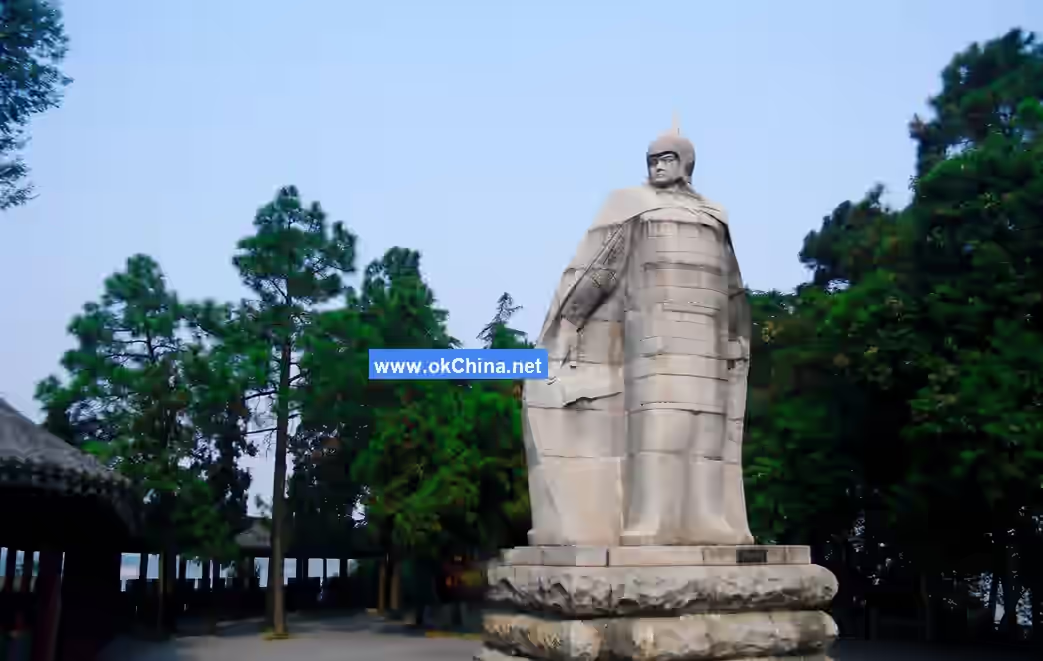
3.2.4 Zhou Yu Stone Statue
The Zhou Yu Stone Statue stands on the headland of Chibi Mountain. It is 9 meters tall, weighs 300 tons, and is carved from 26 pieces of granite, making it the tallest stone statue of a figure in Hubei Province. The statue depicts Zhou Yu wearing a war helmet and armor, holding a sharp sword, and gazing forward with a heroic and spirited demeanor. It recreates the moment when Cao's army pressed forward, shocking the lands east of the Yangtze, and Zhou Yu courageously shouldered the responsibility of commander-in-chief. Utilizing favorable timing, geographical advantages, and human unity, he led the Sun-Liu alliance to decisive victory at Chibi, establishing the era of the tripartite division among Wei, Shu, and Wu.
3.2.5 Winged River Pavilion
The Winged River Pavilion soars atop the sheer cliff of Chibi Mountain overlooking the river. Its exterior features six pillars and six corners, and it is named for the resemblance of Chibi and Tieshan Mountains to the two wings of a golden phoenix (Jinluan). Legend has it that this was once Zhou Yu's lookout post during the defeat of Cao Cao. Standing in the pavilion and looking out over the railing, one can see the lush and verdant Wulin across the river. Wulin was the site of Cao Cao's main camp at the time, and remnants such as Cao Cao Bay, Red Blood Harbor (where over half of Cao's troops were casualties), and White Bone Slope remain to this day. Looking down, the great river flows eastward, with crashing waves pounding the shore, giving one the sensation of standing on a warship, intercepting the enemy across the river.
A couplet on the pavilion pillars is an abbreviation of the poem "Man Jiang Hong" by the late Ming-early Qing poet Zhu Yizun. The first line reads: "The river flows heartlessly red, / Recalling those times, who could discern / Zibu's persuasive words or Xingba's fine plan?" The second line reads: "The lakes and mountains stretch a boundless blue, / Leaving behind historic sites, / Still evoking thoughts of Zhou Lang's fame and Lu Di's noble grace." The couplet blends scenery description, emotion, and historical reflection, praising Sun Quan's wisdom in boldly appointing young generals and accepting good advice at critical moments, through stories of several civil and military officials who contributed to the Eastern Wu regime.
3.2.6 Prayer Wind Platform
Also known as the "Wuhou Palace," the Prayer Wind Platform is located atop Nanping Mountain in the southeast of Chibi Mountain. Nanping Mountain resembles a green screen, lush and picturesque throughout the four seasons.
The Prayer Wind Platform consists of front and rear halls, with a total area of 310 square meters. It was first built in the 38th year of the Wanli era of the Ming Dynasty (1601 AD). During its reconstruction in 1936, a broken stele inscribed with the three large characters "祭风台" (Jifeng Tai, Altar for Praying Wind) was excavated. The inner hall currently houses statues of Zhuge Liang, Liu Bei, Guan Yu, and Zhang Fei, featuring smooth lines, full forms, vivid shapes, and lifelike appearances.
3.2.7 Young Phoenix Hut
The Young Phoenix Hut is located on Jinluan Mountain, less than an arrow's shot east of Nanping Mountain. Legend has it that Pang Tong, who was as famous as Zhuge Liang and known as "Young Phoenix" (Fengchu), once reviewed military texts here. On the winding mountain path, he coincidentally met Jiang Gan and crossed the river to offer Cao Cao the "interlocking ships stratagem," contributing immensely to Sun Quan and Liu Bei's victory by fire attack. Therefore, later generations built this temple to commemorate Pang Tong.
The Young Phoenix Hut was built in the 26th year of the Daoguang era of the Qing Dynasty (1846 AD). Originally a nine-hall complex, only the topmost hall remains today, covering a floor area of 300 square meters and divided into three chambers. The main hall houses a full-body statue of Pang Tong. To the right of the statue is a large iron bell cast during the Daoguang period of the Qing Dynasty, weighing 360 kilograms, with an inscription commemorating the hut's construction.
3.2.8 Chibi Stele Corridor
The Chibi Stele Corridor is located to the right of the Prayer Wind Platform. It contains 25 marble steles inscribed with 25 poems by renowned poets from various dynasties lamenting the Battle of Chibi. It brings together regular, cursive, seal, and clerical scripts in one room, each piece exquisitely carved and considered an immortal work. On the back wall of the corridor is a black marble stele measuring 4.7 meters long and 1.5 meters high. The calligraphy on the stele is the handwriting of the Southern Song national hero Yue Fei, and the content is Zhuge Liang's "Former and Later Memorials on Taking the Field" (Chu Shi Biao).
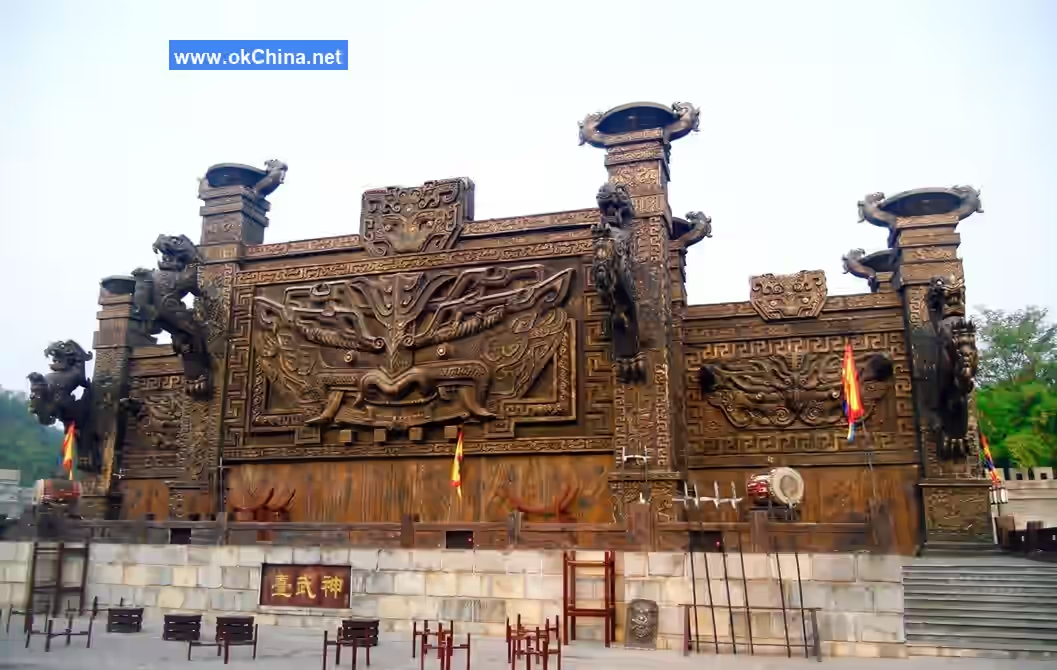
3.2.9 Divine Valor Platform
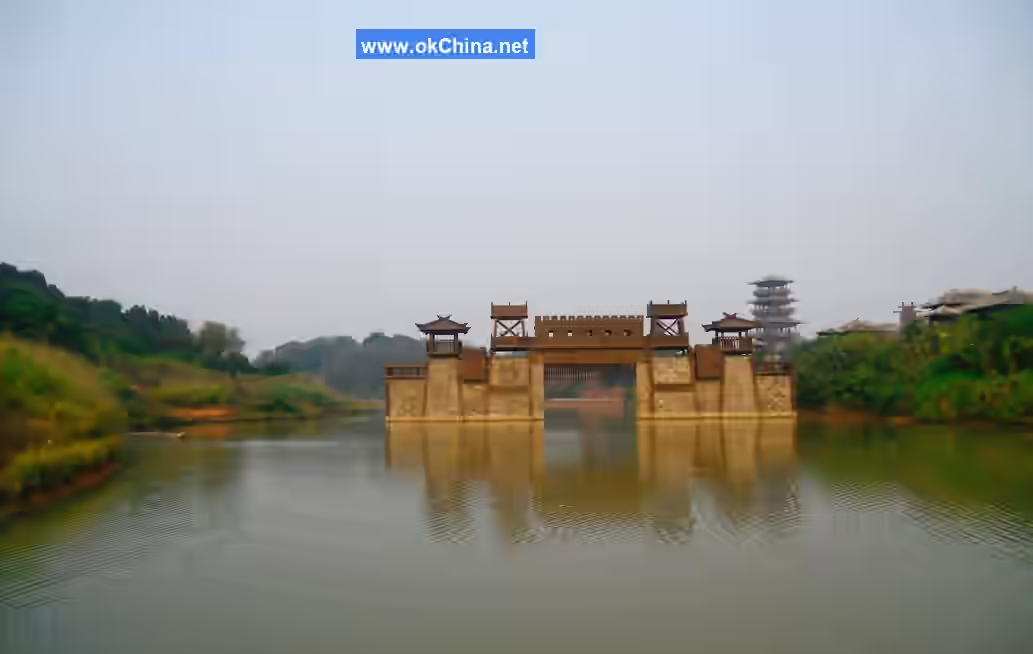
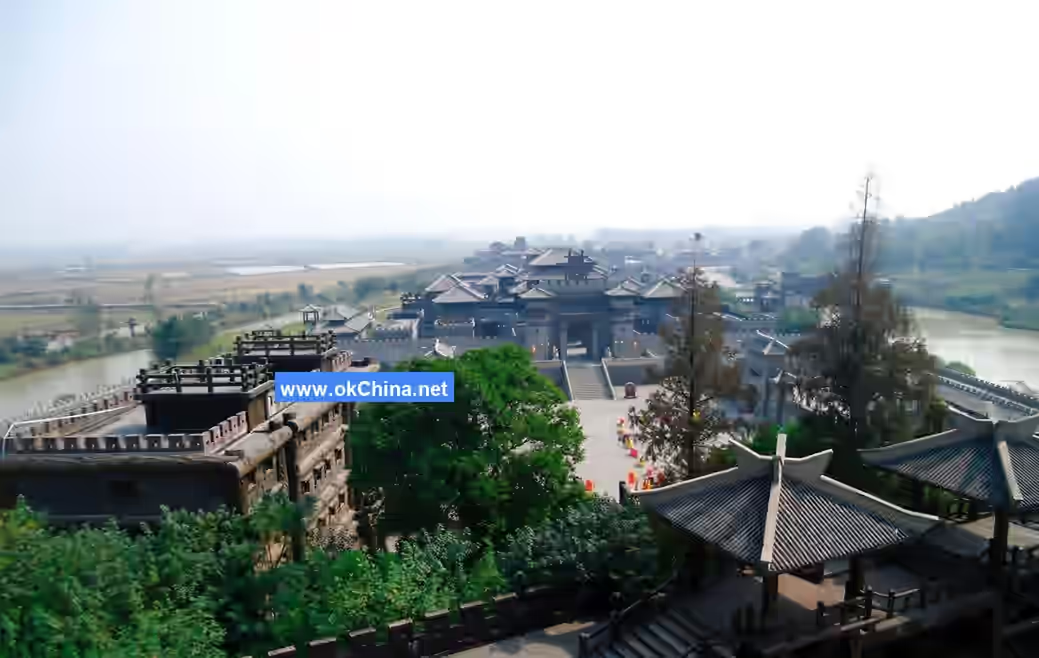
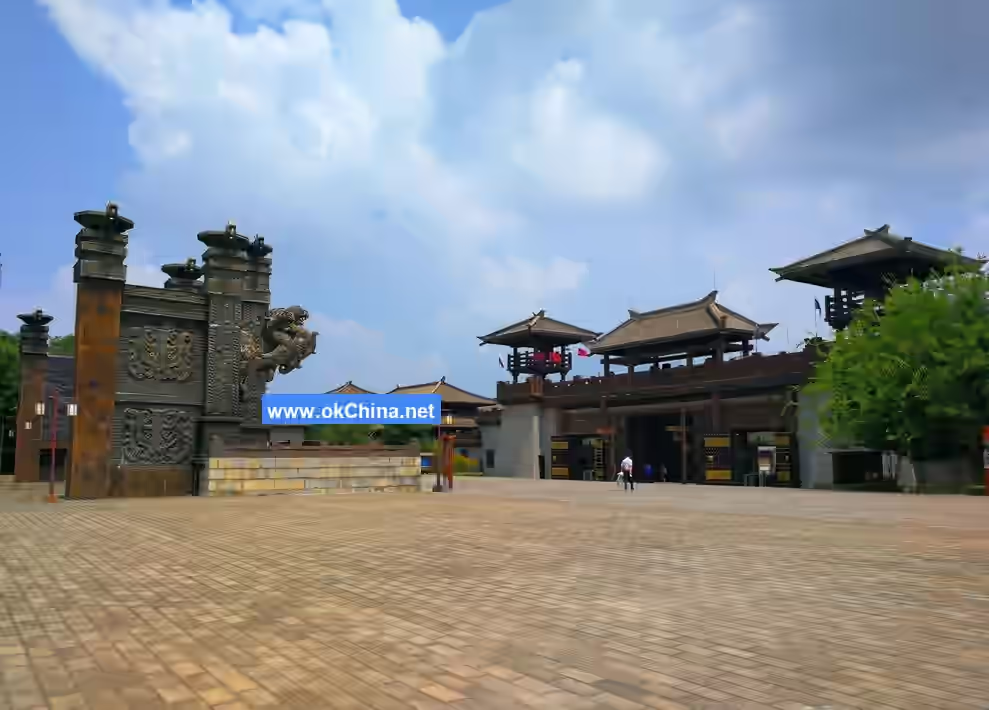
Traditionally believed to be the place where Zhou Yu appointed his generals during the Battle of Chibi, it is named Divine Valor Platform after the phrase "The general possesses divine valor and great talent" from the "Records of the Three Kingdoms: Book of Wu: Biography of Zhou Yu." The Divine Valor Platform is 26 meters long, 8 meters wide, and 12 meters high, with rampart-like slopes on both sides, giving the entire platform a solemn and majestic atmosphere.#### 3.2.10 Three Kingdoms Film and Television City The Three Kingdoms Film and Television City is a new scenic area built with an investment of 600 million yuan, designed in the Han Dynasty style. The overall design is grand and dignified. Within the city, flowers and trees flourish, with small bridges and flowing streams. Shops line the banks near the water, adorned with dense groves of bamboo, blooming flowers, and reflections in the pools. Everything in the city is based on Three Kingdoms culture, from the style of shops and their business content to the attire of the staff, all reflecting the Three Kingdoms period. This is complemented by various art forms such as temple fairs, folk operas, sculptures, games, martial arts, and acrobatics, immersing visitors in the world of the Three Kingdoms. The advanced light and sound technology used in the water battle performance "Burning the Linked Camps" makes one feel as if they have stepped onto a real battlefield from the era of cold weapons, with war drums thundering. The large-scale live-action equestrian show "Zhao Zilong's Solo Rescue of His Lord" authentically recreates the scene of ancient cavalry warfare.
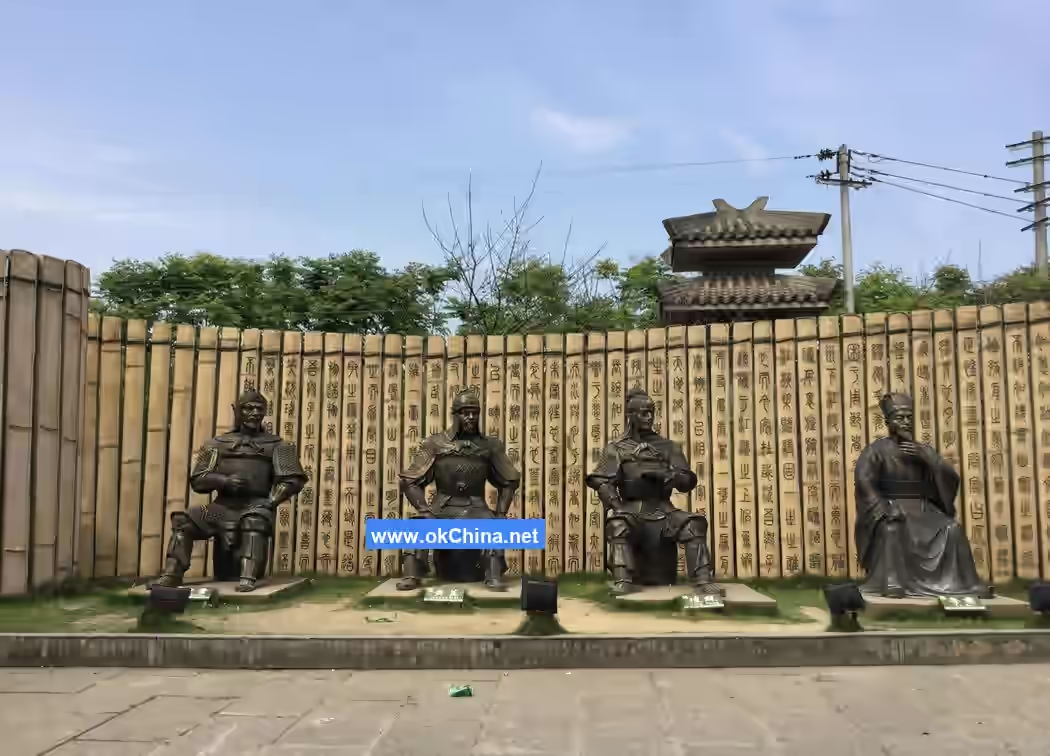
3.2.11 Three Kingdoms Sculpture Garden
The Three Kingdoms Sculpture Garden features various sculptures of historical figures and events based on Three Kingdoms historical allusions. The garden displays sculptures of many heroic figures from the Three Kingdoms period, such as Liu Bei, Guan Yu, Zhang Fei, and Zhao Yun.
3.2.12 Chibi Tower
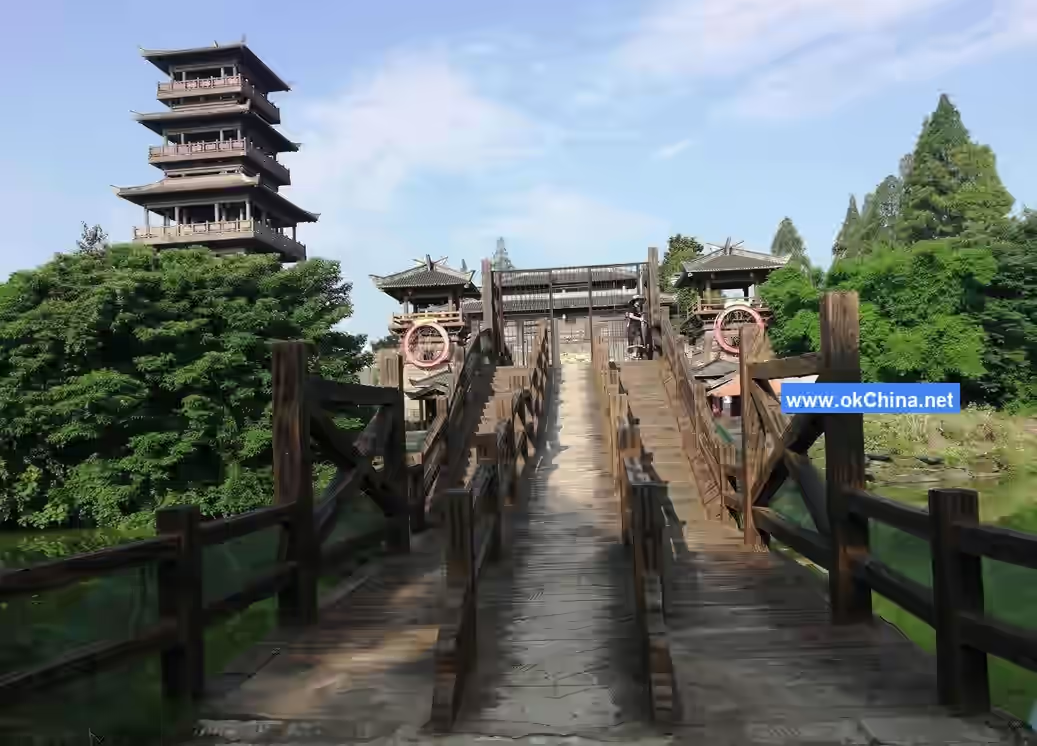
Chibi Tower is the highest point and command center of the new scenic area. Live performances, various exhibitions, and military market entertainment activities within the scenic area are all directed from here. It is also a tourist attraction that visitors can climb. The tower is 49 meters high with seven stories, and its architectural style resembles a Han Dynasty watchtower, distinct from the pagodas in Buddhist culture. From the top of the tower, one can enjoy an unobstructed view of the ancient Chibi battlefield, inspiring lofty thoughts.
3.2.13 Chibi Military Market
The military market served as a military camp and supermarket, integrating weapons and equipment, daily necessities, and entertainment venues. Military markets emerged during the Warring States period and reached a certain scale by the Han Dynasty. The establishment of military markets allowed various activities related to ancient warfare to converge here. During the Battle of Chibi, activities such as Zhuge Liang buying loaches to predict the weather and constructing the "Kongming chariot" took place in the military market. According to the "Records of the Three Kingdoms," tea houses were also set up in the military market at that time, where Pang Tong once invited Zhuge Liang, Zhou Yu, and Lu Su to enjoy tea.
4. Cultural Activities
4.1 Humanistic History
4.1.1 Historical Stories
The Battle of Chibi was a campaign launched by Cao Cao to attack Jingzhou in the late Eastern Han Dynasty; it can also specifically refer to the decisive battle along the Chibi-Wulin line of the Yangtze River. This was one of the wars in Chinese history where the fewer defeated the many, and it is the most famous of the "Three Major Battles" during the late Han and Three Kingdoms period [Note 1]. It was also the first large-scale naval battle to occur in the Yangtze River basin.
In 208 AD (the 13th year of Jian'an during the reign of Emperor Xian of Han), Cao Cao, who had largely controlled the north, led a large army south to attack Jingzhou. Liu Cong, who occupied Jingzhou, surrendered. Cao Cao pursued Liu Bei, and Sun Quan sent Lu Su to inquire whether the beleaguered Liu Bei would form an alliance against Cao Cao. Liu Bei then sent Zhuge Liang as an envoy to Jiangdong to negotiate an alliance. Sun Quan dispatched his commanders Zhou Yu and Cheng Pu to lead troops, forming a coalition with Liu Bei. At Chibi on the Yangtze River, Huang Gai feigned surrender and launched a fire attack, devastating Cao Cao's chained ships. Cao Cao fled in defeat back to the north.
After this battle, Cao Cao's forces retreated to Xiangyang, and Cao Cao, Sun Quan, and Liu Bei divided Jingzhou among themselves [Note 3], laying the foundation for the tripartite division of the Three Kingdoms.
4.1.2 Legends and Allusions
The Story of Borrowing Arrows with Straw Boats: The story of borrowing arrows with straw boats is a classic episode from "Romance of the Three Kingdoms." When Cao Cao attacked Jingzhou, Liu Bei and Sun Quan formed an alliance against Cao Cao. It is said that Sun Quan's general Zhou Yu was very jealous of the talent of Liu Bei's strategist Zhuge Liang and wanted to kill him. He ordered Zhuge Liang to produce 100,000 arrows within ten days and made him sign a military pledge, stating that failure to meet the deadline would result in punishment by military law. Zhuge Liang observed the celestial phenomena and predicted that a heavy fog would rise in three days. He cleverly used the dense fog over the Yangtze River, sending dozens of boats filled with straw dummies to beat drums and shout in front of Cao Cao's camp at night. Cao Cao, being suspicious by nature, feared an ambush and ordered his soldiers not to engage but to shoot arrows to defend. As a result, all the arrows landed on the straw dummies, and Zhuge Liang effortlessly obtained over 100,000 arrows, thwarting Zhou Yu's plot to harm him.
The Legend of Golden Phoenix Mountain: Pang Tong, the Young Phoenix, and Zhuge Liang, the Sleeping Dragon, were two renowned scholars who lived in seclusion in Xiangyang during the Three Kingdoms period. At the time, it was said that obtaining either the Sleeping Dragon or the Young Phoenix would bring peace to the world. Liu Bei aspired to eliminate the warlords and restore the Han Dynasty. He not only obtained Zhuge Liang but also Pang Tong. Unfortunately, fate often envies talent, and the dragon and phoenix could not coexist under the same roof. As a result, Pang Tong died young. Legend has it that after Pang Tong's death, his soul transformed into a golden, shimmering phoenix, which flew back to the place where he once sought refuge and studied, perching beside the ginkgo tree he had personally planted. This is how "Golden Phoenix Mountain" got its name. The local people knew that the golden phoenix was the transformed Pang Tong, and they cherished the ginkgo tree where he perched, protecting it generation after generation. Over thousands of years, the legend of the Young Phoenix transforming into a golden phoenix has endured, and the massive ginkgo tree has grown even thicker, with lush branches and leaves. On its trunk, which stands over ten feet high, four tree burls have grown. It is said that ginkgo trees only develop burls after a thousand years. Today, the burls on the ginkgo tree in front of the Young Phoenix Hermitage have existed for countless dynasties, and its age likely dates back to the same era as Pang Tong. Perhaps it is the sole survivor that witnessed the fierce struggles of dragons and phoenixes in those days.
Comments
Post a Comment