Three Gorges Grand Waterfall
1. Introduction
The Three Gorges Grand Waterfall Scenic Area in Yichang City, also known as the Three Gorges Grand Waterfall Tourist Area, or simply the Three Gorges Grand Waterfall Scenic Area/Tourist Area, is a tourist attraction located in Huanghua Town, Yiling District, Yichang City, Hubei Province, covering a total area of 24 square kilometers. The scenic area primarily consists of attractions such as the Three Gorges Grand Waterfall (formerly known as the White Fruit Tree Waterfall), Golden Lion Cave, and Lovers' Spring. The area boasts an excellent location and convenient transportation. The Three Gorges Grand Waterfall is only 29 kilometers from downtown Yichang, Golden Lion Cave is 17 kilometers from Yichang city and 15 kilometers from the Three Gorges Grand Waterfall, while Lovers' Spring is merely 6 kilometers from the waterfall and 15 kilometers from downtown Yichang. The Three Gorges Grand Waterfall Scenic Area integrates waterfall culture and intangible cultural heritage, combining diverse landscapes such as the "Golden Spike" geological section, Cambrian stone forests, mountains, waterfalls, lakes, underground rivers, and karst caves.
2. Geographical Environment
2.1 Location and Territory
The Three Gorges Grand Waterfall Scenic Area is situated in Huanghua Town, Yiling District, Yichang City, Hubei Province, approximately 29.5 kilometers from downtown Yichang, covering a total area of 24 square kilometers.
2.2 Climate Characteristics
Yiling District, where the scenic area is located, falls within the mid-subtropical monsoon climate zone, characterized by four distinct seasons, a mild climate, and moderate rainfall. Spring sees significant temperature fluctuations with frequent alternations between cold and warm spells, often accompanied by late cold snaps. Summer features large daily temperature variations, with hot midday temperatures and cooler mornings and evenings; during severe droughts, temperatures remain high day and night. Rainfall is moderate, coinciding with the warm season, and the area is prone to disasters such as droughts, floods, windstorms, and hail. Autumn, influenced by cold air from the north, experiences another alternation between cold and warm weather, with rapid cooling, less rain, more sunshine, and clear, crisp skies. Winter brings a quick drop in temperatures, with dry conditions and little rain or snow.
3. Main Attractions
3.1 Three Gorges Grand Waterfall
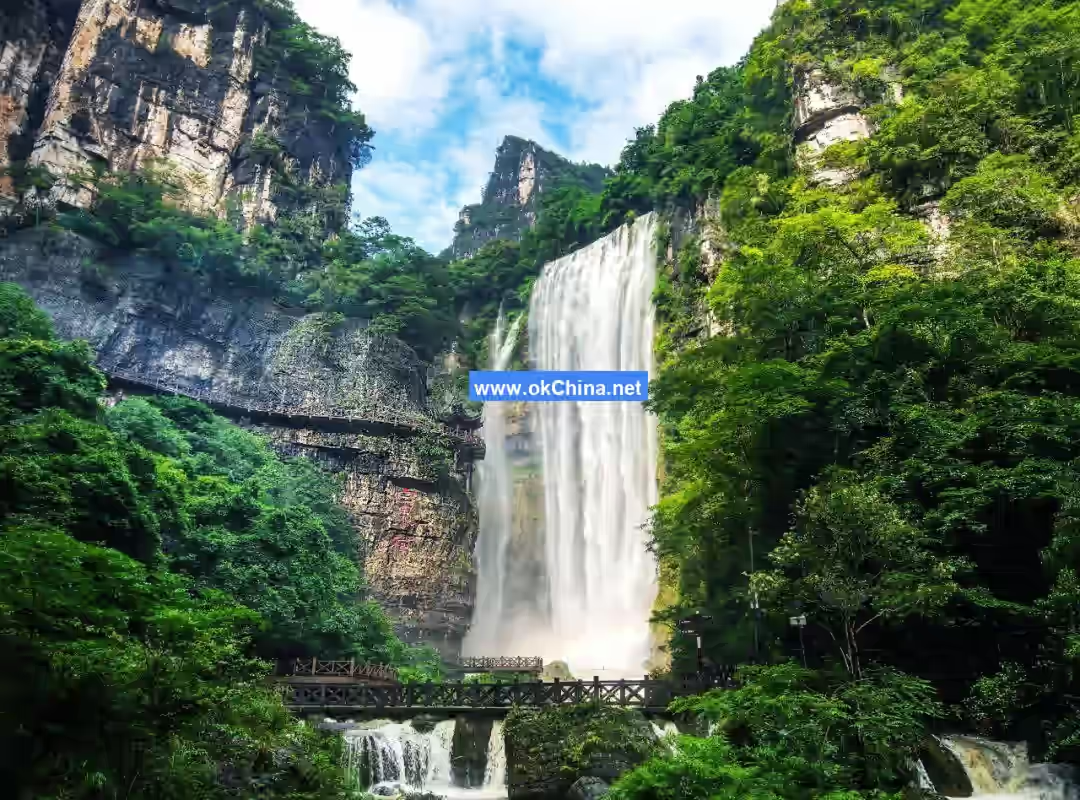
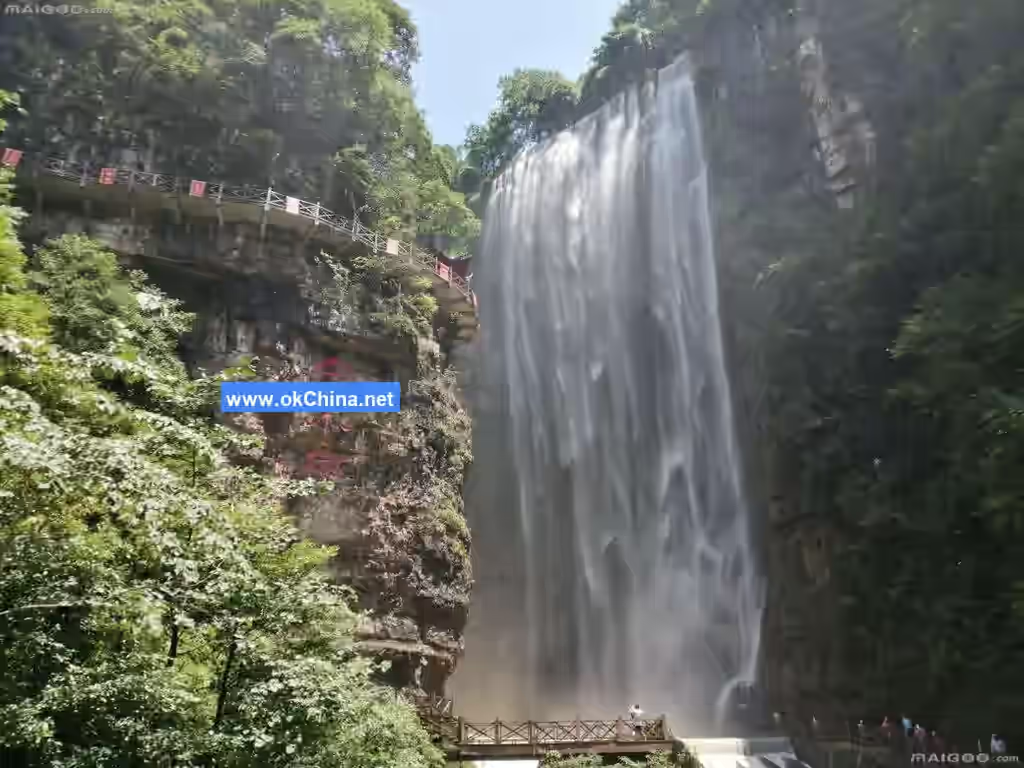
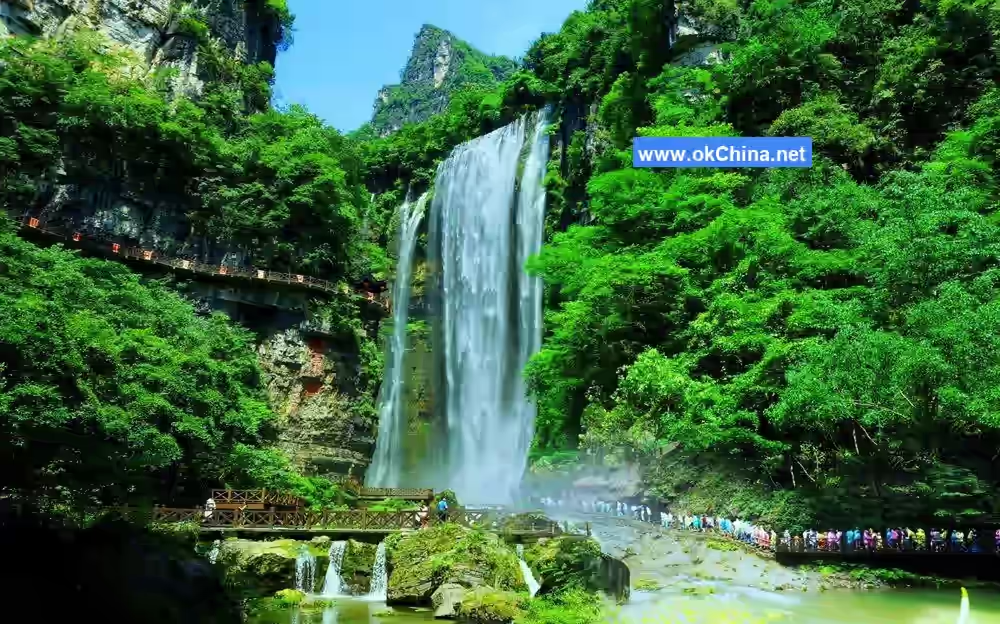
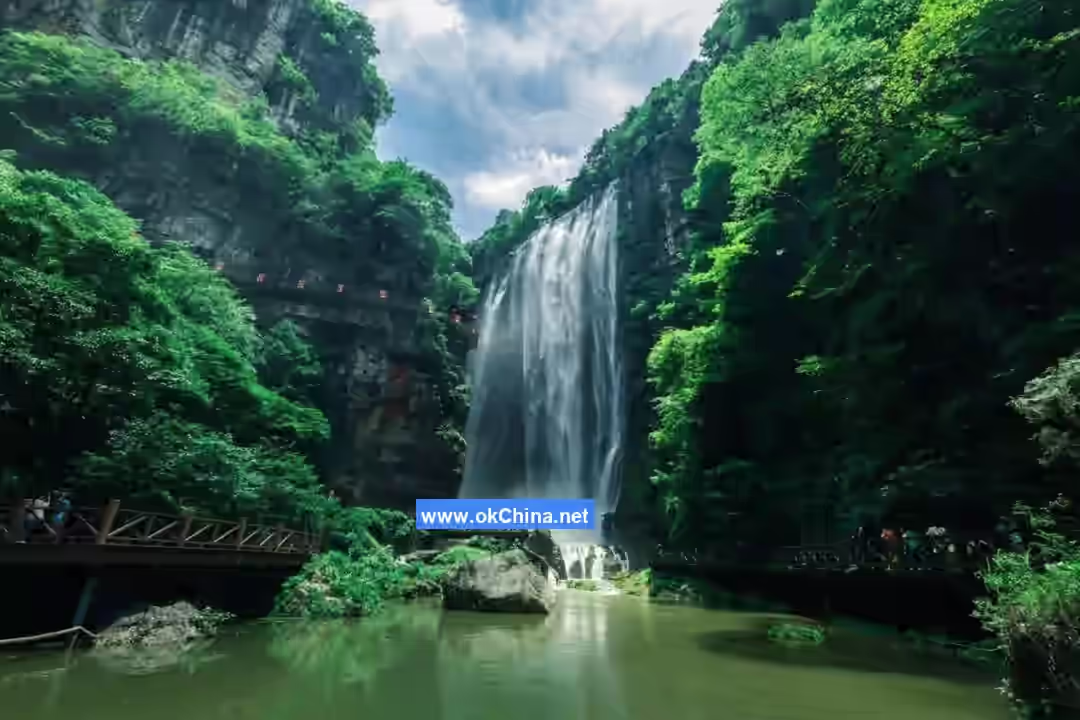
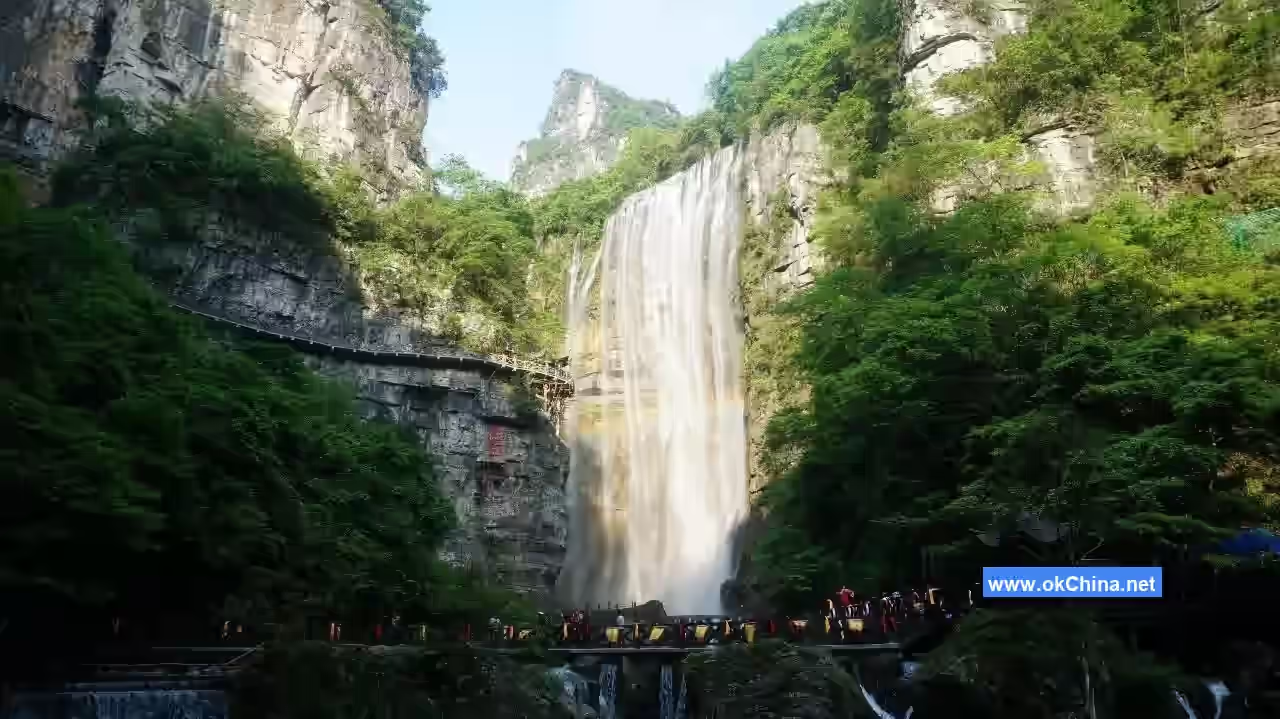
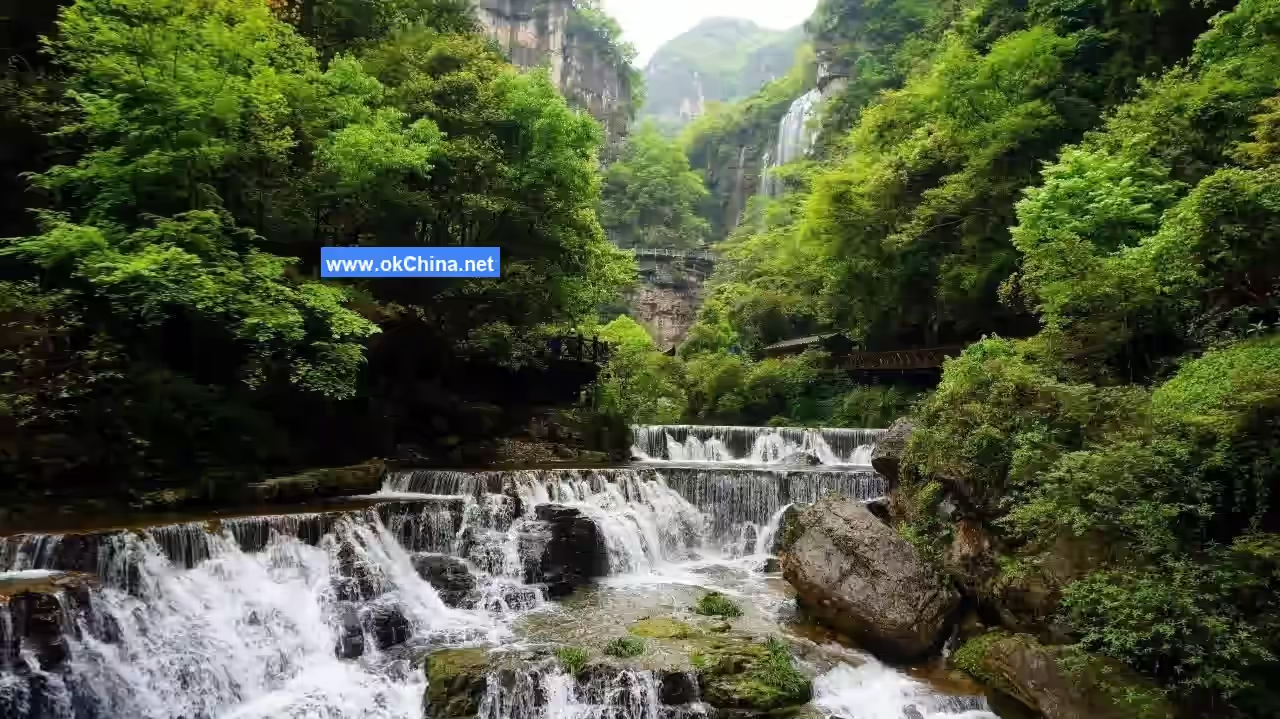
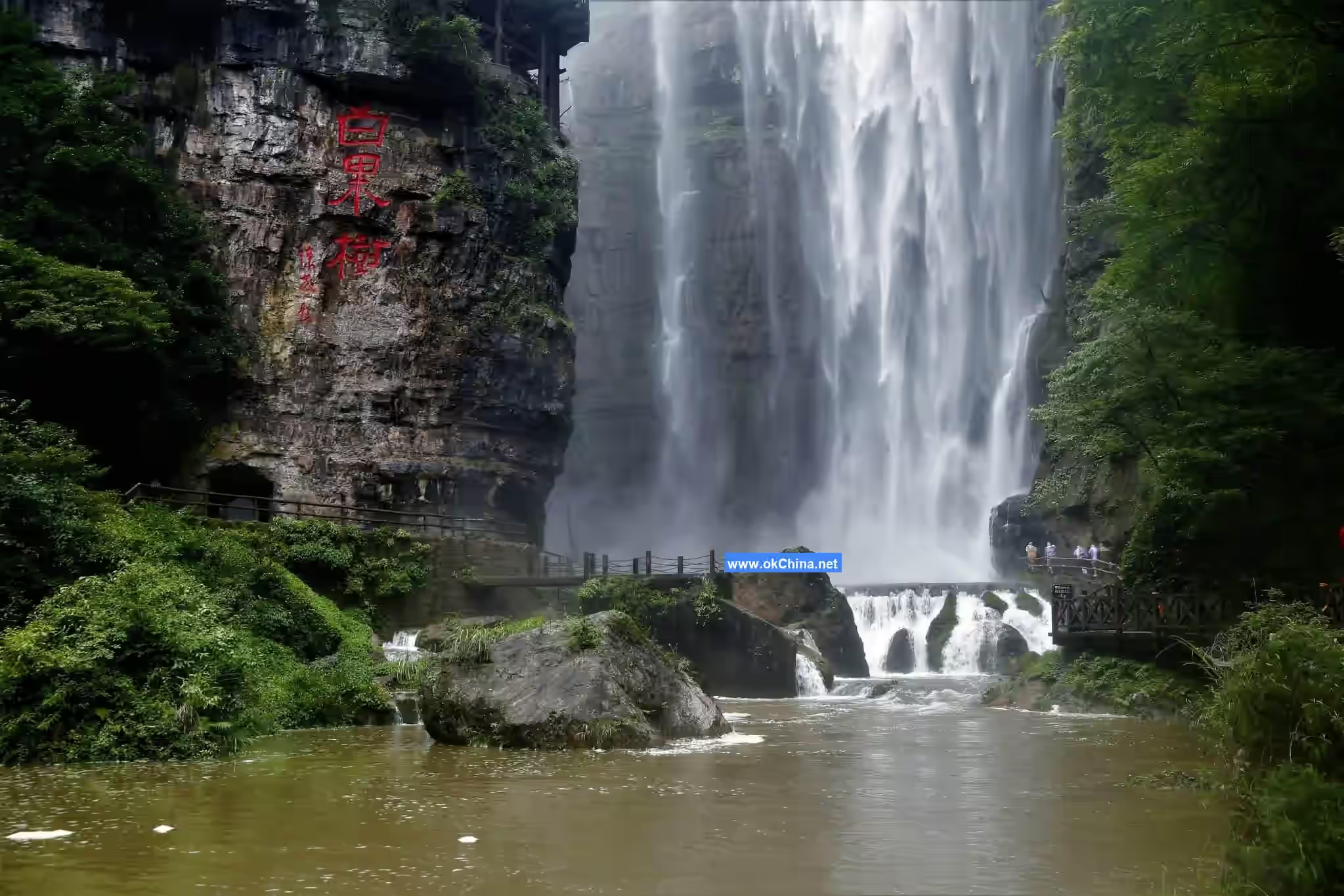
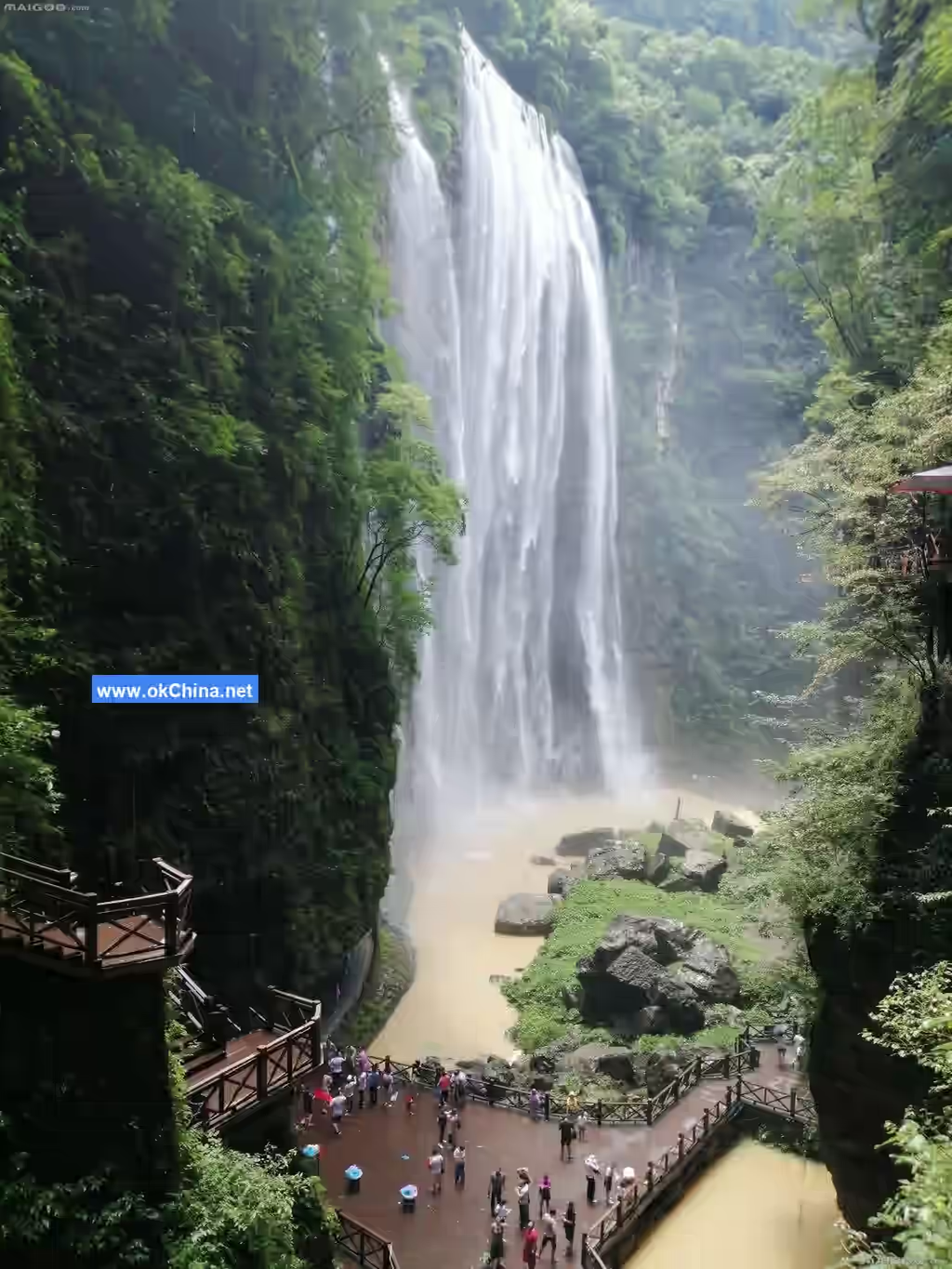
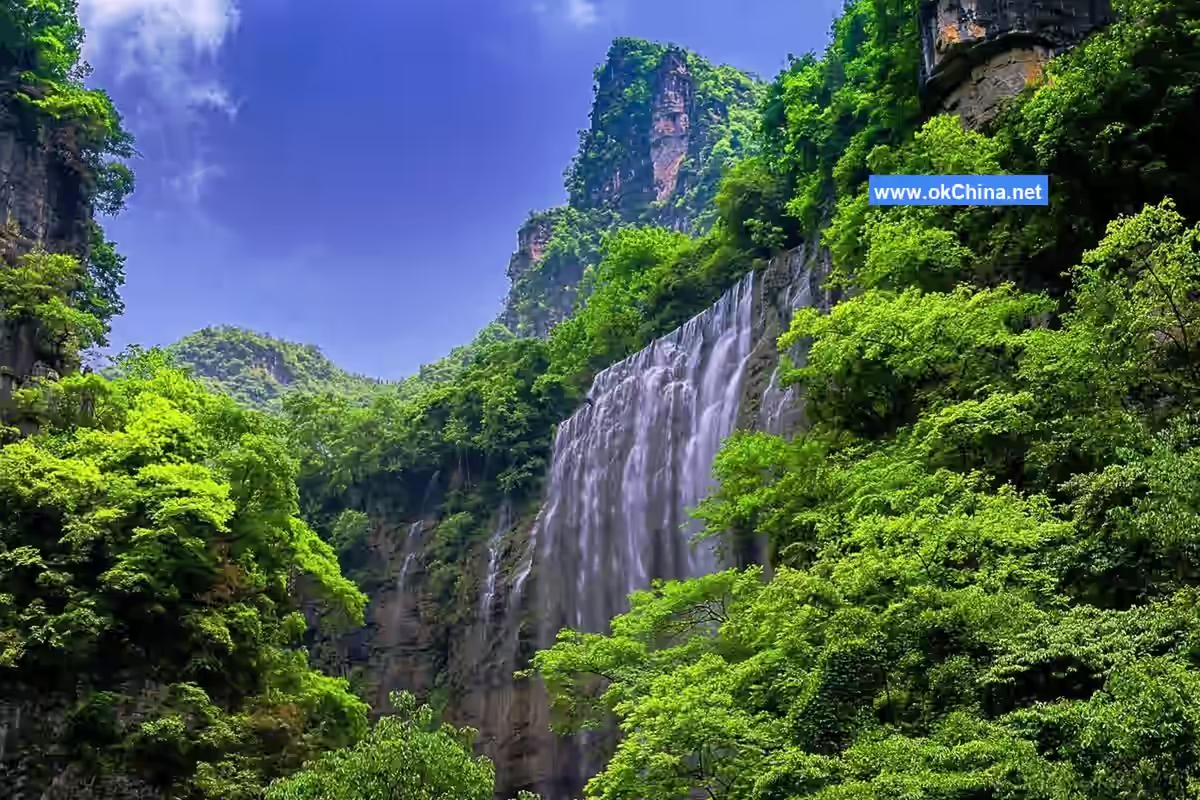
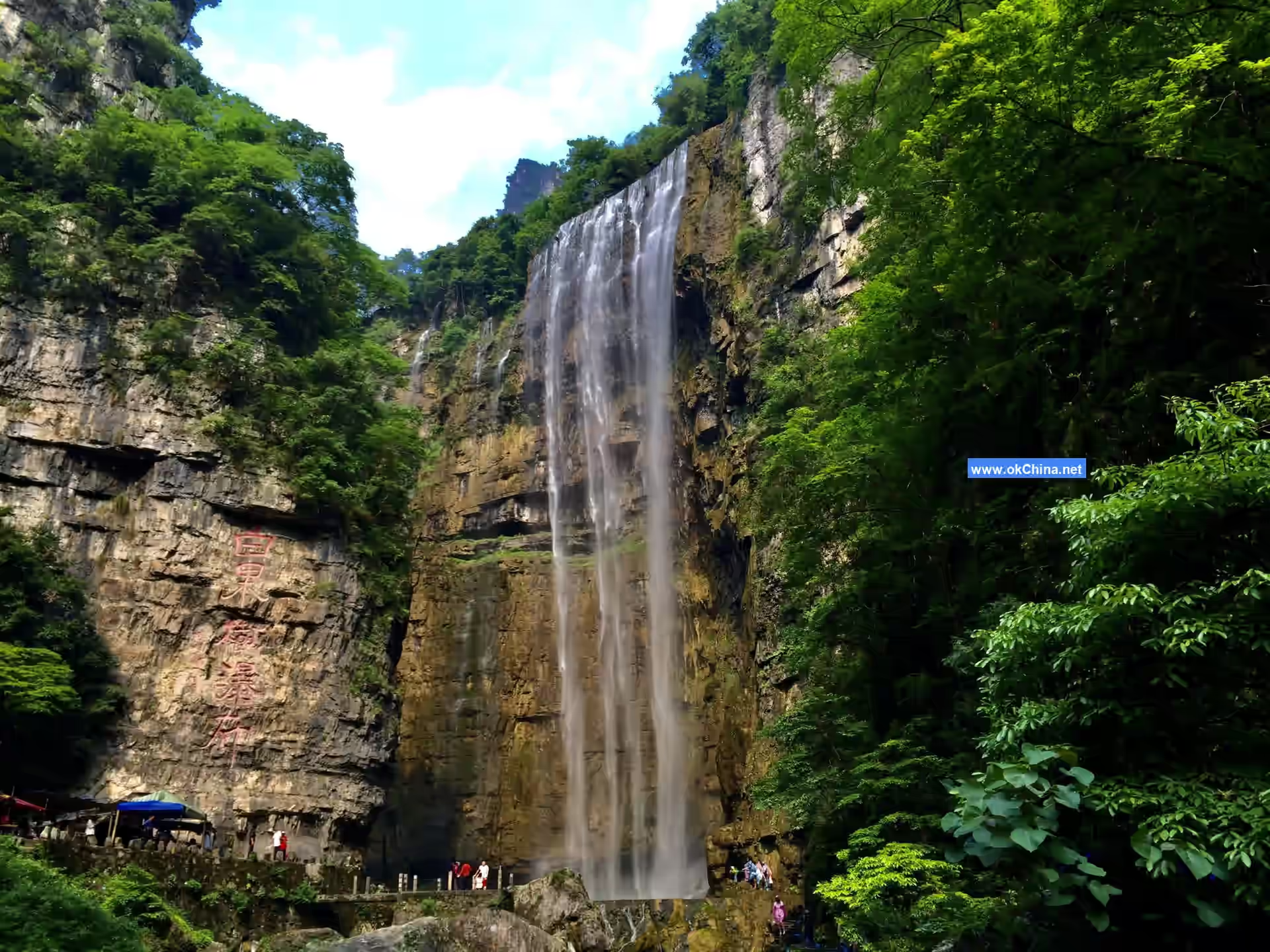
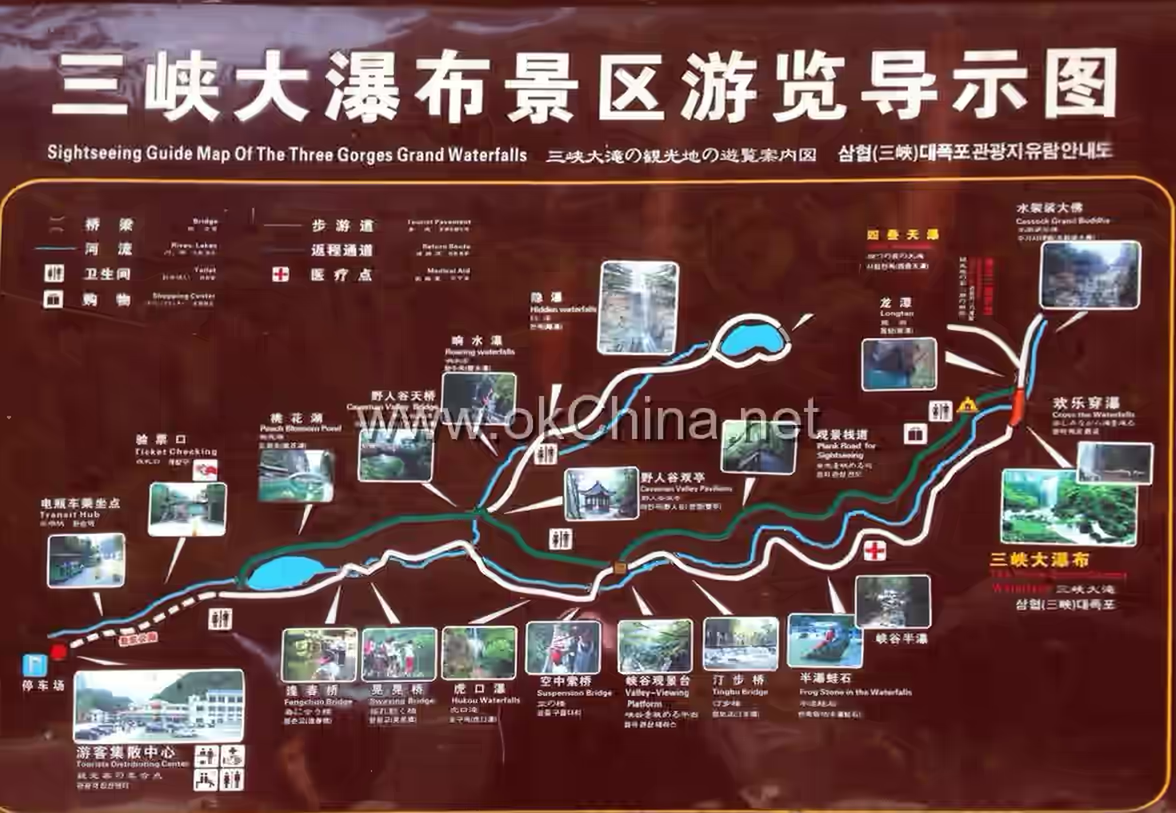
Originally named White Fruit Tree Waterfall, the Three Gorges Grand Waterfall is located at the mouth of Xiling Gorge in the Yangtze River's Three Gorges. It is acclaimed as the third largest among "China's Top Ten Famous Waterfalls" and hailed as the "Fourth in China, First in Hubei" waterfall spectacle. The main waterfall stands 102 meters high and 80 meters wide. The gorge stretches for 10 kilometers. Following the stream upstream from the entrance, visitors encounter over 30 waterfalls of various sizes along the way, including Dripping Waterfall, Tiger's Mouth Waterfall, Mother-Child Stone Cascade, Pearl Waterfall, Roaring Waterfall, and Twin Flying Waterfall, distributed along the 5-kilometer-long stream.
3.2 Golden Lion Cave
Also known as Taiping Cave, Golden Lion Cave is a well-developed surface karst cave located in Liao Jialin Village, Xiaoxita, Yiling District. The cave is 1,853 meters deep, 48 meters wide, and shaped like the Chinese character "丁" (Ding). The elevation difference between the cave entrance and the bottom is 59 meters. It consists of upper, middle, and lower levels, with a developed space of approximately over 200,000 cubic meters. Golden Lion Cave occupies a strategically important and easily defensible position, described as "one man guarding the pass, ten thousand cannot get through." Local villagers often took refuge here during wars and bandit raids. After development, the cave was planned as a Buddhist "Cave Heaven and Blessed Land." It houses statues of deities such as Sakyamuni, Maitreya Buddha, and Dripping Water Guanyin. In the middle section of the cave, there is a 2-meter-high stalagmite shaped like a lion, glittering golden and resembling a roaring golden lion, from which the cave derives its name. Although not large in scale, Golden Lion Cave features beautiful cave scenery and serene water landscapes. Its winding corridors, spacious halls, and myriad forms of stalactites appear even more fantastical under colored lights. Particularly in the Golden Lion Palace, amidst jade-like cliffs and mountains, the golden lion stands majestic within a seven-colored radiant light, remarkably lifelike and awe-inspiring. Outside the cave, there are additional scenic spots such as the Strange Stone Garden, Cherry Blossom Village, and Wintersweet Gorge, offering beautiful scenery that captivates visitors.
3.3 Lovers' Spring
Lovers' Spring is an underground karst cave discovered in 1997. Geological studies confirm it is an underground river formed by a fissure water system, with an explorable length of about 10 kilometers, integrating caves, springs, and waterfalls. Lovers' Spring features a very rare Cambrian dolomite karst cave with a geological age of approximately 700 million years. Its underground river scenery and underground waterfall are exceptionally rare nationwide. The first phase of development has opened a 700-meter tour route. Along this section, visitors can experience four series of natural landscapes brimming with natural charm: Lovers' Ferry, Lovers' Valley, Lovers' River, and Lovers' Palace.
3.4 Wild Man Valley Rafting
Wild Man Valley is a famous canyon located on the Huangbai River, the largest tributary at the gateway to the Yangtze River's Three Gorges. Stretching five kilometers in total, it serves as a vital throat connecting Yichang to Shennongjia and the overland route into Sichuan on the north bank of the Yangtze River, embodying a historical tunnel laden with ethnic vicissitudes. Simultaneously, it is a captivating landscape gallery. Upon entering the canyon, the Huangbai River narrows to 20-30 meters, flanked by mountains adorned with blooming wild flowers, creating a picturesque valley with cascading waterfalls and a narrow strip of sky. The river itself churns with emerald currents, and its bed is covered with colorful pebbles. The rafting is divided into two sections: Adventure Rafting and Thrill Rafting. Adventure Rafting starts at the scenically unique Longma (Dragon Horse) Pool, passes through the thrilling Sanlihua (Three-Mile Flowers), and ends at Baizhangyan (Hundred-Zhang Cliff) Waterfall, covering nearly 5 kilometers with over 30 sets of rapids and dangerous shoals. Thrill Rafting begins at the canyon suspension bridge, traverses the turbulent Qilixia (Seven-Mile Gorge) with its many rapids and waves, and concludes at Baizhangyan Waterfall, spanning 3 kilometers with over ten sets of rapids and shoals. Lovers' Spring is a pristine dolomite karst cave specimen and underground river scenic area integrating caves, springs, and waterfalls, and is one of Yichang's New Ten Scenic Spots. The perilous, peculiar, and serene golden cave, the magical and rare underground undercurrent, the breathtaking third-largest underground waterfall in China, the romantic Lovers' Stone, and ancient legends together compose a peerless natural love epic. Come, accompany your beloved, board a small boat, explore a mysterious river of love, tour a cave paradise of affection, and behold a spectacular flying waterfall. Wild Man Valley Rafting at Lovers' Spring belongs to the category of self-guided river adventure rafting on streams and rivers. Located on the Huangbai River, the largest tributary at the Three Gorges gateway, it is renowned for its majestic canyon and turbulent stream. The folk saying, "Qilixia, Sanlihua, even raftsmen can't handle it!" has been passed down to this day. The rafting exclusively uses two-person rubber rafts. The entire 5-kilometer course involves navigating 3 passes and 18 shoals, allowing you to set your soul adrift, experience surging excitement, and fully enjoy the thrill of adventure and conquest. Near Wild Man Valley, a cluster of natural landscapes and cultural wonders is concentrated. Lovers' Spring is China's only pristine dolomite karst cave specimen and underground river scenic area integrating caves, springs, and waterfalls, and is one of Yichang's New Ten Scenic Spots. The total length is 5 kilometers, comprising the "Sanlihua Adventure Rafting" and "Qilixia Thrill Rafting" sections. "Sanlihua" is a 1.5-kilometer-long series of rolling water waterfalls, a favorite for adults seeking thrills; "Qilixia" features connected rapids and pools with beautiful scenery, suitable for the whole family to share the rafting excitement. Wild Man Valley Rafting uses two-person rubber rafts; the entire rafting journey takes about two and a half hours. If you participate in some valley cultural activities and interactive games during the rafting, it will take approximately 3 hours.
3.5 Ancient Military Fortresses
Located within the Xiaofeng Scenic Area of Yichang City, the Ancient Military Fortresses constitute a stunning mystery that has shocked the national archaeological community. This massive fortress "Great Wall" winds through the lofty mountains of the Daba Mountain Range, consisting of over one hundred ancient fortresses built with huge stones atop isolated peaks and precipitous cliffs, towering high in the air like suspended strongholds. Each fortress is equipped with checkpoints, gates, trenches, barracks, arrow slits, beacon towers, and observation ports. Their structures are solid yet精巧 (ingenious), with fortresses within sight of each other, beacons visible to one another, and plank roads interconnecting, forming a military defense system extending from southeast to northwest. Echoing the Southern Great Wall in western Hunan and the Chu Great Wall in Yunxi County, the Ancient Military Fortresses are majestic, exceptionally perilous, featuring strange peaks and险 (precarious) fortresses, deep valleys, and dense forests. Human-made marvels and natural beauty blend seamlessly,堪称 (deserving to be called) a masterpiece of ancient military architecture. Located northwest of Yiling, Xiaofeng's天然 (natural)峡谷 (gorges), formed by geological movements, made it a boundary line between ancient tribes and small states,扼守 (guarding) the咽喉 (strategic throat) of the overland route into Sichuan on the north bank of the Three Gorges. It has always been a contested strategic point for military strategists. From the Qin general Bai Qi's campaign against Chu in 278 BC to the defense of the Shipai Fortress during the Anti-Japanese War, military strategists throughout history have staged numerous significant battles here. The emergence of the Three Gorges Ancient Great Wall was by no means accidental. The ancient fortresses are entirely constructed with meticulously laid rough stones. Their internal structures include tall fortress walls,瓮城 (barbican entrances), barracks, patrol paths, trenches, observation ports, arrow slits, and beacon towers. They are fully functional and ingeniously designed,充分体现 (fully reflecting) the characteristics of warfare in the冷兵器时代 (cold weapon era). The Three Gorges Ancient Fortresses are not isolated strongholds but rather a complete, large-scale military defense system连贯 (connected) north and south. Their design and construction reflect the rich military wisdom of ancient commanders, but their specific historical背景 (context) remains enigmatic. They might be remnants of the Ba-Chu Great Wall, Three Kingdoms military settlements, or Ming-Qing fortifications. During清理 (clearing/exploration), artifacts such as Song Dynasty Jingde Yuanbao coins, Ming Dynasty blue-and-white porcelain shards, and Qing Dynasty tile plaques were discovered, providing important clues for studying the history of the ancient fortresses. The fortress群落 (complex) not only showcases the military knowledge, architectural craftsmanship, and command talent of people over 2,000 years ago but also embodies their坚韧不拔 (indomitable) spirit. Today, this ancient, mysterious, and solemn fortress complex has become a core attraction of the Yichang Xiaofeng Scenic Area, attracting countless visitors to explore its secrets. With ongoing protection and development, the Ancient Military Fortresses are destined to gain widespread fame and become a shining pearl of cultural heritage tourism in the Three Gorges region.
Comments
Post a Comment