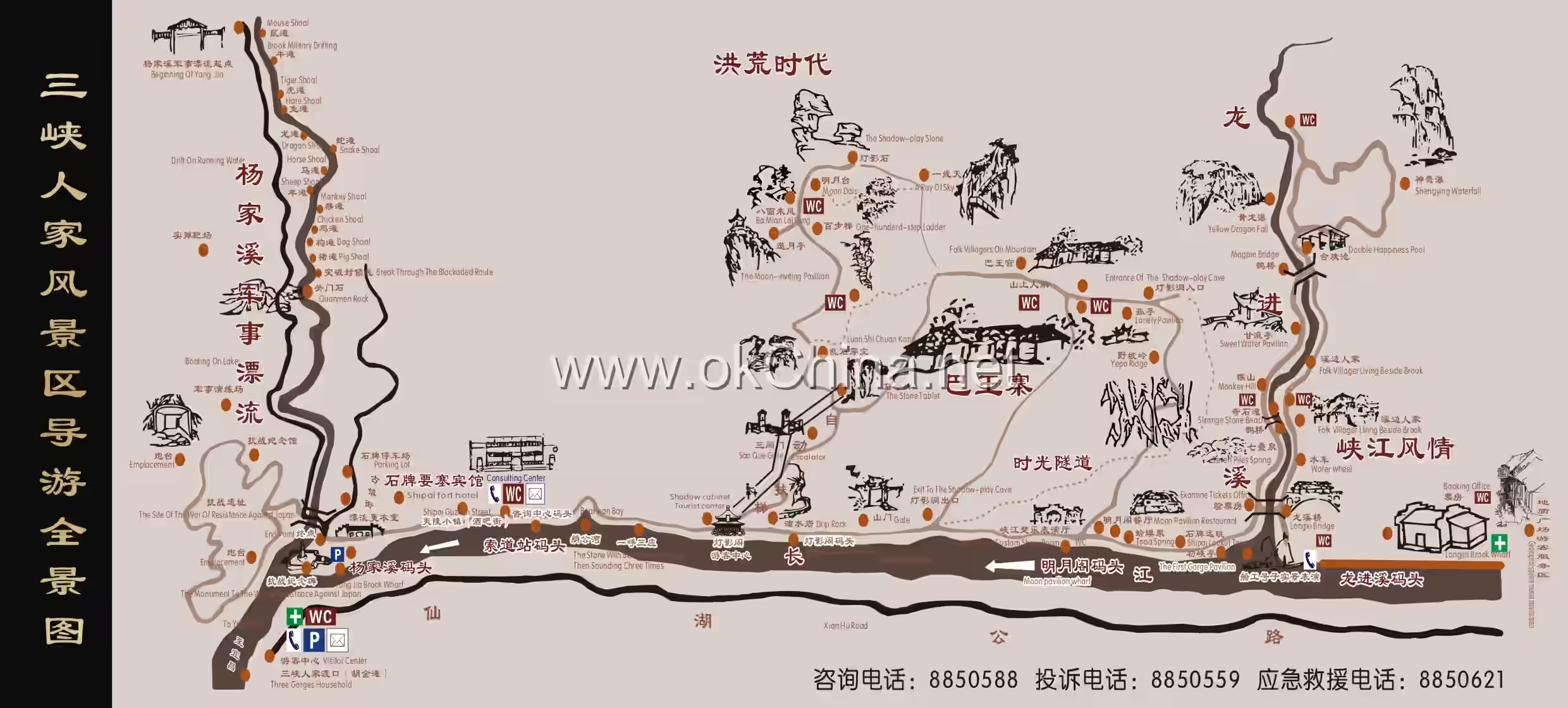
Three Gorges Family Scenic Area

Location Map

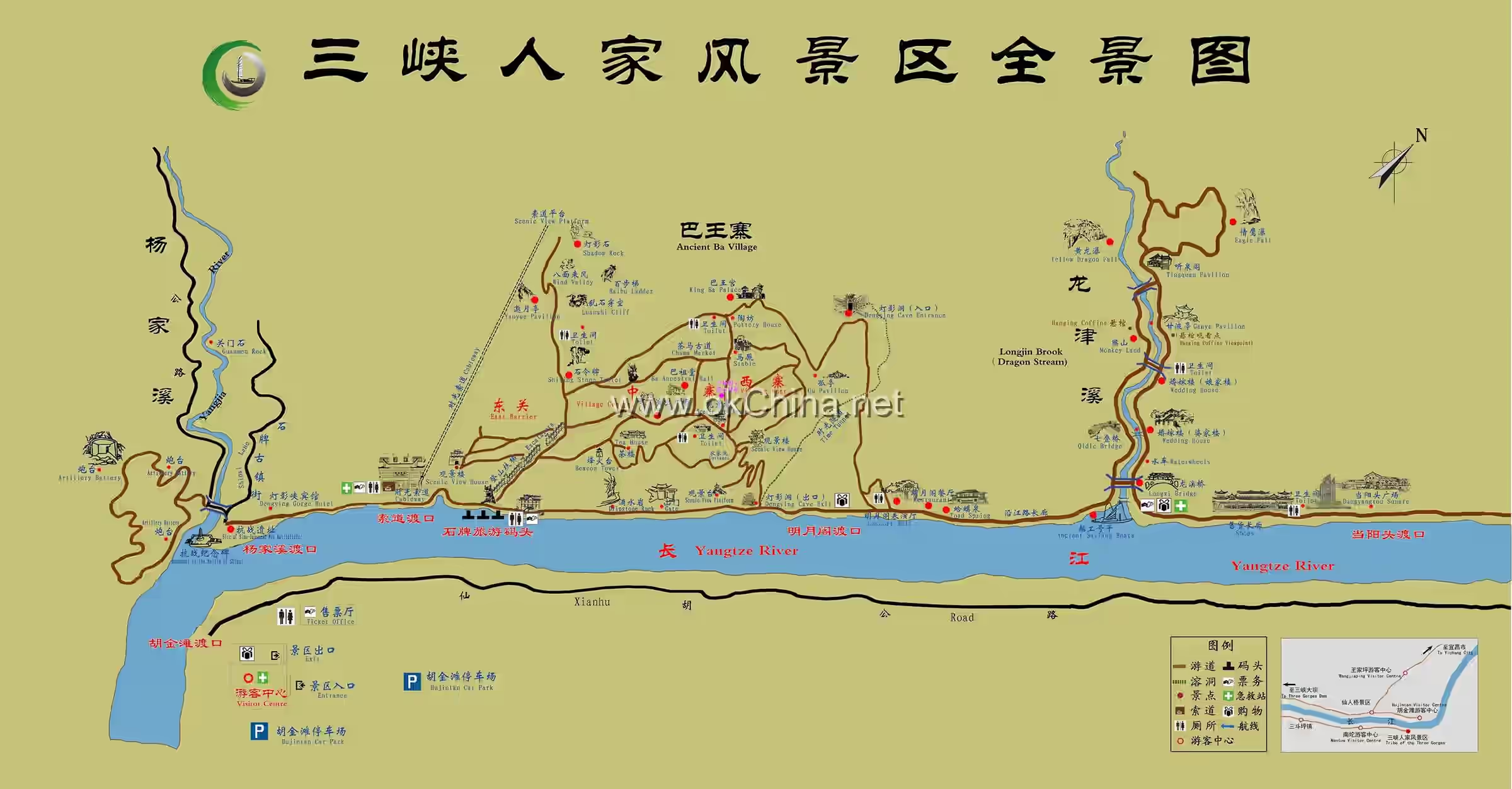
Map of Three Gorges Family Scenic Area

Ticket Price

Ticket Information

Ticket Packages:

  • [Adult] Ticket + In-park Transfer Bus + In-park Ferry: Original price ¥210, online booking ¥200.
  • [Child] Ticket + In-park Transfer Bus + In-park Ferry: Online booking ¥135.
  • [Senior] Ticket + In-park Transfer Bus + In-park Ferry: Online booking ¥135.

Tickets:

  • Boat to Three Gorges Tribe - Yichang Three Gorges Tribe Scenic Area - [Adult] First Class Boat Ticket to Three Gorges Tribe + Three Gorges Tribe Scenic Area Ticket: Original price ¥298, online booking ¥288.
  • Boat to Three Gorges Tribe - Yichang Three Gorges Tribe Scenic Area - [Adult] Premium Class Boat Ticket to Three Gorges Tribe + Three Gorges Tribe Scenic Area Ticket: Original price ¥398, online booking ¥388.
  • Boat to Three Gorges Tribe - Three Gorges Tribe Scenic Area - [Double] First Class Cruise Ticket + Scenic Area Ticket: Original price ¥596, online booking ¥520.
  • Boat to Three Gorges Tribe - Yichang Three Gorges Tribe Scenic Area - [Double] Premium Class Cruise Ticket + Scenic Area Ticket + Exclusive Viewing Deck + Exclusive Gift Pack: Original price ¥796, online booking ¥707.

Regular Tickets:

  • Three Gorges Tribe Scenic Area Full-price Package Ticket: ¥210/person/trip (online booking ¥200/person/trip) [Includes scenic area ticket ¥150 + round-trip transfer ticket ¥30 + round-trip ferry ticket ¥30].
  • Scenic Area Transportation Ticket: ¥60/person/trip [Includes round-trip transfer ticket ¥30 + round-trip ferry ticket ¥30].
  • One-way Cable Car Uphill within the Scenic Area: ¥30/person/trip [One-way].
  • One-way Escalator Uphill within the Scenic Area: ¥30/person/trip [One-way].

Opening Hours

Operating Hours

  • January 1 to February 29: Monday to Sunday, 08:30-17:30, last entry at 15:00.
  • March 1 to October 31: Monday to Sunday, 08:00-17:30, last entry at 15:00.
  • November 1 to December 31: Monday to Sunday, 08:30-17:30, last entry at 15:00.
  • The above information is for reference only. Please refer to the actual notice at the scenic area on the day of your visit.

Recommended Duration

Suggested Duration for Visit

4-6 hours.

Best Time to Visit

Visiting Hours

Spring and Autumn

Official Phone

Scenic Area Contact Numbers

  • 0717-8850588 (Information Hotline)
  • 0717-8850559 (Complaint Hotline)

Transportation

Transportation Guide

By Air

Yichang Sanxia Airport → Sanxia Folk Scenery Area:
Take the airport shuttle bus to Yiling Square, then transfer to Bus 10-1 at the Yiling Square bus stop to the final stop, Sanxia Folk Scenery Area.

By Train

Yichang East Railway Station → Sanxia Folk Scenery Area:

  1. Take Bus B9 from Yichang East Railway Station, get off at the BRT Xiling Yilu Station, walk 340 meters to Yiling Square bus stop, then transfer to the tourist shuttle Bus 10-1 to the final stop, Sanxia Folk Scenery Area.
  2. Take Bus B1 from Yichang East Railway Station, get off at the Municipal Housing and Urban-Rural Development Bureau Station, walk 490 meters to Yiling Square bus stop, then transfer to the tourist shuttle Bus 10-1 to the final stop, Sanxia Folk Scenery Area.

By Bus

Yichang City Tourist Shuttle Bus 10-1:
The tourist shuttle Bus 10-1 from Yichang city to Sanxia Folk Scenery Area starts at Yiling Square and ends at Sanxia Folk Scenery Area. The first bus departs from Yiling Square at 8:05, and the last bus departs from Sanxia Folk Scenery Area at 17:30. The average interval between buses is about 45 minutes. The full fare is 15 yuan.

By Car

Shanghai–Chongqing Expressway (G50)

Recommended route: Drive on the Shanghai–Chongqing Expressway (G50), pass the Yichang toll station, take the "Yiling District" exit, turn left after exiting the highway, pass "Zhonghe Peninsula City" and "Sanyoudong," and proceed directly to the Sanxia Folk Scenery Area Visitor Center.

Tip: After reaching the "Xianhu Intersection," turn left downhill (note the large billboard by the roadside) to arrive at the Sanxia Folk Scenery Area Visitor Center. Purchase tickets at the ticket office to enter.

Reminder: The riverside road on the south bank of the Yangtze River is not accessible. Do not drive onto it.

For real-time navigation, in the Sanxia Folk Scenery Area service account (sxrj10000), select from the menu: Visitor Services → Self-Service Navigation.

  1. During peak holiday periods, all self-driving vehicles must park at the "Sanxia Folk Scenery Area Wangjiaping Parking Lot" and transfer to the free shuttle bus to the scenic area.
  2. The riverside road on the south bank of the Sanxia Folk Scenery Area is a local village path and is not open to the public. Additionally, there is no ticket office at the south bank entrance, so visitors cannot purchase tickets there. All visitors must purchase tickets at the Sanxia Folk Scenery Area Hujintan Visitor Center ticket office to enter the scenic area.

By Cruise

Every morning at 8:30 and 10:30, dedicated cruise ships for Sanxia Folk Scenery Area and the "Two Dams and One Gorge" tour depart from the Gezhouba No. 3 Ship Lock Pier. The cruise ticket includes admission to the Sanxia Folk Scenery Area. The return time in the afternoon is around 18:00. Traveling by cruise offers a spacious and comfortable journey, allowing you to enjoy the most pristine section of the Xiling Gorge in the Yangtze River Three Gorges. It’s truly great value for money!

Classical Route

Tour Route

1. Entering the Scenic Area from Longjin Stream

Longjin Stream — Mingyue Pavilion — Bawang Village — Shipai Ling — Yaoyue Pavilion — Dengying Stone

Take the Three Gorges Family ferry at Hujintan Wharf to arrive at Dangyangtou Wharf. At the mouth of Longjin Stream, watch the intangible cultural heritage performance "Xiajiang Haozi" (Gorges Boatmen's Work Song) and the ancient-style dance performance "Wangchen Valley". Explore Longjin Stream and enjoy sights such as the Water Dwellings, Longxi Bridge, Streamside Dwellings, Seven-Fold Spring, Ganye Pavilion, Hanging Coffins, and Huanglong Waterfall. Watch and experience the Tujia wedding performance at the Wedding Tower. After exiting Longjin Stream, walk along the riverside landscape trail, passing through the Poetry Corridor, and appreciate the shimmering waves, cloud shadows, and magnificent mountains and rivers of Dengying Gorge along the way.

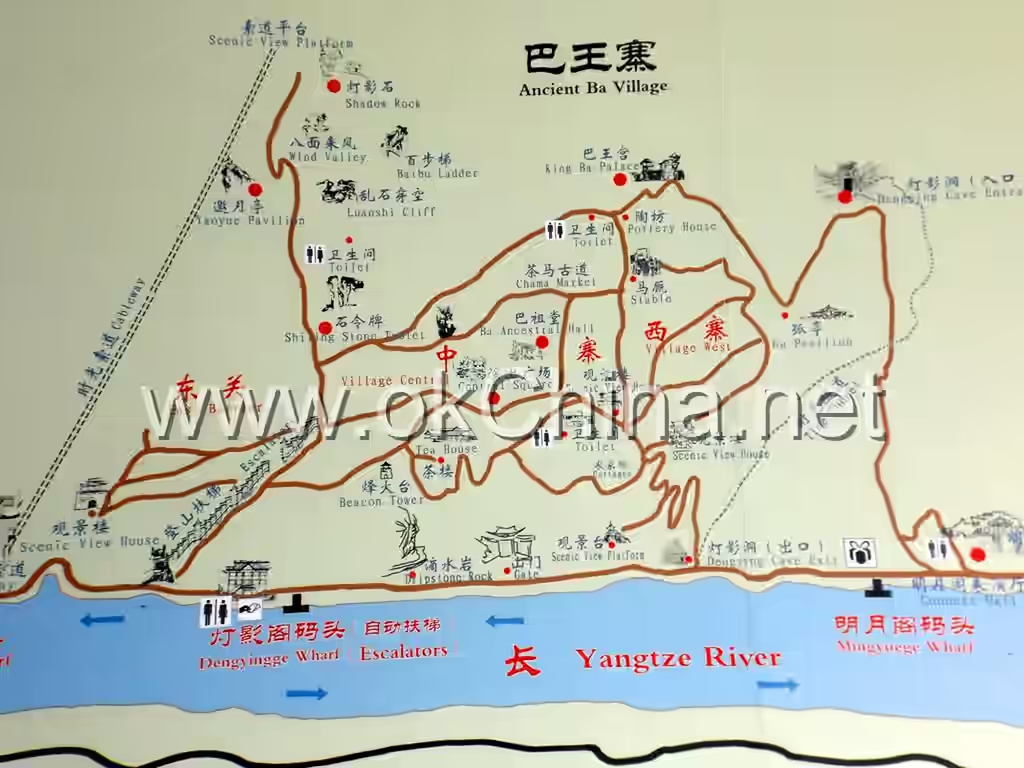
After lunch at Mingyue Pavilion, take the escalator up to Bawang Village (escalator ticket: 30 RMB per person one-way). At the central square of Bawang Village, enjoy folk song and dance performances. Proceed to the Tea and Salt Ancient Road to watch intangible cultural heritage performances and displays such as "Three-Stick Drum", "Yiling Nanguan", "Shadow Puppetry", "Yiling Woodblock Prints", "Nanqu", and "Three-Tone Song". Along the way, observe traditional handicraft demonstrations like "Blacksmith Shop", "Coppersmith Shop", "Woodworking", "Batik", and "Weaving". Watch pottery making at the Pottery Workshop and visit Bawang Palace to learn about the life and military defense of the Ba people. Ascend via Shipai Ling to see Yaoyue Pavilion, a filming location for the large-scale historical drama The Dews of Royalty, overlooking the panoramic view of Mingyue Bay. Admire the First Stone on the Yangtze River—Dengying Stone. Take the cable car down the mountain (cable car ticket: 30 RMB per person one-way or 50 RMB per person round-trip). At the cable car station wharf, take the Three Gorges Family ferry back to Hujintan Wharf, concluding the pleasant "Enchanting Gorges, Three Gorges Family" tour.

Friendly reminder: The entire tour takes approximately 4 hours.

2. Entering the Scenic Area from the Cable Car Station

Cable Car Station — Dengying Stone — Yaoyue Pavilion — Shipai Ling — Bawang Village — Mingyue Pavilion — Longjin Stream

Take the cable car up the mountain (cable car ticket: 30 RMB per person one-way or 50 RMB per person round-trip). Admire the First Stone on the Yangtze River—Dengying Stone, and Yaoyue Pavilion, a filming location for the large-scale historical drama The Dews of Royalty, overlooking the panoramic view of Mingyue Bay. Proceed via Shipai Ling to reach Bawang Village. Go to the Tea and Salt Ancient Road to watch intangible cultural heritage performances and displays such as "Three-Stick Drum", "Yiling Nanguan", "Shadow Puppetry", "Yiling Woodblock Prints", "Nanqu", and "Three-Tone Song". Along the way, observe traditional handicraft demonstrations like "Blacksmith Shop", "Coppersmith Shop", "Woodworking", "Batik", and "Weaving". Watch pottery making at the Pottery Workshop and visit Bawang Palace to learn about the life and military defense of the Ba people. Enjoy folk song and dance performances at the central square of Bawang Village, then descend along the mountain path.

After lunch at Mingyue Pavilion, walk along the riverside landscape trail, passing through the Poetry Corridor, and appreciate the shimmering waves, cloud shadows, and magnificent mountains and rivers of Dengying Gorge along the way. Explore Longjin Stream and enjoy sights such as the Water Dwellings, Longxi Bridge, Streamside Dwellings, Seven-Fold Spring, Ganye Pavilion, Hanging Coffins, and Huanglong Waterfall. Watch and experience the Tujia wedding performance at the Wedding Tower. After exiting Longjin Stream, at the mouth of Longjin Stream, watch the intangible cultural heritage performance "Xiajiang Haozi" (Gorges Boatmen's Work Song) and the ancient-style dance performance "Wangchen Valley".

Take the Three Gorges Family ferry at Dangyangtou Wharf back to Hujintan Wharf, concluding the pleasant "Enchanting Gorges, Three Gorges Family" tour.

Friendly reminder: The entire tour takes approximately 4 hours.

One-Day Tour Guide

It is recommended to purchase a package ticket online or join a one-day tour group for better value.

Suggested tour duration: 4-6 hours.

There are two ways to visit: entering by car or by boat.

  1. Entering Three Gorges Family by Car/Taxi: Depart from Yichang East Railway Station at 8:00 (36 km, about 50 minutes) or from the Three Gorges Tourist Center at 10:30 (27 km, about 50 minutes). The travel time by taxi is similar. Entering by car means visiting the Water Dwellings (Longjin Stream, Wedding Cry Performance) first, followed by the Mountain Dwellings (Yaoyue Pavilion, Bawang Village).
  2. Entering Three Gorges Family by Boat: Board the ship at Xiakou Wharf around 8:30. You can view Gezhouba Dam, Sanyou Cave, and Mingyue Bay from the boat. Entering by boat means visiting the Mountain Dwellings (Yaoyue Pavilion, Bawang Village) first, followed by the Water Dwellings (Longjin Stream, Wedding Cry Performance).

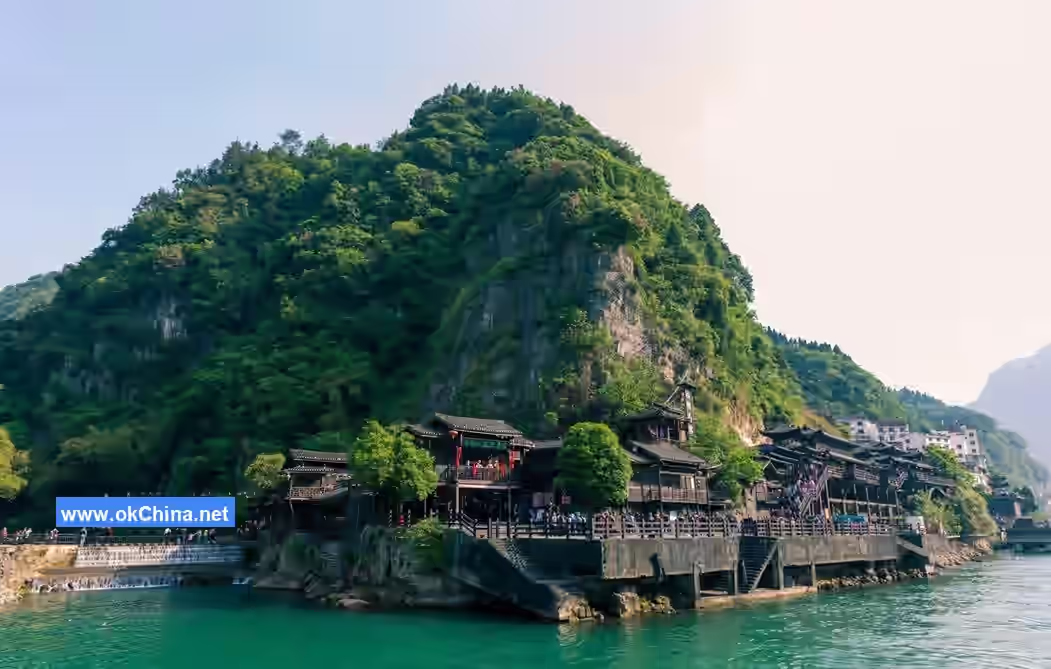
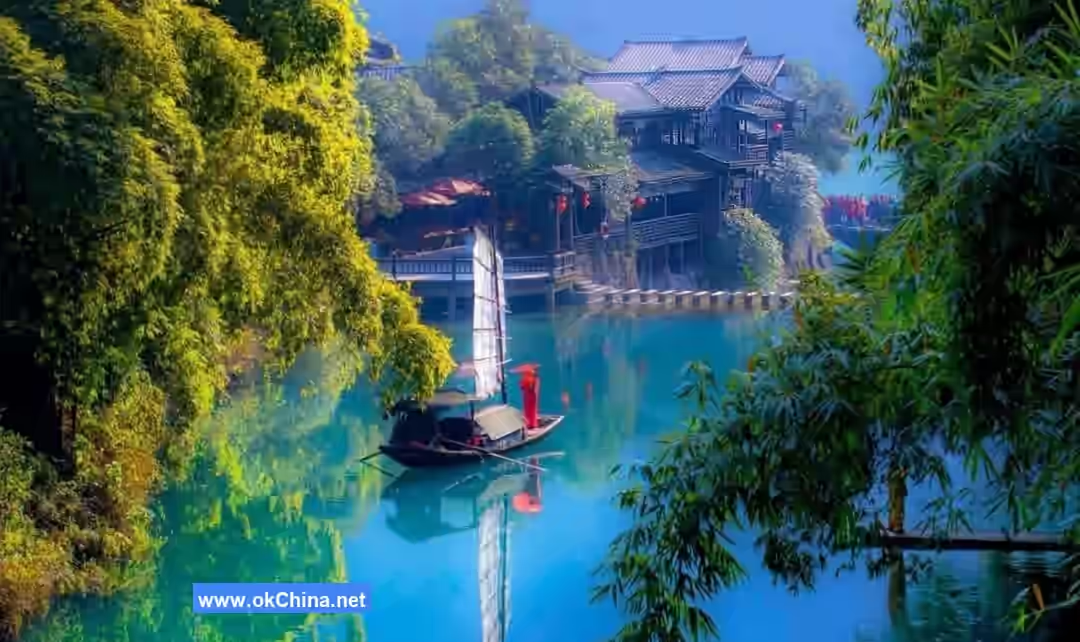
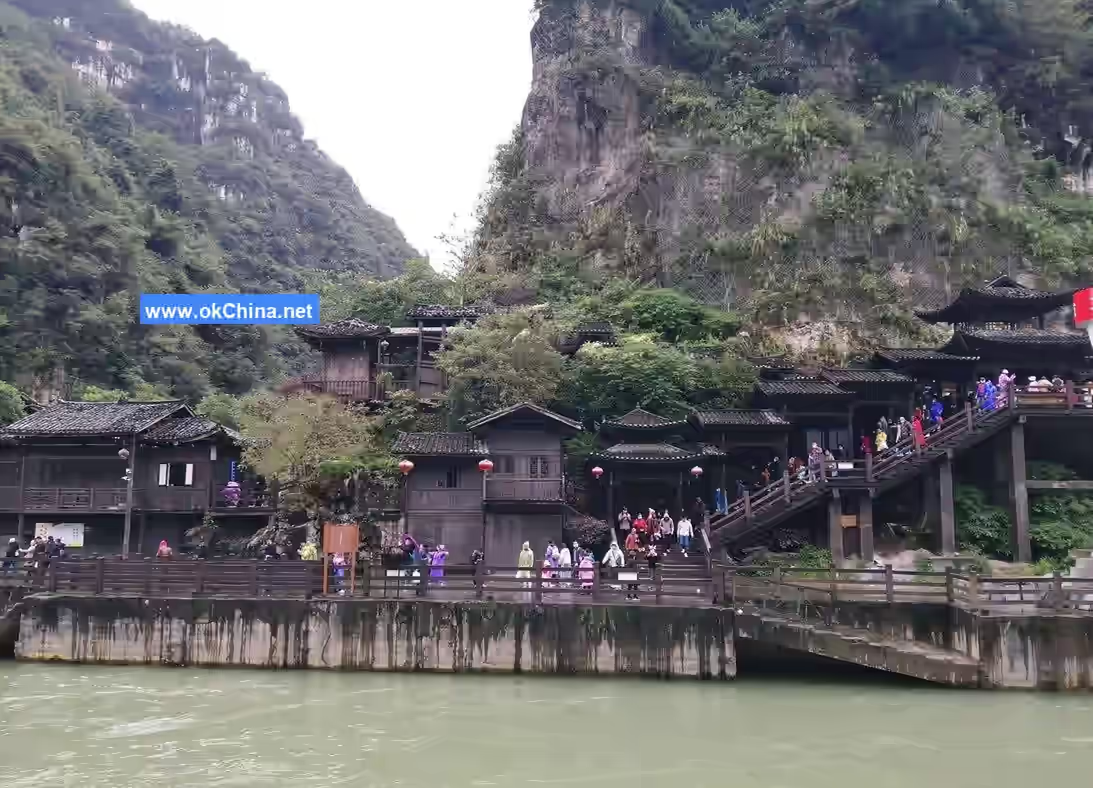
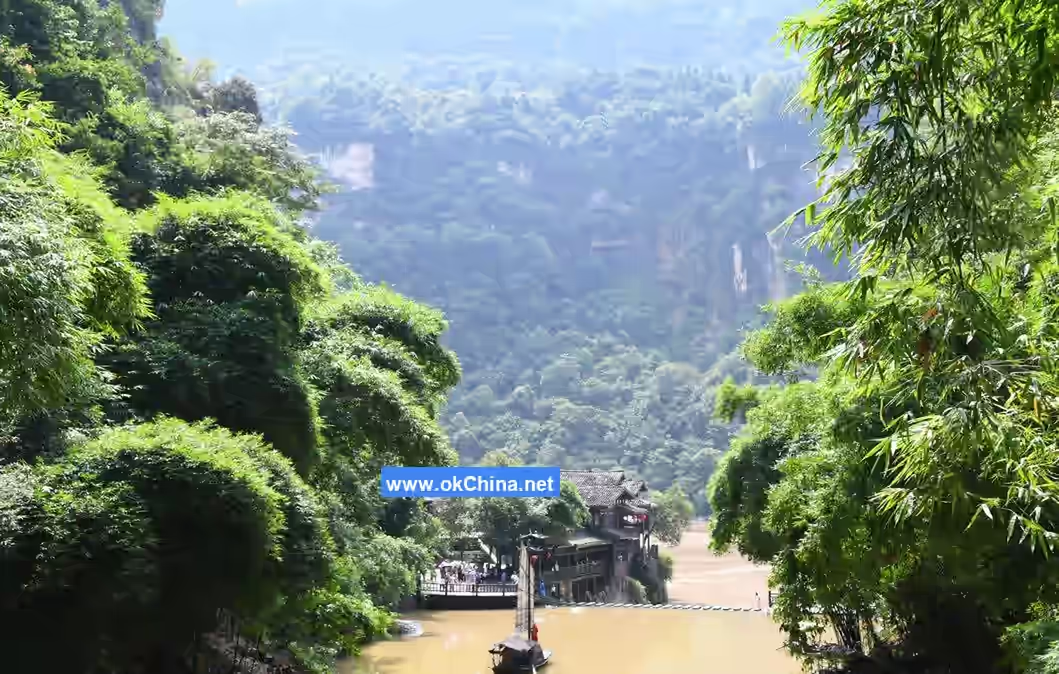
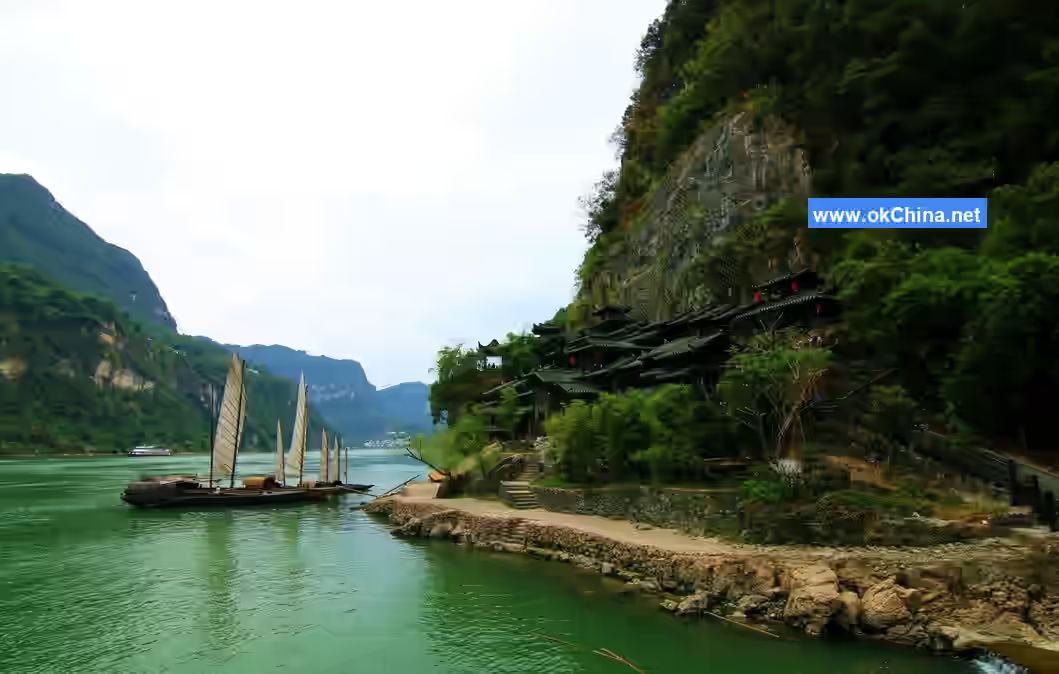
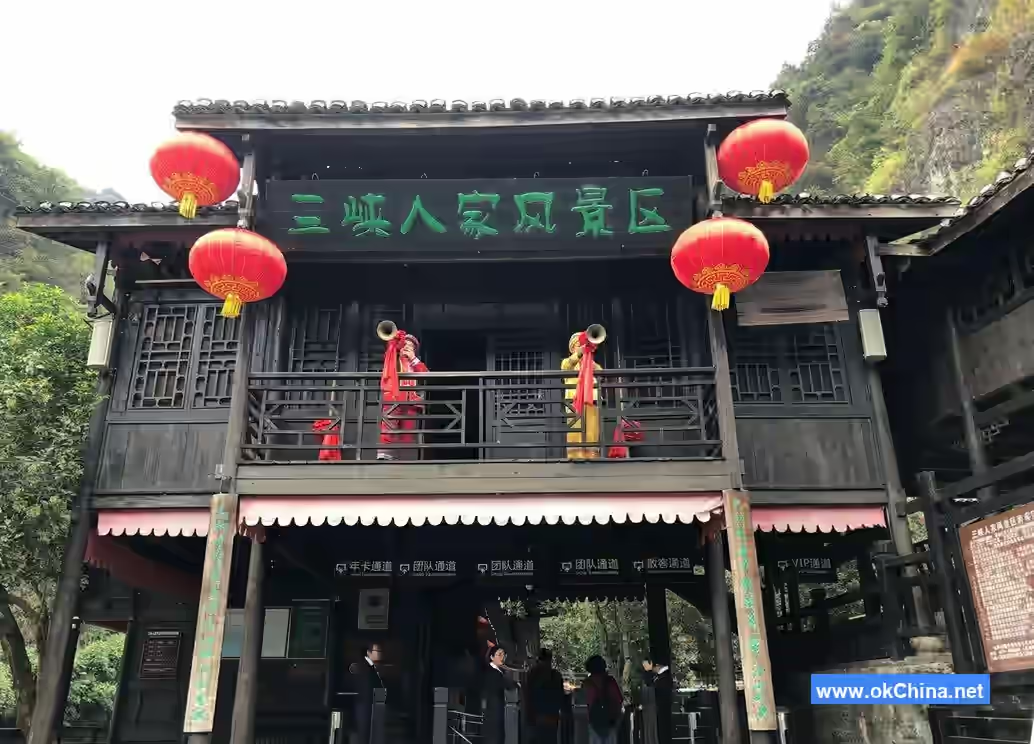
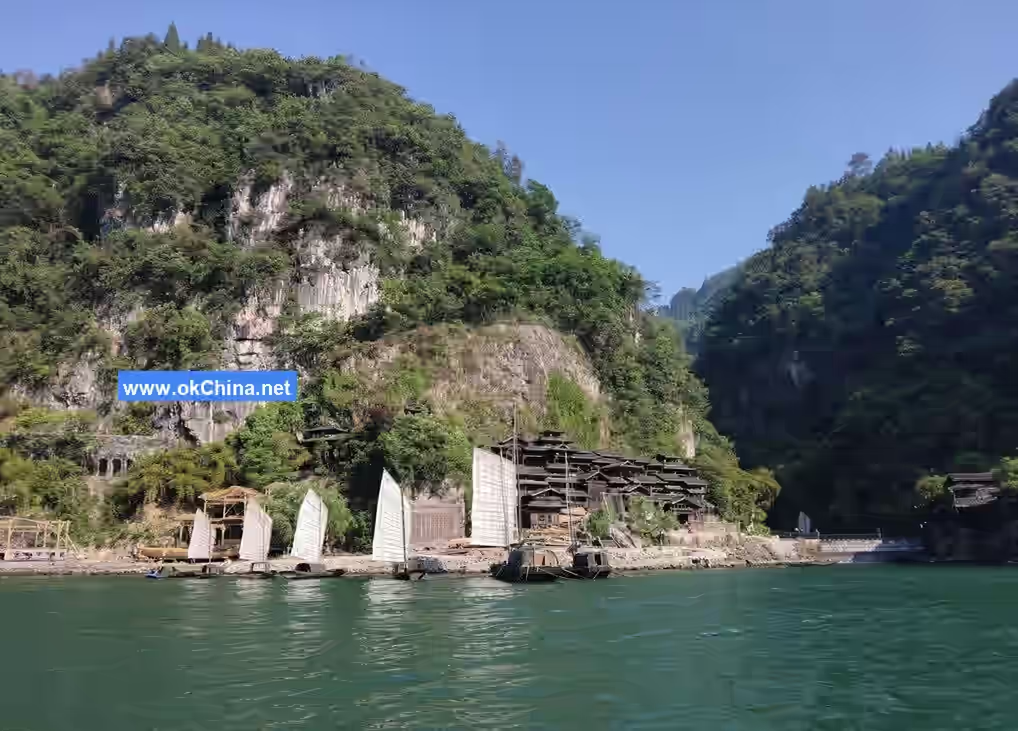
Three Gorges Family is a 5A-level scenic area featuring natural landscapes, nestled against mountains and beside water with picturesque scenery. At the entrance, you can see traditional stilted buildings点缀于山水之间 (dotting the landscape between mountains and water), along with long-unseen ancient sailing ships and black-canopied boats moored quietly in front of the dwellings (here you can see trackers pulling boats and Hanfu performances). Inside the stilted buildings, you might see girls from the Gorges singing and dancing, young women washing clothes with wooden clubs by the stream, and leisurely fishermen casting nets on the river... On the mountain, there are attractions like Bawang Village and Lingpai Stone. If you're lucky, you might even see cute little monkeys.

Dining: It is recommended to bring some snacks for when you get hungry during the tour. You can order local农家菜 (farmhouse dishes) at mealtimes.

PS: The entire Three Gorges Family area spans 2.5 km. It is建议衣着宽松,鞋子修改 (recommended to wear loose clothing and comfortable shoes). The mountain paths are rugged and not suitable for strollers, so prepare accordingly if traveling with young children.

Important Notes

Visitor Guidelines

  1. The Wangjiaping Parking Lot at Three Gorges Tribe is currently free of charge. The parking fees for the Hujintan Parking Lot are as follows:
  • Small vehicles (under 7 seats): 5 yuan per vehicle for 1-4 hours; an additional 2 yuan per hour for each hour beyond 4 hours; maximum charge of 10 yuan for 24 hours.
  • Medium vehicles (19 seats and under): 8 yuan per vehicle per hour for 1-4 hours; an additional 3 yuan per hour for each hour beyond 4 hours; maximum charge of 20 yuan for 24 hours.
  • Large vehicles (over 19 seats): 10 yuan per vehicle per hour for 1-4 hours; an additional 5 yuan per hour for each hour beyond 4 hours; maximum charge of 30 yuan for 24 hours.

Note: An additional 10 yuan vehicle custody fee applies for overnight parking.

  1. There are currently no banks or ATMs within the Three Gorges Tribe scenic area. Please prepare sufficient cash before entering.

  2. For guided tour services, professional guides are available at the Three Gorges Tribe Visitor Center at a rate of 200 yuan per session.

  3. Pets are not allowed within the scenic area.

  4. Three Gorges Tribe is backed by the Xiling Gorge and faces the Yangtze River. Please watch your step when boarding/disembarking boats and ascending/descending hills. It is advisable not to wear high heels during your visit. The authentic Tujia wedding performance includes interactive toasts with locally brewed pure corn liquor. Please decline or refrain from drinking if you cannot consume alcohol. Unauthorized departure from designated paths for climbing, wading, swimming, or fishing is prohibited.

Visitor Information

I. Service Tips

  1. The scenic area has a Three Gorges Tribe Visitor Center where you can obtain various information about the area.
  2. The scenic area operates on a single-ticket system (excluding cable cars and escalators). Please purchase tickets and complete entry procedures at the Three Gorges Tribe Visitor Center. Visitors holding eligible discount or free admission certificates should actively present them during ticket purchase and verification.
  3. Service zones and points within the scenic area offer dining, shopping, guided tours, medical services, and rest facilities. Scenic viewpoints and restrooms are available along the paths to ensure a comfortable visit.
  4. Self-driving visitors should park at the Wangjiaping Parking Lot and take the Yichang Yuntai Tourism Transport Company's shuttle bus to Hujintan for boat entry.
  5. Given the diverse landscapes and rich cultural content, hiring a scenic area guide is recommended to enhance your travel experience.

II. Prohibited Activities Within the Scenic Area

  1. Smoking, making fires, camping fires, or barbecuing food.
  2. Damaging plants, trees, facilities, or equipment.
  3. Harming or hunting wildlife without authorization.
  4. Collecting wild medicinal herbs or other forest by-products.
  5. Entering areas not open to visitors.
  6. Other activities prohibited by laws and regulations.

III. Safety Tips

  1. The terrain within the scenic area is complex and steep. Please stay on designated paths to avoid getting lost.
  2. Do not climb rocks or wade into streams, ponds, or waterfalls to ensure your safety.
  3. Avoid climbing or crossing guardrails, and do not lean heavily on them to prevent accidents.
  4. Refrain from sitting or resting on scenic paths to avoid inconveniencing others.
  5. Some paths are steep and hazardous. Please avoid running, jumping, or playing while hiking.
  6. When taking scenic area ferries, follow order, queue consciously, and cooperate with staff.
  7. Keep children under close supervision and within your sight at all times.

IV. Etiquette Tips

  1. Maintain public order by avoiding loud noises or rowdy behavior.
  2. Protect public property and refrain from carving or marking any surfaces.
  3. Dispose of waste in trash bins to keep the environment clean.
  4. The area is home to rare plants, animals, and unique rock formations. Please appreciate and protect them by avoiding trampling, picking, or damaging.
  5. Do not pick or consume any plant parts, fruits, or leaves to prevent discomfort or poisoning from accidental ingestion.

For additional services, feedback, or suggestions, please call 0717-8850588 (inquiry) or 0717-8850559 (complaints). All staff members look forward to serving you.

Important Child Sites

Scenic Spots and Attractions

Longxi Charm

Longjin Stream

Recommendation Index: ★★★

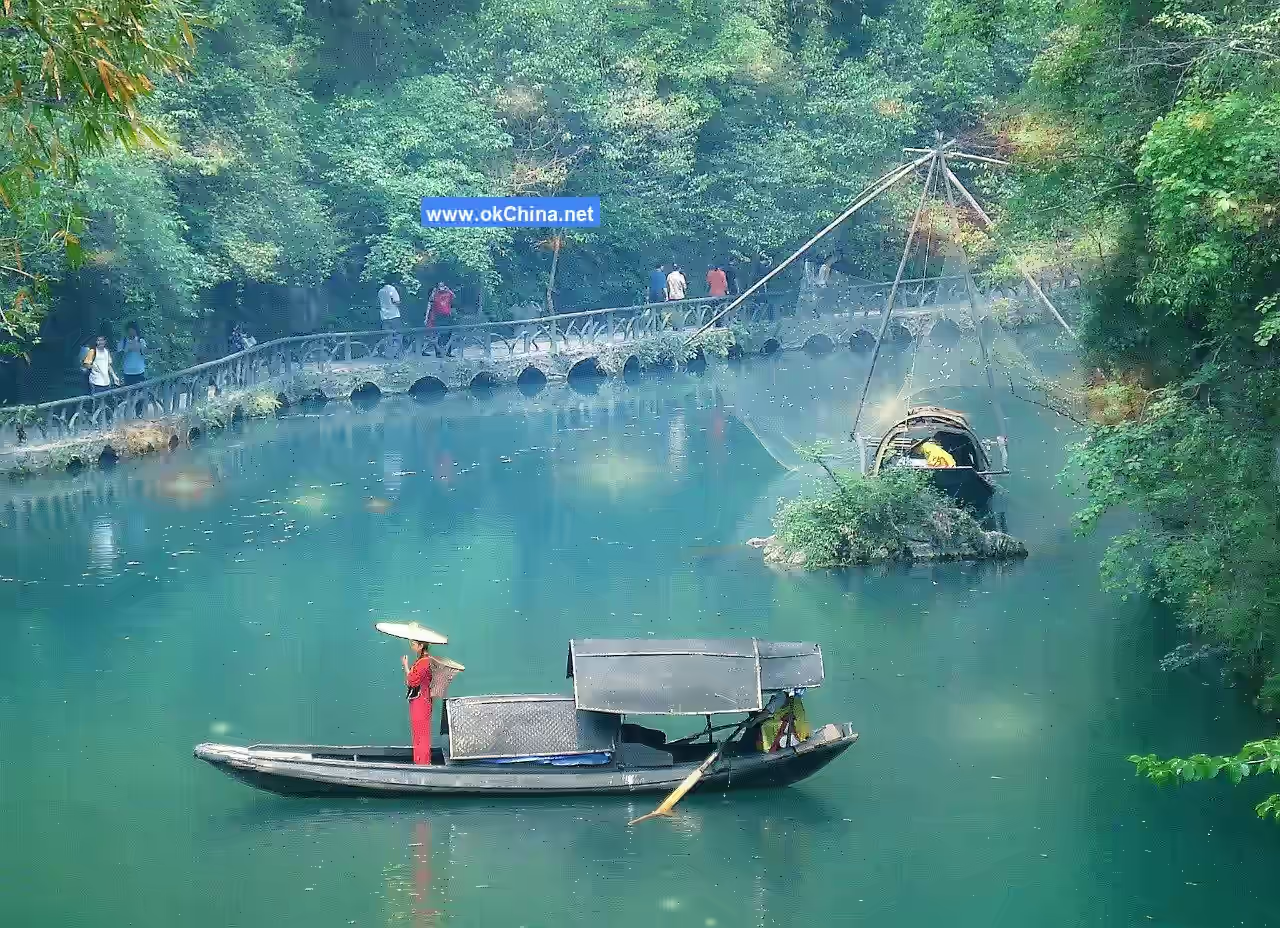
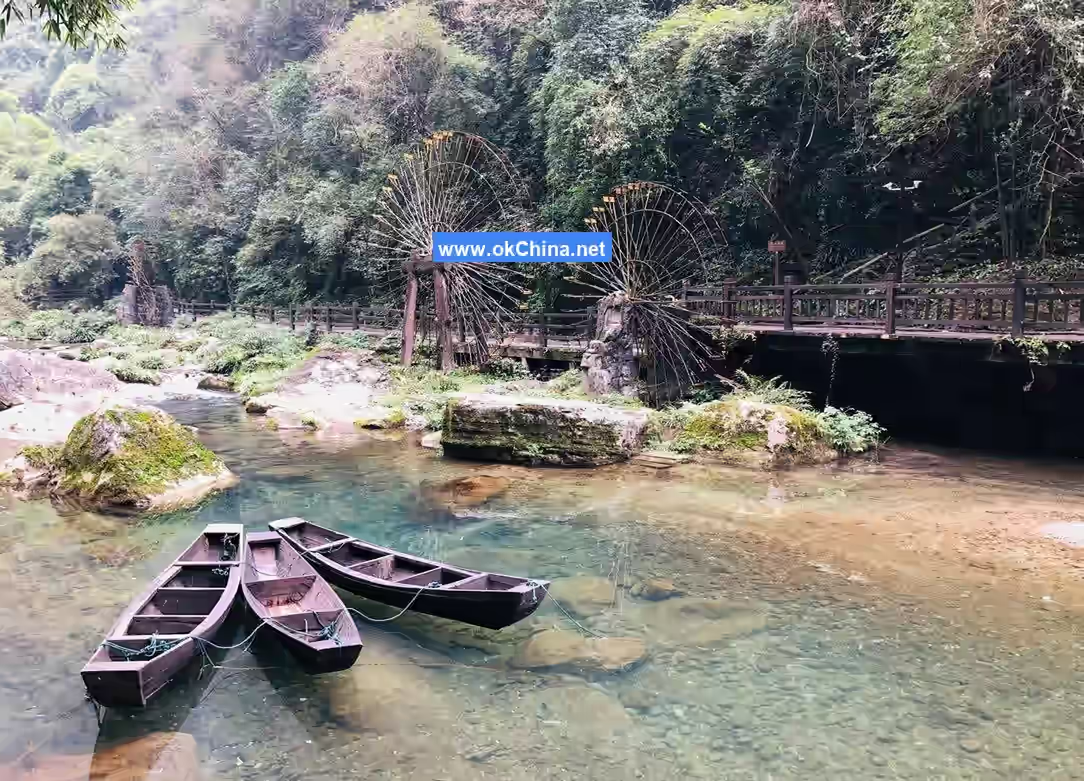
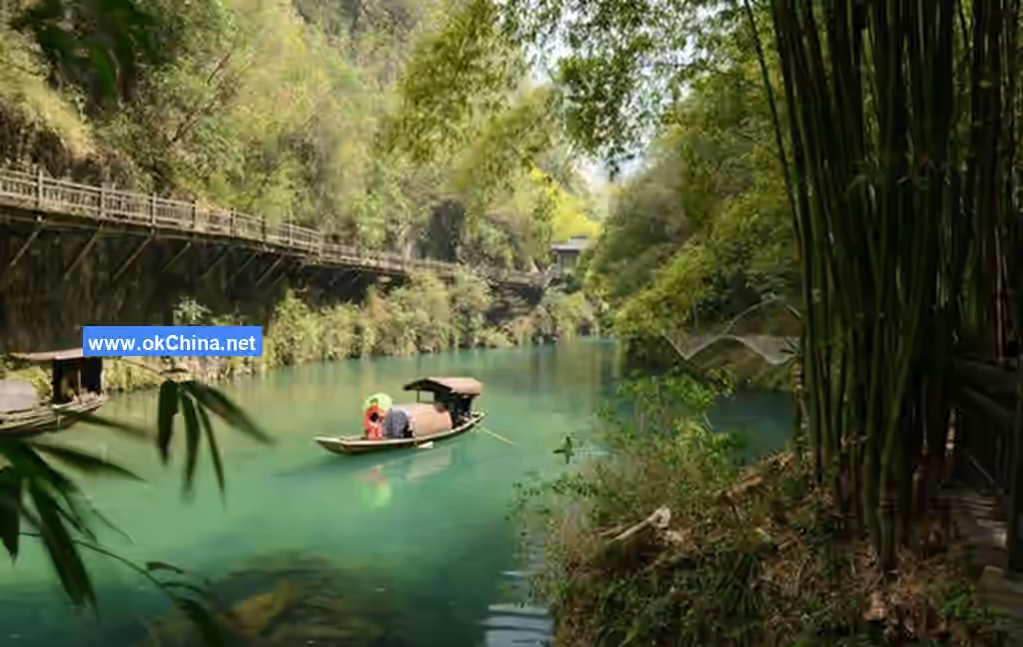
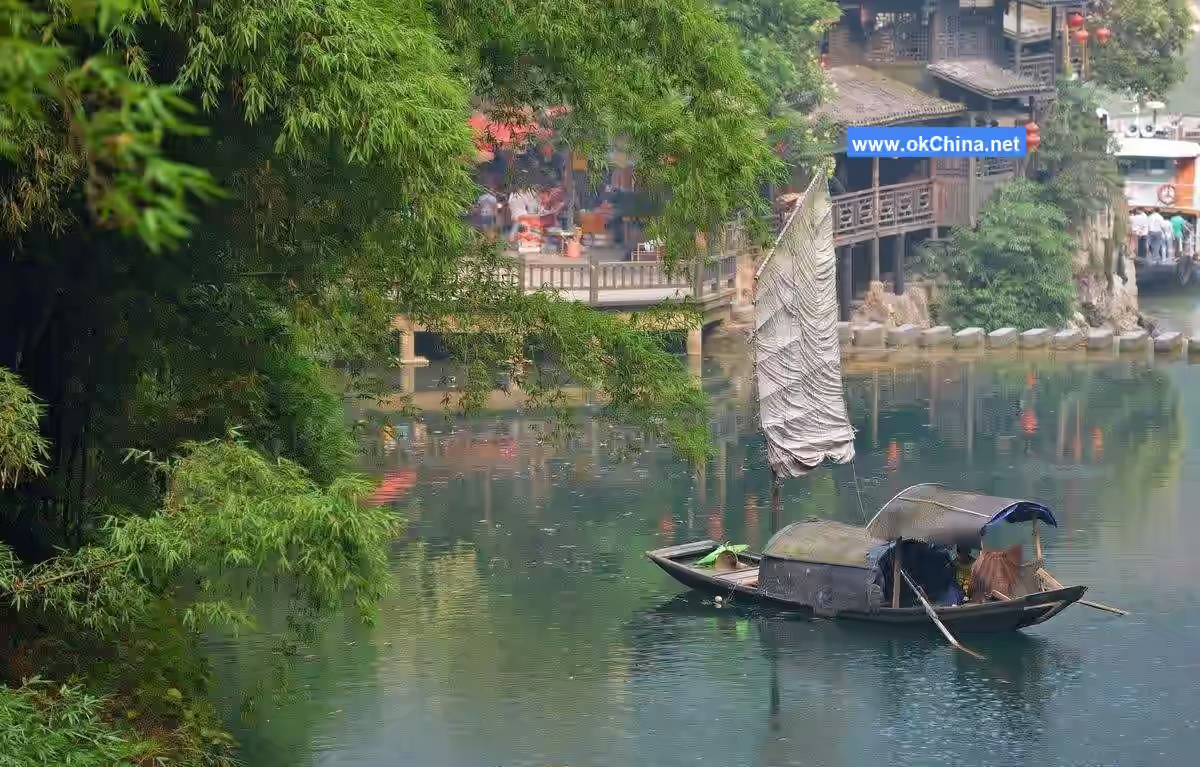
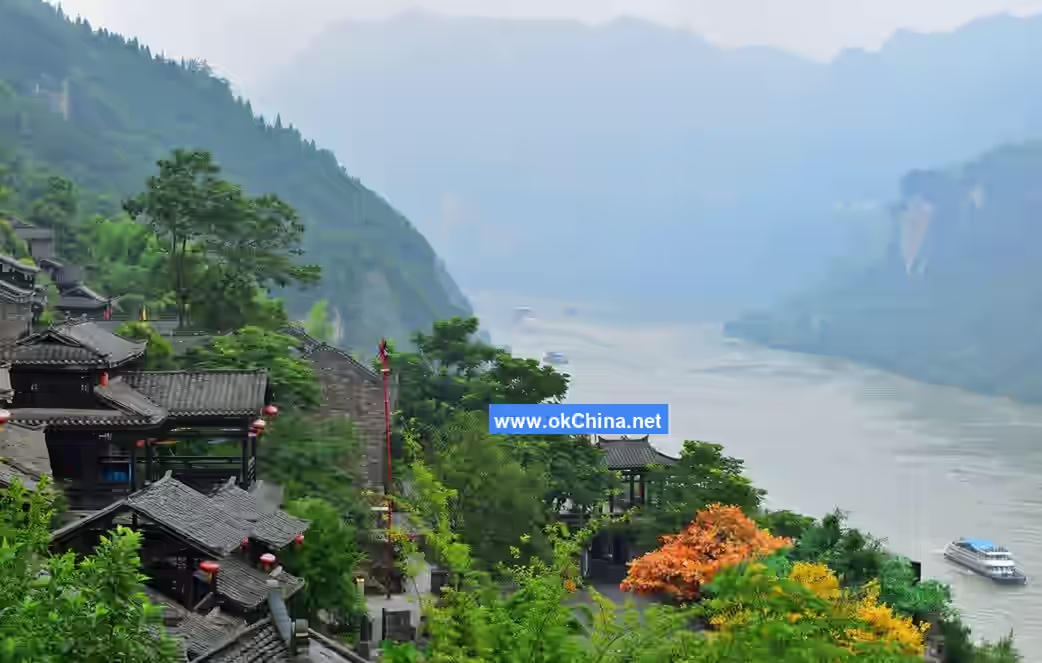
Longjin Stream is one of the most charming attractions in the Three Gorges Tribe scenic area. The stilted buildings along the stream are half on land and half over the water. Surrounded by mountains, with slanting sunlight, lush grass and trees, winding secluded paths, emerald-blue water, and misty drizzles, the scene is enchanting. The high-pitched chants of trackers, the intermittent sound of young women pounding clothes, and the melodious bamboo flute music from the green shade... Blue stones, small bridges, flowing water, and households create a picturesque view. White geese swim, fish glide in the shallow water, small bamboo rafts moor under green vines, ancient sailing boats ripple leisurely on the clear waves, fishing nets hang high, and waterwheels creak. It is a splendid paradise on earth, an idyllic haven of unparalleled beauty.

Longxi Bridge

Recommendation Index: ★★★

Longxi Bridge stands tall between green mountains and clear waters, spanning the serene and beautiful Longjin Stream. Facing the great river and backed by forests, the bridge overlooks crystal-clear, misty stream water below. Fishermen row their boats with oars, young maidens stand at the bow holding oil-paper umbrellas, and black-canopied boats glide leisurely under the bridge arch. Standing on the bridge, one can gaze into the distance through the swaying bamboo shadows at the confluence of the stream and the Yangtze River, with faint green mountains and undulating waters, and cannot help but be captivated by this dreamlike and enchanting scenery.

Qidie Bridge

Recommendation Index: ★★★

Qidie Bridge emerges from the depths of life's wilderness, carrying an air of mystery and wildness. Stilted buildings are a common and typical living pattern of the Three Gorges Tribe, symbolizing or allegorizing their way of life. The marriage customs of the Tujia people, descendants of the ancient Ba people, flow from folklore and traditions into people's hearts. In the Three Gorges Tribe, the mountains have their majesty, the waters their tenderness, the caves their wonder, the waterfalls their grandeur, and the stones their unique character.

Wedding Tower

Recommendation Index: ★★★

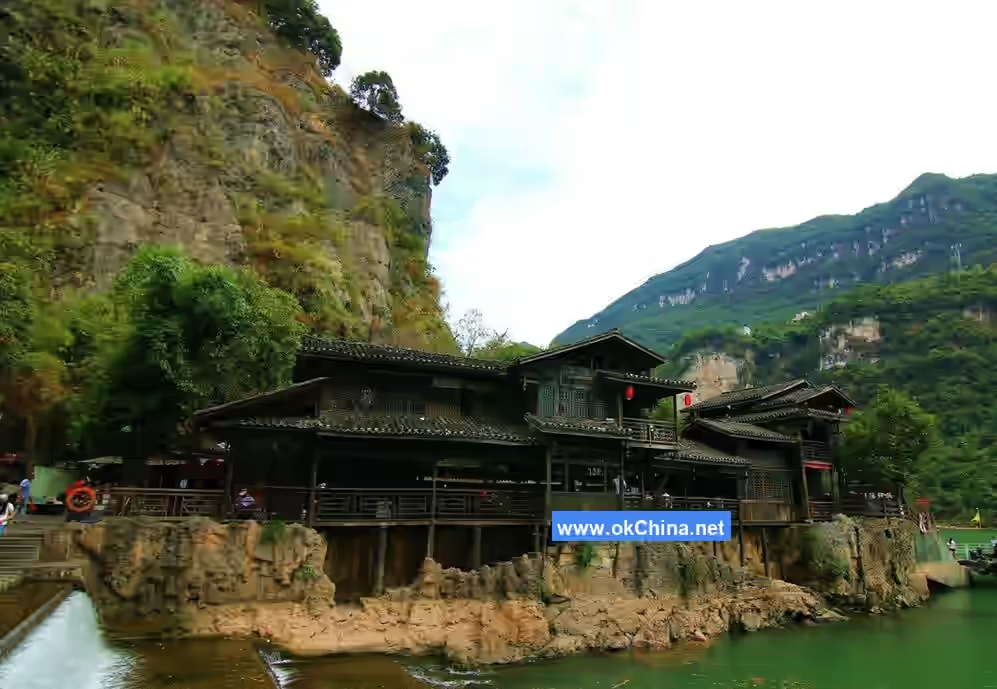
The "stilted buildings" by the stream are referred to by modern architects as "pile-dwelling structures." Due to the steep terrain in the Three Gorges area, houses are often built along mountain slopes, surrounded by bamboo and banana plants in the front and back. When encountering high slopes, pillars or walls are erected to level the structure with the main building's eaves, hence the name "stilted buildings." Typically, they have two or three stories: the upper floors are well-ventilated, dry, and moisture-proof, serving as living quarters, while the lower floors house livestock pens or storage areas and also protect against venomous snakes and wild beasts. Tujia maidens perform the "crying wedding" custom here when they marry, reflecting the ancient and traditional marriage customs of the Tujia ethnic group.

Huanglong Waterfall

Recommendation Index: ★★★

The source of Huanglong Waterfall originates from an underground karst cave, making it a rare waterfall cluster in the Three Gorges. It is grand in scale and flows year-round, fanning out as it cascades into a deep pool. A local legend in the Three Gorges area speaks of "nine dragons rushing to the river." Among them, the yellow dragon, known for its playful nature, lingered in the beautiful scenery and refused to leave, eventually transforming into a waterfall in Longjin Stream, hence the name Huanglong Waterfall.

Qinying Stream

Recommendation Index: ★★★

A clear spring tumbles down from the cliff top, resembling strings of glistening teardrops forming a water curtain or like harp strings hanging from the heavens. Whenever a breeze stirs, the strings sway, harmonizing with the rustling of leaves and the chirping of birds, as if playing a tender love story. The cliffs on both sides of the waterfall merge into one, resembling a majestic eagle spreading its wings, forever guarding this love.

Ba People's Tribe

Bawang Village

Recommendation Index: ★★★

Bawang Village is divided into the East Pass, Central Village, and West Village. It is a themed park showcasing the historical and cultural lineage of the ancient Ba Kingdom and the wisdom of its people. The sprawling architectural complex is arranged in a staggered layout, integrating achievements from various aspects of the ancient Ba Kingdom's development, including architecture, ancient military affairs, rituals, dance, and handicrafts. Through large-scale epic performances, it recreates the splendid civilization left behind by the Ba ancestors in the Three Gorges region.

Bawang Palace

Recommendation Index: ★★★

Bawang Palace houses the living quarters of the Ba King and Eshui Niang, the White Tiger Hall, Ancestral Worship Hall, Armory, and School. Here, bows and arrows, crossbows, catapults, as well as ancient Ba living utensils and farming tools are all available. The entire castle is built in the style of a watchtower using stones and logs, reflecting the people's keen sense of defense. Since the Ba people worship the white tiger as their totem, it is also known as the Tiger Fortress.

Tea and Salt Ancient Road

Recommendation Index: ★★★

Over 2,000 years ago, the Ba people thrived in the Three Gorges region, relying on salt springs, tea, mountain products, and trade with the outside world, which brought them prosperity and strength. The ancient salt transport road, once the economic lifeline of the Ba people, winds through the towering mountains, with remnants still visible today. The Tea and Salt Ancient Road in Bawang Village is a reconstruction on the original site, showcasing the life wisdom of the ancient Ba ancestors.

Primordial Era

Shadow Play Stones

Recommendation Index: ★★★

Four peculiar stones stand atop the mountain peak, strikingly resembling the characters of Tang Sanzang and his disciples from Journey to the West on their pilgrimage to the West. Whenever the setting sun shines and the evening glow illuminates the peak, they appear from afar like shadow play figures on a screen, vivid and lifelike, hence the name "Shadow Play Stones." When Mr. Guo Moruo visited Shadow Play Gorge, he wrote a poem in admiration: "Tang Monk and his disciples stand on the mountain peak, shadow play linking Pig and Monkey." Among the Shadow Play Stones, the most famous is the Sha Seng Stone, hailed as the "First Stone of the Ten Thousand Li Yangtze River."

Invite the Moon Pavilion

Recommendation Index: ★★★

Invite the Moon Pavilion is named after the poetic line by Li Bai: "Raising my cup, I invite the bright moon; with my shadow, we make a party of three." Standing in the pavilion and looking around, one sees endless rolling clouds and majestic green mountains resembling dragons and snakes dancing. Whenever a bright moon hangs in the sky, a breathtaking scene emerges: mountains and rivers like dark ink, long waves shimmering, shadow play stones under the moonlight, and boats returning with people.

Stone Tablet Token

Recommendation Index: ★★★

The Stone Tablet Token is regarded as a sacred object by locals, a place for praying for blessings and good fortune, where incense burned continuously throughout the year. According to the Donghu County Annals, a massive stone about sixty to seventy zhang long lies on the south bank of the river, resembling a tablet or raft, hence the name Stone Tablet Token, from which the place name Shipai (Stone Tablet) derives. The Stone Tablet Token stands 32 meters high, 12 meters wide at the top, 13 meters wide at the bottom, about 4 meters thick, and weighs over 4,300 tons. Viewed from afar, it is majestic and awe-inspiring.

Taiji Cat Cave

Recommendation Index: ★★★

Taiji Cat Cave is deep and narrow, stretching about 1,500 meters long. The karst landscape inside the cave is peculiar, with varied cave terrain. The "Five-Colored Musical Stone" is the most marvelous sight in the cave, displaying a rich interplay of black, white, yellow, gray, and green colors with clear boundaries. When struck by hand, it produces sounds like gongs and drums, leaving visitors in awe. An underground river with a drop of 30 meters flows inside the cave, its waters sometimes silent and gentle, sometimes roaring like a bell, sometimes babbling pleasantly, and sometimes melodious like a harp. Walking through this dreamlike underground world is an enchanting experience.

Shipai Fortress

Shipai Anti-Japanese War Memorial Park

Recommendation Index: ★★★

The Shipai Anti-Japanese War Memorial Park consists of the Shipai Anti-Japanese War History Exhibition Hall and the Shipai Anti-Japanese War Monument.

The Shipai Anti-Japanese War History Exhibition Hall is located in Shipai Village, Sandouping Town, Yiling District, Yichang City. The exhibition hall covers a construction area of 2,300 square meters, with an exhibition area of 1,600 square meters. The exhibition hall is planned and designed with two floors, comprising five exhibition zones: the Preface Hall, Part One Exhibition Hall, Part Two Exhibition Hall, Part Three Exhibition Hall, and Interactive Experience Area. Through historical materials such as photos, texts, and artifacts, the exhibition combines content with space to create a powerful and warm exhibition environment, deeply analyzing the strategic importance of the Shipai Fortress, the course of the Shipai Defense Battle, and its profound significance.

On August 15, 2000, the Yichang County Government erected the "Shipai Anti-Japanese War Monument" on the site of the Shipai Anti-Japanese War. In the same year, the Shipai Anti-Japanese War Memorial Hall was built and opened to the public.

Shipai Artillery Fortress Site

Recommendation Index: ★★★

The site of the "Shipai Defense Battle" is located in Shipai Village, Sandouping Town, Yiling District, Yichang City. Here, the Yangtze River suddenly makes a 110-degree turn, forming a formidable natural barrier, making Shipai a strategically contested location throughout history.

In 1937, the Chinese army failed in the Battle of Shanghai. In December of the same year, Nanjing fell. In October 1938, Japanese forces occupied Wuhan, forcing the central government to relocate to Chongqing. On June 12, 1940, Yichang was captured. The steep Three Gorges of the Yangtze River became the natural barrier for the wartime capital, and the strategic Shipai became the first gateway defending Chongqing. To prevent Japanese forces from advancing westward through the Three Gorges, the "Shipai Defense Battle" lasted for five years, from the establishment of the River Defense Army in March 1939 to the decisive victory at Shipai in June 1943.

The victory of the "Shipai Defense Battle" thwarted the Japanese army's dream of advancing westward into the gorges, shattered their plans to attack Chongqing, and halted their rampant invasion. It marked a major military turning point in the Chinese People's War of Resistance Against Japanese Aggression, hailed by Western military strategists as the "Eastern Battle of Stalingrad," and established as a famous battle in world military history where the Chinese nation achieved victory against fascism.

The Shipai Artillery Fortress Site consists of the Daoshigou Artillery Fortress, Xiaxi Artillery Fortress, Xuexiaoling Artillery Fortress, Qingshubao Artillery Fortress, and Dinggetian Artillery Fortress. Their historical remains serve as important physical witnesses to the Chinese people's resistance against Japanese imperialist aggression.

Shipai Anti-Japanese War Martyrs' Shrine

Recommendation Index: ★★★

In 2018, the "Shipai Anti-Japanese War Martyrs' Shrine," built by the Yiling District Cultural Relics Bureau, was completed and opened to the public. Within the shrine grounds, there are the Bloodbath Pool, the "First General Platform of the Fortress" stone inscription, the "Army 31st Division Martyrs of Various Battles Against the Enemy" monument, the "Army 31st Division Anti-Japanese Martyrs" memorial tower, the "Names of 62 Anti-Japanese War Martyrs" stone inscription, the "Martyrs' Shrine" stone carving, the "31st Division 1,026 Anti-Japanese Martyrs' Names" stele, the "Anti-Japanese War Martyrs" monument, and others. Various historical remains and relics are well-preserved.

Three Gorges Dam Viewing

Nine Dragons Pavilion

Recommendation Index: ★★★

Yu Wang PavilionRecommendation Index: ★★★

Guanba Platform

Recommendation Index: ★★★

Xiling Gallery

Recommendation Index: ★★★

Xiling Gallery offers a delightful landscape with picturesque mountains, clear waters, and fresh air. The authentic scenery of the Xiling Gorge Gallery has become a shining pearl on the golden tourism route of the Yangtze River Three Gorges. ...

Official Website

Scenic Area Official Website

http://www.sanxiarenjia.com

Brief History

Yichang Three Gorges Tribe Scenic Area

1. Overview

The Yichang Three Gorges Tribe Scenic Area is located within the Xiling Gorge section of the Yangtze River's Three Gorges in Yichang City, Hubei Province, situated between the Three Gorges Dam and the Gezhouba Dam, spanning both banks of the Dengying Gorge, covering an area of 276 square kilometers.

The Yichang Three Gorges Tribe Scenic Area is renowned for its "swift bends, peculiar rocks, secluded valleys, extraordinary caves, and sweet springs." It includes attractions such as Longjin Stream, the Fourth Spring Under Heaven, Yepoling Ridge, Dengying Cave, the War of Resistance Memorial Hall, Shipai Ancient Town, and Yangjiaxi Rafting. It integrates geological culture, Ba culture, Chu culture, Tujia culture, gorge river port culture, and military culture from the War of Resistance. Its tourism essence can be summarized as "One, Two, Three, Four": One Hall (the Shipai War of Resistance Memorial Hall), Two Special Projects (the Three Gorges Tribe Folk Customs Project and the Yangjiaxi Military Rafting Project), Three Firsts (the First Bend of the Three Gorges—Mingyue Bay, China's First Divine Tablet—Shiling Tablet, the First Stone of the Yangtze River—Dengying Stone), and the Fourth Spring Under Heaven—Hamagu Spring. The Three Gorges Tribe Folk Customs Project is further divided into Water Dwellers, Streamside Dwellers, Hill Dwellers, and Today's Dwellers.

In 2011, the Yichang Three Gorges Tribe Scenic Area was rated as a National 5A-level Tourist Attraction by the Ministry of Culture and Tourism of the People's Republic of China.

2. Geographical Environment

2.1 Location and Territory

The Yichang Three Gorges Tribe Scenic Area is located in Yiling District, Yichang City, situated between the Three Gorges Dam and the Gezhouba Dam, belonging to the eastern section of the Xiling Gorge of the Yangtze River, spanning both banks of the Xiling Gorge. Its geographical coordinates are between 110°59′—111°25′ east longitude and 30°40′—31°20′ north latitude. It stretches 31 kilometers east-west and spans 25 kilometers north-south, with the entire tourist area covering 276 square kilometers. The southern and western parts of the tourist area border Changyang Tujia Autonomous County, the west directly adjoins Zigui County, the north merges with the Three Gorges Dam, and the east connects with the Xiakou Scenic Area in Dianjun District and Xiling District of Yichang City. The scenic area spans the townships of Sandouping and Letianxi in Yiling District, with a planned control area of 50 square kilometers. It is 17 kilometers from the Gezhouba Dam on the Yangtze River, 19 kilometers from downtown Yichang, and 19 kilometers from the Three Gorges Dam.

2.2 Topography and Landforms

The Yichang Three Gorges Tribe Scenic Area belongs to a limestone weathering zone, falls within the scope of the Yangtze Three Gorges National Geopark, and is the core area of the Xiling Gorge Sinian Garden, possessing relatively precious geological resources. The soil is generally slightly acidic, suitable for good plant growth.

2.3 Climate Characteristics

The Yichang Three Gorges Tribe Scenic Area is located in the "Two Dams and One Gorge" region, which experiences a humid subtropical monsoon climate characterized by warm winters, dry springs, hot summers, rainy autumns, high humidity, and frequent fog. Simultaneously, as the scenic area is situated within the Xiling Grand Canyon, during hot summers, strong wind currents and flowing river water significantly influence the climate. With abundant rainfall, temperatures here are 2-3 degrees Celsius lower compared to the generally hot climate of the entire Three Gorges region. Ample sunlight and heat, long frost-free periods, distinct four seasons, and simultaneous occurrence of rain and heat are the basic characteristics of the Xiling Grand Canyon area. The annual total solar radiation ranges between 98x10³ and 103x10³ candela per square centimeter. The average annual sunshine duration is 1669.3 hours, the average annual temperature is 16.9 degrees Celsius, the accumulated temperature ≥10°C is 5408°C, the frost-free period lasts 292-320 days, and the annual precipitation ranges from 1100 to 1490 millimeters.

3. Main Attractions

Summary The Yichang Three Gorges Tribe Scenic Area not only boasts unique and abundant tourism resources but also features excellent forest vegetation. Facing the Yangtze River, it presents high mountains, deep gorges, layered peaks, fresh air, and a long history of cultural legends. The scenic area is renowned for its "swift bends, peculiar rocks, secluded valleys, extraordinary caves, and sweet springs," including attractions such as Longjin Stream, the Fourth Spring Under Heaven, Yepoling Ridge, Dengying Cave, the War of Resistance Memorial Hall, Shipai Ancient Town, and Yangjiaxi Rafting.

3.1 Three Gorges Tribe

The cultural attractions of the Three Gorges Tribe include Water Dwellers, Streamside Dwellers, and Hill Dwellers, encompassing traditional gorge-style stilted buildings and ancient architecture, antique-style landscapes like ancient sailing ships and black-canopied boats in clear streams, as well as custom performances such as fishermen casting nets on the river and young women washing clothes with ancient-style wooden mallets by the stream.

3.1.1 Water Dwellers

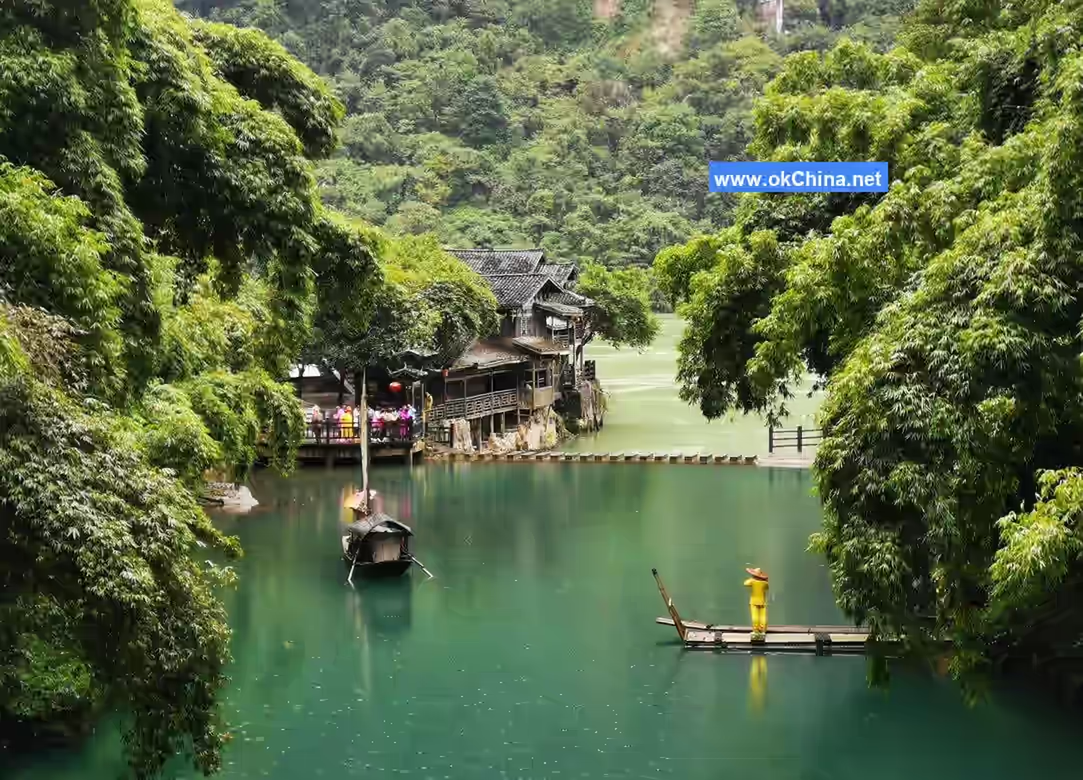
Water Dwellers is an ancient sailing ship cluster attraction located at the confluence of Longjin Stream and the Yangtze River. By building a dam on the side near the stream to intercept Longjin Stream's water, the water level is raised by 1-2 meters. Longjin Bridge spans the water surface, with emerald green stream water and lush forests. "Beneath Longjin Bridge, spring waves are green; once it was where a fleeting swan's reflection came." Here, performances mainly depict fishermen on ancient sailing boats casting nets to catch fish, recreating the survival methods and labor habits of generations of gorge fishermen and continuing the ancient fishing culture.

3.1.2 Streamside Dwellers

Streamside Dwellers are nestled against mountains and beside water, half on land and half over the water. The stilted building architectural landscape primarily features performances of mountain girls pounding and washing clothes while singing love songs.

3.1.3 Hill Dwellers

The "stilted buildings" of Hill Dwellers are referred to by modern architects as "pile-dwelling architecture." Due to the steep terrain in the gorge area, houses are mostly built following the mountain contours, with wooden structures, surrounded by bamboo groves and banana plants in front and behind. When encountering high embankments, pillars or walls are erected to align the eaves with the main house, hence the name "stilted building." Their unique feature is being lower in the front and higher in the back, with side corridors and rear balconies, commonly called "corner buildings with encircling verandas." They are generally two or three stories high. The upper floor is well-ventilated, dry, and damp-proof, serving as living quarters, while the lower floor is for livestock pens or storing sundries, also helping to prevent attacks by venomous snakes or beasts. Stilted buildings vary in size; ordinary homes typically have a structure with 4 rows of columns and 3 rooms, or 6 rows and 5 rooms, while wealthy families might have 7 main columns with 4 additional supporting columns, forming a courtyard with a skywell. The stilted buildings have winding corridors around them, equipped with railings. Due to their proximity to the river and the precipitous terrain, a single family's dwelling often has three or four levels, like steps. Hill Dwellers' houses are often just a few steps apart. Entering a house and passing through a door, another set of steps leads you to another living space, like playing hide-and-seek. The winding corridors twist and turn, concealing and hiding, making it easy for outsiders to enter but difficult to find their way out. Walking through these old houses, one can appreciate how the gorge people adapted to nature while constantly struggling against it, persistently building their lives while passionately enjoying their existence. The roofing materials are also of great interest: some use mud tiles, others thatch, slate, or black tiles, each with its preference and rationale. Those using mud tiles say, "When yellow earth is on the roof, the whole family is happy"; those with thatch roofs say, "Cured meat smells fragrant in a thatched cottage"; and those with slate roofs say, "Blessings are enjoyed beneath the slate." All this reflects the optimism, wit, and love for life of the gorge people. Ascending the stilted building, with its upturned eaves and winding corridors, looking around at the picturesque scenery, one experiences the poetic意境 of a "pavilion in the air." A poem praises: "Fantastic mountains and exquisite waters are a wonder on earth; the beauty of hill dwellers is fully captured. Spending a night resting in a stilted building, even dreams for ten years would be romantic."

3.2 Shiling Tablet

According to the Donghu County Annals: "On the south bank of the river, there is a huge rock spanning sixty to seventy zhang, standing with the imposing manner of ten thousand ren, resembling a tablet or raft, hence named Shipai (Stone Tablet)." The Shiling Tablet is 32 meters high, 12 meters wide at the top, 13 meters wide at the base, about 4 meters thick, and weighs over 4,300 tons. It is as straight as a blade, pure white throughout, with the imposing manner of a cliff standing ten thousand ren tall. The mountains of the Three Gorges are continuous and connected, but here they give way to a space, making the Shiling Tablet appear as if it emerged from thin air, standing tall by the riverbank. Composed of hard granite, it is as smooth as if cut by a knife on all sides, resembling a meticulously crafted "tablet" by human hands, forming a major geological wonder.

3.3 Dengying Stones

Four peculiar rocks standing erect on the mountain peak remarkably resemble the characters of Tang Monk and his disciples from Journey to the West on their pilgrimage to the West. Whenever the setting sun shines and the evening glow sets off the mountain peaks, viewed from afar, they appear like shadow puppet figures on a screen, vivid and lifelike, hence the name "Dengying Stones" (Shadow Play Stones). When Mr. Guo Moruo visited Dengying Gorge, he composed a poem in admiration: "Tang Monk and his disciples stand on the mountain head; shadows play in succession, Pig and Monkey." The most famous among the Dengying Stones is the Sha Seng Stone, hailed as the "First Stone of the Ten Thousand Li Yangtze River." It stands atop a sheer cliff, shaped like a mushroom, weighing over 100 tons. Its load-bearing base area is only a little over 200 square centimeters, bearing nearly half a ton per square centimeter on average, making it a world wonder and one of the iconic landscapes of Xiling Gorge.

3.4 Mingyue Bay

When the mighty Yangtze River surges to the Shipai river section, it makes a sharp 110-degree turn to the left here, changing direction to the east, forming a huge crescent shape. This is the "First Bend of the Yangtze Three Gorges"—Mingyue Bay (Bright Moon Bay). As a boat passes through Mingyue Bay, standing on the deck and gazing at the distant river surface, one finds the continuous mountains on both banks seemingly blocking the rolling Yangtze. But as the boat advances, the mountains retreat; the path turns, the peaks wind, and suddenly the view opens up again. Therefore, when Mr. Guo Moruo passed Shipai and looked into the distance at the First Bend, he exclaimed with emotion: "Mountains block,怀疑 no way out; the bend turns, revealing another world."

3.5 Dengying Cave

Dengying Cave is deep and narrow, approximately 1500 meters long. The karst landform景观 inside the cave is奇特, with varied cave passage地形. The "Five-Colored奇音 Stone" inside the cave is the most marvelous sight of Dengying Cave. It displays rich colors—black, white, yellow, gray, and green interwoven with clear boundaries. When struck by hand, it produces sounds like gongs and drums. Inside the cave, there is an underground river with a drop of 30 meters. The water flow is sometimes silent and slow, sometimes洪钟-like, sometimes潺潺悦耳, sometimes悠扬如琴鸣.### 3.6 Shipai Anti-Japanese War Memorial Hall In May of the 32nd year of the Republic of China (1943), to defend the wartime capital Chongqing, 150,000 Chinese troops engaged in a fierce and desperate battle against 100,000 Japanese invaders around Shipai. They achieved a glorious victory hailed as "China's Battle of Stalingrad," shattering the Japanese dream of capturing Chongqing and successfully halting the enemy's advance into the southwestern regions. This battle is a famous example in the Chinese theater of World War II where a weaker force triumphed over a stronger one.

The Shipai Anti-Japanese War Memorial Hall is the first comprehensive anti-Japanese war memorial hall in the Three Gorges area. It was built on the site of the wartime military installations. The hall covers an area of 440 square meters and consists of four parts: a Memorial Hall for Mourning and Remembrance, a Multimedia Exhibition Hall, a Graphic Exhibition Hall, and an Artifact Exhibition Hall. It houses over 200 precious artifacts and nearly 100 valuable photographs. In March 2003, the Yichang Municipal People's Government designated the Shipai Anti-Japanese War Memorial Hall as one of the first National Defense Education Bases.

3.7 Frog Spring

Frog Spring is located at the foot of Fanzi Mountain on the southern bank of Dengying Gorge. Originally, a large rock stood prominently at the spring site, resembling a frog with its mouth open, tongue out, eyes wide, and cheeks puffed, hence the name. The spring water flows perennially throughout the four seasons, clear and sweet in taste, making it an excellent source for brewing tea and making wine. A local folk rhyme from Shipai流传s: "Moonlight water, moonlight water, a living treasure spat by the little frog; Brew tea and the teacup sings like a phoenix, brew wine and the winecup soars like a white crane; Its fragrance can be smelled for ten li, intoxicating even the people."

Lu Yu, the Tea Sage of the Tang Dynasty, visited multiple times to taste the water. In his The Classic of Tea, he wrote: "On Fanzi Mountain in Xiazhou, there is a rock from which exceptionally clear and cold water flows, shaped like a turtle; commonly called Frog Mouth Water, it ranks fourth." Having tasted famous waters across the land, he ranked the waters suitable for tea nationwide: "The Water Curtain Water from Kangwang Valley on Mount Lu ranks first; the Stone Spring Water from Huishan Temple in Wuxi ranks second; the Water from under the Lanling Stone in Qizhou ranks third; the Frog Mouth Water at the foot of Fanzi Mountain in Xiazhou ranks fourth; the Spring Water from Tiger Hill Temple in Suzhou ranks fifth..."

As the seat of Xiazhou's administration was located in Shipai during the Later Zhou period before the Northern Song Dynasty and again during the Jianyan period of the Southern Song Dynasty when Yiling Commandery was established there, the area was prosperous and well-connected. Coupled with the far-reaching fame of Frog Spring, many literati after the Northern Song Dynasty left beautiful poems and writings about it. For example, Ouyang Xiu wrote: "The frog spurts a water curtain, its sweet liquid surpasses fine wine," and "Let's agree to try the spring buds, when will the spear-banner leaves turn green?" Su Zhe wrote: "Not only is it excellent for brewing tea, but for making wine it is also peerless." Huang Tingjian wrote: "The people of Ba casually speak of Frog Rock, let's try wrapping the new buds to brew and taste." Lu You wrote: "Within the Ba Dong gorges, the first gorge; among the springs under heaven, the fourth spring." "The first gorge" refers to Dengying Gorge, and "the fourth spring" refers to Frog Spring. The verses of these literati added further luster to Frog Spring, making it a famous scenic spot in Xiling Gorge.

4. Cultural Activities

4.1 Legends and Stories

Legend has it that Frog Spring is the nectar and divine liquor spat by a frog from the Moon Palace. Yang Yuxiu of the Qing Dynasty recorded a legendary myth about Frog Spring in his Illustrated Praise of Donghu's Products. A little frog from the Moon Palace, having secretly drunk the holy water from the Heavenly Pond, was struck unconscious by Wu Gang, the son of the Moon Palace, with an axe and fell from the clouds to the riverside of Dengying Gorge. It was rescued by a kind old woodcutter. To repay the life-saving grace, the little frog turned into stone, squatting by the river and spitting sweet liquid year after year. The little frog consumed the spiritual energy of heaven and earth, absorbing the essence of the sun and moon, and what it spat out was also nectar and divine liquor.

4.2 Cultural History

4.2.1 Poetry

Rafting on Yangjia Stream (Seven-Character Regulated Verse)
Guan Yonghe
On Yangjia Stream the waters surge and roar, twelve perilous rapids swell with rising tide.
The boat like raging waves tosses a fallen leaf, the body like terrifying billows rolls a goose down.
Mountains spin, shores twist, truly alarming; earth sways, heaven rocks, yet courage swells with pride.
Do not say drifting shatters the soul; heart-stirring, pulse-pounding, passion runs high.

Guan Yonghe, born in the 26th year of the Republic of China (1937), is a native of Xiaogan City, Hubei Province. He has worked as a teacher, a cultural center cadre, and a professional writer. He published art作品 in 1956 and literary works the following year. To date, he has published 25 collections of literary works including poetry and prose, and over 300 paintings. He has served as Vice Chairman of the Hubei Provincial Writers Association, Vice Chairman of the Wuhan Federation of Literary and Art Circles, and Chairman of the Wuhan Writers Association. He is a First-Class Writer in literary creation and enjoys the State Council Special Government Allowance.

4.3 Local Snacks

The characteristic snacks of the Three Gorges Family Scenic Area in Yichang City include: Honghu Lotus Root and Pork Rib Hot Pot, Chicken Soup Fish Hot Pot, Golden Soup Yangtze River Silver Carp Hot Pot, Mouthwatering Chicken, Cured Pork Trotter Hot Pot, Secret Sauce Pickled Cucumbers, Farmer's "Carrying the Grid" (a local dish), Farmer's Sausage, etc.

4.4 Scenic Area Specialties

4.4.1 Tujia Cured Meat

Cured meat is a specialty of Hubei and an essential food for the Tujia people during the New Year. Its preparation method has a history of several thousand years. Every year during the twelfth lunar month, each household prepares New Year goods. Fresh pork that cannot be consumed immediately is cured with salt and a certain proportion of spices such as Sichuan peppercorns, bay leaves, fennel, star anise, and cinnamon for seven to fifteen days. It is then hung above the wood-burning kitchen stove or over a wood-burning heating stove to be slowly dried by the smoke. Some specifically use pine and cypress branches, tangerine tree bark, or firewood for slow smoking. The smoked cured meat has a bright, dark red color, with transparent, dry, and elastic flesh, possessing a unique cured flavor.

4.4.2 Three Gorges Navel Orange

Three Gorges Navel Oranges are produced in the Yangtze River Three Gorges valley area. Here, mountains overlap, climate types are diverse, with significant temperature inversion layer effects, slope wall effects, and water body effects, creating unique three-dimensional climates and warm winter characteristics. The Three Gorges valley area has abundant rainfall and suitable soil. Navel oranges have been cultivated in the Three Gorges for over 2,000 years. Three Gorges Navel Oranges are known for their excellent qualities: large fruit size, seedless, thin skin, bright color, crisp and juicy flesh, rich fragrance, and sweet taste.

4.4.3 Three Gorges Stone

Three Gorges Stones are mainly distributed in the stream valleys or lofty mountains along both banks of the gorge river. The stone sources come from upstream Yangtze River alluvium deposited here and the area's ancient pre-Sinian metamorphic rocks, sedimentary rocks, and Precambrian intrusive granite. Three Gorges Stones have diverse forms, with prominent colors, textures, and charm. Some patterns naturally form picturesque scenes with gorgeous colors and are widely used in garden landscape decoration.

4.4.4 Tujia Batik

Tujia batik often uses auspicious patterns as the base for design, mostly applied to daily items like door curtains, tablecloths, and bed valances. It emphasizes pure color matching, pays attention to composition and conception, and has a unique artistic style. During production, white cloth is spread flat, wax is heated and dissolved into liquid, and then a wax knife is dipped into the wax liquid to draw patterns on the white cloth. After drawing, the cloth is placed into a dye vat for immersion dyeing. Once dyed, it is removed and boiled in clean water. When the wax melts away, white patterns appear.

Comments

Post a Comment

Loading comments...