Yichang Three Gorges Dam - Qu Yuan's Hometown Cultural Tourism Zone
1. Overview
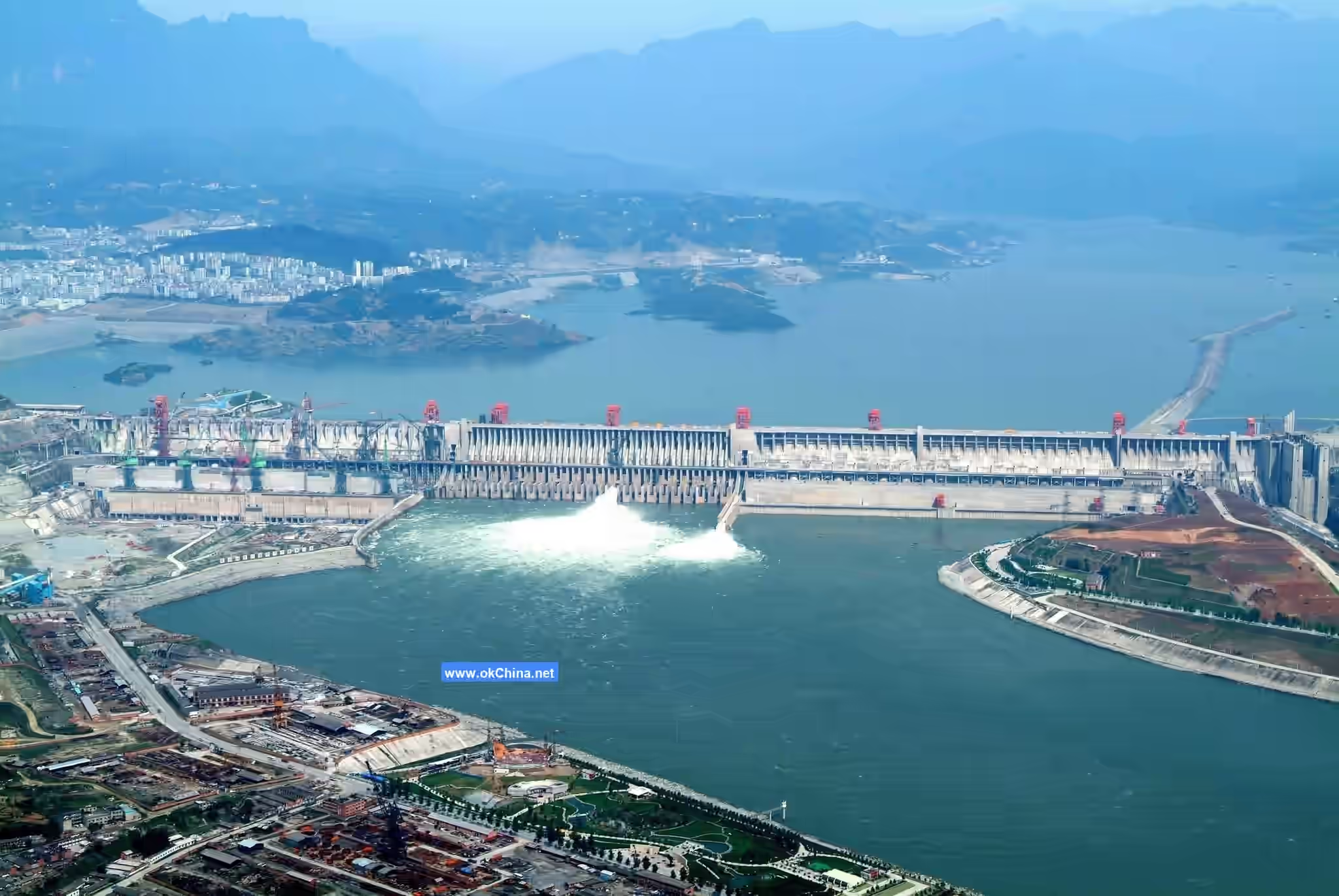
The Yichang Three Gorges Dam - Qu Yuan's Hometown Cultural Tourism Zone, abbreviated as the Three Gorges Dam - Qu Yuan's Hometown Cultural Tourism Zone, is a tourist attraction located in Yichang City, Hubei Province. It consists of the Three Gorges Dam Tourist Area, covering 15.28 square kilometers in Yiling District, and the Qu Yuan's Hometown Scenic Area, covering 500 mu in Yiling District.
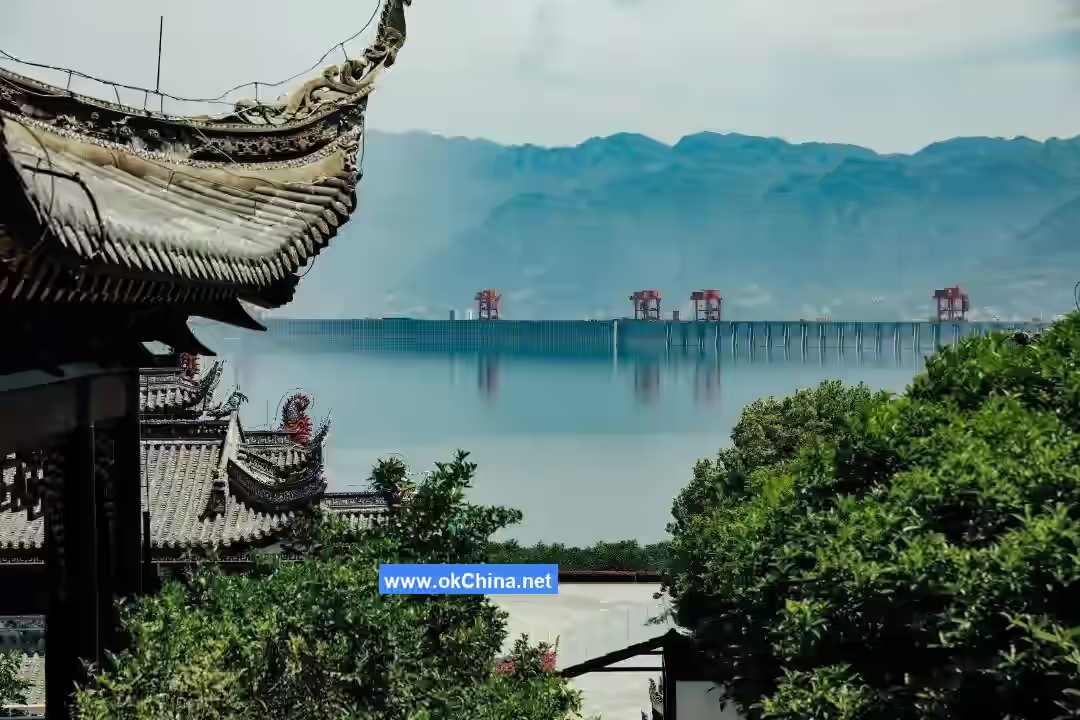
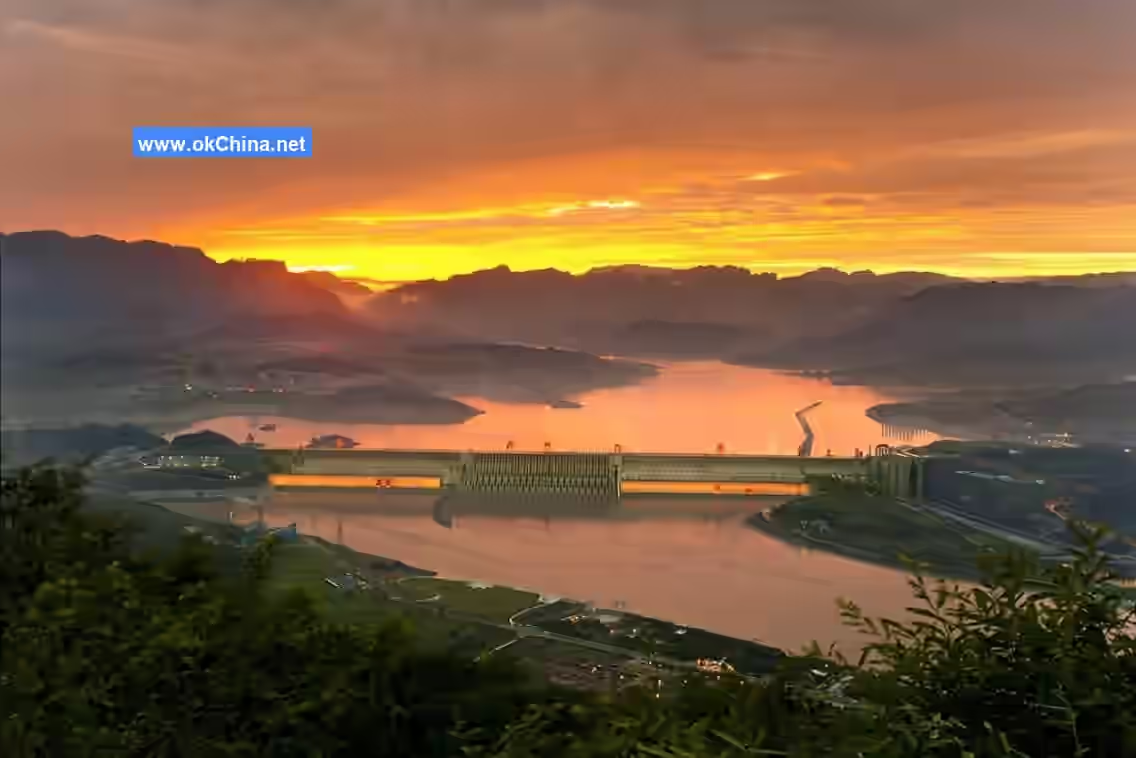
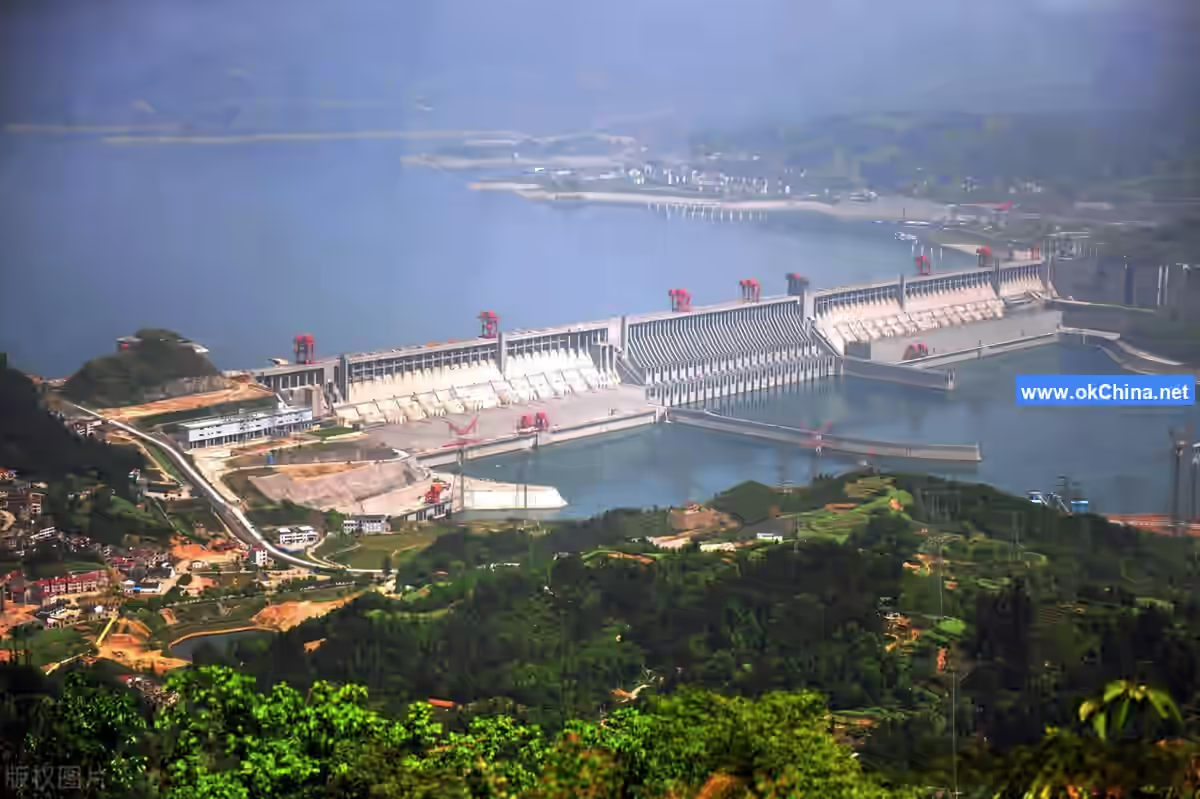
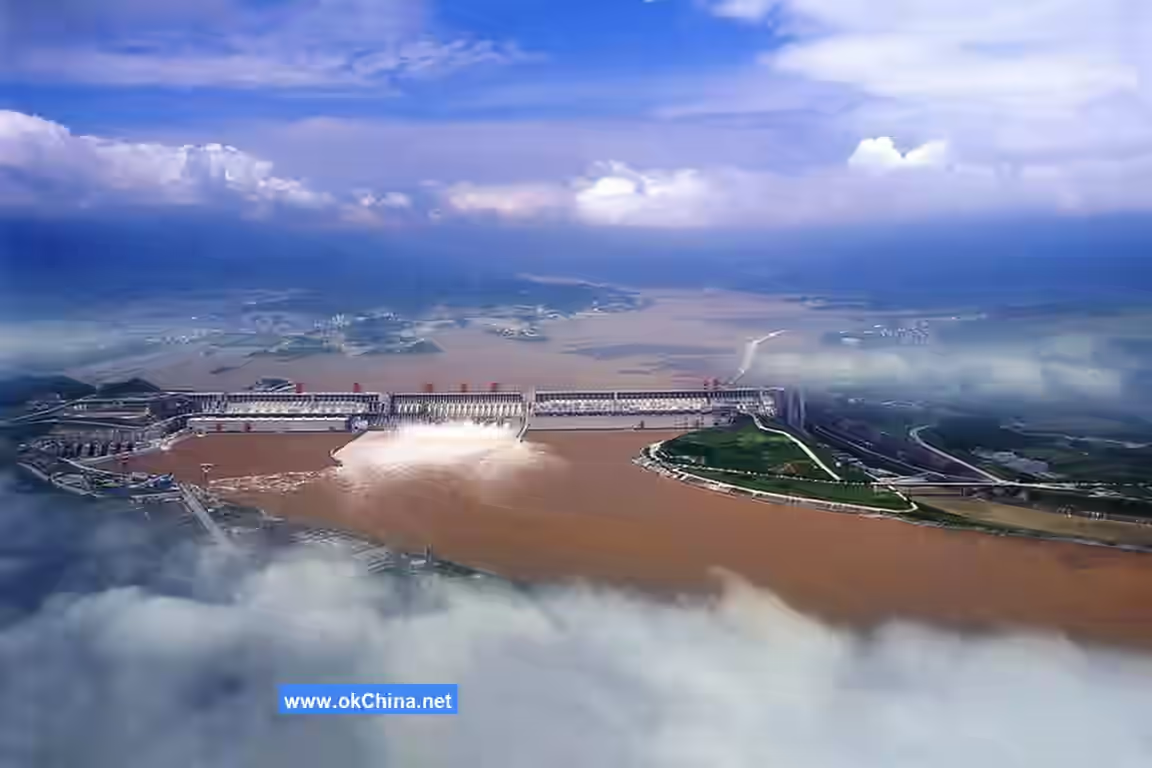
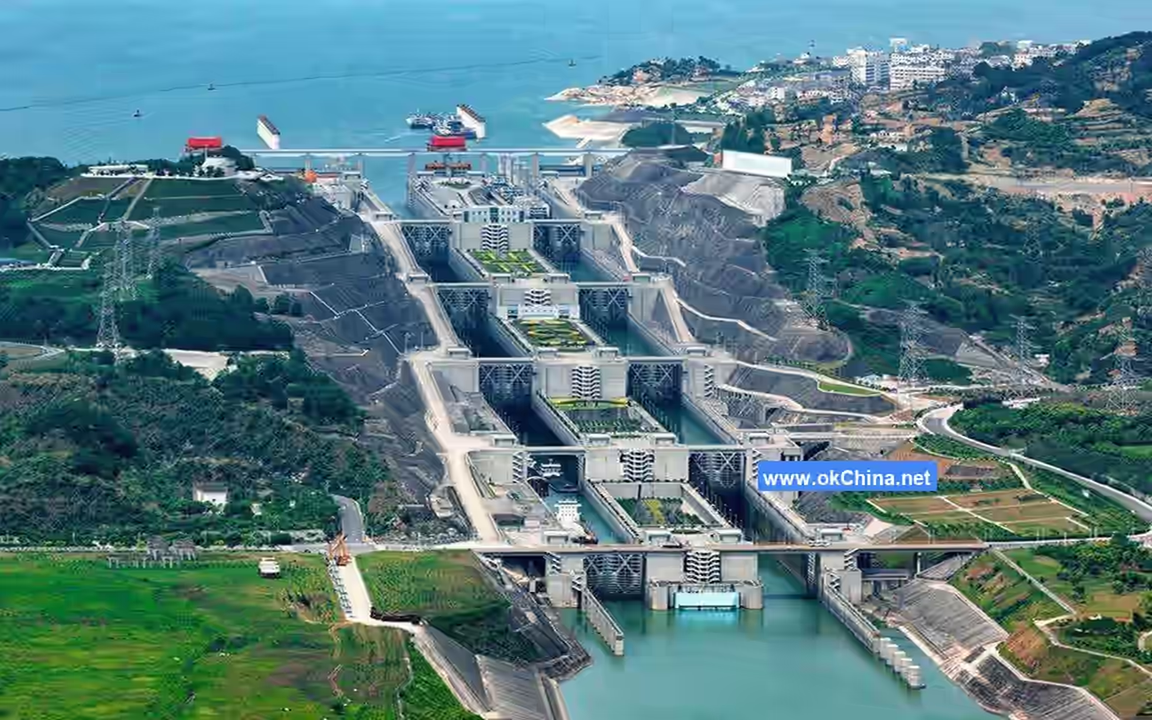
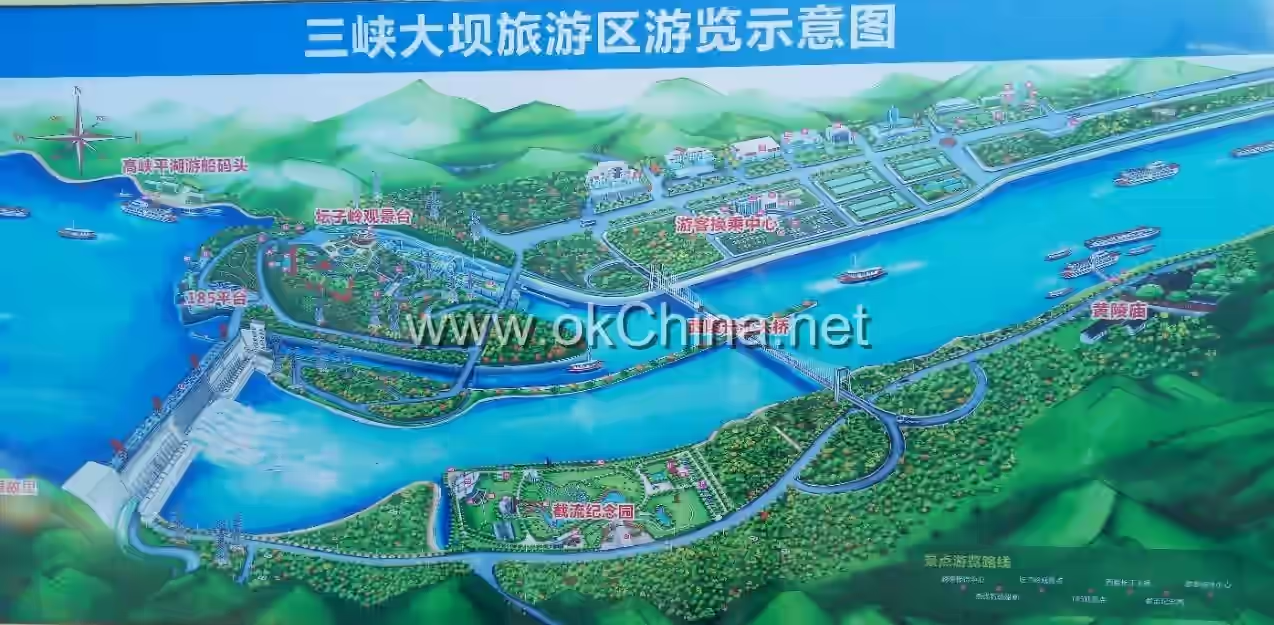
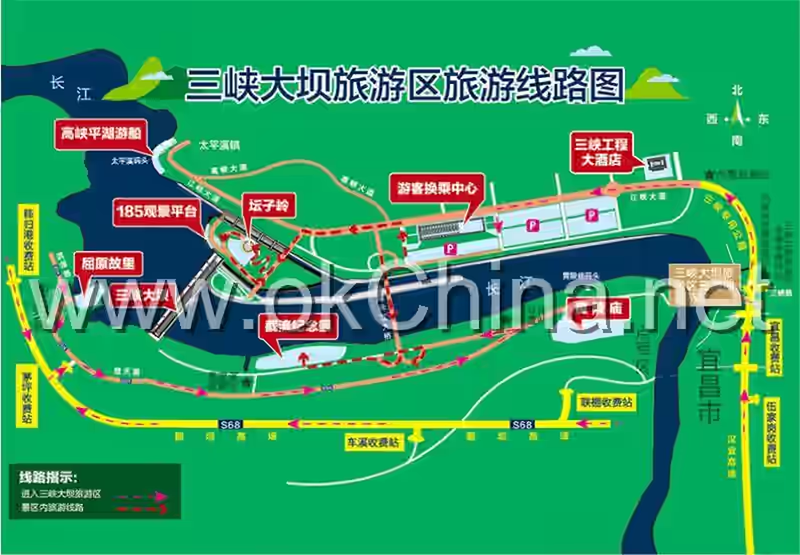
The Three Gorges Dam Tourist Area is located in Sandouping Town, Yiling District, and is an excellent place to visit and view the Three Gorges Dam. The scenic area comprises three main viewing parks: Tanziling, the 185 Platform, and the River Closure Memorial Garden. Additionally, there are experiential tourism projects such as VR simulations of ships passing through the locks. The Qu Yuan's Hometown Scenic Area is located in Maoping Town, Zigui County, and concentrates 24 ground cultural relics from the Gorge region, represented by the Qu Yuan Temple and the Jiangdu Temple. The original site of the Qu Yuan Temple was at "Qu Yuan Tuo," five li east of Guizhou Town in Zigui. It was first built during the Tang Dynasty. In 1976, it was relocated to Guizhou and given its current name due to the construction of the Gezhouba Water Control Project. Later, due to the construction of the Three Gorges Dam, it was relocated again to the ridge of Fenghuang Mountain, only 600 meters in a straight line from the Three Gorges Dam. Standing atop Fenghuang Mountain, the world-renowned Three Gorges Dam is fully visible.
2. Geographical Environment
2.1 Location and Territory
The Three Gorges Dam Tourist Area is located in Sandouping Town, Yiling District, Yichang City, Hubei Province, covering an area of 15.28 square kilometers.
The Qu Yuan's Hometown Scenic Area is located in Maoping Town, Zigui County, Yichang City, Hubei Province, covering an area of 500 mu.
2.2 Climate Characteristics
Zigui County, where the Three Gorges Dam - Qu Yuan's Hometown Cultural Tourism Zone is located, has a subtropical continental monsoon climate. The county features undulating mountains with significant elevation differences, resulting in a complex climate with pronounced vertical variations, exhibiting typical three-dimensional climate characteristics. The climate is mild with abundant rainfall and ample sunshine. Cloudy and rainy weather is common in spring and autumn. The intensely hot period in midsummer is short. Rainfall and heat occur in the same season. Winters are warm with little rain or snow.
3. Main Scenic Areas
3.1 Three Gorges Dam Tourist Area
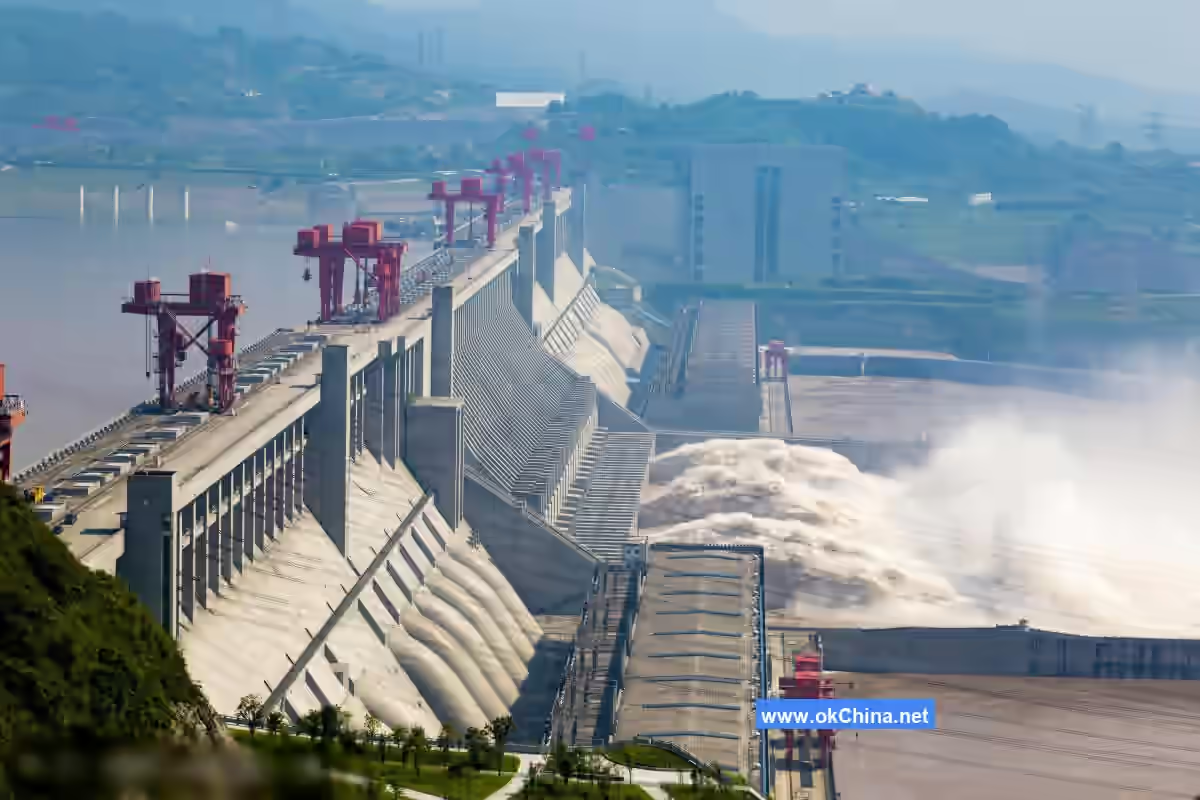
The Three Gorges Dam Tourist Area features five main attractions: the Three Gorges Exhibition Hall, Tanziling Park, the 185 Park, the Near-Dam Park, and the River Closure Memorial Garden. Among these, Tanziling, the 185 Platform, and the River Closure Memorial Garden are open to tourists long-term. Tanziling offers a distant view of the dam and overlooks the Yangtze River. The flood discharge viewing area and the viewing area at the 185-meter water level line present a magnificent and powerful spectacle. The River Closure Memorial Garden hosts exciting song and dance performances and activities and also serves as the internal transportation hub of the scenic area.
3.1.1 Tanziling
Tanziling is named for its summit viewing platform, which resembles an overturned jar. Originally a survey point for the dam's construction, it is the best location to view the entire Three Gorges Project.
3.1.2 185 Viewing Platform
The 185 Viewing Platform is named because its elevation is 185 meters above sea level, the same as the crest of the Three Gorges Dam.
3.1.3 Three Gorges River Closure Memorial Garden
The Three Gorges River Closure Memorial Garden is themed around the river closure of the Three Gorges Project. It is the first water conservancy project theme park in China, integrating tourism, science education, and leisure functions.
3.2 Qu Yuan's Hometown Scenic Area
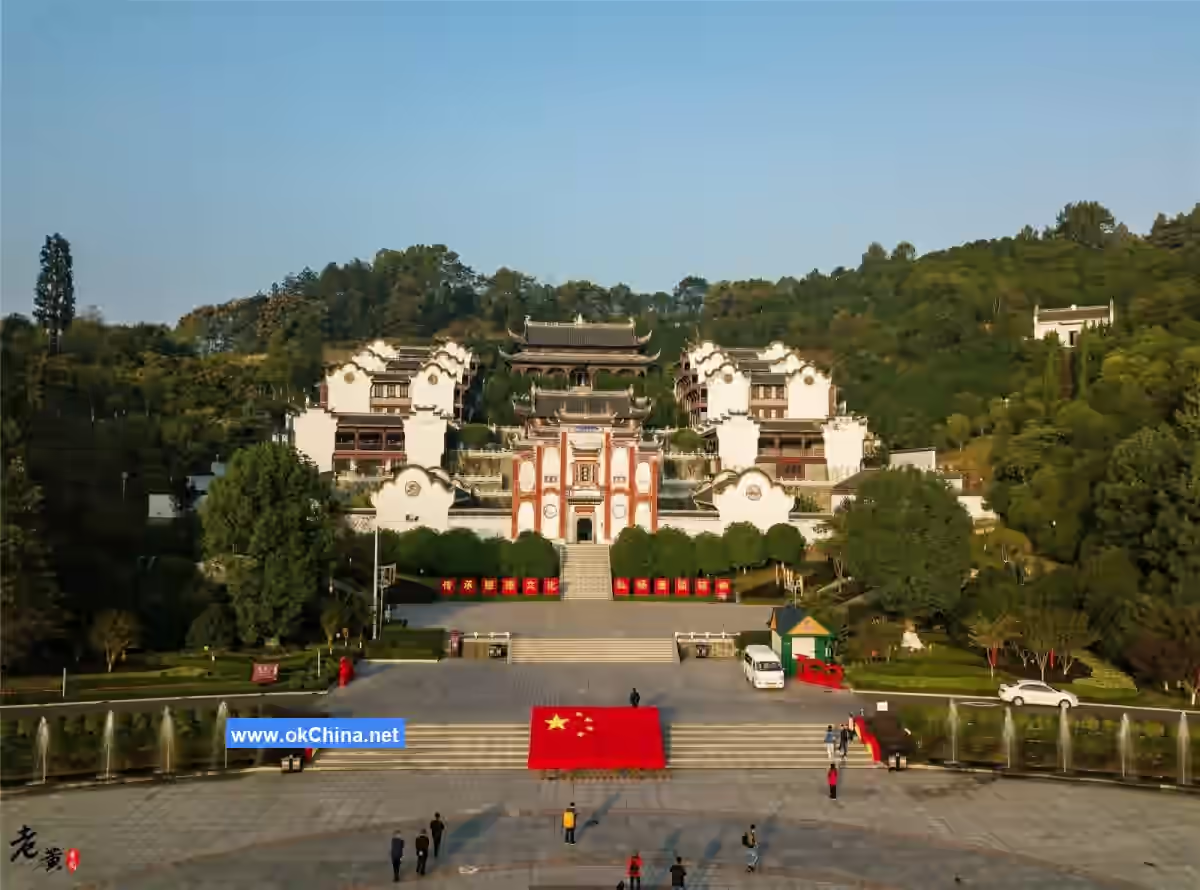
The Qu Yuan's Hometown Scenic Area is located in the new county town of Zigui County, adjacent to the Three Gorges Dam with a straight-line distance of 600 meters. It covers an area of approximately 500 mu, offering a panoramic view of the high gorge and flat lake. Additionally, 24 ground cultural relics from the Gorge region, represented by the Qu Yuan Temple and the Jiangdu Temple, were collectively relocated here. In May 2006, the Qu Yuan Temple was announced by the State Council as part of the sixth batch of Major Historical and Cultural Sites Protected at the National Level. The main contents of the protected area include the Qu Yuan Memorial Scenic Area centered on the Qu Yuan Temple, the Three Gorges Ancient Residential Area focusing on Xintan Ancient Dwellings, Gorge River Stone Carvings, and Gorge River Ancient Bridges, as well as attractions like the Qu Yuan Culture and Art Center and the Waterfront Landscape Belt.
3.2.1 Chufeng Square (Young Phoenix Square)
The pattern on the ground of Chufeng Square is a phoenix tail. Qu Yuan lived in the State of Chu during the Warring States period, and the Chu people revered the phoenix most highly. The natural mountain body beside the square has been landscaped in the shape of a phoenix body. The entire phoenix body extends forward along the mountain and connects with the phoenix head stone carving at the ticket checkpoint of the tourism zone, forming the shape of a "young phoenix spreading its wings." Its romantic imagery symbolizes Qu Yuan's birth in Zigui and the lofty aspirations he harbored in his heart even during his youth.
3.2.2 Jingxian Gate
The Jingxian Gate was relocated and reconstructed here in its original form from the old county town of Guizhou in Zigui. Its original site was at the southern end of Jiefang Street in Guizhou Town, featuring Ming and Qing dynasty architectural styles. The gate tower is 12.6 meters wide with three bays, each 5.4 meters deep. The plaque above the gate opening is inscribed with the three characters "景贤门" (Jingxian Gate). The gate opening has an arch structure with brick voussoirs, featuring three arches and three layers. The abutment walls are built with large red sandstone blocks. The arch bricks are laid in vertical rows. The gate tower has a double-eave gable-and-hip roof. The bricks of the city wall are inscribed with "嘉庆九年" (the ninth year of Jiaqing) and "归州" (Guizhou), indicating it was built in the ninth year of the Qing Jiaqing reign (1805). The main building materials of the gate are stone, joined using the traditional architectural technique of a "lime and glutinous rice mixture." Although there was no modern reinforced concrete at the time, it is exceptionally sturdy.
3.2.3 Qu Yuan Temple
Guided by Qu Yuan culture, the Qu Yuan Temple is a key area within the Three Gorges Reservoir region that successfully integrates the protection and utilization of both tangible and intangible cultural heritage. It contains structures such as the mountain gate, front hall, main hall, left and right wing rooms, a bronze statue of Qu Yuan, a stele corridor, an exhibition building, and a cenotaph.
The earliest Qu Yuan Temple was built in the 15th year of the Tang Yuanhe reign (820 AD) by Wang Maoyuan, then the prefect of Guizhou, at Qu Yuan Tuo east of Guizhou. In the 3rd year of the Northern Song Yuanfeng reign (1080 AD), Emperor Shenzong of Song, Zhao Xu, conferred upon Qu Yuan the title "Qinglie Gong" (Duke of Purity and Fierceness). During the Song Dynasty, the Qu Yuan Temple was also called the "Qinglie Gong Temple." Through multiple renovations during the Yuan, Ming, and Qing dynasties, it was renamed "Qu Gong Temple" and "Chu Zuotu Qu Dafu Temple."
On November 10, 2006, due to the construction of the Three Gorges水利枢纽工程 (Water Control Project), it was relocated again to Fenghuang Mountain in the new county town of Zigui. This Qu Yuan Temple was initially completed in January 2009. The newly built Qu Yuan Temple faces the Three Gorges Dam directly and consists of structures including the mountain gate, two wing rooms, a stele corridor, front hall, music and dance tower, main hall, offering hall, and Qu Yuan's tomb. It officially opened to tourists on June 16, 2010.
3.2.4 Qianshan Bridge
The front of the Qianshan Bridge is embedded with a stone plaque inscribed with the three characters "千善桥" (Qianshan Bridge). The smaller characters above read "光绪贰拾柒年春月立" (Erected in the spring month of the 27th year of Guangxu), indicating it was built in the spring of the 27th year of the Qing Guangxu reign (1902). The bridge deck is 6.6 meters long, 2.7 meters wide, and 5.3 meters high, with an arch span of 3.4 meters. The bridge is exquisite, small, meticulously crafted, and well-preserved. The establishment of the pavilion, in particular, is unique among other ancient bridges in this region.
3.2.5 Jiangdu Temple
According to Erya - Shi Shui: "The Jiang (Yangtze River), He (Yellow River), Huai (Huai River), and Ji (Ji River) are the Four Du." As the foremost of the four Du temples dedicated to the Jiang (Yangtze River, anciently called the Yangzi), Huai (Huai River), He (Yellow River), and Ji (Ji River, anciently also called the Ji River, originating in present-day Jiyuan City, Henan Province, flowing through Henan and Shandong into the Bohai Sea), the Jiangdu Temple was built specifically by ancient boat owners to worship the river god of the Yangtze Du, seeking protection and safety. Jiang, He, Huai, and Ji also refer to the four river gods of the major rivers that flow independently into the sea. This temple is the only remaining Du temple among China's four major Du temples dedicated to worshipping the Yangtze River god.
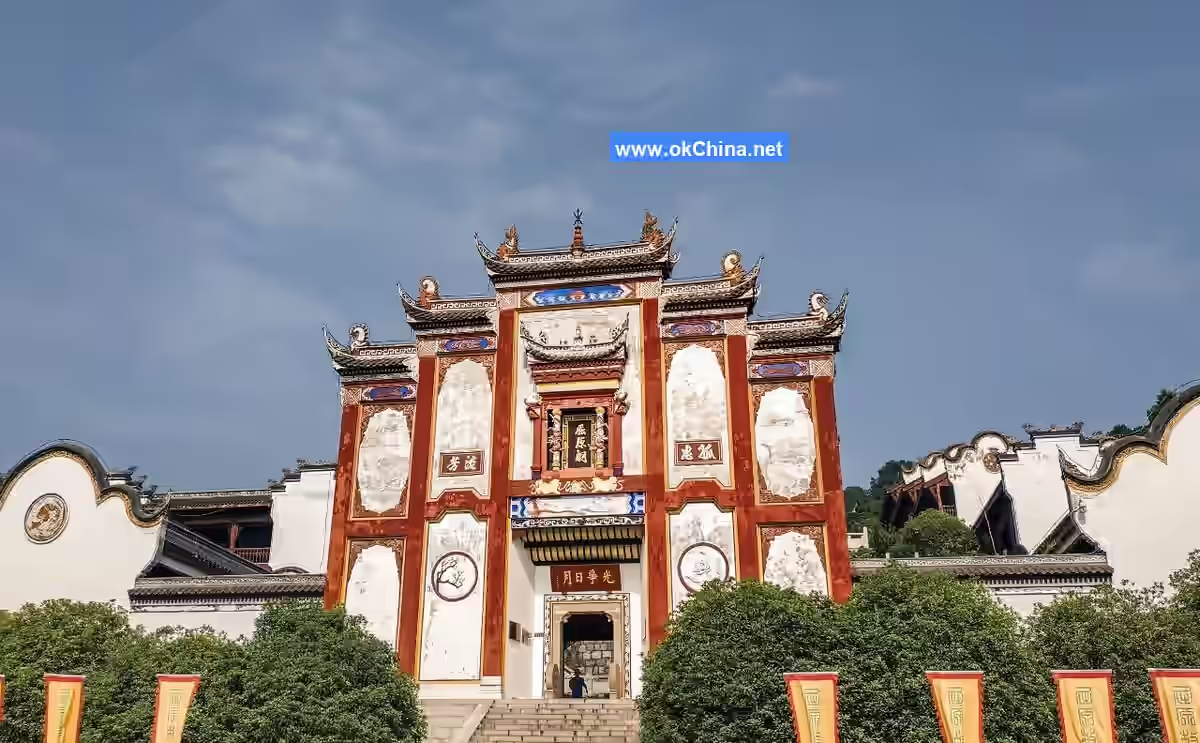
3.2.6 Qu Yuan's Hometown Memorial Archway
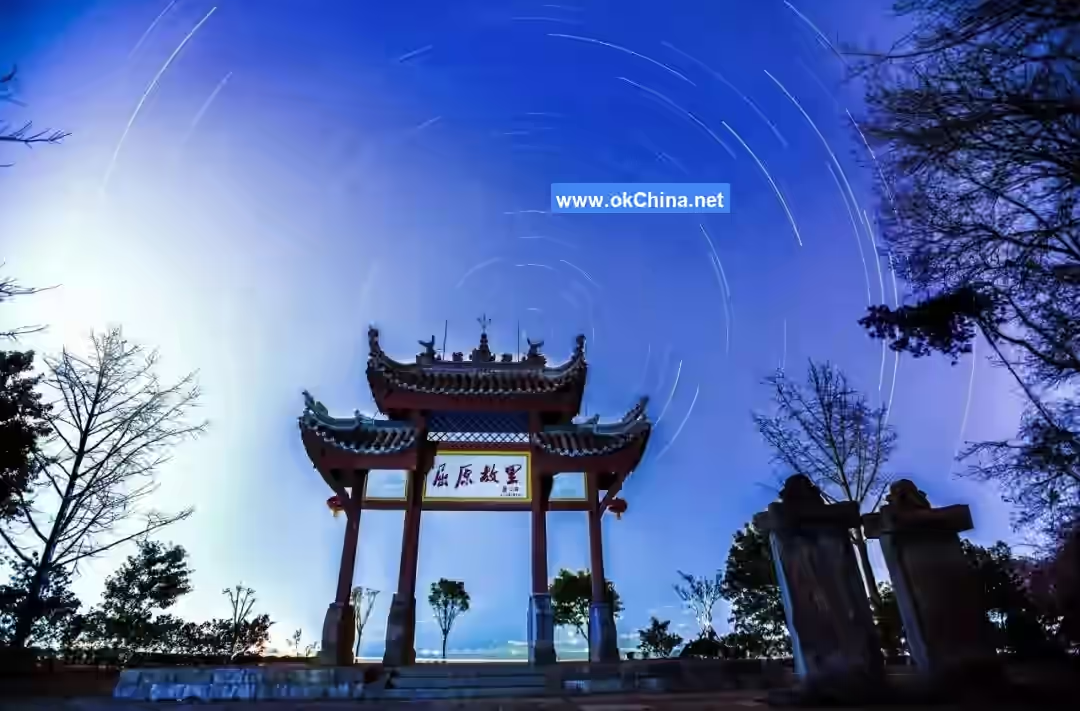
The original site of the Qu Yuan's Hometown Memorial Archway was 30 meters outside the east gate of the ancient city of Guizhou Town, on the Xima Bridge. The archway faces south with its back to the north. It is a wooden structure with four pillars, three bays, and a three-story hip-and-gable roof, approximately 7 meters high and 5.2 meters wide. It has granite foundation stones. The main bay features square pillars, while the secondary bays have cylindrical pillars with drum-shaped bearing stones in front and behind. The roof is covered with gray cylindrical tiles. The main story is inlaid with a plaque bearing four large red characters "屈原故里" (Qu Yuan's Hometown), inscribed by Guo Moruo on October 25, 1965. Beside the archway are two steles of identical specifications, made of bluestone with chi-dragon heads. They are 1.01 meters wide, 0.56 meters high, and 0.24 meters thick. The stele bodies are 1.9 meters high, 0.9 meters wide, and 0.2 meters thick. The square bases are buried underground. They are inscribed respectively with the regular script characters "楚大夫屈原故里" (Hometown of Qu Yuan, Senior Official of Chu) and "汉昭君王嫱故里" (Hometown of Wang Qiang, Consort of Han Zhao), with the inscription "大清光绪十二年正月吉日立" (Erected on an auspicious day in the first month of the 12th year of Guangxu of the Great Qing), i.e., built in the 12th year of the Qing Guangxu reign (1886), indicating the archway is over a hundred years old.
4. Qu Yuan
4.1 Introduction
Qu Yuan (c. 340 BC – 278 BC) was an outstanding statesman, thinker, poet, and patriot of the State of Chu during China's Warring States period. As one of the earliest romantic poets in Chinese literary history, he is hailed as the founder of "Chu Ci" (Songs of Chu). His works are renowned for their rich imagination, profound emotion, and unique artistic style, exerting a far-reaching influence on later literature, culture, and thought. Qu Yuan was not only a great literary figure but also a loyal patriot. His life was filled with conflict between ideals and reality, ultimately leading him to sacrifice his life for his country, making him a symbol of the Chinese national spirit.### 4.2 Life Experience
Qu Yuan was born in Danyang, the State of Chu (present-day Zigui, Hubei Province), into a noble family of Chu, belonging to the Qu clan, which shared lineage with the Chu kings. He was intelligent from a young age, received an excellent education, and was well-versed in history, literature, politics, and etiquette, possessing profound cultural literacy. In his early years, Qu Yuan enjoyed the deep trust of King Huai of Chu and was appointed as "Zuotu" (equivalent to deputy prime minister), participating in state affairs. He advocated for domestic reforms, the implementation of rule of law, and the selection of capable individuals based on merit. He also promoted an alliance with the State of Qi to resist the expansion of the State of Qin, aiming to preserve Chu's independence and prosperity. However, his political ideas threatened the interests of the nobility, leading to opposition and slander from conservative forces. Gradually losing King Huai's trust, he was demoted to the position of Sanlü Dafu and eventually exiled to the Jiangnan region. During his exile, Qu Yuan witnessed the decline of Chu and the rise of Qin, filling his heart with concern for his country and its people. In 278 BC, when the Qin general Bai Qi captured the Chu capital, Yingdu, Qu Yuan fell into despair and drowned himself in the Miluo River on the fifth day of the fifth lunar month, sacrificing his life for his country.
4.3 Literary Achievements
Qu Yuan is the first poet in Chinese literary history to create and leave behind a substantial body of work under his own name. His works pioneered the new literary genre of "Chu Ci," breaking the limitations of the four-character verses of the Classic of Poetry. He employed a combination of long and short lines, with ornate language and unrestrained emotions, showcasing a strong personal style and romanticism. His representative works include Li Sao, Nine Songs, Heavenly Questions, and Nine Chapters. Li Sao is Qu Yuan's most famous long lyrical poem, consisting of 373 lines. It expresses his conflict between ideals and reality, his deep concern for his country and people, and his grievances and resistance against his own plight. It is regarded as one of the greatest lyrical poems in ancient China. Nine Songs is a set of ritual songs dedicated to deities, characterized by beautiful language and sincere emotions, reflecting Qu Yuan's reverence and admiration for nature and the divine. Heavenly Questions is written in a question-and-answer format, covering topics such as the origin of the universe, historical legends, and natural phenomena, embodying Qu Yuan's profound contemplation and exploratory spirit toward all things in heaven and earth. Nine Chapters primarily reflects Qu Yuan's life and thoughts during his exile, expressing his loyalty to Chu and his reflections on his personal fate. Qu Yuan's works not only possess immense artistic value but also pioneered the tradition of personal lyrical poetry in Chinese literary history.
4.4 Thoughts and Spirit
Qu Yuan's thoughts and spirit are mainly reflected in three aspects: patriotism, reform and rule of law, and independent character and spirit of resistance. Throughout his life, he dedicated himself to the prosperity of Chu and the well-being of its people. Even during his exile, he remained concerned about his country, ultimately sacrificing his life for it, making him a symbol of patriotism in the Chinese nation. Politically, Qu Yuan advocated for domestic reforms, the implementation of rule of law, and the selection of capable individuals based on merit, opposing the privileges of the nobility. These ideas were progressive for their time. Although his political ideals were not realized, they had a profound influence on later political thought. Additionally, Qu Yuan adhered to his ideals and beliefs, refusing to follow the crowd or yield to the powerful, demonstrating an independent character and a spirit of resistance. His works and life experiences have become a model for Chinese literati in pursuing ideals and upholding integrity.
4.5 Influence and Legacy
Qu Yuan's works and thoughts have had a profound impact on later generations. In literature, the "Chu Ci" genre he pioneered provided a new paradigm for poetic creation, inspiring later writers such as Jia Yi and Liu Xiang of the Han Dynasty, as well as Tang Dynasty poets Li Bai and Du Fu. Culturally, Qu Yuan's spirit and works are still widely celebrated today. The Dragon Boat Festival (the fifth day of the fifth lunar month) was established to commemorate him, and customs such as dragon boat racing and eating zongzi are closely associated with him. Qu Yuan's patriotic sentiments and unwavering spirit have become an integral part of Chinese culture. Internationally, his works and thoughts have also garnered widespread attention and acclaim. His poetry has been translated into multiple languages, becoming a treasure in the world's literary heritage.
4.6 Historical Evaluation
Qu Yuan is one of the greatest poets in Chinese history, and his works and character have had a lasting influence on later generations. The Tang Dynasty poet Li Bai referred to him as "Qu Zi," while Du Fu wrote, "Qu Yuan's poetry hangs like the sun and moon, while the palaces and terraces of the Chu kings are but empty hills," expressing admiration for him. The modern writer Lu Xun also called Qu Yuan "the first great poet in Chinese literary history." Qu Yuan's spirit and works are not only treasures of Chinese culture but also a shared spiritual wealth for all humanity. His patriotism, independent character, and artistic achievements will forever inspire future generations to pursue ideals and uphold their beliefs.
4.7 History of the Qu Yuan Temple
The original site of the Qu Yuan Temple was at "Qu Yuan Tuo," five li east of Guizhou City in Zigui. It was first built during the Tang Dynasty and renamed "Qinglie Gong Temple" in the third year of the Yuanfeng era (1080 AD). In July 1976, due to the construction of the Gezhouba Water Conservancy Project, it was relocated to Guizhou and renamed "Qu Yuan Temple." Today, as a result of the Three Gorges Dam construction, the newly built Qu Yuan Temple is located on the ridge of Fenghuang Mountain, facing southeast and directly opposite the Three Gorges Dam. It consists of structures such as the mountain gate, side rooms, stele corridor, front hall, music and dance tower, main hall, memorial hall, and Qu Yuan's tomb.
Comments
Post a Comment