

The Ming Tombs
1. Introduction
The Ming Tombs are located at the foot of Tianshou Mountain in the northern part of Changping District, Beijing, serving as the burial site for 13 emperors of the Ming Dynasty. After Emperor Yongle moved the capital to Beijing, he began selecting a site for the imperial tombs in the Beijing area for both political and strategic reasons. This highly strategic move played a crucial role in consolidating political power and thoroughly eliminating the remnants of the Mongol Yuan forces.
1.1 Overview of the Tombs
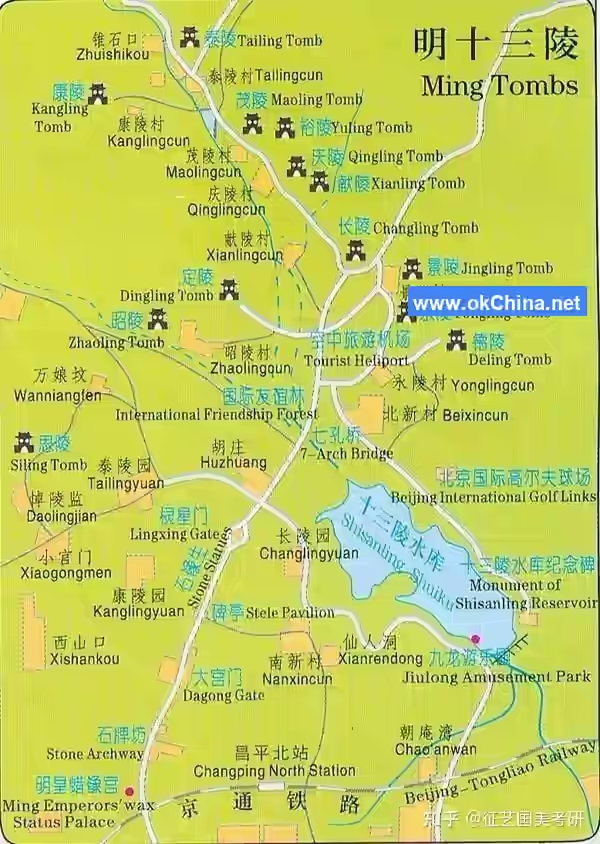
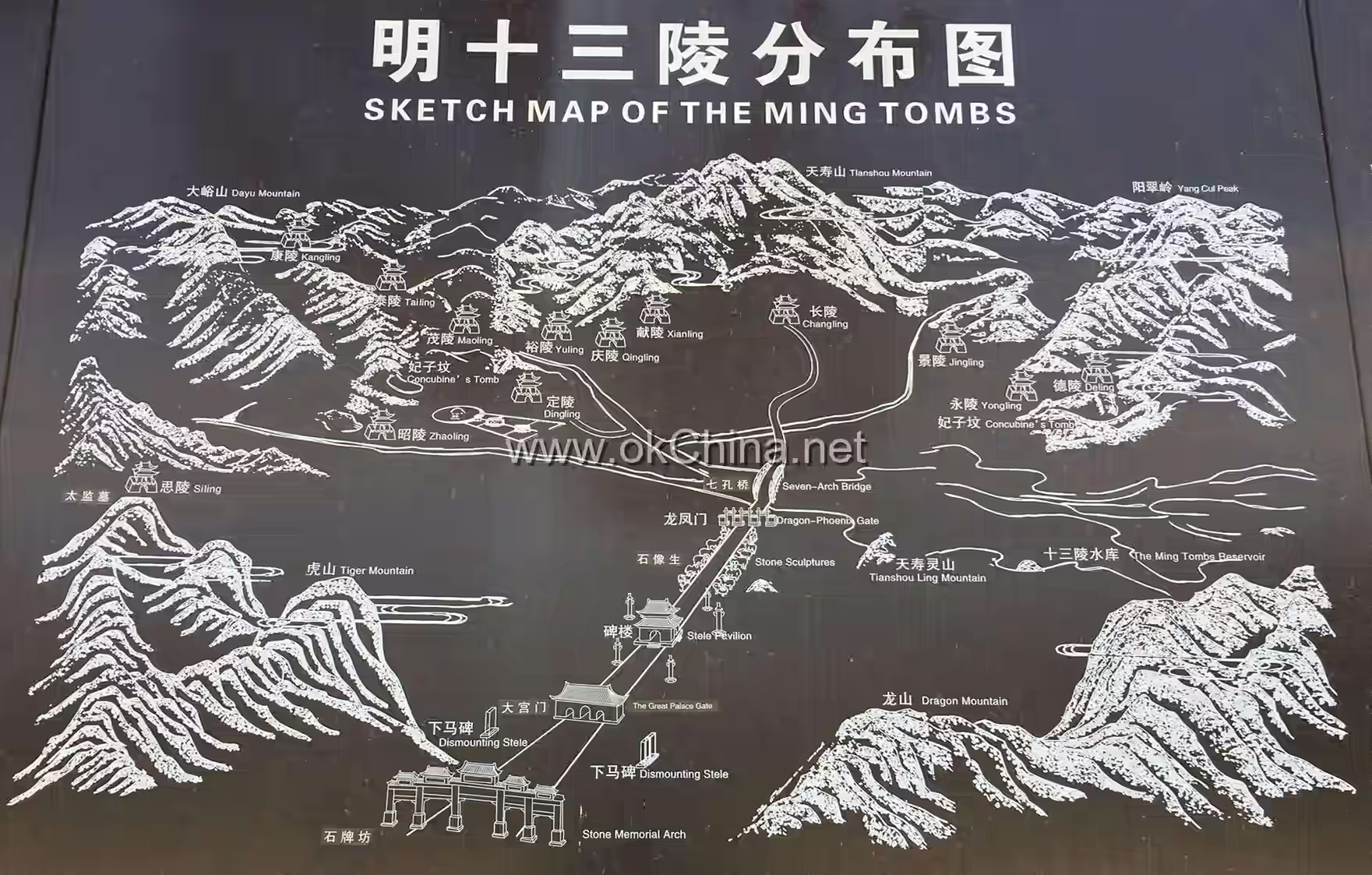
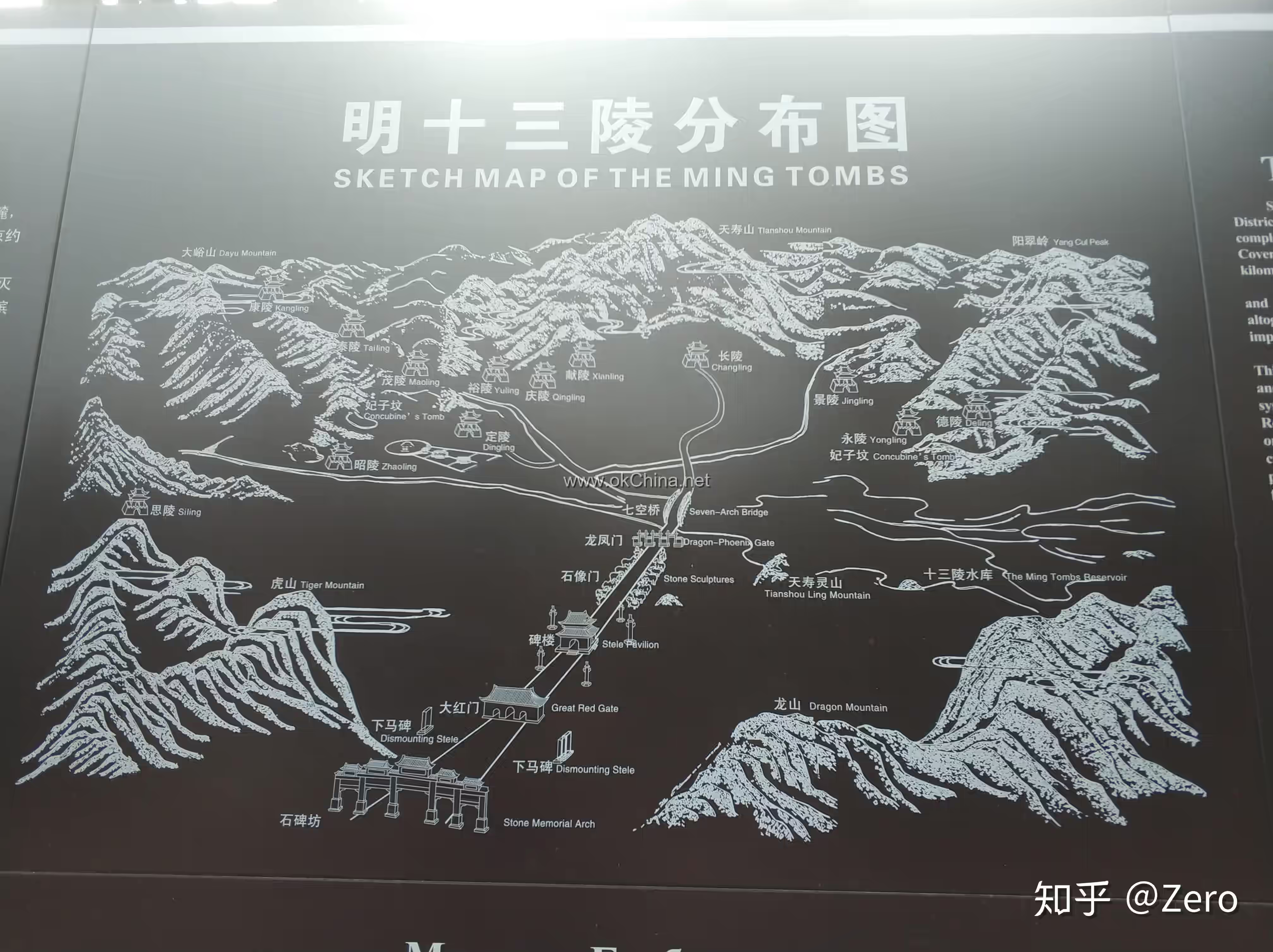
The Ming Tombs is the collective name for the imperial mausoleums of the 13 emperors after the Ming Dynasty moved its capital to Beijing. They were built in the following order: Changling (Chengzu), Xianling (Renzong), Jingling (Xuanzong), Yuling (Yingzong), Maoling (Xianzong), Tailing (Xiaozong), Kangling (Wuzong), Yongling (Shizong), Zhaoling (Muzong), Dingling (Shenzong), Qingling (Guangzong), Deling (Xizong), and Siling (Yizong).
The tomb area contains the burials of 13 emperors, 23 empresses, 1 imperial noble consort, and dozens of sacrificial concubines. In addition to the imperial tombs, the area also includes seven burial gardens for imperial concubines, one eunuch tomb, and several auxiliary structures such as the Divine Palace Supervisor and the Sacrificial Office. This forms a complete, grand, and majestic tomb complex, making it the world's most well-preserved and largest imperial burial site.
The Ming Tombs cover an area of approximately 40 square kilometers. Surrounded by mountains on three sides, the tombs are scattered across the slopes of the basin, centered around Changling and nestled among green trees and forests. The tomb area is enclosed by a wall that follows the mountain terrain, stretching 12 kilometers in total, serving as an important protective facility.
2. Historical Development
The construction of the Ming Tombs began in the seventh year of the Yongle era (1409) and continued until the early years of the Shunzhi era in the Qing Dynasty, spanning over 230 years. During this time, 13 magnificent imperial tombs were built in the following order: Changling (Chengzu), Xianling (Renzong), Jingling (Xuanzong), Yuling (Yingzong), Maoling (Xianzong), Tailing (Xiaozong), Kangling (Wuzong), Yongling (Shizong), Zhaoling (Muzong), Dingling (Shenzong), Qingling (Guangzong), Deling (Xizong), and Siling (Yizong).
Among the 13 tombs, Changling (Emperor Yongle), Yongling (Emperor Jiajing), and Dingling (Emperor Wanli) were built during the emperors' lifetimes and are the largest in scale. The remaining tombs were constructed posthumously, typically taking about six months to complete. Emperor Chongzhen, being the last emperor of the Ming Dynasty, did not have a formal tomb built; his current tomb was converted from the burial site of his concubine, Tian Shi.
The Qing government inventoried the Ming imperial tombs and provided a certain degree of protection, with repairs carried out to varying extents from the Shunzhi to Qianlong eras. In the late Qing Dynasty, as the regime declined, maintenance and protection of the tomb area gradually lapsed, but the main burial complexes remained largely intact.
In 1955, Wu Han, then Vice Mayor of Beijing and a Ming historian, consulted with Guo Moruo, then President of the Chinese Academy of Sciences, and proposed to the State Council the excavation of Changling. Premier Zhou Enlai approved the excavation. In the same year, the "Changling Excavation Committee" was formed, consisting of Wu Han, Guo Moruo, Shen Yanbing (Mao Dun), Deng Tuo, Fan Wenlan, Zhang Su, Xia Nai, Zheng Zhenduo, and Wang Kunlun. In September, the Ming Tombs area was transferred from Changping County to the Beijing Municipal Garden Bureau.
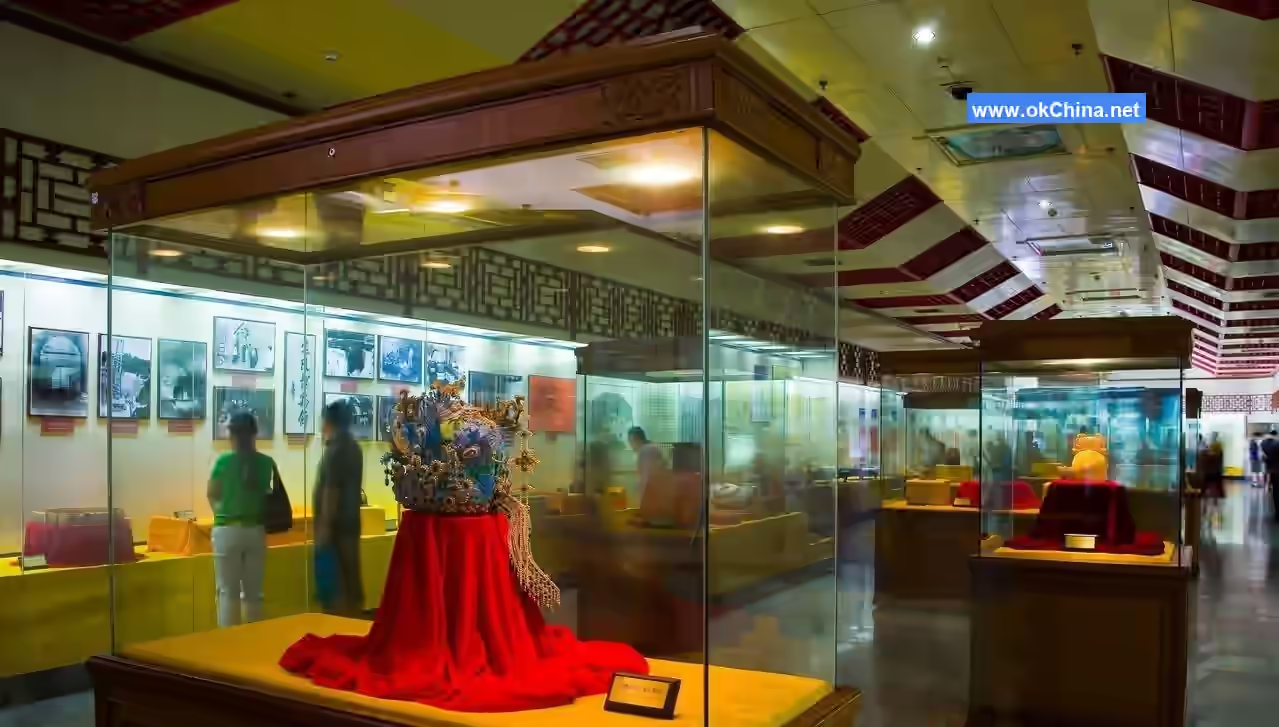
In 1956, the decision was made to "trial excavate" Dingling instead. The underground palace of Dingling was opened in 1957, and in 1959, the Cultural Relics Bureau of the Ministry of Culture approved the establishment of the Dingling Museum. However, due to technological and knowledge limitations at the time, many artifacts, including the imperial coffins, were damaged after excavation.
In 1966, with the start of the Cultural Revolution and the "Destroy the Four Olds" movement, the Ming Tombs quickly became a target. Many artifacts excavated from Dingling were destroyed by Red Guards who came from Beijing. On August 24, the remains of Emperor Wanli and Empress Xiaojing and Xiaoduan were publicly burned in the square in front of the Great Red Gate of Dingling by "rebel" groups from the Dingling Museum.
In 1967, after the movement subsided, cultural relics departments conducted an inventory and found that the ancient buildings and auxiliary artifacts in the Ming Tombs had been altered or damaged, mostly due to self-destruction or relocation by management units during the "Destroy the Four Olds" campaign. Bricks and stones from the treasure cities and Ming towers of various tombs were removed.
At the end of 1972, the Dingling Museum and the Ming Tombs Management Office merged and were placed under the Beijing Municipal Garden Bureau.
In June 1981, the Beijing Ming Tombs Special Zone Office was established as a dispatched agency of the Changping County People's Government, taking over the functions of the Ming Tombs Management Office.
In November 1982, the State Council of the People's Republic of China designated the Badaling–Ming Tombs Scenic Area as one of the 44 key national scenic and historic interest areas.
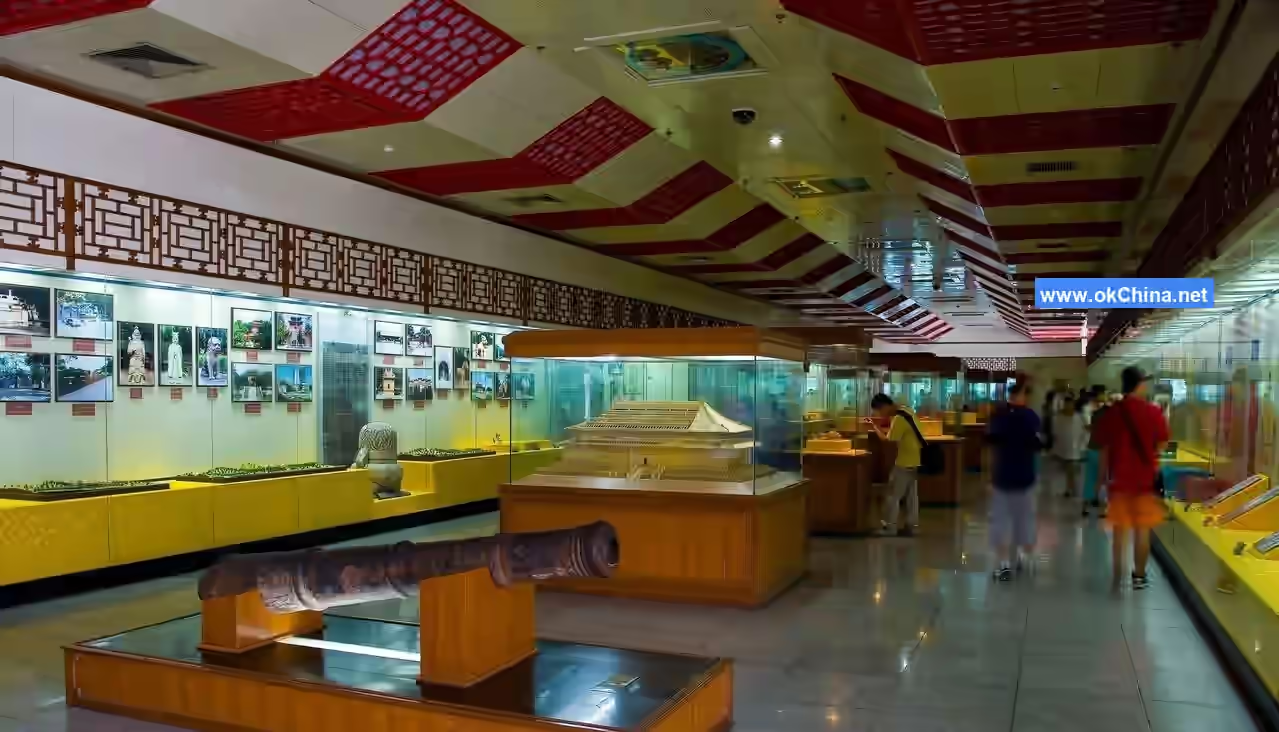
In December 1995, the "Ming Tombs Museum" was established.
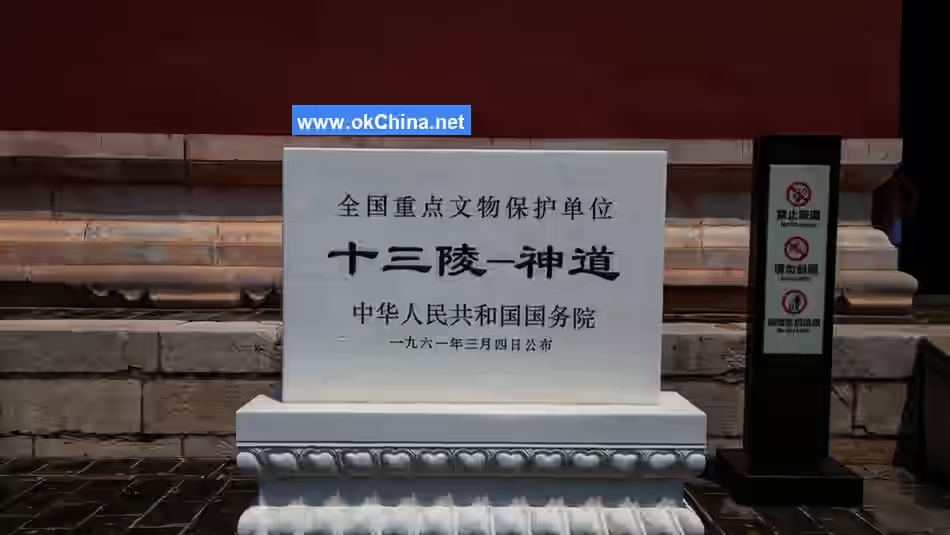
Currently, only Changling, Dingling, Zhaoling, and the Sacred Way are open to tourists, while the other tombs remain closed.
3. Layout and Orientation
3.1 Architectural Layout
The construction scales of the Ming Tombs vary. Tombs built during the emperors' lifetimes, such as Changling, Yongling, and Dingling, are larger in scale. Those built posthumously, such as Xianling, Jingling, and Kangling, are smaller. Siling, the tomb of the last Ming emperor Chongzhen, was originally the burial site of his concubine Tian Shi, making it the smallest among the Ming Tombs.
The most important architectural components of the Ming Tombs area are divided into the sacrificial area, burial area, administrative offices, and protective facilities, forming a complete overall planning and architectural layout for the tomb complex.
Sacrificial Area
The sacrificial area mainly refers to the above-ground buildings of each tomb and the introductory sections of the tomb area. The ground structures include the Sacred Way, stone archway, Great Red Gate, stele pavilion, stone statues, sacred bridge, and tomb gardens.
Burial Area
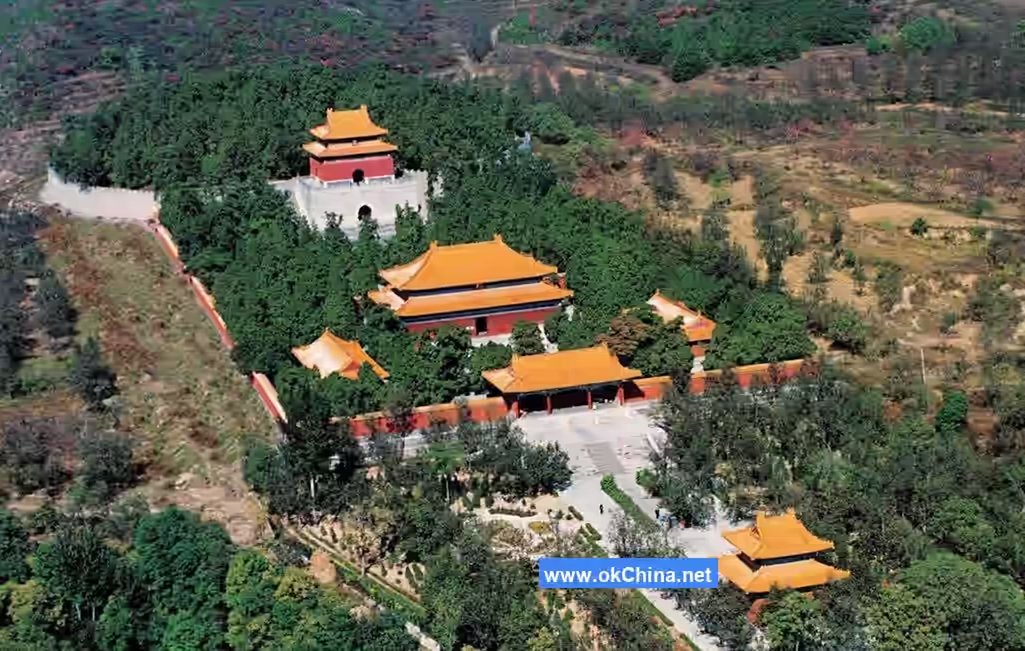
The burial area includes the tomb gardens and underground palaces, collectively known as the tomb palace architecture. This is the central location of the above-ground structures of each imperial tomb and an important dedicated site for sacrificial activities. Each tomb is built against a mountain, with distances between tombs ranging from 500 meters to 8,000 meters. Except for Siling, which is isolated in the southwest, the others are arranged in a fan shape around Changling. Although their orientations and scales differ, the layout and form of their above-ground structures are largely consistent, with the main buildings almost identical. The tomb palace architecture of each Ming Tomb forms an independent whole, with sacrificial areas in the front and resting palaces at the back. Gateways, halls, Ming towers, and treasure cities are arranged in a clear, orderly, and solemn manner, highlighting the characteristics of tomb architecture. The layout is centered on a central axis, with auxiliary buildings on both sides, creating a reasonable and complete architectural arrangement that aligns with traditional Chinese architectural layouts. As the terrain gradually rises, the buildings are arranged in a staggered and harmonious manner. The underground palace is where the imperial coffins are placed. The underground structures are typically preceded by tunnels and passageways, serving as the entrance to the underground palace. The underground palace has a cross-shaped plan with a stone arch structure. The rear hall arch intersects orthogonally with the central hall arch, a form known as the "T-shaped" arch, reserved exclusively for imperial use and not permitted for tombs of nobles or officials. The cross-shaped layout of the Ming imperial tomb underground palaces was modeled after the inner palace layout where the emperor lived during his lifetime, known as the "Ninefold Palace," which refers to the inner court buildings of the imperial palace, i.e., the emperor's resting palace. The Ming tomb underground palaces feature a multi-chamber layout, a design common since the Tang and Song dynasties, but the architectural layout and form of the Ming tomb underground palaces surpassed those of previous dynasties. The rear hall of the underground palace houses the imperial coffins, with coffin platforms also built in the side chambers. The central hall was used for sacrificial rituals by burial officials after the coffins were placed and for storing stone imperial thrones and glazed five-altar sets as burial items.
Administrative Offices
Administrative offices mainly refer to the relevant administrative bodies responsible for protection and management, such as the tomb supervisor, sacrificial office, divine horse stable, orchards, and hazelnut workshops. The Ming Dynasty had strict tomb regulations. To ensure the safety and security of the tomb area, all Ming Tombs except Siling had a complete set of management institutions with different functions. These auxiliary building complexes are an important part of the complete system of each tomb.
3.2 Sacrificial Area
3.2.1 Sacred Way
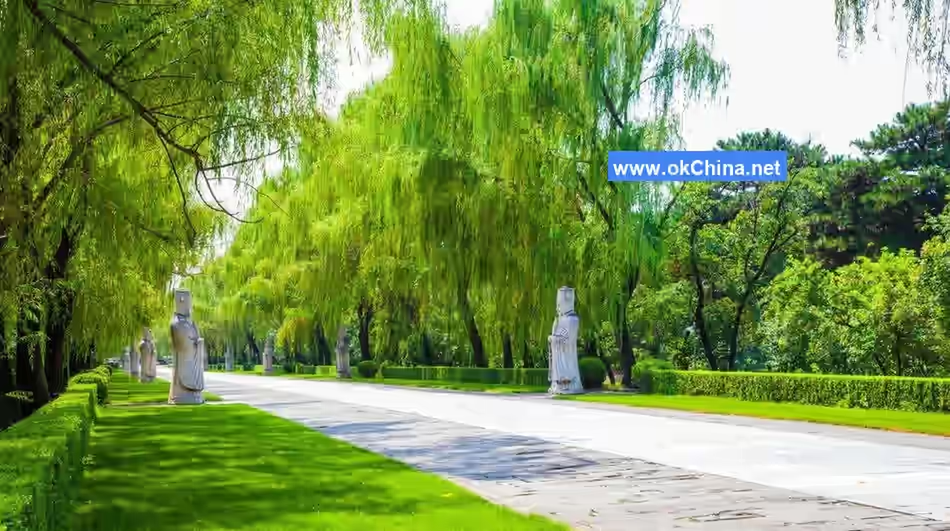
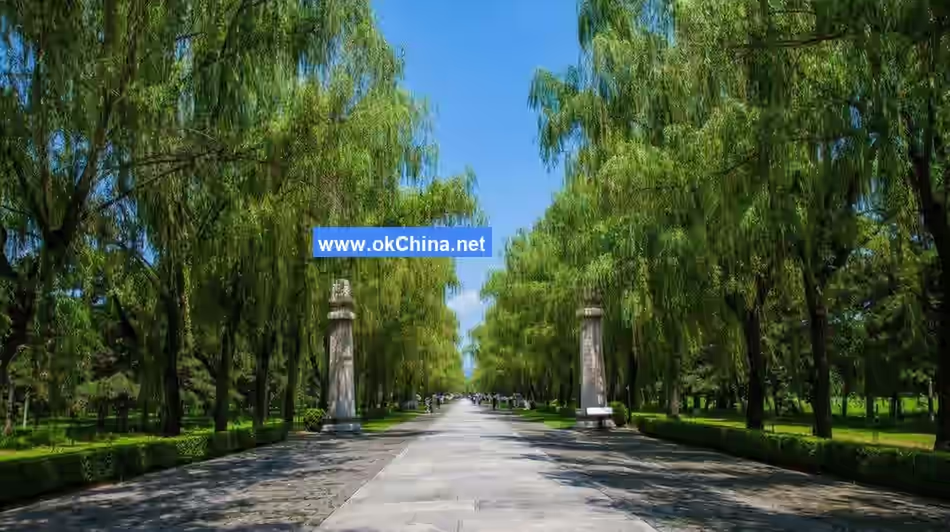
The Sacred Way, also known as the Spirit Path, is the shared path for the 13 tombs and serves as the introductory section of the above-ground structures of the Ming imperial tombs. It stretches 7,000 meters from the stone archway in the south to Changling in the north. The Sacred Way features stone statues, Lingxing Gate, Five-Arch Bridge, and Seven-Arch Bridge. From the Seven-Arch Bridge, the Sacred Way branches off to each tomb garden.
3.2.2 Stone Archway
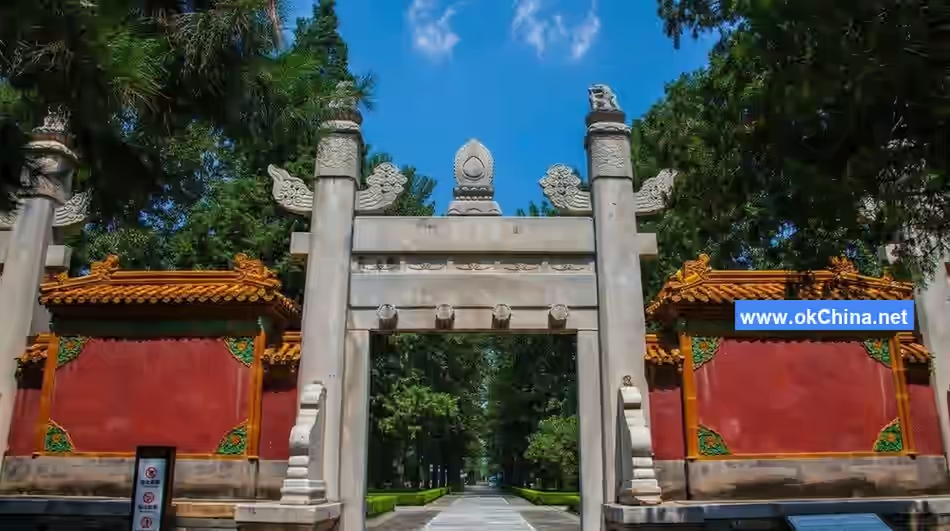
The stone archway, entirely made of white marble, is the landmark structure at the entrance of the tomb area, located between the sand hills on the south side of the tomb area. Built in the 19th year of the Jiajing era (1540) by Emperor Shizong to praise the virtues of his ancestors, it is known as the "Shengde Archway." The entire archway is constructed from large bluestone slabs carved and joined using mortise and tenon techniques. The archway has five bays, imitating wooden structure architecture, with a width of 28.86 meters and a height of approximately 12 meters. It is the oldest and highest-grade large stone archway still extant in China. The components are carved with exquisite patterns of dragons, lions, and flowers, reflecting the outstanding craftsmanship of Ming Dynasty stone architecture.
3.2.3 Great Red Gate
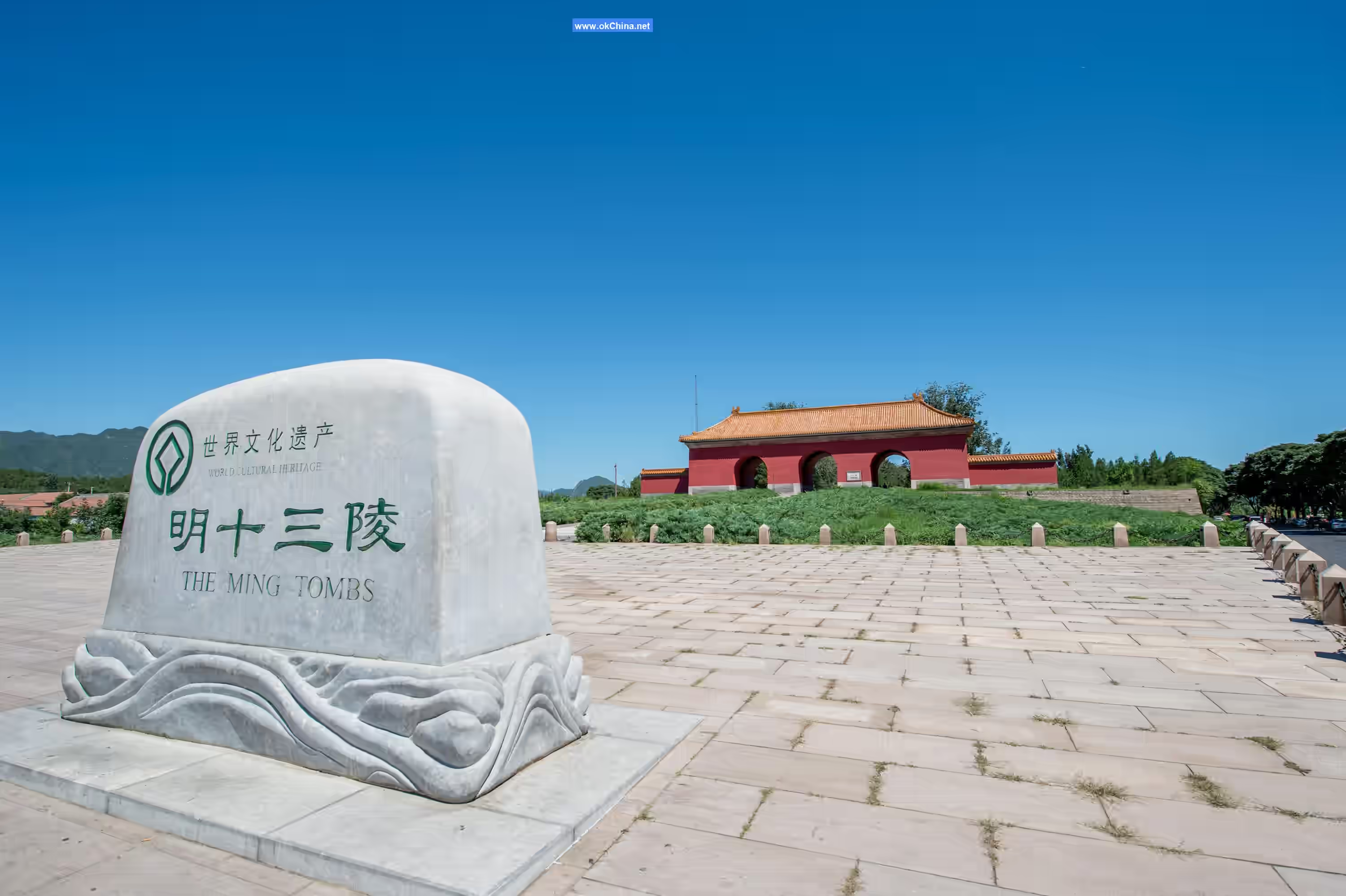
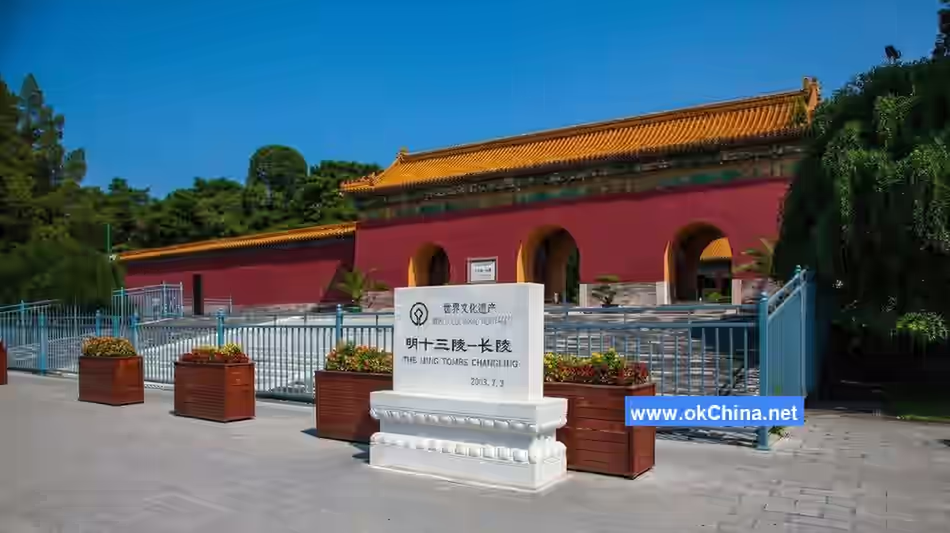
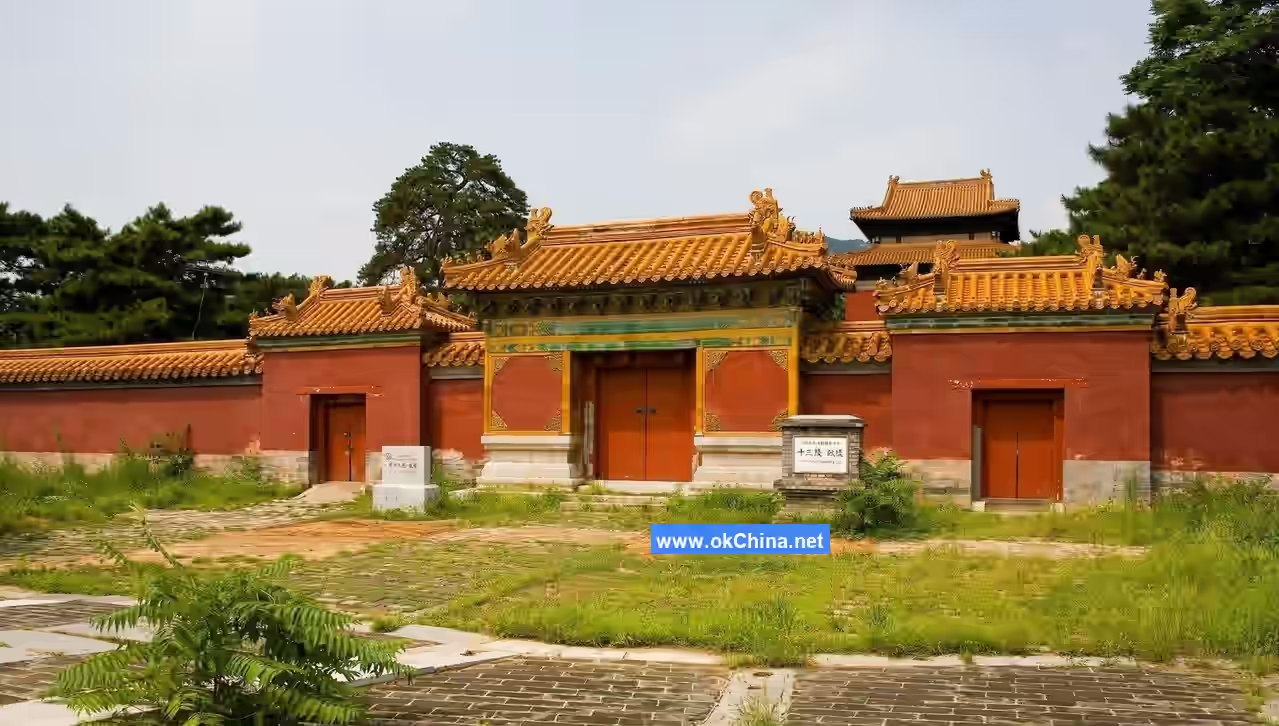
The Great Red Gate, also known as the Great Palace Gate, is the main entrance to the tomb garden. The gate has three arched doorways, a hip-and-gable roof covered with yellow glazed tiles, and walls built of brick and stone, all painted red. The gate is connected to the tomb area walls on both sides. In front of the Great Red Gate, on the east and west sides, there are dismounting steles made of white marble, inscribed with the words "Officials and others dismount here." Anyone coming to pay respects at the tombs must enter the tomb garden on foot from here, demonstrating the dignity of the imperial tombs. Slightly to the east inside the gate, there originally stood the Dusting Hall, also known as the Shizhi Hall, built specifically for the emperor and empress to change clothes, but it no longer exists.
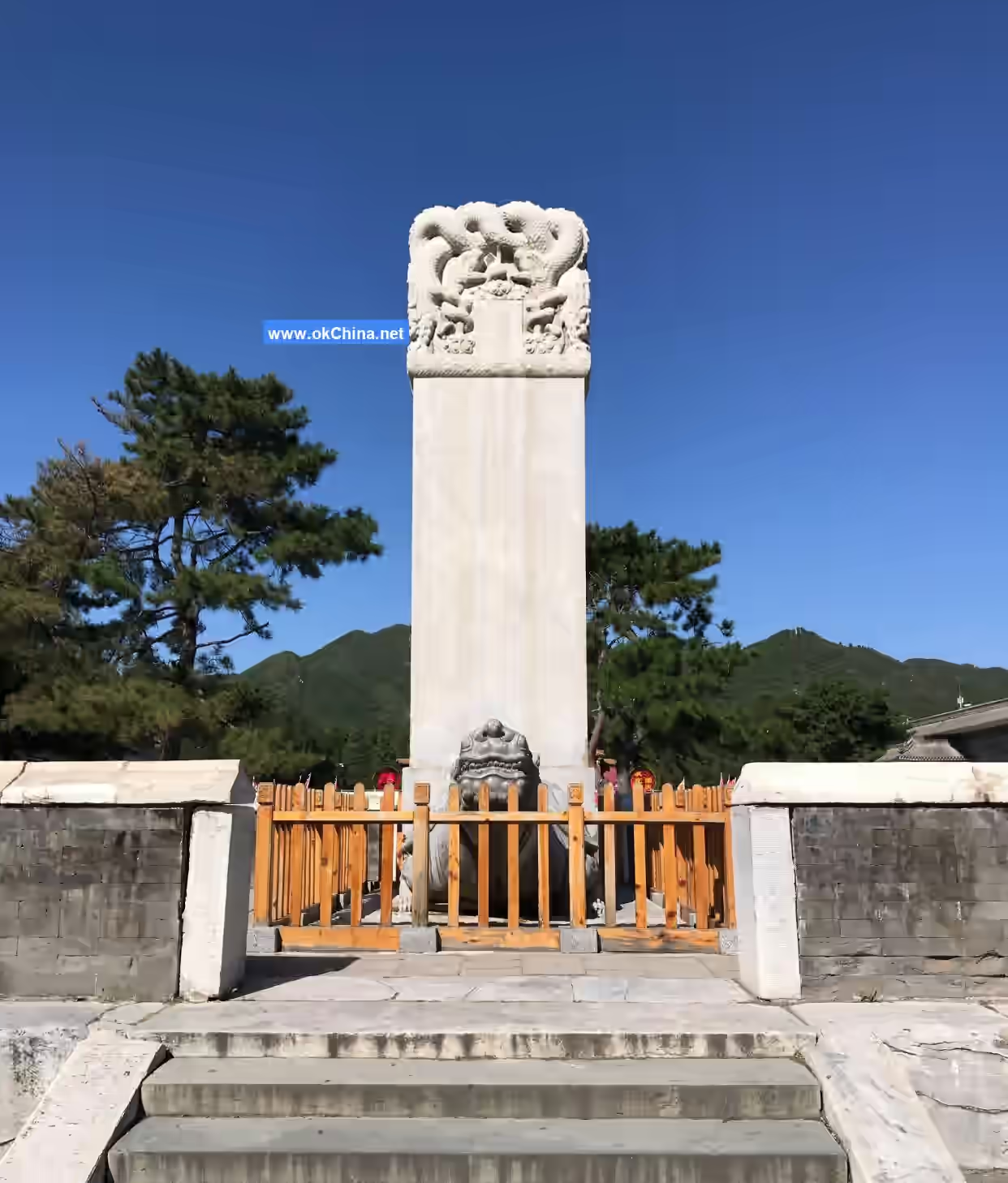
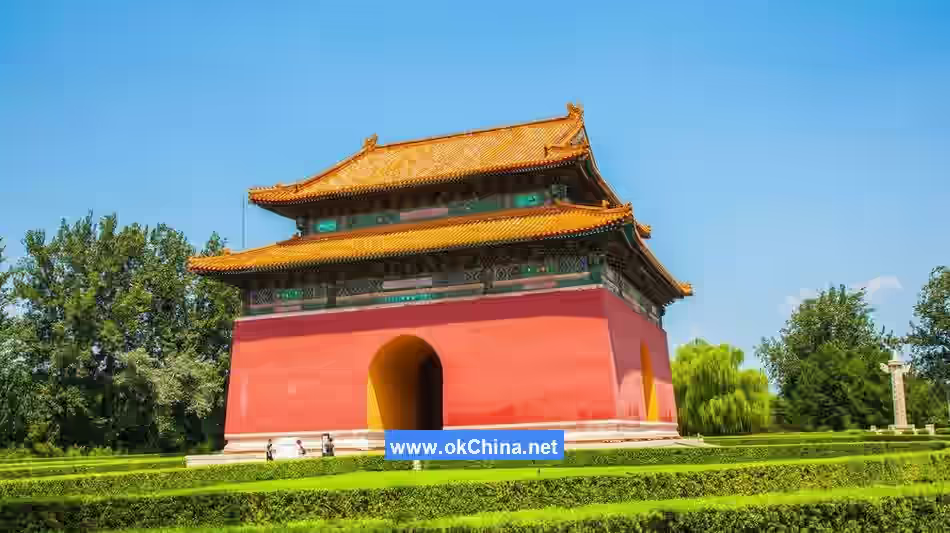
3.2.4 Stele PavilionThe Stele Pavilion, located in the front section of the Sacred Way, is the "Divine Merit and Sacred Virtue Stele Pavilion" of the Changling Mausoleum, built in the first year of the Zhengtong era (1636). The pavilion has a square plan, stands 25.14 meters high, and features a double-eave hip-and-gable roof covered with yellow glazed tiles. Its walls are constructed of brick and stone, painted entirely in red, with doorways on all four sides. Inside the pavilion stands a stele with a dragon-head tortoise base, over 7 meters tall, carved from white marble. The stele is inscribed on all four sides, with the seal script heading "Divine Merit and Sacred Virtue Stele of the Changling Mausoleum of the Great Ming." The inscription, written by Emperor Renzong of the Ming Dynasty, Zhu Gaochi, and calligraphed by the renowned early Ming calligrapher Cheng Nanyun, contains over 3,000 characters. At each corner of the pavilion stands an ornamental column, an important decorative feature of the stele pavilion, standing 10.8 meters tall. The columns are carved with cloud and dragon patterns, topped with cloud-shaped boards, and each circular disk at the apex is carved with a crouching mythical beast, commonly known as the "gazing-at-the-sky roar." These ornamental columns are all carved from white marble, imparting a solemn and dignified atmosphere.
3.2.5 Stone Statues
The stone sculpture group consists of stone-carved human and animal figures placed in front of the mausoleum, historically known as "stone statues" (stone human figures are also called "Weng Zhong"). Starting from the two hexagonal stone pillars north of the Stele Pavilion and extending to the Dragon and Phoenix Gate, the thousand-meter-long Sacred Way is flanked by neatly arranged rows of 24 stone animals and 12 stone human figures. With their vivid forms and exquisite carving, they are deeply admired by visitors. Their large number, substantial size, fine craftsmanship, and excellent preservation are rare among ancient mausoleum complexes. The stone animals are divided into six types, with four of each type, all depicted in two standing and two kneeling postures. Their placement here carries specific symbolic meanings. The stone human figures are divided into meritorious officials, civil officials, and military officials, with four statues each, representing the emperor's close attendants during his lifetime. All are depicted standing with hands clasped and holding ceremonial tablets, appearing majestic and devout. The practice of placing such stone statues in imperial mausoleums dates back to the Qin and Han dynasties over two thousand years ago. They primarily serve a decorative and embellishing function, symbolizing the emperor's ceremonial majesty during his lifetime and indicating that even after death, the emperor possesses civil and military officials as well as various livestock to command in the afterlife, still holding sway over all.
3.2.6 Lingxing Gate
The Lingxing Gate is also called the Dragon and Phoenix Gate. It consists of four stone pillars forming three gate openings. The gate pillars resemble ornamental columns, adorned with cloud-shaped boards and mythical beasts. On the central part of the lintels above the three gates, there are carved stone fire pearls, which is why the gate is also known as the "Flame Archway." Northwest of the Dragon and Phoenix Gate, there originally stood a temporary palace where the emperor and empress rested during sacrificial ceremonies, but it later became the main thoroughfare of the entire mausoleum area. This road runs north-south through the mausoleum park, spanning a total length of 7 kilometers, with a series of buildings arranged along it in an orderly and magnificent manner.
3.3 Mausoleum Area
3.3.1 Changling Mausoleum
The Changling Mausoleum is located at the foot of the central peak of the Tianshou Mountains. It is the joint burial tomb of the third emperor of the Ming Dynasty, Emperor Chengzu Zhu Di, and his empress, Empress Xu. It was the "longevity palace" built by the Yongle Emperor himself in the seventh year of the Yongle era (1409). The mausoleum complex is grand in scale, constructed with strictly selected materials, meticulous craftsmanship, and an extensive and time-consuming construction process, with the underground palace alone taking four years to complete.
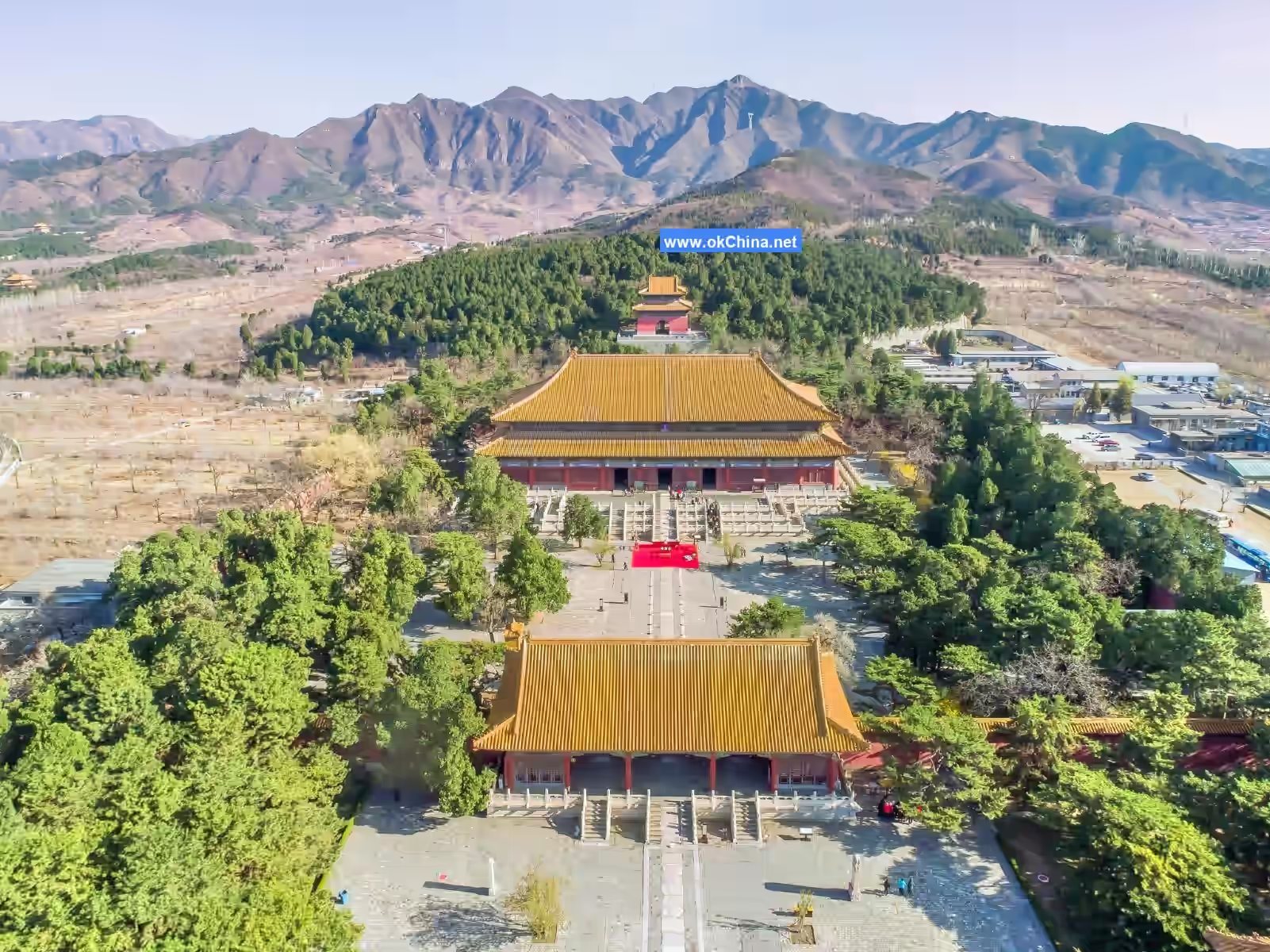
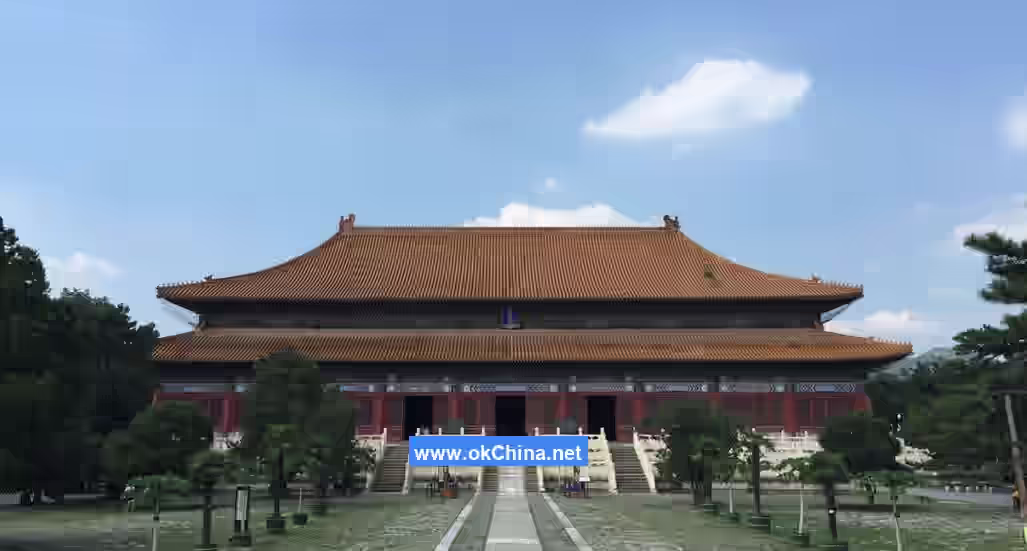
Changling is the largest and most magnificent architectural complex among the Thirteen Ming Tombs. Its plan is rectangular, with a square front and a rounded rear. The architectural layout consists of three courtyards, surrounded by tall red mausoleum walls. The main buildings are arranged along a central north-south axis. In front of the mausoleum gate, there is an inscriptionless stele, with a stone bridge built in front of it connecting to the Sacred Way. The first courtyard features the Ling'en Gate as its main structure, with auxiliary buildings such as the Divine Kitchen, Divine Storehouse, and Slaughter Pavilion on either side. The second courtyard is the core area for sacrificial ceremonies, with the highest architectural scale and grade. The main hall, the Ling'en Hall, is tall and majestic, flanked by side halls. Completed in the fourteenth year of the Yongle era (1416), the Ling'en Hall was where the memorial tablets of the emperor and empress were enshrined and where sacrificial ceremonies were held. The hall is nine bays wide, with a double-eave hip roof covered with yellow glazed tiles, resplendent in gold and jade. It sits on a Sumeru pedestal-style platform base surrounded by three tiers of white marble railings and a smaller platform base. In front of the platform base, there are three tiers of moon platforms with stone-carved railings. Each moon platform has three tiers of steps in front, with a high-relief imperial road stone carving in the center, depicting exquisite patterns such as sea waves, mountains, and two dragons playing with a pearl. The hall floor is paved with "golden bricks." All architectural components of the hall, including beams, columns, lintels, purlins, and bracket sets, are made from Phoebe zhennan wood (golden silk nanmu), prized for its fine texture, natural fragrance, and exceptional resistance to corrosion. The 60 large pillars supporting the hall are made from whole logs of nanmu, with particularly robust timber. Especially notable are the 32 heavy-eave golden pillars inside the hall, standing 12.58 meters tall with diameters exceeding one meter each, making them rare treasures in the world.
3.3.2 Xianling Mausoleum
The Xianling Mausoleum is the joint burial tomb of the fourth emperor of the Ming Dynasty, Zhu Gaochi, and his empress, Empress Zhang. Zhu Gaochi (1378–1425), reign name Hongxi, temple name Renzong, ascended the throne at age 47, reigned for ten months, and died at age 48. Construction of Xianling began in the seventh month of the first year of the Hongxi era (1425), with the underground palace completed in the eighth month. The above-ground structures were finished in the eighth year of the Zhengtong era (1443), taking a total of 18 years. It covers an area of approximately 42,000 square meters.
The Sacred Way of Xianling branches off north from the Five-Arch Bridge on the Changling Sacred Way, extending about 1 kilometer. Along the way, there is a single-arch stone bridge. The path is paved with city bricks in the center, with crushed stones laid on both sides as drainage, reflecting a very frugal style. Its orientation is 200 meters southwest, covering only about 42,000 square meters. The mausoleum hall, side halls on both flanks, and the Divine Kitchen each have only five bays, and all are single-eave structures. The gate tower (Ling'en Gate) has only three bays. The arched gate under the city wall was simplified to a straight passage from front to back. Consequently, the screen wall was not placed within the arched passage but behind the square city wall and in front of the burial mound. Because Xianling's design did not pursue extravagance, previous scholars commenting on Ming tombs have said, "Xianling is the simplest, Jingling is the smallest." It set a model for subsequent Ming mausoleum architecture.
Another characteristic of Ming Xianling is that the Ling'en Hall and the Square City with the Soul Tower are not connected within the same courtyard complex. The front section, centered on the Ling'en Hall, comprises one courtyard. In front of the hall, side halls and a Divine Silk Burner are built on the left and right. The main gate of this courtyard is the Ling'en Gate, which also serves as the main gate of the mausoleum park. A large moon platform extends in front of the gate, and a single gate is set at the rear of the courtyard. The rear section is centered on the Precious City and Soul Tower, with a courtyard extending in front. Within this courtyard, there is a two-pillar Lingxing Gate and a stone altar. The courtyard gate consists of three single-eave hip-and-gable glazed floral gates. The two courtyards are separated by a small earthen hill (Screen Wall Hill).
3.3.3 Zhaoling Mausoleum
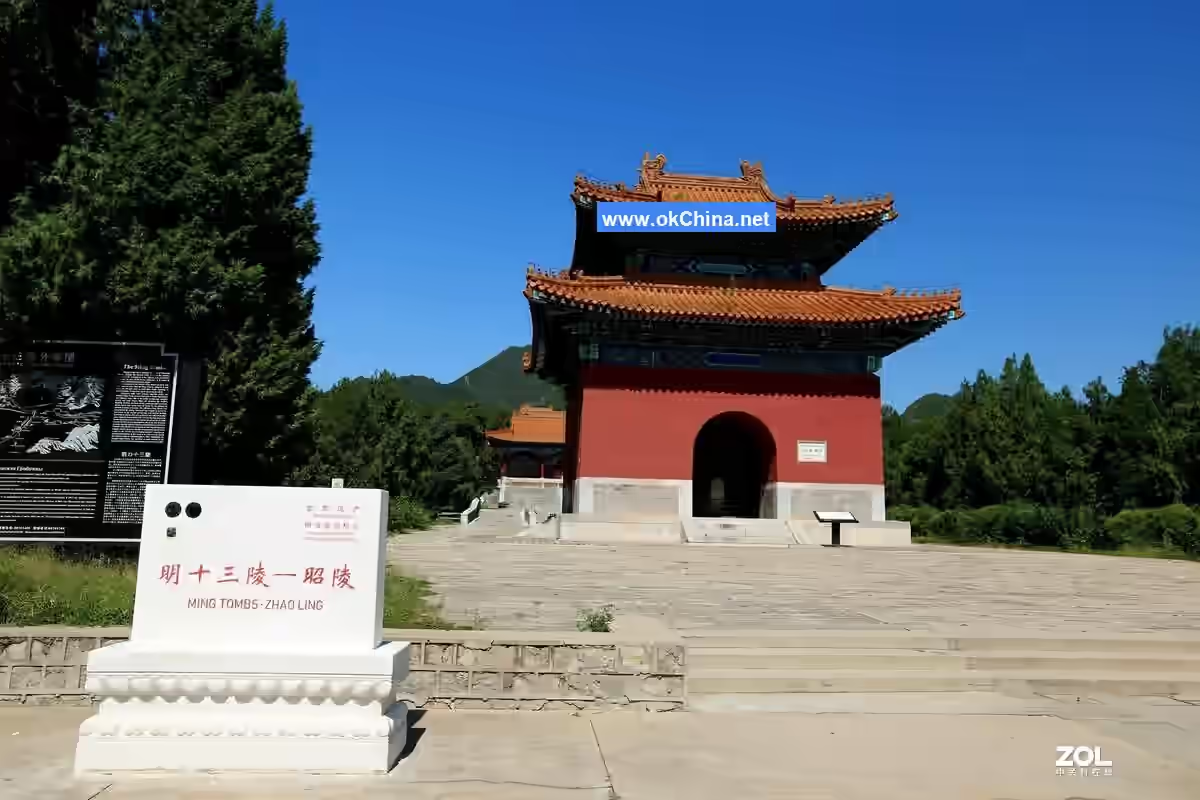
Zhaoling Mausoleum is located on the eastern foothills of the Dayu Mountains. It is the joint burial tomb of the twelfth emperor of the Ming Dynasty, Emperor Muzong (reign name Longqing) Zhu Zaihou, and his three empresses. Zhaoling was the first among the Thirteen Ming Tombs to undergo large-scale restoration and renovation and is one of the officially opened tourist sites within the mausoleum area.
The Zhaoling Mausoleum covers a construction area of 35,000 square meters. Existing structures include the complete Ling'en Gate, Ling'en Hall with its eastern and western side halls, as well as the Square City, Soul Tower, and Precious Dome. Here are buried the twelfth Ming emperor, Zhu Zaihou, and his three empresses.
According to Ming dynasty regulations, the bracket sets of the Soul Tower in each mausoleum should be: upper eave—single翘 (qiao) double昂 (ang) seven-step bracket sets; lower eave—double昂 five-step bracket sets. However, after restoration, Zhaoling's Soul Tower bracket sets were changed to both upper and lower eaves having single翘 single昂 five-step bracket sets. A stone arched ceiling was also added inside the Soul Tower. Although the number of bays for the Ling'en Gate and Ling'en Hall did not change significantly during reconstruction, their dimensions were reduced. The Ling'en Hall originally had a width of five bays (30.38 meters) and a depth of four bays (16.77 meters). After reconstruction during the Qing dynasty, the number of width bays remained unchanged, but the dimension was reduced to 23.3 meters. The depth was changed to three bays, reduced to 11.92 meters. The Ling'en Gate originally had a width of three bays (18.44 meters) and a depth of two bays (8.04 meters). After Qing reconstruction, the width was reduced to 12.52 meters and the depth to 6.77 meters. The side halls within the mausoleum and the Divine Merit and Sacred Virtue Stele Pavilion in front of the mausoleum were not rebuilt; moreover, the remaining ruined walls were dismantled. Only a surrounding wall was built on the old pavilion foundation around the stele. Thereafter, for over 200 years, no repairs were made. The once magnificent mausoleum buildings fell into desolation, leaving only the damaged Soul Tower and mausoleum walls.
3.3.4 Jingling Mausoleum
Jingling Mausoleum is located at the foot of the eastern peak of the Tianshou Mountains (also known as Black Mountain). It is the joint burial tomb of the fifth emperor of the Ming Dynasty, Emperor Xuanzong (reign name Xuande) Zhu Zhanji, and his empress, Empress Sun.
The Sacred Way of Jingling branches off eastward south of the Five-Arch Bridge on the Changling Sacred Way, extending about 1.5 kilometers, with a single-arch stone bridge along the way. The mausoleum palace is oriented 550 meters southwest, covering an area of approximately 25,000 square meters. The Precious City was built in a long, slender shape with a square front and rounded rear, following the terrain. The two front square courtyards and the rear Precious City are integrated. Along the central axis, structures were built in sequence: Ling'en Gate, Ling'en Hall, Three Gates, Lingxing Gate, stone altar, Square City, Soul Tower, etc.
The platform base of the Ling'en Hall within Jingling remains from the reconstruction during the Jiajing era. From the distribution of the remaining Ming dynasty column base stones for the hall's eave columns, it can be seen that the original hall had a width of five bays (31.34 meters) and a depth of three bays (16.9 meters), with an attached rear room of one bay (width 8.1 meters, depth 4.03 meters). The imperial road stone carving in front, depicting two dragons playing with a pearl, appears more exquisite and grand compared to the uniform cloud patterns of Xianling.
On the platform bases of the Ling'en Gate and Ling'en Hall, there are also column base stones left from Qing dynasty renovations. The Divine Merit and Sacred Virtue Stele Pavilion only retains the stele and its platform base.
3.3.5 Dingling Mausoleum
Dingling Mausoleum is the tomb of the thirteenth emperor of the Ming Dynasty, Emperor Shenzong (reign name Wanli) Zhu Yijun. His two empresses are also buried here. The mausoleum is situated at the foot of the Dayu Mountains, southwest of Changling, and was built between the twelfth and eighteenth years of the Wanli era (1584–1590). Main structures include the Ling'en Gate, Ling'en Hall, Precious City, Soul Tower, and the underground palace. It covers an area of 182,000 square meters. It is the only tomb among the Thirteen Ming Tombs that has been excavated. The underground palace of Dingling is open for visitors.
3.3.6 Yongling Mausoleum
Yongling Mausoleum is located on the southern foothills of Yangcui Ridge. It is the joint burial tomb of the eleventh emperor of the Ming Dynasty, Emperor Shizong (reign name Jiajing) Zhu Houcong, and his three empresses: Empress Chen, Empress Fang, and Empress Du.The Yongling Mausoleum is grand in scale. Its Ling'en Hall is a double-eaved structure with seven bays, flanked by side halls of nine bays each on the left and right. Its regulations are second only to the Changling Mausoleum and surpass those of the Xian, Jing, Yu, Mao, Tai, and Kang Mausoleums. Its Ling'en Gate, with a width of five bays, is equal to that of the Changling Mausoleum, and only the Dingling Mausoleum shares this specification. Outside the square courtyard and treasure city of the Yongling Mausoleum, there is an outer enclosure wall that none of the previous seven mausoleums have. Its construction is "massive, with meticulous and exquisite stonework, surpassing the ingenuity of the Changling Mausoleum's design." Inside the outer enclosure wall, on the left are the Divine Kitchen and on the right the Divine Storehouse, each with five bays. Additionally, following the layout of deep palace corridors, east-west long streets were built. The ancients designed the outer enclosure wall to bury imperial concubines within it. Their burial positions were planned outside the treasure hill city, in front of the Soul Tower, specifically outside the left and right palace walls in front of the Soul Tower, arranged facing each other in sequence.
3.3.7 Qingling Mausoleum
The Qingling Mausoleum is located at the southern foot of the second ridge of Huangshan Temple in the Tianshou Mountain burial grounds in Changping, Beijing. It is the joint burial tomb of the 14th emperor of the Ming Dynasty, Emperor Guangzong (Zhu Changluo, reign name Taichang), and his empresses Guo, Wang, and Liu.
The underground Xuan Palace of the Qingling Mausoleum began construction in March of the first year of the Tianqi era (1621), with the Dragon Gate sealed on July 29th, taking four months and costing 1.5 million taels of silver. The construction quality was meticulous; besides the entire Xuan Palace being built of stone, its "rear, middle, and front halls" were "separated by heavy doors." The above-ground structures were completed in the sixth year of Tianqi (1626). The mausoleum complex consists of three parts: the Sacred Way, the mausoleum palace, and auxiliary buildings outside the mausoleum palace. A single-arch stone bridge was built on the Sacred Way. Near the mausoleum, the remains of the Stele Pavilion of Divine Merit and Sacred Virtue were constructed, housing a stele with a dragon-head top and tortoise base, but without inscriptions.
The overall layout of the Qingling Mausoleum palace is square in the front and round in the back, covering an area of approximately 27,600 square meters. There are two square courtyards in the front, not directly connected, linked by a Sacred Way between them, with three single-arch stone bridges built behind the first courtyard. The first courtyard uses the Ling'en Gate as the mausoleum entrance, with a single-eave hip-and-gable roof and three bays wide. Inside the courtyard are the Ling'en Hall and left and right side halls, each with five bays, along with two Divine Silk Burners. The second courtyard has a Three-Gate entrance at the front, inside which are a two-pillar archway gate and a stone altar. On the altar are placed one stone incense burner, two candle holders, and two vases. Behind the square courtyard is the round Treasure City. At the entrance to the Treasure City, a square city platform was built, upon which stands the Soul Tower with a double-eave hip-and-gable roof. Inside the tower is a Sacred Name Stele inscribed with "Great Ming" and "Tomb of Emperor Guangzongzhen." Behind the Soul Tower, the Treasure City is filled with loess, and a cylindrical mound, wider at the bottom and narrower at the top, was constructed in the center as the Treasure Top, with a bottom diameter of about 28 meters. The retaining wall in front of the mound is the same height as the Treasure City wall and, together with the Treasure City platform and side walls, encloses a courtyard nearly crescent-shaped—the Dumb Courtyard. Inside the courtyard is a glazed screen wall integrated into the wall. Outside the mausoleum palace are auxiliary buildings such as the Slaughter Pavilion, Divine Kitchen, Divine Storehouse, Sacrificial Office, Divine Palace Directorate, Morning Rooms, Orchards, Hazel Workshops, and Divine Horse Stables.
3.3.8 Maoling Mausoleum
The Maoling Mausoleum is located at the foot of Jubao Mountain to the right of the Yuling Mausoleum. It is the joint burial tomb of the 8th emperor of the Ming Dynasty, Emperor Xianzong (Zhu Jianshen, reign name Chenghua), and his three empresses Wang, Ji, and Shao.
The structures of the Maoling Mausoleum were relatively well-preserved in the early Qing Dynasty, and many furnishings inside the Ling'en Hall remained. Gu Yanwu's "Records of Changping's Landscape" describes the Maoling Mausoleum during the Shunzhi and Kangxi eras: "Among the twelve mausoleums, only Maoling remains intact. Other mausoleums may only have the imperial couch left, but Maoling still has preserved items like bell stands." By the late Qing Dynasty, the Ling'en Gate had collapsed due to long-term disrepair. During the Republican era, the Ling'en Hall, already dilapidated, was further demolished. Its current condition is similar to that of the Yuling Mausoleum.
3.3.9 Kangling Mausoleum
The Kangling Mausoleum is located at the eastern foot of Jinling (also known as Lotus Mountain or Eight Treasures Lotus Mountain). It is the joint burial tomb of the 10th emperor of the Ming Dynasty, Emperor Wuzong (Zhu Houzhao, reign name Zhengde), and Empress Xia.
The construction of the Kangling Mausoleum took one year, following the previous layout of square in front and round in back. Built in the 16th year of Zhengde (1521), it covers an area of 27,000 square meters. At the end of the Ming Dynasty, the Kangling Mausoleum was burned down and was restored during the Qianlong era of the Qing Dynasty.
3.3.10 Tailing Mausoleum
The Tailing Mausoleum is located at the southeastern foot of Bijia Mountain, also known as "Shijiatai" or "Shijiashan." It is the joint burial tomb of the 9th emperor of the Ming Dynasty, Emperor Xiaozong (Zhu Youcheng, reign name Hongzhi), and Empress Zhang.
3.3.11 Deling Mausoleum
The Deling Mausoleum is located at the western foot of Tanyu Ridge. It is the joint burial tomb of the 15th emperor of the Ming Dynasty, Emperor Xizong (Zhu Youxiao, reign name Tianqi), and Empress Zhang.
3.3.12 Yuling Mausoleum
The Yuling Mausoleum is located at the southern foot of Shimen Mountain, the western peak of Tianshou Mountain. It is the joint burial tomb of the 6th emperor of the Ming Dynasty, Emperor Yingzong (Zhu Qizhen), and his empresses Qian and Zhou.
3.3.13 Siling Mausoleum
The Siling Mausoleum was built around 1642 and was originally the tomb garden of Consort Tian, a favored concubine of Emperor Sizong. After the fall of the Ming Dynasty, Li Zicheng ordered the burial of Emperor Sizong and Empress Zhou together in Consort Tian's tomb. To win over the people, it was renamed Siling, making it the only tomb among the Ming Tombs where an emperor, empress, and concubine were buried together. Compared to other Ming tombs, Siling is also smaller in scale. Nearby is also the burial site of Wang Cheng'en, Emperor Sizong's personal eunuch. The Qing emperors Shunzhi and Kangxi also erected steles for Wang Cheng'en to commend his loyalty and martyrdom for his master.
After the fall of the Qing Dynasty, Siling suffered repeated disasters and was severely damaged. The underground burial chamber was robbed twice by local bandits. In 1947, Nationalist troops demolished the above-ground structures of the tomb complex on a large scale to build blockhouses. Siling was left in a desolate state, with only the burial mound, ruins of the tower hall, stone sacrificial offerings, and steles preserved as precious cultural relics.
After the founding of the People's Republic of China, the state placed great importance on cultural relic protection, and Siling received due protection. Although Siling lacks magnificent halls and towers, the ancient tomb's remnants, the sound of wind through pine trees, still create a unique atmosphere. Particularly, the surviving stone carvings are ingeniously conceived and exquisitely crafted.
3.4 Auxiliary Tombs
3.4.1 Consort Tombs
Within the Thirteen Tombs area, there are seven consort tomb gardens: the tomb garden of Consort Wan of Emperor Xianzong, the tomb garden of the Five Consorts of Emperor Shenzong (including Consort Zheng's tomb), the tomb garden of the Virtuous Consorts of Emperor Shizong, the tomb garden of the Four Consorts and Two Crown Princes of Emperor Shizong (Five Sons' Tomb), the tomb garden of the Three Consorts of Emperor Shizong (Mourning Tomb), and two tomb gardens of Consorts of Emperor Chengzu (East Well and West Well). Among the seven, the tomb gardens of Consort Wan and Consort Zheng are the largest in scale and have the most above-ground structures.
The architectural regulations of the consort tombs are largely similar, differing mainly in size and the number of structures. The architectural forms are either square in front and round in back or rectangular. The layout is based on a central axis, with all main structures located along it and auxiliary buildings symmetrically flanking the main hall. The central axis structures include the tomb garden gate, heavy gate, offering hall, triple gate, screen wall, stele, altar, and finally the burial mound. In front of the offering hall are auxiliary buildings like the Divine Kitchen, Divine Storehouse, and side halls. The tomb garden is surrounded by high walls.
The burial chamber of a consort tomb is a palace-style structure with a floor plan shaped like the character "工" (工), consisting of a tomb door, an antechamber, and a main chamber. The burial chamber is vaulted. Between the antechamber and main chamber are two stone doors carved with door knockers. The door lintel is covered with glazed tiles, with three dragon-head ridge ornaments (chiwen) at each end, and the eaves tiles are decorated with dragon patterns. The roof of the main chamber is a hipped roof, entirely paved with square bricks, with glazed ridge ornaments on the descending ridges. Inside the chamber is a raised coffin platform where the coffin is placed. On either side of the stone door in the antechamber is a throne. In front of the thrones are placed stone sacrificial offerings (one incense burner, two candle holders, and two vases) and an eternal lamp.
3.4.2 Wang Cheng'en's Tomb
Wang Cheng'en's tomb is located in front of the Siling Mausoleum, oriented east-west with the front facing east. The first stele on the east side is 2 meters high, with the front inscribed in running script by Ni Qin of Wuxia: "Tomb of Wang Cheng'en." The second stele is 4 meters high, with a dragon-head top and tortoise base. The stele top bears the characters "敕建" (imperially built), and the inscription of 800 characters was personally written by Emperor Shunzhi of the Qing Dynasty. Close to the front of the tomb is a stele 2 meters high, with a dragon-head top and square base. The stele top bears the four characters "御制旌忠" (imperially made to honor loyalty), with an inscription of 240 characters written by Emperor Shunzhi in the second year of Shunzhi when constructing the Siling Mausoleum, to commend Wang Cheng'en for "being a loyal subject to his master, sacrificing his life to follow."
3.5 Administrative Buildings
3.5.1 Mausoleum Directorates
The mausoleum directorates, also known as Divine Palace Directorates, were present at each of the Thirteen Tombs, providing residences for the eunuchs guarding the tombs. They were the specialized management institutions for the Ming imperial tombs, overseen by inner court officials. The directorates were generally built near the mausoleum palaces, to the left or right. Each mausoleum had one directorate. Each directorate was headed by one seal-holding eunuch, with subordinates such as secretaries, managers, incense officers, and attendants. In the early Ming, each mausoleum had few inner officials, with only two or three by the Zhengtong era, increasing to twelve by the Chenghua era. The main duties of the directorates were managing sacrifices, maintaining tomb security, and overseeing imperial estates, orchards, hazel workshops, divine horse stables, etc. Due to their significant responsibilities, each directorate had a military establishment of up to several thousand soldiers. Their duties were to assist the directorates in maintaining security within the tomb area, but they also became oppressive forces exploiting the nearby populace. In the first year of Shunzhi (1644), incense officers and tomb households were established, and gradually the directorates evolved into villages.
The locations of the directorates were all near their respective tombs for convenient guarding and daily management. There was no fixed orientation for each directorate; they were basically built facing the direction of the tomb. Therefore, not many of the Thirteen Tombs' directorates face true cardinal directions; many are oriented obliquely. For example, the Tailing and Kangling Directorates are oriented northwest, while the Qingling Directorate is oriented southeast.The layout of the mausoleum supervisory office is either square or rectangular, enclosed by two layers of walls, known as the outer wall and the "回" shaped wall. In terms of scale, the outer wall is taller than the "回" shaped wall. The outer wall is constructed either with bricks or with "tiger-skin" stone, with materials varying depending on the period. In the early stages, except for the gate, the outer walls of the mausoleum supervisory offices were mostly built with cobblestones, while in later periods, city bricks were used.
3.5.2 Mausoleum Guards
The mausoleum guards were a military organization responsible for protecting the mausoleums, known as the Mausoleum Guard Army. Their primary duty was to guard the mausoleum complex, serving as a specialized royal guard force dedicated to maintaining the imperial tombs. They were an important component of the protection institutions of the Ming Tombs. The Ming Tombs once had twelve mausoleum guard armies, with each imperial tomb, except for the Si Tomb, being protected by such a force. During the Ming Dynasty, the Ming Tombs were a heavily guarded restricted area. A wall, known as the border wall, was built around the tombs. Along the perimeter of the mausoleum area, there were ten mountain passes and two gates. The main mountain passes included Dongshankou, Laojuntangkou, Huilingkou, Xianzhuangkou, Yanzikou, Deshengkou, Xishankou, and Zhazikou. The border wall stretched approximately 30 to 40 kilometers, taking advantage of the natural terrain of the basin where the Ming Tombs are located. It was roughly divided into northern and southern sections, with the southern section primarily consisting of artificially constructed walls, while the northern section focused on blocking mountain passes. The walls were tall and sturdy. Watchtowers were built along the border wall, guarded day and night by a large number of troops, sometimes numbering tens of thousands.
The architectural style of the border wall was divided into two types: brick walls in the area of the main gates (the Great Red Gate and the Small Red Gate) at the front of the mausoleum complex, and "tiger-skin" stone walls in the remote sections of the mausoleum area. The former, located at the front of the mausoleum complex and serving as the必经之路 for imperial family members to pay homage and conduct rituals, was constructed with the utmost solemnity. It was built with city bricks, coated with red ochre on the surface, and topped with yellow glazed tiles. The red walls and yellow tiles created a magnificent sight. This section of the wall harmonized in color, form, and other aspects with the main structures such as the Great Red Gate and the Small Red Gate.
4. Cultural Relic Value
The Ming Tombs were meticulously sited in accordance with feng shui theory, emphasizing the harmonious unity between the mausoleum architecture and the natural landscape, water flow, and vegetation. They pursued a state of perfection akin to "heaven-made and earth-shaped," reflecting the philosophical concept of "harmony between man and nature." Guided by traditional Chinese feng shui principles, as an outstanding representative of ancient Chinese imperial tombs, the Ming Tombs showcase the rich connotations of traditional Chinese culture.
Comments
Post a Comment