The Forbidden City in Beijing
I. Introduction
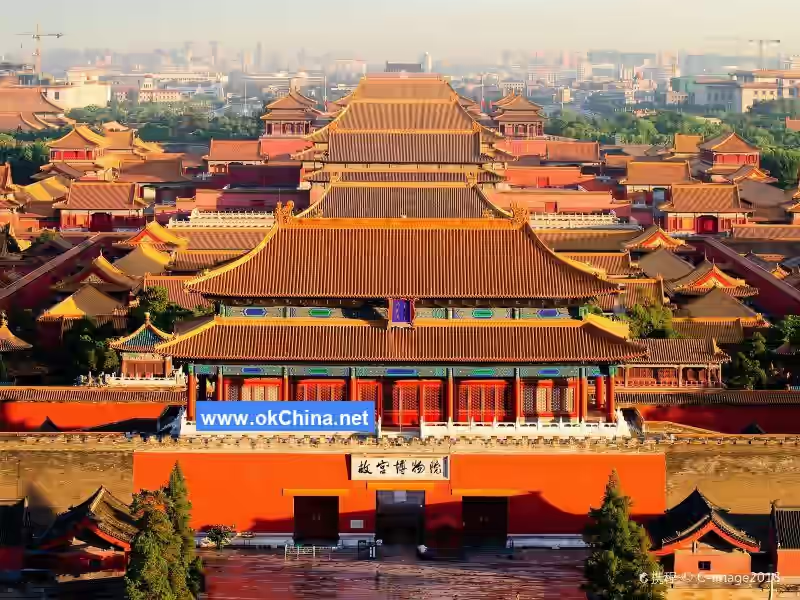
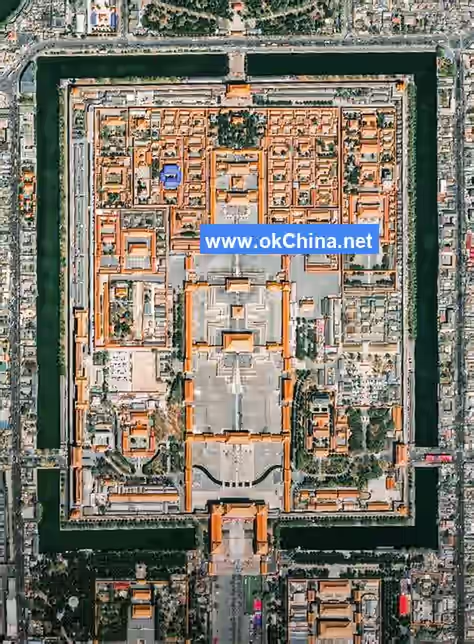
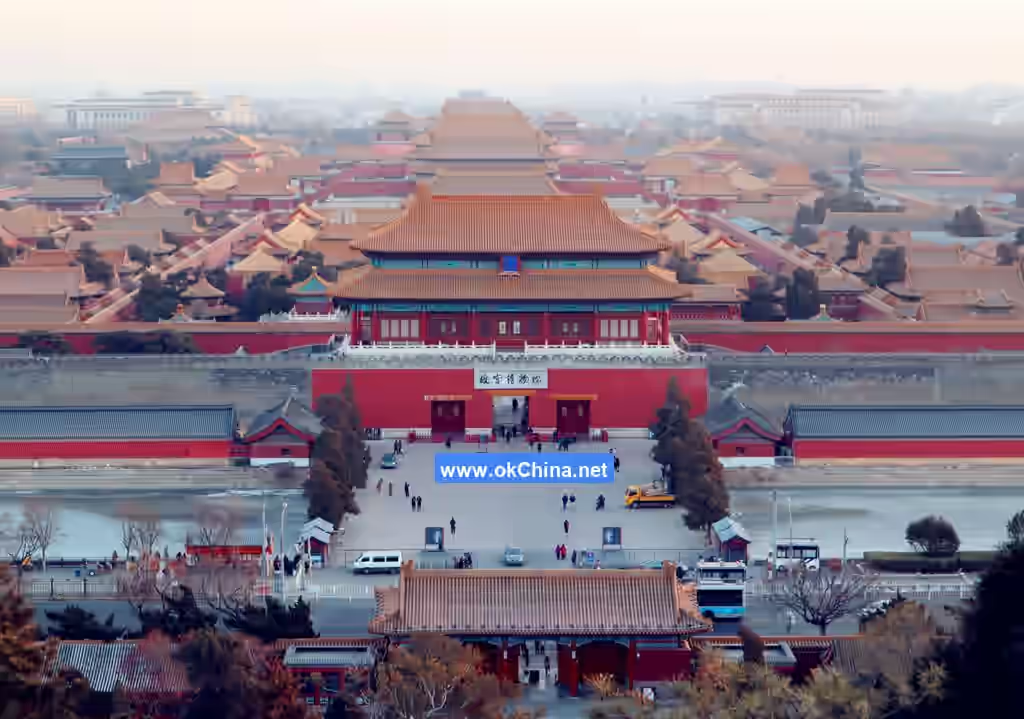
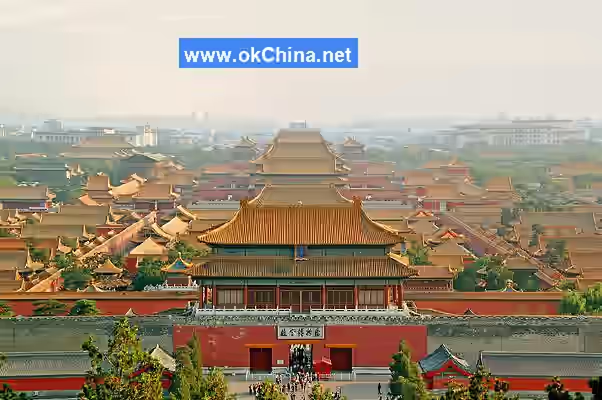
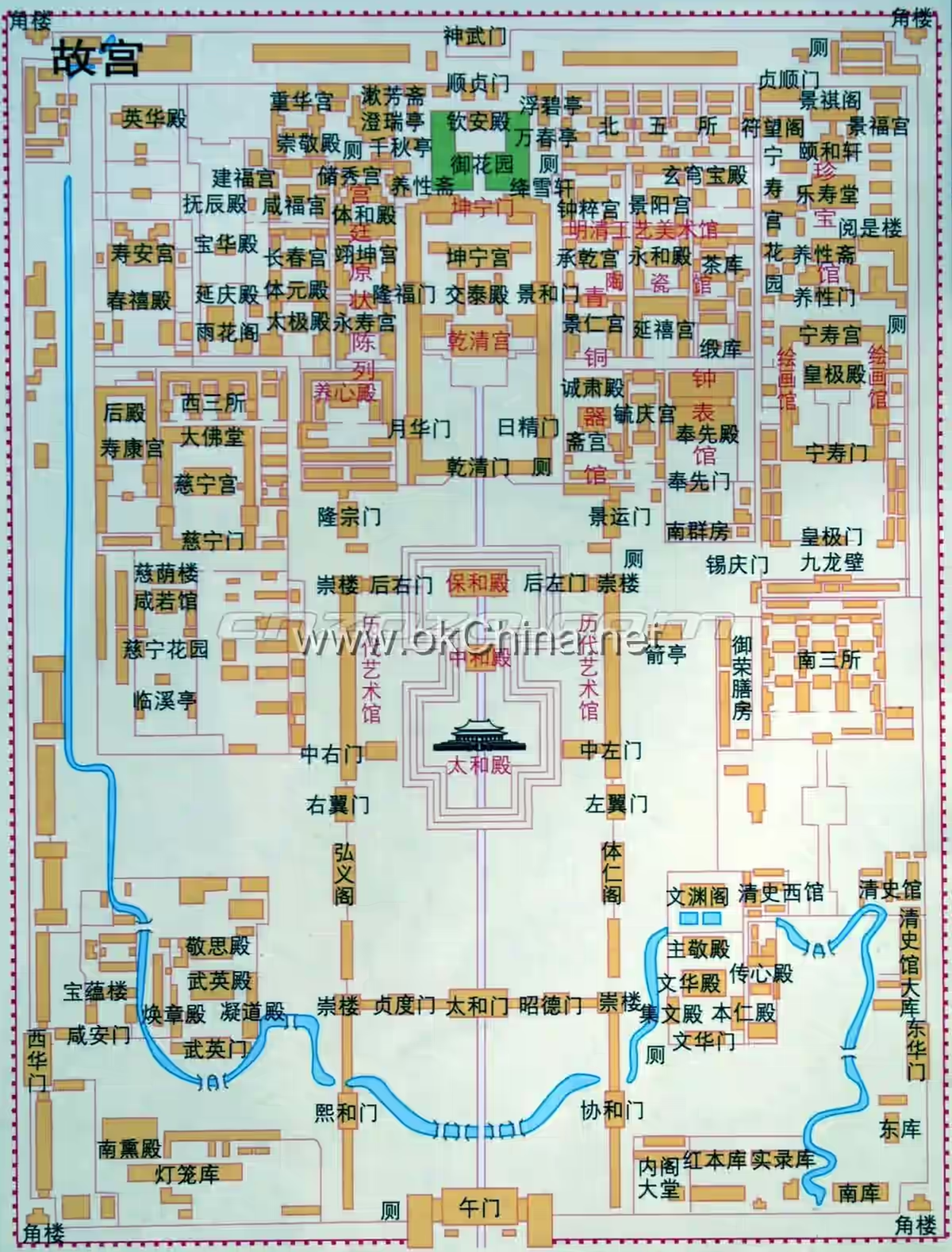
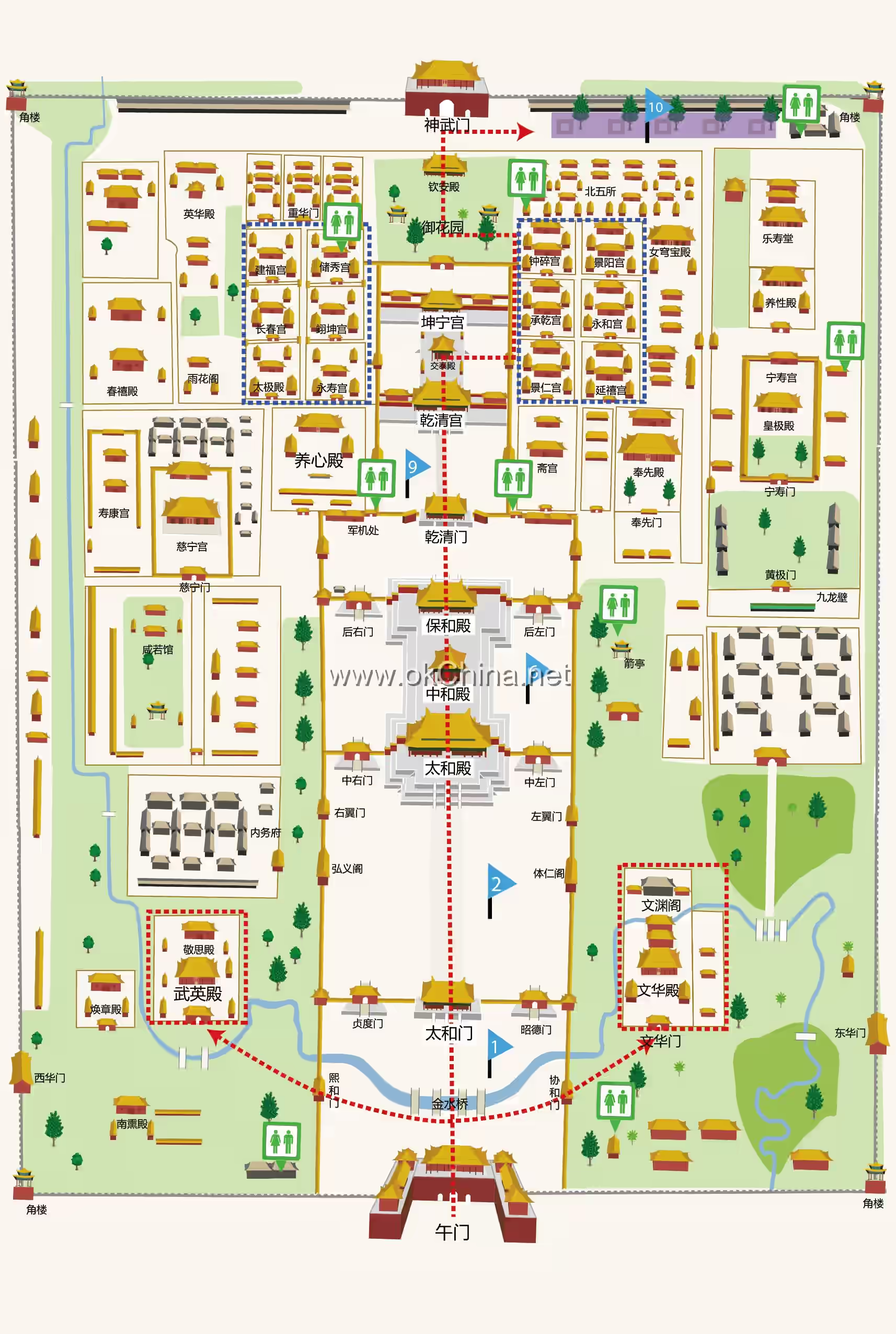
The Forbidden City in Beijing was the imperial palace of the Ming and Qing dynasties in China, formerly known as the Purple Forbidden City, located at the center of Beijing's central axis. Centered around the Three Great Halls, the Forbidden City covers an area of approximately 720,000 square meters, with a building area of about 150,000 square meters. It comprises over seventy large and small palaces and more than nine thousand rooms.
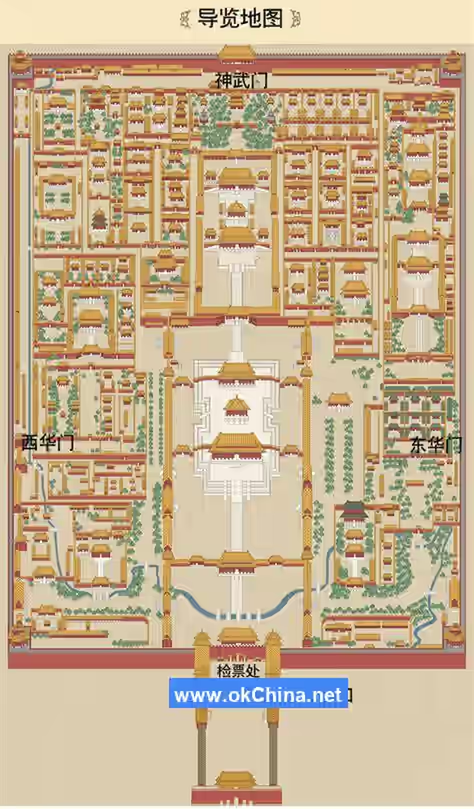
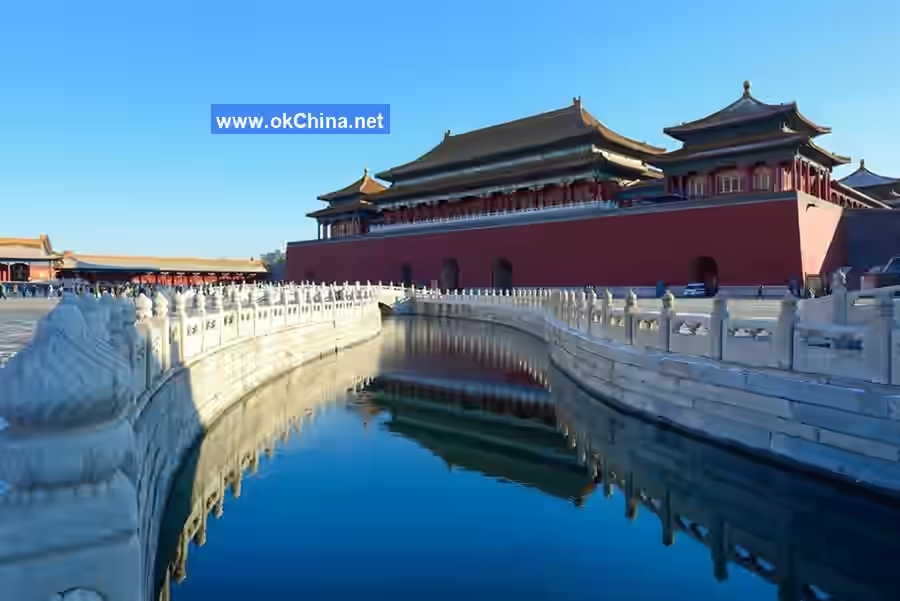
Construction of the Forbidden City began in the fourth year of the Yongle reign of the Ming Dynasty (1406), modeled after the Nanjing Imperial Palace, and was completed in the eighteenth year of the Yongle reign (1420). It served as the imperial palace for twenty-four emperors of the Ming and Qing dynasties. On National Day of the fourteenth year of the Republic of China (October 10, 1925), the Palace Museum was officially established and opened to the public. The Forbidden City measures 961 meters from north to south and 753 meters from east to west. It is surrounded by a 10-meter-high wall, with a 52-meter-wide moat outside the wall. The Forbidden City has four gates: the Meridian Gate to the south, the Gate of Divine Prowess to the north, the East Glorious Gate to the east, and the West Glorious Gate to the west. At each of the four corners of the wall stands an elegant corner tower. Folk legends describe its complex structure as having "nine beams, eighteen pillars, and seventy-two ridges."
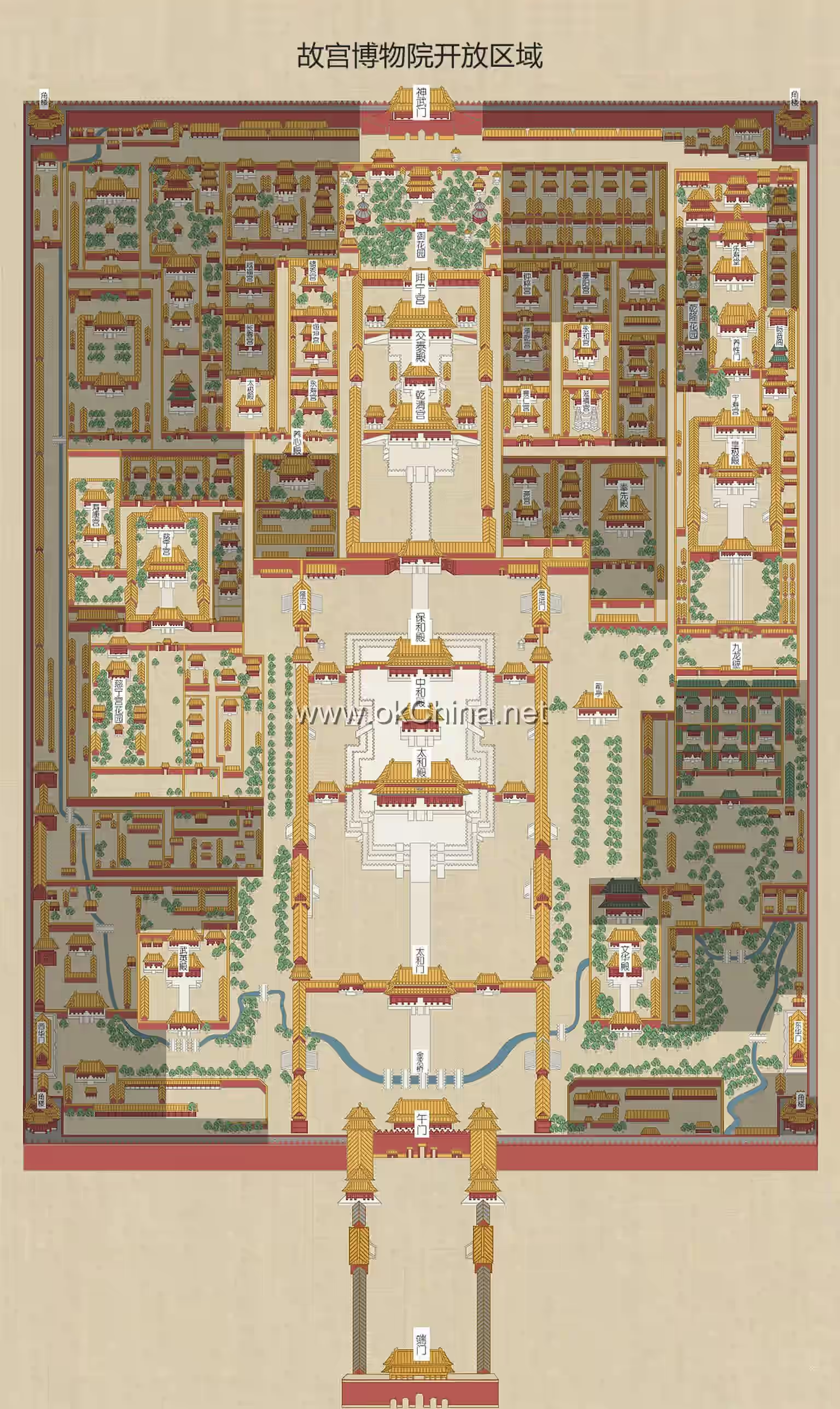
The buildings within the Forbidden City are divided into two parts: the Outer Court and the Inner Court. The center of the Outer Court consists of the Hall of Supreme Harmony, the Hall of Central Harmony, and the Hall of Preserving Harmony, collectively known as the Three Great Halls, where grand state ceremonies were held. The Three Great Halls are flanked by two groups of buildings: the Hall of Literary Glory and the Hall of Martial Valor. The center of the Inner Court comprises the Palace of Heavenly Purity, the Hall of Union, and the Palace of Earthly Tranquility, collectively known as the Three Rear Palaces, which served as the main living quarters for the emperor and empress. Behind them lies the Imperial Garden. To the east and west of the Three Rear Palaces are the Eastern and Western Six Palaces, where the imperial concubines resided and rested. To the east of the Eastern Six Palaces are Buddhist halls such as the Hall of Heavenly Vault, while to the west of the Western Six Palaces are Buddhist halls such as the Hall of Central Justice. Beyond the Outer Court and Inner Court, there are also buildings in the Outer Eastern Road and Outer Western Road sections.
The Forbidden City in Beijing is one of the world's largest and best-preserved ancient wooden architectural complexes. It is a national AAAAA-level tourist attraction, listed as one of the first batch of Major Historical and Cultural Sites Protected at the National Level in 1961, and designated as a UNESCO World Heritage Site in 1987.
II. Historical Development
Construction Principles
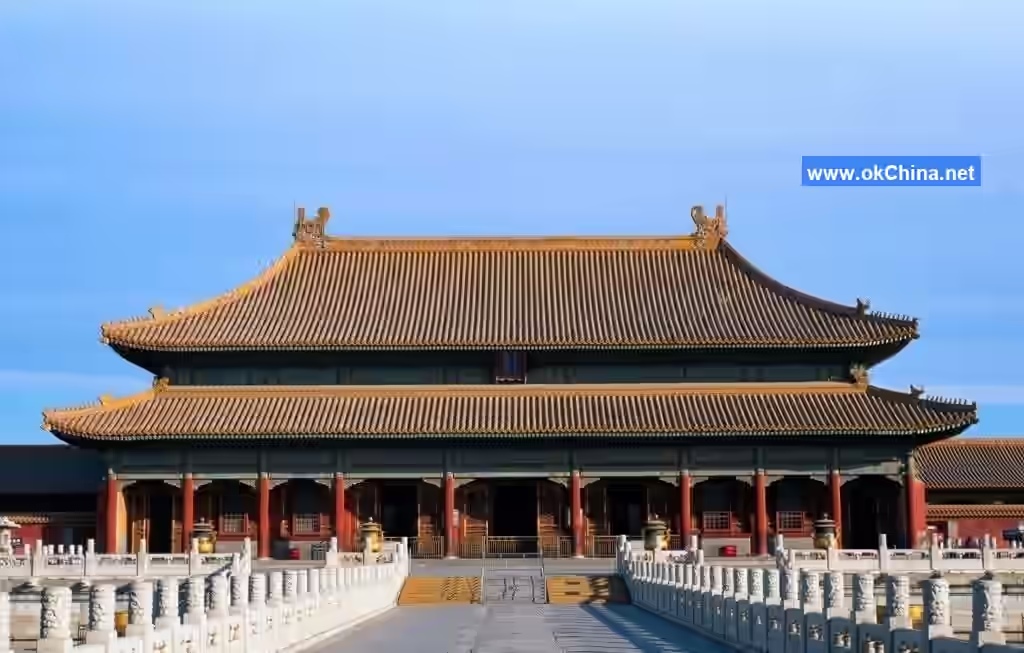
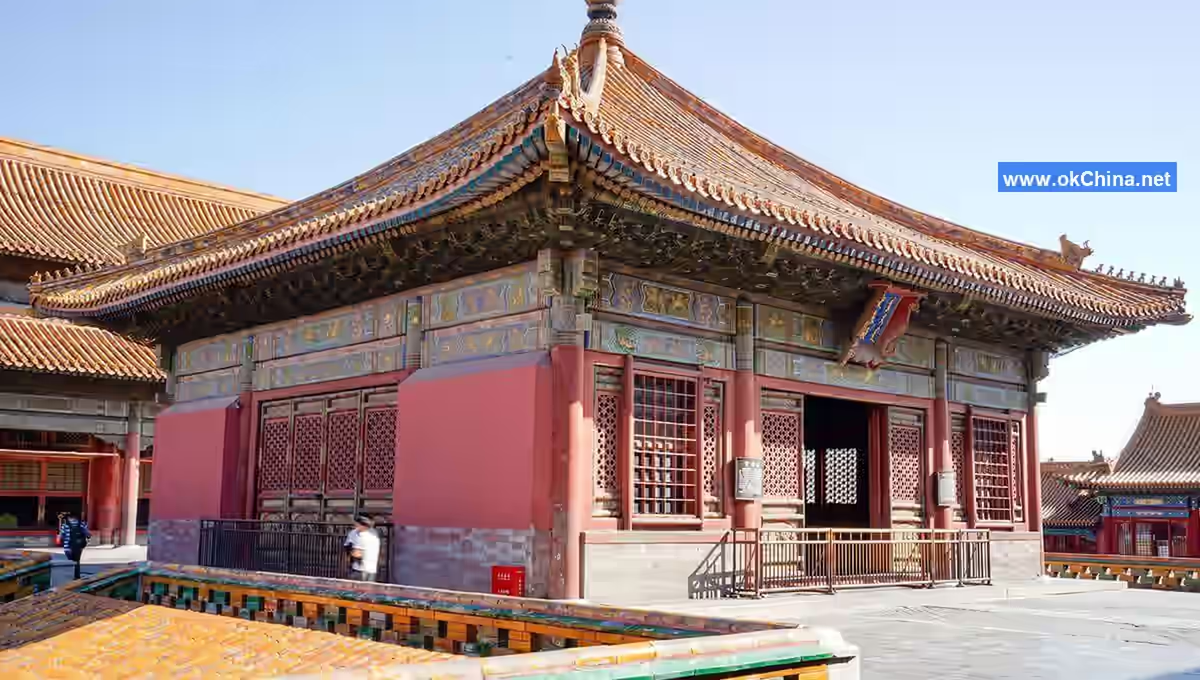
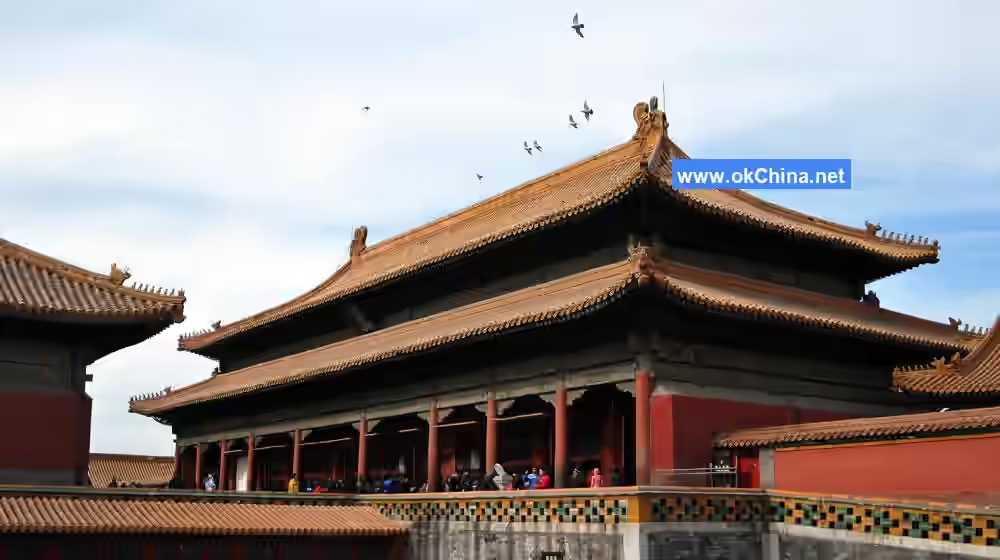
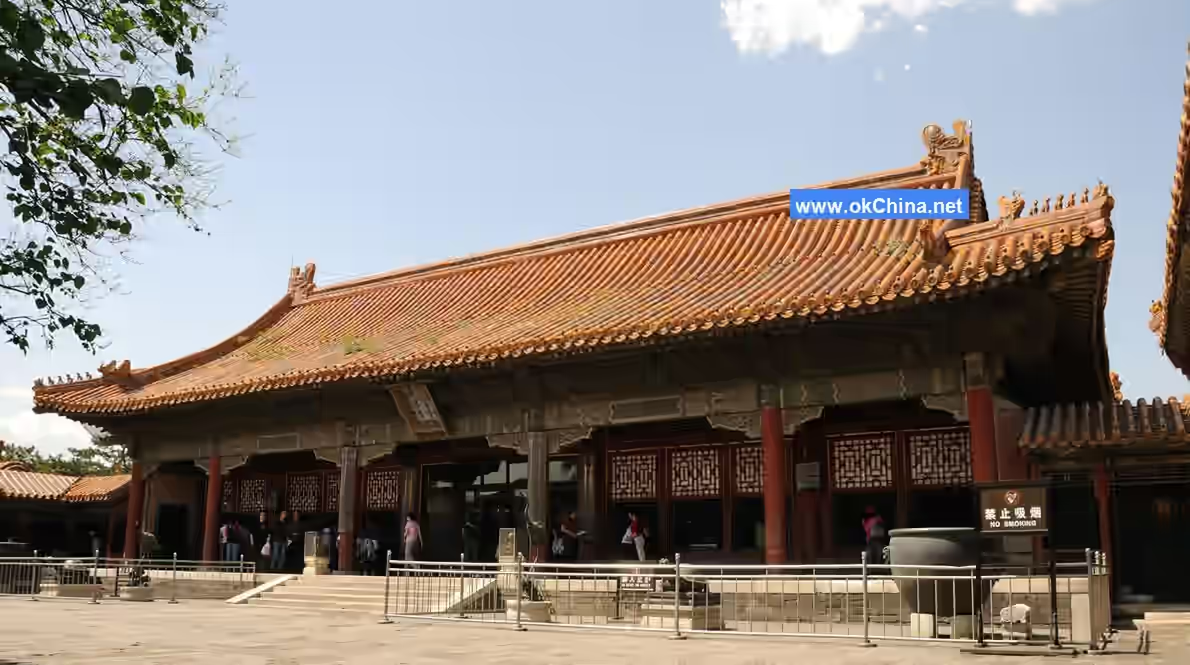
The Forbidden City was built strictly according to the imperial capital construction principles outlined in the Rites of Zhou: Kaogong Ji, which state: "The court in front, the market behind; the ancestral temple to the left, the altar of land and grain to the right." The entire Forbidden City, in its architectural layout, uses variations in form and elevation to create a unified whole, functionally conforming to the hierarchical system of feudal society while achieving artistic effects of balance and variation in form. The roof forms of Chinese architecture are rich and diverse, with over ten different types of roofs in the Forbidden City alone. Taking the Three Great Halls as an example, each has a distinct roof design. The roofs of the Forbidden City buildings are fully covered with glazed tiles of various colors. The main halls primarily use yellow tiles, while green tiles are used for buildings in the princes' residential areas. Other colors, such as blue, purple, black, emerald, peacock green, and sapphire blue, are used in gardens or on glazed walls. At both ends of the main ridge of the Hall of Supreme Harmony's roof, there are glazed ridge ornaments, which firmly and powerfully "swallow" the ridge. These ornaments are both structural components and decorative elements, with elegant designs. Some tiles are molded into three-dimensional animal shapes, such as dragons, phoenixes, lions, and sea horses, symbolizing auspiciousness and majesty, and serving as decorative elements in the architecture.
Construction Process
Beijing was originally the fief of Prince Yan, Zhu Di. After the Jingnan Campaign, in the first year of the Yongle reign (1403), Li Zhigang, the Minister of Rites, and others memorialized that Yanjing (Beijing) was the emperor's "dragon-rising land" and should be established as a secondary capital, following the example of Emperor Taizu of Ming's treatment of Fengyang. Emperor Chengzu of Ming thus greatly elevated the status of Yanjing, designating Beijing as the northern capital, changing Beiping Prefecture to Shuntian Prefecture, and referring to it as the "temporary capital." At the same time, he began relocating people to populate Beijing, including refugees from various regions, wealthy households from the Jiangnan area, and merchants from Shanxi.
In the fourth year of the Yongle reign (1406), Emperor Chengzu of Ming issued an edict to construct the Beijing Imperial Palace and city walls, modeled after the Nanjing Imperial Palace. Zhu Di first dispatched personnel to various parts of the country to procure precious timber and stone, which were then transported to Beijing. The preparatory work alone lasted for eleven years. Precious nanmu timber mostly grew in remote mountains, and many people lost their lives while venturing into the mountains to harvest it. Later generations described the cost of harvesting timber as "one thousand enter the mountains, five hundred emerge." The extraction of stone for building the palace was equally arduous. The largest danbi stone behind the Hall of Preserving Harmony was quarried in Fangshan, southwest of Beijing. Historical records describe the scene of its transportation: tens of thousands of laborers dug wells at intervals of about one li along the road. When the temperature dropped sufficiently low in the depths of winter, they drew water from the wells to create an ice path. It took twenty-eight days to transport the stone to the palace. Additionally, special square bricks for royal construction, known as "golden bricks," were fired in Suzhou, while tribute bricks were transported to Beijing from Linqing, Shandong.
In the seventh year of the Yongle reign (1409), Emperor Chengzu of Ming launched a northern expedition from Beijing and began constructing the Changling Mausoleum in Changping, near Beijing. Building his tomb in Beijing rather than Nanjing demonstrated his determination to relocate the capital.
In the fourteenth year of the Yongle reign (1416), Emperor Chengzu of Ming convened his ministers to formally discuss relocating the capital to Beijing. Officials who opposed the move were dismissed or severely punished, and from then on, no one dared to oppose the relocation.
The following year, construction of the Beijing Forbidden City, modeled after the Nanjing Forbidden City, officially began. In the eighteenth year of the Yongle reign (1420), the Beijing Imperial Palace and the city of Beijing were completed. The Beijing Imperial Palace, modeled after the Nanjing Imperial Palace, was slightly larger in scale. The newly built city of Beijing had a perimeter of forty-five li, forming a regular square shape that conformed to the ideal capital city layout described in the Rites of Zhou: Kaogong Ji. Emperor Chengzu of Ming issued an edict formally relocating the capital, renaming Jinling Yingtian Prefecture as Nanjing and Beijing Shuntian Prefecture as the capital. However, central institutions such as the Six Ministries were still retained in Nanjing, referred to as the "Nanjing Ministries," making Nanjing a secondary capital.
Ming Dynasty Period
After the completion of the Forbidden City, the five-hundred-year history of the Ming and Qing courts included imperial activities, hierarchical systems, power struggles, religious rituals, and more. In the eighteenth year of the Yongle reign (1420), the Beijing palaces were completed. The following year, a great fire destroyed the Three Front Halls. In the fifth year of the Zhengtong reign (1440), the Three Front Halls and the Palace of Heavenly Purity were rebuilt. In the third year of the Tianshun reign (1459), the Western Garden was constructed. This process spanned the Yongle, Hongxi, Xuande, and Zhengtong reigns, lasting a full twenty years.
In the thirty-sixth year of the Jiajing reign (1557), a fire in the Forbidden City destroyed the Three Front Halls, the Gate of Heavenly Purity, the Hall of Literary Glory, the Hall of Martial Valor, and the Meridian Gate. Reconstruction was not completed until the fortieth year of the Jiajing reign (1561).
During the Jiajing period, the names of the Three Great Halls were changed to the Hall of Imperial Supremacy, the Hall of Central Supremacy, and the Hall of Establishing Supremacy.
In the twenty-fifth year of the Wanli reign (1597), a fire in the Forbidden City destroyed the Three Front Halls and the Three Rear Palaces. Reconstruction was not completed until the seventh year of the Tianqi reign (1627).
During the Ming Dynasty, the Palace of Heavenly Purity served as the emperor's main living quarters and the primary venue for political activities. From Emperor Yongle Zhu Di to Emperor Chongzhen Zhu Youjian, a total of fourteen emperors resided here. Due to the palace's height and spaciousness, it was divided into several rooms when the emperor lived there. According to records, the Palace of Heavenly Purity in the Ming Dynasty had nine warm chambers, divided into two levels, with a total of twenty-seven beds, allowing imperial concubines to enter. With many rooms and beds, few knew where the emperor slept each night, as a precaution against unforeseen events. Despite living in a labyrinthine palace with strict security, the emperor could not rest entirely at ease. For example, after the "Renyin Palace Incident" during the Jiajing reign, Emperor Shizong moved to the Western Garden and dared not return to the Palace of Heavenly Purity. The "Red Pill Case," involving Empress Zheng of Emperor Wanli's struggle for the title of empress dowager, and the "Palace Relocation Case," involving Consort Li of Emperor Taichang's attempt to become empress and her move to the Hall of Benevolent Longevity, both occurred in the Palace of Heavenly Purity. The Palace of Heavenly Purity was also used as a place for emperors to observe mourning during the Ming Dynasty.
Qing Dynasty Period
In the seventeenth year of the Chongzhen reign (first year of the Shunzhi reign of the Qing Dynasty, 1644), Li Zicheng's army captured Beijing, leading to the fall of the Ming Dynasty. However, Li Zicheng was soon defeated by the Qing army at Shanhaiguan. Before retreating to Shaanxi, Li Zicheng set fire to the Forbidden City, destroying all buildings except the Hall of Martial Valor, the Hall of Establishing Supremacy, the Hall of Elegance, the Hall of Southern Fragrance, the corner towers, and the Gate of Imperial Supremacy. On the second day of the fifth lunar month, the Qing army entered Beijing and took control of the Forbidden City.
When Li Zicheng withdrew at the end of the Ming Dynasty, only a few buildings in the Forbidden City, such as the Hall of Martial Valor, the Hall of Establishing Supremacy, the Hall of Elegance, the Hall of Southern Fragrance, the Gate of Imperial Supremacy, and the corner towers, remained undamaged. After the Qing Dynasty established its capital in Beijing, restoration work gradually began. In the first year of the Shunzhi reign (1644), to welcome the imminent arrival of Emperor Shizu of Qing, Fulin, from beyond the Great Wall, repairs were made to buildings such as the Palace of Heavenly Purity. In the second year of the Shunzhi reign (1645), reconstruction began on the Three Great Halls, renamed from the Ming Dynasty's Hall of Imperial Supremacy, Hall of Central Supremacy, and Hall of Establishing Supremacy to the Hall of Supreme Harmony, Hall of Central Harmony, and Hall of Preserving Harmony (later renamed the Palace of Nurturing Harmony because Emperor Shizu was raised there). The reconstruction was completed by the end of the third year, largely restoring the Ming Dynasty's Outer Court regulations.
At the beginning of the Kangxi reign, construction projects were few. After Emperor Kangxi took personal control of the government, large-scale renovations began. The process can generally be divided into two major phases, with the suppression of the Revolt of the Three Feudatories as the boundary: the first phase from the eighth year of Kangxi (1669) to the thirteenth year (1674), and the second from the twenty-second year (1683) to the thirty-seventh year (1698). In the second month of the twenty-first year of Kangxi (1682), the Ministry of Works memorialized that the Hall of Supreme Harmony, "as a symbol for all nations under heaven, must be repaired," and requested the preparation of materials.
In the twenty-second year of Kangxi (1683), reconstruction began on the remaining destroyed parts of the Forbidden City, and the work was largely completed by the thirty-fourth year of Kangxi (1695). The two phases of major renovations during the Kangxi period established the basic regulations for the Qing Dynasty's Forbidden City. For example, the Three Great Halls of the Outer Court, aside from renovations during the Qianlong reign, saw no major repairs for over a hundred years thereafter.After the Qing Dynasty entered the Shanhai Pass, following the precedent of the Ming Dynasty, both the Shunzhi and Kangxi Emperors used the Palace of Heavenly Purity as their primary residence and venue for handling state affairs. Upon ascending the throne, the Yongzheng Emperor began to move to the Hall of Mental Cultivation. Located in the inner court of the Forbidden City, west of the Palace of Heavenly Purity, the Hall of Mental Cultivation was originally built during the Jiajing period of the Ming Dynasty. Initially, it was not an imperial residence. During the Kangxi period of the Qing Dynasty, the Imperial Household Department established numerous workshops here dedicated to creating items for the imperial family, known as the "Hall of Mental Cultivation Workshops." In the 61st year of Kangxi's reign (1722), after the death of Emperor Kangxi, the newly enthroned Yongzheng Emperor did not move into his father's residence, the Palace of Heavenly Purity. Instead, he converted the Hall of Mental Cultivation, which was temporarily used as a mourning hall for his father, into the emperor's living quarters.
From then on, the Hall of Mental Cultivation became the primary residence of the emperor and the main location for handling state affairs during the Qing Dynasty. After the establishment of the Grand Council, its offices were also located near the Hall of Mental Cultivation. After ascending the throne, the Qianlong Emperor carried out large-scale expansions and renovations to the Hall of Mental Cultivation complex, gradually establishing certain regulations. After the Yongzheng Emperor, eight emperors—Qianlong, Jiaqing, Daoguang, Xianfeng, Tongzhi, Guangxu, and Xuantong—all resided here, until the Xuantong Emperor was expelled from the Forbidden City.
After Emperor Qianlong ascended the throne, with ample financial resources, large-scale construction resumed within the Forbidden City. Not only were the original buildings from the Kangxi period repaired, but new structures were also continuously added. Important examples include the Palace of Longevity and Health, the Palace of Double Glory, the Palace of Establishing Happiness and its garden, the Pavilion of Rain and Flowers, the Hall of Central Uprightness, the Palace of Peaceful Longevity, the Palace of Compassion and Tranquility and its garden, the Palace of Tranquil Longevity and its garden, the Pavilion of Literary Profundity, the Palace of Nurturing Happiness, the Palace of Heavenly Purity, and others, collectively establishing the peak architectural style of the Qing Dynasty Forbidden City. In the 16th year of Qianlong's reign (1751), Emperor Qianlong relocated the Xian'an Palace Imperial School northwest of the Palace of Compassion and Tranquility and rebuilt it into the Palace of Peaceful Longevity to celebrate his mother's 60th birthday. After its completion, the Palace of Peaceful Longevity featured three courtyards, with a rockery in the rear courtyard and the Hall of Auspiciousness and the Hall of Longevity on the east and west sides, respectively. For the 60th and 70th birthdays of Empress Dowager Xiaoshengxian, Emperor Qianlong led the empress, princes, and grandsons to offer tea and meals, and performed the "Joyful Dance" in front of the hall to celebrate. In the 35th year of Qianlong's reign (1770), Emperor Qianlong ordered the renovation of the Palace of Tranquil Longevity so that he could "enjoy his later years in peace" after becoming the retired emperor. This project began in the 37th year and was completed in the 44th year. The southern half centered around the Hall of Imperial Supremacy and the Palace of Tranquil Longevity, while the northern half centered around the Hall of Nurturing Nature, resembling the division between the outer court and inner court within the Forbidden City. The Palace of Tranquil Longevity Garden in the northwest corner, commonly known as the "Qianlong Garden," features scenery largely modeled after the Palace of Establishing Happiness Garden, with structures such as the Ancient Magnificence Pavilion, the Hall of Fulfilled Wishes, the Tower of Soaring Aspirations, and the Studio of Exhaustion from Diligence.
During the reign of the Xianfeng Emperor, the Palace of Eternal Spring was connected to the Palace of Auspicious Beginning (now the Hall of Supreme Harmony) in front, integrating them into one complex. After Xianfeng's death, Empress Dowager Cixi also lived here, exclusively enjoying two palaces. By the late Qing Dynasty, Empress Dowager Cixi began renovating certain palaces in the Western Six Palaces. As a result, four of the Western Six Palaces bear her traces.
After the death of the Xianfeng Emperor, both Empress Dowager Ci'an and Empress Dowager Cixi lived in the Palace of Eternal Spring during their early regency. In the 10th year of the Tongzhi reign (1871), Empress Dowager Ci'an moved back to the Palace of Gathering Elegance, leaving the Palace of Eternal Spring exclusively for Empress Dowager Cixi. Originally, the Hall of Supreme Harmony had only two courtyards. When Xianfeng renovated the Palace of Eternal Spring, the rear hall of the Hall of Supreme Harmony was converted into a passage hall, connecting the Hall of Supreme Harmony and the Palace of Eternal Spring into four interlinked courtyards.
Republican Era
After the 1911 Revolution in the third year of the Xuantong reign, the palaces of the Forbidden City should have been fully nationalized. However, according to the "Articles of Favorable Treatment for the Qing Court" drafted at the time, the abdicated emperor Aisin-Gioro Puyi was allowed to "temporarily reside in the palace," specifically the "inner court" section. Guards and others remained in service, and princely titles were retained. Based on some clauses of the "Articles of Favorable Treatment," and with Yuan Shikai's gratitude for his former master and active support, although the imperial system was abolished after Puyi's abdication, the emperor and the original imperial ministers continued to reside safely in the palace. During his time in the Forbidden City, Puyi still issued "imperial decrees," used the Xuantong reign era for dating, and old loyalists performed kowtows. The palace still retained institutions such as the Imperial Household Department, the Imperial Clan Court, and the Judicial Office. Old officials were granted posthumous titles, dress codes remained unchanged, and those who violated the law were punished by the Judicial Office. This made the Forbidden City at the time resemble a "state within a state."
On July 1, 1917, the warlord Zhang Xun from Xuzhou supported the restoration of the abdicated Qing emperor Puyi. To force Zhang Xun to surrender, Duan Qirui mobilized all available forces, including ordering teachers and students from the Beijing Nanyuan Aviation School to join the battle and bomb the Forbidden City with aircraft. Three small bombs were dropped inside the Forbidden City as a warning. The aircraft flew at an altitude of only 300 meters above the Forbidden City, an ultra-low-altitude flight.
The bombs hit the Palace of Prolonged Happiness in the Eastern Six Palaces of the Forbidden City, causing minor damage to the buildings at the time. This is considered the first aerial bombing in East Asia.
In 1924, Feng Yuxiang launched the "Beijing Coup," expelling Puyi from the palace and establishing the "Committee for the Disposition of the Qing Imperial Possessions," which took over the Forbidden City. On October 10, 1925, the Palace Museum was officially established and opened to the public. After 1925, the Forbidden City came to be known as the "Palace Museum." With the decline of the Qing Dynasty, especially during the 38 years before 1949, the buildings of the Palace Museum gradually deteriorated, with multiple palace complexes collapsing and garbage piling up.
On the eve of the full-scale outbreak of the War of Resistance Against Japan, in 1933, to protect its cultural relics from destruction by war or looting by Japanese imperialism, the Palace Museum decided to relocate the artifacts southward. A repository was established in Nanjing, and the Nanjing Branch of the Palace Museum was founded. From February to May 1933, a total of 13,427 boxes and 64 packages of cultural relics, books, and archives were selected and transported in five batches, first to Shanghai and then to Nanjing.
Modern Status
After the founding of the People's Republic of China in 1949, large-scale renovations were carried out on the buildings of the Palace Museum, and a vast number of cultural relics were cataloged. In 1961, the State Council designated the Palace Museum as a National Key Cultural Relics Protection Unit. The Palace Museum currently houses 1,862,690 cultural relics/sets (as of August 2019).
In 1987, the Palace Museum was listed as a "World Cultural Heritage" site by UNESCO and established as the "Palace Museum."
Since the 21st century, the Palace Museum has averaged 6 to 8 million domestic and international visitors annually. With the development of tourism, the number of visitors continues to grow, reflecting enduring public interest in the Palace Museum.
On August 15, 2013, the Palace of Longevity and Health was officially opened to the public after being restored to its original state. The Sculpture Gallery in the Palace of Compassion and Tranquility opened on May 31, 2015. According to the 2015 plan, by 2020, the open area of the Palace Museum will reach 76%. The Palace Museum is currently engaged in the restoration of cultural relics and historic sites, environmental improvement, and expanding the open areas for exhibitions.
On November 23, 2014, the mascots of the Beijing Palace Museum were unveiled for the first time. Inspired by traditional Chinese auspicious symbols of the dragon and phoenix, they are named "Zhuangzhuang" (the dragon) and "Meimei" (the phoenix). On October 11, 2015, the Palace Museum officially opened new areas to the public, including the Palace of Compassion and Tranquility complex, the Yanchi Tower area of the Meridian Gate, and the Donghua Gate, increasing the open area from 52% to 65%. On the afternoon of February 25, 2016, the "Tai Pu Ru Zhuo – Cui Ruzhuo Art Exhibition at the Palace Museum" was held at the Great Hall of the People, hosted by the Palace Museum. On April 12, 2016, Shan Jixiang, the director of the Palace Museum, announced that the open area of the Palace Museum would increase by another 11%, reaching 76%, with various new exhibitions introduced. On September 3, 2018, the Hall of Mental Cultivation officially entered the implementation phase of ancient architectural research and conservation restoration work.
III. Architectural Layout
Architectural Scale
The Beijing Palace Museum was initially built by the Ming Dynasty emperor Zhu Di, with design by Kuai Xiang (1397–1481, styled Tingrui, from Suzhou). It covers an area of 720,000 square meters (961 meters long and 753 meters wide), with a building area of approximately 150,000 square meters. Constructed using 1 million laborers over 14 years, it originally had 9,999.5 rooms. According to on-site measurements by experts in 1973, the Palace Museum comprises over 90 courtyards of various sizes, 980 buildings, and a total of 8,707 rooms (note: this "room" does not refer to modern rooms but to the space formed by four pillars).
Architectural Style
The front palaces of the Palace Museum were designed to be grand and magnificent, with open and bright courtyards, symbolizing the supreme authority of feudal power. The Hall of Supreme Harmony is located at the center of the Forbidden City's diagonal axis, with ten auspicious mythical beasts on each of its four corners. The designers believed this would display the emperor's majesty and awe the world. In contrast, the inner court at the rear was designed to be deep and compact, with the Eastern and Western Six Palaces each forming independent complexes with their own gates and walls, arranged symmetrically and in orderly rows. Behind the inner court is the Imperial Garden.
The palaces of the Forbidden City are arranged along a north-south central axis, with the Three Great Halls, the Three Rear Palaces, and the Imperial Garden all located on this axis. They extend symmetrically on both sides, aligned north-south and balanced left-right. This central axis not only runs through the Forbidden City but also extends south to the Yongding Gate and north to the Drum Tower and Bell Tower, spanning the entire city.
Overall Layout
The Palace Museum is located at the center of Beijing, laid out according to the principles recorded in the "Rites of Zhou: Artificers' Record": "Ancestral temple to the left, altars to the right, court in front, market behind." It is constructed along the eight-kilometer north-south central axis of Beijing, aligned north-south and symmetrical left-right.Today, the Palace of Labor People's Culture on the left front of the Forbidden City was the Imperial Ancestral Temple during the Ming and Qing dynasties, where emperors worshipped their ancestors. On the right front, Zhongshan Park was the Altar of Land and Grain, where emperors offered sacrifices to the gods of earth and grain. In front, there were offices for court officials, and behind, there were markets for trading. To the north of the Forbidden City in Beijing lies Longevity Hill, while to the south flows the Golden Water River, perfectly aligning with the ancient principle of palace construction: "embracing yin and yang, harmonizing with the vital energy." Longevity Hill was an artificial mountain built specifically to enhance the feng shui of the imperial city. Completed in the early Ming dynasty, it was constructed on the site of the Yanchun Pavilion, the imperial bedchamber of the Yuan dynasty, using silt excavated from the moat and South Lake. The construction of this mountain not only satisfied the principle of the imperial city "embracing yin" but also suppressed the feng shui of the previous dynasty, earning it the name "Zhenshan" (Guardian Hill). The layout of Beijing's inner and outer cities resembles two dragons protecting the Forbidden City. According to ancient Chinese astrological theory, the Ziwei Star (Polaris) is located at the center of the heavens, the dwelling place of the Celestial Emperor. Corresponding to this, the emperor's residence is also called the Forbidden City.
The Forbidden City is surrounded by a 12-meter-high, 3,400-meter-long palace wall, forming a rectangular fortress. Outside the wall, a 52-meter-wide moat encircles the area, creating a heavily fortified castle. The Forbidden City has four gates: the main gate is called the Meridian Gate, the east gate is the East Glorious Gate, the west gate is the West Glorious Gate, and the north gate is the Gate of Divine Might. Facing the Gate of Divine Might is Jingshan, a hill built of earth and stone. In the overall layout, Jingshan serves as a protective barrier for the Forbidden City complex.
The Forbidden City measures approximately 960 meters from north to south and 750 meters from east to west, covering an area of over 720,000 square meters. It currently houses more than 8,000 rooms. It is surrounded by a 10-meter-high wall, with a 52-meter-wide moat outside. Each of the four sides has a gate: the Meridian Gate to the south, the Gate of Divine Might to the north, the East Glorious Gate to the east, and the West Glorious Gate to the west. The Forbidden City is divided into two main sections: the Outer Court and the Inner Court. The Outer Court centers around the Hall of Supreme Harmony, the Hall of Central Harmony, and the Hall of Preserving Harmony, with the Hall of Literary Glory to the east and the Hall of Martial Valor to the west as wings. This area was used for grand ceremonies. Behind the Outer Court lies the Inner Court, which includes the Palace of Heavenly Purity, the Hall of Union, the Palace of Earthly Tranquility, the Imperial Garden, and the Eastern and Western Six Palaces. This was where the emperor handled daily affairs and where the emperor, empress, and concubines resided. Additionally, the Palace of Tranquil Longevity area on the eastern side was built by Emperor Qianlong of the Qing dynasty as his retirement residence after abdicating as the retired emperor.
Outer Court Distribution
The Outer Court was where the emperor conducted state affairs, primarily consisting of three grand halls: the Hall of Supreme Harmony, the Hall of Central Harmony, and the Hall of Preserving Harmony. Among them, the Hall of Supreme Harmony is the tallest and most magnificent. Grand ceremonies such as the emperor's enthronement, wedding, conferment of titles, appointment of generals, and military expeditions were held here. During these events, thousands of people would shout "Long live the emperor," and hundreds of ritual vessels, bells, and drums would sound, showcasing the grandeur of the imperial family. The Hall of Central Harmony, located behind the Hall of Supreme Harmony, was where the emperor rested and received homage before major ceremonies. The northernmost Hall of Preserving Harmony was used for imperial banquets and the palace examinations.
Inner Court of the Forbidden City
The rear part of the Forbidden City is called the Inner Court. The gate to the Inner Court, the Gate of Heavenly Purity, is flanked by glazed screen walls, and inside the gate are the Three Rear Palaces.
The Inner Court centers around the Palace of Heavenly Purity, the Hall of Union, and the Palace of Earthly Tranquility, with the Eastern Six Palaces and Western Six Palaces on either side. This area served as the emperor's workspace for daily affairs and the living quarters for the emperor and his consorts. The architectural style of the rear section differs from that of the front section. The front section symbolizes the emperor's supreme authority, while the rear section consists mostly of self-contained courtyards.
Located at the very back of the Inner Court, the Palace of Earthly Tranquility features a double-eaved hip roof. During the Ming dynasty and the early Qing dynasty until Emperor Yongzheng, it served as the empress's bedchamber, with warm chambers at both ends. In the Qing dynasty, it was converted into a place for sacrificial rituals. After Emperor Yongzheng, the western warm chamber became a site for Shamanistic rituals, while the eastern warm chamber served as the bridal chamber for imperial weddings. Emperors Kangxi, Tongzhi, and Guangxu all held their weddings here.
IV. Main Structures
Four Gates of the Forbidden City
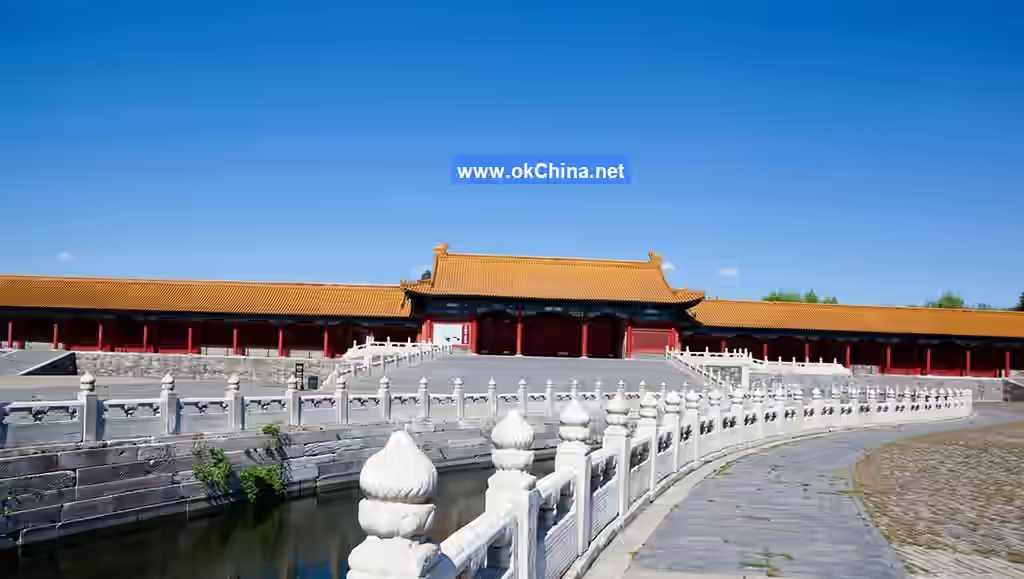
The Forbidden City has four main gates. The main gate is called the Meridian Gate, with a concave-shaped layout. Behind the Meridian Gate, five white marble arched bridges lead to the Gate of Supreme Harmony. The east gate is the East Glorious Gate, the west gate is the West Glorious Gate, and the north gate is the Gate of Divine Might. Each corner of the Forbidden City features a corner tower, standing 27.5 meters high with a cross-shaped roof ridge.
Meridian Gate
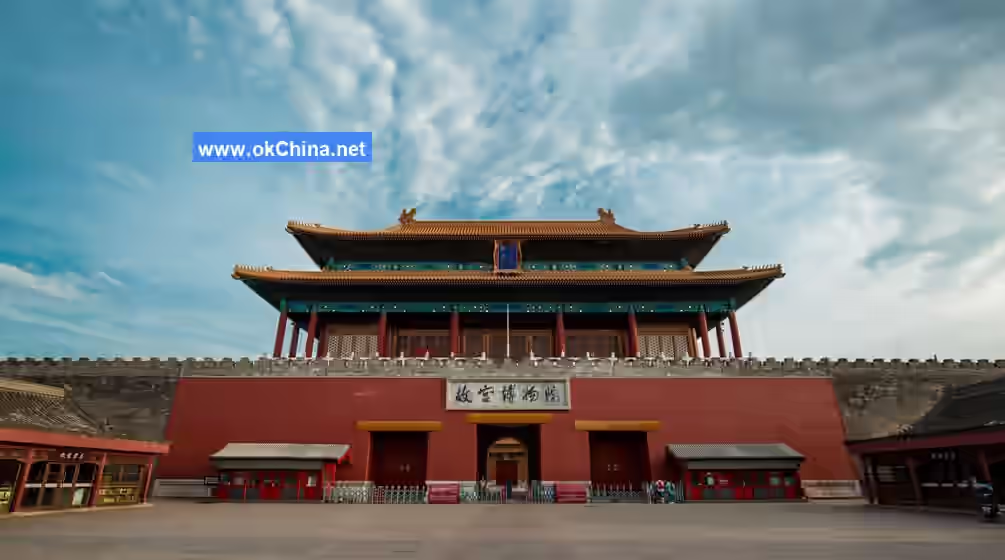
The Meridian Gate is the main entrance to the Forbidden City, commonly known as the Five Phoenix Tower. It connects to a square plaza on three sides—east, west, and north—with 12-meter-high platforms. The central structure is a grand hall with nine bays and a double-eaved hip roof. Extending from the left and right walls are four interconnected pavilions with covered corridors, while the wings feature 13-bay halls stretching southward. Tall corner pavilions at the four corners support the main hall. This group of structures on the platform is the highest point in the Forbidden City complex. The Meridian Gate was where the emperor issued decrees and ordered military expeditions. The central gate was reserved exclusively for the emperor, with exceptions: the empress could pass through once during her wedding, and the top three scholars in the palace examination—the Zhuangyuan, Bangyan, and Tanhua—could exit through it once. Civil and military officials used the east side gate, while imperial clan members and nobles used the west side gate.
Gate of Divine Might
During the Ming dynasty, the Gate of Divine Might was called the "Gate of Mysterious Warrior." The Mysterious Warrior is one of the four divine creatures in ancient Chinese mythology, representing the north. Thus, the north gate of imperial palaces was often named after it. During the reign of Emperor Kangxi in the Qing dynasty, it was renamed the Gate of Divine Might to avoid taboo. The Gate of Divine Might is also built in the form of a gate tower, featuring the highest-grade double-eaved hip roof. However, its main hall has only five bays with surrounding corridors and lacks the forward-extending wings, making it one grade lower in architectural form than the Meridian Gate. The Gate of Divine Might served as the daily entrance and exit for the palace. Today, it is the main gate of the Palace Museum.
East Glorious Gate and West Glorious Gate
The East Glorious Gate and West Glorious Gate face each other from afar. Outside the gates, dismounting steles are placed, and inside, the Golden Water River flows from north to south, crossed by a stone bridge. North of the bridge are three gates. The East Glorious Gate and West Glorious Gate share the same design: a rectangular layout, red platform, white marble Sumeru base, and three arched gateways with square exteriors and rounded interiors. On the platform stands a gate tower with a yellow glazed tile double-eaved hip roof, featuring five bays in width and three bays in depth, surrounded by corridors.
Outer Court Structures
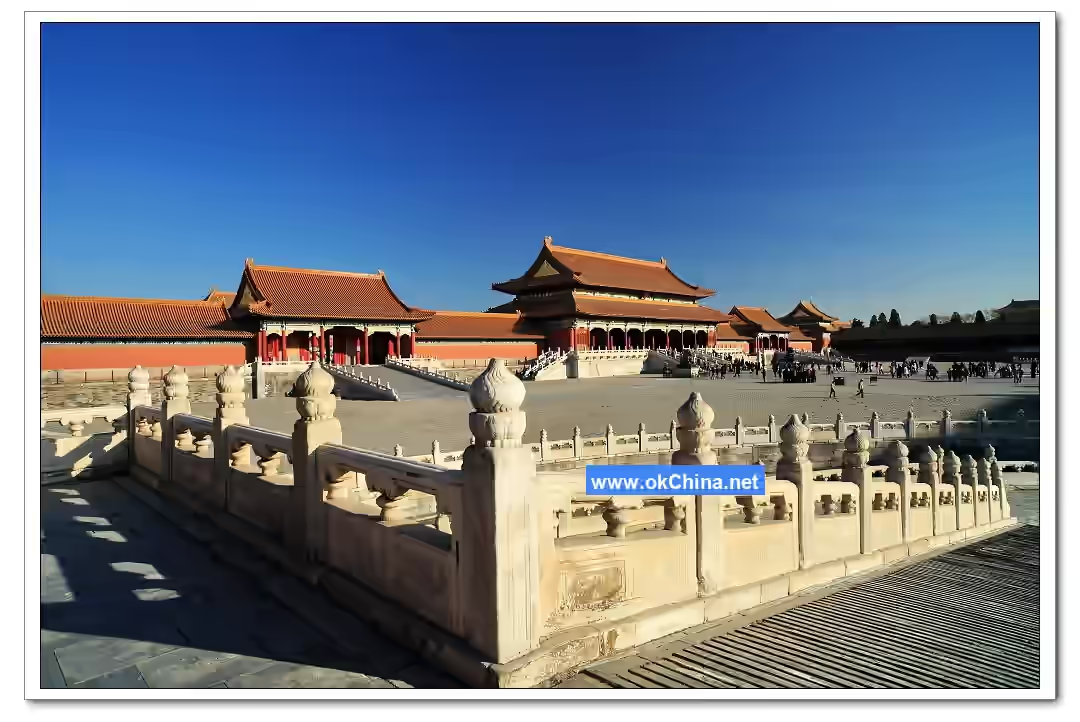
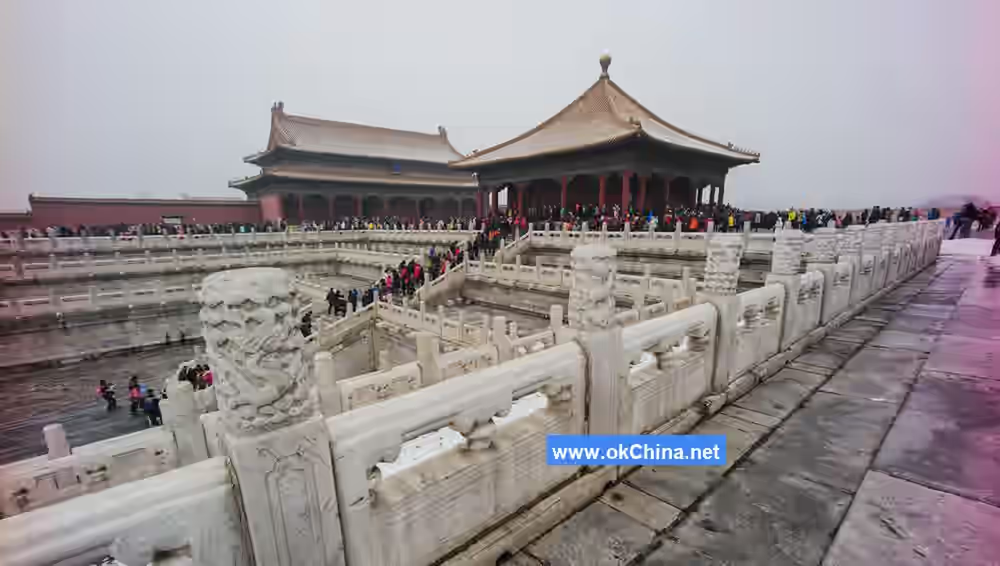
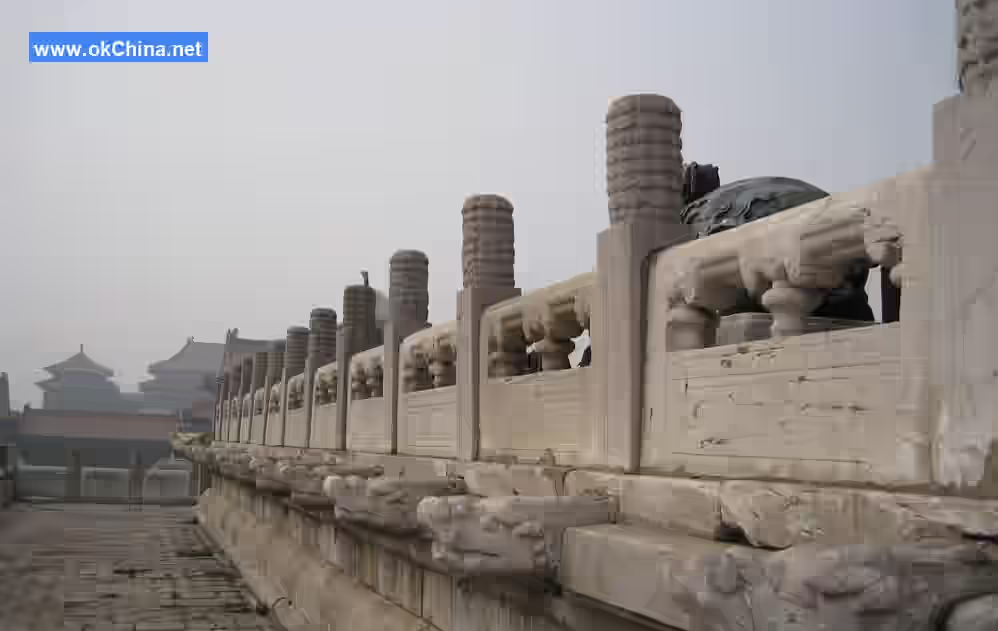
The Outer Court of the Forbidden City in Beijing centers around the three grand halls. The Hall of Supreme Harmony, the Hall of Central Harmony, and the Hall of Preserving Harmony are all built on an 8-meter-high I-shaped platform made of white marble. The Hall of Supreme Harmony is at the front, the Hall of Central Harmony in the middle, and the Hall of Preserving Harmony at the back. The platform consists of three overlapping tiers, each decorated with white marble carved railings, balusters, and dragon heads. The three tiers feature stone steps carved with coiling dragons, complemented by "imperial pathways" depicting waves and clouds. On the 25,000-square-meter platform, there are 1,415 openwork railings, 1,460 balusters carved with dragons and phoenixes, and 1,138 dragon heads. The extensive use of white marble creates overlapping and undulating forms, showcasing a unique decorative art in ancient Chinese architecture. Functionally, this decoration also serves as a drainage system for the platform. Small openings are carved beneath the railings and the extended dragon heads on the balusters. During the rainy season, rainwater flows down through these openings, exiting via the dragon heads—a design that is both scientific and artistic.
Gate of Supreme Harmony
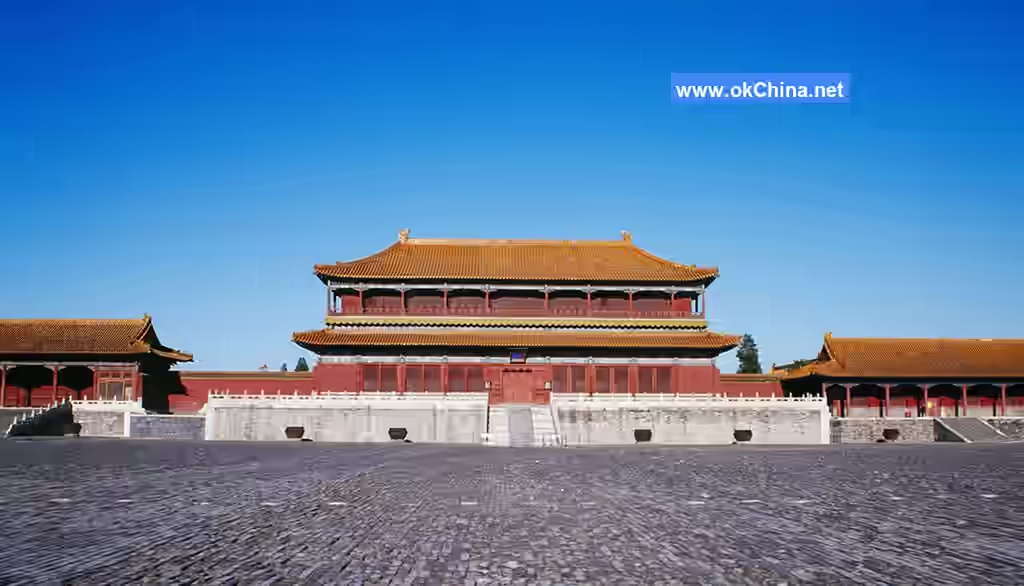
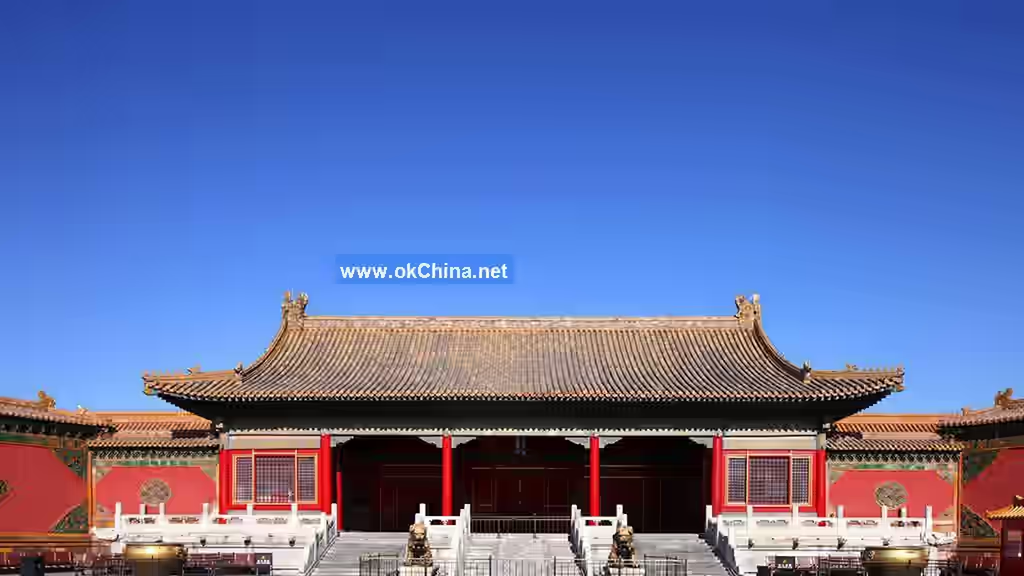
The Gate of Supreme Harmony is the largest palace gate in the Forbidden City and the main entrance to the Outer Court. Completed in the 18th year of the Yongle era (1420) of the Ming dynasty, it was originally called the Gate of Heavenly Worship. In the 41st year of the Jiajing era (1562), it was renamed the Gate of Imperial Supremacy. In the second year of the Shunzhi era (1645) of the Qing dynasty, it was given its current name. The Gate of Supreme Harmony is nine bays wide and three bays deep, covering a floor area of 1,300 square meters. It features a double-eaved gable and hip roof, with a white marble base and Hexi-style painted beams and brackets. A pair of bronze lions stands in front of the gate. To the left and right of the Gate of Supreme Harmony are two side gates: the Gate of Manifest Virtue (called the Gate of Broad Governance during the Ming dynasty) to the east and the Gate of Correct Conduct (called the Gate of Proclaimed Governance during the Ming dynasty) to the west. During the Ming dynasty, the Gate of Supreme Harmony was where the emperor held "audiences at the gate." In the early Qing dynasty, emperors also held audiences and banquets here, but later, the "audiences at the gate" were moved to the Gate of Heavenly Purity. In the ninth month of the first year of the Shunzhi era (1644), Fulin, the first emperor of the Qing dynasty after the Manchu rulers established their capital in Beijing, issued a general amnesty at the Gate of Supreme Harmony.
Gate of Supreme Harmony Plaza
In front of the Gate of Supreme Harmony lies a plaza covering approximately 26,000 square meters. The Inner Golden Water River winds its way from west to east through the plaza, crossed by five stone bridges commonly known as the Inner Golden Water Bridges. On either side of the plaza are neatly arranged corridors, known as the Eastern and Western Morning Rooms, flanked by the Gate of Harmony (called the Gate of Converging Extremes during the Ming dynasty) to the east and the Gate of Prosperity (called the Gate of Returning Extremes during the Ming dynasty) to the west. During the Ming dynasty, the eastern corridors housed the Office of Veritable Records, the Office of Imperial Genealogy, and the Office of Diaries. In the Qing dynasty, they were converted into the Office for Investigating Imperial Edicts and the Office of Imperial Commissions. The western corridors, used as the Office for Compiling the "Collected Statutes of the Great Ming" during the Ming dynasty, were repurposed as the Translation Office and the Office of Diaries in the Qing dynasty.
Hall of Supreme Harmony
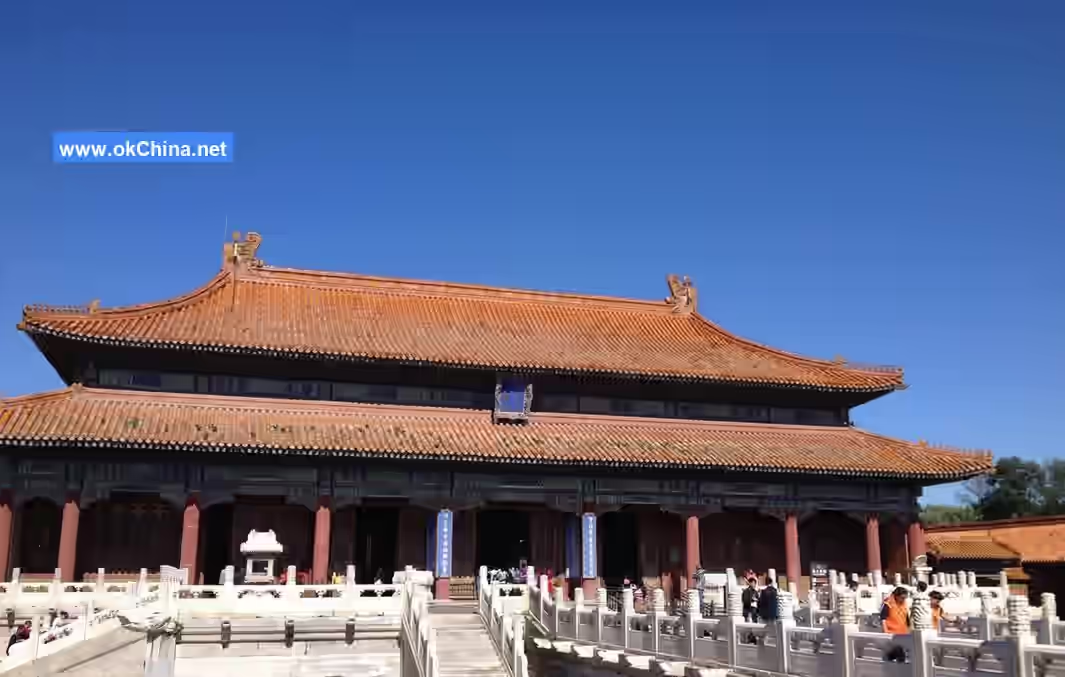
The Hall of Supreme Harmony, commonly known as the "Hall of Golden Chimes," was completed in the 18th year of the Yongle era (1420) of the Ming dynasty and originally called the Hall of Heavenly Worship. In the 41st year of the Jiajing era (1562), it was renamed the Hall of Imperial Supremacy. In the second year of the Shunzhi era (1645) of the Qing dynasty, it was given its current name. This hall was used for grand ceremonies. Since its completion, it has been destroyed by fire multiple times and rebuilt. The current structure dates to the 34th year of the Kangxi era (1695) of the Qing dynasty. The Hall of Supreme Harmony is 11 bays wide and 5 bays deep, covering a floor area of 2,377 square meters. It stands 26.92 meters high, with a total height of 35.05 meters including the platform, making it the largest hall in the Forbidden City. Ten mythical creatures adorn its eaves. During the Ming and Qing dynasties, all 24 emperors held grand ceremonies here, such as enthronements, weddings, coronations of empresses, and appointments of generals for military expeditions. Additionally, on the three major festivals—the emperor's birthday, New Year's Day, and the winter solstice—the emperor received congratulations from civil and military officials and hosted banquets for nobles and ministers.#### Hall of Central Harmony
The Hall of Central Harmony is located behind the Hall of Supreme Harmony. It stands 27 meters high, with a square floor plan, three bays wide and three bays deep, surrounded by corridors on all sides, covering a construction area of 580 square meters. It features a single-eave pyramidal roof covered with yellow glazed tiles, topped with a gilded finial at the center. The Hall of Central Harmony served as a place for the emperor to rest and rehearse rituals before proceeding to the Hall of Supreme Harmony for grand ceremonies. Before heading to the Hall of Supreme Harmony, the emperor would pause here to receive salutations from cabinet ministers and officials from the Ministry of Rites, then proceed to the Hall of Supreme Harmony for the ceremony. Additionally, before offering sacrifices to heaven and earth or the Imperial Ancestral Temple, the emperor would review the prayer boards containing sacrificial texts here. Before performing the ceremonial plowing at Zhongnanhai, he would also inspect the farming tools here.
Hall of Preserving Harmony
The Hall of Preserving Harmony (also known as the Hall of Prudence and the Hall of Establishing Supremacy) is one of the three main halls of the Forbidden City, located behind the Hall of Central Harmony. It stands 29 meters high, with a rectangular floor plan, nine bays wide and five bays deep, covering a construction area of 1,240 square meters. It features a double-eave hip-and-gable roof covered with yellow glazed tiles. The roof has a main ridge at the center, with two descending ridges at the front and back, and diagonal ridges extending from the lower parts of the descending ridges, totaling nine ridges. This architectural style is termed "hip-and-gable" in technical terms. The Hall of Preserving Harmony was the venue where the emperor hosted banquets for Mongol princes and nobles on New Year's Eve. It was also the location for the palace examination of the imperial civil service examination.
Pavilion of Manifesting Benevolence
The Pavilion of Manifesting Benevolence is located on the east side of the square in front of the Hall of Supreme Harmony, facing west. It was first built in the 18th year of the Yongle reign of the Ming Dynasty (1420). Initially called the "Wen Lou" (Literature Tower) in the early Ming Dynasty, it was renamed "Wen Zhao Ge" (Literature Illumination Pavilion) during the Jiajing reign and later renamed "Ti Ren Ge" (Pavilion of Manifesting Benevolence) in the early Qing Dynasty. The pavilion stands 25 meters high, built on a raised platform, with two stories and a hipped roof covered with yellow glazed tiles. The lower level is nine bays wide and three bays deep. During the Kangxi reign, scholars recommended by officials were summoned to compete in poetry and prose here. Portraits of Qing emperors were also stored here. After reconstruction during the Qianlong reign, it served as the silk warehouse of the Imperial Household Department, containing 143 wooden racks for storing silk and embroidery.
Pavilion of Spreading Righteousness
The Pavilion of Spreading Righteousness stands 23.8 meters high and belongs to the area of the three front halls. It features yellow glazed tiles and a hipped roof, with nine bays in width and three bays in depth, two stories high, and corridors on all four sides. The Pavilion of Spreading Righteousness stands to the southwest of the Hall of Supreme Harmony. Initially built during the Yongle reign of the Ming Dynasty as the "Wu Lou" (Martial Tower), it was renamed "Wu Cheng Ge" (Martial Achievement Pavilion) during the Jiajing reign and later renamed to its current name in the early Qing Dynasty, meaning "to promote great righteousness." During the Qing Dynasty, the Pavilion of Spreading Righteousness was long used to store gold and silver utensils for palace use. It is now an exhibition hall titled "Imperial Rituals and Music."
Central Route of the Inner Court
Gate of Heavenly Purity
The Gate of Heavenly Purity is the main gate of the inner court of the Forbidden City. Built in the 18th year of the Yongle reign of the Ming Dynasty (1420), it was renovated in the 12th year of the Shunzhi reign of the Qing Dynasty (1655). The gate is five bays wide and three bays deep, approximately 16 meters high, with a single-eave hip-and-gable roof. It stands on a 1.5-meter-high white marble Sumeru pedestal, surrounded by carved stone railings. In front of the gate are three sets of three steps, with a central imperial path stone flanked by a pair of gilded bronze lions. Three doors are set in the center. To the east of the gate are the Inner Left Gate and the offices of the Nine Ministers, while to the west are the Inner Right Gate and the Grand Council. The square in front of the gate is flanked by the Gate of Prosperous Blessings to the east and the Gate of Flourishing Blessings to the west. The Gate of Heavenly Purity served as an important passage connecting the inner court and the outer court. During the Qing Dynasty, it also functioned as a venue for handling state affairs, hosting ceremonies such as the "Audience at the Gate," fasting rituals, and the receiving of imperial seals.
Palace of Heavenly Purity
The Palace of Heavenly Purity is one of the three rear palaces of the inner court. First built in the 18th year of the Yongle reign of the Ming Dynasty (1420), it was rebuilt several times due to fires during the Ming and Qing Dynasties. The current structure dates to the 3rd year of the Jiaqing reign of the Qing Dynasty (1798). The palace features a double-eave hipped roof covered with yellow glazed tiles, standing on a single-tier white marble platform. Including its corridors, it is nine bays wide and five bays deep, covering a construction area of 1,400 square meters, with a height of over 20 meters from the platform to the main ridge. The eaves are adorned with nine ridge ornaments. On the spacious terrace in front of the hall, there are bronze tortoises and cranes, a sundial, and a standard measure. Four gilded incense burners are placed in front, with a central staircase connecting to a raised walkway leading to the Gate of Heavenly Purity. The Palace of Heavenly Purity is the largest building in the inner court. During the Ming Dynasty, 14 emperors resided here. It also served as a place for emperors to observe mourning. Emperors Shunzhi and Kangxi of the Qing Dynasty also lived here. After the Yongzheng reign, the box containing the secretly designated heir was placed behind the "Zheng Da Guang Ming" (Upright and Brilliant) plaque in this palace. The Kangxi and Qianlong emperors hosted banquets for thousands of elders here. It is now displayed as it was during imperial life.
Hall of Union
The Hall of Union is one of the three rear palaces of the inner court, located between the Palace of Heavenly Purity and the Palace of Earthly Tranquility, built around the Jiajing reign of the Ming Dynasty. The hall has a square floor plan, three bays wide and three bays deep. The central bay features a throne, above which hangs a plaque inscribed by Emperor Kangxi with the characters "Wu Wei" (Non-Action). Behind the throne is a screen inscribed with Emperor Qianlong's "Inscription on the Hall of Union." The Hall of Union was where the empress received congratulations on her birthday. During the Qing Dynasty, the 25 imperial seals were stored here. Every year in the first lunar month, the Imperial Astronomical Bureau would select an auspicious day and time to set up an altar, open the seals, and display them. The emperor would come here to offer incense and perform rituals. An iron plaque inscribed by Emperor Shunzhi forbidding imperial consorts from interfering in state affairs was once erected here. During imperial weddings, the empress's seal and credentials were placed on tables on either side of the hall. Before the annual spring sacrifice to the Silkworm Goddess, the empress would inspect the tools for mulberry leaf picking here the day before.
Palace of Earthly Tranquility
The Palace of Earthly Tranquility is one of the three rear palaces of the inner court. First built in the 18th year of the Yongle reign of the Ming Dynasty (1420), it was renovated in the 2nd year of the Shunzhi reign of the Qing Dynasty (1645) following Ming Dynasty regulations, and again in the 12th year of the Shunzhi reign (1655) in imitation of the Qingning Palace in Shenyang's Shengjing. The palace faces south, with nine bays including corridors and three bays in depth, featuring a double-eave hipped roof covered with yellow glazed tiles. During the Ming Dynasty, it served as the empress's residence. After renovations in the 12th year of the Shunzhi reign of the Qing Dynasty, it became the main venue for Shamanistic rituals. The original central door was moved to the eastern secondary bay, and the four rooms to the west of the door were fitted with kang (heated platforms) on the south, north, and west sides for sacrificial rituals. Emperors Kangxi, Tongzhi, and Guangxi of the Qing Dynasty held their weddings here, as did Puyi. It is now displayed as it was during imperial life.
Imperial Garden
The Imperial Garden is located on the central axis of the Forbidden City, behind the Palace of Earthly Tranquility. It was called the "Palace Rear Garden" during the Ming Dynasty and the Imperial Garden during the Qing Dynasty. First built in the 18th year of the Yongle reign of the Ming Dynasty (1420), it underwent subsequent expansions but retains its original basic layout. The garden measures 80 meters from north to south and 140 meters from east to west, covering an area of 12,000 square meters. The main structure, the Hall of Imperial Peace, features a double-eave pyramidal roof and is situated on the north-south central axis of the Forbidden City. Surrounding it are pavilions, towers, and galleries. The pine, cypress, bamboo, and rockeries in the garden create a landscape that remains green throughout the year.
Imperial Viewing Pavilion
The Imperial Viewing Pavilion is located atop an artificial hill on the east side of the Imperial Garden. It was originally the site of the Ming Dynasty Flower-Viewing Hall, which was replaced by an artificial hill during the Wanli reign. Pathways on the east and west sides of the hill lead to the pavilion at the summit. The pavilion has a square floor plan with four pillars, bracket sets with one block and two arms interlocking with hemp-leaf patterns, and a pyramidal roof covered with green glazed tiles trimmed with yellow glazed tiles, topped with a gilded finial. It has lattice doors on all four sides, surrounded by white marble railings. The interior features a caisson ceiling, with a throne facing south. The Imperial Viewing Pavilion was where the emperor and empress ascended on the ninth day of the ninth lunar month (Double Ninth Festival) for the height appreciation tradition. From the pavilion, one can overlook the palace gardens and gaze upon the Forbidden City, Jingshan Hill, and the Western Park.
Hall of Literary Profundity
The Hall of Literary Profundity is located east of the Dui Xiu Hill in the Imperial Garden, facing south against a wall. It is five bays wide with a flush gable roof covered with yellow glazed tiles. A small door on the west wall leads to a side room. The hall has a front corridor, with the central bay serving as the entrance and the side bays fitted with windows. The interior is furnished with bookshelves, serving as a library in the palace. After the 44th year of the Qianlong reign (1779), the "Essence of the Complete Library of the Four Treasuries" was stored here.
Western Route of the Inner Court
Hall of Mental Cultivation
The Hall of Mental Cultivation is located west of the three rear palaces of the inner court and south of the Western Six Palaces. Initially built during the Jiajing reign of the Ming Dynasty (mid-16th century), it long served as an informal hall for the emperor. Starting from the Yongzheng reign of the Qing Dynasty, it became the emperor's main residence and daily administrative office, effectively serving as the emperor's actual living quarters. "Yang Xin" (Mental Cultivation) means to nurture one's mind and character. The Hall of Mental Cultivation is conveniently located within the palace, with a rich and functional layout that includes halls, studies, bedrooms, and smaller rooms for reviewing memorials, private discussions, rest, and Buddhist worship. It was more suitable for an emperor working late into the night than larger halls, making it an ideal space for the emperor's daily activities under the highly centralized political system of the Qing Dynasty. The most famous rooms in the Hall of Mental Cultivation are Emperor Yongzheng's "Diligent Governance and Close to the Worthy" room, Emperor Qianlong's Hall of Three Rarities, and the late Qing curtained audience chamber in the Eastern Warmth Chamber.
Palace of Eternal Spring
The Palace of Eternal Spring is one of the Western Six Palaces of the inner court. Built in the 18th year of the Yongle reign of the Ming Dynasty (1420), it was renovated in the 22nd year of the Kangxi reign of the Qing Dynasty (1683) and subsequently repaired multiple times. In the 9th year of the Xianfeng reign (1859), the Changchun Gate of the Palace of Eternal Spring was demolished, and the rear hall of the Qixiang Palace was converted into a passage hall, inscribed by Emperor Xianfeng as "Ti Yuan Dian" (Hall of Embodying the Origin). This connected the Palace of Eternal Spring and the Qixiang Palace. The Palace of Eternal Spring is five bays wide with a hip-and-gable roof covered with yellow glazed tiles. In front of the hall, there is a pair of bronze tortoises and cranes on each side. The eastern side hall is called Sui Shou Dian (Hall of Prolonging Longevity), and the western side hall is called Cheng Xi Dian (Hall of Receiving Happiness), each three bays wide with front corridors connected by corner corridors, allowing access to other halls.
Palace of Earthly Honor
The Palace of Earthly Honor is one of the Western Six Palaces of the inner court, serving as the residence for imperial consorts during the Ming and Qing Dynasties. Built in the 18th year of the Yongle reign of the Ming Dynasty (1420), it originally consisted of two courtyards. In the late Qing Dynasty, the rear hall was converted into a passage hall called Ti He Dian (Hall of Harmonizing the Body), and one room in each of the east and west side wings was turned into a passageway, connecting the Palace of Earthly Honor with the Palace of Gathering Excellence to form a four-courtyard layout. The main hall is five bays wide with a hip-and-gable roof covered with yellow glazed tiles and front and rear corridors. Below the eaves are bracket sets, and the beams are decorated with Suzhou-style paintings. In front of the hall is a screen door inscribed with "Guang Ming Sheng Chang" (Brightness and Prosperity). At the base of the platform are pairs of bronze phoenixes, cranes, and incense burners.To the east and west, there are side halls named Yanhong Hall and Yuanhe Hall, both of which are three-bay buildings with yellow glazed tiles and a flush gable roof.
Palace of Gathering Excellence (Chuxiu Gong)
The Palace of Gathering Excellence, one of the Six Western Palaces in the Inner Court, served as the residence for imperial consorts during the Ming and Qing dynasties. It was initially constructed in the 18th year of the Yongle reign of the Ming Dynasty (1420). In the 10th year of the Guangxu reign (1884), to celebrate Empress Dowager Cixi's 50th birthday, it underwent a large-scale renovation costing 630,000 taels of silver. The existing structure reflects the form after this renovation. Originally a two-courtyard complex, in the late Qing Dynasty, the Chuxiu Gate and its surrounding walls were demolished. The rear hall of the Palace of Earthly Honor (Yikun Gong) was converted into a passage hall named Tihe Hall, connecting the Palace of Gathering Excellence and the Palace of Earthly Honor, thus forming an interconnected four-courtyard complex.
Hall of the Supreme Principle (Taiji Dian)
The Hall of the Supreme Principle, one of the Six Western Palaces in the Inner Court, was built in the 18th year of the Yongle reign of the Ming Dynasty (1420). Originally named Weiyang Palace, it was renamed Qixiang Palace in the 14th year of the Jiajing reign (1535) because the biological father of the Jiajing Emperor, Prince Xian of Xing, Zhu Youyuan, was born here. In the late Qing Dynasty, it was renamed the Hall of the Supreme Principle. It underwent multiple renovations during the Qing Dynasty. Originally a two-courtyard complex, during later Qing renovations to the Palace of Eternal Spring (Changchun Gong), the rear hall of the Hall of the Supreme Principle was converted into a passage hall. A lean-to was added to its rear eaves, and it was connected to the Palace of Eternal Spring and its eastern and western side halls via corner verandas, forming a cloister. One room in each of the eastern and western side buildings was opened as a passageway, linking the Hall of the Supreme Principle and the Palace of Eternal Spring into an interconnected four-courtyard complex.
Palace of Eternal Longevity (Yongshou Gong)
The Palace of Eternal Longevity is one of the Six Western Palaces in the Inner Court. Built in the 18th year of the Yongle reign of the Ming Dynasty (1420), it was initially named the Palace of Lasting Joy. It is a two-courtyard complex. The main hall in the front courtyard, the Palace of Eternal Longevity, has a frontage of five bays and features a yellow glazed tile hip-and-gable roof. Inside the hall hangs a plaque inscribed by the Qianlong Emperor, reading "Lingde Shuyi" (Virtuous and Graceful Conduct). On the east wall hangs the Qianlong Emperor's "Eulogy for Ban Jieyu Declining the Imperial Carriage," and on the west wall hangs the "Painting of Ban Jieyu Declining the Imperial Carriage." In the 6th year of the Qianlong reign (1741), the Qianlong Emperor decreed that the plaques for the eleven palaces in the eastern and western parts of the Inner Court "should all be made according to the style of the Palace of Eternal Longevity," and once hung, they were not to be moved or replaced without authorization.
Palace of Double Glory (Chonghua Gong)
The Palace of Double Glory is located north of the Six Western Palaces on the western route of the Inner Court. It was originally the second compound of the Five Western Compounds of the Ming Dynasty. In the 11th year of the Yongzheng reign (1733), Hongli was enfeoffed as "Prince Bao of the First Rank" (Heshuo Bao Qinwang), and his residence was bestowed the name "Hall of Joy in Goodness" (Leshan Tang). After Hongli ascended the throne, it was named the Palace of Double Glory. The palace retains the three-courtyard layout of the second western compound. The main hall in the front courtyard is the Hall of Reverence (Chongjing Dian). In the center of the hall hangs a plaque inscribed by Hongli himself when he was Prince Bao, reading "Leshan Tang." Later, the Jiaqing Emperor established the tea banquet and poetic couplet composition at the Palace of Double Glory as a family tradition, held annually between the second and tenth days of the first lunar month. This practice continued intermittently during the Daoguang reign but ceased after the Xianfeng reign.
Palace of Universal Happiness (Xianfu Gong)
The Palace of Universal Happiness is one of the Six Western Palaces in the Inner Court. It is a two-courtyard complex. Its main gate, the Xianfu Gate, is a glazed gate with a frontage of three bays and a yellow glazed tile hip roof. Its architectural form is higher in status than the other five palaces of the Six Western Palaces and is symmetrical to the Jingyang Palace in the corresponding position among the Six Eastern Palaces. The main hall in the rear courtyard is named "Hall of Shared Path" (Tongdao Tang). The interior is divided by floor-standing partition screens, and the ceiling is covered with a sea-spread coffered design. The Palace of Universal Happiness was inhabited by imperial consorts. The front hall was used for ceremonies and receiving audiences, while the rear hall served as the bedchamber. Consorts such as Imperial Noble Consort Zhuangshun (Lin Guiren of the Daoguang Emperor), Cheng Guifei, Tong Guifei, and Chang Fei once resided here.
Studio of Cultivation (Shufang Zhai)
The Studio of Cultivation was originally the first compound of the Five Western Compounds. After the Qianlong Emperor ascended the throne, he converted the second western compound into the Palace of Double Glory and subsequently transformed the first compound into the Studio of Cultivation, building a theater stage there for banquets and theatrical performances at the Palace of Double Glory. The Studio of Cultivation is an I-shaped hall complex. The front hall, together with the southern rooms and the eastern and western side halls, encloses an independent small courtyard connected by covered corridors. During the Qianlong period, on important occasions such as the Emperor's birthday, Empress Dowager's birthday, the Ghost Festival, and New Year's Eve, the Emperor would often accompany the Empress Dowager for meals and theatrical performances in the rear hall and bestow banquets upon princes and ministers. After the abdication of the Xuantong Emperor, Consort Yu and Consort Jin of the Tongzhi Emperor resided in the Zhilan Room of the Studio of Cultivation. On the birthdays of the Grand Imperial Consorts, theatrical performances were still held here until Puyi was forced to "leave the palace on the same day."
Inner Court Eastern Route
Hall of Ancestral Worship (Fengxian Dian)
The Hall of Ancestral Worship, located on the eastern side of the Inner Court of the Forbidden City, served as the imperial family temple for ancestral worship during the Ming and Qing dynasties. It was initially built in the early Ming Dynasty. Following the Ming system, it was rebuilt in the 14th year of the Shunzhi reign of the Qing Dynasty (1657) and underwent multiple renovations thereafter. The building covers an area of 1,225.00 square meters. It features a double-eaved yellow glazed tile hip roof, with golden-line grand-dot gold xuanzi color paintings under the eaves. According to Qing regulations, grand sacrifices were held in the front hall on the first and fifteenth days of the lunar month, the Emperor's birthday, New Year's Day, and other major state celebrations. Incense offerings and ceremonies were performed in the rear hall on the birthdays and death anniversaries of previous emperors and empresses, as well as on festivals like the Lantern Festival, Qingming Festival, Ghost Festival, Frost's Descent, and New Year's Eve. Announcements of bestowing honorific titles, imperial appointments, imperial lectures, the Ploughing Ceremony, imperial tomb visits, imperial tours, returns from tours, and other celebratory events were all reported in the rear hall.
Palace of Celestial Favor (Chengqian Gong)
The Palace of Celestial Favor is one of the Six Eastern Palaces in the Inner Court. Completed in the 18th year of the Yongle reign of the Ming Dynasty (1420), it was initially named the Palace of Eternal Peace. The palace is a two-courtyard complex. The main hall in the rear courtyard has five bays, with the central bay serving as the entrance. During the Ming Dynasty, this palace was inhabited by imperial noble consorts. In the Qing Dynasty, it served as a residence for empresses and consorts. Consort Donggo of the Shunzhi Emperor and Empress Xiaoquancheng of the Daoguang Emperor, among others, once resided here.
Palace of Great Benevolence (Jingren Gong)
The Palace of Great Benevolence is one of the Six Eastern Palaces in the Inner Court. Completed in the 18th year of the Yongle reign of the Ming Dynasty (1420), it was initially named the Palace of Eternal Peace. The palace is a two-courtyard complex. The main gate faces south, and inside the gate stands a stone screen wall, said to be a relic from the Yuan Dynasty. The main hall in the rear courtyard has five bays, with the central bay serving as the entrance. During the Ming Dynasty, the Palace of Great Benevolence was a residence for imperial consorts. In the third month of the 11th year of the Shunzhi reign (1654), the Kangxi Emperor was born in this palace. Empress Xiaoshengxian (mother of the Qianlong Emperor), Consort Wan of the Xianfeng Emperor, and Consort Zhen of the Guangxu Emperor all once resided here.
Palace of Prolonged Happiness (Yanxi Gong)
The Palace of Prolonged Happiness is one of the Six Eastern Palaces in the Inner Court. Built in the 18th year of the Yongle reign of the Ming Dynasty (1420), it was initially named the Palace of Longevity. In front of the hall are eastern and western side halls, each with three bays. The main hall in the rear courtyard also has five bays, with eastern and western side halls of three bays each, all featuring yellow glazed tile flush gable roofs. In the first year of the Xuantong reign (1909), construction began on the original site of the Palace of Prolonged Happiness to build a three-story Western-style structure—the Water Palace (Shui Dian). A moat was dug around the Water Palace, channeling water from the Jade Spring Hill. The main building had nine rooms on each floor, with a door in the center of each side on the ground floor, surrounded by a cloister. Empress Dowager Longyu inscribed a plaque naming it "Lingzhao Xuan" (Pavilion of Divine Pond), commonly known as the "Crystal Palace." In 1917, during Zhang Xun's attempt to restore the monarchy, the northern part of the Palace of Prolonged Happiness was destroyed by bombs dropped by aircraft of the Zhili clique.
Palace of Great Brilliance (Jingyang Gong)
The Palace of Great Brilliance is one of the Six Eastern Palaces in the Inner Court, located east of the Palace of Accumulated Purity (Zhongcui Gong) and north of the Palace of Eternal Harmony (Yonghe Gong). Completed in the 18th year of the Yongle reign of the Ming Dynasty (1420), it was initially named the Palace of Long Sunshine. It was renamed the Palace of Great Brilliance in the 14th year of the Jiajing reign (1535). During the Ming Dynasty, it was a residence for imperial consorts. In the Qing Dynasty, it was converted into a storage place for books. The palace is a two-courtyard complex. The main gate faces south, named the Jingyang Gate. The main hall in the front courtyard is the Palace of Great Brilliance, with a frontage of three bays and a yellow glazed tile hip roof, differing in roof style from the other five palaces of the Six Eastern Palaces. The main hall in the rear courtyard is the Imperial Study (Yushu Fang), with a frontage of five bays, the central bay serving as the entrance, and a yellow glazed tile hip-and-gable roof. The second and end bays have sill walls and windows. Bracket sets under the eaves are decorated with dragon hexi color paintings. The Palace Instruction Paintings displayed in the Six Eastern and Western Palaces during festivals were originally stored here.
Palace of Eternal Harmony (Yonghe Gong)
The Palace of Eternal Harmony is one of the Six Eastern Palaces in the Inner Court, located east of the Palace of Celestial Favor and south of the Palace of Great Brilliance. During the Ming Dynasty, it was inhabited by imperial consorts, and in the Qing Dynasty, by empresses and consorts. Empress Xiaogongren of the Kangxi Emperor resided here for a long time. Subsequently, Consort Jing of the Daoguang Emperor and Consort Li of the Xianfeng Emperor, among others, lived here successively. The palace is a two-courtyard complex. The main gate faces south, named the Yonghe Gate. The main hall in the front courtyard is the Palace of Eternal Harmony, with a frontage of five bays. The central bay serves as the entrance, while the second and end bays have sill walls with upper casement windows. Inside the central bay hangs a plaque inscribed by the Qianlong Emperor, reading "Yizhao Shushen" (Graceful and Prudent Demeanor). The ceiling is a white lattice design, and the floor is paved with square bricks. There are eastern and western side halls, each with three bays, the central bay serving as the entrance, featuring yellow glazed tile flush gable roofs with xuanzi color paintings under the eaves. North of the eastern and western side halls are side rooms, each with three bays.
Palace of Gathered Celebration (Yuqing Gong)
The Palace of Gathered Celebration is located between the Hall of Ancestral Worship and the Palace of Abstinence on the eastern route of the Inner Court. It was built in the 18th year of the Kangxi reign of the Qing Dynasty (1679) on the foundation of the Ming Dynasty's Fengci Hall. It is an architectural complex composed of rectangular courtyards, totaling four successive courtyards. In front of the main gate is the Xing Gate. Inside the gate is the first courtyard, containing three duty rooms, with the Yangyao Gate opened in the west wall connecting to the Palace of Abstinence. Passing through the Xiangxu Gate north of the courtyard leads to the second courtyard, with the main hall being the Hall of Sincerity (Dunben Dian) and eastern and western side halls of three bays each. The third courtyard has 20 side rooms on each of its eastern and western sides, extending to the fourth courtyard. The main hall is the Palace of Gathered Celebration, an I-shaped hall structure. The Palace of Gathered Celebration was specifically built for Crown Prince Yinreng during the Kangxi period and later served as a residence for princes. During the reigns of the Tongzhi and Guangxu Emperors, this palace was used as the Emperor's study. The Guangxu Emperor once resided here.
Palace of Abstinence (Zhai Gong)
The Palace of Abstinence is located south of the Six Eastern Palaces and west of the Palace of Gathered Celebration in the Forbidden City. It served as the place for the Emperor to fast before performing ceremonies for worshipping Heaven and Earth. During the Ming Dynasty and early Qing Dynasty, fasting before worshipping Heaven and Earth was conducted outside the palace. The Palace of Abstinence is a rectangular complex with two courtyards, the front for court and the rear for rest. The front hall, the Palace of Abstinence, has a frontage of five bays with a yellow glazed tile hip-and-gable roof. It has a three-bay lean-to in front, with partition doors in the central and second bays, and sill windows in the end bays. Before grand sacrifices for worshipping Heaven and Earth, praying for grain, and regular rain prayers, the Emperor would fast here. When the Emperor stayed at the Palace of Abstinence, fasting tablets and a bronze figure were respectfully placed on the left side of the palace's stone steps. On fasting days, the Emperor and accompanying ministers wore fasting tablets, and each palace hung wooden fasting tablets above the curtain headers. During the fasting period, music was not played, alcohol was not consumed, and pungent foods were avoided.
Other Buildings
Hall of Military Eminence (Wuying Dian)
The Hall of Military Eminence was initially built in the early Ming Dynasty, located west of the Gate of Harmony and Peace (Xihe Men) in the Outer Court. The main hall, the Hall of Military Eminence, faces south, with a frontage of five bays and a depth of three bays, featuring a yellow glazed tile hip-and-gable roof. The eastern and western side halls are the Hall of Condensed Dao (Ningdao Dian) and the Hall of Brilliant Regulations (Huanzhang Dian) respectively, with a total of 63 side rooms on the left and right. In the northeast corner of the complex is the Studio of Constant Longevity (Hengshou Zhai), and in the northwest is the Hall of Bathing Virtue (Yude Tang). In the early Ming Dynasty, emperors fasted and received ministers at the Hall of Military Eminence before moving to the Hall of Literary Glory. When Qing forces first entered Beijing, Prince Regent Dorgon arrived first and used the Hall of Military Eminence as his administrative office.#### Hall of Imperial Supremacy
The Hall of Imperial Supremacy is the main building of the Palace of Tranquil Longevity complex. It was first constructed in the 28th year of the Kangxi Emperor's reign (1689) and was originally named the Palace of Tranquil Longevity. Located at the front section of the central axis of the Palace of Tranquil Longevity complex, it stands aligned with the rear hall, the Palace of Tranquil Longevity, on a single-tiered stone platform. The hall faces south, with a width of nine bays and a depth of five bays, adhering to the imperial architectural rule of "nine and five." On the left and right sides of the vermilion steps in front of the hall are placed a sundial and a standard grain measure, important furnishings symbolizing imperial authority. On each side of the imperial pathway are six Sumeru pedestals, each supporting a hexagonal pavilion with double eaves. Each side of these pavilions is inscribed with three seal-script characters for "longevity" (寿).
Palace of Compassion and Tranquility
The Palace of Compassion and Tranquility is located west of the Longzong Gate on the outer western route of the Inner Court. It was first built in the 15th year of the Jiajing Emperor's reign (1536) during the Ming dynasty. In the 34th year of the Qianlong Emperor's reign (1769), renovations began to change the main hall's roof from single-eaved to double-eaved and to relocate the rear sleeping quarters, establishing its current layout. The main hall, the Palace of Compassion and Tranquility, is centrally positioned with front and rear corridors, featuring a double-eaved hip-and-gable roof covered with yellow glazed tiles. It is seven bays wide, with the central five bays each having four double-paneled lattice doors with rhombus-patterned grilles. The two end bays have brick dado walls, each with four double-paneled lattice windows with rhombus-patterned grilles. In front of the hall is a moon platform with three steps at the front and one step on each side, on which four gilded bronze incense burners are displayed. The eastern and western gable walls have partition walls, each with a pendant-flower gate leading to the rear courtyard.
Pavilion of Literary Profundity
The Pavilion of Literary Profundity is the library building behind the Hall of Literary Brilliance. It was constructed in the 41st year of the Qianlong Emperor's reign (1776), modeled after the famous Zhejiang library "Tianyi Ge." The pavilion has two stories, with a roof covered in black glazed tiles and trimmed with green glazed tiles, creating a deep and elegant color scheme. This also embodies the Five Elements concept, where black represents water, intended to suppress fire. The pavilion houses the Complete Library of the Four Treasuries and the Imperially Approved Synthesis of Books and Illustrations of Ancient and Modern Times. After the Qianlong period of the Qing dynasty, besides the emperor coming here to read, officials and scholars were also permitted to consult the books.
Pavilion of Pleasant Sounds
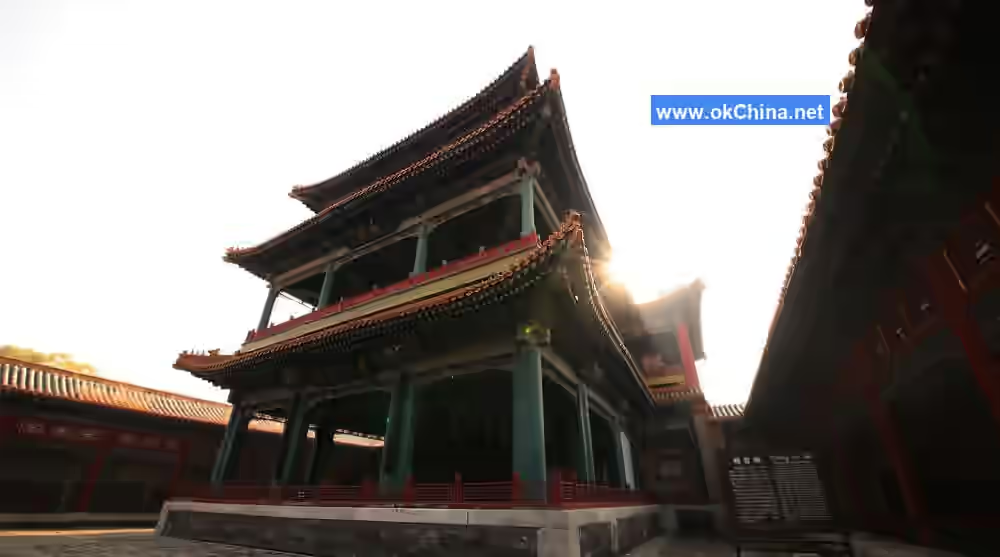
The Pavilion of Pleasant Sounds stands 20.71 meters high and is located in the central part of the Palace of Tranquil Longevity complex, east of the Hall of Mental Cultivation. It is the largest theater building in the Forbidden City. Built in the 41st year of the Qianlong Emperor's reign (1776), a dressing tower was added during the Jiaqing period (early 19th century). The pavilion is over 20 meters high, and its green glazed tile roof could be seen from outside the city walls. "Chang Yin" (Pleasant Sounds) means to enjoy music to one's heart's content. The tall pavilion is divided into three levels from top to bottom: the Fu (Blessing), Lu (Prosperity), and Shou (Longevity) stages. The Shou stage floor has five wells leading to the basement and three openings above connecting to the Lu stage. The pavilion faces north, opposite the Pavilion of Cheerful Viewing where the emperor, empress, and others watched performances. During festivals, grand operas were performed here, creating a lively atmosphere both on and off the stage.
Palace of Peaceful Longevity
The Palace of Peaceful Longevity is located north of the Palace of Longevity and Health and south of the Hall of Heroic Splendor on the outer western route of the Inner Court. It was first built during the Ming dynasty, initially named the Palace of Universal Radiance, and renamed the Palace of Universal Peace in the 4th year of the Jiajing Emperor's reign (1525). In the early Qing dynasty, the Ming system was followed. During the Yongzheng period, the Palace of Universal Peace Official School was established here. In the 16th year of the Qianlong Emperor's reign (1751), the school was relocated. That same year, to celebrate the Empress Dowager's 60th birthday, Emperor Qianlong renovated the palace and renamed it the Palace of Peaceful Longevity. In the 25th year of Qianlong's reign (1760), for the Empress Dowager's 70th birthday celebrations, a three-story grand theater stage was added in the courtyard. In the 4th year of the Jiaqing Emperor's reign (1799), the stage was dismantled, and the dressing tower was converted into the rear annex of the Hall of Spring Happiness.
Hall of Mental Cultivation
The Hall of Mental Cultivation is located inside the Gate of Mental Cultivation behind the Palace of Tranquil Longevity. It is one of the main buildings of the rear residential quarters of the Palace of Tranquil Longevity complex. Built in the 37th year of the Qianlong Emperor's reign (1772) and modeled after the inner court's Hall of Mental Cultivation, it is slightly smaller in scale and has a unique layout. Originally serving as the retired emperor's living quarters, it featured imperial dragon and phoenix paintings. During the Guangxu period, when Empress Dowager Cixi resided in the Hall of Joyful Longevity, she took her morning and evening meals in the eastern warm chamber of the Hall of Mental Cultivation. After renovation in the 17th year of Guangxu's reign, except for the Chamber of Ink Clouds which retained its imperial paintings, the rest were changed to Suzhou-style paintings.
Nine-Dragon Wall
The Nine-Dragon Wall is located outside the Gate of Imperial Supremacy in the Palace of Tranquil Longevity complex of the Forbidden City. The wall is 29.47 meters long, 3.59 meters high, and 0.459 meters thick. It is a single-sided glazed screen wall built against the palace wall, created during the renovation of the Palace of Tranquil Longevity in the 37th year of the Qianlong Emperor's reign (1770).
Zhenfei Well
Located inside the Gate of Chastity and Obedience at the northern end of the Palace of Tranquil Longevity in the Beijing Forbidden City, it was originally an ordinary well in the palace. The well opening is covered with a stone slab, with small holes drilled on both sides for inserting an iron rod to lock it. In the 26th year of the Guangxu Emperor's reign (1900), during the invasion of the Eight-Nation Alliance, Empress Dowager Cixi and Emperor Guangxu fled west in haste. Before departing, Cixi summoned Consort Zhen, who was imprisoned in the small courtyard north of the Pavilion of Scenic Happiness, to the Pavilion of Nourished Harmony and ordered the eunuch Cui Yugui and others to push her into the well inside the Gate of Chastity and Obedience, drowning her. The well thus became known as the "Zhenfei Well."
V. Museum Collection
Overall Collection
The Beijing Palace Museum houses a vast collection of precious cultural relics, totaling 1,862,690 items. It is commonly said to hold one million artifacts, accounting for one-sixth of China's total national cultural relics. As of December 31, 2005, the total number of Grade One cultural relics in Chinese cultural relic collection units reached 109,197 items, all of which have been filed and recorded with the National Cultural Heritage Administration. Among the 1,330 collection units nationwide that preserve Grade One cultural relics, the Palace Museum ranks first with 8,273 items (sets) and houses many unique national treasures. Some palaces in the Forbidden City have established comprehensive historical art galleries, painting galleries, and specialized galleries for ceramics, bronzes, Ming and Qing dynasty arts and crafts, inscriptions, toys, the Four Treasures of the Study, curios, jewels, clocks, and exhibitions of Qing dynasty court regulations and cultural relics. It holds a large number of ancient artistic treasures, making it the museum with the richest collection of cultural relics in China. Since 1949, the Palace Museum has further enriched its collection. As of 2017, the total number of cultural relics reached 1,862,690 items, including 1,684,490 precious cultural relics, 115,491 general cultural relics, and 7,577 specimens.
Classic Collections
Paintings
The Palace Museum houses nearly 420 paintings from the Yuan dynasty and earlier, of which 17 are included in the National Cultural Heritage Administration's Second List of Cultural Relics Forbidden to Be Exhibited Abroad (Painting and Calligraphy Category). The museum holds many unique and unparalleled masterpieces in the history of Chinese painting, such as The Nymph of the Luo River by Gu Kaizhi of the Eastern Jin dynasty, Spring Outing by Zhan Ziqian of the Sui dynasty, and Emperor Taizong Receiving the Tibetan Envoy by Yan Liben of the Tang dynasty.
Calligraphy
The Palace Museum houses 310 calligraphic works from the Yuan dynasty and earlier, of which 11 are included in the National Cultural Heritage Administration's Second List of Cultural Relics Forbidden to Be Exhibited Abroad (Painting and Calligraphy Category). The museum holds many unique and unparalleled masterpieces in the history of Chinese calligraphy, such as Mid-Autumn Manuscript by Wang Xianzhi of the Eastern Jin dynasty and Letter to Boyuan by Wang Xun of the Eastern Jin dynasty.
Ceramics
The Beijing Palace Museum possesses 350,000 pieces of ceramics, including over 1,100 Grade One items, approximately 56,000 Grade Two items, and more than 36,000 ceramic specimens collected from over 200 kiln sites across China. The collection's distinctive features are particularly evident in ceramics from the Three Kingdoms to the Five Dynasties period, Yuan dynasty porcelain, mid-to-late Qing imperial kiln wares, palace decorative porcelain, Yixing teapots, large multi-glaze and polychrome porcelain, production materials from Qing imperial kilns, folk kiln ceramics from various dynasties, and archaeological excavation materials.
Bronzes
The Palace Museum houses over 15,000 bronze artifacts from various dynasties (excluding coins and bronze mirrors), including about 10,000 pre-Qin bronzes, of which over 1,600 bear inscriptions. These three quantities each account for more than one-tenth of the total number of extant and excavated Chinese bronzes worldwide, making the Palace Museum the museum with the largest collection of Chinese bronzes in the world. Additionally, it holds over 10,000 ancient coins, 4,000 bronze mirrors, and more than 10,000 seals and stampings. The Bronze Gallery is located in the Palace of Celestial Favor and the Palace of Eternal Harmony.
Jade
The Palace Museum houses 28,461 jade artifacts, covering major historical periods of China, with a particular emphasis on Qing dynasty court jades as a collection highlight. The Jade Gallery is located in the Palace of Accumulated Purity in the Eastern Six Palaces.
Clocks and Watches
The Palace Museum collects over 1,500 Chinese and foreign clocks and watches. The foreign collection includes fine pieces from Britain, France, Switzerland, the United States, and Japan, representing the highest level of world clock and watch manufacturing from the 18th to the early 20th century. The Clock Gallery is located in the Hall of Ancestral Worship.
Oracle Bones
The total number of oracle bones in the Palace Museum collection was roughly estimated in the 1960s to be 22,463 pieces, accounting for 18% of the world's existing Yinxu oracle bones. This is second only to the National Library of China (34,512 pieces) and the Institute of History and Philology of Academia Sinica in Taiwan (25,836 pieces).
Poetry
In July 2014, while sorting through cultural relics, staff at the Palace Museum discovered two boxes in the storeroom labeled "Qianlong's Poetry Manuscripts." Upon opening, they found 28,000 poems by the Qianlong Emperor. Previously, the storeroom contained over 17,000 of his poems; with this discovery, the total exceeds 40,000. Historical accounts state that the Qianlong Emperor enjoyed composing poetry and wrote over 40,000 poems in his lifetime.
VI. Role and Value
Museum Function
The establishment of the Palace Museum holds significance in two aspects: first, it represents another victory of the democratic revolution and a fatal blow to restorationist forces; second, it is a great achievement in the history of Chinese culture and art. The inauguration ceremony of the Palace Museum was held on October 10, 1925. A museum is an institution aimed at cultural education, dedicated to the collection, research, exhibition, and preservation of physical objects. It transformed precious cultural relics, once symbols of monarchical legitimacy and reserved for the emperor's enjoyment, into the shared wealth of the entire nation.When the Palace Museum was established, the "Provisional Council Charter of the Palace Museum" was formulated. In the 17th year of the Republic of China (1928), the National Government promulgated the "Organizational Law of the Palace Museum," which was the first law related to museums in Chinese history. Later, the "Regulations of the Council of the Palace Museum of the Republic of China" were also issued. These two documents hold significant importance in the development history of the Palace Museum, marking its transition from a nascent institution to maturity and symbolizing the beginning of the normalization of China's museum industry.
Heritage Value
In 1987, the Forbidden City in Beijing was inscribed as a World Heritage Site. UNESCO’s evaluation of the Forbidden City states: "The Imperial Palace of the Ming and Qing Dynasties in Beijing, known as the Forbidden City, was the supreme power center of China for over five centuries. With its landscaped gardens and a vast complex of 9,000 rooms containing furniture and artworks, it serves as an invaluable historical witness to Chinese civilization during the Ming and Qing dynasties."
The designation of the Forbidden City as a World Heritage Site has deepened people’s understanding of the value of its ancient architecture. The Forbidden City represents a culture that has become history, encased in the shell of imperial court culture, yet it also embodies the mainstream culture of its time. Having undergone long-term historical screening and accumulation, it cannot simply be summarized as "feudal and backward." The Forbidden City and the museum are not unrelated or opposed but are organically unified and mutually reinforcing. Combining them reveals that the Palace Museum is one of the few museums and heritage sites in the world that simultaneously embodies the characteristics of an art museum, architectural museum, historical museum, and imperial culture museum, while adhering to internationally recognized principles such as "in-situ preservation" and "original state display." The fundamental spirit of World Heritage is cultural diversity. From the perspective of World Heritage, efforts have been made to explore and recognize the outstanding and universal value of the Forbidden City.
The introduction of the concept of "cultural heritage" has broken through the limitations of the traditional concept of "cultural relics," strengthening awareness of the heritage’s environment, shared ownership, and the responsibility of the entire society to manage and protect it. This has encouraged people to view the protection of the Forbidden City from the perspective of the "Greater Forbidden City." This is fully reflected in the protection efforts for the Forbidden City. It is not only necessary to protect the Forbidden City itself but also its environment. In the past, protection efforts focused solely on the Forbidden City itself. Later, it was recognized that the moat connected to the imperial palace is an integral part of the palace and must be managed. This led to the 1990s project, which invested 600 million yuan and took three years to clean up the moat, transforming its long-standing dirty, chaotic, and poor condition. According to the requirements of the World Heritage Committee, a "buffer zone" must be delineated around cultural heritage sites to protect their original historical appearance and environment. In May 2007, the "Beijing Document," adopted at the International Conference on the Concepts and Practices of Conservation for Historic Buildings in East Asia held in Beijing, highly praised China’s heritage conservation policies and principles and fully affirmed the restoration of World Heritage sites such as the Forbidden City. This reflects respect for the protection methods of World Heritage sites with different cultural backgrounds and their unique characteristics.
Academic Value
Palace Museum Studies was proposed by the Palace Museum in 2003. It is a scientific discipline focused on the study of the Forbidden City in Beijing and its rich collections. Palace Museum Studies primarily encompasses six areas: the architectural complex of the Forbidden City, the collection of cultural relics, historical and cultural remains of the imperial court, Ming and Qing archives, Qing palace classics, and the history of the Palace Museum. It possesses rich and profound disciplinary connotations. Palace culture is centered on the emperor, imperial power, and the imperial palace. The proposal and establishment of Palace Museum Studies will bring its research into a conscious stage, thereby enhancing the overall level of research in this field.
Viewing the Forbidden City through the lens of Palace Museum Studies not only recognizes the significant value of its ancient architecture and imperial cultural relics but also highlights the equal importance of historical remains of the imperial court. More importantly, the ancient architecture, cultural relics, historical remains, and the people and events associated with them form an inseparable cultural whole. This understanding is an important basis for the emergence of Palace Museum Studies and is conducive to further exploring the historical and cultural connotations of the Forbidden City. The holistic nature of Palace culture also provides an academic home for the scattered Qing palace artifacts, archival documents, and literature located outside the museum, overseas, and abroad. Based on this, academic exchanges and cooperation between the Palace Museums on both sides of the Taiwan Strait are inevitable. Artificial barriers can only be temporary, and in fact, such exchanges continue to develop steadily.
Comments
Post a Comment