Temple of Heaven Park
1. Introduction
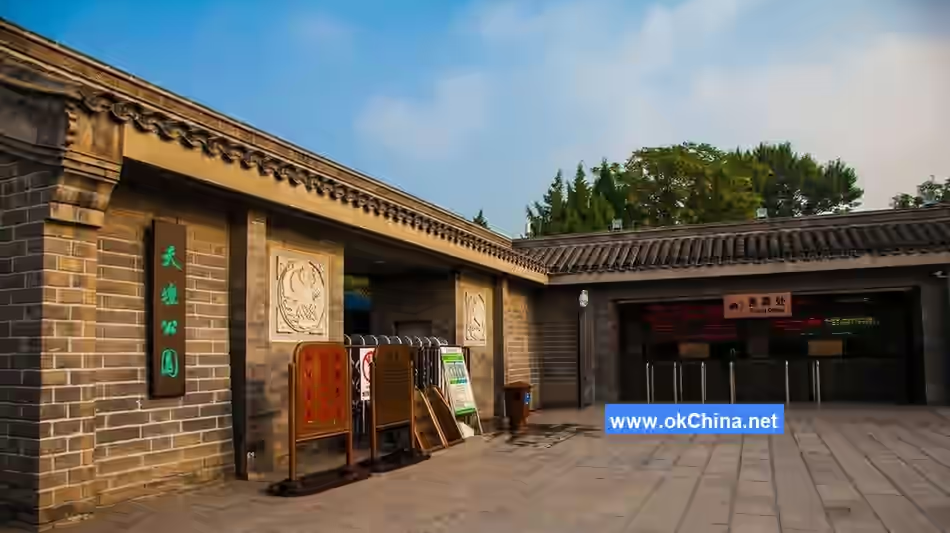
Originally named the "Altar of Heaven and Earth," it is located at No. 7, Tiantan Neidongli, Dongcheng District, Beijing. Construction began in the 18th year of the Yongle reign of the Ming Dynasty (1420 AD). It was renamed the "Temple of Heaven" in the 9th year of the Jiajing reign of the Ming Dynasty (1530 AD). It served as the venue for the emperors of the Ming and Qing dynasties to "worship Heaven" and "pray for good harvests." Covering a total area of 273 hectares, it is the largest existing ancient sacrificial architectural complex in China. On January 1st, 1918 (the 7th year of the Republic of China), it was opened to the public as the Temple of Heaven Park.
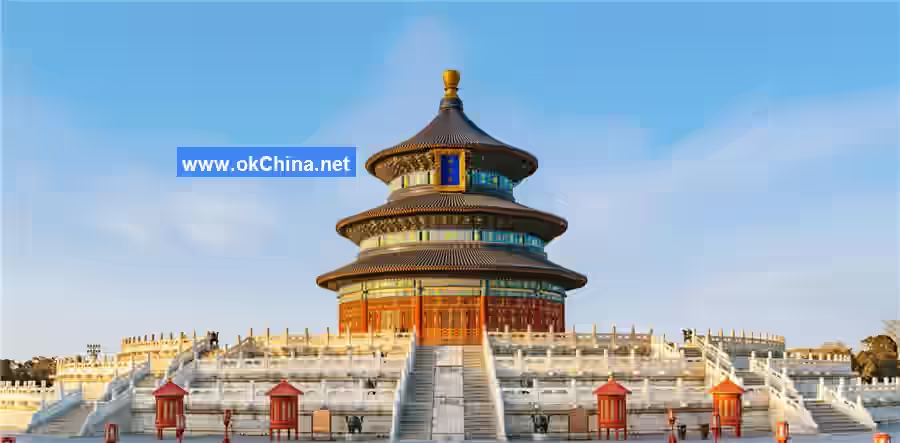
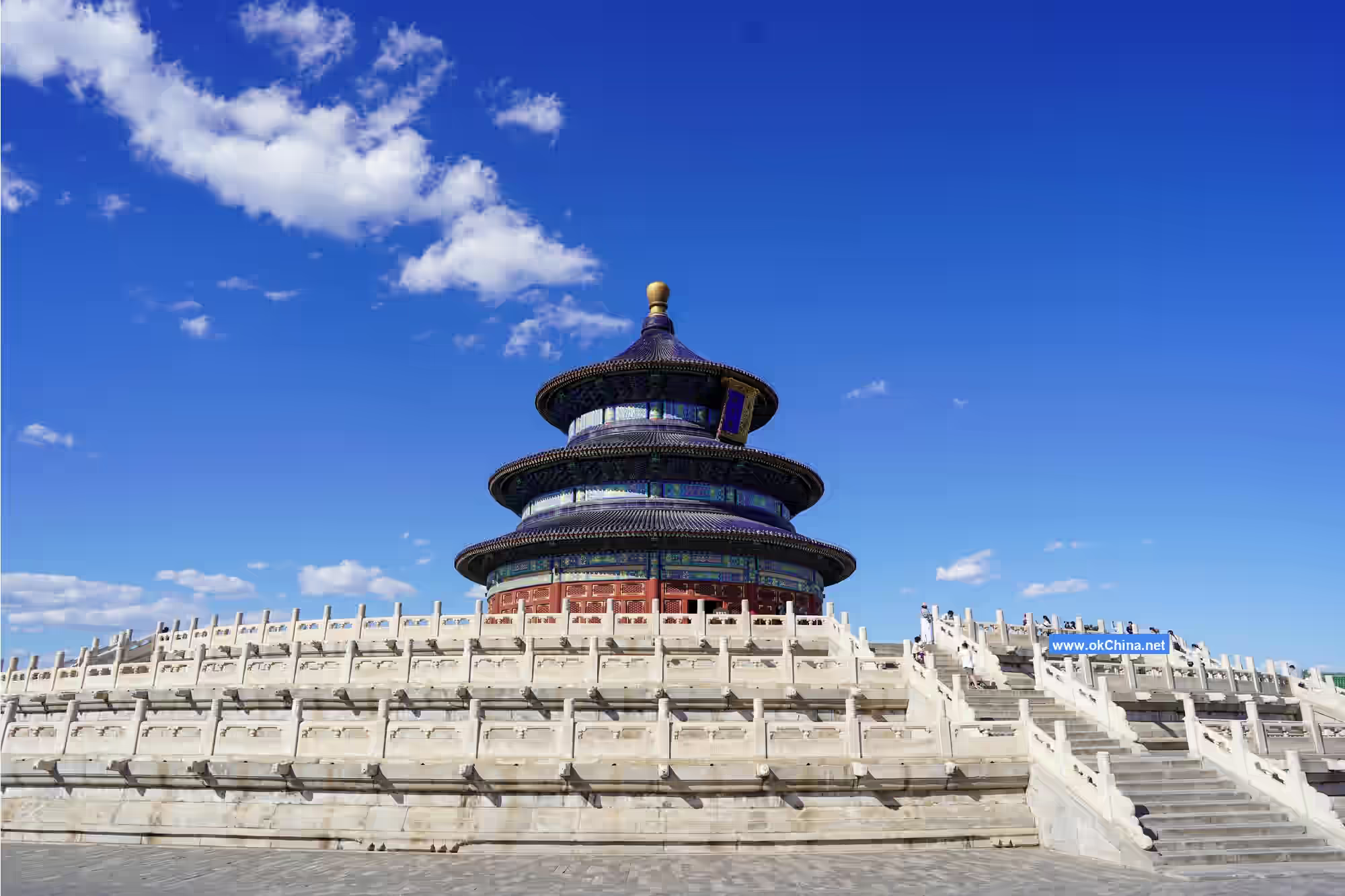
The Temple of Heaven Park is surrounded by two altar walls, dividing it into an "Inner Altar" and an "Outer Altar." The northern part is circular, while the southern part is square, symbolizing the ancient belief that "the heavens are round and the earth is square." It primarily consists of four major ancient architectural complexes: the "Prayer for Good Harvests Altar" used for spring prayers for abundant harvests, the "Circular Mound Altar" used for the winter solstice Heaven-worship ceremony, the "Hall of Abstinence" where the emperor resided before the ceremonies, and the "Divine Music Administration" where sacrificial rituals and music were rehearsed. The Hall of Prayer for Good Harvests within the Prayer for Good Harvests Altar is an iconic landmark of Beijing. The Outer Altar of the Temple of Heaven Park is planted with a large number of ancient cypress trees.
2. Historical Development
In the 18th year of the Yongle reign of the Ming Dynasty (1420 AD), Emperor Chengzu Zhu Di moved the capital to Beijing and constructed the Beijing Altar of Heaven and Earth following the regulations of its counterpart in Nanjing. This included structures such as the Great Sacrifice Hall, the Great Sacrifice Gate, and the Hall of Imperial Zenith, serving as a combined venue for worshipping Heaven and Earth.
In the 19th year of the Yongle reign of the Ming Dynasty (1421 AD), Emperor Chengzu Zhu Di held the first combined Heaven and Earth worship ceremony at the Great Sacrifice Hall of the Altar of Heaven and Earth.
In the 9th year of the Jiajing reign of the Ming Dynasty (1530 AD), the "Great Rites Controversy" occurred. Emperor Shizong Zhu Houcong decided to restore the old system of separate worship for Heaven and Earth. He ordered the construction of the Circular Mound south of the Great Sacrifice Hall for holding the winter solstice Heaven-worship ceremony. Subsequently, the Altar of Heaven and Earth was renamed the Temple of Heaven, and the Altar of Earth was constructed separately north of Beijing city. The deity name was changed from "Haotian Shangdi" to "Huangtian Shangdi," and the rituals for worshipping Heaven were reformed.
In the 11th year of the Jiajing reign of the Ming Dynasty (1532 AD), the Altar for Praying for Rain was built east of the Taiyuan Gate outside the Circular Mound Altar.
In the 17th year of the Jiajing reign of the Ming Dynasty (1538 AD), Emperor Shizong ordered the demolition of the Great Sacrifice Hall.
In the 19th year of the Jiajing reign of the Ming Dynasty (1540 AD), the Hall of Great Offering was constructed on the original site of the Great Sacrifice Hall.
In August of the 24th year of the Jiajing reign of the Ming Dynasty (1545 AD), the Hall of Great Offering was completed.
In the 12th year of the Qianlong reign of the Qing Dynasty (1749 AD), the Altar for Praying for Rain built during the Jiajing period of the Ming Dynasty was demolished.
In the 16th year of the Qianlong reign of the Qing Dynasty (1751 AD), Emperor Qianlong decreed to rename the Hall of Great Offering as the Hall of Prayer for Good Harvests, and the Gate of Great Offering as the Gate of Prayer for Good Harvests.
In the 17th year of the Qianlong reign of the Qing Dynasty (1752 AD), repairs were made to the Circular Mound and the Imperial Vault of Heaven. The roof tiles of the Hall of Prayer for Good Harvests' three-tiered eaves were changed: the upper tier's blue tiles, middle tier's yellow tiles, and lower tier's green tiles, along with the green tiles of the Gate of Prayer for Good Harvests, side halls, and Hall of Imperial Zenith, were all replaced with blue-glazed tiles. Other structures retained their original green tiles.
In the 15th year of the Guangxu reign of the Qing Dynasty (1889 AD), the Hall of Prayer for Good Harvests was destroyed by a lightning fire.
In the 16th year of the Guangxu reign of the Qing Dynasty (1890 AD), reconstruction of the Hall of Prayer for Good Harvests began.
In the 22nd year of the Guangxu reign of the Qing Dynasty (1896 AD), the reconstruction of the Hall of Prayer for Good Harvests was completed.
In the 27th year of the Guangxu reign of the Qing Dynasty (1901 AD), the Eight-Nation Alliance captured Beijing. British troops were stationed at the Temple of Heaven and looted numerous cultural relics.
In the 33rd year of the Guangxu reign of the Qing Dynasty (1907 AD), Emperor Guangxu performed the Heaven-worship ceremony at the Temple of Heaven, marking the last time an ancient Chinese monarch held such a ceremony there.
In March 1912 (the 1st year of the Republic of China), the Temple of Heaven was transferred from the Qing Dynasty's Court of Ceremonial Affairs to the Department of Customs and Rites under the Ministry of Internal Affairs of the Beiyang Government of the Republic of China. The Beiyang Government began preparations to open the Temple of Heaven to the public.
In 1914 (the 3rd year of the Republic of China), Yuan Shikai restored the monarchy and performed sacrificial rites at the Temple of Heaven, causing plans for public opening to stall.
On January 1st, 1918 (the 7th year of the Republic of China), the Temple of Heaven was opened to the public, establishing the Temple of Heaven Park.
From 1935 to 1937 (the 24th to 26th years of the Republic of China), major renovations were carried out at the Temple of Heaven Park.
In 1937 (the 26th year of the Republic of China), the invading Japanese army occupied Beiping (Beijing). The southwestern part of the Outer Altar of the Temple of Heaven Park was occupied by Japanese forces, and the Divine Music Administration was converted into a base for bacteriological warfare against China.
In 1948 (the 37th year of the Republic of China), nearly 2,000 refugee students forcibly occupied the Temple of Heaven Park, broke into warehouses to take items, and cut down trees for fuel, emptying the Temple's warehouses. In December of the same year, as Beiping was besieged by the People's Liberation Army, the Nationalist government felled a large number of ancient trees within the Temple of Heaven Park to construct the Temple of Heaven Airport, attempting to maintain contact with the outside world.
In January 1949, Beiping was peacefully liberated. The People's Liberation Army took over the Temple of Heaven Park, which did not suffer significant damage.
In 1951, the Temple of Heaven Park was designated as a "Cultural Park," and the Beijing Municipal People's Government established the Temple of Heaven Park Management Office.
In 1955, a cinema and theater were built in the Hall of Abstinence within the Temple of Heaven Park.
In 1958, farms and forest farms were established within the Temple of Heaven Park, cultivating crops such as sorghum, sweet potatoes, and soybeans.
In 1966, during the "Destroy the Four Olds" period, plaques at sites like the Hall of Prayer for Good Harvests in the Temple of Heaven Park were replaced with portraits of Chairman Mao to protect the ancient structures from destruction by ultra-leftist ideology.
In 1970, the Temple of Heaven Park underwent renovations. Comrade Wan Li, then a member of the Beijing Municipal Party Committee Standing Committee, oversaw the work on-site. He resisted the主张 to "destroy all feudal elements" and insisted on restoring the ancient buildings in the park according to their original appearance.
In 1976, the Tangshan earthquake affected Beijing. The Temple of Heaven Park served as a refuge for the masses, accommodating approximately 17,000 households (around 65,000 residents).
From 1974 to 1979, soil excavated for civil air defense projects was piled northwest of the Circular Mound in the Temple of Heaven Park, reaching a height of 32 meters.
In 1985, the theater in the Hall of Abstinence of the Temple of Heaven Park was demolished. Commercial shops were cleared out, and exhibition spaces were opened.
In 1988, the Echo Wall in the Temple of Heaven Park was opened to the public.
In April 1990, the Hall of Prayer for Good Harvests in the Temple of Heaven Park began charging admission fees for public access.
In 1992, the 24 damaged Lattice Star Gates inside and outside the Circular Mound Altar of the Temple of Heaven Park were restored.
In 1993, the Watchtower Lamp Pole of the Circular Mound Altar in the Temple of Heaven Park was reconstructed.
On July 12, 2018, the Temple of Heaven Park increased its green space area by nearly 20,000 square meters, expanding the area open to tourists by 2.24 hectares.
3. Orientation and Layout
3.1 Geographical Location
The Temple of Heaven is located on the east side of Yongdingmen Nei Street, Dongcheng District, Beijing.
3.2 Layout
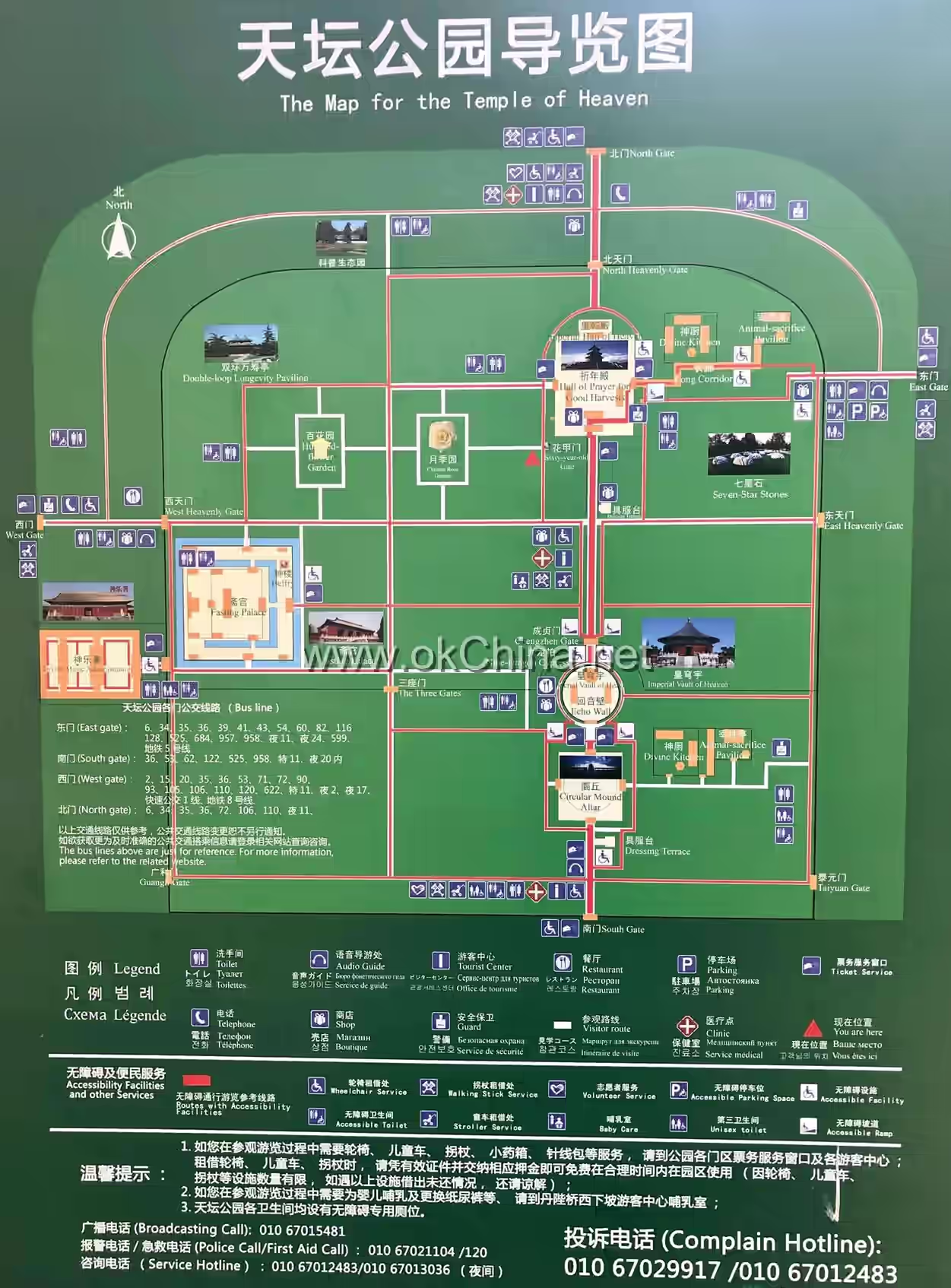
The Temple of Heaven Park covers an area of 205 hectares. It is protected by two concentric altar walls, dividing it into an Inner Altar and an Outer Altar. The perimeter of the Outer Altar wall is 6,553 meters, with a north-south distance of 1,657 meters and an east-west distance of 1,703 meters. The perimeter of the Inner Altar wall is 4,152 meters, with a north-south distance of 1,283 meters and an east-west distance of 1,025 meters.
The main ancient buildings of the Temple of Heaven Park are concentrated within the Inner Altar. An east-west partition wall runs through the center of the Inner Altar, dividing it into northern and southern sections, with gates connecting them. The Inner Altar consists of three groups of ancient architectural complexes: the Circular Mound Altar, the Prayer for Good Harvests Altar, and the Hall of Abstinence. The Prayer for Good Harvests Altar is located in the northern part of the Inner Altar, the Circular Mound Altar is in the southern part, and the Hall of Abstinence is in the western part. A 360-meter-long, 28-meter-wide, and 2.5-meter-high raised walkway called the Danbi Bridge connects the Circular Mound Altar and the Prayer for Good Harvests Altar. The Inner Altar is surrounded by gates: the East Heavenly Gate, North Heavenly Gate, West Heavenly Gate, Guangli Gate, Zhaoheng Gate, and Taiyuan Gate.
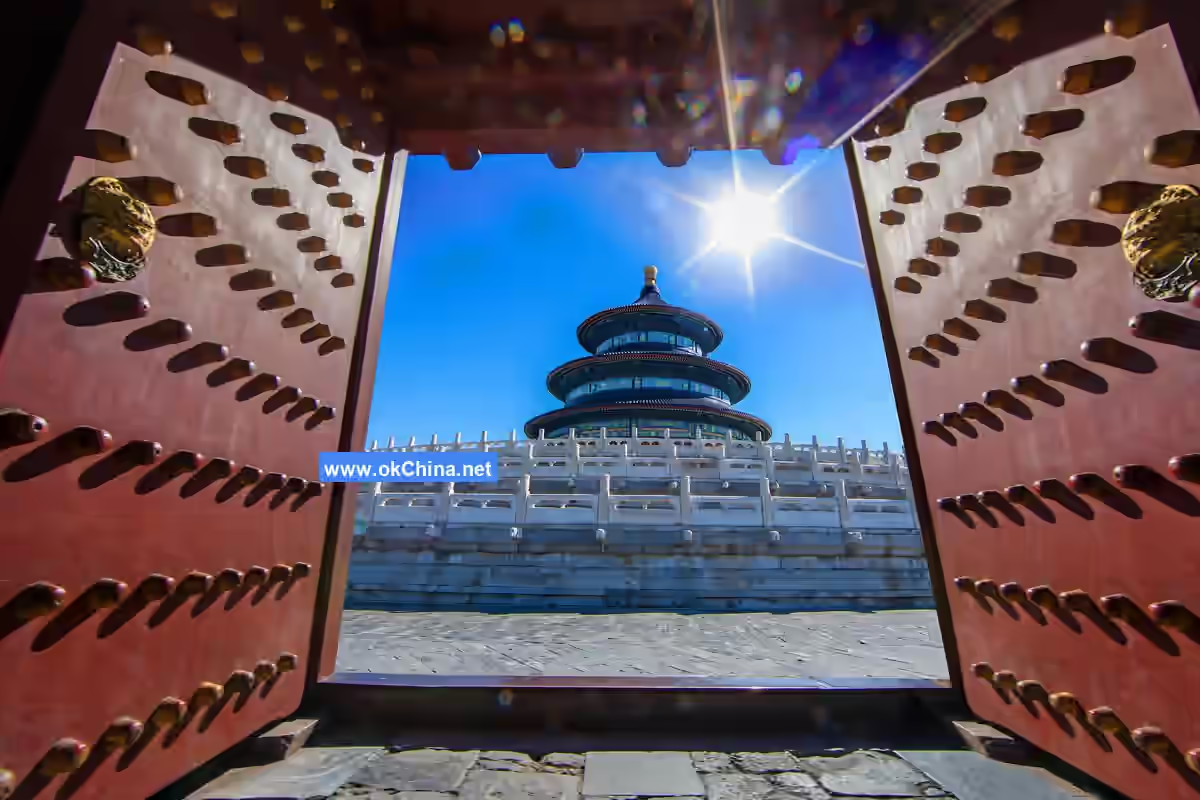
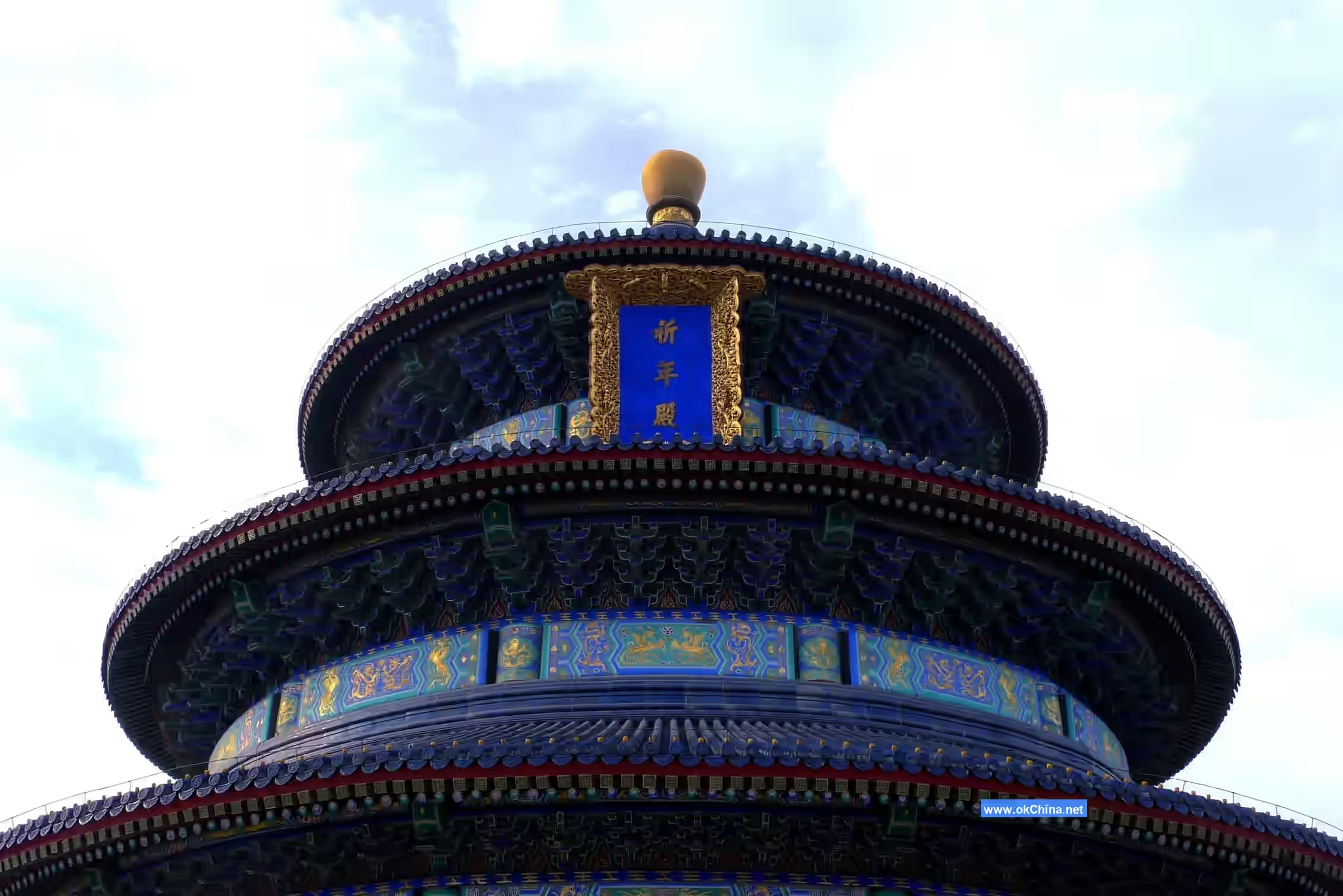
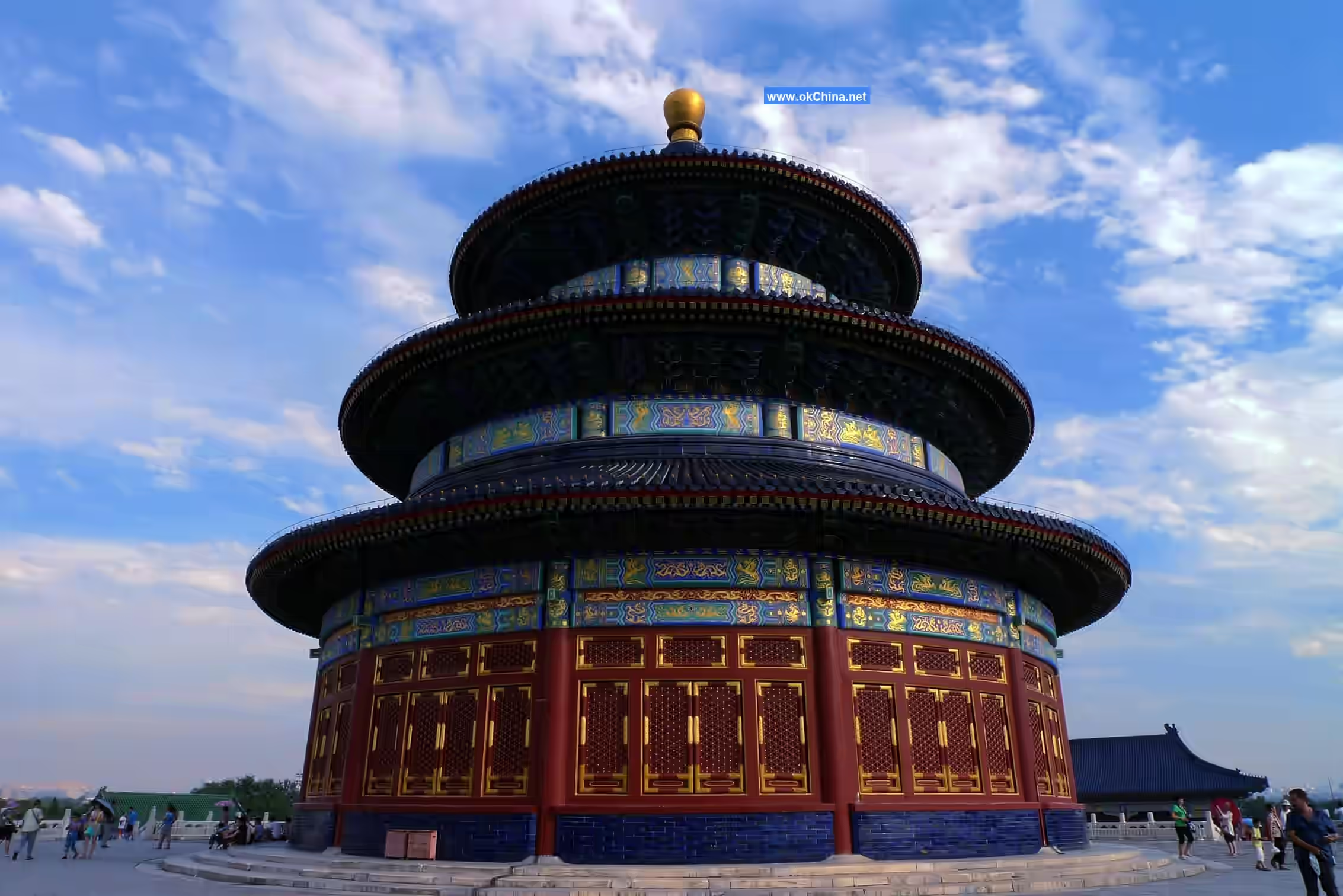
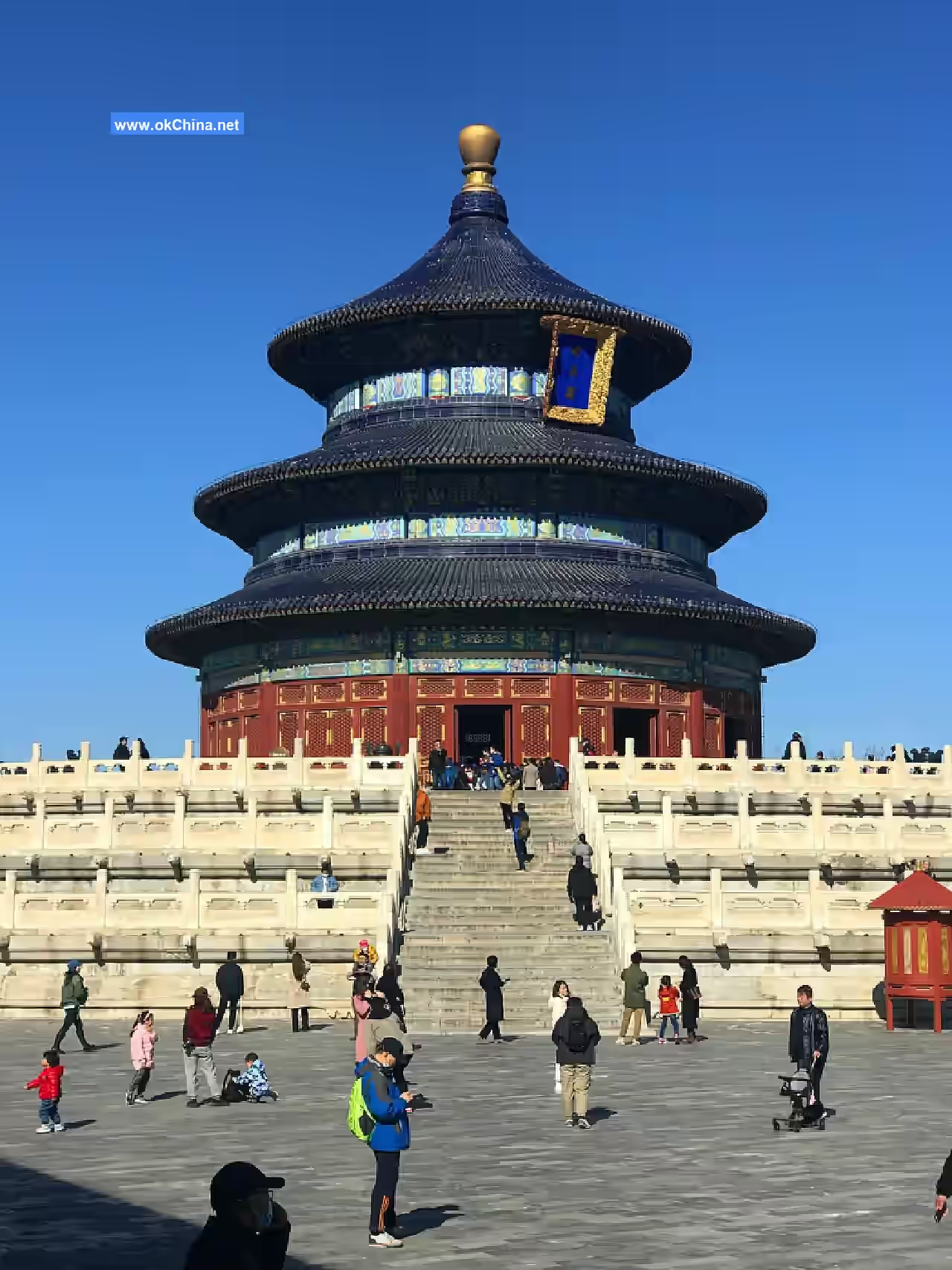
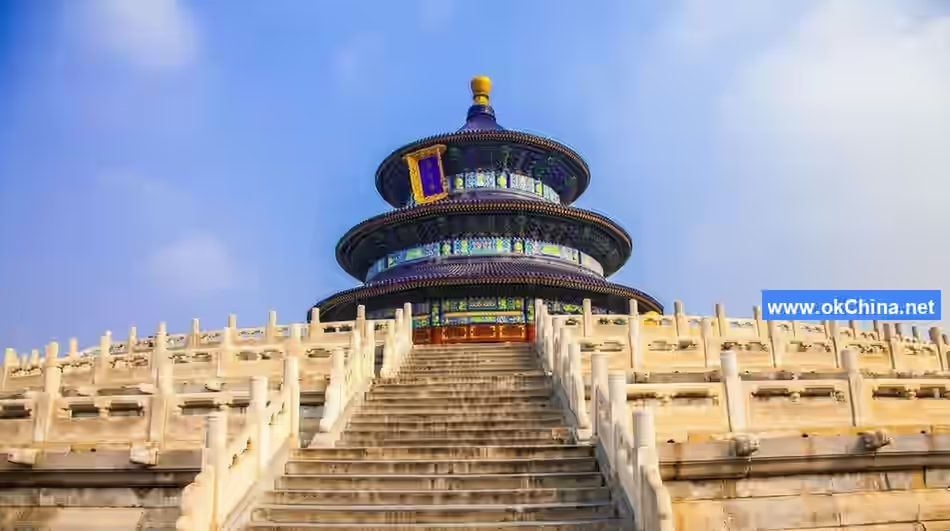
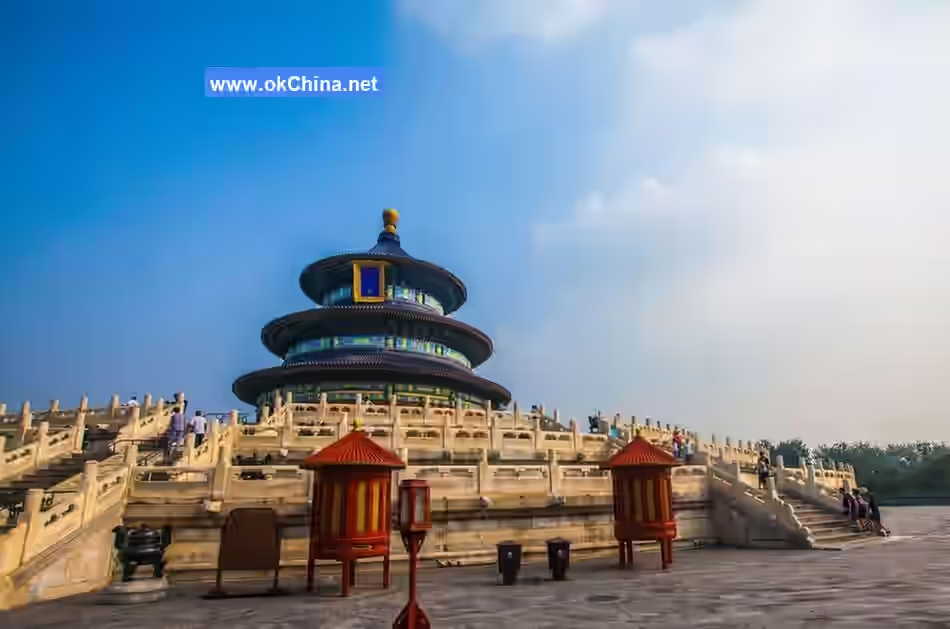
The Prayer for Good Harvests Altar area is located on the north side of the Inner Altar. Its main gate is called the Gate of Prayer for Good Harvests, north of which lies the altar platform. At the center of the upper platform stands the Hall of Prayer for Good Harvests. It is a circular hall with a triple-eave pyramidal roof covered in blue-glazed tiles and topped with a gilded finial. The hall is 38 meters high. North of the Hall of Prayer for Good Harvests is the Hall of Imperial Zenith, which houses the spirit tablets worshipped during the Prayer for Good Harvests ceremonies. Outside the east gate of the Prayer for Good Harvests Altar are auxiliary buildings such as the Divine Kitchen, Divine Storehouse, Butchering Pavilion, and the Long Corridor.
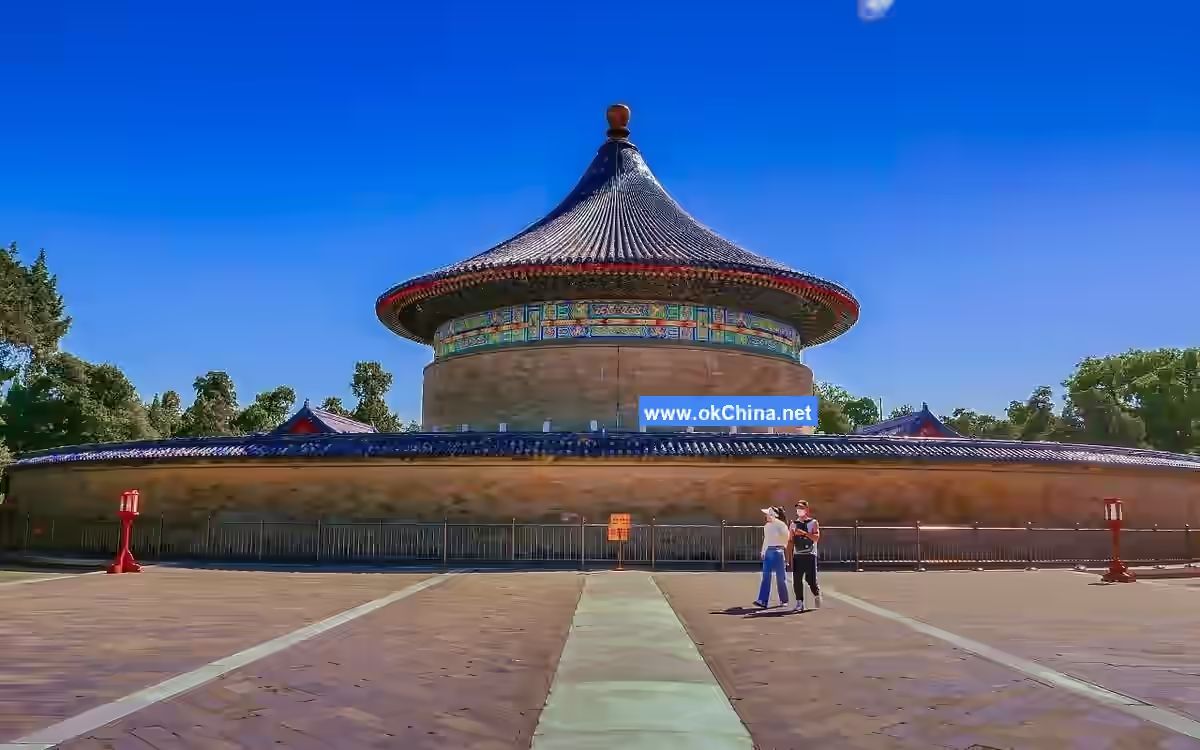
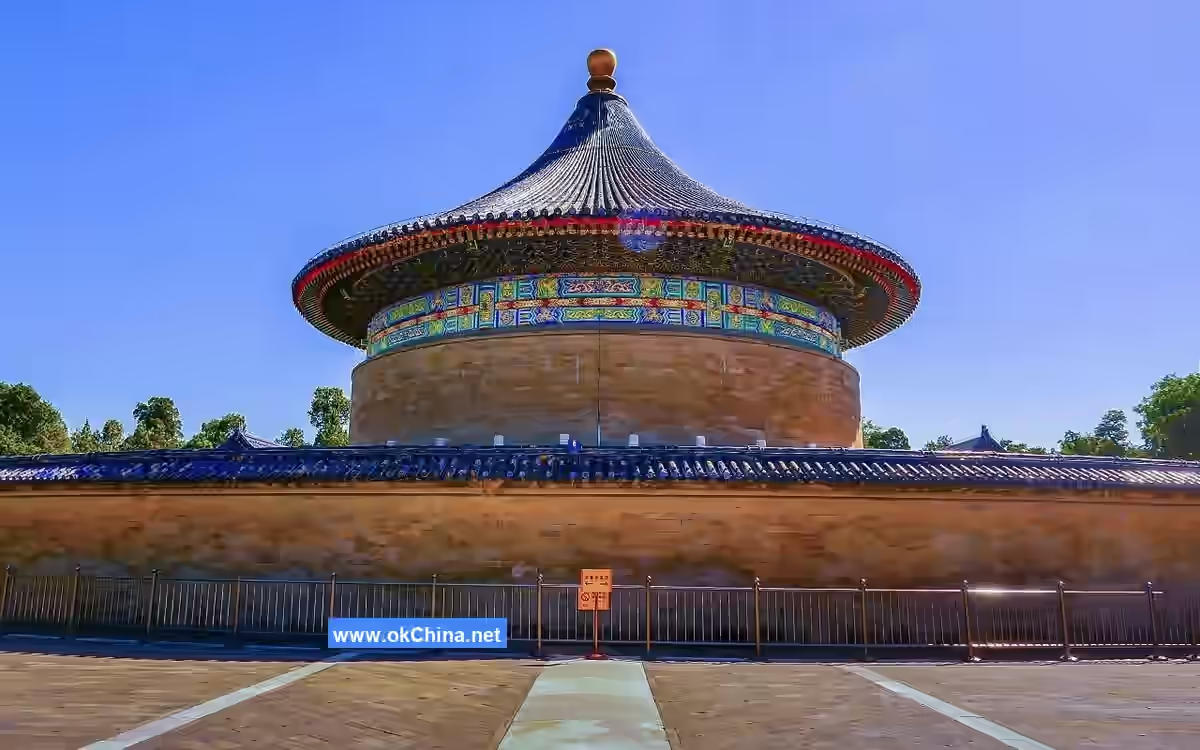
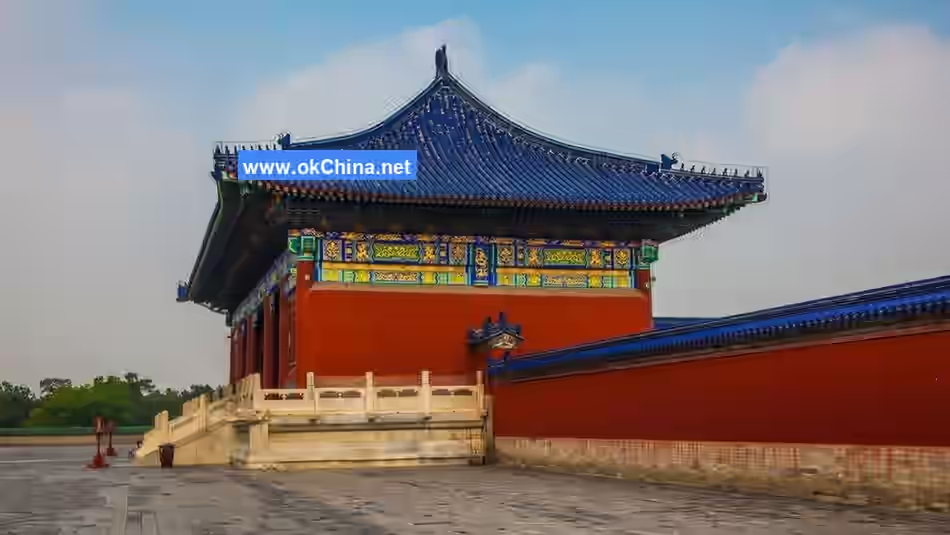
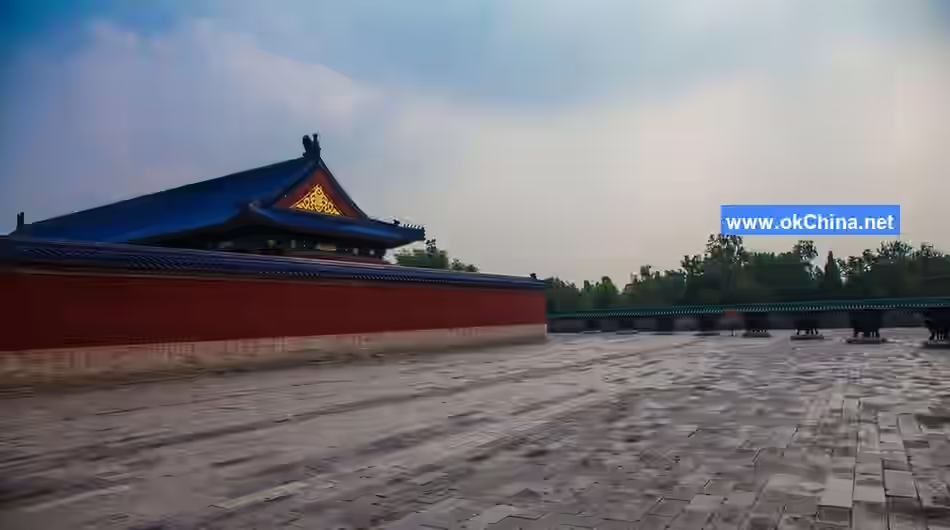
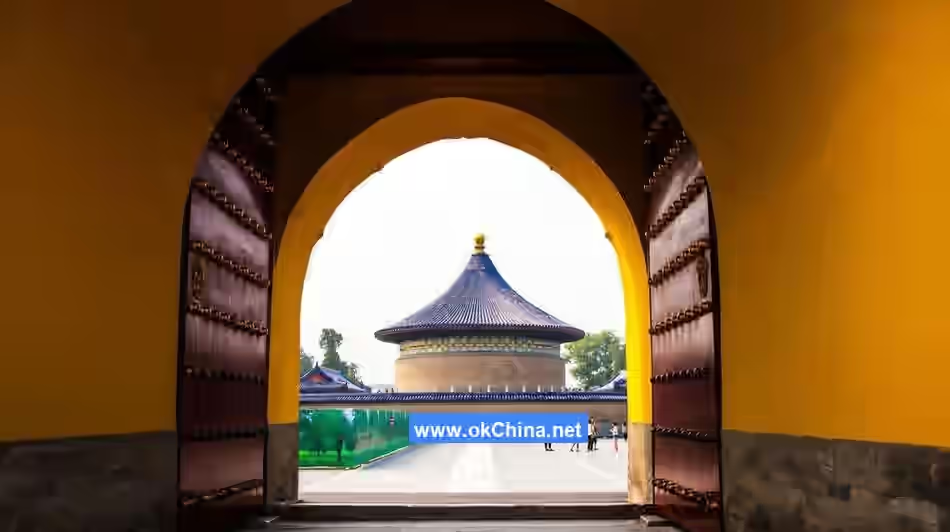
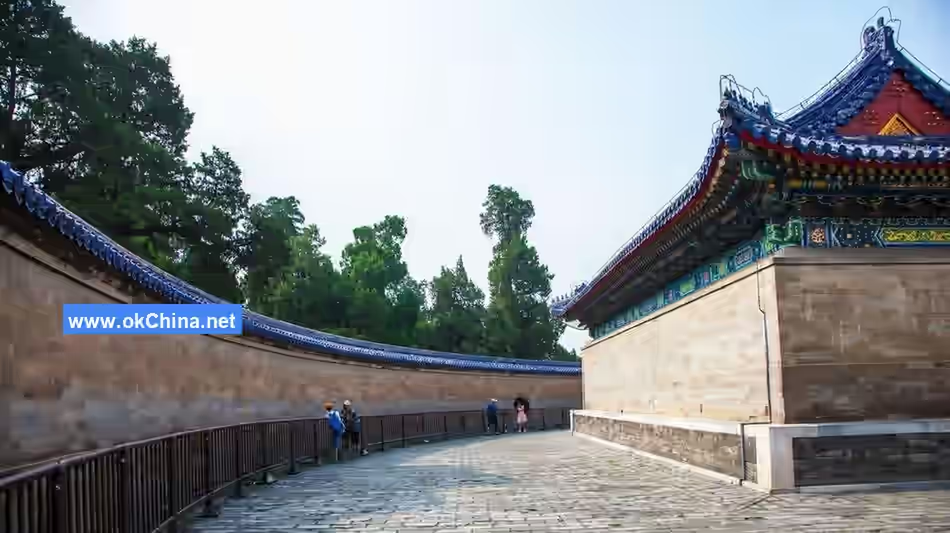
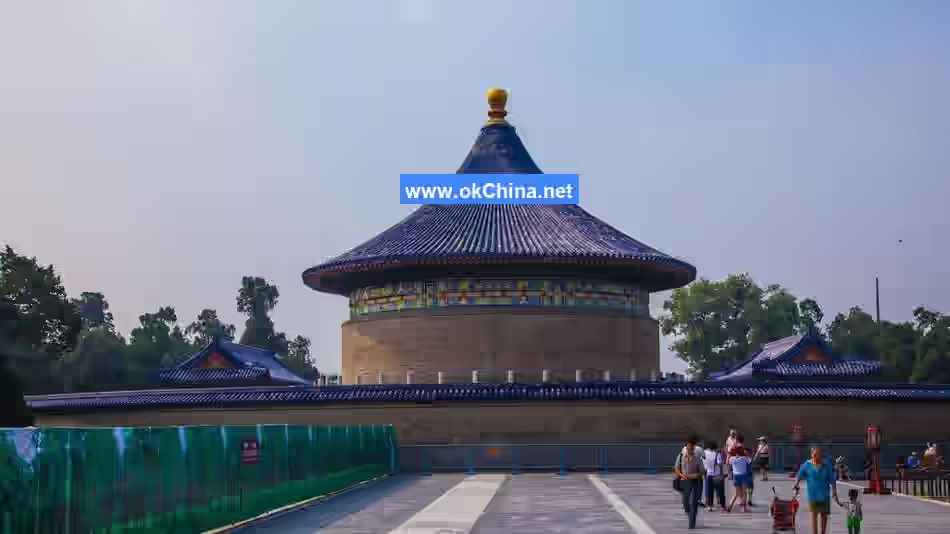
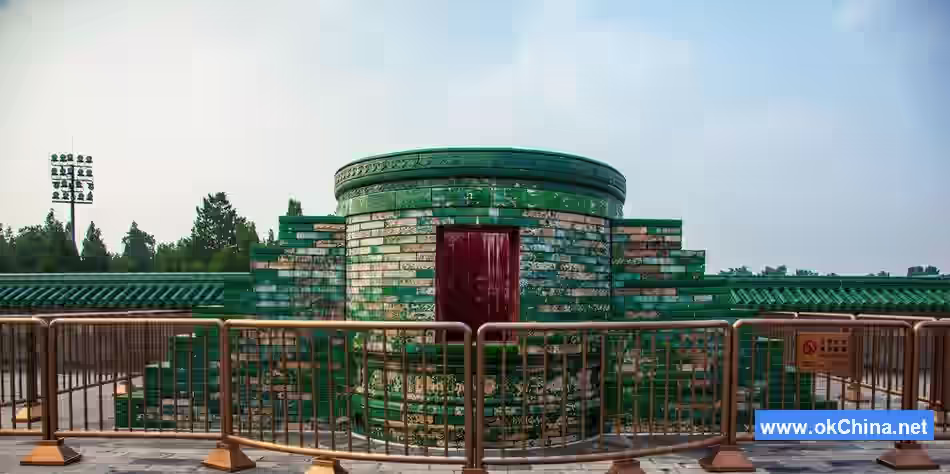
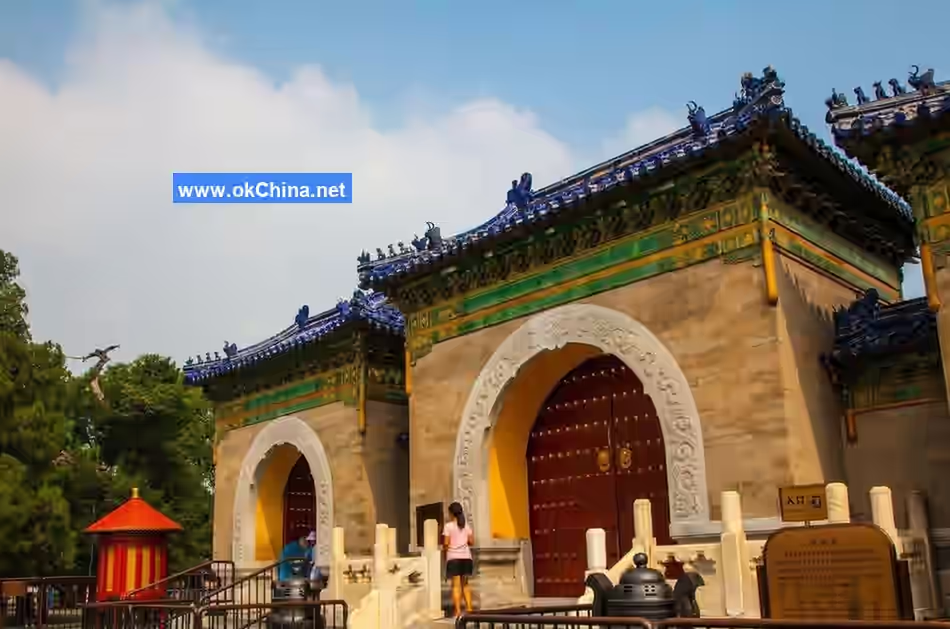
The Circular Mound Altar area covers an area of 44.66 hectares. It was the venue for the Heaven-worship ceremonies and is also known as the Sacrificial Altar, Heaven Worship Altar, or Worship Platform. The Circular Mound Altar is enclosed by two walls, the inner one circular and the outer one square, with red walls and blue tiles. Each side has a Lattice Star Gate. North of the Circular Mound Altar is the Imperial Vault of Heaven. The Imperial Vault of Heaven is surrounded by a perfectly circular wall with a smooth surface that can transmit sound waves, commonly known as the "Echo Wall." The Hall of Abstinence area covers 4 hectares. It contains structures such as the Bell and Drum Towers, the Beamless Hall, and the Resting Hall. All buildings are covered with green-glazed tiles, symbolizing the residence of the "Son of Heaven."
The Outer Altar of the Temple of Heaven Park is a forested area with extensive tree planting. Located in the southwestern part of the Outer Altar is the Divine Music Administration, which was used for rehearsing ritual music and dance, commonly known as the Temple of Heaven Monastery.### 3.3 Characteristics
The design of the Temple of Heaven Park is meticulous, with its site selection, planning, and architectural design all based on the theories of Yin-Yang and the Five Elements from the ancient Chinese text "Zhou Yi," reflecting the ancient Chinese understanding of "Heaven." Whether in the overall layout or in individual structures, the buildings within the Temple of Heaven Park illustrate the relationship between heaven and earth, a relationship that held a central position in ancient Chinese cosmology. Simultaneously, the architecture also embodies the role played by ancient Chinese emperors and nobility within this heaven-earth relationship.
The southern part of the park's double-ringed wall is square, symbolizing the earth, while the northern part is circular, symbolizing the heavens, representing the concept of "the round heaven and the square earth." This wall is thus commonly known as the "Heaven and Earth Wall." The main structures—the Circular Mound Altar, the Hall of Prayer for Good Harvests, and the Imperial Vault of Heaven—all feature circular layouts. However, the brick outer walls of the Hall of Prayer for Good Harvests and the Circular Mound Altar are square, again symbolizing "the round heaven and the square earth." Both the Circular Mound Altar and the Altar of Prayer for Grain are located within the inner enclosure of the Temple of Heaven. The Circular Mound Altar, used for the "Heaven Worship Ceremony," is situated in the southern part of the inner enclosure, corresponding to the direction of the heavenly deities. The Altar of Prayer for Grain, a place for praying for bountiful harvests, is located in the northern part.
The Hall of Prayer for Good Harvests uses its circular shape and blue color to symbolize heaven. The large pillars and bays inside the hall respectively represent the four seasons, twenty-four solar terms, twelve months, and twelve two-hour periods of a day, as well as symbolizing constellations and stars, embodying the principle of "modeling heaven and emulating earth" throughout.
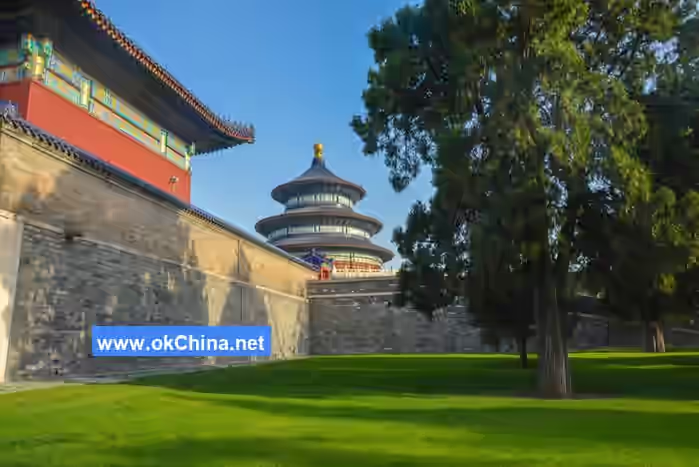
The Temple of Heaven Park contains over 60,000 trees of various species, including more than 3,500 ancient pines, cypresses, and scholar trees. Its green space covers 1.63 million square meters. In ancient China, altar-temples were considered the "eternal and unshakable" foundation of the state, leading to great emphasis on tree planting within them. During the initial construction of the Beijing Altar of Heaven and Earth in the Yongle period of the Ming Dynasty, pines and cypresses were planted to convey the meaning of "reverence and remembrance." Subsequent dynasties continued to supplement the plantings, forming a significant ancient tree community by the mid-Qing Dynasty. A large number of ancient pines and cypresses are distributed around sacrificial structures like the Circular Mound Altar and the Hall of Prayer for Good Harvests. Together, the ancient trees and ancient architecture create the park's solemn, serene, and profound atmosphere.
The Temple of Heaven Park integrates ancient philosophy, history, mathematics, mechanics, aesthetics, and ecology. Its architectural design and construction represent the pinnacle of architectural technology and art from both the Ming and Qing dynasties. The Hall of Prayer for Good Harvests and the Imperial Vault of Heaven, with their wooden structures and circular layouts, are massive halls of exquisite craftsmanship and ingenious conception. Ecologically, the Temple of Heaven, with its vast forests and rich vegetation, creates a "harmony between heaven and humanity" environment. It serves as a physical specimen for studying ancient architectural art and ecology, possessing high scientific value and standing as an outstanding example among imperial sacrificial altar complexes. The Hall of Prayer for Good Harvests, the compositional center of the architectural axis in the northern part of the park, is majestic in form and ingeniously framed. Its interior space rises layer by layer, converging towards the center, while its external platform and eaves contract and ascend in circular tiers. This creates a strong upward dynamic while also conveying dignity and stability. The color contrasts are intense yet harmonious and appropriate, making visitors feel as if they are stepping onto auspicious clouds and ascending to the heavenly realm upon entering the altar. From its overall conception to its details, the Temple of Heaven Park is a masterpiece of ancient architecture and fine craftsmanship, possessing high artistic value. It is a relic and carrier of the Chinese nation's long history, thought, and culture. The Temple of Heaven is a materialization of ancient philosophical thought, holding significant historical, scientific, and unique artistic value, along with profound cultural connotations.
4. Main Structures
4.1 Altar of Prayer for Grain
Hall of Prayer for Good Harvests: Initially built in the 18th year of the Yongle reign of the Ming Dynasty (1420), it was first named the "Great Sacrifice Hall" and was a rectangular hall used for the joint worship of heaven and earth. In the 24th year of the Jiajing reign of the Ming Dynasty (1545), it was converted into a circular hall with triple eaves. The roof was covered with three colors of glazed tiles: blue on top, yellow in the middle, and green at the bottom, symbolizing heaven, earth, and all things, and it was renamed the "Great Enjoyment Hall." In the 16th year of the Qianlong reign of the Qing Dynasty (1751), the three-colored tiles were replaced with uniform blue tiles and a gilded top, and it was definitively named the "Hall of Prayer for Good Harvests," a building dedicated to praying for grain in the first month of spring. The hall is 38.2 meters high and 24.2 meters in diameter. Its interior bays also symbolize the four seasons, twelve months, twelve two-hour periods, and the celestial sphere. It is the only remaining example of a Mingtang-style building from ancient China.
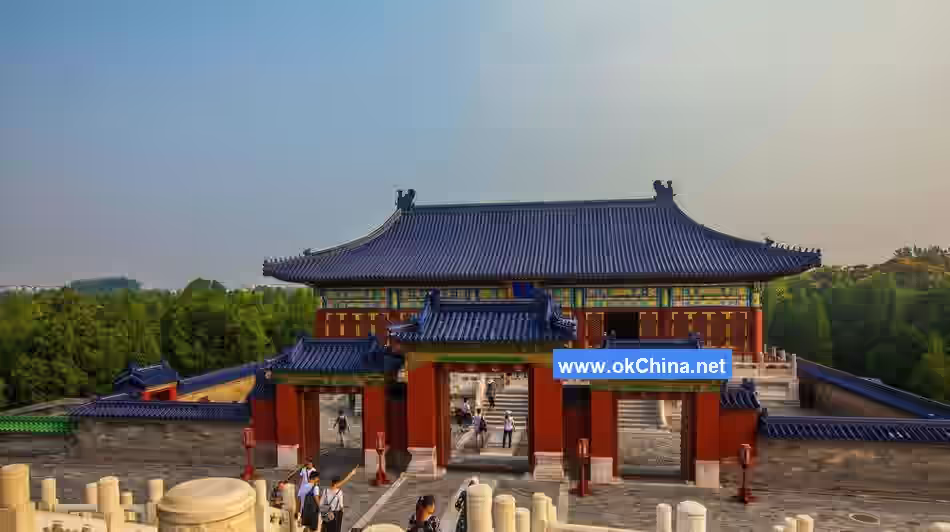
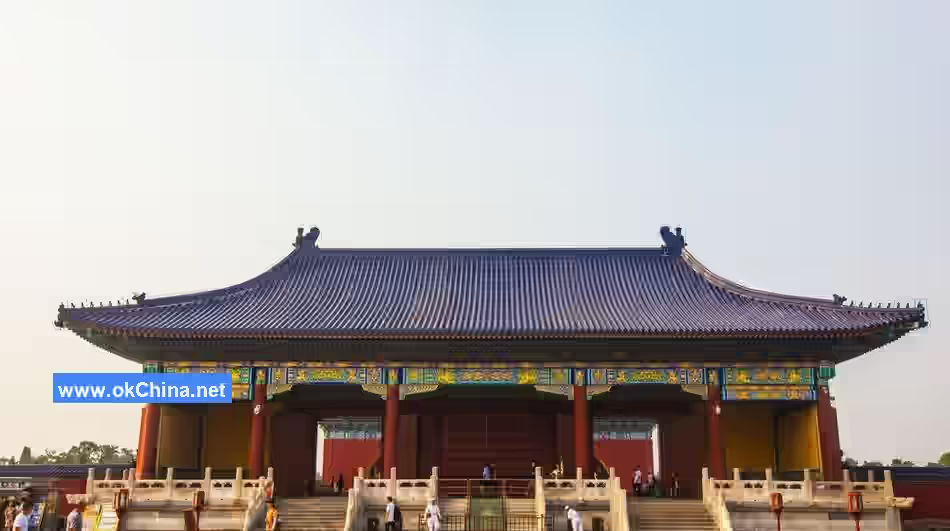
Gate of Prayer for Good Harvests: This is the ceremonial gate of the Altar of Prayer for Grain, located south of the Hall of Prayer for Good Harvests, built in the 18th year of the Yongle reign of the Ming Dynasty (1420). It was initially called the Great Sacrifice Gate, later changed to the Great Enjoyment Gate. In the 16th year of the Qianlong reign of the Qing Dynasty (1751), Emperor Qianlong designated it as the Gate of Prayer for Good Harvests. It is a hip-roofed building with five bays, of which the central three are gateways, featuring high foundations and stone balustrades, representing the highest grade of gate system in ancient China. The central gate was reserved for the Supreme Deity of Heaven, the emperor used the left (east) gate, and officials used the right (west) gate.
Hall of Heavenly Emperor: This is the hall where the main and associated spirit tablets for the Altar of Prayer for Grain sacrifices were usually enshrined. Built in the 18th year of the Yongle reign of the Ming Dynasty (1420), it is located north of the inner wall of the Altar of Prayer for Grain, connected to the altar by three glazed-tile gates. It features a blue-glazed tile hip roof, high foundations with stone balustrades, and has a moon terrace in front with eight steps on the front and sides. There is an "Ancient and Rare Gate" on the west side of the courtyard. The plaque hanging under the eaves, inscribed "Hall of Heavenly Emperor," was personally written by Emperor Jiajing of the Ming Dynasty.
4.2 Circular Mound Altar
Circular Mound: Built in the 9th year of the Jiajing reign of the Ming Dynasty (1530). The "Heaven Worship Ceremony" was held here annually on the winter solstice, hence its common name, the "Heaven Worship Altar." Initially a circular platform of blue glazed tiles, it was expanded in the 14th year of the Qianlong reign of the Qing Dynasty (1749), and the blue glazed tiles were replaced with white marble balustrades and an Aiyeqing stone surface. The number of steps, stone slabs on each tier, and stone balustrade panels on the Circular Mound all use the number nine or its multiples, corresponding to the "Nine Heavens." The repeated use of "nine" emphasizes the status of "Heaven."
Lattice Star Gate: Located outside the Circular Mound wall, this is a gate style specific to ancient sacrificial altar walls, resembling a decorated archway (pailou) and carved from white marble. The inner and outer walls of the Temple of Heaven's Circular Mound each have four sets of gates, with three gates per set, totaling eight sets and 24 Lattice Star Gates, known as "Jade Clouds Standing."
Triple-Sound Stones: This refers to the third stone slab on the imperial path in front of the Imperial Vault of Heaven Hall. It is named for producing three echoes from a single clap when standing on it. The stone is precisely at the center of the circular Echo Wall. Sound waves emitted from this point are reflected by the East and West Side Halls and the Echo Wall surface, all returning to the center. Due to the significant difference in distance from the two reflecting surfaces to the center, three echoes can be heard.
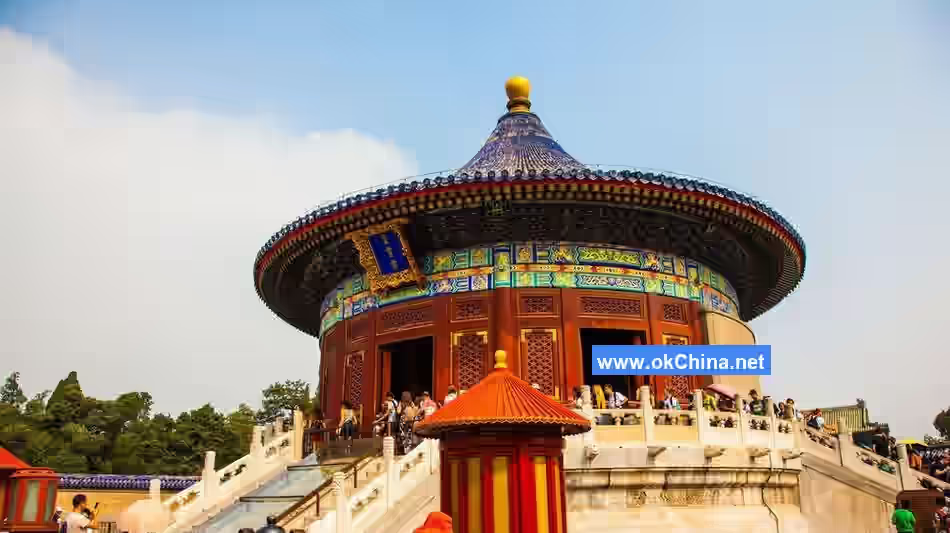
Imperial Vault of Heaven: Built in the 9th year of the Jiajing reign of the Ming Dynasty (1530). Initially a double-eaved circular structure named "Hall of Supreme Peace," it was the main hall of the Circular Mound Altar's heavenly treasury, used for enshrining the spirit tablets used in the Heaven Worship Ceremony. It was renamed "Imperial Vault of Heaven" in the 17th year of the Jiajing reign of the Ming Dynasty (1538). It was rebuilt into its current form in the 17th year of the Qianlong reign of the Qing Dynasty (1752). The hall is 19.5 meters high and 15.6 meters in diameter, with a wooden arch structure and a blue tile, gilded top. The ceiling caisson is a golden dragon design on a blue-green background, with a large golden coiled dragon pattern at the center.
4.3 Hall of Abstinence
The Hall of Abstinence was built in the 18th year of the Yongle reign of the Ming Dynasty (1420), covering nearly 40,000 square meters. It was a palace dedicated to the emperor's fasting. The complex includes specialized buildings for rituals, residence, service, and guard duty, such as the Beamless Hall, sleeping quarters, the Bronze Man Stone Pavilion, bell tower, guard rooms, and patrol corridors. The layout is rigorous and the environment elegant, protected by two layers of palace walls and two moats. Before a sacrifice, the emperor would arrive three days in advance to fast, abstaining from meat, alcohol, music, entering the inner chambers, handling legal cases, and visiting the sick or attending funerals, purifying himself to show reverence and sincerity.
Beamless Hall: This is the main hall of the Hall of Abstinence, built in the 18th year of the Yongle reign of the Ming Dynasty (1420). It is named for using brick arches for load-bearing, without beams or lintels. The emperor performed relevant rituals here when entering or leaving the Hall of Abstinence. The interior is now displayed according to its original appearance from the Qianlong period. The horizontal plaque "Qin Ruo Hao Tian" (Reverently Following the Vast Heaven) is in Emperor Qianlong's handwriting, and the screen and throne are original artifacts.
4.4 Divine Music Administration
Located in the western outer enclosure of the Temple of Heaven, the Divine Music Administration was the place for rehearsing sacrificial ritual music during the Ming and Qing dynasties, hailed as the highest institution of ritual music in both dynasties. It was first built in the 18th year of the Yongle reign of the Ming Dynasty (1420), initially called the Divine Music Temple (Shen Yue Guan). It housed teahouses and pharmacies and was also known as the Temple of Heaven Taoist Temple. In the 8th year of the Qianlong reign of the Qing Dynasty (1743), it was renamed the Divine Music Office. In the 19th year of the Qianlong reign (1754), it was definitively named the Divine Music Administration. The complex includes buildings such as the Ningxi Hall, Xianyou Hall, Zhaoyi Office, Muyi Office, Linglun Hall, and Robe Repository.
4.5 Danbi Bridge
The Danbi Bridge is 360 meters long, a raised pathway 4 meters above ground connecting the Circular Mound Altar and the Altar of Prayer for Grain. There is an east-west arched passageway underneath the middle section, hence the name "bridge." It is Beijing's oldest "overpass." The bridge surface is 30 meters wide. The central stone-paved road is the "Divine Road," reserved for the Heavenly Emperor. The brick-paved path on the east side is called the "Imperial Road," reserved for the emperor. Accompanying princes and ministers could only walk on the "Royal Road" on the west side, with clear hierarchical distinctions for movement. The Danbi Bridge slopes from north to south, with the north being higher. Walking northward gives the sensation of ascending step by step, as if approaching the heavenly court.
4.6 Seventy-Two-Bay Corridor
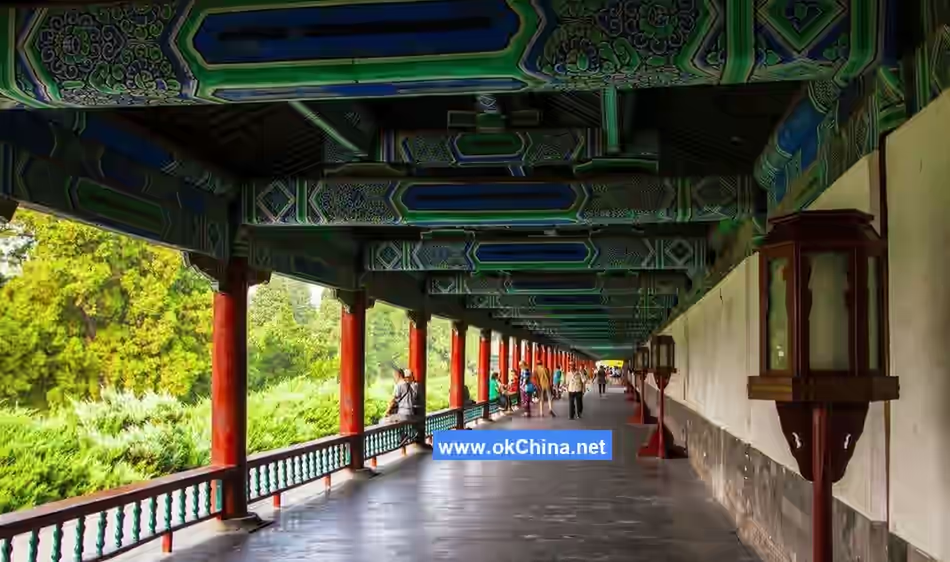
The Seventy-Two-Bay Corridor is located east of the Altar of Prayer for Grain, in an L-shape, connecting the east brick gate of the Altar of Prayer for Grain with the Divine Kitchen courtyard and the Slaughter Pavilion. During the Ming and Qing periods, the corridor served as a passage for transporting sacrificial offerings. Ancient rituals stipulated that the slaughterhouse should be at least two hundred paces away from the altar. To protect the offerings from rain, snow, and windblown sand, this winding corridor was built. The corridor is 5 meters wide and 350 meters long, consisting of 72 bays, also called the "Seventy-Two Connected Rooms." It has windows in the front and walls in the back, with connected eaves and continuous ridges.7 Double-Ring Longevity Pavilion
The Double-Ring Longevity Pavilion is uniquely formed by the interlocking of two double-eaved circular pavilions. Its structure is ingeniously precise, and its design is dignified and well-proportioned. The roof is covered with peacock-blue glazed tiles, presenting a bright and lively color. It is the only surviving example of such ancient architecture in China. It is said to have been built in the sixth year of the Qianlong Emperor's reign (1741) to celebrate his mother's 50th birthday. The ground plan symbolizes a pair of longevity peaches, with the steps in front resembling two peach tips, conveying the meanings of "harmony, auspiciousness, and longevity." The pavilion was relocated to this site in 1975.
5. Collection of Cultural Relics
5.1 Ming Dynasty Gilded Bronze Bianzhong (Chime Bells)
Ming Dynasty (1368–1644)
Made of gilded bronze, the bell body is elliptical with a flat mouth, a bulging belly, and a contracted opening. The suspension loop is formed by three mountains creating a sea, cloud, and vapor pattern in a mountain shape. The central, large-span mountain beam is decorated with cloud and vapor patterns, and the loop is carved in relief with sea waves and river cliffs. The hole for hanging the bell is set in the center. The top surface (wu) is divided by the loop, with each side decorated with a pair of flying phoenixes and cranes in relief. Between the phoenixes and cranes are carved ruyi-shaped clouds (also called auspicious clouds). The bell body is exquisitely crafted with even and thick gilding. Apart from slight wear on the gilding, the overall piece is well-preserved.
It served as the main instrument for the Zhonghe Shaoyue ritual music. During performances, after the bozhong (large bell) was struck, this bianzhong was struck once to announce the sound, and the singers would sing one character of the lyrics. A complete set should consist of 16 bells of the same size, tuned by varying thickness: thicker ones produce higher pitches, thinner ones lower pitches. This type of bell has a short resonance time, preventing notes from overlapping and creating a muddled sound, thus facilitating the performance of harmonious melodies.
5.2 Qing Dynasty Cang Bi (Dark Green Jade Disc)
Qing Dynasty (1644–1911)
Made of Hetian jade, circular, dark green in color with interspersed darker streaks.
A ritual vessel for Heaven worship. The color of the Cang Bi is close to that of the sky, hence it was used in ancient times to worship Heaven. During the grand sacrifices at the Altar of Heaven in the Ming and Qing dynasties, the emperor personally presented the Cang Bi as part of the ceremony.
5.3 Qing Guangxu Official Kiln Sacrificial Blue-Glazed Porcelain Cup
Guangxu Reign, Qing Dynasty (1875–1908)
Porcelain. Flared mouth, curved belly, deep body with flat bottom, ring foot. The exterior is covered with sacrificial blue glaze, the interior with white glaze. Plain. The base bears a six-character, two-line regular script mark in underglaze blue: "Da Qing Guangxu Nian Zhi" (Made in the Guangxu Reign of the Great Qing Dynasty).
A ritual vessel for Heaven worship. Displayed at the subsidiary spirit tablet positions on the Circular Mound Altar (Yuanqiu Tan), used to hold clear wine during sacrifices.
5.4 Qing Guangxu Official Kiln Sacrificial Blue-Glazed Lotus Leaf-shaped Covered Zun (Vessel)
Guangxu Reign, Qing Dynasty (1875–1908)
Porcelain. Straight mouth, flat rim, short neck, full shoulders, contracted belly, concealed ring foot. Lotus leaf-shaped lid with a recessed rim (zi kou), carved on top with lotus leaf veins, spiral knob. The exterior is entirely covered with sacrificial blue glaze, the interior with white glaze. Plain. The base bears a six-character, two-line regular script mark in underglaze blue: "Da Qing Guangxu Nian Zhi" (Made in the Guangxu Reign of the Great Qing Dynasty).
A ritual vessel for Heaven worship. Used during grand sacrifices at the Altar of Heaven, displayed at the main, subsidiary, and secondary positions on the Circular Mound Altar and at the main and subsidiary positions on the Prayer for Grain Altar (Qigu Tan), for holding sacrificial wine.
5.5 Qing Guangxu Official Kiln Sacrificial Blue-Glazed Carved Porcelain Dou (Stemmed Vessel)
Guangxu Reign, Qing Dynasty (1875–1908)
Porcelain. Circular mouth with flat rim, curved belly, trumpet-shaped high hollow foot. The belly is decorated successively with pendant cloud patterns, fret patterns; the stem with wave patterns, gold plaque patterns; the foot with wave-band fu patterns. Arched lid with pearl knob and recessed rim (zi kou). The lid is decorated with star patterns, pendant cloud patterns, and fret patterns. The exterior is entirely covered with sacrificial blue glaze, the interior with white glaze. The interior of the foot is white-glazed.
A ritual vessel for Heaven worship. Used during grand sacrifices at the Altar of Heaven (collective term for Circular Mound Altar and Prayer for Grain Altar) such as Heaven worship, prayers for grain, and regular rain prayers. Displayed on the offering tables at the main position (spirit tablet of Supreme Emperor of Heaven), subsidiary positions (spirit tablets of ancestors), and secondary positions (spirit tablets of deities like the Sun, Moon, Stars, Wind, Clouds, Thunder, Rain, etc.) on the Circular Mound Altar.
5.6 Qing Dynasty Bofu (Drum-like Percussion Instrument)
An instrument of the Zhonghe Shaoyue ritual music. Wooden frame with leather surface, the sides of the frame decorated with two hexagonal openwork gold-plated coiled dragons. Placed horizontally on a stand. The stand has three tiers, entirely lacquered in gold, with openwork cloud patterns on the upper part. During performance, it is patted with left and right hands. For every beat of the jian drum, the bofu is struck twice in response.
5.7 Qing Dynasty Yu (Tiger-shaped Percussion Instrument)
An instrument of the Zhonghe Shaoyue ritual music, a wooden instrument among the "Eight Tones," used to stop the music. Shaped like a crouching tiger, with a row of wooden teeth (juyu) on its back. The stand has three tiers, arranged with "chongya" (protruding teeth), and two ears on the sides for placing the zhen (scraper). In the Zhonghe Shaoyue ensemble, one zhu (box-shaped instrument) and one yu are set, each played by one person. During performance, when the command flag (hui) is raised, the zhu is struck three times to begin the music. At the end of the piece, the wooden teeth on the tiger's back are scraped three times in reverse with the zhen to signal the end.
5.8 Qing Dynasty Bronze Statue of Abstinence Figure
Bronze. Standing figure wearing a crown, left hand held towards the chest, right hand raised level and upward, as if holding an "Abstinence" plaque. Square base at the feet, connected to the upper figure by a pin.
Before every sacrifice where the emperor personally performed the rites, a bronze figure holding the abstinence plaque was presented. For grand sacrifices, a memorial was submitted four or five days in advance, and the figure was respectfully presented three days before. For medium sacrifices, a memorial was submitted three or four days in advance, and the figure was respectfully presented two days before. For grand sacrifices to Heaven and Earth, when the emperor resided in the Abstinence Palace (Zhaigong), the bronze figure was placed at the Qianqing Gate for two days and inside the altar's Abstinence Palace for one day. If the emperor did not reside in the Abstinence Palace, it was placed at the Qianqing Gate for three days. It was withdrawn on the day of the sacrifice. During the Qing Dynasty, whenever the emperor observed abstinence days, not only was the bronze figure placed in the palace halls, but abstinence plaques were also placed where he sat and slept, constantly reminding the emperor to observe abstinence with reverence and sincerity.
5.9 Qing Guangxu Mark Gold-Plated Silver Circular Censer with Cloud-Crane and Eight Trigrams Pattern
Gold-plated silver. Circular body, straight mouth with flat rim, short neck, bulging belly, decorated on both sides with "Tianguan" handles, three legs below the belly. The mouth rim has thunder patterns, the entire body carved with cloud-crane and Eight Trigrams patterns. The lid is circular, double-tiered. The upper tier is openwork with Qian, Dui, and Zhen trigram patterns, with a missing notch at the back for the incense holder. One set of incense holder, inserted into the censer from the holder groove on the inner wall. The incense holder has seven prongs, with crane-patterned ruyi cloud heads. The central incense spike has a circular frame for inserting cylindrical incense sticks. The base is incised with regular script marks: "Hengli Silver Shop made, Jingping standard silver, weight one hundred ninety-one taels five qian, gold plating fifteen taels three qian" and "Made in the Guimao year of Guangxu" (1903).
During grand sacrifices at the Altar of Heaven, displayed on the central incense burner table in front of the spirit tablets, used for burning incense.
5.10 Qing Guangxu Mark Gold-Plated Silver Circular Lantern
Gold-plated silver. Composed of two parts: lantern shade and lantern base. Overall cylindrical cage shape, shade and base separable. Circular sumeru base, carved in relief with scrolling grass patterns and lotus petal patterns. The base platform railing has openwork ruyi cloud pattern panels and hanging ornaments above and below. The center of the base platform has a 4-post lamp holder extending into the lantern shade, topped with a three-pronged flame pearl. The lantern shade is woven from soft gold wire into an openwork mesh cylindrical cage shape, contracted at top and bottom. The openwork eave is carved with interlocking lotus and precious flower patterns. The bottom is incised with regular script marks: on the right, the silver shop name and weight "Hengli Silver Shop made, Jingping standard silver, weight two hundred taels one qian"; in the center, six characters in two lines "Made in the Guimao year of Guangxu" (1903); on the left, the gold plating weight "Gold plating sixteen taels." The weight and gold plating weight differ for each lantern, hence the inscriptions differ, making each piece unique.
During grand sacrifices at the Altar of Heaven, displayed in pairs in front of the spirit tablets, used for illumination.
Surviving Cultural Relics
5.11 Pedestal Lantern
Total height: 191 cm. Lantern shade side length: 34 cm. Support base side length: 50 cm, height: 55 cm, width: 42 cm. Gathered eave pointed top height: 8.5 cm, width: 34 cm, hexagonal. Base length: 79 cm. The pedestal lantern consists of two parts: lantern shade and base. The lantern shade is hexagonal, tapering upwards, flat top, each side inlaid with transparent glass. The base supports the platform with round columns to hold the lantern shade. The base extends in four directions in a cross shape. The entire body is red with gold trim. Inserted lanterns are similar, except their bases are inserted into stone sockets, placed inside halls and along pathways.
5.12 Temple Lantern
Made in the late Qing Dynasty. Total height: 36.5 cm. Eave square: 28 cm. Foot square: 20.6 cm. Square shape, four-sided copper frame, concave glass center, one side serving as a door. The copper frame sides and bottom decorated with cloud and flower motifs, two peach-shaped hinges, peach-shaped hanging ring, bottom edge with floral patterns. Domed lid, decorated between the four ridges with four openwork coin-eye patterns, topped with a round pointed knob. Displayed in front of the main altar position and on steps, used for illumination during sacrifices.
5.13 Court Lantern
Total height: 346 cm. Eave diameter: 210 cm. Lantern body upper diameter: 153 cm, lower diameter: 158 cm. Circular shape, umbrella-shaped eave, with a jeweled finial on top. The lantern body tapers upwards and flares downwards. Square pillar-shaped four legs. The entire lantern is red, with windows on all sides, lined with yellow satin. Placed in the courtyard of the Prayer for Grain Altar.
5.14 Tianxin Stone (Heaven's Heart Stone)
The Tianxin Stone is located at the center of the Circular Mound Altar. From an astrological perspective, its position corresponds to the coordinates of the star of the Celestial Great Emperor (Tianhuang Dadi).
5.15 Wangdeng (Observation Lantern)
The Wangdeng is located southwest of the Circular Mound. It is a cylindrical bamboo-woven lantern, 2.15 meters high and 1.4 meters in diameter. The lantern pole is nine zhang (28.8 meters) tall in ancient measurement. The top has a ruyi-shaped pole and pulley to control the lantern's ascent and descent. Below, it is fixed by a stone Wangdeng platform and clamp stones, supported by three huge wooden angled poles, creating a stable structure. In ancient times, the grand Heaven worship ceremony began before dawn. At that time, the Wangdeng was hoisted high on the pole to signal solemnity and gravity throughout the altar. There were three Wangdeng structures during the Ming and Qing dynasties. In the third year of the Republic of China (1914), Yuan Shikai felled two for his own Heaven worship ceremony. Only one remains today.
6. History and Culture
6.1 Heaven Worship Rituals
The Circular Mound Altar in the Temple of Heaven Park was the site for performing Heaven worship rituals in ancient China. The history of Heaven worship in China can be traced back to remote antiquity. Legend holds that sacrificial activities to Heaven existed as early as the time of the Yellow Emperor. By the time of Emperor Yao, who "commanded Xi and He to reverently follow the August Heaven," the ceremonies had already attained a certain scale. The right to worship Heaven was exclusive to the ruler. As stated in the Book of Rites - Qu Li: "The Son of Heaven sacrifices to Heaven and Earth."It is precisely because sacrifices were endowed with special significance and closely related to the political life of the state that they were consistently upheld by monarchs throughout Chinese history, continuing for over two thousand years. The worship of heaven thus became the "grand sacrifice of the state."
In ancient China, there was a system of "worshipping heaven at the circular mound on the winter solstice," which was followed by emperors of successive dynasties. From the mid-Western Han Dynasty onward, through the Tang and Song dynasties, the altar for worshipping heaven was referred to as the Circular Mound. From the reign of Emperor Jiajing of the Ming Dynasty to the end of the Qing Dynasty, the ritual for worshipping heaven at the Temple of Heaven involved the "Three Offerings" (presenting wine to the tablet of the Supreme Emperor of Heaven three times consecutively), performing the "Eight-Row Dance" (a ceremonial dance used by ancient emperors, consisting of eight rows and eight columns), and playing the "Nine Melodies" (nine pieces of ceremonial music). On the winter solstice, the emperor would proceed to the Circular Mound Altar at the Temple of Heaven, receive the ceremonial wine from the official in charge, and offer it in sequence before the tablet of the Supreme Emperor of Heaven (in the Qing Dynasty, tablets of ancestral emperors were also enshrined). Afterward, the music would cease, and the prayer official would read the sacrificial prayer. The emperor would then offer the second cup of wine to the Supreme Emperor and the ancestral tablets. The dance would commence in the altar, accompanied by the harmonious and elegant music. After the emperor offered the third cup of wine to the Supreme Emperor of Heaven and his ancestors, the grand ceremony concluded, and the emperor would retreat with a bow. The attendants would remove the incense, silk, and prayer texts from the altar and burn them in the sacrificial furnaces.
The preparatory work for the grand ceremony of worshipping heaven was quite complex. Three months before the ceremony, officials from the Ministry of Rites and the Court of Imperial Sacrifices began selecting calves for the offerings. Forty days before the ceremony, dancers, musicians, and attendants started rehearsals and positioning at the Ningxi Hall of the Divine Music Administration in the Temple of Heaven, with joint rehearsals held on the 3rd, 6th, and 9th days of each month. Five days before the ceremony, a designated prince would inspect the sacrificial animals at the Sacrificial Animal Pen and perform the "inspection of the animals" ritual at the Divine Kitchen (a place for displaying offerings before the ceremony, located near the altar) one day before the ceremony. Three days before the ceremony, the emperor began fasting, with fasting tablets placed at the Qianqing Gate of the Forbidden City, and officials from various ministries also observed fasting at their respective offices. Two days before the ceremony, the emperor reviewed the sacrificial prayer and inspected offerings such as incense, jade, and silk in the Hall of Supreme Harmony. At 10 a.m. on the day before the ceremony, the emperor, accompanied by the grand procession, departed from the Forbidden City to the Temple of Heaven, while civil and military officials knelt outside the Meridian Gate to bid farewell to the imperial procession.
6.2 Prayer for Grain Ceremony
The Prayer for Grain Altar in the Temple of Heaven Park was the venue for the Prayer for Grain ceremony during the Qing Dynasty, a newly established ritual with specifications and procedures largely similar to those of the worship of heaven ceremony. It was held annually on the first Xīn day of the first lunar month.
6.3 Zhonghe Shaoyue
During sacrificial ceremonies at the Temple of Heaven, the Zhonghe Shaoyue music was performed. Originating from ancient Chinese ceremonial music, also known as suburban temple music, Zhonghe Shaoyue is a ceremonial music that integrates rituals, music, songs, and dance. It was used in sacrificial ceremonies, court assemblies, and banquets during the Ming and Qing dynasties and is one of the most representative forms of ancient Chinese court music, with a long and rich history.
In 2008, the "Zhonghe Shaoyue of the Divine Music Administration at the Temple of Heaven" was listed as an intangible cultural heritage of Beijing by the Beijing Municipal Bureau of Culture.
7. Cultural Relic Value
The architecture of the Temple of Heaven showcases the unique artistic expression of traditional Chinese culture through symbolism and allegory. Its main structures, such as the Circular Mound Altar, the Hall of Prayer for Good Harvests, and the Imperial Vault of Heaven, feature circular layouts, while the brick walls of the Hall of Prayer for Good Harvests and the Circular Mound Altar are square. The inner and outer walls of the Temple of Heaven are also circular in the north and square in the south, symbolizing the concept of "round heaven and square earth." The technical construction incorporates odd numbers, annual numbers, and other related figures to reflect the characteristics of the architecture and the meaning of "heaven." The main buildings are covered with blue glazed tiles to symbolize the azure sky, achieving a sacred and sublime effect in the sacrificial ceremonies. Furthermore, the architecture of the Temple of Heaven integrates ancient philosophy, history, mathematics, mechanics, aesthetics, and ecology, possessing significant historical, scientific, and unique artistic value, as well as profound cultural connotations. It is both a representation of time and space in architecture and a perfect fusion of architectural technology and art.
Comments
Post a Comment